World

US adds Vietnam, Cambodia, Macau to trafficking blacklist

The United States on Tuesday added Vietnam, Cambodia, Brunei and Macau to a human trafficking blacklist that already counts Malaysia, alleging weak efforts to stop forced sex work or assist migrant laborers.

In an annual report, the United States also added authoritarian-ruled Belarus to the blacklist and, in a rare criticism of a Western ally, put Bulgaria on a watchlist over concerns it is not taking trafficking seriously.

“If you look at the report, you’re going to see a mixed picture of progress,” Secretary of State Antony Blinken said as he presented it.

Blinken said that corruption was a “top tool” of traffickers who count on a blind eye from governments.

“As we tackle issues like climate and corruption throughout our diplomacy, we also have to address how they intersect with trafficking in persons,” he said.

The State Department’s annual trafficking report has historically not spared close allies, often causing friction, although US officials say the unflattering headlines have led governments to act. 

Nations that are put on the blacklist — “Tier 3” — are subject to US sanctions, although the administration routinely waives punishment for friendly nations that promise improvements. 

Vietnam, which has a warming relationship with Washington due to shared concerns over a rising China, was downgraded to Tier 3 with the State Department saying that the Hanoi government decreased prosecutions in 2021. 

The report especially found fault with Hanoi taking no action against a Vietnamese diplomat and embassy staff member posted in Saudi Arabia who were accused of complicity in trafficking several of their citizens. 

In Cambodia, the State Department said that “endemic corruption” has impeded efforts to help thousands including children trafficked to entertainment establishments, brick kilns and online scam operations.

“Authorities often overlooked, denied or downplayed labor abuses — including forced child labor — in factories and at brick kilns and colluded with brick manufacturers to arrest, jail and return indentured laborers who had attempted to escape,” the report said.

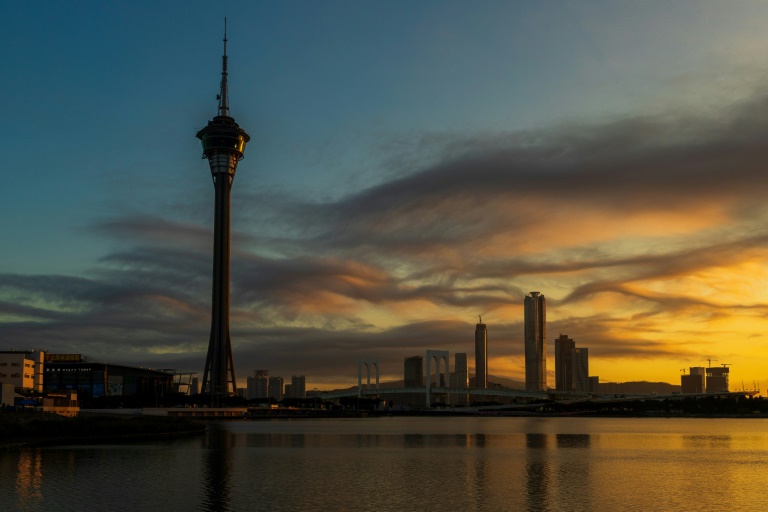
In the semi-autonomous Chinese city of Macau, a former Portuguese territory known for its bustling casinos and sex industry, the report said that authorities did not provide services to a single trafficking victim for a third consecutive year. 

On Bulgaria, which along with Serbia was threatened with a downgrade to the blacklist without improvements, the State Department said that authorities investigated “significantly fewer” traffickers and at times punished victims for the crimes against them. 

Also newly added to the Tier 3 blacklist was the tiny Dutch Caribbean territory of Sint Maarten.

Along with Malaysia, nations that remained on the list from the previous year were Afghanistan, Cuba, Eritrea, Guinea-Bissau, Iran, Myanmar, North Korea, Nicaragua, Russia, South Sudan, Syria, Turkmenistan and Venezuela.

Algeria and the Indian Ocean archipelago the Comoros both were upgraded off the blacklist this year following improvements.
Britons desperate to cool off as mercury hits historic 40C

Runways melted, people struggled to sleep and the queen’s guard used desk fans as they sweltered in heavy ceremonial uniforms as Britain hit record temperatures on Tuesday.

Normally chilly and often rainy in the summer, Britain this week baked under a fierce heatwave, triggering an unprecedented extreme heat alert and leaving Britons desperate to cool off.

In some parts of England, the mercury climbed above 40 degrees Celsius (104 degrees Fahrenheit) for the first time since records began.

“Everything seems to come to a grinding halt,” said retiree Bob Heathcote, 71, in the town of Worksop in central England.

Normally, he was involved in church activities, but now, he said: “People don’t feel comfortable coming out.”

Congestion was down in several cities as motorists heeded warnings to stay off the roads.

In eastern England, a section of a dual carriageway buckled, police said, leaving it looking like the humps of a skatepark.

Emergency repairs were carried out, mirroring those on runways at Luton airport north of London and the Royal Air Force base at Brize Norton.

“Defects” — widely reported as “melted” parts of the surface — forced the cancellation of flights and others to be re-rerouted on Monday.

“Infrastructure, much of it built in Victorian times, just wasn’t built to withstand this type of temperature,” admitted Transport Secretary Grant Shapps.

– ‘Worse than at home’ –

Network Rail, which is responsible for Britain’s rail infrastructure, said one stretch of track had reached a staggering 62C in eastern England.

“Rail temperature can be about 20C higher than air temperature, causing it to expand, bend and break,” it tweeted.

Passengers were told to travel only if absolutely necessary on Monday and Tuesday, with delays, cancellations and changes to services.

Trains were running at reduced speed, including on London’s underground Tube system.

The East Coast Main Line was shut completely as a precaution between London King’s Cross and York and Leeds in northern England on Tuesday.

Outside King’s Cross, US tourist Deborah Byrne was reassessing how to get to Edinburgh after being forced to stay in London for another night.

“This is our weather, with humidity, back home,” she told AFP. “So we were actually looking forward to the cool weather,” she said. “Not worse than at home — because you have no AC.”

Plenty of people were perplexed.

“I don’t know what to do,” said Jayanth Bharadwaj, a doctoral student based in Germany, who was trying to get to Cambridge. “I have to figure something out before I run out of my energy.”

Photographer Ashley Meerloo, trying to get to St Albans north of London, was also put out.

“I don’t get it,” he said. “They’ve got trains in Australia. They work. What’s the problem here?”

– ‘Just too much’ –

Health workers, too, bore the brunt across the country.

“We are seeing hospitals having to scale back the number of planned surgeries as operating theatres are too hot,” said Miriam Deakin from NHS Providers, which represents hospitals in England.

“Trusts are having to install industrial cooling units, mounting fans, and trying to cool down IT server rooms.”

Many braving the sunshine outside tried to cool off as best they could, after the hottest night on record disturbed sleep.

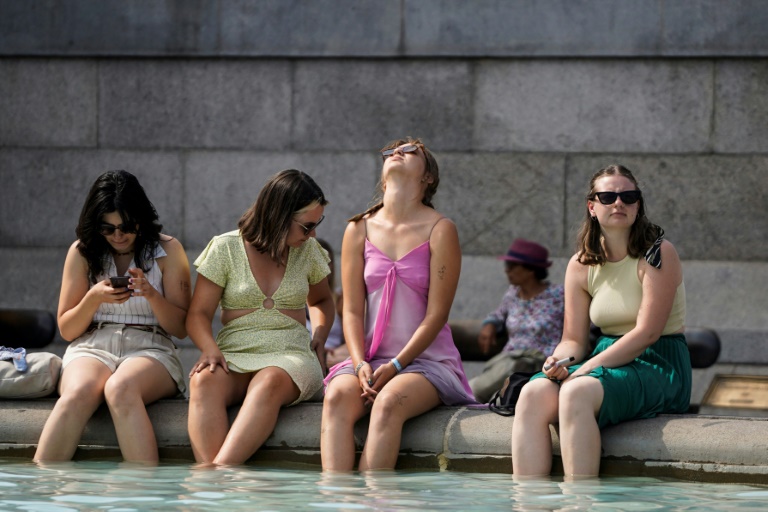
In central London, some dipped their feet in the fountains of Trafalgar Square or took a dip in the Serpentine in Hyde Park. 

Red-faced troops, standing guard in heavy ceremonial uniforms and helmets outside Horse Guards Parade, were seen using desk fans.

Water was brought for their horses.

In parliament, the strict dress code was even relaxed, with male MPs allowed to take off their jackets.

Elsewhere, people flocked to outdoor swimming pools or to coastal resorts, as some schools closed in an early start to the summer break.

“I’ve not sleep most of the night,” complained Paul Fairweather in Worksop.

“There doesn’t seem to be any reprieve at all. It wasn’t so bad yesterday in the shade places, but today it’s just too much.”

Britons desperate to cool off as mercury hits historic 40C

Runways melted, people struggled to sleep and the queen’s guard used desk fans as they sweltered in heavy ceremonial uniforms as Britain hit record temperatures on Tuesday.

Normally chilly and often rainy in the summer, Britain this week baked under a fierce heatwave, triggering an unprecedented extreme heat alert and leaving Britons desperate to cool off.

In some parts of England, the mercury climbed above 40 degrees Celsius (104 degrees Fahrenheit) for the first time since records began.

“Everything seems to come to a grinding halt,” said retiree Bob Heathcote, 71, in the town of Worksop in central England.

Normally, he was involved in church activities, but now, he said: “People don’t feel comfortable coming out.”

Congestion was down in several cities as motorists heeded warnings to stay off the roads.

In eastern England, a section of a dual carriageway buckled, police said, leaving it looking like the humps of a skatepark.

Emergency repairs were carried out, mirroring those on runways at Luton airport north of London and the Royal Air Force base at Brize Norton.

“Defects” — widely reported as “melted” parts of the surface — forced the cancellation of flights and others to be re-rerouted on Monday.

“Infrastructure, much of it built in Victorian times, just wasn’t built to withstand this type of temperature,” admitted Transport Secretary Grant Shapps.

– ‘Worse than at home’ –

Network Rail, which is responsible for Britain’s rail infrastructure, said one stretch of track had reached a staggering 62C in eastern England.

“Rail temperature can be about 20C higher than air temperature, causing it to expand, bend and break,” it tweeted.

Passengers were told to travel only if absolutely necessary on Monday and Tuesday, with delays, cancellations and changes to services.

Trains were running at reduced speed, including on London’s underground Tube system.

The East Coast Main Line was shut completely as a precaution between London King’s Cross and York and Leeds in northern England on Tuesday.

Outside King’s Cross, US tourist Deborah Byrne was reassessing how to get to Edinburgh after being forced to stay in London for another night.

“This is our weather, with humidity, back home,” she told AFP. “So we were actually looking forward to the cool weather,” she said. “Not worse than at home — because you have no AC.”

Plenty of people were perplexed.

“I don’t know what to do,” said Jayanth Bharadwaj, a doctoral student based in Germany, who was trying to get to Cambridge. “I have to figure something out before I run out of my energy.”

Photographer Ashley Meerloo, trying to get to St Albans north of London, was also put out.

“I don’t get it,” he said. “They’ve got trains in Australia. They work. What’s the problem here?”

– ‘Just too much’ –

Health workers, too, bore the brunt across the country.

“We are seeing hospitals having to scale back the number of planned surgeries as operating theatres are too hot,” said Miriam Deakin from NHS Providers, which represents hospitals in England.

“Trusts are having to install industrial cooling units, mounting fans, and trying to cool down IT server rooms.”

Many braving the sunshine outside tried to cool off as best they could, after the hottest night on record disturbed sleep.

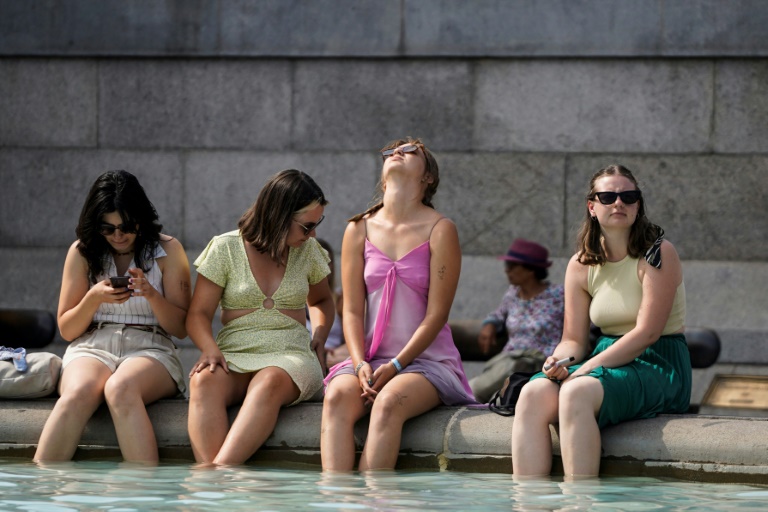
In central London, some dipped their feet in the fountains of Trafalgar Square or took a dip in the Serpentine in Hyde Park. 

Red-faced troops, standing guard in heavy ceremonial uniforms and helmets outside Horse Guards Parade, were seen using desk fans.

Water was brought for their horses.

In parliament, the strict dress code was even relaxed, with male MPs allowed to take off their jackets.

Elsewhere, people flocked to outdoor swimming pools or to coastal resorts, as some schools closed in an early start to the summer break.

“I’ve not sleep most of the night,” complained Paul Fairweather in Worksop.

“There doesn’t seem to be any reprieve at all. It wasn’t so bad yesterday in the shade places, but today it’s just too much.”

Stocks advance, euro rallies

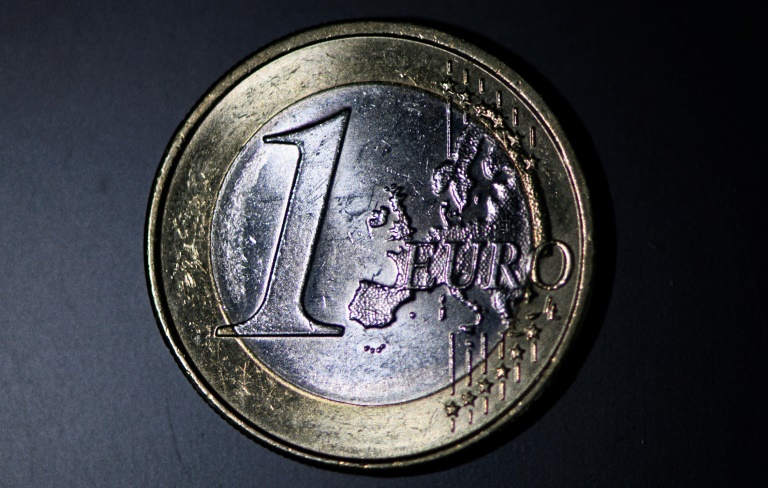
Stock markets mostly advanced on Tuesday, while the euro rallied against the dollar as traders looked ahead to a key European Central Bank meeting later this week.

European stocks closed higher, with Frankfurt’s DAX jumping 2.7 percent on hopes that Russia will resume gas deliveries by pipeline later this week. 

“The nature of today’s gains was initially cautious and incremental in nature … We got additional traction in the afternoon session on reports out of Moscow which indicated that gas flows out of the Nord Stream 1 pipeline would resume as scheduled on Thursday, albeit at a lower capacity,” said market analyst Michael Hewson at CMC Markets.

Russia has halted gas deliveries to Germany via the Nord Stream 1 pipeline, ostensibly due to technical problems, but there have been widespread concerns Moscow won’t restart deliveries on Thursday as scheduled in retaliation for European sanctions over Ukraine.

Deliveries via the pipeline are critical for Europe to fill its reserves to a sufficient level to make it through the winter without supply disruptions.

Markets have been worried Russia turning off the taps will push European economies into recession, particularly Germany, where several major industrial sectors are heavily dependent upon gas imports.

Wall Street’s main stock indices were also strongly higher in late morning trading amid another raft of earnings reports and more signs the housing market is slowing from its torrid pace.

Asian equity indices closed mixed after an overnight sell-off on Wall Street fuelled by fresh recession worries on a Bloomberg report that iPhone-maker Apple plans to slow hiring and spending.

The euro meanwhile jumped around one percent against the dollar, as traders mulled whether the European Central Bank could hike interest rates more than expected to fight runaway inflation.

The ECB has signalled it would raise eurozone interest rates on Thursday for the first time in more than a decade but is under pressure to do more to tackle spiralling prices.

It intends to raise borrowing costs by a quarter point, the first such move since 2011. 

“In all likelihood, the ECB will raise interest rates by 25 basis points this week and follow this up with a 50-basis-point move in September,” noted Matthew Ryan, head of market strategy at financial firm Ebury.

“That said, we do not rule out a 50-basis-point rate hike at this week’s meeting. 

“We have already seen most major central banks deliver bumper rate increases in recent weeks in an attempt to control rampant price growth,” Ryan added.

The Federal Reserve’s aggressive rate tightening this year has sent the dollar soaring against most other currencies in recent weeks.

Last week, the euro fell below parity with the dollar for the first time in nearly 20 years, also on growing fears of a eurozone recession as high inflation hampers growth. 

On Tuesday, the dollar briefly hit a record high above 80 rupees, with the Indian unit hammered by massive outflows of capital as the economy struggles.

While some are predicting inflation may have reached its peak, oil prices — the key driver of soaring costs — remain elevated.

But both main contracts dipped Tuesday after rocketing more than five percent Monday on expectations that Saudi Arabia would not open up the taps further, with a plea by US President Joe Biden seeming to have fallen on deaf ears.

– Key figures at around 1330 GMT –

New York – Dow: UP 1.7 percent at 31,596.54 points

EURO STOXX 50: UP 2.2 percent at 3,587.44

London – FTSE 100: UP 1.0 percent at 7,296.28 (close) 

Frankfurt – DAX: UP 2.7 percent at 13,308.41 (close)

Paris – CAC 40: UP 1.8 percent at 6,201.22 (close)

Tokyo – Nikkei 225: UP 0.7 percent at 26,961.68 (close)

Hong Kong – Hang Seng Index: DOWN 0.9 percent at 20,661.06 (close)

Shanghai – Composite: FLAT percent at 3,279.43 (close)

Euro/dollar: UP at $1.0235 from $1.0146 on Monday

Pound/dollar: UP at $1.2019 from $1.1950 

Euro/pound: UP at 85.14 pence from 84.88 pence

Dollar/yen: DOWN at 137.86 yen from 138.13 yen

West Texas Intermediate: DOWN 0.7 percent at $101.85 per barrel

Brent North Sea crude: DOWN 0.6 percent at $105.64 per barrel

burs-rl/cdw

Airbus tails Boeing in Farnborough jet orders tussle

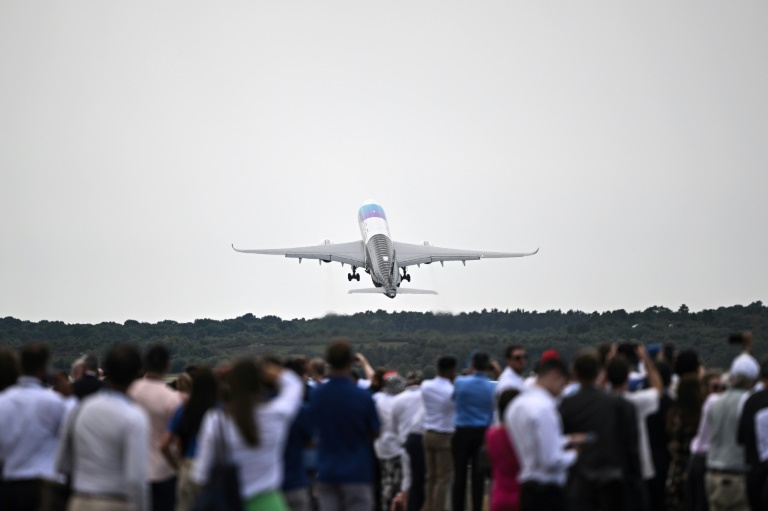
European planemaker Airbus trailed its fierce US rival Boeing in an orders battle on the second day of the Farnborough airshow on Tuesday, as southern England buckled under a record heatwave.

Airbus finally opened its orders account with a $1.1-billion order for 12 Airbus A220-300 passenger jets from Delta Airlines.

The new jets are due for delivery from 2026, and bring its total firm A220 order to 107 of the single-aisle aircraft.

However, Boeing already had the upper hand after clinching a $13.5-billion order for Boeing’s crisis-hit MAX from Delta on the first day of Farnborough on Monday.

The US carrier ordered 100 medium-haul MAX jets with an option for 30 more, and swiftly afterwards Japan’s ANA agreed to buy 20 MAX 8 jets worth $2.4 billion.

The MAX jet, which suffered two deadly crashes in 2018 and 2019, is experiencing a rush of interest at this year’s five-day Farnborough spectacle southwest of London.

Independent aviation analyst Howard Wheeldon said customers were giving the MAX a thumbs-up, at an airshow where Boeing normally saves its biggest deal for the end.

“This is a vote of confidence and a sign that they are now moving forward from the MAX crisis and in the right direction,” Wheeldon told AFP.

Boeing then won another massive boost Tuesday as investment fund 777 Partners ordered up to 66 of the MAX passenger aircraft worth a combined $8 billion.

It also sealed a $1.5-billion deal with leasing company AerCap for five more 787 Dreamliner jets.

Customers are expected to win a discount on list prices as is traditionally the case for big orders.

– Emissions –

Wheeldon sounded a note of caution over the post-Covid recovery despite growing sector-wide optimism over the outlook at the airshow.

“There will be other orders but none of this suggests that the industry itself is moving forward,” added Wheeldon.

“Ticket prices have risen steeply and aircraft are far from full. Shortage of staff and other skills continues to impact and there are no quick fixes.

“This is an industry that has been in turmoil because of Covid but also one that knows the pressures from other factors such as climate change and rising costs are not easily solved.”

Aviation analyst John Strickland said the latest edition of Farnborough — the first since 2018 — was not “flush” with orders.

But “it marks a moment of rehabilitation for Boeing”, he added.

Farnborough this year partly focuses on the themes of decarbonisation and sustainability in a sector often criticised for its impact on emissions and climate change.

The UK government has launched a new “Jet Zero” strategy and vowed that aviation emissions should not return to pre-Covid levels. 

The plan, presented by Transport Secretary Grant Shapps at Farnborough, requires UK domestic aviation and English airports to attain net zero carbon emissions by 2040.

Yet environmental campaign group Greenpeace has slammed the strategy as a short-term move that shifted responsibility away from government.

Greenpeace UK programme director Emily Armistead dismissed the plan as “vague aspirations to technological innovation”, which would fail to cut emissions in the short to medium term.

She accused the government of failing to have the courage to regulate aviation emissions.

“This isn’t a plan to do that, just a delaying tactic and a very expensive waste of time,” she added.

Turkish court says Erdogan had right to annul women's treaty

Turkey’s top court on Tuesday ruled that President Recep Tayyip Erdogan had the right to pull his country out of a European convention against gender-based violence.

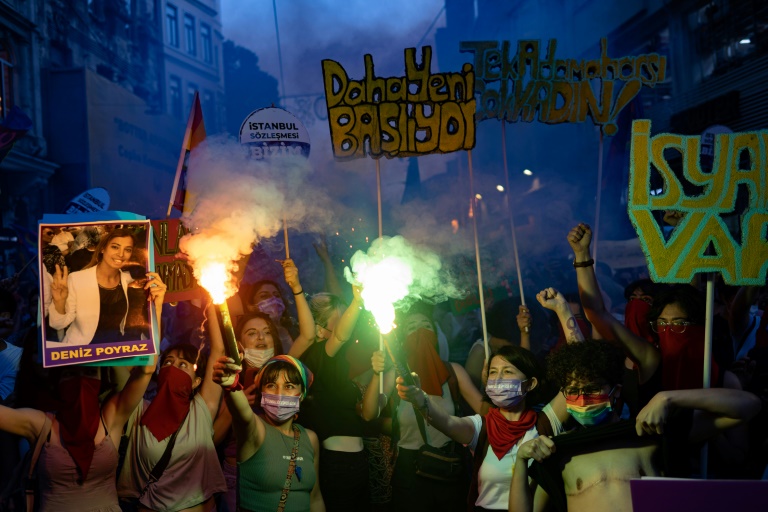
Rights groups and Western governments voiced shock and outrage when Erdogan cancelled Turkey’s membership of the Istanbul Convention in an overnight decree last year.

Erdogan’s political opponents argued the president did not have the power to unilaterally annul membership of an international agreement.

Turkey became the first country to sign the convention in 2011 and ratified it by vote in parliament the following year.

But the top administrative court on Tuesday rejected a request to overturn Erdogan’s decision in a case involving testimony from leading women’s rights groups and legal scholars.

The court’s five judges ruled in a 3-2 vote that a president’s decision could not be subject to a legal review.

The two dissenting judges said in a separate opinion that Erdogan’s actions overstepped his legal bounds.

A lawyer representing the We Will Stop Femicide Platform rights organisation said the ruling was “tantamount to rejecting the constitution”.

“It is terrifying from a legal perspective,” lawyer Ipek Bozkurt told AFP. “This erroneous decision should have been stopped by the court.”

The treaty — now enacted by dozens of European countries — requires member states to adopt domestic legislation that strictly punishes domestic abuse and gender-based violence.

But Erdogan’s Islamic conservative supporters argued that its language harmed traditional family values and promoted LGBTQ rights.

Erdogan’s main opponents in next year’s general election immediately rose to the treaty’s defence.

Main opposition leader Kemal Kilicdaroglu vowed to sign Turkey back up to the convention should he become president in the July 2023 vote.

“I can make a promise to the nation,” the CHP party leader said.

“When we come to power — and we will, with God’s permission and the nation’s approval — in the first week, even in the first 24 hours, we will implement the Istanbul Convention,” Kilicdaroglu told reporters.

Nationalist Iyi (Good) Party leader Meral Aksener accused the court of issuing “a political decision (aimed) at pleasing a dirty mind”.

UK's Sunak tops Tory MPs' latest vote as race narrows to three

Britain’s former finance minister Rishi Sunak again topped the latest vote by Conservative MPs to choose a new prime minister, as another candidate was eliminated to leave three contenders in the race.

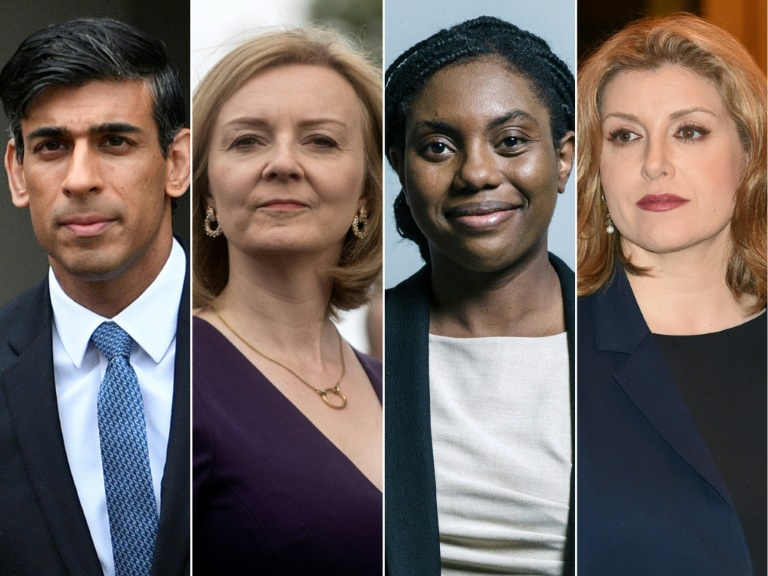
Sunak garnered 118 votes, followed by former defence minister Penny Mordaunt on 92 and Foreign Secretary Liz Truss on 86, with longshot candidate Kemi Badenoch trailing on 59 and therefore eliminated from the contest.

The vote means that Britain will get either its first British Asian prime minister or the third female leader in the country’s history.

Sunak, whose resignation helped to topple outgoing leader Boris Johnson, fell two votes short of the number needed to guarantee a place among the final two, who will battle it out over the summer months before party members choose the winner.

He is all but guaranteed to make the final cut in Wednesday’s last round of voting by MPs.

But the race to join him further tightened, with Truss making up five votes on Mordaunt — the one-time bookmaker’s favourite.

Truss is now only six behind, and will hope that the right wing of the party swings behind her following the departure of Badenoch, a favourite of the grassroots members.

A YouGov poll published before the vote showed that Badenoch would beat the remaining candidates with the all-important members, and that Sunak would lose to them by wide margins.

Mordaunt had headed the same poll previously.

She now trails Truss after a damaging few days in which her former boss, one-time UK Brexit pointman David Frost, slammed her work ethic and questions were raised over her stance on trans rights.

– Race gets personal –

In a statement after Tuesday’s vote, Mordaunt said: “We are so nearly across the finish line. I am raring to go and excited to put my case to members across the country and win.”

The BBC announced on Tuesday that it will host a live televised debate with the final two candidates on Monday, with all remaining candidates agreeing to take part if they get through.

Sky News on Monday scrapped a planned debate between the remaining contenders after Sunak and Truss pulled out.

Prime Minister Boris Johnson announced on July 7 he was quitting as Conservative leader after a government rebellion in protest at his scandal-hit administration.

His government having survived a confidence vote on Monday, Johnson is now almost certain to stay on as prime minister until his successor is announced on September 5.

Under Britain’s parliamentary system, the leader of the biggest party is prime minister and can be changed mid-term without having to call a general election.

Johnson chaired his last Cabinet meeting on Tuesday morning and is due to face his last weekly question and answer session with MPs in parliament on Wednesday.

In the two previous televised debates — on Channel 4 Friday and the ITV network Sunday — the contenders clashed notably on whether to cut taxes to help ease a soaring cost of living crisis.

But Sunday’s clash turned more acrimonious — and personal — with candidates encouraged to directly criticise one another and their proposals.

Sunak called out Truss for voting against Brexit, her previous membership of the Liberal Democrats, and her position on tax.

In turn, Truss questioned Sunak’s stewardship of the economy.

Badenoch attacked Mordaunt for her stance on transgender rights — a rallying call in the “culture wars” exercising the Tory right.

Court battle opens in Musk, Twitter buyout fight

The high stakes court battle between Elon Musk and Twitter kicked off on Tuesday, as the social media firm tries to force the entrepreneur to honor their $44 billion buyout deal.

The first hearing was centering on Twitter’s push to set a trial date for as early as September in a case focused on Musk’s move to walk away on allegations the platform misled him about its tally of fake accounts.

Billions of dollars are at stake, but so is the future of the platform that Musk has said should allow any legal speech, an absolutist position that has sparked fears the network could be used to incite violence.

The hearing is being held in the eastern state of Delaware.

“Questions have been raised about Twitter’s future, and they don’t want this to drag on for very long,” said Carl Tobias, a University of Richmond law professor. 

Musk’s legal team has filed papers arguing that date is far too soon for such a complex matter, and instead proposed mid-February.

Twitter lawyers noted the deal is supposed to close toward the end of October, just six months after Musk launched an unsolicited bid that the company’s board first resisted but then supported.

The world’s richest person has backed away from the deal in recent months as tech stocks have tumbled, and Twitter’s value has fallen well below the $54.20 per share he offered.

– Musk willingness to fight –

Rather than Silicon Valley, where Twitter is based, the company has lodged its lawsuit against Musk in Delaware.

The firm is incorporated in the tiny state like scores of other companies, and the case will happen in the Delaware Chancery Court that has deep experience in business disputes.

“The Chancery Court, which handles most of these matters, is very expert in corporate law, and more particularly, mergers and acquisitions. So this is the place to go,” Tobias added.

Kathaleen McCormick, the judge overseeing the case, comes with a no-nonsense reputation.

She also reportedly has the distinction of previously ordering a reluctant buyer into completing a corporate merger.

A forced closing of the Twitter deal is a scenario that some analysts consider possible.

“(Wall) Street and legal experts across the board view Twitter as having a ‘strong iron fist upper hand,’ heading into the Delaware court battle after months of this fiasco and nightmare,” analyst Dan Ives wrote last week.

He also noted that less likely options include Musk paying a $1 billion breakup fee and being able to walk away, or winning outright on his fake-account argument.

After pausing the deal in May, Musk’s lawyers announced in July he was “terminating” the agreement because of skepticism over Twitter’s false or spam accounts tally and allegations the firm was not forthcoming with details.

Tuesday’s hearing will be just the first step in what could be a lengthy legal fight that could end in a trial, but also a settlement.

“Musk has shown his willingness to take things all the way to the end in Delaware court,” said Adam Badawi, a University of California at Berkeley law professor.

“I think settling is not necessarily his instinct.”

Court battle opens in Musk, Twitter buyout fight

The high stakes court battle between Elon Musk and Twitter kicked off on Tuesday, as the social media firm tries to force the entrepreneur to honor their $44 billion buyout deal.

The first hearing was centering on Twitter’s push to set a trial date for as early as September in a case focused on Musk’s move to walk away on allegations the platform misled him about its tally of fake accounts.

Billions of dollars are at stake, but so is the future of the platform that Musk has said should allow any legal speech, an absolutist position that has sparked fears the network could be used to incite violence.

The hearing is being held in the eastern state of Delaware.

“Questions have been raised about Twitter’s future, and they don’t want this to drag on for very long,” said Carl Tobias, a University of Richmond law professor. 

Musk’s legal team has filed papers arguing that date is far too soon for such a complex matter, and instead proposed mid-February.

Twitter lawyers noted the deal is supposed to close toward the end of October, just six months after Musk launched an unsolicited bid that the company’s board first resisted but then supported.

The world’s richest person has backed away from the deal in recent months as tech stocks have tumbled, and Twitter’s value has fallen well below the $54.20 per share he offered.

– Musk willingness to fight –

Rather than Silicon Valley, where Twitter is based, the company has lodged its lawsuit against Musk in Delaware.

The firm is incorporated in the tiny state like scores of other companies, and the case will happen in the Delaware Chancery Court that has deep experience in business disputes.

“The Chancery Court, which handles most of these matters, is very expert in corporate law, and more particularly, mergers and acquisitions. So this is the place to go,” Tobias added.

Kathaleen McCormick, the judge overseeing the case, comes with a no-nonsense reputation.

She also reportedly has the distinction of previously ordering a reluctant buyer into completing a corporate merger.

A forced closing of the Twitter deal is a scenario that some analysts consider possible.

“(Wall) Street and legal experts across the board view Twitter as having a ‘strong iron fist upper hand,’ heading into the Delaware court battle after months of this fiasco and nightmare,” analyst Dan Ives wrote last week.

He also noted that less likely options include Musk paying a $1 billion breakup fee and being able to walk away, or winning outright on his fake-account argument.

After pausing the deal in May, Musk’s lawyers announced in July he was “terminating” the agreement because of skepticism over Twitter’s false or spam accounts tally and allegations the firm was not forthcoming with details.

Tuesday’s hearing will be just the first step in what could be a lengthy legal fight that could end in a trial, but also a settlement.

“Musk has shown his willingness to take things all the way to the end in Delaware court,” said Adam Badawi, a University of California at Berkeley law professor.

“I think settling is not necessarily his instinct.”

French farms use huge fans to keep dairy cows cool

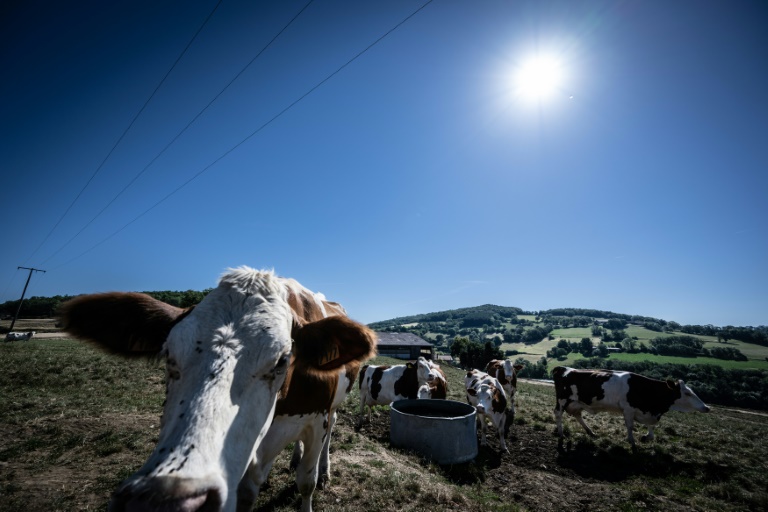
With new record high temperatures being set across France it isn’t just humans that are suffering: even cows high in the mountains need fans to get through the heatwave.  

Despite sitting at an altitude of 780 metres (2,600 feet), the mercury has climbed to 34 degrees Celsius (93 Fahrenheit) at Nicolas Joannon’s farm nestled in the mountains near the eastern city of Lyon.

It’s too hot for Lila, Glee, Pistachio and the rest of his herd of 35 dairy cows to spend the afternoon outside.

But thankfully for them, Joannon has installed two giant fans, measuring 4.5 meters (nearly 15 feet) in diameter, inside his barn.

They can now relax in their straw-bedded stalls under the swirling blades that bring the temperature down a few degrees.

Breeders need to constantly adapt as the climate changes, Joannon says.

“As temperatures rise, animals are under heat stress, they tend to eat less and produce a little less milk,” says the 34-year-old who runs his 45-hectare (110 acres) family farm.

“But if they are put in good conditions to go through the heatwave, immediately after it’s over the animals will regain their initial production level and continue to produce quality milk for consumers,” he adds.

In 2020 Joannon had two fans installed at a cost of 9,000 euros ($9,000).

The fan blades start turning automatically — the hotter it gets, the faster they go.

Joannon says the cows are less lethargic since the fans have been installed.

 – 180 litres of water per day –

Dairy cows are very sensitive to temperature. Starting from 22C (71F) and 50 percent humidity, they accumulate heat in their bodies, which reduces milk production. 

While each animal produces between 28 and 38 litres of milk per day, the heat can result in a two-litre daily drop. 

“At 22C, a cow can adapt, but starting from 28-30C, it will suffer,” says Alexandre Batia, 44, in charge of barn ventilation at Rhone Breeding Council, an association that advises breeders.  

Around one in five dairy farms in the region has already installed fans in their barns, and the waiting list for the Council’s help has grown.

But fans need to compliment good practices, he says, such as feeding cows in the evening and adding extra water troughs as they can drink up to 180 litres (47 gallons) of water per day.

Bertrand Fagoo, a project manager at the French Livestock Institute (IDELE), says that until recently heat stress had only been a problem in southern France, but breeders across the country now need to adapt their practices.

For him, the installation of fans is a “secondary improvement” that has to come after making buildings more open and providing more shade. 

“We shouldn’t stir up hot, stale air in a closed space,” says the 53-year-old researcher.

Batia says water misting animals may be another option, but it carries the risk of raising the humidity level in the building.

It is also advisable to “ventilate buildings homogeneously”, he says, because “otherwise, the cows clump in the most comfortable areas, blocking the circulation and accumulating heat.” 

Close Bitnami banner
Bitnami