World

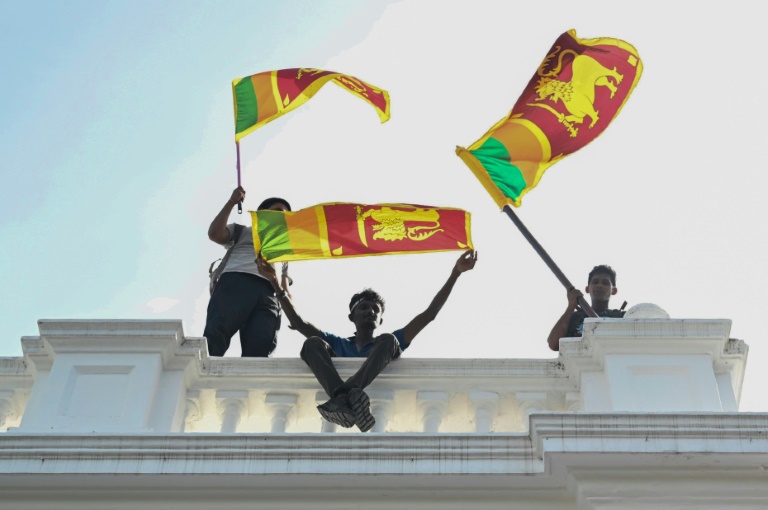
Protesters' target is favourite for Sri Lanka presidency

A veteran politician backed by the party of ousted Sri Lankan president Gotabaya Rajapaksa has emerged as the favourite to replace him, analysts said after nominations closed Tuesday.

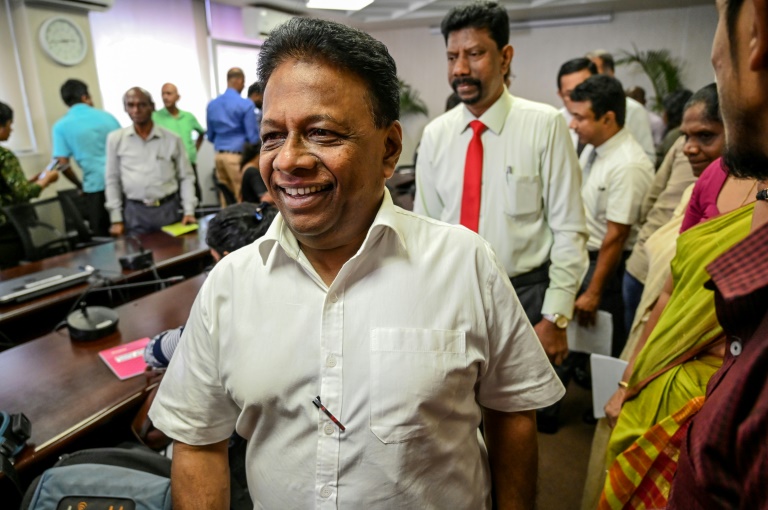
Ranil Wickremesinghe is a six-time former prime minister who became acting president after Rajapaksa resigned, but is despised by the protesters who forced his predecessor from office.

Wickremesinghe, 73, has the formal backing of the Rajapaksas’ SLPP, the largest bloc in the 225-member parliament that will elect the president on Wednesday.

His main opponent will be SLPP dissident and former education minister Dullas Alahapperuma, who is being supported by the opposition.

The winner of the three-way contest will take charge of a bankrupt nation that is in talks with the IMF for a bailout, with its 22 million people enduring severe shortages of food, fuel and medicine.

Sri Lanka ran out of foreign exchange to finance even the most vital imports in a crisis triggered by the Covid-19 pandemic but exacerbated by mismanagement, critics say.

Months of protests culminated in Rajapaksa fleeing his palace before flying to the Maldives and then Singapore, from where he submitted his resignation.

As acting president, Wickremesinghe has extended a state of emergency that gives police and security forces sweeping powers, and last week he ordered troops to evict protesters from state buildings they had occupied.

An opposition MP said Wickremesinghe’s hardline stance against demonstrators was going down well with MPs who had been at the receiving end of mob violence, and most SLPP legislators would side with him.

“Ranil is emerging as the law-and-order candidate,” Tamil MP Dharmalingam Sithadthan told AFP.

Political analyst Kusal Perera agreed that Wickremesinghe had a “slight advantage” despite his own party securing just one seat at the August 2020 elections.

“Ranil has regained the acceptance of the urban middle classes by restoring some of the supplies like gas and he has already cleared government buildings showing his firmness,” Perera said.

Former president Mahinda Rajapaksa, the deposed Gotabaya’s elder brother and head of the clan that has dominated Sri Lankan politics for years, remains in the country and party sources said he was pressing SLPP legislators to support Wickremesinghe.

Observers believe that Wickremesinghe will crack down hard if he wins and the demonstrators — who have also been demanding his resignation, accusing him of protecting the Rajapaksas’ interests — take to the streets.

Hundreds of students held a protest march against Wickremesinghe on Tuesday, where they burned an effigy of outside the capital’s seafront presidential office.

But unlike recent demonstrations, there were no clashes with security forces.

“We are not afraid of Ranil,” said student leader Wasantha Mudalige. “We will chase him out like we did Gotabaya.”

– Backroom deal – 

Wickremesinghe’s main opponent Alahapperuma, a former journalist, is not the object of so much scorn from the demonstrators, despite being an SLPP member.

He promised to form “an actual consensual government for the first time in our history,” in a tweet three days ago.

Moments before the formal nominations in parliament, opposition leader Sajith Premadasa announced he was withdrawing from the race in favour of 63-year-old Alahapperuma.

“For the greater good of my country that I love and the people I cherish, I hereby withdraw my candidacy for the position of President,” Premadasa tweeted.

Alahapperuma was a rights campaigner in the late 1980s, when Premadasa’s late father Ranasinghe ruled the country with an iron fist.

But a legislator from Premadasa’s SJB party told AFP that the two men struck a deal overnight for Premadasa to be chosen as the new prime minister should Alahapperuma become head of state.

“We have a common minimum programme that we agreed on,” the SJB MP said. “We had only one sticking point about who will be the president and that was sorted out last night.”

The third candidate is Anura Dissanayake, 53, leader of the leftist JVP, or People’s Liberation Front, whose coalition has three parliamentary seats.

MPs will rank the candidates in order of preference in a secret ballot — a mechanism which gives them a freer hand than an open poll, and previous elections have seen allegations of bribes offered and accepted in exchange for votes.

Candidates need more than half the vote to be elected. If no one crosses the threshold on first preferences, the candidate with the lowest support will be eliminated and their votes distributed according to second preferences.

The new leader will be in office for the balance of Rajapaksa’s term, which runs until November 2024.

If Wickremesinghe is confirmed in the post, he is expected to name public administration minister Dinesh Gunawardena, 73, his schoolmate and a strong Rajapaksa loyalist, as the new premier. 

Eni, Total, Occidental sign $4 bn Algeria oil contract

Italy’s Eni, US major Occidental, France’s Total and the Algerian group Sonatrach signed a $4 billion oil and gas production-sharing contract Tuesday for the Berkine field in the country’s southeast.

Algerian President Abdelmadjid Tebboune, hosting his Italian counterpart Mario Draghi on Monday with whom he sealed a clutch of deals, said the 25-year accord would provide Rome with “significant volumes of natural gas”, as Europe seeks alternatives to Russian supplies.

The accord aims to produce one billion of oil equivalent barrels, Sonatrach said in a statement.

The partners will “develop additional liquid hydrocarbon resources, while reducing these fields carbon intensity through a dedicated carbon reduction program”, Total said in a separate statement.

The deal was signed under Algeria’s 2019 hydrocarbon law that allows for production sharing with foreign partners. It drew heavy criticism from the Algerian opposition and street protests over an alleged sell-out of national resources.

According to an Algerian government source, the North African country will increase gas exports to Italy by four billion cubic metres in the coming days.

Italy buys the majority of its natural gas from abroad, with some 45 percent of its imports historically coming from Russia.

But Rome has increasingly looked to Algeria, historically its second biggest supplier, to reduce that dependence after Russia’s invasion of Ukraine sparked sanctions against Moscow and sent energy prices soaring.

Algeria is Africa’s biggest gas exporter and supplies around 11 percent of the natural gas consumed in Europe.

'Not a switch': UAE pushes for fair energy transition

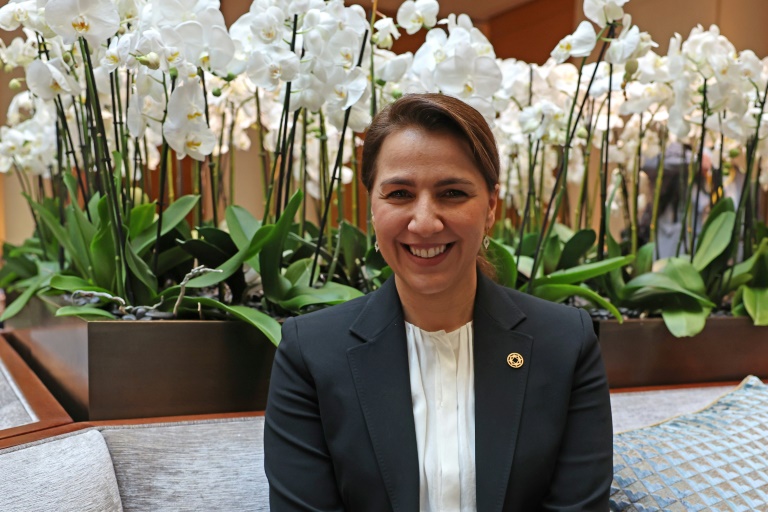
The world’s transition to clean energy sources must be “just” and financed by the hydrocarbon trade, the climate change minister of oil-rich United Arab Emirates told AFP.

Mariam Almheiri was interviewed in France where a fierce heatwave set record temperatures as western Europe wilted under a scorching sun and wildfires that devoured forests.

Experts are blaming climate change and predict more frequent extreme weather to come.

“It’s not a switch. We’re not ready yet. And oil and gas will still be part of the energy mix for some time”, she said in an interview Monday as UAE President Sheikh Mohamed bin Zayed Al-Nahyan visited Paris for energy talks.

“We need… a just transition because every country is not at the same level,” the minister of climate change and the environment added, stressing the UAE was using its oil and gas wealth to ramp up renewable sources. 

“You need to build your equipment from what energy you got to do that,” she said. “Clean and renewable energy costs money.”

The international community largely agrees that climate change poses an existential threat to the planet and future of mankind. 

But action to cut carbon pollution and prepare for the accelerating impact is lagging, as is support for vulnerable countries confronting the ravages of a changing climate.

– ‘We will provide’ –

Adding to the pressure has been Russia’s invasion of Ukraine that has sent food and energy prices spiralling.

Western sanctions aimed at crippling major energy producer Russia have resulted in sharply higher fuel costs in Europe and the United States, with inflation soaring as a result.

This has pushed the Unites States and Europe to try to persuade oil-rich countries like the UAE to increase energy supplies to bring prices back under control.

“Look at what we’re going through right now. Months ago, people were pointing their fingers at us going: ‘Why are you still producing?’ Now they’re coming to say: ‘Please produce, please produce.'”

A top oil producer in OPEC, the UAE’s rapid growth since the 1970s has been driven by its energy wealth.

But having diversified its economy over the decades, the desert country of one million locals and nine million foreigners relies less and less on petrol, with revenues now making up only 30 percent of GDP.

At the same time, it forecasts that the oil and gas industry would need to invest over $600 billion every year until 2030 just to keep up with expected demand.

“We are a country that has oil and gas as a natural resource. We don’t have water… so as long as the world needs oil and gas we will provide,” said Almheiri.

The country was built on oil, but is spending billions to develop enough renewable energy to cover half of its needs by 2050. 

It is building two of the world’s largest solar power plants in the capital Abu Dhabi and Dubai.

It has also joined the nuclear club, with its Barakah nuclear power station, the first in the Arab world.

And last year, it launched a “strategic initiative” targeting carbon neutrality by 2050.

– Two-pronged approach –

Meteorologists are predicting more frequent and intense episodes of extreme weather in coming years.

“The increase in the frequency, duration, and intensity of these events over recent decades is clearly linked to the observed warming of the planet and can be attributed to human activity,” the World Meteorological Organisation said. 

Heatwaves of the future will depend largely on how rapidly the global economy can decarbonise.

While several towns and cities in France recorded their highest ever temperatures on Monday, the Gulf region is also at risk.

In the region, summer means suffering for anyone working outside, along with risks of dehydration, heat stroke and heart failure.

Countries of the energy-rich Gulf have banned working outdoors in the hottest hours of the day.

A study in the journal Nature Climate Change found that within this century, parts of the Gulf region could be hit by “unprecedented events of deadly heat as a result of climate change”.

Almheiri said her country, which next year is hosting the United Nations Climate Change Conference COP28, has adopted a “two-pronged approach” while advocating further investments in oil and gas.

“We are ramping up our renewables because we have targets of where we want to reach, and we are decarbonising our oil and gas.”

Thousands of Sudan's Hausa protest after deadly clashes over land

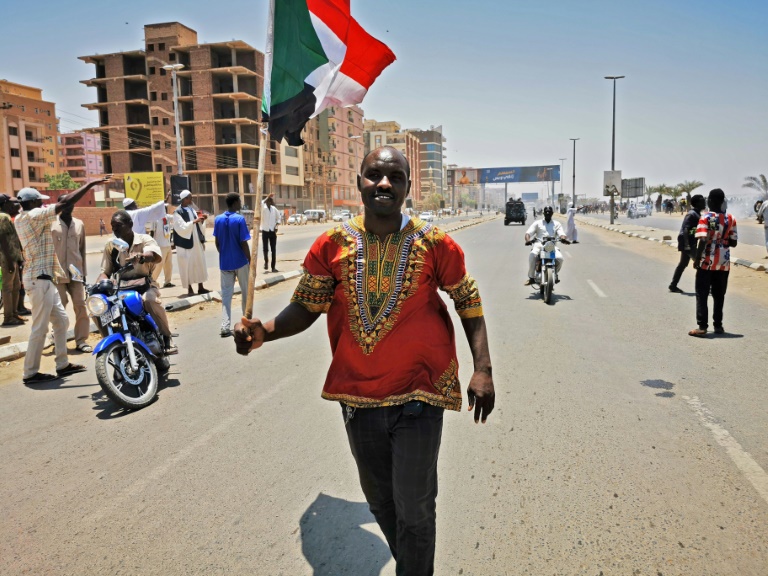
Thousands of Sudan’s Hausa people protested in multiple cities Tuesday, demanding justice for dozens of comrades killed in a deadly land dispute with a rival ethnic group in the country’s south.

The protests sparked by anger at the recent violence is the latest unrest to hit the northeast African nation, already reeling from months of mass demonstrations demanding the restoration of a transition to civilian rule following a military coup last year.

At least 79 people have been killed and 199 wounded since heavy fighting broke out last week between the Berti and Hausa groups in Blue Nile state, the health ministry says.

While the army has been deployed in Blue Nile and the fighting there quashed, protests have since erupted in other states, with marches on the streets of the capital Khartoum, as well as in the key eastern cities of Gedaref, Kassala and Port Sudan.

On Tuesday, Hausa protesters in Khartoum held up signs demanding “justice for the Blue Nile martyrs” and “no to the murder of Hausas”.

Fighting reportedly broke out on July 11 after Bertis rejected a Hausa request to create a “civil authority to supervise access to land”, a prominent Hausa member told AFP on condition of anonymity.

But a senior Berti leader said the group was responding to a “violation” of their land by the Hausas.

In Sudan, deadly clashes regularly erupt over land, livestock, access to water and grazing, especially in areas awash with weapons still struggling from the impact of decades of civil war.

– ‘Revenge’ –

Experts however say an October coup led by army chief Abdel Fattah al-Burhan has stroked a resurgence in ethnic violence.

In Gedaref, some 4,000 people marched chanting “Hausa are citizens too” and “revenge for the martyrs of the Blue Nile”.

Some 500 people also “blocked the highway” in the town of Al-Showak in Gedaref state, eyewitness Saleh Abbas told AFP.

In El Obeid, capital of North Kordofan state, some 3,000 marched on the streets chanting “the Hausa will win”, while in Port Sudan, on the Red Sea, thousands of Hausa gathered outside local government offices calling for “justice for the martyrs”.

In Kassala, authorities have banned public gatherings after thousands of Hausa demonstrators “set government buildings and shops on fire”, said Hussein Saleh, another witness.

Sudan, one of the world’s poorest countries and mired in an economic crisis that has deepened since Burhan seized power last year, has seen only rare interludes of civilian rule since independence.

Blue Nile, where the fighting erupted last week, was a key battleground of rebels trying to topple former president Omar al-Bashir during Sudan’s 1983-2005 civil war, with fighting resuming again in 2011.

After enormous protests against his rule, the army ousted Bashir in 2019.

The following year, a civilian-military power-sharing government reached a peace deal with key rebel groups, including from Blue Nile as well as the war-ravaged western Darfur region.

Darfur has also seen a renewed spike in deadly violence in recent months.

Pro-democracy activists have accused Sudan’s military and ex-rebel leaders who signed that peace deal of exacerbating ethnic tensions for political gain, claims they reject.

Ukraine lawmakers vote to sack prosecutor general, security chief

Ukrainian lawmakers on Tuesday endorsed the president’s decision to sack the country’s top prosecutor and security chief, rubber stamping Ukraine’s largest political shake-up since Russia invaded.

The overhaul was confirmed as Russian President Vladimir Putin was in Tehran with his Turkish counterpart to discuss a possible agreement to unblock Black Sea exports of Ukrainian grain.

Several Ukrainian deputies writing on social media at the parliamentary session in Kyiv said lawmakers had overwhelmingly backed President Volodymyr Zelensky’s shock call to remove the officials.

“Parliament voted to dismiss Iryna Venediktova as prosecutor general,” said David Arakhamia, a lawmaker affiliated to Zelensky. Other deputies said the plea to remove security chief Ivan Bakanov secured the necessary 226 votes.

Zelensky asked parliament to approve the dismissals less than 48 hours after announcing late Sunday that he was suspending the senior law enforcement officials and that 650 cases of suspected treason were under investigation.

He replaced Bakanov on Monday and described the shake up in the security services as an “audit” and said that 28 security officials were facing dismissal.

“Different levels, different directions. But the grounds are similar — unsatisfactory job performance,” Zelensky said.

Venediktova, who met regularly with counterparts from EU countries and the United States wrote on social media on Monday that she had “things to be proud of in her post and showed good results”.

– Tehran summit –

Putin and Turkish President Recep Tayyip Erdogan, who arrived in Tehran on Monday, were due to meet in the Iranian capital on Tuesday to discuss mechanisms to export grain from Ukraine.

On Wednesday, Russian and Ukrainian delegations are due to meet in Istanbul alongside Turkish and UN representatives, with hopes rising for an announced accord.

The EU’s foreign policy chief Josep Borrell warned this week that the grain impasse was “an issue of life and death for many human beings.”

NATO member Turkey has been using its good relations with both the Kremlin and Kyiv to try to broker an agreement on a safe way to deliver the grain.

Along the Black Sea coast, Kyiv said Tuesday that Russian forces had rocked the southern and coastal region of Odessa with a barrage of seven cruise missiles, wounding at least six people including a child. 

“One (missile) was shot down by air defences. Six hit a village. As a result, several residential buildings and other facilities were destroyed and caught fire,” the Ukraine presidency said.

The Russian defence ministry claimed that strikes on Odessa had destroyed a stockpile of Western-supplied weapons.

– Kramatorsk shelled –

Russian Defence Minister Sergei Shoigu ordered Russian troops earlier this week to prioritise the destruction of long-range artillery supplied by the United States and Ukraine’s other Western allies.

Observers credit the weapons with altering battlefield dynamics, giving Ukraine the capacity to hit Russian arms depots and command posts deep inside territory controlled by Moscow.

The heaviest fighting in recent weeks, however, has centred not on the south but in Ukraine’s eastern Donbas region. 

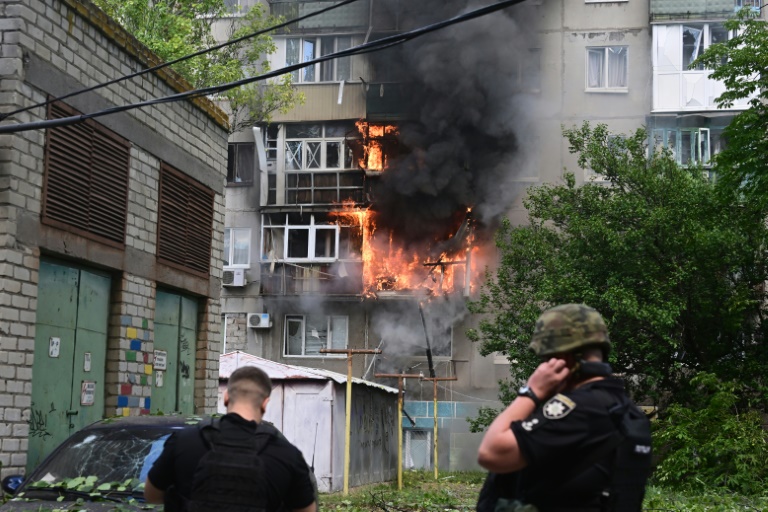
Kramatorsk, one of the last-remaining Donbas cities under Ukrainian control, was hit by Russian strikes on Tuesday, AFP journalists said.

The head of the region, Pavlo Kyrylenko, said one person was killed, and distributed video of the attack showing flames jumping from the inside a residential building.

AFP journalists said a four-story residential building was hit and saw panicked neighbours seeking medical attention from rescue workers in the aftermath.

One man with a bloodied head lay on the ground, before being taken away by the emergency services.

“He was just walking by and was hit,” said one woman, who declined to give her name, visibly shaken after the bombardment.

Russian strikes on Monday killed six people in the town of Toretsk, which has a population of around 30,000 and is not far from Kramatorsk.

burs-jbr/jm

Outsider seeks to break dynastic hold on Sri Lankan politics

Former journalist and rights activist Dullas Alahapperuma is an unlikely contender to be Sri Lanka’s leader, but is the main challenger to the current acting president in a parliamentary vote Wednesday.

The 63-year-old former media minister secured the support of the main political opposition on Tuesday, after promising to unite a fractured, crisis-hit nation following Gotabaya Rajapaksa’s resignation last week.

“It is a crime not to do anything while the country is rapidly going down,” Alahapperuma told AFP while Rajapaksa was still in office. 

“We must get the country out of this mess. Otherwise we won’t have a country very soon.”

Sri Lankan politics has been dominated for decades by a series of family dynasties, but Alahapperuma’s family never had those connections.

Both his parents were schoolteachers, and he began his career as a reporter for Lakmina, a local newspaper in Colombo.

Moving into leftist activism, he published his own political tabloid, the “Dullas News”.

That propelled him to a provincial council seat in 1993, and a year later he became a member of parliament.

He worked closely at the time with Mahinda Rajapaksa, who was campaigning against rights abuses by the government of then-president Ranasinghe Premadasa.

Rajapaksa and his family went on to dominate Sri Lankan politics for years — the recently ousted president is his younger brother — and several members of the clan were themselves accused of rights abuses in the country’s fight against a Tamil rebellion.

In an illustration of the dynastic nature of Sri Lankan politics, it was Premadasa’s son Sajith, now the leader of the opposition in parliament, who nominated Alahapperuma for the presidency on Tuesday.

– ‘Deceitful political culture’ –

Alahapperuma left politics in 2001 to pursue higher education at the University of Iowa, but re-entered parliament in 2005 when his ally Mahinda became president.

Most recently, he held three different positions in Gotabaya’s cabinet.  

On his first day as energy minister, there was a nationwide blackout. 

As media minister, he maintained close ties with journalists and was seen as an unabrasive spokesman for the cabinet — unlike several of his predecessors.

As public anger grew against the Rajapaksa clan over the country’s worsening economic crisis, Alahapperuma publicly urged the president to form a unity government earlier this year.

He accused the Rajapaksa administration of unleashing attacks against dissident journalists and activists, and admitted that he was powerless to contain the oppression.

He was seen as an outspoken critic within the cabinet, a record that may have helped him secure the opposition’s support for his candidacy for president.

A father of two sons aged 27 and 26, Alahapperuma is married to a popular film actress, Pradeepa Dharmadasa.

If he wins on Wednesday he has promised to make opposition leader Premadasa his prime minister in what he calls the country’s first “consensual government”.

The former cabinet minister wants to “put an end to the deceitful political culture, that clouded our nation for ages”, he tweeted on Saturday.

Boeing wins $8bn order in latest boost for MAX jets

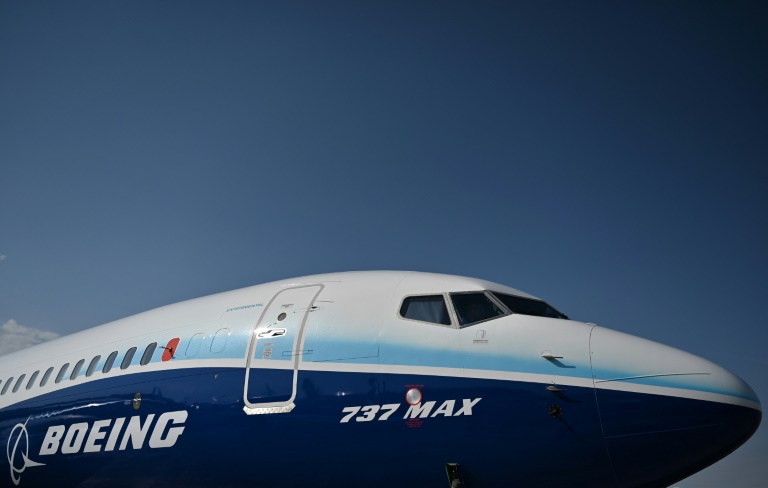
US planemaker Boeing won a fresh boost Tuesday for its crisis-hit MAX aircraft, as investment fund 777 Partners ordered up to 66 of the passenger aircraft worth a combined $8 billion.

The announcement, on the second day of Farnborough airshow, comprises a firm order for 30 medium-haul single-aisle 737 MAX-8-200s plus options to purchase up to 36 more from the same family.

The Miami-based fund operates Flair Airlines in Canada and Bonza Aviation in Australia.

Josh Wander, the fund’s managing partner and co-founder, said the MAX-8-200 jets — configured with more seats than the MAX-8 — would help ramp up the capacity of both carriers.

Tuesday’s news takes the fund’s total Boeing order book to 134 models in the 737 MAX family.

“This new order marks another milestone in the robust growth of our aviation businesses and concurrently, our partnership with Boeing,” Wander added in a statement.

The MAX jet, which suffered two deadly crashes in 2018 and 2019, is experiencing a rush of interest at this year’s Farnborough, southwest of London.

US airline Delta on Monday announced a deal to buy 100 MAX passenger aircraft worth a combined $13.5 billion.

Japan’s ANA has agreed to buy 20 of MAX 8 jets worth $2.4 billion.

Europe heat sparks harmful ozone pollution, 'extreme' fire risk

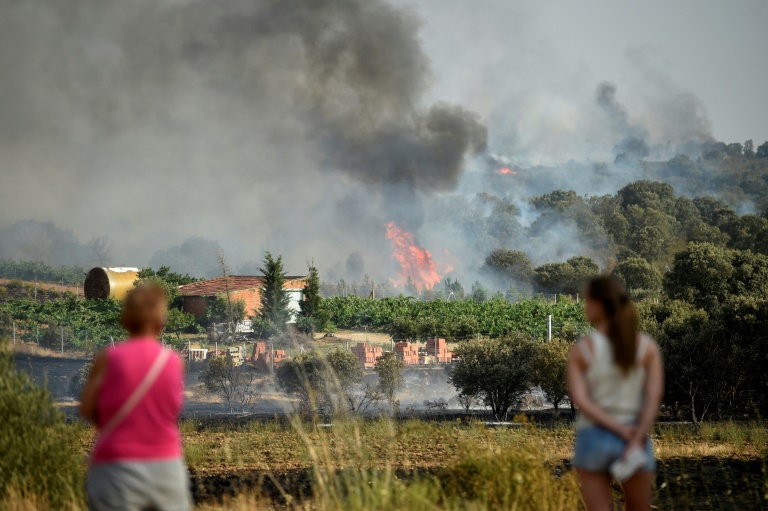
Europe’s searing heatwave is generating very high levels of harmful ozone pollution, the region’s atmospheric monitoring service warned Tuesday, adding that large areas of western Europe also face “extreme” danger of wildfires. 

Record temperatures, which scientists say are driven by climate change, are predicted in France and Britain Tuesday as suffocating heat that has gripped southwest Europe and sparked ferocious wildfires moves northwards.

“Tinder dry conditions and extreme heat are exacerbating the risk of wildfires,” according to a statement from the Copernicus monitoring service. 

The organisation’s emergency management service has warned that a large proportion of western Europe is in “extreme fire danger” with some areas of “very extreme fire danger”. 

The heatwave is also causing high levels of ground-level ozone, Copernicus said. 

Unlike the protective layer in the upper atmosphere, this is a major greenhouse gas and component of urban smog that harms human health and inhibits photosynthesis in plants. 

“The potential impacts of very high ozone pollution on human health can be considerable both in terms of respiratory and cardio-vascular illness,” said Mark Parrington, Senior Scientist from the Copernicus Atmosphere Monitoring Service.  

Ozone is formed as emissions from fossil fuels and other man-made pollutants react in the presence of sunlight and Copernicus said cutting emissions of these pollutants is “crucial”. 

Scientists have already detected “extremely high surface ozone pollution” across western and southern Europe, particularly over the Iberian Peninsula and parts of northern Italy.

Daily maximum levels of surface ozone, which normally peaks during the middle of the day, reached unhealthy levels in Portugal, Spain and Italy, according to Copernicus. 

Scientists now warn that, while the situation is likely to ease across the Iberian Peninsula, very high surface ozone levels are now being seen in areas of northern and western parts of the continent as temperatures rise. 

The ozone levels in these regions are forecast to peak in the next few days, before easing.

Copernicus also predicted no relief from the wildfires that have engulfed swathes of forests across parts of southern Europe.  

– One million ozone pollution deaths –

In southwest France, two massive fires have created apocalyptic scenes of destruction, despite  much of the country’s entire firefighting capacity being deployed.

Copernicus said total carbon emissions from the wildfires in Spain so far in July are the highest seen for the June-July period since 2003.  

Parrington said high surface ozone can lead to sore throats, coughing, headaches and an increased risk of asthma attacks.

The Clean Air Alliance estimates that ozone pollution causes approximately one million additional deaths per year.

Ozone is also a key concern for agricultural regions and food security. 

In January, researchers estimated that persistently high levels of ozone pollution in Asia are costing China, Japan and South Korea an estimated $63 billion annually in lost rice, wheat and maize crops.

Europe heat sparks harmful ozone pollution, 'extreme' fire risk

Europe’s searing heatwave is generating very high levels of harmful ozone pollution, the region’s atmospheric monitoring service warned Tuesday, adding that large areas of western Europe also face “extreme” danger of wildfires. 

Record temperatures, which scientists say are driven by climate change, are predicted in France and Britain Tuesday as suffocating heat that has gripped southwest Europe and sparked ferocious wildfires moves northwards.

“Tinder dry conditions and extreme heat are exacerbating the risk of wildfires,” according to a statement from the Copernicus monitoring service. 

The organisation’s emergency management service has warned that a large proportion of western Europe is in “extreme fire danger” with some areas of “very extreme fire danger”. 

The heatwave is also causing high levels of ground-level ozone, Copernicus said. 

Unlike the protective layer in the upper atmosphere, this is a major greenhouse gas and component of urban smog that harms human health and inhibits photosynthesis in plants. 

“The potential impacts of very high ozone pollution on human health can be considerable both in terms of respiratory and cardio-vascular illness,” said Mark Parrington, Senior Scientist from the Copernicus Atmosphere Monitoring Service.  

Ozone is formed as emissions from fossil fuels and other man-made pollutants react in the presence of sunlight and Copernicus said cutting emissions of these pollutants is “crucial”. 

Scientists have already detected “extremely high surface ozone pollution” across western and southern Europe, particularly over the Iberian Peninsula and parts of northern Italy.

Daily maximum levels of surface ozone, which normally peaks during the middle of the day, reached unhealthy levels in Portugal, Spain and Italy, according to Copernicus. 

Scientists now warn that, while the situation is likely to ease across the Iberian Peninsula, very high surface ozone levels are now being seen in areas of northern and western parts of the continent as temperatures rise. 

The ozone levels in these regions are forecast to peak in the next few days, before easing.

Copernicus also predicted no relief from the wildfires that have engulfed swathes of forests across parts of southern Europe.  

– One million ozone pollution deaths –

In southwest France, two massive fires have created apocalyptic scenes of destruction, despite  much of the country’s entire firefighting capacity being deployed.

Copernicus said total carbon emissions from the wildfires in Spain so far in July are the highest seen for the June-July period since 2003.  

Parrington said high surface ozone can lead to sore throats, coughing, headaches and an increased risk of asthma attacks.

The Clean Air Alliance estimates that ozone pollution causes approximately one million additional deaths per year.

Ozone is also a key concern for agricultural regions and food security. 

In January, researchers estimated that persistently high levels of ozone pollution in Asia are costing China, Japan and South Korea an estimated $63 billion annually in lost rice, wheat and maize crops.

Myanmar marks 75th anniversary of death of independence hero

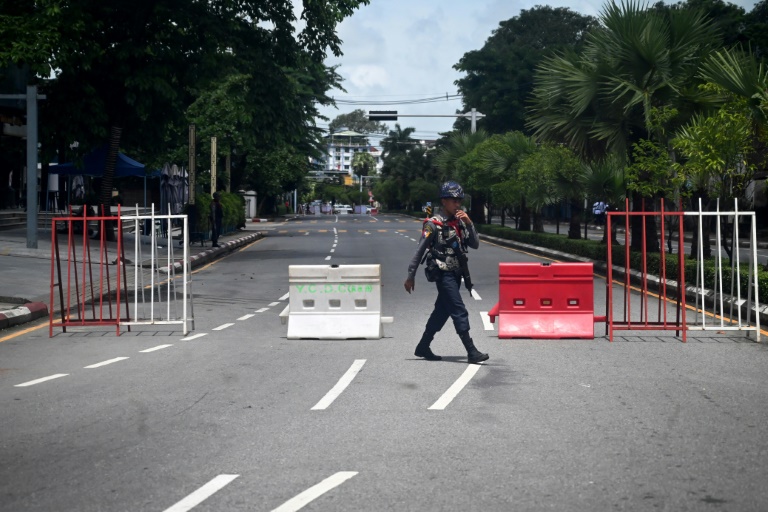
The 75th anniversary of the assassination of Myanmar’s independence hero and father of ousted leader Aung San Suu Kyi was a muted affair Tuesday, with soldiers patrolling Yangon’s streets and anti-junta demonstrators staging small protests in other parts of the country.

Known affectionately as “Bogyoke” (General), Aung San led Myanmar’s battle for independence from Britain but was gunned down in July 1947, just months before his dream was finally realised.

His daughter Aung San Suu Kyi — who was two at the time of his death — became a democracy figurehead, Nobel laureate, and nemesis of the military. 

Detained since the military’s latest power grab in February last year, she is now battling a raft of charges in a junta court and could be jailed for more than 150 years if found guilty on all counts.

Martyrs’ Day — commemorating Aung San’s killing — normally sees hundreds queueing to pay their respects at the Secretariat, a sprawling colonial-era complex in downtown Yangon where local rivals shot dead the general and eight other prominent leaders.

But on Tuesday the roads were largely deserted, with soldiers on watch at the compound, some ordering passersby trying to take selfies near the buildings of red and yellow brick to move along.

Others patrolled in jeeps and extra roadblocks had been set up in the usually bustling district.

Across the country, demonstrators staged small protests against the junta, with local media reporting gatherings in southern Tanintharyi region, eastern Karen state and in the northern Sagaing region. 

Meanwhile, state media footage showed junta number two Soe Win placing a wreath at the Martyrs’ Mausoleum in Yangon — another spot usually bustling with those wishing to pay their respects, but on Tuesday limited to invitees only. 

No officials from western countries — which have led international criticism of the junta’s bloody crackdown on dissent — were present at the event, according to a diplomatic source.

“They [the military] unlawfully arrested the daughter, but salute her father,” read one comment posted on social media. 

“Only shameless people would do this.”

The otherwise muted commemorations were broken briefly by the traditional mass honking of car horns across the commercial hub at 10:37 am — the time Aung San was killed.

Born in 1915 under British colonial rule, Aung San became leader of nationalist fighters in what was then Burma — making him the founder of Myanmar’s military.

He remains a deeply revered figure and a core factor behind his daughter’s enduring popularity. 

During her years of house arrest under the former junta, Suu Kyi was barred from commemorating the anniversary of his death.

Close Bitnami banner
Bitnami