World

European stocks steady amid Apple report concerns

Europe’s main stock markets steadied and the euro rallied against the dollar Tuesday as traders looked ahead to a key European Central Bank meeting later this week. 

Asian equity indices closed mixed after an overnight sell-off on Wall Street fuelled by fresh recession worries.

“Apple put the cat among the pigeons following a media report that it plans to pull back hiring and growth spending next year in anticipation of the possible economic downturn,” noted Richard Hunter, head of markets at Interactive Investor.

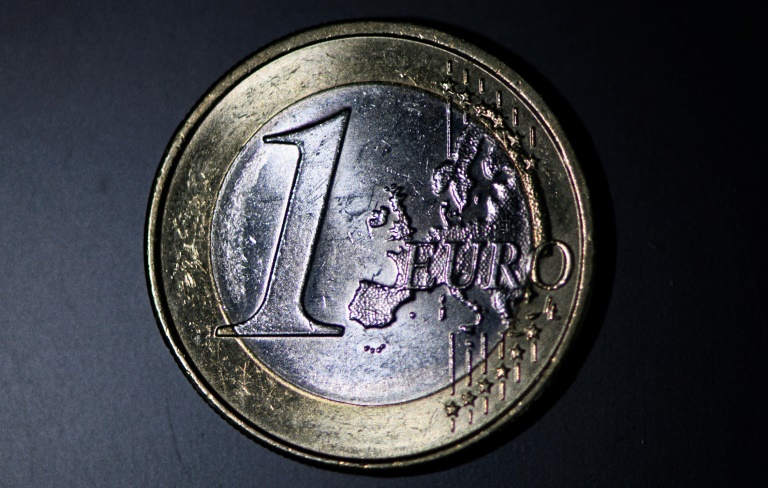
The euro meanwhile jumped more than one percent against the dollar, as traders mulled whether the European Central Bank could hike interest rates more than expected to fight runaway inflation.

The ECB has signalled it would raise eurozone interest rates on Thursday for the first time in more than a decade but is under pressure to do more to tackle spiralling prices.

It intends to raise borrowing costs by a quarter point, the first such move since 2011. 

“In all likelihood, the ECB will raise interest rates by 25 basis points this week and follow this up with a 50-basis-point move in September,” noted Matthew Ryan, head of market strategy at financial firm Ebury.

“That said, we do not rule out a 50-basis-point rate hike at this week’s meeting. 

“We have already seen most major central banks deliver bumper rate increases in recent weeks in an attempt to control rampant price growth,” Ryan added.

The Federal Reserve’s aggressive rate tightening this year has sent the dollar soaring against most other currencies in recents weeks.

Lst week, the euro hit parity with the dollar for the first time in nearly 20 years, also on growing fears of a eurozone recession as high inflation hampers growth. 

On Tuesday, the dollar briefly hit a record high above 80 rupees, with the Indian unit hammered by massive outflows of capital as the economy struggles.

While some are predicting inflation may have reached its peak, oil prices — the key driver of soaring prices — remain elevated.

Both main contracts fell Tuesday after rocketing more than five percent Monday on expectations that Saudi Arabia would not open up the taps further, with a plea by US President Joe Biden seeming to have fallen on deaf ears.

Traders were keeping a nervous eye on Europe, where a 10-day maintenance shutdown of the Nord Stream 1 pipeline from Russia is due to end this week.

Many fear Vladimir Putin will keep it shut in retaliation for sanctions imposed on Moscow for its invasion of Ukraine. 

That would deal another blow to the already creaking eurozone economy and could send crude prices soaring.

Supply fears are trumping worries about a demand hit in China from another possible lockdown in Shanghai as officials struggle to contain another Covid-19 outbreak.

– Key figures at around 1100 GMT –

London – FTSE 100: UP 0.2 percent at 7,240.04 points

Frankfurt – DAX: UP 0.1 percent at 12,978.47

Paris – CAC 40: UP 0.1 percent at 6,094.85

EURO STOXX 50: FLAT at 3,512.87

Tokyo – Nikkei 225: UP 0.7 percent at 26,961.68 (close)

Hong Kong – Hang Seng Index: DOWN 0.9 percent at 20,661.06 (close)

Shanghai – Composite: FLAT percent at 3,279.43 (close)

New York – Dow: DOWN 0.7 percent at 31,072.61 (close)

Euro/dollar: UP at $1.0257 from $1.0146 on Monday

Pound/dollar: UP at $1.2017 from $1.1950 

Euro/pound: UP at 85.32 pence from 84.88 pence

Dollar/yen: DOWN at 137.52 yen from 138.13 yen

West Texas Intermediate: DOWN 1.0 percent at $101.63 per barrel

Brent North Sea crude: DOWN 1.1 percent at $105.08 per barrel
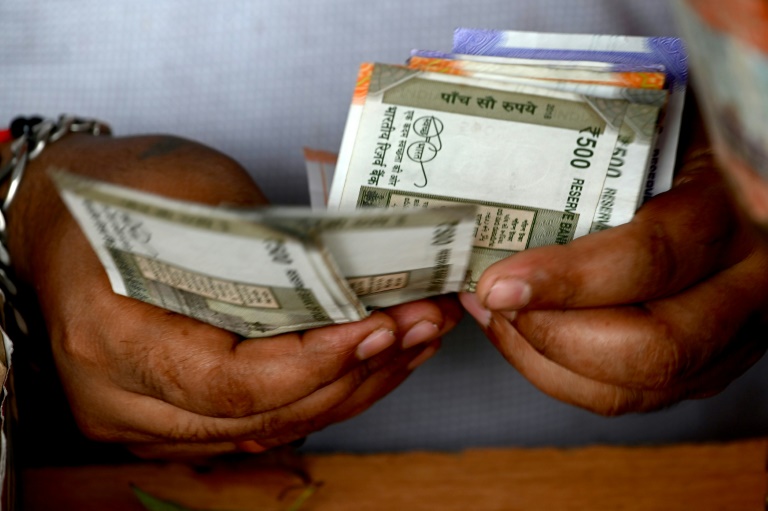
Indian rupee breaches 80 per dollar, hits new record low

The Indian rupee fell to more than 80 per US dollar for the first time on record Tuesday, as the greenback extended its rally and foreign capital outflows intensified.

The rupee hit 80.0600 against the US dollar in early trade, Bloomberg data showed, before paring losses on suspected central bank intervention to close at 79.9487.

High inflation and rising interest rates in the United States coupled with fears of an impending recession in the world’s biggest economy have fuelled a broad dollar rally in recent weeks as investors become increasingly risk-averse.

Tighter US monetary policy has exacerbated outflows from emerging markets such as India, where foreign investors have withdrawn a net $31 billion in debt and equity this year.

Data released last week showed that US consumer price inflation hit a fresh four-decade high in June, exceeding market forecasts and stoking expectations of another large Federal Reserve rate hike next week.

In a written statement to the Indian parliament on Monday, finance minister Nirmala Sitharaman attributed the rupee’s sharp fall to external reasons.

“Global factors such as the Russia-Ukraine conflict, soaring crude oil prices and tightening of global financial conditions are the major reasons for the weakening of the Indian Rupee against the US dollar,” she said.

At the same time, the Indian currency has strengthened against the British pound, the Japanese yen and the euro in 2022 so far, Sitharaman added.

But higher crude prices have resulted in a deteriorating trade balance in a country that imports 80 percent of its oil.

India’s merchandise trade deficit widened to a record $26.18 billion in June, official data showed last week, largely because of higher crude and coal import prices.

In its monthly economic review, the finance ministry said costlier imports could widen the current account deficit and cause the rupee to depreciate further.

Consumer price inflation in India, the world’s sixth-largest economy, cooled slightly to 7.01 percent in June after hitting an eight-year high of 7.79 percent in April.

But price rises have persisted well above the central bank’s two-to-six percent target range despite consecutive interest rate hikes in May and June.

The central bank has also sold more than $34 billion of its foreign currency reserves in an effort to stabilise the rupee.

“The near-term outlook for the rupee will continue to be weak as it tracks developments on the oil and gas front in international markets,” forex market expert K Harihar told AFP.

“The weakness will persist until trade deficit numbers come down or capital inflows counter it,” he said, adding that the rupee could fall to 81 per US dollar without an agreement between Europe and Russia on gas supply.

The rupee’s move followed Russia’s Gazprom telling Europe late Monday that it cannot guarantee gas supplies following maintenance work on its Nord Stream pipeline.

India’s benchmark Sensex index closed 0.45 percent higher on Tuesday.

'Not a switch': UAE pushes for fair energy transition

The world’s transition to clean energy sources must be “just” and financed by the hydrocarbon trade, the climate change minister of oil-rich United Arab Emirates told AFP.

Mariam Almheiri was interviewed in France where a fierce heatwave set record temperatures as western Europe wilted under a scorching sun and wildfires that devoured forests.

Experts are blaming climate change and predict more frequent extreme weather to come.

“It’s not a switch. We’re not ready yet. And oil and gas will still be part of the energy mix for some time”, she said in an interview Monday as UAE President Sheikh Mohamed bin Zayed Al-Nahyan visited Paris for energy talks.

“We need… a just transition because every country is not at the same level,” the minister of climate change and the environment added, stressing the UAE was using its oil and gas wealth to ramp up renewable sources. 

“You need to build your equipment from what energy you got to do that,” she said. “Clean and renewable energy costs money.”

The international community largely agrees that climate change poses an existential threat to the planet and future of mankind. 

But action to cut carbon pollution and prepare for the accelerating impact is lagging, as is support for vulnerable countries confronting the ravages of a changing climate.

– ‘We will provide’ –

Adding to the pressure has been Russia’s invasion of Ukraine that has sent food and energy prices spiralling.

Western sanctions aimed at crippling major energy producer Russia have resulted in sharply higher fuel costs in Europe and the United States, with inflation soaring as a result.

This has pushed the Unites States and Europe to try to persuade oil-rich countries like the UAE to increase energy supplies to bring prices back under control.

“Look at what we’re going through right now. Months ago, people were pointing their fingers at us going: ‘Why are you still producing?’ Now they’re coming to say: ‘Please produce, please produce.'”

A top oil producer in OPEC, the UAE’s rapid growth since the 1970s has been driven by its energy wealth.

But having diversified its economy over the decades, the desert country of one million locals and nine million foreigners relies less and less on petrol, with revenues now making up only 30 percent of GDP.

At the same time, it forecasts that the oil and gas industry would need to invest over $600 billion every year until 2030 just to keep up with expected demand.

“We are a country that has oil and gas as a natural resource. We don’t have water… so as long as the world needs oil and gas we will provide,” said Almheiri.

The country was built on oil, but is spending billions to develop enough renewable energy to cover half of its needs by 2050. 

It is building two of the world’s largest solar power plants in the capital Abu Dhabi and Dubai.

It has also joined the nuclear club, with its Barakah nuclear power station, the first in the Arab world.

And last year, it launched a “strategic initiative” targeting carbon neutrality by 2050.

– Two-pronged approach –

Meteorologists are predicting more frequent and intense episodes of extreme weather in coming years.

“The increase in the frequency, duration, and intensity of these events over recent decades is clearly linked to the observed warming of the planet and can be attributed to human activity,” the World Meteorological Organisation said. 

Heatwaves of the future will depend largely on how rapidly the global economy can decarbonise.

While several towns and cities in France recorded their highest ever temperatures on Monday, the Gulf region is also at risk.

In the region, summer means suffering for anyone working outside, along with risks of dehydration, heat stroke and heart failure.

Countries of the energy-rich Gulf have banned working outdoors in the hottest hours of the day.

A study in the journal Nature Climate Change found that within this century, parts of the Gulf region could be hit by “unprecedented events of deadly heat as a result of climate change”.

Almheiri said her country, which next year is hosting the United Nations Climate Change Conference COP28, has adopted a “two-pronged approach” while advocating further investments in oil and gas.

“We are ramping up our renewables because we have targets of where we want to reach, and we are decarbonising our oil and gas.”

Wildfires ravage Spanish region twice in a month

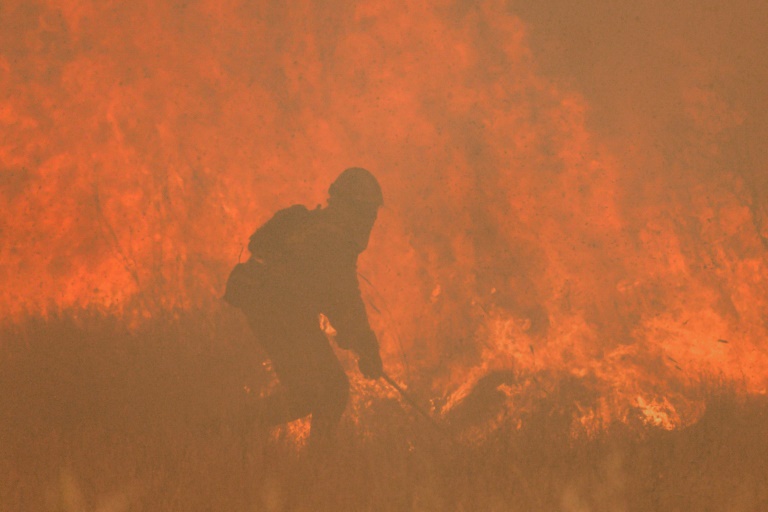
Just a month after a huge wildfire ravaged Spain’s northwestern province of Zamora, flames are once again consuming swathes of the region as locals helplessly watch their land being destroyed.

A column of smoke can be seen some 30 kilometres (18 miles) away as it billows into the sky, obscuring the landscape.

Antonio Puga cried as he observed the desolate scene, saying he felt “desperate and helpless” as flames surrounded his village of Pumarejo de Tera. 

“We could have avoided all this,” said Puga, who is in his sixties.

In front of him fires devour the fields, making them crackle. A relentless wind revives embers and ignites pine trees.

A helicopter ferried water from a nearby river and dumped it on the smouldering fields.

Some 6,000 people from around 30 localities in this rural region have been evacuated from their homes since Sunday.

The wildfires have claimed two lives — that of a firefighter near the village of Losacio and a shepherd whose body was found in a nearby town.

They are by far the largest of the dozens of blazes raging across Spain amid a scorching heatwave affecting much of Western Europe.

– ‘Already too late’ –

In June, a wildfire ravaged nearly 30,000 hectares (75,000 acres) in Sierra de la Culebra, a wooded mountain range near the border with Portugal that is known for its population of wolves.

It was the biggest fire in Spain since 2004.

Desperate locals try to help firefighters stamp out the flames by carrying hoses or transporting water with their tractors. But they are furious with the authorities.

“Firefighters arrived late, the helicopters were there this morning, then they left at 3 pm and now we only have one,” said Puga.

Alberto Escade, a 48-year-old technician, was upset to see three fire trucks leave the area.

“They keep saying they are overwhelmed,” he said.

“They arrive and then they say: It’s already too late, it’s lost.’ They are ordered to take care of inhabited areas,” he added.

Local authorities respond to the criticism by saying the priority is saving human lives.

The former mayor of the village, Isabel Blanco, is also upset.

A month ago a wildfire ravaged one side of the road, she said as she pointed to the charred vegetation on the right. And now its ravaged the land on the other side.

Firefighters were “a little late in coming,” the 52-year-old said.

– ‘Forgotten Spain’ –

She sees this as a symptom of the neglect which rural depopulated regions like Zamora — often referred to as “forgotten Spain” — suffer, a recurring political theme in the country.

In Zamora, thousands of people spent the night on cots at a reception centre sent up for evacuees. 

Many declined to speak to the media, their minds consumed by fear that their homes won’t survive the flames.

Daniel Santamaria, 21, said he was on vacation at his grandparents’ house when the approaching flames forced him to flee in a hurry with only a backpack.

He recalls how ash-filled raindrops “left black spots as they fell”.

Sitting just a few metres (feet) away, Luis Rivero, 76, said he will not forget “the strong wind which carried everything away in its path” and fanned the flames.

Laura Gago, a 36-year-old beekeeper from the village of Escober de Tabara, said between sobs that she has “not yet had the strength” to check on her 700 hives but estimates that “90 percent of her production is burnt”.

“We can’t do anything against nature, the wind, the temperatures, the drought. Climate change is here. It’s not going to go away,” she added.

More cunning than the 'old fox': Sri Lanka's presumptive president

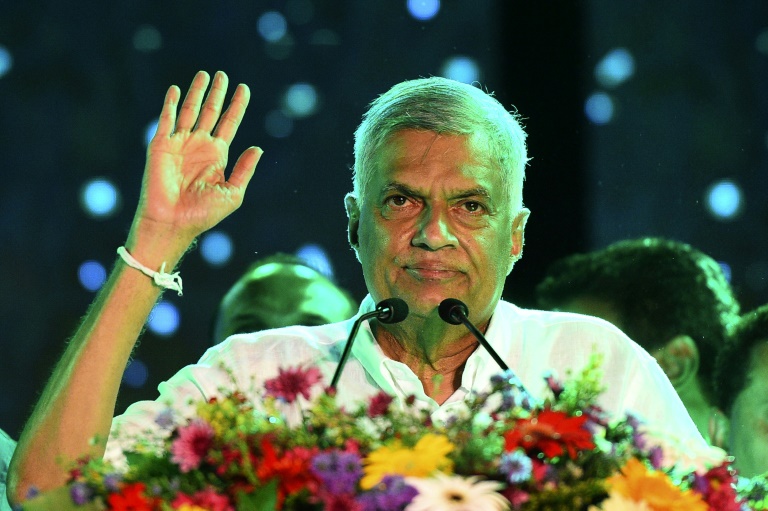
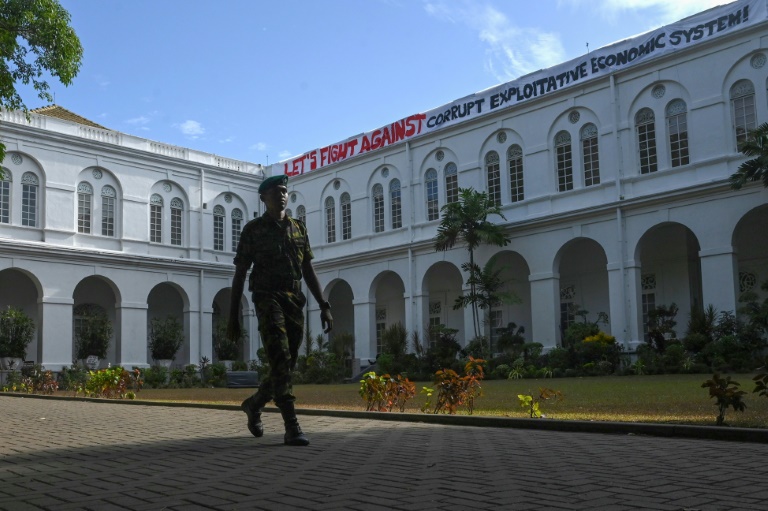
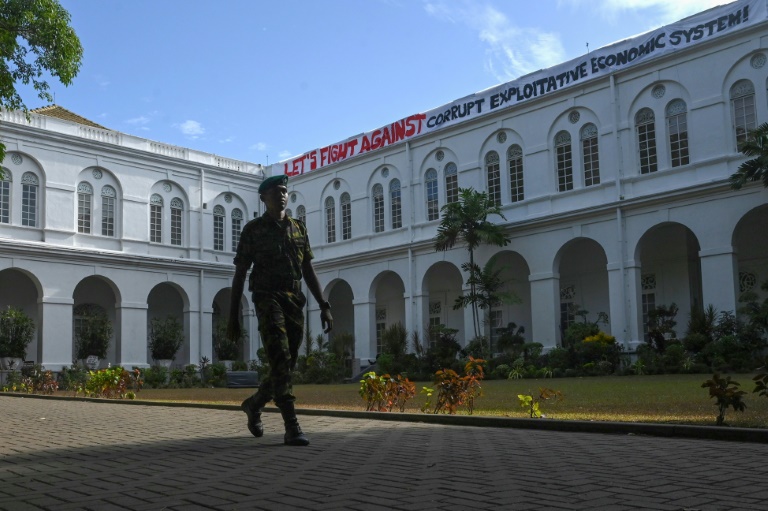
Acting Sri Lankan President Ranil Wickremesinghe is favourite to take the country’s reins long term on Wednesday, as parliament votes to appoint a full successor to Gotabaya Rajapaksa.

Wickremesinghe, a six-time former prime minister, has the backing of Rajapaksa’s Sri Lanka Podujana Peramuna (SLPP), the largest bloc in the 225-member legislature. 

Victory would be the fulfilment of a lifelong ambition for the veteran politician, who is currently head of state in an acting capacity after Rajapaksa resigned in disgrace, fleeing to Singapore and leaving his country in economic ruin.

The pro-Western Wickremesinghe has sought the position for decades. 

A few families have long dominated politics in the Indian Ocean island nation, and Wickremesinghe is the nephew of one its longest-serving leaders, Junius Jayewardene, who was in power for 12 years until stepping down in 1989.

Dubbed the “old fox”, Jayewardene was renowned for his cunning, but his nephew is regarded as an even shrewder navigator of the country’s internecine power networks.

It was Jayewardene who brought him into politics by making him a deputy foreign affairs minister in 1977. Commentators joked the initials of their United National Party (UNP) actually stood for Uncle and Nephew.

Family members say that Jayewardene, who died in 1996, had wanted to ensure that Wickremesinghe becomes president “even for one day”.

On Friday, Wickremesinghe became acting president, stepping up from his position as prime minister as dictated by Sri Lanka’s constitution. 

He had only been appointed to that role in mid-May, when Gotabaya’s elder brother Mahinda resigned due to widespread protests against the Rajapaksas’ rule, as the country faced its worst-ever economic crisis. 

Wickremesinghe has run for the presidency twice before — in 1999 and 2005 — losing both elections, and the UNP was annihilated in a parliamentary election in 2020, leaving the silver-haired veteran as its only MP.

His political manoeuvring, however, has seen him outfox opponents and emerge as the frontrunner for the presidency.

But while he has the official backing of the largest party in parliament, the demonstrators who ousted Rajapaksa are also demanding his departure, accusing him of protecting the ex-president’s family’s interests.

Analysts say he will crack down hard if he is elected and protesters take to the streets against him.

– Burning books –

Wickremesinghe is married to Maithree, an English lecturer. They do not have children and have bequeathed their assets to his old school and their universities. 

But their impressive library of more than 2,500 books — which he called his “biggest treasure” — was among the losses when their house was torched by demonstrators who also drove Rajapaksa from his official residence.

Born into a wealthy and politically connected family rooted in publishing and plantations, Wickremesinghe started work as a rookie reporter at one of the family newspapers.

He turned to a legal career after the family firm was nationalised in 1973 by Sirima Bandaranaike, the world’s first woman prime minister.

“If Lake House had not been taken over, I would have become a journalist. So actually, Mrs Bandaranaike sent me to politics,” Wickremesinghe once told AFP.

His first appointment as prime minister was as a result of the May 1993 assassination of president Ranasinghe Premadasa by a suicide bomber. 

The then-premier Dingiri Banda Wijetunga was elevated to the presidency, and picked Wickremesinghe — then Industry, Science and Technology minister — to replace him.

A similar attack arguably denied him the presidency six years later: his main election rival Chandrika Kumaratunga was wounded by a suicide bomber just three days before the polls.

She brought the nation to tears in a television appearance with a patch over the right eye she had lost and received a significant sympathy vote, with Wickremesinghe losing an election many thought he would win.

Now the political wheel may turn once more: Premadasa’s son Sajith is now the leader of the opposition and has backed Wickremesinghe’s main rival for the presidency, Dullas Alahapperuma.

– Banking scandal –

Wickremesinghe long had a relatively clean image in Sri Lanka’s often corrupt politics, but it was muddied during his last-but-one prime ministerial term in 2015-19, when his administration was rocked by an insider trading scam involving central bank bonds.

His schoolmate and choice as central bank chief was a key accused, raising allegations of cronyism.

Wickremesinghe was also accused of protecting members of the Rajapaksa clan who have been accused of graft, kickbacks, siphoning off public finances and even murder.

As acting president, he took charge of a bankrupt nation that has defaulted on its $51-billion foreign debt and lacks the money to import essential goods. 

His status as a pro-Western, free-market reformist could smooth bailout negotiations with the International Monetary Fund and foreign creditors, but he has already warned there will be no quick fix to the nation’s unprecedented economic woes.

“The worst is yet to come. We have very high inflation now and hyperinflation is on its way,” Wickremesinghe told parliament earlier this month. “We are bankrupt.”

Rare twin giraffes born in Kenya

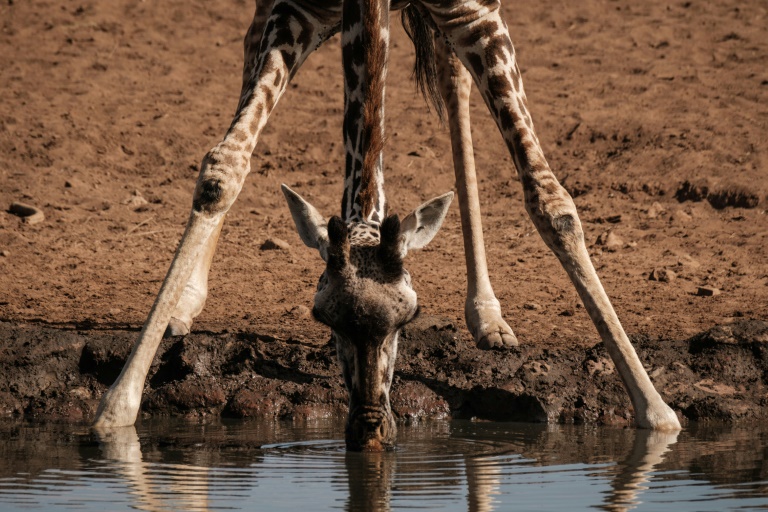
Rare twins have been born to a Maasai giraffe in Nairobi’s national park, the Kenyan wildlife minister said Tuesday.

“This is an extremely rare occurence,” Najib Balala said on Twitter in a post accompanied by a picture of the mother watching over her offspring.

The world’s tallest species was listed as “vulnerable to extinction” on the International Union for Conservation of Nature’s 2016 Red List of threatened wildlife.

Only about 117,000 giraffe remain in the wild, according to the Giraffe Conservation Foundation. It said the numbers of the gentle long-necked giant in Africa have plummeted by 30 percent over the last 30 years, describing it as a “silent extinction”.

Kenya is home to three subspecies of giraffe, the Maasai, the reticulated and the Rothschild.

Nairobi National Park lies just seven kilometres (four miles) from the heart of the Kenyan capital, and is a tourist magnet for its wildlife including lions, leopards, rhinos and buffalos which graze against a backdrop of distant skyscrapers.

At 15 months, giraffes have one of the longest gestation periods for mammals. They give birth standing up, which means their calves drop just under two metres (six feet) to the ground. 

This startling introduction to life gets them up and running around in less than an hour. A newborn calf is bigger than the average adult human. 

Only a handful of twin births have been documented worldwide with most often not surviving. 

In the wild, giraffes can live up to 25 years, while in captivity they can survive more than 35 years.

Iran hosts Putin, Erdogan for talks overshadowed by Ukraine war

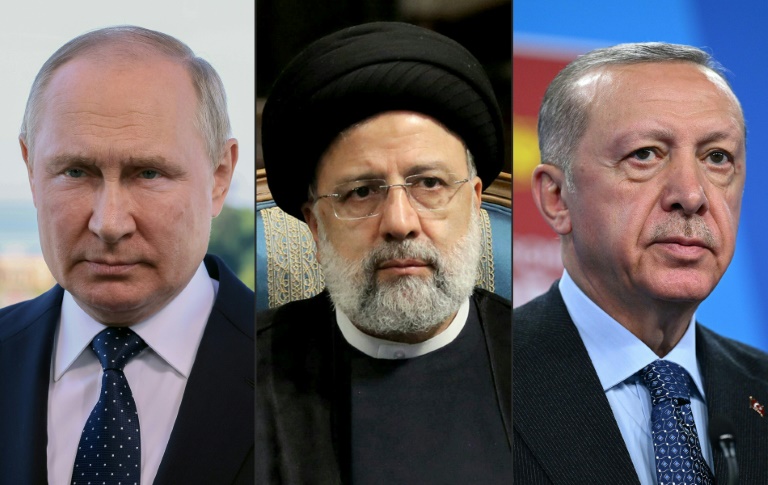
Iran’s president will host his Russian and Turkish counterparts on Tuesday for talks on the Syrian war in a three-way summit overshadowed by fallout from the Russian invasion of Ukraine.

The summit is the first hosted by Iran’s ultra-conservative President Ebrahim Raisi since he took office last year, and the second trip abroad by Russia’s Vladimir Putin since he ordered the invasion of Ukraine.

It comes days after US President Joe Biden visited the Middle East for the first time since taking office, with stops in Iran’s regional foes Israel and Saudi Arabia.

But the trilateral summit is ostensibly centred on Syria, as part of the “Astana peace process” to end more than 11 years of conflict in the Arab country.

All three are involved in Syria, with Iran and Russia supporting President Bashar al-Assad and Turkey backing rebels.

The gathering comes after Turkish President Recep Tayyip Erdogan threatened late last year to launch a new offensive in northern Syria against Kurdish militants.

Iran has already warned any Turkish military action in Syria could “destabilise the region”.

The summit will also enable Erdogan to hold his first meeting with Putin since Russia invaded Ukraine on February 24.

Erdogan arrived in Tehran on Monday night, and was received by Raisi on Tuesday morning at the Saadabad palace complex, state television said.

He later met Iran’s supreme leader Ayatollah Ali Khamenei, who has the final say in major state policies.

Putin is expected to arrive in Iran later on Tuesday.

– Ukraine grain –

The Turkish president has for months been offering to meet the Russian leader in a bid to help resolve heightened global tensions.

“The timing of this summit is not a coincidence,” Russian analyst Vladimir Sotnikov said.

“Turkey wants to conduct a ‘special operation’ in Syria just as Russia is implementing a ‘special operation’ in Ukraine.”

Turkey has launched waves of attacks on Syria since 2016, targeting Kurdish militias as well as Islamic State group jihadists and Assad loyalists.

In their talks, Putin and Erdogan would discuss mechanisms to export grain from Ukraine, a Kremlin source said.

Russia’s war on Ukraine has massively hampered shipments from one of the world’s biggest exporters of wheat and other grain, sparking fears of global food shortages.

Turkey — a NATO member on speaking terms with both Russia and Ukraine — has spearheaded efforts to resume the grain deliveries.

Ultimately, Erdogan is hoping to get “the green light” from Putin and Raisi for Turkey’s military operation in Syria, said Sinan Ulgen, a visiting scholar at Carnegie Europe.

EU foreign policy chief Josep Borrell warned on Monday that Russia’s blockade of Ukrainian ports threatens supplies to countless thousands vulnerable to starvation.

Borrell dubbed the issue “one of life and death for many human beings”.

– ‘Iran-phobia’ –

On Sunday, a day after Biden ended his tour of the Middle East, Iran accused the United States of provoking crises in the region.

Biden had vowed the US would not “tolerate efforts by any country to dominate another in the region through military buildups, incursions, and/or threats”, in a transparent reference to Iran.

In a speech in the Saudi city of Jeddah at a summit of Gulf Arab states as well as Egypt, Jordan and Iraq, Biden assured the leaders gathered that the US would remain fully engaged in the Middle East.

“We will not walk away and leave a vacuum to be filled by China, Russia or Iran,” he said.

Following the meeting, a joint statement committed the leaders to “preserve regional security and stability”.

It also underscored diplomatic efforts to prevent Iran from developing a nuclear weapon, a goal the Islamic republic has always denied seeking.

On Sunday, Iran accused the US of having “once again resorted to the failed policy of Iran-phobia, trying to create tensions and crises in the region”.

The US last week alleged Iran plans to deliver “hundreds of drones” to Russia to aid its war on Ukraine, an accusation the Islamic republic dismissed as “baseless”.

Sri Lanka's political crisis: What happens next?

Sri Lanka’s parliament elects a new president on Wednesday to replace Gotabaya Rajapaksa, who last week fled to Singapore and resigned following months of protests over the country’s financial meltdown.

AFP looks at how cash-strapped Sri Lanka ended up in its worst-ever economic crisis, and what comes next in its complicated, corrupt and sometimes violent political system.

– Why did Rajapaksa flee? –

Sri Lanka’s financial woes were triggered by the coronavirus pandemic but exacerbated by mismanagement under Rajapaksa’s government. 

The country has been unable to finance even the most essential imports since late last year, and has since defaulted on its debt.

Discontent had been mounting for months over severe food and fuel shortages, record inflation and lengthy power cuts. 

Even Rajapaksa’s closest allies began abandoning him, and when protesters overran his official residence in Colombo this month, he was forced to flee to a navy base and then to Singapore in fear for his life.

– Wasn’t Rajapaksa a popular leader? –

Rajapaksa was dubbed “The Terminator” for ruthlessly crushing Tamil rebels as head of the defence ministry during his elder brother Mahinda’s presidency between 2005 and 2015.

He was loved by the country’s Sinhala Buddhist majority, but loathed by Tamils and Muslims who saw him as a war criminal, a racist and an oppressor of minorities.

When inflation crossed 50 percent, and with four out of five people forced to cut back on food because of acute shortages, the ethnically divided nation united in its opposition to Rajapaksa.

– What happened after he fled? –

Rajapaksa formally quit on July 14, just two years and eight months into his five-year term, with Prime Minister Ranil Wickremesinghe automatically elevated as the acting leader under the country’s constitution.

Wickremesinghe is serving as a stop-gap until Wednesday, when the 225-seat parliament elects one of its members to lead the country for the balance of Rajapaksa’s term.

– How does the election work? –

The 225 MPs will rank the three candidates in order of preference in a secret ballot.

Candidates need more than half the vote to be elected. If no-one crosses the threshold on first preferences, the candidate with the lowest support will be eliminated and their votes distributed according to second preferences.

The secret ballot gives MPs a freer hand than an open poll, and previous elections have seen allegations of bribes offered and accepted in exchange for votes.

During a constitutional crisis in October 2018, some MPs said they had been offered $3.5 million in cash and apartments abroad for their support.

– Who is leading the race? –

Acting President Wickremesinghe, 73, a pro-Western six-time prime minister, appears to be the front-runner.

He has secured support from the leadership of the Rajapaksas’ SLPP, which is still the largest single bloc in parliament, and his hardline stance against protesters has gone down well with MPs who have been at the receiving end of mob violence.

The SLPP has more than 100 seats and Wickremesinghe would almost certainly be elected if party discipline holds.

– Who are the other candidates? –

The SLPP is fractured so that party dissident and former media minister Dullas Alahapperuma, 63, is a serious challenger.

The main opposition leader Sajith Premadasa, 55, has teamed up with Alahapperuma in a pact that would see him named prime minister if their ticket succeeds.

It is an unlikely pairing. Alahapperuma was a journalist and rights campaigner in the late 1980s, when Premadasa’s late father Ranasinghe ruled the country with an iron fist.

A distant third candidate is leftist leader Anura Dissanayake, whose coalition has just three parliamentary seats.

– What does this mean for IMF talks? –

Despite their differences, Sri Lanka’s political parties are united in their support for ongoing talks with the International Monetary Fund, with Wickremesinghe saying a bailout is urgently needed.

Sri Lanka declared itself bankrupt in mid-April when the government defaulted on its $51 billion foreign debt.

But the political crisis has interrupted the negotiations, and the IMF said last week that it hoped the unrest would be resolved soon so they could resume.

No political party in the current parliament has a clear majority.

Even if the country could afford to hold a fresh election, Tamil legislator Dharmalingam Sithadthan pointed out that a strong mandate was not always a guarantee of stability or success.

“We had Gotabaya with a record 6.9 million votes and what did he do?” Sithadthan told AFP. “He was a total failure.”

Sri Lanka's political crisis: What happens next?

Sri Lanka’s parliament elects a new president on Wednesday to replace Gotabaya Rajapaksa, who last week fled to Singapore and resigned following months of protests over the country’s financial meltdown.

AFP looks at how cash-strapped Sri Lanka ended up in its worst-ever economic crisis, and what comes next in its complicated, corrupt and sometimes violent political system.

– Why did Rajapaksa flee? –

Sri Lanka’s financial woes were triggered by the coronavirus pandemic but exacerbated by mismanagement under Rajapaksa’s government. 

The country has been unable to finance even the most essential imports since late last year, and has since defaulted on its debt.

Discontent had been mounting for months over severe food and fuel shortages, record inflation and lengthy power cuts. 

Even Rajapaksa’s closest allies began abandoning him, and when protesters overran his official residence in Colombo this month, he was forced to flee to a navy base and then to Singapore in fear for his life.

– Wasn’t Rajapaksa a popular leader? –

Rajapaksa was dubbed “The Terminator” for ruthlessly crushing Tamil rebels as head of the defence ministry during his elder brother Mahinda’s presidency between 2005 and 2015.

He was loved by the country’s Sinhala Buddhist majority, but loathed by Tamils and Muslims who saw him as a war criminal, a racist and an oppressor of minorities.

When inflation crossed 50 percent, and with four out of five people forced to cut back on food because of acute shortages, the ethnically divided nation united in its opposition to Rajapaksa.

– What happened after he fled? –

Rajapaksa formally quit on July 14, just two years and eight months into his five-year term, with Prime Minister Ranil Wickremesinghe automatically elevated as the acting leader under the country’s constitution.

Wickremesinghe is serving as a stop-gap until Wednesday, when the 225-seat parliament elects one of its members to lead the country for the balance of Rajapaksa’s term.

– How does the election work? –

The 225 MPs will rank the three candidates in order of preference in a secret ballot.

Candidates need more than half the vote to be elected. If no-one crosses the threshold on first preferences, the candidate with the lowest support will be eliminated and their votes distributed according to second preferences.

The secret ballot gives MPs a freer hand than an open poll, and previous elections have seen allegations of bribes offered and accepted in exchange for votes.

During a constitutional crisis in October 2018, some MPs said they had been offered $3.5 million in cash and apartments abroad for their support.

– Who is leading the race? –

Acting President Wickremesinghe, 73, a pro-Western six-time prime minister, appears to be the front-runner.

He has secured support from the leadership of the Rajapaksas’ SLPP, which is still the largest single bloc in parliament, and his hardline stance against protesters has gone down well with MPs who have been at the receiving end of mob violence.

The SLPP has more than 100 seats and Wickremesinghe would almost certainly be elected if party discipline holds.

– Who are the other candidates? –

The SLPP is fractured so that party dissident and former media minister Dullas Alahapperuma, 63, is a serious challenger.

The main opposition leader Sajith Premadasa, 55, has teamed up with Alahapperuma in a pact that would see him named prime minister if their ticket succeeds.

It is an unlikely pairing. Alahapperuma was a journalist and rights campaigner in the late 1980s, when Premadasa’s late father Ranasinghe ruled the country with an iron fist.

A distant third candidate is leftist leader Anura Dissanayake, whose coalition has just three parliamentary seats.

– What does this mean for IMF talks? –

Despite their differences, Sri Lanka’s political parties are united in their support for ongoing talks with the International Monetary Fund, with Wickremesinghe saying a bailout is urgently needed.

Sri Lanka declared itself bankrupt in mid-April when the government defaulted on its $51 billion foreign debt.

But the political crisis has interrupted the negotiations, and the IMF said last week that it hoped the unrest would be resolved soon so they could resume.

No political party in the current parliament has a clear majority.

Even if the country could afford to hold a fresh election, Tamil legislator Dharmalingam Sithadthan pointed out that a strong mandate was not always a guarantee of stability or success.

“We had Gotabaya with a record 6.9 million votes and what did he do?” Sithadthan told AFP. “He was a total failure.”

Venice pushes tourists to drink from fountains and shun plastic

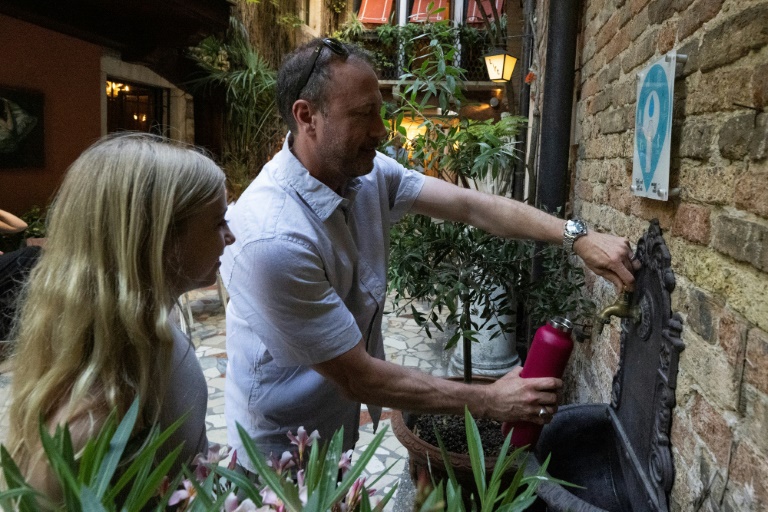
A few steps from Venice’s St. Mark’s Square, a little girl fills her water bottle at a courtyard fountain, a haven of peace far from the hordes of tourists. 

“Plastic bottles are super annoying to me,” said 11-year-old Keira from Tucson, Arizona. “There is so much plastic in the ocean and everywhere.” 

Her father, Charlie Michieli, also believes in swapping plastic for refillable bottles: “You can go through quite a lot, especially on a long trip… litres and litres and litres of plastic bottles.”

In Venice, which welcomes millions of visitors each year, tourism contributes to between 28 and 40 percent of garbage production depending on the season, according to local government data — including piles and piles of plastic water bottles. 

To combat the waste, local authorities now promote the use of refillable water bottles by calling tourists’ attention to the vast network of drinking water fountains dotting the squares and alleys of the watery city. 

“In the historic centre, there are 126 fountains spread over the area, they’re easy to find, there’s one nearly every 100 metres (330 feet),” said architect Alberto Chinellato in his city hall office overlooking the Rialto Bridge.

To make things even easier, water distribution company Veritas has launched an app showing a map with all the nearest fountains.  

“Encouraging the use of free drinking water certainly produces less waste… but also brings fewer bottles in the historic centre, which means less pollution and less transport”, said Chinellato. 

Leaving Chinellato’s office, AFP observed an empty plastic water bottle bobbing between two gondolas on the Grand Canal — underscoring that the battle against plastic is far from being won.

– Little blue drop –

At the centrally located Hotel Flora, owner Gioele Romanelli has also decided to contribute to the crusade against plastic by educating his guests. 

“We simply had a card printed on which we pointed out the fountains of Venice with a little blue drop,” said Romanelli, proudly displaying a copy on a small bistro table. 

“Not only with a refillable bottle, but also by recycling a small (plastic) water bottle you can keep all day,” said the 49-year-old hotelier. 

At check-in, guests are briefed about Venice’s “good water”.

“They are sometimes surprised to learn that the water in Venice is drinkable,” he said. 

“With this small gesture, our customers can actively participate in the battle against plastic,” he said, seeing it as a way, in a city with “an insane number of tourists”, to give them a certain sense of responsibility. 

In addition to the card marking the city’s fountains, the hotel has done away with single-dose shampoo and shower gel bottles in the rooms in favour of refillable dispensers.

At breakfast, plastic is something of the past, with the hotel now using small glass containers for muesli, dried fruit and yogurt, Romanelli said.

Venice is quickly recovering its tourist traffic following the coronavirus pandemic that robbed it of its economic lifeline. 

But after reaching a total of 5.5 million visitors in 2019 — eclipsing the city centre’s 50,000 inhabitants — officials are trying to limit arrivals. 

From January, day visitors will pay a tax they’ve been able to avoid until now by not staying overnight. 

The tax, priced between 3-10 euros (around $3-$10) depending on the number of crowds, will be payable online on a dedicated website. 

It will provide visitors with a QR code needed for entry at the various entry points to the historic centre.

Close Bitnami banner
Bitnami