World

Protesters' target is favourite for Sri Lanka presidency

A veteran politician backed by the party of ousted Sri Lankan president Gotabaya Rajapaksa is the favourite to be elected to replace him, analysts said after nominations closed Tuesday.

Ranil Wickremesinghe is a six-time former prime minister who became acting president after Rajapaksa resigned, but is despised by the protesters who forced his predecessor from office.

Wickremesinghe has the formal backing of the Rajapaksas’ SLPP, the largest bloc in the 225-member parliament that will elect the president on Wednesday.

His main opponent will be SLPP dissident and former education minister Dullas Alahapperuma, who is being supported by the opposition.

The winner of the three-way contest will take charge of a bankrupt nation that is in talks with the IMF for a bailout, with its 22 million people enduring severe shortages of food, fuel and medicines.

Sri Lanka ran out of foreign exchange to finance even the most vital imports in a crisis triggered by the coronavirus pandemic but exacerbated by mismanagement, critics say.

Months of protests culminated in Rajapaksa fleeing his palace before flying to the Maldives and then Singapore, from where he submitted his resignation.

As acting president, Wickremesinghe has extended a state of emergency that gives police and security forces sweeping powers to deal with troublemakers, and last week he ordered troops to evict protesters from state buildings they had occupied.

An opposition MP said Wickremesinghe’s hardline stance against demonstrators was going down well with MPs who had been at the receiving end of mob violence, and most SLPP legislators would side with him.

“Ranil is emerging as the law-and-order candidate,” Tamil MP Dharmalingam Sithadthan told AFP.

Political analyst Kusal Perera agreed that Wickremesinghe had a “slight advantage” despite his own party securing just one seat at the August 2020 elections.

“Ranil has regained the acceptance of the urban middle classes by restoring some of the supplies like gas and he has already cleared government buildings showing his firmness,” Perera said.

Observers believe that Wickremesinghe will crack down hard if he wins and the demonstrators — who have also been demanding his resignation, accusing him of protecting the Rajapaksas’ interests — will take to the streets.

The protesters were planning another rally against Wickremesinghe in the capital later Tuesday.

Former president Mahinda Rajapaksa, the deposed Gotabaya’s elder brother and head of the clan that has dominated Sri Lankan politics for years, remains in the country and party sources said he was pressing SLPP legislators to support Wickremesinghe.

– Backroom deal – 

His main opponent Alahapperuma, a former journalist, is not the object of so much scorn from the demonstrators, despite being an SLPP member.

He promised to form “an actual consensual government for the first time in our history,” in a tweet three days ago.

Moments before the formal nominations in parliament, opposition leader Sajith Premadasa announced he was withdrawing from the race in favour of 63-year-old Alahapperuma.

“For the greater good of my country that I love and the people I cherish, I hereby withdraw my candidacy for the position of President,” Premadasa tweeted.

Alahapperuma was a rights campaigner in the late 1980s, when Premadasa’s late father Ranasinghe ruled the country with an iron fist.

But a legislator from Premadasa’s SJB party told AFP that the two men struck a deal overnight for Premadasa to be chosen as the new prime minister should Alahapperuma become head of state.

“We have a common minimum programme that we agreed on,” the SJB MP said. “We had only one sticking point about who will be the president and that was sorted out last night.”

The third candidate is Anura Dissanayake, 53, leader of the leftist JVP, or People’s Liberation Front, which has three parliamentary seats.

MPs will rank the candidates in order of preference in a secret ballot — a mechanism which gives them a freer hand than an open poll, and previous elections have seen allegations of bribes offered and accepted in exchange for votes.

Candidates need more than half the vote to be elected. If no one crosses the threshold on first preferences, the candidate with the lowest support will be eliminated and their votes distributed according to second preferences.

The new leader will be in office for the balance of Rajapaksa’s term, which runs until November 2024.

If Wickremesinghe is confirmed in the post, he is expected to name public administration minister Dinesh Gunawardena, 73, his schoolmate and a strong Rajapaksa loyalist, as the new premier. 
Markets drop as Apple report fans economic worries

Most stocks fell Tuesday after a Wall Street sell-off fuelled by fresh recession worries following a report that Apple planned to ease back on spending due to uncertainty over the economic outlook.

The drop across most markets in Asia also came as oil held a Monday surge caused by fading expectations that Joe Biden had convinced Saudi Arabia to pump more to ease a supply crisis and temper prices.

The losses among equities ate into Monday’s gains, which came after a forecast-beating US retail sales report suggested consumers — the key driver of growth — remained resilient despite decade-high inflation and rising interest rates.

And analysts warned that with the earnings season just getting under way, there could be more pain ahead for investors as firms report falling profits or warn about the outlook.

In a sign of concern among big-cap firms about an economic slowdown or recession, Bloomberg News said tech titan Apple was pulling back on hiring and some investments. 

The news follows similar belt-tightening moves by other Silicon Valley giants including Alphabet, Amazon and Facebook parent Meta.

“With Apple putting up their hand and acknowledging they have too many staff, it is a clear sign of caution from the mega-cap heavyweight giants amid an uncertain time,” said SPI Asset Management’s Stephen Innes.

“Investors are hoping for a ‘kitchen-sink’ quarter where corporates flush out all the bad news at once — but I am not sure that will happen, and I think this makes it difficult to put an absolute bottom on the equity selloff.”

The report led to a reversal on Wall Street, with all three main indexes ending in negative territory, having enjoyed most of the day well up.

Asia and Europe struggled Tuesday.

Hong Kong, Sydney, Seoul, Singapore, Taipei, Wellington and Bangkok all fell, though Tokyo rose as investors there returned from a long weekend to play catch-up with Monday’s regional rally. Mumbai, Manila and Jakarta also rose, while Shanghai was marginally higher.

London, Paris and Frankfurt all fell in the morning.

Innes added that markets were likely to face pressure for some time as central banks continue to lift borrowing costs to fight inflation, risking an economic downturn.

“The probability of recession is dominating US discussions, as inflation might have peaked in June while the Fed still has a couple of massive hikes ahead before possibly pausing,” he said.

“We always hear that the rate hikes are in the price, but they are always a shock when the market actualises the reality, especially when they are of the jumbo variety.”

The Fed’s fast monetary policy tightening has sent the dollar soaring against most other currencies, hitting parity with the euro last week. However, the single currency has strengthened this week ahead of a European Central Bank rate hike, with speculation growing that it will announce a half-point lift.

On Tuesday the dollar briefly hit a record high above 80 rupees, with the Indian unit hammered by massive outflows of capital as the economy struggles.

While some are predicting inflation may have reached its peak, oil prices — the key driver of soaring prices — remain elevated, despite recent losses.

Both main contracts edged up after rocketing more than five percent Monday on expectations that Riyadh will not open up the taps further, with Biden’s plea seeming to have fallen on deaf ears.

Traders are also keeping a nervous eye on Europe, where a 10-day maintenance shutdown of the Nord Stream 1 pipeline from Russia is due to come to an end.

Many fear Vladimir Putin will keep it shut down in retaliation for sanctions imposed on Moscow for its invasion of Ukraine. That would deal another blow to the already creaking eurozone economy and could send crude prices soaring.

Supply fears are trumping worries about a demand hit in China from another possible lockdown in Shanghai as officials struggle to contain another Covid-19 outbreak.

– Key figures at around 0810 GMT –

Tokyo – Nikkei 225: UP 0.7 percent at 26,961.68 (close)

Hong Kong – Hang Seng Index: DOWN 0.9 percent at 20,661.06 (close)

Shanghai – Composite: FLAT percent at 3,279.43 (close)

London – FTSE 100: DOWN 0.4 percent at 7,197.32

Euro/dollar: DOWN at $1.0249 from $1.0146 on Monday

Pound/dollar: DOWN at $1.2018 from $1.1950 

Euro/pound: UP at 85.25 pence from 84.88 pence

Dollar/yen: UP at 137.65 yen from 138.13 yen

West Texas Intermediate: UP 0.5 percent at $103.06 per barrel

Brent North Sea crude: UP 0.4 percent at $106.65 per barrel

New York – Dow: DOWN 0.7 percent at 31,072.61 (close)

Europe burns as heatwave set to break UK temperature record

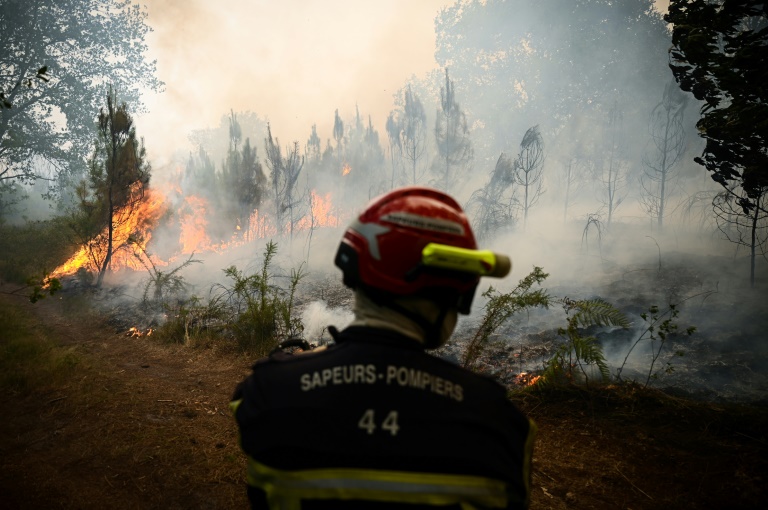
A fierce heatwave sweeping western Europe was on Tuesday set to smash Britain’s all-time temperature record, as swathes of the continent wilted under a scorching sun which has fed ferocious wildfires and stretched emergency services.

Forecasters in the UK have for days been predicting the current national record of 38.7 degrees Celsius (102 degrees Fahrenheit), registered in 2019, would be broken Tuesday and 40C breached for the first time. 

The meteorological agency, the Met Office, said it had provisionally been the warmest night on record heading into the day, after temperatures remained above 25C in most places.

Meanwhile Monday’s 38.1C reached in Suffolk, in eastern England, made it the UK’s third-hottest day ever, as Wales broke its record temperature after the mercury climbed to 37.1C.

Experts blame climate change for the latest unprecedented heatwave, and note the more frequent extreme weather will only worsen in years to come.

It is playing havoc with Britain’s transport network, as some rail lines close Tuesday and other services are hampered.

“A lot of our infrastructure is just not built for this temperature,” Transport Secretary Grant Shapps told Sky News.

Across the Channel in France, a host of towns and cities recorded their highest-ever temperatures on Monday, the national weather office said.

Saint-Brieuc, on the Channel coast, hit 39.5C beating a previous record of 38.1C, and the western city of Nantes recorded 42C, beating a decades-old high of 40.3C, set in 1949.

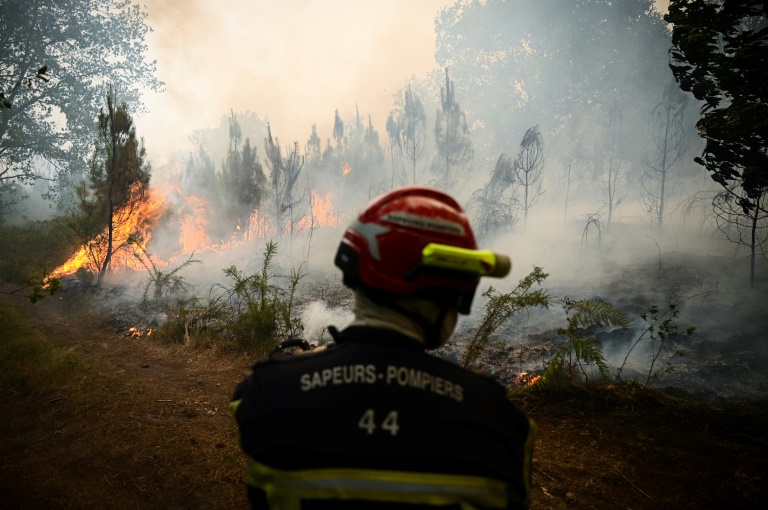
Firefighters in France’s southwest were still struggling in the crushing heat to contain two massive fires that have caused widespread destruction.

For nearly a week now, armies of firefighters and  waterbombing aircraft have battled blazes that have mobilised much of France’s firefighting capacity.

– Holiday makers evacuated –

Ireland saw Monday temperatures of 33C in Dublin — the highest since 1887 — while Belgium is expecting temperatures of 40C and over.

The heatwave is the second to engulf parts of Europe in recent weeks.

European Commission researchers said nearly half (46 percent) of EU territory was exposed to warning-level drought. Eleven percent was at an alert level, and crops were already suffering from lack of water.

Blazes in France, Greece, Portugal and Spain have destroyed thousands of hectares of land.

An area nine kilometres (5.5 miles) long and eight kilometres wide was still ablaze near France’s Dune de Pilat, Europe’s highest sand dune, turning picturesque landscapes, popular campsites and pristine beaches into a scorching mess.

The blaze was literally “blowing things up” with its ferocity, said Marc Vermeulen, head of the local fire service. “Pine trunks of 40 years are bursting.”

A total of 8,000 people were evacuated from near the dune Monday as a precaution, while changing winds blew thick smoke into residential areas, officials said.

Hurriedly packing her car, Patricia Monteil said she would go to her daughter’s home nearby. “But if that goes up in flames too, I don’t know what to do.”

Around 32,000 tourists or residents have been forced to evacuate in France, many to emergency shelters.

On Monday evening, prosecutors in the southwest city of Bordeaux said a man suspected of having started one of the fires had been taken into custody.

In Spain, a fire burning in the northwestern province of Zamora claimed the life of a 69-year-old shepherd, regional authorities said. On Sunday, a fireman died in the same area.

Later Monday an office worker in his fifties died from heatstroke in Madrid.

Authorities have reported around 20 wildfires still raging from the south to Galicia in the far northwest, where blazes have destroyed around 4,500 hectares of land. 

– Heatwave gets political –

The fires in Portugal claimed two more lives in the northern Vila Real region, after a car carrying two villagers crashed as they appeared to be trying to flee a fire zone, officials said.

“We found the car and these two people, aged around 70 years, completely burnt,” said the mayor of Murca, Mario Artur Lopez. The victims were from the nearby village of Penabeice.

Almost the entire country has been on high alert for wildfires despite a slight drop in temperatures, which last Thursday hit 47C — a record for July.

The fires have already killed two other people, injured around 60 and destroyed between 12,000 and 15,000 hectares of land there.

Back in Britain, the heatwave has permeated the race to replace outgoing prime minister Boris Johnson.

Despite the record temperatures, some of the Conservative MP candidates have suggested they may not keep 2050 emissions reduction targets and green energy subsidies, as they bid to differentiate themselves from their rivals.

Johnson himself has faced criticism for not taking it seriously enough after he failed to attend several emergency meetings on the crisis.

He instead hosted a farewell party at his state-funded country retreat on Sunday.

The extreme temperatures saw flights temporarily suspended Monday at Luton Airport near London and at Royal Air Force base Brize Norton due to “defects” on the runway.

Trains were cancelled and schools closed in some areas.

Right-wing tabloid the Daily Mail took aim at the country’s response to the situation, claiming “snowflake Britain had a meltdown” on its front page.

In Brighton, on England’s south coast, bank worker Abu Bakr put the heatwave in perspective.

“I come from Sudan,” he said. “Forty, forty-five degrees is just the norm. This is as good as it can be.”

burs-jj/bp

Europe burns as heatwave set to break UK temperature record

A fierce heatwave sweeping western Europe was on Tuesday set to smash Britain’s all-time temperature record, as swathes of the continent wilted under a scorching sun which has fed ferocious wildfires and stretched emergency services.

Forecasters in the UK have for days been predicting the current national record of 38.7 degrees Celsius (102 degrees Fahrenheit), registered in 2019, would be broken Tuesday and 40C breached for the first time. 

The meteorological agency, the Met Office, said it had provisionally been the warmest night on record heading into the day, after temperatures remained above 25C in most places.

Meanwhile Monday’s 38.1C reached in Suffolk, in eastern England, made it the UK’s third-hottest day ever, as Wales broke its record temperature after the mercury climbed to 37.1C.

Experts blame climate change for the latest unprecedented heatwave, and note the more frequent extreme weather will only worsen in years to come.

It is playing havoc with Britain’s transport network, as some rail lines close Tuesday and other services are hampered.

“A lot of our infrastructure is just not built for this temperature,” Transport Secretary Grant Shapps told Sky News.

Across the Channel in France, a host of towns and cities recorded their highest-ever temperatures on Monday, the national weather office said.

Saint-Brieuc, on the Channel coast, hit 39.5C beating a previous record of 38.1C, and the western city of Nantes recorded 42C, beating a decades-old high of 40.3C, set in 1949.

Firefighters in France’s southwest were still struggling in the crushing heat to contain two massive fires that have caused widespread destruction.

For nearly a week now, armies of firefighters and  waterbombing aircraft have battled blazes that have mobilised much of France’s firefighting capacity.

– Holiday makers evacuated –

Ireland saw Monday temperatures of 33C in Dublin — the highest since 1887 — while Belgium is expecting temperatures of 40C and over.

The heatwave is the second to engulf parts of Europe in recent weeks.

European Commission researchers said nearly half (46 percent) of EU territory was exposed to warning-level drought. Eleven percent was at an alert level, and crops were already suffering from lack of water.

Blazes in France, Greece, Portugal and Spain have destroyed thousands of hectares of land.

An area nine kilometres (5.5 miles) long and eight kilometres wide was still ablaze near France’s Dune de Pilat, Europe’s highest sand dune, turning picturesque landscapes, popular campsites and pristine beaches into a scorching mess.

The blaze was literally “blowing things up” with its ferocity, said Marc Vermeulen, head of the local fire service. “Pine trunks of 40 years are bursting.”

A total of 8,000 people were evacuated from near the dune Monday as a precaution, while changing winds blew thick smoke into residential areas, officials said.

Hurriedly packing her car, Patricia Monteil said she would go to her daughter’s home nearby. “But if that goes up in flames too, I don’t know what to do.”

Around 32,000 tourists or residents have been forced to evacuate in France, many to emergency shelters.

On Monday evening, prosecutors in the southwest city of Bordeaux said a man suspected of having started one of the fires had been taken into custody.

In Spain, a fire burning in the northwestern province of Zamora claimed the life of a 69-year-old shepherd, regional authorities said. On Sunday, a fireman died in the same area.

Later Monday an office worker in his fifties died from heatstroke in Madrid.

Authorities have reported around 20 wildfires still raging from the south to Galicia in the far northwest, where blazes have destroyed around 4,500 hectares of land. 

– Heatwave gets political –

The fires in Portugal claimed two more lives in the northern Vila Real region, after a car carrying two villagers crashed as they appeared to be trying to flee a fire zone, officials said.

“We found the car and these two people, aged around 70 years, completely burnt,” said the mayor of Murca, Mario Artur Lopez. The victims were from the nearby village of Penabeice.

Almost the entire country has been on high alert for wildfires despite a slight drop in temperatures, which last Thursday hit 47C — a record for July.

The fires have already killed two other people, injured around 60 and destroyed between 12,000 and 15,000 hectares of land there.

Back in Britain, the heatwave has permeated the race to replace outgoing prime minister Boris Johnson.

Despite the record temperatures, some of the Conservative MP candidates have suggested they may not keep 2050 emissions reduction targets and green energy subsidies, as they bid to differentiate themselves from their rivals.

Johnson himself has faced criticism for not taking it seriously enough after he failed to attend several emergency meetings on the crisis.

He instead hosted a farewell party at his state-funded country retreat on Sunday.

The extreme temperatures saw flights temporarily suspended Monday at Luton Airport near London and at Royal Air Force base Brize Norton due to “defects” on the runway.

Trains were cancelled and schools closed in some areas.

Right-wing tabloid the Daily Mail took aim at the country’s response to the situation, claiming “snowflake Britain had a meltdown” on its front page.

In Brighton, on England’s south coast, bank worker Abu Bakr put the heatwave in perspective.

“I come from Sudan,” he said. “Forty, forty-five degrees is just the norm. This is as good as it can be.”

burs-jj/bp

Fresh roadblocks as Panama protesters reject deal

Fresh roadblocks went up in Panama on Monday as social groups turned their backs on a deal signed with the government to clear the highways in exchange for a fuel price cut.

After union leaders consulted grassroots supporters on the deal announced Sunday, it was decided to continue the protest, said Luis Sanchez, a leader of the Anadepo civic grouping.

“We had warned the executive that we still have to consult the rank and file,” he told the TVN-2 channel.

The agreement, he added, “was signed under pressure” and members have opted to continue the mobilization that had seen trucks and banner-waving demonstrators paralyze the strategic Pan-American Highway.

“In the meantime, there is no agreement,” said Sanchez as he tore up a sheet of paper.

On Sunday, the government and some protest leaders announced a deal to end more than two weeks of demonstrations over high fuel prices and rising living costs in the country of 4.4 million people.

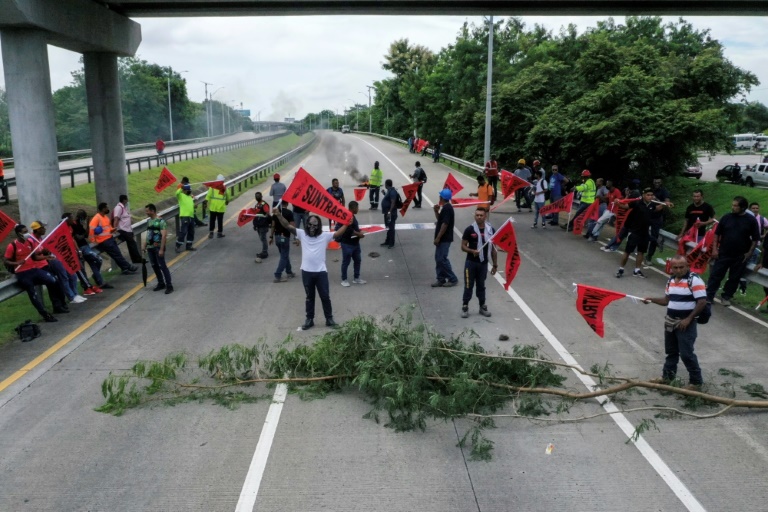
The biggest protest Monday was in the capital Panama City, with members of the Suntracs construction union closing access roads with burning tire barricades, causing massive traffic backups.

There were also new blockades of the Pan-American Highway that connects Panama with the rest of Central America and is the main transport route for goods through the country.

The protests have led to shortages of fuel and food in some areas.

“We are in a bad way; no food, no buses. I wanted to buy rice and… what little can be found is very expensive. The vegetables are bad,” said Angelica Ruiz, a resident of Pacora, east of Panama City, who also had trouble getting to work.

– ‘We will not weaken’ –

The government agreed Sunday to cut the price of petrol to $3.25 per gallon and pursue talks on lowering food and medicine costs that were key among protesters’ concerns.

Last week, it had already reduced the petrol price to $3.95 from $5.20 per gallon in June, but this was not enough to appease the demonstrators.

After Sunday’s announcement, several unions said the agreement was inadequate and had left out many groups.

“We will stay on in the street,” said protester Juan Morales, a farmer from Capira, west of Panama City.

“We will not weaken. We need strong and positive answers,” he told AFP.

Suntracs general secretary Saul Mendez called for negotiations that included all groups to discuss “the most pressing issues” in Panama.

Those issues include reducing the costs of fuel, food, medicine and electricity, he said, as well as a general increase in salaries and greater public investment in education.

The protests come as Panama faces difficult economic conditions, with inflation of 4.2 percent recorded in May, along with an unemployment rate of about 10 percent and fuel price hikes of nearly 50 percent since January. 

Despite its dollarized economy and high growth figures, the country has a high rate of social inequality. 

The renowned Panamanian singer and activist Ruben Blades spoke out about the protests on Monday, saying that the demonstrators’ economic demands did not go far enough to address the country’s problems.

“The people have not demanded what we really need: the substitution of the corrupt and outdated political paradigm that destroys us morally and economically,” he wrote on his personal blog.

N.Macedonia weathers bruising path to uncertain EU future

After years of setbacks, letdowns, and the change of its name, North Macedonia on Tuesday opened European Union membership talks even as unrest grows at home with a nationalist movement threatening to upend the process.

Over the weekend, the country’s government announced it had reached a compromise with Bulgaria in a long-running dispute that had served as an effective roadblock to the onset of talks for EU membership.

On Tuesday, officials from North Macedonia  take the first symbolic step in Brussels to kickstart the accession process with European Commission President Ursula von der Leyen announcing the launch of talks. 

The 17-year journey has been bruising, sapping many in the country of any enthusiasm for joining the bloc, according to North Macedonia’s President Stevo Pendarovski.

The president was among a chorus of political leaders who backed the recent French-mediated deal that paved the way for ending the deadlock with Bulgaria over historic grievances, which calls for constitutional changes among other measures. 

The agreement was the latest in a long line of bureaucratic hurdles and political compromises for North Macedonia since it became a formal candidate to join the EU in 2005. 

“From the standpoint of the procedure and the way that many in Europe — especially Bulgaria in the past two years — are treating us, it’s a clear humiliation,” Pendarovski told AFP during a recent interview in the capital Skopje.

– ‘Soft spot’ – 

And even as Pendarovski lent his support to the agreement accepted over the weekend, he admitted that patience with the EU was wearing thin in his country and more widely in the Balkans.

Protests have been growing in recent weeks in North Macedonia, with the country’s opposition rallying thousands to fight back against any new compromises with Bulgaria and the EU. 

“Throughout the Western Balkan nations, Euro enthusiasm is dropping very sharply,” said Pendarovski.

“Speaking precisely about North Macedonia, in the past 18 months we have seen a drop of 25 percent.”

But abandoning a European future would leave countries like North Macedonia, with its population of just 1.8 million, particularly vulnerable to geopolitical headwinds in an increasingly polarised world, Pendarovski argued.

If North Macedonia and other Balkan countries remain outside the EU, then the region will be a “soft spot” vulnerable to penetration by “malign powers”, including Russia, said Pendarovski.

But the longer they wait to join the bloc, the more anti-European voices gain traction and fan the flames of unrest in places like North Macedonia. 

“I am afraid that maybe some populist movements will come to power and some anti-European leaders will take power in Skopje and that’s certainly not going to be good for the pan-European idea,” said the president.

– A new deal –

Since declaring independence from Yugoslavia in 1991, North Macedonia has faced a litany of obstacles from its Balkan neighbours over historical grievances. 

Despite the hurdles, the country pressed on in its fight for international acceptance, culminating with the official change of its name in 2018 to settle a decades-long dispute with Greece that cleared the path to NATO membership. 

But the door to the EU remained firmly closed, thanks to a brief delay initiated first by France followed by an outright veto from Bulgaria over a raft of disputes involving history and language. 

The unexpected move by Sofia was a heavy blow for many in North Macedonia. 

And even as governments came and went in both Sofia and Skopje, North Macedonia’s pathway to the EU remained blocked. 

The weekend’s agreement has offered a way forward through a range of measures including constitutional changes and amendments to North Macedonia’s education curriculum on certain historical points. 

But even with the start of talks, the ruling government faces a political minefield ahead. 

Lacking a two-thirds majority to amend the constitution, the agreement will likely stall in parliament, possibly triggering more political infighting and fuelling new bouts of unrest.

“While the temptation might be great to push through a bad deal now to bring movement in the already stuck process, the proposal as it stands now is likely to achieve the opposite, more stagnation, more frustration, and even destabilisation,” wrote North Macedonia’s former foreign minister Nikola Dimitrov and analyst Florian Bieber in an editorial published last week.

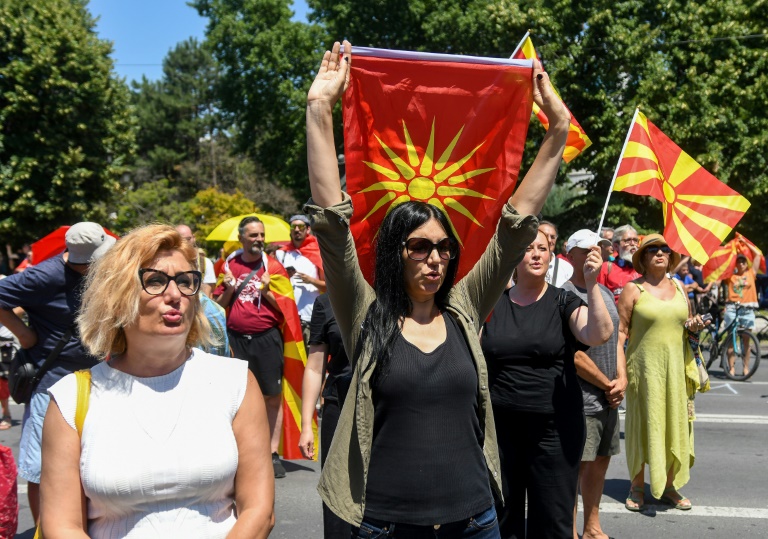
In the capital Skopje, protesters have been taking to the streets for weeks, and members of the right-wing opposition and leftists have joined forces to block any new compromise. 

“We do not know what to say anymore, how many more agreements will there be?” said protester Marjanco Stoilkovski, 48, outside the parliament in Skopje during a recent demonstration. 

“We have changed the name and now they are asking for something else,” added Skopje resident Vesna Nikolova. “It is very humiliating.”

N.Macedonia weathers bruising path to uncertain EU future

After years of setbacks, letdowns, and the change of its name, North Macedonia on Tuesday opened European Union membership talks even as unrest grows at home with a nationalist movement threatening to upend the process.

Over the weekend, the country’s government announced it had reached a compromise with Bulgaria in a long-running dispute that had served as an effective roadblock to the onset of talks for EU membership.

On Tuesday, officials from North Macedonia  take the first symbolic step in Brussels to kickstart the accession process with European Commission President Ursula von der Leyen announcing the launch of talks. 

The 17-year journey has been bruising, sapping many in the country of any enthusiasm for joining the bloc, according to North Macedonia’s President Stevo Pendarovski.

The president was among a chorus of political leaders who backed the recent French-mediated deal that paved the way for ending the deadlock with Bulgaria over historic grievances, which calls for constitutional changes among other measures. 

The agreement was the latest in a long line of bureaucratic hurdles and political compromises for North Macedonia since it became a formal candidate to join the EU in 2005. 

“From the standpoint of the procedure and the way that many in Europe — especially Bulgaria in the past two years — are treating us, it’s a clear humiliation,” Pendarovski told AFP during a recent interview in the capital Skopje.

– ‘Soft spot’ – 

And even as Pendarovski lent his support to the agreement accepted over the weekend, he admitted that patience with the EU was wearing thin in his country and more widely in the Balkans.

Protests have been growing in recent weeks in North Macedonia, with the country’s opposition rallying thousands to fight back against any new compromises with Bulgaria and the EU. 

“Throughout the Western Balkan nations, Euro enthusiasm is dropping very sharply,” said Pendarovski.

“Speaking precisely about North Macedonia, in the past 18 months we have seen a drop of 25 percent.”

But abandoning a European future would leave countries like North Macedonia, with its population of just 1.8 million, particularly vulnerable to geopolitical headwinds in an increasingly polarised world, Pendarovski argued.

If North Macedonia and other Balkan countries remain outside the EU, then the region will be a “soft spot” vulnerable to penetration by “malign powers”, including Russia, said Pendarovski.

But the longer they wait to join the bloc, the more anti-European voices gain traction and fan the flames of unrest in places like North Macedonia. 

“I am afraid that maybe some populist movements will come to power and some anti-European leaders will take power in Skopje and that’s certainly not going to be good for the pan-European idea,” said the president.

– A new deal –

Since declaring independence from Yugoslavia in 1991, North Macedonia has faced a litany of obstacles from its Balkan neighbours over historical grievances. 

Despite the hurdles, the country pressed on in its fight for international acceptance, culminating with the official change of its name in 2018 to settle a decades-long dispute with Greece that cleared the path to NATO membership. 

But the door to the EU remained firmly closed, thanks to a brief delay initiated first by France followed by an outright veto from Bulgaria over a raft of disputes involving history and language. 

The unexpected move by Sofia was a heavy blow for many in North Macedonia. 

And even as governments came and went in both Sofia and Skopje, North Macedonia’s pathway to the EU remained blocked. 

The weekend’s agreement has offered a way forward through a range of measures including constitutional changes and amendments to North Macedonia’s education curriculum on certain historical points. 

But even with the start of talks, the ruling government faces a political minefield ahead. 

Lacking a two-thirds majority to amend the constitution, the agreement will likely stall in parliament, possibly triggering more political infighting and fuelling new bouts of unrest.

“While the temptation might be great to push through a bad deal now to bring movement in the already stuck process, the proposal as it stands now is likely to achieve the opposite, more stagnation, more frustration, and even destabilisation,” wrote North Macedonia’s former foreign minister Nikola Dimitrov and analyst Florian Bieber in an editorial published last week.

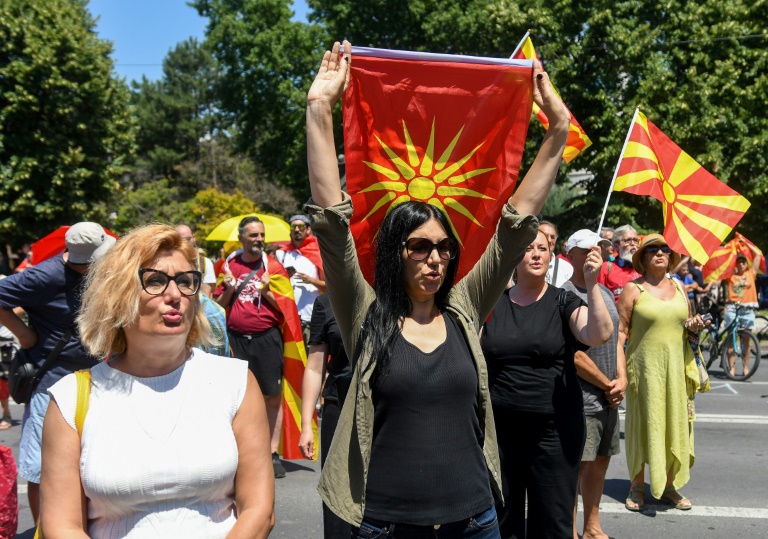
In the capital Skopje, protesters have been taking to the streets for weeks, and members of the right-wing opposition and leftists have joined forces to block any new compromise. 

“We do not know what to say anymore, how many more agreements will there be?” said protester Marjanco Stoilkovski, 48, outside the parliament in Skopje during a recent demonstration. 

“We have changed the name and now they are asking for something else,” added Skopje resident Vesna Nikolova. “It is very humiliating.”

Three-way fight to lead bankrupt Sri Lanka

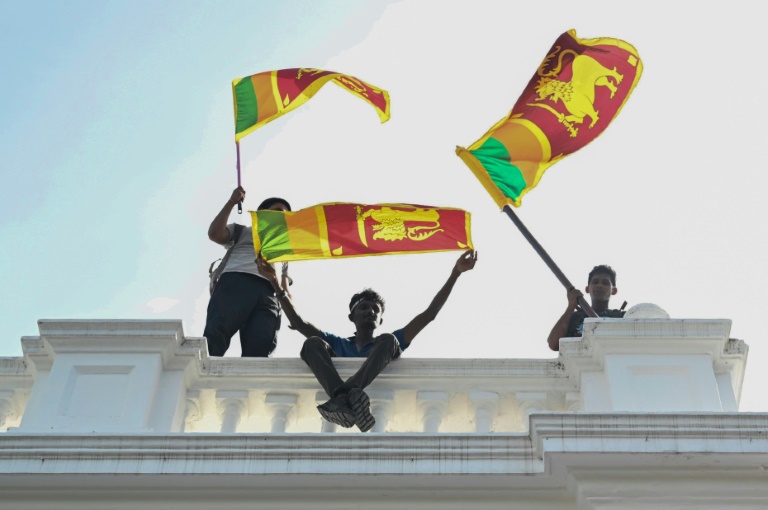
Three candidates were nominated Tuesday to replace former Sri Lankan president Gotabaya Rajapaksa, who fled the country and resigned last week after protesters overran his residence.

The winner will take charge of a bankrupt nation that is in talks with the IMF for a bailout, with its 22 million people enduring severe shortages of food, fuel and medicines.

Sri Lanka ran out of foreign exchange to finance even the most vital imports in a crisis triggered by the coronavirus pandemic but exacerbated by mismanagement, critics say.

Months of protests culminated in Rajapaksa fleeing his palace before flying to the Maldives and then Singapore, from where he submitted his resignation.

The parliament announced Tuesday that acting President Ranil Wickremesinghe would face former education minister Dullas Alahapperuma — who has the backing of the main opposition — and leftist leader Anura Dissanayake in a secret ballot on Wednesday.

The three were formally nominated by legislators in a session that lasted less than 10 minutes at the tightly guarded parliament building.

Moments earlier, opposition SJB party leader Sajith Premadasa had announced on Twitter that he was withdrawing from the race in favour of the 63-year-old Alahapperuma, a dissident member of Rajapaksa’s divided SLPP party.

“For the greater good of my country that I love and the people I cherish, I hereby withdraw my candidacy for the position of President,” Premadasa said. 

He went onto nominate Alahapperuma, a former journalist and rights campaigner in the late 1980s, when Premadasa’s late father Ranasinghe ruled the country with an iron fist.

An SJB legislator told AFP that the two men struck a deal overnight for Premadasa to be chosen as the new prime minister should Alahapperuma be elected president on Wednesday.

“We have a common minimum program that we agreed on,” the SJB MP said. “We had only one sticking point about who will be the president and that was sorted out last night.”

But Wickremesinghe, 73, a veteran political operator and six-time prime minister, has the formal backing of the leadership of the SLPP, which remains the largest party in the 225-member parliament.

If Wickremesinghe is confirmed in the post, he is expected to name public administration minister Dinesh Gunawardena, a school friend of his and strong Rajapaksa loyalist, as the new premier. 
The third candidate is Anura Dissanayake, 53, leader of the leftist JVP, or People’s Liberation Front, which has three parliamentary seats.

A possible fourth candidate, former army chief Sarath Fonseka, failed to get support from legislators to enter the presidential race.

The new leader will be in office for the balance of Rajapaksa’s term, which runs until November 2024.

On Monday, Wickremesinghe extended a state of emergency giving sweeping powers to police and security forces to deal with troublemakers.

The protesters whose massive public show of force dislodged Rajapaksa were planning another rally in the capital later Tuesday to also demand the resignation of Wickremesinghe.

They see him as an ally and protector of the Rajapaksa clan, which has dominated politics in the Indian Ocean country for several years.

Former president Mahinda Rajapaksa, the deposed Gotabaya’s elder brother and the head of the group, remains in Sri Lanka and party sources said he was pressing SLPP legislators to support Wickremesinghe.

Court battle to open in Musk, Twitter buyout fight

Elon Musk and Twitter will face off Tuesday in the first court hearing over the Tesla chief’s move to abandon their $44 billion buyout deal, a case with massive stakes for both sides.

Twitter wants a judge to force Musk to complete the purchase, which he is trying to scrap over his allegations the social media platform misled him about its tally of fake accounts.

Billions of dollars are at stake, but so is the future of the platform that Musk has said should allow any legal speech, an absolutist position that has sparked fears the network could be used to incite violence.

The hearing in the eastern state of Delaware is set to include arguments over Twitter’s push for a September trial date, which is aimed at limiting the uncertainty plaguing the firm.

“Questions have been raised about Twitter’s future, and they don’t want this to drag on for very long,” said Carl Tobias, a University of Richmond law professor. 

Musk’s legal team has filed papers arguing that date is far too soon for such a complex matter, and instead proposed mid-February.

Twitter lawyers noted the deal is supposed to close toward the end of October, just six months after Musk launched an unsolicited bid that the company’s board first resisted but then supported.

The world’s richest person has backed away from the deal in recent months as tech stocks have tumbled, and Twitter’s value has fallen well below the $54.20 per share he offered.

– Musk willingness to fight –

Rather than Silicon Valley, where Twitter is based, the company has lodged its lawsuit against Musk in Delaware.

The firm is incorporated in the tiny state like scores of other companies, and the case will happen in the Delaware Chancery Court that has deep experience in business disputes.

“The Chancery Court, which handles most of these matters, is very expert in corporate law, and more particularly, mergers and acquisitions. So this is the place to go,” Tobias added.

Kathaleen McCormick, the judge overseeing the case, comes with a no-nonsense reputation.

She also reportedly has the distinction of previously ordering a reluctant buyer into completing a corporate merger.

A forced closing of the Twitter deal is a scenario that some analysts consider possible.

“(Wall) Street and legal experts across the board view Twitter as having a ‘strong iron fist upper hand,’ heading into the Delaware court battle after months of this fiasco and nightmare,” analyst Dan Ives wrote last week.

He also noted less likely options include Musk paying a $1 billion breakup fee and being able to walk away, or winning outright on his fake-account argument.

After pausing the deal in May, Musk’s lawyers announced in July he was “terminating” the agreement because of skepticism over Twitter’s false or spam accounts tally and allegations the firm was not forthcoming with details.

Tuesday’s hearing will be just the first step in what could be a lengthy legal fight that could end in a trial, but also a settlement.

“Musk has shown his willingness to take things all the way to the end in Delaware court,” said Adam Badawi, a University of California at Berkeley law professor.

“I think settling is not necessarily his instinct.”

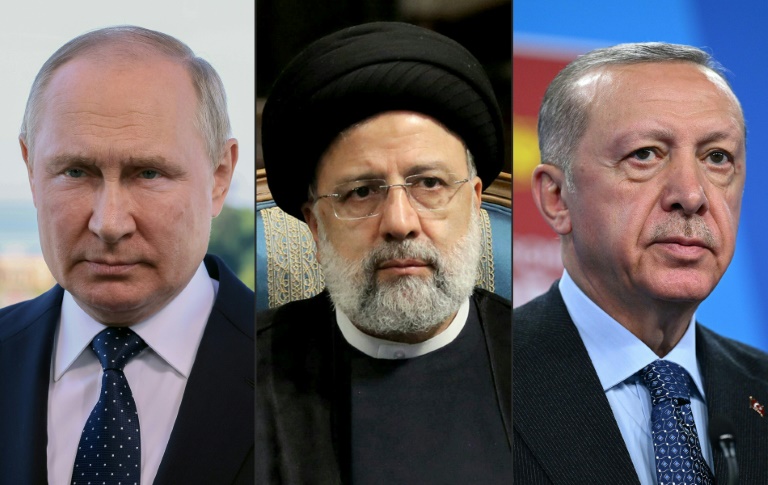
Iran hosts Putin, Erdogan for talks overshadowed by Ukraine war

Iran’s president will host his Russian and Turkish counterparts on Tuesday for talks on the Syrian war in a three-way summit overshadowed by fallout from the Russian invasion of Ukraine.

The summit is the first hosted by Iran’s ultra-conservative President Ebrahim Raisi since he took office last year, and the second trip abroad by Russia’s Vladimir Putin since he ordered the invasion of Ukraine in February.

It comes days after US President Joe Biden visited the Middle East for the first time since taking office, with stops in Iran’s regional foes Israel and Saudi Arabia.

But the trilateral summit is ostensibly centred on Syria, as part of the so-called Astana peace process to end more than 11 years of conflict in the Arab country.

All three are involved in Syria, with Iran and Russia supporting the regime of President Bashar al-Assad and Turkey backing rebel forces.

The gathering comes after Turkish President Recep Tayyip Erdogan threatened late last year to launch a new offensive in northern Syria against Kurdish militants.

Iran has already warned that any Turkish military action in Syria could “destabilise the region”.

The summit will also enable Erdogan to hold his first meeting with Putin since Russia invaded Ukraine in February.

The Turkish president has for months been offering to meet the Russian leader in a bid to help resolve heightened global tensions since the war began.

“The timing of this summit is not a coincidence,” Russian analyst Vladimir Sotnikov told AFP.

“Turkey wants to conduct a ‘special operation’ in Syria just as Russia is implementing a ‘special operation’ in Ukraine,” he said.

Turkey has launched waves of attacks on Syria since 2016, targeting Kurdish militias as well as Islamic State group jihadists and forces loyal to Assad.

– ‘Tensions and crises’ –

Putin and Erdogan, who arrived in Tehran on Monday, would meet in the Iranian capital on Tuesday to discuss mechanisms to export grain from Ukraine, a Kremlin source said.

The Russian invasion of Ukraine, which was launched on February 24, has massively hampered shipments from one of the world’s biggest exporters of wheat and other grain, sparking fears of global food shortages.

Turkey — a NATO member on speaking terms with both Russia and Ukraine — has spearheaded efforts to resume the grain deliveries.

Ultimately, Erdogan is hoping to get “the green light” to from Putin and Raisi for its military operation in Syria, said Sinan Ulgen, a visiting scholar at Carnegie Europe who specialises in Turkish foreign policy.

The news that Putin and Erdogan are to meet came on a day which saw EU foreign policy chief Josep Borrell warn Russia’s blockade of Ukrainian ports threatens supplies to countless thousands vulnerable to starvation.

Borrell dubbed the issue “one of life and death for many human beings.”

On Sunday, a day after Biden ended his tour of the Middle East, Iran accused the United States of provoking crises in the region.

Biden had vowed the US would not “tolerate efforts by any country to dominate another in the region through military buildups, incursions, and/or threats”, in a transparent reference to Iran.

In a speech in the Saudi city of Jeddah at a summit of Gulf Arab states as well as Egypt, Jordan and Iraq, Biden assured the leaders gathered that the United States would remain fully engaged in the Middle East.

“We will not walk away and leave a vacuum to be filled by China, Russia or Iran,” Biden said.

Following the meeting, a joint statement committed the leaders to “preserve regional security and stability”.

It also underscored diplomatic efforts to prevent Iran from developing a nuclear weapon, a goal the Islamic republic has always denied seeking.

On Sunday, Iran’s foreign ministry spokesman Nasser Kanani accused the United States of having “once again resorted to the failed policy of Iran-phobia, trying to create tensions and crises in the region”.

The United States said last week that Iran plans to deliver “hundreds of drones” to Russia to aid its war on Ukraine, an accusation the Islamic republic dismissed as “baseless”.

Close Bitnami banner
Bitnami