World

Ghana IMF loan outcry pressures government over economy

Ghanaian trader Mohammed Biney was already struggling when the government passed a new tax on electronic money transactions this year to try to revive the economy.

With Ghana now buckling under nearly 30 percent inflation, the Accra shoe seller was shocked when the government announced in July it would have to seek help from the IMF.

President Nana Akufo-Addo once promised “Ghana Beyond Aid” to keep his West African country off foreign aid dependency.

But a sudden U-turn over an IMF credit has sparked fierce debate over his economic management as Ghana struggles with the highest costs of living in two decades.

“You can’t impose taxes on us under the guise of saving the economy and then overnight come and tell us you’re going to the IMF,” trader Biney told AFP.

“I think they ran out of ideas.” 

Hit by the global pandemic and fallout from the Russian war in Ukraine on fuel and food prices, Ghana is in talks with International Monetary Fund to help stabilise its public finances.

But the decision prompted fears IMF-imposed austerity measures will force the end to Akufo-Addo’s social programmes and hurt Ghanaians already struggling with soaring costs.

A new opposition-led protest movement and unions threatening strikes over hardships have added pressure on the government just as an IMF team begins initial talks.

Saddled with heavy debt, limited access to fresh funds and few revenue options, the government says the IMF offers short-term help.

Ghana’s Deputy Finance Minister Abena Osei-Asare said after the pandemic eroded economic gains, the IMF deal would help with balance of payments and open the door to new financing while protecting social programmes.

“People don’t have an understanding of the sort of engagement we’re going to have with the IMF that’s why they are a bit apprehensive,” she told AFP.

– Soaring inflation –

Ghana’s economic data is not rosy. Growth slowed this year while inflation broke two decade highs at 29.8 percent in June, driven by transport and food costs.

Ghana’s debt to GDP ratio — a measure of what it owes against what it produces — rose from 65 percent to 80 percent during the pandemic, the IMF says.

Moody’s credit agency in February downgraded its outlook on Ghana’s bonds, citing the government’s liquidity and debt challenges.

“Ghana’s fiscal and debt vulnerabilities are worsening fast amid an increasingly difficult external environment,” the IMF said after the team’s visit this month.

“An IMF-supported program aims to provide space for Ghana to implement policies.”

This deal will be the 18th time Ghana has gone to the IMF after completing a three-year accord in 2019 which saw $918 million in support.

Just in May, Finance Minister Ken Ofori-Atta said an IMF deal was not an option, with the government preferring “home-grown” solutions. 

One of those, Ghana’s new electronic transaction tax or E-levy, was meant to help raise $900 million in much-needed revenue along with spending cuts.

But the tax was widely criticised and as people curtailed electronic payments, the E-levy has also fallen far short of revenue estimates.

Gabby Otchere-Darko, a leading ruling party member, tweeted in June the tax had only generated 10 percent of estimated revenues. 

“Given the situation that we find ourselves… we have no option,” John Kwakye, the director of research at the Accra-based IEA think tank, said of the IMF deal. 

“Going to the IMF was to build on our credibility.”

– Electoral fallout? –

But even with elections still two years away, an IMF deal will likely have political fallout.

Teaching unions went on strike earlier this month until the government agreed to cost of living allowances. Other public sector workers are threatening action.

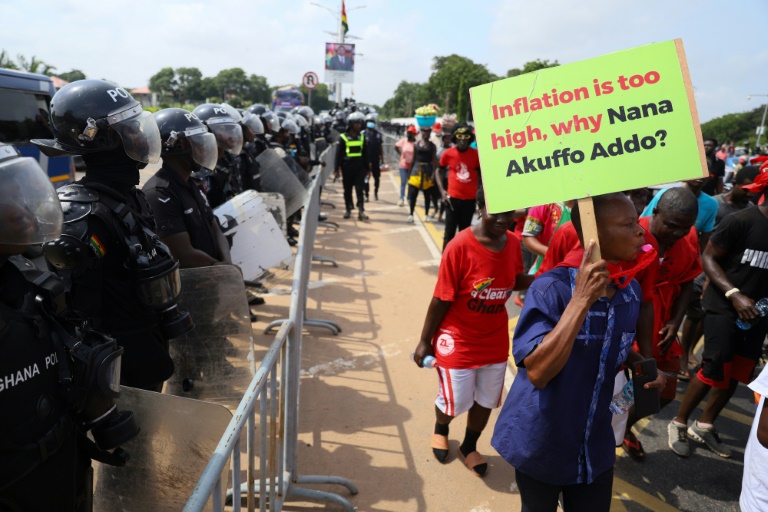
A “Fix the Country” movement, which holds regular if small protests, has been joined by another group “Arise Ghana”. Last month its rally over economic hardships led to clashes with the police.

“The solution to Ghana’s problems doesn’t lie in Washington,” Yaw Baah, Secretary General of the Trades Union Congress (TUC) said. “This is a tragic mistake by the government.” 

Eurasia Group’s Africa head Amaka Anku told clients the IMF programme will make it harder for Akufo-Addo’s New Patriotic Party to argue they are better economic managers. 

That may weaken the position of likely NPP candidate for 2024 Vice President Mahamudu Bawumia though his probably opponent National Democratic Congress or NDC leader and ex-president John Mahama also faces challenges.

“Bottom-line, this makes for a very close election in 2024,” Anku said.

Already the opposition has hit out.

“President Akufo-Addo and Dr. Mahamudu Bawumia should take full responsibility for incompetently managing the economy,” said NDC lawmaker Haruna Iddrisu.  

“The government must come clean and tell us what the people of Ghana should expect instead of blaming Ukraine and Russia.”


Musk and Twitter: Volatile liaison ends up in court

Elon Musk’s pursuit of Twitter was a melodrama from the beginning — a volatile courtship between a mercurial billionaire and an influential social media platform.

That relationship — a love-hate affair from both sides — is now set for an acrimonious court battle.

– The courtship –

It all began with an expensive first date: Musk — a longtime Twitter user known for inflammatory tweets — snapped up 73.5 million shares at a cost of nearly $2.9 billion.

The purchase, which was revealed in an April 4 regulatory filing and gave him a 9.2 percent stake in the company, sent Twitter shares soaring and sparked speculation that Musk was seeking an active role in the social media company’s operations.

It also earned him a seat on the board. CEO Parag Agrawal announced the offer — in a tweet, of course — and called Musk “a passionate believer and intense critic of the service which is exactly what we need.”

But the initial euphoria didn’t last: Agrawal said on April 10 that Musk had decided against joining the board, a move the Twitter CEO believed was “for the best.”

Rather than amicably parting ways, Musk launched a hostile takeover bid for the company, offering $54.20 a share, an April 13 filing showed.

After saying it would “carefully review” the offer, Twitter adopted a “poison pill” defense, announcing a plan that would allow shareholders to purchase additional stock.

– The engagement –

Then came the plans for a walk down the corporate aisle: Twitter reversed course and said on April 25 that it was selling to Musk in a deal valued at $44 billion.

Musk took action to cover the cost, parting with $8.4 billion in shares in electric carmaker Tesla. He pledged up to $21 billion from his personal fortune, with the rest financed by debt.

Musk was already planning his new life with Twitter, saying a few days later that he would lift the ban on Donald Trump, which was handed down after the January 2021 riot at the US Capitol by the then president’s supporters.

– The breakup –

But he soon began showing signs of cold feet, saying on May 13 that the deal to buy Twitter was “temporarily on hold” pending details on spam and fake accounts on the platform.

In early June, advocacy groups decided to speak now instead of forever holding their peace, launching a campaign to stop Musk from going through with the purchase, which they said would allow him to “hand a megaphone to demagogues and extremists.”

Musk meanwhile accused Twitter of failing to provide data on fake accounts, and threatened to withdraw his bid.

On June 16, however, he offered signs that the match was still a go, pitching a vision to Twitter staff of a one-billion-user platform. But he was hazy on issues such as potential layoffs and free-speech limits.

It all came crashing down on July 8, when Musk called off the deal and accused Twitter of making “misleading” statements about the number of fake accounts.

The breakup between the billionaire and the social media platform is set to be far from friendly.

Twitter’s chairman tweeted that the company will pursue legal action to enforce the deal, setting up a pricey showdown.

The first hearing of the lawsuit is due on Tuesday at the Delaware state Court of Chancery.

Musk and Twitter: Volatile liaison ends up in court

Elon Musk’s pursuit of Twitter was a melodrama from the beginning — a volatile courtship between a mercurial billionaire and an influential social media platform.

That relationship — a love-hate affair from both sides — is now set for an acrimonious court battle.

– The courtship –

It all began with an expensive first date: Musk — a longtime Twitter user known for inflammatory tweets — snapped up 73.5 million shares at a cost of nearly $2.9 billion.

The purchase, which was revealed in an April 4 regulatory filing and gave him a 9.2 percent stake in the company, sent Twitter shares soaring and sparked speculation that Musk was seeking an active role in the social media company’s operations.

It also earned him a seat on the board. CEO Parag Agrawal announced the offer — in a tweet, of course — and called Musk “a passionate believer and intense critic of the service which is exactly what we need.”

But the initial euphoria didn’t last: Agrawal said on April 10 that Musk had decided against joining the board, a move the Twitter CEO believed was “for the best.”

Rather than amicably parting ways, Musk launched a hostile takeover bid for the company, offering $54.20 a share, an April 13 filing showed.

After saying it would “carefully review” the offer, Twitter adopted a “poison pill” defense, announcing a plan that would allow shareholders to purchase additional stock.

– The engagement –

Then came the plans for a walk down the corporate aisle: Twitter reversed course and said on April 25 that it was selling to Musk in a deal valued at $44 billion.

Musk took action to cover the cost, parting with $8.4 billion in shares in electric carmaker Tesla. He pledged up to $21 billion from his personal fortune, with the rest financed by debt.

Musk was already planning his new life with Twitter, saying a few days later that he would lift the ban on Donald Trump, which was handed down after the January 2021 riot at the US Capitol by the then president’s supporters.

– The breakup –

But he soon began showing signs of cold feet, saying on May 13 that the deal to buy Twitter was “temporarily on hold” pending details on spam and fake accounts on the platform.

In early June, advocacy groups decided to speak now instead of forever holding their peace, launching a campaign to stop Musk from going through with the purchase, which they said would allow him to “hand a megaphone to demagogues and extremists.”

Musk meanwhile accused Twitter of failing to provide data on fake accounts, and threatened to withdraw his bid.

On June 16, however, he offered signs that the match was still a go, pitching a vision to Twitter staff of a one-billion-user platform. But he was hazy on issues such as potential layoffs and free-speech limits.

It all came crashing down on July 8, when Musk called off the deal and accused Twitter of making “misleading” statements about the number of fake accounts.

The breakup between the billionaire and the social media platform is set to be far from friendly.

Twitter’s chairman tweeted that the company will pursue legal action to enforce the deal, setting up a pricey showdown.

The first hearing of the lawsuit is due on Tuesday at the Delaware state Court of Chancery.

Indian rupee breaches 80 per dollar, hits new record low

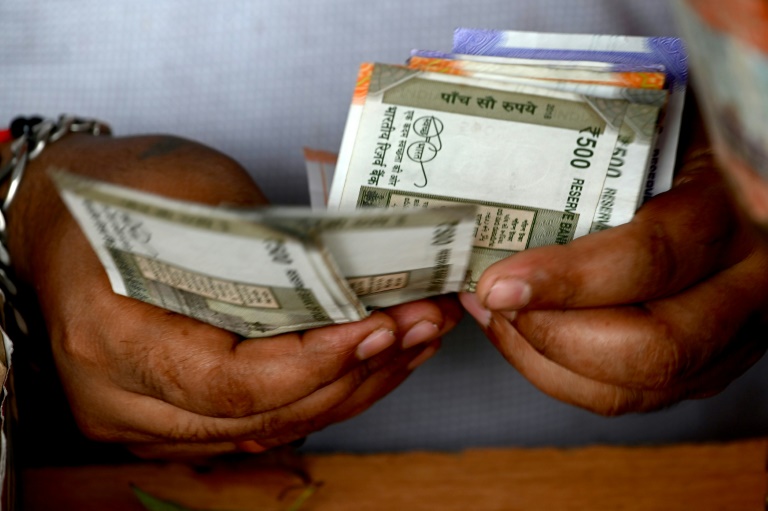
The Indian rupee fell to more than 80 per US dollar for the first time on record Tuesday, as the greenback extended its rally and foreign capital outflows intensified.

The rupee hit 80.0600 against the greenback soon after trading started, compared with the previous close of 79.9775, Bloomberg data showed.

High inflation and rising interest rates in the United States coupled with fears of an impending recession in the world’s biggest economy have fuelled a broad dollar rally in recent weeks as investors turn increasingly risk-averse.

Tighter US monetary policy has exacerbated outflows from emerging markets such as India, where foreign investors have withdrawn a net $30.8 billion in debt and equity this year.

Data released last week showed that US consumer price inflation hit a fresh four-decade high in June, exceeding market forecasts and stoking expectations of another large Federal Reserve rate hike next week.

In a written statement to the Indian parliament on Monday, finance minister Nirmala Sitharaman attributed the rupee’s sharp fall to external reasons.

“Global factors such as the Russia-Ukraine conflict, soaring crude oil prices and tightening of global financial conditions are the major reasons for the weakening of the Indian Rupee against the US dollar,” she said.

At the same time, the Indian currency has strengthened against the British pound, the Japanese yen and the euro in 2022 so far, Sitharaman added.

But higher crude prices have resulted in a deteriorating trade balance in a country that imports 80 percent of its oil.

India’s merchandise trade deficit widened to a record $26.18 billion in June, official data showed last week, largely because of higher crude and coal import prices.

In its monthly economic review, the Ministry of Finance said costlier imports could widen the current account deficit and cause the rupee to depreciate further.

“The near-term outlook for the rupee will continue to be weak as it tracks developments on the oil and gas front in international markets,” forex market expert K Harihar told AFP.

“The weakness will persist until trade deficit numbers come down or capital inflows counter it,” he said, adding that the rupee could fall to 81 per US dollar without an agreement between Europe and Russia on gas supply.

The rupee’s move followed Russia’s Gazprom telling Europe late Monday that it cannot guarantee gas supplies following maintenance work on its Nord Stream pipeline.

Consumer price inflation in India, the world’s sixth-largest economy, cooled off slightly to 7.01 percent in June after hitting an eight-year high of 7.79 percent in April.

But price rises have persisted well above the central bank’s two-to-six percent target range despite consecutive interest rate hikes in May and June.

The central bank has also sold more than $34 billion of its foreign currency reserves in an effort to stabilise the rupee.

India’s benchmark Sensex index opened lower, but recovered to trade 0.17 percent higher on Tuesday morning.

'Shocking' report lists devastation to Australia wildlife

Australia’s unique wildlife is being devastated by bushfires, drought, habitat loss and global warming, a government report said Tuesday, warning that more species are headed for extinction.

The five-yearly State of the Environment report prompted calls for dramatic action to reverse the “poor and deteriorating” state of flora and fauna depicted by scientists on land and at sea.

The damage is being hastened by a climate that has warmed Australia’s average land temperature by 1.4 degrees Celsius since the early 20th century, the report said.

A failure to manage the pressures “will continue to result in species extinctions,” scientists warned in the report.

Australia’s environment minister, Tanya Plibersek, said it was a “shocking document”.

“If we continue on the trajectory that we are on now, we will see more threatened species, we will see drier rivers, we will see degraded landscape, we will see reefs dying,” she told journalists.

“The path we are on is not sustainable.”

Plibersek, a member of the centre-left Labor Party that came to power in May elections, criticised the previous conservative government for failing to publish the report, which it had received in December 2021.

She promised to carve out more of Australia’s land and oceans for protection, pursue “fundamental reform” of environmental laws and empower a new environmental protection agency.

– ‘Ecological bomb’ –

Australia’s 2019-2020 “Black Summer” bushfires burned more than eight million hectares of native vegetation and killed or displaced 1-3 billion animals, the report found.

The fires were an “ecological bomb ripping through southeastern Australia”, Plibersek said.

Marine heatwaves caused mass coral bleaching on the Great Barrier Reef in 2016, 2017 and 2020, scientists said in the report. Since then, a government report in March found the reef had again suffered mass bleaching.

Millions of hectares of primary forest had been cleared since 1990, the report said.

More than seven million hectares of habitat for threatened species were cleared between 2000 and 2017 without being assessed under Australia’s environmental conservation laws, it found.

In five years, more than 200 plant and animal species of national significance had been added to the list of threatened species under Australia’s environmental laws.

“Australia has lost more mammal species than any other continent,” the report said, with the number of new species listed as being under greater threat up by eight percent in five years.

– ‘Heartbreaking’ –

Australia’s cities are also growing at a rapid clip, scientists found, raising urban heat, pollution and waste while stretching water and energy resources.

“Sydney has lost more than 70 percent of native vegetation cover through development,” the report said.

Sydney Habour’s stormwater drains also created hotspots of pollution with concentrations 20 times higher than when the harbour was pristine.

“The findings of this report are heartbreaking, and the leadership failures that have led to loss at this scale devastating,” said WWF-Australia acting chief executive Rachel Lowry.

“If we ignore the warnings of this report then iconic species like koalas across eastern Australia, or our largest gliding mammal, the greater glider, will disappear forever on our watch.”

WWF-Australia said the report should be a “turning point” that lead to greater investment and stronger laws to protect Australia’s wildlife and wilderness.

Lowry urged the new government to act quickly, condemning existing environmental legislation for “failing miserably” to protect threatened species.

The “devastating” new report showed coasts and marine environments were deteriorating, the Australian Marine Conservation Society said.

“We need to do more now, or we put at risk everything we rely on our oceans for — our health, wellbeing, livelihoods and our culture,” said the society’s chief executive, Darren Kindleysides.

'Shocking' report lists devastation to Australia wildlife

Australia’s unique wildlife is being devastated by bushfires, drought, habitat loss and global warming, a government report said Tuesday, warning that more species are headed for extinction.

The five-yearly State of the Environment report prompted calls for dramatic action to reverse the “poor and deteriorating” state of flora and fauna depicted by scientists on land and at sea.

The damage is being hastened by a climate that has warmed Australia’s average land temperature by 1.4 degrees Celsius since the early 20th century, the report said.

A failure to manage the pressures “will continue to result in species extinctions,” scientists warned in the report.

Australia’s environment minister, Tanya Plibersek, said it was a “shocking document”.

“If we continue on the trajectory that we are on now, we will see more threatened species, we will see drier rivers, we will see degraded landscape, we will see reefs dying,” she told journalists.

“The path we are on is not sustainable.”

Plibersek, a member of the centre-left Labor Party that came to power in May elections, criticised the previous conservative government for failing to publish the report, which it had received in December 2021.

She promised to carve out more of Australia’s land and oceans for protection, pursue “fundamental reform” of environmental laws and empower a new environmental protection agency.

– ‘Ecological bomb’ –

Australia’s 2019-2020 “Black Summer” bushfires burned more than eight million hectares of native vegetation and killed or displaced 1-3 billion animals, the report found.

The fires were an “ecological bomb ripping through southeastern Australia”, Plibersek said.

Marine heatwaves caused mass coral bleaching on the Great Barrier Reef in 2016, 2017 and 2020, scientists said in the report. Since then, a government report in March found the reef had again suffered mass bleaching.

Millions of hectares of primary forest had been cleared since 1990, the report said.

More than seven million hectares of habitat for threatened species were cleared between 2000 and 2017 without being assessed under Australia’s environmental conservation laws, it found.

In five years, more than 200 plant and animal species of national significance had been added to the list of threatened species under Australia’s environmental laws.

“Australia has lost more mammal species than any other continent,” the report said, with the number of new species listed as being under greater threat up by eight percent in five years.

– ‘Heartbreaking’ –

Australia’s cities are also growing at a rapid clip, scientists found, raising urban heat, pollution and waste while stretching water and energy resources.

“Sydney has lost more than 70 percent of native vegetation cover through development,” the report said.

Sydney Habour’s stormwater drains also created hotspots of pollution with concentrations 20 times higher than when the harbour was pristine.

“The findings of this report are heartbreaking, and the leadership failures that have led to loss at this scale devastating,” said WWF-Australia acting chief executive Rachel Lowry.

“If we ignore the warnings of this report then iconic species like koalas across eastern Australia, or our largest gliding mammal, the greater glider, will disappear forever on our watch.”

WWF-Australia said the report should be a “turning point” that lead to greater investment and stronger laws to protect Australia’s wildlife and wilderness.

Lowry urged the new government to act quickly, condemning existing environmental legislation for “failing miserably” to protect threatened species.

The “devastating” new report showed coasts and marine environments were deteriorating, the Australian Marine Conservation Society said.

“We need to do more now, or we put at risk everything we rely on our oceans for — our health, wellbeing, livelihoods and our culture,” said the society’s chief executive, Darren Kindleysides.

Europe burns as heatwave breaks temperature records

A fierce heatwave in western Europe has left much of the continent wilting under a scorching sun, feeding ferocious wildfires and threatening to smash more temperature records on Tuesday.

In Britain, forecasters said the current national record of 38.7 degrees Celsius (102 degrees Fahrenheit) could be broken and 40C breached for the first time, with experts blaming climate change and predicting more frequent extreme weather to come.

On Monday the 38.1C recorded in Suffolk, in eastern England, made it the hottest day of the year and the third-hottest day on record.

Across the Channel in France, a host of towns and cities recorded their highest-ever temperatures on Monday, the national weather office said.

The mercury hit 39.3C in Brest on the Atlantic coast of Brittany, in the far northwest of the country, smashing a previous record of 35.1C from 2002.

Saint-Brieuc, on the Channel coast, hit 39.5C beating a previous record of 38.1C, and the western city of Nantes recorded 42C, beating a decades-old high of 40.3C, set in 1949.

Firefighters in France’s southwest were still struggling in the crushing heat to contain two massive fires that have caused widespread destruction.

For nearly a week now, armies of firefighters and a fleet of waterbombing aircraft have battled blazes that have mobilised much of France’s firefighting capacity.

– Holiday makers evacuated –

Ireland saw temperatures of 33C in Dublin — the highest since 1887 — while in the Netherlands, temperatures reached 35.4C in the southern city of Westdorpe. Although that was not a record, higher temperatures are expected there on Tuesday.

Neighbouring Belgium also expected temperatures of 40C and over.

The European heatwave is the second to engulf parts of the southwest of the continent in recent weeks.

European Commission researchers, meanwhile, said nearly half (46 percent) of EU territory was exposed to warning-level drought. Eleven percent was at an alert level, and crops were already suffering from lack of water.

Blazes in France, Greece, Portugal and Spain have destroyed thousands of hectares of land.

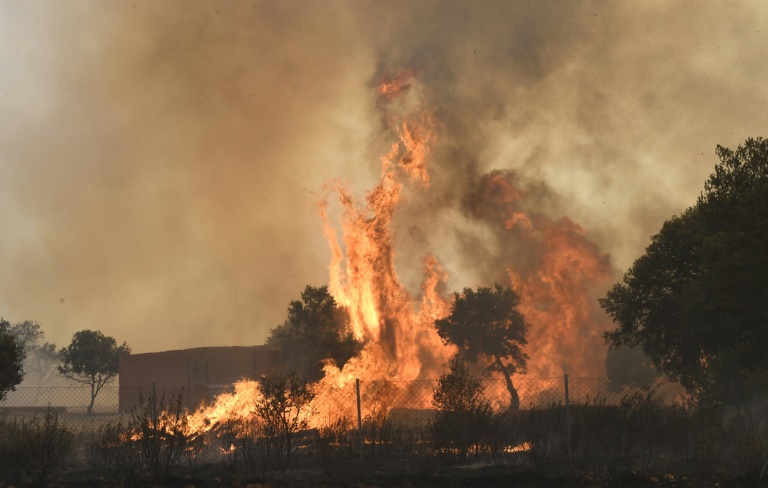
An area nine kilometres (5.5 miles) long and eight kilometres wide was still ablaze near France’s Dune de Pilat, Europe’s highest sand dune, turning picturesque landscapes, popular campsites and pristine beaches into a scorching mess.

The blaze was literally “blowing things up”, such was its ferocity, said Marc Vermeulen, head of the local fire service. “Pine trunks of 40 years are bursting.”

A total of 8,000 people were being evacuated from near the dune Monday as a precaution, as changing winds blew thick smoke into residential areas, officials said.

Hurriedly packing her car, Patricia Monteil said she would go to her daughter’s home in another part of the district. “But if that goes up in flames too, I don’t know what to do.”

Around 32,000 tourists or residents have been forced to decamp in France, many to emergency shelters.

On Monday evening, prosecutors in the southwest city of Bordeaux said a man suspected of having started one of the fires in the region had been taken into custody.

The two fires in the region have destroyed nearly 17,000 hectares (42,000 acres) of land.

At Avigon, in the southeast, a fire that first started last Thursday surged back to life on Monday, local firefighters reported, while a separate fire broke out up in the northwest, in Brittany.

In Spain, a fire burning in the northwestern province of Zamora claimed the life of a 69-year-old shepherd, regional authorities said. On Sunday, a fireman died in the same area.

Later on Monday it was reported an office worker in his fifties had died from heatstroke in Madrid.

Authorities have reported around 20 wildfires still raging from the south to Galicia in the far northwest, where blazes have destroyed around 4,500 hectares of land. 

– ‘Enjoy the sunshine’ –

The fires in Portugal claimed two more lives in the northern Vila Real region, after a car carrying two local villagers crashed off the road as they appeared to be trying to flee a fire zone, local officials said.

“We found the car and these two people, aged around 70 years, completely burnt,” the mayor of Murca, Mario Artur Lopez, told SIC Noticias television. The victims were from the nearby village of Penabeice, he added.

Almost the entire country has been on high alert for wildfires despite a slight drop in temperatures, which last Thursday hit 47C — a record for July.

The fires have already killed two other people, injured around 60 and destroyed between 12,000 and 15,000 hectares of land there.

In Britain, the government, already on the ropes after a series of scandals that forced Prime Minister Boris Johnson to quit, has been accused of taking the situation too lightly.

Johnson was criticised for having failed to attend an emergency meeting on the crisis on Sunday, instead hosting a farewell party at his state-funded country retreat.

And medics condemned comments by Deputy Prime Minister Dominic Raab, who appeared to minimise the threat from the extreme heat when he told Britons to “enjoy the sunshine”.

The Sun tabloid headlined its coverage of the heat “British Bake Off”, observing that the “scorcher” was making the UK hotter than Ibiza, where temperatures were a comparatively low 30C.

The extreme temperatures saw flights suspended at Luton Airport near London and at Royal Air Force base Brize Norton due to “defects” on the runway, with no let-up expected for Tuesday.

Trains were cancelled and schools closed in affected areas.

In Brighton, on England’s south coast, bank worker Abu Bakr put the heatwave in perspective.

“I come from Sudan,” he said. “Forty, forty-five degrees is just the norm. This is as good as it can be.”

burs-jh-phz/jwp/je/smw

Europe burns as heatwave breaks temperature records

A fierce heatwave in western Europe has left much of the continent wilting under a scorching sun, feeding ferocious wildfires and threatening to smash more temperature records on Tuesday.

In Britain, forecasters said the current national record of 38.7 degrees Celsius (102 degrees Fahrenheit) could be broken and 40C breached for the first time, with experts blaming climate change and predicting more frequent extreme weather to come.

On Monday the 38.1C recorded in Suffolk, in eastern England, made it the hottest day of the year and the third-hottest day on record.

Across the Channel in France, a host of towns and cities recorded their highest-ever temperatures on Monday, the national weather office said.

The mercury hit 39.3C in Brest on the Atlantic coast of Brittany, in the far northwest of the country, smashing a previous record of 35.1C from 2002.

Saint-Brieuc, on the Channel coast, hit 39.5C beating a previous record of 38.1C, and the western city of Nantes recorded 42C, beating a decades-old high of 40.3C, set in 1949.

Firefighters in France’s southwest were still struggling in the crushing heat to contain two massive fires that have caused widespread destruction.

For nearly a week now, armies of firefighters and a fleet of waterbombing aircraft have battled blazes that have mobilised much of France’s firefighting capacity.

– Holiday makers evacuated –

Ireland saw temperatures of 33C in Dublin — the highest since 1887 — while in the Netherlands, temperatures reached 35.4C in the southern city of Westdorpe. Although that was not a record, higher temperatures are expected there on Tuesday.

Neighbouring Belgium also expected temperatures of 40C and over.

The European heatwave is the second to engulf parts of the southwest of the continent in recent weeks.

European Commission researchers, meanwhile, said nearly half (46 percent) of EU territory was exposed to warning-level drought. Eleven percent was at an alert level, and crops were already suffering from lack of water.

Blazes in France, Greece, Portugal and Spain have destroyed thousands of hectares of land.

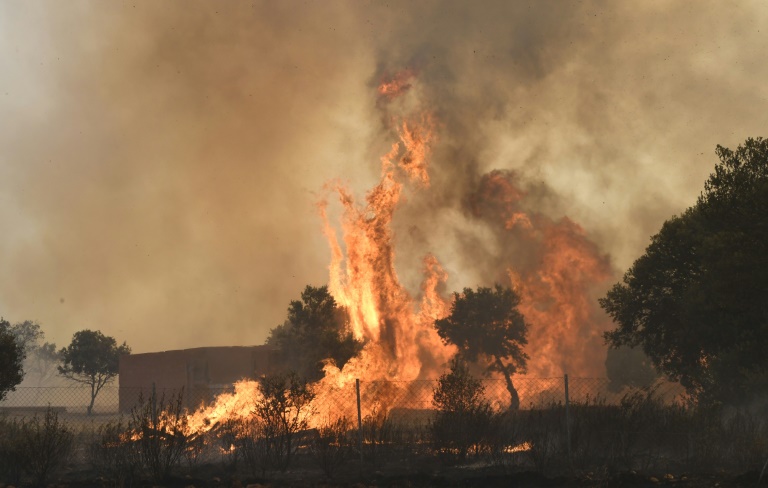
An area nine kilometres (5.5 miles) long and eight kilometres wide was still ablaze near France’s Dune de Pilat, Europe’s highest sand dune, turning picturesque landscapes, popular campsites and pristine beaches into a scorching mess.

The blaze was literally “blowing things up”, such was its ferocity, said Marc Vermeulen, head of the local fire service. “Pine trunks of 40 years are bursting.”

A total of 8,000 people were being evacuated from near the dune Monday as a precaution, as changing winds blew thick smoke into residential areas, officials said.

Hurriedly packing her car, Patricia Monteil said she would go to her daughter’s home in another part of the district. “But if that goes up in flames too, I don’t know what to do.”

Around 32,000 tourists or residents have been forced to decamp in France, many to emergency shelters.

On Monday evening, prosecutors in the southwest city of Bordeaux said a man suspected of having started one of the fires in the region had been taken into custody.

The two fires in the region have destroyed nearly 17,000 hectares (42,000 acres) of land.

At Avigon, in the southeast, a fire that first started last Thursday surged back to life on Monday, local firefighters reported, while a separate fire broke out up in the northwest, in Brittany.

In Spain, a fire burning in the northwestern province of Zamora claimed the life of a 69-year-old shepherd, regional authorities said. On Sunday, a fireman died in the same area.

Later on Monday it was reported an office worker in his fifties had died from heatstroke in Madrid.

Authorities have reported around 20 wildfires still raging from the south to Galicia in the far northwest, where blazes have destroyed around 4,500 hectares of land. 

– ‘Enjoy the sunshine’ –

The fires in Portugal claimed two more lives in the northern Vila Real region, after a car carrying two local villagers crashed off the road as they appeared to be trying to flee a fire zone, local officials said.

“We found the car and these two people, aged around 70 years, completely burnt,” the mayor of Murca, Mario Artur Lopez, told SIC Noticias television. The victims were from the nearby village of Penabeice, he added.

Almost the entire country has been on high alert for wildfires despite a slight drop in temperatures, which last Thursday hit 47C — a record for July.

The fires have already killed two other people, injured around 60 and destroyed between 12,000 and 15,000 hectares of land there.

In Britain, the government, already on the ropes after a series of scandals that forced Prime Minister Boris Johnson to quit, has been accused of taking the situation too lightly.

Johnson was criticised for having failed to attend an emergency meeting on the crisis on Sunday, instead hosting a farewell party at his state-funded country retreat.

And medics condemned comments by Deputy Prime Minister Dominic Raab, who appeared to minimise the threat from the extreme heat when he told Britons to “enjoy the sunshine”.

The Sun tabloid headlined its coverage of the heat “British Bake Off”, observing that the “scorcher” was making the UK hotter than Ibiza, where temperatures were a comparatively low 30C.

The extreme temperatures saw flights suspended at Luton Airport near London and at Royal Air Force base Brize Norton due to “defects” on the runway, with no let-up expected for Tuesday.

Trains were cancelled and schools closed in affected areas.

In Brighton, on England’s south coast, bank worker Abu Bakr put the heatwave in perspective.

“I come from Sudan,” he said. “Forty, forty-five degrees is just the norm. This is as good as it can be.”

burs-jh-phz/jwp/je/smw

SAS and pilots' unions reach agreement, ending strike

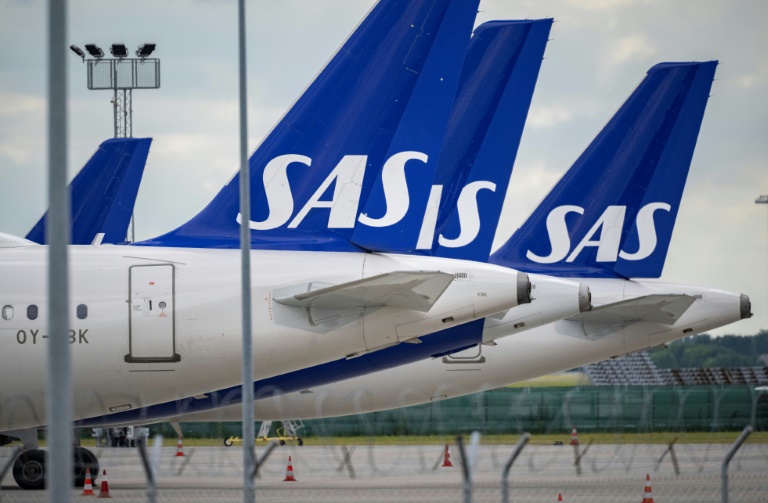
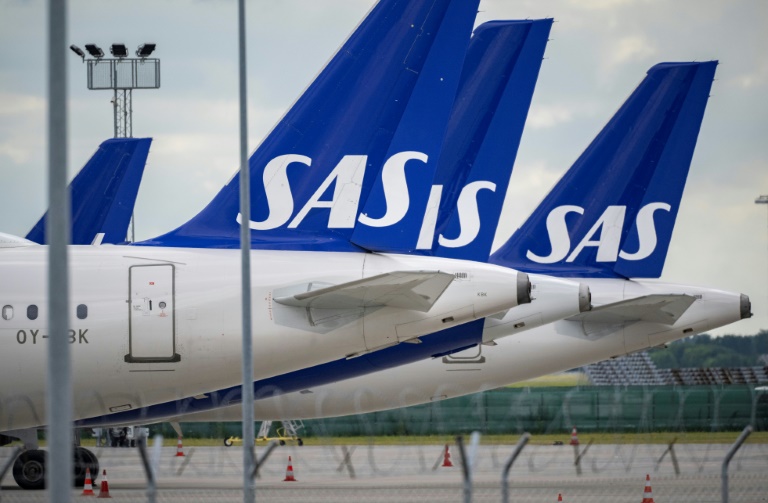
Scandinavian airline SAS and the unions representing their pilots said Tuesday that they had reached an agreement, ending a two-week strike that has cost the ailing airline between $9 and $12 million a day.

The agreement ending the strike after 15 days was confirmed by both the company and the unions after a negotiation session ran through Monday and into the early hours of Tuesday.

“I am pleased to report that we now have come to an agreement with all four pilot unions for SAS Scandinavia and the strike has ended,” chief executive Anko van der Werff said in a statement.

“Finally, we can resume normal operations and fly our customers on their much longed-for summer holidays. I deeply regret that so many of our passengers have been impacted by this strike,” he added.

A new agreement, covering the next five and half years, means that “flights operated by SAS Scandinavia will resume according to their regular traffic program as soon as possible”, the company said.

“SAS pilots have taken responsibility to sign a new agreement with SAS and the strike will cease,” the Swedish Air Line Pilots Association (SPF) said in a separate statement, adding that it had been “an extraordinary and very demanding negotiation.”

Pilots have been striking since July 4, when nearly 1,000 of them walked off the job after talks broke down. 

They were protesting against salary cuts demanded by management as part of a restructuring plan aimed at ensuring the survival of the company, and the firm’s decision not to re-hire pilots laid off during the Covid-19 pandemic. 

– Survival at stake –

Under the new deal, 450 pilots will be re-hired.

One day after the strike began SAS announced it was filing for Chapter 11 bankruptcy protection in the United States, and van der Werff last week warned that the prolonged strike was putting the Chapter 11 process in jeopardy and, “ultimately, the survival of the company at stake”.

When the stoppage was in its tenth day, SAS said it had already cost roughly 1 to 1.3 billion Swedish kronor ($94 million to $123 million, or 94 million to 123 million euros), with more than 2,500 flights cancelled.

The CEO also said the strike also had “a severe impact on our possibilities to succeed with SAS Forward”, the cost-saving programme launched by the ailing company in February. 

While the airline said it could meet its obligations in the near term it warned cash reserves “will erode very quickly in the face of a continuing pilot strike”.

SAS, which employs nearly 7,000 people, mainly in Denmark, Norway and Sweden, is also seeking to raise about 9.5 billion kronor in fresh capital.

“We now get on with the important work of progressing our transformation plan SAS FORWARD and building a strong and competitive SAS for generations to come,” van der Werff said Tuesday.

The summer is shaping up to be difficult overall for European airlines and airports, who are faced with staff shortages that are affecting air traffic. 

After widespread job losses linked to Covid-19, airlines and airports are struggling to recruit new staff in many countries.

SAS and pilots' unions reach agreement, ending strike

Scandinavian airline SAS and the unions representing their pilots said Tuesday that they had reached an agreement, ending a two-week strike that has cost the ailing airline between $9 and $12 million a day.

The agreement ending the strike after 15 days was confirmed by both the company and the unions after a negotiation session ran through Monday and into the early hours of Tuesday.

“I am pleased to report that we now have come to an agreement with all four pilot unions for SAS Scandinavia and the strike has ended,” chief executive Anko van der Werff said in a statement.

“Finally, we can resume normal operations and fly our customers on their much longed-for summer holidays. I deeply regret that so many of our passengers have been impacted by this strike,” he added.

A new agreement, covering the next five and half years, means that “flights operated by SAS Scandinavia will resume according to their regular traffic program as soon as possible”, the company said.

“SAS pilots have taken responsibility to sign a new agreement with SAS and the strike will cease,” the Swedish Air Line Pilots Association (SPF) said in a separate statement, adding that it had been “an extraordinary and very demanding negotiation.”

Pilots have been striking since July 4, when nearly 1,000 of them walked off the job after talks broke down. 

They were protesting against salary cuts demanded by management as part of a restructuring plan aimed at ensuring the survival of the company, and the firm’s decision not to re-hire pilots laid off during the Covid-19 pandemic. 

– Survival at stake –

Under the new deal, 450 pilots will be re-hired.

One day after the strike began SAS announced it was filing for Chapter 11 bankruptcy protection in the United States, and van der Werff last week warned that the prolonged strike was putting the Chapter 11 process in jeopardy and, “ultimately, the survival of the company at stake”.

When the stoppage was in its tenth day, SAS said it had already cost roughly 1 to 1.3 billion Swedish kronor ($94 million to $123 million, or 94 million to 123 million euros), with more than 2,500 flights cancelled.

The CEO also said the strike also had “a severe impact on our possibilities to succeed with SAS Forward”, the cost-saving programme launched by the ailing company in February. 

While the airline said it could meet its obligations in the near term it warned cash reserves “will erode very quickly in the face of a continuing pilot strike”.

SAS, which employs nearly 7,000 people, mainly in Denmark, Norway and Sweden, is also seeking to raise about 9.5 billion kronor in fresh capital.

“We now get on with the important work of progressing our transformation plan SAS FORWARD and building a strong and competitive SAS for generations to come,” van der Werff said Tuesday.

The summer is shaping up to be difficult overall for European airlines and airports, who are faced with staff shortages that are affecting air traffic. 

After widespread job losses linked to Covid-19, airlines and airports are struggling to recruit new staff in many countries.

Close Bitnami banner
Bitnami