World

The kidnapped Sri Lankan dissident who helped oust a president

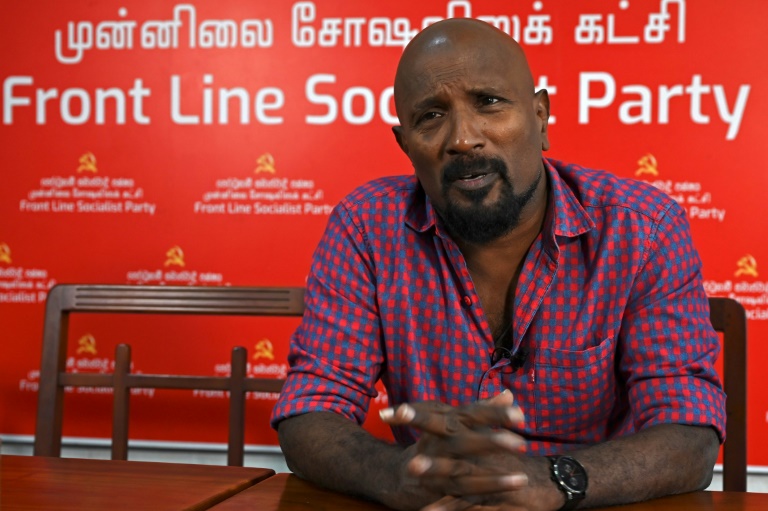
Activist Premakumar Gunaratnam says he was marked for death by Sri Lanka’s security boss a decade ago. The architect of his abduction went on to become president, but now the dissident has played a key role in the leader’s downfall.

Now 56, Gunaratnam was snatched by armed gunmen from his home near Colombo, bundled into a white van, and driven away to a secret location where he was restrained, stripped and tortured. 

Plainclothes men operating in unmarked vehicles seized dozens of other dissidents, journalists and opposition politicians in 2012. Many were never seen again.

Gunaratnam, a radical leftist who was about to launch a new political party, was one of the lucky ones: international pressure secured his unexpected release four days later.  

Sri Lanka’s security forces were controlled at the time by Gotabaya Rajapaksa — who later became president, oversaw the country’s worst economic crisis and last week fled the island before resigning after his home was stormed by protesters whom Gunaratnam helped to marshal.

“He abducted me and wanted to assassinate me,” he told AFP. “But this is not personal,” he added with a wry smile.

Local media describe the activist as a “key mover” in building an ostensibly leaderless months-long protest movement that channelled frustrations over the economic crisis into a political revolution.

It brought about the downfall of a political clan that had once been adored by much of the country for ending its decades-old civil war, despite an international outcry over atrocities by government troops in the conflict’s final weeks.

Rajapaksa’s ouster and hurried flight to Singapore were a “win for democracy”, Gunaratnam told AFP, but added that the protesters’ mission would be unfinished until he returned to face justice in a Sri Lankan courtroom.

“He is one of the key responsible persons for the abductions and disappearances, and he is one of the responsible persons for war crimes,” he said.

– White vans –

Security forces allegedly abducted troublesome opponents so often during and after Sri Lanka’s ethnic war that being “white-vanned” became a euphemism for kidnapping.

Rajapaksa acknowledged the practice of white-van abductions to a local reporter in 2019, but added that it pre-dated his time as Sri Lanka’s defence secretary and said it was unfair to “pinpoint” him for blame.

Gunaratnam looks back on his 2012 ordeal with remarkable good humour, though it came only a few months after two of his close comrades disappeared, never to be seen again. 

He had been granted Australian citizenship after fleeing the country, fearing retribution for his political activity, and he credits lobbying by Canberra’s ambassador for saving his life. 

Gunaratnam has spent a lifetime in revolutionary politics and, in a country with a long history of armed conflict and human rights abuses, it was not his first close brush with death. 

While a teenager, he joined a leftist political insurrection in the 1980s and, according to Sri Lankan journalist Victor Ivan, commanded a group of university students disguised as soldiers when they raided an army camp in Kandy for weapons.

He was eventually arrested in a trap reportedly set by army commander Sarath Fonseka, whom Gunaratnam accuses of presiding over hundreds of extrajudicial killings in the northeastern city of Trincomalee during the conflict. 

“I was counting down the days until the end of my life,” he told AFP.

He was only released, he says, because the government had come under pressure for murdering other cadres and needed to demonstrate that some of those missing were still alive. 

Fonseka is now a possible candidate in the parliamentary vote to replace Sri Lanka’s president.  

Among the candidates is Sajith Premadasa, the son of the president whose administration Gunaratnam fought to overthrow in the 1980s — a testament to the cloistered nature of Sri Lankan politics.

One of the ministers in that government was Ranil Wickremesinghe, now the acting president and frontrunner to succeed Rajapaksa.

Many Sri Lankan protest activists are against all the presidential candidates and are instead calling for the abolition of sweeping executive powers, which the movement blames for allowing corruption and political violence to flourish.

Gunaratnam, who long ago abandoned armed struggle, said the street campaign needed to push forward to force more comprehensive political reforms. 

“We don’t expect democracy from the rulers,” he added. “That’s why people came to the streets and showed what democracy is.”
Asian markets drop as Apple report fans economic worries

Most stocks fell Tuesday after a Wall Street sell-off fuelled by fresh recession worries following a report that Apple planned to ease back on spending due to uncertainty over the economic outlook.

The drop across most markets in Asia also came as oil held a Monday surge caused by fading expectations that Joe Biden had convinced Saudi Arabia to pump more to ease a supply crisis and temper prices.

The losses among equities ate into Monday’s gains, which came after a forecast-beating US retail sales report suggested consumers — the key driver of growth — remained resilient despite decade-high inflation and rising interest rates.

And analysts warned that with the earnings season just getting under way, there could be more pain ahead for investors as firms report falling profits or warn about the outlook.

In a sign of concern among big-cap firms about an economic slowdown or recession, Bloomberg News said tech titan Apple was pulling back on hiring and some investments. 

The news follows similar belt-tightening moves by other Silicon Valley giants including Alphabet, Amazon and Facebook parent Meta.

“With Apple putting up their hand and acknowledging they have too many staff, it is a clear sign of caution from the mega-cap heavyweight giants amid an uncertain time,” said SPI Asset Management’s Stephen Innes.

“Investors are hoping for a ‘kitchen-sink’ quarter where corporates flush out all the bad news at once — but I am not sure that will happen, and I think this makes it difficult to put an absolute bottom on the equity selloff.”

The report led to a reversal on Wall Street, with all three main indexes ending in negative territory, having enjoyed most of the day well up.

And Asia struggled Tuesday.

Hong Kong, Shanghai, Sydney, Seoul, Singapore, Taipei, Wellington and Manila all fell, though Tokyo rose as investors there returned from a long weekend to play catch-up with Monday’s regional rally.

Innes added that markets were likely to face pressure for some time as central banks continue to lift borrowing costs to fight inflation, risking an economic downturn.

“The probability of recession is dominating US discussions, as inflation might have peaked in June while the Fed still has a couple of massive hikes ahead before possibly pausing,” he said.

“We always hear that the rate hikes are in the price, but they are always a shock when the market actualises the reality, especially when they are of the jumbo variety.”

While some are predicting inflation may have reached its peak, oil prices — the key driver of soaring prices — continues to hold its strength, despite recent losses.

Both main contracts rocketed more than five percent Monday on expectations that Riyadh will not open up the taps further, with Biden’s plea seeming to have fallen on deaf ears.

Traders are also keeping a nervous eye on Europe, where a 10-day maintenance shutdown of the Nord Stream 1 pipeline from Russia is due to come to an end.

Many fear Vladimir Putin will keep it shut down in retaliation for sanctions imposed on Moscow for its invasion of Ukraine. That would deal another blow to the already creaking eurozone economy and could send crude prices soaring.

Supply fears are trumping worries about a demand hit in China from another possible lockdown in Shanghai as officials struggle to contain another Covid-19 outbreak.

– Key figures at around 0230 GMT –

Tokyo – Nikkei 225: UP 0.7 percent at 26,977.37 (break)

Hong Kong – Hang Seng Index: DOWN 0.7 percent at 20,701.98

Shanghai – Composite: DOWN 0.2 percent at 3,270.56

Euro/dollar: DOWN at $1.0140 from $1.0146 on Monday

Pound/dollar: DOWN at $1.1940 from $1.1950 

Euro/pound: DOWN at 84.84 pence from 84.88 pence

Dollar/yen: UP at 138.24 yen from 138.13 yen

West Texas Intermediate: DOWN 0.2 percent at $102.45 per barrel

Brent North Sea crude: DOWN 0.2 percent at $106.02 per barrel

New York – Dow: DOWN 0.7 percent at 31,072.61 (close)

London – FTSE 100: UP 0.9 percent at 7,223.24 (close)

Mexico resumes building president's tourist train

Mexico has resumed building part of President Andres Manuel Lopez Obrador’s flagship tourist train project, an official said Monday, despite a judge suspending construction on that section on environmental grounds.

A judge indefinitely suspended construction of part of the Mayan Train in the Yucatan peninsula in late May.

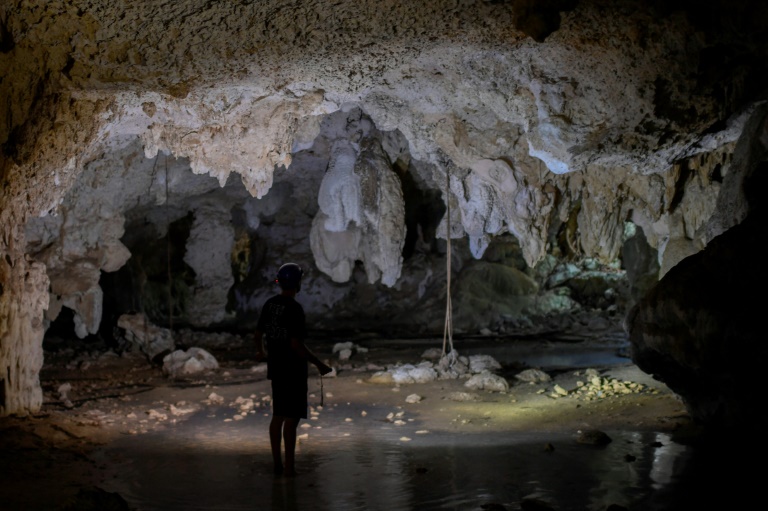
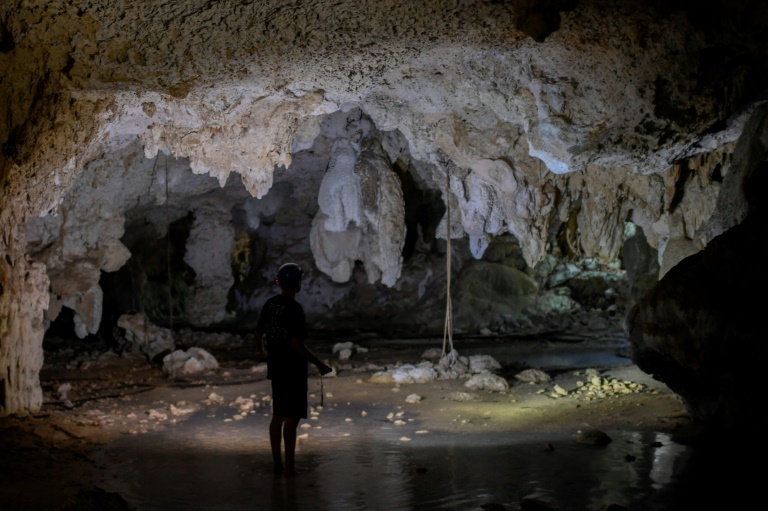
The ruling followed a legal challenge brought by opponents, including scuba divers, who are concerned about the effect of the train on wildlife, caves and water-filled sinkholes known as cenotes.

But construction resumed on July 13 under a measure implemented in November that deemed the government’s major infrastructure works “national security.”

Under that ordinance, Lopez Obrador intends to shield the train and other projects from lawsuits that have delayed construction, as well as to expedite obtaining permits and licenses.

The Mayan Train “is a work of national security because of the railroads,” said Javier May, head of the National Fund for the Promotion of Tourism, the government agency overseeing the project, on Monday.

The public security and interior departments are determined to resume construction of the 60-kilometer (37-mile) section between the resorts of Playa del Carmen and Tulum, May said.

Lopez Obrador hopes to inaugurate the roughly 1,500-kilometer rail loop linking popular Caribbean beach resorts and archeological ruins by the end of 2023.

In the May ruling, the federal judge cited the “imminent danger” of causing “irreversible damage” to ecosystems, according to one of the plaintiffs, the non-governmental group Defending the Right to a Healthy Environment

Authorities were found to have failed to carry out the necessary environmental impact studies before starting construction of the section, one of several being built by the military, the NGO said in a statement.

The government appealed the decision.

On Monday, environmental organizations Greenpeace and Save Me from the Train separately warned that the Mexican government had resumed work without waiting for the appeals process to be completed, which in their opinion both violates the law and poses a major risk to the Riviera Maya ecosystems.

Lopez Obrador has insisted the railroad will not affect the cenotes and alleged that environmentalists have been infiltrated by “impostors.”

Mexico resumes building president's tourist train

Mexico has resumed building part of President Andres Manuel Lopez Obrador’s flagship tourist train project, an official said Monday, despite a judge suspending construction on that section on environmental grounds.

A judge indefinitely suspended construction of part of the Mayan Train in the Yucatan peninsula in late May.

The ruling followed a legal challenge brought by opponents, including scuba divers, who are concerned about the effect of the train on wildlife, caves and water-filled sinkholes known as cenotes.

But construction resumed on July 13 under a measure implemented in November that deemed the government’s major infrastructure works “national security.”

Under that ordinance, Lopez Obrador intends to shield the train and other projects from lawsuits that have delayed construction, as well as to expedite obtaining permits and licenses.

The Mayan Train “is a work of national security because of the railroads,” said Javier May, head of the National Fund for the Promotion of Tourism, the government agency overseeing the project, on Monday.

The public security and interior departments are determined to resume construction of the 60-kilometer (37-mile) section between the resorts of Playa del Carmen and Tulum, May said.

Lopez Obrador hopes to inaugurate the roughly 1,500-kilometer rail loop linking popular Caribbean beach resorts and archeological ruins by the end of 2023.

In the May ruling, the federal judge cited the “imminent danger” of causing “irreversible damage” to ecosystems, according to one of the plaintiffs, the non-governmental group Defending the Right to a Healthy Environment

Authorities were found to have failed to carry out the necessary environmental impact studies before starting construction of the section, one of several being built by the military, the NGO said in a statement.

The government appealed the decision.

On Monday, environmental organizations Greenpeace and Save Me from the Train separately warned that the Mexican government had resumed work without waiting for the appeals process to be completed, which in their opinion both violates the law and poses a major risk to the Riviera Maya ecosystems.

Lopez Obrador has insisted the railroad will not affect the cenotes and alleged that environmentalists have been infiltrated by “impostors.”

Jury selected for contempt trial of Trump aide Steve Bannon

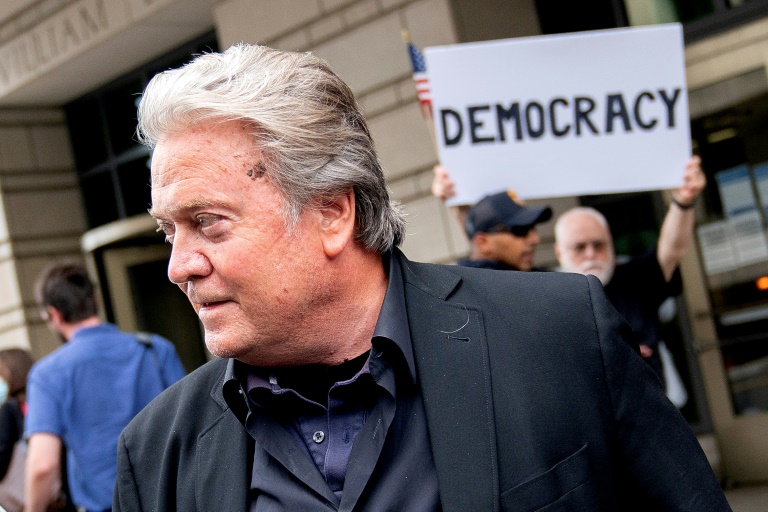
A jury was selected Monday for the trial of former Donald Trump advisor Steve Bannon for defying a subpoena to testify before lawmakers investigating the attack on the US Capitol.

Bannon, who led Trump’s successful 2016 presidential election campaign, was among dozens of people called by a congressional committee to testify about the 2021 storming of Congress by Trump supporters.

The 68-year-old refused the summons and was indicted on two charges of contempt of Congress.

A 22-person jury was selected on Monday to hear the case. The panel will be cut down to 12 jurors and two alternates on Tuesday, and opening arguments will begin in what is expected to be a speedy trial.

Bannon’s lawyers sought to delay the start of the trial so it would not take place at the same time as the House committee’s public hearings into the Capitol attack, but the judge refused the request last week.

Thousands of Trump supporters, many associated with ultra-nationalist and white supremacist groups, stormed the Capitol on January 6, 2021 in an effort to block the certification of Democrat Joe Biden’s election victory. 

They had been egged on by Trump in a fiery speech near the White House, during which he repeated his false claims of election fraud.

According to the House committee probing the riot, Bannon spoke to Trump the previous day.

Investigators believe Bannon and other Trump advisors could have information on links between the White House and the rioters.

After refusing to testify for months, Bannon finally agreed this month to cooperate with the House investigation, a move prosecutors said was a “last-ditch attempt to avoid accountability” by stalling his trial for contempt.

Judge Carl Nichols ruled the trial should go ahead anyway, saying, “I see no reason for extending this case any longer.”

If convicted of contempt, Bannon faces a minimum sentence of 30 days and a maximum of one year in prison on each count.

He was Trump’s strategy chief at the White House before being sacked in 2017.

Bannon was charged with conspiracy to commit wire fraud and money laundering after allegedly defrauding thousands of donors to a campaign to fund Trump’s anti-migrant wall along the southern border.

In Trump’s final hours in office, he pardoned Bannon.

More than 850 people have been arrested in connection with the attack on Congress. The assault left at least five people dead and 140 police officers injured.

Trump was impeached for a historic second time by the House after the riot — he was charged with inciting an insurrection — but was acquitted by the Senate.

Heatwave-hit Farnborough airshow basks in bumper Boeing order

Britain’s Farnborough airshow flew into view Monday under a sweltering heatwave, as US planemaker Boeing basked in the glow of the first gigantic order in global aviation’s first get-together since Covid.

Visitors flocked to air-conditioned chalets and exhibition halls to escape the intense heat on the first day of one of the world’s biggest civil and defence shows, while queues snaked for ice cream vans under dizzying air displays.

Tens of thousands of visitors are expected at this year’s event, which coincides with Britain’s first-ever “extreme heat” red alert that has been declared for both Monday and Tuesday, when temperatures set to soar further.

“People who come to visit are really happy to visit. Some of the stays are a little longer than they would normally be because it’s pretty relaxing inside,” said John Paul Frasier, adviser for Canadian manufacturer De Havilland Aircraft, speaking to AFP inside its business chalet.

“It’s pretty challenging and we know that tomorrow is going to be a little bit warmer.”

The business terraces were meanwhile deserted as some plucky visitors — clad in hats, shorts and sunglasses — headed to the tarmac to watch the commercial and military jets soar across the skies.

– Beads of sweat –

“It the hottest I’ve seen, we just have to power through,” said Aaron Rutter, vice president of sales at Lisi Aerospace, with beads of sweat dropping from his forehead as he watched Boeing’s new 777X jumbo jet make a series of twists and turns across the sky.

“There a few crazy (ones) of us out there. It’s all relative,” added Rutter, who hails from Arizona and kept his black jacket on.

This is the first Farnborough since 2018 because the 2020 edition was cancelled as the Covid health emergency ravaged the aviation sector.

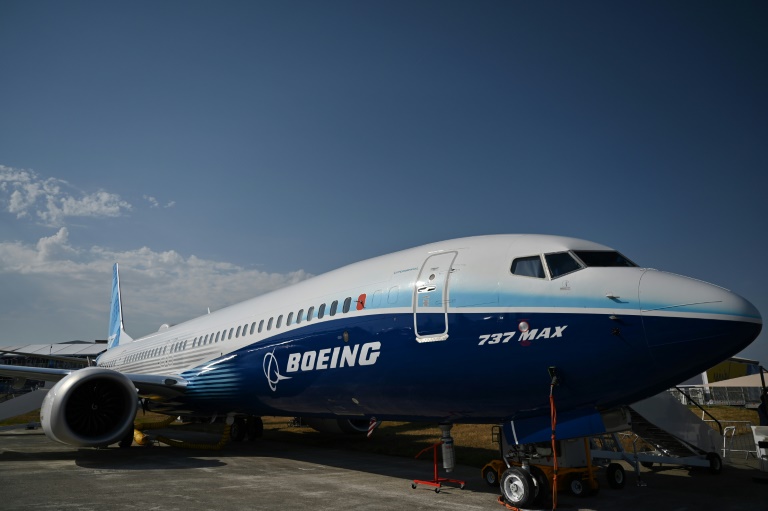
Boeing fired the first shot on Monday in its traditional orders battle with European rival Airbus, clinching a $13.5-billion deal for 100 MAX planes from Delta Airlines in a huge vote of confidence for the crisis-hit jet — and for the industry’s broader recovery from Covid.

Delta lodged its first-ever order for medium-haul MAX 10 aircraft, with options for 30 more of the fuel-efficient planes as it seeks to replace its ageing fleet and cut emissions.

The blockbuster deal marks a huge turnaround for the MAX jet which had suffered two deadly crashes in 2018 and 2019.

– Decarbonisation –

Delta, which has 222 Airbus aircraft due for delivery, was until now the only large US airline that had not yet ordered MAX jets.

The MAX 10 is the largest version of Boeing’s new generation of single-aisle aircraft, and competes with the commercially-successful Airbus A321.

Delta boss Ed Bastian added that the aircraft would help it improve fuel efficiency and secure a “more sustainable future for air travel”.

The news comes as airlines worldwide seek to replace ageing fleets with fuel-efficient planes that emit less carbon dioxide.

Airbus and a number of major airlines signed letters of intent to explore the possibility of capturing CO2 emissions from the air and storing them underground.

Boeing revealed also that Japanese airline ANA had agreed to purchase 20 of its smaller MAX 8 jets — worth $2.4 billion — plus two 777-8 freight planes.

– ‘Handing over controls’ –

Outgoing British Prime Minister Boris Johnson opened the prestigious five-day event as the aviation sector plots its post-Covid recovery.

The event coincides with fast-moving political turmoil in Britain after Johnson’s recent announcement that he is stepping down as Conservative party leader, sparking a divisive contest to replace him also as prime minister.

“This government believes in aviation and its power to bring jobs and growth to the entire country,” Johnson said Monday in opening remarks, before alluding to his exit from Downing Street.

“After three years in the cockpit… I am now handing over the controls seamlessly to someone else. I don’t know who,” he added, sparking laughter from delegates.

First 'dormant' stellar black hole discovered by debunking team

A team of astrophysicists known for debunking previous supposed black holes announced a discovery of their own on Monday: the first “dormant” stellar-mass black hole spotted orbiting a star in a nearby galaxy.

While these black holes are thought to be common throughout the universe, they have proved difficult to find, and they have themselves rejected several possible candidates in recent years.

Now the international team has found a “needle in a haystack,” said Tomer Shenar, an astrophysicist at the University of Amsterdam and lead author of a new study in the Nature Astronomy journal.

The team was searching the skies for something that could eventually become a binary black hole, in which two black holes orbit each other after swallowing their stars in a supernovae explosion.

“We found a quite massive star, that weighs 25 times the mass of our Sun, that is orbiting around something that we do not see,” Shenar told AFP.

They believe the blue star, which is in the Large Magellanic Cloud galaxy that neighbours our Milky Way, is locked in a death dance with a black hole that has nine times the mass of our Sun.

These kinds of black holes are normally detected by the X-ray radiation they emit as they collect material from their companion star.

But this binary system, known as VFTS 243, is called dormant because it does not emit X-rays — it is not close enough to suck matter from its star.

– ‘Black hole destroyer’ –

Hugues Sana, astrophysicist at the KU Leuven University in Belgium, said the Milky Way alone is thought to have around 100 million stellar-mass black holes, which are far smaller than their supermassive big brothers.

However only 10 have been found, said Sana, a co-author of the study. 

This could be because many are laying dormant, biding their time to eventually swallow their companion star.

Sana said observing them was like watching two people dance in a dark room, one dressed in white and the other in black. You might only see one dancer, but you know the other one is there.

“We’ve never really detected such systems before,” Shenar told AFP. “There have been a few claims in the last years, but they have all more or less been refuted,” Shenar told AFP.

Indeed, members of his team were among those rejecting previous discoveries, by laying out alternatives for what the data could indicate.

Because of this, Shenar said they expected extra scrutiny.

So they went about meticulously eliminating all the other possibilities, Shenar said, until they were satisfied that “it’s either a fat, invisible alien — or a black hole”.

Then they called the most famous black hole debunker they knew.

Kareem El-Badry of the Harvard-Smithsonian Center for Astrophysics has been “debunking black holes one after another” over the last couple of years, Tomer said, dubbing him the “black hole destroyer”.

“I sent him the data and I told him, listen, we found this object — prove me wrong,” Tomer said.

“I had my doubts,” said El-Badry, who joined the team and ran his own simulations.

“But I could not find a plausible explanation for the data that did not involve a black hole.”

– Not with a bang, but a whimper –

The discovery could also give an insight into how black holes are formed.

Stellar-mass black holes are believed to be born during the death of a large star, in a massive supernovae explosion.

The force of the blast knocks black holes in a binary system into an elliptical, rather than circular orbit.

However, VFTS 243 has an orbit that is also perfectly circular.

“That means that the star immediately vanished into the black hole,” Shenar said.

“This has a lot of implications as to how these black hole pairs form,” he said, adding that VFTS 243’s star could eventually collapse in a similar way.

Andrew Norton, an astrophysicist at Britain’s Open University who was not involved in the study, said “this is important evidence that all such stars may not end their lives in supernovae explosions”.

Shenar said he welcomed other scientists trying to debunk the debunkers.

“If someone comes and debunks this as well, I’m sure they will have a pretty fantastic explanation — like the fat alien.”

Speaking to ambassadors, Bolsonaro again questions electoral system

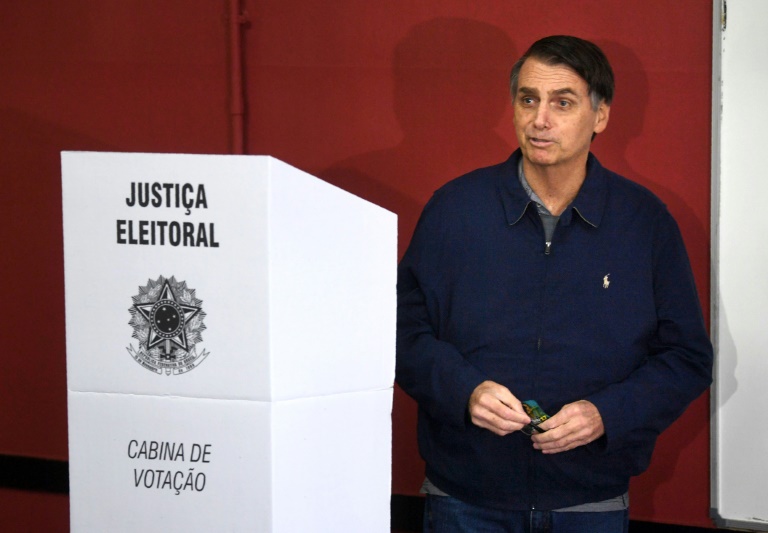
President Jair Bolsonaro once again questioned the Brazilian electoral system on Monday, less than three months before the presidential election that all polls predict he will lose.

“We want to correct the flaws, we want transparency, a real democracy,” said the far-right leader, who has repeatedly sought to cast doubt over the country’s electronic voting system.

He continued to blast the voting system in a speech that lasted nearly an hour at the presidential palace in Brasilia, in front of several dozen ambassadors invited specifically to listen to him discuss the topic.

Notable invitees included ambassadors from France and Spain, among others.

Voters in Brazil cast their ballots electronically at voting stations.

But Bolsonaro has long argued for a paper printout to be made of each vote cast, suggesting the absence of a paper trail makes cheating easier.

He has not provided evidence of fraud, and the Superior Electoral Court insists the system is fair and transparent.

“We are three months away from the election,” Bolsonaro said. “We cannot hold elections amid mistrust.”

His repeated questioning of the system has prompted the Supreme Court to open an investigation into Bolsonaro.

Bolsonaro is broadly projected to lose in October to leftist former president Luiz Inacio Lula da Silva. 

Da Silva dismissed Bolsonaro’s speech as lies aimed at deflecting attention from real problems facing the country.

“It’s a shame that Brazil doesn’t have a president who calls 50 ambassadors to talk about something in the interest of the country,” Da Silva tweeted later Monday. “Employment, development, or the fight against hunger, for example. Instead, he tells lies against our democracy.”

Bolsonaro’s comments have led analysts to fear that he may refuse to accept defeat in a scenario similar to the January 2021 invasion of the US Capitol by supporters of Donald Trump, a hero of Bolsonaro’s. 

At a Senate hearing last week, defense minister Paulo Sergio Nogueira proposed holding a “parallel vote” with a special ballot box for paper ballots.

Uber settles US lawsuit over disabled rider 'wait fees'

Uber will offer several million dollars in compensation to tens of thousands of passengers with disabilities who were charged extra fees, US prosecutors said Monday.

The case brought by the US Department of Justice centered on disabled passengers allegedly being made to pay wait charges because they needed extra time to board vehicles.

Under the settlement, Uber will issue credits to more than 65,000 eligible riders that are worth double the amount of wait time fees they were ever charged, which could potentially amount to millions of dollars.

The ride-share company also agreed to pay over $1.7 million to riders who complained to Uber about the fees, and $500,000 to other impacted people.

“People with disabilities should not be made to feel like second-class citizens or punished because of their disability, which is exactly what Uber’s wait time fee policy did,” said assistant attorney general Kristen Clarke.

Uber said it was “pleased” by the settlement.

“Prior to this matter being filed we made changes so that any rider who shares that they have a disability would have wait time fees waived automatically,” the company said.

Uber charges a fee if a driver has to wait more than two minutes to pick up any passenger, but the Department of Justice said applying those fees to riders with disabilities amounts to unlawful discrimination.

Under the terms of a two-year agreement, Uber will continue to waive wait time fees for riders who need more time to board because of disabilities, and ensure refunds are easily available in event such fees are wrongly charged, prosecutors said.

Fresh roadblocks as Panama protesters reject deal

There were fresh demonstrations and roadblocks in Panama on Monday as protest groups turned their backs on a deal signed with the government to end their protest in exchange for a fuel price cut. 

After union leaders consulted grassroots supporters on the deal announced Sunday, it was decided to continue the protest, said Luis Sanchez, a leader of the Anadepo civic grouping.

“We had warned the executive that we still have to consult the rank and file,” he told the TVN-2 channel.

The agreement, he added, “was signed under pressure” and members have opted to continue the mobilization that had seen trucks and banner-waving demonstrators paralyze the strategic Pan-American Highway.

“In the meantime, there is no agreement,” said Sanchez as he tore up a sheet of paper.

On Sunday, the government and some protest leaders announced a deal to end more than two weeks of demonstrations over high fuel prices and rising living costs in the country of 4.4 million people.

The outpouring has cost the economy millions of dollars in losses and has led to shortages of fuel and food in some parts of the country, according to the private sector.

“We are in a bad way; no food, no buses. I wanted to buy rice and… what little can be found is very expensive. The vegetables are damaged,” said Angelica Ruiz, a resident of Pacora east of Panama City who also had trouble getting to her place of work.

– ‘We will not weaken’ –

The government agreed Sunday to cut the price of petrol to $3.25 per gallon and pursue talks on lowering food and medicine costs that were key among protesters’ concerns.

Last week, it had already reduced the petrol price to $3.95 from $5.20 per gallon in June, but this was not enough to appease the demonstrators.

After Sunday’s announcement, several unions said the agreement was inadequate and had left out many groups.

“We will stay on in the street,” said protester Juan Morales, a farmer from Capira, west of Panama City.

“We will not weaken. We need strong and positive answers,” he told AFP.

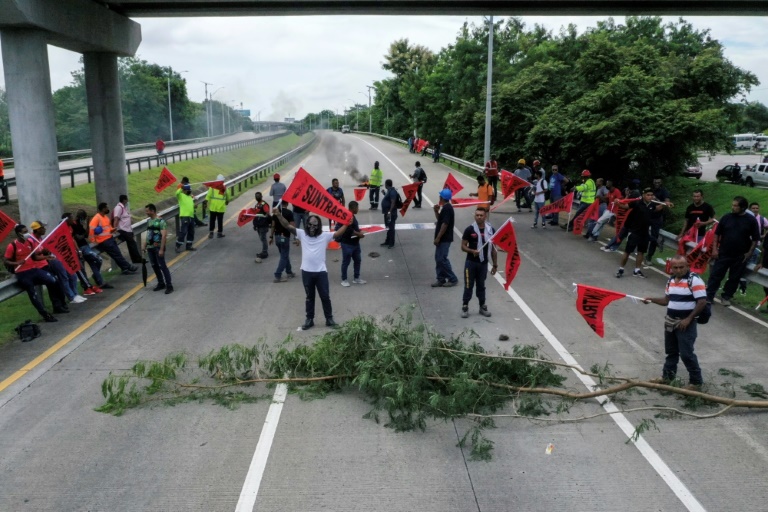
The biggest protest Monday was in the capital, with members of the Suntracs construction union closing access roads with burning tire barricades, causing massive traffic backups.

There were also new blockades of the Pan-American Highway that connects Panama with the rest of Central America and is the main transport route for goods through the country.

Suntracs general secretary Saul Mendez called for negotiations that included all groups to discuss “the most pressing issues” in Panama.

Those issues include reducing the costs of fuel, food, medicine and electricity, he said, as well as a general increase in salaries and greater public investment in education.

The protests come amid difficult economic times for a country with inflation of 4.2 percent recorded in May, along with an unemployment rate of about 10 percent and fuel price hikes of nearly 50 percent since January. 

Despite its dollarized economy and high growth figures, the country has a high rate of social inequality. 

Close Bitnami banner
Bitnami