World

Britain, France brace for temperature records as Europe fires rage

Britain and France went on high alert on Monday, bracing for record temperatures from a punishing heatwave as deadly wildfires raging in parts of southwest Europe showed no sign of abating.

Forecasters have put 15 French departments on the highest state of alert for extreme temperatures while in Britain the government was accused of failing to take seriously the impending heat emergency as forecasters warned that lives were at risk.

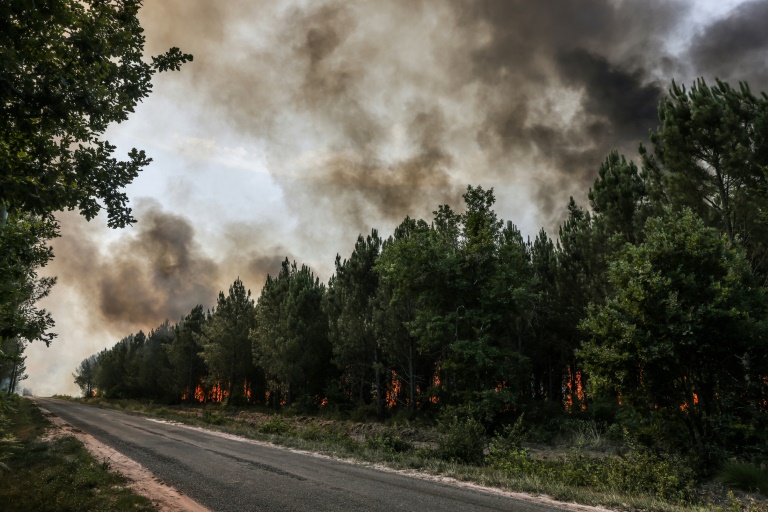
The heatwave, spreading north, began as the second to engulf parts of southwest Europe in weeks, and blazes burning in France, Greece, Portugal and Spain have destroyed thousands of hectares of land and forced thousands of residents and holidaymakers to flee.

Scientists blame climate change and predict more frequent and intense episodes of extreme weather such as heatwaves and drought.

In France’s Landes forest, in the southwest Aquitaine region, temperatures “will be above 42 degrees Celsius” (107 Fahrenheit) on Monday forecaster Olivier Proust said.

And Brittany, which until recently has escaped the worst of the heat, could register temperatures as high as 40C, say experts, which would be a record for the region.

In the southwestern Gironde region, firefighters over the weekend continued to battle to control forest blazes that have devoured nearly 11,000 hectares (27,000 acres) since Tuesday.

In Spain, authorities announced that a member of the fire service died on Sunday while working to extinguish forest fires at Losacio in the northwestern Zamora region. The fires have already killed several civilians and emergency personnel since last week.

– ‘A heat apocalypse’ –

Spanish authorities have reported around 20 wildfires still raging out of control in different parts of the country from the south to Galicia in the far northwest, where blazes have destroyed around 4,500 hectares of land. 

The wildfires in France forced more than 16,000 people — residents and tourists combined — to decamp. Seven emergency shelters have been set up for evacuees.

France’s interior ministry announced it would send an extra three firefighting planes, 200 firefighters and more trucks.

“In some southwestern areas, it will be a heat apocalypse,” meteorologist Francois Gourand told AFP.

The chapel of a historic hospital in the southeastern city of Lyon, Grand Hotel Dieu, offered refuge to tourists on Sunday including Jean-Marc, 51, who was visiting from Alsace.

“We came back to admire the place, but we can’t leave, it’s too hot outside. We say a prayer before the fire!” he quipped.

French cyclist Mikael Cherel, taking part in the Tour de France’s 15th stage between Rodez and Carcassonne in southern France on Sunday, described “very, very difficult conditions”.

“I’ve never known such a hot day on a bike. It really was no picnic.”

In Portugal, almost the entire country remained on high alert for wildfires despite a slight drop in temperatures, after hitting 47C — a record for the month of July — on Thursday.

– ‘Risk to life’ in UK –

Only one major fire was burning on Sunday in the north.

The fires have killed two, injured around 60 and destroyed between 12,000 and 15,000 hectares of land in Portugal.

In Britain, the weather office issued a first-ever “red” warning for extreme heat, cautioning there was a “risk to life”.

The Met Office said temperatures in southern England could exceed 40C on Monday or Tuesday for the first time, leading some schools to say they would stay closed next week.

Eyebrows were raised, however, by comments from Deputy Prime Minister Dominic Raab appearing to welcome the likelihood of temperatures topping 40C and Prime Minister Boris Johnson missing a meeting about the government’s response to the heatwave.

“This isn’t like a lovely hot day where we can put a bit of sunscreen on, go out and enjoy a swim and a meal outside,” College of Paramedics chief executive Tracy Nicholls told Sky News.

“This is serious heat that could actually, ultimately, end in people’s deaths because it is so ferocious,” she said. 

The UK capital is expected to see the highest temperatures and mayor Sadiq Khan advised Londoners only to use public transport if “absolutely necessary”.

Ambulance services are on crisis footing, and some schools in southern England have already said they will stay shut.

In the Netherlands, the mercury is set to reach 38C in parts of the country on Tuesday.

burs-jm/lcm
Thai democracy activists targeted by Pegasus spyware: report

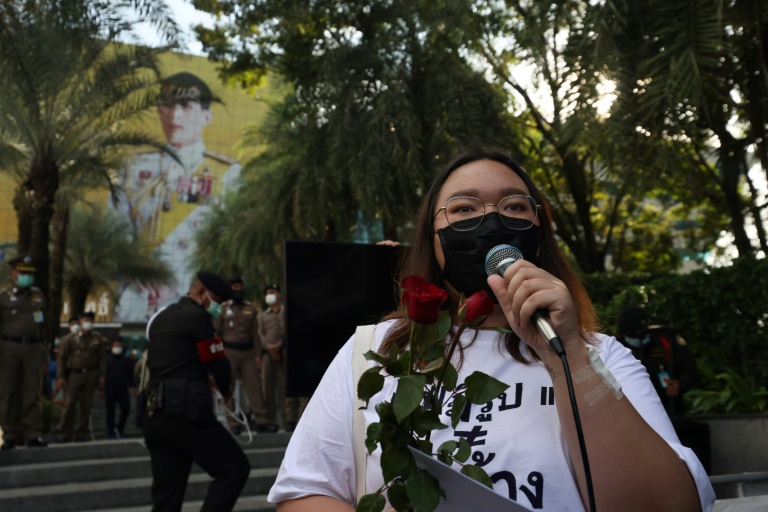
Dozens of Thai democracy activists were targeted by the controversial Israeli spyware known as Pegasus during the height of intense anti-government protests, according to an international digital rights group report.

Massive demonstrations engulfed Thailand’s capital Bangkok two years ago as thousands called for greater civil freedoms, as well as a loosening of the strict lese-majeste laws that prevent any criticism of the monarchy.

The report by Canadian cybersecurity watchdog Citizen Lab in partnership with Thai groups iLaw and DigitalReach, identified some 30 activists, academics, lawyers and NGO workers — mostly connected to civil rights organisations — whose mobile devices were affected.

“The infections occurred from October 2020 to November 2021, coinciding with a period of widespread pro-democracy protests, and predominantly targeted key figures in the pro-democracy movement,” the report stated.

Pegasus software, created by Israeli firm NSO Group, can extract data and activate cameras or microphones once it has successfully infiltrated a mobile device.

The report stops short of saying definitively who was behind the use of the spyware, though it notes that NSO Group says they only sell the technology to governments.

In its own executive summary of the findings the Thai NGO iLaw said: “It can be circumstantially concluded that the use of Pegasus against dissidents would be of significant benefit to the Thai government.”

Among those targeted, Citizen Lab said, were the lese majeste lawyer Arnon Nampa, protest leader Panusaya Sithijirawattanakul and activist Jatupat Boonpattararaksa.

Panusaya is currently on bail and facing 10 royal defamation charges, while Jatupat was denied bail earlier this year after also being charged with insulting the monarchy.

Those affected were tipped off in November 2021 when Apple sent out a notification informing them their devices had been targeted by state-backed attacks.

Amnesty International, following an independent investigation, condemned the hacking.

“These new revelations are a shocking example of just how low authorities might stoop to control peaceful dissent,” said technologist Etienne Maynier.

“It is worth remembering that this is only what has been found so far, and the scale of surveillance attempts could be bigger and more damaging.”

It is the latest such case of the Israeli software being used to surveil dissidents.

The NSO Group is currently being sued in the US by Apple, which alleges the firm’s spyware was used to infiltrate a number of iPhones worldwide.

India's parliament begins voting for new president

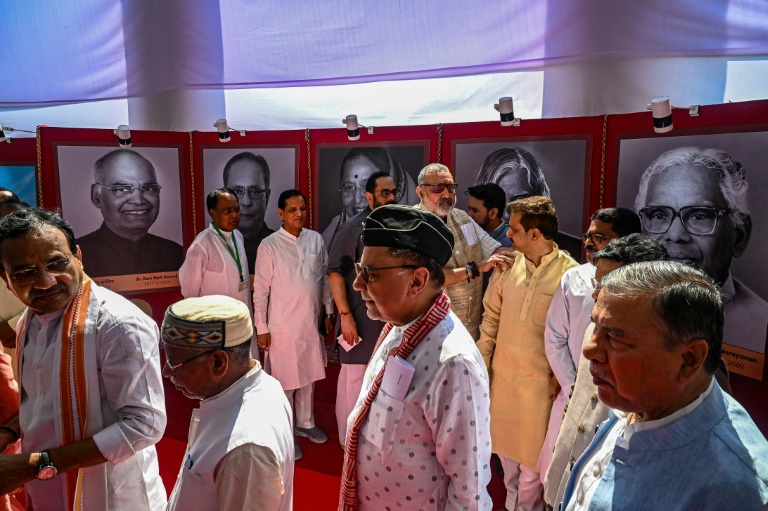
India’s parliament began voting Monday for a new president, with a female politician from the country’s marginalised tribal community the favourite for the post.

Droupadi Murmu, from the Santhal tribe, has been nominated by Prime Minister Narendra Modi’s ruling Bharatiya Janata Party for the largely ceremonial position.

If elected, she would be India’s first tribal president and second female president. The incumbent, Ram Nath Kovind, is the country’s second president from the Dalit community, the bottom of the Hindu caste system.  

Murmu, 64, began her career as a schoolteacher in the eastern state of Odisha before going into politics. She has held ministerial positions in the state government, and been governor of the neighbouring state of Jharkhand. 

Murmu “has devoted her life to serving society and empowering the poor, downtrodden as well as the marginalised,” Modi tweeted after her candidacy was announced. 

Her main opponent for the presidency is veteran politician Yashwant Sinha, an ex-BJP member and former finance and external affairs minister, who has been backed by opposition parties including Congress.

He is now a vocal critic of Modi’s government and tweeted at the weekend: “This year the Presidential election is not a contest between two individuals but two ideologies.

“Only one side wants to protect the provisions & values enshrined in our Constitution.”

India’s president is chosen by nearly 5,000 elected members of both houses of parliament and regional legislatures across the country. 

Each of their votes is weighted according to the size of their constituency, and they rank the candidates in order of preference.

If no-one has more than 50 percent support, the lowest-scoring candidate is eliminated and their votes redistributed until someone reaches the mark. 

The result will be announced later this week. 

India’s prime minister wields executive power, but the president can send back a few parliamentary bills for reconsideration. 

The president also plays a guiding role in the process of forming governments. 

US school shooter faces death penalty at sentencing trial

A young man who gunned down 17 people at his former high school in Parkland, Florida goes on trial Monday, with jurors set to hand down either the death penalty or a life sentence.

Nikolas Cruz took an AR-15 assault rifle into Marjory Stoneman Douglas High School on Valentine’s Day in 2018 and killed 17 students and staff members.

Cruz — who was 19 at the time — has already pleaded guilty to 17 counts of first-degree murder and 17 counts of attempted murder for those wounded during the massacre.

The trial is being held to determine his sentence. The death penalty requires a unanimous decision by the jury; Cruz will otherwise be handed life without parole.

The Florida shooting stunned a country accustomed to gun violence and sparked new efforts, led by students from the school itself, to get lawmakers to pass tougher gun control laws.

Parkland survivors founded “March for Our Lives,” organizing a rally that drew hundreds of thousands of people to Washington, DC in 2018.

Thousands turned out for demonstrations organized by the group last month following two other mass shootings: one at a Texas elementary school that killed 19 young children and two teachers, and another at a New York supermarket that left 10 Black people dead.

Those shootings helped galvanize support for the first significant federal bill on gun safety in decades.

– More than 24,000 dead –

President Joe Biden signed the bill into law in late June. It  included enhanced background checks for younger buyers and federal cash for states introducing “red flag” laws that allow courts to temporarily remove weapons from people who are considered a threat.

Cruz bought the weapon he used in the 2018 attack legally, despite having a documented history of mental health problems.

Expelled from school for disciplinary reasons, Cruz was known to be fixated on firearms — and had reportedly been identified as a potential threat to his classmates.

On the day of the attack Cruz arrived at the school in an Uber, began shooting indiscriminately at students and staff, and fled nine minutes later, leaving behind a scene of carnage.

He was arrested nearby shortly afterward.

Footage recovered from his phone showed he had filmed his plans to attack his former school, saying his goal was to kill “at least 20 people.”

Cruz told a detective after his arrest that he heard demons ordering him to “buy weapons, kill animals and destroy everything.”

According to the Gun Violence Archive website, more than 24,000 people have been killed by firearms in the United States so far this year, including more than 13,000 who died by suicide.

EU mulls Russia sanctions, as Zelensky sacks top Ukraine officials

The European Union was set to discuss tightening sanctions against Russia over its invasion of Ukraine Monday, after President Volodymyr Zelensky sacked his top two law enforcement officials in a major shakeup.

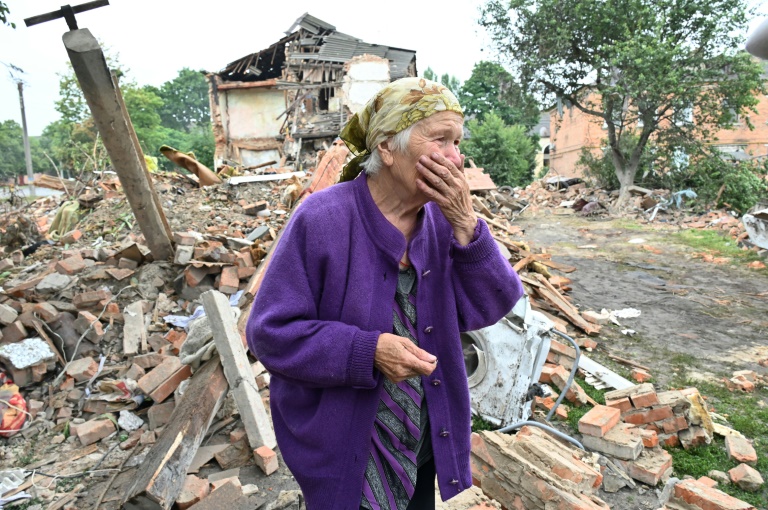
The talks were to take place as Kyiv accused Moscow of launching fresh strikes on multiple residential areas in eastern and southern Ukraine.

The new attacks came after Moscow announced it would step up its military operations and Ukraine accused Russia of installing missile launchers at Europe’s largest nuclear plant.

In Brussels, EU foreign ministers will meet to discuss fresh sanctions against Moscow, which has already been hit with a series of punitive measures since the war started in February.

The bloc is considering banning gold purchases from Russia, and more Russian figures could also be placed on the EU blacklist. 

“Moscow must continue to pay a high price for its aggression,” European Commission President Ursula von der Leyen said after forwarding the proposed measures. 

Brussels is expected to hold initial sanctions discussions Monday, but not make a same-day decision, according to a senior EU official.

In the government’s most serious shakeup since Moscow’s forces invaded, Zelensky said Sunday he was firing prosecutor general Iryna Venediktova and security chief Ivan Bakanov. 

In a national address, Zelensky said over 650 cases of suspected treason and aiding and abetting Russia by Ukrainian security officials are currently being investigated, including 60 cases of officials whom he said have remained in territories occupied by Russia and are “working against our state.”

“Such a great number of crimes against the foundations of national security, and the connections established between Ukrainian law enforcement officials and Russian special services, pose very serious questions to the relevant leaders,” Zelensky said. 

“Each such question will be answered.”

– Devastating military might –

Zelensky also highlighted the devastating military might Moscow has used against Ukraine, saying that as of Sunday Russian forces have launched more than 3,000 cruise missiles on targets in Ukraine.

The heaviest fighting continues to focus on the industrial east of Ukraine, and on Sunday, Donetsk regional governor Pavlo Kyrylenko accused Moscow of shelling “civilian infrastructure, especially education institutions”.

But Igor Besukh, a chef in the local city of Kramatorsk, just 20 kilometres (12 miles) from the frontline, was determined to stay strong in the face of Russian attacks.

Even after a Friday missile strike on Kramatorsk, which he admits scared him, Besukh continued operating his sushi restaurant, one of the few places still open in the city.

“War is war, but lunch must be served on time,” he said, quoting a popular saying.

Near Ukraine’s Black Sea coast, the southern city of Mykolaiv came under “massive shelling” Sunday, regional governor Vitaliy Kim said.

Kim added that several residential areas were shelled in the region a day earlier, with three people killed in the village of Shevchenkove and one woman killed in Shyrokiv where a “residential building was destroyed”.

In a BBC television interview broadcast Sunday, the head of Britain’s armed forces, Admiral Tony Radakin, estimated that 50,000 Russian soldiers had been killed or wounded in the invasion with nearly 1,700 Russian tanks and some 4,000 armoured fighting vehicles destroyed.

Radakin suggested that Russia’s land forces may pose less of a threat now, but more than 20 weeks since the invasion began, Moscow said Saturday it would step up its military operations.

Defence Minister Sergei Shoigu “gave the necessary instructions to further increase” military pressure, according to his ministry.

– ‘Jump for my people’ –

The orders come after Ukraine’s atomic energy agency accused Russians of installing missile launchers at the Zaporizhzhia nuclear plant and using the facility to shell the Dnipro region.

Russia’s defence ministry said in its daily briefing Sunday that it destroyed a “warehouse for Harpoon anti-ship missiles delivered to Ukraine by NATO” in the port city of Odessa.

Ukraine denied the claim, saying Russia destroyed the “storage facility” of a company with no military links.

Russian police on Sunday detained journalist Marina Ovsyannikova, who in March interrupted a live TV broadcast to denounce the military action in Ukraine, her lawyer said.

No official statement has been made, but her detention comes days after Ovsyannikova, 44, demonstrated alone near the Kremlin holding a placard criticising Russia’s invasion and President Vladimir Putin.

At the World Athletics Championships in Oregon, Maryna Bekh-Romanchuk said she will be leaping for the compatriots of her war-torn homeland when she chases a medal in the women’s triple jump final on Monday.

“I will jump for my people, for my country,” said the 26-year-old Ukrainian, who is a realistic medal prospect.

“Because Ukrainian soldiers, women, children need support, good news. They need victories. My country needs to win (the war).”

Sudan's gold rush wreaks havoc on health

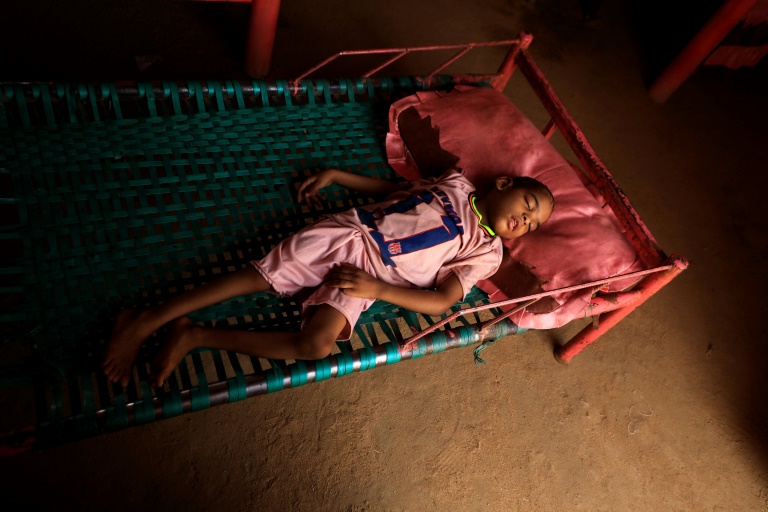
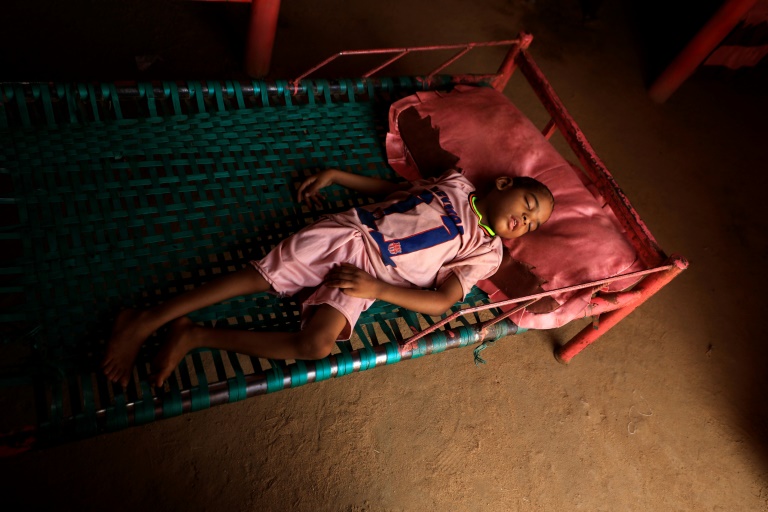
Sudanese mother Awadya Ahmed has long wondered why her youngest child Talab was born blind and unable to walk; now she suspects the piles of poisonous waste left by gold miners.

In recent years, a growing number of traditional miners have flocked to her village hoping to strike it rich.

But they leave behind hazardous white-powdered waste laden with toxic chemicals including mercury used in the gold extraction process.

The waste is dumped near farmland, water sources and residential areas.

“His four brothers were born in good health, but Talab is the only one born after mining residues spread,” Ahmed, 45, told AFP at her home in Banat village, in River Nile state north of Khartoum. 

The four-year-old lay beside her, unable to move.

Artisanal gold mining is widespread across much of Sudan, employing more than two million people and producing about 80 percent of the gold extracted nationwide, according to experts.

Sudan is one of the world’s poorest countries, and mining remains a source of fast profits attracting many.

The industry has flourished since oil-rich South Sudan broke away in 2011 during the rule of now-ousted president Omar al-Bashir, a period marked by economic hardship, government mismanagement, corruption and international sanctions.

– ‘Harmful to health’ –

But chemical contamination from artisanal gold extraction poses clear health dangers.

Mercury damages the nervous, digestive and immune systems and can be fatal. It also threatens the development of children in the womb and early in life, according to the World Health Organization.

Ahmed is not the only one of Banat’s 8,000 residents to have observed birth defects and miscarriages.

In a nearby house, Awad Ali says his daughter was “a very normal child,” until she turned two. “Then she became unable to move or walk, stand up or sit down,” he said.

Community leader Algaily Abdelaziz said the problems began five years ago.

“Since we saw these waste deposits appear, children have been born with deformities, and there have been still-births,” Abdelaziz said, noting 22 children had been born in the village with deformities including blindness and brain damage.

Saleh Ali Saleh, from Khartoum’s Neelain University’s Faculty of Petroleum and Minerals, notes that it is well known “that mercury is harmful to health”.

A January report by Saleh and other Sudanese researchers found that around 450,000 tonnes of mining waste — rife with mercury — dot the lush green landscape of River Nile state.

Samples of blood, urine, drinking water and soil from several parts of the state have shown high levels of mercury traces, according to the report.

“People, frankly, are not concerned with removing the waste,” said Ali Mohammed Ali, head of the Sudanese Environment Conservation Society. 

The process “requires special treatment” and is “ideally carried out away from residential areas or water sources,” he added.

Such safety measures are far from the minds of miners.

Around 50 kilometres (30 miles) from Banat, Mohammed Issa mixed mercury with sand in a large metal bowl with his bare hands, hoping to separate gold from other minerals.

“That’s how people do it here,” the 25-year-old said.

Issa said he abandoned a meagre life of farming and herding in North Kordofan state to search for the precious metal.

– Years to fix –

In 2019, Sudan’s now-deposed transitional government issued a decree banning the use of mercury and cyanide after protests against their use at gold mines.

The decision has rarely been enforced and miners continue to use the chemicals in more secluded outlying areas, Saleh said.

Political and economic turmoil in Sudan has piled pressure on households already struggling to make ends meet.

The country’s economic crisis worsened after an October military coup led by army chief Abdel Fattah al-Burhan. 

The coup triggered cuts to crucial international aid and fed into spiralling prices of basic commodities.

Sudan is one of Africa’s top gold producers, generating 30.3 tonnes of gold in the first half of 2021 alone, according to official figures — which do not include the artisanal output.

The Central Bank puts Sudan’s gold revenues in the first quarter of this year at $720 million, reflecting the official output.

The state-run company supervising mining activities declined multiple requests for comment by AFP.

The lucrative business has long been controlled by shadowy companies with links to the security services which flourished under Bashir.

Saleh warns there will be no quick fix.

“The damage already done to the environment cannot be treated easily,” said Saleh.

“If we managed to stop today, it will still take us years and years to contain the impact of artisanal mining.”

For little Talab, it is already too late.

Sudan's gold rush wreaks havoc on health

Sudanese mother Awadya Ahmed has long wondered why her youngest child Talab was born blind and unable to walk; now she suspects the piles of poisonous waste left by gold miners.

In recent years, a growing number of traditional miners have flocked to her village hoping to strike it rich.

But they leave behind hazardous white-powdered waste laden with toxic chemicals including mercury used in the gold extraction process.

The waste is dumped near farmland, water sources and residential areas.

“His four brothers were born in good health, but Talab is the only one born after mining residues spread,” Ahmed, 45, told AFP at her home in Banat village, in River Nile state north of Khartoum. 

The four-year-old lay beside her, unable to move.

Artisanal gold mining is widespread across much of Sudan, employing more than two million people and producing about 80 percent of the gold extracted nationwide, according to experts.

Sudan is one of the world’s poorest countries, and mining remains a source of fast profits attracting many.

The industry has flourished since oil-rich South Sudan broke away in 2011 during the rule of now-ousted president Omar al-Bashir, a period marked by economic hardship, government mismanagement, corruption and international sanctions.

– ‘Harmful to health’ –

But chemical contamination from artisanal gold extraction poses clear health dangers.

Mercury damages the nervous, digestive and immune systems and can be fatal. It also threatens the development of children in the womb and early in life, according to the World Health Organization.

Ahmed is not the only one of Banat’s 8,000 residents to have observed birth defects and miscarriages.

In a nearby house, Awad Ali says his daughter was “a very normal child,” until she turned two. “Then she became unable to move or walk, stand up or sit down,” he said.

Community leader Algaily Abdelaziz said the problems began five years ago.

“Since we saw these waste deposits appear, children have been born with deformities, and there have been still-births,” Abdelaziz said, noting 22 children had been born in the village with deformities including blindness and brain damage.

Saleh Ali Saleh, from Khartoum’s Neelain University’s Faculty of Petroleum and Minerals, notes that it is well known “that mercury is harmful to health”.

A January report by Saleh and other Sudanese researchers found that around 450,000 tonnes of mining waste — rife with mercury — dot the lush green landscape of River Nile state.

Samples of blood, urine, drinking water and soil from several parts of the state have shown high levels of mercury traces, according to the report.

“People, frankly, are not concerned with removing the waste,” said Ali Mohammed Ali, head of the Sudanese Environment Conservation Society. 

The process “requires special treatment” and is “ideally carried out away from residential areas or water sources,” he added.

Such safety measures are far from the minds of miners.

Around 50 kilometres (30 miles) from Banat, Mohammed Issa mixed mercury with sand in a large metal bowl with his bare hands, hoping to separate gold from other minerals.

“That’s how people do it here,” the 25-year-old said.

Issa said he abandoned a meagre life of farming and herding in North Kordofan state to search for the precious metal.

– Years to fix –

In 2019, Sudan’s now-deposed transitional government issued a decree banning the use of mercury and cyanide after protests against their use at gold mines.

The decision has rarely been enforced and miners continue to use the chemicals in more secluded outlying areas, Saleh said.

Political and economic turmoil in Sudan has piled pressure on households already struggling to make ends meet.

The country’s economic crisis worsened after an October military coup led by army chief Abdel Fattah al-Burhan. 

The coup triggered cuts to crucial international aid and fed into spiralling prices of basic commodities.

Sudan is one of Africa’s top gold producers, generating 30.3 tonnes of gold in the first half of 2021 alone, according to official figures — which do not include the artisanal output.

The Central Bank puts Sudan’s gold revenues in the first quarter of this year at $720 million, reflecting the official output.

The state-run company supervising mining activities declined multiple requests for comment by AFP.

The lucrative business has long been controlled by shadowy companies with links to the security services which flourished under Bashir.

Saleh warns there will be no quick fix.

“The damage already done to the environment cannot be treated easily,” said Saleh.

“If we managed to stop today, it will still take us years and years to contain the impact of artisanal mining.”

For little Talab, it is already too late.

Sudan's gold rush wreaks havoc on health

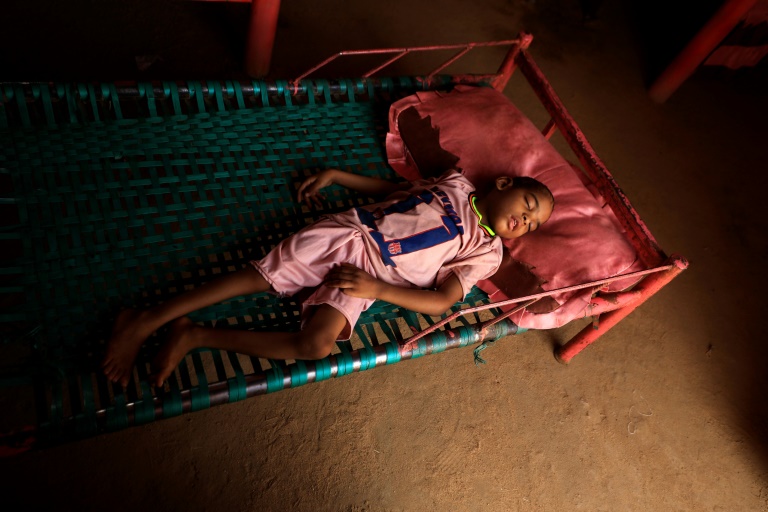
Sudanese mother Awadya Ahmed has long wondered why her youngest child Talab was born blind and unable to walk; now she suspects the piles of poisonous waste left by gold miners.

In recent years, a growing number of traditional miners have flocked to her village hoping to strike it rich.

But they leave behind hazardous white-powdered waste laden with toxic chemicals including mercury used in the gold extraction process.

The waste is dumped near farmland, water sources and residential areas.

“His four brothers were born in good health, but Talab is the only one born after mining residues spread,” Ahmed, 45, told AFP at her home in Banat village, in River Nile state north of Khartoum. 

The four-year-old lay beside her, unable to move.

Artisanal gold mining is widespread across much of Sudan, employing more than two million people and producing about 80 percent of the gold extracted nationwide, according to experts.

Sudan is one of the world’s poorest countries, and mining remains a source of fast profits attracting many.

The industry has flourished since oil-rich South Sudan broke away in 2011 during the rule of now-ousted president Omar al-Bashir, a period marked by economic hardship, government mismanagement, corruption and international sanctions.

– ‘Harmful to health’ –

But chemical contamination from artisanal gold extraction poses clear health dangers.

Mercury damages the nervous, digestive and immune systems and can be fatal. It also threatens the development of children in the womb and early in life, according to the World Health Organization.

Ahmed is not the only one of Banat’s 8,000 residents to have observed birth defects and miscarriages.

In a nearby house, Awad Ali says his daughter was “a very normal child,” until she turned two. “Then she became unable to move or walk, stand up or sit down,” he said.

Community leader Algaily Abdelaziz said the problems began five years ago.

“Since we saw these waste deposits appear, children have been born with deformities, and there have been still-births,” Abdelaziz said, noting 22 children had been born in the village with deformities including blindness and brain damage.

Saleh Ali Saleh, from Khartoum’s Neelain University’s Faculty of Petroleum and Minerals, notes that it is well known “that mercury is harmful to health”.

A January report by Saleh and other Sudanese researchers found that around 450,000 tonnes of mining waste — rife with mercury — dot the lush green landscape of River Nile state.

Samples of blood, urine, drinking water and soil from several parts of the state have shown high levels of mercury traces, according to the report.

“People, frankly, are not concerned with removing the waste,” said Ali Mohammed Ali, head of the Sudanese Environment Conservation Society. 

The process “requires special treatment” and is “ideally carried out away from residential areas or water sources,” he added.

Such safety measures are far from the minds of miners.

Around 50 kilometres (30 miles) from Banat, Mohammed Issa mixed mercury with sand in a large metal bowl with his bare hands, hoping to separate gold from other minerals.

“That’s how people do it here,” the 25-year-old said.

Issa said he abandoned a meagre life of farming and herding in North Kordofan state to search for the precious metal.

– Years to fix –

In 2019, Sudan’s now-deposed transitional government issued a decree banning the use of mercury and cyanide after protests against their use at gold mines.

The decision has rarely been enforced and miners continue to use the chemicals in more secluded outlying areas, Saleh said.

Political and economic turmoil in Sudan has piled pressure on households already struggling to make ends meet.

The country’s economic crisis worsened after an October military coup led by army chief Abdel Fattah al-Burhan. 

The coup triggered cuts to crucial international aid and fed into spiralling prices of basic commodities.

Sudan is one of Africa’s top gold producers, generating 30.3 tonnes of gold in the first half of 2021 alone, according to official figures — which do not include the artisanal output.

The Central Bank puts Sudan’s gold revenues in the first quarter of this year at $720 million, reflecting the official output.

The state-run company supervising mining activities declined multiple requests for comment by AFP.

The lucrative business has long been controlled by shadowy companies with links to the security services which flourished under Bashir.

Saleh warns there will be no quick fix.

“The damage already done to the environment cannot be treated easily,” said Saleh.

“If we managed to stop today, it will still take us years and years to contain the impact of artisanal mining.”

For little Talab, it is already too late.

Hunger pains on Slave Island as Sri Lanka's food prices rocket

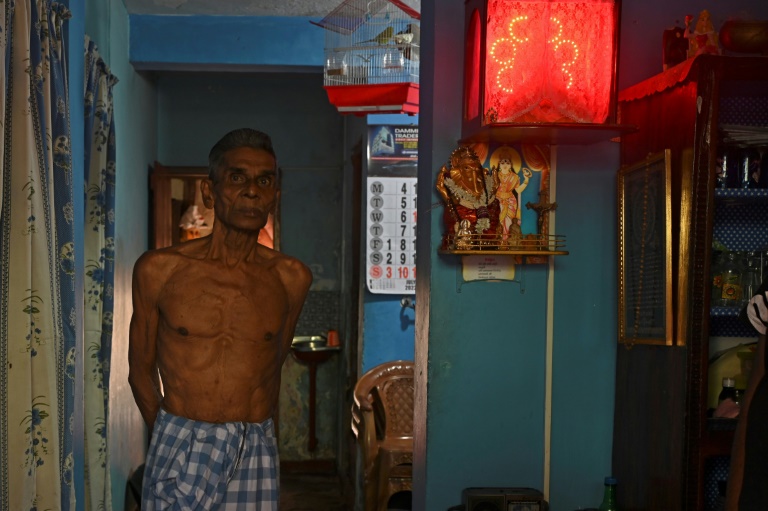
His hair is neatly combed but his cheeks are sunken and veins visible on his gaunt frame: like many Sri Lankans, Milton Pereira and his family cannot afford to buy enough food.

During the country’s worst-ever economic crisis, which has driven rampant inflation and spurred protests that last week brought down the president, Sri Lankans are buying less, eating less and working less.

“It’s very difficult to live, even a loaf of bread is expensive,” Pereira told AFP outside his modest home in Slave Island, a poor enclave of the capital Colombo.

“If we take one meal, we skip another.”

With six children in the family, the 74-year-old said the best they had been able to afford in recent weeks was the occasional fish, cut into small pieces for everyone.

“Because we don’t have much money, sometimes we give the fish to the children,” he said. The adults, he added, “only eat the gravy”.

Triggered by the coronavirus pandemic, the country’s financial woes were exacerbated by government mismanagement, critics say.

Peirera’s son, B. G. Rajitkumar, is an electrical labourer who has had no work for months.

“Food prices go up every day,” he said. “This exponential price rise is the most terrible thing I have ever faced.”

Food inflation in Sri Lanka reached 80.1 percent in the year to June, according to official figures.

At a nearby vegetable store, residents pay 1,000 rupees ($2.80) for a kilo of gourd, twice as much as three months ago, and owner Mohamad Faizal said some of his customers were now buying as little as 100 grams a time.

“The prices have gone up,” he said. “The main reason is there is no way to transport those items because there is no fuel.”

– ‘No option’ –

With no foreign exchange reserves for imports and having defaulted on its $51 billion foreign debt, Sri Lanka is experiencing dire shortages of fuel, medicines and other essentials. 

According to the World Food Programme, nearly five million people — 22 percent of the population — need food aid.

In its latest assessment, it said more than five out of every six families were either skipping meals, eating less or buying worse food.

While food is not in short supply, the issue is affordability.

The city’s New Manning main wholesale vegetable market was bustling on Sunday as buyers, sellers and porters jostled with sacks of produce.

But traders say business has gone down by more than half since March.

“Prices for everything have more than doubled,” said trader M. M. Mufeed. “Some unsold vegetables go to waste and many poor people come to take away some of it every day after the market closes.”

His sales are down 70 percent, he added. “Sometimes I sell to poor people for much less to avoid wasting food and make up somewhat.”

But potatoes, onions and garlic continue to be imported from India, Pakistan and China, said import-export bussinessman Ashley Jennycloss.

“Supply of food is not a problem, but because there is no fuel that makes it difficult and everything becomes expensive,” said Jeeva, another trader, who gave only one name.

Some people travel long distances on foot to the New Manning market in the early morning to buy small amounts of vegetables for their kitchens at bulk rates.

“I have no option but to walk 10 kilometres to this market because food is cheaper here compared to retail stores near my home,” said 50-year-old Howzy, who gave one name.

– Pumpkin patch –

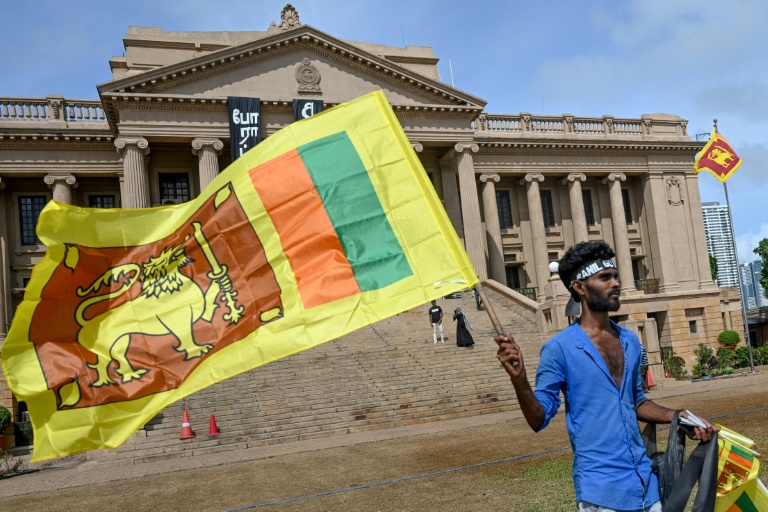
The protest movement that brought down Rajapaksa has its headquarters outside his former office, where dozens of volunteers work in a patchwork of tents lining the seafront promenade.

Among them, former government employee Theodore Rajapakse — no relation — is teaching people how to produce fast-growing vegetables in small patches of land near their homes.

“My country is in trouble,” he said, adding that he has taught around 3,000 protesters since he joined the demonstrations.

“You can grow 100 kilos of pumpkin in a three-feet-by-three-feet patch of land,” he added.

But the prospects of immediate improvement in Sri Lankans’ plight are limited, and the most likely successor as president, former prime minister Ranil Wickremesinghe, is reviled by the protesters as a Rajapaksa ally.

At Slave Island — an area named after a staging post the Portuguese used for slaves from Africa during the colonial period — Pereira had little hope.

“Gota is gone, but there is no one candidate to lead us out of this terrible condition,” he said.

“Politicians are divided. So it will get worse, what else can happen?”

Sri Lanka renews state of emergency ahead of key vote

Sri Lanka’s acting president renewed the country’s state of emergency Monday ahead of a parliamentary vote to pick a new head of state — a poll in which he is a leading candidate.

Ranil Wickremesinghe automatically became acting president when Gotabaya Rajapaksa resigned last week after fleeing to Singapore.

A state of emergency allows troops to arrest and detain suspects, and the president to make regulations overriding existing laws to deal with any unrest.

One was already in place, but parliament had not met to ratify the declaration as required, and Wickremesinghe extended it from Monday “in the interests of public security”, he said.

Police and the military have already stepped up security ahead of Wednesday’s vote to elect a president for the remainder of Rajapaksa’s term, which ends in November 2024.

Wickremesinghe, a six-time former prime minister, is being backed for the position by Rajapaksa’s party, which remains the largest in the legislature.

The ex-president was forced to flee when tens of thousands of protesters stormed his official residence after months of demonstrations across the country demanding his resignation over the country’s economic crisis.

The nation’s 22 million people have been enduring severe shortages of essentials since late last year after the country ran out of foreign exchange to finance even the most vital imports.

The country defaulted on its $51 billion foreign debt in mid-April and is in talks with the IMF for a possible bailout.

Close Bitnami banner
Bitnami