World

Hunger pains on Slave Island as Sri Lanka's food prices rocket

His hair is neatly combed but his cheeks are sunken and veins visible on his gaunt frame: like many Sri Lankans, Milton Pereira and his family cannot afford to buy enough food.

During the country’s worst-ever economic crisis, which has driven rampant inflation and spurred protests that last week brought down the president, Sri Lankans are buying less, eating less and working less.

“It’s very difficult to live, even a loaf of bread is expensive,” Pereira told AFP outside his modest home in Slave Island, a poor enclave of the capital Colombo.

“If we take one meal, we skip another.”

With six children in the family, the 74-year-old said the best they had been able to afford in recent weeks was the occasional fish, cut into small pieces for everyone.

“Because we don’t have much money, sometimes we give the fish to the children,” he said. The adults, he added, “only eat the gravy”.

Triggered by the coronavirus pandemic, the country’s financial woes were exacerbated by government mismanagement, critics say.

Peirera’s son, B. G. Rajitkumar, is an electrical labourer who has had no work for months.

“Food prices go up every day,” he said. “This exponential price rise is the most terrible thing I have ever faced.”

Food inflation in Sri Lanka reached 80.1 percent in the year to June, according to official figures.

At a nearby vegetable store, residents pay 1,000 rupees ($2.80) for a kilo of gourd, twice as much as three months ago, and owner Mohamad Faizal said some of his customers were now buying as little as 100 grams a time.

“The prices have gone up,” he said. “The main reason is there is no way to transport those items because there is no fuel.”

– ‘No option’ –

With no foreign exchange reserves for imports and having defaulted on its $51 billion foreign debt, Sri Lanka is experiencing dire shortages of fuel, medicines and other essentials. 

According to the World Food Programme, nearly five million people — 22 percent of the population — need food aid.

In its latest assessment, it said more than five out of every six families were either skipping meals, eating less or buying worse food.

While food is not in short supply, the issue is affordability.

The city’s New Manning main wholesale vegetable market was bustling on Sunday as buyers, sellers and porters jostled with sacks of produce.

But traders say business has gone down by more than half since March.

“Prices for everything have more than doubled,” said trader M. M. Mufeed. “Some unsold vegetables go to waste and many poor people come to take away some of it every day after the market closes.”

His sales are down 70 percent, he added. “Sometimes I sell to poor people for much less to avoid wasting food and make up somewhat.”

But potatoes, onions and garlic continue to be imported from India, Pakistan and China, said import-export bussinessman Ashley Jennycloss.

“Supply of food is not a problem, but because there is no fuel that makes it difficult and everything becomes expensive,” said Jeeva, another trader, who gave only one name.

Some people travel long distances on foot to the New Manning market in the early morning to buy small amounts of vegetables for their kitchens at bulk rates.

“I have no option but to walk 10 kilometres to this market because food is cheaper here compared to retail stores near my home,” said 50-year-old Howzy, who gave one name.

– Pumpkin patch –

The protest movement that brought down Rajapaksa has its headquarters outside his former office, where dozens of volunteers work in a patchwork of tents lining the seafront promenade.

Among them, former government employee Theodore Rajapakse — no relation — is teaching people how to produce fast-growing vegetables in small patches of land near their homes.

“My country is in trouble,” he said, adding that he has taught around 3,000 protesters since he joined the demonstrations.

“You can grow 100 kilos of pumpkin in a three-feet-by-three-feet patch of land,” he added.

But the prospects of immediate improvement in Sri Lankans’ plight are limited, and the most likely successor as president, former prime minister Ranil Wickremesinghe, is reviled by the protesters as a Rajapaksa ally.

At Slave Island — an area named after a staging post the Portuguese used for slaves from Africa during the colonial period — Pereira had little hope.

“Gota is gone, but there is no one candidate to lead us out of this terrible condition,” he said.

“Politicians are divided. So it will get worse, what else can happen?”
France on alert as forest fires rage in scorching southwest Europe

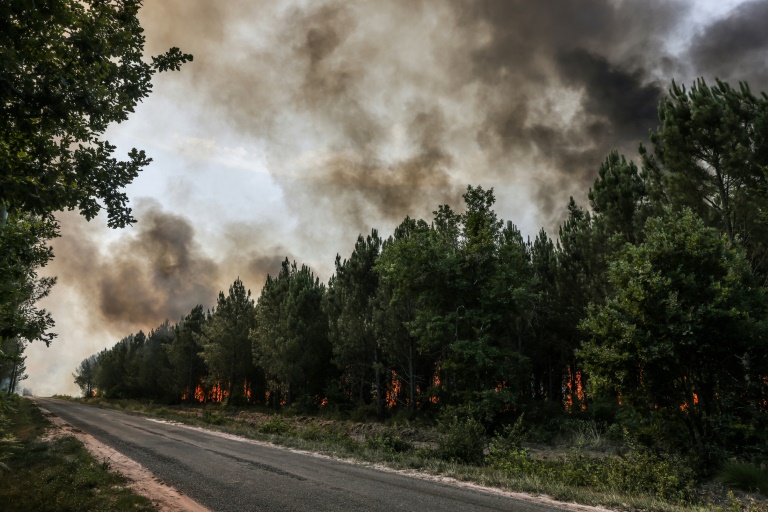
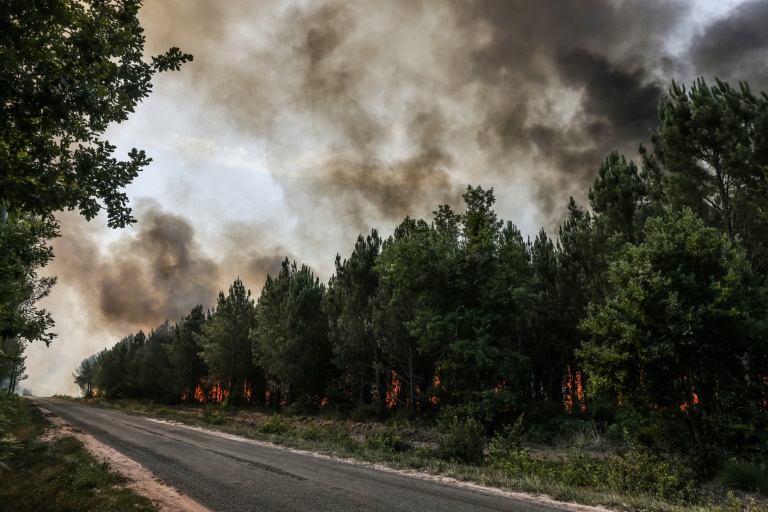
France was on high alert on Monday as the peak of a punishing heatwave gripped the country, while wildfires raging in parts of southwest Europe showed no sign of abating.

Forecasters have put 15 French departments on the highest state of alert for extreme temperatures as neighbouring Britain was poised to set new heat records this coming week.

The heatwave is the second to engulf parts of southwest Europe in weeks, and blazes burning in France, Greece, Portugal and Spain have destroyed thousands of hectares of land and forced thousands of residents and holidaymakers to flee.

Scientists blame climate change and predict more frequent and intense episodes of extreme weather such as heatwaves and drought.

In France’s Landes forest, in the southwest Aquitaine region, temperatures “will be above 42 degrees Celsius” (107 Fahrenheit) on Monday forecaster Olivier Proust said.

And Brittany, which until recently has escaped the worst of the heat, could register temperatures as high as 40 degrees Celsius, (104 Fahrenheit), say experts, which would be a record for the region.

In the southwestern Gironde region, firefighters over the weekend continued to fight to control forest blazes that have devoured nearly 11,000 hectares (27,000 acres) since Tuesday.

Meanwhile Spanish authorities reported around 20 wildfires still raging out of control in different parts of the country from the south to Galicia in the far northwest, where blazes have destroyed around 4,500 hectares of land. 

The fires have already killed several civilians and emergency personnel since last week, most recently a fireman who died late on Sunday while battling a blaze in northwestern Spain.

– ‘A heat apocalypse’ –

The wildfires in France forced more than 16,000 people — residents and tourists combined — to decamp. Seven emergency shelters have been set up for evacuees.

France’s interior ministry announced it would send an extra three firefighting planes, 200 firefighters and more trucks.

“In some southwestern areas, it will be a heat apocalypse,” meteorologist Francois Gourand told AFP.

The chapel of a historic hospital in the southeastern city of Lyon, Grand Hotel Dieu, offered refuge to tourists on Sunday including Jean-Marc, 51, who was visiting from Alsace.

“We came back to admire the place, but we can’t leave, it’s too hot outside. We say a prayer before the fire!” he quipped.

French cyclist Mikael Cherel, taking part in the Tour de France’s 15th stage between Rodez and Carcassonne in southern France on Sunday, described “very, very difficult conditions”.

“I’ve never known such a hot day on a bike. It really was no picnic.”

– ‘Risk to life’ in UK –

In Spain, firefighters managed to stabilise a wildfire that ravaged 2,000 hectares of woods and bushes in the southern region of Andalusia, regional leader Juan Manuel Moreno said.

The blaze started on Friday in the Mijas mountain range inland from the southern coastal city of Malaga and it spurred the evacuation of about 3,000 people.

Around 2,000 people had since returned home and now that the blaze has stabilised, Moreno said the remaining evacuees may do the same.

Spanish Prime Minister Pedro Sanchez is due to visit the hard-hit eastern region of Extremadura on Monday where various fires have been raging for days.

In Portugal, almost the entire country remained on high alert for wildfires despite a slight drop in temperatures, after hitting 47C — a record for the month of July — on Thursday.

Only one major fire was burning on Sunday in the north.

The fires have killed two, injured around 60 and destroyed between 12,000 and 15,000 hectares of land in Portugal.

In the United Kingdom, the weather office issued a first-ever “red” warning for extreme heat, cautioning there was a “risk to life”.

The Met Office said temperatures in southern England could exceed 40C on Monday or Tuesday for the first time, leading some schools to say they would stay closed next week. 

The mercury is set to reach 38C in parts of the Netherlands on Tuesday.

burs-je/jta

France on alert as forest fires rage in scorching southwest Europe

France was on high alert on Monday as the peak of a punishing heatwave gripped the country, while wildfires raging in parts of southwest Europe showed no sign of abating.

Forecasters have put 15 French departments on the highest state of alert for extreme temperatures as neighbouring Britain was poised to set new heat records this coming week.

The heatwave is the second to engulf parts of southwest Europe in weeks, and blazes burning in France, Greece, Portugal and Spain have destroyed thousands of hectares of land and forced thousands of residents and holidaymakers to flee.

Scientists blame climate change and predict more frequent and intense episodes of extreme weather such as heatwaves and drought.

In France’s Landes forest, in the southwest Aquitaine region, temperatures “will be above 42 degrees Celsius” (107 Fahrenheit) on Monday forecaster Olivier Proust said.

And Brittany, which until recently has escaped the worst of the heat, could register temperatures as high as 40 degrees Celsius, (104 Fahrenheit), say experts, which would be a record for the region.

In the southwestern Gironde region, firefighters over the weekend continued to fight to control forest blazes that have devoured nearly 11,000 hectares (27,000 acres) since Tuesday.

Meanwhile Spanish authorities reported around 20 wildfires still raging out of control in different parts of the country from the south to Galicia in the far northwest, where blazes have destroyed around 4,500 hectares of land. 

The fires have already killed several civilians and emergency personnel since last week, most recently a fireman who died late on Sunday while battling a blaze in northwestern Spain.

– ‘A heat apocalypse’ –

The wildfires in France forced more than 16,000 people — residents and tourists combined — to decamp. Seven emergency shelters have been set up for evacuees.

France’s interior ministry announced it would send an extra three firefighting planes, 200 firefighters and more trucks.

“In some southwestern areas, it will be a heat apocalypse,” meteorologist Francois Gourand told AFP.

The chapel of a historic hospital in the southeastern city of Lyon, Grand Hotel Dieu, offered refuge to tourists on Sunday including Jean-Marc, 51, who was visiting from Alsace.

“We came back to admire the place, but we can’t leave, it’s too hot outside. We say a prayer before the fire!” he quipped.

French cyclist Mikael Cherel, taking part in the Tour de France’s 15th stage between Rodez and Carcassonne in southern France on Sunday, described “very, very difficult conditions”.

“I’ve never known such a hot day on a bike. It really was no picnic.”

– ‘Risk to life’ in UK –

In Spain, firefighters managed to stabilise a wildfire that ravaged 2,000 hectares of woods and bushes in the southern region of Andalusia, regional leader Juan Manuel Moreno said.

The blaze started on Friday in the Mijas mountain range inland from the southern coastal city of Malaga and it spurred the evacuation of about 3,000 people.

Around 2,000 people had since returned home and now that the blaze has stabilised, Moreno said the remaining evacuees may do the same.

Spanish Prime Minister Pedro Sanchez is due to visit the hard-hit eastern region of Extremadura on Monday where various fires have been raging for days.

In Portugal, almost the entire country remained on high alert for wildfires despite a slight drop in temperatures, after hitting 47C — a record for the month of July — on Thursday.

Only one major fire was burning on Sunday in the north.

The fires have killed two, injured around 60 and destroyed between 12,000 and 15,000 hectares of land in Portugal.

In the United Kingdom, the weather office issued a first-ever “red” warning for extreme heat, cautioning there was a “risk to life”.

The Met Office said temperatures in southern England could exceed 40C on Monday or Tuesday for the first time, leading some schools to say they would stay closed next week. 

The mercury is set to reach 38C in parts of the Netherlands on Tuesday.

burs-je/jta

Pakistan's Khan calls for early election after state assembly victory

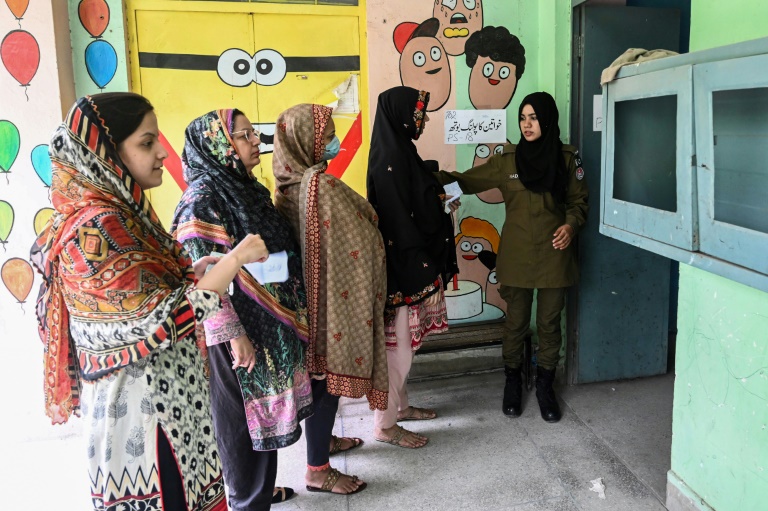
Former Pakistan prime minister Imran Khan called again Monday for an early national election after his party seized control of the state assembly in Punjab, the country’s most populous province.

Twenty seats were up for grabs in the Punjab by-election, which was seen as a popularity test for the former international cricket star dismissed by a no-confidence vote in April.

His Pakistan Tehreek-e-Insaf (PTI) party won 15, with the Pakistan Muslim League-N (PML-N) of current Prime Minister Shehbaz Sharif taking four, and one going to an independent.

Sunday’s vote was also seen as a bellwether for national elections that must be held by October next year, although Khan has campaigned across the country for an earlier poll since being dismissed.

“The only way forward from here is to hold free and transparent elections,” Khan tweeted early Monday after the Punjab votes were tallied.

“Any other way will only lead to increased political uncertainty and further economic chaos.”

Khan has drawn thousands to rallies since being ousted, giving lengthy speeches claiming the government was imposed on Pakistan by a US-led conspiracy. 

He also blames the current government for soaring inflation, although most analysts agree Sharif inherited the country’s economic woes — which were given some relief last week by an agreement with the International Monetary Fund (IMF) to resume a rescue package.

Pakistan newspapers suggested the Punjab result was a consequence of the economic hardships currently felt by the country, which is spending nearly half its income to service dire foreign debt.

To meet IMF conditions for a resumption of a $7.2 billion aid package, Sharif had to remove subsidies on fuel — effectively raising prices by more than 50 percent in less than two months.  

“A bitter taste of unpopular decisions,” read a headline in the influential Dawn newspaper over a front-page analysis.

The Punjab assembly vote was called after the election commission disqualified 20 members of the PTI for switching party loyalties.

The result means the likely end of a short reign as Punjab Chief Minister by Hamza Sharif, the prime minister’s son.

China urges banks to support property sector after mortgage boycott

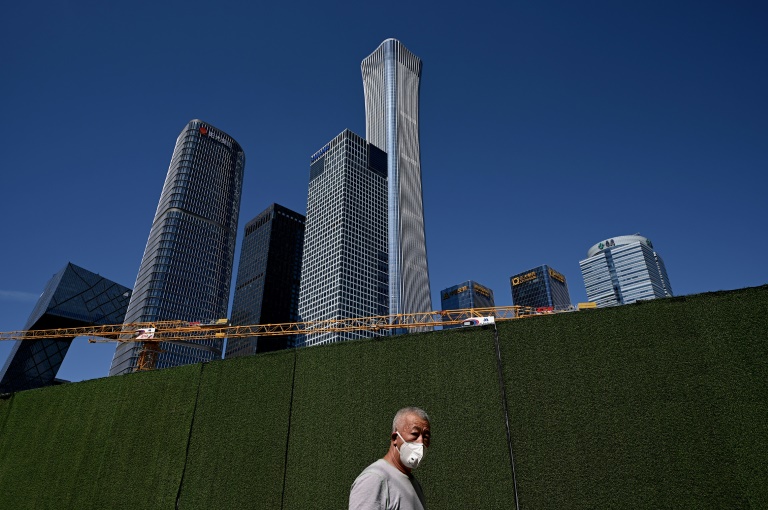
China’s banking regulator has urged lenders to extend more credit to real estate developers, as a growing number of homebuyers withhold mortgage payments on unfinished housing projects across 50 cities.

Furious at postponed deliveries of pre-sold homes, unclear delivery times and halted construction, homebuyers were last week reported to have halted payments for already sold units in at least 100 residential projects, according to data from industry groups and analysts.

The boycott has worsened fears of financial contagion in the country’s troubled real estate sector, which is estimated to account for 18-30 percent of GDP and is a key driver of growth in the world’s second-largest economy.

China’s Banking and Regulatory Insurance Commission urged banks to “effectively meet the reasonable financing needs of real estate companies, vigorously support rental housing construction” and support project mergers and acquisitions, a representative said in a state media interview published Sunday.

They were also asked to “do a good job in customer service … abide by contracts, fulfill commitments, and protect the legitimate rights and interests of financial consumers”.

These measures were required to “maintain the stable and orderly operation of the real estate market”, the unnamed official said.

Authorities launched a crackdown on excessive debt in the property sector in 2020, leaving giants like Evergrande and Sunac struggling to make payments and forcing them to renegotiate with creditors as they teetered on the edge of bankruptcy.

Regulators met banks last week to discuss the growing consumer mortgage boycott, Bloomberg News reported, as more major Chinese developers teeter on the brink of default. 

The developments come at a time of slowing growth for China and weak property sales, adding to the risk to stability ahead of the Communist Party’s 20th Congress in the autumn, when President Xi Jinping is expected to be given a third term.

Farnborough airshow opens amid heatwave

Global aviation’s Farnborough airshow opens Monday amid a sweltering heatwave, with the sector aided by a modest recovery in air traffic and with Ukraine boosting defence budgets.

Tens of thousands of visitors will flock to the five-day show, held southwest of London, as weather forecasters warn of scorching record temperatures in England.

“It’s going to be the hottest Farnborough ever, so if you are going there, take plenty of water, take a hat — and don’t be surprised if you see either very sweaty people or people in shorts,” said analyst Richard Evans at air transport data specialist Ascend by Cirium.

Britain’s Met Office has issued a historic red warning for extreme heat, with southern England temperatures potentially exceeding 40C on Monday or Tuesday for the first time.

Organisers insist the show must go on “as planned” and will provide water refill points, shaded areas and air conditioning throughout exhibition halls.

This year’s event, one of the largest civilian and defence shows, is the first global aviation get-together since the Covid pandemic hit.

“This is the first major global airshow for three years since Paris 2019,” Farnborough chief executive Gareth Rogers told AFP.

The biennial Farnborough show was cancelled in 2020 as the Covid health crisis grounded aircraft and ravaged the sector.

Global air traffic is gradually recovering and in May reached more than two-thirds of its pre-pandemic level, according to estimates from the International Air Transport Association (IATA).

That recovery has however faced headwinds from rocketing inflation fuelled by historically high energy prices and higher wages, while staff shortages constrain airports and spark flight cancellations.

At Farnborough, US titan Boeing and its European arch-rival Airbus will battle for supremacy as they declare their latest multi-billion-dollar jet orders.

The show will this year zero in also on green themes of decarbonisation and sustainability, as many carriers seek to replace ageing fleets with modern fuel-efficient aircraft that emit less carbon dioxide.

Farnborough visitors will be thrilled by air displays by Britain’s Red Arrows and South Korea’s Black Eagles, as well as the US-made F-35 stealth fighter.

Airbus and Boeing will also showcase their latest twin-aisle passenger aircraft, the A350-900 and the 777X.

Meanwhile, Russia’s war on Ukraine has sparked an upsurge in defence spending as nations seek to bolster armed forces.

“Anecdotally we are certainly seeing a greater interest in the defence element of the show,” said Rogers.

Defence agreements are however not announced at Farnborough, unlike commercial civil aviation deals.

China banks vow to repay more customers after protests

Chinese regulators have promised to repay more victims of one of the country’s biggest-ever banking scandals, after hundreds of thousands of customers were left without access to funds, triggering rare mass protests.

China’s rural banking sector has been hit hard by Beijing’s efforts to rein in a property bubble and spiralling debt, in a financial crackdown that rattled the world’s second-largest economy.

Four banks in Henan province froze cash withdrawals in mid-April as regulators scrutinised alleged mismanagement, leaving billions of yuan in savings locked up and sparking sporadic demonstrations. 

Authorities later named those firms and another rural bank in nearby Anhui province as involved in a scheme to defraud investors — and promised victims would start to get their money back. 

“Henan New Fortune Group manipulated five village banks in Henan and Anhui to illegally absorb and occupy public funds … and covered up illegal activities,” an unnamed China Banking and Insurance Regulatory Commission representative told state media Sunday, citing a three-month initial police investigation. 

“The next stage will be to begin advance payment work for customers with over 50,000 yuan (deposited).” 

The Henan banking scandal has dealt an unprecedented blow to public confidence in China’s financial system owing to the size and scale of the fraud, analysts say, with the banks involved allegedly operating illegally for more than a decade,

Chinese authorities are desperate to avoid disruptions to social stability just months away from a major congress of the ruling Communist Party. 

A July 10 mass demonstration in Henan’s provincial capital Zhengzhou was violently quashed, with demonstrators forced onto buses by police and beaten, according to eyewitness accounts given to AFP and verified photos on social media.

Shortly afterwards, Henan’s provincial banking regulator said customers with deposits of less than 50,000 yuan ($7,500) would be repaid starting Friday.

But in one WeChat group containing hundreds of depositors, only a handful reported successfully receiving their funds back, according to messages seen by AFP.

A few customers reported receiving their deposits Friday, while others complained that the designated mobile app had bugs and would not let them register, according to local media.

The funds being repaid came from some of the seized assets of Henan New Fortune Group, the company accused by police of manipulating the banks, state broadcaster CCTV reported last week.

Regulators have said depositors will be paid in batches, but did not announce a specific timeframe for the repayment of accounts with more than 50,000 yuan in funds. 

Asian markets track Wall St higher on easing recession fears

Stocks rose in Asia on Monday following a rally on Wall Street in response to data indicating US consumers remained resilient to surging inflation and higher interest rates, easing concerns about a possible recession.

Speculation that Saudi Arabia will lift oil production after Joe Biden’s visit last week also provided some relief as crude prices — a key driver of inflation in recent months — dropped.

Still, investors continue to fret over the economic outlook with Russia’s war in Ukraine showing no sign of ending, China locks down cities to fight a new Covid flare-up and central banks quickly tighten monetary policy.

All three main indexes in New York raced higher on Friday after June retail sales came in above forecasts and banking giant Citigroup’s April-June results beat expectations.

While a strong set of economic data has of late boosted bets on the Federal Reserve lifting borrowing costs more, the latest figures were not seen as being big enough to warrant a sharper rate hike next week.

Market analysts widely expect the bank to announce a 75 basis point lift, though some have suggested a one percentage point increase could be on the cards. 

Policymakers have made it clear their main goal is bringing inflation down from a four decade high, even if that stunts growth or even causes a recession.

“Overall the robust US data… eased concerns about an imminent recession but is also unlikely to mount an additional case for a 100 basis point Fed hike,” said SPI Asset Management’s Stephen Innes.

“And it was about as goldilocks of a mix of headline data risk as one could have expected given the Fed’s dilemma of balancing inflation versus growth.”

In early trade, Hong Kong, Shanghai, Sydney, Seoul, Singapore, Taipei, Jakarta and Wellington were all up. Tokyo was closed for a holiday.

However, uncertainty remains rife on trading floors, with a new spike in Covid cases in China causing concern that officials will impose fresh lockdowns in major cities including Shanghai and Beijing. 

A two-month shutdown in Shanghai earlier this year hammered the world’s number two economy and severely hit global supply chains.

Lanzhou, the capital of northwestern Gansu province, has ordered its 4.4 million residents to stay home, while a county in Anhui province went into lockdown from Friday.

Beihai in the southern Guangxi region on Saturday also announced lockdowns in parts of two districts that are home to more than 800,000 people.

The expected blow to demand from the world’s top crude importer has weighed on prices of the commodity, with both main contracts giving up most of the gains seen after Russia’s invasion of Ukraine.

Adding to downward pressure on oil is speculation Saudi Arabia will lift production after Biden’s visit, during which he called on the kingdom to help ease the price pressure that has sent inflation rocketing.

SPI’s Innes added that with a deal between OPEC and other major producers ending soon, output could see a big rise.

“As long as the agreement is in effect, Saudi Arabia has made it transparent that individual producers with spare capacity should not exceed their quota to offset underproduction elsewhere within the group.

“From October, however, this changes.”

Meanwhile, Libya is set to see a boost to output as months of outages come to an end, while the lifting of US sanctions on Venezuela could lead to a return of capacity from the South American country.

– Key figures at around 0230 GMT –

Hong Kong – Hang Seng Index: UP 0.8 percent at 20,455.99 

Shanghai – Composite: UP 0.5 percent at 3,245.53

Tokyo – Nikkei 225: Closed for a holiday

Euro/dollar: UP at $1.0107 from $1.0088 Friday

Pound/dollar: UP at $1.1898 from $1.1865 

Euro/pound: DOWN at 84.96 pence from 85.00 pence

Dollar/yen: DOWN at 138.13 yen from 138.54 yen

West Texas Intermediate: DOWN 0.8 percent at $96.81 per barrel

Brent North Sea crude: DOWN 0.3 percent at $100.89 per barrel

New York – Dow: UP 2.2 percent at 31,288.26 (close)

London – FTSE 100: UP 1.7 percent at 7,159.01 (close)

Pacific Islands ask international court to rule on climate

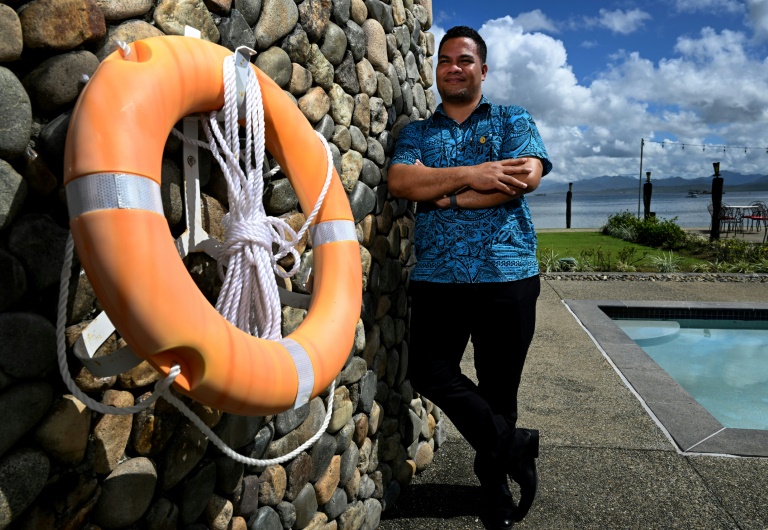
Climate-threatened Pacific islands called on Monday for the International Court of Justice to rule on countries’ legal duties to stop climate change, a move designed to ratchet up pressure on polluting nations.

In a statement released after a summit in Fiji last week, Pacific leaders issued a joint call for the Hague-based court to make clear states’ obligations “to protect the rights of present and future generations against the adverse impacts of climate change”.

The islands — many low-lying and already buffeted by climate change — hope the move will introduce a heightened level of legal jeopardy for high carbon-emitting countries and spur action.

Leaders also declared the region was in a climate emergency that posed an “existential” threat.

The plan will need the backing of a majority at the United Nations General Assembly in September to be put to the ICJ.

The initiative began in a classroom at the University of the South Pacific in 2019. About 27 law students wrote to Pacific leaders asking them to take up the campaign — and Vanuatu answered the call.

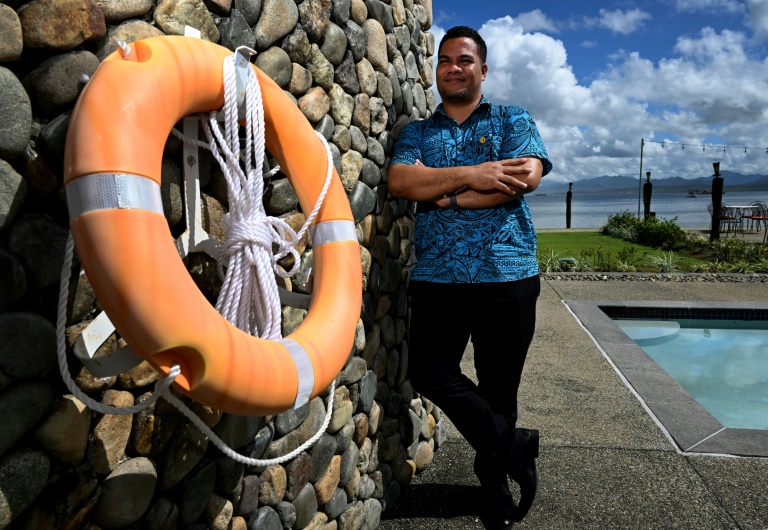
Fijian university student Vishal Prasad, 26, was one of those involved. 

He told AFP during the Suva summit last week that even a non-binding “advisory opinion” from the International Court of Justice would have “wide-reaching impacts”.

Prasad said he hoped the court weighing in would put polluters on notice. 

For young people in the Pacific, “the existential threat, the reality” of climate change “is quite scary”, he said.

– Eyes on Australia –

Rising sea levels and stronger storms are already causing serious problems across the Pacific.

“We are already seeing impacts on a daily basis. We are seeing the onset of cyclones,” said Prasad. “We are seeing communities being relocated.”

Tuvaluan Foreign Minister Simon Kofe told AFP that he would like to see Vanuatu’s campaign supported as it was “consistent with our efforts to protect our people that are impacted by climate change”.

Smaller islands are also looking to fellow Pacific Island Forum members Australia and New Zealand to do more.

Australia is one of the world’s largest coal and gas exporters.

“I’ve been clear and consistent in our ask for more ambitious climate commitments,” said Fijian Prime Minister Frank Bainimarama following the summit, which wrapped up on Thursday.

“We need to end our fossil fuel addiction, including coal. That is our ask of Australia, New Zealand” and all high emitting countries, he added.

Greenpeace welcomed Australia’s support for the ICJ to rule on climate change.

“However, this endorsement cannot be viewed in isolation,” said Greenpeace Australia campaigner Steph Hodgins-May.

“Australia must not only champion the journey towards climate justice through the campaign for an ICJ advisory opinion, but also pursue more ambitious climate action by committing to no new coal and gas projects.”

Pacific Islands ask international court to rule on climate

Climate-threatened Pacific islands called on Monday for the International Court of Justice to rule on countries’ legal duties to stop climate change, a move designed to ratchet up pressure on polluting nations.

In a statement released after a summit in Fiji last week, Pacific leaders issued a joint call for the Hague-based court to make clear states’ obligations “to protect the rights of present and future generations against the adverse impacts of climate change”.

The islands — many low-lying and already buffeted by climate change — hope the move will introduce a heightened level of legal jeopardy for high carbon-emitting countries and spur action.

Leaders also declared the region was in a climate emergency that posed an “existential” threat.

The plan will need the backing of a majority at the United Nations General Assembly in September to be put to the ICJ.

The initiative began in a classroom at the University of the South Pacific in 2019. About 27 law students wrote to Pacific leaders asking them to take up the campaign — and Vanuatu answered the call.

Fijian university student Vishal Prasad, 26, was one of those involved. 

He told AFP during the Suva summit last week that even a non-binding “advisory opinion” from the International Court of Justice would have “wide-reaching impacts”.

Prasad said he hoped the court weighing in would put polluters on notice. 

For young people in the Pacific, “the existential threat, the reality” of climate change “is quite scary”, he said.

– Eyes on Australia –

Rising sea levels and stronger storms are already causing serious problems across the Pacific.

“We are already seeing impacts on a daily basis. We are seeing the onset of cyclones,” said Prasad. “We are seeing communities being relocated.”

Tuvaluan Foreign Minister Simon Kofe told AFP that he would like to see Vanuatu’s campaign supported as it was “consistent with our efforts to protect our people that are impacted by climate change”.

Smaller islands are also looking to fellow Pacific Island Forum members Australia and New Zealand to do more.

Australia is one of the world’s largest coal and gas exporters.

“I’ve been clear and consistent in our ask for more ambitious climate commitments,” said Fijian Prime Minister Frank Bainimarama following the summit, which wrapped up on Thursday.

“We need to end our fossil fuel addiction, including coal. That is our ask of Australia, New Zealand” and all high emitting countries, he added.

Greenpeace welcomed Australia’s support for the ICJ to rule on climate change.

“However, this endorsement cannot be viewed in isolation,” said Greenpeace Australia campaigner Steph Hodgins-May.

“Australia must not only champion the journey towards climate justice through the campaign for an ICJ advisory opinion, but also pursue more ambitious climate action by committing to no new coal and gas projects.”

Close Bitnami banner
Bitnami