World

Iran, Russia, Turkey presidents to talk Syria war in Tehran

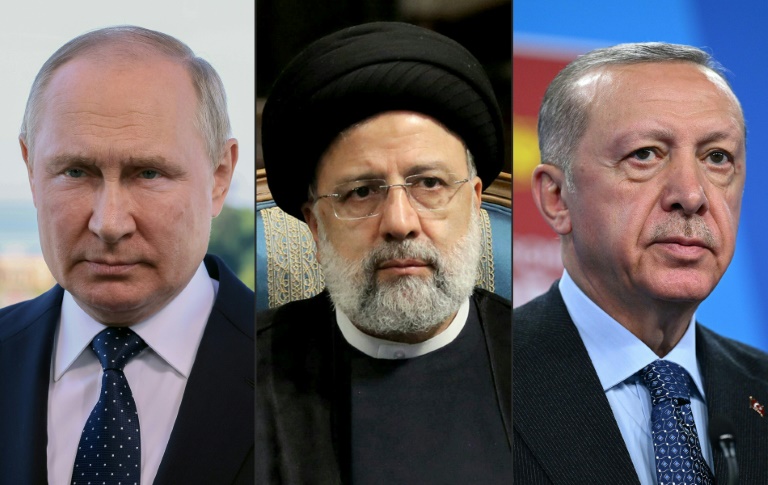
With the war in Ukraine still raging, Russian President Vladimir Putin travels Tuesday to Tehran for talks with his Iranian and Turkish counterparts on the Syria conflict.

Russia, Turkey and Iran have in recent years met to discuss Syria as part of the so-called “Astana peace process” to end more than 11 years of conflict in the Arab country.

All three are involved in Syria, with Russia and Iran supporting the Damascus regime against its opponents, and Turkey backing rebels.

Tuesday’s summit comes as Turkish President Recep Tayyip Erdogan has threatened to launch a new offensive in northern Syria against Kurdish militants.

Iran, whose President Ebrahim Raisi is hosting the meeting, has already warned that any Turkish military action in Syria could “destabilise the region”.

The Tehran summit will also enable Erdogan to hold his first meeting with Putin since Russia invaded Ukraine in February.

The Turkish president has for months been offering to meet the Russian leader in a bid to help resolve heightened global tensions since the war began.

“The timing of this summit is not a coincidence,” Russian analyst Vladimir Sotnikov told AFP.

“Turkey wants to conduct a ‘special operation’ in Syria just as Russia is implementing a ‘special operation’ in Ukraine,” he said.

Turkey has launched waves of attacks on Syria since 2016, targeting Kurdish militias as well as Islamic State group jihadists and forces loyal to Syrian President Bashar al-Assad.

– Green light? –

Erdogan’s planned military offensive targets Kurdish fighters which Ankara regards as “terrorists”.

They include the US-backed Kurdish People’s Protection Units (YPG), which formed a crucial part of an international coalition against the Islamic State group in Syria.

Ankara fears a strong Kurdish presence along its border with Syria will embolden the banned Kurdistan Workers’ Party, which for decades has been waging an insurgency against the Turkish state that has claimed tens of thousands of lives.

Syria’s government has repeatedly condemned Turkish threats to mount a new incursion.

Sinan Ulgen, a visiting scholar at Carnegie Europe who specialises in Turkish foreign policy, said Ankara wants the blessing of Moscow and Iran before launching its operation. 

“It’s particularly important because the two potential target regions are under the control of Russia, and Turkey wants to be able to use the airspace… so as to minimise the risks,” he said.

Iran “also has an indirect presence in the region through Shiite militias that it controls”, said Ulgen.

Ultimately, Erdogan is hoping to get “the green light” from Putin and Raisi, he added.

Russia has already expressed the hope that Turkey would “refrain” from launching an attack on Syria.

Iran, whose foreign minister Hossein Amir-Abdollahian visited both Ankara and Damascus in recent weeks, has also urged caution.

– ‘Destabilising’ –

Late last month, Iran’s top diplomat said in Ankara that “we understand that… maybe a special operation might be needed”.

“Turkey’s security concerns must be tackled fully and permanently.”

Days later, Amir-Abdollahian said in Damascus that Turkish military action in Syria “would be a destabilising element in the region”.

Mazloum Abdi, chief commander of the YPG-linked Syrian Democratic Forces, has urged Russia and Iran to restrain Turkey.

“We hope (the attacks) will not take place and that the Kurds… will not be forsaken during the talks between the big powers,” he said.

The SDF has warned that an invasion by Ankara would undermine efforts to combat Islamic State group jihadists in Syria’s northeast.

Nicholas Heras of the Newlines Institute said Iran and Russia “want to prevent another Turkish military campaign in Syria”.

“Iran is building a presence in and around Aleppo that concerns Turkey, and Russia is for all intents and purposes ceding ground to Iran throughout Syria,” he added.

For Iranian political analyst Ahmad Zeidabadi, “new differences” have emerged between Russia, Iran and Turkey following the Ukraine war.

This and an “uncertain future”, he said, means the three leaders will try to “coordinate” their views on Syria to avoid further tensions.
France braces for record temperatures

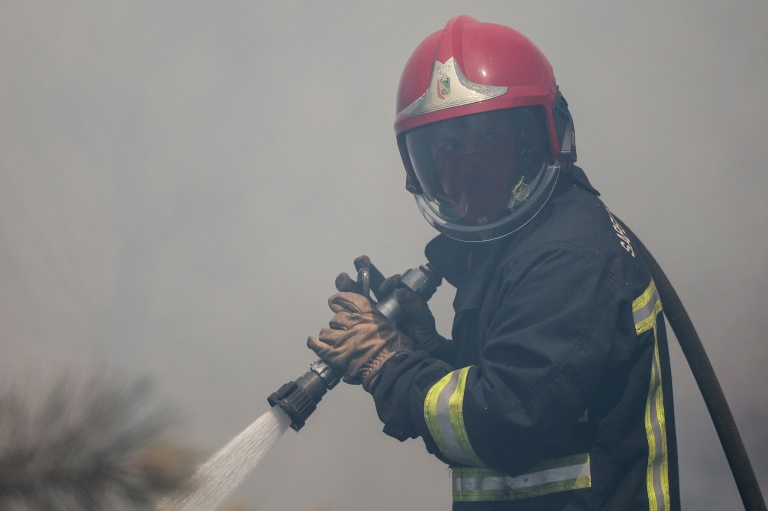
France was bracing Monday for the peak of the heatwave gripping the country, with crushing temperatures expected from the Mediterranean as far up as Brittany in the northwest.

Forecasters have put 15 departments across the country on the highest state of alert for extreme temperatures, including Gironde in the southwest where forest fires have already wrought havoc.

In the Landes forest, in the southwest Aquitaine region, temperatures “will be above 42 degrees Celsius” (107 Fahrenheit) said forecaster Olivier Proust.

And Brittany, which until recently has escaped the worst of the heat, could register temperatures as high as 40 degrees Celsius, (104 Fahrenheit), say experts, which would be a record for the region.

The increasing number of extreme weather events is the direct consequence of global warming, as greenhouse gases increase their intensity, length and frequency, say scientists.

The intense heatwave has already caused multiple forest fires in France and elsewhere, and some farmers have taken to working at night to minimise the risk of a spark from their harvesting equipment starting a fire that destroys their crops.

By late Sunday, the fires in Gironde, which have been raging since Tuesday, had already destroyed 13,000 hectares (32,000 acres), driven by high winds and forcing the evacuation of 16,200 holidaymakers, fire service officials said.

– ‘Red alert’ heat warnings –

The blaze at the Teste-de-Buch forest in southwestern France has arrived at the beach and was moving south, said the local prefecture. Video shot by people at the scene showed the massive fire consuming the beach at La Lagune, near the famous the Dune of Pilat — Europe’s tallest sand dune.

France’s interior ministry announced it was sending three more firefighting aircraft to reinforce the six already operating in the region as well as 200 more firefighters and more equipment.

But the crews fighting the blaze will have to contend with soaring temperatures Monday. It is one of the regions on a “red alert” heatwave warning.

“In certain zones in the southwest, it will be an apocalypse of heat,” forecaster Francois Gourand of Meteo-France told AFP.

Temperatures across France are expected to be over 30 degrees Celsius (86 Fahrenheit) but between 38 and 40 degrees in the western half of the country.

Officials in several regions meanwhile, have also issued pollution alerts because of the high concentrations of ozone.

The heatwave is gripping much of western Europe, with high temperatures and forest fires in Spain and Portugal. 

Britain’s Met Office has issued a first-ever “red” warning for extreme heat, cautioning there is a “risk to life” and attributing the heatwave to man-made climate change.

Oil dispute sharpens Baghdad-Kurd tensions amid deadlock

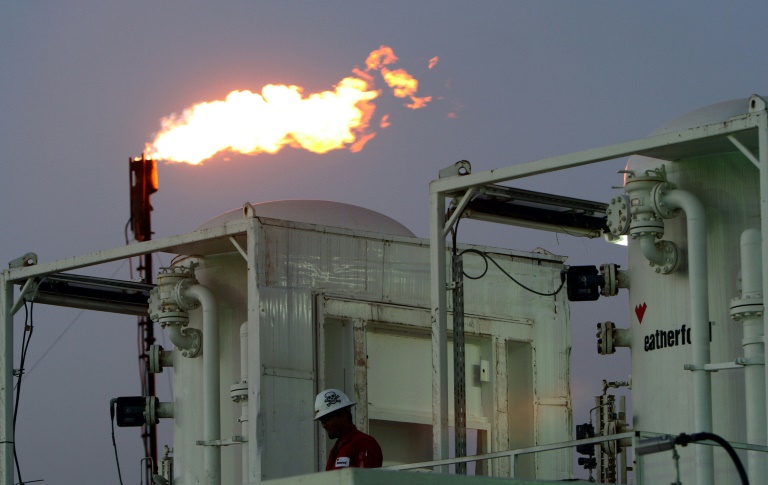
Iraq’s oil wealth is rekindling tensions between federal authorities and the autonomous Kurdish region, in a row that could compromise the lifeline industry and keep investors away, analysts say.

The long-simmering dispute came to a head in February — at a time of political deadlock in Baghdad — when the federal supreme court ordered Kurdistan to hand over oil extracted from its territories to the federal authorities.

Then earlier this month, a commercial court in the Iraqi capital annulled contracts between the Kurds and foreign firms, after the oil ministry in Baghdad filed a judicial complaint.

Authorities in the Kurdistan capital Arbil have cried foul, accusing Baghdad of heaping “unjust pressure” on them and announcing their own legal action.

Iraq, the second largest producer in the Organization of the Petroleum Exporting Countries, sits on enormous oil reserves, and revenues from the sector feed 90 percent of the federal government budget.

It exports an average of 3.3 million barrels of crude oil per day (bpd), while production in Kurdistan amounts to just over 450,000 bpd.

The February ruling stated that a 2007 law adopted by Arbil to regulate oil and gas was unconstitutional.

But analysts say politics play a major role in the dispute in Iraq, whose political barons have failed to reach agreement on choosing a president and a prime minister since October legislative elections.

“When it comes to oil, each side uses their respective powers as carrots and sticks depending on the political atmosphere of the day,” said Bilal Wahab of The Washington Institute for Near East Policy.

“At times when there was political accord, the courts were rather quiet. When there was political discord, however, the reverse was true,” he told AFP.

– ‘Reputation being damaged’ – 

The nullification of oil contracts between the Kurds and four international oil companies (IOCs) from Canada, Britain, Norway and the United States at the start of July has inflamed the row.

“For Baghdad to be chasing IOCs out of Iraqi Kurdistan does not serve to show Iraq as a major producer welcoming of foreign investment,” cautioned Yesar al-Maleki, an analyst at the Middle East Economic Survey.

In a fightback, the Kurdish regional authorities in June initiated judicial proceedings against the federal government.

One lawsuit targets Oil Minister Ihsan Ismail, accused by the Kurds of trying to “intimidate” foreign firms operating in the Kurdistan region of northern Iraq.

The Kurdish autonomous government has accused Baghdad of taking “illegal” and “politically motivated” actions.

For Wahab, Kurdish and federal government officials fail to appreciate “how much they are damaging the overall reputation of Iraq’s energy industry”.

“Questioning the sanctity of contracts … adds legal risk to a slew of other regulatory and governance risks that ail the Iraqi energy industry,” he added.

The dispute, he said, “repels much-needed foreign investment”.

Oil revenues are critical for Iraq, a country faced with widespread corruption but also mired in a financial crisis and in need of funds to rebuild infrastructure after decades of conflict.

– ‘Compromise’? –

Despite the legal actions, Kurdistan says it is open to a negotiated solution.

It is working on setting up two companies specialised in oil exploration and marketing that would coordinate with Baghdad, a spokesperson for the Arbil government said.

Baghdad’s oil ministry, meanwhile, marked a small victory after oil giants Baker Hughes, Halliburton and Schlumberger committed not to initiate new projects in Kurdistan.

The ministry says the companies are also working to “liquidate and close” existing contracts.

Baghdad has fought to regain control of output from lucrative oil fields in Kurdistan since the autonomous region began marketing oil independently more than a decade ago.

But under a current deal, the Kurdish region delivers 250,000 barrels per day to Baghdad, in return for a share of federal funds to pay the salaries of Kurdish civil servants.

In recent weeks, tensions have risen further after a series of unclaimed rocket attacks targeting oil and gas installations in Kurdistan.

Experts say the assaults aim to put pressure on the Kurdistan Democratic Party (KDP), the largest in Kurdistan. 

The KDP is allied to Shiite leader Moqtada Sadr, whose bloc won 73 seats in the October polls, making it the largest faction in the 329-seat parliament.

The party is eyeing the Iraqi presidency for one of its members, although traditionally the job has been held by a member of the rival Patriotic Union of Kurdistan.

“The timeline of events evidently shows that this whole crisis started because the KDP took the side of the Sadrist movement… opposing the Iran-backed Shiite Coordination Framework,” Maleki said.

He expects a “compromise” will be reached to resolve the oil dispute because “Iraq is a country of compromise”.

“Until then, the supreme court ruling will hang like the sword of Damocles over the Kurdish regional government,” he said.

'Water police' patrol drought-hit Los Angeles streets

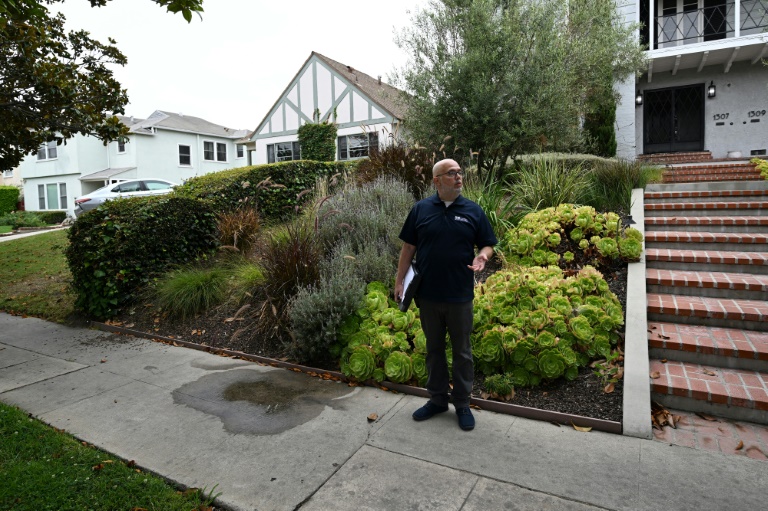
Damon Ayala patrols the streets of drought-stricken Los Angeles every day, inspecting the sidewalks. Each time he sees a puddle, he stops.

He is part of the city’s Department of Water and Power team, which looks into hundreds of community complaints filed by neighbors each week about water waste.

“It’s not extreme, but it’s something that we want them to take a look at,” he says of one pool of water.

“Looks like they have drip irrigation on this side. So there might be just a broken connector.”

Ayala’s patrol comes as California and the western United States are in the grip of a severe, years-long drought.

Scientists say global warming driven by human activity, including the unchecked burning of fossil fuels, is creating a greater number of extreme events.

With reservoirs and rivers at historic lows, Los Angeles authorities have brought in water restrictions, such as limiting lawn irrigation to as little as eight minutes, twice per week.

Ayala notes down the addresses of properties where he finds evidence of infringement. The first violation prompts a warning.

“A lot of times they don’t know about the ordinance, and that’s our job to educate them,” he said.

Repeat offenders are fined between $200 and $600.

“We’re not looking really for their money — that doesn’t get us more water. We’re trying to get behavioral change,” he said.

“So that way we can capture the water savings from making those changes.”

After a fifth infraction, a device is installed which physically restricts a household’s supply, although Ayala says that step has rarely been necessary.

“We’ve been in serious drought situations in the past in the city of Los Angeles, and its citizens responded,” he said.

“And we expect them to respond this time around too.”

– ‘Obvious choice’ –

The water department says it is beginning to see results.

Officials noted a reduction in residential water demand in June, compared to the same month last year.

But as the drought worsens, more permanent changes to the city’s landscape could become necessary.

Famous for its rows of palm trees, Los Angeles has also traditionally been known for its lush, green lawns, maintained with automatic sprinklers.

Residents are increasingly replacing their thirsty lawns with plants native to this desert region.

“When we think of how much water gets used in a residential setting, over 50 per cent is actually used outdoors,” said Pamela Berstler, executive director of urban landscaping firm G3 Garden Group.

She and her colleague Marianne Simon teach classes as part of a city program to encourage Angelenos to trade in their lawns for alternatives.

South Los Angeles residents Gabriel Golden and Danielle Koplinkase, joined the program a few years ago.

“The environmental impact of watering a lawn, not only in the midst of a draught but also living in a very dry climate, made this an obvious choice,” they said.

“We also sought to inspire our neighbors and community by going to a drought tolerant and native garden.”

Native plants such as California oak, and flowers that only require a few drops of water each week to thrive, now adorn the couple’s garden.

“There are parts of southern California where they have cut the water down to one day of watering per week,” said Simon.

“And the reality is that these kinds of gardens would be fine on that amount of water — in fact, could do with less — but our traditional lawns can’t survive on that.”

– ‘Short-sighted’ –

Other popular alternatives include artificial lawns or gravel, although Simon stresses the environmental benefits of maintaining some form of vegetation.

“The problem is that we are so short-sighted and so narrow in our vision that all we can see is saving the water,” she said.

A planted area can be cooler by “easily 20 degrees” Fahrenheit (10 degrees Celsius) than a gravel replacement, and “there’s the ability to hold on to rain when we do get it so that we can replenish aquifers.”

As she speaks, a nearby sprinkler turns on under the blazing California sun, spraying a lawn during prohibited hours.

With the thermometer hovering around 97 degrees F, water falling on the wilted, uneven grass and trickling down the sidewalk evaporates within minutes.

“It’s heartbreaking to see, but it’s also a lesson,” she said, pointing to the withered garden.

“That should be our past and this should be our future,” Simon added, looking back at the native plants.

France's Macron marks 80th anniversary of WWII round-up of Jews

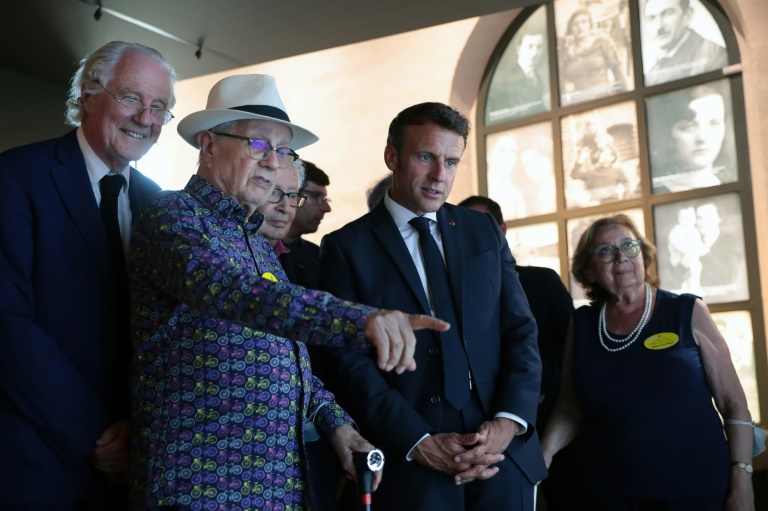
French President Emmanuel Macron on Sunday marked the 80th anniversary of the wartime round-up of Jews in France by calling for redoubled vigilance against the growing anti-Semitism in the country.

Macron delivered his speech at the former railway station in Pithiviers, 100 kilometres (60 miles) south of Paris, where 8,100 French Jews, including 4,400 children, were deported to Auschwitz.

Also attending the ceremony were some of the few survivors of those deported on the convoys sent to the Nazi camp.

“Eight decades ago, Vichy France betrayed these children by delivering thousands of them to their executioners,” said Macron, referring to the French wartime regime that collaborated with the Nazi occupiers.

“It is the duty of France, to be true to itself, to recognize this and to concede nothing to this contemporary fight against anti-Semitism.”

On July 16 and 17, French police rounded up 13,000 Jews in Paris and its suburbs on the orders of the Nazis.

The incident has become known as the Vel d’Hiv round-ups because many of those arrested, including the elderly and sick, were initially held at the Velodrome d’Hiver, a cycle racing track in Paris’s 15th arrondissement. 

From there, they were taken to camps at Pithiviers and other locations then onto the Nazi concentration camps. Only a few dozen ever returned.

– ‘Dark hours’ – 

“We are not done with antisemitism, and we must make a lucid assessment of it,” said Macron.

“This anti-Semitism is even more burning, rampant, than it was in 1995, in our country, in Europe, and in so many places in the world,” he stressed.

Macron was referring back to the words of one of his predecessors Jacques Chirac, who in 1995 acknowledged France’s responsibility for the Vel d’Hiv round ups.

“These dark hours stain our history forever,” said Chirac in a landmark speech. “On that day, France accomplished the irreparable”.

After Chirac, Francois Hollande went further during his presidency, speaking in a 2012 speech of a crime “committed in France, by France”.

Then in 2017 Macron, newly elected as president, reaffirmed France’s responsibility for the round-up in a speech marking its 75th anniversary and in the presence of then Israeli premier Benjamin Netanyahu.

But Macron was himself criticised for saying in 2018 that France’s Philippe Petain, who headed the Vichy regime, had been a “great soldier” during World War I, even if he had subsequently made “fatal choices”.

– ‘Persistent’ anti-Semitism –

On Sunday Macron warned that in the modern world anti-semitism “can take on other faces, drape itself in other words, other caricatures”.

“But the odious anti-Semitism is there, it prowls around, always alive, persistent, stubborn, coming back”, he continued, citing “terrorist barbarity”, “murders and crimes”, resurgences on “social networks” and the desecration of graves.

It is found, the French leader added, in debates on television, “It plays on the complacency of certain political forces. It also thrives on a new form of historical revisionism, even negationism,” he said.

He did not make any direct reference to far-right presidential candidate Eric Zemmour, who had argued that Petain had “saved” French Jews.

That claim is contested by most historians, who point to the wartime leader’s well-documented anti-Semitism.

Pithiviers railway station, which has not served passengers since the end of the 1960s, has been converted into a memorial to the Holocaust which opened earlier this month.

“This station is the place where the French event becomes European genocide,” said Jacques Fredj, the director of the Shoah Memorial, which commemorates the French deportations.

“It is a place of memory unique in France.”

Report finds 'lackadaisical' police response to Texas school shooting

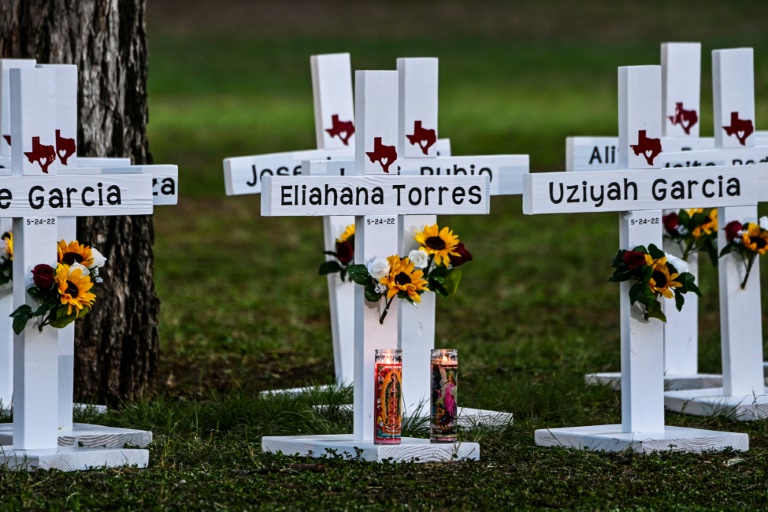
Texas state lawmakers on Sunday slammed law enforcement’s slow response to the shooting in Uvalde, where a gunman killed 19 children and two teachers, saying more decisive action could have saved lives.

A total of 376 officers — border guards, state police, city police, local sheriff departments and elite forces — responded to the May 24 massacre at Robb Elementary School, members of the southern US state’s House of Representatives said in a preliminary report.

But, the lawmakers charged, the situation was “chaotic” due to the officers’ “lackadaisical approach” to subduing the gunman.

Seventy-three minutes elapsed between the first officers’ arrival and the shooter’s death, an “unacceptably long period of time.”

“The void of leadership could have contributed to the loss of life,” the report said.

While the report acknowledged it was likely that most of the victims died immediately after the first shots were fired, some died while being transferred to the hospital. 

“It is plausible that some victims could have survived if they had not had to wait 73 additional minutes for rescue,” the report said.

According to the text, which does not incriminate certain police teams over others, law enforcement officers “failed to adhere to their active shooter training, and they failed to prioritize saving the lives of innocent victims over their own safety.”

Steve McCraw, Texas’s public safety chief, has previously described the police response to the attack as an “abject failure,” focusing most of his criticism on Uvalde school district police chief Pete Arredondo.

Arredondo, who has been suspended pending the investigation result, “did not assume his preassigned responsibility of incident command” and made analytical errors because he did not have all the necessary information, the Texas lawmakers said.

But no other officers offered to help or replace him, the report said. “There was an overall lackadaisical approach by law enforcement at the scene.”

“The scene was chaotic, without any person obviously in charge or directing the law enforcement response.”

The lawmakers presented their findings to the victims’ relatives, who have for weeks denounced a lack of transparency from authorities regarding the shooting and accused them of seeking to cover up police failures in the case.

After the report was published, local media reported that Uvalde police lieutenant Mariano Pargas had been suspended while the city investigated his role in the shooting response.

Pargas was acting city police chief the day of the attack.

Public criticism of Texas authorities surged last week after the release of surveillance camera video obtained by local media.

The footage shows the shooter arriving at Robb Elementary school with a semi-automatic rifle and the officers’ long wait in the hallway before finally breaching the classroom where the gunman was holed up.

Protesters in Panama leave part of key highway

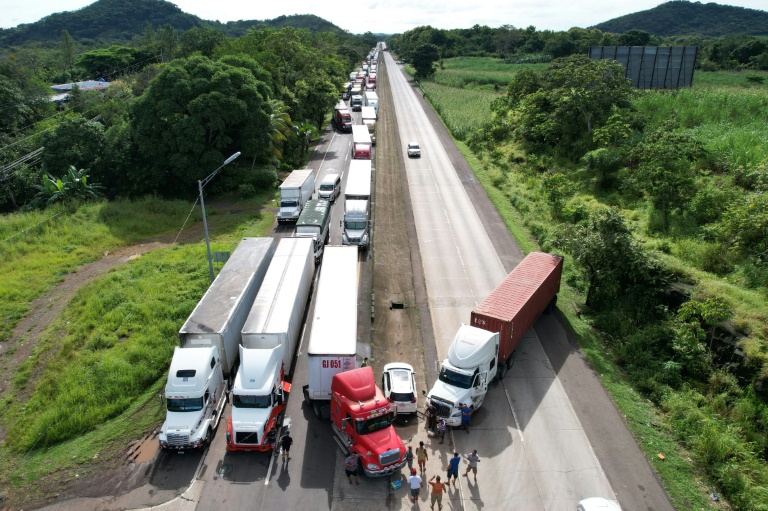
Panama’s government and indigenous leaders reached a deal Sunday to clear demonstrators from part of the Panamerican Highway in exchange for lower fuel prices, but other stretches of the strategic route remained blocked by protesters demanding more concessions.

The government released footage of the agreement being signed in a church in far west Chiriqui province, where most of the Central American country’s food is produced, and of a blocked section of the highway being cleared.

Two weeks of revolt in Chiriqui and elsewhere in Panama over high prices and corruption have made it hard to feed the country.

Despite this deal, most of Panama’s part of the Panamerican Highway, which links the country of 4.4 million people to the rest of Central America, remained clogged with large trucks and banner-waving demonstrators on Sunday.

“The Panamanian people deserve respect, this is a mockery,” said Luis Sanchez, a spokesman for the organizations promoting the protests.

In Panama City, a hundred people gathered on the waterfront to demonstrate. They all wore black, in contrast with the white suits worn by lawmakers during official ceremonies.

Food costs are “higher than what is earned. We have a big social problem,” lawyer Jaqueline Hurtado told AFP. “People are fed up and have taken to the streets to demonstrate for things to change.”

Retiree Iliana Arango said: “In my 68 years of life, I am tired of seeing governments that promise, go up, steal, go down, the next one follows and here we are lacking everything, medicine, education, food.”

Delegations from the government and demonstrators met again in a school in the town of Santiago de Veraguas, 250 kilometers (155 miles) southwest of Panama City.

“We ask all sides that today we be able to reach an agreement and above all clear the roads,” government ombudsman Eduardo Leblanc said at the talks.

A deal was reached Saturday to lower the price of gasoline, but the demonstrators are holding out for cuts in the prices of some 40 consumer products and medicines.

“We are keeping up the fight,” protesting farmer Juan Morales said in Capira, near Panama City.

Year-on-year inflation in Panama of 4.2 percent was recorded in May, along with an unemployment rate of about 10 percent and fuel price hikes of nearly 50 percent since January. 

Despite its dollarized economy and high growth figures, the country has a high rate of social inequality. 

Economic woes have led to a shortage of fuel in some parts of the country, and stalls at food markets in the capital have run out of products to sell. 

Long lines in New York for monkeypox vaccine

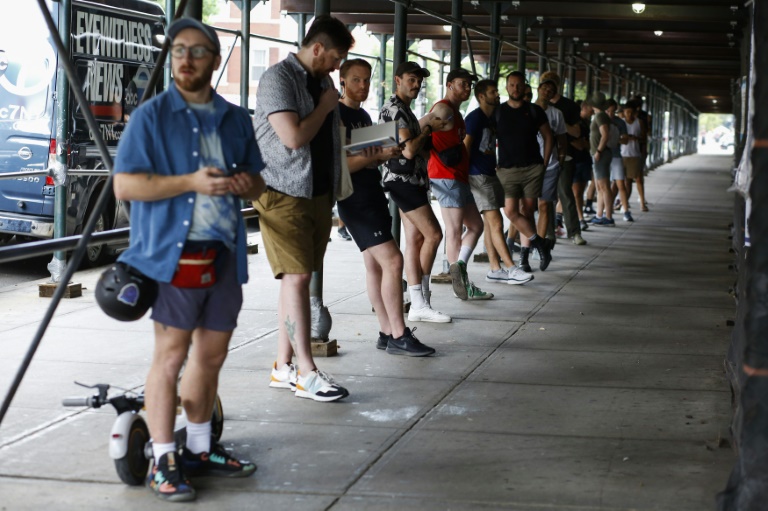
On a hot Sunday afternoon in New York, the epicenter of the US monkeypox outbreak, a long line of men aged 20 to 40 wait for a vaccine to protect themselves and their loved ones against the virus.

With its rows of tables and chairs and stacks of medical equipment, the vaccination center — a high school in Bushwick, Brooklyn — is reminiscent of a vaccine spot for Covid-19, a virus for which New York was also the US epicenter.

Everyone who spoke to AFP while waiting in line said they felt lucky to have gotten an appointment, as New York lacks doses. On Friday, 9,200 time slots became available on the city’s dedicated website at 6:00 pm.

They were all gone in seven minutes.

Three days earlier, site traffic was so high that the page crashed.

“It was frustrating, largely because especially with Covid, you’d think that we would have more of a structured process or vaccine rollout,” Aidan Baglivo, 23, told AFP. “There just wasn’t really anything.”

– ‘Shouldn’t be an issue’ –

The city of more than eight million people saw monkeypox infections climb last week, with 461 cases recorded Friday since the US outbreak began in May.

That number is up from 223 cases on Monday.

Baglivo, a data analyst, noted that people who are the most connected on social media have the highest chances of getting a vaccine appointment.

Robert, who declined to give his last name, told AFP he sat at his computer refreshing the website “like a crazy person” until he got a slot.

“This shouldn’t be an issue because there’s already a vaccine, and it (the rollout) should be… more efficient to prevent it from becoming more of an issue,” said the 28-year-old. Neither his partner nor his best friend have been able to get a vaccine.

“Every additional day where there’s not more people being vaccinated is a bummer.”

Anyone can catch monkeypox, which spreads through close physical contact, but the Jynneos vaccine is currently reserved for men who have sex with men, who make up the vast majority of cases.

Many LGBTQ people, of which there is a large population in New York, worry their community will be further stigmatized because of the virus.

– ‘Important to be proactive’ –

Nathan Tylutki, a 42-year-old actor, wonders if “there would be a quicker response to developing more vaccines if it wasn’t affecting queer people.”

In his opinion, there isn’t a lot of anti-vaccine sentiment in the LGBTQ community “because we’ve seen disease, we know what the AIDS epidemic” was like.

“We know that it’s important to be proactive about these kinds of things,” he told AFP.

Monkeypox is characterized by lesions on the skin — which can appear on the genitals or the mouth  — and is often accompanied by fever, sore throat and pain in the lymph nodes. It usually clears up on its own but can be extremely painful.

New York, on the US East Coast, has already either administered or scheduled 21,500 vaccines and hopes to speed up the process, promising more than 30,000 jabs for the whole state.

But due to a lack of doses, the Bushwick site is not expected to reopen Monday.

City health commissioner Ashwin Vasan said Sunday that New York needs tens of thousands more vaccines.

In line at the Bushwick site, fitness instructor Leroy Jackson has another concern.

“I am one of maybe two or three Black people on this line” out of more than 100, said the 27-year-old.

Access to appointments for minorities and underprivileged groups is even more limited, he pointed out.

Russian journalist who protested Ukraine operation on TV detained

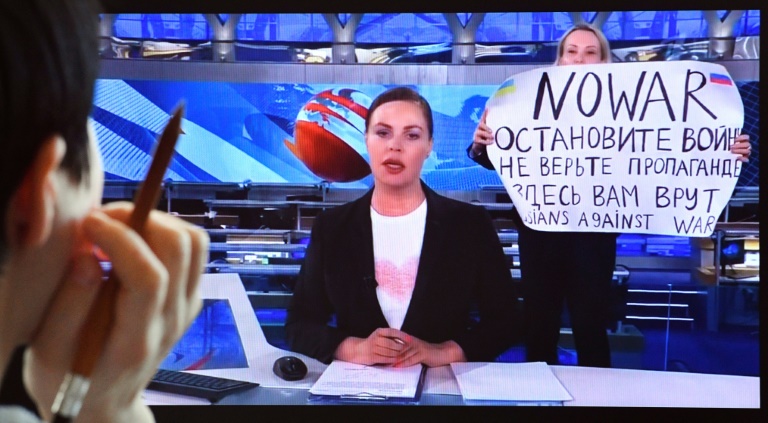
Russian police on Sunday detained journalist Marina Ovsyannikova, who in March interrupted a live TV broadcast to denounce the military action in Ukraine, her lawyer said.

No official statement has been made, but her detention comes a few days after 44-year-old Ovsyannikova demonstrated alone near the Kremlin holding a placard criticising Russia’s intervention in Ukraine and President Vladimir Putin.

“Marina has been detained,” her entourage said in a message posted on the journalist’s Telegram account. “There is no information on where she is.”

The message included three photos of her being led by two police officers to a white van, after apparently having been stopped while cycling.

Her lawyer, Dmitri Zakhvatov, confirmed her arrest to the Ria-Novosti news agency, saying he did not know where Ovsyannikova had been taken.

“I assume that it is linked one way or another to her act of protest,” he added.

In March Ovsyannikova, an editor at Channel One television, barged onto the set of its flagship Vremya (Time) evening news programme, holding a poster reading “No War” in English.

On Friday, Ovsyannikova posted photos of herself on Telegram showing her near the Kremlin and carrying a protest placard raising the deaths of children and denouncing Putin as a “killer”.

Declarations of this kind expose her to criminal prosecution for publishing “false information” about and “denigrating” the army, offences that can carry heavy prison sentences.

Ovsyannikova became internationally famous overnight in March when she staged her live TV protest. Pictures of her interrupting the broadcast went around the world.

She was briefly detained and then released with a fine, but while a number of international observers praised her protest, it was not universally acclaimed by Russia’s opposition.

Some critics said that she had spent years working for a channel, Pervy Kanal, which they said was effectively a mouthpiece for the Kremlin.

In the months following her March protest, Ovsyannikova spent some time abroad, including a brief period working for the German newspaper Die Welt.

In early July, she announced that she was returning to Russia to settle a dispute over the custody of her children.

Tory rivals turn up the heat at fractious UK debate

Barbs flew and derisive laughter rang out as the Conservative contenders battling to succeed UK Prime Minister Boris Johnson clashed in a live TV debate Sunday, heading into a pivotal week for the acrimonious race.

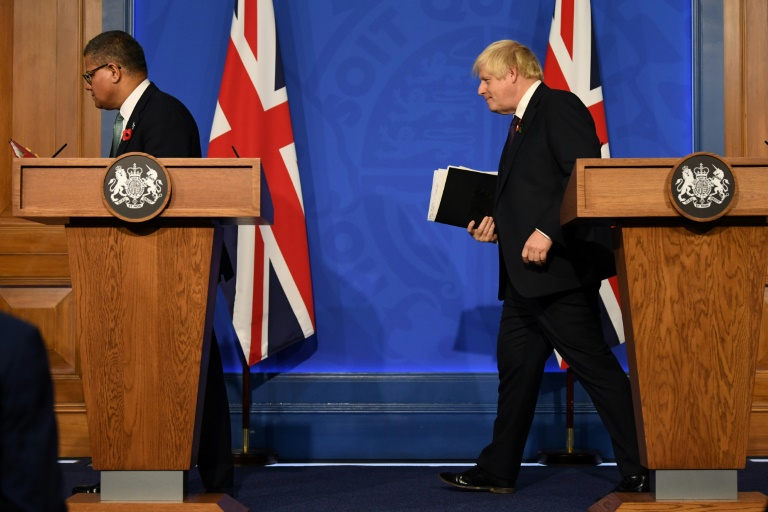
Rising global temperatures were among the policy areas under contention after Britain’s climate minister, COP26 president Alok Sharma, threatened to resign if the winner retreats from the government’s “net zero” target.

With Britain facing a record-breaking heatwave this week and dire warnings of loss of life, only frontrunner Rishi Sunak pledged to maintain green taxes to help pay for the legally enshrined aim of achieving net-zero carbon emissions by 2050.

Former finance minister Sunak was repeatedly assailed by the four other contenders in the ITV debate, the second of three before the two finalists are submitted to Tory rank-and-file members who will decide their new leader by September 5. 

But he shot back with some of the debate’s most wounding lines, attacking Foreign Secretary Liz Truss for her promises of a borrowing binge to fund tax cuts and help ease a cost-of-living crisis.

“This something-for-nothing economics isn’t conservatism, it’s socialism,” he said.

– Sunak blamed for inflation –

Sunak also attacked Truss for her political U-turns down the years, from being a Liberal Democrat to becoming a Tory, and from campaigning for UK membership of the European Union in 2016 to enthusiastically backing Brexit today.

“I was just wondering which one you regretted most?” he queried.

An hour before the debate, Sunak posted a new campaign video shot in vintage black-and-white style to remind Tories about how he went against the party leadership early on to support Brexit — drawing a pointed contrast to Truss.

But the wealthy Sunak faced tough questioning about his tax affairs, his earlier possession of a Green Card for US residency, and his wife’s prior status as a “non-domiciled” resident of Britain who was shielded from UK taxes.

Truss sought to blame Sunak for Britain’s surging inflation and insisted on her own personal integrity. “I say what I mean and I mean what I say,” she said.

The leadership race was triggered after Johnson was forced to announce his resignation in the face of a cabinet revolt sparked in large part by Sunak, following months of scandal. 

The debate came after a survey of Tory members gave a surprise double-digit lead to outsider Kemi Badenoch.

Truss was second, narrowly ahead of former grassroots favourite Penny Mordaunt and Sunak, according to the unscientific poll by the ConservativeHome website.

– ‘Nonsense’ –

Badenoch and Mordaunt angrily clashed at the ITV debate about transgender rights. 

Mordaunt, who was briefly Britain’s first woman defence secretary before she was fired by Johnson, pushed back against claims that she was lying over her position about rights for transgender women — a hot-button issue on the Tory right.

Mordaunt said the attacks were “unedifying”, adding: “All attempts to paint me as an out-of-touch individual will fail.” 

Badenoch, a former junior minister with no cabinet experience, is running on an “anti-woke”, right-wing platform and has said the net zero goal amounts to “unilateral economic disarmament” by Britain. 

Mordaunt claimed that polling showed she was the only one of the contenders who could beat opposition Labour leader Keir Starmer in a general election — which in fact is not borne out by every survey.

The other candidates hooted in derision. Sunak said “that’s simply not true” and backbencher Tom Tugendhat shouted “nonsense”. 

On Monday, Conservative MPs will hold another round of balloting to eliminate the bottom-placed candidate — likely to be Tugendhat — before arriving at the final two by Wednesday.

Then the last two standing will appear before grassroots members across the country at a series of hustings, explaining why they are best positioned to confront challenges including the economic crisis and the war in Ukraine.

They must also heal Tory wounds inflicted by the numerous controversies of Johnson’s premiership.

All five contenders were asked to raise their hands if they would agree to have Johnson in their cabinet. None did.

Close Bitnami banner
Bitnami