World

'War is war' but Ukraine sushi bar serves lunch on time

Working in a sushi restaurant in eastern Ukraine, Igor Besukh turns up the music to drown out the sound of air raid sirens as he prepares the next order.

But the music could not mask the deafening sound of a missile that struck central Kramatorsk on Friday, landing in the city’s Peace Square near the town hall, culture centre and the sushi bar where Besukh works.

The restaurant is one of the few still open in the city, only some 20 kilometres (12 miles) from the frontline with Russian troops, in the industrial Donbas region that Russia is attempting to conquer.

When they heard the blast, the employees of “Woka”, a restaurant with red lacquered walls and Asian designs, quickly moved to a shelter. 

They re-emerged 20 minutes later to examine the damage. All the windows and doors were broken despite being boarded up with plywood panels.

They cleaned up the debris and continued preparing the orders waiting to be delivered.

There were no casualties following the strike that hit at around 8:00 pm but the impact shattered the windows of several buildings nearby.

“It was a loud noise. We didn’t expect it, of course. I was scared,” says the 23-year-old chef with tattoo-covered arms. 

Coming back to work the next day was not easy, he admits, however “war is war, but lunch must be served on time,” he says, quoting a popular saying with a smile.

– Open throughout war –

Besukh has worked at the restaurant for several years. Now its main customers are soldiers stationed in Kramatorsk or those returning from the front. 

The city, with a pre-war population of around 150,000, now lives under the constant threat of shelling. 

A strike on a hotel on July 7 left one dead. A previous strike in April on a busy train station killed over 50 people.

AFP interviewed the staff of the restaurant shortly before the Friday attack and then returned Saturday when everything had been cleared. 

The wooden protective panels had been reinstalled and orders were piling up on the counter in front of a glass behind which Besukh was working. 

He arranges, rolls and cuts up to a hundred pieces of sushi a day in the restaurant that has been open every day since Russia invaded Ukraine on February 24.

Open since 2016, the sushi bar today employs seven people, down from 28 employees before the war. 

“It’s normal to work, even in this situation,” says Besukh, whose culinary career has taken him to the capital Kyiv, to the coast of the Sea of Azov and now back to his hometown Kramatorsk. 

Asked whether he considered joining the army, he says with a smile: “Why should I? I have no experience, I would be of no use”. 

“Here I help in a certain way,” adds the young man, who dreams of one day opening his own restaurant. 

For now, the restaurant serves 10 to 30 dishes daily, all for takeaway or delivery. 

Customers are not allowed to eat inside for safety reasons.

“Imagine if a missile hit the restaurant, it’s too big a responsibility for us,” the restaurant’s owner, Dmitry Pleskanov, said, just hours before the missile landed on Peace Square. 
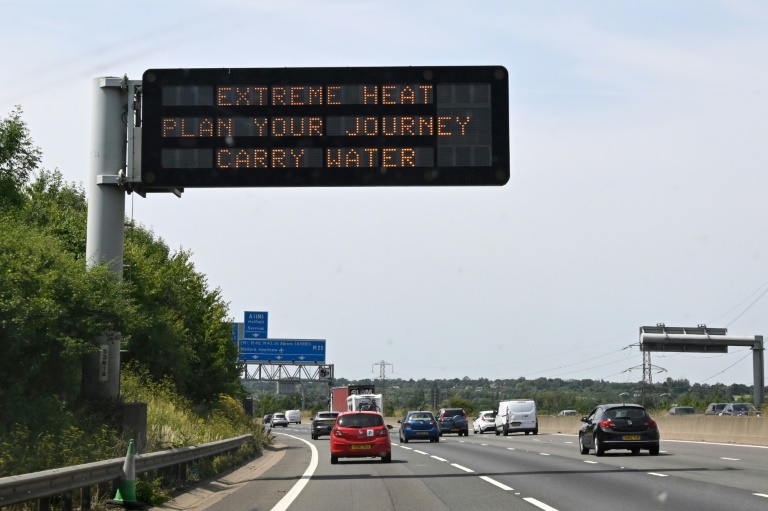
UK leaders under fire as record heat beckons

British Prime Minister Boris Johnson’s government stood accused Sunday of failing to take seriously an impending heat emergency as forecasters warned that lives were at risk.

Johnson missed a crisis ministerial meeting in Downing Street Saturday while he took a weekend break at his Chequers country retreat — and was hosting a farewell party for friends Sunday before he leaves office in September.

Deputy Prime Minister Dominic Raab then appeared to welcome the likelihood of temperatures topping 40 degrees Celsius (104 degrees Fahrenheit) in England for the first time.

“Obviously there is some common-sense practical advice we are talking about -– stay hydrated, stay out of the sun at the hottest times, wear sun cream — those sorts of things,” Raab told Sky News on Sunday.

“We ought to enjoy the sunshine and actually we ought to be resilient enough through some of the pressures it will place,” he added, insisting there was no reason for schools to close when the mercury peaks on Monday and Tuesday.

The comments raised eyebrows, as did Johnson’s absence from the Downing Street meeting about the government’s response to the heatwave. He was forced to resign partly because of other parties held during Covid lockdowns.

Speaking after Raab on Sky, College of Paramedics chief executive Tracy Nicholls said: “This isn’t like a lovely hot day where we can put a bit of sunscreen on, go out and enjoy a swim and a meal outside.

“This is serious heat that could actually, ultimately, end in people’s deaths because it is so ferocious,” she said. 

“We’re just not set up for that sort of heat in this country.” 

Contrary to Raab’s sang froid, after Saturday’s meeting, government minister Kit Malthouse warned that transport services face “significant disruption” during the heatwave and said the public should work from home if possible.

The UK capital is expected to see the highest temperatures and mayor Sadiq Khan advised Londoners only to use public transport if “absolutely necessary”.

Ambulance services are on crisis footing, and some schools in southern England have already said they will stay shut.

Police urged the public to stay out of waterways after a 16-year-old boy drowned in a canal in the Manchester region, northwest England, on Saturday.

The Met Office, Britain’s state meteorological agency, has issued a first-ever “red” warning for extreme heat, cautioning there is a “risk to life” and attributing the heatwave to man-made climate change.

Britain’s highest recorded temperature is currently 38.7C set in Cambridge, eastern England, on July 25, 2019. But that looks set to be surpassed in the Met Office’s projections for this week.

Sudan police fires tear gas against pro-democracy protests

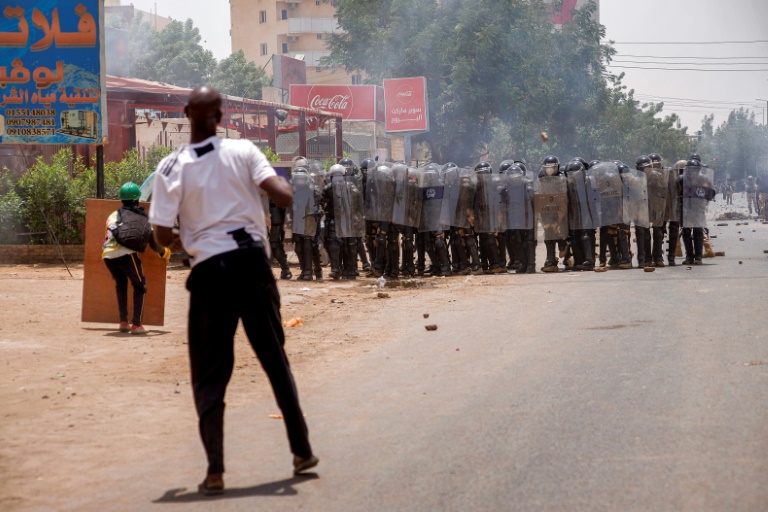
Sudanese police fired tear gas in the capital Khartoum on Saturday in an attempt to disperse hundreds of pro-democracy protesters demonstrating against coup leader General Abdel Fattah al-Burhan, AFP correspondents reported.

Security forces had erected road blocks on bridges crossing the Nile river linking Khartoum to its suburbs, AFP reporters said, to deter protesters who had vowed to take to the streets in large numbers.

The demonstrators oppose Burhan’s October power-grab and are also highlighting heavy fighting in Sudan’s southern Blue Nile state, about 450 kilometres (280 miles) south of Khartoum.

They accuse the military leadership and the ex-rebel leaders who signed a 2020 peace deal of exacerbating ethnic tensions there for personal gain.

Sudan’s latest coup derailed a transition to civilian rule, sparking near-weekly protests and a crackdown by security forces that has left at least 114 killed, according to pro-democracy medics.

Nine were killed on June 30, the medics said, when tens of thousands had gathered and their deaths reinvigorated the movement.

On July 4, Burhan vowed in a surprise move to make way for a civilian government.

But the country’s main civilian umbrella group rejected the move as a “ruse”. Protesters have continued to press the army chief to resign.

The rallies on Sunday follow a period of relative calm over the Muslim holiday of Eid al-Adha, which ended last week.

Protesters in Khartoum held signs noting the recent bloodshed in ethnic clashes in the south of the country.

“Al-Damazin is bleeding,” one Khartoum protester’s sign read on Sunday, referring to the state capital of Blue Nile.

Troops were deployed in the Blue Nile town of Al-Roseires Sunday, after at least 33 people were killed and more than 100 wounded in the state, according to the health ministry.

Guerrillas in Blue Nile battled former strongman president Omar al-Bashir during Sudan’s 1983-2005 civil war, picking up weapons again in 2011.

Bashir was ousted in 2019. The following year, the transitional administration reached a peace deal with key rebel groups, including from Blue Nile as well as the war-ravaged western Darfur region.

But the areas remain awash with weapons and local grievances over land, water and livestock regularly erupt into deadly clashes.

The current violence in Blue Nile is between two local ethnic groups, the Berti and the Hausa.

Forest fires rage in scorching southwest Europe

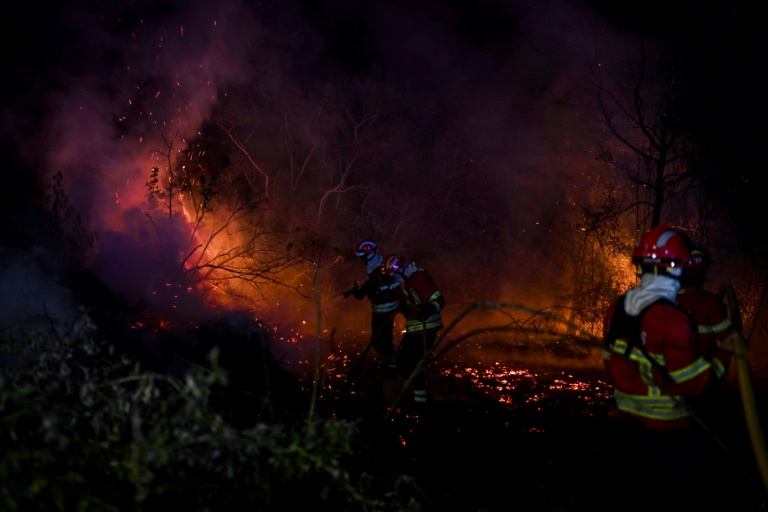
Firefighters struggled to contain wildfires sweeping across southwest Europe on Sunday as a heatwave showed no sign of abating, with Britain poised to set new temperature records this coming week.

Blazes raging in France, Greece, Portugal and Spain have destroyed thousands of hectares of land, forced scores from their homes and killed several emergency personnel since last week.

It is the second heatwave engulfing parts of southwest Europe in weeks. Scientists blame climate change and predict more frequent and intense episodes of extreme weather such as heatwaves and drought.

Firefighters in France’s southwestern Gironde region were fighting to control two forest blazes that have devoured nearly 11,000 hectares (27,000 acres) since Tuesday.

The wildfires have forced more than 14,000 people — residents and tourists combined — to decamp. Seven emergency shelters have been set up to take in evacuees.

Meteo France forecast temperatures of up to 40 degrees Celsius (104 degrees Fahrenheit) in parts of southern France on Sunday, with new heat records expected on Monday.

“The heat is intensifying. The heatwave is spreading across the country,” the weather office said.

France placed 37 departments, mainly down its Atlantic seaboard, on orange high alert on Sunday

Authorities in the French Alps urged climbers bound for Mont Blanc, Europe’s highest mountain, to postpone their trip due to repeated rock falls caused by “exceptional climatic conditions” and “drought”.

The call comes after a section of Italy’s biggest Alpine glacier gave way at the start of the month, killing 11 people — a disaster officials blamed on climate change.

– Deaths –

Spanish authorities reported around 20 wildfires still raging out of control in different parts of the country from the south to Galicia in the far northwest, where blazes have destroyed around 4,500 hectares of land. 

Another fire burning in the Mijas mountain range inland from the southern coastal city of Malaga has so far destroyed about 2,000 hectares of land, local officials said.

The fire forced the evacuation of just over 3,000 people but around 2,000 people have since been allowed to return to their homes.

“We didn’t stop working all night,” regional agriculture minister Carmen Crespo told Spanish public television of efforts to quench the flames.

Spain’s national weather office, AEMET, forecast “significantly high” temperatures for most of mainland Spain and the Balearic Islands in the Mediterranean on Sunday.

The mercury was expected to hit 42C in the northern city of Logrono and 40C in Madrid and the southern city of Seville.

A 60-year-old street cleaner in Madrid died on Saturday after suffering heat stroke the day before while working, local officials said.  

The fight against the flames has also claimed the lives of a number of emergency personnel, including a pilot killed when his plane crashed in northern Portugal and two who died in Greece when their helicopter fell into the sea.

– ‘Risk to life’ –

In Portugal, almost the entire country remaining on high alert for wildfires despite a slight drop in temperatures, after hitting 47C — a record for the month of July — on Thursday.

Only one major fire was burning on Sunday in the north.

The Lisbon government was to decide on Sunday whether to extend a week-long state of contingency. 

In Greece, the civil defence service had brought a wildfire raging on the Mediterranean island of Crete since Friday under control. 

In the United Kingdom, the weather office issued a first-ever “red” warning for extreme heat, cautioning there was a “risk to life”.

The Met Office said temperatures in southern England could exceed 40C on Monday or Tuesday for the first time, leading some schools to say they would stay closed next week.

London Mayor Sadiq Khan advised people in the capital to use public transport only if “absolutely necessary”. National train operators also warned passengers to avoid travel.

burs-bcr-bt/ds/gil

All eight crew killed in Ukrainian cargo plane crash in Greece

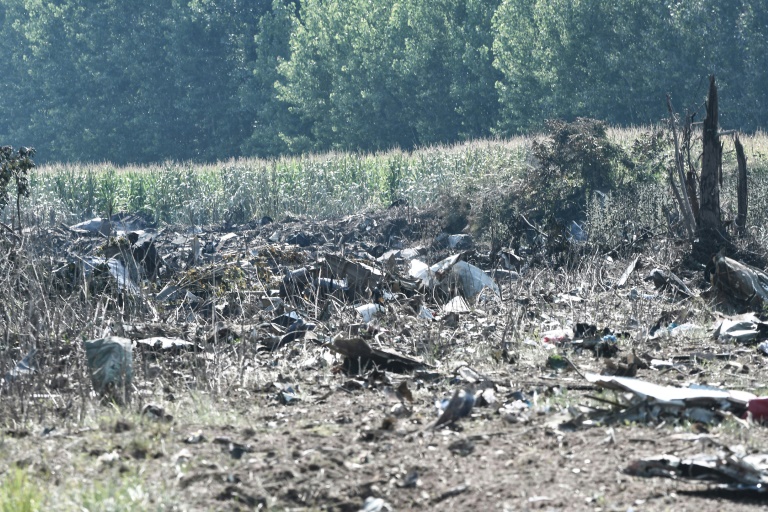
All eight crew members were killed when a Ukrainian operated cargo plane crashed in Greece en route from Serbia to Bangladesh carrying military goods, the Serbian defence minister said Sunday.

Witnesses said they saw the privately operated Antonov on fire and heard explosions. Videos shared on social media showed the plane engulfed by a giant fireball as it hit the ground late Saturday.

“Sadly, according to the information we have received, the eight members of the crew died in the crash,” Serbian Defence Minister Nebojsa Stefanovic told a news conference.

The Antonov An-12 took off from Nis airport in southern Serbia at around 8:40 pm (1840 GMT) on Saturday, carrying “around 11 tonnes of military industry goods” namely mines from Valir, a private Serbian company, to the Bangladeshi defence ministry, Stefanovic said.

Ukraine’s foreign ministry said the eight crew were Ukrainian citizens. “The preliminary cause of the accident is the failure of one of the engines,” said spokesman Oleg Nikolenko on Facebook.

Denys Bogdanovych, general director of Meridian, the Ukrainian airline operating the plane, also told German broadcaster Deutsche Welle that the crew were all Ukrainian.

Debris was scattered across a wide area and the crash site surrounded by fields was visible from the air, an AFP photographer said.

“We heard a deafening noise (and saw) a fireball approaching the ground. Then came the explosion,” Sofia, a mother of three from the nearby village of Antifilipi told Athens News Agency (ANA).

The Greek fire brigade said the plane crashed at around 11:00 pm near Paleochori village around 23 kilometres (14 miles) northwest of the city of Kavala in northern Greece.

– Toxic fumes –

Greek air control said the plane requested clearance to make an emergency landing at the airport in Kavala but did not make it.

The Bangladesh military confirmed that they had been the intended recipients of the cargo.

The aircraft had been carrying “training mortar shells procured from Serbia for the Bangladesh Army” and border guard before it crashed in Greece, said the military’s public relations office.

“There was no weapon in the shipment and the shipment was covered by insurance,” it added.

Greek rescue services deployed a drone to monitor the wreckage.

Biological and chemical weapons experts from the army were expected to comb the crash site during the day, the civil protection ministry said.

Villagers were forbidden from going into nearby fields until authorities could remove the wreckage and unexploded ammunition. 

People living within a two-kilometre radius of the crash site were asked to stay inside and wear face masks late Saturday.

Two firemen were taken to hospital early on Sunday with breathing difficulties because of toxic fumes. 

– ‘Engine on fire’ –

Fire brigade official Marios Apostolidis told reporters staff with “special equipment and measuring instruments” had inspected the point of impact and fuselage.

ANA said an investigation would be launched into the cause of the accident.

Resident Giorgos Archontopoulos told Greek state broadcaster ERT he sensed something was wrong as soon as he heard the aircraft overhead.

“I went outside and saw the engine on fire,” he said. 

“If it had crashed some seconds earlier, it would have hit our house,” 80-year-old Michalis Emmanouilidis, visibly shaken, told ANA.

Ukraine’s consul in Thessaloniki, Vadim Sabluk, visited the area on Sunday and the Greek foreign ministry expressed its “sincere condolences” to the victims’ families. 

ANA said Sabluk confirmed the identities of the crew and the plane’s destination. 

Serbia’s defence minister said the weapons shipment was not linked to Russia’s war in Ukraine.

“Unfortunately, some media have speculated that the plane was carrying weapons destined for Ukraine but that is completely untrue,” he said.

Sri Lanka protest movement reaches 100 days

Sri Lanka’s protest movement reached its 100th day Sunday, having forced one president from office and now turning its sights on his successor as the country’s economic crisis continues.

Gotabaya Rajapaksa fled his palace shortly before demonstrators invaded it last weekend and on Thursday resigned from the presidency. 

His mismanagement is blamed for Sri Lanka’s financial turmoil, which has forced its 22 million people to endure shortages of food, fuel and medicines since late last year.

The campaign to oust Rajapaksa, organised mainly through posts on Facebook, Twitter and TikTok, drew people from across Sri Lanka’s often unbridgeable ethnic divides.

United by economic hardships, minority Tamils and Muslims joined the majority Sinhalese to demand the ouster of the once-powerful Rajapaksa clan.

It began as a two-day protest on April 9, when tens of thousands of people set up camp in front of Rajapaksa’s office — a crowd so much larger than the organisers’ expectations that they decided to stay on.

“When I heard the news and saw what was happening here, I decided that I should come and help them,” Nilu, a teacher from a beach town on Sri Lanka’s southern coast, told AFP.

The 26-year-old took up residence in the camp last month and is among dozens of volunteers working in the patchwork of tents now lining a section of the seafront boulevard.

A communal kitchen serves food for needy crowds visiting the site in the evenings, who queue next to signboards detailing the numerous accusations of graft and violence directed at Rajapaksa’s family.

“We need a change and we are the change,” said Nilu, who declined to give her surname. 

“We want our president to represent the whole country. Not somebody who robs the public.”

Under Sri Lanka’s constitution, Prime Minister Ranil Wickremesinghe was automatically installed as acting president following Rajapaksa’s resignation.

He is now the leading candidate to succeed him permanently in a parliamentary vote next week.

But the veteran politician is despised by the protesters as an ally of the Rajapaksa clan — four brothers who have dominated the island’s politics for years.

– ‘Far from any change’ –

Social media activist and protest campaign supporter Prasad Welikumbura said Wickremesinghe too should go.

“It’s been 100 days since it started,” Welikumbura said on Twitter. 

“But, it’s still far from any concrete change in the system. #GoHomeRanil, #NotMyPresident.”

Rajapaksa’s elder brother Mahinda resigned as premier in May and he appointed Wickremesinghe to replace him — his sixth term in the post — despite his being an opposition MP representing a party with only one seat in parliament.

The move did little to assuage the protesters’ anger, and when they stormed Rajapaksa’s tightly guarded 200-year-old Presidential Palace they also set Wickremesinghe’s private home ablaze.

Now the Rajapaksas’ SLPP party — which has more than 100 MPs in the 225-member parliament — is backing Wickremesinghe in the vote due Wednesday.

A spokesman for the protesters told AFP: “We are now discussing with groups involved in the ‘Aragalaya’ (struggle) on turning the campaign against Ranil Wickremesinghe.”

Numbers at the protest site have diminished since Rajapaksa’s exit, and the demonstrators have vacated three key state buildings they occupied — the Presidential Palace, the Prime Minister’s official Temple Trees residence, and his office.

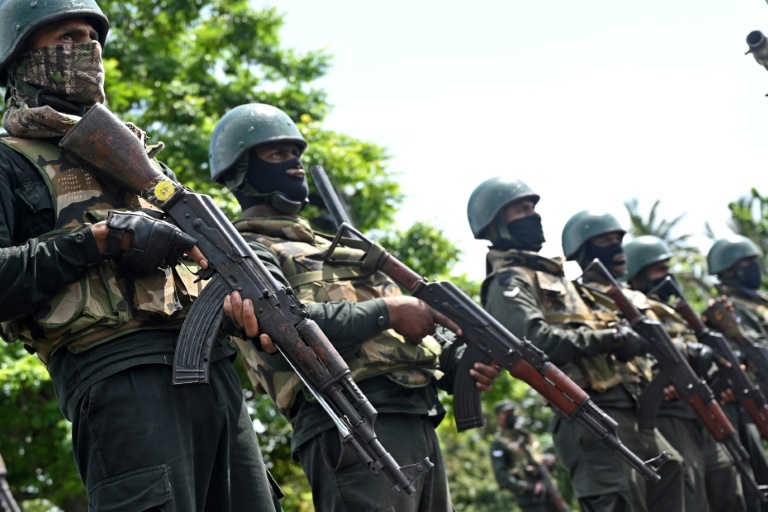
Wickremesinghe has ordered the military and police to do whatever it takes to ensure order.

Defence officials said additional troops and police will be moved into the capital on Monday to bolster security around parliament ahead of the vote.

UK climate chief could quit as Tory race heats up

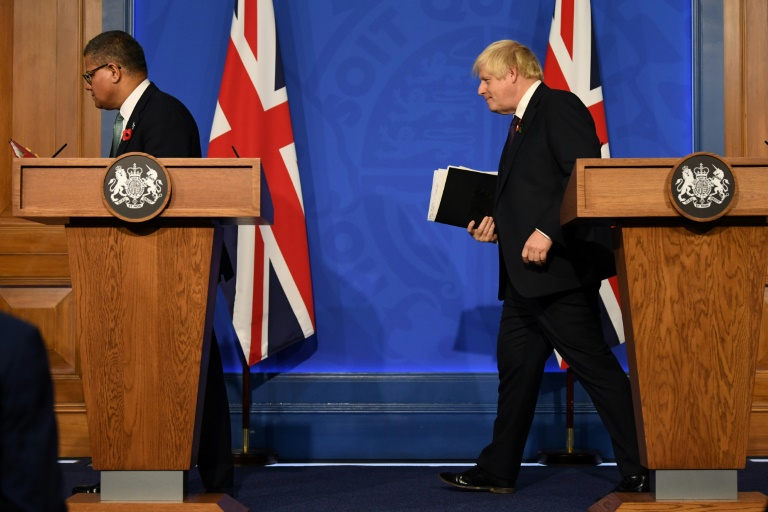
Britain’s climate minister has indicated he may resign as some Conservative leadership contenders equivocate on the government’s net zero target, ahead of a crunch TV debate Sunday and the final rounds of voting by MPs this week.

The intervention by COP26 president Alok Sharma came as a poll of Tory rank-and-file members, who will have the final say out of the two finalists, gave a surprise double-digit lead to outsider Kemi Badenoch.

Foreign Secretary Liz Truss was second, narrowly ahead of former grassroots favourite Penny Mordaunt and ex-finance minister Rishi Sunak, according to the unscientific poll by the ConservativeHome website.

Badenoch, a former junior minister with no cabinet experience, is running on an “anti-woke”, right-wing platform and has said net zero amounts to “unilateral economic disarmament” by Britain.

“Green levies”, backed by Sunak to help pay for the legally enshrined aim of achieving net-zero carbon emissions by 2050, have also been questioned by Truss and Mordaunt as Britons struggle with a cost-of-living crisis.

But with Britain facing record-breaking temperatures this week, Sharma told Sunday’s Observer newspaper that the target was “absolutely a leadership issue”, as the candidates wage an acrimonious battle to succeed scandal-tainted Prime Minister Boris Johnson.

“Anyone aspiring to lead our country needs to demonstrate that they take this issue incredibly seriously, that they’re willing to continue to lead and take up the mantle that Boris Johnson started off,” the minister said.

Asked if he could resign if candidates showed weakness on net zero, Sharma said: “Let’s see, shall we? I think we need to see where the candidates are. And we need to see who actually ends up in Number 10 (Downing Street).”

– ‘Back-burner’ amid heatwave –

Under Sharma’s chairmanship, nearly 200 countries pledged at a UN summit in Glasgow last November to speed up the fight against rising temperatures, after two weeks of marathon negotiations.

But India and China weakened the language of the final text to retain high-polluting coal, forcing tears and an exasperated apology from Sharma as he brought down the gavel.

Asked about Sharma’s threat, Truss supporter and former Tory leader Iain Duncan Smith told Sky News: “I’m sorry he feels that.” 

Truss still backs the principle of net zero but “we have to just put that slightly on the back-burner whilst we make sure people don’t suffer” from surging inflation, he said.

Asked whether she also still backed net zero, Mordaunt said on BBC television: “Yes, but it has to not clobber people.”

However, campaigners note that the green taxes make up a small fraction of overall energy bills in Britain, which have shot up on the back of Russia’s war in Ukraine.

And they say the current heatwave gripping Europe is a reminder that climate change is an existential threat. 

– Trans ‘smears’ –

The debate has ripped open Conservative tensions about the direction of economic and environmental policy under whoever succeeds Johnson when the winner is announced on September 5.

International environment minister Zac Goldsmith tweeted that with wildfires hitting Europe and temperature records being smashed, “it’s worth reflecting that there are still politicians being elected who think protecting our planet isn’t cost effective”.

Climate change barely figured in the first TV debate among the Conservative contenders on Friday. But Sharma will have the opportunity to grill them when he chairs a hustings organised by environmentalist Tory MPs on Monday.

After that, all the party’s MPs will hold another round of balloting to eliminate the bottom-placed candidate — likely to be backbencher Tom Tugendhat — before arriving at the final two in the coming days.

They will be reflecting on the outcome of the second TV debate, airing on the ITV network from 7:00 pm (1800 GMT) on Sunday, after Mordaunt came under concerted attack from Badenoch and Truss in the first one.

Mordaunt, who was briefly Britain’s first woman defence secretary before she was fired by Johnson, pushed back against claims that she was lying over her position now about rights for transgender women — a hot-button issue on the Tory right.

“There’s a number of smears going on in the papers,” she told the BBC.

UK climate chief could quit as Tory race heats up

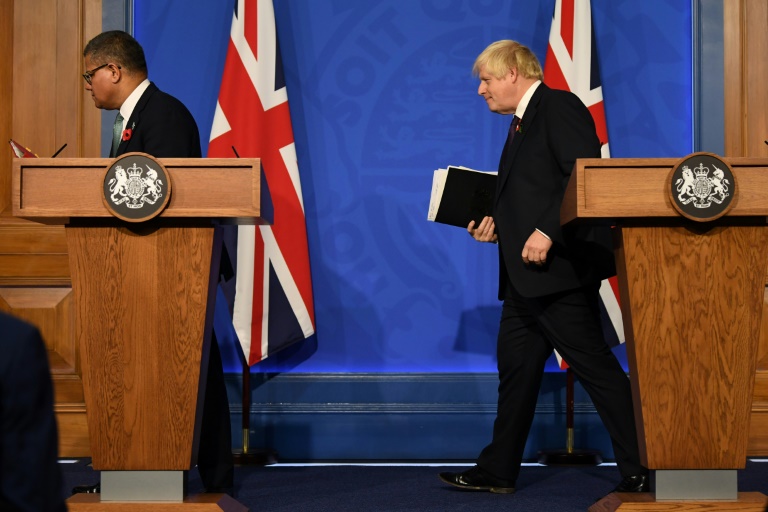
Britain’s climate minister has indicated he may resign as some Conservative leadership contenders equivocate on the government’s net zero target, ahead of a crunch TV debate Sunday and the final rounds of voting by MPs this week.

The intervention by COP26 president Alok Sharma came as a poll of Tory rank-and-file members, who will have the final say out of the two finalists, gave a surprise double-digit lead to outsider Kemi Badenoch.

Foreign Secretary Liz Truss was second, narrowly ahead of former grassroots favourite Penny Mordaunt and ex-finance minister Rishi Sunak, according to the unscientific poll by the ConservativeHome website.

Badenoch, a former junior minister with no cabinet experience, is running on an “anti-woke”, right-wing platform and has said net zero amounts to “unilateral economic disarmament” by Britain.

“Green levies”, backed by Sunak to help pay for the legally enshrined aim of achieving net-zero carbon emissions by 2050, have also been questioned by Truss and Mordaunt as Britons struggle with a cost-of-living crisis.

But with Britain facing record-breaking temperatures this week, Sharma told Sunday’s Observer newspaper that the target was “absolutely a leadership issue”, as the candidates wage an acrimonious battle to succeed scandal-tainted Prime Minister Boris Johnson.

“Anyone aspiring to lead our country needs to demonstrate that they take this issue incredibly seriously, that they’re willing to continue to lead and take up the mantle that Boris Johnson started off,” the minister said.

Asked if he could resign if candidates showed weakness on net zero, Sharma said: “Let’s see, shall we? I think we need to see where the candidates are. And we need to see who actually ends up in Number 10 (Downing Street).”

– ‘Back-burner’ amid heatwave –

Under Sharma’s chairmanship, nearly 200 countries pledged at a UN summit in Glasgow last November to speed up the fight against rising temperatures, after two weeks of marathon negotiations.

But India and China weakened the language of the final text to retain high-polluting coal, forcing tears and an exasperated apology from Sharma as he brought down the gavel.

Asked about Sharma’s threat, Truss supporter and former Tory leader Iain Duncan Smith told Sky News: “I’m sorry he feels that.” 

Truss still backs the principle of net zero but “we have to just put that slightly on the back-burner whilst we make sure people don’t suffer” from surging inflation, he said.

Asked whether she also still backed net zero, Mordaunt said on BBC television: “Yes, but it has to not clobber people.”

However, campaigners note that the green taxes make up a small fraction of overall energy bills in Britain, which have shot up on the back of Russia’s war in Ukraine.

And they say the current heatwave gripping Europe is a reminder that climate change is an existential threat. 

– Trans ‘smears’ –

The debate has ripped open Conservative tensions about the direction of economic and environmental policy under whoever succeeds Johnson when the winner is announced on September 5.

International environment minister Zac Goldsmith tweeted that with wildfires hitting Europe and temperature records being smashed, “it’s worth reflecting that there are still politicians being elected who think protecting our planet isn’t cost effective”.

Climate change barely figured in the first TV debate among the Conservative contenders on Friday. But Sharma will have the opportunity to grill them when he chairs a hustings organised by environmentalist Tory MPs on Monday.

After that, all the party’s MPs will hold another round of balloting to eliminate the bottom-placed candidate — likely to be backbencher Tom Tugendhat — before arriving at the final two in the coming days.

They will be reflecting on the outcome of the second TV debate, airing on the ITV network from 7:00 pm (1800 GMT) on Sunday, after Mordaunt came under concerted attack from Badenoch and Truss in the first one.

Mordaunt, who was briefly Britain’s first woman defence secretary before she was fired by Johnson, pushed back against claims that she was lying over her position now about rights for transgender women — a hot-button issue on the Tory right.

“There’s a number of smears going on in the papers,” she told the BBC.

Iran arrests several after protests at drying lake

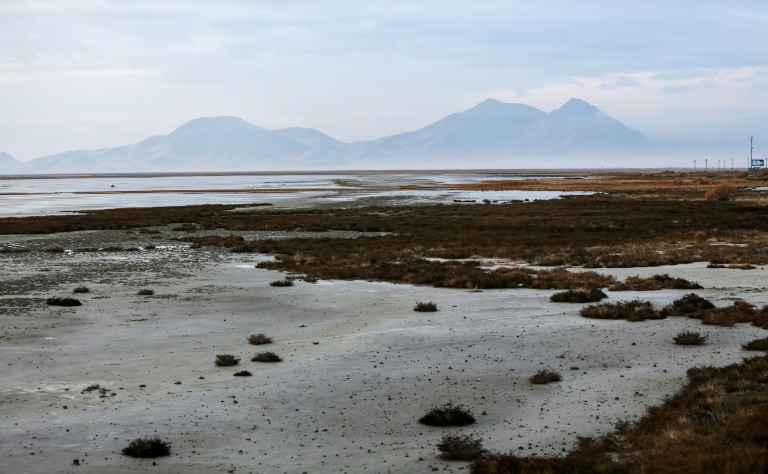
Iranian police have arrested several people for disturbing security after they protested the drying up of a lake once regarded as the Middle East’s largest, official media said Sunday.

Lake Urmia, in the mountains of northwest Iran, began shrinking in 1995 due to a combination of prolonged drought, and the extraction of water for farming and dams, according to the UN Environment Programme. 

Urmia, one of the largest “hypersaline” — or super salty — lakes in the world, is located between the cities of Tabriz and Urmia, with more than six million people dependent on agriculture around its shores.

On Sunday, Rahim Jahanbakhsh, the police chief of Iran’s West Azerbaijan province, reported the arrests. 

He described the suspects as “many evil and hostile elements, who had no other objective than to destroy public property and disturb the security of the population,” according to state news agency IRNA.

On Saturday, the Fars news agency reported that “dozens of people in the cities of Naghadeh and Urmia had protested against the authorities’ lack of attention to the drying up of Lake Urmia”.

Fars said protesters had shouted slogans in the provincial capital of Urmia warning the lake was shrinking.

“Lake Urmia is dying, parliament orders its killing”, some shouted, Fars reported, with others calling out that “Lake Urmia is thirsty”.

Largely arid Iran, like other nearby countries, has suffered chronic dry spells and heat waves for years, which are expected to worsen with the impacts of climate change.

In the last few months, thousands of people have demonstrated against the drying up of rivers, particularly in central and southwestern Iran.

Lake Urmia is an important ecosystems, a key stopping point for migratory birds, and home to an endemic shrimp as well as other underwater species.

Iran arrests several after protests at drying lake

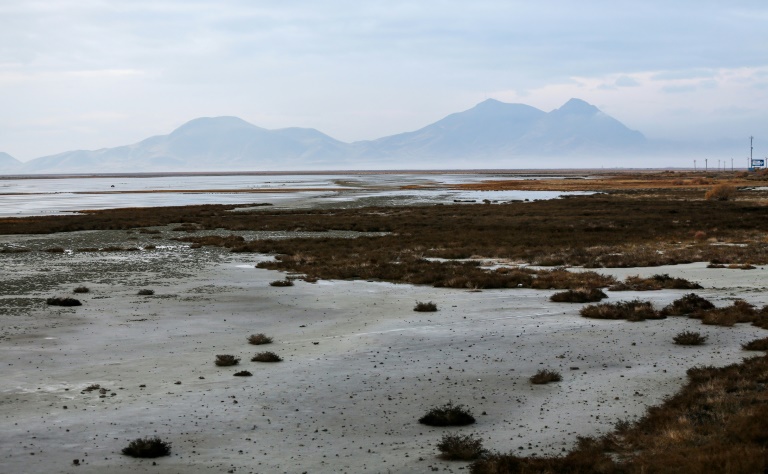
Iranian police have arrested several people for disturbing security after they protested the drying up of a lake once regarded as the Middle East’s largest, official media said Sunday.

Lake Urmia, in the mountains of northwest Iran, began shrinking in 1995 due to a combination of prolonged drought, and the extraction of water for farming and dams, according to the UN Environment Programme. 

Urmia, one of the largest “hypersaline” — or super salty — lakes in the world, is located between the cities of Tabriz and Urmia, with more than six million people dependent on agriculture around its shores.

On Sunday, Rahim Jahanbakhsh, the police chief of Iran’s West Azerbaijan province, reported the arrests. 

He described the suspects as “many evil and hostile elements, who had no other objective than to destroy public property and disturb the security of the population,” according to state news agency IRNA.

On Saturday, the Fars news agency reported that “dozens of people in the cities of Naghadeh and Urmia had protested against the authorities’ lack of attention to the drying up of Lake Urmia”.

Fars said protesters had shouted slogans in the provincial capital of Urmia warning the lake was shrinking.

“Lake Urmia is dying, parliament orders its killing”, some shouted, Fars reported, with others calling out that “Lake Urmia is thirsty”.

Largely arid Iran, like other nearby countries, has suffered chronic dry spells and heat waves for years, which are expected to worsen with the impacts of climate change.

In the last few months, thousands of people have demonstrated against the drying up of rivers, particularly in central and southwestern Iran.

Lake Urmia is an important ecosystems, a key stopping point for migratory birds, and home to an endemic shrimp as well as other underwater species.

Close Bitnami banner
Bitnami