World

All eight crew killed in cargo plane crash in Greece

All eight crew members of a cargo plane that crashed near the Greek city of Kavala died in the accident, Serbia’s defence minister said on Sunday.

The Ukrainian-operated Antonov An-12 was carrying around 11 tonnes of weapons, including mines, to Bangladesh when it crashed on Saturday night, minister Nebojsa Stefanovic said.

Videos shared by eyewitnesses on social media showed the plane engulfed by a giant fireball as it hit the ground.

“Sadly, according to the information we have received, the eight members of the crew died in the crash,” Stefanovic told a news conference.

Denys Bohdanovytch, general director of Meridian, the Ukrainian cargo airline operating the plane, told German broadcaster Deutsche Welle the crew were all Ukrainian. He gave no information about the cargo.

The plane had taken off from Nis airport in Serbia at around 8:40 pm (1840 GMT) on Saturday, carrying weapons owned by private Serbian company Valir, Stefanovic said.

Greek media said it had requested clearance to make an emergency landing at Kavala airport but had not managed to reach it.

Greek rescue services were using a drone on Sunday to monitor the wreckage of the aircraft as fears about the toxicity of the cargo were forcing them to keep at a distance.

Villagers were forbidden to go into the fields near the crash until the authorities could remove the wreckage and unexploded ammunition. 

The Ukrainian consul in Thessaloniki, Vadim Sabluk, visited the area on Sunday. 

Athens News Agency said he had given the authorities the identities of the eight crew and confirmed the plane had been flying to Bangladesh. 

Serbia’s defence minister said the weapons shipment had been agreed with the Bangladeshi defence ministry “in accordance with international rules”.

“Unfortunately some media have speculated that that the plane was carrying weapons destined for Ukraine but that is completely untrue,” he said.

– Toxic fumes –

State-run TV said the army, explosives experts and Greek Atomic Energy Commission staff would approach the crash site once it was deemed secure.

“Men from the fire service with special equipment and measuring instruments approached the point of impact of the aircraft and had a close look at the fuselage and other parts scattered in the fields,” fire brigade official Marios Apostolidis told reporters. 

Search teams would go in when it was safe, he added. 

A 13-strong special team from the fire brigade, 26 firemen and seven fire engines were deployed to the area but could not yet approach the crash site, local officials said.

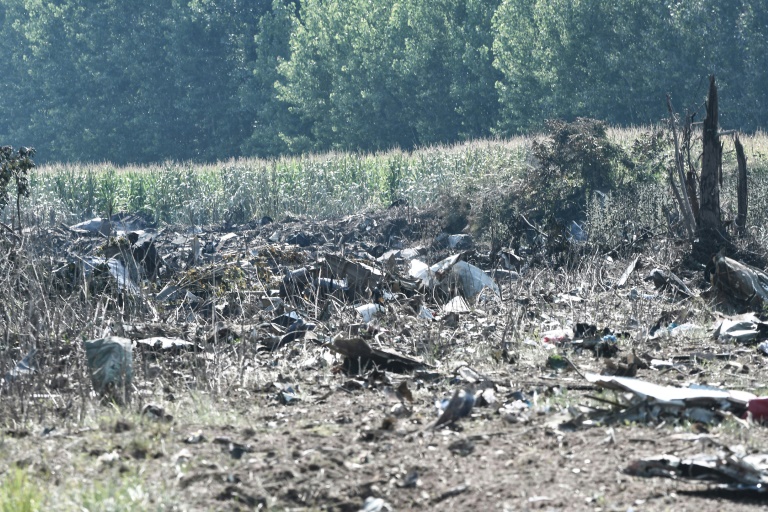
Video footage from a local channel showed signs of impact in a field and the aircraft in pieces scattered over a wide area.  

Eyewitnesses said on Saturday they saw the aircraft on fire and heard explosions.

People living within a two-kilometre (1.2-mile) radius of the crash site were asked to stay inside and wear face masks on Saturday night.

Two firemen were taken to hospital early on Sunday with breathing difficulties because of toxic fumes. 

A local man, Giorgos Archontopoulos, told state broadcaster ERT television he sensed something was wrong as soon as he heard the aircraft’s engine.

“At 10:45 pm I was surprised by the sound of the engine of the aircraft,” he said. “I went outside and saw the engine on fire.” 

Athens News Agency said an investigation would be launched into the cause of the accident.   
Sudan troops deploy ahead of pro-democracy protests

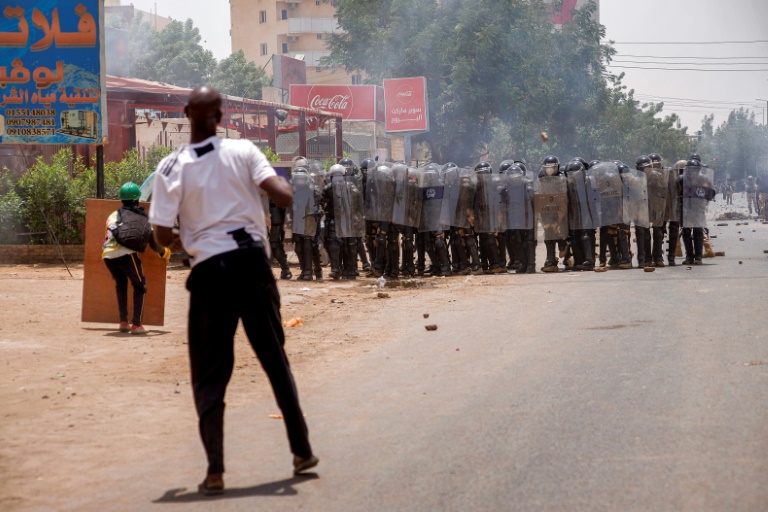
Sudanese police and soldiers deployed in large numbers Sunday across the capital Khartoum, ahead of mass protests planned by pro-democracy groups against coup leader General Abdel Fattah al-Burhan.

Security forces erected road blocks on bridges crossing the Nile river linking Khartoum to its suburbs, AFP reporters said.

Undeterred, protesters vowed to take to the streets in large numbers following a period of relative calm over the Muslim holiday of Eid al-Adha which ended early last week.

The demonstrators oppose Burhan’s October power-grab and are also highlighting heavy fighting in Sudan’s southern Blue Nile state, about 450 kilometres (280 miles) south of Khartoum.

Sudan’s latest coup derailed a transition to civilian rule, sparking near-weekly protests and a crackdown by security forces that has left at least 114 killed, according to pro-democracy medics.

Nine were killed on June 30, the medics said, when tens of thousands had gathered and their deaths reinvigorated the movement.

On July 4, Burhan vowed in a surprise move to make way for a civilian government.

But the country’s main civilian umbrella group rejected the move as a “ruse”. Protesters have continued to press the army chief to resign.

They accuse the military leadership now in power and the ex-rebel leaders who signed a 2020 peace deal of exacerbating ethnic tensions for personal gain.

In Blue Nile on Sunday, witnesses reported troops deployed in the town of Al-Roseires, after at least 33 people were killed and more than 100 wounded in violence between rival ethnic groups, according to the health ministry.

Guerrillas in Blue Nile battled former strongman president Omar al-Bashir during Sudan’s 1983-2005 civil war, picking up weapons again in 2011.

Bashir was ousted in 2019. The following year, the transitional administration reached a peace deal with key rebel groups, including from Blue Nile as well as the war-ravaged western Darfur region.

The current violence in Blue Nile is between two local groups, the Berti and the Hausa.

All eight crew killed in cargo plane crash in Greece

All eight crew members of a cargo plane that crashed near the Greek city of Kavala died in the accident, Serbia’s defence minister said on Sunday.

The Ukrainian-operated Antonov An-12 was carrying mines and around 11 tonnes of weapons to Bangladesh when it crashed on Saturday night, minister Nebojsa Stefanovic said.

Videos shared by eyewitnesses on social media showed the plane engulfed by a giant fireball as it hit the ground.

“I think the crew were Ukrainian but I don’t have any information about that. They were not Serbian,” Stefanovic told a news conference.

The plane had taken off from Nis airport in Serbia at around 8:40 pm (1840 GMT) on Saturday, carrying weapons owned by private Serbian company Valir, he said.

Greek media said it had requested clearance to make an emergency landing at Kavala airport but had not managed to reach it.

Greek rescue services were using a drone on Sunday to monitor the wreckage of the aircraft as fears about the toxicity of the cargo were forcing them to keep at a distance.

State-run TV said the army, explosives experts and Greek Atomic Energy Commission staff would approach the crash site once it was deemed safe.

“Men from the fire service with special equipment and measuring instruments approached the point of impact of the aircraft and had a close look at the fuselage and other parts scattered in the fields,” fire brigade official Marios Apostolidis told reporters. 

Search teams would go in when the area is deemed secure, he added. 

A 13-strong special team from the fire brigade, 26 firemen and seven fire engines were deployed to the area but could not yet approach the crash site, local officials said.

Video footage from a local channel showed signs of impact on a field and the aircraft in pieces scattered over a wide area.  

Eyewitnesses said they saw the aircraft on fire and heard explosions. 

– Toxic fumes –

Filippos Anastasiadis, mayor of the nearby town of Paggaio, told Open TV the aircraft had crashed “around two kilometres away from an inhabited area”. 

People living within that two-kilometre (1.2-mile) radius of the crash site were asked to stay inside their homes and wear face masks on Saturday night.

Two firemen were taken to hospital early on Sunday with breathing difficulties because of toxic fumes. 

A local man, Giorgos Archontopoulos, told state broadcaster ERT television he had felt something was wrong as soon as he heard the aircraft’s engine.

“At 2245 (1945 GMT) I was surprised by the sound of the engine of the aircraft,” he said. “I went outside and saw the engine on fire.”  

The Ukrainian consul in Thessaloniki, Vadim Sabluk, visited the area on Sunday. 

Athens News Agency said he had given the authorities the identities of the eight crew members and said the plane had been flying to Bangladesh. 

The Serbian defence minister said the weapons shipment had been agreed with the Bangldeshi defence ministry “in accordance with international rules”.

“Unfortunately some media have speculated that that the plane was carrying weapons destined for Ukraine but that is completely untrue,” he said.

Breakthroughs elude Biden on fraught Middle East tour

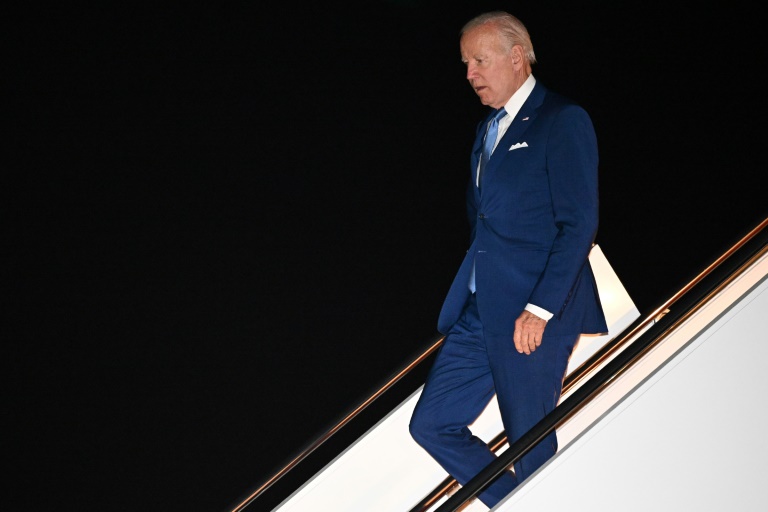
US President Joe Biden sought to use his first Middle East tour in office to reassert Washington’s influence but emerged without a single diplomatic breakthrough, an outcome analysts said was no surprise.

On issues ranging from energy prices to human rights and Israel’s role in the region, Biden could point only to small — if any — gains after four whirlwind days of meetings and speeches. 

Driving the point home, as Air Force One flew back to Washington Saturday evening, Biden’s Saudi hosts downplayed one of the trip’s few concrete announcements: their lifting of airspace restrictions on flights to and from Israel, which Biden himself had earlier hailed as “a big deal”. 

There’s little question the moves announced during Biden’s trip were “modest”, as Brian Katulis of the Middle East Institute in Washington put it, though he added that some represent “positive signs of perhaps something bigger to come”. 

“They won’t remake the region overnight, and there is so much more work ahead by actors in the region to achieve the full potential of these first steps,” Katulis said. 

Far harsher reviews came from human rights activists aghast at Biden’s final stop in Saudi Arabia, a country he once vowed to make a “pariah” over abuses like the 2018 killing of journalist Jamal Khashoggi. 

– No oil boost –

Saudi Arabia was always going to be the most fraught piece of the itinerary, but Biden came under intense pressure to court Riyadh after Russia’s invasion of Ukraine sent energy costs soaring.

Washington has been eager for the kingdom, the world’s biggest crude exporter, to help bring down rising petrol prices that threaten Democratic chances in November US mid-term elections. 

After his bilateral meetings with Saudi leaders on Friday, Biden said he was “doing all I can” to increase the oil supply but added that concrete results would not be seen “for another couple weeks” — and it was unclear what those might be. 

His national security adviser, Jake Sullivan, also tamped down expectations, telling reporters that any action “will be done in the context of OPEC+”, the exporting bloc. 

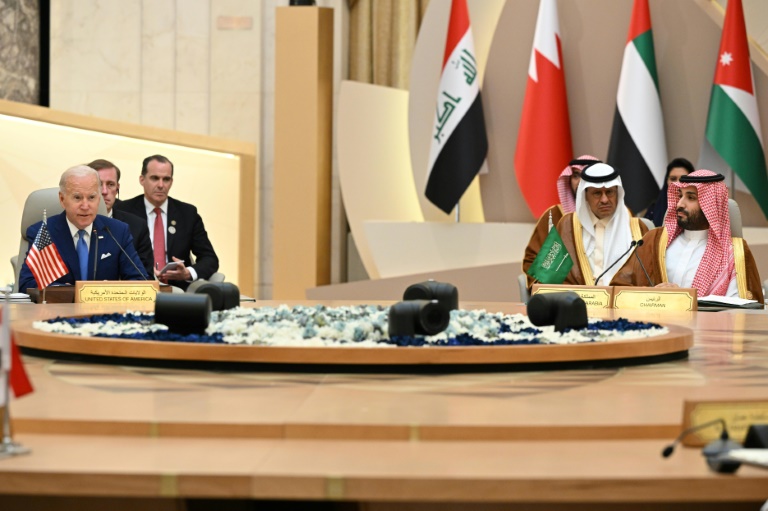
The following day, at a summit of the six-member Gulf Cooperation Council plus Egypt, Iraq and Jordan, oil “wasn’t really a subject”, Saudi Foreign Minister Prince Faisal bin Farhan told a press conference. 

Saudi Crown Prince Mohammed bin Salman’s pledge to boost production capacity to 13 million barrels per day was actually first announced in May, and is not meant to become reality until 2027. 

– Israel walk-back –

On the issue of boosting ties between Israel and Arab countries, Riyadh appeared to hand Biden a victory — at least at first. 

Despite growing behind-the-scenes business and security contacts, the kingdom has never recognised Israel and refused to join the US-brokered Abraham Accords in 2020 that allowed Israel to normalise relations with neighbouring Bahrain and the United Arab Emirates. 

But early Friday, the Saudi aviation authority announced it was lifting overflight restrictions on “all carriers”, paving the way for Israeli planes to use Saudi airspace. 

Yair Lapid, Israel’s Prime Minister, claimed it was “the first official step in normalisation with Saudi Arabia”.

Prince Faisal, however, dismissed that idea out of hand Saturday, saying the move had “nothing to do” with Israel and was “not in any way a precursor to any further steps”. 

During Biden’s earlier stop in Israel and the Palestinian Territories, there was no progress at all when it came to long-moribund peace negotiations, leaving Biden to focus instead on economic measures including 4G internet for Palestinians.

– Rights ‘setback’ –

Biden and Lapid signed a new security pact which commits the US to never allow Iran to acquire a nuclear weapon.

But the pact did not mask differences in approach between the two. Lapid explicitly said the use of force needed to be an option as diplomacy and talk are inadequate, whereas Biden had reaffirmed he still wanted to give diplomacy a chance, calling force a “last resort”.

The roughest pushback Biden got so far over the trip stems from his meeting with Prince Mohammed, who US intelligence agencies concluded “approved” the operation that led to Khashoggi’s killing and dismemberment. 

Friday’s fist bump between Biden and Prince Mohammed, often referred to by his initials MBS, graced the front page of The Washington Post, where Khashoggi was a contributing columnist and whose CEO called it “shameful”. 

“The greeting between President Biden and MBS is painful as a visual representation of our inability to achieve accountability,” said Kristin Diwan of the Arab Gulf States Institute in Washington. 

“It represents a huge setback,” said Abdullah Alaoudh, a US-based government critic whose father, a prominent cleric, has been held since 2017 as part of what critics describe as a far-reaching crackdown on dissent. 

Yet as on other issues, immediate concessions from the Saudis on human rights were always unlikely, and some experts said that in itself doesn’t make the trip a failure. 

“The visit itself is an achievement, especially for the Saudis and above all for MBS,” said analyst Hussein Ibish. 

For Biden, he added, the visit aimed to repair personal and political ties between his administration and the Saudis.

“That appears to have been accomplished,” Ibish said.

Iran accuses US of provoking Middle East 'crises'

Tehran on Sunday accused Washington of provoking tensions in the Middle East, a day after US President Joe Biden ended a tour to Iran’s rival Saudi Arabia and arch-foe Israel.

Washington “has once again resorted to the failed policy of Iran-phobia, trying to create tensions and crises in the region,” Iran’s foreign ministry spokesman Nasser Kanani said in a statement. 

The comments come after Biden on Saturday vowed that the United States would not “tolerate efforts by any country to dominate another in the region through military buildups, incursions, and/or threats”, in a transparent reference to Iran.

Biden’s first Middle East visit came just a few days before Russian President Vladimir Putin is due to visit Tehran on July 19.

Biden, in a speech in the Saudi Arabian city of Jeddah at a summit that brought together the six members of the Gulf Cooperation Council as well as Egypt, Jordan and Iraq, assured Arab leaders that Washington would remain fully engaged in the Middle East.

“We will not walk away and leave a vacuum to be filled by China, Russia or Iran,” Biden said.

Following the meeting, a joint statement committed the leaders to “preserve regional security and stability”.

It also underscored diplomatic efforts to prevent Iran from developing a nuclear weapon, and notably called for enhanced joint deterrence capabilities “against the increasing threat” posed by unmanned aerial vehicles — a likely reference to Tehran, which on Friday unveiled ships and submarines capable of carrying armed drones.

Tehran, which denies seeking to build a nuclear bomb, on Sunday dismissed the comments made in Jeddah.

“These false allegations are in line with Washington’s seditious policy… in the region,” Kanani said.

Biden began his regional tour on Wednesday in Israel, before visiting the Palestinian Territories and then flying to Saudi Arabia.

In the Jewish state, Biden signed a security pact reinforcing a common front against Iran, where the president vowed to use “all” US power to stop Tehran from acquiring nuclear weapons.

Kanani said the pact was a “great sign of the deception and hypocrisy” of the United States, because “they turn a blind eye to the Zionist (Israel) regime as… the greatest holder of the arsenal of nuclear weapons in the region”.

Israel is widely believed to hold the Middle East’s sole but undeclared nuclear arsenal.

A landmark deal that imposed curbs on Iran’s nuclear programme in exchange for sanctions relief was undermined in 2018 by former US president Donald Trump’s withdrawal, which led Iran to begin reneging on its commitments. 

Efforts to revive the accord have stalled since March.

Sri Lanka protest movement reaches 100 days

Sri Lanka’s protest movement reached its 100th day Sunday having forced one president from office and now turning its sights on his successor as the country’s economic crisis continues.

Gotabaya Rajapaksa fled his palace shortly before demonstrators invaded it last weekend and on Thursday resigned from the presidency. 

His mismanagement is blamed for Sri Lanka’s financial turmoil, which has forced its 22 million people to endure shortages of food, fuel and medicines since late last year.

The campaign to oust Rajapaksa, organised mainly through posts on Facebook, Twitter and TikTok, drew people from across Sri Lanka’s often unbridgeable ethnic divides.

United by economic hardships, minority Tamils and Muslims joined the majority Sinhalese to demand the ouster of the once-powerful Rajapaksa clan.

It began as a two-day protest on April 9, when tens of thousands of people set up camp in front of Rajapaksa’s office — a crowd so much larger than the organisers’ expectations that they decided to stay on.

Under Sri Lanka’s constitution, Prime Minister Ranil Wickremesinghe was automatically installed as acting president following Rajapaksa’s resignation, and is now the leading candidate to succeed him permanently in a parliamentary vote next week.

But the veteran politician is despised by the protesters as an ally of the Rajapaksa clan, four brothers who have dominated the island’s politics for years.

Social media activist and protest campaign supporter Prasad Welikumbura said Wickremesinghe too should go.

“Its been 100 days since it started,” Welikumbura said on Twitter. 

“But, its still far from any concrete change in the system. #GoHomeRanil, #NotMyPresident.”

Rajapaksa’s elder brother Mahinda resigned as premier in May and he appointed Wickremesinghe to replace him — his sixth term in the post — despite his being an opposition MP representing a party with only one seat in parliament.

The move did little to assuage the protesters’ anger, and when they stormed Rajapaksa’s tightly-guarded 200-year-old Presidential Palace they also set Wickremesinghe’s private home ablaze.

Now the Rajapaksas’ SLPP party — which has more than 100 MPs in the 225-member parliament — is backing Wickremesinghe in the vote due Wednesday.

A spokesman for the protesters told AFP: “We are now discussing with groups involved in the ‘Aragalaya’ (struggle) on turning the campaign against Ranil Wickremesinghe.”

Numbers at the protest site have diminished since Rajapaksa’s exit, and the demonstrators have vacated three key state buildings they occupied — the 200-year-old presidential palace, the Prime Minister’s official Temple Trees residence and his office.

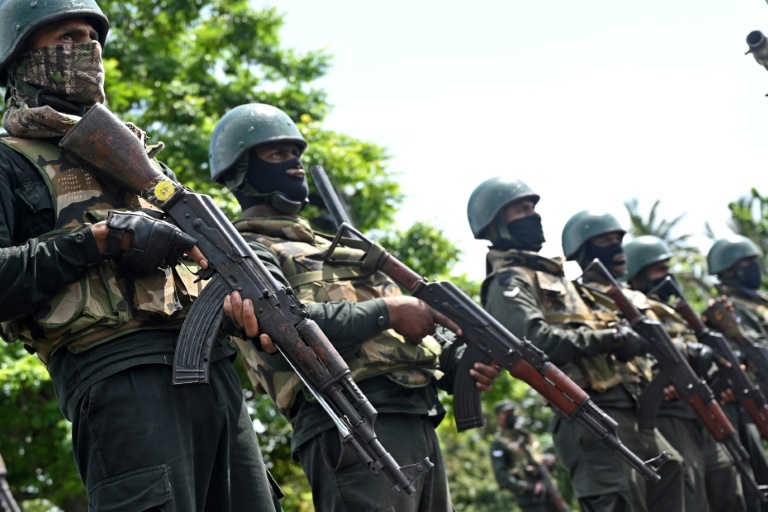
Wickremesinghe has ordered the military and the police to do whatever it takes to ensure order and defence officials said additional troops and police will be poured to the capital on Monday to bolster security around parliament ahead of the vote.

EU mulls sanctions as Russia accused of shelling Ukraine from nuclear plant

The European Union will discuss tightening sanctions against Russia on Monday, as Moscow is accused of using the continent’s largest nuclear power plant to store weapons and launch missiles on the surrounding regions of southern Ukraine.

The situation at the captured Zaporizhzhia nuclear plant is “extremely tense”, Ukraine’s atomic energy agency chief Petro Kotin said, adding that the Russians had installed missile launchers and used the facility to shell the Dnipro region.

Describing “a deluge of fire”, regional governor Valentyn Reznichenko on Saturday said Grad missiles had pounded residential areas.

“Rescuers found two dead people under the ruins” in the riverside city of Nikopol, he said.

With the conflict grinding on and increasingly spilling out into global energy and food crises, the EU’s foreign ministers are considering banning gold purchases from Russia, which would align with sanctions already imposed by G7 partners.

More Russian figures could also be placed on the EU’s blacklist. 

“Moscow must continue to pay a high price for its aggression,” European Commission President Ursula von der Leyen said after forwarding the proposed measures. 

Brussels is expected to hold initial sanctions discussions Monday, but not make a same-day decision, according to a senior EU official. 

– Stepping up attacks –

More than 20 weeks since Russia invaded its neighbour, killing thousands and displacing millions of Ukrainians, Moscow announced on Saturday that it would step up its military operations.  

Minister Sergei Shoigu “gave the necessary instructions to further increase” military pressure, according to the Russian Defense Ministry.

The war-ravaged nation’s President Volodymyr Zelensky has already accused Russia of seeking to inflict maximum damage, but pledged that Ukraine would “endure”.

In his Saturday evening address, Zelensky said Ukraine has “withstood Russia’s brutal blows” and managed to take back some of the territory it lost since the start of the war, and will eventually recapture more occupied land.

“We will endure. We will win,” he said, and “rebuild our lives”.

While the heaviest fighting has continued to focus on the industrial Donbas region in the east, in the northeast near Ukraine’s second-largest city Kharkiv, the bombardments have been fast and hard in recent days. 

A Russian missile attack killed three in the town of Chuguiv over the weekend and destroyed a residential house and a local school. 

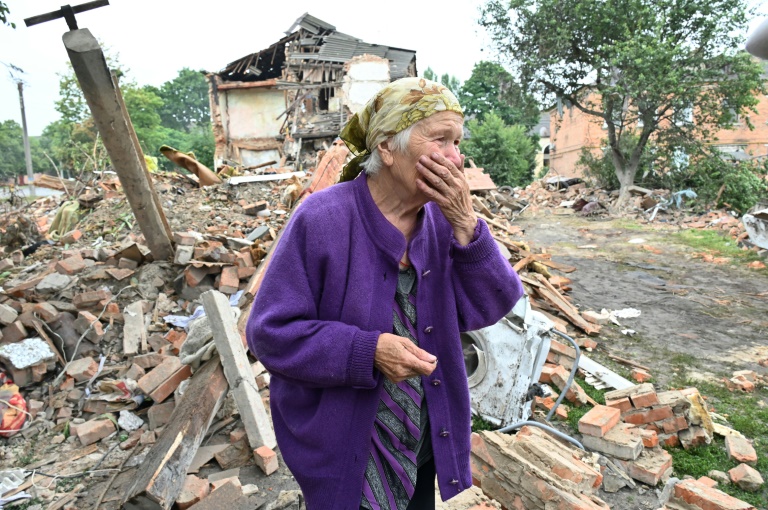
“Why me? Just because I was born in Ukraine?” asked resident Raiysa Kuval as she sat on the rubble.

“We were leaving peacefully, and they tore apart mother from father, child from mother, brother from sister… It’s unbearable.”

– Russia participation at G20 ‘absurd’ –

A two-day meeting of finance ministers from the Group of 20 major economies looked for solutions to the food and energy crises caused by the war but the gathering ended Saturday in Indonesia without a joint communique after the conflict divided the global forum.

The failure to issue a joint statement is expected to hinder coordinated efforts to address rising inflation and food shortages threatening to leave millions in developing nations at risk of hunger.

The failure to secure a joint communique came a week after Russian Foreign Minister Sergei Lavrov walked out of G20 talks in Bali over criticism of Moscow. 

Canada blasted Moscow’s participation in the meeting at all as “absurd,” with Finance Minister Chrystia Freeland saying from Bali that Russia’s presence “was like inviting an arsonist to a meeting of firefighters.”

– ‘Clearing’ Donbas town –

In the embattled Donbas region, grinding trench battles and artillery duels have morphed into a war of attrition.

Moscow-backed separatists said Friday they were closing in on their next target, Siversk, after wresting control of sister cities Lysychansk and Severodonetsk about 30 kilometres (18 miles) to its east.

Donetsk separatist official Daniil Versonov said rebel fighters were “clearing” eastern districts of Siversk in small groups.

Hundreds of kilometres from the frontline, missile strikes caused heavy civilian casualties in the central city Vinnytsia, with the death toll raised to 24 on Saturday.

“Unfortunately, one woman died in hospital today, she was 85 percent burned,” said Sergei Borzov, the governor of Vinnytsia region, adding that 68 people were still receiving treatment, including four children. 

In the face of international condemnation, the Russian Defense  Ministry said it had targeted a meeting in Vinnytsia of the “command of the Ukrainian Air Force with representatives of foreign arms suppliers”. 

But a senior U.S. defense official said on condition of anonymity that he had “no indication” there was a military target nearby.

France's Macron to mark 80th anniversary of WWII round-up of Jews

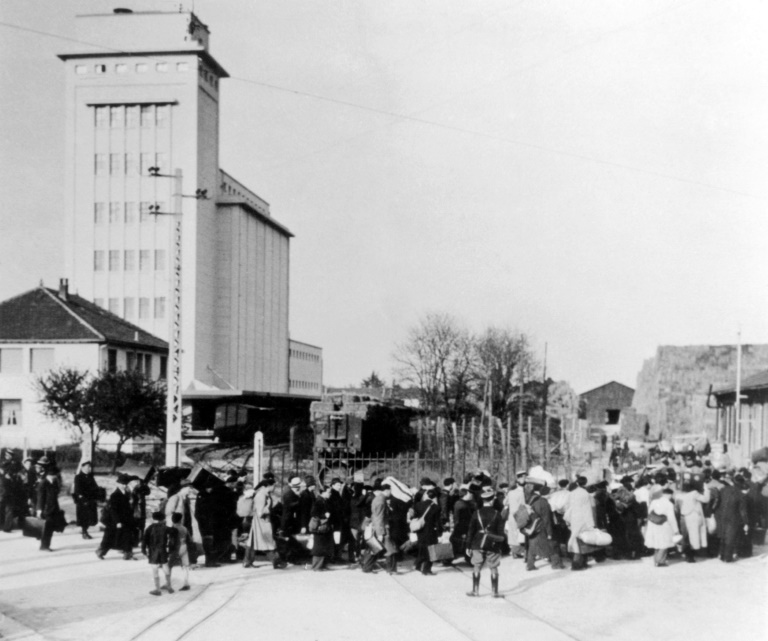
French President Emmanuel Macron will on Sunday mark the 80th anniversary of the wartime round-up of Jews in France at a former railway station used to deport them to Auschwitz.

With him at Pithiviers station, 100 kilometres (60 miles) south of Paris, will be some of the handful of the survivors of those deported on the eight convoys sent to the Nazi camp.

Macron’s speech will express his concern over the enduring threat of anti-semitism, which “still lurks and sometimes in an insidious way”, said an official from his office.

He will denounce “historical revisionism” — in particular over the role of France’s war-time leader Philippe Petain, who collaborated with the Nazi regime, the official added.

Also at ceremony will be historian and renowned Nazi hunter Serge Klarsfeld, as well as a survivor of the camps, Ginette Kolinka.

The head of France’s rail network, Jean-Pierre Farandou, will also attend.

Macron is expected at the former station of Pithiviers at around 3:00 pm (1300 GMT). 

The building, which has not served passengers since the end of the 1960, has been converted into a memorial to the Holocaust which opened earlier this month.

“This station is the place where the French event becomes European genocide,” said Jacques Fredj, the director of the Shoah Memorial, which commemorates the French deportations.

“It is a place of memory unique in France.”

The new 400 meter squared centre is mainly intended for scholars, said Fredj. 

“It’s a priority, in the face of the rise in anti-semitism, racism and conspiracy theories.”

Some of the 13,000 Jews arrested in Paris and its suburbs by French officials on the orders of the Nazi occupiers passed through the station. 4,115 were children.

The incident has become known as the Vel d’Hiv round-ups because the French police took 8,160 of the Jews, including the old and sick, to the Velodrome d’Hiver, a cycle racing track in Paris’s 15th arrondissement. 

From there, they were taken to camps at Pithiviers and other locations and onto the Nazi concentration camps. Only a few dozen ever returned.

– France ‘not finished with’ anti-semitism –

Sunday’s speech will acknowledge that “French society is not finished with anti-semitism”, said Macron’s office.

The comments come just a few months after failed presidential candidate, the far-right journalist and polemicist Eric Zemmour, argued that Petain had in fact saved French Jews during the war years.

The claim is contested by most historians, who point to the wartime leader’s well-documented anti-Semitism.

Macron was himself criticised for saying in 2018 that Petain had been a “great soldier” during World War I, even if he had subsequently made “fatal choices”.

The French president’s speech on Sunday is expected to continue the work of his predecessor Jacques Chirac who in 1995, 50 years after the Vel d’Hiv round-ups, acknowledged France’s responsibility for what had happened.

“France, on that day, committed the irreparable,” said Chirac, in what is now considered a landmark speech.

After Chirac, Francois Hollande went further during his presidency, speaking in a 2012 speech of a crime “committed in France, by France”.

Then in 2017 Macron, newly elected as president, reaffirmed France’s responsibility for the round-up in a speech marking its 75th anniversary and in the presence of then Israeli premier Benjamin Netanyahu.

What's next for the euro after slump against dollar?

The euro’s plunge against the dollar, triggered by the Ukraine war and mounting risks to the EU economy, has driven the two currencies to parity for the first time in two decades.

The European single currency sank to $0.9952 on Thursday — a level not seen since the end of 2002, the year it was officially introduced.

But traders believe the euro could recover, provided it clears several hurdles in the coming months. 

The first to get over is to avoid the risk of a halt in Russian gas supplies to Europe, which would cause electricity prices to soar and force eurozone countries to limit some industrial activity. 

“If gas flows from Russia normalise, or at least stop falling, following the end of the Nord Stream 1 maintenance shut-down next week, this should somewhat decrease market fears of an imminent gas crisis in Europe,” Esther Reichelt, an analyst at Commerzbank, told AFP. 

With Russian gas giant Gazprom having warned it cannot guarantee that the pipeline will function properly, European countries fear that Moscow will use a technical reason to permanently halt deliveries and put pressure on them. 

French President Emmanuel Macron even said on Thursday that Russia was using energy “as a weapon of war”. 

If Nord Stream 1 “doesn’t turn back on, the euro falls as the economic shock waves will be felt worldwide as the European energy crisis could very well trigger a recession,” warned Stephen Innes, an analyst at SPI Asset Management. 

– ECB wake-up call –

“Recession would inevitably mean that the market becomes even more concerned about fragmentation risks in the eurozone,” added Jane Foley, a foreign exchange specialist at Rabobank. 

Like other central banks, the European Central Bank (ECB) is seeking to avoid stifling the economy by raising rates too sharply. 

But it also has to worry about a possible fragmentation of the debt market, with large differences in borrowing rates across the eurozone. 

The ECB has so far maintained an ultra-loose monetary policy to support the economy, while the US Federal Reserve has instead raised rates and promises to continue to do so to counter inflation. 

It will announce its monetary policy decision on Thursday, and has indicated that it will raise rates for the first time in 11 years. 

“If the ECB is aiming to give the euro a boost, it will have to deliver a 50-bp hike in July and/or signal that 75-bp moves are on the cards for September,” S&P analysts said in a note. 

“Speedier policy adjustments now would help anchor inflation expectations, reducing the risk of needing a restrictive policy stance further down the line,” they added. 

– Fed slowdown –

For economists at Berenberg, the euro’s fall is more attributable to the strength of the dollar, which has “appreciated strongly against a broad basket of currencies since mid-2021”. 

The dollar has benefited from the Fed’s tightening of monetary policy as it tries to limit inflation, which hit record highs again in June. 

“Markets are speculating that the Fed may raise rates by 100bp instead of 75bp at its next meeting on 27 July,” noted Berenberg.

“If so, this could strengthen the dollar further.”

UniCredit added: “Towards year-end, prospects of declining inflation and more-balanced messaging from central banks as the cyclical peak of official rates nears should support a return of risk appetite and ease USD demand.”

Should that happen, the euro could move away from parity in the last few months of 2022, they say. 

Forest fires rage in scorching southwest Europe

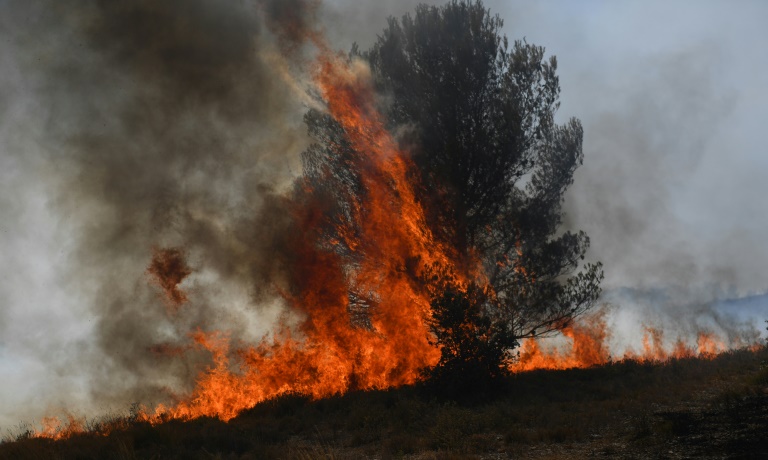
A summer heatwave that has triggered devastating forest fires across southwest Europe showed no signs of abating Sunday, as parts of the continent readied for new temperature records early next week.

Firefighters in France, Portugal, Spain and Greece are battling forest blazes that have ravaged thousands of hectares of land and killed several personnel since the start of the week.

It is the second heatwave engulfing parts of southwest Europe in weeks as scientists blame climate change and predict more frequent and intense episodes of extreme weather.

Firefighters in the coastal town of Arcachon in France’s southwestern Gironde region were fighting to control two forest blazes that have devoured more than 10,000 hectares (24,700 acres) since Tuesday.

“It’s a Herculean job,” said Lieutenant-Colonel Olivier Chavatte from the fire and rescue service, which has 1,200 firefighters and five planes in action.

Further evacuation orders were given on Saturday for a few hundred residents, firefighter spokesman Arnaud Mendousse told AFP.

“Several fires are still active in France,” interior minister Gerald Darmanin said in a tweet.

“Our firefighters are fighting the flames with remarkable courage,” he added.

Since Tuesday, more than 14,000 people — residents and tourists combined — have been forced to decamp with seven emergency shelters set up in order to receive evacuees.

Meteo France forecast temperatures of up to 41 degrees Celsius (105 degrees Fahrenheit) in parts of southern France on Sunday, as well as up to 35 in the northwest, with new heat records expected on Monday.

France late on Saturday placed 22 more departments, mainly down its Atlantic seaboard, on high orange alert, taking the current total to 38.

– ‘Extreme vigilance’ –

Authorities in the French Alps urged climbers bound for Mont Blanc, Europe’s highest mountain, to postpone their trip due to repeated rock falls caused by “exceptional climatic conditions” and “drought”.

The call comes after a section of Italy’s biggest Alpine glacier gave way at the start of the month, killing 11 people, in a disaster officials blamed on climate change.

In Portugal, the meteorological institute forecast temperatures of up to 42C with no respite before next week.

The civil defence, however, took advantage of a slight drop in temperatures after a July record of 47C on Thursday to try to stamp out one remaining major fire in Portugal’s north.

“The risk of fires remains very high,” civil defence chief Andre Fernandes warned, although media reports said mainland fires still active were down to 11 from 20 earlier.

“This is a weekend of extreme vigilance,” he added after a week which saw two people killed and more than 60 injured, and up to 15,000 hectares of forest and brushwood incinerated.

The Lisbon government was to decide on Sunday whether to extend a week-long state of contingency. 

In Spain, the national meteorological agency maintained various levels of alert across the nation, warning of up to 44C in some regions.

Dozens of forest fires were raging on Saturday in different parts of the country from the sweltering south to Galicia in the far northwest, which saw blazes lay waste to some 3,500 hectares, the regional government said.

The fight against the flames has claimed the lives of a number of personnel, from a pilot killed when his plane crashed in northern Portugal to two who died in Greece when their helicopter fell into the sea.

– ‘So sad’ –

“So sad to see part of our natural heritage ablaze,” tweeted Spain’s Economy Minister and Deputy Prime Minister Nadia Calvino.

One blaze in the south caused the authorities to cordon off for more than 12 hours a section of a key highway connecting Madrid to the Portuguese capital Lisbon, before the road reopened.

The fires have scorched thousands of hectares in the Spanish region of Extremadura, while one near the southern city of Malaga forced the preventive evacuation of more than 3,000 people, rescue services said.

In Greece, the civil defence rushed to douse flames raging on the Mediterranean island of Crete, while Morocco was battling a forest fire in its northern mountains that killed at least one person and forced the evacuation of more than 1,000 families.

In the United Kingdom, government ministers were to hold crisis talks after the state meteorological agency issued a first-ever “red” warning for extreme heat, cautioning there is a “risk to life”.

The Met Office said in southern England temperatures could exceed 40C on Monday or Tuesday for the first time, leading some schools to say they will stay closed next week.

Mayor Sadiq Khan advised Londoners to use public transport only if “absolutely necessary”. National train operators also warned passengers to avoid travel.

burs-cdw/raz/oho/reb

Close Bitnami banner
Bitnami