World

Ukraine accuses Russia of shelling from captured nuclear plant

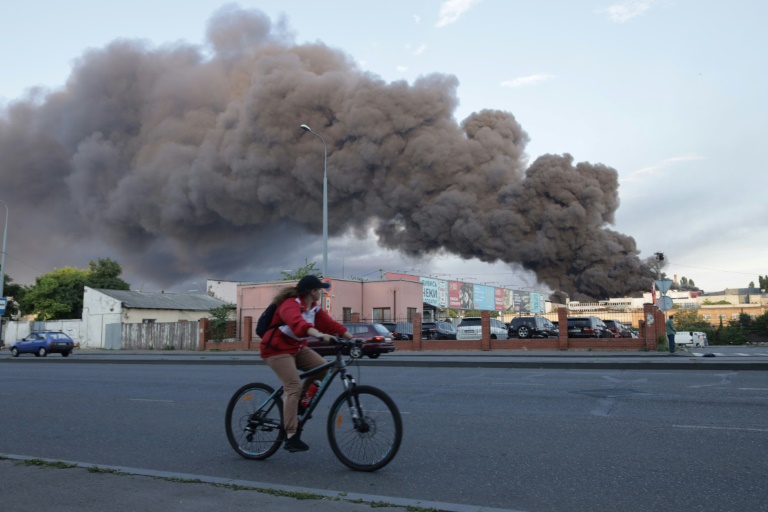
Ukraine’s atomic energy agency accused Russia of using Europe’s largest nuclear power plant to store weapons and shell the surrounding regions of Nikopol and Dnipro that were hit Saturday.

Petro Kotin, president of Ukrainian nuclear agency Energoatom, called the situation at the Zaporizhzhia nuclear plant “extremely tense” with up to 500 Russian soldiers controlling the plant.

The plant in southeast Ukraine has been under Russian control since the early weeks of Moscow’s invasion, though it is still operated by Ukrainian staff.

“The occupiers bring their machinery there, including missile systems, from which they already shell the other side of the river Dnipro and the territory of Nikopol,” he said in a Ukrainian television interview broadcast Friday.

On Saturday, Russian missiles struck residential buildings in the city of Nikopol, killing two people, Dnipro regional governor Valentin Reznichenko said.

In the northeast region around Ukraine’s second city of Kharkiv, governor Oleg Synegubov said an overnight Russian missile attack killed three people in the town of Chuguiv.

In the central Ukrainian city of Vinnytsia, officials said the death toll rose to 24 from Russian strikes after a woman died of her injuries in hospital Saturday. Ukraine said three children were among the dead.

“Sixty-eight people continue treatment, including four children. Four people are still missing,” said Vinnytsia district chief Sergiy Borzov. 

– Grief outpouring for four-year-old –

President Volodymyr Zelensky accused the Russians of aiming to “cause maximum damage to Ukrainian cities”. 

“I’m urging you, once again: please don’t ignore the air raid signals now,” he said in his daily address Friday.

Russia claimed the strikes in Vinnytsia — hundreds of kilometres away from frontline fighting — had killed Ukrainian military officials and foreign arms suppliers.

But Ukraine said the dead included four-year-old Liza Dmitrieva, who had Down’s syndrome and whose death spurred an outpouring of grief after footage of her final moments alive went viral on social media.

Liza’s mother is in a “critical” condition after surgery.

The missile strikes on Vinnytsia were the latest attacks to carry a heavy civilian toll and came less than a week after strikes on Chasiv Yar in the Donetsk region left nearly 50 dead.

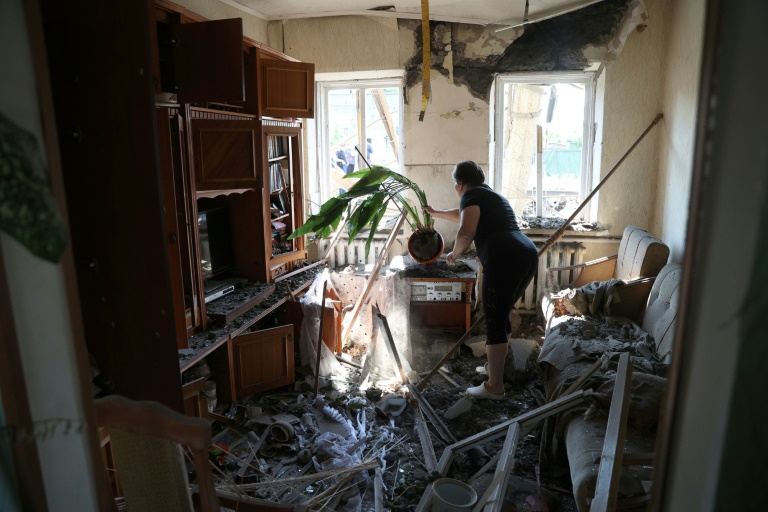
Leaning on her cane, Olga Dekanenko walks through the rubble and debris of her home in Konstantinovka, an industrial town on the frontline in the east, that was heavily damaged in a Russian strike early Saturday.

Dekanenko was asleep when it happened. Her small bedroom overlooks the garden where the rocket landed. She woke up on the ground, covered in a mess of blankets, pillows and stones.

“We’re alive, it’s a good day,” 67-year-old Dekanenko tells AFP with a tired smile.

– ‘Clearing’ Donbas town –

Moscow invaded Ukraine on February 24 and the conflict has killed thousands of people, destroyed cities and forced millions to flee their homes.

A two-day meeting of finance ministers from the Group of 20 major economies looked for solutions to the food and energy crises caused by the war but the gathering ended Saturday in Indonesia without a joint communique after the conflict divided the global forum.

Observers said the failure to agree on a joint communique would hinder coordinated efforts to solve rising inflation and food shortages.

The heaviest fighting has recently focused on the industrial Donbas region in the east, where grinding trench battles and artillery duels are morphing into a war of attrition.

Britain said Friday the Kremlin “must bear the full responsibility” for the death of a British captive in east Ukraine.

“I am shocked to hear reports of the death of British aid worker Paul Urey while in the custody of a Russian proxy in Ukraine,” Foreign Secretary Liz Truss said. 

Moscow-backed separatists said Friday they were closing in on their next target, Siversk, after wresting control of sister cities Lysychansk and Severodonetsk about 30 kilometres (18 miles) to its east.

Russia’s defence ministry spokesman Igor Konashenkov said Saturday strikes targeted Ukrainian soldiers in a brigade that “operated in the Siversk direction”.

And Donetsk separatist official Daniil Versonov said rebel fighters were “clearing” eastern districts of Siversk in small groups.

Ukraine has repeatedly urged allies to supply it with advanced, long-range precision artillery systems that would allow it to target Russian forces deeper inside Ukrainian-held territory.

Defence Minister Oleksiy Reznikov said Friday that Ukraine had taken delivery of its first batch of sophisticated M270 rocket systems, adding to a growing arsenal of Western-supplied artillery Kyiv says is changing dynamics on the battlefield.

burs-raz/cdw
In Ukraine's east, 'we're alive, it's a good day'

Leaning on her cane, Olga Dekanenko walks through the rubble and debris of her home in eastern Ukraine that was heavily damaged in a Russian strike in the early hours of Saturday.

Workers are pumping water out of a deep 10-metre-wide (30 feet) crater with a burst pipe outside Dekanenko’s house in Konstantinovka, an industrial town on the frontline of Ukraine’s war with Russia. 

Her neighbours wearily look at the sight that has become all too familiar in the time of war. One woman covers her mouth in shock as she passes by but carries on without saying a word. 

“We’re alive, it’s a good day,” 67-year-old Dekanenko tells AFP with a tired smile.

“This is the house where my two children were born,” she adds, picking up family photos out of the rubble. 

In the upturned garden, her dog lies curled up and breathing heavily, still reeling from the shock of the morning’s events.

Dekanenko was asleep when it happened.

Her small bedroom overlooks the garden where the rocket landed. She woke up on the ground, covered in a mess of blankets, pillows and stones.

– Nostalgia –

Dekanenko calmly recalls her time working for one of Konstantinovka’s several metallurgical plants that made the town an industrial hub in the Soviet era.

She worked for a nickel factory that provided good pay and early retirement at the age of 50 because of the hazardous working conditions.

“I can’t say that I regret this period, but, of course, us old people have a nostalgia for the Soviet era,” Dekanenko says with a smile. 

But she admits that “it’s not the same for young people”. 

Her younger sister Nina Chuprino recalls that until the 1960s the region of Donetsk, where their town is located, was called “Stalin region” after the Soviet leader. 

After the fall of the USSR in 1991, factories in the town of some 70,000 people started shutting down one by one and many residents decided to leave. 

In this industrial region with many fluent Russian speakers, many feel they have been abandoned by Kyiv, cultivating pro-Moscow sentiment.

Donetsk and neighbouring Lugansk lie in the Donbas coal mining region in eastern Ukraine that has become the primary target of Russia’s February invasion.

Parts of the region have been controlled by Russia-backed separatists since 2014. Konstantinovka was captured by the rebel forces the same year but was retaken by Kyiv’s troops a few month later. 

– ‘Doesn’t matter who comes’ –

The neighbourhood called the “Red” district — another nod to the town’s Soviet past — has been hit three times over the past four days, as Russia intensifies its offensive in the east. 

“There may be Ukrainian soldiers in the school,” nestled among the residential buildings, says a 60-year-old man, who preferred not to give his name. 

Several residents had given the same explanation to explain the frequent strikes, but without animosity.

If Ukrainian troops go to hide there, one resident says pointing to a large disused building, “next time there will be carnage”. 

Moscow regularly accuses Ukrainian forces of hiding in schools, hospitals or among civilians.

Back in front of Dekanenko’s destroyed home, 15-year-old redhead Margarita cannot hold back her tears. 

“I’m afraid there won’t be anything left of our town soon. I think the Russians will come eventually… hopefully the army can defend us,” she says with a trembling voice.

Russian forces, which now have control of nearly all of the Lugansk region, have been pushing for several weeks to seize Donetsk as well. 

“We are just workers, peasants. It doesn’t matter who comes. If we are given work, a normal life, then it’s fine,” sighs a man, before turning on his heels and walking away. 

US won't 'walk away' from Middle East, Biden tells Arab leaders

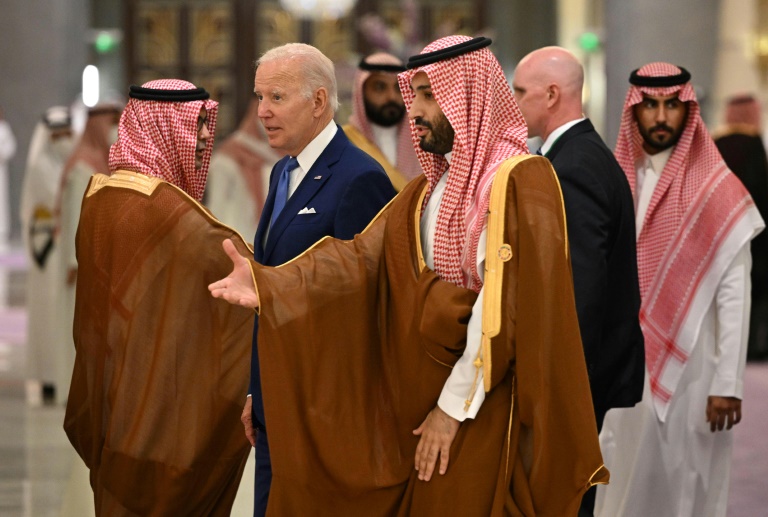
President Joe Biden on Saturday assured Arab leaders the United States would remain fully engaged in the Middle East, as he wrapped up his first tour of the region since taking office.

“We will not walk away and leave a vacuum to be filled by China, Russia or Iran,” Biden said during a summit in Jeddah, on the Red Sea coast of Saudi Arabia.

US ties to Gulf powers in particular have been roiled by multiple issues in recent years, notably Washington’s push for a deal to curb Iran’s suspect nuclear programme and its tepid response to attacks on Saudi oil facilities in 2019 claimed by Yemen’s Iran-backed Huthi rebels.

The summit, the final stop of Biden’s Middle East tour, brought together the six members of the Gulf Cooperation Council as well as Egypt, Jordan and Iraq.

Biden had been looking to use the trip to discuss volatile oil prices and outline his vision for Washington’s role in the region.

On Friday he met Saudi King Salman and Crown Prince Mohammed bin Salman, the kingdom’s de facto ruler who US intelligence agencies assess “approved” the 2018 operation that killed journalist Jamal Khashoggi.

After a fist-bump with Prince Mohammed, Biden said he raised the Khashoggi case and warned against future attacks on dissidents.

Prince Mohammed, who chaired the opening of Saturday’s summit, has denied any role in the death of Khashoggi, who was dismembered in the kingdom’s Istanbul consulate and whose remains have never been found.

Biden told the assembled Arab leaders that “the future will be won by countries that unleash the full potential of their populations… where citizens can question and criticise leaders without fear of reprisal”.

Air Force One took off from Jeddah at around 5:00 pm (1400 GMT) on Saturday, bringing Biden’s four-day stay in the region to a close.

– Ukraine tensions –


Biden said the United States would commit $1 billion in food aid to the Middle East and North Africa amid rising food insecurity induced by the war in Ukraine.

Russia’s invasion of Ukraine has exposed a once unthinkable divergence between Washington and key Middle East allies Saudi Arabia and the United Arab Emirates, the oil giants that are increasingly independent on the international stage.

The wealthy Gulf nations, which host US forces and have dependably backed Washington for decades, have notably refrained from supporting the Biden administration as it tries to choke Moscow’s lifelines, from energy to diplomacy.

Analysts say the new position reveals a turning point in Gulf relations with the US, long the region’s protector against neighbour Iran.

But Saturday brought some conciliatory gestures, with Biden inviting his Emirati counterpart, Sheikh Mohamed bin Zayed Al-Nahyan, to visit the White House before the year is up.

And in his remarks at the summit, Saudi Prince Mohammed said he hoped it would “establish a new era of joint cooperation to deepen the strategic partnership between our countries and the United States of America, to serve our common interests and enhance security and development in this vital region for the whole world.”

– Push for oil –

Riyadh and Washington on Friday signed 18 agreements on areas including energy, space, health and investment, including developing 5G and 6G technology, a Saudi statement said.

A separate joint statement said the two countries noted “the importance of their strategic economic and investment cooperation, especially in light of the current crisis in Ukraine and its repercussions, reiterating their commitment to the stability of global energy markets.”

Saudi Arabia agreed to link the electricity networks of the Gulf Cooperation Council to Iraq, which relies heavily on energy from Iran, “in order to provide Iraq and its people with new and diversified electricity sources,” the White House said.

Washington wants Riyadh to open the oil floodgates to bring down soaring gasoline prices, which threaten Democratic chances in November mid-term elections.

But Biden on Friday tried to tamp down expectations that his trip would yield immediate gains.

“I’m doing all I can to increase the supply for the United States of America,” he said, adding concrete results would not be seen “for another couple weeks”.

– Israeli ties –

White House officials used the trip as a bid to promote integration between Israel and Arab nations.

That process appeared to get a boost Friday when Saudi Arabia announced it was lifting restrictions on civilian air carriers, a move that allows flights travelling to and from Israel to use its airspace for the first time.

But the kingdom’s foreign minister, Prince Faisal bin Farhan, told reporters at a press conference after Biden’s departure Saturday that the move had nothing to do with Israel and was “not in any way a precursor to any further steps”.

Saudi Arabia has refused to join the US-brokered Abraham Accords which in 2020 created ties between Israel and two of the kingdom’s neighbours, the United Arab Emirates and Bahrain.

Biden had hailed the lifting of airspace restrictions as “historic”.

South Korea celebrates Pride after two-year hiatus

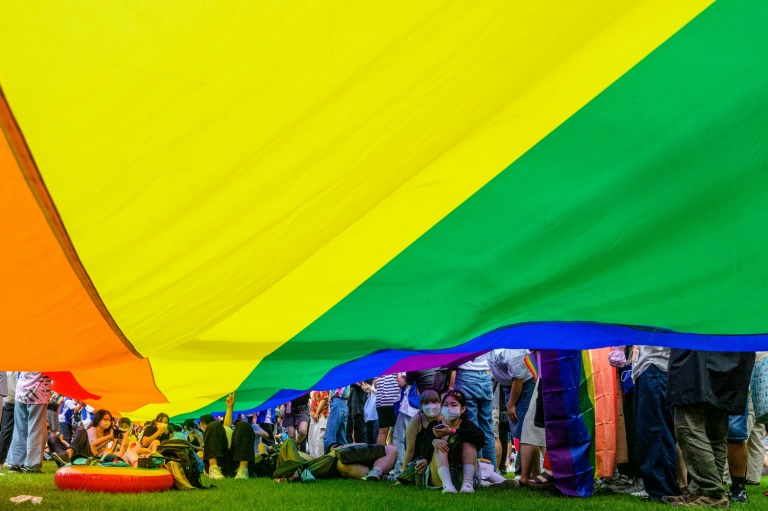
South Korea’s Pride parade returned from a two-year, pandemic hiatus, with revellers chanting, dancing and waving rainbow flags at Seoul’s City Hall on Saturday, as conservative groups protested the equality event.

Thousands of participants listened to speeches and musical acts at the central Seoul Plaza before braving pouring rain to march through town accompanied by performers dancing atop mobile stages blaring pop songs. Police provided heightened security along the route to maintain a cordon between marchers and the mostly Christian protesters.

One counsellor and activist, who gave his name as Joy, told AFP he was glad to be celebrating Pride, but noted “South Korean society still has a long way to go” in terms of recognising LGBTQ rights.

“We are always in a situation where our existence is denied,” he said. “It’s important to be able to show that we exist, even if it’s just for one day.”

Same-sex marriage remains illegal in South Korea, and activists have long emphasised the need for legislation outlawing discrimination on the basis of sexual orientation. 

“We live our day-to-day lives pretending like we’re not different, but today we can be ourselves, express ourselves confidently, wear the clothes we want to wear and hold hands with our lovers,” Pride attendee and activist Kim Hyun-jung told AFP.

– ‘Timely and important’ –

Saturday’s protesters, some in army-style fatigues, erected scaffolding on the parade route, with crowds clapping along to a team of drummers, and attendees holding signs that read, in English, “Homosexuality is Sin” and “No!! Same-Sex Marriage”.

“(Homosexuality) is wrong. It brings moral corruption and disorder to society. We cannot have this in South Korea,” said protester Hong Sung-bo.

“I feel sorry for them. If they could meet Jesus and receive the Gospel and be changed, they would be able to live a healthier life. I pity their sinful culture.”

Prior to the downpour, the gathering at Seoul Plaza -– formally known as the Seoul Queer Culture Festival –- drew high-profile supporters, including numerous foreign emissaries. 

Speaking alongside other diplomats, New Zealand Ambassador Philip Turner, who appeared on stage with his partner Hiroshi Ikeda, told the crowd “everybody should be able to live their lives with freedom and pride”.

EU Ambassador Maria Castillo Fernandez noted the gathering was “even more timely and important today, as human rights in the world are not a given”, while newly arrived US Ambassador Philip Goldberg vowed to attendees that the US would “fight with [them] for equality”.

Goldberg was singled out by name by the protest camp, some of whom held signs suggesting he was gay and accusing the US embassy of “destroying the alliance of both countries”. 

Several speakers, including Norwegian Ambassador Frode Solberg, alluded to the groups protesting the event in their remarks.

“I was here the first time in 2018… and the forces around us today show us that this fight is still very important,” he said, urging attendees to “stay brave, stay proud”.

Forest fires rage in scorching southwest Europe

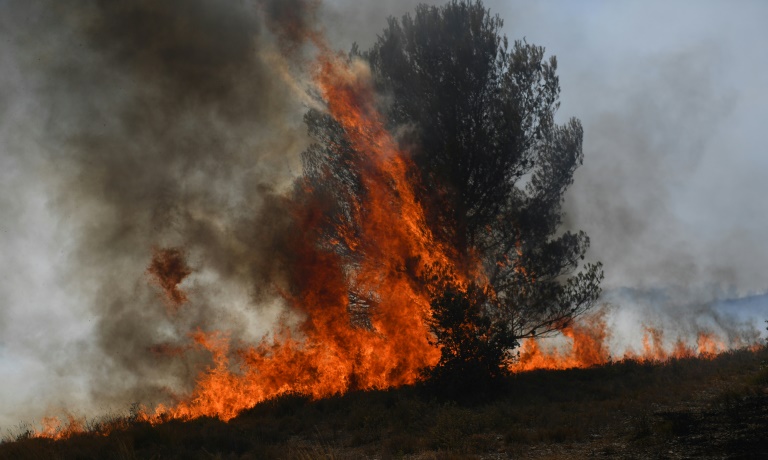
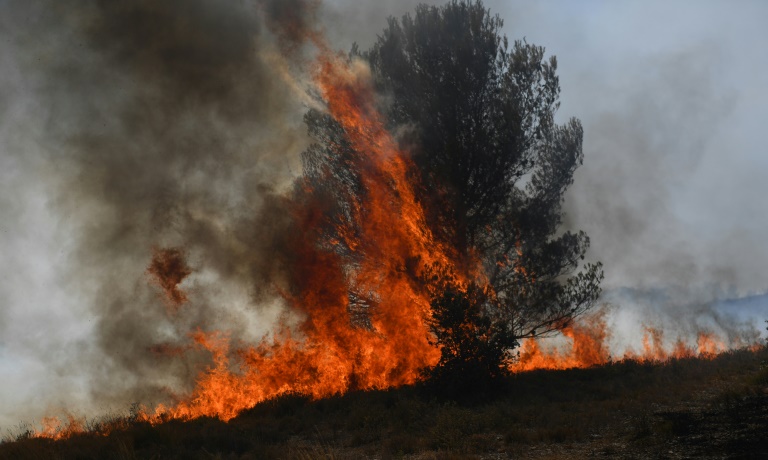
Southwest Europe endured a sixth day of a summer heatwave on Saturday that has triggered devastating forest fires as parts of the continent braced for new temperature records early next week.

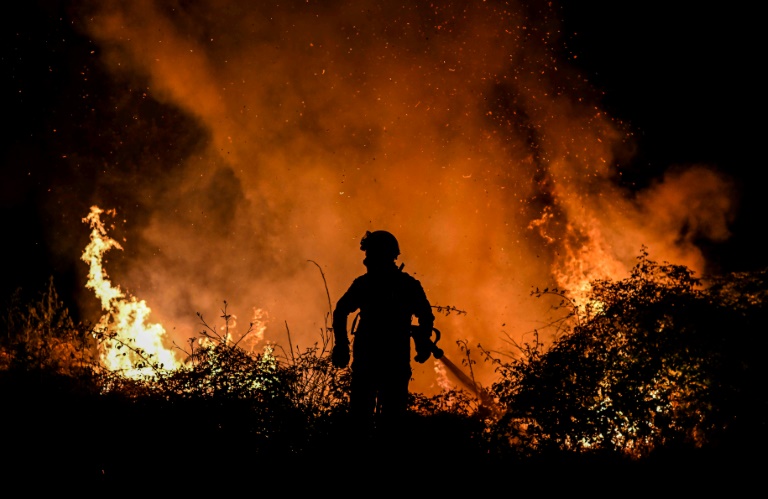
Firefighters in France, Portugal, Spain and Greece battled forest blazes that have ravaged thousands of hectares of land and killed several personnel since the start of the week.

It is the second heatwave engulfing parts of southwest Europe in weeks as scientists blame climate change and predict more frequent and intense episodes of extreme weather.

Firefighters in the coastal town of Arcachon in France’s southwestern Gironde region were fighting to control two forest blazes that have devoured more than 10,000 hectares (24,700 acres) since Tuesday.

“It’s a Herculean job,” said Lieutenant-Colonel Olivier Chavatte from the fire and rescue service, which has 1,200 firefighters and five planes in action.

Further evacuation orders were given on Saturday for a few hundred residents, firefighter spokesman Arnaud Mendousse told AFP.

Since Tuesday, more than 12,000 people in total — residents and tourists combined — have been forced to decamp with five emergency shelters set up in order to receive evacuees.

Meteo France forecast temperatures of up to 40 degrees Celsius (104 degrees Fahrenheit) in the south of France on Saturday, with new heat records expected on Monday.

– ‘Extreme vigilance’ –

Authorities in the French Alps urged climbers bound for Mont Blanc, Europe’s highest mountain, to postpone their trip due to repeated rock falls caused by “exceptional climatic conditions” and “drought”.

The call comes after a section of Italy’s biggest Alpine glacier gave way at the start of the month, killing 11 people, in a disaster officials blamed on climate change.

In Portugal, the meteorological institute forecast temperatures of up to 42C with no respite before next week.

The civil defence, however, took advantage of a slight drop in temperatures after a July record of 47C on Thursday to try to stamp out one remaining major fire in Portugal’s north.

“The risk of fires remains very high,” civil defence chief Andre Fernandes warned.

“This is a weekend of extreme vigilance,” he added after a week which saw two people killed and more than 60 injured, and up to 15,000 hectares of forest and brushwood incinerated.

In Spain, the national meteorological agency maintained various levels of alert across the nation, warning of up to 44C in some regions.

Dozens of forest fires were raging Saturday in different parts of the country from the sweltering south to Galicia in the far northwest, which saw blazes lay waste to some 3,500 hectares, the regional government said.

– ‘So sad’ –

“So sad to see part of our natural heritage ablaze,” tweeted Spain’s Economy Minister and Deputy Prime Minister Nadia Calvino.

One blaze in the south caused the authorities to cordon off for more than 12 hours a section of a key highway connecting Madrid to the Portuguese capital Lisbon, before the road reopened.

The fires have scorched thousands of hectares in the Spanish region of Extremadura, while one near the southern city of Malaga forced the preventive evacuation of more than 3,000 people, rescue services said.

In Greece, the civil defence rushed to douse flames raging on the Mediterranean island of Crete, while Morocco was battling a deadly forest fire in its northern mountains.

In the United Kingdom, government ministers were to hold crisis talks after the state meteorological agency issued a first-ever “red” warning for extreme heat, cautioning there is a “risk to life”.

The Met Office said in southern England temperatures could exceed 40C on Monday or Tuesday for the first time, leading some schools to say they will stay closed next week.

Mayor Sadiq Khan advised Londoners to use public transport only if “absolutely necessary”. National train operators also warned passengers to avoid travel.

burs-tsc/cdw/jm

Forest fires rage in scorching southwest Europe

Southwest Europe endured a sixth day of a summer heatwave on Saturday that has triggered devastating forest fires as parts of the continent braced for new temperature records early next week.

Firefighters in France, Portugal, Spain and Greece battled forest blazes that have ravaged thousands of hectares of land and killed several personnel since the start of the week.

It is the second heatwave engulfing parts of southwest Europe in weeks as scientists blame climate change and predict more frequent and intense episodes of extreme weather.

Firefighters in the coastal town of Arcachon in France’s southwestern Gironde region were fighting to control two forest blazes that have devoured more than 10,000 hectares (24,700 acres) since Tuesday.

“It’s a Herculean job,” said Lieutenant-Colonel Olivier Chavatte from the fire and rescue service, which has 1,200 firefighters and five planes in action.

Further evacuation orders were given on Saturday for a few hundred residents, firefighter spokesman Arnaud Mendousse told AFP.

Since Tuesday, more than 12,000 people in total — residents and tourists combined — have been forced to decamp with five emergency shelters set up in order to receive evacuees.

Meteo France forecast temperatures of up to 40 degrees Celsius (104 degrees Fahrenheit) in the south of France on Saturday, with new heat records expected on Monday.

– ‘Extreme vigilance’ –

Authorities in the French Alps urged climbers bound for Mont Blanc, Europe’s highest mountain, to postpone their trip due to repeated rock falls caused by “exceptional climatic conditions” and “drought”.

The call comes after a section of Italy’s biggest Alpine glacier gave way at the start of the month, killing 11 people, in a disaster officials blamed on climate change.

In Portugal, the meteorological institute forecast temperatures of up to 42C with no respite before next week.

The civil defence, however, took advantage of a slight drop in temperatures after a July record of 47C on Thursday to try to stamp out one remaining major fire in Portugal’s north.

“The risk of fires remains very high,” civil defence chief Andre Fernandes warned.

“This is a weekend of extreme vigilance,” he added after a week which saw two people killed and more than 60 injured, and up to 15,000 hectares of forest and brushwood incinerated.

In Spain, the national meteorological agency maintained various levels of alert across the nation, warning of up to 44C in some regions.

Dozens of forest fires were raging Saturday in different parts of the country from the sweltering south to Galicia in the far northwest, which saw blazes lay waste to some 3,500 hectares, the regional government said.

– ‘So sad’ –

“So sad to see part of our natural heritage ablaze,” tweeted Spain’s Economy Minister and Deputy Prime Minister Nadia Calvino.

One blaze in the south caused the authorities to cordon off for more than 12 hours a section of a key highway connecting Madrid to the Portuguese capital Lisbon, before the road reopened.

The fires have scorched thousands of hectares in the Spanish region of Extremadura, while one near the southern city of Malaga forced the preventive evacuation of more than 3,000 people, rescue services said.

In Greece, the civil defence rushed to douse flames raging on the Mediterranean island of Crete, while Morocco was battling a deadly forest fire in its northern mountains.

In the United Kingdom, government ministers were to hold crisis talks after the state meteorological agency issued a first-ever “red” warning for extreme heat, cautioning there is a “risk to life”.

The Met Office said in southern England temperatures could exceed 40C on Monday or Tuesday for the first time, leading some schools to say they will stay closed next week.

Mayor Sadiq Khan advised Londoners to use public transport only if “absolutely necessary”. National train operators also warned passengers to avoid travel.

burs-tsc/cdw/jm

At least 234 dead or hurt in Haiti gang violence from July 8-12: UN

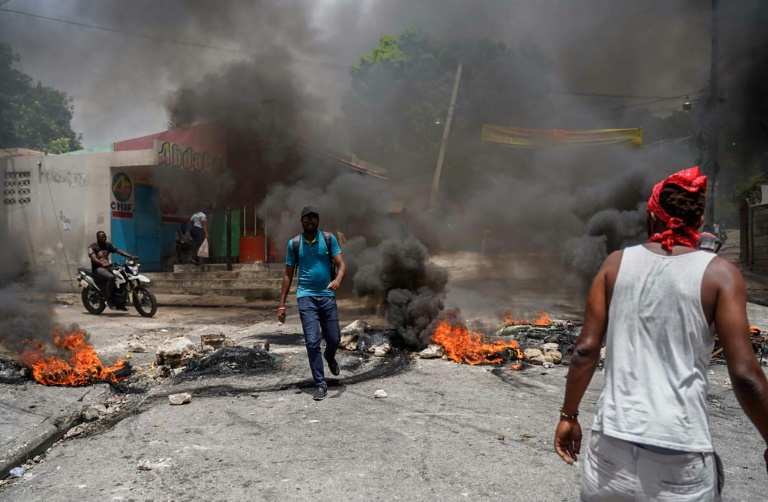
Gang violence killed or injured at least 234 people from July 8-12 in Haiti’s Cite Soleil, an impoverished and densely populated neighbourhood of the capital Port-au-Prince, the United Nations said on Saturday.

The unrest erupted between two rival factions and the city’s ill-equipped and understaffed police failed to intervene, trapping residents in their homes, unable to go out for even food and water.

With many houses in the slums made of sheet metal, residents fell victim to stray bullets. Ambulances were unable to reach those in need.

“Most of the victims were not directly involved in gangs and were directly targeted by gang elements. We have also received new reports of sexual violence,” said UN human rights office spokesperson Jeremy Laurence.

Earlier this week, the National Human Rights Defense Network, a Haitian organisation, had put the toll at 89 people killed, 16 unaccounted for and 74 wounded.

For the six months from January to June, the UN human rights office put the death toll at 934, with 684 more people wounded. A total of 680 kidnappings also occurred during that period, it said.

“We are deeply concerned by the worsening of violence in Port-au-Prince and the rise in human rights abuses committed by heavily armed gangs against the local population,” Laurence said. 

“We urge the authorities to ensure that all human rights are protected and placed at the front and centre of their responses to the crisis.”

The bloodshed in Haiti has come alongside soaring food prices and chronic fuel shortages — a toxic mix that has accelerated a brutal downward spiral in the security situation in Port-au-Prince.

– ‘Desist’-

Aid agencies say many areas are impossible to access due to the dangerous conditions.

“We call on those responsible and supporting this armed violence to immediately desist, and to respect the lives and livelihoods of all Haitians, most of whom live in extreme poverty,” Laurence said.

Mumuza Muhindo, head of the local mission of Doctors Without Borders, told AFP that his group had operated on an average of 15 patients a day during the spike in violence.

“It’s a real battlefield,” Muhindo said. “It’s impossible to estimate how many people have been killed.”

Cite Soleil is home to an oil terminal that supplies the capital and all of northern Haiti, so the clashes have had a devastating effect on the region’s economy and people’s daily lives.

Petrol stations in Port-au-Prince have no petrol to sell, causing prices on the black market to skyrocket.

“We are seeing a significant increase in hunger in the capital and in the south of the country, with Port-au-Prince hit the hardest,” Jean-Martin Bauer, director of the World Food Programme, said on Tuesday.

For the past several years, Haiti has seen a wave of mass kidnappings, as gangs snatch people of all walks of life, including foreigners, off the streets.

Emboldened by police inaction, gangs have become increasingly brazen.

Haiti announced a rare seizure of weapons in cargo containers late Thursday: 18 military grade weapons, four 9mm handguns, 14,646 rounds of ammunition and $50,000 in counterfeit money.

The following day, the UN Security Council called on member states to ban the transfer of small arms to the Caribbean nation but stopped short of a full embargo requested by China.

Social life helps orphaned elephants overcome loss: study

Orphaned elephants manage to overcome the loss of their mother by living in a herd, highlighting the importance of a social life for the species, according to a study.

Scientists investigated the consequences of a mother elephant’s death on her child by examining the level of stress hormones in the excrement of 37 young elephants in Kenya between 2015 and 2016.

Among the young elephants, 25 had lost their mother between one and 19 years before from poaching or drought.

Of the 25 orphans, 20 stayed within the same family unit after the mother’s death, while five joined an unrelated group.

The researchers found that stress hormones were at similar levels in the long term among orphans and the other elephants, even though the former were expected to show more stress symptoms in the absence of maternal care.

Any stress among the orphans did not last long, showing their “resilience” and the effect of social support from the other elephants, said Jenna Parker, the main author of the study published this week in the journal Communications Biology.

The importance of family links was obvious when observing elephant herds, Parker told AFP.

The young rarely stray more than 10 metres (33 feet) away from their mother and “incredible” reunions involving the entire group were seen after a few hours of separation, said the researcher at Colorado State University in the United States.

When poachers or hunters kill an elephant, that social cohesion disintegrates and threatens the group’s wellbeing, particularly the young ones left orphaned, she said.

The bond between a baby elephant and its mother is believed to be strong even after weaning.

– ‘Playmates’ –

Parker and her colleagues investigated how orphaned elephants felt by measuring the quantity of hormones they release when faced with stress.

The hormones can be found in blood, saliva, urine and faeces. The last option was chosen as the most reliable and widespread way to measure stress in wild animals because it is non-invasive, Parker said.

Only the excrement of young females aged between two and 20 in the Samburu and Buffalo Springs reserves in northern Kenya was used, with males less easy to track because they are less attached to their original herd.

Scientists also found lower stress levels among young elephants growing up in groups with more animals of a similar age, suggesting that “playmates” are essential for them.

The results could guide orphanages to provide companions of the same age to help orphaned elephants.

The study also concluded that releasing groups of orphaned elephants together after they were linked during captivity could facilitate their transition to living in the wild.

US won't 'walk away' from Middle East, Biden tells Arab leaders

US President Joe Biden told Arab leaders on Saturday that Washington would remain fully engaged in the Middle East and would not cede influence to other world powers.

“We will not walk away and leave a vacuum to be filled by China, Russia or Iran,” Biden said during a summit in Jeddah, on the Red Sea coast of Saudi Arabia.

US ties to Gulf powers in particular have been roiled by multiple issues in recent years, notably Washington’s push for a deal to curb Iran’s suspect nuclear programme and its tepid response to attacks on Saudi oil facilities in 2019 claimed by Yemen’s Iran-backed Huthi rebels.

The summit, the final stop of Biden’s Middle East tour, brings together the six members of the Gulf Cooperation Council as well as Egypt, Jordan and Iraq.

Biden had been looking to use the trip to discuss volatile oil prices and outline his vision for Washington’s role in the region.

On Friday he met Saudi King Salman and Crown Prince Mohammed bin Salman, the kingdom’s de facto ruler who US intelligence agencies assess “approved” the 2018 operation that killed journalist Jamal Khashoggi.

After a fist-bump with Prince Mohammed, Biden said he raised the Khashoggi case and warned against future attacks on dissidents.

Prince Mohammed, who chaired the opening of Saturday’s summit, has denied any role in the death of Khashoggi, who was dismembered in the kingdom’s Istanbul consulate and whose remains have never been found.

Biden told the assembled Arab leaders that “the future will be won by countries that unleash the full potential of their populations… where citizens can question and criticise leaders without fear of reprisal”.

– Ukraine tensions –


Biden said the United States would commit $1 billion in food aid to the Middle East and North Africa amid rising food insecurity induced by the war in Ukraine.

Russia’s invasion of Ukraine has exposed a once unthinkable divergence between Washington and key Middle East allies Saudi Arabia and the United Arab Emirates, the oil giants that are increasingly independent on the international stage.

The wealthy Gulf nations, which host US forces and have dependably backed Washington for decades, have notably refrained from supporting the Biden administration as it tries to choke Moscow’s lifelines, from energy to diplomacy.

Analysts say the new position reveals a turning point in Gulf relations with the US, long the region’s protector against neighbour Iran.

But Saturday brought some conciliatory gestures, with Biden inviting his Emirati counterpart, Sheikh Mohamed bin Zayed Al-Nahyan, to visit the White House before the year is up.

And in his remarks at the summit, Saudi Prince Mohammed said he hoped it would “establish a new era of joint cooperation to deepen the strategic partnership between our countries and the United States of America, to serve our common interests and enhance security and development in this vital region for the whole world.”

– Push for oil –

Riyadh and Washington on Friday signed 18 agreements on areas including energy, space, health and investment, including developing 5G and 6G technology, said a Saudi statement.

A separate joint statement said the two countries noted “the importance of their strategic economic and investment cooperation, especially in light of the current crisis in Ukraine and its repercussions, reiterating their commitment to the stability of global energy markets.”

Saudi Arabia agreed to link the electricity networks of the Gulf Cooperation Council to Iraq, which relies heavily on energy from Iran, “in order to provide Iraq and its people with new and diversified electricity sources,” the White House said.

Washington wants Riyadh to open the oil floodgates to bring down soaring gasoline prices, which threaten Democratic chances in November mid-term elections.

But Biden on Friday tried to tamp down expectations that his trip would yield immediate gains.

“I’m doing all I can to increase the supply for the United States of America,” he said, adding concrete results would not be seen “for another couple weeks”.

– Israeli ties –

White House officials have used the trip as a bid to promote integration between Israel and Arab nations.

The issue of the strategic Red Sea islands of Tiran and neighbouring Sanafir was also expected to be on Saturday’s agenda.

Egypt ceded the islands in 2016 to Saudi Arabia, but the deal requires Israel’s green light — a move that could spur contacts between the Jewish state and Riyadh.

Biden said Friday that a decades-old multinational peacekeeping force, including US troops, would leave Tiran, with the White House adding they would depart by the end of the year.

Saudi Arabia has refused to join the US-brokered Abraham Accords which in 2020 created ties between Israel and two of the kingdom’s neighbours, the United Arab Emirates and Bahrain.

But it is showing signs of greater openness towards Israel, and on Friday announced it was lifting overflight restrictions on aircraft travelling to and from Israel, a move Biden hailed as “historic”.

Forest fires rage in scorching southwest Europe

Southwest Europe entered a sixth day of a summer heatwave on Saturday that has triggered devastating forest fires as parts of the continent braced for new temperature records early next week.

Firefighters in France, Portugal and Spain, as well as Greece, battled forest blazes that have ravaged thousands of hectares of land and killed several firefighters since the start of the week.

“The fire is still not under control,” said Ronan Leaustic, an official in Arcachon in southwest France’s Gironde region where firefighters battled to put out two forest blazes that have devoured 9,000 hectares (22,200 acres) since Tuesday.

Meteo France said temperatures will range between 35 degrees Celsius (95 degrees Fahrenheit) and 40C in the south of France on Saturday, with new heat records expected on Monday.

Authorities in the French Alps have urged climbers seeking to ascend Mont Blanc, Europe’s highest mountain, to postpone their trip due to repeated rock falls caused by “exceptional climatic conditions” and “drought”.

The call comes after a section of Italy’s biggest Alpine glacier gave way at the start of the month, sending ice and rock hurtling down the mountain and killing 11 people, in a disaster officials blamed on climate change.

In Portugal, the meteorological institute forecast temperatures of up to 42C and thermometer readings were not expected to drop below 40C until next week.

– ‘Extreme vigilance’ –

The civil defence, however, took advantage of a slight drop in temperatures after a July record of 47C on Thursday to try to stamp out one last major fire in the north of the country.

“The risk of fires remains very high,” civil defence chief Andre Fernandes warned during a midday briefing.

“This is a weekend of extreme vigilance.”

He spoke after an air tanker that had been fighting fires in northern Portugal crashed on Friday, killing its pilot.

A day earlier, two people were killed when a firefighting helicopter plummeted into the sea off Greece.

In Spain, the national meteorological agency maintained various levels of alert across the nation, warning of up to 44C in some regions.

Dozens of forest fires continued to rage in different parts of the country.

– UK crisis meeting –

One blaze in the south caused the authorities to cordon off a section of a key highway connecting Madrid to the Portuguese capital Lisbon.

The fires have scorched thousands of hectares in the Spanish region of Extremadura.

In Greece, the civil defence rushed to douse flames raging on the Mediterranean island of Crete.

Further north, people were also bracing for more unusually warm weather.

In the United Kingdom, a crisis committee of government ministers was meeting later Saturday after the state meteorological agency issued a first-ever “red” warning for extreme heat, cautioning there is a “risk to life”.

The Met Office said that in southern England, temperatures could exceed 40C for the first time on Monday or Tuesday.

Mayor Sadiq Khan advised Londoners only to use public transport on those days if “absolutely necessary”. National train operators also warned passengers to avoid travel.

Some schools in southern England told parents they would stay closed during the heatwave early next week.

burs-tsc/ah/jm

Close Bitnami banner
Bitnami