World

How authoritarian regimes hunt their opponents abroad

The world’s authoritarian regimes are persecuting their opponents living abroad more vigorously than ever before and some get away with murder, literally.

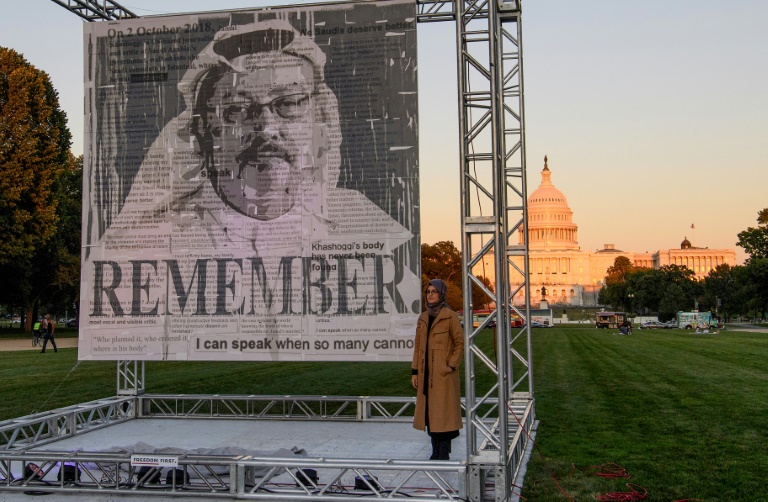
A blatant example of the impunity some governments enjoy is Saudi Arabia’s de-facto ruler, Crown Prince Mohammed bin Salman, whose country US President Joe Biden labelled a “pariah” over the 2018 murder and dismemberment of Saudi journalist Jamal Khashoggi.  

Yet in June, Saudi made up with Turkey — where the murder happened — and Biden decided to include the kingdom on a tour of the Middle East.

Experts say transnational repression of opposition figures is nothing new, but since digital technologies have allowed dissidents to needle authoritarian regimes from across borders more easily, they have stoked the wrath of strongmen like rarely before.

“The threat perception of dictators or these repressive regimes has increased,” said Marcus Michaelson, a researcher on authoritarianism at the Vrije Universiteit in Brussels.

According to US watchdog Freedom House, there were at least 735 direct, physical incidents of transnational repression between 2014 and 2021, carried out by 36 governments, notably those of China, Turkey, Russia, Saudi Arabia, Iran and Rwanda. 

Four regimes joined the list in 2021, including Belarus, which diverted an aircraft to arrest an opposition figure.

– ‘Harassment to murder’ –

Spectacular acts like the poisoning of former Russian intelligence agent Sergei Skripal in Britain in 2018, or the killing in 2019 in Berlin of Georgian Chechen Zelimkhan Khangoshvili — attributed to Russia — get the world’s attention, but much of the repression happens under the radar.

“The range of tactics goes from harassment to murder,” said Katia Roux at Amnesty International France.

Turkish journalist Can Dundar, who runs a website and a radio station aimed at Turkey and the Turkish diaspora from exile in Germany, has become a target for the secret apparatus of President Recep Tayyip Erdogan. 

“In the first year we found a Turkish camera crew (…) recording our office and giving all the details of our office, including our address and our daily work schedule, at what time we are there, at what time we are getting out etc, and showing it as the ‘headquarters of the traitors’ making plans against Turkey,” he told AFP.

Turkish intelligence “is very active, especially in Germany and France,” he said, recalling the attack by three men on a Turkish journalist in Berlin in July 2021 who warned him to stop writing about certain topics.

Pakistani journalist Taha Siddiqui, who fled to France after a kidnapping attempt he blamed on his home country’s security services, said he still didn’t actually feel safe in exile, only “safer”.

In 2020 a Pakistani intelligence officer told Siddiqui’s parents that “if Taha thinks he’s safe in Paris, he is mistaken. We can reach anyone anywhere”.

The threat came the same year as the suspicious deaths of a Pakistani journalist in Sweden, and of a Pakistani human rights activist in Canada, and a year before a British court convicted a man for conspiring to murder a Pakistani blogger in Dutch exile.

“They have made me paranoid, suspicious, scared, even in exile,” said Siddiqui, who has opened “The Dissident Club” in Paris, a bar dedicated to discussion, exhibitions and screenings.

Digital technologies give repressive regimes a whole new toolkit to sidestep the political cost or diplomatic risk that can come with physical action against dissidents, with “almost no consequences”, said Michaelson.

They have a “commercial market for surveillance technologies” at their disposal, such as the Israeli-made spy software Pegasus, which are cost-effective, he said.

“So they don’t need to invest a lot of manpower or send agents to spy on dissidents abroad,” he said.

A telling example is Egyptian opposition figure Ayman Nour, a friend of Khashoggi, and exiled in Turkey.

Citizen Lab, a body for research into technology, human rights and security, said it found two sets of spyware on Nour’s mobile phone — Pegasus and Predator — operated by two different governments. 

– ‘You have to stop’ –

Calling spying “a form or organised crime”, Nour said he always thought of his phone as “a radio that anybody can listen to”.

Amnesty International has identified 11 government clients for Pegasus which allows “the surveillance of anybody in a completely invisible and untraceable way”, said Roux.

Activists in China defending the rights of the Uyghur minority, against which western countries say China is committing “genocide”, often find that digital threats precede physical violence, said Michaelson.

Meiirbek Sailanbek, a member of China’s Kazakh community, said he uninstalled all Chinese apps from his phone when he moved to neighbouring Kazakhstan, and deleted the numbers of his brother and sister who still live in Xinjiang, the Uyghur autonomous region in northwest China.

When the Kazakhstan authorities arrested the head of the Atajurt NGO — which Sailanbek had joined writing social posts under a pseudonym — he fled the country, settling in Paris.

But Kazakhstan’s authorities identified him, and since then the Chinese government is threatening his brother and sister with prison if he continues his activism.

“Meiirbek, your sister and brother are in danger, you have to stop,” said a message forwarded to him by his mother.

Sailanbek faces arrest if he returns to China or Kazakhstan, but he considers Turkey, Pakistan, Arab nations and Russia to be off-limits too because he believes they would give in to Chinese pressure to hand him over.

US retail sales zoom higher in June despite high prices

US retail sales shot up one percent in June amid the ongoing surge in prices, according to new data Friday that spelled more bad news for the Federal Reserve as it struggles to rein in rampant inflation.

The data showed that after pausing in May, American consumers last month were still eating out and buying furniture and cars, even amid the fastest inflation in more than four decades. 

That poses a challenge for the US central bank, which has been hoping to see more decisive signs that its aggressive interest rate hikes were starting to take the economy off the boil and tamp down high prices.

After total sales dipped 0.1 percent in May, they recovered with a vengeance last month and climbed to $680.6 billion, the Commerce Department said.

Record gas prices at the pump in June were a major factor, boosting sales at gasoline stations 3.6 percent in the month, and posting an eye-watering 49.1 percent surge over the past year, the report said.

But the data showed increases were widespread, and sales were still up 0.7 percent even when gasoline is removed from the calculation.

The Fed started raising the benchmark borrowing rate in March, and last month increased it by 0.75 percentage point, the biggest hike in nearly 30 years. But talk has now shifted to the possibility of a massive, full-point increase later this month.

Fed Governor Christopher Waller on Thursday said he could favor the mega step — which would be the biggest such move in four decades — if there were no signs of cooling in the retail sales data and the new home sales report due out in two weeks.

– Mega rate hike in play –

The Fed’s policy-setting Federal Open Market Committee is due to meet July 26-27 to debate the next move in its war on inflation.

Kathy Bostjancic of Oxford Economics said “Today’s strong report keeps the Fed in an aggressive policy tightening mode — the debate at the July FOMC meeting will be between a 75bps or 100bps rate hike.”

But she noted that, when adjusted for inflation — the report does not take into account rising prices — spending on goods appears to be slowing in the second quarter “but not contracting.”

“While consumer sentiment is very downbeat, it doesn’t mean they will stop spending,” she said, although they will shift spending more to necessities.

The report showed auto sales rose 0.9 percent in June, after a 3.4 percent drop in May, while furniture stores and restaurants saw sales rise one percent or more, and online sales gained 2.2 percent.

Grocery stores saw a 0.6 percent rise, slower than in the prior month.

Clothing and building and gardening stores were among the few categories posting declines, the data showed.

Neil Saunders, Managing Director of GlobalData, called it “quite remarkable that the consumer has not retrenched more” amid surging prices.

But he noted that “consumers did not buy more stuff in June – they bought less product but paid more for it. This is not a comfortable position.”

Draghi's future uncertain in Italy's unprecedented political crisis

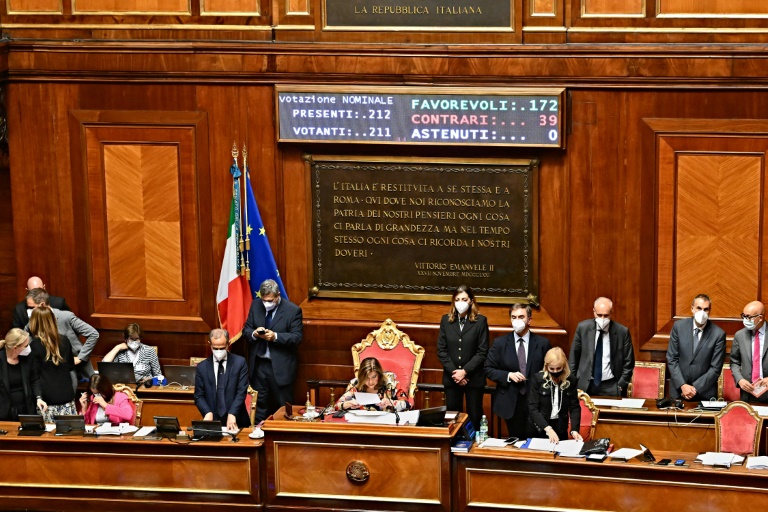
Italy faced unprecedented political uncertainty on Friday as a severe government crisis put Mario Draghi’s future as prime minister on tenterhooks, raising the spectre of snap elections while unnerving the debt markets.

The premier of Europe’s third-largest economy will have until Wednesday to shore up political support in a bid to save his coalition government, which is battling numerous challenges from soaring inflation to the war in Ukraine.

Italy’s technocrat leader, the former head of the European Central Bank, has significantly raised the profile of his country on the world stage and within Europe. 

But he has presided over an unruly coalition of Italy’s top political parties, save for the far-right Brothers of Italy, that has become increasingly fractious in advance of a general election planned for early next year.

The crisis comes at a crunch time for the highly indebted eurozone member, which risks losing billions in European Union post-Covid recovery funds if the rollout of key structural reforms is delayed. 

And the political uncertainty has rekindled fears of a surge in borrowing costs a decade after the eurozone debt crisis. 

The crisis was sparked on Thursday when the populist Five Star movement, a coalition member with low poll numbers, chose to sit out a confidence vote on a cost-of-living aid package it objected to, prompting Draghi’s resignation.

President Sergio Mattarella, who acts as kingmaker in moments of political turmoil, refused to accept Draghi’s resignation, sending the premier back to address parliament next week.

– ‘Pressure going up’ –

Analysts said Draghi could deliver a speech in which he outlines a new way forward and asks for a confidence vote from parliament — or he may reiterate his desire to step down. 

“We have a very open-ended situation. The pressure is going up, there’s lots of diplomatic work taking place behind the scenes and we still have four days to go,” Policy Sonar analyst Francesco Galietti told AFP. 

The spread between Italy’s 10-year bond and the German Bund widened to 225 points on Friday. 

“Any signal that Draghi would not survive the 2023 parliamentary elections, or even leave office before, is a cause for concern for the markets,” Gilles Moec, chief economist at the Axa group, told AFP.

Although political crises are nothing new in Italy, “this one is unprecedented because geopolitical factors are taking precedent”, Galietti said, citing tensions with Russia over its war in Ukraine. 

Draghi is scheduled on Monday and Tuesday to visit Algeria, a crucial gas supplier, in the wake of Italy’s boycott of Russian gas. On his return, he will address parliament, with or without a confidence vote. 

Galietti said the prospect of rejecting Draghi on his return from Algeria could be “very difficult because it would expose you as a Russian stooge”. But others are more sceptical.

Many view the possibility of Draghi continuing in his mandate as extremely fraught, even though he technically has the numbers to survive a confidence vote with or without Five Star. 

“The Draghi government and the coalition that supported it must continue but right now I see it as very, very difficult,” Foreign Minister Luigi Di Maio told RTL 102.5 radio on Friday. 

Accounts of behind-the-scenes political jostling filled Italian newspapers on Friday.

“Draghi resigns, Italy risks chaos,” read a La Stampa daily headline. 

– ‘Suicidal instincts’ –

Corriere della Sera editorialist Massimo Franco wrote that Draghi’s resignation represents the “triumph of the suicidal instincts of political Italy” due to the manoeuvering of Five Star, a party “desperate for a few percentage points to survive”. 

Five Star chose to destroy the “transition to stability and normalcy … led by the most eminent personality available”, wrote Franco. 

Experts view the party’s move as an attempt to appeal to its grassroots base ahead of next year’s election, given its poor poll rating of only 11 percent.              

As Italy’s left-leaning and centrist parties urged support for Draghi, the right-wing Brothers of Italy and League party called for early elections. 

“With Draghi’s resignation … this legislature is over,” Brothers of Italy leader Giorgia Meloni wrote on Facebook. 

“This parliament no longer represents Italians… Elections now,” wrote Meloni, whose party currently leads in voter intention polls.  

An early election is viewed by some political leaders as desirable “because the government’s ability to pass additional reforms and make politically difficult choices is close to exhaustion”, economist Lorenzo Codogno of LC Macro Advisors wrote in a note.

“Draghi does not want his term in office to die with painful and slow tortures.”

Stocks rise as US consumers keep spending

Stocks rose Friday after the latest data showed that US consumers continue to spend more in the latest signal of the strength of the economy despite high inflation and rising interest rates.

Better-than-expected results from Citigroup also helped allay somewhat concerns about what waits in store for investors as companies begin to report their next quarterly results.

The euro held above $1.00, having sunk below parity this week on fears Russia would cut off Europe’s gas supplies in retaliation for Ukraine war sanctions, pushing the region into recession.

Oil prices rebounded having slumped Thursday on renewed fears of a global recession that would dent demand for energy.

Wall Street opened higher on a better-than-expected 1.0 percent rise in retail sales in June.

While not adjusted for inflation, sales were still up 0.7 percent even when gasoline was removed from the calculation, according to the Commerce Department data.

“The key takeaway from the report is that it was strong enough to keep concerns about weakening consumer spending at bay for the time being,” said analysts at Briefing.com.

Markets took a major knock this week from news that US inflation zoomed to a 40-year high of 9.1 percent in June on energy costs.

After rate hikes by several countries this week, investors now expect the Federal Reserve to lift rates later this month by 75 basis points as officials battle decades-high inflation, though some observers suggest a one-percentage-point move could even be on the cards.

While experts warn that raising US rates risks hammering the economy, the Fed has made it clear the number-one priority is bringing down prices.

The retail sales figures join other data showing that the US economy is holding up relatively well so far despite high inflation and rising interest rates.

Meanwhile, Citigroup’s net profits fell by 25 percent to $4.5 billion, yet earnings per share easily beat expectations. The banking group took in more revenue and benefited from rising interest rates.

Citigroup shares jumped 6.0 percent as trading got underway in New York.

Wall Street stumbled Thursday with sentiment weighed down by disappointing reports from JPMorgan Chase & Co. and Morgan Stanley.

Those compounded worries that company profits would be hit by the fallout from a number of issues including rocketing consumer prices, monetary policy tightening and the war in Ukraine.

European stocks were higher in afternoon trading.

In Asia, Hong Kong and mainland Chinese equity markets led losses after data showed China’s economy grew just 0.4 percent in the second quarter, battered by Covid lockdowns in major cities including Shanghai and Beijing.

The reading was well off the 1.6-percent growth predicted by analysts in an AFP survey.

Elsewhere, traders are keeping tabs on US President Joe Biden’s visit to the Middle East as he tries to persuade Saudi Arabia to bring down high oil prices by pumping more crude.

– Key figures at around 1330 GMT –

London – FTSE 100: UP 1.4 percent at 7,138.46 points

Frankfurt – DAX: UP 2.2 percent at 12,793.69

Paris – CAC 40: UP 1.2 percent at 5,986.08

EURO STOXX 50: UP 1.7 percent at 3,455.59

New York – Dow: UP 1.5 percent at 31,081.84

Tokyo – Nikkei 225: UP 0.5 percent at 26,788.47 (close)

Hong Kong – Hang Seng Index: DOWN 2.2 percent at 20,297.72 (close)

Shanghai – Composite: DOWN 1.6 percent at 3,228.06 (close)

Euro/dollar: UP at $1.0062 from $1.0022 Thursday

Pound/dollar: UP at $1.1836 from $1.1826 

Euro/pound: UP at 85.04 pence from 84.72 pence

Dollar/yen: DOWN at 138.74 yen from 138.93 yen

West Texas Intermediate: UP 2.6 percent at $98.26 per barrel

Brent North Sea crude: UP 2.9 percent at $102.00 per barrel

burs-rl/bp

How authoritarian regimes hunt their opponents abroad

The world’s authoritarian regimes are persecuting their opponents living abroad more vigorously than ever before and some get away with murder, literally.

A blatant example of the impunity some governments enjoy is Saudi Arabia’s de-facto ruler, Crown Prince Mohammed bin Salman, whose country US President Joe Biden labelled a “pariah” over the 2018 murder and dismemberment of Saudi journalist Jamal Khashoggi.  

Yet in June, Saudi made up with Turkey — where the murder happened — and Biden decided to include the kingdom on a tour of the Middle East.

Experts say transnational repression of opposition figures is nothing new, but since digital technologies have allowed dissidents to needle authoritarian regimes from across borders more easily, they have stoked the wrath of strongmen like rarely before.

“The threat perception of dictators or these repressive regimes has increased,” said Marcus Michaelson, a researcher on authoritarianism at the Vrije Universiteit in Brussels.

According to US watchdog Freedom House, there were at least 735 direct, physical incidents of transnational repression between 2014 and 2021, carried out by 36 governments, notably those of China, Turkey, Russia, Saudi Arabia, Iran and Rwanda. 

Four regimes joined the list in 2021, including Belarus, which diverted an aircraft to arrest an opposition figure.

– ‘Harassment to murder’ –

Spectacular acts like the poisoning of former Russian intelligence agent Sergei Skripal in Britain in 2018, or the killing in 2019 in Berlin of Georgian Chechen Zelimkhan Khangoshvili — attributed to Russia — get the world’s attention, but much of the repression happens under the radar.

“The range of tactics goes from harassment to murder,” said Katia Roux at Amnesty International France.

Turkish journalist Can Dundar, who runs a website and a radio station aimed at Turkey and the Turkish diaspora from exile in Germany, has become a target for the secret apparatus of President Recep Tayyip Erdogan. 

“In the first year we found a Turkish camera crew (…) recording our office and giving all the details of our office, including our address and our daily work schedule, at what time we are there, at what time we are getting out etc, and showing it as the ‘headquarters of the traitors’ making plans against Turkey,” he told AFP.

Turkish intelligence “is very active, especially in Germany and France,” he said, recalling the attack by three men on a Turkish journalist in Berlin in July 2021 who warned him to stop writing about certain topics.

Pakistani journalist Taha Siddiqui, who fled to France after a kidnapping attempt he blamed on his home country’s security services, said he still didn’t actually feel safe in exile, only “safer”.

In 2020 a Pakistani intelligence officer told Siddiqui’s parents that “if Taha thinks he’s safe in Paris, he is mistaken. We can reach anyone anywhere”.

The threat came the same year as the suspicious deaths of a Pakistani journalist in Sweden, and of a Pakistani human rights activist in Canada, and a year before a British court convicted a man for the contract killing of a Pakistani blogger in Dutch exile.

“They have made me paranoid, suspicious, scared, even in exile,” said Siddiqui, who has opened “The Dissident Club” in Paris, a bar dedicated to discussion, exhibitions and screenings.

Digital technologies give repressive regimes a whole new toolkit to sidestep the political cost or diplomatic risk that can come with physical action against dissidents, with “almost no consequences”, said Michaelson.

They have a “commercial market for surveillance technologies” at their disposal, such as the Israeli-made spy software Pegasus, which are cost-effective, he said.

“So they don’t need to invest a lot of manpower or send agents to spy on dissidents abroad,” he said.

A telling example is Egyptian opposition figure Ayman Nour, a friend of Khashoggi, and exiled in Turkey.

Citizen Lab, a body for research into technology, human rights and security, said it found two sets of spyware on Nour’s mobile phone — Pegasus and Predator — operated by two different governments. 

– ‘You have to stop’ –

Calling spying “a form or organised crime”, Nour said he always thought of his phone as “a radio that anybody can listen to”.

Amnesty International has identified 11 government clients for Pegasus which allows “the surveillance of anybody in a completely invisible and untraceable way”, said Roux.

Activists in China defending the rights of the Uyghur minority, against which western countries say China is committing “genocide”, often find that digital threats precede physical violence, said Michaelson.

Meiirbek Sailanbek, a member of China’s Kazakh community, said he uninstalled all Chinese apps from his phone when he moved to neighbouring Kazakhstan, and deleted the numbers of his brother and sister who still live in Xinjiang, the Uyghur autonomous region in northwest China.

When the Kazakhstan authorities arrested the head of the Atajurt NGO — which Sailanbek had joined writing social posts under a pseudonym — he fled the country, settling in Paris.

But Kazakhstan’s authorities identified him, and since then the Chinese government is threatening his brother and sister with prison if he continues his activism.

“Meiirbek, your sister and brother are in danger, you have to stop,” said a message forwarded to him by his mother.

Sailanbek faces arrest if he returns to China or Kazakhstan, but he considers Turkey, Pakistan, Arab nations and Russia to be off-limits too because he believes they would give in to Chinese pressure to hand him over.
Ukraine enlists public in push for high-tech 'Army of Drones'

In an undulating expanse of grassland at the city limits, a pick-up truck kicks up dust as it hurtles downhill, its passengers belting out the theme to 1980s hit comedy “Police Academy”.

This isn’t US law enforcement though. It’s a Ukrainian military Mitsubishi L200 on the outskirts of Kyiv and it is chasing after a quadcopter surveillance drone, not bank robbers.

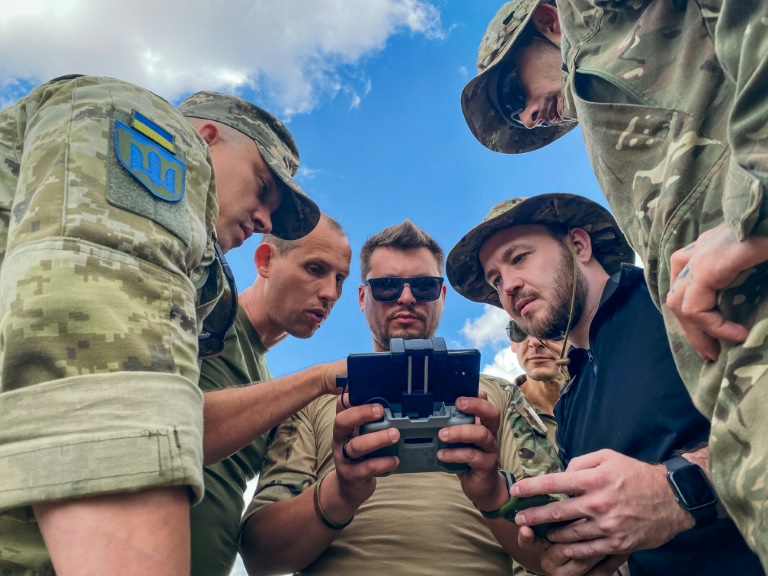
The troops inside are in training to be the tip of the spear in Ukraine’s drive to modernise its tactical response on the frontlines of its war with Russia, in a massive expanse of its drone fleet.

One of Europe’s poorest countries even before Moscow’s invasion on February 24, Ukraine does not have an official drone unit and is relying on the patriotism and hard cash of its civilians for equipment and training.

“Nowadays it’s very important to have a drone in each battle unit because this is our eyes in the sky,” says Lieutenant Anton Galyashinskiy, 40, an army expert in visual data analytics who is taking part in the exercise.

Today, Galyashinskiy and nine of his fellow soldiers are learning to pilot the machines from a moving vehicle.

They are being taught by Global Drones Academy, a private company run by Anton Veklenko, who has been operating all manner of unmanned flying machines since 2015 and says he is in “great demand”. 

“One of the most important aspects of training is the safety of using civilian drones in a combat zone,” he told AFP.

– ‘Hard to spot’ –

A 35-year-old specialist in drone photography, Veklenko expanded into military training after the war broke out, teaching civilians and military how to become remote pilots for the war effort — and how not to become targets of Russian fire.

“At the beginning of the war, many of our servicemen died because they did not know that they were being watched,” he added.

“We have developed a method of how not to reveal your position.” 

Drones make it possible for Kyiv to conduct reconnaissance along the 2,470-kilometre (1,535-mile) front line, spotting Russian forces and equipment and remotely directing artillery fire. 

They save Ukrainian lives, but they are expensive and in short supply.

Both sides have already been using smaller radio-controlled machines but Kyiv says Russian electronic counter-measures that jam their communications systems are becoming increasingly effective. 

Two weeks ago, President Volodymyr Zelensky launched an “Army of Drones” appeal for private cash to buy a fleet of military-grade unmanned aerial vehicles (UAVs) from countries around the world.

Ukrainians and overseas supporters have already raised around 13.5 million euros (dollars) which will go towards an initial 200 military-grade machines equipped with state-of the art thermographic cameras, GPS and mapping software. 

“The key thing is that they are hard to spot, which means they are hard to get knocked down,” the appeal says on its website.

“These drones will help constantly monitor the front line and identify the aggressor’s positions.”

– ‘Dronations’ –

Yury Shchygol, head of Ukraine’s cybersecurity and intelligence service, told reporters this week that procurement teams already had a contract with Polish manufacturers and had sourced four tactical drones.

They are investigating possible deals in Israel, Japan, Portugal and the United States, he added.

Zelensky is also appealing for “dronations” — gifts of smaller consumer drones — to be donated directly in Ukraine or to warehouses in the United States and Poland, for onward shipment to the front.

Hobbyists and commercial drone pilots have already started donating their machines to beef up the “Army of Drones” but Ukraine is setting its sights much higher.

“We have received 30 drones within the ‘donate your drone’ programme, both from Ukrainians and from abroad. Our goal is to collect 1,000 civilian drones,” Shchygol said.

The drive has taken on a new urgency this week, with US officials warning of Russian plans to acquire hundreds of combat drones from Iran.

Learning to operate civilian drones takes two weeks, Shchygol said, while pilots of military-grade reconnaissance drones will get a month of training.

But he believes the “Army of Drones” effort will bring dividends beyond the conflict with Russia.

“Elon Musk said himself a couple of days ago that the wars of the future will be decided by drones,” he said.

Biden takes off on historic flight to Saudi Arabia

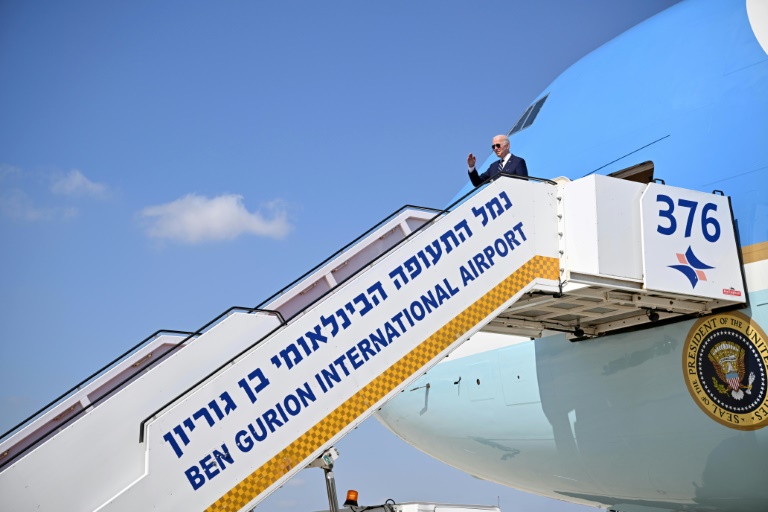
President Joe Biden departed Tel Aviv on Friday aboard a historic direct flight from Israel to Saudi Arabia, the latest stop on his first Middle East tour as US leader.

Hours ahead of the president’s arrival in Jeddah, the oil-rich Gulf kingdom changed its aviation rules in an apparent gesture of openness towards Israel.

The Saudi leadership paved the way for Israeli planes to use its airspace by announcing it was lifting restrictions on “all carriers”, a move welcomed by Biden as “historic”.

“Saudi Arabia’s decision can help build momentum toward Israel’s further integration into the region, including with Saudi Arabia,” the US leader said.

Biden’s direct flight is the first by an American president from Israel to Saudi Arabia.

Riyadh has long stressed its commitment to the decades-old Arab League position of not establishing official ties with Israel until the conflict with the Palestinians is resolved.

Israeli caretaker Prime Minister Yair Lapid said the decision to scrap airspace restrictions was “only the first step” as the country seeks to strengthen regional ties.

After touching down in Jeddah, Biden will meet Saudi royals including de facto ruler Crown Prince Mohammed bin Salman.

The president is also expected to meet Arab leaders from the Gulf Cooperation Council, who are gathering in the Saudi city, to discuss volatile oil prices.

– ‘Political horizon’ in Bethlehem –

Jeddah marks the final stop on Biden’s Middle East tour, following Friday’s talks with Palestinian president Mahmud Abbas and meetings with Israeli officials a day earlier.

With Palestinians banned by Israel from political activity in Jerusalem, the US president travelled to Bethlehem in the occupied West Bank to meet Abbas.

Standing alongside Abbas, Biden reiterated his commitment to a two-state solution to end the Israeli-Palestinian conflict and said there “must be a political horizon that the Palestinian people can actually see”.

“I know that the goal of the two states seems so far away,” he said in Bethlehem.

The Palestinian president said he was “taking steps” to improve the bilateral relationship and aimed to see the US consulate to Palestinians reopen in Jerusalem, which was shuttered by Biden’s predecessor Donald Trump. 

“The key to peace begins with recognising the state of Palestine,” Abbas said.

With Israeli-Palestinian peace negotiations moribund since 2014, the US delegation has been focusing on economic measures.

During a visit earlier Friday to a hospital in Israeli-annexed east Jerusalem, Biden pledged a $100 million aid package for medical institutions in the area.

The US delegation also announced plans to roll out infrastructure for 4G internet across the Gaza Strip and the West Bank by the end of next year, fulfilling a longstanding aspiration among Palestinians.

But Biden made clear on Thursday he had no plans to reverse the controversial move by Trump to recognise Jerusalem as Israel’s capital, which infuriated Palestinians who see its eastern sector as the seat of their future state.

– Slain Palestinian American reporter –

Biden was greeted in Bethlehem with a billboard reading “Justice for Shireen”, a reference to the veteran Palestinian-American journalist shot dead in May while covering an Israeli army raid in the West Bank.

Shireen Abu Akleh’s family requested to meet Biden during his visit, but a senior administration official told reporters the president “is unable to do that,” and noted that the family had been invited to Washington.

“I think if President Biden (can) find an hour and a half to go and attend a sport activity, he should have respected the family and give them 10 minutes to listen to them,” said Samer Sinijlawi, chairman of a Palestinian nonprofit, the Jerusalem Development Fund, after Biden on Thursday attended a ceremony for Jewish athletes.

In Bethlehem, dozens of protesters gathered carrying pictures of Abu Akleh and signs against Israeli settlements in the West Bank.

Speaking alongside Abbas, Biden said the US “will continue to insist on a full and transparent accounting of her death.”

Washington earlier this month concluded she was likely shot from an Israeli military position, but that there was no evidence of intent to kill.

Talks in Jerusalem between Biden and Lapid were focused on Iran’s nuclear programme and its support for Islamist groups such as Hamas, which rules Gaza.

The two leaders signed a new security pact, in which Washington committed to using all its “national power” to ensure Tehran does not obtain a nuclear weapon.

Biden is currently trying to get the nuclear deal between Tehran and world powers back on track, after Trump’s unilateral withdrawal in 2018 derailed it.

In a tweet on Friday, Iran’s Foreign Minister Hossein Amir-Abdollahian said Biden’s trip to Israel was a “puppet show” that made his country “more determined” to protect its nuclear interests.

Sri Lankan president's resignation accepted

The resignation of Sri Lanka’s president has been accepted, the crisis-hit country’s parliamentary speaker announced Friday after the leader fled his country earlier this week, prompting relief among protesters camped outside his former offices.

The formal declaration makes Gotabaya Rajapaksa — once known as “The Terminator” for his ruthless crushing of the Tamil rebellion — the first Sri Lankan head of state to resign since it adopted an executive presidency in 1978.

He emailed in his notice from Singapore after flying to the city-state from the Maldives, where he initially escaped after demonstrators overran his palace at the weekend. 

“The president has officially resigned from his position,” parliamentary speaker Mahinda Yapa Abeywardana told reporters. 

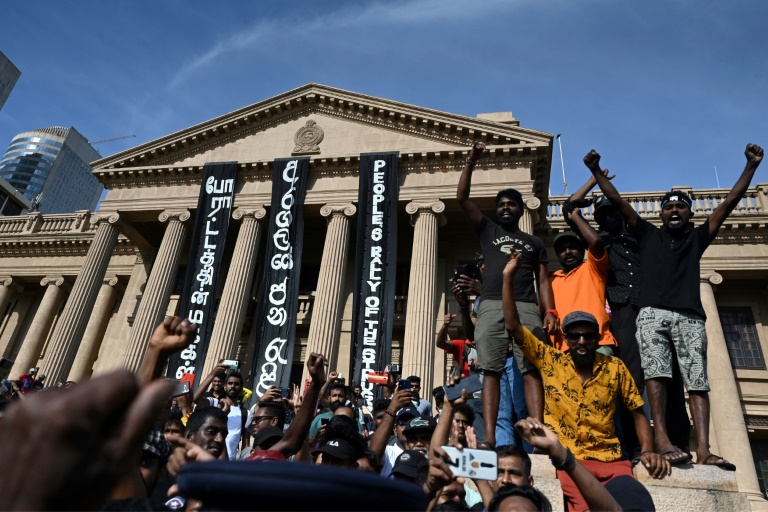
A few demonstrators gathered at the makeshift headquarters of a months-long protest movement against Rajapaksa outside the presidential secretariat.

“This is a historical moment for all Sri Lankans,” said Catholic priest Jeevantha Peiris.

“We were assaulted, put in prisons, put on travel bans, some of our friends laid their lives down. With all these hardships we have come through,” the 45-year-old told AFP. “We have no fear anymore.”

The former president, he added, was a “bloodthirsty criminal” who should return to Sri Lanka to face justice.

Prime Minister Ranil Wickremesinghe was sworn in as acting president — his accession was automatic under Sri Lanka’s constitution — but many of the demonstrators see him as complicit in the rule of the Rajapaksa clan and also want him to go.

Parliament will meet on Wednesday to elect an MP to succeed Rajapaksa for the rest of his term, the speaker’s office said, with nominations due the previous day.

The Rajapaksas’ SLPP party said it will not field a candidate for president next week, supporting Wickremesinghe’s bid instead.

– ‘Private visit’ to Singapore –

Rajapaksa’s departure came after months of protests over what critics said was his mismanagement of the island nation’s economy, with a foreign exchange crisis leading to severe hardships for its 22 million people. 

Inflation is rampant and the country has nearly exhausted its already scarce supplies of petrol, with the government ordering the closure of non-essential offices and schools to reduce commuting and save fuel.

Rajapaksa, his wife Ioma and their two bodyguards arrived in Singapore from the Maldives on board a Saudia airline flight.

As president, Rajapaksa enjoyed immunity from arrest, and he is understood to have wanted to go abroad before stepping down to avoid the possibility of being detained. 

The former Maldivian president Mohamed Nasheed is believed to have played a behind-the-scenes role in getting him out of the country, and said Rajapaksa feared he would be killed if he remained.

“I believe the President would not have resigned if he were still in Sri Lanka, and fearful of losing his life,” Nasheed tweeted. 

Singapore’s foreign ministry confirmed Rajapaksa had been allowed to enter the city-state for a “private visit”, adding: “He has not asked for asylum and neither has he been granted any asylum.”

He is expected to look to stay in Singapore for some time, according to Sri Lankan security sources, before potentially moving to the United Arab Emirates.

The spiralling economic crisis led to Sri Lanka defaulting on its $51 billion foreign debt in April, and it is in talks with the International Monetary Fund (IMF) for a possible bailout, but the talks have been thrown off course by the political upheaval.

– Law and order –

In an address to the nation, Wickremesinghe — who ordered a state of emergency on Thursday — warned demonstrators that security forces would maintain order.

“We are committed to safeguarding democracy,” he said. “There is a big difference between protesters and rioters. The rioters will be dealt with according to the law.”

He added that 24 soldiers had been wounded when protesters tried to overrun the parliament Wednesday, two of them seriously.

But authorities were in full control of the emblematic state buildings protesters had occupied in recent days, including the presidential and prime minister’s offices.

The Rajapaksas’ SLPP remains the largest party in parliament and its backing raises the prospect of the legislature electing Wickremesinghe despite the opposition to him on the streets.

If that happens, said Jude Fernando, an academic at the protest site, “then I think we have lost the battle”.

“Just changing leadership, changing the heads, won’t bring about the change,” he told AFP.

Southwest Europe swelters as wildfires burn

Thousands of firefighters on Friday battled wildfires in France, Portugal and Spain in the face of scorching heatwaves as Britain braced for “extreme” heat in the coming days.

Swathes of southwest Europe are enduring their second heatwave in weeks as scientists say such extreme weather events are becoming more frequent and intense due to climate change. 

In Portugal, five regions in the centre and north were on red heatwave alert on Friday and nearly the entire country remained on wildfire alert as more than 2,000 firefighters tackled four blazes.

As of late Thursday, the fires had killed one person and injured around 60. Nearly 900 people had been evacuated and several dozen homes damaged or destroyed, Portuguese authorities said.

Wildfires have destroyed 30,000 hectares (75,000 acres) of land this year, the largest area since the fires of 2017, in which around 100 people died.

Just over the border in Spain, a fire broke out on Thursday near the Monfrague National Park, a protected area renowned for its wildlife.

Extremadura, where the park is located, has seen thousands of hectares burned this week.

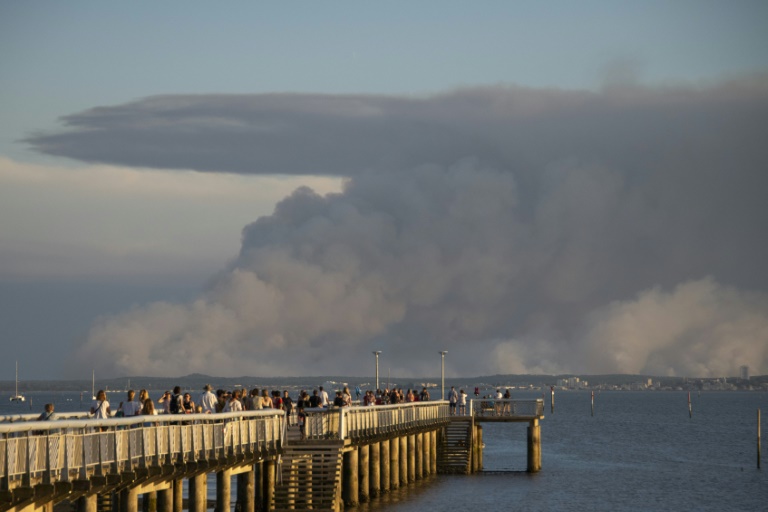
In southwestern France, flames have destroyed more than 7,000 hectares since Tuesday and forced the evacuation of 10,000 people. 

One fire was raging in pine forests near the Dune du Pilat, Europe’s tallest sand dune and a magnet for tourists.

“I’ve never seen this before and you get the feeling that it’s post-apocalyptic really,” said resident Karyn on Thursday shortly before the preventative evacuation order of the village of Cazaux near Dune du Pilat.

– Record highs –

On Thursday, Portugal recorded its highest ever temperature for July, at 47 degrees Celsius (117 degrees Fahrenheit). In central Spain, the mercury reached 45.4C on Thursday, just shy of the all-time high of 47.4C registered in August last year.

On Friday, temperatures were forecast to top 41C in parts of Portugal and 44C in parts of Spain on Friday.

Southern France, which hit 38C on Thursday, was expected to reach 40C on Friday and is bracing for more heat early next week.

Britain’s meteorological agency on Friday issued its first ever “red” warning for exceptional heat, forecasting record highs of 40C next week.

The Met Office said there was a 50-percent chance of temperatures topping 40°C (104 degrees Fahrenheit) for the first time on Monday or Tuesday, and an 80-percent chance that the country’s previous record of 38.7C set in 2019 will be exceeded.

“Nights are also likely to be exceptionally warm, especially in urban areas,” said Met Office chief meteorologist Paul Gundersen.

“This is likely to lead to widespread impacts on people and infrastructure. This level of heat can have adverse health effects.”

A red warning is issued when it is “very likely that there will be a risk to life, with substantial disruption to travel, energy supplies and possibly widespread damage to property and infrastructure”.

UK hospitals have already warned of a surge in heat-related admissions and train operators have told passengers to expect cancellations.

Rescuers search for missing after Russian missiles devastate Vinnytsia

Rescue workers were digging through debris Friday, a day after Russian missiles tore through Vinnytsia in central Ukraine, killing nearly two dozen people, including children, in an attack President Volodymyr Zelensky said was an act of terrorism.

Russia claimed Friday the strikes — hundreds of the kilometres from the front lines — had targeted a meeting of Ukrainian military officials and foreign arms suppliers, without providing supporting evidence.

But among those confirmed killed was four-year-old Liza Dmitrieva, who had Down’s Syndrome and whose death spurred an outpouring — including from Ukraine’s first lady — after footage on social media of her final moment alive went viral.

The midday blast left smoke billowing from burnt-out shops and the charred remains of cars. On Friday hundreds of rescue workers were clearing debris from gutted buildings and searching for those still missing.

“No other state in the world poses such a terrorist threat as Russia,” a sombre Zelensky said late Thursday, warning the death toll was likely to rise.

United Nations Secretary General Antonio Guterres said he was “appalled” by the attack, while the European Union condemned it as an “atrocity.” Both called for accountability.

The Ukrainian presidency said 18 people were missing and 73 had been hospitalised. More than 400 people were involved in clean up operations, the emergency services announced.

– Outpouring for slain toddler –

The missile strikes on Vinnytsia are the latest Russian attacks with a high civilian toll and come less than a week after strikes on Chasiv Yar in the Donetsk region left nearly 50 dead.

Officials identified four-year-old Liza as among the victims and initially believed her mother had been killed too, but announced Friday she was alive in a “critical” condition after surgery.

First Lady Olena Zelenska said in early Friday she was “horrified” by Liza’s death and images of her overturned pushchair released by local authorities.

“I will not write all the words I want to, to those who killed her,” she wrote on Twitter.

Russia said it had targeted Ukraine military officials meeting to discuss arms supplies and aircraft repairs with foreign representatives.

“As a result of the strike, the participants of the meeting were destroyed,” the Russian defence ministry said.

Moscow launched its invasion on February 24 and the conflict has killed thousands of people, destroyed cities and forced millions to flee their homes.

Deadly strikes in central Ukraine have become relatively rare, but the war has raged around southern cities like Mykolaiv, which has been under near-constant Russian bombardment for months. 

The head of the region Vitaliy Kim said Friday that Russia had “attacked two of the biggest universities in Mykolaiv” with “at least 10 missiles”. 

He shared video of black smoke rising from a building in the city while Mayor Oleksandr Sienkevych said four people were wounded.

The heaviest fighting recently however has focused recently on the industrial Donbas region in the east.

– ‘Clearing’ Donbas town Siversk –

Moscow-backed separatists said Friday they were closing in on their next target, Siversk, after wresting control of sister cities Lysychansk and Severodonetsk two weeks ago.

“Ukraine has decided to gradually pull its units from the town of Siversk,” Andrey Marochko, a spokesman for the separatist forces, told Russian state news agency TASS.

Donetsk separatist official Daniil Versonov meanwhile said fighters were “clearing” eastern districts of Siversk in small groups.

AFP could not independently verify the claims.

The pro-Moscow  authorities also said Friday that British citizen Paul Urey had died in their captivity.

“He died on July 10,” Darya Morozova, a representative of the self-proclaimed Donetsk People’s Republic, which claims he was a combatant who took part in conflicts in Afghanistan and the Middle East.

Non-governmental organisations however describe Urey as a humanitarian who was volunteering in Ukraine.

Reports of Urey’s death were “clearly alarming”, a Downing Street spokesman said.

“Our thoughts are with his family and friends,” the spokesman added.

Negotiations to end the conflict collapsed early in the war but Russian and Ukrainian delegations met in Istanbul this week to discuss unblocking Ukraine’s grain exports.

The countries at war are among the world’s largest producers and the conflict has pushed up prices with Ukraine unable to export grain through its Black Sea ports. 

A Russian military spokesman said Friday however that an agreement to unblock grain exports from Ukrainian ports would be ready “soon”.

burs-jbr/bp

Close Bitnami banner
Bitnami