World

Western nations condemn Russia over Ukraine at G20 Indonesia talks

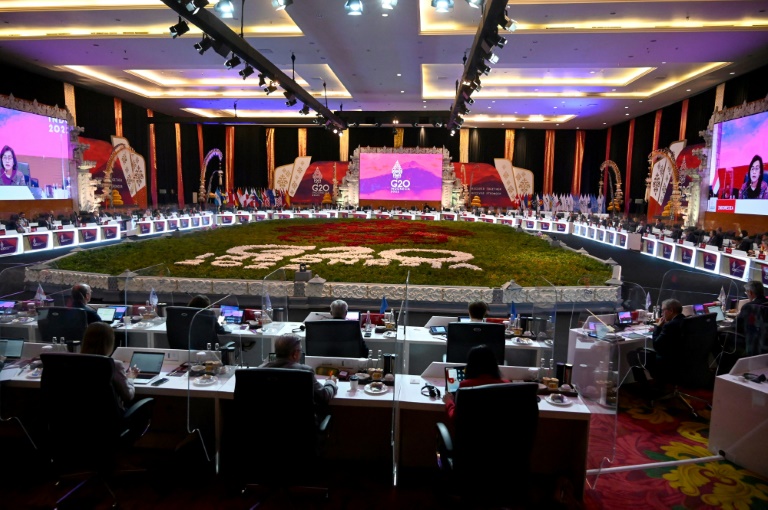
Western finance chiefs condemned Moscow’s invasion of Ukraine at G20 talks in Indonesia Friday, accusing Russia of sending a “shockwave” through the world economy and its technocrats of complicity in the war’s alleged atrocities.

The two-day meeting on the island of Bali began under the shadow of a Russian military assault that has roiled markets, spiked food prices and stoked breakneck inflation, a week after Moscow’s top diplomat walked out of talks with the forum’s foreign ministers.

“Russia is solely responsible for negative spillovers to the global economy,” US Treasury Secretary Janet Yellen told the Russian delegation in the opening session, according to a US official, who spoke on condition of anonymity.  

“Russia’s officials should recognise that they are adding to the horrific consequences of this war through their continued support of the Putin regime. You share responsibility for the innocent lives lost,” Yellen added, according to the official.

The official did not comment on whether the Russian delegation responded. Russian officials did not immediately respond to an AFP request for comment. 

Russia calls its invasion of Ukraine a “special military operation” and blames subsequent Western sanctions for blocked food shipments and rising energy prices.

“Russia tried to say that the world economic situation had nothing to do with the war,” a French delegation source told AFP.

Australian Treasurer Jim Chalmers condemned Russia’s “immoral transgression” against Ukraine, saying that Moscow must take the blame for the impacts on the global economy caused by the war.

“Russia’s unjust actions have had terrible human cost but they’ve also increased global uncertainty,” Chalmers said, according to a transcript. “Russia must take full responsibility.”

Canadian Finance Minister Chrystia Freeland told Russia’s delegation they were responsible for “war crimes” in Ukraine because of their support for the invasion, a Canadian official said. 

“It is not only generals who commit war crimes, it is the economic technocrats who allow the war to happen and to continue,” said Freeland, according to the official.

Both Russian Finance Minister Anton Siluanov and Ukrainian Finance Minister Serhiy Marchenko participated virtually in the meeting. 

Moscow sent Russian Deputy Finance Minister Timur Maksimov to attend the talks in person. He was in the room as Western officials expressed their condemnation, according to a source present at the talks.

Host and G20 chair Indonesia warned the finance chiefs that failure to tackle energy and food crises would be catastrophic.

In her opening remarks, Indonesian Finance Minister Sri Mulyani Indrawati called on ministers to work together with a spirit of “cooperation” because “the world is watching” for solutions.

“The cost of our failure is more than we can afford,” she told delegates. “The humanitarian consequences for the world and for many low-income countries would be catastrophic.”

– ‘Weaponising’ food –

The meeting has largely focused on the food and energy crises that are weighing on an already brittle global recovery from the Covid-19 pandemic.

“(Russian President Vladimir) Putin’s actions including the destruction of agricultural facilities, theft of grain and farm equipment, and effective blockade of Black Sea ports amounts to using food as a weapon of war,” Yellen said in an afternoon seminar.

In another session, she said Russia’s “unjustified war” has sent a “shockwave” through the global economy. 

Indrawati said members had “identified the urgent need for the G20 to take concrete steps” to address food insecurity and to help countries in need.

Yellen has pressed G20 allies for a price cap on Russian oil to choke off Putin’s war chest and pressure Moscow to end its invasion while bringing down energy costs.

In April, the US treasury secretary led a multinational walkout of finance officials as Russian delegates spoke at a G20 meeting in Washington, but there was no such action on Friday.

There is unlikely to be a final communique issued when talks end on Saturday because of the disagreements with Russia.

– ‘Act together’ – 

G20 chair Indonesia -– which pursues a neutral foreign policy –- refrained from disinviting Russia despite Western pressure.

Chinese Finance Minister Liu Kun, Britain’s new Finance Minister Nadhim Zahawi and European Central Bank President Christine Lagarde attended the meeting virtually. 

World Bank chief executive David Malpass did not attend, while International Monetary Fund chief Kristalina Georgieva appeared in person after saying Wednesday that the global economic outlook had “darkened significantly” because of Moscow’s invasion.

The meeting is a prelude to the leaders’ summit on the Indonesian island in November that was meant to focus on the global recovery from the Covid-19 pandemic.

Other issues being tackled by the ministers included digital financial inclusion –- with more than a billion of the world’s population still without access to a bank account -– and the deadline for an international tax rules overhaul.
Western nations condemn Russia over Ukraine at G20 Indonesia talks

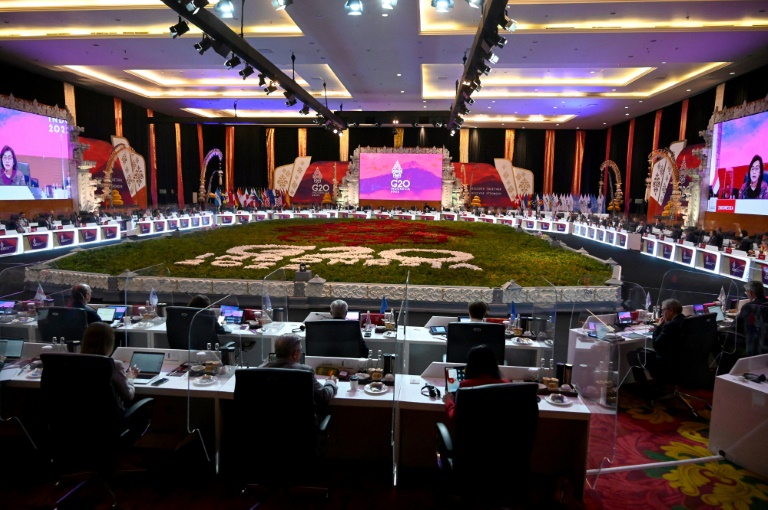
Western finance chiefs condemned Moscow’s invasion of Ukraine at G20 talks in Indonesia Friday, accusing Russia of sending a “shockwave” through the world economy and its technocrats of complicity in the war’s alleged atrocities.

The two-day meeting on the island of Bali began under the shadow of a Russian military assault that has roiled markets, spiked food prices and stoked breakneck inflation, a week after Moscow’s top diplomat walked out of talks with the forum’s foreign ministers.

“Russia is solely responsible for negative spillovers to the global economy,” US Treasury Secretary Janet Yellen told the Russian delegation in the opening session, according to a US official, who spoke on condition of anonymity.  

“Russia’s officials should recognise that they are adding to the horrific consequences of this war through their continued support of the Putin regime. You share responsibility for the innocent lives lost,” Yellen added, according to the official.

The official did not comment on whether the Russian delegation responded. Russian officials did not immediately respond to an AFP request for comment. 

Russia calls its invasion of Ukraine a “special military operation” and blames subsequent Western sanctions for blocked food shipments and rising energy prices.

“Russia tried to say that the world economic situation had nothing to do with the war,” a French delegation source told AFP.

Australian Treasurer Jim Chalmers condemned Russia’s “immoral transgression” against Ukraine, saying that Moscow must take the blame for the impacts on the global economy caused by the war.

“Russia’s unjust actions have had terrible human cost but they’ve also increased global uncertainty,” Chalmers said, according to a transcript. “Russia must take full responsibility.”

Canadian Finance Minister Chrystia Freeland told Russia’s delegation they were responsible for “war crimes” in Ukraine because of their support for the invasion, a Canadian official said. 

“It is not only generals who commit war crimes, it is the economic technocrats who allow the war to happen and to continue,” said Freeland, according to the official.

Both Russian Finance Minister Anton Siluanov and Ukrainian Finance Minister Serhiy Marchenko participated virtually in the meeting. 

Moscow sent Russian Deputy Finance Minister Timur Maksimov to attend the talks in person. He was in the room as Western officials expressed their condemnation, according to a source present at the talks.

Host and G20 chair Indonesia warned the finance chiefs that failure to tackle energy and food crises would be catastrophic.

In her opening remarks, Indonesian Finance Minister Sri Mulyani Indrawati called on ministers to work together with a spirit of “cooperation” because “the world is watching” for solutions.

“The cost of our failure is more than we can afford,” she told delegates. “The humanitarian consequences for the world and for many low-income countries would be catastrophic.”

– ‘Weaponising’ food –

The meeting has largely focused on the food and energy crises that are weighing on an already brittle global recovery from the Covid-19 pandemic.

“(Russian President Vladimir) Putin’s actions including the destruction of agricultural facilities, theft of grain and farm equipment, and effective blockade of Black Sea ports amounts to using food as a weapon of war,” Yellen said in an afternoon seminar.

In another session, she said Russia’s “unjustified war” has sent a “shockwave” through the global economy. 

Indrawati said members had “identified the urgent need for the G20 to take concrete steps” to address food insecurity and to help countries in need.

Yellen has pressed G20 allies for a price cap on Russian oil to choke off Putin’s war chest and pressure Moscow to end its invasion while bringing down energy costs.

In April, the US treasury secretary led a multinational walkout of finance officials as Russian delegates spoke at a G20 meeting in Washington, but there was no such action on Friday.

There is unlikely to be a final communique issued when talks end on Saturday because of the disagreements with Russia.

– ‘Act together’ – 

G20 chair Indonesia -– which pursues a neutral foreign policy –- refrained from disinviting Russia despite Western pressure.

Chinese Finance Minister Liu Kun, Britain’s new Finance Minister Nadhim Zahawi and European Central Bank President Christine Lagarde attended the meeting virtually. 

World Bank chief executive David Malpass did not attend, while International Monetary Fund chief Kristalina Georgieva appeared in person after saying Wednesday that the global economic outlook had “darkened significantly” because of Moscow’s invasion.

The meeting is a prelude to the leaders’ summit on the Indonesian island in November that was meant to focus on the global recovery from the Covid-19 pandemic.

Other issues being tackled by the ministers included digital financial inclusion –- with more than a billion of the world’s population still without access to a bank account -– and the deadline for an international tax rules overhaul.

Europe stocks rise before US earnings

European equities rose Friday as traders awaited the latest US bank results at the end of yet another volatile week for markets.

The euro held above $1, having sunk below parity this week on fears Russia would cut off Europe’s gas supplies in retaliation for Ukraine war sanctions, pushing the region into recession.

Oil prices rebounded having slumped Thursday on renewed fears of a global recession that would dend demand for energy.

Hong Kong and Shanghai stocks slid as weak Chinese second-quarter GDP compounded anxiety about a fragile global recovery.

Later Friday, investors will digest earnings from financial big-hitters Citigroup and Wells Fargo, with Bank of America and Goldman Sachs due Monday.

– ‘Bruising week’ –

“The firmer tone across Europe is… ahead of major US earnings, after what has been another bruising week for risk assets,” City Index analyst Fawad Razaqzada told AFP.

Global equities had mostly fallen Thursday as fresh evidence of runaway global inflation ramped up expectations of more aggressive rate hikes by central banks, while disappointing earnings revived recession fears.

Wall Street stumbled Thursday with sentiment weighed by the disappointing reports from JPMorgan Chase & Co. and Morgan Stanley.

That compounded worries that companies’ profits would be hit by the fallout from a number of issues including rocketing consumer prices, monetary policy tightening and the war in Ukraine.

Markets took a major knock this week from news that US inflation zoomed to a 40-year high of 9.1 percent in June on energy costs.

After rate hikes by several countries this week, investors now expect the Federal Reserve to lift rates this month by 75 basis points as officials battle decades-high inflation, though some observers suggest a one-percentage-point move could even be on the cards.

While experts warn that raising US rates risks hammering the economy, the Fed has made it clear its number-one priority is bringing down prices.

This has sent the dollar racing ahead, particularly as the European Central Bank has yet to lift interest rates — leaving it well behind the Fed.

In Asia, Hong Kong and mainland Chinese equity markets led losses after data showed China’s economy grew just 0.4 percent in the second quarter as it was battered by Covid lockdowns in major cities including Shanghai and Beijing.

The reading was well off the 1.6-percent growth predicted by analysts in an AFP survey.

Elsewhere, traders are keeping tabs on US President Joe Biden’s visit to the Middle East as he tries to persuade Saudi Arabia to bring down high oil prices by pumping more crude.

– Key figures at around 1110 GMT –

London – FTSE 100: UP 0.6 percent at 7,082.73 points

Frankfurt – DAX: UP 1.3 percent at 12,682.56

Paris – CAC 40: UP 0.3 percent at 5,936.38

EURO STOXX 50: UP 0.8 percent at 3,423.92

Tokyo – Nikkei 225: UP 0.5 percent at 26,788.47 (close)

Hong Kong – Hang Seng Index: DOWN 2.2 percent at 20,297.72 (close)

Shanghai – Composite: DOWN 1.6 percent at 3,228.06 (close)

New York – Dow: DOWN 0.5 percent at 30,630.17 (close)

Euro/dollar: UP at $1.0038 from $1.0022 Thursday

Pound/dollar: UP at $1.1828 from $1.1826 

Euro/pound: DOWN at 84.86 pence from 84.72 pence

Dollar/yen: UP at 139.28 yen from 138.93 yen

West Texas Intermediate: UP 0.1 percent at $95.88 per barrel

Brent North Sea crude: UP 0.7 percent at $99.79 per barrel

EU to seek cuts in heating, cooling of buildings to save gas

The European Commission is expected next week to ask EU countries to reduce heating and cooling of public buildings and offices to cut demand for gas, according to a document seen by AFP.

In order to better withstand the drastic fall in Russian gas supplies, which could be cut off altogether, the commission is expected to urge governments across the 27-nation bloc to set limits on the amount of energy used by public buildings, offices, commercial properties and outdoor terraces.

For optimal energy use, it will recommend the rules require that public buildings be heated to no more than 19 degrees Celsius (66 degrees Fahrenheit) and cooled by air conditioning units set no lower than 25°C (77°F°).

“Energy saved during the summer is energy that can be used in winter,” the commission points out in the document.

Energy experts say lowering the thermostat by one degree could cut a building’s heating bill by about 10 percent. Air conditioning units generally struggle and fail to cool a room below 20°C so they waste energy trying. 

The recommendation is part of a series of measures Brussels is investigating to cut the European Union’s gas consumption by 25 to 60 billion cubic metres (880 to 2,120 billion cubic feet) per year. 

The EU imported around 140 bcm of gas by pipeline from Russia last year, according to the International Energy Agency.

“Acting now could reduce the impact of a sudden supply disruption by one third,” says the document, which is due to be published on July 20 and could be modified in the interim.

It calculates that 11 billion cubic metres of gas could be directly saved from reducing excessive heating and cooling, and between four and 40 bcm via reduced electricity demand. Another 10-11 bcm could be saved from use by industries, which have already slowed production due to soaring prices.

The document urges EU governments, where this is “technically feasible and enforceable” to introduce binding limits on heating and cooling in “public buildings, offices, commercial buildings (in particular large buildings) … and open spaces like outdoor terraces”. 

“The role of public authorities in leading by example and as an important gas consumer -– 30 percent of the energy consumption — is key in this regard,” the document states.

The commission says that during the “gas winter” — October to March — “large savings can be achieved by deploying alternative heat sources for district heating, heat pumps in households” and energy saving campaigns urging the public to turn their thermostats down by one degree Celsius this winter.

Such “protected” energy customers — under EU legislation that means households, district heating that cannot switch to other fuels and certain essential social services — represent 37 percent of total EU gas consumption. 

Simulations show these customers would be the last to be seriously affected by large-scale Russian gas disruptions, the commission says.

It is therefore concentrating most of its efforts on power stations and industry, which use huge amounts of gas.

“Abrupt cuts could damage specific branches of those industries which have little room to switch to other fuels — because gas is being used as feedstock for industrial processes –- or to reduce production without heavy damage,” the commission warns.

“It would be significantly less costly to moderately reduce natural gas demand for a longer period of time, starting earlier, than having to drastically curtail demand suddenly and without proper preparation,” it explains.

By way of encouragement, Brussels urges EU governments to set up “auction systems”, perhaps involving several countries, to compensate industrial consumers who agree to reduce their gas consumption.

If there is a total cut in Russian gas supply from July onwards, EU states might only be able to replenish 65-71 percent of their gas reserves before winter, the commission said, quoting forecasts by European gas transmission system operators (ENTSOG).

The commission’s energy saving proposals are due to be discussed by EU energy ministers at a meeting in Brussels on July 26.

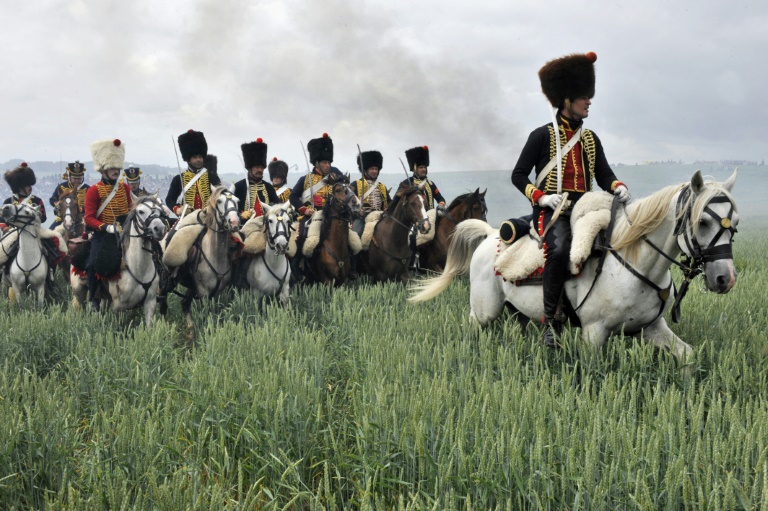
Bones unearthed at Waterloo two centuries after battle

A British-led archaeological dig has uncovered new human bones at the site of the Battle of Waterloo in Belgium.

Historians estimate that more than 20,000 soldiers were killed at Waterloo, 20 kilometres (12 miles) south of Brussels, on June 18, 1815 when mainly Anglo-Dutch allied troops commanded by the Duke of Wellington defeated French battalions led by Napoleon Bonaparte.

It was one of the worst armed confrontations in history and crushed Napoleon’s dreams of a great empire. Tens of thousands of soldiers were also wounded. 

The discovery of new bones was made last week around the Mont St Jean farm, where Wellington set up the main allied field hospital at the time.

“We have what looks like a complete human skeleton and, next to that, it’s another amputated leg,” said Tony Pollard, a professor at Glasgow University and one of the mission’s directors.

“We don’t know whether that person was killed in a battle and the body brought here… or whether it was a patient who died in the hospital,” he said.

“On Napoleonic battlefields, this sort of very old deposit is incredibly rare. We have been working here since 2015 and this is the first time we’ve encountered a great pit. 

“Only one complete skeleton has been excavated from the battlefield, and it was when they were building the museum,” the British archaeologist added. 

The excavation project, which includes archaeologists, students, military personnel and veterans, was launched in 2015 to mark the bicentenary of the battle.

In 2019, they discovered remains of three amputated legs at the site. The dig was then interrupted due to the coronavirus pandemic.

Eva Collignon, a Belgian archaeologist, said the latest bones discovered were probably gathered “in a hurry” in a ditch near the field hospital because the number of victims was so high.

UK owes apology for 'grave wrong' of forced adoptions: inquiry

Britain should formally apologise to unmarried mothers who were forced to give up their babies for adoption, according to an official report Friday that gave harrowing detail of the anguish suffered by the women.

Some 185,000 children were taken away for adoption between 1949 and 1976 in England and Wales, the report by parliament’s Joint Committee on Human Rights estimated.

The committee’s chairwoman, Labour MP Harriet Harman, said the bond between mothers and babies was “brutally ruptured” over the period.

“The mothers’ only ‘crime’ was to have become pregnant while unmarried. Their ‘sentence’ was a lifetime of secrecy and pain,” she said.

The committee acknowledged the “grave wrong” done to the mothers and their children, Harman said, adding: “It is time for the government to do the same and issue the apology they seek.

“For decades they have been vilified. Now they need to be vindicated.”

The report noted that Australia’s government issued a landmark apology in 2013 for forced adoptions, and Ireland’s did so last year.

Abortion was legalised in England, Scotland and Wales in 1967. But even after then, women faced practical barriers such as objections by their doctors.

Before and after, social stigma against unwed women becoming pregnant could be overwhelming.

One woman told the committee that she felt unable to tell her parents and went instead to stay with a relative. 

“When her mother eventually found out, she was berated as ‘damaged goods, no one would ever marry me now, I had brought disgrace to the family’,” the report recounted.

– Forced adoptions persist –

Schools, churches and social services would direct pregnant young women to adoption agencies, often instructing their parents without consulting the women themselves.

In hospitals during childbirth, painkillers would be denied as “punishment” and afterward, babies were sometimes pulled from their sobbing mother’s arms to be taken away for adoption.

“Have you learnt your lesson now?” one woman recalled a doctor telling her while she was in labour. 

Another told the committee: “A doctor told me that I should be sterilised as I must be a nymphomaniac.”

The report called for more specialised counselling for people affected, and for the government to make it easier for those trying to trace their mother or child.

Without being drawn on an eventual apology, a government spokeswoman responded: “We have the deepest sympathy to all those affected by historic forced adoption.

“While we cannot undo the past, we have strengthened our legislation and practice to be built on empathy,” she said, stressing that better care was given today for vulnerable women.

But campaigners against forced adoption warn that the practice is still widespread today, with the UK having one of the highest global rates of children being removed against the wishes of parents, often at birth.

Under UK law, mothers who are suffering from mental health issues or are victims of domestic abuse risk losing their children.

More than 1,000 children have been removed against their mothers’ wishes each year this century, according to government statistics.

“There will be apologies demanded,” independent social worker and writer Maggie Mellon told AFP.

“I’m fed up of shouting about things at the time and then having to wait 30 years ’til it is far too late to have justice,” she added.

Italy's government on shaky ground ahead of new confidence vote

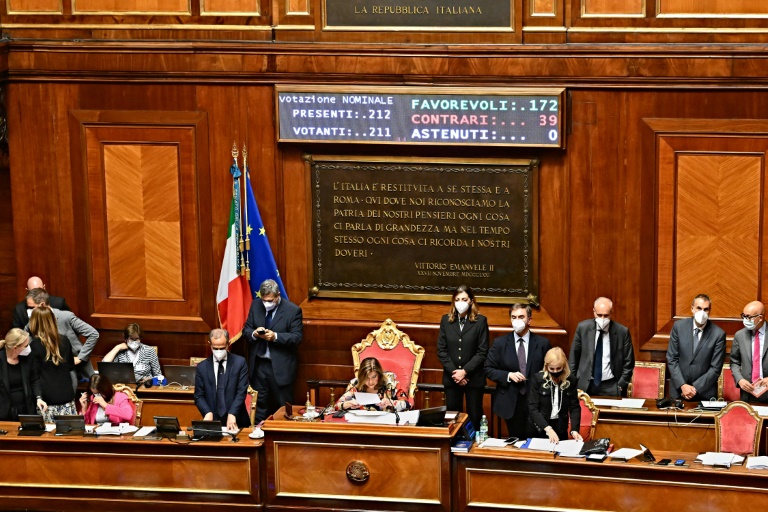
Italians woke to political uncertainty Friday amid an unprecedented government crisis that has put Mario Draghi’s future as prime minister on tenterhooks and raised the spectre of snap elections.

The premier of Europe’s third-largest economy will have until Wednesday to shore up political support in a bid to save his coalition government tackling numerous challenges, from soaring inflation to the war in Ukraine.

Italy’s technocrat leader, the former head of the European Central Bank, has significantly raised the profile of his country on the world stage and within Europe. 

The crisis comes at a crunch time for the country, which risks losing billions in EU post-recovery funds if the rollout of key structural reforms is threatened.

But he has presided over an unruly coalition of Italy’s top political parties, save for the far-right Brothers of Italy, that has become increasingly fractious in advance of general elections planned for early next year.

The crisis was sparked Thursday after the populist Five Star movement, a coalition member with dismal poll numbers, chose to sit out a confidence vote for a cost-of-living aid package some of whose provisions it objected to, prompting Draghi’s resignation.

President Sergio Mattarella, who acts as kingmaker in moments of political crisis, refused to accept the resignation, sending the premier back to parliament next week to assess the situation.

“We have a very open-ended situation, the pressure is going up, there’s lots of diplomatic work taking place behind the scenes and we still have four days to go,” Policy Sonar analyst Francesco Galietti told AFP. 

– ‘Italy risks chaos’ –

Although political crises are nothing new in Italy, “this one is unprecedented because geopolitical factors are taking precedent”, Galietti said, citing tensions with Russia over its war in Ukraine.  

Draghi is scheduled to be in Algeria, a crucial gas supplier in the wake of Italy’s boycott of Russian gas, Monday and Tuesday. On his return, he will deliver a speech to parliament, with or without a confidence vote. 

Politicians and experts view the possibility of Draghi continuing in his mandate as extremely fraught, even though he technically has the numbers to survive a confidence vote with or without Five Star. 

“The Draghi government and the coalition that supported it must continue, but right now I see it as very, very difficult,” Foreign Minister Luigi Di Maio told RTL 102.5 radio Friday. 

Accounts of behind-the-scenes political jostling filled Italian newspapers Friday.

“Draghi resigns, Italy risks chaos,” read a La Stampa daily headline. 

– ‘Suicidal instincts’ –

Corriere della Sera editorialist Massimo Franco wrote that Draghi’s resignation, forced by the Five Star, represents the “triumph of the suicidal instincts of political Italy”. 

The Five Star Movement “preferred to destroy the attempted transition to stability and normalcy represented by the anomaly of an executive of national unity led by the most eminent personality available,” he wrote. 

He added that the party was “desperate for a few percentage points to survive”.

Experts view the Five Star’s move as an attempt to appeal to its grassroots base ahead of next year’s election given poll numbers lagging at 11 percent.              

As Italy’s left-leaning and centrist parties called for support for Draghi, the Brothers of Italy and League party called for early elections. 

“With Draghi’s resignation… this legislature is over,” wrote Brothers of Italy leader Giorgia Meloni on Facebook. 

“This parliament no longer represents Italians… Elections now,” wrote Meloni, whose party currently leads in voter intention polls.   

The prospect of early elections is viewed by some political leaders as desirable “because the government’s ability to pass additional reforms and make politically difficult choices is close to exhaustion,” wrote economist Lorenzo Codogno of LC Macro Advisors in a note.

“Draghi does not want his term in office to die with painful and slow tortures.”

Search operations continue after deadly Russian strikes on Ukraine's Vinnytsia

Ukrainian rescuers on Friday continued search operations in the central city of Vinnytsia, where Russian strikes killed at least 23 people, including children. 

The charred remains of upturned cars surrounded by burnt debris were seen in images distributed by officials following the attack on Thursday on the city hundreds of kilometres from the front lines.

In his daily address to the nation late on Thursday, Ukraine’s President Volodymyr Zelensky said the toll was likely to rise. Dozens are still missing and many hospitalised in critical condition. 

“No other state in the world poses such a terrorist threat as Russia,” a somber Zelensky said. 

“No other state in the world allows itself to destroy peaceful cities and ordinary human life with cruise missiles and rocket artillery on a daily basis.”

United Nations Secretary General Antonio Guterres said he was “appalled” by the attack, while the European Union condemned it as an “atrocity.” Both called for accountability.

The president’s office said in its morning military update on Friday that 18 people were still missing following the Vinnytsia strikes and 73 were in hospital with injuries.

Ukrainian rescuers said they were continuing to clear debris on Friday and over four hundred people were involved in the operations. 

Ukrainian officials have identified one of the victims as a four-year-old girl called Liza, who was outside with her mother during the attack. 

Liza’s mother is alive but in “critical” condition after surgery, Vinnytsia official Sergiy Borzov said.

On Thursday, Zelensky led a moment of silence during an address in The Hague before urging European and International Criminal Court (ICC) officials to open a “special tribunal” into Russia’s invasion.

“I believe it is inevitable that (the) International Criminal Court will bring accountability to those guilty of crimes under its jurisdiction — war crimes, crimes against humanity, genocide.”

– War crimes tribunal –

The ICC in The Hague opened an investigation into possible war crimes in Ukraine just days after Moscow’s forces invaded and it dispatched dozens of investigators to the country to gather evidence.

Russia invaded on February 24 and the conflict has killed thousands of people, destroyed cities and forced millions to flee their homes.

“Every day Russia kills civilians, kills Ukrainian children, carries out missile attacks on the civilian facilities where there is no military target. What is this, if not an open act of terrorism?” Zelensky said on Thursday after the Vinnytsia attack.

Deadly strikes in central Ukraine have become relatively rare, but the war has raged around cities like Mykolaiv in the south, where officials said two universities were hit by strikes on Friday morning. 

“(Russia) attacked two of the biggest universities in Mykolaiv. At least 10 missiles,” regional head Vitaliy Kim said on Twitter. 

In his tweet he shared a video of large clouds of black smoke billowing into the sky from one of the city buildings.

The city’s mayor, Oleksandr Sienkevych, said two people were wounded in the attacks but there were no casualties.

The heaviest fighting in Ukraine, however, has focused recently on the industrial Donbas region in the east.

– ‘Clearing’ of Siversk –

Moscow-backed separatists said on Friday they were closing in on Siversk — their next target, after wresting control of sister cities Lysychansk and Severodonetsk two weeks ago.

“The Ukrainian command has decided to gradually pull out its units out of the town of Siversk,” Andrey Marochko, a spokesman for the separatist forces, told Russian state news agency TASS. 

An official for the Donetsk separatists, Daniil Versonov, said their fighters were in small groups “clearing” the eastern districts of Siversk. 

AFP could not independently verify these claims. 

– High-stakes grain talks –

Delegations from Kyiv and Moscow met in Istanbul this week to discuss unblocking Ukraine’s grain exports.

The meeting involving UN and Turkish officials ended after more than three hours with an agreement to meet again in Turkey next week.

Zelensky said “the entire world” was counting on the negotiations to finalise a deal.

The conflict has pushed up grain prices and Europe is suffering from sky-rocketing energy bills stemming from sanctions on Russia and Moscow’s move to limit gas flows to Europe.

United States Treasury Secretary Janet Yellen said on Thursday that Russia’s war in Ukraine posed the “greatest challenge” to the global economy, as G20 ministers prepare to start talks in Indonesia.

The European Commission meanwhile slashed growth forecasts for the eurozone, saying the consequences from the war in Ukraine were continuing to destabilise the economy because of record high inflation.

burs-acl/gil

Biden meets Palestinian leader ahead of Saudi visit

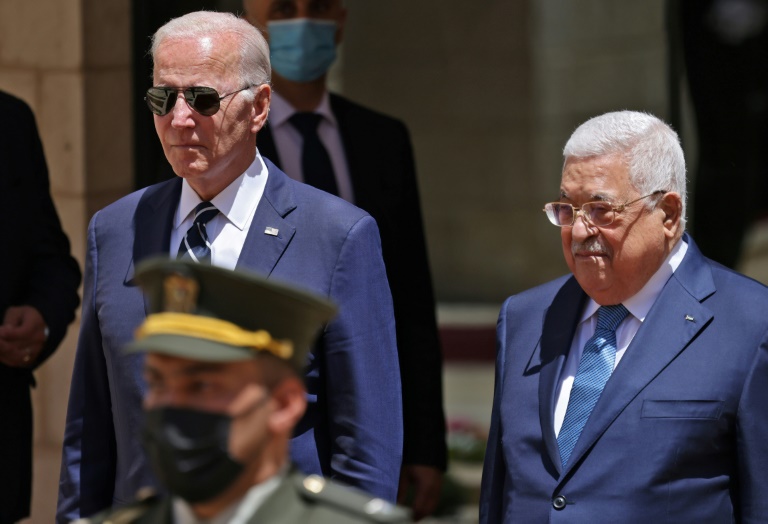
US President Joe Biden met Palestinian leader Mahmud Abbas in the occupied West Bank on Friday for talks expected to focus on economic measures without striking any major diplomatic breakthrough.

His arrival in Bethlehem comes ahead of a visit to Saudi Arabia, whose leaders on Friday changed aviation rules in an apparent gesture of openness towards Israel.

Riyadh paved the way for Israeli planes to use its airspace by announcing it was lifting restrictions on “all carriers”, a move welcomed by Biden as “historic”.

The president’s visit to the Saudi city of Jeddah will follow talks with Abbas, the latest high-level diplomatic meetings after those with the Israeli leadership on Thursday.

Turning his attention to Palestinian affairs, Biden visited a hospital in Israeli-annexed east Jerusalem on Friday where he announced a $100 million aid package for medical institutions in the area.

“These hospitals are the backbone of the Palestinian healthcare system,” he said, after talking extensively about his own family’s experience of emergency care.

With Israeli-Palestinian peace negotiations moribund since 2014, a US official said the delegation would be taking economic measures.

They include an “additional $201 million” for the UN agency serving Palestinian refugees (UNRWA), a senior administration official said.

Funding for the agency was cut by Biden’s predecessor Donald Trump.

But Biden made clear on Thursday he had no plans to reverse the controversial move to recognise Jerusalem as Israel’s capital by Trump, which infuriated Palestinians who see its eastern sector as the seat of their future state.

The US delegation will also unveil plans to roll out infrastructure for 4G internet across the Gaza Strip and the West Bank by the end of next year, fulfilling a longstanding aspiration among Palestinians as some of their Israeli neighbours already tap in to faster 5G networks.

– ‘Side by side’ –

With Palestinians banned by Israel from political activity in Jerusalem, the US president travelled to Bethlehem to meet Abbas.

A muted welcome awaited him from Palestinians there.

“He cannot buy us off,” said Tamer Mustafa, a 20-year-old Palestinian in downtown Bethlehem.

“The visit is not about peace, it is about Israel. Many people are angry because he said he was a Zionist.”

The Palestinian president has been in office since 2005 and last year scrapped elections, accusing Israeli officials of refusing to guarantee voting in east Jerusalem.

Biden on Thursday reiterated Washington’s support for “a two-state solution for two people, both of whom have deep and ancient roots in this land.”

While Israeli Prime Minister Yair Lapid said he ultimately backs a two-state solution, the caretaker leader is not expected to take any steps towards a peace agreement ahead of elections in November.

The Israeli government has recently adopted an approach known as “shrinking the conflict”, taking economic measures such as increasing the number of permits for Palestinians to work in Israel.

The World Bank put the poverty rate in the Palestinian territories at 27 percent last year, saying in April that the outlook “remains precarious and subject to additional political and security risks”.

– Next stop, Jeddah –

Finding a lasting solution to the decades-long conflict was, however, not the top priority during Biden’s meeting in Jerusalem with Lapid.

Iran’s nuclear programme and its support for Islamist groups such as Hamas, which rules Gaza, was the focal point of Thursday’s talks.

Biden and Lapid signed a new security pact, in which Washington committed to using all its “national power” to ensure Tehran does not obtain a nuclear weapon.

Washington is currently trying to get the nuclear deal between Tehran and world powers back on track, after it was derailed by Trump’s unilateral withdrawal in 2018.

In a tweet on Friday, Iran’s Foreign Minister Hossein Amir-Abdollahian said Biden’s trip to Israel was a “puppet show” that made his country “more determined” to protect its nuclear interests.

Following the visit to the West Bank, Biden will fly from Israel to Iran’s regional rival Saudi Arabia.

Riyadh’s decision to scrap airspace restrictions was welcomed as “good news” by Lapid.

“I thank the Saudi leadership for the opening of Saudi airspace. This is only the first step,” added the premier, as Israel presses for closer regional ties.

Saudi Arabia has long stressed its commitment to the decades-old Arab League position of not establishing official ties with Israel until the conflict with the Palestinians is resolved.

The US president is expected to meet Arab leaders from the Gulf Cooperation Council, who are gathering in the Saudi city of Jeddah, to discuss volatile oil prices.

Saudi opens airspace to 'all carriers' in gesture to Israel

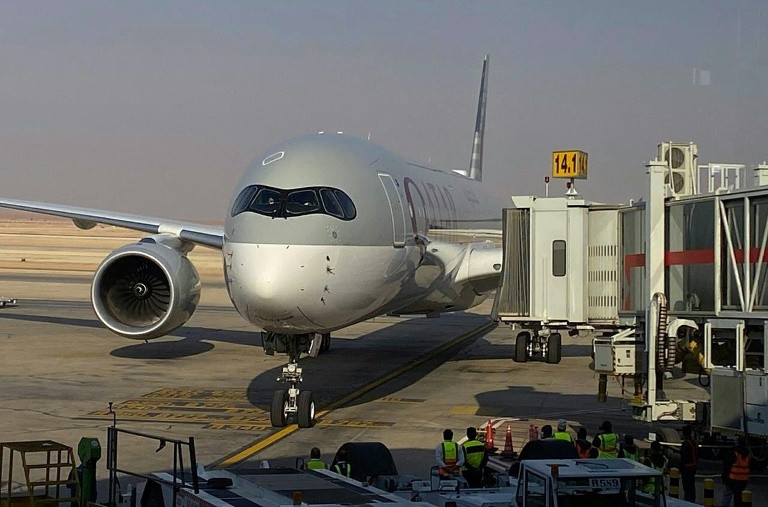
Saudi Arabia announced Friday it was lifting restrictions on “all carriers” using its airspace, an apparent gesture of openness towards Israel hours before US President Joe Biden’s arrival.

The US leader welcomed the “historic” decision, the latest conciliatory move by Riyadh concerning the Jewish state, which it has refused to recognise despite intensive efforts by the Israelis to establish ties with Arab countries.

The Saudi civil aviation authority “announces the decision to open the Kingdom’s airspace for all air carriers that meet the requirements of the authority for overflying”, it said in a statement.

The decision was made “to complement the Kingdom’s efforts aimed at consolidating the Kingdom’s position as a global hub connecting three continents”.

Biden said in a statement later Friday that Riyadh’s move came “thanks to months of steady diplomacy between my administration and Saudi Arabia”, where he is set to travel in the afternoon as part of a Middle East tour.

“As we mark this important moment, Saudi Arabia’s decision can help build momentum toward Israel’s further integration into the region, including with Saudi Arabia,” Biden said.

Israeli Prime Minister Yair Lapid thanked Biden on Friday for “long, intense and secret diplomatic negotiations between Saudi Arabia and the United States” to reach a deal on overflights.

“And I want to thank the Saudi leadership for opening their airspace. This is only a first step,” Lapid said.

Prior to Biden’s arrival in Israel at the start of his Middle East trip on Wednesday, Washington had hinted that more Arab nations could take steps to pursue relations with the Jewish state. That spurred speculation about whether Riyadh would alter its long-held position of not establishing official bilateral ties until the conflict with the Palestinians is resolved.

The kingdom did not show any opposition when its regional ally, the United Arab Emirates, established diplomatic ties with Israel in 2020, followed by Bahrain and Morocco under the US-brokered Abraham Accords.

Yet analysts have stressed that any immediate gains are likely to be incremental and that Riyadh will probably not agree to formal ties — not during Biden’s visit or while King Salman, 86, still reigns.

– ‘A major change’ –

Biden will travel to the Saudi city of Jeddah on the Red Sea coast Friday afternoon, despite a previous vow to treat the kingdom as a “pariah” over the 2018 murder and dismemberment of Saudi journalist Jamal Khashoggi.

He is to travel directly from the Jewish state to Saudi Arabia — becoming the first US president to fly from there to an Arab nation that does not recognise it.

In 2017, his predecessor, Donald Trump, made the journey in reverse.

Shortly after the Abraham Accords were announced in 2020, Saudi Arabia allowed an Israeli aircraft to pass over en route to Abu Dhabi and announced that UAE flights to “all countries” could overfly the kingdom.

Friday’s announcement effectively lifts overflight restrictions on aircraft travelling to and from Israel.

Israel has been pushing for the overflight rights to shorten links to destinations in Asia. 

Israeli Transport Minister Merav Michaeli said Friday that the lifting of restrictions would “significantly shorten flight times and lower prices”.

Authorities in Israel also want Muslim pilgrims from Israel to be able to travel directly to Saudi Arabia.

Currently they are required to make costly stopovers in third countries.

There has been “a major change in Saudi thinking” concerning Israel under de facto ruler Crown Prince Mohammed bin Salman, who Biden is expected to meet on Friday, said Dan Shapiro, Washington’s former ambassador to Israel.

Prince Mohammed “and to some degree even the king himself have indicated that they see normalisation with Israel as a positive”, said Shapiro, now with the Atlantic Council.

“They supported the Abraham Accords. Their own normalisation may take time and may be rolled out in phases, but it seems close to inevitable that it will happen.”

Close Bitnami banner
Bitnami