World

Asian stocks mixed as recession fears grow, China data disappoints

Stocks were mixed in Asia on Friday as soaring inflation and a series of interest rate hikes around the world continued to fan recession fears, while a big miss on Chinese growth added to anxiety about the world’s biggest economies.

Below-par earnings from JP Morgan and Morgan Stanley compounded worries that companies’ profits would be hit by the fallout from a number of issues including rising prices, monetary policy tightening and the war in Ukraine.

After rate hikes by several countries this week, investors expect the Federal Reserve to lift rates this month by 75 basis points as officials battle decades-high inflation, though some observers suggest a one-percentage-point move could even be on the cards.

The latest outsized US inflation print this week — caused by a spike in energy prices — followed last Friday’s strong US jobs data, giving the Fed room to continue its campaign to suck cash out of the financial system.

While experts warn that raising rates risks hammering the economy, the bank has made it clear its number-one priority is bringing down prices.

This has sent the dollar racing across the board, and Steve Englander at Standard Chartered Bank warned there was no end in sight for its advance.

The currency’s strength is “largely a flight to safety”, he told Bloomberg TV.

“The problem is until we get to see some light at the end of the tunnel with respect to either inflation coming off or oil prices coming off because of supply creation rather than demand destruction, it’s hard to call a top to it.”

With investors increasingly pricing in a recession next year, equities are struggling to recover.

US markets mostly fell, with sentiment weighed by the disappointing reports from JPMorgan Chase & Co. and Morgan Stanley. They will be followed over the next few days by Citigroup, Goldman Sachs and Bank of America.

Hong Kong and mainland Chinese markets led Asian losses after data showed China’s economy grew just 0.4 percent in the second quarter as it was battered by Covid lockdowns in major cities including Shanghai and Beijing.

The reading was well off the 1.6 percent predicted by analysts in an AFP survey, though there was speculation that it will pressure authorities to unveil new stimulus measures.

“We remain cautious on growth outlook in the second half, as spread of the much more infectious Omicron variant across the country could trigger another round of widespread lockdowns,” Nomura chief China economist Ting Lu told AFP.

Hong Kong-listed tech firms also tumbled on news that executives at Alibaba had been called in for meetings with Chinese officials following the theft of a vast police database.

Tokyo, Singapore, Seoul, Manila and Taipei rose but Sydney, Wellington, Bangkok, Manila and Jakarta fell.

London rose in the morning, along with Paris and Frankfurt.

The euro continues to hover around parity with the greenback as the European Central Bank (ECB) grapples with a range of issues including an energy crisis amid fears Russia will cut off its gas supplies in retaliation for Ukraine war sanctions.

Meanwhile, policymakers have yet to lift interest rates — leaving the bank well behind the Fed — on concerns about the vast differences, or “fragmentation”, between the eurozone’s individual sovereign bond rates.

Added to that is new political upheaval in Italy, where the government is teetering.

“With a weak currency, sky-high inflation, recession risk due to the energy crisis and political turmoil in Italy, the ECB is facing an impossible mission to solve all its problems simultaneously with monetary policy,” said SPI Asset Management’s Stephen Innes. 

“Front-loading a 50 basis point hike and revealing a solid anti-fragmentation tool seems the optimal solution for the central bank… but that is likely not enough to support a sustainable euro rebound.”

Traders are keeping tabs on Biden’s visit to Saudi Arabia as he tries to persuade the kingdom to help bring down crude prices by pumping more.

While both main contracts have fallen in recent weeks to below $100 owing recession fears, opinion is mixed on the outlook for the crude market, with some predicting it will surge to new highs and others warning it could fall to $65.

– Key figures at around 0810 GMT –

Tokyo – Nikkei 225: UP 0.5 percent at 26,788.47 (close)

Hong Kong – Hang Seng Index: DOWN 2.2 percent at 20,297.72 (close)

Shanghai – Composite: DOWN 1.6 percent at 3,228.06 (close)

London – FTSE 100: UP 0.7 percent at 7,090.70

Euro/dollar: UP at $1.0024 from $1.0022 Thursday

Pound/dollar: UP at $1.1836 from $1.1826 

Euro/pound: UP at 84.75 pence from 84.72 pence

Dollar/yen: DOWN at 138.85 yen from 138.93 yen

West Texas Intermediate: DOWN 0.6 percent at $95.22 per barrel

Brent North Sea crude: DOWN 0.2 percent at $99.86 per barrel

New York – Dow: DOWN 0.5 percent at 30,630.17 (close)
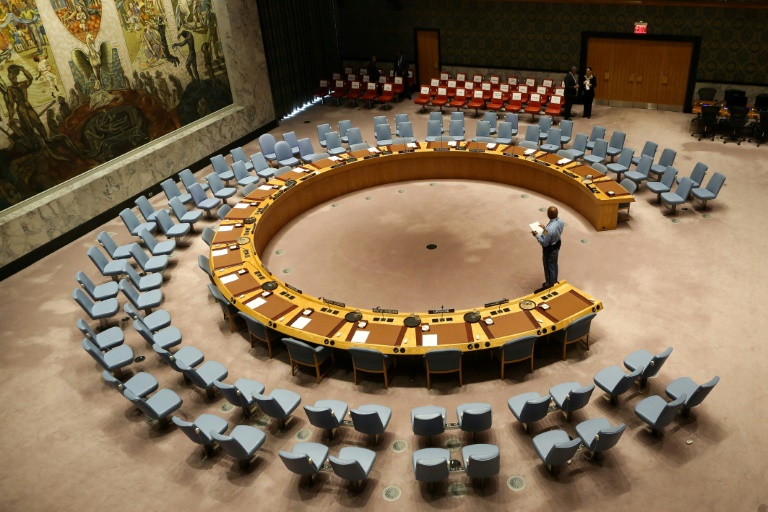
China asks UN Security Council for ban on small arms to Haiti

China has asked the UN Security Council to vote on banning small arms to Haiti, setting up a potential stand-off Friday with the United States whose revised draft resolution does not reflect Beijing’s proposal.

Council members are considering renewing a United Nations political mission to Haiti which expires on Friday night, but whether Chinese diplomats will go as far as to veto the latest resolution remains to be seen.

Beijing has taken an increasingly prominent role in issues relating to Haiti at the UN in recent years — primarily over Port-au-Prince recognition of self-ruled Taiwan, which China views as its own territory. 

“The situation in Haiti can’t be worse. As we conduct the negotiations here, the gang violence is escalating in Port-au-Prince,” a spokeswoman for the Chinese mission to the UN said. 

“An embargo of weapons against criminal gangs are the minimum the Council should do in response to the appalling situation,” she added, echoing the Chinese proposal for Security Council member states to ban small arms. 

But the revised text from the United States and Mexico finalized late Thursday and seen by AFP falls short of an embargo, instead calling “upon Member States to prohibit the transfer of small arms, light weapons, and ammunition to non-State actors engaged in or supporting gang violence.”

Gang violence in the Caribbean nation has been soaring — alongside fuel shortages and rising food prices — with at least 89 people killed in Port-au-Prince alone this week. Aid agencies have said the region is dangerous to access.

Diplomatic sources said Thursday that China has also asked the Council to vote on sanctioning Haiti’s gang leaders, and even sending a regional police force to the violence-plagued island.

The individual sanctions would include travel bans and asset freezes, according to a draft text also seen by AFP.

Countries that have diplomatic relations with China usually refrain from having official exchanges with Taiwan.

Beijing denies any link between its stance at the United Nations and the Taiwan issue, however. 

A Chinese diplomatic source told AFP that it was necessary to push political authorities in Haiti to act, and to put those responsible for the violence on notice with legal sanctions.

The United States is not necessarily against such sanctions, but they must be the right fit, an American diplomat said on condition of anonymity. 

It wouldn’t make much sense to implement an arms embargo without a sanctions committee or a group of UN experts to oversee it, the diplomat said, adding that further information about the proposed sanctions against individuals was necessary to discuss the idea.

It would all “need more work,” the source said. 

Crushing poverty and widespread violence is causing many Haitians to flee to the Dominican Republic, with which Haiti shares a border, or to the United States.

The Security Council is debating whether to extend the special UN political mission to Haiti, known by its acronym BINUH, to 2023. 

A vote had initially been scheduled for Wednesday, but with Council members debating China’s proposal, it was pushed back to Friday.

Biden to meet Palestinian leaders ahead of Saudi visit

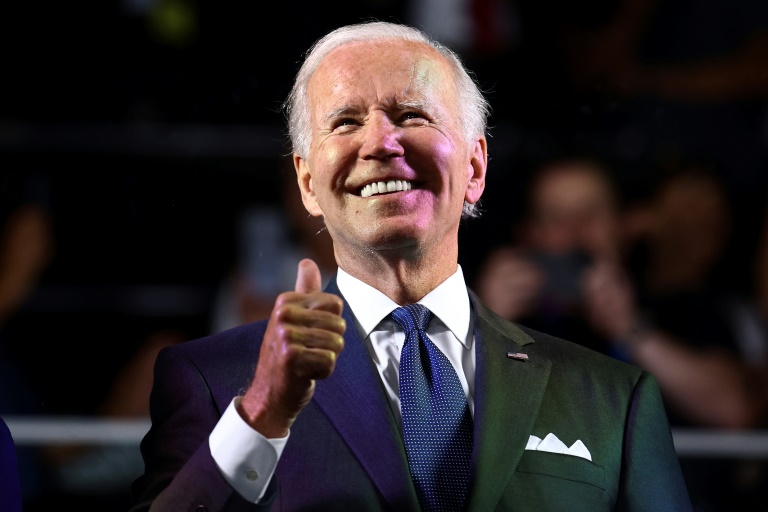
US President Joe Biden will meet Palestinian leader Mahmud Abbas in the occupied West Bank on Friday, with talks expected to focus on economic measures but without striking any major diplomatic breakthrough.

Bethlehem marks the latest stop on Biden’s Middle East tour, following meetings with Israeli officials and ahead of a visit to Saudi Arabia.

With Israeli-Palestinian peace negotiations moribund since 2014, a US official said the delegation would make “some significant announcements… such as enhancing Palestinian economic opportunities”.

Biden would announce an “additional $201 million” for the UN Relief and Works Agency for Palestinian Refugees (UNRWA), which provides education, health care and other services to Palestinians, a senior administration official said on Friday.

“The president has restored funding for UNRWA, which the previous administration had cut entirely, and under President Biden the US is now UNRWA’s largest donor,” the senior official said.

The US delegation will also unveil plans to roll out infrastructure for 4G internet across the Gaza Strip and West Bank by the end of next year, fulfilling a longstanding aspiration among Palestinians as some of their Israeli neighbours already tap in to faster 5G networks.

Biden would also unveil a “significant funding package” for hospitals in Israeli-annexed east Jerusalem, which largely support the Palestinian population, the US official said earlier.

The US president is due to visit one of those hospitals ahead of his meeting with Abbas, without being accompanied by Israeli officials.

But Biden made clear on Thursday he had no plans to reverse the controversial move to recognise Jerusalem as Israel’s capital by his predecessor Donald Trump, which infuriated Palestinians who see its eastern sector as the seat of their future state.

– ‘Side by side’ –

With Palestinians banned by Israel from political activity in Jerusalem, the US president will travel to Bethlehem to meet Abbas.

A muted welcome awaited him from Palestinians there.

On Thursday evening, protesters in Ramallah burned pictures of Biden.

“I am against President Abbas meeting him, because we should make it clear that we will not sit with anyone who is the enemy -– Biden clearly said ‘I am a Zionist’,” Jamilla Abbed, a retiree told AFP, predicting: “We’ll just get the crumbs.”

The Palestinian president has been in office since 2005 and last year scrapped elections, blaming Israeli officials for allegedly refusing to guarantee voting in east Jerusalem.

Biden on Thursday reiterated Washington’s support for “a two-state solution for two people, both of whom have deep and ancient roots in this land, living side by side in peace and security.”

While Israeli Prime Minister Yair Lapid said he ultimately backs a two-state solution, the caretaker leader is not expected to take any steps towards a peace agreement ahead of an election in November.

The Israeli government has recently adopted an approach known as “shrinking the conflict”, taking economic measures such as increasing the number of permits for Palestinians to work in Israel.

The World Bank put the poverty rate in the Palestinian territories at 27 percent last year, saying in April that the outlook “remains precarious and subject to additional political and security risks”.

– Next stop, Jeddah –

Finding a lasting solution to the decades-long conflict was, however, not the top priority during Biden’s meeting in Jerusalem with Lapid.

Iran’s nuclear programme and its support for Islamist groups such as Hamas, which rules Gaza, was the focal point of Thursday’s talks.

Biden and Lapid signed a new security pact, in which Washington committed to using all its “national power” to ensure Tehran does not obtain a nuclear weapon.

Washington is currently trying to get the nuclear deal between Tehran and world powers back on track, after it was derailed by Trump’s withdrawal of US support in 2018.

Following the visit to the West Bank, Biden will fly from Israel to Iran’s regional rival Saudi Arabia.

It will be the first publicly acknowledged direct flight from Tel Aviv to the Gulf kingdom, which does not recognise Israel.

In an apparent gesture of openness to the Jewish state ahead of Biden’s arrival, Saudi Arabia announced early Friday it was lifting restrictions on “all carriers” using its airspace.

Biden called that “an important step towards building a more integrated and stable Middle East region.”

Riyadh’s move effectively suspends overflight restrictions on aircraft travelling to and from Israel.

Saudi Arabia has long stressed its commitment to the decades-old Arab League position of not establishing official ties with Israel until the conflict with the Palestinians is resolved.

The US president is expected to meet Arab leaders from the Gulf Cooperation Council, who are gathering in the Saudi city of Jeddah, to discuss volatile oil prices. 

bur/gb-it/dv

UK owes apology for 'grave wrong' of forced adoptions: inquiry

Britain should formally apologise to unmarried mothers who were forced to give up their babies for adoption, according to an official report Friday that gave harrowing detail of the anguish suffered by the women.

Some 185,000 children were taken away for adoption between 1949 and 1976 in England and Wales, the report by parliament’s Joint Committee on Human Rights estimated.

The committee’s chairwoman, Labour MP Harriet Harman, said the bond between mothers and babies was “brutally ruptured” over the period.

“The mothers’ only ‘crime’ was to have become pregnant while unmarried. Their ‘sentence’ was a lifetime of secrecy and pain,” she said.

The committee acknowledged the “grave wrong” done to the mothers and their children, Harman said, adding: “It is time for the government to do the same and issue the apology they seek.

“For decades they have been vilified. Now they need to be vindicated.”

The report noted that Australia’s government issued a landmark apology in 2013 for forced adoptions, and Ireland’s did so last year.

Abortion was legalised in England, Scotland and Wales in 1967, but even after then, women faced practical barriers such as objections by their doctors.

Before and after, social stigma against unwed women becoming pregnant could be overwhelming.

One woman told the committee that she felt unable to tell her parents and went instead to stay with a relative. 

“When her mother eventually found out, she was berated as: ‘damaged goods, no one would ever marry me now, I had brought disgrace to the family’,” the report recounted.

Schools, churches and social services would direct pregnant young women to adoption agencies, often instructing their parents without consulting the women themselves.

In hospitals during childbirth, painkillers would be denied as “punishment” and afterward, babies were sometimes pulled from their sobbing mother’s arms to be taken away for adoption.

“Have you learnt your lesson now?” one woman recalled a doctor telling her while she was in labour. 

Another told the committee: “A doctor told me that I should be sterilised as I must be a nymphomaniac.”

The report called for more specialised counselling for people affected, and for the government to make it easier for those trying to trace their mother or child.

Without being drawn on an eventual apology, a government spokeswoman responded: “We have the deepest sympathy to all those affected by historic forced adoption.

“While we cannot undo the past, we have strengthened our legislation and practice to be built on empathy,” she said, pointing to the better care given today for vulnerable women.

US, Canada condemn Russia's war on Ukraine at Indonesia G20 talks

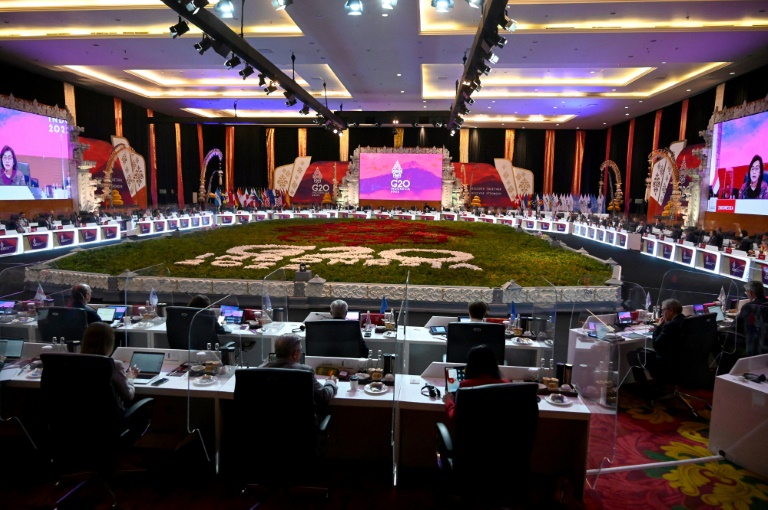
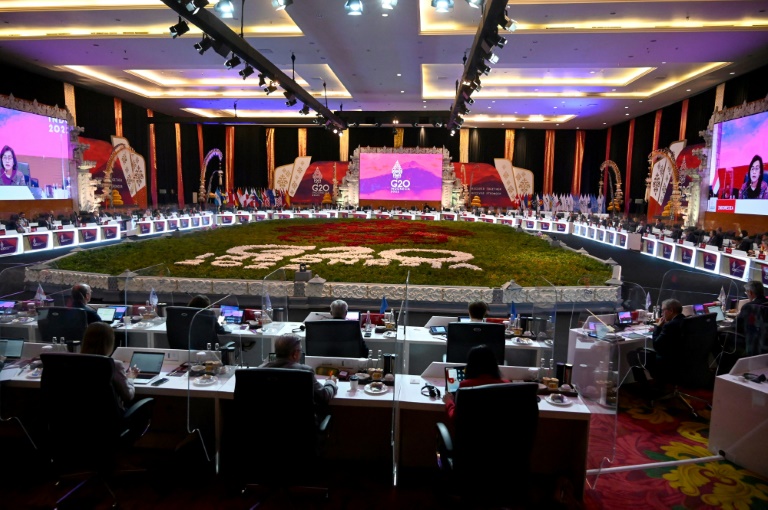
Western finance ministers condemned Moscow’s invasion of Ukraine at G20 talks in Indonesia Friday, accusing Russian officials of complicity in atrocities committed during the war.

The two-day meeting on the island of Bali began under the shadow of a Russian military assault that has roiled markets, spiked food prices and stoked breakneck inflation, a week after Moscow’s top diplomat walked out of talks with the forum’s foreign ministers.

“Russia is solely responsible for negative spillovers to the global economy,” US Treasury Secretary Janet Yellen told the Russian delegation in the opening session, according to a Treasury official.

“Russia’s officials should recognise that they are adding to the horrific consequences of this war through their continued support of the Putin regime. You share responsibility for the innocent lives lost.”

She was joined by Canadian Finance Minister Chrystia Freeland, who told Russia’s delegation they were responsible for “war crimes” in Ukraine because of their support for the invasion, a Canadian official said. 

“It is not only generals who commit war crimes, it is the economic technocrats who allow the war to happen and to continue,” said Freeland, according to the official.

Both Russian Finance Minister Anton Siluanov and Ukrainian Finance Minister Serhiy Marchenko are participating virtually in the meeting. 

Moscow instead sent Russian Deputy Finance Minister Timur Maksimov to attend the talks in person. He was present for both Yellen and Freeland’s condemnation, according to a source present at the talks.

Host and G20 chair Indonesia warned ministers that failure to tackle energy and food crises would be catastrophic.

In her opening remarks, Indonesian Finance Minister Sri Mulyani Indrawati called on ministers to work together with a spirit of “cooperation” because “the world is watching” for solutions.

“The cost of our failure is more than we can afford,” she told delegates. “The humanitarian consequences for the world and for many low-income countries would be catastrophic.”

– No walkout –

The meeting has largely focused on the food and energy crises that are weighing on an already brittle global recovery from the Covid-19 pandemic.

“(Russian President Vladimir) Putin’s actions including the destruction of agricultural facilities, theft of grain and farm equipment, and effective blockade of Black Sea ports amounts to using food as a weapon of war,” Yellen said in an afternoon seminar.

Indrawati said members had “identified the urgent need for the G20 to take concrete steps” to address food insecurity and to help countries in need.

Yellen is also pressing G20 allies for a price cap on Russian oil to choke off Putin’s war chest and pressure Moscow to end its invasion while bringing down energy costs.

Yellen in April led a multinational walkout of finance officials as Russian delegates spoke at a G20 meeting in Washington, but there was no such action on Friday.

There is unlikely to be a final communique issued when talks end on Saturday because of disagreements with Russia.

– ‘Act together’ – 

G20 chair Indonesia -– which pursues a neutral foreign policy –- has refrained from uninviting Russia despite Western pressure.

“We need to act together to demonstrate why G20 deserves its reputation as the premier forum for international cooperation,” Indrawati said. 

Alongside Moscow and Kyiv’s ministers, Chinese Finance Minister Liu Kun and Britain’s new Finance Minister Nadhim Zahawi were only attending virtually.

International Monetary Fund chief Kristalina Georgieva will appear in person after saying Wednesday the global economic outlook had “darkened significantly” because of Moscow’s invasion.

European Central Bank president Christine Lagarde is participating virtually, but World Bank chief executive David Malpass will not attend.

The meeting is a prelude to the leaders’ summit on the Indonesian island in November that was meant to focus on the global recovery from the Covid-19 pandemic.

Other issues being tackled by the ministers included digital financial inclusion –- with more than a billion of the world’s population still without access to a bank account -– and the deadline for an international tax rules overhaul.

US, Canada condemn Russia's war on Ukraine at Indonesia G20 talks

Western finance ministers condemned Moscow’s invasion of Ukraine at G20 talks in Indonesia Friday, accusing Russian officials of complicity in atrocities committed during the war.

The two-day meeting on the island of Bali began under the shadow of a Russian military assault that has roiled markets, spiked food prices and stoked breakneck inflation, a week after Moscow’s top diplomat walked out of talks with the forum’s foreign ministers.

“Russia is solely responsible for negative spillovers to the global economy,” US Treasury Secretary Janet Yellen told the Russian delegation in the opening session, according to a Treasury official.

“Russia’s officials should recognise that they are adding to the horrific consequences of this war through their continued support of the Putin regime. You share responsibility for the innocent lives lost.”

She was joined by Canadian Finance Minister Chrystia Freeland, who told Russia’s delegation they were responsible for “war crimes” in Ukraine because of their support for the invasion, a Canadian official said. 

“It is not only generals who commit war crimes, it is the economic technocrats who allow the war to happen and to continue,” said Freeland, according to the official.

Both Russian Finance Minister Anton Siluanov and Ukrainian Finance Minister Serhiy Marchenko are participating virtually in the meeting. 

Moscow instead sent Russian Deputy Finance Minister Timur Maksimov to attend the talks in person. He was present for both Yellen and Freeland’s condemnation, according to a source present at the talks.

Host and G20 chair Indonesia warned ministers that failure to tackle energy and food crises would be catastrophic.

In her opening remarks, Indonesian Finance Minister Sri Mulyani Indrawati called on ministers to work together with a spirit of “cooperation” because “the world is watching” for solutions.

“The cost of our failure is more than we can afford,” she told delegates. “The humanitarian consequences for the world and for many low-income countries would be catastrophic.”

– No walkout –

The meeting has largely focused on the food and energy crises that are weighing on an already brittle global recovery from the Covid-19 pandemic.

“(Russian President Vladimir) Putin’s actions including the destruction of agricultural facilities, theft of grain and farm equipment, and effective blockade of Black Sea ports amounts to using food as a weapon of war,” Yellen said in an afternoon seminar.

Indrawati said members had “identified the urgent need for the G20 to take concrete steps” to address food insecurity and to help countries in need.

Yellen is also pressing G20 allies for a price cap on Russian oil to choke off Putin’s war chest and pressure Moscow to end its invasion while bringing down energy costs.

Yellen in April led a multinational walkout of finance officials as Russian delegates spoke at a G20 meeting in Washington, but there was no such action on Friday.

There is unlikely to be a final communique issued when talks end on Saturday because of disagreements with Russia.

– ‘Act together’ – 

G20 chair Indonesia -– which pursues a neutral foreign policy –- has refrained from uninviting Russia despite Western pressure.

“We need to act together to demonstrate why G20 deserves its reputation as the premier forum for international cooperation,” Indrawati said. 

Alongside Moscow and Kyiv’s ministers, Chinese Finance Minister Liu Kun and Britain’s new Finance Minister Nadhim Zahawi were only attending virtually.

International Monetary Fund chief Kristalina Georgieva will appear in person after saying Wednesday the global economic outlook had “darkened significantly” because of Moscow’s invasion.

European Central Bank president Christine Lagarde is participating virtually, but World Bank chief executive David Malpass will not attend.

The meeting is a prelude to the leaders’ summit on the Indonesian island in November that was meant to focus on the global recovery from the Covid-19 pandemic.

Other issues being tackled by the ministers included digital financial inclusion –- with more than a billion of the world’s population still without access to a bank account -– and the deadline for an international tax rules overhaul.

Sri Lankan president's resignation accepted

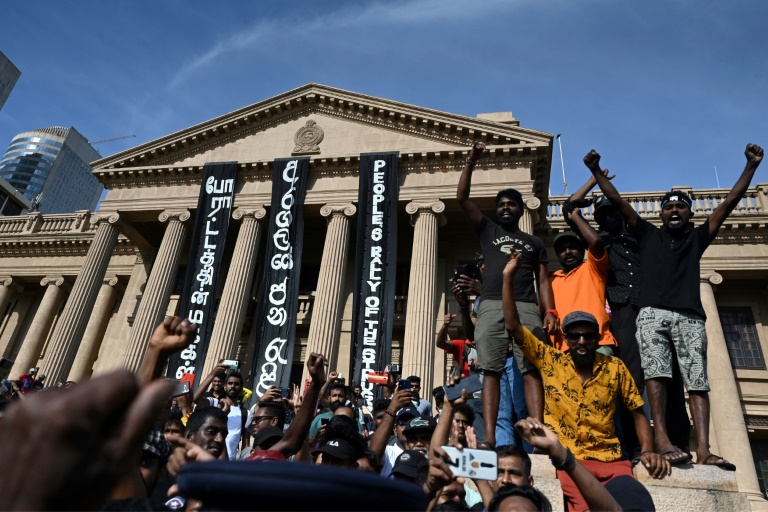
The resignation of Sri Lanka’s president has been accepted, the crisis-hit country’s parliamentary speaker announced Friday, after he fled the country earlier this week, prompting relief among protesters camped outside his former offices.

The formal declaration makes Gotabaya Rajapaksa — once known as “The Terminator” for his ruthless crushing of the Tamil rebellion — the first Sri Lankan head of state to resign since it adopted an executive presidency in 1978.

He emailed in his notice from Singapore after flying to the city-state from the Maldives, where he initially escaped after demonstrators overran his palace at the weekend. 

“The president has officially resigned from his position,” speaker Mahinda Yapa Abeywardana told reporters. 

Outside the presidential secretariat, at the makeshift headquarters of a months-long protest movement against Rajapaksa, Catholic priest Jeevantha Peiris told AFP: “This is a historical moment for all Sri Lankans.

“We were assaulted, put in prisons, put on travel bans, some of our friends laid their lives down. With all these hardships we have come through,” the 45-year-old said. “We have no fear anymore.”

The former president, he added, was a “bloodthirsty criminal” who should return to Sri Lanka to face justice.

Prime Minister Ranil Wickremesinghe was sworn in as acting president — his accession was automatic under Sri Lanka’s constitution — but many of the demonstrators see him as complicit in the rule of the Rajapaksas and also want him to go.

Parliament will meet on Wednesday to elect an MP to succeed Rajapaksa for the rest of his term, the speaker’s office said, with nominations due the previous day.

– ‘Private visit’ to Singapore –

Rajapaksa’s departure came after months of protests over what critics said was his mismanagement of the island nation’s economy, leading to severe hardships for its 22 million people. 

He, his wife Ioma and their two bodyguards arrived in Singapore from the Maldives on board a Saudia airline flight.

As president, Rajapaksa enjoyed immunity from arrest, and he is understood to have wanted to go abroad before stepping down to avoid the possibility of being detained. 

The former Maldivian president Mohamed Nasheed is believed to have played a behind-the-scenes role in getting him out of the country, and said Rajapaksa feared he would be killed if he remained.

“I believe the President would not have resigned if he were still in Sri Lanka, and fearful of losing his life,” Nasheed tweeted. 

Singapore’s foreign ministry confirmed Rajapaksa had been allowed to enter the city-state for a “private visit”, adding: “He has not asked for asylum and neither has he been granted any asylum.”

He is expected to look to stay in Singapore for some time, according to Sri Lankan security sources, before potentially moving to the United Arab Emirates.

The spiralling economic crisis led to Sri Lanka defaulting on its $51 billion foreign debt in April, and it is in talks with the International Monetary Fund (IMF) for a possible bailout.

But the talks have been thrown off course by the political upheaval, and an IMF spokesman said Thursday the fund hoped the unrest could be resolved soon so negotiations could resume. 

The island has nearly exhausted its already scarce supplies of petrol, with the government ordering the closure of non-essential offices and schools to reduce commuting and save fuel.

– Protesters exit –

In Colombo, demonstrators on Thursday left several of the emblematic state buildings they had occupied in recent days after Wickremesinghe instructed security forces to restore order and declared a state of emergency.

Witnesses saw dozens of activists leave Wickremesinghe’s office as armed police and security forces moved in. 

The capital was put under curfew and armoured personnel carriers patrolled some areas.

Hundreds of thousands of people had visited the prime minister’s compound since it was opened to the public after he fled and his security guards backed down. 

By Thursday afternoon, the gates were closed, with armed guards posted both inside and outside.

Police said a soldier and a constable were injured in clashes with protesters outside the national parliament as security forces beat back an attempt to storm the legislature.

Protesters also left the studios of the main state television station after breaking in on Wednesday.

The main hospital in Colombo said about 85 people were admitted with injuries on Wednesday, with one man suffocating to death after being tear-gassed at the premier’s office.

The military and the police were issued fresh orders Thursday to firmly put down any violence, and warned troublemakers they were “legitimately empowered to exercise their force”.

But student Chirath Chathuranga Jayalath, 26, said: “You cannot stop this protest by killing people. They’ll shoot our heads but we do this from our hearts.”

China growth falls to two-year low on Covid, property woes

China logged its slowest economic growth since the initial Covid outbreak Friday, expanding just 0.4 percent in the second quarter with lockdowns and property market weakness pushing the government’s target further out of reach.

Beijing has dug its heels in on a zero-Covid policy of stamping out virus clusters with snap lockdowns and long quarantines, but this has battered businesses and kept consumers jittery.

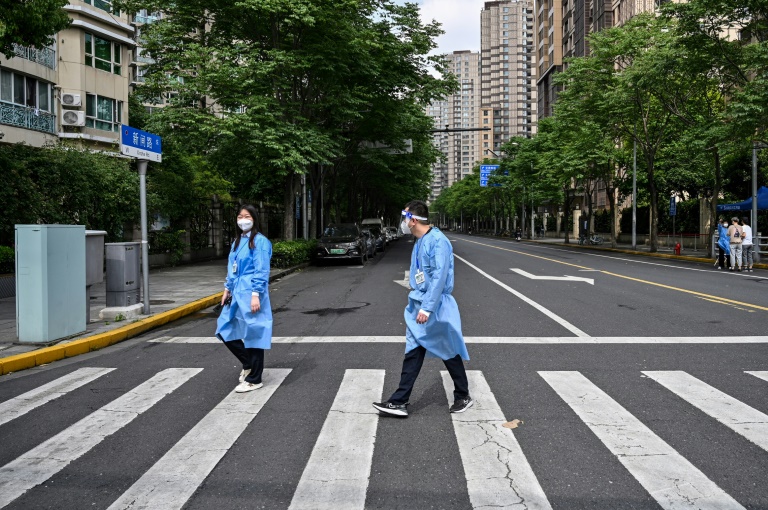
The slowdown comes after China’s biggest city Shanghai was sealed off for two months as it battled a virus resurgence, tangling supply chains and forcing factories to halt operations.

“Domestically, the impact of the epidemic is lingering,” National Bureau of Statistics spokesman Fu Linghui said Friday, noting shrinking demand and disrupted supplies.

“The risk of stagflation in the world economy is rising” also, he told reporters, adding that external uncertainties were growing.

Economic expansion for the April-June period in the world’s second-largest economy was also down 2.6 percent from the previous quarter, the NBS said.

China has only logged a GDP contraction once in recent decades, and analysts expect the latest reading will drag further on full-year growth.

Still, industrial production rose 3.9 percent on-year in June, up from 0.7 percent in May as Covid controls eased, while retail sales picked up 3.1 percent after plummeting 6.7 percent the month before, in what analysts called an encouraging sign.

The economy is “on track for a slow recovery”, said Zhiwei Zhang of Pinpoint Asset Management.

“Nonetheless, economic growth is still much lower than its potential, as the fear of Covid outbreaks continues to hurt consumer and corporate sentiment,” he added in a note.

The urban unemployment rate ticked down to 5.5 percent in June, NBS data showed.

But the figure for those aged 16 to 24 was significantly higher at 19.3 percent, adding to challenges in a year with a record number of college graduates.

In Shanghai, where GDP plunged 13.7 percent in the second quarter, the jobless rate stood at 12.5 percent.

The weak figures could give room for authorities to roll out stimulus.

“Fiscal stimulus will continue to do the heavy lifting before consumption demand fully recovers,” said Chaoping Zhu of J.P. Morgan Asset Management.

Zhu added that the central bank is expected to maintain low rates to support government spending and the property market.

– ‘Hard to square’ –

Economists have long questioned the accuracy of official Chinese data, suspecting that figures are massaged for political purposes.

China’s second quarter growth is “hard to square with the large hit to activity from lockdowns”, said Julian Evans-Pritchard, senior China economist at Capital Economics.

“Even accounting for June’s strength, the data are consistent with negative year-on-year growth last quarter,” he added.

The data comes at a time of mounting challenges in China’s key real estate sector — which by some estimates accounts for a quarter of gross domestic product — with weak home sales in recent months. 

A growing number of homebuyers are also refusing to pay their mortgages over worries their properties will not be built on time.

“We remain cautious on growth outlook in the second half, as spread of the much more infectious Omicron variant across the country could trigger another round of widespread lockdowns,” Nomura chief China economist Ting Lu told AFP.

Homebuyers halting mortgage repayments could also “result in a vicious cycle in the property sector, and a likely synchronised global slowdown will eventually hit the export sector”, he added.

The news piles pressure on the Communist Party’s leadership as it gears up for its 20th Congress, at which President Xi Jinping is expected to be handed a third term.

Analysts say it is unlikely the official target of around 5.5 percent growth this year can be attained, given that it will require a huge acceleration in the second half.

Former Pakistan PM Khan faces popularity test in provincial by-election

Former Pakistani prime minister Imran Khan faces a popularity test this weekend in a by-election for 20 assembly seats in the country’s most populous province.

Sunday’s vote in Punjab is seen as a possible bellwether for national elections that must be held by October next year, although Khan has campaigned across the country for an earlier poll since being dismissed by a no-confidence vote in April.

Twenty Punjab seats fell vacant after the election commission disqualified members of Khan’s Pakistan Tehreek-e-Insaf (PTI) party at his request when they switched loyalties.

The machinations led to a change of government in the province, which is now headed by Hamza Sharif, son of Prime Minister Shehbaz Sharif.

Analysts say the election gives Khan the chance to gauge how well his campaign to raise popular support is going.

“If he wins, he will say ‘people are with me’ and increase pressure for fresh elections,” political commentator Hasan Askari told AFP.

If he loses, “Khan will definitely call it a rigged election”, he added.

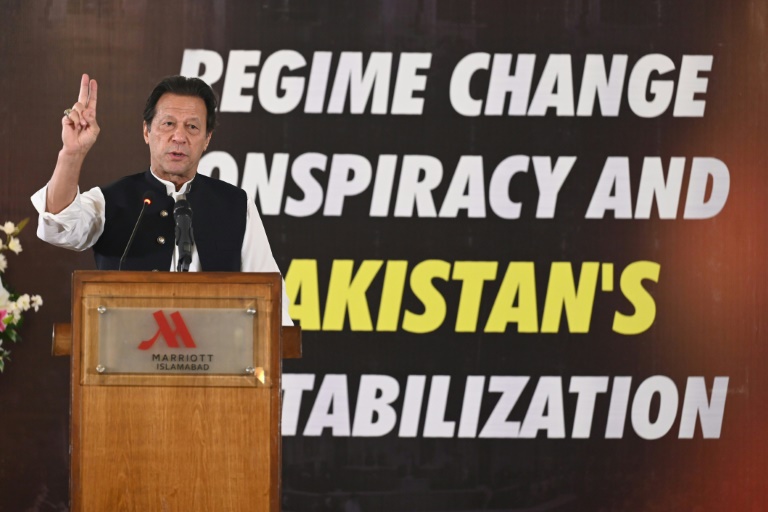
Khan has drawn thousands to rallies across the country since being deposed, giving lengthy speeches claiming the government was imposed on Pakistan by a US-led conspiracy. 

He also blames the current government for soaring inflation, although most analysts agree Sharif inherited the country’s economic woes — which were given some relief this week by an agreement with the International Monetary Fund to resume a rescue package.

Sharif’s Pakistan Muslim League-N party needs to win at least half the 20 seats up for grabs in Punjab or else they will likely cede control of the assembly to the PTI and its allies.

“Stakes are high on both sides,” Askari said.

“The future political direction will remain uncertain in Pakistan even in the post-election period.”

Do signs point to an Israel-Saudi normalisation deal?

The United States has hinted that more Arab nations could take steps to improve ties with Israel, ahead of President Joe Biden’s arrival in Saudi Arabia on Friday.

All eyes are on the kingdom, where Biden is to land despite a previous vow to treat the kingdom as a “pariah” over the 2018 murder and dismemberment of Saudi journalist Jamal Khashoggi.

Yet despite the recent signs of a US-Saudi rapprochement, analysts say it is improbable Riyadh will agree to diplomatic ties with Israel — not during Biden’s visit or while King Salman, 86, still reigns.

The king’s official policy is that there should be no peace with Israel until it withdraws from occupied territories and accepts Palestinian statehood.

Biden’s visit will likely focus on convincing the world’s biggest crude exporter to boost its oil output.  

Here are some questions and answers about the possibility of a normalisation deal between Saudi Arabia and Israel: 

– What are the signs? –

Saudi’s de facto ruler Crown Prince Mohammed bin Salman has said Israel was a “potential ally, with many interests that we can pursue together”, state media reported in March, attributing the statement to an interview with The Atlantic. 

Additionally, the kingdom did not show any opposition when its regional ally, the United Arab Emirates, established diplomatic ties with Israel in 2020, followed by Bahrain and Morocco under the US-brokered Abraham Accords. 

In January 2021, Sudan’s transitional government also agreed to do the same but the northeast African country has yet to finalise the deal.

Saudi Arabia also at the time allowed direct flights from the Emirates to Israel to travel through its airspace, in another implicit sign of approval.

Biden, who will arrive in the Red Sea city of Jeddah, is to travel directly from the Jewish state to Saudi Arabia, becoming the first US president to fly from there to an Arab nation that does not recognise Israel. 

In 2017 his predecessor, Donald Trump, made the journey in reverse.

In an apparent gesture of openness to Israel ahead of Biden’s arrival Friday, Saudi Arabia announced it was lifting restrictions on “all carriers” using its airspace — effectively suspending overflight restrictions on aircraft travelling to and from Israel.

In recent months, some Saudis have taken to social media — which is tightly controlled in the kingdom — to express their support for normalisation, which would be a shift from the kingdom’s long-standing pan-Arab policy to isolate Israel until the conflict with the Palestinians is resolved. 

Esawi Frej, Israel’s minister of regional cooperation, told Saudi newspaper Arab News in June that Riyadh would be “central” to any solution to the Israeli-Palestinian conflict.

The Axios news website reported in June that the United States was working on a “road map” for normalisation between Israel and Saudi Arabia, while The Wall Street Journal said the region’s two most influential nations were engaging in secret economic and security talks. 

– In both countries’ interests? –

Yasmine Farouk of the Carnegie Endowment for International Peace said a relationship with Israel would contribute to greater acceptance of Saudi Arabia.

“It will open doors for the crown prince, with Western people and parliaments accepting the kingdom, and granting Saudi Arabia a greater role,” she said. 

This would bolster Prince Mohammed’s vision of his country as “a global power, not just an Arab and Islamic one”. 

Israel, for its part, wants normalisation “because not only will it open the door to Saudi Arabia, but to other (Arab and Muslim) countries that may already engage in secret discussions with Israel but don’t dare normalise yet”, Farouk said.

The two countries share a common enemy in Iran, said a Riyadh-based diplomat who spoke on condition of anonymity.

“They are looking at it in the sense of ‘the enemy of my enemy is my friend’,” he said. 

Saudi officials contacted by AFP refused to comment due to the “sensitivity” of the issue. 

– Is it the right time? –

Dan Shapiro, who served as former US president Barack Obama’s ambassador to Israel, told AFP he expects Biden’s trip to produce “some important steps” towards Saudi diplomatic recognition of Israel, “probably not full normalisation, but a road map that leads in that direction”.

Actually executing that road map is “difficult as long as King Salman is alive”, Farouk said.

“The word ‘normalisation’ should be used more cautiously… There might be some forms of relations but going as far as the Emirates and Bahrain, I’m still a bit sceptical.”

Kristian Ulrichsen of Rice University’s Baker Institute said full diplomatic ties are likely only when Prince Mohammed becomes king. 

“In the meantime, we are likely to see a continuation of the current approach of normalising the idea that Saudi Arabia and Israel are not enemies but share certain regional and geopolitical interests,” he told AFP. 

Close Bitnami banner
Bitnami