World

G20 finance chiefs meet as Indonesia warns of energy, food catastrophe

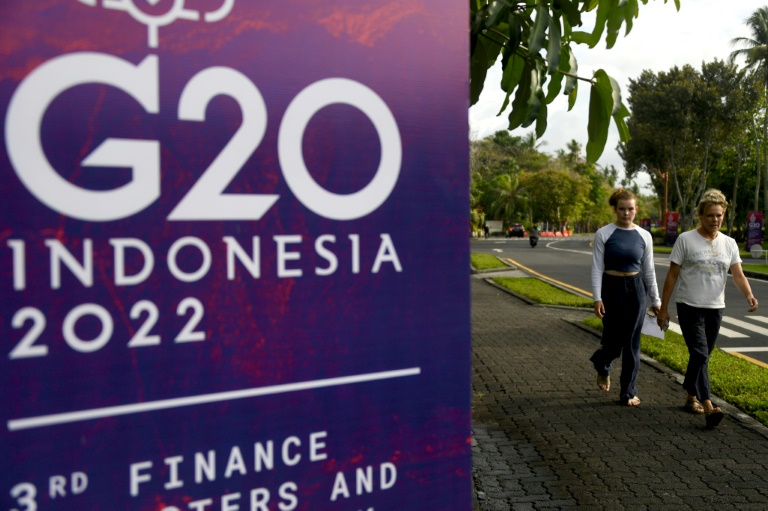
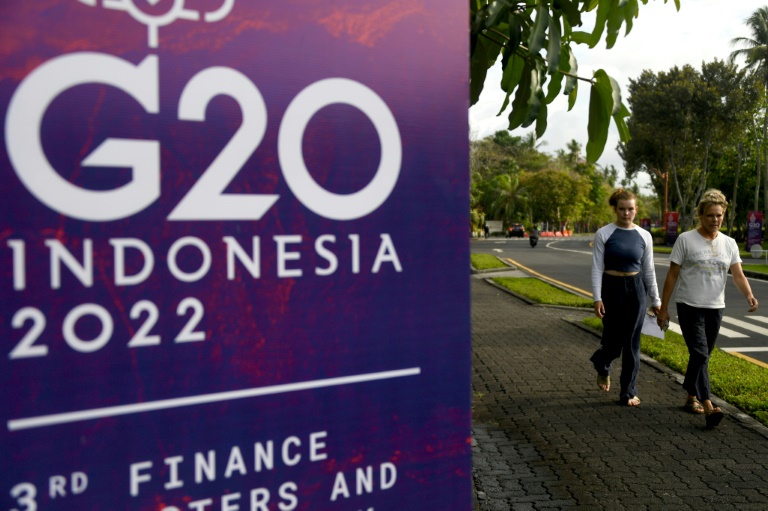
Group of 20 finance ministers and central bank chiefs from top economies met in Indonesia Friday for talks on the fallout from Russia’s invasion of Ukraine, with the host warning them failure to tackle energy and food crises would be catastrophic.

The two-day meeting on the resort island of Bali started under the shadow of a war that has roiled markets, spiked food prices and stoked breakneck inflation, a week after Moscow’s top diplomat walked out of talks with the forum’s foreign ministers.

In her opening remarks, Indonesian Finance Minister Sri Mulyani Indrawati called on ministers to work together with a spirit of “cooperation, collaboration and consensus” because “the world is watching” for solutions.

“The cost of our failure is more than we can afford,” she told delegates. “The humanitarian consequences for the world and for many low-income countries would be catastrophic.”

Top global finance figures, including US Treasury Secretary Janet Yellen, will discuss the rebound from the coronavirus pandemic. But the impact of the Ukraine war –- weighing on an already brittle global recovery –- will top the agenda.

A day before the meeting, Yellen set the tone, calling Russia’s war in Ukraine the “greatest challenge” to the global economy and saying members of Putin’s government “have no place” at the talks.

“We are seeing negative spillover effects from that war in every corner of the world, particularly with respect to higher energy prices and rising food insecurity,” she said.

Yellen is expected to press G20 allies for a price cap on Russian oil to choke off President Vladimir Putin’s war chest and pressure Moscow to end its invasion while bringing down energy costs.

Both Russian Finance Minister Anton Siluanov and Ukrainian Finance Minister Serhiy Marchenko are participating virtually in the meeting.

Yellen in April led a multinational walkout of finance officials as Russian delegates spoke at a G20 meeting in Washington. No communique was issued at the end of that meeting.

It is unclear if a similar walkout will take place at this meeting, after no foreign minister walked out last week, but Yellen would not be drawn on if they would repeat their joint action.

There is also unlikely to be a final communique issued when talks end on Saturday because of disagreements with Russia.

– World tax overhaul deadline set – 

G20 chair Indonesia -– which pursues a neutral foreign policy –- has refrained from uninviting Russia despite Western pressure.

Italy and Canada’s finance ministers are in attendance, but Chinese Finance Minister Liu Kun and Britain’s new Finance Minister Nadhim Zahawi are only attending virtually.

International Monetary Fund chief Kristalina Georgieva will appear in person after saying Wednesday the global economic outlook had “darkened significantly” because of Moscow’s invasion.

European Central Bank president Christine Lagarde is participating virtually, but World Bank chief executive David Malpass will not attend.

The meeting is a prelude to the leaders’ summit on the Indonesian island in November that was meant to focus on the global recovery from the Covid-19 pandemic.

Other issues to be tackled by the ministers include digital financial inclusion –- with more than a billion of the world’s population still without access to a bank account -– and the deadline for an international tax rules overhaul.

The Organisation for Economic Cooperation and Development (OECD) will present the ministers with an update on the progress of international tax changes that will set a global minimum corporate tax rate of 15 percent by 2024, a year later than originally planned.

The deadline for the passing of legislation underpinning the new rules was set at mid-2023, the OECD said.

Biden to meet Palestinian leaders ahead of Saudi visit

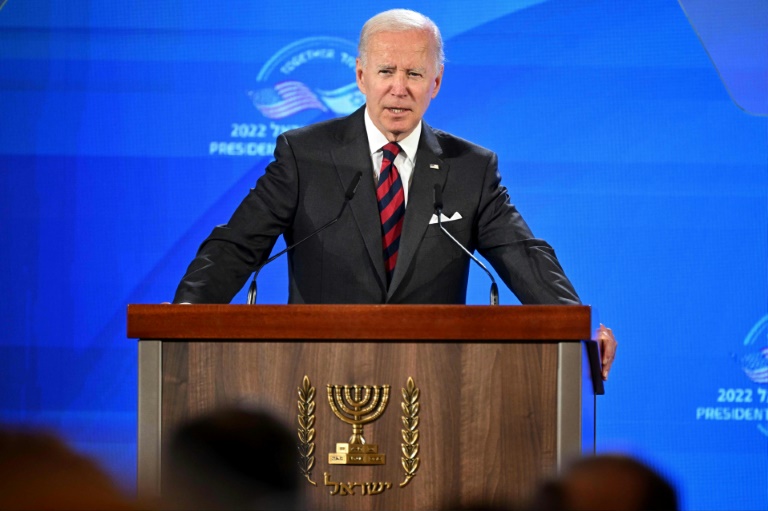
US President Joe Biden will meet Palestinian leader Mahmud Abbas in the occupied West Bank Friday, with talks expected to focus on economic measures but without striking any major diplomatic breakthrough.

Bethlehem marks the latest stop on Biden’s Middle East tour, following meetings with Israeli officials and ahead of a visit to Saudi Arabia.

With Israeli-Palestinian peace negotiations moribund since 2014, a US official said the delegation will make “some significant announcements… such as enhancing Palestinian economic opportunities.”

The US delegation will unveil plans to roll out infrastructure for faster 4G internet across Gaza and the West Bank by the end of next year, fulfilling a longstanding aspiration among Palestinians as some of their Israeli neighbours already tap in to 5G networks.

Biden will also announce a “significant funding package” for hospitals in Israeli-annexed east Jerusalem, the US official said Wednesday, which largely support the Palestinian population.

The US president is due to visit one of those hospitals ahead of his meeting with Abbas, without being accompanied by Israeli officials.

But Biden made clear on Thursday he had no plans to reverse the controversial move to recognise Jerusalem as Israel’s capital by his predecessor Donald Trump, which infuriated Palestinians who see its eastern sector as the seat of their future state.

– ‘Side by side’ – 

With Palestinians banned by Israel from political activity in Jerusalem, the US president will travel to Bethlehem to meet Abbas.

The Palestinian president has been in office since 2005 and last year scrapped elections, blaming Israeli officials for allegedly refusing to guarantee voting in east Jerusalem.

Biden on Thursday reiterated Washington’s support for “a two-state solution for two people, both of whom have deep and ancient roots in this land, living side by side in peace and security.”

While Israeli Prime Minister Yair Lapid said he ultimately backs a two-state solution, the caretaker leader is not expected to take any steps towards a peace agreement ahead of elections in November.

The Israeli government has recently adopted an approach known as “shrinking the conflict”, taking economic measures such as increasing the number of permits for Palestinians to work in Israel.

The World Bank put the poverty rate in the Palestinian territories at 27 percent last year, saying in April that the outlook “remains precarious and subject to additional political and security risks”.

– Next stop, Jeddah –

Finding a lasting solution to the decades-long conflict was however not the top priority during Biden’s meeting in Jerusalem with Lapid.

Iran’s nuclear programme and its support for Islamist groups such as Hamas, which rules the Gaza Strip, was the focal point of Thursday’s talks.

Biden and Lapid signed a new security pact, in which Washington committed to using all its “national power” to ensure Tehran does not obtain a nuclear weapon.

Washington is currently trying to get the nuclear deal between Tehran and world powers back on track, after it was derailed by Trump’s withdrawal of US support in 2018.

Following the visit to the West Bank, Biden will fly from Israel to Iran’s regional rival Saudi Arabia.

It will be the first publicly acknowledged direct flight from Tel Aviv to the Gulf kingdom, which does not recognise Israel.

In an apparent gesture of openness to the Jewish state ahead of Biden’s arrival, Saudi Arabia announced early Friday it was lifting restrictions on “all carriers” using its airspace.

Riyadh’s move effectively suspends overflight restrictions on aircraft travelling to and from Israel.

Saudi Arabia has long stressed its commitment to the decades-old Arab League position of not establishing official ties with Israel until the conflict with the Palestinians is resolved.

The US president is expected to meet Arab leaders from the Gulf Cooperation Council, who are gathering in the Saudi city of Jeddah, to discuss volatile oil prices. 

Saudi opens airspace to 'all carriers' in gesture to Israel

Saudi Arabia announced Friday it was lifting restrictions on “all carriers” using its airspace, an apparent gesture of openness towards Israel ahead of US President Joe Biden’s arrival.  

The US leader welcomed the “historic” decision, the latest conciliatory move by Riyadh concerning the Jewish state, which it has refused to recognise despite intensive efforts by the Israelis to establish ties with Arab countries. 

The Saudi civil aviation authority “announces the decision to open the Kingdom’s airspace for all air carriers that meet the requirements of the authority for overflying”, it said in a statement on Twitter.  

The decision was made “to complement the Kingdom’s efforts aimed at consolidating the Kingdom’s position as a global hub connecting three continents”. 

“This decision is the result of the President’s persistent and principled diplomacy with Saudi Arabia over many months, culminating in his visit today,” US National Security Adviser Jake Sullivan said in the statement, adding that Biden “commends” it.

He said the US president, who will land in Saudi Arabia for a controversial visit later Friday as part of a trip to the Middle East, “will have more to say on this breakthrough later today.”

Prior to Biden’s arrival in Israel at the start of his Middle East trip on Wednesday, Washington had hinted that more Arab nations could take steps to pursue relations with Israel, spurring speculation about whether Riyadh would alter its long-held position of not establishing official bilateral ties until the conflict with the Palestinians is resolved. 

The kingdom did not show any opposition when its regional ally, the United Arab Emirates, established diplomatic ties with Israel in 2020, followed by Bahrain and Morocco under the US-brokered Abraham Accords. 

Yet analysts have stressed that any immediate gains are likely to be incremental and that Riyadh will probably not agree to formal ties — not during Biden’s visit or while King Salman, 86, still reigns. 

Biden will travel to the Saudi city of Jeddah on the Red Sea coast Friday afternoon, despite a previous vow to treat the kingdom as a “pariah” over the 2018 murder and dismemberment of Saudi journalist Jamal Khashoggi. 

He is to travel directly from the Jewish state to Saudi Arabia — becoming the first US president to fly from there to an Arab nation that does not recognise it.  

In 2017, his predecessor, Donald Trump, made the journey in reverse.  

– ‘A major change’ –

Shortly after the Abraham Accords were announced in 2020, Saudi Arabia allowed an Israeli aircraft to pass over en route to Abu Dhabi and announced that UAE flights to “all countries” could overfly the kingdom. 

Friday’s announcement effectively lifts overflight restrictions on aircraft travelling to and from Israel. 

Israel has been pushing for the overflight rights to shorten links to destinations in Asia. 

Israeli authorities also want Muslim pilgrims from Israel to be able to travel directly to Saudi Arabia. 

Currently they are required to make costly stopovers in third countries. 

There has been “a major change in Saudi thinking” concerning Israel under de facto ruler Crown Prince Mohammed bin Salman, who Biden is expected to meet on Friday, said Dan Shapiro, Washington’s former ambassador to Israel. 

Prince Mohammed “and to some degree even the king himself have indicated that they see normalisation with Israel as a positive”, said Shapiro, now with the Atlantic Council. 

“They supported the Abraham Accords. Their own normalisation may take time and may be rolled out in phases, but it seems close to inevitable that it will happen.”

Fed official signals willingness to hike interest rates full percentage point

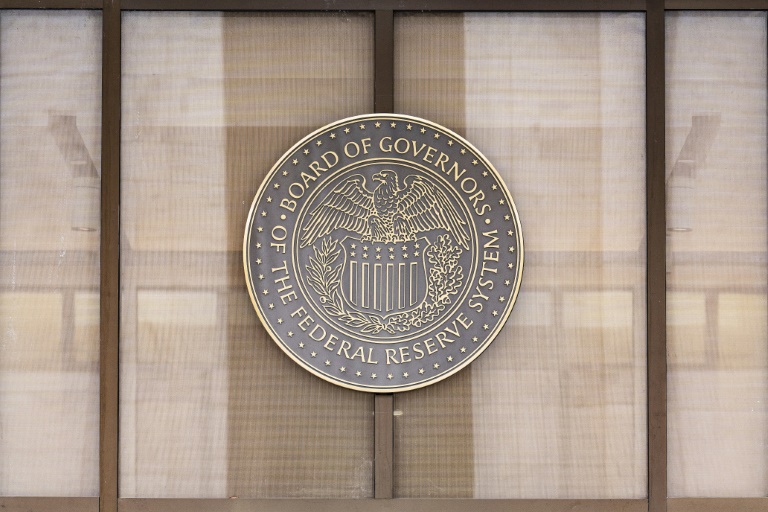
US Federal Reserve Governor Christopher Waller signaled Thursday he may support a full percentage point interest rate hike this month — the biggest increase in more than 30 years and a further indication of the central bank’s determination to crush sky-high inflation.

And although rising borrowing costs and blistering price surges have raised fears of recession, Waller said he believes the economy can avoid a downturn thanks to the strong US job market.

The Fed in March began aggressively raising borrowing costs to try to cool demand amid the impact of the Ukraine war, which has hit global supplies of food and oil, and Covid-19 lockdowns in China, which have impeded manufacturing of products from iPhones to cars.

But data so far have not shown significant signs of easing, and instead reports this week contained a worrisome rebound in inflation last month, with consumer prices surging 9.1 percent.

Increased costs for gas, food and housing has squeezed American families and heaped pressure on President Joe Biden, whose approval ratings have taken a battering from the relentless rise in prices.

Waller previously expressed support for another 75 basis point hike at the policy meeting later this month, but said Thursday he will be watching key reports on retail sales and housing coming in before then.

“If that data come in materially stronger than expected it would make me lean towards a larger hike at the July meeting to the extent it shows demand is not slowing down fast enough to get inflation down,” Waller said in a speech to an economic conference.

While US central bankers universally favor attacking inflation, he is the first to hint at the giant step, although he said he still expects a repeat of last month’s decision.

The Fed’s moves so far have marked “the fastest pace of tightening in close to 30 years,” Waller said, but the large move in June “was not an over-reaction” given the repeated strong inflation readings since the beginning of the year.

“With inflation so high, there is a virtue in front-loading tightening,” he said. “Getting there sooner will bolster the public’s confidence that we can get inflation down” so that high prices do not become entrenched in the economy.

A full point rate hike certainly would be the biggest since 1990, and likely the most aggressive since a decade earlier when then-Fed chief Paul Volcker strangled the economy to clamp down on runaway inflation.

After what Waller called the “major league disappointment” in the inflation data, the government is due to release June retail sales on Friday, followed by new home sales on July 26 — the first day of the Fed’s two-day policy meeting — which will be key to showing how consumers are reacting to rising rates. 

– ‘I just don’t see it’ –

Waller said the Fed erred last year in “betting the farm” on the expectation that price spikes would be transitory, thinking that supply chain snarls caused by the pandemic would recede quickly.

Policymakers should have acted sooner to begin removing stimulus, by slowing the massive bond purchases conducted during the Covid-19 downturn to support the financial system, he said.

He downplayed the recent upsurge in recession fears, saying a downturn is unlikely given the very tight labor markets.

“I believe it can be avoided,” he said, noting that the economy can cool and reduce the surplus of job vacancies without a big uptick in unemployment, which he said is close to the lowest in seven decades. 

“I just don’t see it,” he said of the recession chances, noting that GDP data, which was negative in the first quarter and trending lower in the second is likely to be revised upwards.

“The labor market would have to really deteriorate” for there to be a recession, he said, but policymakers will have to cool demand to ease wage and price pressures.

“That’s just what we have to do, I’m sorry. It’s the job (the Fed) is given by Congress.”

Global stocks mostly fall on latest troubling inflation figures

Stock markets mostly retreated Thursday as fresh evidence of runaway global inflation ramped up expectations of more aggressive interest rate hikes by central banks, while disappointing earnings revived recession fears.

A day after data showing the biggest jump in US consumer prices in more than four decades, the Labor Department reported that US wholesale prices rose 1.1 percent, topping expectations, on a 10 percent surge in energy prices, more than double the increase in May.

Market watchers are now wondering whether the Federal Reserve could hike US borrowing costs by a full percentage point at a scheduled policy meeting this month.

Meanwhile, results from JPMorgan Chase lagged estimates as the banking giant reported a 28 percent drop in quarterly earnings and set aside additional funds in case of bad loans. 

The disappointing results from JPMorgan and from Morgan Stanley underscore “that now we’re entering the process of the very real possibility of an earnings recession,” said Adam Sarhan of 50 Park Investments, referring to the possibility of two consecutive quarters of lower profits compared to the same three months of the prior year.

“That could lead to lower (stock) prices,” Sarhan said. “Because first things slowed down on Main Street, and then you see earnings slow down on Wall Street.”

The Dow and S&P 500 each finished with modest losses after starting the day sharply lower, staging a rebound as investors grabbed a bargain-hunting opportunity. 

Also Thursday, the European Commission slashed its growth forecast for the region in light of the Ukraine invasion and the risks to the region’s energy supply, and said eurozone inflation will end the year at 7.6 percent, much higher than previously estimated. 

The forecasts “depend heavily on the evolution of the war and in particular its implications for Europe’s gas supply,” the commission said. “Further increases in gas prices could further raise inflation and stifle growth.”

Europe’s main stock indices finished more than one percent lower, with Milan slumping more than three percent amid political turmoil in Italy.

Italy’s teetering government was thrown a lifeline late Thursday after the country’s president refused to accept the resignation of Prime Minister Mario Draghi. 

The crisis comes as Italy battles raging inflation and races to push through key reforms required by the European Union in exchange for post-pandemic funds.

Elsewhere, the euro fell back below parity with the US dollar once again shortly after US markets opened, before bouncing back.

– Key figures at around 2050 GMT –

New York – Dow: DOWN 0.5 percent at 30,630.17 (close)

New York – S&P 500: DOWN 0.3 percent at 3,790.38 (close)

New York – Nasdaq: UP less than 0.1 percent at 11,251.19 (close)

London – FTSE 100: DOWN 1.6 percent at 7,039.81 (close) 

Frankfurt – DAX: DOWN 1.9 percent at 12,519.66 (close)

Paris – CAC 40: DOWN 1.4 percent at 5,915.41 (close)

EURO STOXX 50: DOWN 1.7 percent at 3,396.61 (close)

Tokyo – Nikkei 225: UP 0.6 percent at 26,643.39 (close)

Hong Kong – Hang Seng Index: DOWN 0.2 percent at 20,751.21 (close)

Shanghai – Composite: DOWN 0.1 percent at 3,281.74 (close)

Euro/dollar: DOWN at $1.0022 from $1.0059 Wednesday

Pound/dollar: DOWN at $1.1826 from $1.1889 

Euro/pound: UP at 84.72 pence from 84.61 pence

Dollar/yen: UP at 138.93 yen from 138.20 yen

West Texas Intermediate: DOWN 0.5 percent at $95.78 per barrel

Brent North Sea crude: DOWN 0.5 percent at $99.10 per barrel

burs-jmb

Ukraine war to dominate G20 finance chief meeting in Indonesia

Group of 20 finance ministers and central bank chiefs from top economies will meet in Indonesia Friday for talks on the fallout from Russia’s invasion of Ukraine, which has roiled markets, spiked food prices and stoked breakneck inflation.

The two-day meeting takes place on the resort island of Bali under the shadow of war a week after the forum’s foreign ministers rounded on Moscow’s top diplomat, prompting him to walk out of the talks.

Top global finance figures, including US Treasury Secretary Janet Yellen, will discuss the rebound from the coronavirus pandemic. But the impact of the Ukraine war –- weighing on an already brittle global recovery –- will now top the agenda.

A day before the meeting, Yellen set the tone calling Russia’s war in Ukraine the “greatest challenge” to the global economy and said members of Putin’s government “have no place” at the talks.

“We are seeing negative spillover effects from that war in every corner of the world, particularly with respect to higher energy prices, and rising food insecurity,” she said.

Yellen is expected to press G20 allies for a price cap on Russian oil to choke off President Vladimir Putin’s war chest and pressure Moscow to end its invasion while bringing down energy costs.

The talks will also expose any divisions between the world’s top economies on Moscow’s unilateral offensive, but Russian Foreign Minister Sergei Lavrov found himself largely outnumbered at last week’s gathering. 

Russian Finance Minister Anton Siluanov will only participate virtually in the ministerial meeting, officials say, while Ukrainian Finance Minister Serhiy Marchenko will address ministers virtually at the start of talks on Friday.

Yellen in April led a multinational walkout of finance officials as Russian delegates spoke at a G20 meeting in Washington. No communique was issued at the end of that meeting.

It is unclear if a similar walkout will take place at this meeting, after no foreign minister walked out last week, but Yellen would not be drawn on if they would repeat their joint action on Friday.

There is also unlikely to be a final communique issued when talks end on Saturday with disagreements over Russia being the cause of current global economic headwinds.

– World tax overhaul deadline set – 

G20 chair Indonesia -– which pursues a neutral foreign policy –- has refrained from uninviting Russia despite Western pressure.

Italy and Canada’s finance ministers will be in attendance but Chinese Finance Minister Liu Kun will only attend virtually, according to Indonesian state media, as will Britain’s new Finance Minister Nadhim Zahawi.

International Monetary Fund chief Kristalina Georgieva will appear in person after saying Wednesday the global economic outlook had “darkened significantly” because of Moscow’s invasion.

European Central Bank president Christine Lagarde will participate virtually, but World Bank chief executive David Malpass will not attend.

The meeting is a prelude to the leaders’ summit on the Indonesian island in November that was meant to focus on the global recovery from the Covid-19 pandemic.

But attention has shifted to Moscow’s brutal campaign in Ukraine after it blockaded the ports of one of the world’s most important food producers.

Finance chiefs are expected to discuss how to alleviate the impact on poorer nations that will suffer from supply shortages as a result of the war.

Other issues to be tackled by the ministers include digital financial inclusion –- with more than a billion of the world’s population still without access to a bank account -– and the deadline for an international tax rules overhaul.

The Organisation for Economic Cooperation and Development (OECD) will present the ministers with an update on the progress of international tax changes that will set a global minimum corporate tax rate of 15 percent by 2024, a year later than originally planned.

The deadline for the passing of legislation underpinning the new rules –- which will also seek to divert a quarter of major multinationals’ profits to the nations where their customers reside -– was set at mid-2023, the OECD said.
Street party draws curtain on Sri Lanka's Rajapaksa era

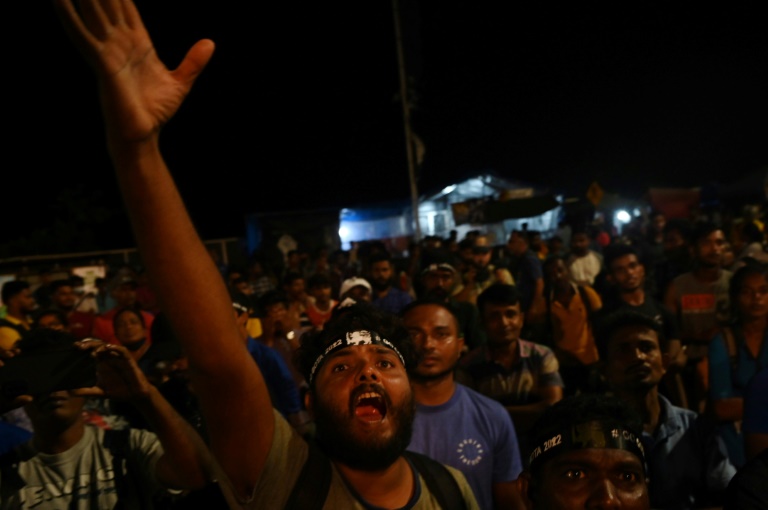
Exhausted and drained after nearly 100 days of protests, a small crowd gathered its remaining strength Thursday to celebrate the resignation of Sri Lanka’s leader at the seaside headquarters of their campaign to oust him.

A stone’s throw from what had days earlier been the office of President Gotabaya Rajapaksa, people smiled wearily at their compatriots as they danced, handed out sweets, embraced each other or waved the national flag.

For more than three months, the seafront boulevard has been home to a cluster of tents used as a staging post for protesters demanding the despised leader step down for his role in driving Sri Lanka’s battered economy to ruin.

But only a few hundred people gathered to mark a major milestone in months of agitation, when Rajapaksa emailed his resignation from a safe haven in Singapore after fleeing the country to escape public wrath. 

Many veterans of the protest movement were exhausted after enduring tear gas barrages and tense confrontations with security forces in the preceding days. 

For others, the moment was marred by word that a legal technicality may delay formal recognition that Rajapaksa had indeed stepped down.

“I certainly feel, I think the crowd here definitely does feel, quite happy about it,” activist Vraie Balthaazar told AFP.

“But at the same time, I think there’s also until we see the letter, there’s always a sense of apprehension.”

Part of the small crowd drawn to the protest camp on Thursday evening danced to an improvised call-and-response song by performers on a wooden stage, chanting through a scratchy public address system, as a bemused pair of Buddhist monks looked on. 

Elsewhere, the camp continued its function as a safety net for residents of the capital immiserated by the country’s economic crisis, with a group of needy citizens queuing up at a soup kitchen. 

Nearly all of those present had left by midnight, in the face of evening rains, Sri Lanka’s chronic petrol shortages and a government curfew imposed to contain unrest.

– ‘People’s power’ –

The subdued celebration was a far cry from the high-octane confrontations on the streets of Colombo at the weekend, when huge throngs of people elbowed their way past troops to seize Rajapaksa’s home and office. 

Soldiers had fired in the air to clear a passage for the president’s escape, mirroring the ignominious exit of his brother Mahinda, the ex-premier, from his own residence two months earlier.

Their departures, along with the resignation of sibling finance minister Basil Rajapaksa in April, have wounded — perhaps terminally — a clan that dominated the country’s politics for much of the past two decades.

“We feel really amazing. We have shown the people’s power,” university student Anjana Banadrawatta told AFP. 

Under Sri Lanka’s constitution, Prime Minister Ranil Wickremesinghe will automatically become acting president until parliament can appoint a successor.

But protesters are also demanding Wickremesinghe’s resignation, accusing him of helping to prop up a political order that has allowed corruption and authoritarianism to flourish.

Banadrawatta said he and others would continue their struggle in the morning.

“We are starting a new fight tomorrow with new hope,” said the 22-year-old.

But before then, he added, “of course we are going to have fun and celebrate.”

New chief at Libya's key oil firm, US warns against confrontation

Libya’s government replaced the head of the key National Oil Corporation on Thursday in a dramatic move that prompted the United States to warn against any “armed confrontation” over the sector.

The North African country’s vast oil reserves have often been at the heart of political disputes, but the NOC had largely stayed neutral despite years of division since the 2011 toppling of dictator Moamer Kadhafi in a NATO-backed rebellion.

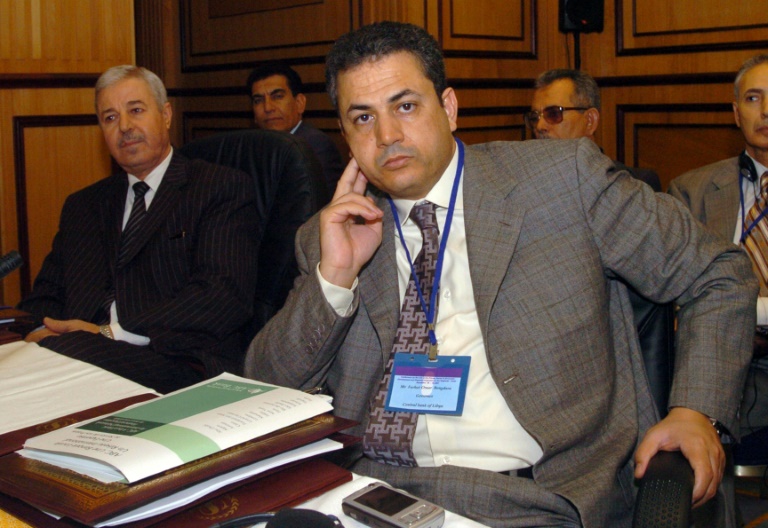
However, in a decree made public on Wednesday, the unity government of Abdulhamid Dbeibah appointed former central banker Farhat Bengdara to replace NOC head and veteran technocrat Mustafa Sanalla.

On Thursday morning, Bengdara took up office at NOC headquarters in Tripoli, where he gave a news conference.

“It’s vitally important under the current conditions that Libya regains its oil and gas export capacity as quickly as possible,” he told journalists.

“The oil sector has fallen prey to political struggles, but we will work to prevent political interference in the sector.”

– ‘Vital’ to stability –

Dbeibah’s move against Sanalla follows months of rising tensions in Libya after the country’s eastern-based parliament appointed a rival government, led by former interior minister Fathi Bashagha and seen as backed by military strongman Khalifa Haftar.

Dbeibah has refused to cede power before elections, and Bashagha has so far failed to take office in Tripoli, raising fears of renewed conflict just two years after a landmark truce ending a ruinous attempt by Haftar to seize the capital by force.

The US embassy said Thursday it was following developments “with deep concern” and stressed that the NOC was vital to Libya’s “stability and prosperity”.

Since April, pro-Haftar groups have blockaded key eastern oil facilities to put pressure on Dbeibah.

As a result, Libya’s crude and condensate exports have fallen from around one million barrels per day in March to just over 400,000 so far in July, according to data intelligence firm Kpler.

The blockade has also contributed to crippling power shortages that sparked angry protests earlier this month.

The blockade also comes amid a supply crunch on global oil markets, rattled by the war in Ukraine, in turn prompting consumer nations to pressure other producers to ramp up output. 

US President Joe Biden is expected to press Saudi Arabia on the subject when he visits the kingdom this weekend.

– Blockade to end? –

Libya sits on Africa’s biggest proven crude reserves, with easy access to European markets.

US Ambassador Richard Norland, who has been working on a mechanism to manage the highly disputed revenues from Libya’s crude sales, said Sanalla’s replacement “may be contested in court but must not become the subject of armed confrontation”.

However, the appointment of Bengdara, a Kadhafi-era central banker reportedly close to Haftar, has triggered speculation that Dbeibah made a deal with the military strongman to allow him to keep power in Tripoli.

Emadeddin Badi, a senior fellow at the Atlantic Council, said Bengdara’s appointment was “the product of a momentary convergence between Dbeibah and Haftar, but it could be the basis for a broader deal”.

“Dbeibah gets several things from it,” Badi told AFP. 

“He regains access to state funds, it stymies the US financial mechanism or the momentum to implement it, and Haftar will presumably lift the (oil) blockade and limit, if not completely halt, his support for Bashagha.”

Sanalla, who has long mediated disputes to keep Libya’s crude flowing and positioned himself as an interlocutor with foreign states and oil firms, had told Dbeibah in a defiant video message on Wednesday that “this institution belongs to the Libyan people, not to you or the Dbeibah family”.

Aydin Calik, an energy analyst at the Middle East Economic Survey (MEES), warned that the new board was contested.

He told AFP that “uncertainty over who is in charge at NOC raises questions: Who can legitimately export oil? Will international oil companies recognise the new NOC board? What might this mean for their contracts?”

There was no immediate indication that the oil blockade would be lifted.

Anas El Gomati, of Libyan think tank the Sadeq Institute, noted that the blockade was “the work of the Wagner group”, a paramilitary group linked to the Russian government.

“Lifting it would require the agreement of three main actors: Haftar, who is protected by Wagner, the UAE, which pays for it, and the Kremlin,” he said.

“Given the current conditions, why would the Kremlin green-light lifting an oil blockade that’s hurting southern NATO countries?”

Russian strikes kill 23 as Zelensky urges 'special tribunal' for Moscow

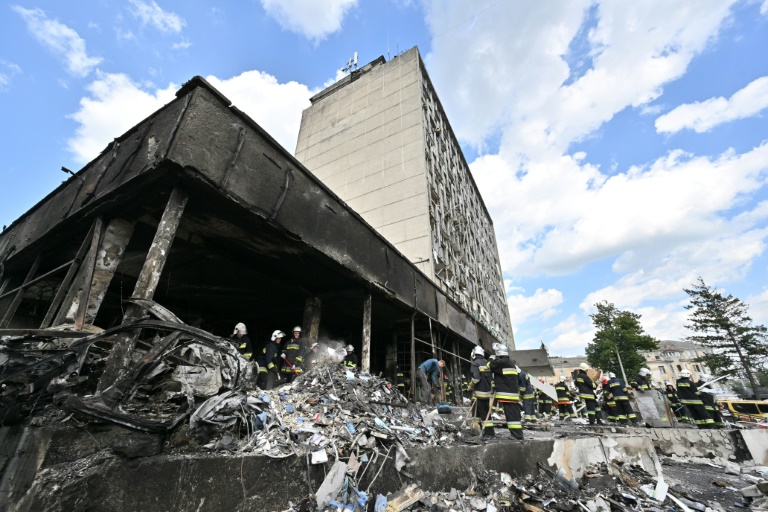
Russian missiles struck Vinnytsia in central Ukraine Thursday, killing at least 23 people including three children, in what President Volodymyr Zelensky called “an open act of terrorism”.

The midday attack on the city hundreds of kilometres from the frontlines and invading Russian troops came as EU officials convened in The Hague to discuss war crimes in Ukraine.

The charred remains of upturned cars surrounded by burnt debris were seen in images distributed by officials next to a business gutted by a fire with brown smoke billowing nearby.

“There were eight rockets, two of which hit the centre of the city. Twenty people have died, including three children. There is a large, large number of wounded,” Zelensky said during an address to European officials at The Hague.

Rescuers later updated the death toll to 23, saying the search for another 39 people continues.

UN Secretary-General Antonio Guterres said he was “appalled” by the attack, while the EU slammed it as an “atrocity.” Both called for accountability.

And Zelensky led a moment of silence before urging European and International Criminal Court officials to open a “special tribunal” into Russia’s invasion.

“I believe it is inevitable that International Criminal Court will bring accountability to those guilty of crimes under its jurisdiction: war crimes, crimes against humanity, genocide.”

– War crimes tribunal –

The ICC in The Hague opened an investigation into possible war crimes in Ukraine just days after Moscow’s forces invaded and it dispatched dozens of investigators to the country to gather evidence.

Russia invaded on February 24 and the conflict has seen thousands of people killed, destroyed cities and forced millions to flee their homes.

“Every day, Russia kills civilians, kills Ukrainian children, carries out missile attacks on the civilian facilities where there is no military target. What is this, if not an open act of terrorism?” Zelensky said after the Vinnytsia attack.

A Ukraine military spokesman said its forces had managed to knock out two from a barrage of cruise missiles that were launched from a Russian submarine in the Black Sea and caused widespread damage in Vinnytsia.

Deadly strikes in central Ukraine have become relatively rare, but the war has raged around cities like Mykolaiv in the south which the presidency said was hit by a “massive missile strike”.

“Two schools, transport infrastructure and a hotel were damaged,” the presidency said in its morning military update Thursday.

The skeletal insides of one building gutted by the strikes were visible in images distributed by local officials, with municipal workers clearing bricks and rubble strewn after the attack.

The heaviest fighting in Ukraine, however, has focused recently on the industrial Donbas region in the east.

– ‘Total victory’ –

Moscow-backed troops there said Thursday they were closing in on their next target, after wresting control of sister cities Lysychansk and Severodonetsk two weeks ago.

“Siversk is under our operational control, which means that the enemy can be hit by our aimed fire all over the area,” a pro-Moscow rebel official, Daniil Bezsonov, was cited as saying by Russian state-run news agency TASS.

In a Ukrainian trench position along the eastern frontline, a 25-year-old soldier who went by the nom de guerre Moryak was working to fortify defences.

“We hide when they shell, we dig when it’s calm,” another soldier nearby told AFP journalists.

A fellow serviceman in their trench dismissed the idea Ukrainian and Russian forces could reach an agreement to halt fighting, explaining their goal was “total victory”.

– High-stakes grain talks –

Several rounds of negotiations to end the fighting at the beginning of the conflict fell through, but delegations from Kyiv and Moscow met in Istanbul this week to discuss unblocking Ukraine’s grain exports.

The meeting involving UN and Turkish officials ended after more than three hours with an agreement to meet again in Turkey next week.

Zelensky said “the entire world” was counting on the negotiations to finalise a deal.

The conflict has pushed up grain prices and Europe is suffering from sky-rocketing energy bills stemming from sanctions on Russia and Moscow’s move to limit gas flows to Europe.

US Treasury Secretary Janet Yellen said Thursday that Russia’s war in Ukraine posed the “greatest challenge” to the global economy, as G20 ministers prepare to start talks in Indonesia.

The European Commission meanwhile slashed growth forecasts for the eurozone, saying the consequences from the war in Ukraine were continuing to destabilise the economy because of record high inflation.

Following concerns about arms being smuggled out of Ukraine to equip crime gangs in Europe, Ukraine’s presidency called on lawmakers to form a monitoring committee that would oversee weapons received from Western allies.

The head of the Ukrainian presidency Andriy Yermak said Thursday all arms supplied by the West are “registered and sent to the front” but such a committee would make the process “as transparent as possible”. 

burs-st/sst

US vows to use all means to stop Iran nuclear bomb in new Israel pact

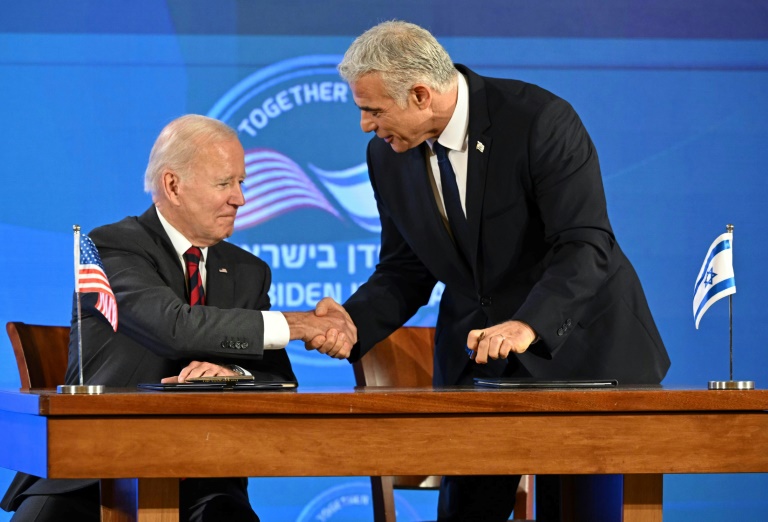
The US and Israel signed a new security pact Thursday reinforcing their common front against Iran, as President Joe Biden vowed to use “all” American power to stop Tehran from acquiring nuclear weapons.

The declaration was inked by Israeli Prime Minister Yair Lapid and Biden, who was making his first trip to the Middle East as president.

It commits the United States to “never to allow Iran to acquire a nuclear weapon”, stating that it “is prepared to use all elements of its national power to ensure that outcome”.

A landmark deal that imposed curbs on Iran’s suspect nuclear programme in exchange for sanctions relief was torpedoed in 2018 by former US president Donald Trump. Efforts to revive the accord have stalled since March.

Asked on Thursday how long the US was prepared to give those efforts, Biden said “we’re not going to wait forever” for a response from the Islamic republic.

Israel, which has the Middle East’s sole but undeclared nuclear arsenal, is staunchly opposed to the deal with Iran, which has always denied seeking the bomb.

Lapid warned “words” and “diplomacy” were not enough to thwart Iran’s alleged nuclear ambitions.

“The only thing that will stop Iran is knowing that if they continue to develop their nuclear programme the free world will use force,” he said.

Iran’s ultra-conservative President Ebrahim Raisi warned the US and its allies that his country “will not accept any crisis or insecurity in the region”.

“Any mistake made in this region will be met with a harsh and regrettable response,” Raisi said in televised remarks.

– Saudi oil –

Biden touched down in Israel on Wednesday, his 10th visit to the Jewish state since 1973, when he came as a newly elected senator.

He also held talks with Israeli President Isaac Herzog on Thursday and opposition leader Benjamin Netanyahu, who Biden has known for four decades. 

“I told him that the Iran deal is lousy. He knows my position,” said a statement released after the meeting by Netanyahu, whose outspoken opposition to the deal soured Israel’s relations with former president Barack Obama’s administration, in which Biden served as vice president.   

Biden heads to the occupied West Bank on Friday to meet Palestinian president Mahmud Abbas, before Air Force Once makes the first publicly acknowledged direct flight from Israel to Saudi Arabia.

Biden said the journey itself “represents important progress”, following Israel launching diplomatic ties in 2020 with Riyadh’s Gulf neighbours the United Arab Emirates and Bahrain.

“Israel’s integration in the region, Israel’s peace with its neighbours, these are essential goals,” Biden said.

Russia’s invasion of Ukraine will be a top priority for the president’s meetings with Arab leaders, with volatile oil prices due to be the focus of talks with Saudi officials in particular.

The president will seek to persuade Saudi Arabia to pump more oil in order to drive down prices, which have fuelled US inflation to the highest levels in decades.

– ‘Israel wants peace’ –

On Thursday, Biden reaffirmed Washington’s policy of pressing for “a two-state solution for two people, both of whom have deep and ancient roots in this land.”

But he made it clear he has no plans to reverse Trump’s controversial decision to recognise Jerusalem as Israel’s capital.

Lapid is serving as caretaker prime minister ahead of elections in November — Israel’s fifth vote in less than four years — and is therefore not expected to launch new talks with Palestinians, but reasserted his personal support for Palestinian statehood. 

“A two-state solution is a guarantee for a strong, democratic state of Israel, with the Jewish majority,” he said. 

A US official said the administration would announce during the visit “a significant funding package” for hospitals that serve Palestinians in Israeli-annexed east Jerusalem, which Palestinians claim as their future capital.

It will also announce measures towards providing 4G internet access in the West Bank and Israeli-blockaded Gaza Strip, the official said, addressing a persistent Palestinian frustration.

But long-term peace negotiations were not on this week’s agenda.

“We are not going to come in with a top down peace plan because we don’t believe that would be the best approach,” the official said. 

At an anti-Biden protest in Ramallah, Palestine Liberation Organization executive Bassam Al-Salihi accused the US administration of buying into an Israeli tactic viewing “the Palestinian cause as an economic issue.”

Close Bitnami banner
Bitnami