World

Sri Lanka president seeks seaborne escape after airport standoff

Sri Lanka’s president was considering using a navy patrol craft to flee the island Tuesday following a humiliating standoff with airport immigration, official sources said.

Gotabaya Rajapaksa has promised to resign on Wednesday and clear the way for a “peaceful transition of power” following widespread protests against him over the country’s worst economic crisis.

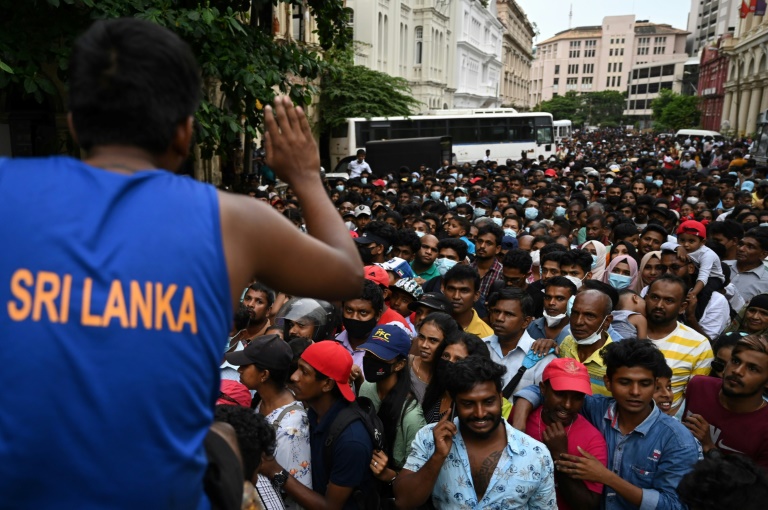
The 73-year-old leader fled his official residence in Colombo just before tens of thousands of protesters overran it on Saturday. He then wanted to travel to Dubai, officials said.

As president, Rajapaksa enjoys immunity from arrest, and he is believed to want to go abroad before stepping down to avoid the possibility of being detained.

But immigration officers refused to go to the VIP suite to stamp his passport, while he insisted he would not go through the public facilities, fearing reprisals from other airport users.

The president and his wife spent the night at a military base next to the main Bandaranaike International airport after missing four flights that could have taken them to the United Arab Emirates.

Rajapaksa’s youngest brother Basil, who resigned in April as finance minister, missed his own Emirates flight to Dubai early Tuesday after a similar standoff with airport staff.

Basil — who holds US citizenship in addition to Sri Lankan nationality — tried to use a paid concierge service for business travellers, but airport and immigration staff said they were withdrawing from the fast track service with immediate effect.

“There were some other passengers who protested against Basil boarding their flight,” an airport official told AFP. “It was a tense situation, so he hurriedly left the airport.”

– Hasty retreat –

Basil had to obtain a new US passport after leaving his behind at the presidential palace when the Rajapaksas beat a hasty retreat to avoid mobs on Saturday, a diplomatic source said.

Official sources said a suitcase full of documents had also been left behind at the stately mansion along with 17.85 million rupees in cash, now in the custody of a Colombo court.

There was no official word from the president’s office about his whereabouts, but he remained commander-in-chief of the armed forces with military resources at his disposal.

A top defence source said the president’s closest military aides were discussing the possibility of taking him and his entourage overseas aboard a naval patrol craft.

A navy boat was used on Saturday to take Rajapaksa and his aides to the northeastern port city of Trincomalee, from where he was helicoptered back to the international airport on Monday.

“The best option now is to take the sea exit,” the defence official said. “He could go to the Maldives or India and get a flight to Dubai.”

Another alternative, he added, would be to charter a plane to fly him from the country’s second international airport at Mattala, opened in 2013 and  named after the president’s elder brother Mahinda.

It is widely considered a white elephant, with no scheduled international flights and described as probably the world’s least-used international airport.

Rajapaksa is accused of mismanaging the economy to a point where the country has run out of foreign exchange to finance even the most essential imports, leading to severe hardships for the 22 million population.

If he steps down as promised, Prime Minister Ranil Wickremesinghe will automatically become acting president until parliament elects an MP to serve out the presidential term, which ends in November 2024.

Sri Lanka defaulted on its $51-billion foreign debt in April and is in talks with the IMF for a possible bailout.

The island has nearly exhausted its already scarce supplies of petrol. The government has ordered the closure of non-essential offices and schools to reduce commuting and save fuel.
The Dutch art detective who recovered the 'Blood of Christ' relic

It was 10:30 pm on a Friday when Arthur Brand got the delivery he was nervously expecting. 

His doorbell rang, and when he opened the door no one was there. Instead, a cardboard box was waiting for him at the door in the dark.

In that box he said was one of the most sacred artefacts ever stolen from the Catholic Church: the “Precious Blood of Christ” relic.

“(My) heart was beating in (my) chest,” the Dutch art detective told AFP in an interview about the recovery of the stolen treasure. 

Brand is dubbed the “Indiana Jones of the Art World” for his remarkable recoveries of stolen art, including the “Hitler’s Horses” bronze statues, a Picasso painting and a ring that once belonged to Oscar Wilde. 

At 52, he is one of the most famous art sleuths in the world, trusted by both thieves and police for his unprecedented access to the criminal trade in stolen art.

But getting his hands on the “Precious Blood of Christ” relic was a particularly special experience for him.

“As a Catholic myself, this is about as close to Jesus and the legend of the Holy Grail you can get.”

“It was a religious experience,” he said. 

– ‘Massive shock’ – 

When he opened the box, he discovered what he hoped he would: the relic perfectly intact. 

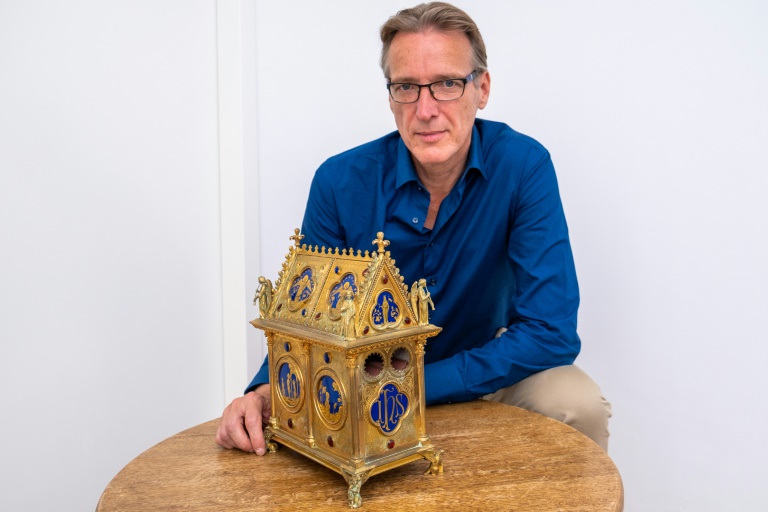
The ornate container, about 30 centimetres (11 inches) high, has two metal bulbs inside and is said to hold drops of Jesus’ blood collected in the Holy Grail during the crucifixion.

It is held in a heavily gilded copper box with encrusted precious stones and depictions of Christ on the cross and other saints. 

The holy relic is believed to date back to the death of Christ and has been a source of worship for Catholic pilgrims for more than 1,000 years. 

It was held by the Fecamp Abbey in France’s Normandy region until the night of June 1-2, when it was stolen, just two weeks before the annual “Mass of the Precious Blood” celebration.

“The thief most likely got inside by being locked in after hours and made off with the artefact,” Brand said.

“It was a massive shock that this famous piece, this legendary piece was stolen,” he told AFP in his home, the relic on display nearby. 

– ‘The real thing’ –

The relic and its copper box were not the only objects waiting in the cardboard box on Brand’s doorstep on that fateful July evening.

There were several copper liturgical plates, depictions of saints and an ornate goblet, which were also stolen from the abbey in June. 

Brand carefully showed AFP the ornate and heavy copper box with a miniature roof and four angels on its corners, called a reliquary. 

Brand will hand the “Precious Blood” artefact to Dutch police Tuesday, who will give it to French authorities to be eventually returned to the Fecamp Abbey.

AFP could not independently verify the authenticity of the objects, and they have not yet been examined by police or experts. The abbey could not immediately be reached for comment.

But Brand is certain about their authenticity.

“I have no doubt in my mind that it is the real thing. Religious objects are almost impossible to forge.”

– ‘A curse’ –

Brand said his involvement in the case started a few days after the theft, when he received a protected email from an anonymous writer, claiming to have the stolen loot in their possession.

“This person was approaching me on behalf of another, at whose home the stolen relics were being stored,” said Brand.

But “to have the ultimate relic, the blood of Jesus in your home, stolen, that’s a curse,” he said. 

“When they realised what it was, that you in fact cannot sell it, they knew they had to get rid of it.” 

Brand showed AFP an email written in Dutch in which the person asked him to take back the stolen property, as it was too risky to return it to the abbey itself.

Brand was told that the stolen artefact would be delivered to his home, but no date or time was given.

“I was virtually a prisoner in my own home for a week. I could not leave,” he said, laughing.

Finally the objects turned up, delivered by an anonymous sender. 

Asked why the thieves would return the stolen art to Brand, the detective said “it would be too dangerous to involve the police.”

“These people know my reputation and that the most important thing is to return this to the church. Hopefully it will stand for another thousand years,” Brand said.

Paris 2015 attacker's sentence stands after no appeal filed

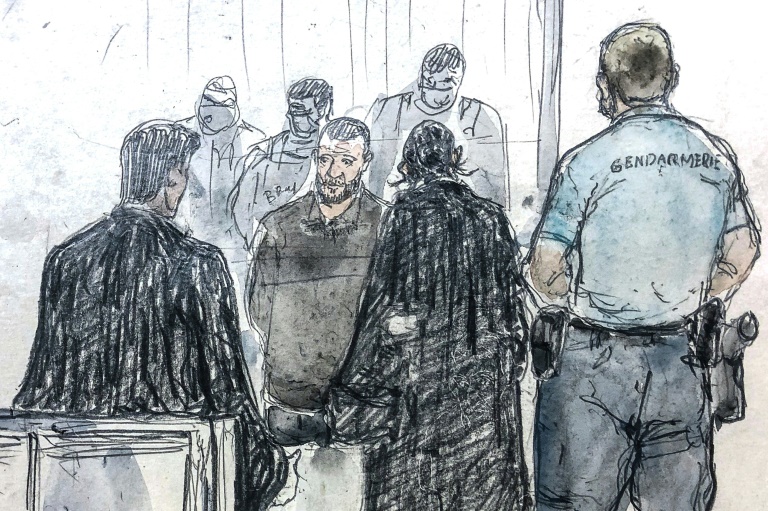
The sole surviving member of an Islamic State group cell that killed 130 people in Paris in 2015 has not appealed his whole-life sentence for the killings, the Paris chief prosecutor said Tuesday.

Salah Abdeslam, a 32-year-old Frenchman of Moroccan origin, was captured alive by police four months after the bloodbath at the Bataclan concert hall and other locations, the worst peace-time atrocity in modern French history.

He was sentenced to life in prison with only a tiny chance of parole after 30 years, the toughest possible punishment under French law which had only been pronounced four times previously since entering into law in 1994.

The 19 others sentenced for their role leading up to and following the attacks also declined to appeal, prosecutor Remy Heitz told AFP.

They had 10 days to lodge any appeal after their sentencing, a deadline that expired at midnight Monday.

The decision of the special court handling the cases “has now acquired permanent status and there will not be an appeal trial”, he said.

The trial has been the biggest in modern French history, the culmination of a six-year international investigation whose findings run to more than a million pages.

All of the attackers except for Abdeslam blew themselves up or were killed by police during or after the assault.

Abdeslam had begun his court appearances last September by defiantly declaring himself as an “Islamic State fighter” but finished tearfully apologising to victims and asking for leniency.

In his final statement, he urged the judges not to give him a full-life term on the basis that he had not actually killed anyone.

“I made mistakes, it’s true. But I’m not a murderer, I’m not a killer,” he said.

– ‘Not out of fear’ –

Abdeslam, a one-time pot-smoking lover of parties, discarded his suicide belt on the night of the attack and fled back to his hometown, Brussels, where many of the extremists lived.

He told the court that he had had a change of heart and decided not to kill people. 

“I changed my mind out of humanity, not out of fear,” he insisted.

But after hearing that his suicide belt had turned out to be defective, the judges concluded that this “cast serious doubt” on his apparent “renunciation”.

They ruled he was a “co-perpetrator” of the attacks which “constituted a single crime scene”.

A team of 10 jihadists laid siege to the French capital, attacking the national sports stadium, bars, and the Bataclan in an assault immediately claimed from Syria by the IS group.

The attacks shocked France, with the choice of targets and the manner of the violence seemingly designed to inflict maximum fear, just 10 months after a separate assault on the Charlie Hebdo magazine.

In one instance, the court heard a recording of gunmen taunting people trapped in the Bataclan as they fired on them with Kalashnikov machine guns from a balcony above. 

France, under then president Francois Hollande, declared the country “at war” with the extremists and their self-proclaimed caliphate in Syria and Iraq.

Hollande, who testified in November, called the trial “exceptional” and “exemplary”, adding in a statement that the accused had been “judged with respect for the law”.

The 10-month process had “enabled us to look for the truth in order to better understand the course of Islamist terrorism”, he said.

Japan mourns as funeral for former PM Abe held in Tokyo

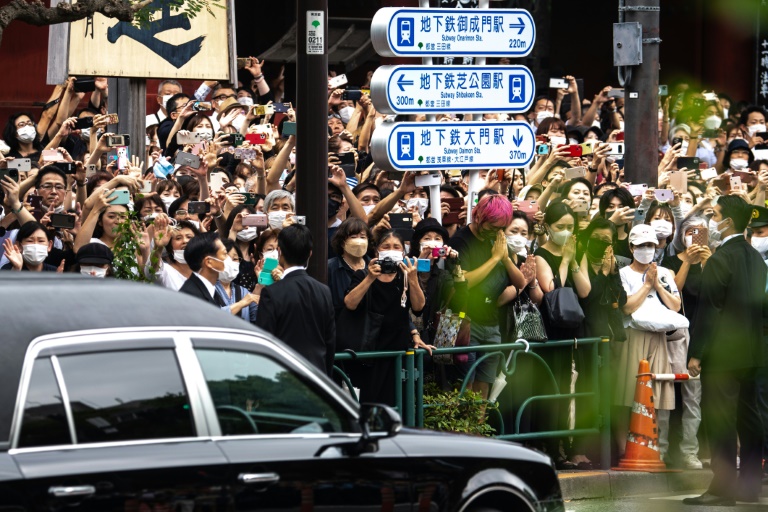
Mourners lined the streets of central Tokyo on Tuesday to bid farewell to assassinated former Japanese prime minister Shinzo Abe, as his hearse was driven past political landmarks after a private funeral.

The country’s longest-serving prime minister was gunned down on Friday while campaigning, in a crime that rattled Japan and prompted an outpouring of international condemnation and grief.

His funeral was held at Tokyo’s Zojoji temple on Tuesday, with relatives and close acquaintances in attendance.

But elsewhere in the temple compound, thousands of well-wishers lined up in the humid heat to pay their respects before a photo of the late leader, who held office until 2020.

“I can’t get over my sadness, so I came here to lay flowers and say a prayer,” consultant Tsukasa Yokawa, 41, told AFP, describing Abe as “a great prime minister who did a lot to elevate Japan’s presence” on the global stage.

After the service, a hearse carrying Abe’s body departed for a final tour of some of the political landmarks he served in throughout his career: the parliament, prime minister’s office, and headquarters of his ruling Liberal Democratic Party.

Outside each, staff and officials including ministers and senior LDP figures stood sombrely. They pressed their hands together and bowed their heads in respect as the car arrived.

Abe’s widow Akie sat in the front of the hearse, carrying her husband’s mortuary tablet inscribed with his posthumous Buddhist name, and bowed back.

Along the route from the temple to the site, residents gathered to offer prayers and take photographs of the former leader’s last procession.

– Security flaws –

Abe was campaigning in the western city of Nara when he was shot.

The murder suspect, 41-year-old Tetsuya Yamagami, is in custody and has told police he targeted Abe because he believed the politician was linked to an organisation he resented.

Yamagami approached him from behind in broad daylight, in circumstances that have raised questions about security.

Satoshi Ninoyu, the chairman of the National Public Safety Commission, a cabinet position overseeing national police, pledged Tuesday to hold a full review of any security failings.

Local police have already admitted flaws in their guarding programme for the high-profile politician.

Police searches of the suspect’s home have found pellets and other possible components for building a gun like the crude weapon used in the attack, Japanese media reported Tuesday, citing unnamed investigative sources.

Yamagami spent three years in Japan’s navy and reportedly told investigators that his mother’s large donations to a religious organisation had caused the family financial troubles.

The Unification Church, a global religious movement founded in Korea in the 1950s, said on Monday that Yamagami’s mother was a member, but did not comment on any donations she may have made.

– Condolences pour in –

Foreign Minister Yoshimasa Hayashi said Tuesday that more than 1,700 condolence messages had been received from 259 countries, territories and international bodies.

On Monday, US Secretary of State Antony Blinken made a previously unscheduled stop in Tokyo to pay tribute to Abe, describing him as a “man of vision.”

And Taiwanese Vice President William Lai was also in Tokyo for a surprise trip, Taiwanese media said.

The visit has the potential to anger Beijing, though Hayashi said Lai was travelling in a private capacity and there was no change to Japan’s policy on non-governmental working relations with Taiwan.

Public memorials for Abe are expected to be held at a later date.

Abe was the scion of a political family and became the country’s youngest post-war prime minister when he took power for the first time in 2006, aged 52.

He resigned two years ago at the end of his second stint after suffering health problems.

His hawkish, nationalist views were divisive, particularly his desire to reform the pacifist constitution, and he weathered a series of scandals, including allegations of cronyism.

But he was lauded by others for his economic strategy, dubbed “Abenomics”, and his efforts to put Japan firmly on the world stage, including by cultivating close ties with former US president Donald Trump.

Hong Kong jails terminally ill activist for attempted Olympics protest

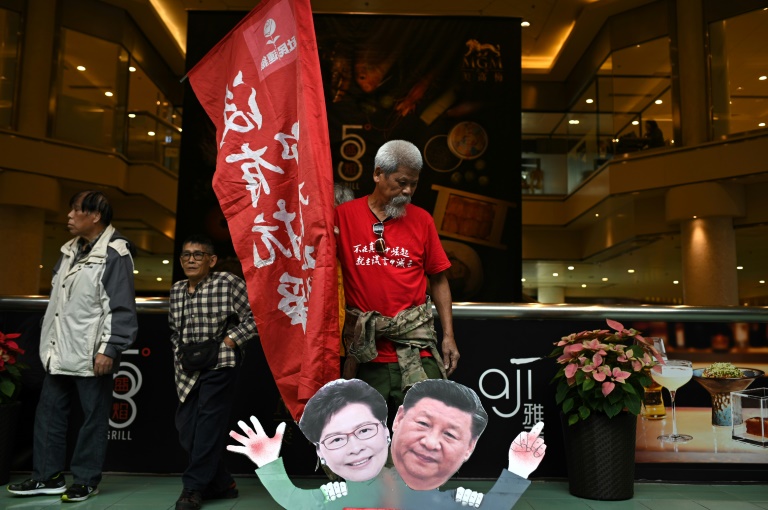
A Hong Kong activist with terminal cancer was jailed Tuesday for attempted sedition over a planned protest against Beijing’s Winter Olympics that was foiled by a pre-emptive arrest.

Koo Sze-yiu was arrested on February 4, the opening day of the Winter Olympics, after he had announced plans to protest outside Beijing’s liaison office in Hong Kong.

The 75-year-old was formally charged the next day with “attempting to do or making any preparation to do an act or acts with seditious intention” — a colonial-era offence — and denied bail.

Principal magistrate Peter Law on Tuesday jailed Koo for nine months, saying that the “serious” case required a deterrent sentence. 

The longtime activist was defiant in court, saying that “getting jailed is a part of my life”. 

“I don’t mind being a warrior for the democracy movement, and I don’t mind being a martyr for democracy and human rights,” he said. 

Koo is the latest activist to be jailed in Hong Kong’s crackdown on dissent, which has been propelled by the national security law — imposed by Beijing after the city’s pro-democracy protests in 2019. 

While sedition is a colonial-era law, the courts now treat it with the same severity as acts that endanger national security.

Koo’s lawyers had argued that his planned protest was an exercise in free speech and that the sedition charge was unconstitutional.

But the magistrate said the slogans on his protest materials — which read “down with the Communist Party and one-party dictatorship” — aimed to overthrow the regime, and were provocative given the context of 2019’s protests.

“During the movement, many people directed blame toward the Chinese Communist Party, and despite the movement ending, many have not yet recovered emotionally,” Law said. 

“(The slogans) will once again provoke emotions of discontent and disaffection.”

He added that Koo could have also emboldened calls for boycotting the Winter Olympics.

– Lifelong activist –

Born in the Chinese city of Zhongshan, Koo has spent most of his life in activism, from opposing the Portuguese colonial government in Macau to fiercely criticising Beijing’s crackdown in Hong Kong. 

He has been jailed at least 11 times in Hong Kong since 2000, and was diagnosed with terminal rectal cancer in 2020. 

His latest stint in prison ended in July last year after he served five months for violating the government’s ban on protesters covering their faces during the 2019 protests.

The veteran activist was unbowed Tuesday after his sentencing, telling the court he had no regrets.

“The Chinese government has destroyed freedom and democracy in Hong Kong,” he said, and blasted China’s treatment of dissidents in the mainland — pointing to opaque trials and lengthy jail terms. 

“Compared to what they have experienced, my sacrifice is nothing.”

'Everywhere they dig': looters hunt Albanian antiques

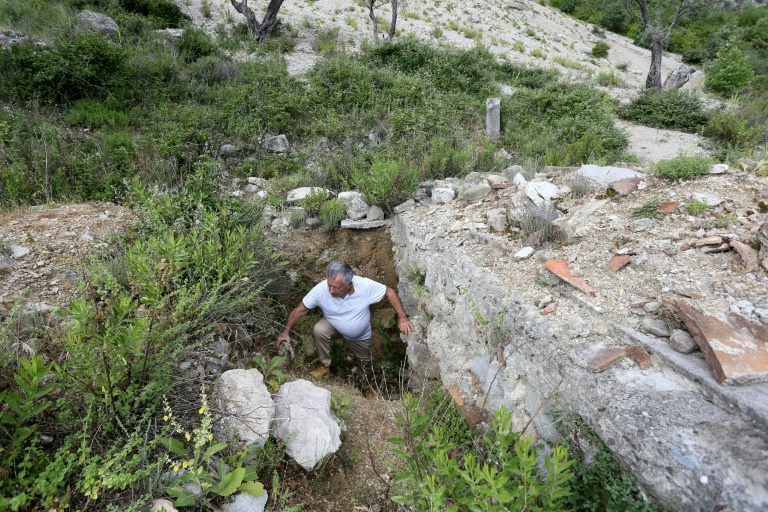
Shards of ceramics litter the fields of an ancient city in southeastern Albania, where looters have raided the area’s highlands in search of antiquities to sell to international traffickers. 

Illicit treasure hunters operate with near impunity in the country, stirring outrage among archaeologists over the theft of priceless national heritage that feeds a global black market.  

The government says it is working on measures to protect and preserve the sites looters prey on, but so far to little avail — even though removing archaeological artifacts is a crime, as in most countries. 

Now covered in wild vegetation, the region near present-day Korce was once home to the city of Hija e Korbit, or the “Shadow of the Raven”. 

The site, nestled against a hillside, has been ravaged in recent years by looters armed with shovels and backhoes searching for rare metals and artefacts.

“There are people from all regions who rush to these places,” says Axhem Lageshtari, 60, a local resident. 

“Everywhere they dig. They search in the hope of finding gold, silver or other valuables.”

The area gained notoriety after the 1980s discovery of more than 600 silver coins — including some dating back centuries to the rule of Alexander the Great. 

Experts tell AFP that illegal excavations have been detected at almost every important archaeological site in the region, which is home to historic necropolises, forts and other remains dating from the Bronze Age to the early Middle Ages.

“The problem is particularly worrying in Hija e Korbit, an important archaeological city that has not yet been explored by archaeologists,” laments Rovena Kurti, the head of the department of prehistory at the Tirana Institute of Archaeology.

“They damage the site and plunder the heritage,” adds Kurti.

– ‘Powerless’ –

The scavengers often destroy scientific data and remove objects from their environmental context which is needed for experts to understand the site’s history, explains Cecile Oberweiler, the former director of the Franco-Albanian mission in Korce. 

Northeast of the capital Tirana, the remains of a church from the 11th or 12th century have been disfigured with gaping holes left by looters. 

The church of the Holy Virgin Mary was supposed to be protected as a recognised cultural monument, but that failed to stop the trespassers from ransacking the area. 

“We can give it any name but in truth, it is currently a ruin preyed upon by looters,” says archaeologist Skender Mucaj.

The pillaging of the site has been particularly painful for local resident Nora Braia. 

“I come every Tuesday to pray to the Virgin Mary. She saved the life of my sick son, but I was powerless to save this shelter,” Braia, 80, tells AFP through tears, saying she hopes the assailants “will be chased by misfortune”. 

Experts say not enough is being done legally to stop the looting.

Albania’s ministry of culture told AFP that efforts are under way to fight the “illicit trafficking of cultural property”, including a national action plan unveiled in 2018 along with initiatives to improve coordination with international organisations. 

– ‘A blind eye’ –

There are no official estimates of the market value of the objects taken from Albania.

But researchers are certain that some of the artefacts have fallen into the hands of international traffickers and then been sold in auctions to museums and private collections abroad. 

“It is a fight that Albania cannot lead alone, the responsibility also falls on the authorities of other countries who turn a blind eye when these objects are displayed in their museums,” said Neritan Ceka, an archaeologist and art historian.

The recent indictment of Jean-Luc Martinez — the former head of the Louvre in Paris who was charged with conspiring to hide the origin of archaeological treasures — highlighted the extent of the illegal trade in antiquities.

French archaeologist Pascal Darcque said the problem was widespread and that museums often do not take seriously the process of vetting objects for sale and their origins.  

“Their sale must be blocked and if their geographical origin can be established, the object must be returned,” Darcque said. 

'Everywhere they dig': looters hunt Albanian antiques

Shards of ceramics litter the fields of an ancient city in southeastern Albania, where looters have raided the area’s highlands in search of antiquities to sell to international traffickers. 

Illicit treasure hunters operate with near impunity in the country, stirring outrage among archaeologists over the theft of priceless national heritage that feeds a global black market.  

The government says it is working on measures to protect and preserve the sites looters prey on, but so far to little avail — even though removing archaeological artifacts is a crime, as in most countries. 

Now covered in wild vegetation, the region near present-day Korce was once home to the city of Hija e Korbit, or the “Shadow of the Raven”. 

The site, nestled against a hillside, has been ravaged in recent years by looters armed with shovels and backhoes searching for rare metals and artefacts.

“There are people from all regions who rush to these places,” says Axhem Lageshtari, 60, a local resident. 

“Everywhere they dig. They search in the hope of finding gold, silver or other valuables.”

The area gained notoriety after the 1980s discovery of more than 600 silver coins — including some dating back centuries to the rule of Alexander the Great. 

Experts tell AFP that illegal excavations have been detected at almost every important archaeological site in the region, which is home to historic necropolises, forts and other remains dating from the Bronze Age to the early Middle Ages.

“The problem is particularly worrying in Hija e Korbit, an important archaeological city that has not yet been explored by archaeologists,” laments Rovena Kurti, the head of the department of prehistory at the Tirana Institute of Archaeology.

“They damage the site and plunder the heritage,” adds Kurti.

– ‘Powerless’ –

The scavengers often destroy scientific data and remove objects from their environmental context which is needed for experts to understand the site’s history, explains Cecile Oberweiler, the former director of the Franco-Albanian mission in Korce. 

Northeast of the capital Tirana, the remains of a church from the 11th or 12th century have been disfigured with gaping holes left by looters. 

The church of the Holy Virgin Mary was supposed to be protected as a recognised cultural monument, but that failed to stop the trespassers from ransacking the area. 

“We can give it any name but in truth, it is currently a ruin preyed upon by looters,” says archaeologist Skender Mucaj.

The pillaging of the site has been particularly painful for local resident Nora Braia. 

“I come every Tuesday to pray to the Virgin Mary. She saved the life of my sick son, but I was powerless to save this shelter,” Braia, 80, tells AFP through tears, saying she hopes the assailants “will be chased by misfortune”. 

Experts say not enough is being done legally to stop the looting.

Albania’s ministry of culture told AFP that efforts are under way to fight the “illicit trafficking of cultural property”, including a national action plan unveiled in 2018 along with initiatives to improve coordination with international organisations. 

– ‘A blind eye’ –

There are no official estimates of the market value of the objects taken from Albania.

But researchers are certain that some of the artefacts have fallen into the hands of international traffickers and then been sold in auctions to museums and private collections abroad. 

“It is a fight that Albania cannot lead alone, the responsibility also falls on the authorities of other countries who turn a blind eye when these objects are displayed in their museums,” said Neritan Ceka, an archaeologist and art historian.

The recent indictment of Jean-Luc Martinez — the former head of the Louvre in Paris who was charged with conspiring to hide the origin of archaeological treasures — highlighted the extent of the illegal trade in antiquities.

French archaeologist Pascal Darcque said the problem was widespread and that museums often do not take seriously the process of vetting objects for sale and their origins.  

“Their sale must be blocked and if their geographical origin can be established, the object must be returned,” Darcque said. 

China banks to repay some customers after mass protests

Customers of rural Chinese banks whose withdrawals have been frozen will begin to get some money back Friday, regulators said, after depositors clashed with authorities at a rare protest over the weekend.

China’s rural banking sector has been hit hard by Beijing’s efforts to rein in a property bubble and spiralling debt, in a financial crackdown that has had ripple effects across the world’s second-largest economy.

Four banks in Henan province froze cash withdrawals in mid-April in the face of regulatory scrutiny into alleged mismanagement, leaving thousands of savers without funds and sparking sporadic demonstrations.

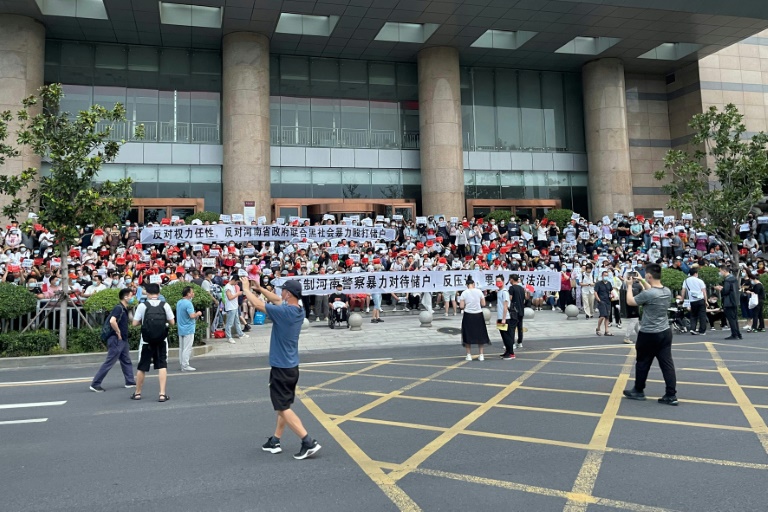
In one of the largest such rallies, hundreds gathered Sunday outside a branch of the People’s Bank of China in Henan’s capital Zhengzhou demanding their money.

The protests prompted a harsh official response, with demonstrators forced onto buses by police and beaten by plain clothes men, according to eyewitness accounts given to AFP and verified photos on social media.

Some depositors will now be able to get their money back, Henan’s provincial banking and insurance regulator said in a statement on Monday.

Individual customers with deposits of up to 50,000 yuan ($7,442) will be repaid starting Friday, the regulator said, while arrangements for repaying others will be separately announced.

“Funds that are involved in illegal or criminal (activity) will temporarily not be repaid,” the regulator said.

The announcement came a day after local police said it had arrested members of a “criminal gang” accused of taking over local banks and making illegal transfers through fictitious loans.

Protesters in a social media chat group seen by AFP were sceptical about the repayments, with one suggesting that “people with more than 50,000 yuan (in deposits) will have to continue waiting endlessly”.

– Deepening crisis –

The Henan banks are among a wave of small local financial institutions hit by cash flow and management woes.

Anhui province also announced Monday that it would begin repaying the deposits of some customers of a Bengbu city bank after online complaints and local media reports of frozen withdrawals. 

Protests are rare in tightly controlled China, where authorities enforce social stability at all costs and opposition is swiftly repressed.

But desperate citizens have occasionally succeeded in organising mass gatherings, usually when their targets are local governments or individual corporations.

The Henan demonstrations — and subsequent crackdown — have prompted an outpouring of support, with many on the Weibo platform pointing the finger at local officials.

“Why are you treating ordinary people like this?” one user asked in a post on Monday. 

Some of Sunday’s demonstrators accused officials of colluding with local banks to suppress rallies. 

Provincial authorities were accused last month of abusing the country’s mandatory Covid-19 health code to effectively bar protesters from public spaces.

The pass has become a ubiquitous part of life in China under Beijing’s strict zero-Covid strategy, and is required to access the vast majority of buildings, shopping centres, public places and also certain public transport.

ANZ Bank analysts said on Tuesday that while the value of the funds involved in the Henan crisis was low, “the social impact of the incident could be significant if it is not handled appropriately.”

“It could also trigger another round of regulatory tightening,” the analysts said in a note.

Panama government reduces fuel prices in face of protests

Panama’s president announced a reduction in gasoline prices and freezing of rates for several other essential products Monday in the face of continuing protests against inflation and corruption.

“I understand the dissatisfaction of various sectors with the situation we are experiencing, caused by the effects of the pandemic and the consequences of the conflict in Ukraine,” Laurentino Cortizo said in a statement. 

The price of gasoline for private vehicles will be reduced to $3.95 per gallon from July 15, he said, a drop of 24 percent from the price at the end of June. 

Public transportation has already benefited from the lower price since May. 

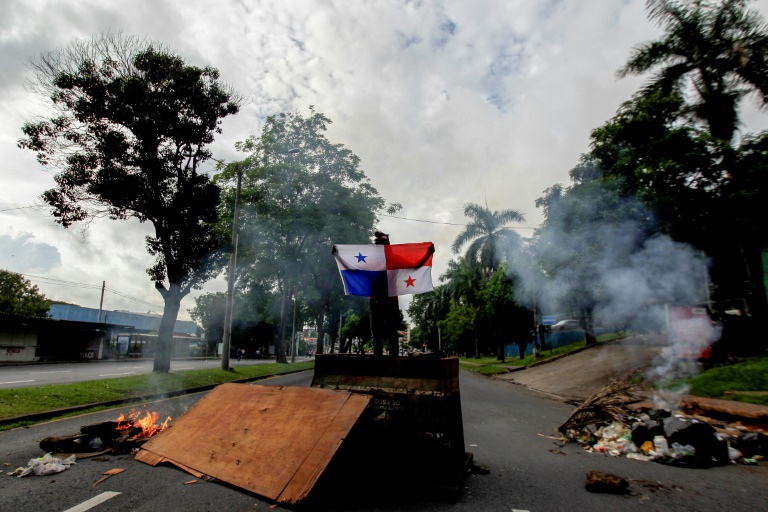
On Monday, hundreds protested in Panama in the second week of demonstrations against increases in fuel prices, which have risen 47 percent since January. 

Cortizo also announced that his government would draft a decree to freeze the prices of a dozen essential food products. 

Several unions, however, say that protests will continue until there is a general reduction in prices and gasoline rates drop below $3 per gallon.

In the western provinces of Veraguas and Chiriqui, near the border with Costa Rica, protesters blocked the Inter-American Highway, which connects the country to the rest of Central America. 

In Panama City, a group of students clashed with police around the University of Panama, where a group of people temporarily seized a patrol car and broke its windows. 

Inflation “means that fewer and fewer people can live in dignity,” said Saul Mendez, secretary-general of the country’s main construction union. 

According to Mendez, for citizens to regain their purchasing power, the prices of medicine, food, electricity and fuel must be lowered or frozen, in addition to a general wage increase. 

The Panamanian government set up a round table on Monday in the city of Santiago de Veraguas, one of the hotbeds of the protest, but no agreement was reached. 

Pacific leaders struggle to keep focus on climate at key summit

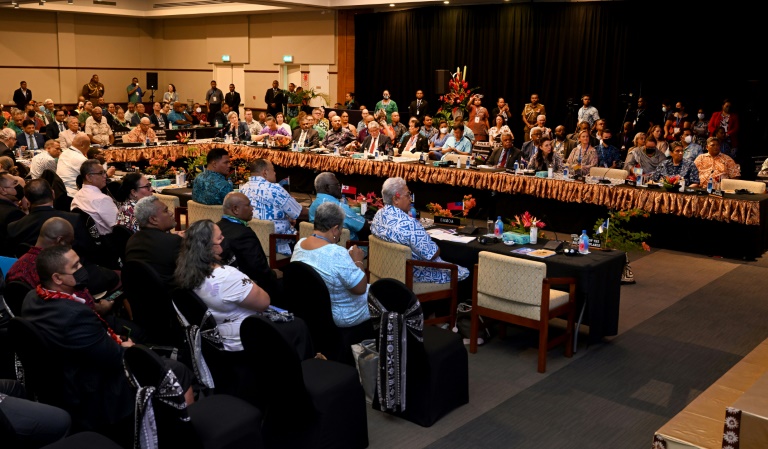
US-China rivalry and divisions over regional leadership threatened to overshadow a landmark summit of island leaders that got under way Tuesday in the Fijian capital, Suva.

This year’s Pacific Islands Forum is the most important meeting in years, coming after a Covid-enforced hiatus and as low-lying tropical isles run out of time for climate action.

But instead of a singular focus on the threat posed by rising sea levels and ever-more-powerful storms, China’s bid to play a bigger regional security role looks set to dominate the agenda.

The Solomon Islands in April signed a highly contentious security agreement with China, upsetting decades-old alliances with the West.

And on the eve of the summit, Beijing-allied leaders in the tiny nation of Kiribati announced the country would be renouncing membership of the forum altogether, fracturing a region that puts a high value on unity and consensus.

– ‘Breakdown in our connections’ –

The remaining leaders gathered at Suva’s luxurious Grand Pacific Hotel are expected to discuss a strategy to guide the Pacific through to 2050, keenly focused on the existential threat posed by climate change.

But Fiji president and chair of the Pacific Islands Forum, Voreqe Bainimarama, used his opening remarks to acknowledge the “breakdown in our connections” with the Micronesian nations, of which Kiribati is a part, that has occurred in recent years.

It had been hoped a carefully negotiated agreement with Micronesia would be enough to heal a schism that emerged when the region’s chosen candidate to lead the forum was snubbed.

But Kiribati’s exit sparked concerns about a fracturing of the Pacific’s closely held unity, which gives the region of small island states heft in global climate negotiations.

Tuvaluan foreign minister Simon Kofe told AFP he was “surprised and saddened” by Kiribati’s departure, but was optimistic the nation could be enticed to rejoin.

Last year, Kofe made headlines when he addressed the COP summit standing knee-deep in water to draw attention to the threat climate change poses to his low-lying nation, which may disappear below rising seas in the next 50 years.

Faced with such a threat, his top priorities at the summit are climate related, although he said he understood “how some members want to discuss the security issues”.

Concerns about regional security — brought to the fore by the Solomons-China pact — “draw a bit of attention away from climate change”, Kofe said.

– Security v climate –

The summit will be a key opportunity for Australia’s newly-elected prime minister, Anthony Albanese, to improve relations with the Pacific, which soured under the previous conservative government.

Albanese, who will arrive in Suva on Wednesday, sought to knit the issues of climate and security together Tuesday ahead of his departure for the summit.

“Our neighbours in the Pacific understand that climate change is a national security issue,” he told a press conference in Sydney.

Close Bitnami banner
Bitnami