World

Pacific leaders struggle to keep focus on climate at key summit

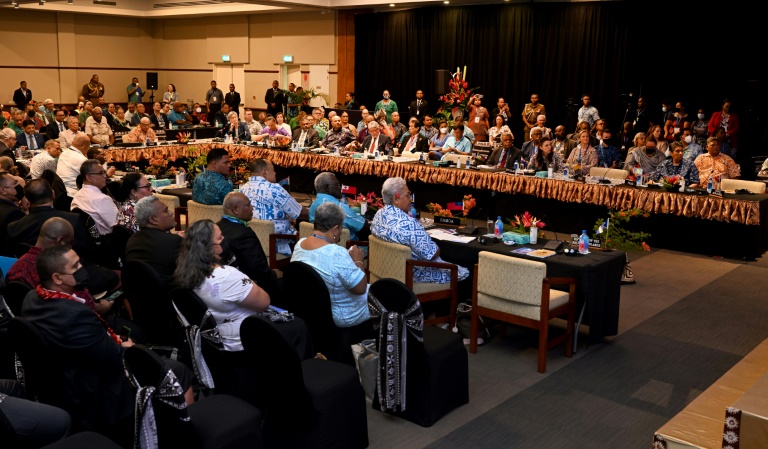
US-China rivalry and divisions over regional leadership threatened to overshadow a landmark summit of island leaders that got under way Tuesday in the Fijian capital, Suva.

This year’s Pacific Islands Forum is the most important meeting in years, coming after a Covid-enforced hiatus and as low-lying tropical isles run out of time for climate action.

But instead of a singular focus on the threat posed by rising sea levels and ever-more-powerful storms, China’s bid to play a bigger regional security role looks set to dominate the agenda.

The Solomon Islands in April signed a highly contentious security agreement with China, upsetting decades-old alliances with the West.

And on the eve of the summit, Beijing-allied leaders in the tiny nation of Kiribati announced the country would be renouncing membership of the forum altogether, fracturing a region that puts a high value on unity and consensus.

– ‘Breakdown in our connections’ –

The remaining leaders gathered at Suva’s luxurious Grand Pacific Hotel are expected to discuss a strategy to guide the Pacific through to 2050, keenly focused on the existential threat posed by climate change.

But Fiji president and chair of the Pacific Islands Forum, Voreqe Bainimarama, used his opening remarks to acknowledge the “breakdown in our connections” with the Micronesian nations, of which Kiribati is a part, that has occurred in recent years.

It had been hoped a carefully negotiated agreement with Micronesia would be enough to heal a schism that emerged when the region’s chosen candidate to lead the forum was snubbed.

But Kiribati’s exit sparked concerns about a fracturing of the Pacific’s closely held unity, which gives the region of small island states heft in global climate negotiations.

Tuvaluan foreign minister Simon Kofe told AFP he was “surprised and saddened” by Kiribati’s departure, but was optimistic the nation could be enticed to rejoin.

Last year, Kofe made headlines when he addressed the COP summit standing knee-deep in water to draw attention to the threat climate change poses to his low-lying nation, which may disappear below rising seas in the next 50 years.

Faced with such a threat, his top priorities at the summit are climate related, although he said he understood “how some members want to discuss the security issues”.

Concerns about regional security — brought to the fore by the Solomons-China pact — “draw a bit of attention away from climate change”, Kofe said.

– Security v climate –

The summit will be a key opportunity for Australia’s newly-elected prime minister, Anthony Albanese, to improve relations with the Pacific, which soured under the previous conservative government.

Albanese, who will arrive in Suva on Wednesday, sought to knit the issues of climate and security together Tuesday ahead of his departure for the summit.

“Our neighbours in the Pacific understand that climate change is a national security issue,” he told a press conference in Sydney.
Sri Lanka president hits airport standoff in escape attempt

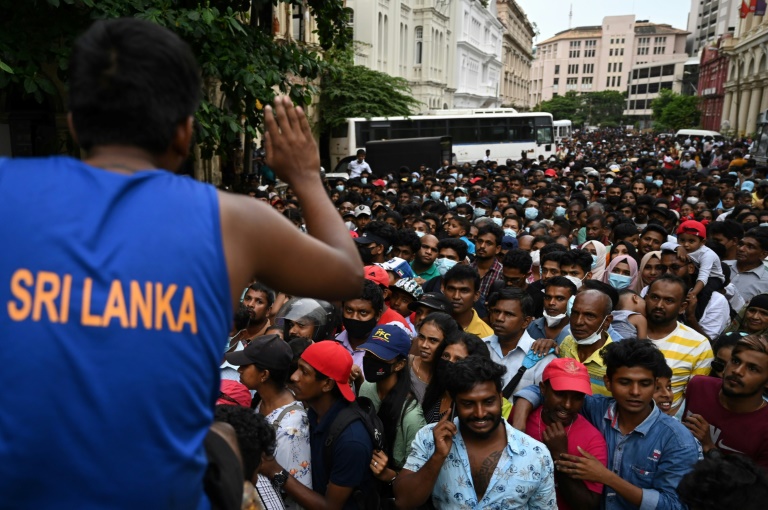
Sri Lanka’s embattled president was stuck in his own country Tuesday in a humiliating standoff with airport immigration staff blocking his exit to safety abroad, official sources said Tuesday.

Gotabaya Rajapaksa has promised to resign on Wednesday and clear the way for a “peaceful transition of power” following widespread protests against him over the country’s unprecedented economic crisis.

The 73-year-old leader fled his official residence in Colombo just before tens of thousands of protesters overran it on Saturday and wanted to travel to Dubai, officials said.

As president, Rajapaksa enjoys immunity from arrest, and he is believed to want to go abroad before stepping down to avoid the possibility of being detained.

But immigration officers were refusing to go to the VIP suite to stamp his passport, while he insisted he would not go through the public facilities fearing reprisals from other airport users.

The president and his wife spent the night at a military base next to the main international airport after missing four flights that could have taken them to the United Arab Emirates.

Rajapaksa’s youngest brother Basil, who resigned in April as finance minister, missed his own Emirates flight to Dubai early Tuesday after a similar standoff with airport staff.

Basil tried to use the paid concierge service for business travellers, but airport and immigration staff said they were withdrawing from the fast track service with immediate effect.

“There were some other passengers who protested against Basil boarding their flight,” an airport official told AFP. “It was a tense situation, so he hurriedly left the airport.”

Basil, a US dual citizen, had to obtain a new passport after leaving his behind at the presidential palace when the Rajapaksas beat a hasty retreat to avoid mobs on Saturday, a diplomatic source said.

– Hasty retreat –

Official sources said a suitcase full of documents had also been left behind at the stately mansion along with 17.85 million rupees in cash, now in the custody of a Colombo court.

There was no official word from the president’s office about his whereabouts, but he remained commander-in-chief of the armed forces with military resources at his disposal.

One option still open to him would be to take a navy vessel to either India or the Maldives, a defence source said.

If Rajapaksa steps down as promised, Prime Minister Ranil Wickremesinghe will automatically become acting president until parliament elects an MP to serve out the presidential term, which ends in November 2024.

Rajapaksa is accused of mismanaging the economy to a point where the country has run out of foreign exchange to finance even the most essential imports, leading to severe hardships for the 22 million population.

Sri Lanka defaulted on its $51-billion foreign debt in April and is in talks with the IMF for a possible bailout.

The island has nearly exhausted its already scarce supplies of petrol. The government has ordered the closure of non-essential offices and schools to reduce commuting and save fuel.

Japan mourns as funeral for former PM Abe held in Tokyo

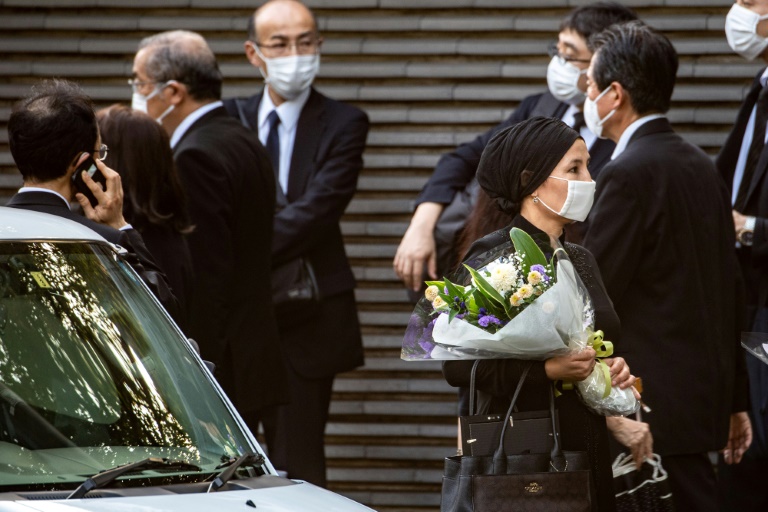
Family and friends of assassinated former prime minister Shinzo Abe gathered at a Tokyo temple Tuesday for a private funeral, as mourners outside condemned the leader’s “despicable” murder.

Abe was shot at close range on Friday while giving a campaign speech in the city of Nara, days ahead of upper house elections that saw his ruling party strengthen its hold on power.

The murder suspect, 41-year-old Tetsuya Yamagami, is in custody and has told police he targeted Abe because he believed the politician was linked to an organisation he resented.

Although the funeral rites were for family members and close associates only, long lines of people, some dressed in black, came to the Zojoji temple to pay respects to Japan’s longest-serving prime minister.

“I can’t get over my sadness, so I came here to lay flowers and say a prayer,” consultant Tsukasa Yokawa, 41, told AFP, describing Abe as “a great prime minister who did a lot to elevate Japan’s presence” on the global stage.

“It’s despicable,” said Yuko Takehisa, a 51-year-old assistant nurse who lives in Kanagawa, near Tokyo.

“More could have been done to prevent it,” she said, complaining that “no one reported” Yamagami to police despite reports he had test-fired a handmade gun before the attack.

Satoshi Ninoyu, the chairman of the National Public Safety Commission, a cabinet position overseeing national police, pledged Tuesday to hold a full review of any security failings.

Local police have already admitted flaws in their guarding programme for the high-profile politician, who was approached from behind and shot in broad daylight.

Police searches of the suspect’s home have found pellets and other possible components for building a gun like the crude weapon used in the attack, Japanese media reported Tuesday, citing unnamed investigative sources.

– Condolences pour in –

Yamagami spent three years in Japan’s navy and reportedly told investigators that his mother’s large donations to a religious organisation had caused the family financial troubles.

The Unification Church, a global religious movement founded in Korea in the 1950s, said on Monday that Yamagami’s mother was a member, but did not comment on any donations she may have made.

Abe’s murder sparked shock and outrage in Japan and worldwide, and an outpouring of condolence messages.

Foreign Minister Yoshimasa Hayashi said Tuesday that over 1,700 condolence messages had been received from 259 countries, territories and international bodies.

On Monday, US Secretary of State Antony Blinken made a previously unscheduled stop in Tokyo to pay tribute to Abe, describing him as a “man of vision.”

And Taiwanese Vice President William Lai was also in Tokyo for a surprise trip, Taiwanese media said.

The visit has the potential to anger Beijing, though Hayashi said Lai was travelling in a private capacity and there was no change to Japan’s policy on working non-governmental relations with Taiwan.

After Tuesday’s funeral, Abe’s body will be driven past some of Tokyo’s political landmarks, including the prime minister’s residence — known as the Kantei — and the country’s parliament, the Diet.

Public memorials are expected to be held at a later date, with suggestions that top foreign political leaders could attend, but no details have yet been announced.

Abe was the scion of a political family and became the country’s youngest post-war prime minister when he took power for the first time in 2006, aged 52.

He resigned in 2020 at the end of his second stint after suffering health problems.

His hawkish, nationalist views were divisive, particularly his desire to reform the pacifist constitution, and he weathered a series of scandals, including allegations of cronyism.

But he was lauded by others for his economic strategy, dubbed “Abenomics”, and his efforts to put Japan firmly on the world stage, including by cultivating close ties with former US president Donald Trump.

'Gangnam Style' impact endures a decade after it broke the internet

When South Korean rapper Psy released “Gangnam Style” a decade ago, few anticipated the scale and speed of its success, and how it would help usher in the streaming revolution.

Its madcap music video with the now-trademark horse-riding dance was released on July 15, 2012. It focused on the local, poking fun at Seoul’s wealthy Gangnam district — but within weeks it went global.

By December that year, it had reached one billion views on YouTube. It birthed countless memes and parodies, with the giddy-up dance performed by flash mobs from Azerbaijan to New Zealand.

And “Gangnam Style” showed the music industry what could be achieved through internet platforms and social media, especially by artists outside the West who did not perform in English.

Psy “broke the rules of the game. The traditional marketing and promotional playbooks were essentially thrown out the window,” said Bernie Cho, president of the Seoul-based DFSB Kollective artist and label services agency and an expert on the South Korean music industry.

It showed “the importance, the impact, the influence of YouTube on pop music and pop culture worldwide”.

In 2012, the streaming industry was still in its infancy, providing less than seven percent of global music revenues, according to industry group IFPI.

But the stunning success of “Gangnam Style” — as well as viral videos from performers such as Justin Bieber and Carly Rae Jepsen — showed a new way for acts from anywhere in the world to not only release music but also tap into online ad revenue, find sponsors and get booked for concerts, analysts say.

– ‘Imagine the possibilities’ –

A decade later, streaming is the main source of revenue in the global music industry — 65 percent in 2021, IFPI reported — with content available online via subscription-based services, YouTube, and short-form video apps such as TikTok.

“Gangnam Style” is “an example of the power that a platform like YouTube could have to create interest in a particular video from a lot of different places in the world,” said Michelle Cho, an assistant professor at the University of Toronto who studies Korean pop culture.

“The significance of the video… goes far beyond the content of the video. And it really has more to do with the way that it enabled people to imagine the possibilities of the platform.”

Within months of its release, “Gangnam Style” was the most-viewed video on YouTube. It held that spot for more than three years.

As of July 12 this year, it had close to 4.5 billion views.

Such was the online buzz for “Gangnam Style” and viral phenomena such as “Harlem Shake” that Billboard in 2013 changed how it compiles charts, adding streams on YouTube and other platforms to then-mainstream metrics such as radio and sales.

“My one good job, helping K-pop, was changing the rules of Billboard,” Psy told AFP during an interview in May, pointing to the popularity of Korean acts on YouTube.

– ‘Authentic, original, unique’ –

“Gangnam Style” shook South Korea too, becoming the country’s biggest cultural export and a source of national pride overnight.

K-pop acts had tried to break into international markets before 2012 with some regional success in Asia, but they had failed to make a mark in huge and lucrative Western markets such as the United States.

And then came Psy, who did not fit the profile of polished K-pop idols.

“Industry executives, government officials, pundits, critics, fans… just assumed that the breakout star from Korea would likely be either a boy band or a girl band,” said DFSB’s Bernie Cho.

Psy “proved to everybody that instead of a Korean version of a Western pop star or an international pop star, what the world wanted was something very authentic, original, unique.”

The horse-riding dance was everywhere — performed on prime-time TV in the United States, in an English football stadium, and by Bollywood stars in India.

Then-US President Barack Obama said his daughters had taught him “a pretty good Gangnam Style”.

South Korea is a global entertainment powerhouse today, but in 2012, “Gangnam Style” was the first encounter with Korean pop culture for many audiences.

“It was really influential in perhaps making Korea or Korean music or Korean media more of a common element of general knowledge in lots of places… certainly in the US, but also globally,” said scholar Michelle Cho.

“That knowledge, that… familiarity definitely helps other content gain a foothold.”

Bhutan's trailblazing beauty queen speaks up for LGBTQ community

Tashi Choden will not only be the first contestant to represent Bhutan at the Miss Universe competition — she is also the Himalayan country’s only openly gay public figure. 

The remote country is famed for its philosophy of “Gross National Happiness”, in which it prioritises citizens’ well-being on par with economic growth. 

But up until February 2021, gay sex was defined in the penal code as “sexual conduct against the laws of nature”, and branded illegal in the Buddhist country. 

That makes Choden’s crowning last month as Miss Bhutan 2022 a “huge deal” for the country of almost 800,000 people and its LGBTQ community, she said. 

“I’m not only speaking for the Bhutanese community but I’m speaking for the minority community on a platform like the Miss Universe pageant,” she told AFP.

“I can be their voice.”

The 23-year-old — who lost both her parents by the time she was 14 — said she came out last June, on International Pride Day, after “a lot of research and introspection”. 

It initially prompted a “very strong reaction” from her conservative and religious family members, but Choden said it was important for them to be part of her coming-out process.

“First and foremost, their acceptance matters to me,” she said. “After a while, they were very accepting of it. And I’m very grateful for that because a lot of people are not that fortunate to have that acceptance.

“As long as they know I’ll do well in life, that I can stand on my own feet, that I can be an independent woman — I think my sexuality doesn’t really matter to them.” 

While she received “some negative reactions” online after she was crowned and chosen to represent Bhutan in Miss Universe, her win appeared to garner support from inside the country and abroad. 

Bhutanese Prime Minister Lotay Tshering — who famously still practises as a doctor on weekends as a “de-stresser” — personally congratulated her and wished her success. 

– Paving its own way –

Bhutan has always ploughed its own furrow, benchmarking itself not just on economic growth but also on maintaining the ecological health of its picturesque valleys and snow-capped mountains. 

The country is carbon negative and its constitution mandates that 60 percent of Bhutan remains forested. 

It also eschews the global tourism model, instead levying a hefty $200 a day “sustainable development fee” for foreign tourists to enter — a fund used to offset their carbon footprint.

Television was only allowed in 1999, archery is a national craze and phalluses painted on houses to ward off evil are common.

Members of the LGBTQ community have reported instances of discrimination and social stigma, which keeps many in the closet.

But the kingdom’s decriminalisation of gay sex in 2021 signalled growing openness and acceptance, said Rinzin Galley, a gender-fluid beautician.

“With the decriminalisation… I feel more comfortable in public than before,” Galley told AFP. 

“I like putting on make-up and going out, and it’s not a normal thing for a guy to come out with make-up.”

Several transgender women have had their names and gender changed on their citizenship identity cards  and the LGBTQ community is slowly becoming more visible.

Community-based organisations — like Queer Voices of Bhutan and Pride Bhutan — and an NGO called Lhak-sam have also provided support through advocacy.

And now, with Choden representing Bhutan on the Miss Universe stage — watched by millions worldwide — many are hopeful about the future of the country’s queer youth. 

“Having a queer woman become Miss Bhutan enables the rest of the queer community, especially queer youth, to aim for bigger goals in their lives,” Regita Gurung, a young bisexual woman, told AFP.

“This representation has paved the path for the rest of us to be confident about who we are on public platforms.”

China banks to repay some customers after mass protests

Customers of rural Chinese banks whose withdrawals have been frozen will begin to get some money back Friday, regulators said, after depositors clashed with authorities at a rare protest over the weekend.

China’s rural banking sector has been hit hard by Beijing’s efforts to rein in a property bubble and spiralling debt, in a financial crackdown that has had ripple effects across the world’s second-largest economy.

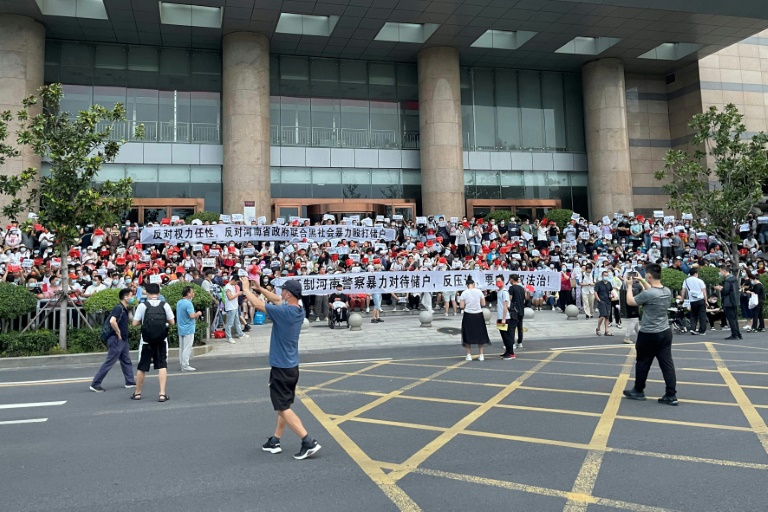
Four banks in Henan province froze cash withdrawals in mid-April in the face of regulatory scrutiny into alleged mismanagement, leaving thousands of savers without funds and sparking sporadic demonstrations.

In one of the largest such rallies, hundreds gathered Sunday outside a branch of the People’s Bank of China in Henan’s capital Zhengzhou demanding their money.

The protests prompted a harsh official response, with demonstrators forced onto buses by police and beaten by plain clothes men, according to eyewitness accounts given to AFP and verified photos on social media.

Some depositors will now be able to get their money back, Henan’s provincial banking and insurance regulator said in a statement on Monday.

Individual customers with deposits of up to 50,000 yuan ($7,442) will be repaid starting Friday, the regulator said, while arrangements for repaying others will be separately announced.

“Funds that are involved in illegal or criminal (activity) will temporarily not be repaid,” the regulator said.

The announcement came a day after local police said it had arrested members of a “criminal gang” accused of taking over local banks and making illegal transfers through fictitious loans.

Protesters in a social media chat group seen by AFP were sceptical about the repayments, with one suggesting that “people with more than 50,000 yuan (in deposits) will have to continue waiting endlessly”.

The Henan banks are among a wave of small local financial institutions hit by cash flow and management woes.

Anhui province also announced Monday that it would begin repaying the deposits of some customers of a Bengbu city bank after online complaints and local media reports of frozen withdrawals. 

Protests are rare in tightly controlled China, where authorities enforce social stability at all costs and opposition is swiftly repressed.

But desperate citizens have occasionally succeeded in organising mass gatherings, usually when their targets are local governments or individual corporations.

The Henan demonstrations — and subsequent crackdown — have prompted an outpouring of support, with many on the Weibo platform pointing the finger at local officials.

“Why are you treating ordinary people like this?” one user asked in a post on Monday. 

Some of Sunday’s demonstrators accused officials of colluding with local banks to suppress rallies. 

Provincial authorities were accused last month of abusing the country’s mandatory Covid-19 health code to effectively bar protesters from public spaces.

The pass has become a ubiquitous part of life in China under Beijing’s strict zero-Covid strategy, and is required to access the vast majority of buildings, shopping centres, public places and also certain public transport.

Palestinians say US economic push no substitute for peace

Ahead of Joe Biden’s first visit to Jerusalem as US president, Washington’s ambassador said his team will “pound tables” to press Israeli officials into making concessions to the Palestinians.

But ambassador Thomas Nides was talking about ensuring Palestinians have access to economic benefits such as 4G internet, not throwing American diplomatic muscle into reviving a peace process moribund since 2014.

Biden’s first Middle East tour since entering the White House last year begins in Israel on Wednesday, and he is expected to meet Palestinian president Mahmud Abbas on Friday in Bethlehem, in the Israeli-occupied West Bank.

US-Palestinian ties have improved under Biden, after hitting an all-time low under his predecessor Donald Trump, a staunch backer of the Israelis.

Along with the prospect of faster internet, the visit may also see the US restore funding to hospitals in Israeli-annexed east Jerusalem, which have historically served Palestinians.

But some Palestinians said they are weary of US diplomacy which, they claim, emphasises economic benefits above core issues of the seven-decade conflict.

“It would be nice to have the 4G,” said Mohammed Mostafa, a former Palestinian Authority deputy prime minister and ex-chief executive of Paltel, the largest telecoms operator in the Palestinian territories.

“But it’s obviously not a substitute for solving the bigger issues like Jerusalem, like sovereignty or like freedom,” he told AFP.

“Israel thinks people will forget about the bigger picture,” he added.

– Hamas expects ‘nothing’ –

The 4G pledge, which ambassador Nides highlighted in an interview with the Times of Israel, would offer an immediate boost to Palestinian businesses, Mostafa said.

Palestinians are currently forced to either buy Israeli SIM cards or struggle with slower 3G connections.

“Israeli operators have a significant part of the Palestinian telecoms and broadband market,” Mostafa said. “This would be a chance to bring that back to Palestinian companies.”

But “the Israelis think ‘we’re going to give you 4G so you’ll keep quiet on the other things,” Mostafa added. “We are interested, but we also want bigger things.”

Until July 1, Israel was led by prime minister Naftali Bennett, a right-winger who opposed the Palestinians’ over-arching demand — the establishment of their own state.

Bennett embraced an approach known as “shrinking the conflict,” seeking to defuse tensions by improving economic opportunities in the West Bank and the blockaded Gaza Strip, which is controlled by the Islamist group Hamas. 

One such key policy was to increase permits for Palestinians, including from Gaza, to seek relatively lucrative work in Israel. 

Asked about the expectations from Biden’s visit, Hamas official Basem Naim said: “Nothing.”

Yair Lapid, Bennett’s replacement as Israeli premier and a centrist, supports a two-state solution to the Palestinian conflict.

But he is only serving as a caretaker leader ahead of elections in November, and is therefore seen as having little space to launch bold peace initiatives.

When Lapid visited Paris last week, French President Emmanuel Macron said there was “no alternative to a resumption of political dialogue between Israelis and Palestinians.”

Senior Israeli officials have told AFP that Lapid was “open” to meeting Abbas, but not to launching a new peace initiative for the moment.

– ‘Throwing money at occupation’ –

In an opinion piece for the Washington Post at the weekend, Biden asserted that his administration has restored approximately $500 million in support for Palestinians, after Trump slashed funding. 

But while Israeli authorities have promised to raise a sea of flags to welcome Biden in Jerusalem, there are few signs of ceremonial anticipation across the West Bank.

For Sam Bahour, a prominent Palestinian-American businessman in the West Bank, apathy about Biden’s visit transcends the latest fluctuations in Israeli governance.

“The Biden administration has fallen into the Israeli trap –- that trap is fragmenting all of the Palestinian rights under international law, and then using them as playing cards as if they were giving concessions back to the Palestinians,” he said.

Backing Israeli initiatives in the West Bank is simply “throwing money at the occupation”. 

Bahour said Palestinians can manage with slower internet, but not without statehood.

“We don’t need 4G,” he said. “We need the fourth generation of Palestinians not to live under military occupation.”

Asian stocks fall, euro nears dollar parity as recession fears build

Asian stocks mostly fell Tuesday, along with oil, on fears that central bank moves to fight inflation will spark a recession, while the euro fell towards parity with the dollar as energy and cost-of-living crises loom over the eurozone economy.

Worries about a fresh Covid flare-up in China — fuelling talk of another round of painful lockdowns — added to the downbeat mood comes, just as investors prepare for a big week of data and earnings that could have huge implications for markets.

Wall Street ended with more losses, with tech firms taking the brunt of the selling on expectations for an extended period of hefty interest rate hikes — the sector is particularly susceptible to higher borrowing costs.

A forecast-beating US jobs report last week suggested the world’s top economy was coping with higher Federal Reserve rates, but it also gave the bank more room to continue lifting — leading to concerns it could go too far and cause a contraction.

“While the jobs report on Friday highlighted that the US is faring better than the rest in the race to avoid a recession, the rest of the world is sinking under the weight of a cost-of-living crisis and higher interest rates,” said OANDA’s Craig Erlam.

He added that a recent bounce in stocks had faded “and we now head into earnings season and another week of major economic reports fearful of what may lie ahead”.

In early Asian trade, Tokyo, Shanghai, Hong Kong, Seoul, Wellington, Taipei and Jakarta all fell, though Sydney and Singapore edged up.

Bets on a drop in demand caused by a possible recession also hit the crude market, with both main contracts extending Monday’s losses.

The Fed’s sharp rate hikes in recent months have sent the dollar soaring across the board, with the euro particularly under pressure as the European Central Bank moves more slowly in tightening monetary policy and as the region faces a severe energy crisis caused by the Ukraine war.

Sanctions on oil imports from Russia and Moscow’s warnings that it will shut off gas to Europe have led most analysts to predict the eurozone will fall into recession, and pushed the euro to a 20-year low and close to parity with the greenback.

But commentators said that even if the ECB lifted rates more quickly, that would simply add to the misery and economic pain.

While the single currency picked up slightly after hitting a low of $1.0006, there is a broad expectation that it is a matter of time before the $1.0000 level is breached. 

Investors are also cautiously awaiting the upcoming corporate reporting season with the dollar in mind.

The currency’s strength will not only “affect this quarter’s earnings, but more likely it’s going to affect the revenue generation outlook for the next couple of quarters and that, I think, is a big problem”, Kimberly Forrest, of Bokeh Capital Partners, told Bloomberg Radio.

And markets strategist Louis Navellier added: “Earnings will be very revealing, the outlook for the second half (of the year) more so, as far as the state of consumer demand and the impact of inflationary pressures on profit margins and revenue growth.

“There is already early downward pressure with 71 S&P companies having already issued negative guidance versus outlook given in the first quarter earnings”, the highest since the final three months of 2019.

– Key figures at around 0230 GMT –

Tokyo – Nikkei 225: DOWN 1.7 percent at 26,362.76 (break)

Hong Kong – Hang Seng Index: DOWN 0.8 percent at 20,965.41

Shanghai – Composite: DOWN 0.2 percent at 3,307.96

Euro/dollar: DOWN at $1.0022 from $1.0041 on Monday

Pound/dollar: DOWN at $1.1883 from $1.1892 

Euro/pound: DOWN at 84.34 pence from 84.38 pence

Dollar/yen: DOWN at 137.13 yen from 137.41 yen

West Texas Intermediate: DOWN 1.0 percent at $103.08 per barrel

Brent North Sea crude: DOWN 0.8percent at $106.25 per barrel

New York – Dow: DOWN 0.5 percent at 31,173.84 (close)

London – FTSE 100: UNCHANGED at 7,196.59 (close)

Global talent, Korean-trained: K-pop's new recipe for world domination

From Indian K-pop idols to Swedish songwriters, South Korea’s music industry is now a hotbed of global talent — a smart strategy as it aims for world domination, experts say.

K-pop bands have long included non-Koreans: Blackpink’s Lisa is Thai, while Japan and China are both well represented, and Korean-American singers have topped the local charts.

But after megastars like Psy and BTS brought K-pop to a global audience, the South Korean entertainment agencies behind almost all the popular groups are recruiting further afield.

DR Music’s girl group Blackswan only has two Koreans in its six-woman line-up, and last month added the industry’s first Indian “idol”, who joins Brazilian and Senegalese members.

In the United States a Korean-American K-pop singer, AleXa, recently won NBC’s American Song Contest, the US version of Eurovision. Though she sang in English, her training in Seoul made her stand out.

Staff at NBC said they had “never worked with an artist who could find a camera on stage faster”, according to Angelina Foss, creative director at South Korea’s ZB Label.

By the end of filming, other contestants were asking AleXa for tips, Foss said, adding that it was “just part of the training”.

– ‘Next step’ –

With comprehensive training programmes covering everything from acting and etiquette to stunt coordination, K-pop artists make some Western pop stars look like they are not even trying.

Recruited in open castings or found through online audition tapes, South Korea’s entertainment agencies identify the raw talent and then get to work.

At ZB Label, part of industry powerhouse Zanybros which has produced thousands of K-pop music videos, the bosses are “always thinking — what’s the next step in K-pop”, Foss said.

They signed AleXa because they believe she has the “full package” and saw her potential as a young Korean-American to appeal to K-pop’s growing global fandom.

AleXa has studied dance since she was two but said the training regime was still gruelling.

“I trained every day of the week. I had dance classes every single day,” said AleXa, who also did years of competitive cheerleading while growing up in Tulsa, Oklahoma.

“I had weekly evaluations, which is a very big thing in the K-pop industry,” she said, explaining that trainees perform for company staff to assess their progress.

After “months and months and months” of work, her bosses decided she was ready to “debut” as a fully fledged star.

In K-pop machinery the concept of an artist’s debut is very important, and obsessive detail is put into styling, staging and cinematography.

“Concept and execution are very, very critical,” said AleXa, whose songs are written in Sweden but produced in Seoul with a US audience but global YouTube views in mind.

– ‘Strive for perfection’ –

K-pop recruiters are fanning out across the world, with BTS’s agency Hybe hosting auditions in cities including London, Bangkok, Sydney and Tokyo, but at the same time global talent is flocking to South Korea.

Iyanu Anderson, 24, discovered K-pop as a teenager in Britain where she studied Korean at university before moving to Seoul, now working as a dancer, actress and model.

“I’d love to be trained,” said Anderson, who has appeared in a Samsung commercial with BTS and performed as a backing dancer at their three March concerts in Seoul.

“But to debut as an artist, I’m not sure,” she told AFP, citing the huge pressure, scrutiny and workload facing K-pop idols.

Even as a backup dancer “there is a certain amount of pressure, just because when we’re shooting a commercial, they strive for perfection”.

“Sometimes we’re shooting for hours and hours and one thing is out of line. And then it’s a whole new setup,” she said.

It is “quite difficult” for overseas performers to adapt to the hard-driving K-pop system, said Michelle Cho, assistant professor at the University of Toronto.

But the industry itself is being forced to adapt to draw top talent from across the globe, she added.

K-pop managers are “paying attention to pop cultural or youth cultural aesthetics and styles… in lots of different places”, Cho explained.

If they manage to successfully diversify casting and train new types of stars, “that can only be a good thing” for the industry and its global prospects, she said.

Olympic great Mo Farah was trafficked to UK, forced to be child servant

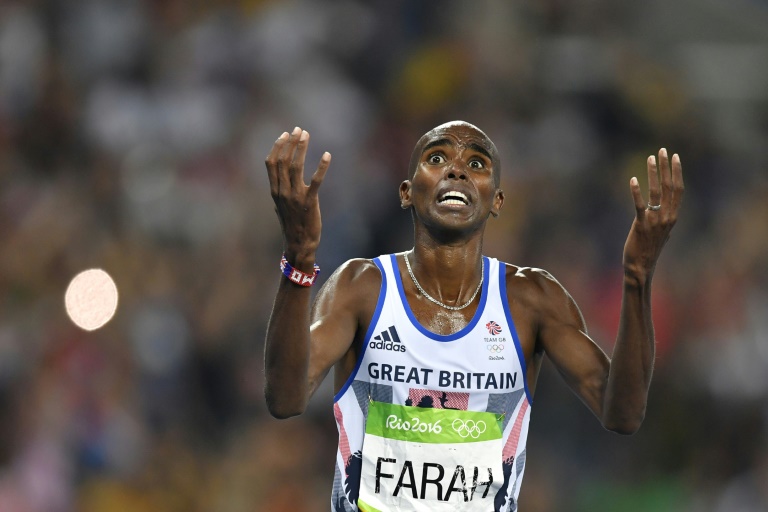
Olympic great Mo Farah was illegally trafficked to Britain at the age of nine from Djibouti and forced to work as a child servant, he has revealed, saying his real name is Hussein Abdi Kahin.

The distance runner was flown to the UK from the east African country aged eight or nine by a woman he had never met, given the name Mohammed Farah, and then made to look after another family’s children, he tells a BBC TV documentary “The Real Mo Farah” to be aired Wednesday.

Farah, who completed the 5,000m-10,000m double at both the London 2012 and Rio 2016 Olympics, has previously said he came to the UK as a refugee from Somalia with his parents.

But in stunning revelations the 39-year-old now says his parents have never been to the UK — his father was killed in civil unrest in Somalia when Farah was four years old and his mother and two brothers live in the breakaway state of Somaliland, which is not internationally recognised.

“The truth is I’m not who you think I am,” says Farah. “Most people know me as Mo Farah, but it’s not my name or it’s not the reality.”

The woman who flew with him to the UK told him he was being taken to live with relatives and to say his name was Mohamed as she had fake travel documents that showed his photo next to the name “Mohamed Farah”.

Farah, the first British track and field athlete to win four Olympic golds, said his children motivated him to tell the truth about his past.

“I’ve been keeping it for so long, it’s been difficult because you don’t want to face it and often my kids ask questions, ‘Dad, how come this?’ And you’ve always got an answer for everything, but you haven’t got an answer for that,” he said.

“That’s the main reason in telling my story because I want to feel normal and don’t feel like you’re holding on to something.”

– ‘Get out and run’ –

Farah’s wife Tania said in the year leading up to their 2010 wedding she realised “there were lots of missing pieces to his story” but she eventually “wore him down with the questioning” and he told the truth.

When he arrived in the UK, Farah says the woman who accompanied him took a piece of paper from him that had his relatives’ contact details and “ripped it up and put it in the bin. 

“At that moment, I knew I was in trouble,” he says.

Farah says he was forced to do housework and childcare “if I wanted food in my mouth”, and was told: “If you ever want to see your family again, don’t say anything.”

“Often I would just lock myself in the bathroom and cry,” he says.

Farah’s physical education teacher, Alan Watkinson, noticed how the youngster’s mood changed when he was on the running track.

“The only language he seemed to understand was the language of PE and sport,” says Watkinson.

Farah says it was athletics that enabled him to escape.

“The only thing I could do to get away from this (situation) was to get out and run,” he says.

Farah eventually told Watkinson the truth and he informed local authorities. 

It was Watkinson who applied for Farah’s British citizenship which he described as a “long process” and on July 25, 2000 Farah was recognised as a British Citizen.

“I often think about the other Mohamed Farah, the boy whose place I took on that plane and I really hope he’s OK,” said Farah.

Farah was praised on Wednesday for telling his story. 

“We applaud @Mo_Farah for his bravery in telling his heartbreaking story,” tweeted Britain’s Refugee Council charity. 

“He underlines the human reality at the heart of so many stories like his,” it added. “And the desperate need for safe and humane routes for people seeking asylum.”

Close Bitnami banner
Bitnami