World

Heatwave grips Spain as UK readies for soaring temperatures

Spain and Portugal were sweltering in their second heatwave in a month on Monday, with scorching temperatures also expected in France and Britain in the coming days.

People in Spain baked with the temperature in the central town of Candeleda hitting a stifling 43.3 degrees Celsius (110 degrees Fahrenheit) shortly after 6 pm (1600 GMT), according to Spain’s meteorological agency AEMET.

The mercury meanwhile hit 42.4C in the southern city of Seville.

The southwestern cities of Badajoz and Merida also saw temperatures of 42C.

AEMET forecast 46C in Badajoz on Thursday and Friday with Seville predicted to swelter in 45C on Wednesday and Thursday.

“This heatwave really has the potential to be exceptional,” said AEMET spokesman Ruben del Campo.

The current temperature surge began Sunday and could “last nine or ten days, which would make it one of the three longest heat waves Spain has seen since 1975,” he told AFP.

Heatwaves have become more frequent due to climate change, scientists say. As global temperatures rise over time, heatwaves are expected to become more intense.

June had already seen Spain grapple with temperatures above 40C in swathes of the country.

The previous month was Spain’s hottest May since the beginning of the century.

In August 2021 Spain recorded its highest ever temperature when the mercury reached 47.4C in the small southern town of Montoro. 

Meteorologists did not rule out the prospect of that record being broken in the coming days.

The heightened temperatures have been accompanied by a lack of rainfall. 

Reservoirs in Spain stood at 45.3 percent of capacity on Monday, well below the average of 65.7 percent recorded during the same period over the past decade.

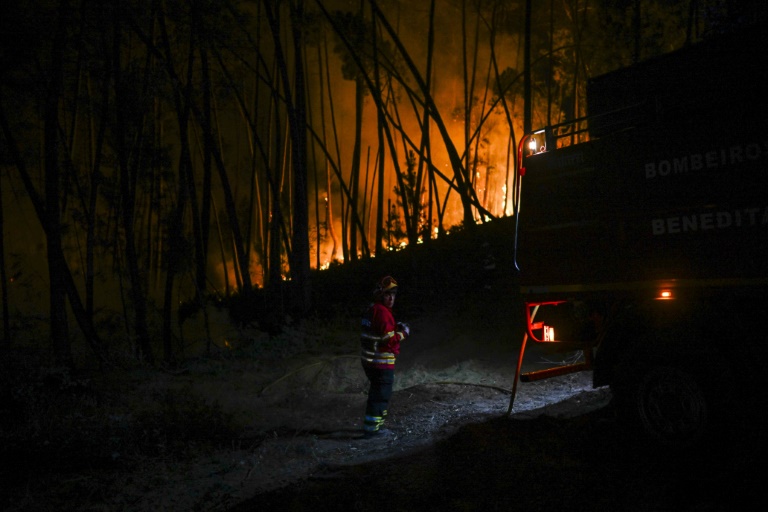
In neighbouring Portugal temperatures topped 44C over the weekend, fuelling wildfires and vast smoke clouds which were visible in the capital Lisbon.

Firefighters brought the largest blaze under control on Monday after it had burned through swathes of the central municipality of Ourem, local officials said.

– ‘Maximum risk’ –

While temperatures eased somewhat in Portugal on Monday they were expected to soar again in the coming days with 44C forecast for the southeastern city of Evora.

“In the coming days we will experience conditions of maximum risk,” Prime Minister Antonio Costa said.

“The slightest lapse in vigilance could result in a fire of significant proportions.”

A front of hot air began pushing into France on Monday, with the mercury rising above 30C across much of the country, according to national weather forecaster Meteo-France.

Temperatures could hit 39C in some parts of France on Tuesday, it added.

The heat wave should reach its peak between Saturday and next Tuesday, said Sebastien Leas of Meteo-France.

Britain on Monday issued an extreme heat warning, with temperatures predicted to hit more than 30C across large parts of England and Wales.

The extreme heat warning was classified as “amber”, the second-highest alert level, indicating a “high impact” on daily life and people.

Met Office deputy chief meteorologist Rebekah Sherwin said the UK highs would continue into early next week.

“From Sunday and into Monday, temperatures are likely to be in excess of 35C in the southeast (of England), although the details still remain uncertain,” she said.
Webb telescope reveals deepest image of early universe

Humanity’s view of the distant cosmos will never be the same.

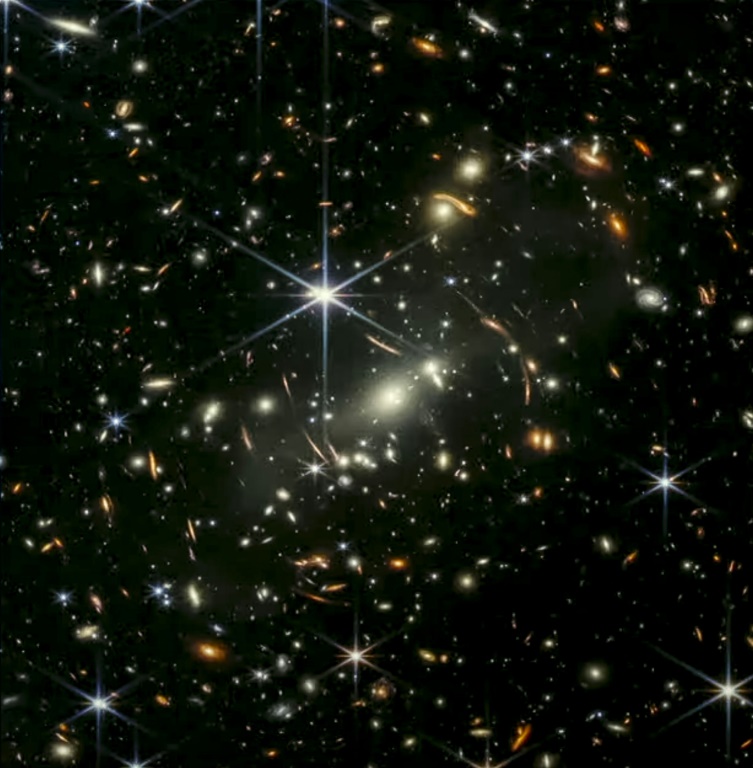
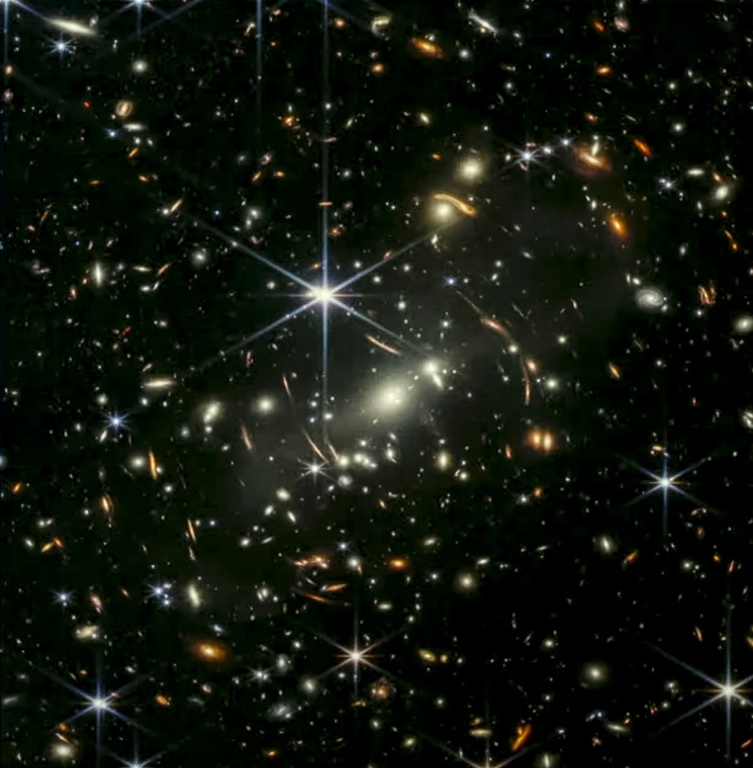
The James Webb Space Telescope, the most powerful to be placed in orbit, has revealed the clearest image to date of the early universe, going back 13 billion years, US space agency NASA said Monday.

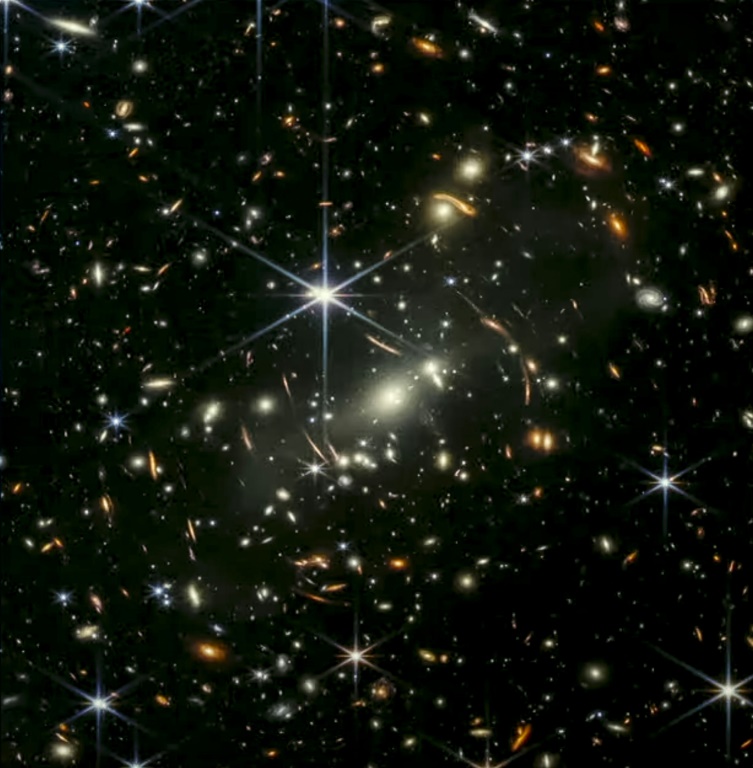
The stunning shot, released in a White House briefing by President Joe Biden, is overflowing with thousands of galaxies and features some of the faintest objects observed, colorized in blue, orange and white tones.

Known as Webb’s First Deep Field, it shows the galaxy cluster SMACS 0723, which acts as a gravitational lens, bending light from more distant galaxies behind it towards the observatory, in a cosmic magnification effect.

Webb’s primary imager NIRCam — which operates in the near infrared wavelength spectrum because light from the early universe has been stretched out by the time it reaches us — has brought these faint background galaxies into focus.

Webb compiled the composite shot in 12.5 hours, achieving well beyond what its predecessor the Hubble Space Telescope could in weeks.

“Fantastic — galaxies upon galaxies upon galaxies,” Jonathan Lunine, chair of the astronomy department at Cornell University, told AFP, rejoicing with the rest of the global astronomy community.

“Even though this is by no means the farthest Webb can see, it’s the deepest image ever taken, and shows the power of this remarkable telescope: tremendous sensitivity, a broad range of wavelengths, and sharp image clarity.”

Avi Loeb, a professor of astronomy at Harvard, explained the reddish arcs are the ancient galaxies, while the light colored circles and ellipses belong to the younger galaxy cluster in the foreground.

He added he was “thrilled” about the idea of Webb looking even closer to the Big Bang, back some 13.8 billion years ago. 

– Stellar nursery –

The next set of images will be released Tuesday, revealing details about the atmosphere of faraway planets, “stellar nurseries” where stars form, galaxies locked in a dance of close encounters, and the cloud of gas around a dying star.

Biden conveyed a sense of awe that Webb is documenting universe imagery from some 13 billion years ago.

“It’s hard to even fathom,” the president said.

“These images are going to remind the world that America can do big things and remind the American people, especially our children, that there’s nothing beyond our capacity.”

Carina Nebula, a stellar nursery, is famous for its towering pillars that include “Mystic Mountain,” a three-light-year-tall cosmic pinnacle captured in an iconic image by Hubble.

Webb has also carried out a spectroscopy — an analysis of light that reveals detailed information — on a gas giant planet called WASP-96 b, which was discovered in 2014.

Nearly 1,150 light-years from Earth, WASP-96 b is about half the mass of Jupiter and zips around its star in just 3.4 days.

Nestor Espinoza, an STSI astronomer, told AFP that previous exoplanet spectroscopies carried out using existing instruments were very limited compared to what Webb could do.

“It’s like being in a room that is very dark and you only have a little pinhole you can look through,” he said of the prior technology. Now, with Webb, “You’ve opened a huge window, you can see all the little details.”

– Million miles from Earth –

Launched in December from French Guiana on an Ariane 5 rocket, Webb is orbiting the Sun at a distance of a million miles (1.6 million kilometers) from Earth, in a region of space called the second Lagrange point.

Here, it remains in a fixed position relative to the Earth and Sun, with minimal fuel required for course corrections. 

A wonder of engineering, the total project cost is estimated at $10 billion, making it one of the most expensive scientific platforms ever built, comparable to the Large Hadron Collider at CERN.

Webb’s primary mirror is over 21 feet (6.5 meters) wide and is made up of 18 gold-coated mirror segments. Like a camera held in one’s hand, the structure must remain as stable as possible to achieve the best shots.

Charlie Atkinson, chief engineer on the James Webb Space Telescope program at lead contractor Northrop Grumman, told AFP that it wobbles no more than 17 millionths of a millimeter.

After the first images, astronomers around the globe will get shares of time on the telescope, with projects selected competitively through a process in which applicants and selectors don’t know each other’s identities, to minimize bias.

Thanks to an efficient launch, NASA estimates Webb has enough propellant for a 20-year life, as it works in concert with the Hubble and Spitzer space telescopes to answer fundamental questions about the cosmos.

Webb telescope reveals deepest image of early universe

Humanity’s view of the distant cosmos will never be the same.

The James Webb Space Telescope, the most powerful to be placed in orbit, has revealed the clearest image to date of the early universe, going back 13 billion years, US space agency NASA said Monday.

The stunning shot, released in a White House briefing by President Joe Biden, is overflowing with thousands of galaxies and features some of the faintest objects observed, colorized in blue, orange and white tones.

Known as Webb’s First Deep Field, it shows the galaxy cluster SMACS 0723, which acts as a gravitational lens, bending light from more distant galaxies behind it towards the observatory, in a cosmic magnification effect.

Webb’s primary imager NIRCam — which operates in the near infrared wavelength spectrum because light from the early universe has been stretched out by the time it reaches us — has brought these faint background galaxies into focus.

Webb compiled the composite shot in 12.5 hours, achieving well beyond what its predecessor the Hubble Space Telescope could in weeks.

“Fantastic — galaxies upon galaxies upon galaxies,” Jonathan Lunine, chair of the astronomy department at Cornell University, told AFP, rejoicing with the rest of the global astronomy community.

“Even though this is by no means the farthest Webb can see, it’s the deepest image ever taken, and shows the power of this remarkable telescope: tremendous sensitivity, a broad range of wavelengths, and sharp image clarity.”

Avi Loeb, a professor of astronomy at Harvard, explained the reddish arcs are the ancient galaxies, while the light colored circles and ellipses belong to the younger galaxy cluster in the foreground.

He added he was “thrilled” about the idea of Webb looking even closer to the Big Bang, back some 13.8 billion years ago. 

– Stellar nursery –

The next set of images will be released Tuesday, revealing details about the atmosphere of faraway planets, “stellar nurseries” where stars form, galaxies locked in a dance of close encounters, and the cloud of gas around a dying star.

Biden conveyed a sense of awe that Webb is documenting universe imagery from some 13 billion years ago.

“It’s hard to even fathom,” the president said.

“These images are going to remind the world that America can do big things and remind the American people, especially our children, that there’s nothing beyond our capacity.”

Carina Nebula, a stellar nursery, is famous for its towering pillars that include “Mystic Mountain,” a three-light-year-tall cosmic pinnacle captured in an iconic image by Hubble.

Webb has also carried out a spectroscopy — an analysis of light that reveals detailed information — on a gas giant planet called WASP-96 b, which was discovered in 2014.

Nearly 1,150 light-years from Earth, WASP-96 b is about half the mass of Jupiter and zips around its star in just 3.4 days.

Nestor Espinoza, an STSI astronomer, told AFP that previous exoplanet spectroscopies carried out using existing instruments were very limited compared to what Webb could do.

“It’s like being in a room that is very dark and you only have a little pinhole you can look through,” he said of the prior technology. Now, with Webb, “You’ve opened a huge window, you can see all the little details.”

– Million miles from Earth –

Launched in December from French Guiana on an Ariane 5 rocket, Webb is orbiting the Sun at a distance of a million miles (1.6 million kilometers) from Earth, in a region of space called the second Lagrange point.

Here, it remains in a fixed position relative to the Earth and Sun, with minimal fuel required for course corrections. 

A wonder of engineering, the total project cost is estimated at $10 billion, making it one of the most expensive scientific platforms ever built, comparable to the Large Hadron Collider at CERN.

Webb’s primary mirror is over 21 feet (6.5 meters) wide and is made up of 18 gold-coated mirror segments. Like a camera held in one’s hand, the structure must remain as stable as possible to achieve the best shots.

Charlie Atkinson, chief engineer on the James Webb Space Telescope program at lead contractor Northrop Grumman, told AFP that it wobbles no more than 17 millionths of a millimeter.

After the first images, astronomers around the globe will get shares of time on the telescope, with projects selected competitively through a process in which applicants and selectors don’t know each other’s identities, to minimize bias.

Thanks to an efficient launch, NASA estimates Webb has enough propellant for a 20-year life, as it works in concert with the Hubble and Spitzer space telescopes to answer fundamental questions about the cosmos.

Webb telescope reveals deepest image of early universe

Humanity’s view of the distant cosmos will never be the same.

The James Webb Space Telescope, the most powerful to be placed in orbit, has revealed the clearest image to date of the early universe, going back 13 billion years, US space agency NASA said Monday.

The stunning shot, released in a White House briefing by President Joe Biden, is overflowing with thousands of galaxies and features some of the faintest objects observed, colorized in blue, orange and white tones.

Known as Webb’s First Deep Field, it shows the galaxy cluster SMACS 0723, which acts as a gravitational lens, bending light from more distant galaxies behind it towards the observatory, in a cosmic magnification effect.

Webb’s primary imager NIRCam — which operates in the near infrared wavelength spectrum because light from the early universe has been stretched out by the time it reaches us — has brought these faint background galaxies into focus.

Webb compiled the composite shot in 12.5 hours, achieving well beyond what its predecessor the Hubble Space Telescope could in weeks.

“Fantastic — galaxies upon galaxies upon galaxies,” Jonathan Lunine, chair of the astronomy department at Cornell University, told AFP, rejoicing with the rest of the global astronomy community.

“Even though this is by no means the farthest Webb can see, it’s the deepest image ever taken, and shows the power of this remarkable telescope: tremendous sensitivity, a broad range of wavelengths, and sharp image clarity.”

Avi Loeb, a professor of astronomy at Harvard, explained the reddish arcs are the ancient galaxies, while the light colored circles and ellipses belong to the younger galaxy cluster in the foreground.

He added he was “thrilled” about the idea of Webb looking even closer to the Big Bang, back some 13.8 billion years ago. 

– Stellar nursery –

The next set of images will be released Tuesday, revealing details about the atmosphere of faraway planets, “stellar nurseries” where stars form, galaxies locked in a dance of close encounters, and the cloud of gas around a dying star.

Biden conveyed a sense of awe that Webb is documenting universe imagery from some 13 billion years ago.

“It’s hard to even fathom,” the president said.

“These images are going to remind the world that America can do big things and remind the American people, especially our children, that there’s nothing beyond our capacity.”

Carina Nebula, a stellar nursery, is famous for its towering pillars that include “Mystic Mountain,” a three-light-year-tall cosmic pinnacle captured in an iconic image by Hubble.

Webb has also carried out a spectroscopy — an analysis of light that reveals detailed information — on a gas giant planet called WASP-96 b, which was discovered in 2014.

Nearly 1,150 light-years from Earth, WASP-96 b is about half the mass of Jupiter and zips around its star in just 3.4 days.

Nestor Espinoza, an STSI astronomer, told AFP that previous exoplanet spectroscopies carried out using existing instruments were very limited compared to what Webb could do.

“It’s like being in a room that is very dark and you only have a little pinhole you can look through,” he said of the prior technology. Now, with Webb, “You’ve opened a huge window, you can see all the little details.”

– Million miles from Earth –

Launched in December from French Guiana on an Ariane 5 rocket, Webb is orbiting the Sun at a distance of a million miles (1.6 million kilometers) from Earth, in a region of space called the second Lagrange point.

Here, it remains in a fixed position relative to the Earth and Sun, with minimal fuel required for course corrections. 

A wonder of engineering, the total project cost is estimated at $10 billion, making it one of the most expensive scientific platforms ever built, comparable to the Large Hadron Collider at CERN.

Webb’s primary mirror is over 21 feet (6.5 meters) wide and is made up of 18 gold-coated mirror segments. Like a camera held in one’s hand, the structure must remain as stable as possible to achieve the best shots.

Charlie Atkinson, chief engineer on the James Webb Space Telescope program at lead contractor Northrop Grumman, told AFP that it wobbles no more than 17 millionths of a millimeter.

After the first images, astronomers around the globe will get shares of time on the telescope, with projects selected competitively through a process in which applicants and selectors don’t know each other’s identities, to minimize bias.

Thanks to an efficient launch, NASA estimates Webb has enough propellant for a 20-year life, as it works in concert with the Hubble and Spitzer space telescopes to answer fundamental questions about the cosmos.

Lobbyist Mark MacGann comes out as Uber Files whistleblower

Lobbyist Mark MacGann on Monday came out as the whistleblower who leaked thousands of compromising documents on US ride-hailing firm Uber to British newspaper The Guardian.

MacGann led Uber’s lobbying efforts in Europe, Africa and the Middle East between 2014 and 2016. He told the British daily he decided to speak out because he believed Uber broke the law in dozens of countries and misled people about the company’s business model.

“I was the one talking to governments, I was the one pushing this with the media, I was the one telling people that they should change the rules because drivers were going to benefit and people were going to get so much economic opportunity,” the 52-year-old said in an interview with The Guardian.

“When that turned out not to be the case — we had actually sold people a lie — how can you have a clear conscience if you don’t stand up and own your contribution to how people are being treated today?”

Uber, which has become a symbol of the “gig economy” of odd-jobs enabled by tech giants, has had the mechanics of its rapid expansion laid bare since Sunday following the leak of a vast trove of documents.

Journalists supplied with the sensitive information have accused the company of having “broken the law” and using aggressive tactics to establish itself in the face of opposition from politicians and taxi companies. 

Uber said MacGann was “in no position to speak credibly” about the company now.

The firm added that it was “noteworthy” that MacGann only blew the whistle after he received 585,000 euros ($588,000) following a lawsuit over a bonus he said Uber owed him.

The Guardian has shared with the International Consortium of Investigative Journalists (ICIJ) some 124,000 documents, dating from 2013 to 2017, including emails and messages from Uber executives at the time, as well as presentations, notes and invoices. 

On Sunday, several news organisations, including the Washington Post, Le Monde and the BBC, published their first articles from the Uber Files.

Uber denied all the accusations against it, including obstructing justice, saying it had changed since the departure of former boss Travis Kalanick, who was accused of creating a toxic workplace culture.

– ‘Deeply unfair’ –

The firm has been embroiled in scandals involving harassment, piracy, industrial spying and legal battles since its creation in 2010.

Le Monde focused particularly on the links between Uber and French President Emmanuel Macron, who is accused of negotiating with the firm a “secret deal” on regulation when he was economy minister between 2014 and 2016.

Macron allegedly held undeclared meetings with Uber executives and helped it consolidate its position in France at a time when it was upending the traditional taxi market.

Irish-born MacGann told The Guardian that the ease with which Uber gained access to the powerful in countries including Britain, France and Russia was “intoxicating” but also “deeply unfair” and “anti-democratic”.

MacGann has also accused Uber of adopting a confrontational strategy towards the taxi industry under Kalanick that personally exposed him in France and Spain.

He said he received death threats and Uber provided him with a bodyguard, adding that the experience had consequences on his mental health and contributed to a diagnosis of post-traumatic stress disorder.

Twitter stock sinks as Musk mocks lawsuit threat

Twitter shares plunged Monday as Elon Musk issued a mocking, defiant commentary about a looming court battle after he ditched a $44 billion buyout of the social media giant.

Shares of the microblogging platform fell 11.3 percent to finish at $32.65, with analysts saying Musk’s exit places the company in a vulnerable state at a challenging moment for its core business.

After weeks of threats, Musk on Friday pulled the plug on the deal, accusing Twitter of “misleading” statements about the number of fake accounts, according to a letter from his lawyers included in a US securities filing.

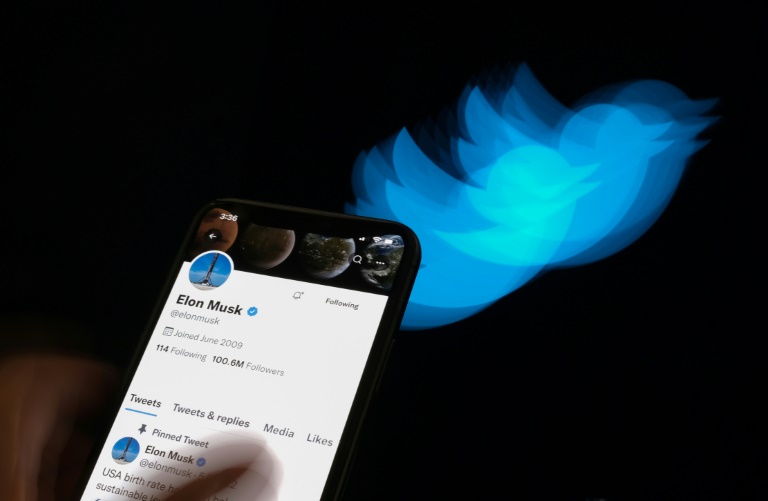
In his first public remarks since the announcement, Musk took to Twitter late Sunday night to troll the company after it said it would sue to enforce the deal. 

“They said I couldn’t buy Twitter. Then they wouldn’t disclose bot info. Now they want to force me to buy Twitter in court. Now they have to disclose bot info in court,” he wrote in a tweet, with each of the four statements accompanied by pictures of Musk laughing with increasing glee.

A second tweet showed an image of martial arts star Chuck Norris behind a chess board, which Musk captioned, “Chuckmate.”

Twitter offered a fresh rebuttal of its own late Monday, releasing a letter from its legal team to Musk’s lawyers that called the Tesla boss’s grounds for ending the deal “invalid and wrongful,” according to a securities filing.

“Twitter demands that Mr. Musk and the other Musk Parties comply with their obligations under the Agreement, including their obligations to use their respective reasonable best efforts to consummate and make effective the transactions contemplated by the Agreement,” said Twitter attorneys at Wachtell, Lipton, Rosen & Katz. 

The termination of the takeover agreement Musk inked in April sets the stage for a potentially lengthy court battle with Twitter, which initially opposed a transaction with the unpredictable billionaire entrepreneur.

The original merger agreement contained a $1 billion breakup fee.

Twitter has defended its fake account oversight and said it will sue to force Musk to complete the deal.

The social network says the number of fake accounts is less than five percent, a figure challenged by the multi-billionaire who believes the percentage to be much higher.

S&P Global Ratings said Musk’s latest move “carries multiple downside risks” for Twitter, pointing to the precariousness of company revenues tied to advertising given rising recession risk.

The ratings agency said there was risk from even a successful recouping of the $1 billion breakup fee. 

“While the breakup fee could be credit positive, we believe the negative publicity could harm Twitter’s relationships with its advertisers, employees, and investors in all possible scenarios,” S&P said.

– Future ‘in limbo’ –

The latest back-and-forth follows weeks of public squabbling between the sides after Musk amplified the fake accounts issue, causing some analysts to speculate that he was getting cold feet about the deal, which drew criticism from progressive advocacy groups concerned about his political agenda.

Musk’s norm-defying conduct has come as little surprise to longtime watchers of the Tesla and SpaceX chief, who are accustomed to a constant stream of statements that flout or test convention and sometimes provoke a crackdown from regulators.

Some market watchers predicted the deal would fall apart shortly after it was announced, but others still saw a way forward on Monday even in the wake of the latest happenings.

“While the two parties likely are facing a lengthy battle of which the final decision remains very uncertain, we believe Twitter may have the stronger case,” said Morningstar analyst Ali Mogharabi. 

“We also think that a scenario remains where Musk and Twitter reach a new, lower-price agreement.”

But Mogharabi lowered his estimate for Twitter shares to $47 from Musk’s bid price of $54.20, saying: “We expect Twitter will likely face distractions that set back its efforts to grow revenue and expand margins.”

For analyst Dan Ives at Wedbush Securities, “this is a ‘code red’ situation for Twitter and its Board as now the company will go head to head against Musk in a Game of Thrones court battle.”

“We see no other bidders emerging at this time while legal proceedings play out in the courts.”

Briefing.com called the disintegration of the Musk deal “a worst-case scenario for the company in the short-to-intermediate term,” putting Twitter’s “future in limbo and creating a massive distraction.”

US firefighters race to protect Yosemite's giant sequoias

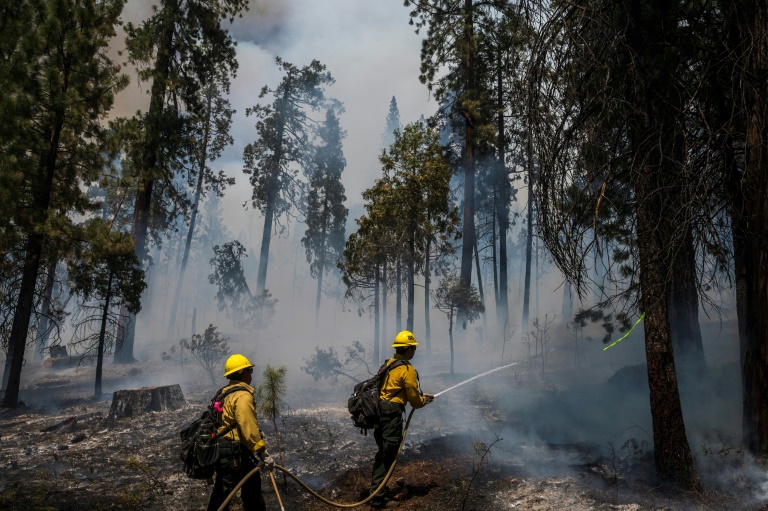
Hundreds of firefighters scrambled Monday to prevent a wildfire engulfing an area of rare giant sequoia trees in California’s Yosemite National Park.

The Washburn fire, in the world-renowned Mariposa Grove of giant sequoias, was first reported on July 7 and doubled in size over the weekend to 2,340 acres (946 hectares), according to a park report.

Yosemite’s fire management service said 545 firefighters were battling the fire, including “proactively protecting” the grove — the largest group of sequoias in Yosemite, with over 500 mature trees.

The previously out-of-control blaze is now 25 percent contained, but the weather is expected to remain hot and dry for the next few days — conditions that do not help efforts to curb the flames.

“We are doing everything we can to put this fire out,” including deploying air tankers and helicopters along with ground crews, Nancy Phillipe, spokeswoman for Yosemite Fire Information, told AFP.

At the Mariposa Grove — which remains closed to the public due to the fire — crews worked to remove quick-burning leaves, sticks and branches as well as drenching the ground and giant sequoias. Large plumes of gray-white smoke were seen over the imposing trees.

The Yosemite fire service tweeted footage of emergency sprinklers set up specifically to douse the grove’s “Grizzly Giant” — the most renowned sequoia in the park, which is the second largest tree in Yosemite at 209 feet (63 meters), and one of the oldest.

Phillipe said the response team was “feeling confident that we’ve set up the trees for as much protection as we can” with the recent efforts, aided by previous prescribed burns.

– ‘A long season’ –

Giant sequoias are the world’s largest trees by volume. Their relatives, the California redwoods, can grow taller — well over 100 meters — but are not as wide.

Both species of tree are adapted to fires, with thick bark that protects them from heat and flames.

In their lifetimes, which are measured in thousands of years, they typically endure many fires, the heat from which helps their cones to open, allowing the seeds to disperse.

But longer, hotter and more aggressive fires can damage them, sometimes irreparably, and California has recently seen multiple severe fire seasons in a row.

Scientists say global warming, which is being driven chiefly by humanity’s unchecked burning of fossil fuels, is making extreme weather events more likely.

Last year, California and other parts of the western United States were ravaged by huge, hot and fast-moving wildfires, driven by years of drought and a warming climate.

Two of those fires in California burned 3,600 giant sequoias, each more than four feet (120 centimeters) in diameter. 

The year before, 10,000 of the giants — up to 14 percent of the world’s total — perished in another fire.

With drought and scorching temperatures, fire chiefs have warned of longer and longer fire seasons.  

More than 3,500 fires have been reported already by California state firefighters CalFire in 2022, burning an estimated 22,900 acres.

“It is only just the beginning of July,” said Phillipe, echoing concern at the lengthening seasons.

“Every year we say ‘wow this is going to be a long season,’ and the seasons are lasting longer and longer.”

Kyiv warns Russia will step up Donbas fight

Ukraine warned Monday that Russian forces were preparing to intensify their fight for key cities in the Donbas, as President Volodymyr Zelensky bitterly accused Canada of undermining sanctions against Moscow.

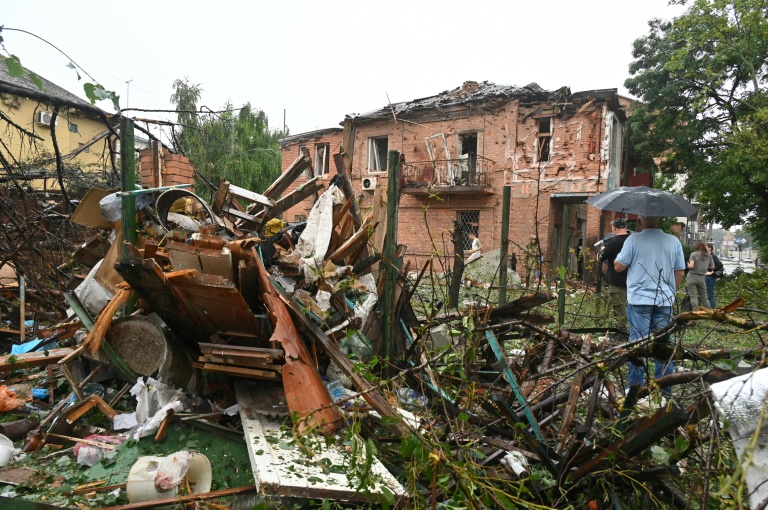
In eastern Ukraine — the focal point for a grinding Russian offensive — the death toll from a weekend shelling of an apartment building in the town of Chasiv Yar in the Donetsk region rose to 33, according to emergency services.

Dozens of rescuers could be seen working amid the ruins of the partially destroyed building Monday, aided by a mechanical digger.

Earlier in the day deadly Russian rocket strikes slammed Kharkiv, the country’s second city, in a targeted attack on “a shopping centre and civilian residences”, regional chief Oleg Synyegubov said.

Prosecutors in his region said “six civilians were killed, including a 17-year-old and his father, who were driving past” at the time of the attack, according to the Interfax-Ukraine news agency.

The Ukrainian army warned, meanwhile, that Russian troops were likely planning to launch some of their heaviest attacks yet in the Donetsk region.

“There are signs of enemy units preparing to intensify combat operations in the direction of Kramatorsk and Bakhmut,” it said, referring to two main cities still under Ukrainian control.

The latest attacks in Ukraine came as Europe braced for deeper cuts in gas supplies from Russia.

On Monday Russian gas giant Gazprom began more than a week of routine maintenance on its Nord Stream 1 pipeline — with Germany and other European countries watching anxiously to see if the gas comes back on.

Over the weekend, Ottawa agreed to deliver to Germany a turbine that was undergoing maintenance in Canada, whose absence Russia had blamed for a decrease in supplies.

The move by Canada, which came despite sanctions in place against Russia and appeals from Ukraine, prompted Kyiv to summon Ottawa’s ambassador.

“The Ministry of Foreign Affairs had to summon Canada’s envoy to our country due to an absolutely unacceptable exception to the sanctions regime against Russia,” Zelensky said in his daily address on Telegram.

Germany and other European countries are casting a worried eye on energy supplies after Italy’s Eni and Austria’s OMV said Gazprom was further reducing the supply of gas.

After Russia’s invasion of Ukraine in February, Germany suspended certification of a second pipeline, Nord Stream 2, as fears grew over Europe’s massive dependence on Russian gas.

– ‘No safe place’ –

Russian state-run news agency TASS reported meanwhile that the pro-Moscow head of the Russian-occupied village of Velikiy Burluk in Kharkiv had been killed after his car was blown up.

Russian defence ministry spokesman Igor Konashenkov claimed “more than 300” Ukrainian combatants had been killed in a Russian strike near Chasiv Yar, without giving a date.

Moscow’s slow advance into the east — despite fierce Ukrainian resistance emboldened by recent deliveries of Western-supplied artillery — contrasts with their failure to capture the capital Kyiv at the start of the invasion.

In Bucha, a town outside Kyiv, 36-year-old web designer Maxim said just three months ago, Russian soldiers were rummaging through his home and sleeping in his children’s bedroom.

“In this atmosphere, I feel like nothing can happen and that life is normal,” he said, sitting with his family outside his home. 

“But we know there’s a war and there’s no place safe in Ukraine right now.”

With no end to the fighting in sight, Dutch Prime Minister Mark Rutte during a visit to Kyiv said his country would supply Ukraine with more long-range artillery and an aid package worth 200 million euro ($201 million).

Western weapons — in particular precision, long-range artillery — were “already changing the course of the war,” Secretary of the National Security and Defence Council, Oleksiy Danilov, said earlier Monday.

But Moscow was also receiving a weapons boost, with Iran planning to supply hundreds of drones with combat weapon capabilities to Russia for use in Ukraine, a top US official said.

– ‘Another encroachment’ –

In a bureaucratic swipe at Kyiv, Russian President Vladimir Putin signed a decree Monday to fast-track citizenship for all Ukrainians.

The foreign ministry in Kyiv hit back calling it “another encroachment on the sovereignty and territorial integrity of Ukraine, incompatible with the norms and principles of international law.”

The decree builds on previous orders — including one issued earlier in the invasion — making it easier for Ukrainians living in Moscow-occupied territory to receive Russian passports.

Putin and his Belarusian counterpart, strongman Alexander Lukashenko, meanwhile discussed possible joint measures against neighbouring Lithuania over its “illegal” transit restrictions affecting Moscow’s exclave of Kaliningrad.

burs-jbr/bfm/mlm

Global stocks mostly fall ahead of key US inflation data

Global stock markets mostly fell Monday as investors digested fresh Covid-19 restrictions in China and braced for a key US inflation report, while the dollar strengthened against other currencies.

The euro continued to head towards parity against the dollar as the European Commission said it would again cut its growth forecast for the current year and hike expectations for inflation.

“It is no longer a question of if euro-dollar will fall to one, but more a question of how quickly and will it stop there,” City Index analyst Fiona Cincotta told AFP.

“With energy security concerns rising by the day in Europe, a recession seems almost impossible to avoid,” the expert said. 

At the same time, Friday’s strong US jobs report meant that an interest hike of a full percentage point “can’t be discounted,” Cincotta said. 

“The diverging economic outlooks and the significantly more hawkish Fed means that euro-dollar could comfortably fall below parity,” she said.

This week’s calendar includes the key US consumer price index reading for June, which will be scrutinized for clues about whether the Federal Reserve’s aggressive moves to tighten monetary policy will need to be extended.

OANDA analyst Craig Erlam felt it was “only a matter of time” until euro-dollar hits parity. 

While the European Central Bank is readying to raise interest rates for the first time in 11 years, “It’s offering little support for the single currency as any hikes will simply compound the economic misery at this point,” the analyst said. 

– China growth fears –

The prospect of another coronavirus lockdown sparked an equities sell-off in Hong Kong and Shanghai on Monday.

Hong Kong-listed casino operators were sharply lower after officials in Macau embarked on a week-long lockdown to curb its worst coronavirus outbreak.

There were also losses in Sydney, Seoul, Taipei, Manila, Mumbai, Jakarta and Wellington.

Shanghai recorded more than 120 virus cases at the weekend, having seen its first one of the highly contagious BA.5 Omicron strain, forcing officials to launch another mass testing drive.

With China fixated on its zero-Covid strategy, there is increasing concern that authorities will revert to another painful lockdown. Shanghai residents only emerged from a two-month confinement in June.

There have meanwhile been new infections uncovered in other parts of the country, including Beijing.

However, Tokyo rose as traders welcomed Japan’s ruling bloc securing a strong win in Sunday’s upper house election, held days after the assassination of former premier Shinzo Abe.

The result should provide the government with some stability, while there were also hopes for a cabinet reshuffle and economic stimulus.

Back on Wall Street, stocks closed firmly lower, with the S&P 500 shedding 1.2 percent.

Twitter sank more than 11 percent in the first session since Tesla Chief Executive Elon Musk notified the company he was withdrawing a $44 billion bid to acquire the social media platform.

– Key figures at around 2130 GMT –

New York – Dow: DOWN 0.5 percent at 31,173.84 (close)

New York – S&P 500: DOWN 1.2 percent at 3,854.43 (close)

New York – Nasdaq: DOWN 2.3 percent at 11,372.60 (close)

London – FTSE 100: UNCHANGED at 7,196.59 (close)

Frankfurt – DAX: DOWN 1.4 percent at 12,832.44 (close)

Paris – CAC 40: DOWN 0.6 percent at 5,996.30 (close)

EURO STOXX 50: DOWN 1.0 percent at 3,471.69 (close)

Tokyo – Nikkei 225: UP 1.1 percent at 26,812.80 (close)

Hong Kong – Hang Seng Index: DOWN 2.8 percent at 21,124.20 (close)

Shanghai – Composite: DOWN 1.3 percent at 3,313.58 (close)

West Texas Intermediate: DOWN 0.7 percent at $104.09 per barrel

Brent North Sea crude: UP 0.1 percent at $107.10 per barrel

Euro/dollar: DOWN at $1.0041 from $1.0185 on Friday

Pound/dollar: DOWN at $1.1892 from $1.2033 

Euro/pound: DOWN at 84.38 pence from 84.65 pence

Dollar/yen: UP at 137.41 yen from 136.10 yen

burs-jmb/bfm

Iran to supply Russians with UAVs for Ukraine: White House

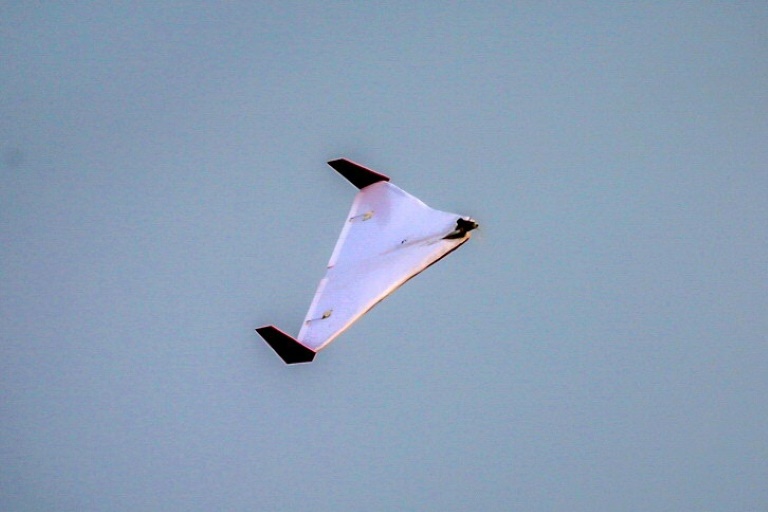
Iran is planning to supply hundreds of drones with combat weapon capabilities to Russia for use in Ukraine, a top US official said Monday.

Jake Sullivan, the White House national security advisor, said the information received by the United States supported views that the Russian military is facing challenges sustaining its weaponry after significant losses in Ukraine.

“The Iranian government is preparing to provide Russia with up to several hundred UAVs (unmanned aerial vehicles), including weapons-capable UAVs, on an expedited timeline,” Sullivan told reporters.

“Our information further indicates that Iran is preparing to train Russian forces to use these UAVs, with initial training sessions slated to begin as soon as early July,” he said.

Sullivan said it was not clear whether Iran had delivered any of the drones to Russia yet.

He noted that Iran’s drones have been used by the Houthi rebels in Yemen to attack Saudi Arabia.

Drones have played a crucial role on both sides of the war in Ukraine, for everything from firing missiles from a distance, to dropping small bombs on targets, to conducting reconnaissance for artillery forces and ground troops.

Ukraine’s forces have had particular success in using Turkish-made Bayraktar armed combat UAVs, and the United States and other allies have supplied Kyiv with many types of smaller drones.

“From our perspective, we will continue to do our part to help sustain the effective defense of Ukraine and to help the Ukrainians show that the Russian effort to try to wipe Ukraine off the map cannot succeed,” Sullivan said.

Close Bitnami banner
Bitnami