World

Spain, Portugal swelter under new heat wave

Temperatures were set to soar above 40 degrees Celsius across large parts of Spain and Portugal on Monday as the Iberian Peninsula faces a second heat wave in less than a month.

The mercury was to hit 42 degrees Celsius (107.6 Fahrenheit) in Spain’s southeastern region of Extremadura and 41 degrees in Andalusia, Spain’s meteorological agency AEMET said.

Temperatures in Spain’s normally cooler northwestern region of Galicia were predicted to rise above 35C.

“This heatwave really has the potential to be exceptional,” said AEMET spokesman Ruben del Campo.

The heat wave began Sunday and could “last nine or ten days, which would make it one of the three longest heat waves Spain has seen since 1975,” he told AFP.

Heat waves have become more likely due to climate change, scientists say. As global temperatures rise over time, heat waves are expected to become more frequent and intense.

June also saw Spain grapple with temperatures above 40C in swathes of the country.

And the previous month was Spain’s hottest May since the beginning of the century.

In August 2021 Spain recorded its highest ever temperature when the mercury reached 47.4C in the southern town of Montoro.

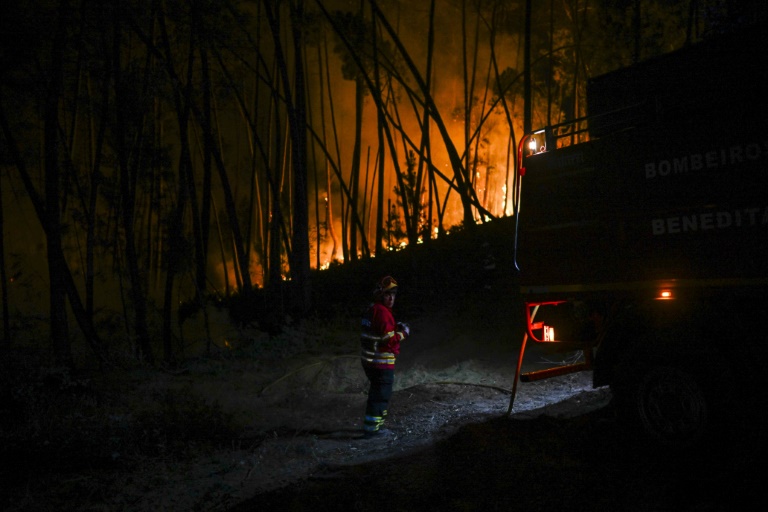
In neighbouring Portugal the thermometer topped 44C over the weekend, fuelling wildfires and vast smoke clouds which were visible in the capital Lisbon.

Firefighters brought under control Monday the largest blaze which was burning in the central municipality of Ourem, local officials said.

While temperatures eased somewhat in Portugal on Monday they were expected to soar again in the coming days with 44C forecast for the southeastern city of Evora.

Water reservoirs in Spain stood at 45.3 percent of capacity on Monday, well below the average of 65.7 percent recorded during this period over the past decade.

More genocide victims buried on Srebrenica anniversary

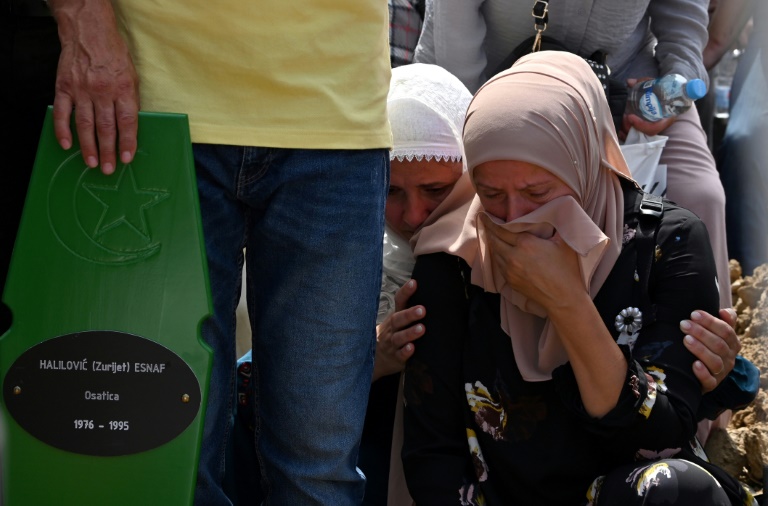
The remains of 50 victims of the Srebrenica genocide were laid to rest Monday as thousands of people commemorated the 27th anniversary of the atrocity, which most Serbs and their leaders still refuse to recognise in ethnically divided Bosnia.

After a joint prayer, the remains of more recently identified victims of Europe’s worst massacre since World War II were buried alongside 6,671 others in a joint funeral at a memorial site, just outside the ill-fated town.

They included Samir and Semir Hasanovic, 19-year-old twin brothers of Sebiba Avdic who also lost her husband, father, another brother and several other close relatives in the atrocity.

“All I had is here,” Avdic said in tears pointing her hand towards the graves with white tombstones.

Some 8,000 Muslim men and boys from Srebrenica were killed by Bosnian Serbs forces in July 1995, after they captured the eastern town. It was an act of genocide under international law.

“I cannot speak any more. I turned into a stone,” said Avdic who now lives with her daughter in Switzerland.

“My pain is intense, as if only 27 days have passed not 27 years… Once I had a family, now I have nothing”, she sobbed.

“It is more than ever our duty to remember the genocide of Srebrenica… to stand up to defend peace, human dignity and universal values.

“In Srebrenica, Europe failed and we are faced with our shame,” they said in a statement ahead of the ceremony. 

The discovery of skeletal remains from the massacre have become rare in recent years, even though some 1,200 people have still not been found, according to the Missing Persons Institute of Bosnia-Herzegovina.

– Skull and arm bone –

The identification process has been made more difficult by the bulldozing up of the remains and their removal to mass graves in a bid to conceal the extent of the slaughter.

Mass funerals of those identified are held each July 11, the takeover date by the forces of Bosnian Serb general Ratko Mladic, who has been jailed for life for war crimes.

The remains of one of the people buried on Monday were found spread across three separate mass graves, according to forensic experts.

The remains of most of the others were found spread across two mass graves.

Halil Nukic buried the only remains of his father that were found a few years ago — the skull and an arm bone.

“We waited… hoping that other (bones) will be found but nothing,” said Nukic, who was 14 years old at the time of the massacre.

His only a year older brother Mujo, who went with their father in the woods in the Srebrenica region, is already buried at the cemetery.

“I was one of the few who escaped because many boys my age who had come to the (UN) base did not survive”, he told AFP.

– ‘Heroes’ –

Ever since the brutal 1990s war that claimed some 100,000 lives, Bosnia has been divided along ethnic lines. One half of the country belongs to the Serb entity while the other is ruled by a Muslim-Croat federation.

More than a quarter of a century has passed but Mladic and Radovan Karadzic, Bosnian Serb wartime president who has also been jailed for life, remain “heroes” in the eyes of many Serbs, with their pictures still adorning many walls.

Political leaders of Serbs living in Bosnia today and in neighbouring Serbia refuse to accept that a genocide took place at Srebrenica, preferring to call it a “major crime”.

“We have for 27 years been fighting for the truth and demanding justice, but for 27 years they have denied the truth, denied genocide,” said Munira Subasic, head of a Srebrenica women’s association.

Nukic said that the “denial hurts” but believes that the Serbs would eventually recognise the scale of the atrocity.

“Maybe not this generation but the next one will recognise (the genocide).”

Last July, the former high representative for Bosnia, Valentin Inzko, outlawed denial of the genocide and war crimes, making it punishable by jail time.

The move sparked uproar among Bosnian Serbs led by Milorad Dodik, who sits on the country’s collective presidency. 

He has launched a process of Serb withdrawal from the army, judiciary and the tax system, stirring fears of breaking up the country or starting a new conflict.

Big CAT scan: London Zoo treats lion with earache

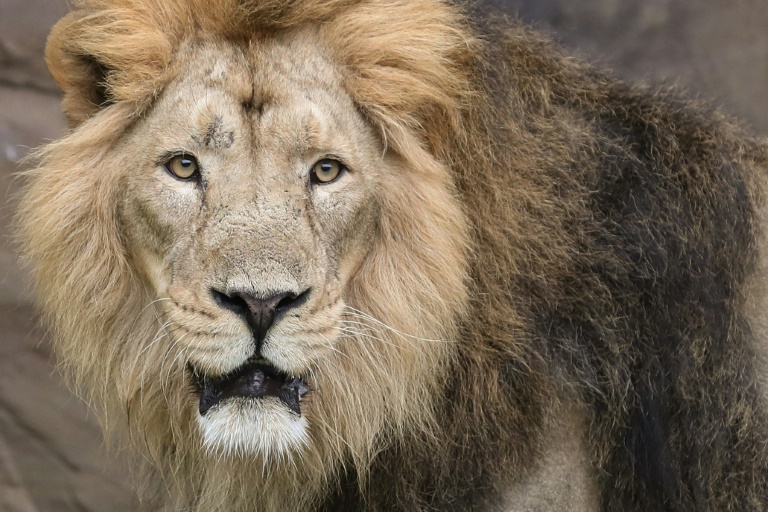
How do you treat an endangered 12-year-old lion with persistent earache? Normally, the answer is: with difficulty.

But London Zoo on Monday said they made the process easier by hiring a CAT scanner for Bhanu the lion to find out the cause of his repeated ear infections.

The equipment was brought in to prevent the 180-kilogram (28-stone) Asiatic lion having to be sedated and transported off-site for tests.

Senior veterinary officer Taina Strike said the zoo hit upon the intervention as part of a long-term treatment plan for the animal.

“We first had to find out what was causing the problem and urgently rule out any worst-case scenarios, such as a tumour or a deep-seated infection, which would show up on a CAT scan immediately,” she said. 

“Bhanu is an important member of the European-wide breeding programme for endangered Asiatic lions and deserves the very best care, so we arranged the full VIP treatment; bringing a CAT scanner to a big cat for the first time, so we could see deeper into his ear without him needing to travel.”

Bhanu was sedated in his den then taken to the scanner on the back of a flatbed truck. Six members of staff then manoeuvred him into position on the scanner.

Specialists from around the world dialled in to diagnose the problem, which was found to be a very narrow left ear canal prone to blockages and infections.

“Just like your pet cat at home, big cats can naturally get ear infections too, which are normally treated with ear drops,” said Strike.

While he was under anaesthetic, vets gave the big cat’s ear a thorough clean before he was deposited back in his den.

Sri Lanka president near airport as exile rumours spread

Sri Lanka’s embattled president was flown to an airbase near the main international airport Monday, officials said, raising speculation he will flee into exile abroad.

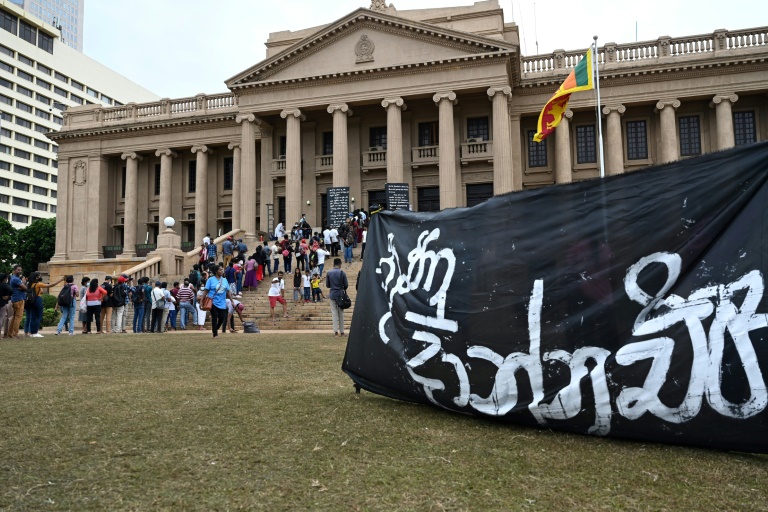
Gotabaya Rajapaksa fled the presidential palace in Colombo under naval protection on Saturday, shortly before tens of thousands of protesters overran the compound.

Hours later, the parliamentary speaker announced Rajapaksa would resign on Wednesday to allow a “peaceful transition of power”.

The 73-year-old leader had taken refuge at a navy facility, a top defence official told AFP, before being brought to the Katunayake airbase — which shares a perimeter fence with the country’s main Bandaranaike International airport.

“He and his entourage were flown back to Colombo in two Bell 412 choppers,” he added.

There was no official word from the president’s office about his whereabouts, but several local media reports speculated he was set to leave for Dubai later Monday.

Prime Minister Ranil Wickremesinghe’s office said Rajapaksa had officially informed him of his intention to resign, without specifying a date.

– Cash in court –

Earlier in the day, 17.85 million rupees (about $50,000) in cash Rajapaksa left behind at the presidential palace was handed over to a court after being turned in by protesters, police said.

Official sources said a suitcase full of documents had also been left behind at the stately mansion.

Rajapaksa took up residence at the two-century-old building after he was driven out of his private home on March 31 when protesters tried to storm it.

If Rajapaksa steps down as promised, Wickremesinghe will automatically become acting president until parliament elects an MP to serve out his term that ends in November 2024.  

But Wickremesinghe has himself announced his willingness to step down if consensus is reached on forming a unity government.

The succession process could take between three days — the minimum time taken to convene parliament — and a maximum of 30 days allowed under the statute.

The main opposition Samagi Jana Balawegaya (SJB) party was huddled in talks with smaller political groups Monday to secure support for their leader Sajith Premadasa.

An SJB official said they reached a tentative agreement with dissidents in Rajapaksa’s SLPP to support 55-year-old Premadasa, who lost the 2019 presidential election.

Premadasa is the son of former president Ranasinghe Premadasa, who was assassinated in a Tamil rebel suicide bombing in May 1993.

Former Rajapaksa loyalist, Dullas Alahapperuma, 63, an ex-media minister, was tipped to be the new prime minister, an SJB legislator involved in the talks told AFP.

Five ministers resigned over the weekend and Wickremesinghe’s office said the cabinet had agreed on Monday to resign en masse once an agreement was reached on an “all-party government”. 

– Protesters stay put –

On Monday, huge queues formed to visit the palace — in a line longer than some of the petrol queues snaking their way through the city.

Protesters say they will not leave until Rajapaksa formally quits.

“The demand is very clear, people are still asking for the resignation (of Rajapaksa), and full resignation, in a written confirmation,” said protester Dela Peiris.

“So hopefully we will have this resignation from the government including the prime minister and president in the coming days.”

The premier’s private home in Colombo was also set on fire on Saturday night.

Demonstrators had been camping outside the president’s office for more than three months demanding he quit over the country’s unprecedented economic crisis.

Rajapaksa is accused of mismanaging the economy to a point where the country has run out of foreign exchange to finance even the most essential imports, leading to severe hardships for the 22 million population.

Wickremesinghe, an opposition legislator, was made premier in May to try to lead the country out of its economic crisis — the sixth time he has been appointed to the post.

Sri Lanka defaulted on its $51 billion foreign debt in April and is in talks with the IMF for a possible bailout.

The island has nearly exhausted its already scarce supplies of petrol. The government has ordered the closure of non-essential offices and schools to reduce commuting and save fuel.

Twitter stock falls after Musk abandons takeover plan

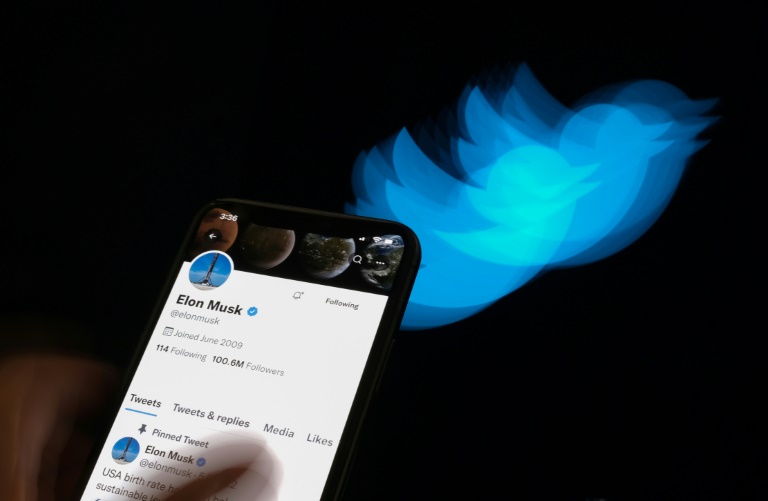
Twitter stock fell Monday after Tesla chief Elon Musk ditched a $44 billion deal to buy the social media giant.

The platform stock dropped 5.46 percent on Wall Street, to $34.80 by around 7:05 am (11:05 GMT). It had lost 5.10 percent before the weekend.

Musk on Friday pulled the plug on the deal, accusing the company of “misleading” statements about the number of fake accounts, according to a letter from his lawyers, a copy of which was filed with the Securities and Exchange Commission.

Musk’s effort to terminate the deal that he inked in April sets the stage for an epic court battle over a billion-dollar breakup fee.

The social network says the number of fake accounts is less than five percent, a figure challenged by the multi-billionaire who believes the number to be much higher. 

According to several US media, Twitter has hired prominent New York law firm Wachtell, Lipton, Rosen & Katz. Twitter declined to comment to AFP.

After the news broke, Musk tweeted: “They said I couldn’t buy Twitter. Then they wouldn’t disclose bot info. Now they want to force me to buy Twitter in court. Now they have to disclose bot info in court,” accompanied by pictures of him laughing.

For analyst Dan Ives at Wedbush Securities, “this is a ‘code red’ situation for Twitter and its Board as now the company will go head to head against Musk in a Game of Thrones court battle.”

“We see no other bidders emerging at this time while legal proceedings play out in the courts.”

China lockdown worries hit equities, oil prices

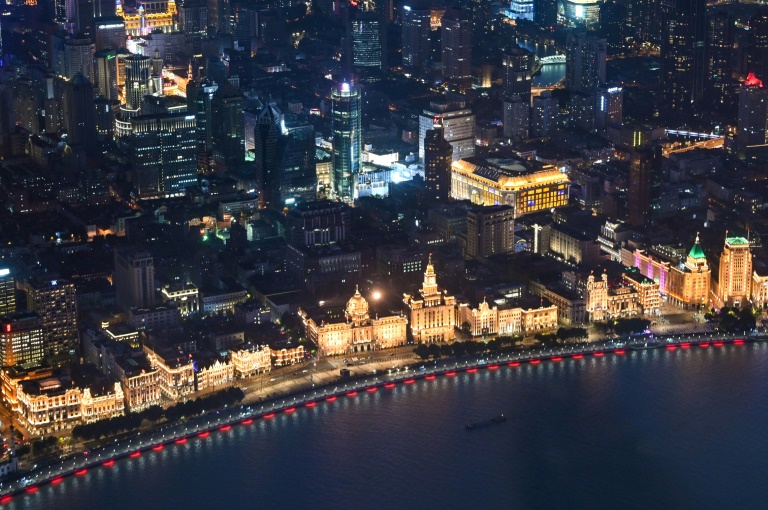
Stock markets and oil prices slid Monday with a fresh Covid flare-up in Shanghai fanning fears of another painful lockdown in China’s biggest city.

European equities headed south following hefty losses for most main Asian markets, with all eyes on how Wall Street would react at the US reopening.

A forecast-busting US jobs report Friday indicated the world’s top economy was coping with Federal Reserve interest rate hikes, giving the central bank further room for more tightening as it battles soaring inflation.

“This week sees three catalysts which could shake investors out of their torpor as we get the latest reading of US inflation, GDP (gross domestic product) figures from China and the big US banks kick-off the second quarter earnings season across the Atlantic,” said AJ Bell investment analyst Danni Hewson.

Traders were keeping tabs on US President Joe Biden as he weighs removing some of the tariffs on Chinese goods worth hundreds of billions of dollars that were imposed by predecessor Donald Trump.

– China growth fears –

The prospect of another lockdown sparked an equities sell-off in Hong Kong and Shanghai on Monday.

Chinese tech firms took a battering after authorities fined giant Tencent and Alibaba over not properly reporting past deals.

Hong Kong-listed casino operators were also sharply lower after officials in Macau embarked on a week-long lockdown to curb its worst coronavirus outbreak.

There were also losses in Sydney, Seoul, Taipei, Manila, Mumbai, Jakarta and Wellington.

However, there Tokyo rose as traders welcomed Japan’s ruling bloc securing a strong win in Sunday’s upper house election, held days after the assassination of former premier Shinzo Abe.

The result should provide the government with some stability, while there were also hopes for a cabinet reshuffle and economic stimulus.

Shanghai recorded more than 120 virus cases at the weekend, having seen its first one of the highly contagious BA.5 Omicron strain, forcing officials to launch another mass testing drive.

With China fixated on its zero-Covid strategy of wiping out the disease, there is increasing concern that authorities will revert to another painful lockdown, with Shanghai residents having only emerged from a two-month confinement in June.

There have meanwhile been new infections uncovered in other parts of the country, including Beijing.

Data this week will provide a fresh update on the economic impact of those measures, as well as similar strict controls in Beijing.

– Key figures at around 1030 GMT –

London – FTSE 100: DOWN 0.5 percent at 7,158.48 points

Frankfurt – DAX: DOWN 0.8 percent at 12,917.93

Paris – CAC 40: DOWN 0.7 percent at 5,993.76

EURO STOXX 50: DOWN 0.6 percent at 3,485.82

Tokyo – Nikkei 225: UP 1.1 percent at 26,812.80 (close)

Hong Kong – Hang Seng Index: DOWN 2.8 percent at 21,124.20 (close)

Shanghai – Composite: DOWN 1.3 percent at 3,313.58 (close)

New York – Dow: DOWN 0.2 percent at 31,338.15 (close)

West Texas Intermediate: DOWN 2.3 percent at $102.36 per barrel

Brent North Sea crude: DOWN 1.9 percent at $105.01 per barrel

Euro/dollar: DOWN at $1.0102 from $1.0183 on Friday

Pound/dollar: DOWN at $1.1938 from $1.2034 

Euro/pound: UP at 84.62 pence from 84.59 pence

Dollar/yen: UP at 137.05 yen from 136.10 yen

Saudi dissident killed in Lebanon

A Saudi dissident living in Lebanon was killed in the Beirut suburbs and two of his brothers arrested in connection with the incident, Lebanese police and a security source said Monday.

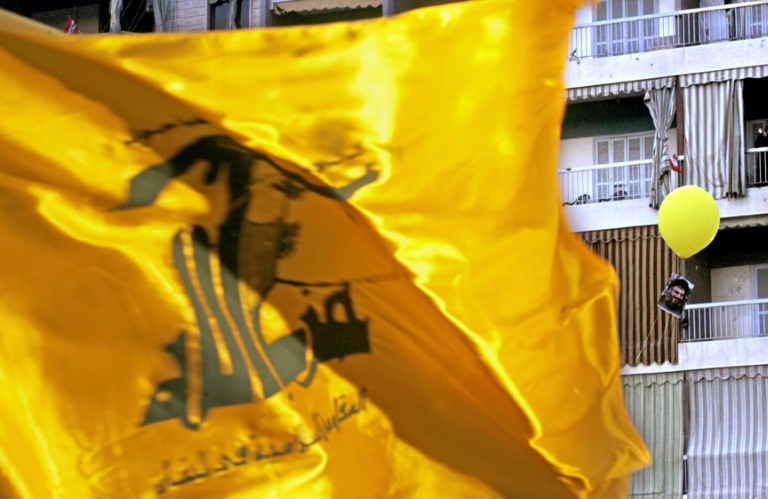
The victim was stabbed to death on Saturday in his home in a southern Beirut area known to be under the security control of Hezbollah, a Shiite organisation backed by Saudi arch foe Iran.

His brothers confessed to killing him “for family reasons”, a statement by Lebanon’s Internal Security Forces said. 

The police identified the man only by his initials, but a security source told AFP it was dissident Maneh al-Yami.

In a social media post on Sunday that did not name the victim, Waleed Bukhari, Riyadh’s ambassador to Lebanon, expressed appreciation for the police’s efforts to “uncover the facts and bring the perpetrators to justice”.

Yami helped found in 2020 the National Assembly Party, a Saudi opposition party composed of dissidents exiled in Britain, the US and elsewhere.

He married his brother’s ex-wife, and was killed in a fight over her right to take custody of her children, said a Lebanese security source, speaking on the condition of anonymity.

On Saturday Yami fought with his brother in support of his wife’s custody demand. The brother then left Yami’s house, and came back with their other brother to kill him, the source said.

The National Assembly Party said Sunday it was trying to pin down the exact circumstances of his killing including the “details and motives” of those involved. 

It also said Yami had been in touch with the United Nations about trying to secure asylum in a different country. That could not be immediately confirmed on Monday.

– Hezbollah bastion –

Saudi Arabia is an absolute monarchy which does not tolerate any political opposition.

The National Assembly Party was the first organised political resistance during King Salman’s rule. It’s formation came during a growing state crackdown on dissent and freedom of expression in the kingdom.

According to the Lebanese police statement, Yami was born in 1980 and the two detained brothers in 1976 and 1990.

The police said the incident occurred at around 8:30 pm (1730 GMT) in Dahiyeh, a Hezbollah bastion.

The Lebanese security source said Yami had been living in Dahiyeh, which implies he was under at least tacit Hezbollah protection.

Saudi Arabia and Iran, the Middle East’s two main power brokers, are waging a proxy war and jostling for dominance across the region, including in Lebanon.

Hezbollah has a military arsenal that rivals the state’s and has also been the dominant force in Lebanon’s parliament in recent years.

The organisation has been involved to varying degrees in conflicts in Syria, Iraq and Yemen, making it one of Tehran’s most potent allies and an integral part of its foreign policy.

Autopsy in Spain for ex-Angola leader amid foul play claims

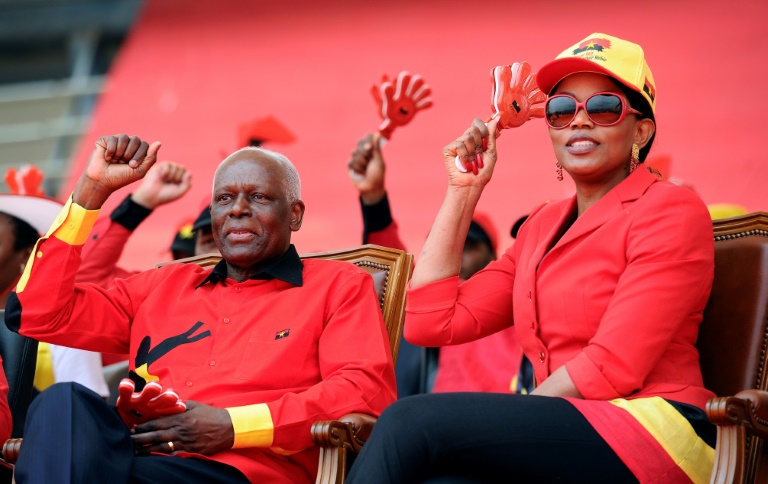
An autopsy has been carried out on in Spain on former Angolan President Jose Eduardo dos Santos, who died last week in Barcelona, at the request of one of his daughters who suspects foul play, her lawyers said Monday.

The results of the autopsy are not yet available, a spokesperson for Tchize dos Santos’ lawyers said.

A Barcelona court authorised the post-mortem on Friday, the day of his death, a court spokeswoman said.

Dos Santos, who ruled Angola between 1979 and 2017, had lived in Barcelona since April 2019.

The 79-year-old was taken to hospital and placed in intensive care after suffering a cardiac arrest on June 23. 

His 44-year-old daughter — whose full name is Welwitschia dos Santos — swiftly demanded the hospital retain his body “until an appropriate autopsy is carried out.”

She said in a statement on Saturday there were “a series of signs” that her father’s death occurred under “suspicious circumstances”.

Tchize has filed a legal case in Spain against the former Angolan president’s widow, Ana Paula, and his personal physician for “attempted murder”.

The complaint also includes allegations relating to “failure to exercise a duty of care, injury resulting from gross negligence and disclosure of secrets by people close to him,” her lawyers said in a statement on Friday.

Tchize claimed her father and his wife had been separated for some time, meaning that his spouse had no right to make decisions about his health. 

Police confirmed receiving the complaint and said they had opened an inquiry. 

Tchize also argues her father wanted to be buried privately in Spain and not in Angola in a state funeral “which could favour the current government” in the former Portuguese colony.

Born in the slums of Luanda, dos Santos was one of Africa’s longest-serving leaders.

Critics say he used his nation’s oil wealth to enrich his family while leaving his people among the poorest on the planet.

When he stepped down, dos Santos handed over to former defence minister Joao Lourenco whom he had handpicked to succeed him. 

But Lourenco quickly turned on his erstwhile patron, starting an anti-corruption drive to recoup the billions he suspected had been embezzled under dos Santos.

Macron under pressure over Uber links

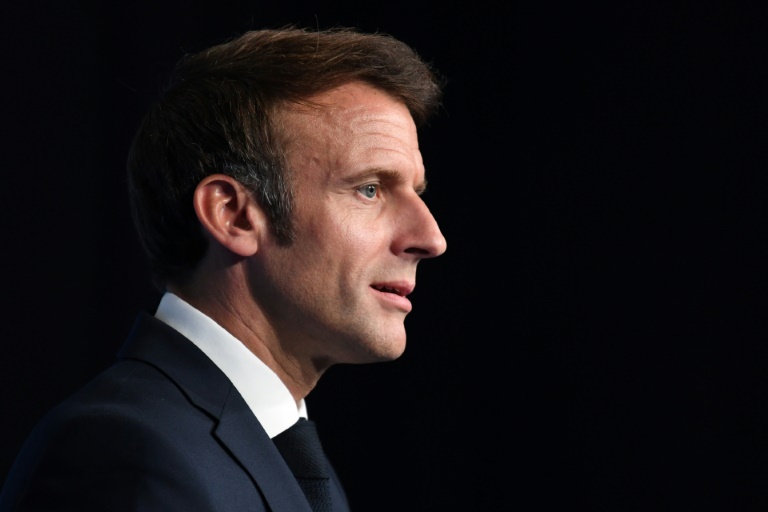
French President Emmanuel Macron was under pressure Monday to explain his past support for taxi app Uber while he was economy minister, following media revelations that have been seized on by critics. 

Investigations by media including France’s Le Monde newspaper and Britain’s The Guardian claimed Macron held several undeclared meetings with Uber executives while minister from 2014-2016.

Citing leaked internal documents and text messages, Le Monde also alleged that Uber struck a secret “deal” with Macron on regulation of the company’s services at a time when it was upending the traditional taxi market.

Opposition MPs on the left and far-right slammed the president, a former investment banker who positioned himself as a pro-enterprise, pro-innovation politician when he emerged as a national figure in 2014. 

Macron was “a lobbyist at the service of foreign private economic interests,” senior far-right MP Sebastien Chenu told France Info radio on Monday morning.

The 44-year-old president was “an ideologue for deregulation, for globalisation,” Chenu added.

Hard-left MP Alexis Corbiere from the France Unbowed party suggested a parliamentary enquiry, which could prove embarrassing for the 44-year-old leader who lost his majority in the National Assembly last month.

“It’s very serious the idea that with this secret pact Mr Macron de-regulated the regulation of the taxi industry,” he told Public Senat television. “What lessons should be drawn?

“Obviously we’ll ask the questions to the government when we can, and a parliamentary enquiry as well,” he added.

As announced last week, France Unbowed is set to table a no-confidence motion against the government later Monday which is not expected to pass.

– Uber ‘partner’? –

According to the reports, the “secret deal” entailed Macron promising to help Uber work around legislation introduced in 2014, which sought to regulate the new app-based taxi hailing services.

Le Monde described Macron as “more than a supporter, almost a partner” for Uber over the course of 17 meetings held by him or his staff with company executives at a time when the firm faced multiple legal enquiries.

Macron rarely responds to public criticism and his agenda on Monday includes a meeting with the heads of multinational investors in France at the annual “Choose France” summit at the Versailles chateau outside Paris.

Around 180 executives are expected, an increase from previous years which demonstrated “the very strong interest by foreign bosses after the president’s re-election,” an aide said. 

Macron beat far-right veteran Marine Le Pen to win a second term in April, promising tax cuts and welfare reform to boost employment, as well as major public investments in key industries of the future.

But his party failed to secure a parliamentary majority last month when Le Pen’s far-right and the hard-left made major gains.

On Monday, his office announced a major investment worth 5.7 billion euros ($5.8 billion) for a new semiconductor factory in southeast France by French-Italian chipmaker STMicroelectronics and US-based GlobalFoundries.

– Employment –

Contacted by AFP, Uber France confirmed that the company had been in contact with Macron during his time as minister. 

The meetings had been in the normal course of his ministerial duties, which covered the private-hire sector, it said.

The president’s office told AFP that at that time Macron had “naturally” been in contact with “many companies involved in the profound change in services that has occurred over the years mentioned, which should be facilitated by unravelling certain administrative or regulatory locks”.

Macron was a vocal and public supporter of Uber when it arrived in France — contrary to many colleagues in the Socialist government of the time.

He defended it as providing employment for people in low-income areas and as a means of breaking the monopoly held by taxi companies. 

“Go to Stains (a deprived area north of Paris) and tell young people there who are willingly working for Uber that it would be better to do nothing or deal drugs,” Macron argued in an interview with Mediapart in 2016. 

He also found support on Monday among people who remembered the long waits for taxis in Paris and other cities, as well as drivers who refused to take bank cards as payment.

“Fortunately there were ministers and elected figures who questioned all this,” Herve Joly, a sociologist from the CNRS research group, wrote on Twitter.

The Uber Files investigation is based on a leak of tens of thousands of documents to Britain’s Guardian newspaper from an anonymous source, and has been coordinated by the International Consortium of Investigative Journalists.

The ICIJ is working with 42 media partners around the world on the story.

burs-adp/tgb/rl

Macron under pressure over Uber links

French President Emmanuel Macron was under pressure Monday to explain his past support for taxi app Uber while he was economy minister, following media revelations that have been seized on by critics. 

Investigations by media including France’s Le Monde newspaper and Britain’s The Guardian claimed Macron held several undeclared meetings with Uber executives while minister from 2014-2016.

Citing leaked internal documents and text messages, Le Monde also alleged that Uber struck a secret “deal” with Macron on regulation of the company’s services at a time when it was upending the traditional taxi market.

Opposition MPs on the left and far-right slammed the president, a former investment banker who positioned himself as a pro-enterprise, pro-innovation politician when he emerged as a national figure in 2014. 

Macron was “a lobbyist at the service of foreign private economic interests,” senior far-right MP Sebastien Chenu told France Info radio on Monday morning.

The 44-year-old president was “an ideologue for deregulation, for globalisation,” Chenu added.

Hard-left MP Alexis Corbiere from the France Unbowed party suggested a parliamentary enquiry, which could prove embarrassing for the 44-year-old leader who lost his majority in the National Assembly last month.

“It’s very serious the idea that with this secret pact Mr Macron de-regulated the regulation of the taxi industry,” he told Public Senat television. “What lessons should be drawn?

“Obviously we’ll ask the questions to the government when we can, and a parliamentary enquiry as well,” he added.

As announced last week, France Unbowed is set to table a no-confidence motion against the government later Monday which is not expected to pass.

– Uber ‘partner’? –

According to the reports, the “secret deal” entailed Macron promising to help Uber work around legislation introduced in 2014, which sought to regulate the new app-based taxi hailing services.

Le Monde described Macron as “more than a supporter, almost a partner” for Uber over the course of 17 meetings held by him or his staff with company executives at a time when the firm faced multiple legal enquiries.

Macron rarely responds to public criticism and his agenda on Monday includes a meeting with the heads of multinational investors in France at the annual “Choose France” summit at the Versailles chateau outside Paris.

Around 180 executives are expected, an increase from previous years which demonstrated “the very strong interest by foreign bosses after the president’s re-election,” an aide said. 

Macron beat far-right veteran Marine Le Pen to win a second term in April, promising tax cuts and welfare reform to boost employment, as well as major public investments in key industries of the future.

But his party failed to secure a parliamentary majority last month when Le Pen’s far-right and the hard-left made major gains.

On Monday, his office announced a major investment worth 5.7 billion euros ($5.8 billion) for a new semiconductor factory in southeast France by French-Italian chipmaker STMicroelectronics and US-based GlobalFoundries.

– Employment –

Contacted by AFP, Uber France confirmed that the company had been in contact with Macron during his time as minister. 

The meetings had been in the normal course of his ministerial duties, which covered the private-hire sector, it said.

The president’s office told AFP that at that time Macron had “naturally” been in contact with “many companies involved in the profound change in services that has occurred over the years mentioned, which should be facilitated by unravelling certain administrative or regulatory locks”.

Macron was a vocal and public supporter of Uber when it arrived in France — contrary to many colleagues in the Socialist government of the time.

He defended it as providing employment for people in low-income areas and as a means of breaking the monopoly held by taxi companies. 

“Go to Stains (a deprived area north of Paris) and tell young people there who are willingly working for Uber that it would be better to do nothing or deal drugs,” Macron argued in an interview with Mediapart in 2016. 

He also found support on Monday among people who remembered the long waits for taxis in Paris and other cities, as well as drivers who refused to take bank cards as payment.

“Fortunately there were ministers and elected figures who questioned all this,” Herve Joly, a sociologist from the CNRS research group, wrote on Twitter.

The Uber Files investigation is based on a leak of tens of thousands of documents to Britain’s Guardian newspaper from an anonymous source, and has been coordinated by the International Consortium of Investigative Journalists.

The ICIJ is working with 42 media partners around the world on the story.

burs-adp/tgb/rl

Close Bitnami banner
Bitnami