World

Europe frets over reduced Russia gas supplies

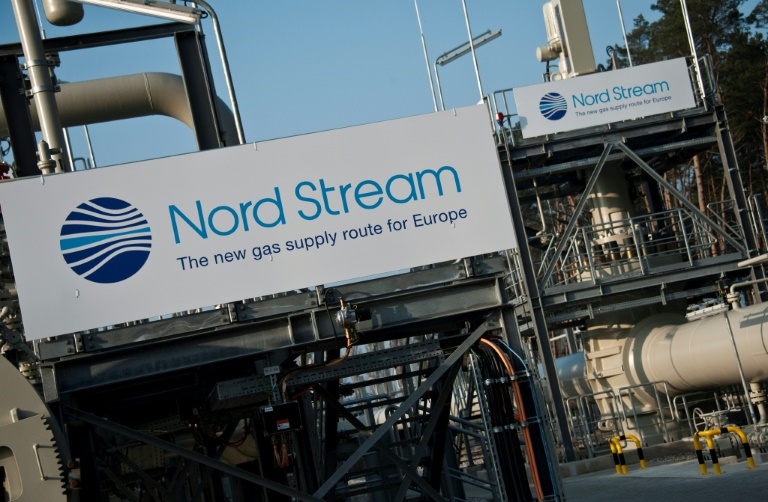
Russian energy giant Gazprom began 10 days of maintenance on its Nord Stream 1 pipeline on Monday — with Germany and other European countries watching anxiously to see if the gas comes back on.

The annual work on the gas link was scheduled long in advance. But the fear is that — with relations between Russia and the West at their lowest in years because of the invasion of Ukraine — Gazprom might take the opportunity to simply shut off the valves.

“Putin is going to turn off the gas tap… but will he turn it back on one day?” German mass-market daily Bild asked on Sunday on its website.

After the Nord Stream stop on Monday morning, Italian energy company Eni and Austrian Group OMV both reported their supplies from Gazprom had also been reduced.

“There are a number of scenarios in which we could end up in an emergency,” Klaus Mueller, the head of Germany’s federal gas network regulator, told public broadcaster ZDF on Monday.

– ‘Unprecedented’ –

“We are confronted with an unprecedented situation — anything is possible,” German vice-chancellor Robert Habeck told public radio over the weekend.

“It is possible that the gas will flow once more, even at a higher volume level than before.”

But, he warned, “it is possible that nothing comes through, and we still have to prepare for the worst” as Europe scrambles to transition away from Russia for energy supplies.

Moscow had already wound down supplies by 60 percent in recent weeks, blaming the absence of a turbine even as Berlin denounced what it calls a “political” decision.

Those cuts had a knock-on effect on supplies to a number of EU states, while Poland and Bulgaria have also seen theirs stopped altogether.

One issue at least was resolved over the weekend, when Canada agreed to return to Germany the turbine, which had been undergoing maintenance, despite the objections of Ukraine.

German Chancellor Olaf Scholz, via his spokesman, on Sunday welcomed “the decision of our Canadian friends” to grant what Ottawa termed a time-limited and revocable permit for Siemens Canada to allow the machine’s return.

Berlin has also speculated that for technical reasons it would be difficult for Gazprom to stop deliveries via Nord Stream entirely.

As Habeck put it, “it is not like a water tap” that can simply be turned on or off, with gas extracted in Siberia not able to be stored indefinitely.

– Ration fears –

Following Russia’s invasion of Ukraine in February, Germany suspended certification of a second pipeline, Nord Stream 2, as fears grew over Europe’s massive dependence on Russian gas supplies.

But even now, a long-term shutdown of the pipeline would hit Germany and its EU neighbours hard, deepening an energy crisis in which uncertain supplies have pushed prices up ahead of Europe’s winter.

Germany imports some 35 percent of its gas from Russia compared with 55 percent before the Ukraine conflict started.

In France, Economy Minister Bruno Le Maire said Sunday the country should ready itself for a “complete cut” in supplies from Russia.

“That is currently the most likely outcome,” he said. 

German industry is very vulnerable to shortages, with authorities discussing the possibility of having to ration supplies.

Chemical trade group VCI president Christian Kullmann told the Sueddeutsche Zeitung daily Monday an end to supplies would amount to a “heart attack for the economy”.

If deliveries cease altogether, German multinational chemical firm BASF is considering furloughing part of its roughly 100,000 workforce.

“We need to do everything to start saving gas now. Optimising heating, discussing it among families, preparing industry. We are not powerless,” gas network regulator boss Mueller said Monday.

On Thursday, the German parliament adopted a plan which includes limiting winter heating on its premises to a maximum 20 Celsius (68 degrees Fahrenheit) and cutting hot water supplies in individual offices.

Europe frets over reduced Russia gas supplies

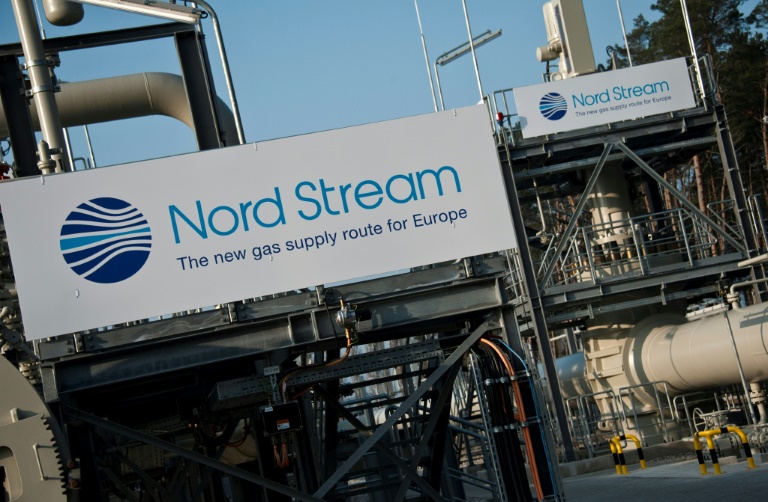
Russian energy giant Gazprom began 10 days of maintenance on its Nord Stream 1 pipeline on Monday — with Germany and other European countries watching anxiously to see if the gas comes back on.

The annual work on the gas link was scheduled long in advance. But the fear is that — with relations between Russia and the West at their lowest in years because of the invasion of Ukraine — Gazprom might take the opportunity to simply shut off the valves.

“Putin is going to turn off the gas tap… but will he turn it back on one day?” German mass-market daily Bild asked on Sunday on its website.

After the Nord Stream stop on Monday morning, Italian energy company Eni and Austrian Group OMV both reported their supplies from Gazprom had also been reduced.

“There are a number of scenarios in which we could end up in an emergency,” Klaus Mueller, the head of Germany’s federal gas network regulator, told public broadcaster ZDF on Monday.

– ‘Unprecedented’ –

“We are confronted with an unprecedented situation — anything is possible,” German vice-chancellor Robert Habeck told public radio over the weekend.

“It is possible that the gas will flow once more, even at a higher volume level than before.”

But, he warned, “it is possible that nothing comes through, and we still have to prepare for the worst” as Europe scrambles to transition away from Russia for energy supplies.

Moscow had already wound down supplies by 60 percent in recent weeks, blaming the absence of a turbine even as Berlin denounced what it calls a “political” decision.

Those cuts had a knock-on effect on supplies to a number of EU states, while Poland and Bulgaria have also seen theirs stopped altogether.

One issue at least was resolved over the weekend, when Canada agreed to return to Germany the turbine, which had been undergoing maintenance, despite the objections of Ukraine.

German Chancellor Olaf Scholz, via his spokesman, on Sunday welcomed “the decision of our Canadian friends” to grant what Ottawa termed a time-limited and revocable permit for Siemens Canada to allow the machine’s return.

Berlin has also speculated that for technical reasons it would be difficult for Gazprom to stop deliveries via Nord Stream entirely.

As Habeck put it, “it is not like a water tap” that can simply be turned on or off, with gas extracted in Siberia not able to be stored indefinitely.

– Ration fears –

Following Russia’s invasion of Ukraine in February, Germany suspended certification of a second pipeline, Nord Stream 2, as fears grew over Europe’s massive dependence on Russian gas supplies.

But even now, a long-term shutdown of the pipeline would hit Germany and its EU neighbours hard, deepening an energy crisis in which uncertain supplies have pushed prices up ahead of Europe’s winter.

Germany imports some 35 percent of its gas from Russia compared with 55 percent before the Ukraine conflict started.

In France, Economy Minister Bruno Le Maire said Sunday the country should ready itself for a “complete cut” in supplies from Russia.

“That is currently the most likely outcome,” he said. 

German industry is very vulnerable to shortages, with authorities discussing the possibility of having to ration supplies.

Chemical trade group VCI president Christian Kullmann told the Sueddeutsche Zeitung daily Monday an end to supplies would amount to a “heart attack for the economy”.

If deliveries cease altogether, German multinational chemical firm BASF is considering furloughing part of its roughly 100,000 workforce.

“We need to do everything to start saving gas now. Optimising heating, discussing it among families, preparing industry. We are not powerless,” gas network regulator boss Mueller said Monday.

On Thursday, the German parliament adopted a plan which includes limiting winter heating on its premises to a maximum 20 Celsius (68 degrees Fahrenheit) and cutting hot water supplies in individual offices.

A year on, German flood victims recall life changed in a night

Nearly a year ago, pounding rain turned the River Ahr, a tributary of the Rhine in western Germany, into a torrent of water and mud that swept everything before it.

For those who survived the deadly flood, life changed dramatically.

Three of them spoke to AFP.

– Solidarity –

“My dog, my mobile phone and some T-shirts.” That was all Anke Barteit, 57, managed to take with her as the waters rose.

For the past year, Barteit has been living in a small wooden hut in a temporary village erected for flood victims until they can return to their homes.

Her 30-square-metre (300-square foot) “tiny house” is located in a car park in Bad Neuenahr-Ahrweiler, one of the towns worst affected by the floods.

Sitting on the terrace outside her makeshift home, Barteit counts her blessings as she looks out across the valley with its forests and lush vineyards.

The floods unleashed an outpouring of solidarity in Germany, she says. Strangers she met on Facebook provided the cutlery, sheets, towels and other essential items for her new home.

Barteit lives alone with her dog Buddy, who she says “saved her life” on the night of July 14.

The Bichon Maltese woke her up by barking as the water began to pour into her home near the river Ahr.

Barteit, who is recovering from lung cancer diagnosed in 2018, is hoping to return to her home in September, a moment she says will feel like a “dream come true”.

– Homeless and jobless –

From her temporary office in a small portable cabin, Carina Dewald does the admin for the only petrol station in the village of Dernau.

A year ago, Dewald, her husband, their seven-year-old son and her parents-in-law spent the night on the roof of their house before being airlifted to safety.

When AFP met her a few days after the disaster, Dewald, now 40, described herself as “technically homeless and unemployed”.

The petrol station where she worked with her husband was razed to the ground, and her house was left uninhabitable as waters from the river Ahr rose to the window ledges on the first floor.

Dewald and her husband “quickly took the decision… to get the station up and running again”, helped by a 70,000-euro ($71,200) insurance payout, she says.

An architect’s drawing of the building that will eventually be their new office hangs on the wall. 

The Dewald family home is still being renovated after a long battle with their insurance company.

Returning to live in the middle of a flood zone doesn’t faze them, though Dewald is hoping the flood warning system will work better if it happens again. 

“We don’t overthink things,” she laughs.

On July 14, 2021, the Dewalds’ petrol station remained open until 9:00 pm (1900 GMT) — less than three hours before torrents of water began sweeping through the town.

– Mud-smeared wine bottles –

In the cellars of Peter Kriechel’s vineyard in Bad Neuenahr-Ahrweiler, the barrels are lined up, the steel vats are gleaming and everything is ready for the 2022 harvest.

A tasting room next door is buzzing with visitors.

It’s a far cry from this time last year, when the cellar was completely filled with water. 

In the Ahr valley, known for the pinot noir that grows on its steep slopes, the economy relies significantly on wine production and the tourism it generates.

After the floods, the region’s winegrowers raised 4.5 million euros by selling 180,000 mud-smeared bottles of wine rescued from their cellars. 

“It helped us all enormously,” says Kriechel, who wants to take the idea further by venturing “into the next dimension, the metaverse”.

A selection of remaining bottles numbered from 1 to 99 are still to be auctioned off — including number 14, the day of the floods.

That special bottle will be sold in the form of an NFT, a digital token that can be used to represent the ownership of unique items.

Tough nut to crack: UK mulls contraceptives for grey squirrels

They have been the scourge of trees and the native red squirrel in Britain since their introduction from the United States in the 1870s.

But government scientists are now planning drastic action to cut the number of grey squirrels — by lacing their food with an oral contraceptive.

Before going that far, the Animal and Plant Health Agency (APHA) has been conducting trials of special feeding boxes in woodlands of northern England and Wales.

Some 70 percent of the grey squirrel population have used the boxes, which have a weighted gate and keep most other animals out.

The chief scientific adviser at the Department of Environment, Food and Rural Affairs, Gideon Henderson, said the trials had great potential for the non-lethal management of grey squirrel numbers.

“It will help red squirrels… expand back into their natural habitats as well as protecting UK woodland and increasing biodiversity,” he added.

Vanessa Fawcett, of the Red Squirrel Survival Trust, said research into developing an oral contraceptive for grey squirrels was advanced.

“Without effective conservation management, red squirrels could face further local extinctions across the UK.”

No contraceptive has been used yet in the trials, but APHA researchers said it would be effective on both male and female grey squirrels.

There are now 2.7 million grey squirrels in Britain and numbers are increasing compared to just 140,000 of the smaller red squirrels.

Greys compete with reds for food and also carry the squirrelpox virus. They are immune but reds are not, and contracting it is almost always fatal.

High densities of grey squirrels also threaten the health and survival of young trees, as they strip back bark, weakening and killing them.

Traditional culls of grey squirrels have proved ineffective as they breed rapidly and their numbers can recover quickly.

Khartoum democracy activists lift half of sit-ins

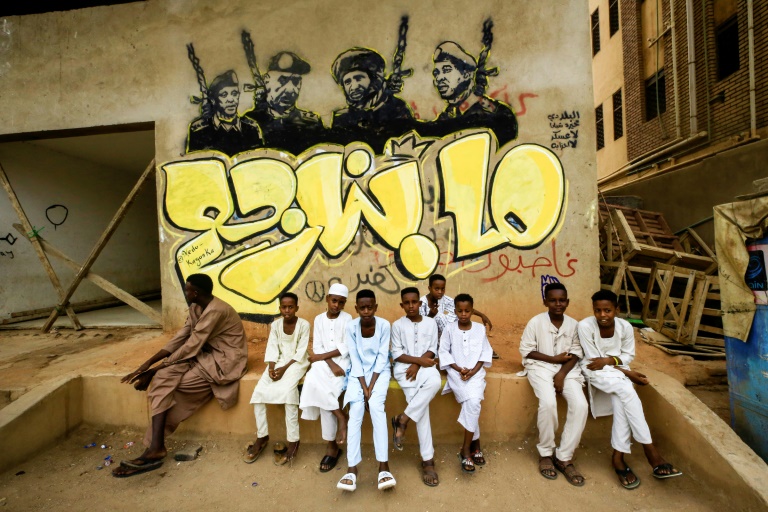
Organisers of Khartoum’s sit-ins, begun 10 days ago to force Sudan’s army to return power to civilians, announced Monday that they had dismantled two of their four camps. 

The protests began after security force killed nine demonstrators in anti-coup rallies by tens of thousands on June 30, according to pro-democracy medics, in the deadliest violence so far this year.

In response, protesters called for “unlimited” sit-ins the following day, in an attempt to end military rule.

They set up four camps — two in the centre of Khartoum on streets they barricaded with bricks, and one each in the capital’s sister cities of Omdurman and Khartoum North.

But on Monday, while Sudan celebrated the Muslim festival of Eid al-Adha for a third day, “resistance committees” announced they were breaking up the Omdurman camp. 

The committees are influential neighbourhood groups that have been organising demonstrations since the October 25 coup. 

A sit-in outside Khartoum’s al-Jawda hospital was lifted on Friday, according to activists. It ended on the eve of Eid al-Adha, a major holiday for which many residents of Khartoum return to their provincial homes for several days.

The other two sit-ins continue even if the number of demonstrators participating has fallen because of the holiday.

Rallies on June 30 and the subsequent sit-ins marked a resurgence of the protest movement for civilian rule. Although the movement had continued to hold near-weekly anti-coup rallies they appeared to decline in intensity.

Medics say a total of 114 people have been killed in the crackdown by security forces against protesters since the October coup, which disrupted a transition to civilian rule forged after the 2019 overthrow of longtime autocrat Omar al-Bashir.

The coup drew international condemnation and cuts in vital aid.

Four days into the sit-ins the army chief, General Abdel Fattah al-Burhan, last week vowed to make way for a civilian government but activists are deeply sceptical of his pledge.

On Thursday pro-democracy groups, including political parties and resistance committees, announced their plans to establish a revolutionary council in opposition to Burhan.

Democratic interludes have been rare in Sudan’s history, and the military dominates lucrative companies specialising in everything from agriculture to infrastructure projects. 

Former Japan PM Abe mourned at wake as US hails 'man of vision'

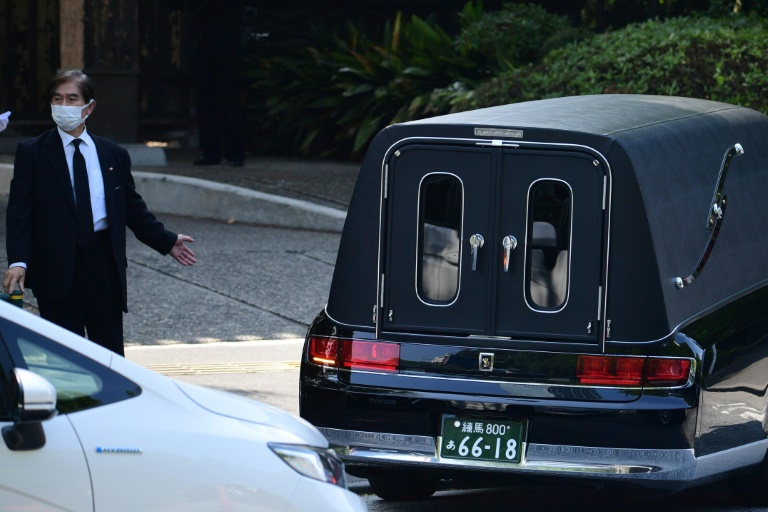
Family and friends of Japan’s assassinated former prime minister Shinzo Abe paid their respects Monday at a wake in Tokyo as Washington’s top diplomat hailed the ex-premier as a “man of vision.”

Japan’s ruling coalition meanwhile declared victory in a sombre election held Sunday, just two days after Abe was gunned down on the campaign trail.

Abe’s body was moved from his family home to the Zojoji temple on Monday afternoon, where his wake is being held ahead of tomorrow’s private funeral.

Public memorials for him are expected at a later date, with no immediate plans set for the events.

Earlier, US Secretary of State Antony Blinken made a previously unscheduled trip to Japan while travelling in Asia to offer Washington’s condolences.

He handed Prime Minister Fumio Kishida letters from US President Joe Biden for Abe’s family and said he had come because “we’re friends, and when one friend is hurting, the other friend shows up”.

Abe “did more than anyone to elevate the relationship between the United States and Japan,” Blinken added, calling him “a man of vision with the ability to realise that vision”.

– Religious group –

The man accused of Abe’s murder, 41-year-old Tetsuya Yamagami, is in custody and has told police he targeted the former leader because he believed he was linked to a specific organisation that authorities have not yet named.

Japanese media reports said he blamed the group, described as a religious organisation, for his family’s financial troubles because his mother made large donations to it.

The Unification Church, a global religious movement founded in Korea in the 1950s, said on Monday that Yamagami’s mother was a member.

“She has been attending our events about once a month,” Tomihiro Tanaka, president of the church in Japan, told a hastily organised press conference in Tokyo, declining to comment on donations she may have made.

Tanaka said the church was horrified by Abe’s “barbaric” murder and would cooperate with police investigations.

Yamagami, believed to have spent three years in Japan’s navy, had watched YouTube videos to help learn how to build homemade guns like the one used in the attack, investigative sources told local media.

– Election victory –

Sunday’s election went ahead despite the assassination, with Kishida saying it was important to show violence would not defeat democracy.

Abe’s long-ruling Liberal Democratic Party and its coalition partner Komeito won 76 of the 125 upper house seats up for grabs, up from the 69 seats they previously held, according to national news outlets.

The victory had been widely expected even before the assassination.

Both parties belong to what is now a two-thirds supermajority open to amending the country’s pacifist constitution. Abe long sought to reform the charter to recognise the country’s military.

Kishida told reporters on Monday that the seats gained represented a chance to “protect Japan” and build on the achievements of Abe, who local media said Monday would receive Japan’s highest decoration.

Kishida, who took office in September, has pledged to tackle the pandemic, inflation and issues related to Russia’s invasion of Ukraine, and there was speculation that Friday’s attack could bolster his support.

But turnout was up only marginally, and still low at a reported 52 percent.

A record 35 female candidates were elected, and some fringe candidates also won for the first time including one from an anti-vaccination party.

Abe was the scion of a political family and became the country’s youngest post-war prime minister when he took power for the first time in 2006, aged 52.

His hawkish, nationalist views were divisive, particularly his desire to reform the pacifist constitution, and he weathered a series of scandals, including allegations of cronyism.

But he was lauded by others for his economic strategy, dubbed “Abenomics,” and his efforts to put Japan firmly on the world stage, including by cultivating close ties with Biden’s predecessor Donald Trump.

STMicro and GlobalFoundries plan 5.7 bn euro French factory

French-Italian chipmaker STMicroelectronics and US-based GlobalFoundries will plough 5.7 billion euros ($5.8 billion) into a new semiconductor factory in France, the firms and President Emmanuel Macron’s office said Monday.

The two firms aim “to create a new, jointly-operated semiconductor manufacturing facility adjacent to ST’s existing 300mm facility in Crolles,” STMicroelectronics said in a statement, referring to its plant outside Grenoble in southeastern France.

Expected to employ around 1,000 people, the factory should reach full capacity by 2026, the company added, with the factory seen as part of efforts to reduce European dependency on Asian manufacturing.

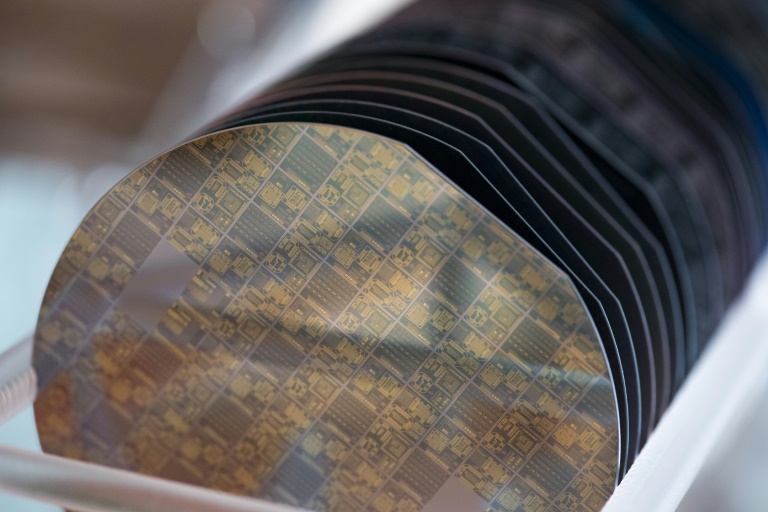
Chip factories like STMicroelectronics’s produce integrated circuits on 300-millimetre (12-inch) circular “wafers” of silicon.

GlobalFoundries and STMicroelectronics plan to produce their latest designs at the plant, with some elements as tiny as 18 nanometres — around 5,000 times smaller than the thickness of a sheet of paper.

Such chips “are expected to remain in high demand for automotive, internet of things and mobile applications for the next few decades,” STMicroelectronics said.

The company added that the factory would receive “significant financial support from the state of France”.

“This is the biggest industrial investment of recent decades outside of the nuclear industry,” French Finance Minister Bruno Le Maire wrote on Twitter.

“It’s a big step for our industrial sovereignty.”

– Push for European supply –

President Macron plans to visit the existing factory on Tuesday to outline government plans to support chip manufacturing with “more than five billion euros” as part of an industrial programme dubbed “France 2030”, his office said.

He was one of the loudest voices pushing for more chipmaking capacity in the EU, where the European Commission earlier this year proposed a 43-billion-euro “Chips Act” to boost the field.

Disruption to supply chains during the Covid-19 pandemic has focused policymakers’ minds on diversifying sources of key components.

Shortages of chips mostly produced in Asia have held up vital European industries like carmaking even after health restrictions were relaxed.

US chip giant Intel said in March it would pump up to 80 billion euros into its EU operations over the coming decade, especially in Germany, France and Ireland.

In France, the new Crolles factory would “strongly contribute to the objectives of the European Chips Act, including the goal of Europe reaching 20 percent of worldwide semiconductor production by 2030,” STMicroelectronics said.

The Elysee said Crolles “will become France’s biggest semiconductor production site and one of the largest in Europe”.

Monday’s announcement of the new factory was a top prize for Macron on the day of his annual “Choose France” summit.

The president invites top businesspeople and financiers each year to the sumptuous Versailles palace outside Paris in a bid to attract foreign investment.

Finance minister Le Maire said on Twitter this year’s haul totalled 6.7 billion euros of investment and more than 4,000 new jobs.

In 2021, France claimed to be Europe’s top destination for foreign investment, with 1,222 individual projects — although a study by consultancy EY found that most of them were small in scale.

China detains alleged bank fraud 'gang' after rare mass protests

Members of a “criminal gang” accused of taking control of local banks have been arrested in central China after rare protests over alleged financial corruption sparked violent clashes between customers and authorities.

China’s rural banking sector has been hit hard by Beijing’s efforts to rein in a property bubble and spiralling debt, in a financial crackdown that has had ripple effects across the world’s second largest economy.

The slowdown forced four banks in Henan province to freeze all cash withdrawals since mid-April, leaving thousands of small savers without funds and sparking sporadic demonstrations.

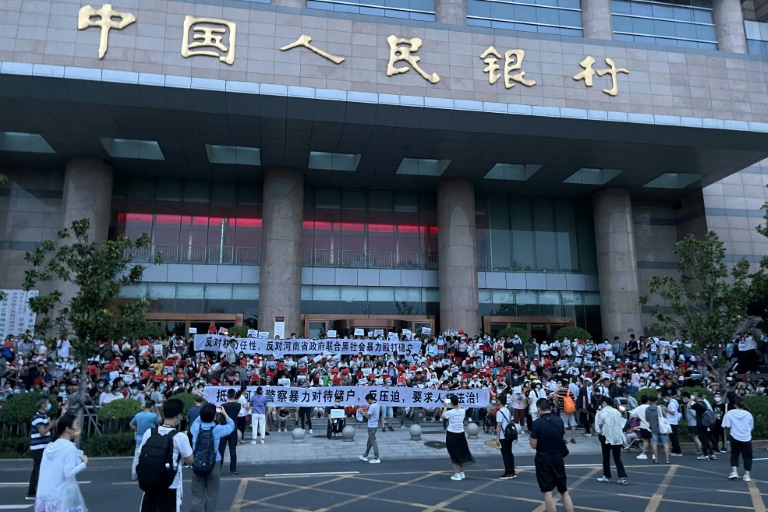
In one of the largest such rallies yet, hundreds gathered Sunday outside a branch of the People’s Bank of China in Henan’s capital Zhengzhou demanding their money, according to multiple witnesses who declined to be named.

Protesters held banners accusing local officials and police of corruption, calling on the central government to “give severe punishment” to those responsible, video footage verified by AFP showed.

Footage of Sunday’s rally showed protesters throwing objects, while one participant told AFP that demonstrators were hit and injured by unidentified men.

Another video verified by AFP showed a man with a swollen eye saying he had been beaten by “gangsters” and dragged onto a bus by police.

Some demonstrators accused officials of colluding with local banks to suppress rallies, and provincial authorities were suspected last month of abusing the country’s mandatory Covid-19 health code to effectively bar protesters from public spaces.

The pass has become a ubiquitous part of life in China under Beijing’s strict Covid-zero strategy, and is required to access the vast majority of buildings, shopping centres, public places and also certain public transport.

Protests are relatively rare in the tightly controlled country, where authorities enforce social stability at all cost and where opposition is swiftly repressed.

But desperate citizens have occasionally succeeded in organising mass gatherings, usually when their targets are local governments or individual corporations.

– Deepening crisis – 

Local authorities did not immediately comment on the unrest, but police in neighbouring Xuchang city said they had arrested members of an alleged “criminal gang” for their suspected involvement in a scheme to gain control of local banks.

The gang made illegal transfers through fictitious loans and used their shareholdings — as well as “manipulation of executives” — to effectively take over several local banks starting in 2011, police said late Sunday.

Henan province’s banking and insurance regulator also said it was “accelerating” plans to tackle the local financial crisis and “protect the legal rights and interests of the broader public”.

But analysts expect the economic crisis to deepen and the fallout from last year’s collapse of property giant Evergrande to continue.

The issues “appear to be the tip of the iceberg of serious systemic and financial risks with small- and medium-sized banks in China,” a report by risk consultancy SinoInsider found last week.

“Other small- and medium-sized banks could soon be found to be facing similar problems, particularly as financial contagion from Evergrande’s debt crisis spreads further and the Chinese economy markedly deteriorates,” it added.

– ‘Why are you treating people like this?’ –

The demonstrators in Henan largely drew sympathy on Chinese social media on Monday, with many on the Weibo platform pointing the finger at local officials.

“Why are you treating ordinary people like this?” one Weibo user asked in a post on Monday. 

“Please strictly investigate the Henan government.”

Online discourse surrounding the protest remained tightly controlled, however, with Weibo disabling the hashtag for “the incident of Zhengzhou police hitting the public”, which some people posting about Sunday’s violent clashes had used.

Meanwhile, a report that said protesters had been beaten at the Zhengzhou protest was removed from the English-language website of state-backed outlet Sixth Tone just hours after it was published.

More genocide victims to be buried on Srebrenica anniversary

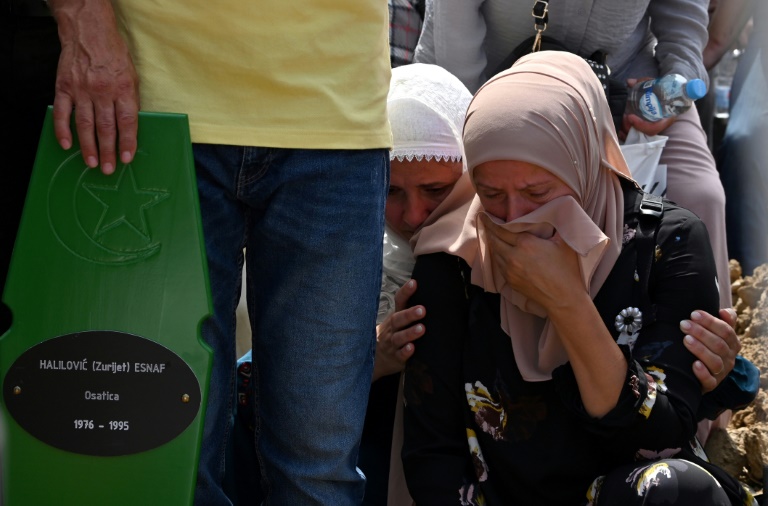
Thousands of people started to gather to attend Monday’s commemorations of the 27th anniversary of the Srebrenica genocide, which most Serbs and their leaders still refuse to recognise in ethnically divided Bosnia.

The remains of 50 more recently identified victims of Europe’s worst massacre since World War II will be buried alongside 6,671 others in the cemetery of the memorial centre.

Some 8,000 Muslim men and boys from the eastern town of Srebrenica were killed by Bosnian Serb forces in July 1995, an act of genocide under international law.

The EU’s top diplomat Josep Borrell and enlargement commissioner Oliver Varhelyi paid tribute to the Srebrenica dead at a time when the Russian invasion of Ukraine shows “still today we cannot take peace for granted”.

“Russia’s unjustified and unprovoked aggression against Ukraine has brought back a brutal war to our continent,” they said in a statement. 

“The mass killings and war crimes we see in Ukraine bring back vivid memories of those witnessed in the war in the Western Balkans in the 1990s. 

“It is more than ever our duty to remember the genocide of Srebrenica… to stand up to defend peace, human dignity and universal values.

“In Srebrenica, Europe failed and we are faced with our shame.”

The discovery of skeletal remains from the massacre have become rare in recent years, even though some 1,200 people are still missing, according to the Missing Persons Institute of Bosnia-Herzegovina.

– Pain never leaves –

The identification process has been made more difficult by the bulldozing up of the remains and their removal to mass graves in a bid to conceal the extent of the slaughter.

Mass funerals of those identified are held each July 11, the takeover date by the forces of Bosnian Serb general Ratko Mladic, who has been jailed for life for war crimes.

The remains of one of the 50 people awaiting burial were found spread across three separate mass graves, said Amor Masovic, a forensic expert who has worked on dozens of mass grave sites in the Srebrenica region.

The remains of most of the others were found spread across two mass graves, he added.

Hajra Alic arrived early Monday to pray at the graves of her only son, who was 17 years old when he was killed, and husband.

The remains of Alic’s son Muhamed — a part of his leg as it was the only thing that was found — were laid to rest in 2018.

The remains of her husband, Redzo, were buried on two occasions — in 2007 and 2016.

“Pain never leaves my heart,” the woman in her 60s told AFP while sitting between two white tombstones.

“I think of my child and my husband every day, not only on July 11, but every July 11 I’m as distraught as if it (the atrocity) was happening now.”

– ‘Heroes’ –

Ever since the brutal 1990s war that claimed some 100,000 lives, Bosnia has been divided along ethnic lines. One half of the country belongs to the Serb entity while the other is ruled by a Muslim-Croat federation.

More than a quarter of a century has passed but Mladic and Radovan Karadzic, the president of Republika Srpska during the war who has also been jailed for life, remain “heroes” in the eyes of many Serbs, with their pictures still adorning many walls.

Political leaders of Serbs living in Bosnia today and in neighbouring Serbia refuse to accept that a genocide took place at Srebrenica, preferring to call it a “major crime”.

“We have for 27 years been fighting for the truth and demanding justice, but for 27 years they have denied the truth, denied genocide,” said Munira Subasic, head of a Srebrenica women’s association.

US ambassador to Bosnia Michael Murphy said the Balkan country’s officials had an “institutional responsibility to acknowledge what occurred in Srebrenica 27 years ago”.

“This is the only road to a future that brings reconciliation to the people of Bosnia-Herzegovina.”

Last July, the former high representative for Bosnia, Valentin Inzko, outlawed denial of the genocide and war crimes, making it punishable by jail time.

The move sparked uproar among Bosnian Serbs led by Milorad Dodik, who sits on the country’s collective presidency. 

He has launched a process of Serb withdrawal from the army, judiciary and the tax system, stirring fears of breaking up the country or starting a new conflict.

Fleeing Sri Lankan president's cash in court, succession battle begins

Millions of rupees in cash left behind by Sri Lanka’s president when he fled his official residence was handed over to a court Monday after being turned in by protestors, police said as a succession battle got under way.

Protesters discovered 17.85 million rupees (about $50,000) in crisp new banknotes but turned it over to police following Saturday’s storming of the Presidential palace.

“The cash was taken over by the police and will be produced in court today,” a police spokesman said.

Official sources said a suitcase full of documents had also been left behind at the stately mansion.

President Gotabaya Rajapaksa took up residence at the two-century-old building after he was driven out of his private home on March 31 when protesters tried to storm it.

The 73-year-old leader escaped through a back door under escort from naval personnel and was taken away by boat, heading to the northeast of the island, official sources told AFP.

His exact whereabouts were not known Monday morning, but Prime Minister Ranil Wickremesinghe’s office said Rajapaksa had officially informed him of his intention to resign, without specifying a date.

The 73-year-old Wickremesinghe will automatically become acting president in the event of Rajapaksa’s resignation, until parliament elects an MP to serve until November 2024.  

But Wickremesinghe has himself announced his willingness to step down if consensus is reached on forming a unity government.

Rajapaksa promised at the weekend to step down on Wednesday and clear the way for a “peaceful transition,” according to parliamentary Speaker Mahinda Abeywardana.

The succession process could take between three days — the minimum time taken to convene parliament — and a maximum of 30 days allowed under the statute.

The main opposition Samagi Jana Balavegaya (SJB) party was huddled in talks with smaller political groups Monday to secure support for their leader Sajith Premadasa.

An SJB official said they reached a tentative agreement with dissidents in Rajapaksa’s SLPP to support 55-year-old Premadasa, the son of a former president, for the top job, with an SLPP member to take the premiership.

Former Rajapaksa loyalist, Dullas Alahapperuma, 63, an ex-media minister, was tipped to be the new prime minister, an SJB legislator involved in the talks told AFP.

Five ministers resigned over the weekend and Wickremesinghe’s office said the cabinet had agreed on Monday to resign en masse once an agreement was reached on an “all-party government”. 

-Protesters stay put-

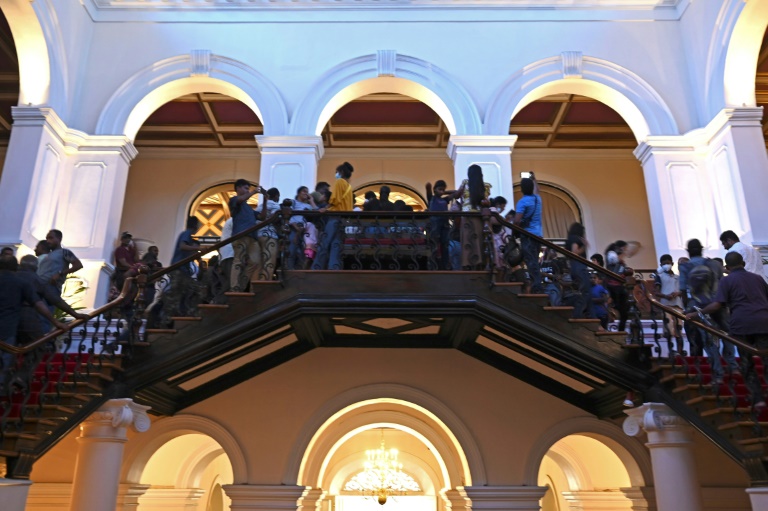
On Monday, tens of thousands were still occupying the Presidential Palace, the nearby sea-front Presidential Secretariat and the Prime Minister’s “Temple Trees” official residence.

“The demand is very clear, people are still asking for the resignation (of Rajapaksa), and full resignation, in a written confirmation,” said protester Dela Peiris.

“So hopefully we will have this resignation from the government including the prime minister and president in the coming days.”

Protesters captured Rajapaksa’s sea-front office shortly after overrunning the palace on Saturday and have promised to stay on until he actually leaves office. 

The premier’s private home in Colombo was also set on fire on Saturday night.

Demonstrators had been camping outside the president’s office for over three months demanding he quit over the country’s unprecedented economic crisis.

Rajapaksa is accused of mismanaging the economy to a point where the country has run out of foreign exchange to finance even the most essential imports, leading to severe hardships for the 22 million population.

Wickremesinghe, an opposition legislator, was made premier in May to try and lead the country out of its economic crisis — the sixth time he has been appointed to the post.

Sri Lanka defaulted on its $51 billion foreign debt in April and is in talks with the IMF for a possible bailout.

Sri Lanka has nearly exhausted its already scarce supplies of petrol. The government has ordered the closure of non-essential offices and schools to reduce commuting and save fuel.

Close Bitnami banner
Bitnami