World

China detains alleged bank fraud 'gang' after rare mass protests

Members of a “criminal gang” accused of taking control of local banks have been arrested in central China after rare protests over alleged financial corruption sparked violent clashes between customers and authorities.

Hit hard by the country’s economic slowdown, four banks in Henan province have since mid-April frozen all cash withdrawals, leaving thousands of small savers without funds and sparking sporadic demonstrations.

In one of the largest such rallies yet, hundreds gathered Sunday outside a branch of the People’s Bank of China in Henan’s capital Zhengzhou demanding their money, according to multiple witnesses who declined to be named.

Protesters held banners accusing local officials and police of corruption, calling on the central government to “give severe punishment to Henan”, video footage verified by AFP showed.

Local authorities did not immediately comment on the protests, but police in nearby Xuchang city said late Sunday that they had arrested members of an alleged “criminal gang” for their suspected involvement in a scheme to gain control of local banks.

The gang made illegal transfers through fictitious loans and used their shareholdings — as well as “manipulation of executives” — to effectively take over several local banks starting in 2011, police said.

The province’s banking and insurance regulator also said late Sunday that it was “accelerating” plans to tackle the local financial crisis and “protect the legal rights and interests of the broader public.”

Footage of Sunday’s rally showed the protestors throwing objects, while one participant told AFP on Sunday that demonstrators were hit and injured by unidentified men.

Another video verified by AFP showed a crying woman complaining about her lost money being forced onto a bus by police.

Another man with a swollen eye said he had been beaten by “gangsters” and dragged onto the bus by police.

Some demonstrators accused officials of colluding with local banks to suppress rallies, and provincial authorities were suspected last month of abusing the country’s mandatory health code to effectively bar protestors from public spaces.

Demonstrations are relatively rare in tightly controlled China, where authorities enforce social stability at all cost and where opposition is swiftly repressed.

But desperate citizens have occasionally succeeded in organising mass gatherings, usually when their targets are local governments or individual corporations rather than the Communist Party itself.

The demonstrators in Henan largely drew sympathy on Chinese social media on Monday, with many on the Weibo platform pointing the finger at local officials.

“Why are you treating ordinary people like this?” one Weibo user asked in a post on Monday. 

“Please strictly investigate the Henan government.”
Austria and Hungary fight nature to stop lake vanishing

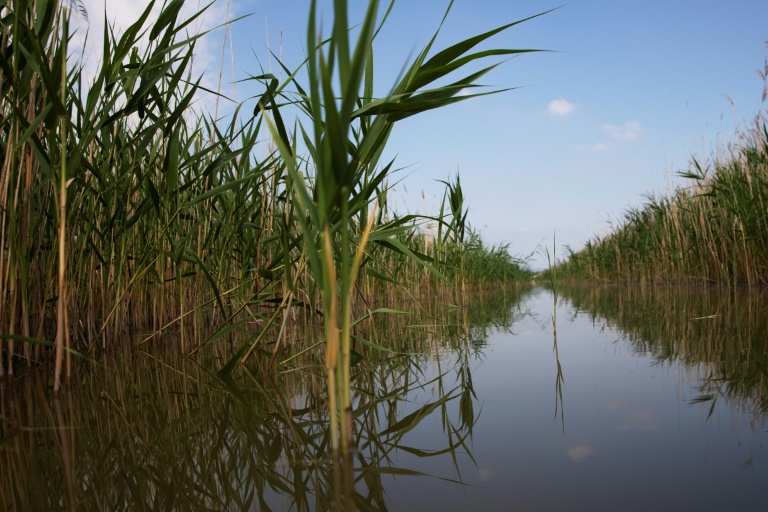
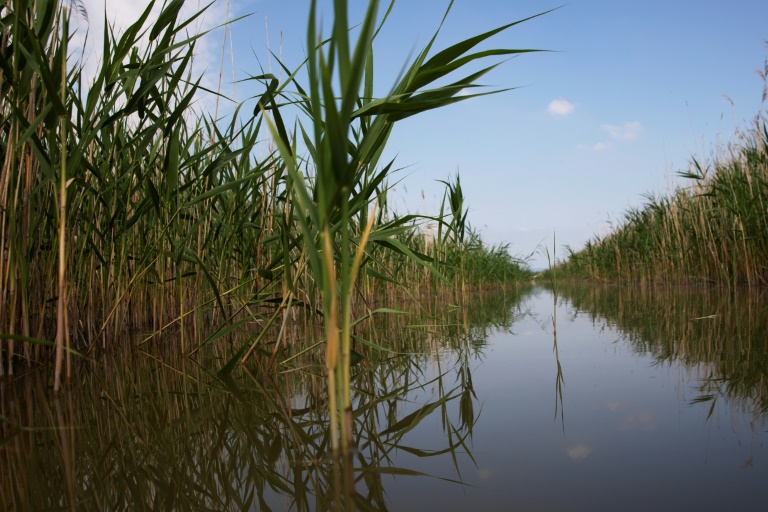
Kitesurfers and windsurfers dot picturesque Lake Neusiedl on the Austrian-Hungarian border –- but the water is so low some get stuck in the mud.

The salt lake and its marshes — the largest of its kind in Europe and a UNESCO world heritage site — could soon run completely dry, and locals are worried.

The lake, only an hour from Vienna, last dried up in the 1860s yet was naturally replenished by rainwater. 

But back then it wasn’t drawing millions of tourists, nor was the area producing 120,000 tons of crops a year.

“Letting the lake and the region run dry is not an option,” provincial councillor Heinrich Dorner told AFP.

To avert what he sees as an economic disaster, Dorner is banking of a series of major projects, the biggest being a canal to bring fresh water from the Danube river in Hungary.

But the plans have run into opposition from environmentalists, who fear any interference could accelerate the demise of the lake, the westernmost outpost of the great Eurasian Steppe.

– ‘Natural cycle’ –

Hungary has tasked a company owned by one of its richest men, Lorinc Meszaros, with building the canal, though work has not yet started, according to a municipal official.

Meszaros, who is close to Prime Minister Viktor Orban, is already in charge of a vast real estate project on the Hungarian side of the lake, including the construction of a marina, sports complex and a hotel.

But activists are against both on environmental grounds and over fears of corruption. “The canal project is unacceptable… (and will) destroy the whole ecosystem” of the lake region, Katalin Rodics of Greenpeace Hungary told AFP.

While other lakes naturally fill up over thousands of years, shallow Lake Neusiedl — which Hungarians call Ferto — naturally dries up about once a century. 

As its salty bed is exposed to saline-loving bacteria, algae, plankton and mud decompose, dry out and are swept away by the wind. 

If fresh water from the Danube ends up being flushed into the lake, this could dilute the saline levels and stop the natural process, said the WWF’s Bernhard Kohler.

“It’s a natural cycle,” Kohler said. “We’ll just have to learn to live with it again.”

But councillor Dorner insisted this is not an option. 

As well as the canal, he hopes to dredge out one million cubic metres of mud to deepen the lake for boating.

Farmers will also have to switch from water-intensive crops such as potatoes, corn and soy, Dorner said, and instead plant spelt, millet or other crops more suitable for arid climates.

Or indeed to wine as world-renowned grapes already grow in the sandy banks of the salt marshes.

– Apocalyptic landscape –

The last time Lake Neusiedl dried up in the 1860s, it left an almost apocalyptic landscape. Historians describe dusty clouds of salt inflaming people’s eyes, piling up on fields and spoiling crops.

Fish, too, died, and locals “lamented that they’ll starve if the dry spell of the lake continues”. But three years later, the water began its miraculous return.

But now with tributaries cut off and more people depend on the lake than ever before, there is doubt on how long a recovery would take.

Rain, the lake’s lifeline, also now increasingly falls in summer, when it evaporates faster, as overall temperatures have risen and heatwaves have increased because of climate change.

Provincial water management head Christian Sailer said it was vital to save the “very complex region”.

“The climate is changing, and that negatively affects the lake,” he told AFP.

Last month more than 100 canoeists and rowers staged a rally on the lake to sound the alarm, some holding posters reading, “Our lake must not die.”

And it’s not just the lake that’s vanishing.

More than 100 salt marshes once dotted the region, but as groundwater levels have dropped dramatically, about 60 are now “irreversibly lost”, said Johannes Ehrenfeldner, head of the Lake Neusiedl-Seewinkel National Park.

Many of the 350 species bird watchers observe depend on these salty ecosystems, and if they dry up, “bird numbers will dwindle,” Ehrenfeldner said, his binocular trained at a black-and-white avocet scooping tiny crabs from the mud.

“We’re running towards our own demise with our eyes wide open,” he added.

Austria and Hungary fight nature to stop lake vanishing

Kitesurfers and windsurfers dot picturesque Lake Neusiedl on the Austrian-Hungarian border –- but the water is so low some get stuck in the mud.

The salt lake and its marshes — the largest of its kind in Europe and a UNESCO world heritage site — could soon run completely dry, and locals are worried.

The lake, only an hour from Vienna, last dried up in the 1860s yet was naturally replenished by rainwater. 

But back then it wasn’t drawing millions of tourists, nor was the area producing 120,000 tons of crops a year.

“Letting the lake and the region run dry is not an option,” provincial councillor Heinrich Dorner told AFP.

To avert what he sees as an economic disaster, Dorner is banking of a series of major projects, the biggest being a canal to bring fresh water from the Danube river in Hungary.

But the plans have run into opposition from environmentalists, who fear any interference could accelerate the demise of the lake, the westernmost outpost of the great Eurasian Steppe.

– ‘Natural cycle’ –

Hungary has tasked a company owned by one of its richest men, Lorinc Meszaros, with building the canal, though work has not yet started, according to a municipal official.

Meszaros, who is close to Prime Minister Viktor Orban, is already in charge of a vast real estate project on the Hungarian side of the lake, including the construction of a marina, sports complex and a hotel.

But activists are against both on environmental grounds and over fears of corruption. “The canal project is unacceptable… (and will) destroy the whole ecosystem” of the lake region, Katalin Rodics of Greenpeace Hungary told AFP.

While other lakes naturally fill up over thousands of years, shallow Lake Neusiedl — which Hungarians call Ferto — naturally dries up about once a century. 

As its salty bed is exposed to saline-loving bacteria, algae, plankton and mud decompose, dry out and are swept away by the wind. 

If fresh water from the Danube ends up being flushed into the lake, this could dilute the saline levels and stop the natural process, said the WWF’s Bernhard Kohler.

“It’s a natural cycle,” Kohler said. “We’ll just have to learn to live with it again.”

But councillor Dorner insisted this is not an option. 

As well as the canal, he hopes to dredge out one million cubic metres of mud to deepen the lake for boating.

Farmers will also have to switch from water-intensive crops such as potatoes, corn and soy, Dorner said, and instead plant spelt, millet or other crops more suitable for arid climates.

Or indeed to wine as world-renowned grapes already grow in the sandy banks of the salt marshes.

– Apocalyptic landscape –

The last time Lake Neusiedl dried up in the 1860s, it left an almost apocalyptic landscape. Historians describe dusty clouds of salt inflaming people’s eyes, piling up on fields and spoiling crops.

Fish, too, died, and locals “lamented that they’ll starve if the dry spell of the lake continues”. But three years later, the water began its miraculous return.

But now with tributaries cut off and more people depend on the lake than ever before, there is doubt on how long a recovery would take.

Rain, the lake’s lifeline, also now increasingly falls in summer, when it evaporates faster, as overall temperatures have risen and heatwaves have increased because of climate change.

Provincial water management head Christian Sailer said it was vital to save the “very complex region”.

“The climate is changing, and that negatively affects the lake,” he told AFP.

Last month more than 100 canoeists and rowers staged a rally on the lake to sound the alarm, some holding posters reading, “Our lake must not die.”

And it’s not just the lake that’s vanishing.

More than 100 salt marshes once dotted the region, but as groundwater levels have dropped dramatically, about 60 are now “irreversibly lost”, said Johannes Ehrenfeldner, head of the Lake Neusiedl-Seewinkel National Park.

Many of the 350 species bird watchers observe depend on these salty ecosystems, and if they dry up, “bird numbers will dwindle,” Ehrenfeldner said, his binocular trained at a black-and-white avocet scooping tiny crabs from the mud.

“We’re running towards our own demise with our eyes wide open,” he added.

Ukrainian students seeking new lives in Taiwan see parallels in Russia, China

When Ukrainian student Anna Fursyk first moved into her Taiwanese university dormitory, the roar of passing military jets made her flinch, reminding her of the war she had fled.

She is among the eight young Ukrainians who recently arrived in central Taichung city to study on full scholarships, drawn by Taiwan’s democracy and a sense of kinship born of living under the constant threat of invasion from a much bigger, increasingly aggressive neighbour.

The planes that spooked Fursyk were from a nearby air base, which is scrambling jets more frequently to counter the growing number of incursions by Chinese warplanes into Taiwan’s air defence identification zone.

“I was scared at first because I thought there was a war starting. I was affected mentally by the war in Ukraine,” the 20-year-old said. 

When Russian President Vladimir Putin ordered his troops into Ukraine, he gave form to the darkest fears of many Taiwanese — that China will act on its pledge to annex the island, which it sees as a part of its territory to be seized one day, by force if necessary.

A top Chinese official recently warned that Beijing would “not hesitate to start a war” if the island declares independence.

Roman Koval, 28, a former flight attendant from Ukraine’s eastern Lugansk region, said he decided to relocate to Taiwan partly because of what he called the “similar threats” it shared with his home country.

He called on Taiwan to learn from Ukraine’s experience and to “be always ready and be always prepared”.

“All the time Ukrainians were thinking… the US will come to save us, Europe will come to save us. But it turned out that no one is going to come to save us,” he said. 

“We are the ones who are going to protect ourselves and we are the ones who are fighting.” 

– ‘Freedom and democracy’ –

There has been an outpouring of public support for Ukraine in Taiwan.

A public fundraising drive collected nearly US$33 million in just four weeks, with President Tsai Ing-wen and other top officials each donating a month’s salary to the cause.

The students’ scholarships were made possible by a donation pledge of around US$1.38 million to the university.

Tsai has been keen to draw parallels between Taiwan’s plight and Ukraine. 

A picture she posted of Taiwanese orchids spray-painted in the colours of the Ukrainian flag went viral across social media, along with the accompanying message: “I hope that freedom and democracy can continue to blossom in both our countries.”

Fursyk, who fled from the western Ukrainian city of Lviv, said she had chosen to move to Taiwan precisely because she wanted to live in a “democratic and free” environment while studying to become a Chinese teacher.

“The reason I didn’t choose China to stay is because of communism, which would make my life less convenient,” she told AFP in fluent Mandarin.

– ‘Continue the fight’ –

Her compatriot, 21-year-old Karyna Myshnova, said Ukraine needed attention and support from the world “to help us continue the fight”.

“Just putting Ukrainian flags on your house, on your Instagram. Just showing you understand” would help, she said. 

Alina Kuprii, 20, said she thought Taiwan had an advantage over Ukraine when it came to foreign intervention because of the former’s semiconductor industry.

Taiwanese chip foundries churn out some of the world’s most advanced chips, a component vital to the global tech industry.

“It would be really dangerous if China invaded Taiwan — it would affect world trade for real, not like in Ukraine,” she said.

“And I hope that China will not do that.” 

Kuprii, a Global MBA student, hopes she can eventually return home to start a career, using what she learns in Taiwan to promote business ties between the two.

But she said she is tormented by thoughts of her parents, who chose to stay in Ukraine because “they care too much about their home”.

Kuprii’s application to the university was processed as urgent because the city she is from — Kryvyi Rig, the same as Ukrainian president Volodymyr Zelensky — has been shelled more heavily recently.

“I miss Ukraine so much, I am so homesick,” she said. “I think people should appreciate any moment of life. Be grateful for every day.”

All the students remained hopeful that Ukraine would triumph in the end. 

“I think it’ll take some time but I know we will definitely win,” said Fursyk.

“We are defending our land, our independence, our freedom, and our decision not to be a part of Russia  — as well as the principles of democracy.”

Pakistan's prized mango harvest hit by water scarcity

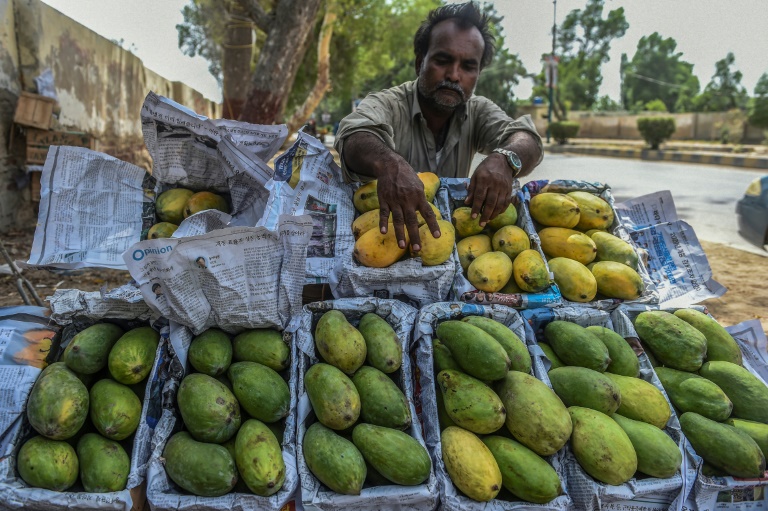
Mango farmers in Pakistan say production of the prized fruit has fallen by up to 40 percent in some areas because of high temperatures and water shortages in a country identified as one of the most vulnerable to climate change.

The arrival of mango season in Pakistan is eagerly anticipated, with around two dozen varieties arriving through the hot, humid summers. 

This year, however, temperatures rose sharply in March — months earlier than usual — followed by heatwaves that damaged crops and depleted water levels in canals farmers depend on for irrigation.  

“Usually I pick 24 truckloads of mangoes… this year I have only got 12,” said Fazle Elahi, counting the bags lined up by his farm. 

“We are doomed.”

The country is among the world’s top exporters of mangoes, harvesting nearly two million tons annually across southern parts of Punjab and Sindh. 

The total harvest is yet to be measured, but production is already short by at least 20 to 40 per cent in most areas, according to Gohram Baloch, a senior official at the Sindh provincial government’s agriculture department.

Umar Bhugio, who owns swaths of orchards outside Mirpur Khas — locally known as the city of mangoes — said his crops received less than half the usual amount of water this year. 

“Mango growers confronted two problems this year: one was the early rise in temperatures, and secondly the water shortage,” he said. 

Pakistan is one of the most water-stressed countries in the world, a problem made worse by poor infrastructure and mismanagement of resources. 

It also ranks as the country eighth most-vulnerable to extreme weather due to climate change, according to the Global Climate Risk Index compiled by environmental NGO Germanwatch.

Floods, droughts and cyclones in recent years have killed and displaced thousands, destroyed livelihoods and damaged infrastructure.

“The early rise of temperatures increased the water intake by crops. It became a contest among different crops for water consumption,” said food security expert Abid Suleri, head of the Sustainable Development Policy Institute (SDPI).

A rise in temperature is generally expected in the mango belt in early May, which helps the fruit ripen before picking starts in June and July.

But the arrival of summer as early as March damaged the mango flowers, a key part of the reproductive cycle.

“The mango should weigh over 750 grams but this year we picked very undersized fruit,” Elahi said.

Known in South Asia as the “king of fruits”, the mango originated in the Indian subcontinent.

The country’s most treasured variety is the golden-yellow Sindhri, known for its rich flavour and juicy pulp. 

More genocide victims to be buried on Srebrenica anniversary

Thousands of people are expected to attend Monday’s commemorations of the 27th anniversary of the Srebrenica genocide, which most Serbs and their leaders still refuse to recognise in ethnically divided Bosnia.

The remains of 50 more recently identified victims of Europe’s worst massacre since World War II will be buried alongside 6,671 others in the cemetery of the memorial centre.

Some 8,000 Muslim men and boys from the eastern town of Srebrenica were killed by Bosnian Serb forces in July 1995, an act of genocide under international law.

The EU’s top diplomat Josep Borrell and enlargement commissioner Oliver Varhely paid tribute to the Srebrenica dead at a time when the Russian invasion of Ukraine shows “still today we cannot take peace for granted”.

“Russia’s unjustified and unprovoked aggression against Ukraine has brought back a brutal war to our continent,” they said in a statement. 

“The mass killings and war crimes we see in Ukraine bring back vivid memories of those witnessed in the war in the Western Balkans in the 1990s. 

“It is more than ever our duty to remember the genocide of Srebrenica… to stand up to defend peace, human dignity and universal values.

“In Srebrenica, Europe failed and we are faced with our shame.”

The discovery of skeletal remains from the massacre have become rare in recent years, even though some 1,200 people are still missing, according to the Missing Persons Institute of Bosnia-Herzegovina.

– 20-year wait ‘for nothing’ –

The identification process has been made more difficult by the bulldozing up of the remains and their removal to mass graves in a bid to conceal the extent of the slaughter.

Mass funerals of those identified are held each July 11, the takeover date by the forces of Bosnian Serb general Ratko Mladic, who has been jailed for life for war crimes.

The remains of one of the 50 people awaiting burial were found spread across three separate mass graves, said Amor Masovic, a forensic expert who has worked on dozens of mass grave sites in the Srebrenica region.

The remains of most of the others were found spread across two mass graves, he added.

Behrem Halilovic, aged 62, has for years hoped more bones of his brother would be identified before holding a proper burial.

“We have waited 20 years for more remains to be found, but it’s been for nothing. We can’t wait any longer,” he said Friday as the 50 coffins travelled from Sarajevo to Srebrenica.

On July 11, 1995, his brother was 27 years old. He and their father had tried to take refuge with UN forces but both were captured and murdered.

Behrem survived by fleeing through the woods.

– ‘Heroes’ –

Ever since the brutal 1990s war that claimed some 100,000 lives, Bosnia has been divided along ethnic lines. One half of the country belongs to the Serb entity while the other is ruled by a Muslim-Croat federation.

More than a quarter of a century has passed but Mladic and Radovan Karadzic, the president of Republika Srpska during the war who has also been jailed for life, remain “heroes” in the eyes of many Serbs, with their pictures still adorning many walls.

Political leaders of Serbs living in Bosnia today and in neighbouring Serbia refuse to accept that a genocide took place at Srebenica, preferring to call it a “major crime”.

“We have for 27 years been fighting for the truth and demanding justice, but for 27 years they have denied the truth, denied genocide,” said Munira Subasic, head of a Srebenica women’s association.

Last July, the former high representative for Bosnia, Valentin Inzko, outlawed denial of the genocide and war crimes, making it punishable by jail time.

The move sparked uproar among Bosnian Serbs led by Milorad Dodik, who sits on the country’s collective presidency. 

He has launched a process of Serb withdrawal from the army, judiciary and the tax system, stirring fears of breaking up the country or starting a new conflict.

Macau lockdown begins, Hong Kong mulls health code app

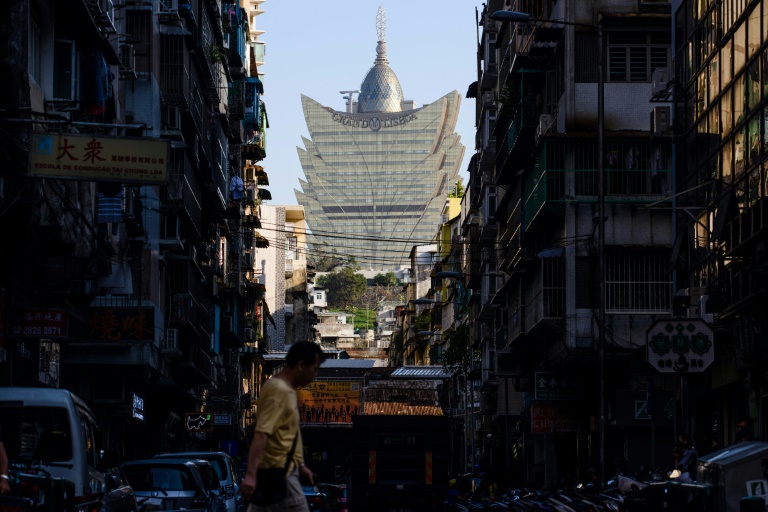
Macau casino shares plunged on Monday as the Chinese city embarked on a week-long lockdown to curb its worst coronavirus outbreak while neighbouring Hong Kong said it was mulling a mainland-style health code system.

Share prices of six gaming conglomerates — Sands China, Galaxy Entertainment, SJM Holdings, Melco International, MGM China and Wynn Macau — dropped by between six to nearly nine percent on Monday morning trade.

It is the first casino lockdown in more than two years, overriding a previous deal between the industry and the Macau government that only those found with infections would need to close temporarily.

Macau is the only place in China where gambling is legal but the pandemic has hammered the city’s fortunes as it sticks to Beijing’s zero-Covid model.

Authorities announced a week of lockdowns starting Monday after recording more than 1,500 infections in the past three weeks despite multiple rounds of compulsory mass testing of the city’s 650,000 people.

All residents must stay home except to go shopping for daily necessities and to get tested for the virus, with rule-breakers facing up to two years in jail.

Some public services and businesses such as supermarkets and pharmacies can stay open, and only people with special permission or a low-risk health code can use public transport.

China uses mandatory health code apps to trace people’s movements and coronavirus outbreaks. Only those with green codes can move freely.

It is a system that Hong Kong’s government is now considering employing, new health minister Lo Chung-mau said Monday.

“So-called freedom can sometimes be easily confused with selfishness,” Lo told RTHK radio.

“Infected people should not have the freedom to go wherever they want and affect our health.”

Hong Kong is currently being remoulded in the authoritarian mainland’s image after huge democracy protests three years ago.

The business hub has hewed to a lighter version of the zero-Covid model, which has battered the economy and left the city internationally cut off for more than two years.

The newly installed administration of chief executive John Lee, a former security official, has vowed to both stamp out infections and restart travel to both the mainland and outside world.

To do that, authorities may need to deploy more mainland-style mass monitoring of the population.

Hong Kong currently uses a less restrictive mobile phone app than the mainland one, which keeps a resident’s vaccination record and is used to check into businesses and venues.

Russian shelling in east Ukraine kills at least 15

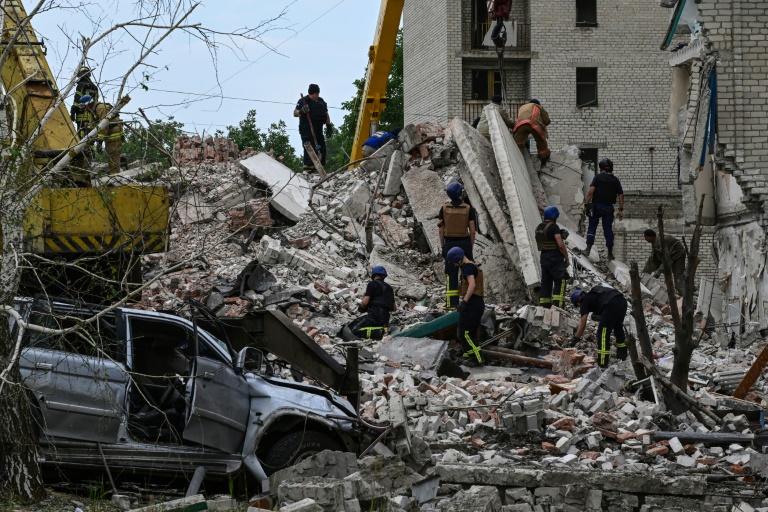
Ukrainian rescuers were hoping Monday to find survivors under the rubble of an apartment building hit by a Russian missile strike which killed at least 15 people, as Moscow’s forces seek to consolidate their control over the Donbas region. 

The building was partially destroyed by the strike, AFP correspondents saw at the scene, where dozens of rescuers were sifting through the rubble with a mechanical digger on Sunday.

“During the rescue operation, 15 bodies were found at the scene and five people were pulled out of the rubble” alive in the town of Chasiv Yar, the local emergency service said on Facebook on Sunday.

“At least 30 others are under the rubble” of the four-storey building after it was hit by a Russian Uragan missile, Donetsk regional governor Pavlo Kyrylenko said earlier on Telegram.

Rescuers had so far been able to establish contact with three people under the rubble, emergency services said.

“Everyone who gives orders for such strikes, everyone who carries them out targeting our ordinary cities, residential areas, kills absolutely deliberately,” President Volodymyr Zelensky said in his nightly address, vowing that the perpetrators would be brought to justice. 

One Chasiv Yar resident, who did not give her name, showed AFP journalists around the wreckage of her apartment.

“Yesterday, 11 or 10 o’clock in the evening, I was in the bedroom, and when I was leaving, everything started thundering and cracking…,” she said.

“The only thing that saved me was when I ran here, because immediately afterwards all of this crashed down.”

Another woman who had ventured inside to see what she could salvage from her apartment retrieved a bluebird, still perched in its cage.

Looking down from her balcony, where her pet had escaped the blast, she lifted up the cage with a brief, triumphant flourish.

– Ground attacks paused –

Having fought long battles to capture areas of the neighbouring region of Lugansk, Russian troops are now turning their focus to Donetsk as they look to take control of the whole Donbas region.

But though the region was under persistent shelling, Russian ground attacks were all but paused, the Ukrainian army general staff said Sunday.

Ukraine’s forces had hit a Russian base in the occupied southern region of Kherson, they added, without elaborating.

“The enemy in our operational zone keeps behind the lines of defense, does not advance by land, does not have the opportunities and capacities to create new strike groups,” Operational Command South said early Monday. 

Successful attacks on ammunition depots by Ukrainian forces meant “Lugansk region still stands”, its governor said on Telegram. 

“The number of attacks and shelling has decreased, without their artillery the invaders are almost helpless,” Sergiy Gaiday said. 

However, elsewhere, the bombing continued. 

On Saturday, three people were killed and 23 wounded by shelling in Donetsk, governor Kyrylenko said.

Strikes were also reported in Kharkiv, Ukraine’s second city in the northeast, where a “teaching establishment” and a house were hit, wounding one, according to regional governor Oleg Sinegubov.

“The Ukrainian army is holding on firmly, repelling attacks in various directions,” said Zelensky. “But, of course, a lot still needs to be done so that Russian losses really cause such pause.” 

– Wheat harvest –

Russian officials in the eastern Ukrainian region of Kharkiv meanwhile announced the start of the harvest “in the liberated territories of the region”, Russian news agency RIA Novosti announced Sunday.

Ukraine has repeatedly accused Russia of having stolen its wheat harvest in the occupied eastern regions, to illegally sell it on the international market.

On Sunday, US Secretary of State Antony Blinken said Russia’s restriction on Ukrainian grain exports may have contributed to turmoil in Sri Lanka triggered by severe shortages of food and fuel.

“We’re seeing the impact of this Russian aggression playing out everywhere,” Blinken told reporters in Bangkok.

Renewing a demand that he has made repeatedly, Blinken called on Russia to let an estimated 20 million tonnes of grain leave Ukraine, which Moscow invaded in February.

Russia continued its crackdown on news coverage critical of its conduct in the war, blocking the website of the German daily Die Welt Sunday, the latest in a growing list.

Since the start of the Russian military operation in Ukraine, the German newspaper has published content in Russian.

burs-jj/imm/reb/ssy

US hails Abe as 'man of vision' as family prepares wake

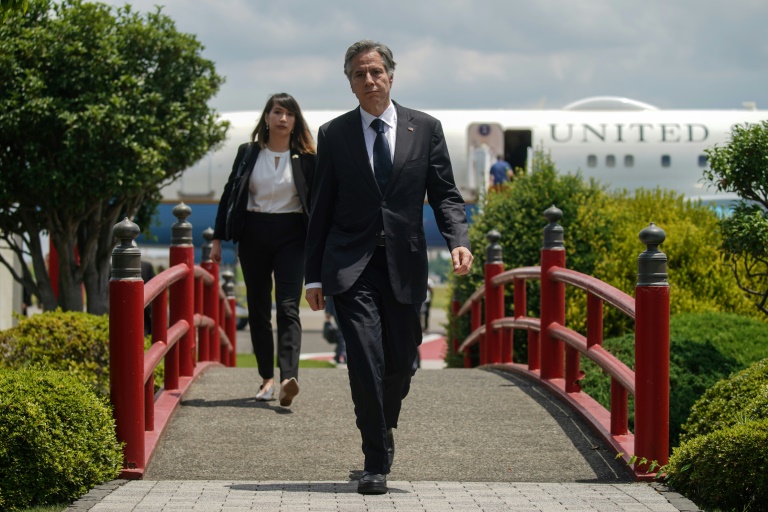
Washington’s top diplomat hailed assassinated former prime minister Shinzo Abe as a “man of vision” as he offered condolences Monday in Tokyo, where family will later hold a wake for the murdered politician.

Japan’s ruling coalition meanwhile declared victory in a sombre election held Sunday, just two days after Abe was gunned down on the campaign trail.

US Secretary of State Antony Blinken made a previously unscheduled trip to Japan while on an Asia tour and said he was there because “we’re friends, and when one friend is hurting, the other friend shows up.”

Abe “did more than anyone to elevate the relationship between the United States and Japan to new heights,” he added, after meeting Prime Minister Fumio Kishida.

“We will do everything we can to help our friends carry the burden of this loss,” he said, calling Abe “a man of vision with the ability to realise that vision.”

Blinken said he handed Kishida letters from US President Joe Biden for Abe’s family, who later Monday will hold a private wake for the country’s longest-serving prime minister at Zojoji temple in Tokyo.

Top politicians and business figures are expected to attend, with a family funeral held at the same location on Tuesday and public memorials at a later date.

The man accused of Abe’s murder, 41-year-old Tetsuya Yamagami, is in custody and has told police he targeted the former leader because he believed he was linked to a specific organisation that authorities have not yet named.

Japanese media reports said he blamed the group, described as a religious organisation, for his family’s financial troubles because his mother made large donations to them.

Investigative sources told local media that Yamagami, who spent three years in Japan’s navy, had watched YouTube videos to help learn how to build homemade guns like the one used in the attack.

– Election victory –

Sunday’s election went ahead despite the assassination, with Kishida saying it was important to show violence would not defeat democracy.

Abe’s long-ruling Liberal Democratic Party and its coalition partner Komeito won 76 of the 125 upper house seats up for grabs, up from the 69 seats they previously held, according to national news outlets.

The victory had been widely expected even before the assassination.

Both parties belong to what is now a two-thirds supermajority open to amending the country’s pacifist constitution. Abe long sought to reform the document to recognise the country’s military.

Kishida, who took office in September, has pledged to tackle the pandemic, inflation and issues related to Russia’s invasion of Ukraine, and there was speculation that Friday’s attack could bolster his support.

But turnout was up only marginally, and still low at a reported 52 percent.

A record 35 female candidates were elected, and some fringe candidates also won for the first time including one from an anti-vaccination party.

Abe was the scion of a political family and became the country’s youngest post-war prime minister when he took power for the first time in 2006, aged 52.

His hawkish, nationalist views were divisive, particularly his desire to reform Japan’s pacifist constitution to recognise the country’s military, and he weathered a series of scandals, including allegations of cronyism.

But he was lauded by others for his economic strategy, dubbed “Abenomics,” and his efforts to put Japan firmly on the world stage, including by cultivating close ties with Biden’s predecessor Donald Trump.

China lockdown worries hit Asian equity, crude markets

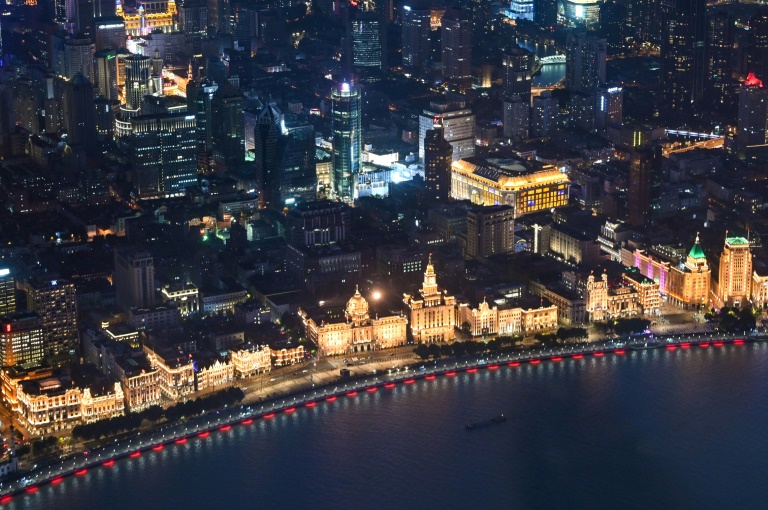
Asian markets and oil prices mostly fell Monday with a fresh Covid flare-up in Shanghai fanning fears of another economically painful lockdown in China’s biggest city.

The news came after a forecast-busting US jobs report last week indicated the world’s top economy was coping so far with the Federal Reserve interest rate hikes, giving it room for more as it battles soaring inflation.

Traders are also keeping tabs on developments in Washington as President Joe Biden weighs removing some of the Donald Trump-era tariffs on Chinese goods worth hundreds of billions of dollars.

Shanghai recorded more than 120 virus cases at the weekend, having seen its first case of the highly contagious BA.5 Omicron strain, forcing officials to launch another mass testing drive.

With China fixated on its zero-Covid strategy of wiping out the disease, there is increasing concern that authorities will revert to another painful lockdown, with Shanghai residents having only emerged from a two-month confinement in June.

There have also been new infections uncovered in other parts of the country, including Beijing.

Data this week will provide a fresh update on the economic impact of those measures, as well as similar strict controls in Beijing.

The prospect of another lockdown sparked a sell-off in Hong Kong and Shanghai, while there were also losses in Sydney, Seoul, Taipei, Manila, Jakarta and Wellington.

However, there were gains in Tokyo as traders welcomed Japan’s ruling bloc securing a strong win in Sunday’s upper house election, held days after the assassination of former premier Shinzo Abe.

The result should provide the government with some stability, while there were also hopes for a cabinet reshuffle and economic stimulus.

– Fed ‘must be resolute’ –

The weak start to the week followed a tepid lead from Wall Street, where the strong jobs reading ramped up bets on further big Fed rate hikes after officials said the economy was strong enough to withstand them.

The central bank is predicted to announce a second successive 0.75 percentage point lift at its next meeting this month, while further big increases are also expected before the end of the year.

Policymakers have said they are determined to bring inflation down from four-decade highs, even if that means hurting growth.

On Friday, New York Fed president John Williams reiterated its determination, saying in a speech: “Inflation is sky-high, and it is the number one danger to the overall health and stability of a well-functioning economy.

“I want to be clear: this is not an easy task. We must be resolute, and we cannot fall short.”

Worries about another shock to the Chinese economy from possible shutdowns also dented oil markets as concerns about a hit to demand outweighed ongoing concerns about tight supplies.

Still, there is a view that prices will remain elevated for now.

“Covid numbers are ticking up again,” said SPI Asset Management’s Stephen Innes.

“Although the possible demand impact of a recession continues to weigh on sentiment, the prevailing view, at least for now, is that the longer-term structural issues facing the oil market will support prices.”

Investors will be keeping watch on Biden’s visit this week to Saudi Arabia, where he is expected to push for the crude giant to ramp up production to make up for the output lost to sanctions against Russia.

– Key figures at around 0230 GMT –

Tokyo – Nikkei 225: UP 1.0 percent at 26,787.00 (break)

Hong Kong – Hang Seng Index: DOWN 2.4 percent at 21,194.75

Shanghai – Composite: DOWN 1.2 percent at 3,314.43

West Texas Intermediate: DOWN 0.7 percent at $104.07 per barrel

Brent North Sea crude: DOWN 0.4 percent at $106.63 per barrel

Euro/dollar: DOWN at 1.0148 from 1.0183 on Friday

Pound/dollar: DOWN at 1.1990 from 1.2034 

Euro/pound: UP at 84.65 pence from 84.59 pence

Dollar/yen: UP at 137.03 yen from 136.10 yen

London – FTSE 100: UP 0.1 percent at 7,196.24 (close)

New York – Dow: DOWN 0.2 percent at 31,338.15

Close Bitnami banner
Bitnami