World

French opposition denounces Uber-Macron 'secret deal'

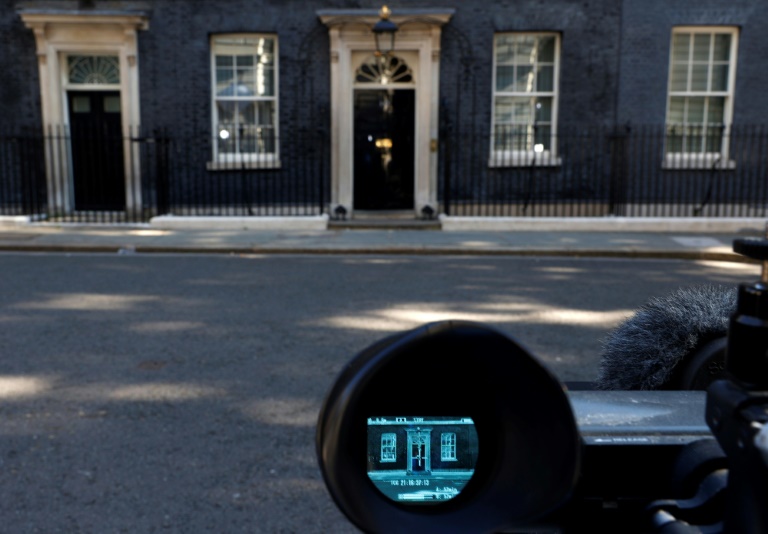
Opposition deputies on Sunday denounced reports of a secret deal between French President Emmanuel Macron — when he was a minister under a socialist government — and online transport giant Uber.

The allegations come in the latest data-based investigation by leading international news outlets based on leaked files, announced on social media as #UberFiles.

The report in France’s Le Monde daily, citing documents, text messages and witnesses, alleges that Uber came to a secret “deal” with Macron when he was economy minister between 2014 and 2016.

Le Monde’s report highlights what it says was help from Macron’s ministry intended to help Uber consolidate its position in France, such as suggesting that the company present “ready-made” amendments to deputies to help their case.

Opposition deputies have denounced what they say appears to have been close collaboration between Macron and Uber at a time when the company was trying to get around tight government regulation of their sector.

Contacted by AFP, Uber France confirmed that the two sides had been in contact. The meetings with Macron had been in the normal course of his ministerial duties, which covered the private-hire sector.

The president’s office told AFP that at that time Macron had, as economy minister, “naturally” been in contact with “many companies involved in the profound change in services that has occurred over the years mentioned, which should be facilitated by unravelling certain administrative or regulatory locks”.

But Mathilde Panot, parliamentary leader of the hard-left opposition France Unbowed party, denounced on Twitter what she described as the “pillage of the country” during Macron’s time as minister under president Francois Hollande.

She described Macron as a “lobbyist” for a “US multinational aiming to permanently deregulate labour law”.

– ‘Against all our rules’ –

Communist Party leader Fabien Roussel described Le Monde’s story as “damning revelations about the active role played by Emmanuel Macron, then minister, to facilitate the development of Uber in France. 

“Against all our rules, all our social rights and against workers’ rights,” he posted on Twitter.

Communist deputy Pierre Dharreville called for a parliamentary inquiry into the affair.

Jordan Bardella, president of the far-right National Rally party, tweeted that the revelations showed that Macron’s career had “a common thread: to serve private interests, often foreign, before national interests”.

The Uber Files investigation is based on a leak of tens of thousands of documents to Britain’s Guardian newspaper from an anonymous source, and has been coordinated by the International Consortium of Investigative Journalists.

The ICIJ is working with 42 media partners around the world on the story.

sb-cgc-vl-reb/jj/imm
Portugal battles forest fires amid heatwave

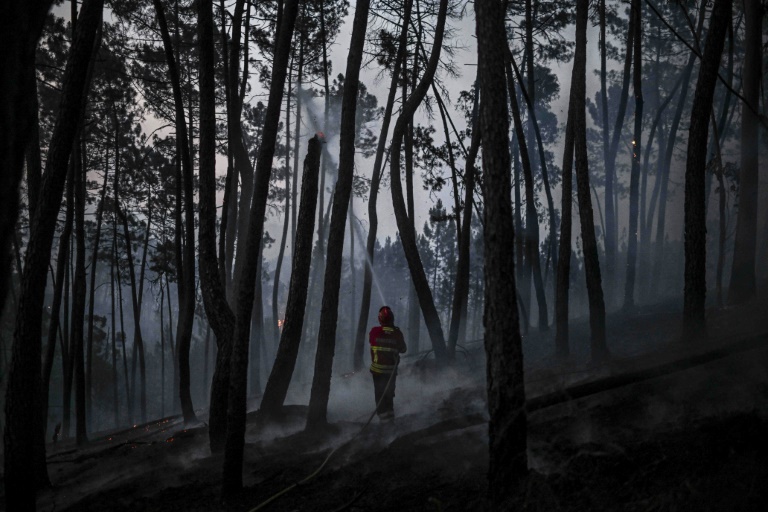
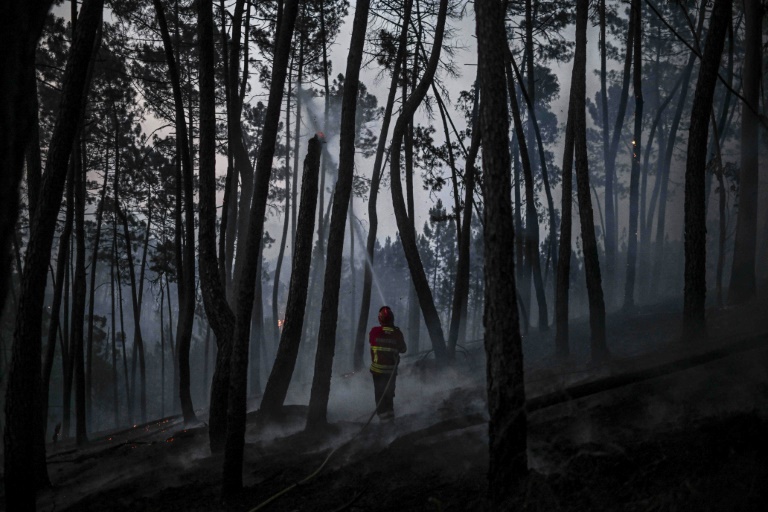
Around 2,800 firefighters were battling multiple wildfires in central and northern Portugal on Sunday amid a heatwave, prompting the government to implement a “state of contingency”.

The fires have been burning in several areas since Thursday, destroying at least two homes. Nearly 250 fires were reported to have started on Friday and Saturday. 

The blazes come amid an intense heatwave in Portugal, with temperatures reaching over 40 degrees Celsius (104 degrees Fahrenheit) this week and expected to rise in the coming days. 

Scientists say extreme weather events such as heatwaves and droughts are linked to climate change. They are expected to become even more frequent, more prolonged and more intense in the future.

On Sunday the Portuguese government issued a national “state of contingency”, which puts rescue services on alert. It is above state of alert but beneath state of calamity and state of emergency. 

The Civil Protection agency said some 1,500 firefighters were battling blazes in Ourem, Pombal and Carrazeda de Ansiaes municipalities.

“The fire got 50 metres (165 feet) from the last house in the village,” pensioner Donzilia Marques, from the hamlet of Travessa de Almogadel in central Portugal, told AFP.

“Up there everything burned,” the 76-year-old said, pointing to the hills between her home and the town of Freixianda. 

More than 700 soldiers were dispatched to the area on Sunday after the fires destroyed an estimated 1,500 hectares (3,700 acres) of vegetation, the Civil Protection agency said. 

The fires have injured around 40 firefighters and civilians. Most were treated on the spot for breathing problems or exhaustion.

Prime Minister Antonio Costa cancelled a planned trip to Mozambique to keep track of the fires. 

The government has asked the European Union to trigger its common civil protection mechanism, which will allow Portugal to access two water bomber planes stationed in Spain.

“We are facing an almost unprecedented meteorological situation”, national civil protection commander Andre Fernandes said on Saturday. 

Portugal regularly sees extreme weather this year. Extreme drought affected around 28 percent of the country in June. In May, 97 percent of the country suffered severe drought and one percent was classed as extreme. 

Portugal battles forest fires amid heatwave

Around 2,800 firefighters were battling multiple wildfires in central and northern Portugal on Sunday amid a heatwave, prompting the government to implement a “state of contingency”.

The fires have been burning in several areas since Thursday, destroying at least two homes. Nearly 250 fires were reported to have started on Friday and Saturday. 

The blazes come amid an intense heatwave in Portugal, with temperatures reaching over 40 degrees Celsius (104 degrees Fahrenheit) this week and expected to rise in the coming days. 

Scientists say extreme weather events such as heatwaves and droughts are linked to climate change. They are expected to become even more frequent, more prolonged and more intense in the future.

On Sunday the Portuguese government issued a national “state of contingency”, which puts rescue services on alert. It is above state of alert but beneath state of calamity and state of emergency. 

The Civil Protection agency said some 1,500 firefighters were battling blazes in Ourem, Pombal and Carrazeda de Ansiaes municipalities.

“The fire got 50 metres (165 feet) from the last house in the village,” pensioner Donzilia Marques, from the hamlet of Travessa de Almogadel in central Portugal, told AFP.

“Up there everything burned,” the 76-year-old said, pointing to the hills between her home and the town of Freixianda. 

More than 700 soldiers were dispatched to the area on Sunday after the fires destroyed an estimated 1,500 hectares (3,700 acres) of vegetation, the Civil Protection agency said. 

The fires have injured around 40 firefighters and civilians. Most were treated on the spot for breathing problems or exhaustion.

Prime Minister Antonio Costa cancelled a planned trip to Mozambique to keep track of the fires. 

The government has asked the European Union to trigger its common civil protection mechanism, which will allow Portugal to access two water bomber planes stationed in Spain.

“We are facing an almost unprecedented meteorological situation”, national civil protection commander Andre Fernandes said on Saturday. 

Portugal regularly sees extreme weather this year. Extreme drought affected around 28 percent of the country in June. In May, 97 percent of the country suffered severe drought and one percent was classed as extreme. 

Diplomats seek deal to keep critical Syria aid flowing

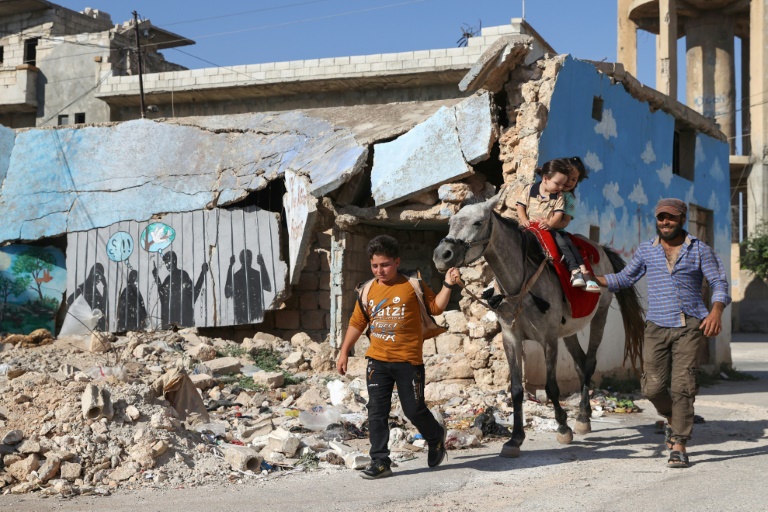
Diplomats at the United Nations held last-ditch discussions on extending Syrian cross-border aid Sunday, as residents of the country’s rebel-held northwest feared life-saving supplies could soon halt.

The lack of an agreement threatens to upend assistance to more than two million people.

The aid delivery mechanism across Turkey’s border into rebel-held Syria at the Bab al-Hawa crossing is the only way UN assistance can reach civilians without navigating areas controlled by Syrian government forces.

The system has been in place since 2014, but is set to expire on Sunday.

Syrian ally Russia on Friday vetoed a Security Council resolution that would have prolonged the mechanism by one year, and Western powers then voted down Moscow’s competing resolution that proposed extending approval by just six months.

“Negotiations are continuing,” one diplomat at the UN in New York told AFP on condition of anonymity.

But one ambassador, who also declined to be identified, said: “We are stuck where we were on Friday.”

The Security Council has previously extended the cross-border mechanism after it had expired, and several sources said a vote was still possible early in the coming week.

If the UN Security Council fails to renew the authorisation, UN aid deliveries could halt.

“Until today, we have no information on the mechanism that will be put in place in the coming period,” said Mazen Allouch, an official at the Bab al-Hawa crossing.

– Russia standing firm –

“Aid groups that are partnered with the UN and that operate in liberated areas have an emergency response plan” in case the UN mandate is not extended, Allouch said, referring to parts of Syria still under rebel control.

But their supplies are expected to last only a little “over one month”, he added.

Diplomats said the 10 non-permanent members of the Security Council had proposed a nine-month extension in an effort to break the impasse, that pits Russia against the United States, France and Britain in particular, against the backdrop of the Ukraine conflict. 

The last draft by Ireland and Norway suggested the possibility of a halt to the mechanism in January next year if the Security Council so decided.

But Moscow appears unwilling to yield, seeking instead a six-month potentially renewable extension.

Russia views the authorisation as a violation of Syria’s sovereignty, and believes the delivery of aid should only be carried out from Damascus across the front line.

“Russia has not changed its position,” an ambassador on the Security Council said, requesting anonymity.

Moscow has curtailed a number of Western-backed measures in recent years, using its veto 17 times in relation to Syria since the war’s outbreak in 2011.

– ‘They want to starve us’ –

“If aid deliveries are diverted through regime (areas) then we will effectively be besieged,” said Abu Mohammad, a displaced Syrian living in a camp in northern Idlib.

“They want to starve us and bring us down to our knees,” the 45-year-old father of four said.

The Bab al-Hawa crossing was closed for a second consecutive day on Sunday due to the Muslim Eid al-Adha holiday.

When it reopens on Wednesday, it will continue to allow civilians and non-UN relief convoys to cross, including those sent by Turkish aid groups and other international aid organisations, Allouch said.

But senior UN officials and relief workers have repeatedly stressed that such aid deliveries cannot substitute the scope and scale of UN operations.

On Friday, Washington’s ambassador to the UN, Linda Thomas-Greenfield, said the end of the mechanism would not mean the border would close.

“It is the mechanism that is closing,” she said.

“We will continue to look for ways to get assistance in. We just won’t have this extraordinarily efficient UN-supported mechanism that we have been using in the past,” she added.

More than 4,600 aid trucks, carrying mostly food, have crossed Bab al-Hawa this year, helping some 2.4 million people, according to the UN’s Office for the Coordination of Humanitarian Affairs (OCHA).

Japan's ruling party projected vote winner after Abe assassination

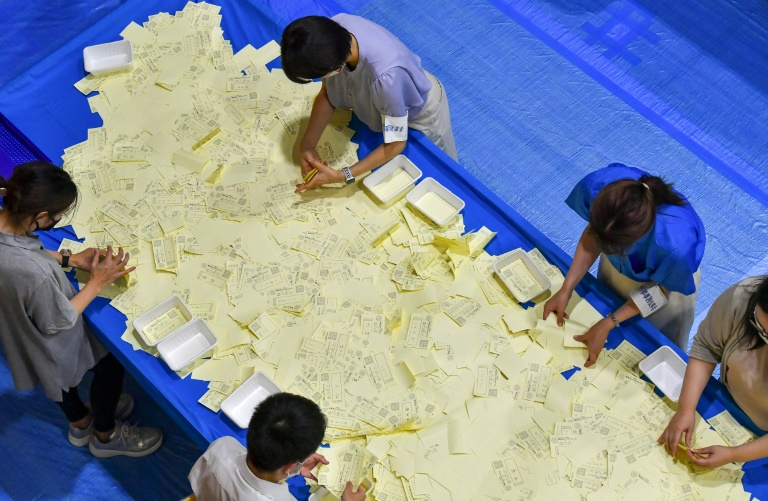
Japan’s ruling coalition is projected to have won the most votes in an election held just two days after the assassination of former prime minister Shinzo Abe, local media said Sunday.

The ex-premier’s ruling Liberal Democratic Party (LDP) and its coalition partner Komeito are expected to strengthen their hold, claiming between 70 and 83 of the 125 upper house seats up for grabs, according to national broadcaster NHK.

Even before Abe’s murder, the LDP and Komeito were expected to cement their majority, though the final number of seats will be scrutinised for signs of whether the attack bolstered support for them.

“I think it is significant we were able to complete the elections,” Prime Minister Fumio Kishida told NHK, adding he wants to tackle the pandemic, Ukraine-related issues and inflation.

Kishida had insisted the election proceed despite the assassination, saying “we must never allow violence to suppress speech.”

Conceding defeat, Kenta Izumi, leader of the opposition Constitutional Democratic Party, which was projected to have lost several seats, said it was clear “voters did not want to switch from the LDP and entrust us with running the government,” according to Kyodo News.

Despite the murder, turnout rate for the election remained low at only 52 percent, the outlet reported based on latest data available Monday morning.

Abe was gunned down at close range on Friday in the western region of Nara, and died of blood loss at a local hospital. His body was brought to his family home in Tokyo on Saturday.

The assassination rattled the nation and sent shockwaves around the world, prompting an outpouring of sympathy even from nations with which the hawkish Abe had sometimes difficult relations, such as China and South Korea.

The man accused of his murder, 41-year-old Tetsuya Yamagami, is in custody and has told investigators he targeted Abe because he believed the politician was linked to an unnamed organisation.

Local media have described the organisation as religious and said Yamagami’s family had suffered financial trouble as a result of his mother’s donations to the group. 

He also reportedly visited the western region of Okayama on Thursday with the intent of killing Abe at a different event, but backed out because participants had to submit their names and addresses.

Additionally, Yamagami admitted to police to test-firing guns at a religious group facility beforehand, according to media.

– ‘No bigger regret’ –

With little violent crime and tough gun laws, security at Japanese campaign events can be relaxed, though in the wake of Abe’s murder, measures were beefed up for Kishida’s remaining appearances.

Security at polling stations on Sunday remained normal, however, with 79-year-old Takao Sueki saying he was voting with an eye on international instability, including Russia’s invasion of Ukraine.

“Watching the world now, I think every day about how Japan will manage with the situation,” he told AFP.

“This is a democratic country and I despise the use of violence to eliminate someone,” he added when asked about Abe’s murder.

“I strongly believe that if people have disagreements, they should dispute them with dialogue.”

Police have promised a “thorough investigation” into what the head of the Nara regional police called “problems with guarding and safety measures” for Abe.

“In all the years since I became a police officer in 1995… there is no greater remorse, no bigger regret than this,” chief Tomoaki Onizuka tearfully told reporters on Saturday evening.

– Wake, funeral planned –

Abe’s office told AFP that a wake would be held on Monday night, with a funeral for family and close friends only on Tuesday. Local media said both were expected to be held at Tokyo’s Zojoji Temple.

US Secretary of State Antony Blinken, who is in Asia for meetings, will stop in Tokyo on Monday to offer condolences in person, the State Department said.

Abe was the scion of a political family and became the country’s youngest post-war prime minister when he took power for the first time in 2006, aged 52.

His hawkish, nationalist views were divisive, particularly his desire to reform Japan’s pacifist constitution to recognise the country’s military, and he weathered a series of scandals, including allegations of cronyism.

But he was lauded by others for his economic strategy, dubbed “Abenomics,” and his efforts to put Japan firmly on the world stage, including by cultivating close ties with Biden’s predecessor Donald Trump.

Kishida, 64, was once described as among Abe’s favoured successors, and holds a solid majority in parliament with Komeito.

But he faces significant policy headwinds, including rising prices and energy shortages, particularly after an early summer heatwave that led to a power crunch.

Kishida is expected to reshuffle his cabinet in the coming months.

Leaked Uber docs reveal bare-knuckle expansion tactics: investigation

A leaked cache of confidential files from ride-sharing app Uber illustrates ethically dubious and potentially illegal tactics the company used to fuel its frenetic global expansion beginning nearly a decade ago, a joint media investigation showed Sunday.

Dubbed “the Uber files,” the investigation based on 124,000 records and involving dozens of news organizations, found that early in the San Francisco start-up’s history as it looked to conquer new markets, company officials leveraged sometimes violent backlash from the taxi industry against drivers to garner support and evaded regulatory authorities.

Uber in a statement Sunday acknowledged “mistakes,” but laid the blame on previous leadership under former chief executive Travis Kalanick, who was forced to resign in 2017 following revelations accusing him of brutal management practices and multiple episodes of sexual and psychological harassment at the company.

“We’ve moved from an era of confrontation to one of collaboration, demonstrating a willingness to come to the table and find common ground with former opponents, including labor unions and taxi companies,” it said.

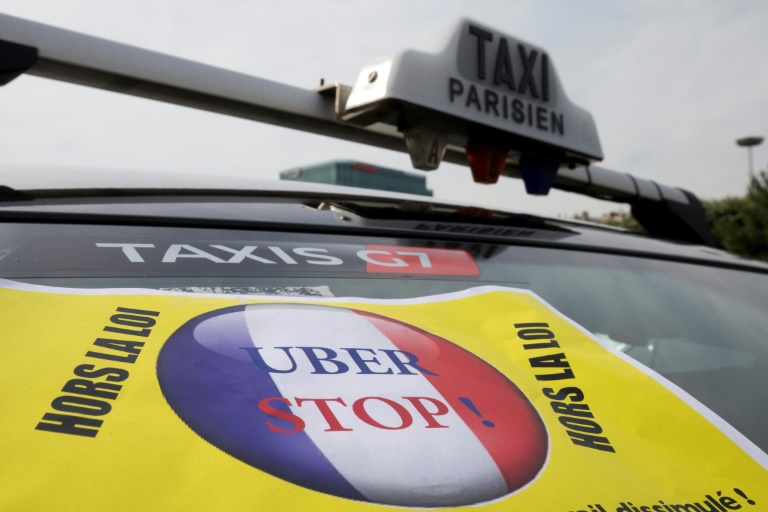
The investigation found that as Uber’s subsidized drivers and discounted fares threatened the taxi industry, the company’s drivers faced violent retaliation, including protests in Paris in 2016.

“In some instances, when drivers were attacked, Uber executives pivoted quickly to capitalize” to seek public and regulatory support as it entered new markets, “often without seeking licenses to operate as a taxi and livery service,” reported the Washington Post, one of the media outlets involved in the probe.

Kalanick had called for a counter-protest in Paris and appeared to suggest violence would help the cause in a text to other officials saying, “Violence guarantee success.”

Kalanick denies the findings, with a spokesperson saying he “never suggested that Uber should take advantage of violence at the expense of driver safety” and that he “never authorized any actions or programs that would obstruct justice in any country.”

The investigation also accuses Uber of having worked to evade regulatory investigations by leveraging a technological edge, the Post wrote, describing an instance when Kalanick implemented a “kill switch” to remotely cut off access of devices in an Amsterdam office to Uber’s internal systems as regulators raided.

Another finding, according to the Post, indicated that between 2014 and 2016 Uber found an ally in France’s then-economy minister Emmanuel Macron, now the country’s president, who the company believed would encourage regulators “to be ‘less conservative’ in their interpretation of rules limiting the company’s operations.”

Leaked Uber docs reveal bare-knuckle expansion tactics: investigation

A leaked cache of confidential files from ride-sharing app Uber illustrates ethically dubious and potentially illegal tactics the company used to fuel its frenetic global expansion beginning nearly a decade ago, a joint media investigation showed Sunday.

Dubbed “the Uber files,” the investigation based on 124,000 records and involving dozens of news organizations, found that early in the San Francisco start-up’s history as it looked to conquer new markets, company officials leveraged sometimes violent backlash from the taxi industry against drivers to garner support and evaded regulatory authorities.

Uber in a statement Sunday acknowledged “mistakes,” but laid the blame on previous leadership under former chief executive Travis Kalanick, who was forced to resign in 2017 following revelations accusing him of brutal management practices and multiple episodes of sexual and psychological harassment at the company.

“We’ve moved from an era of confrontation to one of collaboration, demonstrating a willingness to come to the table and find common ground with former opponents, including labor unions and taxi companies,” it said.

The investigation found that as Uber’s subsidized drivers and discounted fares threatened the taxi industry, the company’s drivers faced violent retaliation, including protests in Paris in 2016.

“In some instances, when drivers were attacked, Uber executives pivoted quickly to capitalize” to seek public and regulatory support as it entered new markets, “often without seeking licenses to operate as a taxi and livery service,” reported the Washington Post, one of the media outlets involved in the probe.

Kalanick had called for a counter-protest in Paris and appeared to suggest violence would help the cause in a text to other officials saying, “Violence guarantee success.”

Kalanick denies the findings, with a spokesperson saying he “never suggested that Uber should take advantage of violence at the expense of driver safety” and that he “never authorized any actions or programs that would obstruct justice in any country.”

The investigation also accuses Uber of having worked to evade regulatory investigations by leveraging a technological edge, the Post wrote, describing an instance when Kalanick implemented a “kill switch” to remotely cut off access of devices in an Amsterdam office to Uber’s internal systems as regulators raided.

Another finding, according to the Post, indicated that between 2014 and 2016 Uber found an ally in France’s then-economy minister Emmanuel Macron, now the country’s president, who the company believed would encourage regulators “to be ‘less conservative’ in their interpretation of rules limiting the company’s operations.”

Russian shelling in east Ukraine kills at least 15

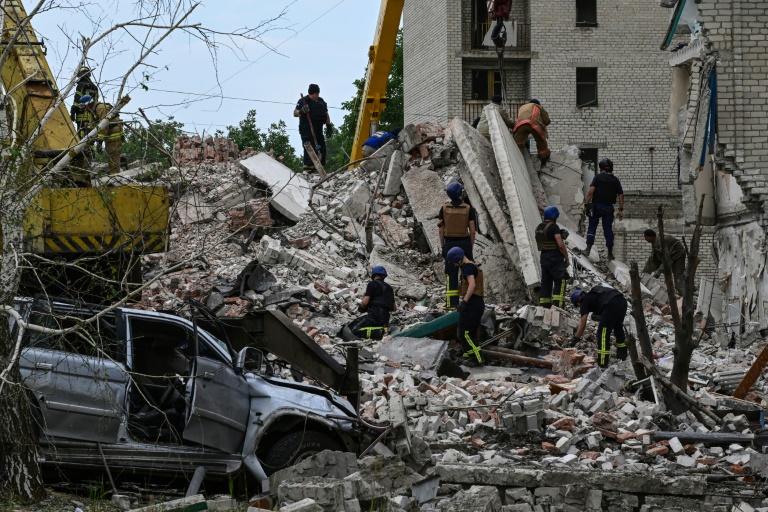
A Russian missile struck an apartment building in eastern Ukraine Sunday, killing at least 15 people as Moscow’s forces sought to consolidate their control over the Donbas region. 

“During the rescue operation, 15 bodies were found at the scene and five people were pulled out of the rubble” alive in the town of Chasiv Yar, the local emergency service said on Facebook.

“At least 30 others are under the rubble” of the four-storey building after it was hit by a Russian Uragan missile, Donetsk regional governor Pavlo Kyrylenko said earlier on Telegram.

The building was partially destroyed in the strike, AFP correspondents saw at the scene where dozens of rescuers were sifting through the rubble with a mechanical digger.

Rescuers had so far been able to establish contact with three people under the rubble, emergency services said.

Having fought long battles to capture the last areas of the neighbouring region of Lugansk, Russian troops are now turning their focus to Donetsk as they look to take control of the whole Donbas region.

One Chasiv Yar resident, who did not give her name, showed AFP journalists around the wreckage of her apartment.

“Yesterday, 11 or 10 o’clock in the evening, I was in the bedroom, and when I was leaving, everything started thundering and cracking…,” she said.

“The only thing that saved me was when I ran here, because immediately afterwards all of this crashed down.”

Another woman who had ventured inside to see what she could salvage from her apartment retrieved a blue bird, still perched in its cage.

Looking down from her balcony, where her pet had escaped the blast, she lifted up the cage with a brief, triumphant flourish.

Hours earlier, Ukrainian President Volodymyr Zelensky had condemned what he said was Russia’s deliberate shelling of civilian targets.

– ‘Absolutely deliberately’ –

The Donetsk region was under persistent shelling, while Russian ground attacks were all but paused, the Ukrainian army general staff said Sunday.

Ukraine’s forces had hit a Russian base in the occupied southern region of Kherson, they added, without elaborating.

On Saturday, three people were killed and 23 wounded by shelling in Donetsk, governor Kyrylenko said. 

Strikes were also reported in Kharkiv, Ukraine’s second city in the northeast, where a “teaching establishment” and a house were hit, wounding one, according to regional governor Oleg Sinegubov.

Zelensky condemned the widespread Russian bombardments in an address Saturday night.

“In just one day, Russia hit Mykolaiv, Kharkiv, Kryvyi Rih, the communities of the Zaporizhzhia region,” Zelensky said. 

Russian strikes “absolutely deliberately” and “purposefully” targeted the residential sector, hitting “ordinary houses, civilian objects, people”, he said.

“Such terrorist actions can really only be stopped with weapons, modern and powerful,” Zelensky added, thanking the United States for its latest military aid package.

Washington has signed off on a $400-million package, including four additional High Mobility Artillery Rocket Systems to add to eight already in place and high-precision artillery ammunition not previously sent to Ukraine. 

“It’s a further evolution in our support for Ukraine in this battle in the Donbas,” a senior defence official was quoted by the US Department of Defense as saying.

On Sunday, US Secretary of State Antony Blinken said Russia’s restriction on Ukrainian grain exports may have contributed to turmoil in Sri Lanka triggered by severe shortages of food and fuel.

“We’re seeing the impact of this Russian aggression playing out everywhere,” Blinken told reporters in Bangkok.

Renewing a demand that he has made repeatedly, Blinken called on Russia to let an estimated 20 million tonnes of grain leave Ukraine, which Moscow invaded in February.

Russian officials in the eastern Ukrainian region of Kharkiv meanwhile announced the start of the harvest “in the liberated territories of the region”, Russian news agency RIA Novosti announced Sunday.

Ukraine has repeatedly accused Russia of having stolen its wheat harvest in the occupied eastern regions, to illegally sell it on the international market.

– Turbine return –

Canada agreed Saturday to deliver to Germany turbines needed to maintain the Nord Stream 1 gas pipeline, despite sanctions against Russia.

Ukraine had urged Canada not to return the turbines, undergoing maintenance at a Canadian site owned by German industrial giant Siemens.

Gazprom reduced deliveries via the pipeline, blaming that on the delayed return of the components and raising fears of a gas shortage in Germany.

Canada would “grant a time-limited and revocable permit for Siemens Canada to allow the return of repaired Nord Stream 1 turbines”, said Natural Resources Minister Jonathan Wilkinson.

Canada also announced on Saturday its intention to extend economic sanctions against Russia to industrial manufacturing. 

burs-jj/imm

19 killed in South Africa bar shootings

Nineteen people are dead after armed assailants randomly shot at patrons in two bars in South Africa in separate incidents denounced by the president as “unacceptable and worrying”. 

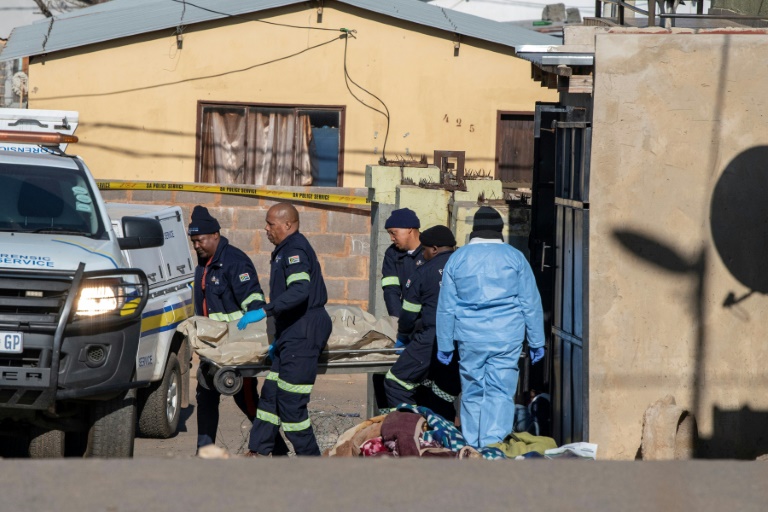
In Soweto, 15 people — among them two women — were killed as they enjoyed a night out, police said, when assailants pulled up in a minibus taxi and began randomly firing high-calibre guns at drinkers.

In the eastern city of Pietermaritzburg in KwaZulu-Natal province four people were killed and eight wounded in a bar when two men fired indiscriminately at customers.

Shootings are common in South Africa, a country with one of the world’s highest murder rates, fuelled by gang violence and alcohol.

But the similar modus operandi in the weekend killings has left investigators puzzled.

“As a nation, we cannot allow violent criminals to terrorise us in this way, regardless of where such incidents may occur,” President Cyril Ramaphosa said in a statement.

The violent deaths are “unacceptable and worrying” he added, offering condolences for the lives lost under “similar circumstances” in Soweto and Pietermaritzburg.

– ‘Shot randomly’ –

In Soweto, Johannesburg’s largest township to the southwest of South Africa’s economic capital, police were called to the scene shortly after midnight.

They found “12 people were dead with gunshot wounds,” a local senior police officer Nonhlanhla Kubheka told AFP. 

Eleven people were taken to hospital, and three later succumbed to their wounds.

The dead were aged between 19 and 35, provincial police chief Elias Mawela told AFP. 

“According to witnesses, they shot randomly,” said Mawela.

He said AK47 bullet cartridges and 9 mm bullet cartridges were found on the scene, suggesting multiple shooters were involved.

No arrests have been made yet and there were no details regarding the assailants.

The shooters were “unprovoked”, said provincial community safety minister Faith Mazibuko told AFP. 

“Patrons were just enjoying themselves… and others (were) playing snooker,” she said.

Hundreds of people massed behind police cordons as police investigated, AFP journalists reported.

Only a small poster showing beer prices at the bar could be seen outside the establishment located between houses.

Police led away crying relatives of those caught up in the drama who tried to approach the crime scene.

The colourful Soweto Towers, a favourite bungee jumping spot for tourists, stood out in the background.

– Blood stains –

In Pietermaritzburg, four people aged between 30 and 45 were killed and eight wounded on Saturday night, police spokeswoman Nqobile Gwala said.

Two men drove up, entered the bar and “fired random shots at the patrons”, before fleeing, Gwala said. Two died at the scene and the other two in hospital.

The attack occurred at a tavern in a semi-rural area 20 kilometres (12 miles) from Pietermaritzburg, close to a car wash and a liquor store, according to an AFP reporter on the scene.

Local mayor Mzimkhulu Thebola said the assault was over very quickly.

“Every week we get news of people that have just been shot at randomly,” said Thebola, wearing a bright yellow winter jacket, the colours of the ruling African National Congress.

An AFP correspondent saw blood stains on the ground in front of the bar.

The killings come two weeks to the day after the mysterious deaths of 21 people, mostly teens, in still unclear circumstances at a township tavern last month in the southern city of East London.

The latest shootings also come a year after an outbreak of the worst violence the country has seen since the end of the apartheid era three decades ago brought democracy.

Last July saw large scale rioting and looting, ransacking of shops, a wave of arson attacks and attacks on infrastructure and industrial warehouses leading to more than 350 deaths and several thousand arrests with the country already in the throes of a major Covid-19 wave.

Most of the unrest occurred in Johannesburg and KwaZulu-Natal as people protested the sentencing and incarceration of former President Jacob Zuma.

Zuma was sentenced after refusing to testify on corruption charges during his 2009 to 2018 tenure. 

UK Tory leader race expands to nine, with early focus on tax

Former UK defence secretary Penny Mordaunt on Sunday became the ninth Conservative MP to launch a bid to replace Prime Minister Boris Johnson, as the already fractious race promptly focused on tax.

Mordaunt, 49, an ex-navy reservist who has also held several senior ministerial roles, is not among the frontrunners to succeed Johnson in recent polls of Tory party members ultimately set to choose their new leader.

But such contests are notoriously unpredictable, and with more than a dozen lawmakers from multiple factions of the ruling party potentially set to run, political commentators say few contenders can be discounted.

The early favourite is former finance minister Rishi Sunak, who launched his campaign Friday after helping to kickstart the cabinet revolt that led to Johnson’s forced resignation Thursday. He is now drawing early fire from Johnson loyalists and rival candidates.

Sunak and former health minister Sajid Javid — who has also declared his candidacy — both resigned late Tuesday, prompting dozens of more junior colleagues to follow suit.

That forced Johnson to then quit as Tory leader 36 hours later.

But the 58-year-old leader, whose three-year premiership has been defined by scandal, the country’s departure from the European Union and the Covid pandemic, said he would stay on until his successor is selected.

– Crowded field –

Former foreign secretary Jeremy Hunt, who finished runner-up to Johnson in the last contest in 2019, announced late Saturday he will stand again.

Current finance minister Nadhim Zahawi — only appointed to the post Tuesday — and Transport Secretary Grant Shapps have also launched bids.

They join attorney general and arch-Brexiteer Suella Braverman, the relatively unknown former equalities minister Kemi Badenoch and backbench Tory MP Tom Tugendhat on the growing candidate list.

Foreign Secretary Liz Truss, a frontrunner in recent surveys, is among those expected to still announce.

But Defence Secretary Ben Wallace, who has impressed in the role and been one of Tory members’ favourites, said Saturday he would not stand after a discussion with colleagues and family.

Taxation is already a key dividing line in the race, as Britain faces the toxic combination of high inflation and rampant cost-of-living increases alongside stagnant growth and relatively high tax rates.

– ‘Low-growth trap’ –

Announcing their bids separately in the Sunday Telegraph, Javid and Hunt both vowed to cut corporation tax from 25 to 15 percent.

Javid said he would also slash or change other taxes, including reversing a recent rise in national insurance that is ringfenced to raise health service funding.

“We cannot fall into a low-growth trap like many other countries have across Europe — we must cut taxes,” he told the BBC on Sunday.

Hunt, Shapps and Tugendhat also set out their stances for lower taxes in Sunday morning television appearances.

But declaring his candidacy in a slick video on social media before the weekend, Sunak struck a different tone, warning Tories not to believe “fairy tale” pledges.

Meanwhile, Zahawi’s campaign appeared in early danger following Sunday newspaper reports that his personal tax affairs are under investigation by revenue and customs officials — who are part of his treasury department. He has denied wrongdoing.

– Dirty dossiers? –

The likely months-long acrimonious campaign is set to be formalised Monday when a committee of backbenchers will meet to agree the timetable and rules.

A Tuesday evening deadline to register candidacies could be imposed, according to reports.

Geoffrey Clifton-Brown, the committee’s treasurer, told LBC radio he was “absolutely confident” the contest could be whittled down to two candidates to put to members within weeks, before parliament’s summer recess starting after July 21.

First, multiple rounds of voting by all 358 Tory MPs is likely, with elimination thresholds set for each stage.

The new leader then chosen by members could be in place ahead of the Conservatives’ annual conference in early October.

The party has declined to say how many eligible members they have, but note it will be more than the 160,000 who voted at the last leadership contest in 2019.

Conservative commentator Iain Dale said Sunday if a consensus candidate emerged, the contest could end without party members voting, as happened in 2016 with the selection of Theresa May.

In a sign of the potential peril of a protracted fight, the Sunday Times reported some of the leadership teams had compiled so-called dirty dossiers of compromising allegations against rival candidates and their aides.

Close Bitnami banner
Bitnami