World

Laughter, piano at vacant Sri Lanka presidential palace

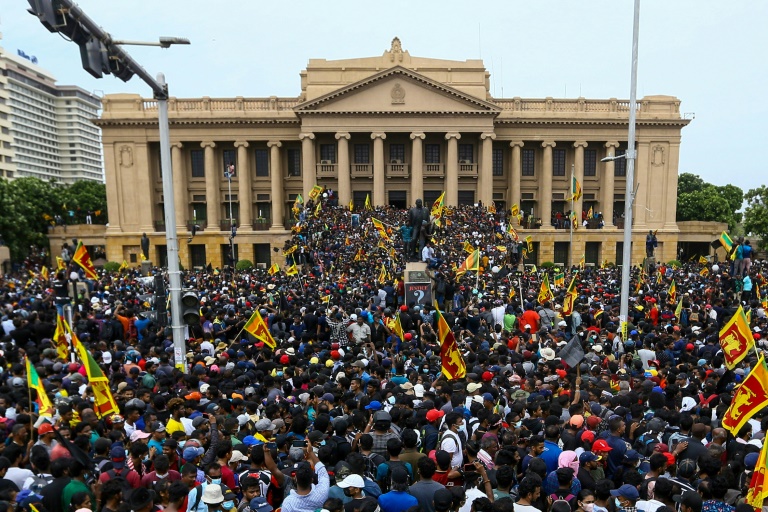
Sri Lanka’s colonial-era presidential palace has embodied state authority for more than 200 years, but on Sunday it was the island’s new symbol of “people power” after its occupant fled.

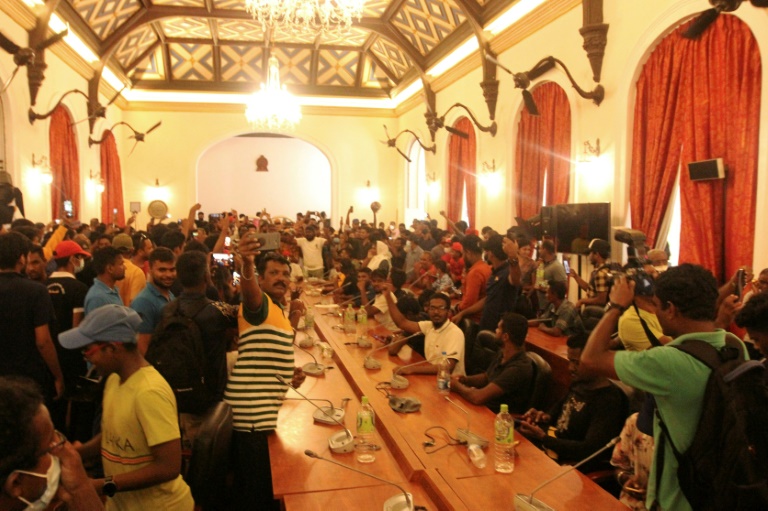
Thousands of men, women and children were pouring into the imposing state mansion queuing to sit on President Gotabaya Rajapaksa’s chair on the upper floor while children and parents banged on a grand piano downstairs.

In the imposing “Gordon Garden” park of the palace, chuckling families enjoyed a picnic lunch as shaven-headed Buddhist monks in saffron robes marvelled at the marble floors and central air conditioning.

“When leaders live in such luxury, they have no idea how the commoners manage,” monk Sri Sumeda told AFP after travelling 50 kilometres (30 miles) to visit the palace for the first time.

“This shows what can be done when people decide to exercise their power.”

– Unprecedented –

Sri Lanka, once a relatively wealthy economy, is in the throes of an unprecedented crisis with hyperinflation and critical shortages of essentials like food, fuel and medicine.

Protesters have been calling for months for Rajapaksa, part of a powerful clan which has dominated politics for decades, to quit.

Rajapaksa, 73, fled the presidential palace on Saturday using a back entrance under military cover.

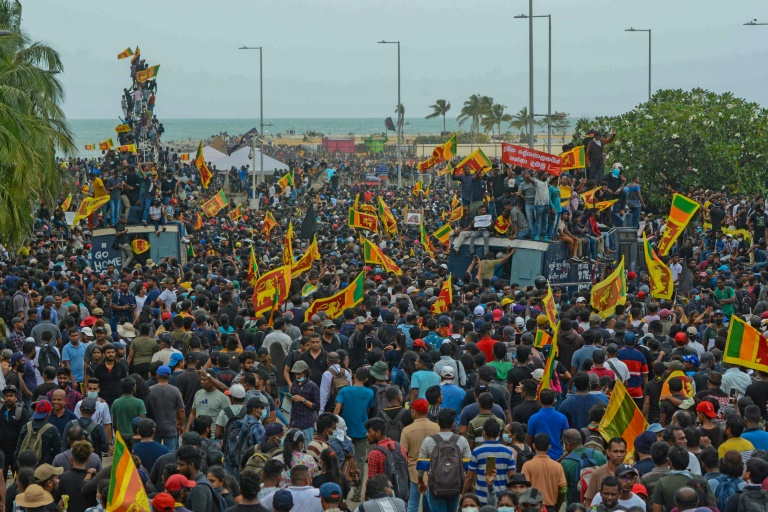
This was minutes before tens of thousands of protesters breached the iron gates despite the presence of police with live ammunition, tear gas and water cannon.

On Sunday he was holed up in a navy ship offshore and has said he will resign on Wednesday.

– ‘Don’t damage the paintings’ –

On Sunday, heavily armed presidential guards were still around, but this time mingling with the new visitors and even posing for selfies with those now controlling the new corridors of power.

There was lighthearted banter as families scrambled to take pictures in front of expensive art works or other artefacts still on display.

“Dont damage the paintings, they were not done by Gotabaya,” read hand-written signs put up by university activists in the forefront of the people-power drive known as “Aragalaya”, or struggle.

Shortly after the capture, many dived into the presidential pool to cool off, but on Sunday the waters had turned murky and only a handful were willing to dive in.

– Bucket list visit –

Buddhika Gunatillaka, 46, rode his motorcycle from a suburb of Colombo to visit the imposing building which had remained largely off limits for commoners.

“I used up the petrol I have saved to make the trip with my wife because you will never get this chance to visit the most important residence in Sri Lanka,” Gunatillaka told AFP.

Painful reminders of the struggle remained. 

Two police water cannon sat along the short stretch of road leading to the palace. Bullet holes were visible on a perimeter wall after troops fired to discourage a surge of the protesters on Saturday.

At the nearby Presidential Secretariat, Rajapaksa’s office, protesters have broken down the iron fences and captured the main lobby where they opened a makeshift library on Sunday.

– ‘Not leaving’ –

“I have been visiting the protest camp every day and I will not stop until Gotabaya actually leaves office,” said 49-year-old Chamari Wickremasinghe, a mother of two daughters.

“We are not going to leave here,” she said while occupying the lobby of the Presidential Secretariat that until 1982 was the national parliament. “The promise to go by July 13 is not enough. He should quit now.”

Library curator Supun Jayaweera, 33, said they were putting out about 8,000 general reading books in Sinhala, Tamil and English and hoped visitors would make use of them. All were donations from people supporting the struggle.

On the 35 steps leading to the former parliament building overlooking the Indian Ocean, families were enjoying a day out. Volunteers were offering food to protesters as well as security forces.

A lone student activist was rousing visitors with anti-Rajapaksa chants as the crowds continued to pour in despite a shortage of fuel that has brought public transport to a halt for days.

“I hope what happened on Saturday will serve as a reminder to future politicians. You can’t suppress the people forever. They strike back,” Gunatillaka said.
Sri Lanka's turmoil explained

Sri Lankan President Gotabaya Rajapaksa has said he will resign in the coming days after protesters stormed his residence and forced him to escape offshore in a naval ship.

His announcement came after hundreds of thousand people demonstrated in Colombo, capping months of protests by people desperate and irate at the island nation’s dire economic crisis.

– Who are the Rajapaksas? –

Gotabaya Rajapaksa, 73, president since 2019, is just one member of a clan that has dominated politics in the South Asian nation of 22 million people for decades.

Brother Mahinda, 76, was president for a decade until 2015 and oversaw the bloody end to Sri Lanka’s long-running civil war in 2009 when Gotabaya — dubbed “The Terminator” — ran the security services.

Under Mahinda, Sri Lanka moved closer to China and borrowed billions of dollars for vanity projects like cricket stadiums and airports as well as a deep-sea port since leased to Beijing.

– What has happened with the economy? –

The vital tourism sector was first hammered by Islamist extremist bomb attacks on churches and hotels in 2019 and then by the coronavirus pandemic.

Its coffers further depleted by government tax cuts, Sri Lanka ran out of foreign currency needed to import everything from medicines to food and fuel.

Even with help from India and others, in April the country defaulted on its $51-billion foreign debt pile and has been for months in bailout talks with the International Monetary Fund.

– How has this affected ordinary people? –

Sri Lankans have endured months of medicine and food shortages and electricity blackouts while fuel stations have run out of petrol and diesel despite pleas to Russia and others for discounted oil.

Unofficial inflation rates are second only to those of Zimbabwe, making many goods — if they can be found — too expensive for many people to afford.

The United Nations has warned that Sri Lanka is facing a dire humanitarian crisis, with millions already in need of aid.

More than three-quarters of the population had reduced their food intake due to the country’s severe food shortages, the UN says.

– How is Rajapaksa still in office? –

After months of protests, Rajapaska loyalists went on the rampage in May. At least nine people were killed in nationwide violence while homes of ruling party members were torched.

Mahinda quit as prime minister — escorted by security forces from his residence — but Gotabaya clung on and appointed veteran politician Ranil Wickremesinghe, 73, as premier.

Wickremesinghe has little to show for his efforts and on Saturday his home was set ablaze by protesters — he was absent — even as he offered to resign too.

– What now? –

According to the speaker of parliament, Gotabaya — while protesters occupy his presidential palace and pose for selfies — will formally resign on Wednesday to ensure a “peaceful transition”.

A successor must be chosen through a vote in parliament within a month of Rajapaksa leaving, but the speaker promised a new leader within a week. However, on Sunday it was unclear who if anyone would be able to garner enough support among lawmakers to succeed Rajapaksa.

“We are heading for dangerous uncertainty,” minority Tamil legislator Dharmalingam Sithadthan told AFP. “Gota should have resigned immediately without leaving a power vacuum.”

Sri Lanka's president to quit after chased from home

Sri Lankan protesters refused to budge from President Gotabaya Rajapaksa’s residence on Sunday after storming his home, forcing him to flee with the navy and to announce his resignation.

The dramatic events on Saturday were the culmination of months of protests by people enraged by the South Asian island nation’s unprecedented economic crisis and the Rajapaksa clan’s incompetence and corruption.

Hundreds of thousands massed in Colombo demanding Rajapaksa take responsibility for shortages of medicines, food and fuel that have brought the once-relatively rich economy to its knees and caused misery for ordinary people.

After storming the gates of the colonial-era presidential palace, protesters lounged in its opulent rooms, somersaulting into the compound’s pool and going through Rajapaksa’s clothes.

Troops fired in the air to help Rajapaksa escape on Saturday. He then boarded a naval craft which steamed away from the island to the safety of the island’s southern waters.

From there the 73-year-old, who had clung to power even after deadly nationwide violence in May forced his brother Mahinda Rajapaksa to quit as prime minister, decided finally to throw in the towel.

“To ensure a peaceful transition, the president said he will step down on July 13,” parliamentary speaker Mahinda Abeywardana said in a televised statement.

Rajapaksa’s nearby seafront office also fell into protesters’ hands while others set fire to Prime Minister Ranil Wickremesinghe’s residence even after he too offered to resign. The premier was not there at the time.

Footage on social media showed a crowd cheering the blaze, which broke out shortly after a security detachment guarding Wickremesinghe attacked several journalists outside the home. 

– Gunshot wounds –

Security forces attempted to disperse the huge crowds that had mobbed Colombo’s administrative district earlier in the day, triggering clashes. 

The main Colombo National Hospital said 105 people were brought in Saturday and that 55 remained under treatment by Sunday. The injured included seven journalists.

“One person is still in a very critical condition after a gunshot wound,” spokeswoman Pushpa Soysa told AFP.

After midnight Sri Lanka’s top military officer, General Shavendra Silva, issued an appeal for calm.

“There is an opportunity to resolve the crisis situation peacefully and constitutionally,” Silva said in a brief televised address.

A defence source said Rajapaksa would reach the Trincomalee naval base in the northeast of the island later on Sunday.

Washington also urged Sri Lankan leaders to act quickly to seek long-term solutions.

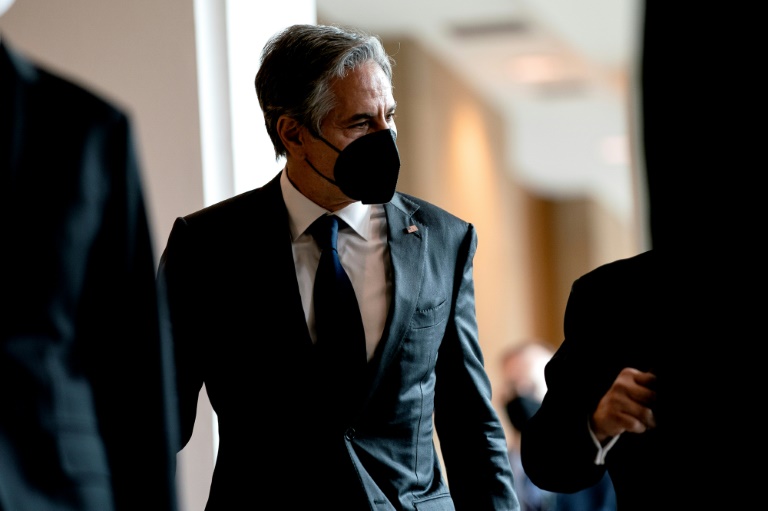
The United States calls on “the Sri Lankan parliament to approach this juncture with a commitment to the betterment of the nation — not any one political party,” a State Department spokesperson said Sunday as Secretary of State Antony Blinken visited Thailand.

– Default, desperation –

Protesters still occupying the presidential palace said Sunday they would not depart until Rajapaksa actually leaves office. 

“Our struggle is not over,” student leader Lahiru Weerasekara told reporters.

“When we moved to the last barrier, we knew that the military might open fire. We risked our lives,” he said.

“We won’t give up this struggle until he actually leaves.” 

Student activists say they found 17.8 million rupees ($49,000) in cash in Rajapaksa’s room and handed it over to police.

Sri Lanka has suffered months of shortages of basic goods, lengthy blackouts and galloping inflation after running out of foreign currency to import necessities.

The government has defaulted on its $51 billion external debt and is seeking an International Monetary Fund bailout.

The IMF said Sunday it hopes for “a resolution of the current situation that will allow for resumption of our dialogue”.

Sri Lanka has nearly exhausted its already scarce supplies of petrol, and people unable to travel to the capital held protests in other cities across the island on Saturday. 

Demonstrators had already maintained a months-long protest camp outside Rajapaksa’s office demanding his resignation. 

The camp was the scene of clashes in May when a gang of Rajapaksa loyalists attacked peaceful protesters. 

Nine people were killed and hundreds were wounded after the violence sparked reprisals against pro-government mobs and arson attacks on the homes of lawmakers. 

– Cricket goes on –

The unrest comes at the tail end of Australia’s ongoing cricket tour of Sri Lanka, with Pakistan’s squad also on the island for their upcoming series. 

On Saturday hundreds of protesters climbed the walls of the scenic Galle Fort overlooking where Sri Lanka and Australia were playing and chanted anti-Rajapaksa slogans.

“Today obviously the country is in turmoil, people outside having their say. We could obviously hear it, I mean we can still hear it now,” Australian player Steve Smith said afterwards.

Cricket officials said there were no plans to change the Australia and Pakistan schedules and that the sport was unaffected by the political turmoil.

“There is no opposition to having the games. In fact, fans are supportive and we have no reason to reschedule,” a cricket board official told AFP.

Blinken hails Thai help in US push to Asia

Secretary of State Antony Blinken on Sunday hailed Thailand’s role in the renewed US push in Southeast Asia, a key area of competition with China, on a trip where he also sought new ideas on how to restore democracy in Myanmar.

Signing an agreement pledging to keep expanding ties, Blinken pointed to Thailand’s embrace of a new US-led economic plan for Asia as well as its efforts on climate change.

In Thailand, “we have an ally and partner in the Indo-Pacific of such importance to us in a region that is shaping the trajectory of the 21st century, and it is doing that every single day”, Blinken said after talks with Foreign Minister Don Pramudwinai.

Thailand is America’s oldest ally in Asia, famously offering elephants to Abraham Lincoln during the Civil War, but has also increasingly worked with a rising China.

The US secretary of state is visiting days after a stop by Chinese Foreign Minister Wang Yi, who has embarked on a more extensive tour of Southeast Asia in which he has highlighted Beijing’s lavish infrastructure spending.

The United States has identified China, with its authoritarian system and burgeoning technological and military resources, as its pre-eminent global rival but both nations have recently sought to lower the temperature, with Wang and Blinken meeting Saturday for an unusually long five hours in Bali.

Blinken, before flying to Bangkok late Saturday, said that his talks with Wang were “constructive” and added that the world’s two largest economies wanted to prevent their competition from getting out of hand.

President Joe Biden invited Southeast Asian leaders in May to Washington to demonstrate the US commitment to the region, even as the administration focuses on countering Russia’s invasion of Ukraine.

Critics have said the United States is bringing comparatively little to the table. Washington is pushing out $40 billion, mostly in weapons, for Ukraine, and China last year promised $1.5 billion for Southeast Asia.

The Biden administration counters that flashy announcements of state funds have never been the US forte and that it is prioritising cooperation in concrete areas such as public health, Covid-19 vaccination and education — areas that Blinken highlighted in Bangkok.

– Logjam on Myanmar –

Blinken also met with Thailand-based youth representatives from Myanmar, where the military in February 2021 ousted the elected government, slamming the door on a decade-long transition to democracy nurtured by the United States.

Biden, who has put a priority on championing democracy, responded by imposing a slew of sanctions on the junta but has had limited success in pressuring a powerful military that is historically suspicious of outside influence.

ASEAN, the Association of Southeast Asian Nations, more than a year ago put forward a plan in which the junta will engage the opposition but there has been no progress.

In an unusual common stance with the United States, Wang visited Myanmar last week and also encouraged the military to speak to opponents.

Blinken’s trip also marks a continued normalisation of the US relationship with Thailand, where then general Prayut Chan-O-Cha seized power in a 2014 coup, triggering US sanctions.

Blinken will later meet Prayut, who became prime minister in 2019 elections, which have ushered in a gradual return to open political discourse in Thailand.

In a joint statement signed by Blinken and Don, the United States and Thailand called democracy “essential” to the two countries’ idea of Asia.

“Strong democratic institutions, independent civil society, and free and fair elections are central to this vision, allowing our respective societies to reach their full potential,” it said. 

Addressing one issue that is a high priority for the Biden administration, the statement said that Washington and Bangkok would promote “open and inclusive societies” for LGBTQ people.

Blinken also praised Thailand for signing up to a Biden plan to connect Southeast Asia with companies that are promoting green energy, saying that firms have already promised $2.7 billion in the country.

Fixing the UK's wealth divide: flagship policy veers off-track

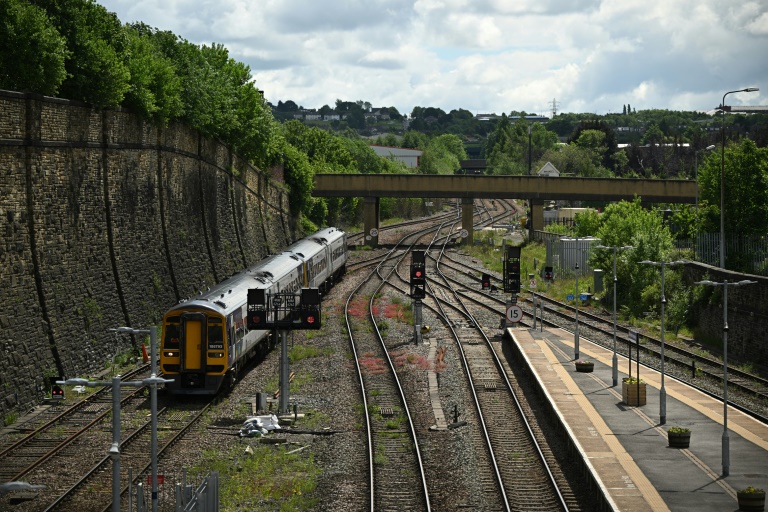
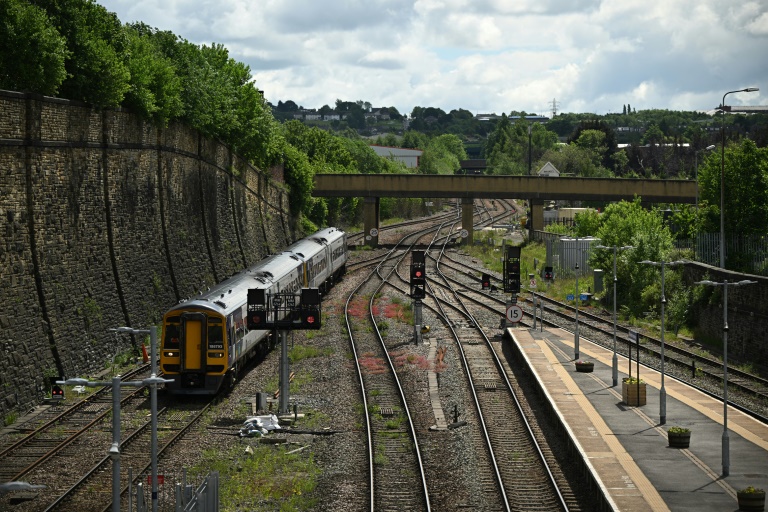
Every 10 to 20 minutes a train rolls into Bradford’s main station. On the platform, the driver then gets out and walks to the other end of the carriages before continuing the journey.

The time-consuming routine occurs daily because Bradford — England’s sixth biggest city — has no through-station, forcing trains to reverse to continue along the line.

Regional leaders have long demanded a solution to shortcomings in infrastructure like this one, which highlight the wealth gap between places in the north like Bradford and more affluent areas in the south.

When Prime Minister Boris Johnson won a landslide election in 2019 vowing to “level up” places like Bradford, it appeared poised to happen.

But two years later his government announced rail modernisation plans without the planned through-station on a proposed high-speed line between nearby Manchester and Leeds — disappointing locals.

More modest upgrades were approved instead.

It fuelled suspicions Johnson could not be trusted over the pledge.

“I was just really disappointed,” said Mandy Ridyard, finance director at Produmax, a Bradford-based aerospace engineering firm eager for better connectivity to attract workers.

“We’re asking for what the rest of Europe and the south (of England) expect,” she told AFP.

“We’re trying to catch up. So not investing… is madness really because there’s such an opportunity.”

– Short-changed –

In 2019, Johnson’s “levelling up” pledge helped his Conservatives win in more deprived, post-industrial parts of central and northern England traditionally held by the main opposition Labour party.

But critics argue there has been little tangible progress since, with some analyses showing the situation worsening.

Fresh doubt was sown this week when Johnson sacked the minister in charge of delivering the policy, before himself quitting as ruling party leader.

Mike Cartwright, of West Yorkshire’s chamber of commerce, called “levelling up” a “wonderful catchphrase or slogan” — but said there was a lack of material action.

A much-anticipated government policy paper last year was a “missed opportunity” and the region felt “short-changed” so far, he said, praising the ambition but emphasising the importance of outcomes.

The Labour leader of the city council, Susan Hinchcliffe, agreed, saying investment in places like Bradford was key “if levelling up is to mean anything”.

– ‘Forgotten’ –

Bradford and surrounding towns have received some extra resources, including “levelling up funds” and being designated an “education investment area”.

The wider West Yorkshire region also got its own directly elected mayor last year and is set for further devolution.

But as London in May saw the opening of a new £18.9 billion ($22.7 billion) cross-city rail line, Bradford locals are furious at their cancelled project.

“It just felt a bit like we’ve got forgotten about again,” said Josie Barlow, a food bank manager who received a levelling up grant to help buy the building it operates from.

She added they were “really grateful” for the £225,000 but that the city needed bigger infrastructure investment.

Bradford — once a wool-producing powerhouse — is now the fifth most income-deprived city nationwide, the government’s last poverty index in 2019 showed.

– ‘Squalor’ –

In Redcar, 70 miles (110 kilometres) northeast of Bradford, levelling up funds have helped refurbish housing previously plagued by crime.

Clare Harrigan, development director of Beyond Housing, which rents out many of the low-rise properties, called the £711,000 grant “the green shoots” of levelling up. 

“This is just an example of where it has made a difference,” she told AFP.

Sandra Cottrell, 64, who has lived in the Church Lane Estate for decades, said it had become “a mess”, and the wider region had been neglected by successive governments.

“We were living in squalor until all this started,” she said, as workers fitted insulation and landscaped the grounds.

Despite the new investment, and ambitious plans to turn the nearby Teesside Steelworks into a hub for industries including offshore wind, Cottrell is sceptical of Johnson’s lofty aims.

“I don’t believe anything he says,” she told AFP, mirroring countless polls showing most Britons now mistrust him after lockdown-breaking parties at Downing Street. 

“I just think he talks a load of rubbish.”

Johnson will soon be talking as a former prime minister. Whether his signature policy lives on remains to be seen.

jj/phz/jit/gw

Fixing the UK's wealth divide: flagship policy veers off-track

Every 10 to 20 minutes a train rolls into Bradford’s main station. On the platform, the driver then gets out and walks to the other end of the carriages before continuing the journey.

The time-consuming routine occurs daily because Bradford — England’s sixth biggest city — has no through-station, forcing trains to reverse to continue along the line.

Regional leaders have long demanded a solution to shortcomings in infrastructure like this one, which highlight the wealth gap between places in the north like Bradford and more affluent areas in the south.

When Prime Minister Boris Johnson won a landslide election in 2019 vowing to “level up” places like Bradford, it appeared poised to happen.

But two years later his government announced rail modernisation plans without the planned through-station on a proposed high-speed line between nearby Manchester and Leeds — disappointing locals.

More modest upgrades were approved instead.

It fuelled suspicions Johnson could not be trusted over the pledge.

“I was just really disappointed,” said Mandy Ridyard, finance director at Produmax, a Bradford-based aerospace engineering firm eager for better connectivity to attract workers.

“We’re asking for what the rest of Europe and the south (of England) expect,” she told AFP.

“We’re trying to catch up. So not investing… is madness really because there’s such an opportunity.”

– Short-changed –

In 2019, Johnson’s “levelling up” pledge helped his Conservatives win in more deprived, post-industrial parts of central and northern England traditionally held by the main opposition Labour party.

But critics argue there has been little tangible progress since, with some analyses showing the situation worsening.

Fresh doubt was sown this week when Johnson sacked the minister in charge of delivering the policy, before himself quitting as ruling party leader.

Mike Cartwright, of West Yorkshire’s chamber of commerce, called “levelling up” a “wonderful catchphrase or slogan” — but said there was a lack of material action.

A much-anticipated government policy paper last year was a “missed opportunity” and the region felt “short-changed” so far, he said, praising the ambition but emphasising the importance of outcomes.

The Labour leader of the city council, Susan Hinchcliffe, agreed, saying investment in places like Bradford was key “if levelling up is to mean anything”.

– ‘Forgotten’ –

Bradford and surrounding towns have received some extra resources, including “levelling up funds” and being designated an “education investment area”.

The wider West Yorkshire region also got its own directly elected mayor last year and is set for further devolution.

But as London in May saw the opening of a new £18.9 billion ($22.7 billion) cross-city rail line, Bradford locals are furious at their cancelled project.

“It just felt a bit like we’ve got forgotten about again,” said Josie Barlow, a food bank manager who received a levelling up grant to help buy the building it operates from.

She added they were “really grateful” for the £225,000 but that the city needed bigger infrastructure investment.

Bradford — once a wool-producing powerhouse — is now the fifth most income-deprived city nationwide, the government’s last poverty index in 2019 showed.

– ‘Squalor’ –

In Redcar, 70 miles (110 kilometres) northeast of Bradford, levelling up funds have helped refurbish housing previously plagued by crime.

Clare Harrigan, development director of Beyond Housing, which rents out many of the low-rise properties, called the £711,000 grant “the green shoots” of levelling up. 

“This is just an example of where it has made a difference,” she told AFP.

Sandra Cottrell, 64, who has lived in the Church Lane Estate for decades, said it had become “a mess”, and the wider region had been neglected by successive governments.

“We were living in squalor until all this started,” she said, as workers fitted insulation and landscaped the grounds.

Despite the new investment, and ambitious plans to turn the nearby Teesside Steelworks into a hub for industries including offshore wind, Cottrell is sceptical of Johnson’s lofty aims.

“I don’t believe anything he says,” she told AFP, mirroring countless polls showing most Britons now mistrust him after lockdown-breaking parties at Downing Street. 

“I just think he talks a load of rubbish.”

Johnson will soon be talking as a former prime minister. Whether his signature policy lives on remains to be seen.

jj/phz/jit/gw

Levelling up the UK: 'I'll believe it when I see it'

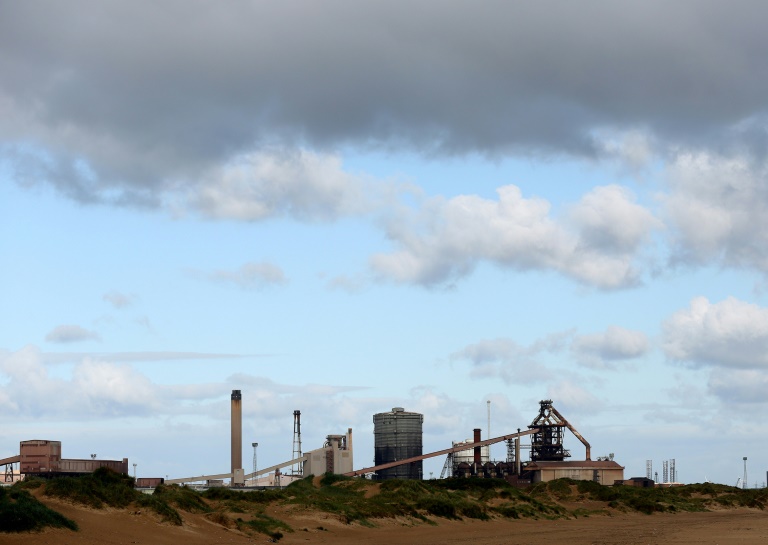
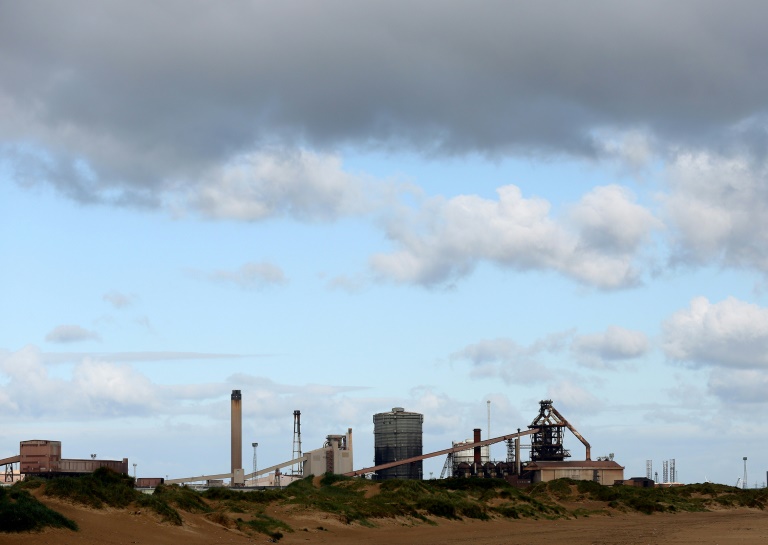
In Redcar, northeast England, the remnants of the nearby Teesside Steelworks are an enduring sign of the town’s proud former place at the heart of industrial Britain.

The plant — once one of the country’s largest — is a forlorn reminder of when its metal was used all over the world, including for the Sydney Harbour Bridge.

As prime minister, Boris Johnson vowed to bring long-neglected post-industrial areas level with other, more prosperous places.

But people in Redcar and elsewhere have long memories — and faint hopes for success.

“When the steelworks went down it was just awful,” said Sandra Cottrell, 64, who has seen the complex’s gradual demise from her home on the Church Lane Estate, a public housing complex.

“My son and everybody worked there… (he) had only ever known working in the steelworks, then he had to go work in Manchester,” a drive of two and half hours away, she told AFP.

Cottrell said Redcar’s town centre, where many shops have either shut or been turned into charity or discount stores, sums up its demise.

Yet there are tentative signs of renewal.

Work is progressing to regenerate the housing estate — which had earned a reputation locally for crime, poverty and neglect — paid for in part by Johnson’s flagship “levelling up” agenda.

“It’s what we need round here. I just think that we got left out a bit, but they’re sort of on to us now,” said Cottrell’s neighbour Cath Smith, 60.

Smith has lived on the estate since her teens and remembers its better days. 

“Everybody worked,” she said of the area’s 1970s heyday, when state-owned British Steel employed her father and most other local men.

The firm was privatised in 1988, and the steelworks gradually declined under the ownership of several successive companies.

Governments since were blamed for failing to help replace the thousands of lost jobs.

“They haven’t bothered,” Smith added. “It’s as if we didn’t exist.”

Neither neighbour was convinced that places like Redcar can bounce back under Johnson’s plans.

– ‘Forgotten’ –

In Bradford, some 70 miles (112 kilometres) to the southwest, it’s a similar story but involves the loss of the once-mighty woollen industry.

“When I was a young girl, it was just fantastic,” Judith Holmes, 69, said near the 19th-century Venetian Gothic-style town hall and landmark clock tower which dominate the city centre.

“Trade, woollen… every shop was open. It was thriving… it was buzzing, it was fabulous, absolutely fabulous.

“But it just seems to have gone downhill these last few years, unfortunately.”

The city — the sixth biggest in England, with one of the youngest populations in Europe and set to be the UK “city of culture” in 2025 — also suffers from some of its most persistent deprivation and unemployment issues.

“I do think Bradford’s been forgotten, definitely,” said Holmes, echoing her contemporaries in Redcar. 

“We’ve had a lot of promises and it’s never come through. 

“It’ll take a lot to bring it back. I think they could do it, but they need to start doing it now, rather than saying maybe and they plough money here and there.”

A one-time Royal Mail postal service employee in its former city centre hub, Holmes now cleans an office twice a week to get by.

Holmes is sceptical that Johnson and the government truly understand the daily struggle of those caught up in the city’s decline.

“I’ll believe it when I see it,” she said of the transformation promises, now in jeopardy with Johnson’s looming departure. 

“I might not see it at my age. But I hope it comes for everybody else, for my grandchildren. Hopefully it’ll be a brighter future for them.” 

Levelling up the UK: 'I'll believe it when I see it'

In Redcar, northeast England, the remnants of the nearby Teesside Steelworks are an enduring sign of the town’s proud former place at the heart of industrial Britain.

The plant — once one of the country’s largest — is a forlorn reminder of when its metal was used all over the world, including for the Sydney Harbour Bridge.

As prime minister, Boris Johnson vowed to bring long-neglected post-industrial areas level with other, more prosperous places.

But people in Redcar and elsewhere have long memories — and faint hopes for success.

“When the steelworks went down it was just awful,” said Sandra Cottrell, 64, who has seen the complex’s gradual demise from her home on the Church Lane Estate, a public housing complex.

“My son and everybody worked there… (he) had only ever known working in the steelworks, then he had to go work in Manchester,” a drive of two and half hours away, she told AFP.

Cottrell said Redcar’s town centre, where many shops have either shut or been turned into charity or discount stores, sums up its demise.

Yet there are tentative signs of renewal.

Work is progressing to regenerate the housing estate — which had earned a reputation locally for crime, poverty and neglect — paid for in part by Johnson’s flagship “levelling up” agenda.

“It’s what we need round here. I just think that we got left out a bit, but they’re sort of on to us now,” said Cottrell’s neighbour Cath Smith, 60.

Smith has lived on the estate since her teens and remembers its better days. 

“Everybody worked,” she said of the area’s 1970s heyday, when state-owned British Steel employed her father and most other local men.

The firm was privatised in 1988, and the steelworks gradually declined under the ownership of several successive companies.

Governments since were blamed for failing to help replace the thousands of lost jobs.

“They haven’t bothered,” Smith added. “It’s as if we didn’t exist.”

Neither neighbour was convinced that places like Redcar can bounce back under Johnson’s plans.

– ‘Forgotten’ –

In Bradford, some 70 miles (112 kilometres) to the southwest, it’s a similar story but involves the loss of the once-mighty woollen industry.

“When I was a young girl, it was just fantastic,” Judith Holmes, 69, said near the 19th-century Venetian Gothic-style town hall and landmark clock tower which dominate the city centre.

“Trade, woollen… every shop was open. It was thriving… it was buzzing, it was fabulous, absolutely fabulous.

“But it just seems to have gone downhill these last few years, unfortunately.”

The city — the sixth biggest in England, with one of the youngest populations in Europe and set to be the UK “city of culture” in 2025 — also suffers from some of its most persistent deprivation and unemployment issues.

“I do think Bradford’s been forgotten, definitely,” said Holmes, echoing her contemporaries in Redcar. 

“We’ve had a lot of promises and it’s never come through. 

“It’ll take a lot to bring it back. I think they could do it, but they need to start doing it now, rather than saying maybe and they plough money here and there.”

A one-time Royal Mail postal service employee in its former city centre hub, Holmes now cleans an office twice a week to get by.

Holmes is sceptical that Johnson and the government truly understand the daily struggle of those caught up in the city’s decline.

“I’ll believe it when I see it,” she said of the transformation promises, now in jeopardy with Johnson’s looming departure. 

“I might not see it at my age. But I hope it comes for everybody else, for my grandchildren. Hopefully it’ll be a brighter future for them.” 

Fixing the UK's wealth divide: flagship policy veers off-track

Every 10 to 20 minutes a train rolls into Bradford’s main station. On the platform, the driver then gets out and walks to the other end of the carriages before continuing the journey.

The time-consuming routine occurs daily because Bradford — England’s sixth biggest city — has no through-station, forcing trains to reverse to continue along the line.

Regional leaders have long demanded a solution to shortcomings in infrastructure like this one, which highlight the wealth gap between places in the north like Bradford and more affluent areas in the south.

When Prime Minister Boris Johnson won a landslide election in 2019 vowing to “level up” places like Bradford, it appeared poised to happen.

But two years later his government announced rail modernisation plans without the planned through-station on a proposed high-speed line between nearby Manchester and Leeds — disappointing locals.

More modest upgrades were approved instead.

It fuelled suspicions Johnson could not be trusted over the pledge.

“I was just really disappointed,” said Mandy Ridyard, finance director at Produmax, a Bradford-based aerospace engineering firm eager for better connectivity to attract workers.

“We’re asking for what the rest of Europe and the south (of England) expect,” she told AFP.

“We’re trying to catch up. So not investing… is madness really because there’s such an opportunity.”

– Short-changed –

In 2019, Johnson’s “levelling up” pledge helped his Conservatives win in more deprived, post-industrial parts of central and northern England traditionally held by the main opposition Labour party.

But critics argue there has been little tangible progress since, with some analyses showing the situation worsening.

Fresh doubt was sown this week when Johnson sacked the minister in charge of delivering the policy, before himself quitting as ruling party leader.

Mike Cartwright, of West Yorkshire’s chamber of commerce, called “levelling up” a “wonderful catchphrase or slogan” — but said there was a lack of material action.

A much-anticipated government policy paper last year was a “missed opportunity” and the region felt “short-changed” so far, he said, praising the ambition but emphasising the importance of outcomes.

The Labour leader of the city council, Susan Hinchcliffe, agreed, saying investment in places like Bradford was key “if levelling up is to mean anything”.

– ‘Forgotten’ –

Bradford and surrounding towns have received some extra resources, including “levelling up funds” and being designated an “education investment area”.

The wider West Yorkshire region also got its own directly elected mayor last year and is set for further devolution.

But as London in May saw the opening of a new £18.9 billion ($22.7 billion) cross-city rail line, Bradford locals are furious at their cancelled project.

“It just felt a bit like we’ve got forgotten about again,” said Josie Barlow, a food bank manager who received a levelling up grant to help buy the building it operates from.

She added they were “really grateful” for the £225,000 but that the city needed bigger infrastructure investment.

Bradford — once a wool-producing powerhouse — is now the fifth most income-deprived city nationwide, the government’s last poverty index in 2019 showed.

– ‘Squalor’ –

In Redcar, 70 miles (110 kilometres) northeast of Bradford, levelling up funds have helped refurbish housing previously plagued by crime.

Clare Harrigan, development director of Beyond Housing, which rents out many of the low-rise properties, called the £711,000 grant “the green shoots” of levelling up. 

“This is just an example of where it has made a difference,” she told AFP.

Sandra Cottrell, 64, who has lived in the Church Lane Estate for decades, said it had become “a mess”, and the wider region had been neglected by successive governments.

“We were living in squalor until all this started,” she said, as workers fitted insulation and landscaped the grounds.

Despite the new investment, and ambitious plans to turn the nearby Teesside Steelworks into a hub for industries including offshore wind, Cottrell is sceptical of Johnson’s lofty aims.

“I don’t believe anything he says,” she told AFP, mirroring countless polls showing most Britons now mistrust him after lockdown-breaking parties at Downing Street. 

“I just think he talks a load of rubbish.”

Johnson will soon be talking as a former prime minister. Whether his signature policy lives on remains to be seen.

More means less for Zimbabweans battling hyperinflation

With runaway inflation eating into incomes, staple foods have vanished from the tables of Zimbabweans like Emina Chishangwe, who lives in a poor dormitory town south of the capital Harare.

“I can’t remember the last time I ate meat. It has become a luxury for some of us,” said the 57-year-old single mother of two adult sons.

Zimbabwe has the highest inflation rate in the world, according to Steve Hanke, a professor of Applied Economics at Johns Hopkins University, who believes it can only be remedied by the full adoption of the US dollar. 

The situation has quickly worsened this year as the Russian invasion of Ukraine compounded with black market foreign exchange has depleted the value of the Zimbabwe dollar.

“The parallel market is to blame to a large degree for the spiralling inflation,” AgriBank chief economist Joseph Mverecha told AFP.

Zimbabwe’s economy has been on a downturn for nearly two decades, marked by shortages of cash and food. 

Distrust has led people to exchange their cash for US dollars, further driving down the local currency.

Inflation soared to 191.6 percent in June, up from 60 percent at the beginning of the year, driving prices of goods ever upwards. 

The rate dwarfs even the 41 percent inflation in war-torn Ukraine.

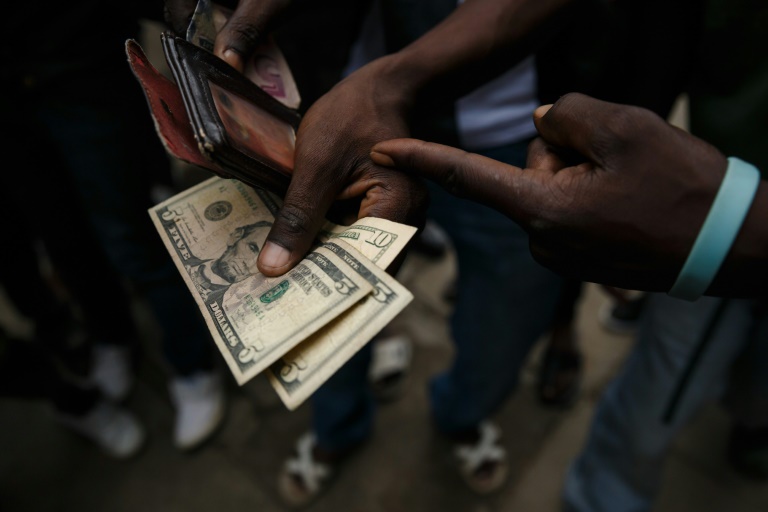
A kilo of choice beef now costs ZWL8,768 ($21.92) and five kilos of chicken drumsticks ZWL21,000 (US$65.22) — the equivalent to a civil servant’s average monthly salary.

Chishangwe, who runs a vegetable stall in Chitungwiza town, and her sons have two meals a day instead of three, usually a thick cornmeal porridge called sadza and kale or tiny dried sardines.

– ‘Anguish’ –

Rising fuel prices forced Edwin Matsvai to downgrade from a fuel-guzzling Toyota Land Cruiser to a more economic Honda Fit.

“My friends made jokes about me ‘stepping down’ when I made the change but now some of them are considering following suit,” said Matsvai, a car salesman.

Petrol rose to US$1.77 per litre this month from US$1.41 in January.

Zimbabweans endured and survived some of the worst hardships of 2008 when hyperinflation saw the central bank mint a one-trillion-dollar note.

Growing discrepancies between incomes and cost of living, forcing people to make tough decisions of how and where they live, is taking a toll on mental health, according to specialist psychiatrist Isabel Chinoperekwei. 

“I see many of them coming with depression, anxiety disorder and also alcohol abuse,” said Chinoperekwei, who has a private practice in Harare. 

It’s not just working professionals feeling the anguish. 

“I have seen adolescents who have changed schools because their parents could no longer afford the schools they were going to,” Chinoperekwei said. “They find it hard to cope.”

Many blame the country’s leaders. 

“The old men have failed us,” said Matsvai, referring to the government. “If they don’t act swiftly and fix the economy, it will cost them in next year’s general elections.”

Already in the March by-elections, the long-ruling Zanu-PF party lost to the opposition Citizens’ Coalition for Change (CCC) which was formed barely three months earlier.

The southern African nation is due to hold general elections in 2023. 

– ‘Hand to mouth’ –

Analysts say the current political and economic landscape now mirrors the crisis leading into the 2008 election, which saw ex-ruler Robert Mugabe nearly fall from power.

“People who are earning starvation wages, those without jobs and all those who are feeling the pinch of the rising cost of living have lost faith in Zanu-PF,” said Takavafira Zhou, a political scientist at Masvingo State University.

“The only hope lies in a new government that will give (the public) reprieve.”

Zanu-PF has been in power since 1980, when British colonial rule ended. Current president Emmerson Mnangagwa took over from Mugabe in a 2017 military coup, pledging to fix the moribund economy he inherited. 

The risk of losing power in upcoming polls is now pushing Zanu-PF to “frantic measures” to halt price hikes that have plunged millions into deeper poverty, said economist Prosper Chitambara.

“The world over, no ruling party is expected to do well in an environment of chronic high inflation,” said Chitambara, of the think-tank Labour and Economic Development Research Institute of Zimbabwe.

Last month Finance Minister Mthuli Ncube announced a raft of monetary policies including maintaining the dual use of the US dollar, adopted after the 2008 hyperinflation, and the Zimbabwe dollar reintroduced in 2019.

Minimum interest rates more than doubled to 200 percent last week. 

The country is also introducing gold coins “as a store of value” starting July 25.

But those are for the rich.

“The ordinary citizens, those who are struggling and living from hand to mouth are not going to afford it,” said Chitambara.

Close Bitnami banner
Bitnami