World

More means less for Zimbabweans battling hyperinflation

With runaway inflation eating into incomes, staple foods have vanished from the tables of Zimbabweans like Emina Chishangwe, who lives in a poor dormitory town south of the capital Harare.

“I can’t remember the last time I ate meat. It has become a luxury for some of us,” said the 57-year-old single mother of two adult sons.

Zimbabwe has the highest inflation rate in the world, according to Steve Hanke, a professor of Applied Economics at Johns Hopkins University, who believes it can only be remedied by the full adoption of the US dollar. 

The situation has quickly worsened this year as the Russian invasion of Ukraine compounded with black market foreign exchange has depleted the value of the Zimbabwe dollar.

“The parallel market is to blame to a large degree for the spiralling inflation,” AgriBank chief economist Joseph Mverecha told AFP.

Zimbabwe’s economy has been on a downturn for nearly two decades, marked by shortages of cash and food. 

Distrust has led people to exchange their cash for US dollars, further driving down the local currency.

Inflation soared to 191.6 percent in June, up from 60 percent at the beginning of the year, driving prices of goods ever upwards. 

The rate dwarfs even the 41 percent inflation in war-torn Ukraine.

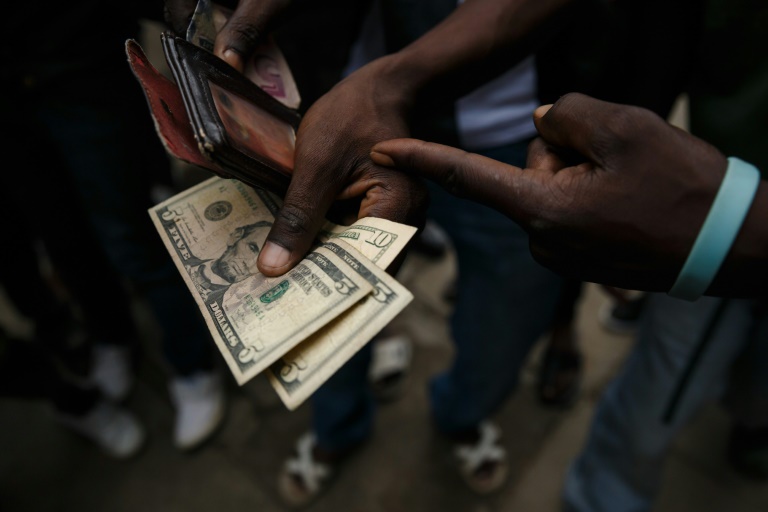
A kilo of choice beef now costs ZWL8,768 ($21.92) and five kilos of chicken drumsticks ZWL21,000 (US$65.22) — the equivalent to a civil servant’s average monthly salary.

Chishangwe, who runs a vegetable stall in Chitungwiza town, and her sons have two meals a day instead of three, usually a thick cornmeal porridge called sadza and kale or tiny dried sardines.

– ‘Anguish’ –

Rising fuel prices forced Edwin Matsvai to downgrade from a fuel-guzzling Toyota Land Cruiser to a more economic Honda Fit.

“My friends made jokes about me ‘stepping down’ when I made the change but now some of them are considering following suit,” said Matsvai, a car salesman.

Petrol rose to US$1.77 per litre this month from US$1.41 in January.

Zimbabweans endured and survived some of the worst hardships of 2008 when hyperinflation saw the central bank mint a one-trillion-dollar note.

Growing discrepancies between incomes and cost of living, forcing people to make tough decisions of how and where they live, is taking a toll on mental health, according to specialist psychiatrist Isabel Chinoperekwei. 

“I see many of them coming with depression, anxiety disorder and also alcohol abuse,” said Chinoperekwei, who has a private practice in Harare. 

It’s not just working professionals feeling the anguish. 

“I have seen adolescents who have changed schools because their parents could no longer afford the schools they were going to,” Chinoperekwei said. “They find it hard to cope.”

Many blame the country’s leaders. 

“The old men have failed us,” said Matsvai, referring to the government. “If they don’t act swiftly and fix the economy, it will cost them in next year’s general elections.”

Already in the March by-elections, the long-ruling Zanu-PF party lost to the opposition Citizens’ Coalition for Change (CCC) which was formed barely three months earlier.

The southern African nation is due to hold general elections in 2023. 

– ‘Hand to mouth’ –

Analysts say the current political and economic landscape now mirrors the crisis leading into the 2008 election, which saw ex-ruler Robert Mugabe nearly fall from power.

“People who are earning starvation wages, those without jobs and all those who are feeling the pinch of the rising cost of living have lost faith in Zanu-PF,” said Takavafira Zhou, a political scientist at Masvingo State University.

“The only hope lies in a new government that will give (the public) reprieve.”

Zanu-PF has been in power since 1980, when British colonial rule ended. Current president Emmerson Mnangagwa took over from Mugabe in a 2017 military coup, pledging to fix the moribund economy he inherited. 

The risk of losing power in upcoming polls is now pushing Zanu-PF to “frantic measures” to halt price hikes that have plunged millions into deeper poverty, said economist Prosper Chitambara.

“The world over, no ruling party is expected to do well in an environment of chronic high inflation,” said Chitambara, of the think-tank Labour and Economic Development Research Institute of Zimbabwe.

Last month Finance Minister Mthuli Ncube announced a raft of monetary policies including maintaining the dual use of the US dollar, adopted after the 2008 hyperinflation, and the Zimbabwe dollar reintroduced in 2019.

Minimum interest rates more than doubled to 200 percent last week. 

The country is also introducing gold coins “as a store of value” starting July 25.

But those are for the rich.

“The ordinary citizens, those who are struggling and living from hand to mouth are not going to afford it,” said Chitambara.
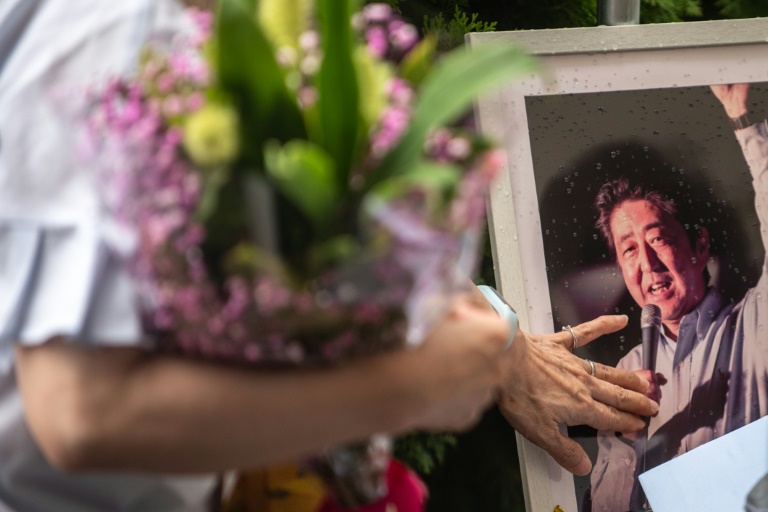

Japan votes in shadow of ex-PM Abe assassination

Japanese voters cast their ballots Sunday in an upper house election, just two days after former prime minister Shinzo Abe was assassinated while on the campaign trail.

The election, which is expected to see Abe’s ruling Liberal Democratic Party increase its majority, has been overshadowed by the murder.

But Prime Minister Fumio Kishida and other politicians have insisted the shock killing would not halt the democratic process.

“We must never allow violence to suppress speech during elections, which are the foundation of democracy,” he said Saturday, as he campaigned across the country.

He also took time to pay condolences at Abe’s family home in Tokyo, where the former premier’s body arrived on Saturday afternoon from a hospital in western Japan.

The assassination on Friday morning rattled the nation and sent shockwaves around the world, prompting an outpouring of sympathy even from nations with which the hawkish Abe had sometimes difficult relations, like China and South Korea.

The man accused of his murder, 41-year-old Tetsuya Yamagami, is in custody and has told investigators he targeted Abe because he believed the politician was linked to an unnamed organisation.

Local media have described the organisation as religious and said Yamagami’s family had suffered financial trouble as a result of his mother’s donations to the group.

– ‘No bigger regret’ –

Abe had been campaigning in the western region of Nara for a candidate from his ruling LDP when Yamagami opened fire, and local police there on Saturday admitted “problems” with the security plan for the high-profile figure.

With little violent crime and tough gun laws, security at Japanese campaign events can be relaxed, though in the wake of Abe’s murder, measures were beefed up for Kishida’s remaining appearances.

Security at polling stations on Sunday remained normal, however, with 79-year-old Takao Sueki saying he was voting with an eye on international instability, including Russia’s invasion of Ukraine.

“Watching the world now, I think every day about how Japan will manage with the situation,” he told AFP.

“This is a democratic country and I despise the use of violence to eliminate someone,” he added when asked about Abe’s murder.

“I strongly believe that if people have disagreements, they should dispute them with dialogue.”

Police have promised a “thorough investigation” into what the head of the Nara regional police called “problems with guarding and safety measures” for Abe.

“I believe it is undeniable that there were problems with the guarding and safety measures for former prime minister Abe,” Tomoaki Onizuka told reporters on Saturday evening.

“In all the years since I became a police officer in 1995… there is no greater remorse, no bigger regret than this,” the tearful police chief added.

– Election win expected for ruling LDP –

The murder of Japan’s best-known politician has sparked international condemnation, with US President Joe Biden ordering flags flown at half-mast through Sunday and Chinese President Xi Jinping saying he was “deeply saddened”.

Abe’s office told AFP that a wake will be held on Monday night, with a funeral for family and close friends only on Tuesday. Local media said both were expected to be held at Tokyo’s Zojoji Temple.

US Secretary of State Antony Blinken, who is in Asia for meetings, will stop in Tokyo on Monday to offer condolences in person, the State Department said.

Abe was the scion of a political family and became the country’s youngest post-war prime minister when he took power for the first time in 2006, aged 52.

His hawkish, nationalist views were divisive, particularly his desire to reform the country’s pacifist constitution to recognise the country’s military, and he weathered a series of scandals, including allegations of cronyism.

But he was lauded by others for his economic strategy, dubbed “Abenomics” and his efforts to put Japan firmly on the world stage, including by cultivating close ties with Biden’s predecessor Donald Trump.

Kishida, 64, was once described as among Abe’s favoured successors, and holds a solid majority in parliament along with coalition partner Komeito.

Sunday’s vote is expected to cement that hold on power, leaving Kishida even better positioned to go into a “golden three years” in which he will face no further elections.

But he faces significant policy headwinds, including rising prices and energy shortages, particularly after an early summer heatwave that led to a power crunch.

Polls close at 8:00 pm (1100 GMT), with projected results from Japanese media expected immediately after.

Musk's hyperloop still captivates despite decade of setbacks

A decade ago, Elon Musk proposed a new form of transport that would shoot passengers through vacuum tunnels in levitating pods at almost the speed of sound — he called it “hyperloop”. 

Since then, cities from Abu Dhabi to Zurich have been touted as destinations, research projects have gobbled up millions of dollars and a host of commercial ventures have sprung up — even Richard Branson got involved.

“The transportation network has not had a new mode for over 100 years,” said Rick Geddes, a transport infrastructure expert at Cornell University in the United States, who compared the excitement to the early days of aviation.

But nobody has come close to making the hyperloop work.

The difficulties have ranged from costs and finding suitable locations, to simply persuading people that travelling through a narrow tunnel at speeds faster than a jet plane is a good idea.

Musk’s initial proposal would have been a “barf ride”, transport blogger Alon Levy wrote at the time.

Despite all the problems, though, the hyperloop idea still energises university campuses, corporate board rooms and city halls across the world.

Hidde de Bos, a 22-year-old engineering student, first heard of it four years ago.

His university at Delft in the Netherlands excelled in competitions run by Musk’s SpaceX firm, which invited students to develop pods to fire through vacuum tunnels.

– Musk returns –

“It made me really excited to see what the possibilities were,” he told AFP.

He is now chief engineer of Delft Hyperloop, a non-profit university spin-off.

De Bos said the SpaceX competitions, which were discontinued in 2019, were too focused on speed and became like “drag races in a tunnel”.

Now, his team is taking part in a student-led competition, European Hyperloop Week, which he hopes will refocus on sustainable energy and developing levitation systems.

And Musk himself recently gave a jolt to the hyperloop fraternity by tweeting that his tunnelling firm The Boring Company would “attempt to build a working Hyperloop” in the coming years.

Musk first mentioned the idea in a 2012 media interview before publishing a white paper about it a year later.

But his direct involvement has been sporadic, and he has always encouraged others to develop the idea.

Los Angeles-based firm Hyperloop TT, among the first and most enthusiastic firms to run with Musk’s idea, welcomed his return.

Rob Miller, the firm’s chief marketing officer, told AFP it was “further validation” for the concept.

– ‘More cautious’ –

But he stressed that hyperloop was now much bigger than just one man.

Bearing out his point, new proposals have emerged in recent months from local authorities ranging from Italy to India.

However, proposals are one thing, and revolutionising public transport is quite another.

In its early years, Hyperloop TT signed exploratory deals in India, China and beyond.

In 2019, the firm promised a 10-kilometre (six-mile) track would open in the UAE the following year.

None of these projects has come to fruition.

“We’re a little more cautious now about those types of announcements,” said Miller. 

Virgin Hyperloop, a firm briefly helmed by Richard Branson but majority-owned by DP World, which runs Dubai’s ports, has also had to scale back its promises.

– Prestige vs price –

It was the first company to fire humans along a hyperloop test track back in 2020. 

Branson had mooted a 45-minute journey between London and Scotland.

But Virgin Hyperloop recently abandoned the idea of carrying passengers altogether, shed half its staff and is now focused on a potential freight line in UAE.

Musk has also promised various hyperloop projects that failed to materialise.

Virgin Hyperloop and The Boring Company did not respond to AFP requests for comment. 

Critic Alon Levy says the hyperloop is caught between unrealistic prestige projects across short distances and longer routes that cost too much.

The Abu Dhabi-Dubai route promised by Hyperloop TT is just 130 kilometres, “not even a distance for high-speed rail”, he said.

But potential routes like New York to Miami or Chicago would need around $50 billion just to get started, Levy reckons.

– ‘Bring it to life’ –

“You don’t get that from private investors,” he told AFP.

Levy does see one ray of light — newer designs featuring longer bends seem to have resolved the “barf” problem.

And enthusiasts still radiate positivity.

“We’ll keep doing what we’re doing and we’ll bring it to life,” said Miller.

But he conceded his firm had been “overly optimistic about timelines”.

He now predicts the first city-to-city track within five years but won’t divulge the location.

Geddes is also optimistic about the future, though he also reflected that past promises weighed heavy.

“We used to say five to 10 years,” he said. “That was five years ago. Maybe it’s five to 10 years now.”

Musk's hyperloop still captivates despite decade of setbacks

A decade ago, Elon Musk proposed a new form of transport that would shoot passengers through vacuum tunnels in levitating pods at almost the speed of sound — he called it “hyperloop”. 

Since then, cities from Abu Dhabi to Zurich have been touted as destinations, research projects have gobbled up millions of dollars and a host of commercial ventures have sprung up — even Richard Branson got involved.

“The transportation network has not had a new mode for over 100 years,” said Rick Geddes, a transport infrastructure expert at Cornell University in the United States, who compared the excitement to the early days of aviation.

But nobody has come close to making the hyperloop work.

The difficulties have ranged from costs and finding suitable locations, to simply persuading people that travelling through a narrow tunnel at speeds faster than a jet plane is a good idea.

Musk’s initial proposal would have been a “barf ride”, transport blogger Alon Levy wrote at the time.

Despite all the problems, though, the hyperloop idea still energises university campuses, corporate board rooms and city halls across the world.

Hidde de Bos, a 22-year-old engineering student, first heard of it four years ago.

His university at Delft in the Netherlands excelled in competitions run by Musk’s SpaceX firm, which invited students to develop pods to fire through vacuum tunnels.

– Musk returns –

“It made me really excited to see what the possibilities were,” he told AFP.

He is now chief engineer of Delft Hyperloop, a non-profit university spin-off.

De Bos said the SpaceX competitions, which were discontinued in 2019, were too focused on speed and became like “drag races in a tunnel”.

Now, his team is taking part in a student-led competition, European Hyperloop Week, which he hopes will refocus on sustainable energy and developing levitation systems.

And Musk himself recently gave a jolt to the hyperloop fraternity by tweeting that his tunnelling firm The Boring Company would “attempt to build a working Hyperloop” in the coming years.

Musk first mentioned the idea in a 2012 media interview before publishing a white paper about it a year later.

But his direct involvement has been sporadic, and he has always encouraged others to develop the idea.

Los Angeles-based firm Hyperloop TT, among the first and most enthusiastic firms to run with Musk’s idea, welcomed his return.

Rob Miller, the firm’s chief marketing officer, told AFP it was “further validation” for the concept.

– ‘More cautious’ –

But he stressed that hyperloop was now much bigger than just one man.

Bearing out his point, new proposals have emerged in recent months from local authorities ranging from Italy to India.

However, proposals are one thing, and revolutionising public transport is quite another.

In its early years, Hyperloop TT signed exploratory deals in India, China and beyond.

In 2019, the firm promised a 10-kilometre (six-mile) track would open in the UAE the following year.

None of these projects has come to fruition.

“We’re a little more cautious now about those types of announcements,” said Miller. 

Virgin Hyperloop, a firm briefly helmed by Richard Branson but majority-owned by DP World, which runs Dubai’s ports, has also had to scale back its promises.

– Prestige vs price –

It was the first company to fire humans along a hyperloop test track back in 2020. 

Branson had mooted a 45-minute journey between London and Scotland.

But Virgin Hyperloop recently abandoned the idea of carrying passengers altogether, shed half its staff and is now focused on a potential freight line in UAE.

Musk has also promised various hyperloop projects that failed to materialise.

Virgin Hyperloop and The Boring Company did not respond to AFP requests for comment. 

Critic Alon Levy says the hyperloop is caught between unrealistic prestige projects across short distances and longer routes that cost too much.

The Abu Dhabi-Dubai route promised by Hyperloop TT is just 130 kilometres, “not even a distance for high-speed rail”, he said.

But potential routes like New York to Miami or Chicago would need around $50 billion just to get started, Levy reckons.

– ‘Bring it to life’ –

“You don’t get that from private investors,” he told AFP.

Levy does see one ray of light — newer designs featuring longer bends seem to have resolved the “barf” problem.

And enthusiasts still radiate positivity.

“We’ll keep doing what we’re doing and we’ll bring it to life,” said Miller.

But he conceded his firm had been “overly optimistic about timelines”.

He now predicts the first city-to-city track within five years but won’t divulge the location.

Geddes is also optimistic about the future, though he also reflected that past promises weighed heavy.

“We used to say five to 10 years,” he said. “That was five years ago. Maybe it’s five to 10 years now.”

Musk's hyperloop still captivates despite decade of setbacks

A decade ago, Elon Musk proposed a new form of transport that would shoot passengers through vacuum tunnels in levitating pods at almost the speed of sound — he called it “hyperloop”. 

Since then, cities from Abu Dhabi to Zurich have been touted as destinations, research projects have gobbled up millions of dollars and a host of commercial ventures have sprung up — even Richard Branson got involved.

“The transportation network has not had a new mode for over 100 years,” said Rick Geddes, a transport infrastructure expert at Cornell University in the United States, who compared the excitement to the early days of aviation.

But nobody has come close to making the hyperloop work.

The difficulties have ranged from costs and finding suitable locations, to simply persuading people that travelling through a narrow tunnel at speeds faster than a jet plane is a good idea.

Musk’s initial proposal would have been a “barf ride”, transport blogger Alon Levy wrote at the time.

Despite all the problems, though, the hyperloop idea still energises university campuses, corporate board rooms and city halls across the world.

Hidde de Bos, a 22-year-old engineering student, first heard of it four years ago.

His university at Delft in the Netherlands excelled in competitions run by Musk’s SpaceX firm, which invited students to develop pods to fire through vacuum tunnels.

– Musk returns –

“It made me really excited to see what the possibilities were,” he told AFP.

He is now chief engineer of Delft Hyperloop, a non-profit university spin-off.

De Bos said the SpaceX competitions, which were discontinued in 2019, were too focused on speed and became like “drag races in a tunnel”.

Now, his team is taking part in a student-led competition, European Hyperloop Week, which he hopes will refocus on sustainable energy and developing levitation systems.

And Musk himself recently gave a jolt to the hyperloop fraternity by tweeting that his tunnelling firm The Boring Company would “attempt to build a working Hyperloop” in the coming years.

Musk first mentioned the idea in a 2012 media interview before publishing a white paper about it a year later.

But his direct involvement has been sporadic, and he has always encouraged others to develop the idea.

Los Angeles-based firm Hyperloop TT, among the first and most enthusiastic firms to run with Musk’s idea, welcomed his return.

Rob Miller, the firm’s chief marketing officer, told AFP it was “further validation” for the concept.

– ‘More cautious’ –

But he stressed that hyperloop was now much bigger than just one man.

Bearing out his point, new proposals have emerged in recent months from local authorities ranging from Italy to India.

However, proposals are one thing, and revolutionising public transport is quite another.

In its early years, Hyperloop TT signed exploratory deals in India, China and beyond.

In 2019, the firm promised a 10-kilometre (six-mile) track would open in the UAE the following year.

None of these projects has come to fruition.

“We’re a little more cautious now about those types of announcements,” said Miller. 

Virgin Hyperloop, a firm briefly helmed by Richard Branson but majority-owned by DP World, which runs Dubai’s ports, has also had to scale back its promises.

– Prestige vs price –

It was the first company to fire humans along a hyperloop test track back in 2020. 

Branson had mooted a 45-minute journey between London and Scotland.

But Virgin Hyperloop recently abandoned the idea of carrying passengers altogether, shed half its staff and is now focused on a potential freight line in UAE.

Musk has also promised various hyperloop projects that failed to materialise.

Virgin Hyperloop and The Boring Company did not respond to AFP requests for comment. 

Critic Alon Levy says the hyperloop is caught between unrealistic prestige projects across short distances and longer routes that cost too much.

The Abu Dhabi-Dubai route promised by Hyperloop TT is just 130 kilometres, “not even a distance for high-speed rail”, he said.

But potential routes like New York to Miami or Chicago would need around $50 billion just to get started, Levy reckons.

– ‘Bring it to life’ –

“You don’t get that from private investors,” he told AFP.

Levy does see one ray of light — newer designs featuring longer bends seem to have resolved the “barf” problem.

And enthusiasts still radiate positivity.

“We’ll keep doing what we’re doing and we’ll bring it to life,” said Miller.

But he conceded his firm had been “overly optimistic about timelines”.

He now predicts the first city-to-city track within five years but won’t divulge the location.

Geddes is also optimistic about the future, though he also reflected that past promises weighed heavy.

“We used to say five to 10 years,” he said. “That was five years ago. Maybe it’s five to 10 years now.”

Hot water wells in Hungary fuel switch from Russian gas

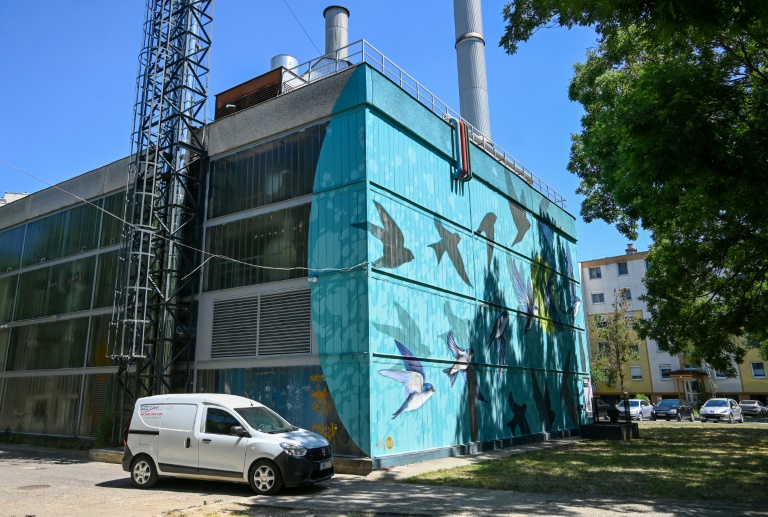
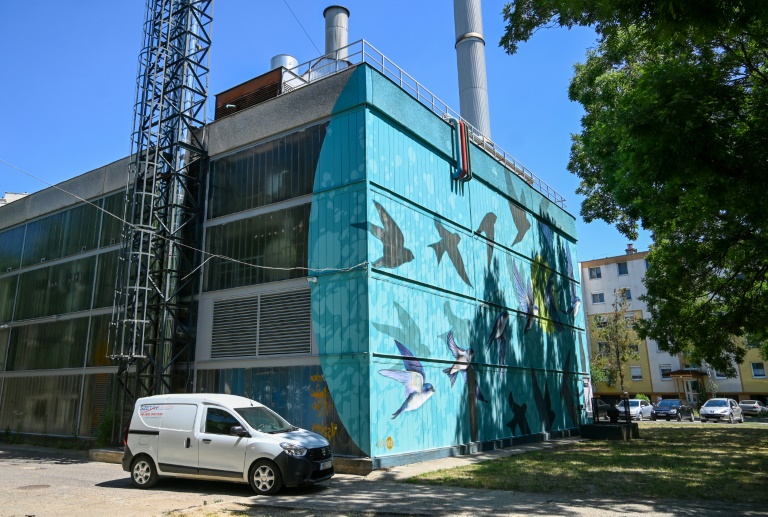
At plants painted with birds and hedgehogs, hot water from deep underground is being channelled to produce energy and heat for thousands of households in Hungary’s third largest city Szeged.

Experts say the project — billed as Europe’s biggest urban heating system overhaul — can serve as a model for other cities across the continent as EU nations scramble to wean themselves off Russian gas after Moscow’s invasion of Ukraine.

“Geothermal energy is local, accessible and renewable so why not use it,” geologist Tamas Medgyes told AFP beside a recently completed well in the middle of a residential neighbourhood.

The city of 160,000 people, located some 170 kilometres (110 miles) south of Budapest, is one of 12 in the landlocked central European country with geothermal district heating.

When the system is fully built out next year, 27 wells and 16 heating plants will push geothermally heated water through 250 kilometres of pipes to heat 27,000 flats and 400 non-residential consumers. 

– ‘Blueprint’ –

This will make it Europe’s biggest geothermal urban heating system outside of Iceland.

But unlike in the Icelandic capital, Szeged’s heating systems were built to run on gas. 

EU member Hungary covers 65 percent of its oil needs and 80 percent of its gas needs with imports from Russia.

“This housing project was built in the 1980s. Since then we have burnt millions of cubic metres of imported Russian gas to heat cold water in these apartments,” Medgyes said. 

But now, “we drilled down and got the hot water beneath our feet,” he said about the project, whose cost of more than 50 million euros ($51 million) is partially covered by EU funds.

He added the project can be a “blueprint” for cities in parts of France, Germany, Italy or Slovakia that are rich in geothermal deposits.

Experts says geothermal energy is an underutilised source of renewable heat in Europe. 

“The geothermal urban heating development in Szeged is an easy-to-adopt example in many regions of Europe,” said Ladislaus Rybach, an expert at the Institute of Geophysics in Zurich, Switzerland.

Lajos Kerekes of the Regional Centre of Energy Policy Research told AFP that more than 25 percent of the EU’s population lives in areas suitable for geothermal district heating.

Long before the Ukraine war, Balazs Kobor, director at Szeged heating firm Szetav, began exploring how cities can use geothermal energy and “knocking on doors of decision-makers”. 

In 2015, the city municipality appointed him and Medgyes to initiate the integration of renewables into district heating.

“To heat the city annually the firm was burning 30 million cubic metres of gas and producing around 55,000 tonnes of carbon emissions every year,” said Kobor. 

“The city itself was its biggest carbon emitter,” he added. 

Replacing gas by geothermal energy will slash the city’s greenhouse gas emissions by 60 percent — around 35,000 tonnes — annually, according to Kobor.

If similar small-to-medium-sized cities switched their district heating to geothermal it would be “a major step towards a carbon neutral, sustainable Europe,” he said.

– 2,000 metres below ground –

Surrounded by the Carpathian and Alps mountain ranges, Hungary and especially the area around Szeged forms a basin where 92-93 degree Celsius (198-199 degree Fahrenheit) hot water collects as deep as 2,000 metres (6,600 feet) below ground. 

In facilities adjacent to the wells, “heat exchangers” comprising hundreds of metal panels transfer the heat to water in pipeline circuits that serve different neighbourhoods. 

The geothermal water itself does not enter the circuits but re-enters the earth through a “reinjection” well nearby, explained Medgyes. 

In another neighbourhood, a noisy drill is gradually working its way deeper and deeper into the ground, adding sections of pipe as it goes.

The drilling period takes around three months, said Medgyes.  

And while residents can see and hear the drills as they work, after the work is done, they don’t notice the change of heat source in their homes.  

“The radiators and tap water are as warm as before. I don’t feel any difference,” Gabriella Maar Pallo, a 50-year-old clerk, told AFP in her nearby apartment. 

Hot water wells in Hungary fuel switch from Russian gas

At plants painted with birds and hedgehogs, hot water from deep underground is being channelled to produce energy and heat for thousands of households in Hungary’s third largest city Szeged.

Experts say the project — billed as Europe’s biggest urban heating system overhaul — can serve as a model for other cities across the continent as EU nations scramble to wean themselves off Russian gas after Moscow’s invasion of Ukraine.

“Geothermal energy is local, accessible and renewable so why not use it,” geologist Tamas Medgyes told AFP beside a recently completed well in the middle of a residential neighbourhood.

The city of 160,000 people, located some 170 kilometres (110 miles) south of Budapest, is one of 12 in the landlocked central European country with geothermal district heating.

When the system is fully built out next year, 27 wells and 16 heating plants will push geothermally heated water through 250 kilometres of pipes to heat 27,000 flats and 400 non-residential consumers. 

– ‘Blueprint’ –

This will make it Europe’s biggest geothermal urban heating system outside of Iceland.

But unlike in the Icelandic capital, Szeged’s heating systems were built to run on gas. 

EU member Hungary covers 65 percent of its oil needs and 80 percent of its gas needs with imports from Russia.

“This housing project was built in the 1980s. Since then we have burnt millions of cubic metres of imported Russian gas to heat cold water in these apartments,” Medgyes said. 

But now, “we drilled down and got the hot water beneath our feet,” he said about the project, whose cost of more than 50 million euros ($51 million) is partially covered by EU funds.

He added the project can be a “blueprint” for cities in parts of France, Germany, Italy or Slovakia that are rich in geothermal deposits.

Experts says geothermal energy is an underutilised source of renewable heat in Europe. 

“The geothermal urban heating development in Szeged is an easy-to-adopt example in many regions of Europe,” said Ladislaus Rybach, an expert at the Institute of Geophysics in Zurich, Switzerland.

Lajos Kerekes of the Regional Centre of Energy Policy Research told AFP that more than 25 percent of the EU’s population lives in areas suitable for geothermal district heating.

Long before the Ukraine war, Balazs Kobor, director at Szeged heating firm Szetav, began exploring how cities can use geothermal energy and “knocking on doors of decision-makers”. 

In 2015, the city municipality appointed him and Medgyes to initiate the integration of renewables into district heating.

“To heat the city annually the firm was burning 30 million cubic metres of gas and producing around 55,000 tonnes of carbon emissions every year,” said Kobor. 

“The city itself was its biggest carbon emitter,” he added. 

Replacing gas by geothermal energy will slash the city’s greenhouse gas emissions by 60 percent — around 35,000 tonnes — annually, according to Kobor.

If similar small-to-medium-sized cities switched their district heating to geothermal it would be “a major step towards a carbon neutral, sustainable Europe,” he said.

– 2,000 metres below ground –

Surrounded by the Carpathian and Alps mountain ranges, Hungary and especially the area around Szeged forms a basin where 92-93 degree Celsius (198-199 degree Fahrenheit) hot water collects as deep as 2,000 metres (6,600 feet) below ground. 

In facilities adjacent to the wells, “heat exchangers” comprising hundreds of metal panels transfer the heat to water in pipeline circuits that serve different neighbourhoods. 

The geothermal water itself does not enter the circuits but re-enters the earth through a “reinjection” well nearby, explained Medgyes. 

In another neighbourhood, a noisy drill is gradually working its way deeper and deeper into the ground, adding sections of pipe as it goes.

The drilling period takes around three months, said Medgyes.  

And while residents can see and hear the drills as they work, after the work is done, they don’t notice the change of heat source in their homes.  

“The radiators and tap water are as warm as before. I don’t feel any difference,” Gabriella Maar Pallo, a 50-year-old clerk, told AFP in her nearby apartment. 

Hot water wells in Hungary fuel switch from Russian gas

At plants painted with birds and hedgehogs, hot water from deep underground is being channelled to produce energy and heat for thousands of households in Hungary’s third largest city Szeged.

Experts say the project — billed as Europe’s biggest urban heating system overhaul — can serve as a model for other cities across the continent as EU nations scramble to wean themselves off Russian gas after Moscow’s invasion of Ukraine.

“Geothermal energy is local, accessible and renewable so why not use it,” geologist Tamas Medgyes told AFP beside a recently completed well in the middle of a residential neighbourhood.

The city of 160,000 people, located some 170 kilometres (110 miles) south of Budapest, is one of 12 in the landlocked central European country with geothermal district heating.

When the system is fully built out next year, 27 wells and 16 heating plants will push geothermally heated water through 250 kilometres of pipes to heat 27,000 flats and 400 non-residential consumers. 

– ‘Blueprint’ –

This will make it Europe’s biggest geothermal urban heating system outside of Iceland.

But unlike in the Icelandic capital, Szeged’s heating systems were built to run on gas. 

EU member Hungary covers 65 percent of its oil needs and 80 percent of its gas needs with imports from Russia.

“This housing project was built in the 1980s. Since then we have burnt millions of cubic metres of imported Russian gas to heat cold water in these apartments,” Medgyes said. 

But now, “we drilled down and got the hot water beneath our feet,” he said about the project, whose cost of more than 50 million euros ($51 million) is partially covered by EU funds.

He added the project can be a “blueprint” for cities in parts of France, Germany, Italy or Slovakia that are rich in geothermal deposits.

Experts says geothermal energy is an underutilised source of renewable heat in Europe. 

“The geothermal urban heating development in Szeged is an easy-to-adopt example in many regions of Europe,” said Ladislaus Rybach, an expert at the Institute of Geophysics in Zurich, Switzerland.

Lajos Kerekes of the Regional Centre of Energy Policy Research told AFP that more than 25 percent of the EU’s population lives in areas suitable for geothermal district heating.

Long before the Ukraine war, Balazs Kobor, director at Szeged heating firm Szetav, began exploring how cities can use geothermal energy and “knocking on doors of decision-makers”. 

In 2015, the city municipality appointed him and Medgyes to initiate the integration of renewables into district heating.

“To heat the city annually the firm was burning 30 million cubic metres of gas and producing around 55,000 tonnes of carbon emissions every year,” said Kobor. 

“The city itself was its biggest carbon emitter,” he added. 

Replacing gas by geothermal energy will slash the city’s greenhouse gas emissions by 60 percent — around 35,000 tonnes — annually, according to Kobor.

If similar small-to-medium-sized cities switched their district heating to geothermal it would be “a major step towards a carbon neutral, sustainable Europe,” he said.

– 2,000 metres below ground –

Surrounded by the Carpathian and Alps mountain ranges, Hungary and especially the area around Szeged forms a basin where 92-93 degree Celsius (198-199 degree Fahrenheit) hot water collects as deep as 2,000 metres (6,600 feet) below ground. 

In facilities adjacent to the wells, “heat exchangers” comprising hundreds of metal panels transfer the heat to water in pipeline circuits that serve different neighbourhoods. 

The geothermal water itself does not enter the circuits but re-enters the earth through a “reinjection” well nearby, explained Medgyes. 

In another neighbourhood, a noisy drill is gradually working its way deeper and deeper into the ground, adding sections of pipe as it goes.

The drilling period takes around three months, said Medgyes.  

And while residents can see and hear the drills as they work, after the work is done, they don’t notice the change of heat source in their homes.  

“The radiators and tap water are as warm as before. I don’t feel any difference,” Gabriella Maar Pallo, a 50-year-old clerk, told AFP in her nearby apartment. 

Renovate the Casbah: Efforts speed up to restore historic Algiers district

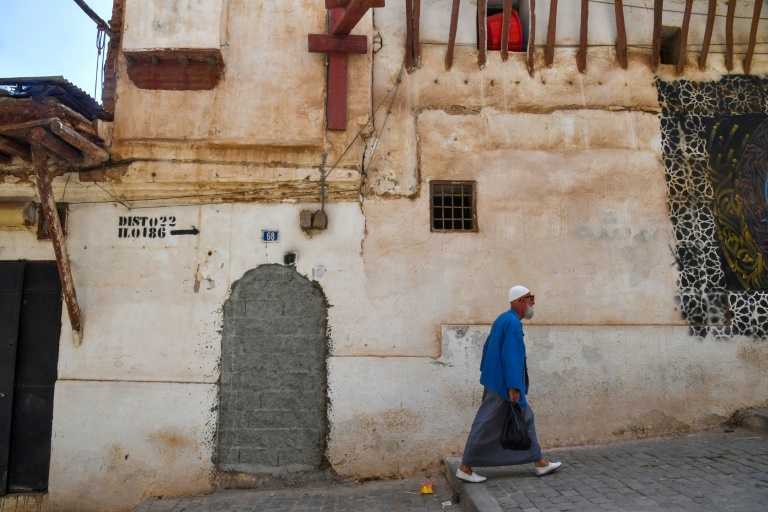
A UNESCO-listed rabbit warren of 16th-century battlements and Ottoman palaces, the Casbah of the Algerian capital is falling into disrepair, but efforts to save it have been accelerating.

The densely populated district, about a kilometre (just under a mile) across, perches above the Bay of Algiers and has been the site of key moments in the North African country’s history.

Some buildings weakened by earthquakes, floods or fires are still propped up with scaffolding, but a plan launched in 2012 is seeking to rehabilitate the area.

Work to restore the Casbah had first started right after Algeria’s independence from France in 1962.

That was some six years after a battle between French colonial forces and the urban guerrillas of the National Liberation Front (FLN), later immortalised in Gillo Pontecorvo’s 1966 film “The Battle of Algiers”, shot on location in the Casbah.

Efforts to restore the buildings involved “several plans and several stakeholders”, said Aissa Mesri of Archimed, a firm working on studies of the Casbah and monitoring the work.

“Restoration operations were started and then halted for financial, technical or legal reasons related to ownership,” he added, lamenting the lack of a “clear vision” for a “Casbah project”.

The 2012 plan was adopted with a budget of 170 million euros (now $170 million).

The project aims to restore the Casbah’s “authentic face”, protect it in the long term and keep at least some of its residents in their homes.

– Battle of Algiers heroine –

The state-run project has already restored a number of prominent buildings, including part of the citadel, which includes the Dey’s palace, mosque and ammunition store, partially open to visitors since November 2020.

The mosque has been decorated with earthenware, marble and Arabic screen printing.

A cluster of four houses that once served as a refuge for key independence war figures, including militant Djamila Bouhired, a heroine of the Battle of Algiers, has been renovated.

The Ketchaoua mosque, closed since 2008 after being seriously damaged by a powerful earthquake five years earlier, has also been restored.

The Ottoman-era mosque was reopened in April 2018 after 37 months of works, funded entirely by the Turkish government.

Before the start of the restoration plan, Algerian authorities had launched emergency work to “consolidate buildings that were in danger of collapsing”, said Mehdi Ali Pacha, head of an architectural firm specialising in heritage work.

“The shoring up of more than 300 buildings was carried out in 2008 and 2013,” added the architect, whose agency has conducted studies on the restoration.

– ‘Residents a problem’ –

Restoration work on the many small traditional houses in the Casbah is sometimes hindered by residents who refuse to grant access to architects or work crews.

“The residents remain a problem. There are some small old houses that have been emptied and walled up by the town hall.

“There, there is no problem, we can work.

“When the houses are inhabited, the study is done as best as possible with difficulties of access,” bemoaned Ali Pacha.

In late 2018, the rehabilitation of the Casbah was at the heart of a controversy, both in France and Algeria, after Algerian authorities decided to entrust a development plan to French architect Jean Nouvel.

Some 400 people, mainly architects, planners and academics, asked Nouvel to withdraw from the project.

The petitioners were concerned that a French architect could propose transformations of a major site of the Battle of Algiers.

The venture was eventually abandoned.

Currently, seven restoration projects of historical buildings are underway, according to Fatima Larbi, architect at the Algiers public works department, quoted by the official news agency APS.

“The aim is to revive the Casbah and enhance it,” said Ali Pacha.

Trump campaigns with right-wing precursor Sarah Palin

Former US president Donald Trump campaigned Saturday in Alaska for Sarah Palin, the northern state’s former governor whose ascendency many view as the populist precursor to Trump’s anti-elite movement.

The two firebrand politicians have both been key figures in the Republican party’s shift over the past decade to target the aggrieved working class.

They both have also touted unfounded claims that there was widespread election fraud in the 2020 election, at least in those key states that Trump lost.

“In Alaska, we didn’t have to worry about it, because we won,” Trump told the stadium crowd.

Palin was catapulted into the limelight when she was chosen by the late Arizona senator John McCain as his running mate in the 2008 presidential election.

A Christian conservative who leaned hard into her outsider status, Palin’s rise during the 2008 campaign is widely seen as paving the way for businessman Donald Trump to successfully take the White House eight years later.

Their norm-busting brands stood in direct opposition to previous Republican standard-bearers Mitt Romney and McCain, who this week received a posthumous Presidential Medal of Freedom from US President Joe Biden, a Democrat.

Palin, an early supporter of Trump’s 2016 campaign, told the audience she was partly drawn to the New Yorker because he had supported her when she and her family were the subject of intense media attention.

“He would write me a note and he would say ‘hang in there,'” she said.

The 58-year-old Palin is seeking to succeed Republican Don Young who died unexpectedly last month after serving in the US House for 49 years.

The US midterm elections, in which all 435 House seats are up for grabs, are set for November 8.

While the largest US state by area, Alaska has only one representative in the House due to its sparse population.

Trump has sought to reaffirm his grip over the Republican party through selective endorsements of candidates in primary elections, the winners of which will stand in the midterms this November.

The former president’s picks, almost all of whom support his unfounded claims of rampant election fraud in the 2020 election, have had mixed success in the Republican primaries.

Also speaking at Trump’s Alaska rally was Kelly Tshibaka, whom Trump endorsed to unseat Republican Senator Lisa Murkowski.

Trump called Murkowski, who voted to impeach him following the January 6th assault on the US Capitol, “worse than a Democrat.”

Close Bitnami banner
Bitnami