World

Euro closes in on dollar parity, stocks rise

The euro neared parity with the dollar on Friday, as traders bet on the prospect of a eurozone recession caused by soaring inflation.

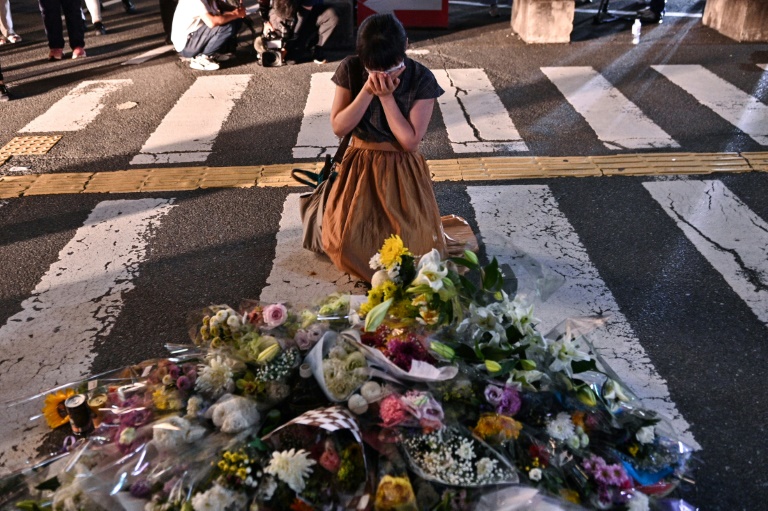
The haven yen firmed against the dollar following the assassination of Japan’s former prime minister, Shinzo Abe, before falling back.

Wall Street and European equity markets were higher although data showing the US job market is holding up well also raised the chances of further aggressive interest rate hikes to combat inflation.  

There were 372,000 new positions added in the month, the Labor Department reported, far more than economists expected. 

The strong health of the jobs market gives the US Federal Reserve more of a free hand to raise interest rates sharply to combat soaring inflation.

“In our view, today’s payrolls report, which shows only a mild slowing in the labour market, increases the chances of the Fed hiking by 75 basis points at its next meeting on 26-27 July,” said Daniel Vernazza, chief international economist at UniCredit Bank.

Last month, the Fed raised interest rates by an aggressive 75 basis points, or 0.75 percentage points.

Concern by investors that the fast pace of monetary tightening by the Fed will tip the world’s top economy into recession has seen stocks swoon in recent weeks.

While the prospect of higher interest rates usually pushes stocks down, and Wall Street did open lower, equities pushed higher as the morning continued.

That was in part relief by investors that the jobs report shows the economy is holding up better than many feared, said Edward Moya at Oanda trading platform.

“Traders couldn’t remain that bearish over news that the consumer is better-off than what many were fearing,” he said.

The euro on Friday slumped to $1.0072, a fresh 20-year low, before recovering back above $1.01.

“The depreciation in the euro to its lowest level in almost two decades against the dollar this week in large part reflects investors’ view that the ECB will tighten less aggressively than the Fed,” said Jessica Hinds, senior Europe economist at Capital Economics.

In commodities trading on Friday, world oil prices rose following the publication of the US jobs report comforted worries about the health of the world’s top economy, and demand for oil.

The rise comes at the end of yet another volatile week for crude and assets in general as investors fear recession fears aggravated and faded.

Asian stock markets closed higher, boosted by hopes that US President Joe Biden would remove some tariffs from Chinese goods.

Equities won a lift also from reports Beijing was considering a huge stimulus push to the struggling Chinese economy by allowing local governments to raise billions of dollars through bond issuance for infrastructure projects.

– Political upheaval –

Markets are also tracking political unrest in Britain and Japan.

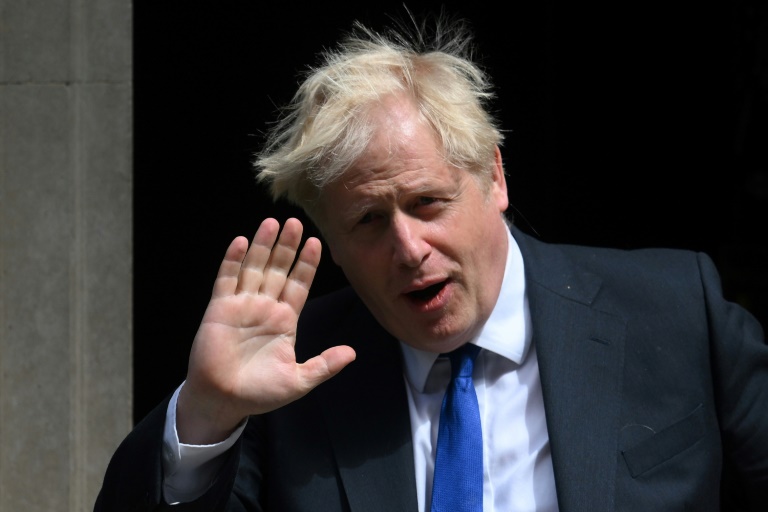
London’s benchmark FTSE 100 index edged 0.1 percent higher — and the pound was mixed — one day after Prime Minister Boris Johnson said he was stepping down later this year following a string of scandals.

In Japan, Abe was assassinated on Friday by a gunman who opened fire at close range as the hugely influential politician delivered a campaign speech ahead of upper house elections. 

The murder of the 67-year-old, who had been Japan’s longest-serving leader, stunned the nation and prompted an international outpouring of grief and condemnation.

The killing “could be negative for markets if the government’s policy, including its stance on monetary easing, is affected, as it was evident that he was pulling the strings behind the scenes in many ways”, noted Masahiro Yamaguchi at SMBC Trust Bank.

“If it becomes possible for (current Prime Minister Fumio) Kishida to carry out policies he wanted to, such as financial tax and regulations on share buy-back, that would be negative for markets.”

– Key figures at around 1530 GMT –

Euro/dollar: UP at 1.0182 from $1.0162 on Thursday

Pound/dollar: UP at $1.2032 from $1.2024 

Euro/pound: UP at 84.62 pence from 84.49 pence

Dollar/yen: UP at 136.11 yen from 136.01 yen

New York – Dow: UP 0.3 percent at 31,489.46 points

EURO STOXX 50: UP 0.5 percent at 3,506.55

London – FTSE 100: UP 0.1 percent at 7,196.24 (close)

Frankfurt – DAX: UP 1.3 percent at 13,105.23 (close)

Paris – CAC 40: UP 0.4 percent at 6,033.13 (close)

Tokyo – Nikkei 225: UP 0.1 percent at 26,517.19 (close)

Hong Kong – Hang Seng Index: UP 0.4 percent at 21,725.78 (close)

Shanghai – Composite: DOWN 0.4 percent at 3,356.08 (close)

Brent North Sea crude: UP 2.3 percent at $107.08 per barrel

West Texas Intermediate: UP 1.9 percent at $104.67 per barrel
US sees big job gains in June, fueling inflation worries

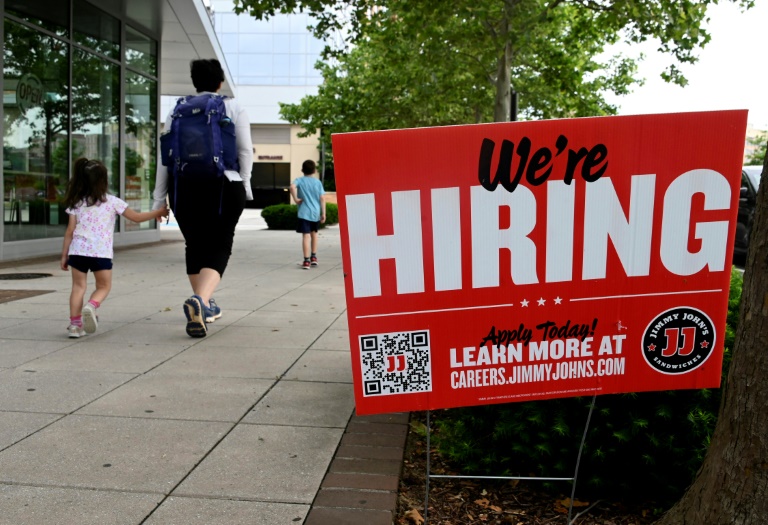
The US economy added far more jobs than expected in June and wages rose, adding fuel to worries about accelerating inflation, but giving President Joe Biden a reason to cheer.

Biden has seen his approval ratings plummet as Americans face the worst inflation surge in more than 40 years, but after the latest data Friday, he underscored the rapid jobs recovery in the wake of the pandemic.

But the closely-watched Labor Department report gave few indications the economy is slowing, which likely cements the central bank’s resolve to continue its aggressive interest rate hikes.

US employers added 372,000 net new jobs last month, nearly 100,000 more than economists forecast, and the unemployment rate held steady at 3.6 percent for the fourth month, the Labor Department reported.

The economy gained 2.74 million jobs in the first half of the year, more than most full years dating back to 2000.

“We have more Americans working today in the private sector then any day under my predecessor. More today than any time in American history … at a time when our critics said the economy was too weak,” Biden said at the White House.

He acknowledged that “Families are facing the cost of living crunch,” but said “today’s economic news confirms the fact that my economic plan is moving this country in a better direction.”

But with firms struggling to fill open positions and many potential workers staying on the sidelines, wages have been pushing higher, which economists fear could provoke a wage-price spiral.

– War on inflation –

The report showed average hourly earnings rose again to secure a 5.1 percent increase over the past 12 months, though that was slightly slower than in May and below the 5.6 percent peak in March.

And the share of adults in the labor force was little changed, but Diane Swonk of Grant Thornton noted that the number of people prevented from looking for work or working less due to the pandemic is rising, which could be holding back an influx of workers.

The data will provide little comfort to the Federal Reserve, which has declared war on inflation and launched a series of interest rate hikes to try to cool demand.

Atlanta Federal Reserve Bank President Raphael Bostic said the strong labor market is a good thing, but he stressed that he is “fully supportive” of another super-sized increase in the benchmark borrowing rate later this month, matching the three-quarter percentage point hike in June.

“We’re starting to see those first signs of slowdown, which is what we need because what we have right now is a great imbalance between supply and demand that’s driving the inflation,” Bostic said on CNBC.

That imbalance will have to come into alignment “if we’re going to get that inflation under control.”

The Fed’s efforts to tamp down price pressures has fueled fears it will push the world’s largest economy into recession.

Fed Chair Jerome Powell has argued that the strong US job market means the economy is well-positioned to withstand the rapid ramp up in borrowing rates, although he and other policymakers acknowledge the process may inflict some pain.

Biden said job growth is likely to slow in coming months following the rapid rebound, but “No country is better positioned than America to bring down inflation, without giving up all of the economic gains we have made over the last 18 months.”

– ‘Fanciful’ recession fears –

Total nonfarm employment remains just slightly below the pre-pandemic level in February 2020, but the private sector has recovered fully and has more jobs than before Covid-19 hit, according to the report.

Big gains in the month came in the health care and leisure and hospitality sectors, while retail rebounded after a big decline in May, the data showed. Manufacturing added 29,000 positions.

“June’s strong job growth, especially in the teeth of high inflation, shows that the expansion remains on solid ground,” said Robert Frick, corporate economist with Navy Federal Credit Union.

Strong consumer demand has anchored the post-pandemic recovery and defied expectations of a slowdown, but economists still believe job creation will start to slow.

Ian Shepherdson of Pantheon Macroeconomics said the recent data “support our view that talk of the economy being in recession right now is fanciful.”

Oldest European human fossil possibly found in Spain

A jawbone fragment discovered in northern Spain last month could be the oldest known fossil of a human ancestor found to date in Europe, Spanish paleontologists said Friday.

The researchers said the fossil found at an archaeological site on June 30 in northern Spain’s Atapuerca mountain range is around 1.4 million years old.

Until now, the oldest hominid fossil found in Europe was a jawbone found at the same site in 2007 which was determined to be 1.2 million years old.

Atapuerca contains one of the richest records of prehistoric human occupation in Europe.

Researchers will now have to “complete” their first estimate for the age of the jawbone fragment using scientific dating techniques, palaeoanthropologist Jose-Maria Bermudez de Castro, the co-director of the Atapuerca research project, said during a news conference.

But since the jawbone fragment was found some two metres below the layer of earth where the jawbone in 2007 was found, “it is logical and reasonable to think it is older,” he added.

The scientific dating of the jawbone fragment will be carried out at the National Centre for Research on Human Evolution in Burgos, a city located about 10 kilometres (six miles) from Atapuerca.

The process should take between six to eight months to complete, Bermudez de Castro said.

The analysis could help identify which hominid species the jawbone fragment belongs to and better understand the human beings evolved on the European continent.

Scientists have so far been unable to determine with certainty which species the jawbone discovered in 2007 belonged to.

The fossil could correspond to the species called Homo antecessor, discovered in the 1990s.

The Atapuerca Foundation which runs the archaeological site said in a statement that is “very likely” that the jawbone fragment “belongs to one of the first populations that colonised Europe”.

The archaeological site of Atapuerca was in 2000 included on UNESCO’s list of world heritage sites, giving it access to United Nations conservation funding.

It contains thousands of hominid fossils and tools including a flint discovered in 2013 that is 1.4 million years old.

Voters in Tory heartlands divided on Johnson's fate

In the Conservative heartland of Kent, retiree Mike Studholme says Prime Minister Boris Johnson was his own worst enemy — and thinks a woman in the mould of Margaret Thatcher should take over.

“He brought it down on himself,” the 67-year-old told AFP in Tonbridge, a market town in the leafy county which sits southeast of London, facing France.

“I think he’d made too many errors in judgment,” said the lifelong Tory, standing in the shadow of Tonbridge’s ruined medieval castle.

“And now he’s resigned, he should just go,” Studholme added, reflecting opposition to Johnson’s plan to stay in office until the Conservatives elect a new leader.

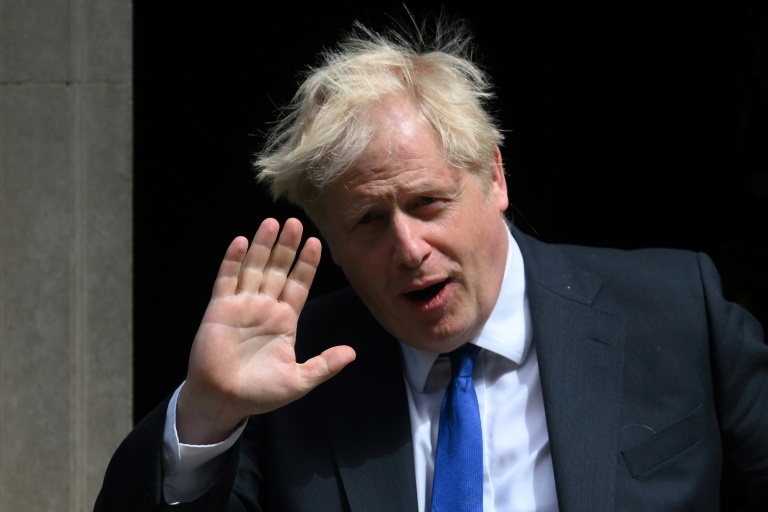
Johnson announced his resignation as party chief on Thursday, after a cabinet uprising over scandals culminating in his appointment of an ally with a history of sexual assault allegations to a senior role.

Another Tory supporter, who asked to remain anonymous, agreed that the prime minister “deserves it”, pointing to the “Partygate” scandal over lockdown-breaking revelry in Downing Street.

“You can’t make the laws and then break the laws, you can’t lie… Boris to me has been taking a leaf out of Donald Trump’s book,” she said.

– ‘Un-Boris’ –

Another lifelong Tory, Lorraine Eastmead, 62, was more forgiving, saying she “wasn’t pleased” by senior ministers forcing Johnson out.

“I think he made some mistakes but they all do… he’s done so much for us, on the world stage,” said the care home manager.

She added the 58-year-old Johnson should stick around until a new Conservative leader is in place.

“We need some sort of continuity, at least so he can do a decent handover, like in any job.”

Tonbridge is represented in parliament by Conservative Tom Tugendhat, 49, who became the second MP to announce their intention to run in the leadership race.

An army reservist who served in Iraq and Afghanistan, Tugendhat chairs the foreign affairs committee in the House of Commons, and has long been a thorn in Johnson’s side.

But he has never led a government department, and is seen as an outsider to become leader.

“Tom’s a nice guy and it’d be cool for Tonbridge to have somebody — our local MP — in a prominent position,” dog-walker Jessica Stapley, 41, said along a scenic river walk.

But Eastmead said: “I think he’s probably not really ready yet.

“I like Liz Truss,” she added, referring to Britain’s foreign secretary.

“There’s probably better candidates” than Tugendhat agreed Studholme who said he was no fan of the divisive Truss.

Nevertheless, the pensioner wants a woman to be the next Tory leader, preferably one like Thatcher, who reigned supreme over the party and Britain in the 1980s.

“I think they’d tend to do things in an un-Boris manner,” said Studholme.

– ‘Buffoonery’ –

Nearly two-thirds of Tonbridge-area voters backed the Conservatives at the last general election in 2019, and 56 percent supported Brexit in Britain’s 2016 referendum. 

Among the minority of non-Tories, the end of Johnson’s tumultuous three-year premiership was welcomed, but with some trepidation at who will come next.

“It should’ve been done long ago — he probably never should’ve been prime minister,” IT worker Colin Robinson, 45, told AFP.

He described Johnson as “a very calculating individual using a skin of buffoonery”.

“I was glad to see the system finally did what it should have done some time ago,” Robinson said, adding: “Whether they’ll replace him with anyone any better, I don’t know.”

Philippines' Nobel laureate Ressa loses appeal of cyber libel conviction

Philippine Nobel Peace Prize winner Maria Ressa lost her appeal against a conviction for cyber libel, her news website Rappler said Friday, in the latest blow for the veteran journalist.  

Ressa, 58, and her former colleague Rey Santos Jr face lengthy jail sentences, but the company said they will “avail of all legal remedies available to them”, including taking the case to the Supreme Court. 

The ruling comes less than two weeks after Philippine authorities ordered Rappler to shut down ahead of outgoing president Rodrigo Duterte’s last day in office. 

Rappler on Friday described the decision to uphold the 2020 conviction as “unfortunate”, saying it “weakens the ability of journalists to hold power to account”.

“What is ultimately at stake is our democracy whose strength rests on a media that is not threatened by the state nor intimidated by forces out to silence critical voices,” Rappler said. 

Ressa, who is currently in Manila, has long been a vocal critic of Duterte and the deadly drug war he launched in 2016, triggering what media advocates say is a grinding series of criminal charges, probes and online attacks against her and Rappler.

She and Russian journalist Dmitry Muratov were awarded the Nobel Peace Prize in October for their efforts to “safeguard freedom of expression”.

In a statement on Friday, Norwegian Nobel Committee chair Berit Reiss-Andersen said: “The criticism voiced through Rappler is well within the freedom of expression in a democratic society. I am gravely concerned that Maria Ressa is being prosecuted for exercising her rights of expression.” 

Ressa, who is also a US citizen, is fighting at least seven court cases, including the cyber libel case, for which she has been on bail and faces up to nearly seven years in prison. 

Rappler, which faces eight cases, had to fight for survival as Duterte’s government accused it of violating a constitutional ban on foreign ownership in securing funding, as well as tax evasion.

The cyber libel law was introduced in 2012, the same year Rappler was founded. 

Its use against journalists was “troubling”, said Jonathan de Santos, chairman of the National Union of Journalists of the Philippines.

He called on Congress to descriminalise cyber libel, arguing it was “no longer compatible with our constitution”.

– Rappler’s future? –

Just days before Duterte left office, the Philippine Securities and Exchange Commission (PSEC) ordered Rappler to shut down for violating “constitutional and statutory restrictions on foreign ownership in mass media”.

The news organisation is accused of allowing foreigners to take control of its website through its parent company Rappler Holdings’ issuance of “depositary receipts”.

Under the constitution, investment in media is reserved for Filipinos or Filipino-controlled entities.

Rappler said the PSEC’s decision “effectively confirmed the shutdown” of the company and vowed to appeal, describing the proceedings as “highly irregular”.

Ressa said the company would continue to operate as they followed the legal process, but expressed hope that the situation would improve under Duterte’s successor, Ferdinand Marcos Jr. 

But the company’s future and its battle in the country’s highly politicised legal system under Marcos Jr’s presidency is uncertain. 

Marcos Jr, who took over from Duterte on June 30, has given few clues about his views on the website and the broader issue of freedom of speech.

But activists fear he could worsen the situation for human rights and freedom of speech in the country.

Billions of people rely on wild species for food, fuel, income: UN

Rampant exploitation of nature is a threat to the well-being of billions of people across the world who rely on wild species for food, energy and income, United Nations biodiversity experts said Friday. 

From fishing and logging to the use of wild plants in medicines and perfumes, societies across the planet use species that have not been tamed or cultivated, with annual global legal and illegal trade in the hundreds of billions of dollars. 

But as humans drive alarming biodiversity loss — and climate change threatens to accelerate the destruction — the UN’s science advisory panel for biodiversity, IPBES, called for “transformative changes” in our relationship with wild species. 

IPBES, which has previously warned that a million species are at risk of extinction, said halting overexploitation was “critical to reverse the global trend in biodiversity decline” and hailed the crucial role of indigenous communities in protecting nature. 

Its report, written by dozens of experts and indigenous advisers and approved by 139 member states, comes as the UN steers an international process to protect nature from human destruction in the coming decades.

“The use of wild species is absolutely crucial for humanity and nature,” the IPBES report co-chair Jean-Marc Fromentin told AFP, adding it was a “key issue for food security”.  

UN experts estimate “about 40 percent of humanity” relies in some way on wild species, he said: “It’s much bigger than you think.”

– Food and fuel –

Overall, 50,000 species are used for food, energy, medicine, material and other purposes around the world, the report said, with more than 10,000 different types harvested for human consumption.

Wild plants, algae and fungi provide food and income for one in five people globally, the report said, while some 2.4 billion people rely on wood for cooking. 

IPBES estimated 70 percent of the world’s poor depend directly on wild species and businesses linked to them.

But they are not the only ones. 

“City dwellers in rich countries might not notice it, but wild plants are used in medicines or cosmetics, you eat wild fish and there is a good chance that your furniture comes from wild trees,” said Fromentin.   

Even foraging remains an important activity for people in North America and Europe, with notably high rates in Eastern Europe, according to the research, which said there is “growing demand for wild foods” for high-end restaurants.

– Resource ‘robbery’ –

The global market for these species is big business. 

Wild trees account for two thirds of global industrial roundwood, while trade in wild plants, algae and fungi is a billion-dollar industry.  

But global trade can become disconnected from sustainable supply, with surging demand risking species and ecosystems, and the report said there was an “urgent” need for effective policies that adapt to local needs.  

One major issue is illicit trade in wild species, estimated to be worth between $69 billion and $199 billion a year, which IPBES said was the third largest illegal market after human trafficking and drugs. 

While this largely targets trees and fish, the report said even smaller-scale trade in rare animals and plants, like orchids, can have devastating effects.

This trade “robs countries, indigenous people and local communities of access to their own resources and safe livelihoods,” said Inger Andersen, head of the UN Environment Programme. 

– Citizen of nature –

Letting the natural world thrive is better business. 

Tourism that is based on observing wild species, was a key reason that protected areas globally received eight billion visitors and generated $600 billion every year before the Covid-19 pandemic.

Meanwhile, fisheries that are well managed often have increasing abundance of fish. 

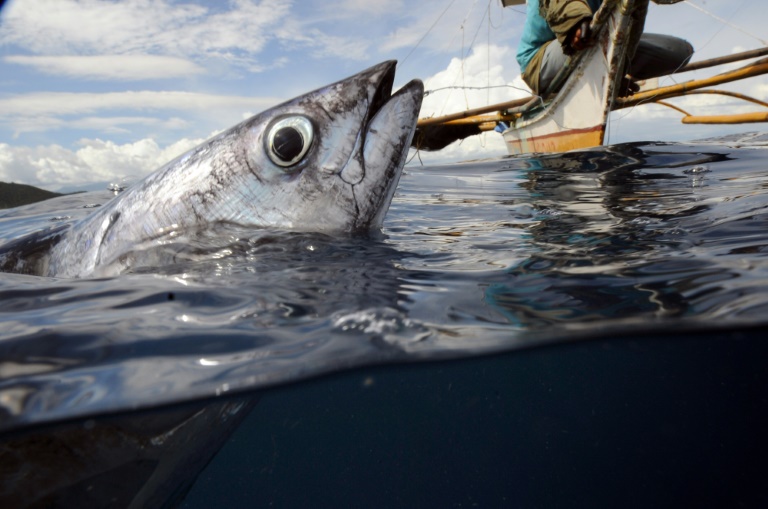
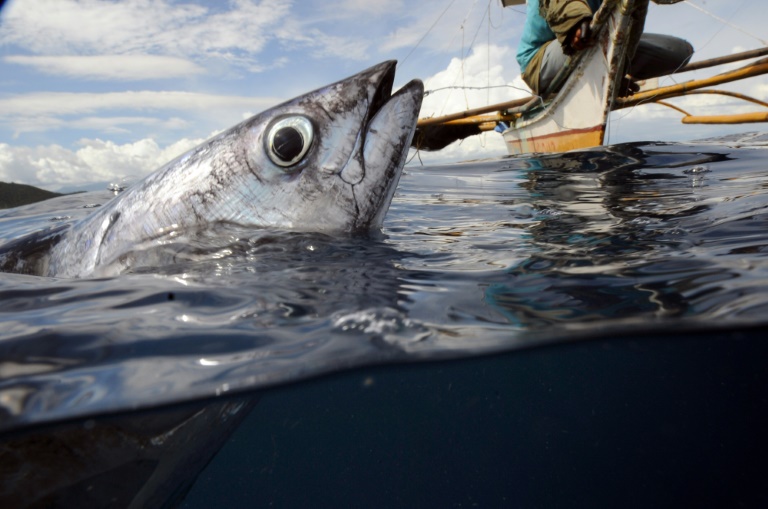
Atlantic bluefin tuna, for example, was fished to the brink by an explosion of demand for the sashimi market in the 1980s.  

Initially “scientific advice carried little weight against fisheries lobbies and national interests”, IPBES said, but a new strategy launched in 2007 has managed to rebuild the population.

In general, overexploitation is the main threat to wild marine species, it said, as well as a key threat to land and freshwater ecosystems.

IPBES called for policies that support the land rights of indigenous people, who steward vast biodiversity-rich areas and have often been underappreciated or pushed off their traditional homelands in the past. 

The report said much can be learnt from indigenous communities, including different ways to measure species health, like the amount of fat on a caribou, or the changing flavour of fish.  

Co-author John Donaldson said the process of integrating indigenous knowledge with more science-based research had been “quite revelatory”. 

The report urged a view of humanity as “a member or a citizen of nature among others”. 

It said the concept in many societies that humans are separate from and dominant over nature had “led to major environmental crises, such as climate change and biodiversity decline”. 

Billions of people rely on wild species for food, fuel, income: UN

Rampant exploitation of nature is a threat to the well-being of billions of people across the world who rely on wild species for food, energy and income, United Nations biodiversity experts said Friday. 

From fishing and logging to the use of wild plants in medicines and perfumes, societies across the planet use species that have not been tamed or cultivated, with annual global legal and illegal trade in the hundreds of billions of dollars. 

But as humans drive alarming biodiversity loss — and climate change threatens to accelerate the destruction — the UN’s science advisory panel for biodiversity, IPBES, called for “transformative changes” in our relationship with wild species. 

IPBES, which has previously warned that a million species are at risk of extinction, said halting overexploitation was “critical to reverse the global trend in biodiversity decline” and hailed the crucial role of indigenous communities in protecting nature. 

Its report, written by dozens of experts and indigenous advisers and approved by 139 member states, comes as the UN steers an international process to protect nature from human destruction in the coming decades.

“The use of wild species is absolutely crucial for humanity and nature,” the IPBES report co-chair Jean-Marc Fromentin told AFP, adding it was a “key issue for food security”.  

UN experts estimate “about 40 percent of humanity” relies in some way on wild species, he said: “It’s much bigger than you think.”

– Food and fuel –

Overall, 50,000 species are used for food, energy, medicine, material and other purposes around the world, the report said, with more than 10,000 different types harvested for human consumption.

Wild plants, algae and fungi provide food and income for one in five people globally, the report said, while some 2.4 billion people rely on wood for cooking. 

IPBES estimated 70 percent of the world’s poor depend directly on wild species and businesses linked to them.

But they are not the only ones. 

“City dwellers in rich countries might not notice it, but wild plants are used in medicines or cosmetics, you eat wild fish and there is a good chance that your furniture comes from wild trees,” said Fromentin.   

Even foraging remains an important activity for people in North America and Europe, with notably high rates in Eastern Europe, according to the research, which said there is “growing demand for wild foods” for high-end restaurants.

– Resource ‘robbery’ –

The global market for these species is big business. 

Wild trees account for two thirds of global industrial roundwood, while trade in wild plants, algae and fungi is a billion-dollar industry.  

But global trade can become disconnected from sustainable supply, with surging demand risking species and ecosystems, and the report said there was an “urgent” need for effective policies that adapt to local needs.  

One major issue is illicit trade in wild species, estimated to be worth between $69 billion and $199 billion a year, which IPBES said was the third largest illegal market after human trafficking and drugs. 

While this largely targets trees and fish, the report said even smaller-scale trade in rare animals and plants, like orchids, can have devastating effects.

This trade “robs countries, indigenous people and local communities of access to their own resources and safe livelihoods,” said Inger Andersen, head of the UN Environment Programme. 

– Citizen of nature –

Letting the natural world thrive is better business. 

Tourism that is based on observing wild species, was a key reason that protected areas globally received eight billion visitors and generated $600 billion every year before the Covid-19 pandemic.

Meanwhile, fisheries that are well managed often have increasing abundance of fish. 

Atlantic bluefin tuna, for example, was fished to the brink by an explosion of demand for the sashimi market in the 1980s.  

Initially “scientific advice carried little weight against fisheries lobbies and national interests”, IPBES said, but a new strategy launched in 2007 has managed to rebuild the population.

In general, overexploitation is the main threat to wild marine species, it said, as well as a key threat to land and freshwater ecosystems.

IPBES called for policies that support the land rights of indigenous people, who steward vast biodiversity-rich areas and have often been underappreciated or pushed off their traditional homelands in the past. 

The report said much can be learnt from indigenous communities, including different ways to measure species health, like the amount of fat on a caribou, or the changing flavour of fish.  

Co-author John Donaldson said the process of integrating indigenous knowledge with more science-based research had been “quite revelatory”. 

The report urged a view of humanity as “a member or a citizen of nature among others”. 

It said the concept in many societies that humans are separate from and dominant over nature had “led to major environmental crises, such as climate change and biodiversity decline”. 

Item A on next British PM's agenda: inflation crisis

Prime Minister Boris Johnson’s government is in suspended animation, including on economic policy, just as a cost-of-living crisis worsens for millions of Britons. 

But tax cuts are inevitable under a new leader, to confront the financial pain that is rapidly spreading in the world’s fifth-largest economy, analysts say.

Low taxes are an article of faith for the Conservative rank and file who will elect Johnson’s successor in the coming months, after he announced his resignation as party leader on Thursday.

“The cost-of-living crisis is forefront of voters’ minds,” Hargreaves Lansdown economist Sarah Coles told AFP.

“A new leader will have to provide effective support for those who are facing the toughest challenges, or they risk being punished at the ballot box,” she said.

Johnson was expressing defiance as late as Wednesday night, when aides said that he was planning a tax-cutting statement next week with his new finance minister, Nadhim Zahawi. 

The resignation statement put paid to that plan. 

Johnson’s new-look cabinet appointed Thursday agreed that “major fiscal decisions should be left for the next prime minister”, Downing Street said.

Zahawi’s predecessor Rishi Sunak quit on Tuesday along with Johnson’s health minister, sparking an exodus of other ministers fed up with his premiership’s many scandals.

Sunak had sought to prioritise balancing the books after spending billions on Britain’s costly Covid support measures.

He had ramped up taxation on corporate profits, and on paid employment, in order to help pay the pandemic bill and fund elderly social care.

But Britons, like others in many countries, are also grappling with soaring consumer prices fuelled partly by fallout from Russia’s war on Ukraine, which has destabilised energy markets. 

UK inflation sits at a 40-year peak, driven also by elevated food prices, and is tipped to hit double figures soon with the average domestic energy bill set to top £3,000 ($3,600) a year.

– Heat or eat –

Many Britons say that this winter, they will have to choose between heating or eating.

The nation also faces nationwide strikes — particularly in the transport sector — as the purchasing power of wages is rapidly eroded.

The next Conservative premier will therefore face a challenge to survive beyond the next general election, when this parliament’s term ends in late 2024. 

But first they must win over the Tory grassroots.

“Johnson’s replacement will probably have to show some intention of cutting taxes in order to be voted in by Conservative party members,” agreed Capital Economics analyst Kieran Tompkins.

Added to the gloom, the Bank of England warns that the economic outlook at home and abroad has deteriorated due to the high inflation.

The BoE has ramped up interest rates five times since December to tackle inflation — but this also lifts loan repayments such as mortgages, and has further stretched household budgets.

Some economists warn that tax cuts, while stimulating consumer demand and economic growth, could fuel the inflationary price pressures.

“Tax cuts are a staple Conservative policy and can be a vote-winner, although on this occasion care may be needed,” cautioned AJ Bell investment director Russ Mould.

UK businesses also face fallout from Britain’s departure from the European Union, as well as a global supply-chain crunch and staff shortages as demand picks up after the pandemic.

“Tax cuts won’t help those and could make them worse, fuelling inflation and forcing the Bank of England to increase interest rates faster and further,” said Mould.

The government’s fiscal spending watchdog, the Office for Budget Responsibility, this week added to doubts about the wisdom of any sharp reduction in taxes.

The OBR warned that Britain’s public finances were “on an unsustainable path in the long term”.

Item A on next British PM's agenda: inflation crisis

Prime Minister Boris Johnson’s government is in suspended animation, including on economic policy, just as a cost-of-living crisis worsens for millions of Britons. 

But tax cuts are inevitable under a new leader, to confront the financial pain that is rapidly spreading in the world’s fifth-largest economy, analysts say.

Low taxes are an article of faith for the Conservative rank and file who will elect Johnson’s successor in the coming months, after he announced his resignation as party leader on Thursday.

“The cost-of-living crisis is forefront of voters’ minds,” Hargreaves Lansdown economist Sarah Coles told AFP.

“A new leader will have to provide effective support for those who are facing the toughest challenges, or they risk being punished at the ballot box,” she said.

Johnson was expressing defiance as late as Wednesday night, when aides said that he was planning a tax-cutting statement next week with his new finance minister, Nadhim Zahawi. 

The resignation statement put paid to that plan. 

Johnson’s new-look cabinet appointed Thursday agreed that “major fiscal decisions should be left for the next prime minister”, Downing Street said.

Zahawi’s predecessor Rishi Sunak quit on Tuesday along with Johnson’s health minister, sparking an exodus of other ministers fed up with his premiership’s many scandals.

Sunak had sought to prioritise balancing the books after spending billions on Britain’s costly Covid support measures.

He had ramped up taxation on corporate profits, and on paid employment, in order to help pay the pandemic bill and fund elderly social care.

But Britons, like others in many countries, are also grappling with soaring consumer prices fuelled partly by fallout from Russia’s war on Ukraine, which has destabilised energy markets. 

UK inflation sits at a 40-year peak, driven also by elevated food prices, and is tipped to hit double figures soon with the average domestic energy bill set to top £3,000 ($3,600) a year.

– Heat or eat –

Many Britons say that this winter, they will have to choose between heating or eating.

The nation also faces nationwide strikes — particularly in the transport sector — as the purchasing power of wages is rapidly eroded.

The next Conservative premier will therefore face a challenge to survive beyond the next general election, when this parliament’s term ends in late 2024. 

But first they must win over the Tory grassroots.

“Johnson’s replacement will probably have to show some intention of cutting taxes in order to be voted in by Conservative party members,” agreed Capital Economics analyst Kieran Tompkins.

Added to the gloom, the Bank of England warns that the economic outlook at home and abroad has deteriorated due to the high inflation.

The BoE has ramped up interest rates five times since December to tackle inflation — but this also lifts loan repayments such as mortgages, and has further stretched household budgets.

Some economists warn that tax cuts, while stimulating consumer demand and economic growth, could fuel the inflationary price pressures.

“Tax cuts are a staple Conservative policy and can be a vote-winner, although on this occasion care may be needed,” cautioned AJ Bell investment director Russ Mould.

UK businesses also face fallout from Britain’s departure from the European Union, as well as a global supply-chain crunch and staff shortages as demand picks up after the pandemic.

“Tax cuts won’t help those and could make them worse, fuelling inflation and forcing the Bank of England to increase interest rates faster and further,” said Mould.

The government’s fiscal spending watchdog, the Office for Budget Responsibility, this week added to doubts about the wisdom of any sharp reduction in taxes.

The OBR warned that Britain’s public finances were “on an unsustainable path in the long term”.

Former Japan PM Abe assassinated by gunman

Japan’s former prime minister Shinzo Abe was assassinated on Friday by a gunman who opened fire at close range as the hugely influential politician delivered a campaign speech.

The murder of the 67-year-old, who had been Japan’s longest-serving leader, stunned the nation and prompted an international outpouring of grief and condemnation.

It was all the more shocking given Japan’s strict gun laws and low rates of violent crime, with Prime Minister Fumio Kishida describing the killing as a “barbaric act” that was “absolutely unforgivable”.

Abe, who held office in 2006 for one year and again from 2012 to 2020, was shot shortly before noon while campaigning in the western region of Nara ahead of weekend upper house elections.

He was flown by helicopter to a hospital where he was pronounced dead several hours later, despite a team of 20 medics trying to resuscitate him.

Doctors said the politician had suffered two gunshot wounds to the neck and died of massive blood loss.

After Abe’s death was confirmed, a visibly emotional Kishida said he was “lost for words”.

“During this election period, a despicable and barbaric act was committed… this is unforgivable. We condemn it once again in the strongest terms,” said the prime minister, having abandoned the campaign trail and flown back to Tokyo.

The attack occurred as Abe delivered a stump speech with security present but spectators able to approach him easily.

Footage from public broadcaster NHK showed him standing on a stage when a man dressed in a grey shirt and brown trousers approached from behind, before drawing a weapon from a bag.

At least two shots appeared to be fired, each producing a cloud of smoke. As spectators and reporters ducked, a man was shown being tackled to the ground by security.

The man was arrested and later identified by police as unemployed 41-year-old Tetsuya Yamagami, a former member of the Maritime Self-Defense Force, the country’s navy.

He was wielding a handmade gun, authorities said, and admitted targeting the politician, saying he held a grudge against an organisation he believed Abe was connected to.

Officers in protective gear searched the suspect’s home and confiscated “several handmade gun-like items”, according to police.

– ‘Large bang’ –

Witnesses described shock as the political event turned into chaos.

“The first shot sounded like a toy bazooka,” a woman told NHK. 

“He didn’t fall and there was a large bang. The second shot was more visible, you could see the spark and smoke.”

Later in the day mourners came to pay their respects as news of the attack sank in.

“I just couldn’t sit back and do nothing. I had to come here to dedicate flowers,” said Nara resident Sachie Nagafuji, 54, visiting the scene with his son.

“I really respected him and had faith in him as a politician.” 

Officials from the local chapter of Abe’s Liberal Democratic Party said there had been no threats before the incident and that his speech had been announced publicly.

Several parties announced their senior members would halt campaigning for Sunday’s election in the wake of the attack, but the ruling LDP and its coalition partner Komeito said canvassing would resume on Saturday.

The attack prompted international shock, with European Commission chief Ursula von der Leyen tweeting that the “brutal and cowardly murder” had shocked the world.

US President Joe Biden said he was “stunned, outraged, and deeply saddened” by the assassination, while Secretary of State Antony Blinken called Abe “a leader with great vision”.

South Korean President Yoon Suk-yeol described the killing as an “unacceptable act”.

– Strict gun laws –

Abe was forced to step down in 2020 due to the debilitating bowel condition ulcerative colitis.

The hawkish conservative had pushed for the revision of Japan’s pacifist constitution to recognise the country’s military, and stayed a prominent political figure even after his resignation.

Japan has some of the world’s toughest gun-control laws. Annual deaths from firearms in the country of 125 million people are regularly in single figures.

Getting a gun licence is a long and complicated process for Japanese citizens, who must first get a recommendation from a shooting association and then undergo strict police checks.

Corey Wallace, an assistant professor at Kanagawa University who focuses on Japanese politics, said the incident recalled the 1960 assassination of Inejiro Asanuma, the leader of the Japan Socialist Party, who was stabbed by a right-wing youth. 

He noted that Japanese politicians and voters were used to a personal and close-up style of campaigning.

“This could really change,” he said.

Close Bitnami banner
Bitnami