World

Dos Santos: Angola's secretive, all-powerful, long-time ruler

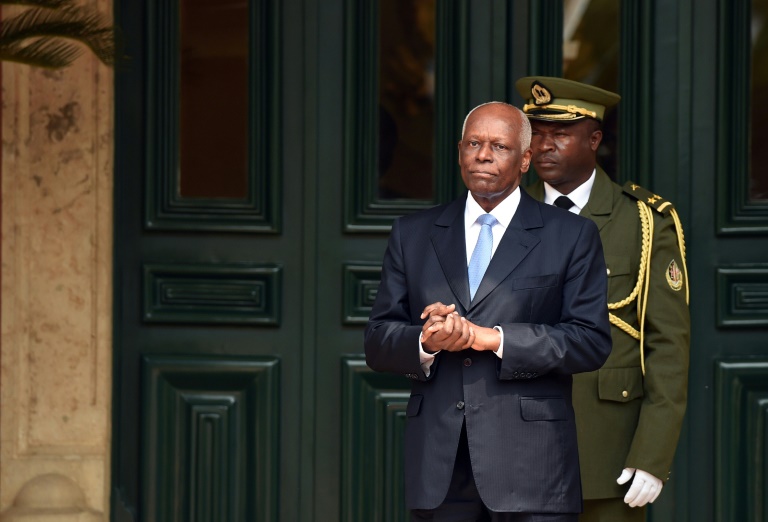
Jose Eduardo dos Santos, who died Friday at the age of 79, ruled Angola for 38 years, using his nation’s oil wealth to turn his family into billionaires while leaving his people among the poorest on the planet.

He passed away Friday morning in a Barcelona hospital where he was admitted June 23 for cardiac arrest. 

During his reign, he avoided the personality cult so often favoured by dictators, but instead used secretive and authoritarian tactics he learned during the Soviet era.

And for as much as he controlled every aspect of Angolan life, he mismanaged his own transition away from power so badly that he ended up in temporary self-imposed exile, with a son in prison and a daughter facing international legal challenges.

Though seldom seen in public, he was a presence in daily life for as long as most Angolans could remember, maintaining fierce control over the country throughout its devastating civil war and its oil boom and bust.

Dos Santos first became president and leader of the ruling People’s Movement for the Liberation of Angola (MPLA) party in 1979. 

He was Africa’s second-longest-serving leader — one month shy of Equatorial Guinea’s Teodoro Obiang Nguema.

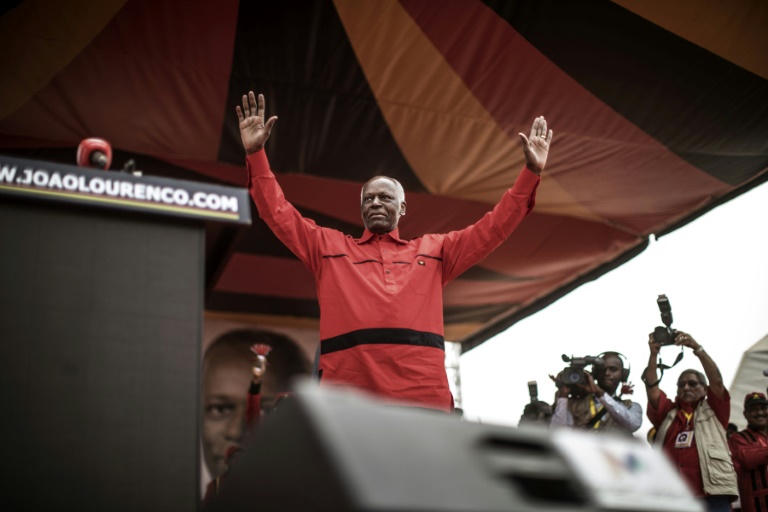
He handpicked his defence minister Joao Lourenco to succeed him. But as president, Lourenco embarked on a tough anti-corruption drive.

After decades of impunity, the dos Santos family and other top officials suddenly found their shadowy business dealings under intense scrutiny.

Dos Santos’s son Jose Filomeno is in prison since 2019 on corruption charges.

His daughter Isabel was once named by Forbes as Africa’s richest woman, worth $3 billion (2.55 billion euros). She now faces a slate of investigations into her multinational business dealings.

For much of his time at the head of his MPLA party, he fought a brutal civil war.

When the 27-year conflict with UNITA rebels ended in 2002, he presided over a country littered with landmines and among the poorest in the world.

The conflict was a Cold War hotspot, with dos Santos receiving Soviet and Cuban backing while UNITA had the United States and apartheid South Africa on its side.

After the war, he led Angola away from hardline Marxism and fostered a post-war oil boom and foreign investment surge that transformed central Luanda.

– ‘Instinct for survival’ – 

Dos Santos was “an accomplished and shrewd economic and political dealmaker with an instinct for political survival”, according to Alex Vines of the British think-tank Chatham House.

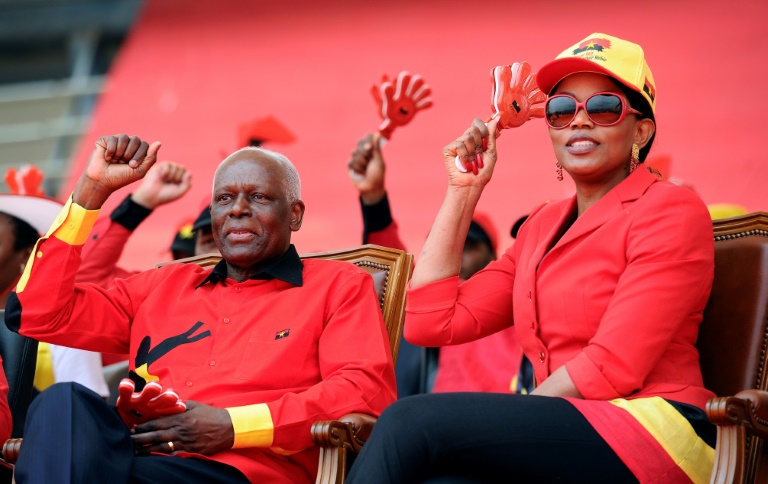
His first wife was Russian-born Tatiana Kukanova, who he met while studying and with whom he sired Isabel. He later married former air hostess Ana Paula, 18 years his junior.

From humble beginnings as the son of a bricklayer, dos Santos joined the MPLA as a teenager and rose quickly through party ranks as a fighter during Angola’s struggle for independence from Portugal.

After stints in Kinshasa and Brazzaville, he went to Azerbaijan to study petroleum engineering, returning fluent in Russian and French, in addition to his mother-tongue Portuguese.

In 1979, following the sudden death from cancer of Angola’s liberation president Agostinho Neto, dos Santos — then the planning minister — was sworn in as president.

A presidential election in 1992 was aborted ahead of a second-round vote when his battlefield rival Jonas Savimbi claimed the vote was rigged.

The civil war reignited until Savimbi was killed in 2002.

During the 2012 election campaign, dos Santos made a series of unexpected appearances at public rallies, wearing colourful T-shirts and promising better universities and jobs for young people.

But his policies remained little changed after the vote.

– Controlling presence –

He operated with few constraints as head of the military, police and cabinet, as well as being the president.

He handpicked senior judges and had MPLA allies in all public agencies, including the supposedly independent electoral commission.

Angola has become a major supplier of oil to China, and dos Santos built close ties with the Asian powerhouse.

Although he sought to present himself as a rock of stability, rights activists and opposition members accused him of systematic repression.

In a 2013 Brazilian television interview, he said his rule had been “too long, too long,” but added that decades of war “meant we couldn’t strengthen state institutions or even carry out the normal process of democratisation”.

Dos Santos reportedly received cancer treatment in Barcelona over several years. He left the country shortly after his retirement, spending two years in the Spanish city, both for medical treatment and to avoid a tightening legal net in Luanda.

While in power, and always immaculately dressed, he rarely travelled abroad on official business, but was said to enjoy music and poetry as well as cooking fish, and was once a keen footballer.
US sees big job gains in June, fueling inflation worries

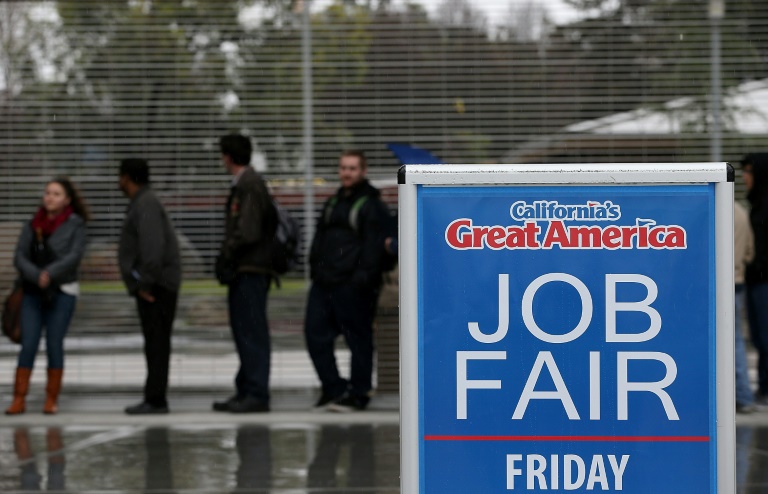
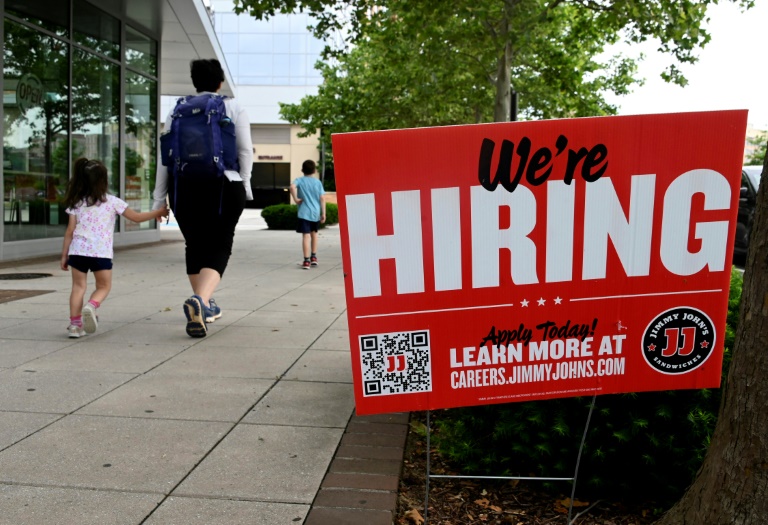
The US economy added far more jobs than expected in June and wages rose, adding fuel to worries about accelerating inflation, but giving President Joe Biden a reason to cheer.

Biden has seen his approval ratings plummet as Americans face the worst inflation surge in more than 40 years, but after the latest data Friday, he underscored the rapid jobs recovery in the wake of the pandemic.

But the closely-watched Labor Department report gave few indications the economy is slowing, which likely cements the central bank’s resolve to continue its aggressive interest rate hikes.

US employers added 372,000 net new jobs last month, nearly 100,000 more than economists forecast, and the unemployment rate held steady at 3.6 percent for the fourth month, the Labor Department reported.

The economy gained 2.74 million jobs in the first half of the year, more than most full years dating back to 2000.

“This has been the fastest and strongest jobs recovery in American history,” Biden said in a statement.

“We have more Americans working in the private sector today than any day during Donald Trump’s Presidency — more people than any time in our history.”

But with firms struggling to fill open positions and many potential workers staying on the sidelines, wages have been pushing higher, which economists fear could provoke a wage-price spiral.

– War on inflation –

The report showed average hourly earnings rose again to secure a 5.1 percent increase over the past 12 months — slightly slower than in May — while the share of adults in the labor force was little changed.

The data will provide little comfort to the Federal Reserve, which has declared war on inflation and launched a series of interest rate hikes to try to cool demand.

Atlanta Federal Reserve Bank President Raphael Bostic said the strong labor market is a good thing, but he stressed that he is “fully supportive” of another super-sized increase in the benchmark borrowing rate later this month, matching the three-quarter percentage point hike in June.

“We’re starting to see those first signs of slowdown, which is what we need because what we have right now is a great imbalance between supply and demand that’s driving the inflation,” Bostic said on CNBC.

That imbalance will have to come into alignment “if we’re going to get that inflation under control.”

There are growing fears that the Fed’s efforts to tamp down price pressures will push the world’s largest economy into recession.

Fed Chair Jerome Powell has argued that the strong US job market means the economy is well-positioned to withstand the rapid ramp up in borrowing rates, although he and other policymakers acknowledge the process may inflict some pain.

Biden said job growth is likely to slow in coming months following the rapid rebound, but “No country is better positioned than America to bring down inflation, without giving up all of the economic gains we have made over the last 18 months.”

– ‘Fanciful’ recession fears –

Total nonfarm employment remains just slightly below the pre-pandemic level in February 2020, but the private sector has recovered fully and has more jobs than before Covid-19 hit, according to the report.

Big gains in the month came in the health care and leisure and hospitality sectors, while retail rebounded after a big decline in May, the data showed. Manufacturing added 29,000 positions.

“June’s strong job growth, especially in the teeth of high inflation, shows that the expansion remains on solid ground,” said Robert Frick, corporate economist with Navy Federal Credit Union.

Strong consumer demand has anchored the post-pandemic recovery and defied expectations of a slowdown, but economists still believe job creation will start to slow.

Ian Shepherdson of Pantheon Macroeconomics said the recent data “support our view that talk of the economy being in recession right now is fanciful.”

Terror specialist appointed new London police chief

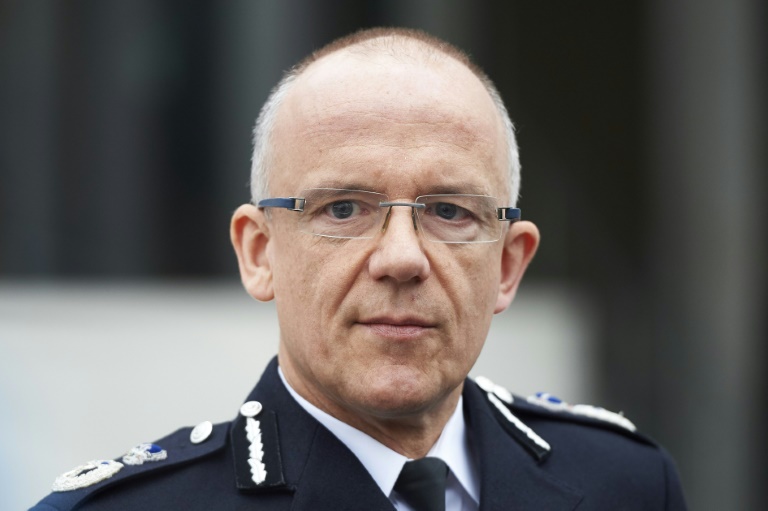
The British government on Friday announced a new head for the country’s biggest police force, ordering him to rebuild public trust after a spate of scandals.

Home Secretary Priti Patel said Mark Rowley had been appointed as the next commissioner of London’s Metropolitan Police.

Patel called Rowley, a former head of the Met’s counter-terrorism unit, a “distinguished and exceptionally experienced police officer”.

But she said the commissioner’s job was “one of the most important and demanding jobs in policing”, particularly giving the force’s recent “failings”.

“Rebuilding public trust and delivering on crime reduction must be his priority,” she said in a statement.

Rowley, 57, said he was “deeply honoured” by the appointment, which puts him in charge of more than 43,000 police officers and staff, and a budget of £3.24 billion ($3.9 billion).

The Met polices a population of more than eight million people over 620 square miles (1,605 square kilometres) of Greater London.

Scotland Yard, as the force is also known, was last month placed in special supervision by a police watchdog body for failing to hit standards targets.

Former commissioner Cressida Dick stood down in February having lost the backing of London mayor Sadiq Khan after months of pressure over the conduct of her officers.

Chief among them was the jailing of a diplomatic protection squad member for the high-profile kidnap, rape and murder of a young woman — and the heavy-handed policing of a vigil for her.

Other officers have been convicted of taking unauthorised photographs of murder victims at crime sites, as well as the sharing of racist and abusive messages on social media and messaging apps.

Rowley promised to “lead the renewal of policing by consent which has been so heavily dented in recent years as trust and confidence have fallen”.

He vowed to be “ruthless in removing those who are corrupting our integrity”.

The officer has more than 30 years’ experience and previously served as chief constable of Surrey Police in southeast England. 

He joined the Met in 2011 and led its response to terror attacks in 2017, when a van smashed into pedestrians on London Bridge before three assailants went on a stabbing spree.

Eight people were killed and about 50 were hurt in the attack, which was claimed by the Islamic State group.

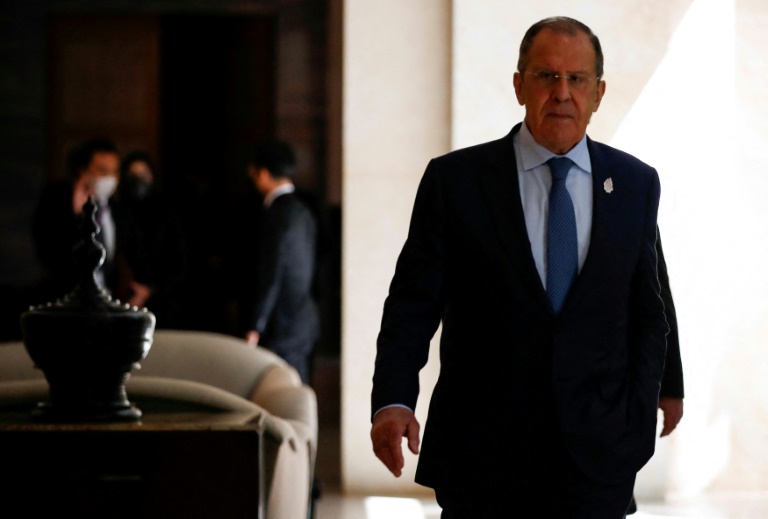
Lavrov walks out of G20 talks as West presses Moscow on Ukraine

Russia’s top diplomat stormed out of talks with G20 foreign ministers meeting in Indonesia on Friday as Western powers criticised Moscow over its invasion of Ukraine.

Washington and allies condemned Russia’s assault ahead of the meeting before Foreign Minister Sergei Lavrov faced what US Secretary of State Antony Blinken called a barrage of Western criticism at the closed-door talks.

“What we’ve heard today already is a strong chorus from around the world… about the need for the aggression to end,” Blinken said from the meeting on the resort island of Bali.

Blinken and Lavrov had joined colleagues for day-long talks in their first meeting since the outbreak of war, with the host immediately telling them the conflict must end through negotiations.

But Lavrov walked out of a morning session as German counterpart Annalena Baerbock criticised Moscow over its invasion, diplomats said.

He also left an afternoon session before Ukrainian Foreign Minister Dmytro Kuleba addressed the ministers virtually and was not present as Blinken condemned Russia.

“Russia was so isolated that Lavrov left the conference at midday after speaking,” French Foreign Minister Catherine Colonna said in an interview with AFP. 

“There was not a state to defend the Russian attitude, to subscribe to the Russian logic.”

EU foreign policy chief Josep Borrell told AFP Lavrov “wasn’t listening to others” in the meeting. 

“That’s not the most constructive way to attend a G20 meeting,” he said.

Western diplomats said Lavrov heard no unambiguous support during the session, even from nations that do not staunchly back the US and European position on Ukraine.

“I think Russia was surprised by how many G20 participants made forceful statements about Russian aggression,” a Western official said on condition of anonymity.

Another Western official predicted President Vladimir Putin would think twice about attending the summit later this year after the criticism faced by Lavrov.

– Abe killing overshadows meet –

Speaking outside the Mulia hotel, Lavrov remained defiant and accused Western nations of avoiding “talking about global economic issues” instead of the war.

“From the moment they speak, they launch into fevered criticism of Russia,” he told reporters.

Blinken shunned a bilateral meeting with Lavrov and instead accused Russia of triggering a global food crisis, demanding Moscow allow grain shipments out of war-battered Ukraine.

“To our Russian colleagues: Ukraine is not your country. Its grain is not your grain. Why are you blocking the ports? You should let the grain out,” Blinken said in the closed-door talks, according to a Western official present.

Lavrov earlier told reporters he would not “go running” after Washington for talks.

“It was not us who abandoned contact, it was the United States,” he said.

Before the meeting, Blinken sat down with his French and German counterparts and a senior British official to discuss “Russia’s unprovoked and unjustifiable war of choice” in Ukraine, the State Department said in a statement.

But the gathering was soon overshadowed by the killing of former Japanese Prime Minister Shinzo Abe at a campaign event on Friday.

After news of Abe’s death emerged, Blinken mourned the longtime ally of Washington as a “leader with great vision” who boosted US-Japan relations.

“It is a shock. It’s profoundly disturbing,” he said.

– No family photo –

In closing remarks, Indonesian Foreign Minister Retno Marsudi said “participants expressed deep concern about the humanitarian impacts of the war” in Ukraine, and “some members expressed condemnation” of the invasion.

A US official indicated Washington did not want to embarrass Indonesia at the meeting by walking out on Lavrov, who last met Blinken in July.

But there was no family photo of the G20 ministers as is customary.

The hosts have addressed US concerns about Lavrov attending in part by inviting Ukrainian President Volodymyr Zelensky to the G20 summit in November.

In his address on Friday, Ukraine’s Kuleba told ministers to “remember about 344 families who have lost their children when listening to Russian lies”.

– British FM leaves –

Blinken’s efforts to have a powerful Western stance against Russia at the meeting were diluted after British Foreign Minister Liz Truss pulled out following Prime Minister Boris Johnson’s resignation as leader of his party on Thursday.

While in Bali, Blinken will also seek to reopen dialogue with Beijing in talks on Saturday with his Chinese counterpart Wang Yi, the first in months after tensions became strained over issues including Taiwan.

The meeting comes as US President Joe Biden voices hope for a conversation in the coming weeks with Chinese President Xi Jinping, with whom he last spoke in March.

Lavrov met Wang on Thursday to discuss Russia’s invasion, which Moscow says it launched to stop Ukraine from joining the NATO military alliance.

The United States has condemned Beijing’s support for Russia, and Blinken is expected to reiterate those warnings in talks with Wang.

Euro closes in on dollar parity

The euro neared parity with the dollar on Friday, as traders bet on the prospect of a eurozone recession caused by soaring inflation.

The haven yen firmed against the dollar following the assassination of Japan’s former prime minister, Shinzo Abe, before falling back.

Wall Street stocks opened lower after a report that showed that the US economy continued to add jobs in June at a rapid pace.

There were 372,000 new positions added in the month, the Labor Department reported, far more than economists expected. 

The strong health of the jobs market gives the US Federal Reserve more of a free hand to raise interest rates sharply to combat soaring inflation without worrying about the economy tipping into recession.

Concern by investors that the fast pace of monetary tightening by the Fed will tip the world’s top economy into recession has seen stocks swoon in recent weeks.

US Treasury yields rose following the publication of the US jobs report, an indication of an expectation of higher interest rates.

“That move is the reaction to an employment situation report for June that did nothing to deter the market from thinking that the Fed is going to remain on an aggressive rate-hike path,” said market analyst Patrick J. O’Hare at Briefing.com.

The euro on Friday slumped to $1.0072, a fresh 20-year low, before recovering back above $1.01.

“The depreciation in the euro to its lowest level in almost two decades against the dollar this week in large part reflects investors’ view that the ECB will tighten less aggressively than the Fed,” said Jessica Hinds, senior Europe economist at Capital Economics.

In commodities trading on Friday, world oil prices rose following the publication of the US jobs report comforted worries about the health of the economy, and demand for oil.

The rise comes at the end of yet another volatile week for crude and assets in general as investors fears recession fears aggravated and faded.

Asian stock markets closed higher, boosted by hopes that US President Joe Biden would remove some tariffs from Chinese goods.

Equities won a lift also from reports Beijing was considering a huge stimulus push to the struggling Chinese economy by allowing local governments to raise billions of dollars through bond issuance for infrastructure projects.

But surging inflation, rising interest rates and a fresh flare-up of Covid infections in Shanghai continued to keep investor sentiment grounded.

– Political upheaval –

Markets are also tracking political unrest in Britain and Japan.

London’s benchmark FTSE 100 index was down 0.1 percent in afternoon deals — and the pound retreated — one day after Prime Minister Boris Johnson said he was stepping down later this year following a string of scandals.

In Japan, Abe was assassinated on Friday by a gunman who opened fire at close range as the hugely influential politician delivered a campaign speech ahead of upper house elections. 

The murder of the 67-year-old, who had been Japan’s longest-serving leader, stunned the nation and prompted an international outpouring of grief and condemnation.

The killing “could be negative for markets if the government’s policy, including its stance on monetary easing, is affected, as it was evident that he was pulling the strings behind the scenes in many ways”, noted Masahiro Yamaguchi at SMBC Trust Bank.

“If it becomes possible for (current Prime Minister Fumio) Kishida to carry out policies he wanted to, such as financial tax and regulations on share buy-back, that would be negative for markets.”

– Key figures at around 1330 GMT –

Euro/dollar: UNCHANGD from Thursday at $1.0162

Pound/dollar: DOWN at $1.2007 from $1.2024 

Euro/pound: UP at 84.62 pence from 84.49 pence

Dollar/yen: UP at 136.41 yen from 136.01 yen

London – FTSE 100: DOWN 0.1 percent at 7,179.84 points

Frankfurt – DAX: UP 0.7 percent at 12,935.13

Paris – CAC 40: DOWN less than 0.1 percent at 6,004.75

EURO STOXX 50: DOWN less than 0.1 percent at 3,485.26

New York – Dow: DOWN 0.2 percent at 31,336.43

Tokyo – Nikkei 225: UP 0.1 percent at 26,517.19 (close)

Hong Kong – Hang Seng Index: UP 0.4 percent at 21,725.78 (close)

Shanghai – Composite: DOWN 0.4 percent at 3,356.08 (close)

Brent North Sea crude: UP 2.1 percent at $106.81 per barrel

West Texas Intermediate: UP 2.2 percent at $104.96 per barrel

UK opposition leader Starmer cleared of lockdown breach

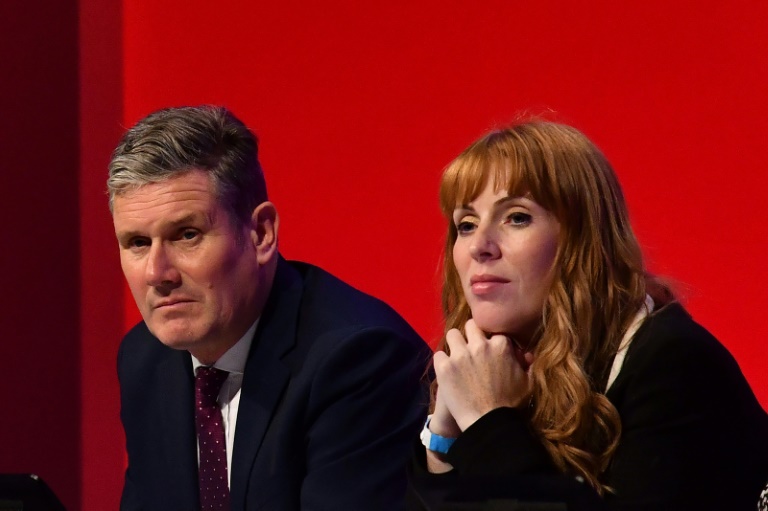
Britain’s opposition Labour party leader Keir Starmer and his deputy Angela Rayner were on Friday cleared by police of breaking lockdown rules at a campaign gathering.

“Durham Constabulary will not be issuing any fixed penalty notices (fines) in respect of the gathering and no further action will be taken,” the force said in a statement.

Both politicians had said they would quit if they were fined over the event in Durham, northeast England, in April last year. 

The police investigation was launched after a video emerged of Starmer drinking beer and eating a takeaway meal inside a campaign office with party colleagues.

“It has been concluded that there is no case to answer for a contravention of the regulations, due to the application of an exception, namely reasonably necessary work,” said police.

Starmer, a lawyer and former chief prosecutor for England and Wales, said on Friday that “I’ve always said no rules were broken when I was in Durham.

“The police have completed their investigation and agreed: there is no case to answer,” he added. 

“For me, this was always a matter of principle. Honesty and integrity matter. You will always get that from me.”

Rayner said similar, and that the difference between their stance and “the behaviour of this disgraced prime minister (Boris Johnson) couldn’t be clearer”.

The police force looked into the event at the time but concluded “no offence had been established”.

But it had said in May that “following the receipt of significant new information over recent days…, we can confirm that an investigation into potential breaches of Covid-19 regulations relating to this gathering is now being conducted”.

Johnson and his finance minister at the time Rishi Sunak both received fines for attending an impromptu gathering in Johnson’s office to celebrate his birthday in 2020.

Johnson’s fine — the first for a British prime minister while still in office — piled pressure on him and stoked public anger after a steady stream of revelations about breaches in Downing Street.

He initially denied parties took place, then accepted there were gatherings but claimed they were within the strict social distancing rules he set the public, leading to claims he misled parliament.

Starmer said he was recording Zoom videos and take a break for food, adding that no restaurants or pubs were open at the time of the alleged offence, and that his hotel did not serve food.

Why is Boris Johnson still prime minister?

Prime Minister Boris Johnson has announced his resignation but is going nowhere for now — and British voters get no say in his successor. Why? 

– The long goodbye –

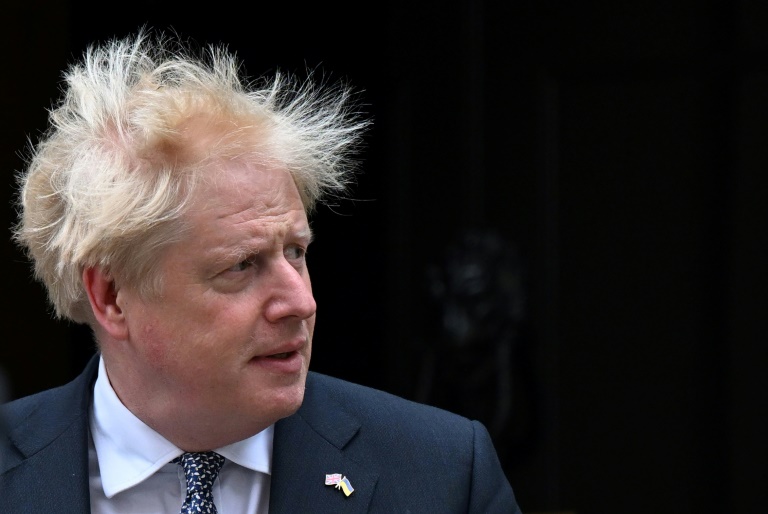
Bowing to a cabinet insurrection, the scandal-tainted Johnson said Thursday that he was stepping down as Conservative leader. 

But he said he would remain in 10 Downing Street until Britain’s ruling party elects a successor — which could take months. 

Until then, he continues to wield all the trappings of executive authority. 

Britain has no formal designation of a “caretaker” leader in between party elections.

In fact, Britain has no formal constitution at all. Instead it has centuries of convention accrued in royal palaces, parliament and the courts.

– Unpresidential –

The unwritten constitution dictates that Britain is a parliamentary democracy. 

The leader of the biggest party gets to be prime minister, with the consent of the monarch.

After a general election, the situation is normally clear-cut — unless, as in 2010, no single party emerges with an overall majority.

The prime minister needs to prove their majority through a vote of confidence. 

If leader of the biggest party, that is guaranteed, if necessary, with the backing of one or more smaller parties (as in 2010).

But parties often change leaders between elections, as now, and as in 2016 when Theresa May succeeded David Cameron following his defeat in Britain’s Brexit referendum.

In fact, the last leader to have been voted in and voted out at the ballot box by the public was Tory prime minister Edward Heath way back in 1974.

Labour insists that Johnson cannot hang around a day longer.

It says it will push a no-confidence vote unless the Conservatives agree to install a new leader much more quickly.

– Lacking confidence –

Normally, a ruling party with a working majority of 73 seats would be assured of winning such a vote in the House of Commons. 

But several Tories have also expressed their unease at Johnson staying in office for longer.

If — and it’s a big if — enough of them rebelled and Labour won, Johnson would have to go immediately. 

By convention, the Conservatives would have to rapidly anoint another leader, who would have to show they do have majority support in the Commons. 

Failing that, Britain would have to hold a general election.

Pressure has grown down the years for a new prime minister, elected internally by their party, to seek a popular mandate.

When Gordon Brown took over as Labour leader and prime minister from Tony Blair in 2007, Brown came close to calling a snap election. 

But fatally, he hesitated, the global financial crisis intervened, and Labour lost in 2010.

Angola's ex-president Dos Santos dies in Spain

Jose Eduardo Dos Santos, who ruled Angola for with an iron fist for 38  years, died Friday at a hospital in Barcelona after suffering cardiac arrest, the government said.

With “great pain and consternation” the Luanda government posted on Facebook confirmation of the Dos Santos’ death at 11:10 am (1010 GMT). He was 79.

“(The government) presents its deepest feelings of sorrow to the bereaved family,” the statement read, describing the former leader as a “statesman of great historical stature” who led the country through very difficult times.  

Angolan President Joao Lourenco, who is seeking re-election in August, declared five days of national mourning, starting on Saturday, and set-up a government commission to organise funerals. 

A presidential decree ordered flags to be flown at half-staff and the cancellation of “all shows and political demonstrations”. 

But one of Dos Santos’ daughters demanded an autopsy be carried out on the body on suspicion of foul play. 

While the former president was lying in hospital earlier this week, Tchize Dos Santos filed suit with the Catalan regional police, alleging her father’s condition was the result of attempted murder. 

According to the complaint, she believed her father’s wife, Ana Paula, and his personal physician were responsible for the deterioration in his health, one of her lawyers said. 

Dos Santos stepped down in September 2017 after 38 years at the helm of the Portuguese-speaking, oil-rich state of Angola.

He was hospitalised in Spain and placed in intensive care after suffering a cardiac arrest on June 23.

Born in the slums of Luanda, he was one of Africa’s longest-serving leaders, using his nation’s oil wealth to turn one of his children into a billionaire while leaving his people among the poorest on the planet.

During his reign, he avoided the personality cult so often favoured by dictators, but instead used secretive and authoritarian tactics he learned during the Soviet era.

And for as much as he controlled every aspect of Angolan life, he mismanaged his own transition away from power so badly that he ended up in temporary self-imposed exile, with a son in prison and a daughter facing international legal challenges.

– ‘Billions embezzled’ –

When he stepped down, dos Santos handed over to former defence minister Lourenco, handpicked to replace him. 

But Lourenco quickly turned on his erstwhile patron, starting an anti-corruption drive to recoup the billions he suspected had been embezzled under dos Santos.

Dos Santos’ eldest daughter Isabel was once named by Forbes as Africa’s richest woman, worth $3 billion (2.55 billion euros). She now faces a slate of investigations into her multinational business dealings.

Angolan Dos Santos's crumbling family business empire

Critics of Angola’s former president Jose Eduardo dos Santos, who died Friday, accused him of stripping the country of much of its vast oil wealth to enrich himself and his family.

Dos Santos, who stepped down in 2017 after 38 years of iron-fisted rule, appointed family members to key economic jobs during his presidency.

Banking, telecoms, media and most significantly oil were among the industries that felt the far-reaching influence of the Dos Santos brood.

He “privatised the state to benefit his family and a handful of associates,” said investigative journalist Rafael Marques de Morais, who was highly critical of Dos Santos’ alleged plunder.

Here is a review of the principal figures in the “family business”:

– Isabel, the daughter –

Known derisively as “the princess”, 49-year-old Isabel was the public face of the Dos Santos business empire.

Her father appointed her to head the state oil giant Sonangol, but she was dismissed shortly after his  successor Joao Lourenco took office.

Isabel dos Santos described herself as an “entrepreneur” on her Twitter account and the US-based Forbes magazine once ranked her Africa’s richest woman.

It estimated her personal fortune to be as much as $3.5-billion.

She was active in the telecoms sector and controlled Unitel, Angola’s leading mobile phone operator, which she quit in 2020.

She also held shares in Portuguese media giant NOS, while investing heavily in the banking sector, sitting on the boards of Banco de Fomento Angola, Banco BIC — as well as its Portuguese affiliate — and the market leader BFA.

And along with her now late husband Sindika Dokolo, she owned the luxury Swiss celebrity jeweller De Grisogono, which went bust in 2020.

But that business empire has been largely dismantled since a 2020 ICIJ investigation into the shady origins of her fortune.

She is being probed for a long list of crimes in Angola, including mismanagement, embezzlement and money laundering during her stewardship of the state-run oil giant Sonangol.

She has vehemently denied the accusations against her as a politically-motivated “witch-hunt”.   

Last year she was ordered to surrender a stake in the Portuguese energy company Galp worth an estimated $500 million

– Jose Filomeno, the son –

In 2013, Jose Filomeno de Sousa dos Santos, nicknamed Zenu, was appointed by his father to head up a sovereign wealth fund. At 35, Filomeno was controlling the fund worth $5 billion.

Six years later, he was arrested for fraud, money laundering and influence peddling. He was found guilty of trying to embezzle up to $1.5 billion from the sovereign wealth fund, which he oversaw from 2013 to 2018.

In 2020 he was jailed for five years, making him one of the first members of the former presidential family to be prosecuted as part of an anti-graft campaign led by Lourenco since he came to power in 2017.

– ‘Tchize’, the other daughter – 

Married to a Portuguese businessman, Welwitschia dos Santos was a leading figure in the Angolan media landscape.

Now in her mid 40s, she held different positions at TPA, a public broadcaster and led two tabloid-style print titles.

Lower profile than her half-sister Isabel, Welwitschia — whose nickname is “Tchize” — controlled one of Angola’s leading multimedia and advertising agencies.

She also became the first Angolan woman to lead a major football club after she took the reins at Benfica de Luanda.

Following her brother’s conviction, she accused Lourenco of unjustly targeting the dos Santos family for political reasons.  

“Lourenco (is) using the children to harm the politically stronger father,” she told AFP.


– Ana Paula, the wife –

Ana Paula, a former air hostess who became Jose Eduardo dos Santos’ second wife and according to the local media was involved in several diamond miners.

According to Angola’s monthly economics journal Expensao, Ana Paula Cristovao Lemos also directly held five percent of Sol bank in addition to the 10 percent stake she had in the business through her foundation.

Former Japan PM Abe assassinated by gunman

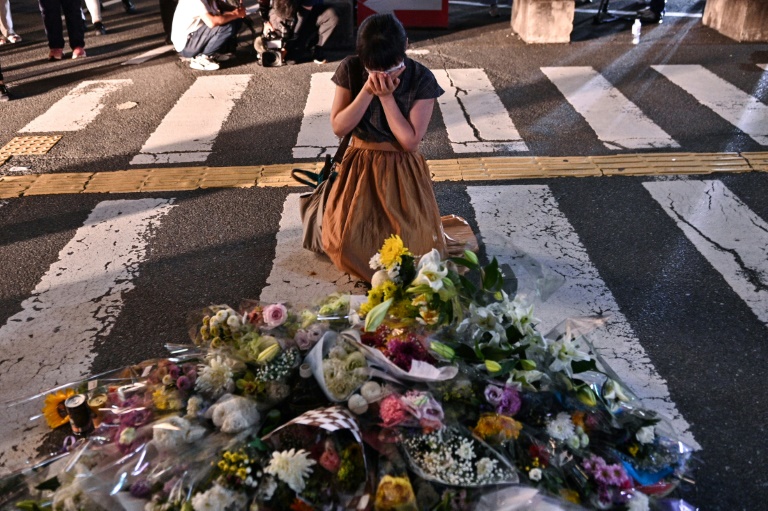
Japan’s former prime minister Shinzo Abe was assassinated on Friday by a gunman who opened fire at close range as the hugely influential politician delivered a campaign speech.

The murder of the 67-year-old, who had been Japan’s longest-serving leader, stunned the nation and prompted an international outpouring of grief and condemnation.

It was all the more shocking given Japan’s strict gun laws and low rates of violent crime, with Prime Minister Fumio Kishida describing the killing as a “barbaric act” that was “absolutely unforgivable”.

Abe, who held office in 2006 for one year and again from 2012 to 2020, was shot shortly before noon while campaigning in the western region of Nara ahead of weekend upper house elections.

He was flown by helicopter to a hospital where he was pronounced dead several hours later, despite a team of 20 medics trying to resuscitate him.

Doctors said the politician had suffered two gunshot wounds to the neck and died of massive blood loss.

After Abe’s death was confirmed, a visibly emotional Kishida said he was “lost for words”.

“During this election period, a despicable and barbaric act was committed… this is unforgivable. We condemn it once again in the strongest terms,” said the prime minister, having abandoned the campaign trail and flown back to Tokyo.

The attack occurred as Abe delivered a stump speech with security present but spectators able to approach him easily.

Footage from public broadcaster NHK showed him standing on a stage when a man dressed in a grey shirt and brown trousers approached from behind, before drawing a weapon from a bag.

At least two shots appeared to be fired, each producing a cloud of smoke. As spectators and reporters ducked, a man was shown being tackled to the ground by security.

The man was arrested and identified by local media as 41-year-old Tetsuya Yamagami. Several outlets described him as a former member of the Maritime Self-Defense Force, the country’s navy.

He was wielding a weapon described by local media as a “handmade gun”, and NHK said he told police after his arrest that he “targeted Abe with the intention of killing him”.

– ‘Large bang’ –

Witnesses described shock as the political event turned into chaos.

“The first shot sounded like a toy bazooka,” a woman told NHK. 

“He didn’t fall and there was a large bang. The second shot was more visible, you could see the spark and smoke.”

Officials from the local chapter of Abe’s Liberal Democratic Party said there had been no threats before the incident and that his speech had been announced publicly.

Several parties announced their senior members would halt campaigning for Sunday’s election in the wake of the attack, but the ruling LDP and its coalition partner Komeito said canvassing would resume on Saturday.

The attack prompted international shock, with European Commission chief Ursula von der Leyen tweeting that the “brutal and cowardly murder” had shocked the world.

US Secretary of State Antony Blinken called Abe “a leader with great vision” who “brought the relationship between our two countries… to new heights”.

South Korean President Yoon Suk-yeol described the killing as an “unacceptable act”.

– Strict gun laws –

Abe was forced to step down in 2020 due to the debilitating bowel condition ulcerative colitis.

The hawkish conservative had pushed for the revision of Japan’s pacifist constitution to recognise the country’s military, and stayed a prominent political figure even after his resignation.

Japan has some of the world’s toughest gun-control laws. Annual deaths from firearms in the country of 125 million people are regularly in single figures.

Getting a gun licence is a long and complicated process for Japanese citizens, who must first get a recommendation from a shooting association and then undergo strict police checks.

Corey Wallace, an assistant professor at Kanagawa University who focuses on Japanese politics, said the incident recalled the 1960 assassination of Inejiro Asanuma, the leader of the Japan Socialist Party, who was stabbed by a right-wing youth. 

He noted that Japanese politicians and voters were used to a personal and close-up style of campaigning.

“This could really change,” he said.

Close Bitnami banner
Bitnami