World

War in Ukraine: Latest developments

Here are the latest developments in the war in Ukraine:

– Lavrov storms out of G20 talks –

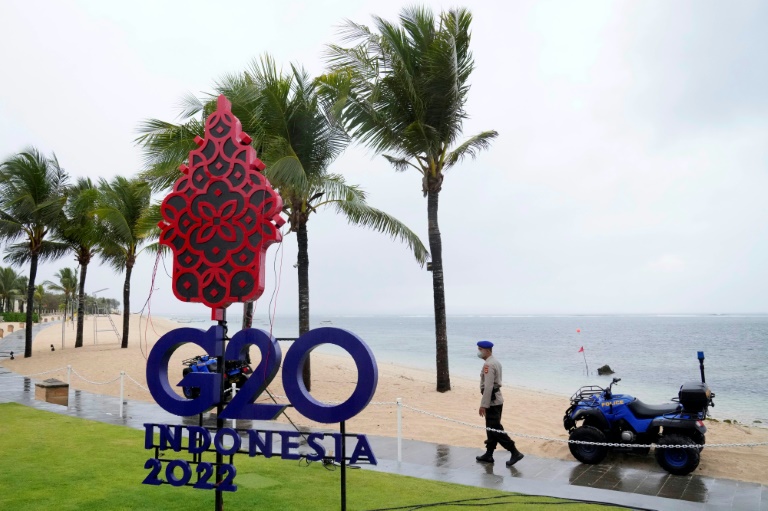
Russia’s Foreign Minister Sergei Lavrov storms out of talks with other G20 foreign ministers meeting in Indonesia as Western powers criticise Moscow over its invasion of Ukraine.

At the meeting on the resort island of Bali, the US and Western allies tell Moscow the conflict with Ukraine must end through negotiations.

But Lavrov walks out of a morning session as German counterpart Annalena Baerbock criticises Moscow over its invasion, and he also leaves an afternoon session before Ukrainian Foreign Minister Dmytro Kuleba addresses the ministers virtually.

US Secretary of State Antony Blinken had earlier shunned a meeting with Lavrov, instead accusing Russia of triggering a global food crisis and demanding Moscow allow grain shipments out of Ukraine.

– Kramatorsk under fire –

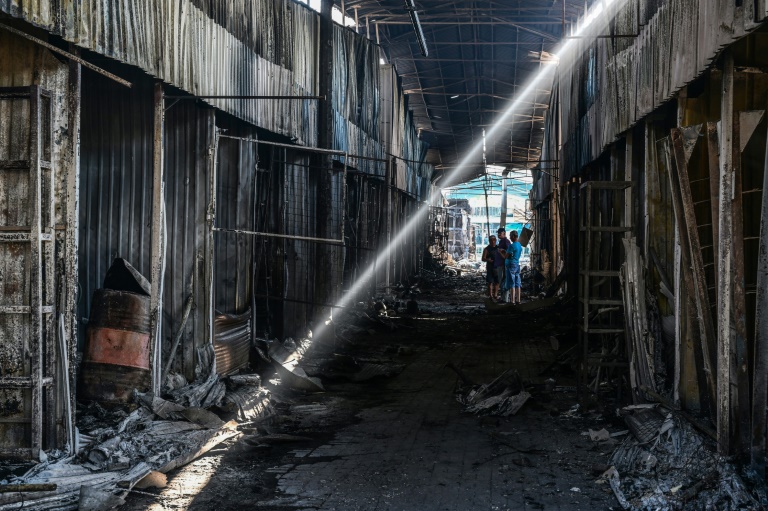
A Russian air strike in the eastern Ukrainian industrial city leaves at least one dead and several others wounded as Russia seeks to push deeper into the Donbas region.

The explosion leaves a gaping crater next to a hotel and residential buildings and several cars ablaze, AFP journalists say.

Before the strike, the head of the Donetsk region, Pavlo Kyrylenko, announced that Russian bombardments had killed at least seven people over the past 24 hours.

– Kyiv-Ankara tensions –

A diplomatic crisis flares between Ukraine and Turkey with Kyiv accusing Ankara of ignoring its calls to impound a Russian-flagged ship carrying grain allegedly stolen from Ukraine.

Kyiv alleges that the Zhibek Zholy, which arrived at Turkey’s Black Sea port of Karasu a week ago, slipped out of the Russian-occupied Ukrainian port of Berdyansk with wheat stolen from Ukrainian territory.

Russia denies stealing grain.

After being submitted to Turkish checks, the vessel returned to Russian territorial waters on Thursday, Turkish sources said.

Ukraine said it was “deeply disappointed” Turkey has not impounded the ship and handed back the grain.

The Ukrainian foreign ministry has summoned Turkey’s ambassador to demand an explanation.

– Ukraine control of Snake Island –

In his evening address, Ukrainian President Volodymyr Zelensky reissues his call for more arms from international allies. 

He also thanks the effort involved in Ukraine regaining control of Snake Island in the Black Sea.

“I want to thank for the final stage of the fight for Snake Island.  Our national flag was erected there. This operations lasted for two months,” Zelensky says.

Russia says it pulled back from the symbolic island in a gesture of “good will”, but has since continued targeting positions there.

The Russian defence ministry says it had carried out “precision” missile strikes on the island early Thursday, killing Ukrainian soldiers.

burs-eab/spm
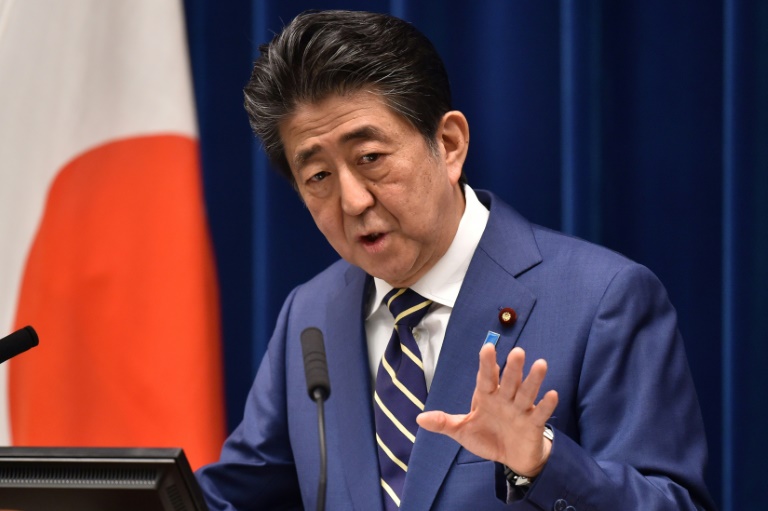
Shinzo Abe: Japan's longest-serving prime minister

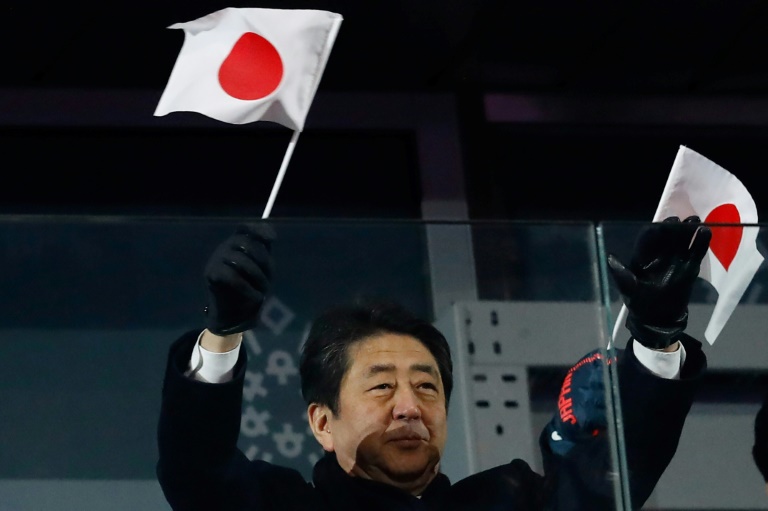
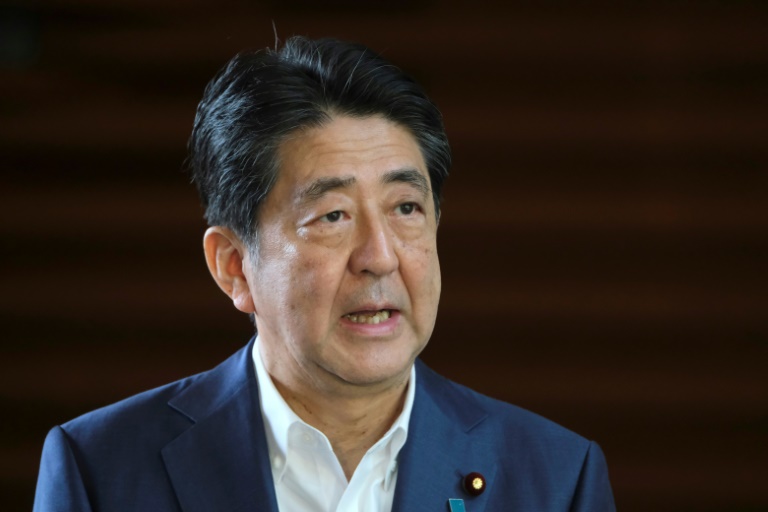
Shinzo Abe smashed records as Japan’s longest-serving prime minister, championing ambitious economic reform and forging key diplomatic relationships while weathering scandals.

Nearly two years after poor health forced him to leave office, the 67-year-old was shot during a campaign event in the western region of Nara on Friday.

He was transported to a local hospital and died there almost five hours later, hospital officials said. 

Abe was a sprightly 52 when he first became prime minister in 2006, the youngest person to occupy the job in the postwar era.

He was seen as a symbol of change and youth, but also brought the pedigree of a third-generation politician groomed from birth by an elite, conservative family.

Abe’s first term was turbulent, plagued by scandals and discord, and capped by an abrupt resignation.

After initially suggesting he was stepping down for political reasons, he acknowledged he was suffering an ailment later diagnosed as ulcerative colitis.

– They called it ‘Abenomics’ –

The debilitating bowel condition necessitated months of treatment but was, Abe said, eventually overcome with the help of new medication.

He ran again, and Japan’s revolving prime ministerial door brought him back to office in 2012.

It ended a turbulent period in which prime ministers sometimes changed at a rate of one a year.

With Japan still staggering from the effects of the 2011 tsunami and subsequent nuclear disaster at Fukushima — and a brief opposition government lashed for flip-flopping and incompetence — Abe offered a seemingly safe pair of hands.

And he had a plan: Abenomics.

The scheme to revive Japan’s economy — the world’s third-biggest, but more than two decades into stagnation — involved vast government spending, massive monetary easing and cutting red tape.

Abe also sought to boost the country’s flagging birth rate by making workplaces more friendly to parents, particularly mothers.

He pushed through controversial consumption tax hikes to help finance nurseries and plug gaps in Japan’s overstretched social security system.

While there was some progress with reform, the economy’s bigger structural problems remained.

Deflation proved stubborn and the economy was in recession even before the coronavirus struck in 2020.

Abe’s star waned further during the pandemic, with his approach criticised as confused and slow, driving his approval ratings down to some of the lowest of his tenure.

– Political storms –

On the international stage, Abe took a hard line on North Korea, but sought a peacemaker role between the United States and Iran.

He prioritised a close personal relationship with Donald Trump in a bid to protect Japan’s key alliance from the then-US president’s “America First” mantra, and tried to mend ties with Russia and China.

But the results were mixed: Trump remained eager to force Japan to pay more for US troops stationed in the country, a deal with Russia on disputed northern islands stayed elusive, and a plan to invite Xi Jinping for a state visit fell by the wayside.

Abe also pursued a hard line with South Korea over unresolved wartime disputes and continued to float plans to revise Japan’s pacifist constitution.

Throughout his tenure, he weathered political storms including cronyism allegations that dented approval ratings but did little to affect his power, in part thanks to the weakness of the opposition.

Abe had been due to stay on until late 2021, giving him an opportunity to see out one final event in his historic tenure — the postponed Tokyo 2020 Olympics Games.

But in a shock announcement, he stepped down in August 2020, with a recurrence of ulcerative colitis ending his second term, too.

Leave means leave: UK PM faces calls to go now

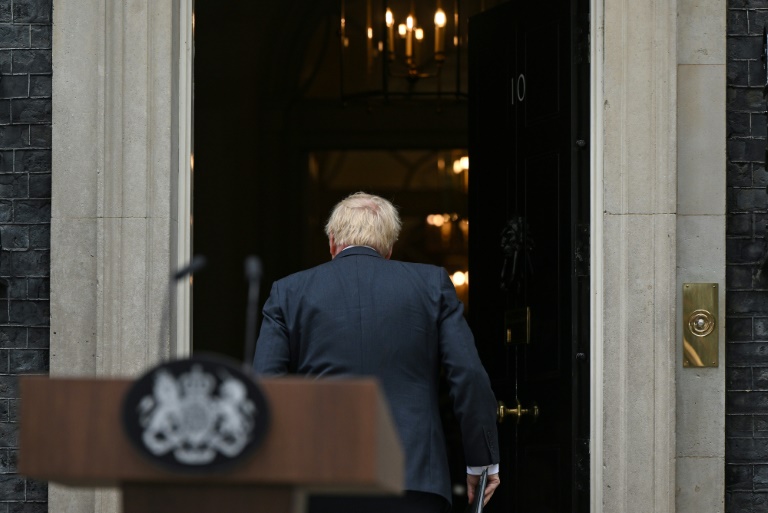
Britain’s main opposition Labour party on Friday threatened to call a no-confidence vote in Prime Minister Boris Johnson to get him to quit immediately, after he was forced to resign by a cabinet revolt.

Johnson quit as leader of the ruling Conservative party on Thursday, after a frenzy of nearly 60 resignations in less than 48 hours in opposition to his scandal-hit leadership.

But the 58-year-old premier, whose three-year premiership has been defined by Britain’s departure from the European Union and Covid, said he would stay on until his successor is found.

As candidates readied for a battle to replace Johnson, he faced calls to leave straight away and for an acting leader to be appointed to head the world’s fifth-largest economy in the interim.

Labour’s deputy leader Angela Rayner on Friday said they aimed to trigger a vote of no-confidence in parliament if the Tories do not get rid of him immediately.

“He’s a proven liar who’s engulfed in sleaze and we can’t have another couple of months of this,” she told BBC radio.

“If they don’t, we will call a no-confidence vote because it’s pretty clear he hasn’t got the confidence of the House (of Commons) or the British public.”

To do so, they would need the support of dozens of Conservative MPs. But the strategy is fraught as it could trigger a general election, which could see Tories lose their seats if Johnson is defeated.

– Contenders –

James Cleverly, newly installed as education minister, insisted that Johnson would stay in charge for the next few months.

“It’s right that he has stood down and it’s right that he has put a team in place to continue governing whilst the selection procedure flows for his successor,” he told Sky News.

“And we should do that I think pretty quickly.”

A timetable for the Tory leadership contest is expected to be announced on Monday, with the winner installed in time for the party’s annual conference in early October.

Defence minister Ben Wallace and Rishi Sunak — whose resignation as finance minister on Tuesday set off the chain of exits — were among the early frontrunners to take over, a YouGov survey of Tory members suggested.

Foreign Secretary Liz Truss, another potential contender, cut short a trip to Indonesia for a G20 meeting to fly back. 

So far, Conservative MP Tom Tugendhat and Attorney General Suella Braverman have both officially announced their candidature, while Brexiteer Steve Baker has signalled interest.

– ‘Best job’ –

In a defiant resignation speech in Downing Street, Johnson said he was “sad… to be giving up the best job in the world”.

But he said he initially refused to surrender to his “herd” of Tory critics by claiming a personal mandate he won by a landslide in December 2019.

Even while eyeing the exit, Johnson sought to steady the ship, making several appointments to replace departed cabinet members.

At a first meeting of his hastily convened new cabinet, Johnson confirmed his lame-duck status by saying “major fiscal decisions should be left for the next prime minister”, Downing Street said.

Sunak and health secretary Sajid Javid prompted the exodus by quitting late Tuesday, just as Johnson apologised for appointing a senior colleague facing sexual assault claims to a prominent role.

Chris Pincher resigned as deputy chief whip last week following accusations he had drunkenly groped two men.

Downing Street officials eventually conceded that Johnson had known about other allegations against Pincher back in 2019, and many ministers recoiled at having to defend the leader yet again.

– Legacy –

As late as Wednesday night, Johnson had been defiantly clinging to power. 

But he was forced to concede his time was up after another round of resignations on Thursday mornings and warnings of a second no-confidence vote next week by Tory MPs.

The Tory infighting erupted as millions of Britons battle the worst slump in living standards since the 1950s, fuelled by rocketing energy prices on the back of the war in Ukraine.

Johnson’s popularity had slumped since revelations about lockdown-breaking parties in Downing Street that saw him become the first prime minister to be fined in office.

Johnson gambled successfully on a vaccine campaign but was criticised for his initial response to the pandemic, which saw more than 180,000 people in Britain die after contracting Covid.

Asian stocks up as recession fears ease, yen rises after Abe shooting

Asian markets rose Friday on easing recession fears with optimism boosted by hopes that Joe Biden will remove some Trump-era tariffs from Chinese goods, while the euro extended losses and headed close to parity with the dollar.

The safe-haven yen also picked up following news of Japan’s former prime minister Shinzo Abe being shot during a campaign rally. He is still fighting for his life. 

Equities were also boosted by reports that Beijing was considering a huge stimulus push to the struggling economy by allowing local governments to raise billions of dollars through bond issuance for infrastructure projects.

But surging inflation, rising interest rates and a fresh flare-up of Covid infections in Shanghai continued to keep investor sentiment grounded.

Traders were handed a strong lead from Wall Street, where all three main indexes climbed for a fourth straight day, helped by two top Federal Reserve officials who said the economy could withstand sharper rate hikes and maintain growth.

There has been growing talk that the fast pace of monetary tightening by the bank will tip the world’s top economy into recession.

But Christopher Waller, a member of the board of governors, said worries were overblown and that a strong jobs market would provide a buffer, adding that rates needed to go up sharply and quickly. St Louis Fed president James Bullard also said there was “a good chance of a soft landing”.

Asian equities advanced with Hong Kong, Shanghai, Sydney, Seoul, Singapore, Wellington, Mumbai, Taipei, Manila and Jakarta all in the green. Shanghai closed slightly down.

Tokyo’s Nikkei 225 ended up but saw its early big gains wiped out after news filtered through of Abe’s shooting.

Some observers said that because he still held sway over his ruling LDP party, it continued to stick with his ultra-loose monetary policy known as Abenomics. 

The yen briefly strengthened to 135.34 per dollar, compared with 136.08 in the morning, as analysts speculated on how the possible loss of Abe’s still-strong influence in Japan could see changes in policy. 

Masahiro Yamaguchi, of SMBC Trust Bank, said: “It could be negative for markets if the government’s policy, including its stance on monetary easing, is affected as it was evident that he was pulling the strings behind the scenes in many ways.

“If it becomes possible for (current Prime Minister Fumio) Kishida to carry out policies he wanted to, such as financial tax and regulations on share buy-back, that would be negative for markets.”

– US jobs in focus –

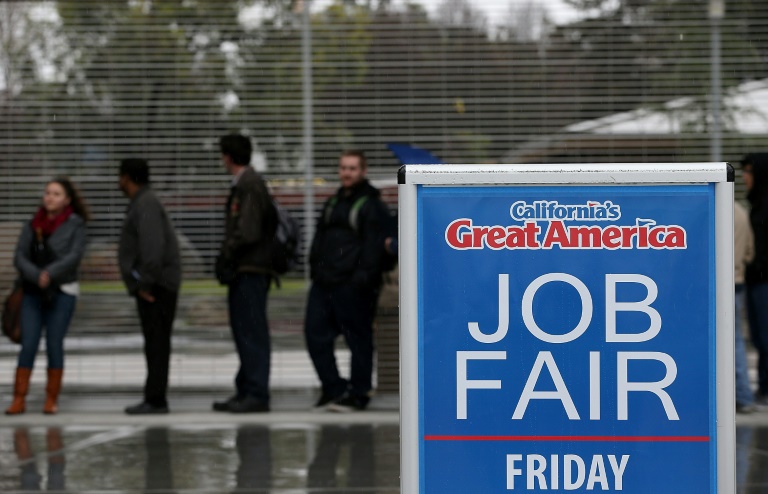
The Fed’s policy plans will be in focus later Friday when US employment data is released, with a strong reading providing the central bank with evidence to stick to its hawkish line.

But Matt Simpson at StoneX Financial said there were indications the jobs market could be showing signs of weakness.

The report “is unlikely to deter the Fed from a 75 basis points hike this month. But when the precious non-farm payroll numbers begin to crumble, so does the Fed’s argument that the US economy is robust”, he said.

“And we’re seeing early signs of that across multiple employment metrics.”

“When we do see unemployment begin to rise and headline employment growth lose momentum it will be hard for the Fed to ignore,” he added. 

Biden is also reported to be holding a meeting later Friday with top advisers to discuss whether or not to lift some of the Trump-era tariffs imposed on around $300 billion of Chinese imports.

While he is also said to be considering another probe into other facets of Beijing’s trade policy, analysts said the removal of the levies could boost China’s export growth to the United States by about 20 percent.

The move could also help ease upward pressure on US inflation, which is running at a four-decade high.

The euro extended its losing streak, falling to $1.0072 for the first time in 20 years, a day after minutes from the European Central Bank’s most recent meeting indicated that, unlike the Fed, it was happy to hike rates at a slower pace despite surging inflation.

And sterling continued to rise after Boris Johnson resigned Thursday as leader of the ruling Conservatives, paving the way for a new prime minister and bringing an end to weeks of political uncertainty in the United Kingdom.

Stocks in London, Paris and Frankfurt were flat in the morning.

– Key figures at around 0810 GMT –

Tokyo – Nikkei 225: UP 0.1 percent at 26,517.19 (close)

Hong Kong – Hang Seng Index: UP 0.4 percent at 21,725.78 (close)

Shanghai – Composite: DOWN 0.4 percent at 3,356.08 (close)

London – FTSE 100: FLAT at 7,191.92

Dollar/yen: DOWN at 135.80 yen from 136.01 yen Thursday

Euro/dollar: DOWN at $1.0100 from $1.0162

Pound/dollar: DOWN at $1.1941 from $1.2024 

Euro/pound: UP at 84.60 pence from 84.49 pence

West Texas Intermediate: DOWN 0.7 at $101.99 per barrel

Brent North Sea crude: DOWN 0.5 percent at $104.17 per barrel

New York – Dow: UP 1.1 percent at 31,384.55 (close)

US ties, Olympic ambitions: the tenure of Japan's former PM Abe

Japan’s best-known politician Shinzo Abe was shot at a campaign event Friday and left in a “very grave condition”, shocking the country and global leaders.

The former prime minister resigned in 2020, ending a tenure studded with headline-grabbing moments, from a turn as Super Mario to a controversial shrine visit that sparked regional anger.

Here are some of the most memorable moments of Abe’s record-breaking time in office.

– Ties with Trump –

Abe made building a close personal relationship with former US president Donald Trump a cornerstone of protecting Japan’s key alliance.

In 2016, he flew to New York to chat with Trump after the US election, becoming the first foreign leader to meet him at his Manhattan skyscraper.

The pair regularly golfed together, and Trump was the first head of state to meet Japan’s new emperor.

But there were plenty of awkward moments.

In 2017, a video went viral of Trump almost wrestling with Abe in a handshake that lasted 19 seconds and ended with the Japanese leader visibly grimacing and appearing relieved the encounter was over.

And then there was their 2018 golf game, when Abe tumbled backwards into a bunker and Trump marched down the fairway seemingly oblivious.

– Olympics –

It was about the last thing expected from Japan’s straight-laced prime minister, but in 2016, Abe decided to show his commitment to the Olympics in an unusual fashion — by appearing as video game icon Super Mario.

He donned the disguise at the Rio Games for the official handover ceremony to Tokyo, appearing to tunnel through the earth from Japan to Brazil thanks to some digital trickery, before popping up in full costume.

“I wanted to show Japan’s soft power to the world with the help of Japanese characters,” he told reporters.

– ‘Banzai!’ –

Few political leaders can say their tenure literally involved the end of an era, but in Japan, the abdication of former Emperor Akihito meant the Heisei imperial era came to an end in 2019.

The new Reiwa era began in May 2019 and Emperor Naruhito formally ascended the Chrysanthemum Throne in October, in a ceremony steeped in tradition and grandeur.

As prime minister, Abe had a once-in-a-generation role in the transition, pledging in an address to the new monarch that the people of Japan would “respect your highness the emperor as the symbol of the state and of the unity of the Japanese people”.

He then raised his hands three times, shouting the phrase: “Banzai!” or “Long live the emperor!”

– Shrine trip –

His tenure was also marked by less light-hearted moments including his 2013 visit to Yasukuni, a shrine that venerates the souls of Japan’s war dead — including some convicted by a US tribunal of war crimes.

The shrine is seen by many in the region as a symbol of Japan’s militarism during which much of East Asia and Southeast Asia were subjected to brutal offensives and years-long occupations.

Abe’s visit prompted outrage from China and South Korea and even a US rebuke.

He said the trip was not intended to inflame tensions, but he stayed away afterwards, sending only ritual offerings in following years.

– Hiroshima and Pearl Harbor –

Abe said little about what he thinks his legacy would be, but he cited one particular point of pride: bringing then-US president Barack Obama to Hiroshima in 2016.

Obama became the first sitting US president to visit the site, where he paid tribute to victims of the world’s first atomic attack, though stopping short of offering an apology for the bombing.

Later that year, the two leaders made a poignant joint pilgrimage to Pearl Harbor, the first visit by a sitting Japanese leader to the memorial there, issuing symbolic declarations about the power of reconciliation and warning against the drumbeat of conflict.

Pilgrims pack Mount Arafat for climax of biggest Covid-era hajj

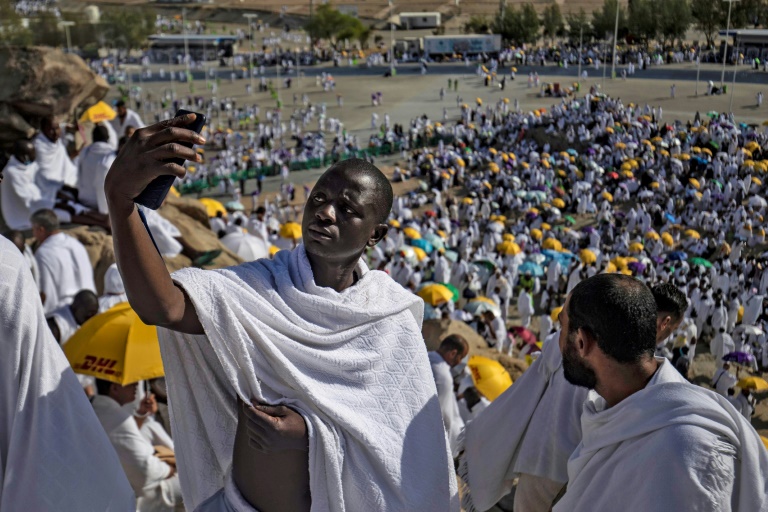
Huge crowds of robed Muslim pilgrims prayed on Saudi Arabia’s Mount Arafat on Friday, the climax of the biggest hajj pilgrimage since the pandemic forced drastic cuts in numbers two years in a row.

Groups of worshippers, many holding umbrellas against the fierce sun, recited verses from the Koran on the rocky rise, where the Prophet Mohammed is believed to have given his final sermon.

Prayers on Mount Arafat, also known as the “Mount of Mercy”, are the highlight of the pilgrimage, capped this year at one million people including 850,000 from abroad after Covid greatly reduced numbers over 2020 and 2021.

Pilgrims, many of them in simple white robes and chanting “Oh God, here I am”, reached Mount Arafat on foot or in buses from the tents nearby where they spent the night.

After sunset, they will journey the short distance to Muzdalifah, where they will sleep under the stars before performing the symbolic “stoning of the devil” ceremony on Saturday. 

“I am so happy to be here, like everyone else. This is the biggest hajj in the coronavirus era, but it isn’t big enough yet,” Egyptian pilgrim Saad Farhat Khalil, 49, told AFP.

“There are one million here today, but if the Saudis allowed more, 10 million would have came,” he added.

Entry roads were packed with worshippers as helicopters buzzed overhead and volunteers handed out bottles of water and collected rubbish in green plastic bags. 

“Let’s keep the purest of all lands clean,” read a sign on a large garbage container.

The hajj, usually one of the world’s largest annual religious gatherings, is among the five pillars of Islam and must be undertaken by all Muslims with the means at least once in their lives.

In 2019, as in previous years, some 2.5 million Muslims from around the world took part, a figure that dropped to a few thousand in 2020 and 60,000 in 2021.

Even though the crowds are back, Covid fears remain and the hajj is taking place against the backdrop of a resurgence in the region, with some Gulf countries tightening restrictions to keep outbreaks in check.

All participants were required to submit proof of full vaccination and negative PCR tests. On reaching their white-tent encampment at Mina on Thursday, they were handed small bags containing masks and sanitiser. 

– Heat warnings –

The pilgrimage can be physically draining even in ideal conditions, but worshippers this year have faced an added challenge: scorching sun and temperatures rising to 42 degrees Celsius (108 degrees Fahrenheit).

Islam forbids men from wearing hats once the rites start, and many have been seen shielding themselves with umbrellas, prayer mats and even, in one case, a small bucket filled with water. 

Women, meanwhile, are obliged to cover their heads with scarves.

“We can tolerate (the heat). We are here for the hajj. The more we tolerate, the more our pilgrimage is accepted,” Laila, a 64-year-old Iraqi pilgrim who gave only her first name, told AFP in Mecca, where the rituals started.

Saudi officials have touted their preparations for the extreme conditions, highlighting the hundreds of hospital beds allocated for heatstroke patients and the “large number of misting fans” they have provided. 

A truck has also been allocated to distribute umbrellas, water bottles and small fans.

Nevertheless, the National Centre for Meteorology, which has set up an office in Mina, is sending warnings to pilgrims on their mobile phones, urging them to avoid outdoor rituals at certain times of the day, especially at noon.

On Saturday, Muslim pilgrims will take part in the “stoning”, the last major ritual of the hajj which has previously led to deadly stampedes, as hundreds of thousands of participants converge on a small space.

After the stoning ritual, pilgrims return to the Grand Mosque in Mecca to perform a final “tawaf” or circling of the Kaaba, the cubic structure draped in a gold-embroidered black cloth that is the focal point of Islam.

Eid al-Adha, the feast of the sacrifice that begins on Saturday, marks the end of hajj.

mah-rs/rcb/th/jsa

US, Russian envoys gather for G20 with call to end Ukraine war

The United States and Western allies pressured Russia at G20 talks in Indonesia Friday over its “unprovoked and unjustifiable war of choice” in Ukraine, but Moscow’s envoy remained defiant.

US Secretary of State Antony Blinken and Russian counterpart Sergei Lavrov joined colleagues for day-long talks in their first meeting since the outbreak of war, with the host immediately telling them the conflict must end through negotiations.

Before the meeting on the resort island of Bali, Blinken met his French and German counterparts and a senior British official to discuss “Russia’s unprovoked and unjustifiable war of choice” in Ukraine, the State Department said in a statement.

They “reviewed ways to address the global food security concerns that have resulted from Russia’s deliberate targeting of Ukrainian agriculture”, it said.

Blinken will shun a direct meeting with Lavrov, US officials said, instead accusing Moscow of triggering global food and energy crises.

In response, Lavrov told reporters he would not “go running” after the United States for talks.

“It was not us who abandoned contact, it was the United States,” he said, adding that no ministers walked out of the talks.

“Our Western partners are trying to avoid talking about global economic issues,” he added. “From the moment they speak, they launch into fevered criticism of Russia.”

The gathering was overshadowed by the shooting of former Japanese Prime Minister Shinzo Abe at a campaign event on Friday, with Japanese premier Fumio Kishida saying he is in a “very grave condition”.

Blinken voiced alarm and called it a “very sad moment” after the attack on a longtime ally of Washington and Japan’s longest-serving premier.

Indonesian Foreign Minister Retno Marsudi, chair of the meeting, said Jakarta conveyed its “deepest sympathies” to Japan.

Before the news emerged, she addressed the war in a speech to the ministers including Lavrov.

“It is our responsibility to end the war sooner than later and settle our differences at the negotiating table, not the battlefield,” Marsudi said.

In the session that followed, there was strong and “nearly unanimous” condemnation of Russia, a source in the meeting told AFP.

– No family photo –

A US official indicated Washington did not want to embarrass Indonesia at the meeting by walking out on Lavrov.

The hosts have addressed US concerns about Lavrov attending in part by inviting Ukrainian President Volodymyr Zelensky to the G20 summit later this year and Foreign Minister Dmytro Kuleba to Friday’s meet.

But there will be no family photo of the G20 ministers as is customary, an Indonesian government official told AFP.

Blinken arrived at the Mulia hotel on Friday where he could be seen talking with South Africa’s foreign minister before entering the same room as Lavrov, who he last met in January.

Russia’s top diplomat was seated between the Saudi Arabian and Mexican foreign ministers as the meeting began.

He was later seen strolling and chatting to Indian Foreign Minister Subrahmanyam Jaishankar before he met with Blinken.

In his meeting with Delhi’s envoy, Blinken said many of the G20 member countries had criticised Moscow over its campaign in Ukraine.

“What we’ve heard today already, is a strong chorus from around the world… about the need for the aggression to end,” he said.

– British FM leaves –

Friday’s meeting is a prelude to the leaders’ summit on Bali in November that was meant to focus on the global recovery from the Covid-19 pandemic.

Blinken’s efforts to have a powerful Western stance against Russia at the meeting were diluted after British Foreign Minister Liz Truss pulled out following Prime Minister Boris Johnson’s resignation as leader of his party on Thursday.

She flew out of Bali on Friday morning and was replaced by former British ambassador to the European Union Sir Tim Barrow, a British official told AFP.

While in Bali, Blinken will also seek to reopen dialogue with Beijing in talks on Saturday with his Chinese counterpart Wang Yi, the first in months after tensions became strained over issues including Taiwan.

The meeting comes as US President Joe Biden voices hope for a conversation in the coming weeks with Chinese President Xi Jinping, with whom he last spoke in March.

Lavrov met Wang on Thursday to discuss Russia’s invasion, which Moscow says it launched to stop Ukraine from joining the NATO military alliance.

The United States has condemned Beijing’s support for Russia, and Blinken is expected to reiterate those warnings in talks with Wang.

Australian Foreign Minister Penny Wong will herself meet Wang on the sidelines of the meeting on Friday to press China to end trade “blockages”, she said. 

Former Japan PM Abe 'in grave condition' after shooting

Japan’s former premier Shinzo Abe was fighting for his life on Friday after being shot at a campaign event, the prime minister said, condemning the “absolutely unforgivable” attack.

The shooting of the country’s best-known politician comes despite Japan’s strict gun laws and with campaigning under way ahead of upper house elections on Sunday.

“Former prime minister Shinzo Abe was shot in Nara and I have been informed he is in a very grave condition,” Prime Minister Fumio Kishida told reporters after arriving in Tokyo by helicopter from the campaign trail.

“I pray that former prime minister Abe will survive,” the visibly emotional leader said.

“It is a barbaric act during election campaigning, which is the foundation of democracy, and it is absolutely unforgivable. I condemn this act in the strongest terms.”

The attack took place shortly before noon in the country’s western region of Nara, and “one man, believed to be the shooter, has been taken into custody”, government spokesman Hirokazu Matsuno earlier told reporters.

Kishida said “no decision” had been made on the election, though several parties announced their senior members would halt campaigning in the wake of the attack.

Abe, 67, had been delivering a stump speech with security present, but spectators were able to approach him fairly easily.

Footage broadcast by NHK showed him standing on a stage when a loud blast was heard with smoke visible in the air.

As spectators and reporters ducked, a man was shown being tackled to the ground by security.

Local media identified the man as 41-year-old Tetsuya Yamagami, citing police sources, with several media outlets describing him as a former member of the Maritime Self-Defense Force, the country’s navy.

He was wielding a weapon described by local media as a “handmade gun”, and NHK said he told police after his arrest that he “targeted Abe with the intention of killing him”.

– ‘A large bang’ –

Witnesses at the scene described shock as the political event turned into chaos.

“He was giving a speech and a man came from behind,” a young woman told NHK.

“The first shot sounded like a toy bazooka. He didn’t fall and there was a large bang. The second shot was more visible, you could see the spark and smoke,” she added.

“After the second shot, people surrounded him and gave him cardiac massage.”

Abe was bleeding from the neck, witnesses said and photographs showed. He was reportedly initially responsive but subsequently lost consciousness.

Officials from the local chapter of Abe’s Liberal Democratic Party said there had been no threats before the incident and that his speech had been announced publicly.

The attack prompted international shock.

“This is a very, very sad moment,” US Secretary of State Antony Blinken told reporters at a G20 meeting in Bali, saying the United States was “deeply saddened and deeply concerned”.

Thailand’s Prime Minister Prayut Chan-O-Cha was “very shocked” at Abe’s shooting, while Indian Prime Minister Narendra Modi said he was “deeply distressed” by the news.

– ‘Profoundly sad and shocking’ –

Abe, Japan’s longest-serving prime minister, held office in 2006 for one year and again from 2012 to 2020, when he was forced to step down due to the debilitating bowel condition ulcerative colitis.

He is a hawkish conservative who pushed for the revision of Japan’s pacifist constitution to recognise the country’s military and has stayed a prominent political figure even after his resignation.

Japan has some of the world’s toughest gun-control laws, and annual deaths from firearms in the country of 125 million people are regularly in single figures.

Getting a gun licence is a long and complicated process for Japanese citizens, who must first get a recommendation from a shooting association and then undergo strict police checks.

Japan has seen “nothing like this for well over 50 to 60 years”, Corey Wallace, an assistant professor at Kanagawa University who focuses on Japanese politics, told AFP.

He said the last similar incident was likely the 1960 assassination of Inejiro Asanuma, the leader of the Japan Socialist Party, who was stabbed by a right-wing youth. 

“But two days before an election, of a (man) who is so prominent… it’s really profoundly sad and shocking.” 

He noted, too, that Japanese politicians and voters are used to a personal and close-up style of campaigning.

“This could really change.”

Pipeline uncertainty leaves Germany with energy jitters

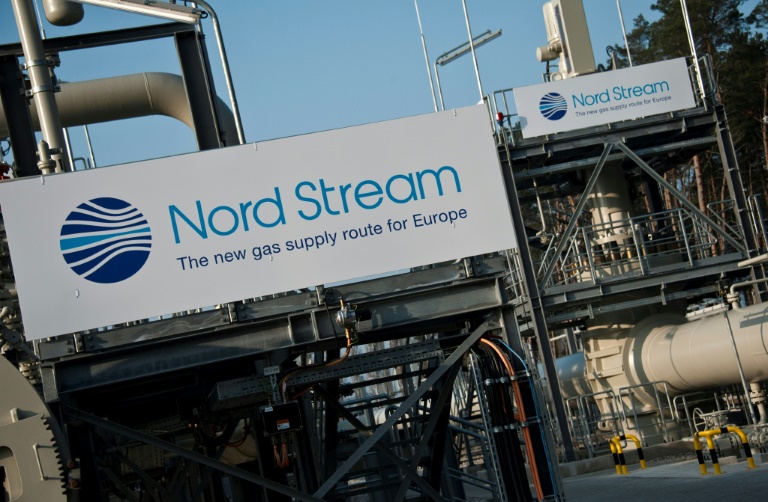
The Nord Stream pipeline, which supplies Germany with most of its Russian gas, will be shut down for routine maintenance from Monday — with fears rising that it may remain off for good.

Germany is already feeling the effects of the energy squeeze caused by the war in Ukraine, with many households and businesses turning down the thermostat or dimming the lights.

Economy Minister Robert Habeck has even made headlines for extolling the virtues of shorter, colder showers.

Now, nervousness abounds as the scheduled 10-day pause in deliveries via the vital Nord Stream pipeline threatens to make things even worse.

“No scenario can be ruled out,” Habeck has warned. 

Confronted with the risk that supplies may never return to previous levels, many businesses and local authorities have come up with contingency plans.

“It is possible that we will return to working from home, as we did during the pandemic — but this time to save energy in the national interest,” Carsten Knobel, head of consumer chemicals group Henkel, told local media.

The VCI, a trade group representing the heavily gas-dependent German chemicals industry, has said it is preparing for “the worst-case scenario”.

Chemicals giant BASF, meanwhile, has raised the possibility of putting its employees on furlough, a system already used during the coronavirus pandemic from 2020.  

Perfume producer Symrise is falling back on an oil-powered furnace at its factory in Holzminden.

– ‘One or two months’ –

Russia has already cut supplies via the Nord Stream pipeline by 60 percent in recent weeks, citing technical issues — which Berlin dismisses as cover for a “political” decision.

As a result, Germany’s gas storage facilities are being filled at a slower pace than usual, leaving the country at risk of running into a  “gas shortage”, according to Habeck.

“If we stop receiving gas from Russia… the quantities currently stored will only be sufficient for one or two months,” said Klaus Mueller, president of the Federal Network Agency.

Consumers “will be shocked when they receive a letter from their energy supplier” with a bill some three times higher than usual, Mueller said.

On Thursday, Germany’s lower house of parliament or Bundestag passed a plan to turn off the hot water in its offices and keep the air temperature no higher than 20 degrees Celsius (68 degrees Fahrenheit) in the winter.

Several local authorities have also put energy-saving plans in motion.

The Bavarian city of Augsburg has turned off its fountains, dimmed the facades of public buildings at night and is debating switching off some under-used traffic lights.

– Chilly nights –

A housing cooperative in the eastern city of Dresden made national headlines when it announced it would limit hot water to certain times of day. 

And Vonovia, Germany’s largest property group, said on Thursday it plans to limit the temperature in its 350,000 homes to 17 degrees Celsius at night.

Since the outbreak of the war in Ukraine, Germany has managed to reduce the share of its natural gas supplied by Russia from 55 percent to around 35 percent. 

The country relies on gas for more than 50 percent of its heating needs. 

In a bid to further reduce its reliance on Russian gas, Germany has put aside billions of euros (dollars( to buy liquefied natural gas from other producers such as Qatar or the United States.

But in the event of a total supply cut-off from Russia, the country “will have to make very difficult societal choices,” according to Habeck.

The end of Russian gas deliveries would most likely plunge the country into a painful recession, with the economy shrinking by 6.5 percent between 2022 and 2023, according to a recent forecast by the country’s top economic think tanks.

Already, the surge in energy prices created the first monthly trade deficit in the country in three decades in June, perhaps the first tremor of a bigger upheaval to come.

'Sacred duty': Inflation eats into Turkey's Muslim feast

With inflation in Turkey galloping, the sheep Gul Er buys every year for the Muslim festival of sacrifice in Istanbul looks agonisingly out of reach.

Prices have doubled or even tripled since President Recep Tayyip Erdogan began an unorthodox economic experiment last year that has seen Turks’ living standards suffer.

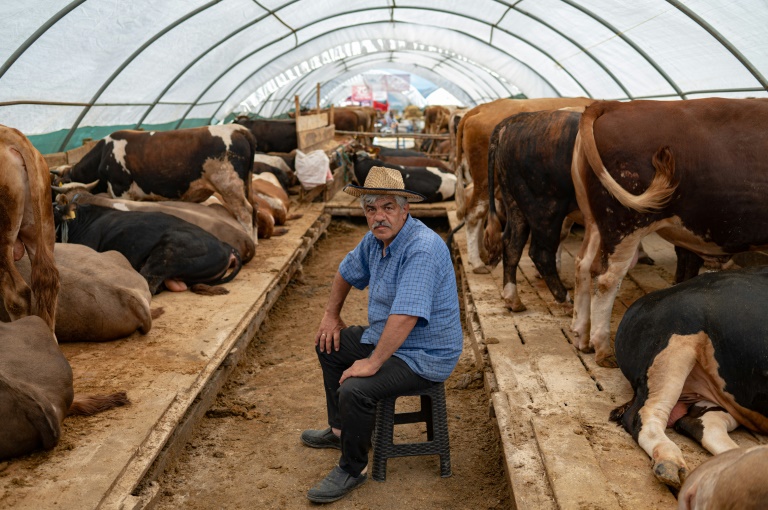
The young mother hopes to bargain down the price on one of the skimpiest-looking animals at a livestock fair held under white tents in a conservative corner of the city before the Kurban Bayrami (Eid al-Adha in Arabic) holiday.

“It is a sacred duty,” she said of buying a sheep, which along with oxen and goats are sacrificed in the name of Allah, with the meat traditionally shared with the poor, friends and neighbours.

“But this year, prices are unaffordable,” Er said, the stench of thousands of animals mixing with the sounds of haggling in the heavy summer air, ahead of Saturday’s first full day of festivities.

Annual inflation in Turkey has officially reached 78.6 percent, although economists and many ordinary Turks doubt government data.

Even if the official figures are to be believed, that is higher than in any other emerging market and nearly 10 times the record levels rocking the European Union, where the cost of living is unleashing political crises.

An independent survey prepared by the ENAG group — and believed by most Turks — puts the annual inflation rate at 175 percent.

Besides clouding Erdogan’s chances in next year’s election, these figures spell trouble for the merchants at the Istanbul animal fair.

– Snowballing problems –

Turkey’s agricultural chambers union chief Semsi Bayraktar expects sales to fall by a quarter this year.

Galip Toklu, a breeder who came to the 40,000-square-metre (10-acre) fair from the Black Sea city of Samsun, listed the ways inflation snowballs into seemingly endless problems.

The cost of animal feed has quadrupled while the amount he pays to drive his livestock to Istanbul has tripled since the last Kurban Bayrami, forcing Toklu to double the price of his meat.

“Last year, I sold 500 kilos (1,100 pounds) of beef for 20,000 liras. This year, I set my prices at 45,000 liras,” he said.

Yet few can now afford Toklu’s beef, while selling it any cheaper could put him out of business.

“Customers are unavoidably upset,” he said, his face sullen under a wide-brimmed hat.

– ‘Erdonomics’ –

While this year’s animal fair looks huge, its 160 tents are a fraction of the 500 erected in past years.

As the fair winds down, breeder Sinas Ates looks despondent, having failed to make a single sale in two days. Livestock farming in Turkey is “finished”, he grumbled.

Just like the sacrifice of sheep, Erdogan’s economic experiment — dubbed “Erdonomics” by sceptical global markets — is also linked to his faith.

Erdogan cites Islamic proscriptions on usury to justify his refusal to raise interest rates to fight inflation. 

High interest rates cause prices to rise, according to Erdogan’s logic, which contradicts accepted economic orthodoxy. 

So Erdogan has pushed the central bank to set interest rates even lower. Analysts at Capital Economics in London see the possibility of a crash of the lira as “a major risk”.

– ‘Allah’s orders’ –

At the market, Salih Yeter has responded to the crisis by coming out to look for the perfect sheep with seven friends, who will all contribute to the purchase.

“People usually can’t afford to eat meat,” the 57-year-old said, adding that giving away meat to the poor is particularly important in times of trouble.

The price of food has soared by 93 percent in the past year, according to official data, with meat prices pushing even higher.

This is especially painful for Er, whose daughter has a metabolic condition that restricts her to a meat diet.

“I can’t even respect my daughter’s diet,” the mother whispered.

But respect for the holy holiday’s traditions is binding, said Selahattin Kose, a “hajji” (one who has made the pilgrimage to Mecca), from the eastern city of Erzurum.

“Prices have doubled, but we have to deal with it,” Kose said. “It’s Allah’s orders.”

Close Bitnami banner
Bitnami