World

Sweat, pray, love: extreme heat hounds hajj

The hajj pilgrimage can be physically draining even in ideal conditions, but worshippers this year face an added challenge: scorching sun and temperatures rising to 42 degrees Celsius (108 degrees Fahrenheit).

Muslims who have flocked to western Saudi Arabia for the five-day ritual, most of which takes place in the open air, have been confronted with a stark reminder of how warming trends are exacerbating what was already a very hot desert climate. 

Islam forbids men from wearing hats once the hajj rites start, and many have been seen trying to shield themselves with umbrellas, prayer mats and even, in one case, a small bucket filled with water. 

Women are obliged to cover their heads with scarves.

The result is a daunting endurance test, though pilgrims generally shy away from complaining. 

“I am fine. I am really enjoying it, even though this heat is something I have never experienced before,” Noliha, a 61-year-old woman from Brunei who gave only her first name, told AFP. 

“I really love it because I am in Mecca and doing my first hajj. I just cover my head with a hat instead of using the umbrella.” 

The timing of the hajj is determined by the Islamic calendar, and since 2017 it has fallen at least partly in July and August, the hottest months in Saudi Arabia. 

That has trained the spotlight on rising temperatures that environmental activists say must be addressed by a fast transition away from fossil fuels. 

“The scorching temperatures that the Arabian Gulf region and most notably Saudi Arabia are currently experiencing will soon become the norm,” warned Julien Jreissati, regional programme director for Greenpeace. 

“The average regional temperature increase due to climate change is considerably higher than the global one and projections are clearly showing that outdoor activities in summer, such as the hajj pilgrimage, will become impossible”.

Authorities are allowing one million pilgrims, including 850,000 from overseas, to participate in this year’s hajj, a major increase after pandemic restrictions kept that number to 60,000 last year and even fewer the year before that.

– ‘God will help us’ –

Summer in one of the hottest and most humid regions on earth means suffering for anyone doing anything outdoors — along with risks of dehydration, heat stroke and heart failure. 

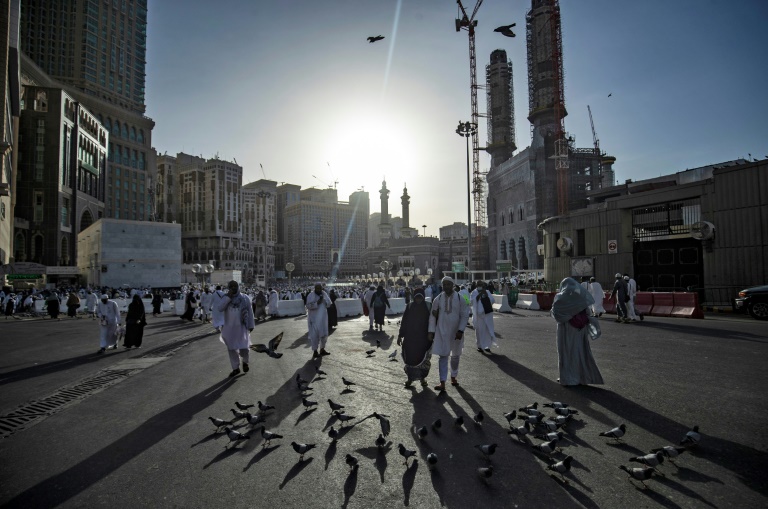
Outside the Grand Mosque in Mecca, officials have arranged for water to be sprayed out of long poles to provide some relief. 

A few metres away, white-robed pilgrims have sought refuge on the cold marble floors in the shaded entrance of a shopping centre while awaiting the next prayer. 

“I am covering my head because of the heat. It is too strong. But God will help us,” said Mostapha Zreqa, 57, an Algerian pilgrim protecting his head with a prayer mat. 

The pilgrims moved Thursday to white air-conditioned tents in Mina, around seven kilometres (four miles) from the Grand Mosque. 

On Friday comes the high point of the hajj at Mount Arafat, where it is believed the Prophet Mohammed delivered his final sermon.

Pilgrims will spend the whole day on the mountain, praying under the sun. 

While hundreds of buses transported pilgrims to Mina on Thursday, some chose to brave the heat and walk. 

“Anything is tolerable as long as it’s for God,” said 44-year-old Tunisian pilgrim Haled Bin Jomaa, arriving on foot at the Mina encampment. 

– ‘Warning!’ –

Saudi officials have touted their preparations for the extreme conditions, highlighting hundreds of hospital beds allocated for heat stroke patients as well as the “large number of misting fans” they have provided. 

A truck has also been allocated to distribute umbrellas, water bottles and small fans. 

Nevertheless, the National Centre for Meteorology, which has set up an office in Mina, is sending warnings to pilgrims on their mobile phones, urging them to avoid outdoor rituals at certain times of the day, especially at noon. 

“The importance of meteorological information has increased… due to the current global climatic conditions,” said the centre’s spokesman, Hussein al-Qahtani, noting that it was providing hourly weather reports. 

“The authorities working on the ground with pilgrims are keen to draw from this information,” he added. 

Some phones, however, may not be up to the task of delivering the updates to their users.

“Warning! temperature too high to use your phone,” said one message received by an AFP journalist in Mina on Thursday. 
Sweat, pray, love: extreme heat hounds hajj

The hajj pilgrimage can be physically draining even in ideal conditions, but worshippers this year face an added challenge: scorching sun and temperatures rising to 42 degrees Celsius (108 degrees Fahrenheit).

Muslims who have flocked to western Saudi Arabia for the five-day ritual, most of which takes place in the open air, have been confronted with a stark reminder of how warming trends are exacerbating what was already a very hot desert climate. 

Islam forbids men from wearing hats once the hajj rites start, and many have been seen trying to shield themselves with umbrellas, prayer mats and even, in one case, a small bucket filled with water. 

Women are obliged to cover their heads with scarves.

The result is a daunting endurance test, though pilgrims generally shy away from complaining. 

“I am fine. I am really enjoying it, even though this heat is something I have never experienced before,” Noliha, a 61-year-old woman from Brunei who gave only her first name, told AFP. 

“I really love it because I am in Mecca and doing my first hajj. I just cover my head with a hat instead of using the umbrella.” 

The timing of the hajj is determined by the Islamic calendar, and since 2017 it has fallen at least partly in July and August, the hottest months in Saudi Arabia. 

That has trained the spotlight on rising temperatures that environmental activists say must be addressed by a fast transition away from fossil fuels. 

“The scorching temperatures that the Arabian Gulf region and most notably Saudi Arabia are currently experiencing will soon become the norm,” warned Julien Jreissati, regional programme director for Greenpeace. 

“The average regional temperature increase due to climate change is considerably higher than the global one and projections are clearly showing that outdoor activities in summer, such as the hajj pilgrimage, will become impossible”.

Authorities are allowing one million pilgrims, including 850,000 from overseas, to participate in this year’s hajj, a major increase after pandemic restrictions kept that number to 60,000 last year and even fewer the year before that.

– ‘God will help us’ –

Summer in one of the hottest and most humid regions on earth means suffering for anyone doing anything outdoors — along with risks of dehydration, heat stroke and heart failure. 

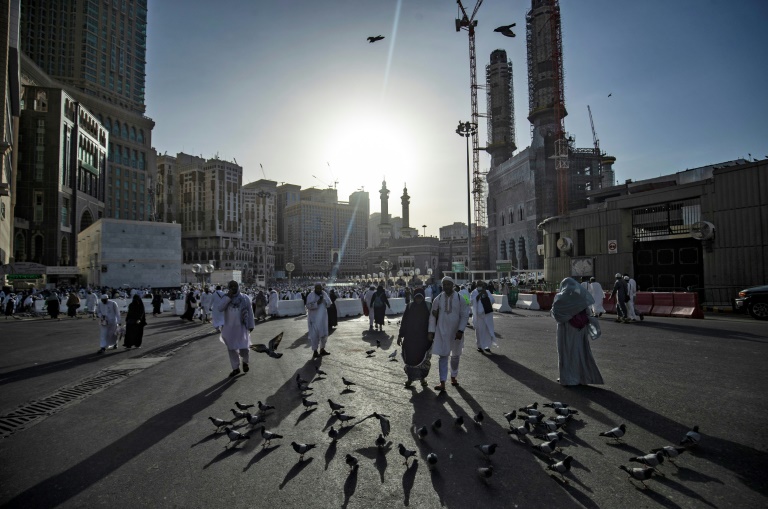
Outside the Grand Mosque in Mecca, officials have arranged for water to be sprayed out of long poles to provide some relief. 

A few metres away, white-robed pilgrims have sought refuge on the cold marble floors in the shaded entrance of a shopping centre while awaiting the next prayer. 

“I am covering my head because of the heat. It is too strong. But God will help us,” said Mostapha Zreqa, 57, an Algerian pilgrim protecting his head with a prayer mat. 

The pilgrims moved Thursday to white air-conditioned tents in Mina, around seven kilometres (four miles) from the Grand Mosque. 

On Friday comes the high point of the hajj at Mount Arafat, where it is believed the Prophet Mohammed delivered his final sermon.

Pilgrims will spend the whole day on the mountain, praying under the sun. 

While hundreds of buses transported pilgrims to Mina on Thursday, some chose to brave the heat and walk. 

“Anything is tolerable as long as it’s for God,” said 44-year-old Tunisian pilgrim Haled Bin Jomaa, arriving on foot at the Mina encampment. 

– ‘Warning!’ –

Saudi officials have touted their preparations for the extreme conditions, highlighting hundreds of hospital beds allocated for heat stroke patients as well as the “large number of misting fans” they have provided. 

A truck has also been allocated to distribute umbrellas, water bottles and small fans. 

Nevertheless, the National Centre for Meteorology, which has set up an office in Mina, is sending warnings to pilgrims on their mobile phones, urging them to avoid outdoor rituals at certain times of the day, especially at noon. 

“The importance of meteorological information has increased… due to the current global climatic conditions,” said the centre’s spokesman, Hussein al-Qahtani, noting that it was providing hourly weather reports. 

“The authorities working on the ground with pilgrims are keen to draw from this information,” he added. 

Some phones, however, may not be up to the task of delivering the updates to their users.

“Warning! temperature too high to use your phone,” said one message received by an AFP journalist in Mina on Thursday. 
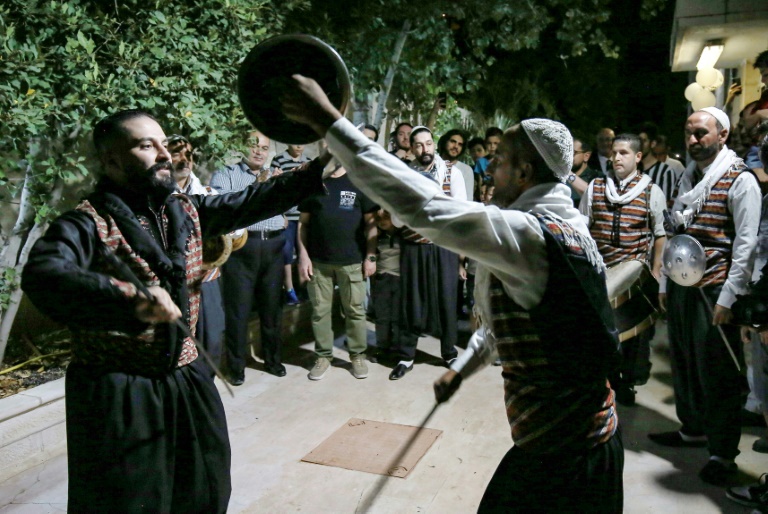
After war, Syrians in Jordan find joy and jobs in dance

Singing joyfully to beating drums, Syrian refugees who fled brutal civil war perform traditional “Arada” dances in neighbouring Jordan, honouring their home culture and earning extra income.

Their performances, featuring traditional robes and whirling swords, have become increasingly popular in Jordan for marking festivities like weddings and parties.

“They add an atmosphere of joy to our celebration,” said Fahed Shehadeh, who hired the Bab al-Hara dance troupe in the capital Amman to mark the graduation of his two sons from university.

“I am Jordanian but of Syrian origin, and I brought the group because I admire their dancing skills, music, clothes and their songs,” said 55-year-old Shehadeh, celebrating with family, friends and neighbours.

Traditionally seen at weddings, the popularity of Arada — rooted in the Arabic for a “performance” — has had its songs modified to fit various celebrations.

A troupe typically consists of 10 to 20 dancers, wearing loose-fitting black trousers, white cotton shirts, embroidered vests, white skullcaps and a shawl wrapped around the waist.

– Whirling swords –

Swords and decorative shields are worn, and the dance culminates in members spinning their blades in the air, before engaging in ceremonial fighting.

The troupe leader, Moutaz Boulad, 60, said Arada had grown in popularity in Amman, with daily events in the summer months and several engagements each week in winter. 

Boulad, who left Syria in 1988, says the shows have become an important means to earn cash for some of those who fled the war that erupted in 2011.

“Some of the dancers were not good when they first came to us, but they learned from my sons and I in order to improve their financial situation,” he said.

Syria’s war is estimated to have killed nearly half a million people and displaced millions; more than 6.6 million fled to neighbouring Jordan, Turkey and Lebanon.

Jordan hosts almost 650,000 Syrians registered with the United Nations, but Amman estimates close to 1.3 million Syrians have arrived since 2011.

The UN has said that close to 80 percent of Syrians in Jordan live below the national poverty line, surviving on three dollars per day or less.

Boulad said his dancers came from various professional backgrounds.

“Most dancers have different jobs beside the Arada,” Boulad said. “Some are university students, accountants, restaurant workers, tailors and electricians — but this is something that gives an amount of money to help cope with life.”

For dancers like Ahmed Abu Shadi, 43, who fled Syria in 2013 and works as a plumber, performing the Arada helps him raise his three children.

“With plumbing there are days when I work, and days with no customers,” he said. “For Arada, they pay me 15 dinars ($20) every time I go out to dance.  Although it is a small amount, it helps in my life.”

– ‘Identity, heritage’ – 

Another member, who worked in a medical laboratory and asked for his name to be withheld, fled the Syrian city of Homs in 2018.

The dancing helps add some $300 each month to his regular $700 salary from the laboratory to support his family, while they wait for applications through the UN refugee agency to be processed. 

“I have applied for asylum through the UNHCR  and hope we can start a new life abroad,” he said.

Despite displacement and financial challenges, dancing the Arada remains a key part of Ahmed Abu Shadi’s life. 

“This dance is a very important part of our Syrian identity, heritage, culture and our daily life — we must preserve and teach it to our children and grandchildren,” he said.

“This art is in my blood, I love it, I can’t imagine myself, my life without this.”

He dreams of one day dancing again on his home soil. 

“I will continue to dance wherever I go,” he said. 

“But of course, I prefer that the situation improves one day so that we can all return to our country, Syria.”

US abortion ruling threatens access to arthritis drug

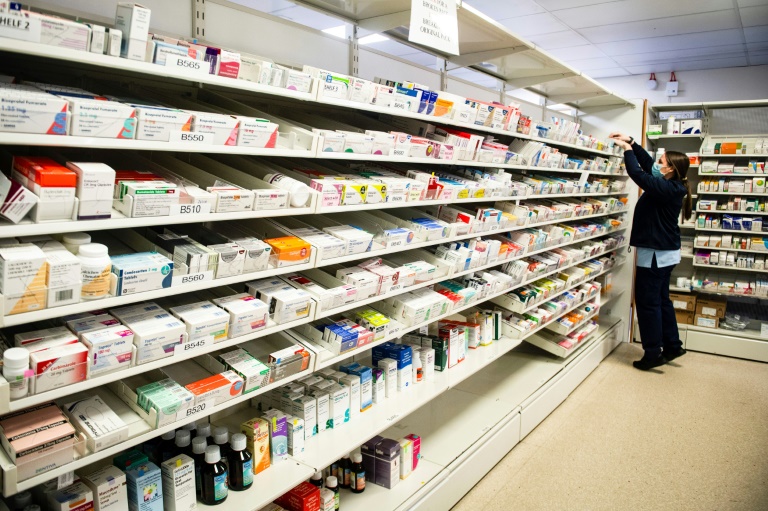
When Alabama nurse Melissa went to pick up her regular prescription for rheumatoid arthritis last week, she was told the drug was “on hold” while the pharmacist checked she wasn’t going to use it to induce an abortion.

“He said, ‘Well I have to verify if you’re on any contraceptives to prevent pregnancy.’ The hell you do,” she recalled thinking.

Melissa — who is in her early forties and asked to be identified only by her first name for fear that speaking out might affect her livelihood — then called her doctor, who succeeded in having the pharmacy in the southern US state release the medicine.

“I picked it up a couple hours later, but I felt violated,” she told AFP, explaining she had had a hysterectomy six years ago, and that her lack of recent contraceptive history may have led the pharmacist to suspect she was pregnant.

Stories of people facing similar struggles have come to light in the weeks since the United States Supreme Court overturned Roe v Wade on June 24, highlighting an overlooked consequence of new state-level bans or severe restrictions on abortion. 

It’s not yet clear how widespread the cases are, but national organizations including the Lupus Foundation of America and the American College of Rheumatology said they were aware of such concerns and asking people affected to come forward.

“The Arthritis Foundation supports unencumbered access to and coverage of FDA-approved drugs for managing arthritis in alignment with scientific and clinical guidelines, as well as evidence-based medical recommendations,” the organization said.

The issue centers on methotrexate, a drug which tempers inflammation and is commonly used against autoimmune conditions including inflammatory arthritis, psoriasis and lupus. 

Methotrexate stops cell division and is given in higher doses as a cancer drug. 

It can also sometimes be used in medical abortions, though not as frequently as the Food and Drug Administration-approved combination of two other drugs, mifepristone and misoprostol.

Nevertheless, many states have passed laws carrying threats of legal action against health care workers and pharmacies providing methotrexate.

– ‘It’s terrifying’  –

Another woman contacted by AFP, a 20-year-old university student from Ohio, said she has had a methotrexate prescription since 2020 to treat her lupus, which affects her kidney and liver and causes joint pain.

A pharmacist at a national chain told her they were “no longer accepting prescriptions for methotrexate unless it was for the FDA-approved use of (treating) breast cancer, or the patient was not presumably fertile,” she said.

She tried again, without success, to fill her prescription at a family-owned pharmacy, and this week got a letter from her doctor’s office stating the practice would no longer be prescribing methotrexate because of the number of patients having difficulty accessing it.

Though the first pharmacy later changed its position, the experience left her “annoyed and angry,” she said.

A third woman, 48-year-old Jennifer Crow, a writer and produce gardener in Tellico Plains, Tennessee, told AFP she received an automated call from CVS saying her methotrexate refill had been declined “pending provider approval.”

Crow said Methotrexate had helped her enormously in managing her inflammatory arthritis, allowing her to roll out of bed and get dressed without severe pain, and walk without a cane for the first time in years.

Though her doctor was able to resolve the situation, Crow, who has also had a hysterectomy, said she was worried for other chronic illness patients who didn’t have the same access to resources that she does.

In statements to AFP, national pharmacy chains CVS and Walmart confirmed they were working to adhere to new state regulations in light of the high court’s decision to revoke the constitutional right to an abortion.

CVS added: “We encourage providers to include their diagnosis on the prescriptions they write to help ensure patients have quick and easy access to medications.”

Alisa Vidulich, policy director of the Arthritis Foundation, told AFP she was hopeful the situation might be remedied quickly as medical professionals and pharmacies developed new guidelines.

“But that may not actually be the case in all states and it may in fact turn into a longer term issue,” she acknowledged.

Melissa, the nurse, said she was incensed at the double standard that allowed one of her best friends, who is a man, to get his methotrexate prescription filled right away with no questions asked.

“We’re headed in the wrong direction and it’s terrifying. I have two daughters. I don’t want to see this,” she said.

Long hop from Nicaragua to US for frogs and spiders sold as 'pets'

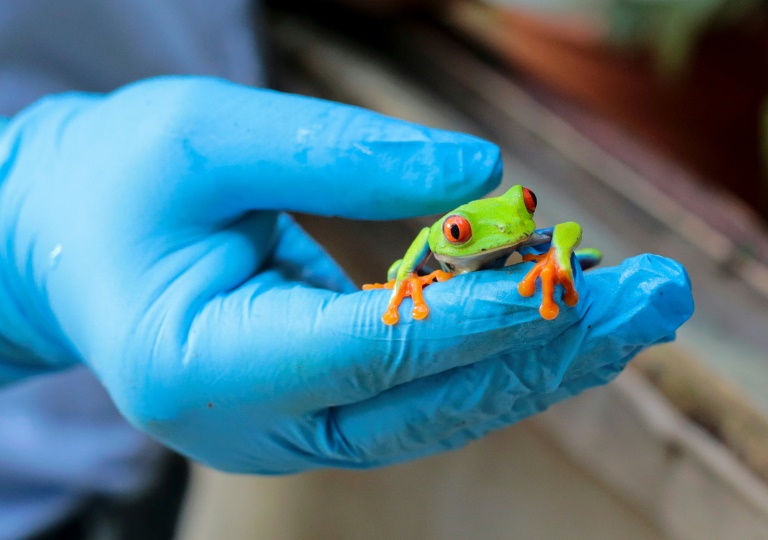
With great care, Yesenia Talavera transfers a tiny frog from a plant, where it was sleeping, to a plastic container with breathing holes, a moist sponge, and some room to jump.

With more than 2,600 other creatures ranging from tarantulas to boa constrictors, the diminutive, red-eyed amphibian is being primed for a long journey from Nicaragua to the United States, where it will become someone’s pet.

Their forebears taken from the tropical forests of Central America, the frogs, snakes, spiders, lizards and turtles are being bred for export at Exotic Fauna, a company that calls itself a “zoo farm” in a suburb of the capital Managua.

Licenced by the government, Exotic Fauna has been breeding 18 exotic animal species for 15 years for export to the United States, Canada and Asia.

The critters are in high demand “by people who want to adopt something other than the routine dogs or cats,” Talavera, who runs the establishment with her husband Eduardo Lacayo, told AFP.

– Valuable commodity –

Talavera and a team are working hard at preparing the latest order from a company in Miami for 1,200 red-eyed tree frogs and glass frogs, 290 basilisk and pichete lizards, 800 spiders including tarantulas, and 350 boa constrictors. 

They are deposited in containers with breathing holes — the boas into cloth sacks — before being packed in wooden crates marked “Live Animals” as an environment ministry inspector looks on.

The creatures are not sedated.

“These animals can endure trips of 24 hours and up to three days” without eating, said Talavera.

The shipment will travel by truck to Managua’s international airport, from where, after passing through customs, they will depart the next day on a commercial flight to Miami.

The environment ministry promotes the breeding of exotic species, hosting training sessions and congresses to encourage more Nicaraguans among a population of 6.5 million to venture into this lucrative field.

The government says nearly 40,000 Nicaraguan families are already involved in such ventures in one of Latin America’s poorest countries.

Exports remain the domain of a handful of private businesses, however.

In 2019, official figures show, the exportation of exotic pets brought in some $300,000, though a recent newspaper article estimated the value at more than double that.

– Many never make it –

Exotic Fauna states on its website that “the utmost care is taken with breeding and handling” the animals, and its processes were “100 percent” compliant with international protocols on wildlife trade.

According to Eduardo Sacasa, president of Nicaragua’s national zoo, as long as the animals are not taken from the wild and are bred at centers such as Exotic Fauna that recreate their natural environment, “it is not bad.”

Added Talavera’s husband, Lacayo: “We take from nature once, only once, and we breed the product that we export.”

But the NGO People for the Ethical Treatment of Animals (PETA), which advocates for an end to the trade in exotic species, says the practice is cruel and many would-be “pets” never survive the journey to their new home.

“Those who do survive often suffer in captivity and die prematurely from malnutrition, an unnatural and uncomfortable environment, loneliness, and the overwhelming stress of confinement,” PETA states on its website.

– Frogs for entertainment –

Lacayo said they sold many frogs during the Covid-19 epidemic as people in quarantine sought to be “entertained.”

American clients, he added, were particularly keen on tarantulas, which are venomous but not dangerous to people. 

To tide them over on the long journey, the frogs are given an extra large helping of crickets, which are also raised on the farm.

The tarantulas are fed insects and worms, but the boas are left empty-bellied.

In the case of the snakes, explained Exotic Fauna worker Harlintong Bonilla: “we give it food two or three days before, so that it has digested the food well and doesn’t throw up en route.”

Elon Musk deal to buy Twitter in danger: report

Twitter shares slid late Thursday after a Washington Post report that Elon Musk’s $44 billion deal to buy the social media giant is in danger.

The world’s richest man has previously expressed misgivings and even implied he could walk away from the deal over concerns about what he believes are an abundance of fake accounts.

According to the Post, however, Musk has been unable to pin down the percentage of Twitter accounts that are not genuine, despite being given access to internal data.

While Musk has already made comments putting his commitment to the deal in doubt, the latest report cited an anonymous source saying his team is preparing for a “change in direction.”

Twitter shares, which were already trading lower than the price offered by Musk, sank about four percent on the news in after-market trades.

“The Twitter soap opera is clearly coming to some sort of finale over the coming months as Musk makes the decision to stay (with a lower price) or go,” Wedbush analyst Dan Ives said in a note to investors.

“The Twitter deal has clearly caused chaos at Twitter.”

Ives expected Musk to reveal details of his fake account concerns in the coming weeks.

During the Qatar Economic Forum last month, Musk said that his Twitter purchase remained held up by “very significant” questions about the number of fake users on the social network.

“So we are still awaiting resolution on that matter and that is a very significant matter,” the Tesla car and SpaceX exploration chief said via a video link to the gathering.

Twitter executives have held firm that less than five percent of accounts are bogus, with Musk saying he believes the number to be much higher.

Musk said there were also questions about Twitter’s debt.

The chances of Musk buying Twitter as originally negotiated are slim, Ives said.

Wedbush set the chance of the deal happening at a lower price at 60 percent, leaving open the door to the possibility Musk will try to walk away with only paying a required $1 billion breakup fee.

British pound rallies on Johnson resignation, global stocks gain

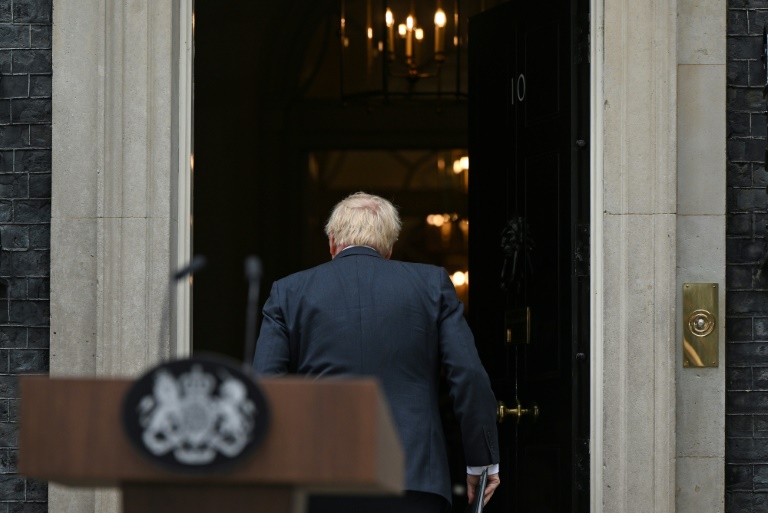
The British pound rallied Thursday on British Prime Minister Boris Johnson’s resignation as leader of the Conservative party, while Wall Street indices advanced for a fourth straight session.

Johnson’s announcement followed an extraordinary series of resignations from his scandal-plagued administration.

He acknowledged it was “clearly the will of the parliamentary Conservative party that there should be a new leader of that party, and therefore a new prime minister.”

The move lifted the pound above the $1.20 level.

“The currency market is relieved that Johnson is finally resigning, removing some of the political uncertainty that was priced into the pound and paving the way for a new prime minister,” said Victoria Scholar, head of investment at Interactive Investor. 

London’s blue-chip FTSE 100 stock index also rose 1.1 percent, along with bourses in Paris and Frankfurt.

In New York, stocks also had a good day, with the S&P 500 and Nasdaq each advancing for a fourth straight day.

Maris Ogg of Tower Bridge Advisors said it is too soon to declare that the market has turned. 

“I don’t think (the rebound) is meaningful because we’ve got to wait on earnings,” Ogg said, alluding to upcoming quarterly reports that investors fear will underscore a weakening economic outlook.

Elsewhere, oil prices pushed higher as markets focused on risks to petroleum supply, a shift from the recent fixation on the threat of recession.

Traders are worried about a potential interruption of a majority of Kazakhstan’s total oil exports after a Russian court ordered a 30-day ban on unloading from the 1,500-kilometre (930-mile) pipeline from Kazakh oil fields to the Novorossiysk terminal, citing environmental violations.

Earlier stoppages from the pipeline have triggered speculation that the Kremlin might be punishing its Central Asian ally for its neutral stance on Ukraine.

Meanwhile, the euro struck a fresh 20-year low against the dollar as the minutes from the latest European Central Bank meeting showed it is happy to go slow with hiking interest rates, unlike the US Federal Reserve.

The European single currency is being hammered by growing fears of a recession for the eurozone and the likelihood of more aggressive US interest-rate hikes.

– Key figures at around 2030 GMT –

New York – Dow: UP 1.1 percent at 31,384.55 (close)

New York – S&P 500: UP 1.5 percent at 3,902.62 (close)

New York – Nasdaq: UP 2.3 percent at 11,621.35 (close)

London – FTSE 100: UP 1.1 percent at 7,189.08 (close)

Frankfurt – DAX: UP 2.0 percent at 12,843.22 (close)

Paris – CAC 40: UP 1.6 percent at 6,006.70 (close)

EURO STOXX 50: UP 2.0 percent at 3,488.50 (close)

Tokyo – Nikkei 225: UP 1.5 percent at 26,490.53 (close)

Hong Kong – Hang Seng Index: UP 0.3 percent at 21,643.58 (close)

Shanghai – Composite: UP 0.3 percent at 3,364.40 (close)

Pound/dollar: UP at $1.2024 from $1.1926 Wednesday

Euro/pound: DOWN at 84.49 pence from 85.37 pence

Euro/dollar: DOWN at $1.0162 from $1.0182

Dollar/yen: DOWN at 136.01 yen from 135.95 yen 

Brent North Sea crude: UP 3.9 percent at $104.65 per barrel xx

West Texas Intermediate: UP 4.3 percent at $102.73 per barrel

Elizabeth Holmes ex-boyfriend convicted of Theranos fraud

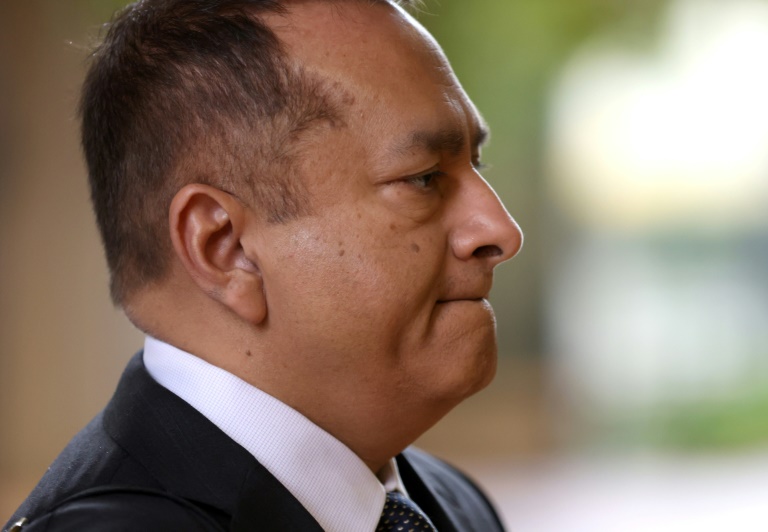
A top aide and ex-boyfriend of fallen Theranos founder Elizabeth Holmes was convicted on Thursday of defrauding investors and patients at the failed blood testing startup.

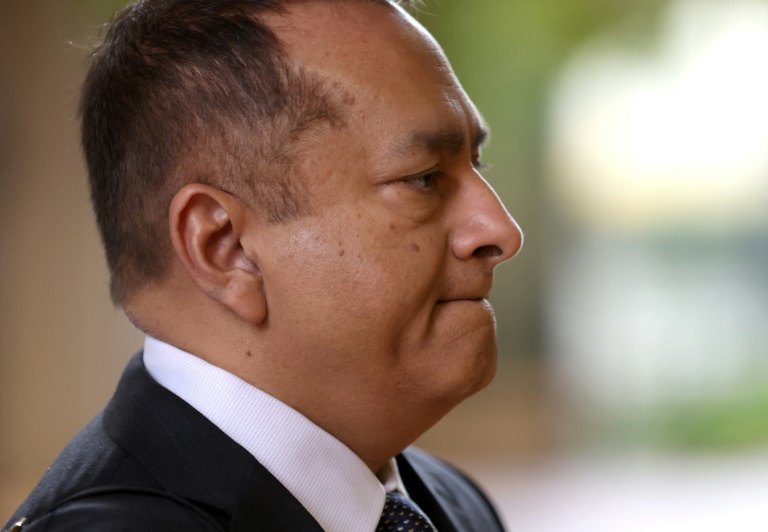
Jurors found Ramesh “Sunny” Balwani guilty on all 12 fraud counts charged by federal prosecutors, a spokesperson at the courthouse in the Silicon Valley city of San Jose told AFP.

He is to be sentenced on November 15 and faces the potential for prison time as well as cash fines. The judge set his bail at $750,000 to insure he shows up for sentencing.

Balwani was tried separately from one-time US biotech star Holmes, whose trial in the same California courtroom ended in January with guilty verdicts on four counts of tricking investors into pouring money into what she claimed was a revolutionary blood testing system.

But the jury — who had listened to weeks of sometimes complex evidence — also acquitted her on four charges and could not reach a verdict on three others.

Holmes could also be hit with prison time when she is sentenced on September 26. She has filed an appeal asking that her convictions be tossed.

During her trial, Holmes alleged that Balwani was emotionally and physically abusive during their romantic relationship — claims he has denied. She also painted Balwani as a controlling force at Theranos.

Holmes and Balwani are rare examples of tech executives facing charges over a company’s flame-out, in a sector littered with the carcasses of failed startups that once promised untold riches.

Her trial shined a spotlight on the blurred line between the hustle that characterizes the industry and outright criminal dishonesty.

US prosecutor Robert Leach told jurors in a federal courthouse in San Jose that Balwani piloted the firm alongside Holmes and that the pair were “partners in everything, including their crime.”

But 57-year-old Balwani’s attorney Stephen Cazares said his client never committed fraud, and was convinced of Theranos’s potential.

Balwani, nearly two decades Holmes’s senior, was brought in to help steer the company she had founded in 2003 at just 19 years old.

Holmes, now 38, would go on to promise self-service testing machines that could run an analytical gamut cheaply and on just a few drops of blood — a pledge shattered under fraud allegations.

Prosecutors alleged Holmes and Balwani were aware the technology did not work as advertised, but continued to promote it as revolutionary to patients and the investors who pumped money into the company.

As Theranos soared, it attracted luminaries such as Rupert Murdoch and Henry Kissinger, but a series of reports casting doubt on the firm’s claims from Murdoch’s own Wall Street Journal set the company’s collapse in motion.

Elizabeth Holmes ex-boyfriend convicted of Theranos fraud

A top aide and ex-boyfriend of fallen Theranos founder Elizabeth Holmes was convicted on Thursday of defrauding investors and patients at the failed blood testing startup.

Jurors found Ramesh “Sunny” Balwani guilty on all 12 fraud counts charged by federal prosecutors, a spokesperson at the courthouse in the Silicon Valley city of San Jose told AFP.

He is to be sentenced on November 15 and faces the potential for prison time as well as cash fines. The judge set his bail at $750,000 to insure he shows up for sentencing.

Balwani was tried separately from one-time US biotech star Holmes, whose trial in the same California courtroom ended in January with guilty verdicts on four counts of tricking investors into pouring money into what she claimed was a revolutionary blood testing system.

But the jury — who had listened to weeks of sometimes complex evidence — also acquitted her on four charges and could not reach a verdict on three others.

Holmes could also be hit with prison time when she is sentenced on September 26. She has filed an appeal asking that her convictions be tossed.

During her trial, Holmes alleged that Balwani was emotionally and physically abusive during their romantic relationship — claims he has denied. She also painted Balwani as a controlling force at Theranos.

Holmes and Balwani are rare examples of tech executives facing charges over a company’s flame-out, in a sector littered with the carcasses of failed startups that once promised untold riches.

Her trial shined a spotlight on the blurred line between the hustle that characterizes the industry and outright criminal dishonesty.

US prosecutor Robert Leach told jurors in a federal courthouse in San Jose that Balwani piloted the firm alongside Holmes and that the pair were “partners in everything, including their crime.”

But 57-year-old Balwani’s attorney Stephen Cazares said his client never committed fraud, and was convinced of Theranos’s potential.

Balwani, nearly two decades Holmes’s senior, was brought in to help steer the company she had founded in 2003 at just 19 years old.

Holmes, now 38, would go on to promise self-service testing machines that could run an analytical gamut cheaply and on just a few drops of blood — a pledge shattered under fraud allegations.

Prosecutors alleged Holmes and Balwani were aware the technology did not work as advertised, but continued to promote it as revolutionary to patients and the investors who pumped money into the company.

As Theranos soared, it attracted luminaries such as Rupert Murdoch and Henry Kissinger, but a series of reports casting doubt on the firm’s claims from Murdoch’s own Wall Street Journal set the company’s collapse in motion.

Russia grinds towards Sloviansk, Putin threatens bigger offensive

Russian forces left a trail of destruction Thursday, seeking to push deeper into the eastern Donbas region as President Vladimir Putin said his military campaign was still ramping up.

Diplomatic tensions meanwhile mounted between Ankara and Kyiv, with Ukraine accusing Turkey of ignoring calls to seize Ukrainian grain being transported by a Russian ship.

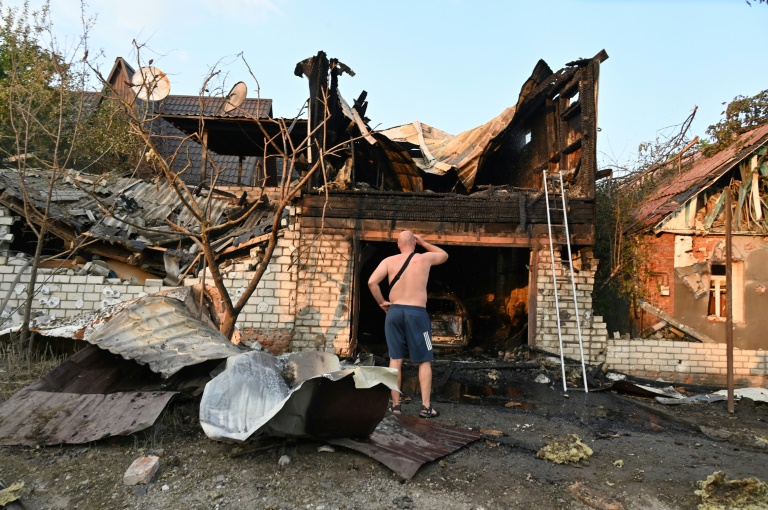
A Russian air strike in the eastern Ukrainian industrial city of Kramatorsk left at least one dead and several others wounded earlier in the day, as Russian troops fight for full control of the surrounding Donbas.

The explosion left a gaping crater next to a hotel and residential buildings and several cars were on fire, AFP journalists said, as emergency services arrived on the scene.

It came ahead of a speech by Putin to lawmakers in which he said “everyone should know that we have not started in earnest yet.”

He also sounded a note of menace towards the West, telling the alliance that has coalesced against his invasion of Ukraine that if they wanted to defeat Russia on the battlefield “let them try”.

The head of Ukraine’s battled-scarred Donetsk region, Pavlo Kyrylenko, announced before the strike on Kramatorsk that Russian bombardments had killed at least seven people over the past 24 hours.

The fatalities came after Ukrainian officials again called for civilians in the region to flee, as Russian forces turn their sights on the city of Sloviansk.

– Battle for cities –

Russian troops captured cities in the Lugansk region after long battles, consolidating their hold in the east after failing at the start of the February invasion to take the capital Kyiv and Ukraine’s second-largest city Kharkiv.

Despite the raging conflict, Kyiv took time to hail outgoing UK Prime Minister Boris Johnson, one of Ukraine’s keenest allies throughout the war.

Johnson said that even though he was leaving office, Britain would continue supporting Ukraine for “as long as it takes”. 

“We all welcome this news with sadness. Not only me, but also all of Ukrainian society,” President Volodymyr Zelensky said, after Johnson resigned as leader of Britain’s Conservative party, paving the way for the selection of a new prime minister.

“We don’t doubt that Great Britain’s support will continue, but your personal leadership and your charisma made it special,” he said.

In the diplomatic clash between Ukraine and Turkey, Kyiv says that a 7,000-tonne vessel set off from Ukraine’s Russian-occupied port of Berdyansk after picking up wheat.

The marinetraffic.com website on Thursday showed the vessel moving away from Turkey’s Black Sea port of Karasu before apparently switching off its transponder and disappearing from view.

Ukraine said it was “deeply disappointed” that Turkey had not seized the ship.

– Control over Snake Island –

Zelensky in his evening address again called for more arms from international allies.

“The bigger defense support to Ukraine will be now, the quicker the war will end with our victory and the lesser will be losses of all countries in the world,” he said.

Ukraine this week also said it had regained control of Snake Island in the Black Sea, raising its flag there following the withdrawal of Russian forces.

“I want to thank for the final stage of the fight for Snake Island.  Our national flag was erected there. This operations lasted for two months,” Zelensky said.

“Let now every Russian captain of a ship or a plane see the Ukrainian flag at Zmeiny and know that our country cannot be broken.”

Russia said it pulled back from the symbolic island in a gesture of “good will”, but has since continued targeting positions there.

The Russian defence ministry said it had carried out “precision” missile strikes on the island early Thursday, killing Ukrainian soldiers.

Finland meanwhile passed legislation to build stronger fences on its border with Russia, as the country seeks to join NATO following the invasion.

Finland reversed decades of military non-alignment by seeking membership in the military alliance in May, formally starting the process to join this week.

burs-jbr/gw/bgs/mlm

Close Bitnami banner
Bitnami