World

Watchdog to probe intensive audits of Trump foes who led FBI

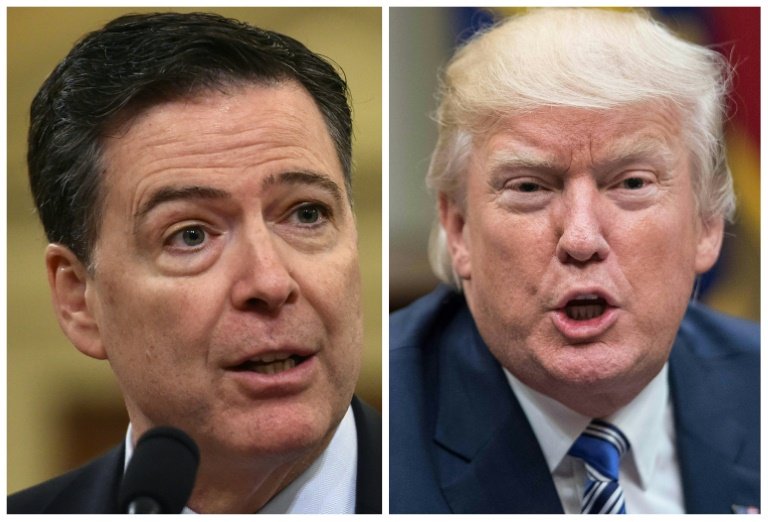
The US tax authority said Thursday it had asked for an independent investigation into rare, intrusive audits of two ex-FBI heads who were prominent adversaries of former president Donald Trump.

James Comey, the FBI director until he was sacked by Trump in 2017, and Andrew McCabe, Comey’s deputy and temporary replacement, were both subjected to the Internal Revenue Service reviews while the Republican billionaire was in office.

Individuals are supposed to be picked at random for the IRS’s National Research Program audits, making the chances of Comey being singled out in 2017 about one in 30,000, while McCabe’s odds in 2019 were about one in 20,000.

The revelation, first reported by The New York Times, raised questions over how two men who ran the nation’s premier domestic police agency and were seen by Trump as among his most high-profile foes could both have been selected.

Trump sacked Comey in 2017 and then called on him to be arrested for treason, angered by his investigation of the then-president’s extensive ties to Russia.

McCabe, who became acting FBI director after Comey’s dismissal, was fired by Trump’s Justice Department over accusations of lying to investigators that were never followed up with charges.

Trump smeared McCabe, too, again with unfounded treason allegations, and relentlessly pushed for his prosecution.

“I don’t know whether anything improper happened, but after learning how unusual this audit was and how badly Trump wanted to hurt me during that time, it made sense to try to figure it out,” Comey said in a statement to the Times. 

“Maybe it’s a coincidence or maybe somebody misused the IRS to get at a political enemy. Given the role Trump wants to continue to play in our country, we should know the answer to that question.”

– ‘Political targeting’ –

The IRS confirmed in a statement that its head Chuck Rettig — appointed by Trump in 2018 — had personally asked a Treasury Inspector General for a review.

“Audits are handled by career civil servants, and the IRS has strong safeguards in place to protect the exam process — and against politically motivated audits,” spokeswoman Jodie Reynolds told AFP.

“It’s ludicrous and untrue to suggest that senior IRS officials somehow targeted specific individuals for National Research Program audits.”

The referral earned support from lawmakers on both sides of the aisle.

Richard Neal, the Democratic chairman of the powerful House Ways and Means Committee, said in a statement the “political targeting” of Comey and McCabe marked “a crack in IRS’s fragile credibility.”

His Republican counterpart Kevin Brady said he supported “investigating all allegations of political targeting,” adding that the IRS should never be used as a weapon against political opponents.    

Trump’s representatives did not respond immediately to a request for comment, although the Times reported that a spokesman said the ex-president had “no knowledge of this.”

Comey’s audit lasted more than a year, and he and his wife were found to have overpaid their 2017 federal income taxes and got a $347 refund. 

McCabe told The Times he and his wife had paid a small amount they were found to be owing.

“I have significant questions about how or why I was selected for this,” he said.
World reacts to Boris Johnson's downfall

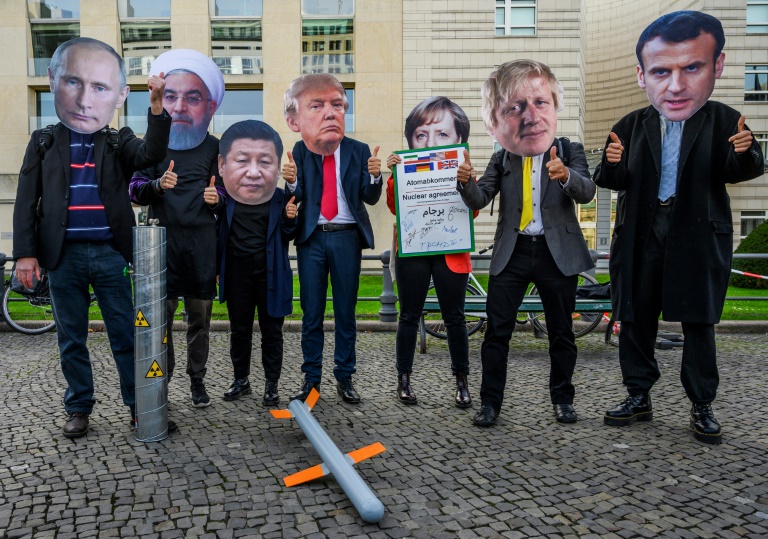
British Prime Minister Boris Johnson’s decision on Thursday to step down as leader of his Conservative Party, paving the way for a new premier to take over, drew a spectrum of reaction from leaders worldwide.

Johnson, who quit as Tory leader following a series of scandals and an exodus of cabinet ministers, divided opinion on the world stage, eliciting strong reactions from many countries and their leaders.

Here are the main ones:

– United States –

The United States said it would continue its “close cooperation” with Britain including their joint support for Ukraine against Russian aggression, US President Joe Biden said.

“The United Kingdom and the United States are the closest of friends and allies, and the special relationship between our people remains strong and enduring,” Biden said in a statement.

“I look forward to continuing our close cooperation with the government of the United Kingdom,” he added, including “maintaining a strong and united approach to supporting the people of Ukraine as they defend themselves against Putin’s brutal war on their democracy, and holding Russia accountable for its actions.”

– European Union –

After years of tense relations with Britain, the EU saw hope of improved ties following the resignation of Brexit champion Johnson, though wariness lingered.

While the European Commission publicly dodged commenting about the political upheaval in the UK, others in Brussels’ orbit let loose.

“The departure of Boris Johnson opens a new page in relations with Britain,” Michel Barnier, the former top EU negotiator for Brexit, tweeted.

“May it be more constructive, more respectful of commitments made, in particular regarding peace and stability in Northern Ireland, and more friendly with partners in the EU. Because there’s so much more to be done together.”

– Ukraine –

Ukrainian President Volodymyr Zelensky telephoned Boris Johnson to express his “sadness”, Kyiv said.

“We all welcome this news with sadness. Not only me, but also all of Ukrainian society which sympathises with you a lot,” the presidency quoted Zelensky as saying, reiterating how grateful Ukrainians were for the British prime minister’s support since the Russian invasion.

Johnson has been seen as one of Ukraine’s most vocal and fervent supporters in the West.

– Ireland –

Irish premier Micheal Martin said that Boris Johnson’s decision to step down was “an opportunity” to reset fraught relations.

Martin added ties between Dublin and London had been “strained and challenged in recent times”, not least because of clashes over special post-Brexit trade arrangements in British-run Northern Ireland.

“We have now an opportunity to return to the true spirit of partnership and mutual respect that is needed to underpin the gains of the Good Friday Agreement,” Martin said in a statement.

The 1998 peace accords ended decades of bloodshed over British rule in Northern Ireland but has been increasingly strained by Brexit.

– Russia –

The Kremlin said it hoped that “more professional people” would come to power in Britain.

“We would like to hope that some day in Great Britain more professional people who can make decisions through dialogue will come to power,” Kremlin spokesman Dmitry Peskov said. “But at the moment there is little hope for that.” 

Canada posts largest trade surplus in 14 years

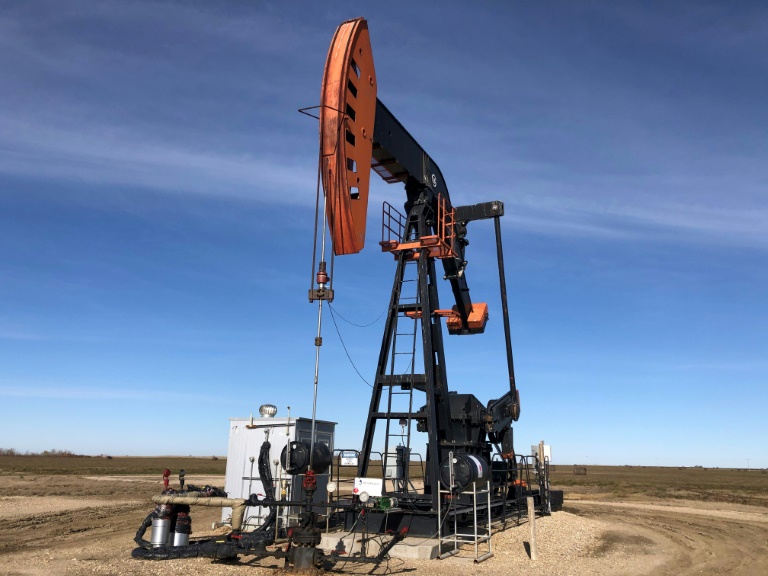
Canada posted in May its largest trade surplus since 2008, riding a surge in oil prices as Western nations imposed energy sanctions on Russia, the government statistical agency said Thursday.

Total exports in the month rose 4.1 percent to Can$68.4 billion (US$52.6 billion), marking a 10th gain in 12 months, while total imports decreased 0.7 percent to Can$63.1 billion (US$48.6 billion). 

As a result, Canada’s trade surplus widened from Can$2.2 billion (US$1.7 billion) in April to Can$5.3 billion (US$4.1 billion) in May, Statistics Canada said.

The increase in exports was led by oil, which has shot up in price amid supply constraints following Russia’s invasion of Ukraine.

Sales of business jets to the United States also soared, as did shipments of potash — mainly to Brazil — to a record high, as buyers looked beyond Russia, which is the largest exporter of fertilizers, for new supplies.

Exports of copper ores and concentrates also increased, mainly to South Korea.

Meanwhile, imports of clothing and footwear, along with pharmaceutical and medicinal products, and commercial airliners from United States, all fell.

The decrease was partially offset by an uptick in imports of basic chemicals, largely driven by pharmaceutical ingredients from Ireland.

Canada’s trade surplus with the United States — its largest trading partner — also widened from Can$12.9 billion (US$9.9 billion) in April to Can$14.0 billion (US$10.8 billion) in May, setting another record high.

UK PM Johnson quits after cabinet bloodbath

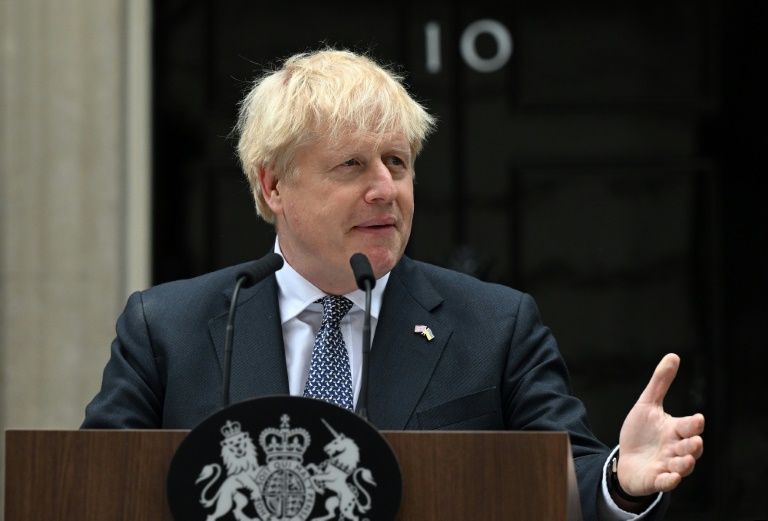
Boris Johnson resigned on Thursday as leader of Britain’s Conservative party, triggering a prolonged race to succeed the scandal-dogged premier after an extraordinary exodus of ministers from his government.

Johnson acknowledged it was “clearly the will of the parliamentary Conservative party that there should be a new leader of that party, and therefore a new prime minister”.

In a six-minute speech outside 10 Downing Street that was devoid of contrition for the many missteps that brought him down, he said he would stay on until his successor is found.

But calls built for Johnson to leave immediately, and for an acting leader to head the world’s fifth-largest economy.

Conservative John Major, who was prime minister from 1990 to 1997, said Johnson’s extended tenure — and the vast powers that still go with it — was “unwise and may be unsustainable”.

The leadership election is expected to take place over the coming months. The victor will replace Johnson by the party’s annual conference in early October. 

But polling suggested most Britons favour his rapid exit, amid claims that Johnson is only hanging on to enjoy a wedding party with wife Carrie at his government-funded country retreat.

Johnson’s tumultuous three years in office were defined by Brexit, the Covid pandemic and non-stop controversy about his reputation for mendacity.

– ‘Best job’ –

He said he was “sad… to be giving up the best job in the world”, justifying his refusal initially to surrender to his “herd” of Tory critics because he won a personal mandate in the Brexit-dominated general election of December 2019.

Johnson also promised support for Ukraine “for as long as it takes”.

Johnson reiterated his backing in a call afterwards to President Volodymyr Zelensky, Downing Street said.

Zelensky said he and Ukraine would be sad to see him go, praising his “personal leadership” and “charisma”.

Russia expressed hope for “more professional people” to come to power in Britain. 

“But at the moment there is little hope for that,” Kremlin spokesman Dmitry Peskov told reporters.

Defence minister Ben Wallace and Rishi Sunak, whose departure as finance minister Tuesday sparked the cabinet exodus, were among the early frontrunners, a YouGov survey of Tory members suggested.

Foreign Secretary Liz Truss, another potential contender, said Johnson had “made the right decision” as she cut short a trip to Indonesia for a G20 meeting.

“We need calmness and unity now and to keep governing while a new leader is found,” she tweeted.

– Lame duck –

Even while eyeing the exit, Johnson sought to steady the ship, making several appointments to replace departed cabinet members. 

They included Greg Clark, an arch “remainer” opposed to Britain’s divorce from the European Union, which Johnson had championed. 

The inexperienced Shailesh Vara was put in charge of Northern Ireland, with the government locked in battle with Brussels over post-Brexit trading rules for the tense territory.

Irish premier Micheal Martin said Johnson’s exit was a chance to reset “strained and challenged” relations.

Convening the new-look cabinet after his resignation speech, Johnson confirmed his lame-duck status by saying “major fiscal decisions should be left for the next prime minister”, according to Downing Street.

As late as Wednesday night, Johnson had been defiantly clinging on to power despite a wave of more than 50 government resignations.

But a fresh round of high-profile resignations early Thursday, and warnings of a second no-confidence vote next week by Tory MPs, tipped the balance.

– ‘Arrogant and delusional’ –

Johnson triumphed in 2019 with a vow to “get Brexit done” following Britain’s shock referendum decision three years prior. But for many, the populist, convention-defying leader had outstayed his welcome.

The Conservative infighting erupted at a time when millions of Britons are battling the worst slump in living standards since the 1950s, fuelling by rocketing energy prices on the back of the war in Ukraine.

Johnson’s popularity had already slumped over a series of lockdown-breaking parties in Downing Street, which saw him become the first prime minister to receive a police fine.

“About time, isn’t it? Seriously, I mean have you ever known anyone be so arrogant, ignorant, delusional?” Helen Dewdney, 53, who works in consumer rights, told AFP.

While Johnson oversaw a successful coronavirus vaccine campaign, the former journalist also oversaw one of Europe’s worst death tolls, and nearly died himself from Covid in April 2020.

“Boris Johnson’s legacy is the deaths of nearly 200,000 British people on his watch,” said Lobby Akinnola, from the campaign group Covid-19 Bereaved Families for Justice.

– After-dinner speeches –

“Whilst Johnson will move on to a life of writing newspaper columns and being paid eye-watering amounts to give after-dinner speeches, there will be no moving on for the families like mine that have been ripped apart by his actions,” he said.

Sunak and health secretary Sajid Javid started the ministerial exodus when they quit late Tuesday, after Johnson apologised for his February appointment of a senior Conservative MP to a prominent role in parliament. 

Chris Pincher resigned as deputy chief whip last week following accusations that he had drunkenly groped two men.

Downing Street officials eventually conceded that Johnson had known about other allegations against Pincher back in 2019, and many ministers recoiled at having to defend the leader yet again.

Tony Travers, director of the think tank LSE London, said the party had once again shown its propensity to turn on unpopular leaders after previously ditching premiers Margaret Thatcher and Theresa May.

“The truth is that the reason the Conservative party is so durable is that it will get rid of its leaders when it thinks they are harming the party,” he told AFP.

“And this allows the party to start again with a new leader and say, ‘look, we’re a completely different enterprise’.”

NASA releases James Webb telescope 'teaser' picture

NASA has a provided a tantalizing teaser photo ahead of the highly-anticipated release next week of the first deep-space images from the James Webb Telescope –- an instrument so powerful it can peer back into the origins of the universe.

The $10 billion observatory — launched in December last year and now orbiting the Sun a million miles (1.5 million kilometers) away from Earth –- can look where no telescope has looked before thanks to its enormous primary mirror and instruments that focus on infrared, allowing it to peer through dust and gas.

The first fully formed pictures are set for release on July 12, but NASA provided an engineering test photo on Wednesday — the result of 72 exposures over 32 hours that shows a set of distant stars and galaxies.

The image has some “rough-around-the-edges” qualities, NASA said in a statement, but is still “among the deepest images of the universe ever taken” and offers a “tantalizing glimpse” at what will be revealed in the coming weeks, months, and years.

“When this image was taken, I was thrilled to clearly see all the detailed structure in these faint galaxies,” said Neil Rowlands, program scientist for Webb’s Fine Guidance Sensor at Honeywell Aerospace.

Jane Rigby, Webb’s operations scientist at NASA’s Goddard Space Flight Center, said the “faintest blobs in this image are exactly the types of faint galaxies that Webb will study in its first year of science operations.”

NASA administrator Bill Nelson said last week that Webb is able to gaze further into the cosmos than any telescope before it.

“It’s going to explore objects in the solar system and atmospheres of exoplanets orbiting other stars, giving us clues as to whether potentially their atmospheres are similar to our own,” he said.

“It may answer some questions that we have: Where do we come from? What more is out there? Who are we? And of course, it’s going to answer some questions that we don’t even know what the questions are.” 

Webb’s infrared capabilities allow it to see back in time to the Big Bang, which happened 13.8 billion years ago. 

Because the Universe is expanding, light from the earliest stars shifts from the ultraviolet and visible wavelengths it was emitted in, to longer infrared wavelengths — which Webb is equipped to detect at an unprecedented resolution.

At present, the earliest cosmological observations date to within 330 million years of the Big Bang, but with Webb’s capacities, astronomers believe they will easily break the record.

NASA releases James Webb telescope 'teaser' picture

NASA has a provided a tantalizing teaser photo ahead of the highly-anticipated release next week of the first deep-space images from the James Webb Telescope –- an instrument so powerful it can peer back into the origins of the universe.

The $10 billion observatory — launched in December last year and now orbiting the Sun a million miles (1.5 million kilometers) away from Earth –- can look where no telescope has looked before thanks to its enormous primary mirror and instruments that focus on infrared, allowing it to peer through dust and gas.

The first fully formed pictures are set for release on July 12, but NASA provided an engineering test photo on Wednesday — the result of 72 exposures over 32 hours that shows a set of distant stars and galaxies.

The image has some “rough-around-the-edges” qualities, NASA said in a statement, but is still “among the deepest images of the universe ever taken” and offers a “tantalizing glimpse” at what will be revealed in the coming weeks, months, and years.

“When this image was taken, I was thrilled to clearly see all the detailed structure in these faint galaxies,” said Neil Rowlands, program scientist for Webb’s Fine Guidance Sensor at Honeywell Aerospace.

Jane Rigby, Webb’s operations scientist at NASA’s Goddard Space Flight Center, said the “faintest blobs in this image are exactly the types of faint galaxies that Webb will study in its first year of science operations.”

NASA administrator Bill Nelson said last week that Webb is able to gaze further into the cosmos than any telescope before it.

“It’s going to explore objects in the solar system and atmospheres of exoplanets orbiting other stars, giving us clues as to whether potentially their atmospheres are similar to our own,” he said.

“It may answer some questions that we have: Where do we come from? What more is out there? Who are we? And of course, it’s going to answer some questions that we don’t even know what the questions are.” 

Webb’s infrared capabilities allow it to see back in time to the Big Bang, which happened 13.8 billion years ago. 

Because the Universe is expanding, light from the earliest stars shifts from the ultraviolet and visible wavelengths it was emitted in, to longer infrared wavelengths — which Webb is equipped to detect at an unprecedented resolution.

At present, the earliest cosmological observations date to within 330 million years of the Big Bang, but with Webb’s capacities, astronomers believe they will easily break the record.

Huge groups of fin whales sign of hope for ocean giants

For the first time since whaling was banned, dozens of southern fin whales have been filmed feasting together in a “thrilling” Antarctic spectacle, hailed by scientists Thursday as a sign of hope for the world’s second largest animal.  

The ocean giants are second only to blue whales in length, with slender bodies that help them glide through the water at high speed. 

They could not evade industrial whaling, however, and were slaughtered to near-extinction during the 20th Century as hunters systematically shattered populations of whales across the planet. 

“They were reduced to one or two percent of their original population size,” said Helena Herr, of the University of Hamburg, lead author of the research published in the journal Scientific Reports. 

“We’re talking about a couple of thousand animals left for the whole southern hemisphere area.”

While scientists say numbers of southern fin whales have been slowly rebounding since a 1976 whaling ban, there have been few sightings of these mysterious animals in large groups at their historic feeding grounds. 

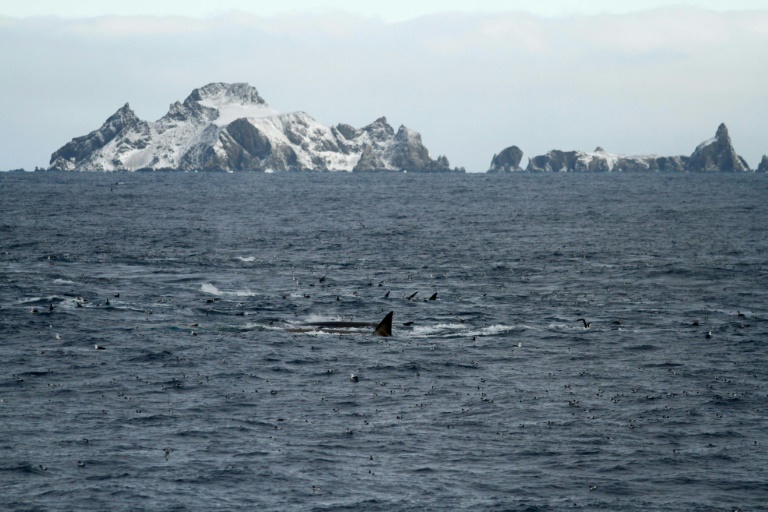
But in scenes that Herr described as “one of nature’s greatest events”, researchers and filmmakers were able to capture footage of up to 150 southern fin whales in Antarctica.     

Drone footage, shot by wildlife filmmakers from the BBC, shows the fin whales swooping and lunging through the water, blasting great bursts of air as they surface, as birds wheel in the sky above them.   

“The water around us was boiling, because the animals were coming up all the time and causing splashes,” Herr told AFP. 

“It was thrilling, just standing there and watching it.”

Unofficially, the team nicknamed it the “fin whale party” as the enormous creatures feasted on swirling masses of krill.   

In two expeditions in 2018 and 2019, researchers recorded a hundred groups of fin whales, ranging from small gatherings of a few individuals, to eight huge congregations of up to 150 animals. 

Previously, recorded feeding groups had a maximum of around a dozen whales. 

Using data from their surveys, the authors estimate that there could be almost 8,000 fin whales in the Antarctic area.

– ‘Ecosystem engineers’ – 

Fin whales can live to around 70 or 80 years old when left alone and have just one calf at a time, so Herr said the recovery of populations is a slow process. 

She said increasing numbers of southern fin whales is an encouraging sign that conservation measures can work, although she noted that other threats include being struck by boats.

The International Union for Conservation of Nature now lists fin whales as “vulnerable” and estimates the global population as 100,000, with most of these in the northern hemisphere. 

More whales could also be a good sign for the health of the ocean more generally — and even efforts to tackle climate change. 

Whales feed on iron-rich krill but they also defecate in the surface waters — returning nutrients to the ocean that help spark the growth of tiny phytoplankton, the foundation of the marine food web.

Like plants on land, phytoplankton photosynthesise using the sun’s rays to turn carbon dioxide into energy and oxygen.  

They are “ecosystem engineers”, said Herr, who first spotted a large group of the whales by chance in 2013 during a research mission into Antarctic Minke whales. 

She now plans more missions to investigate the enduring mystery of these ocean giants — where they breed. 

“We don’t know where they go,” said Herr, adding that much more is known about the fin whales of the northern hemisphere.  

Herr’s team was able to put satellite tags on four animals last year, but a mission to go back to the Antarctic with more tracking equipment has been delayed until next year by the pandemic. 

– Exploitation –

This elusiveness is even more astonishing given the size of fin whales.

The animals can grow up to around 27 metres (88 feet), although Herr said that they now tend to average 22 metres, particularly after whaling that targeted the biggest creatures.    

In all some 700,000 individual fin whales were killed during the 20th century for the oil in their body fat.    

All populations of whales in the region were ravaged, from the biggest blue whales down to the smallest minke whales until commercial hunting was stopped in a series of agreements in the 1970s and 1980s. 

“It’s an example of how humanity treats resources,” said Herr. 

“They just exploit them as long as they can and only stop when it’s not commercially valuable anymore. As long as you can make profit, it will be exploited.”

Major Tunisia party urges boycott of constitution vote

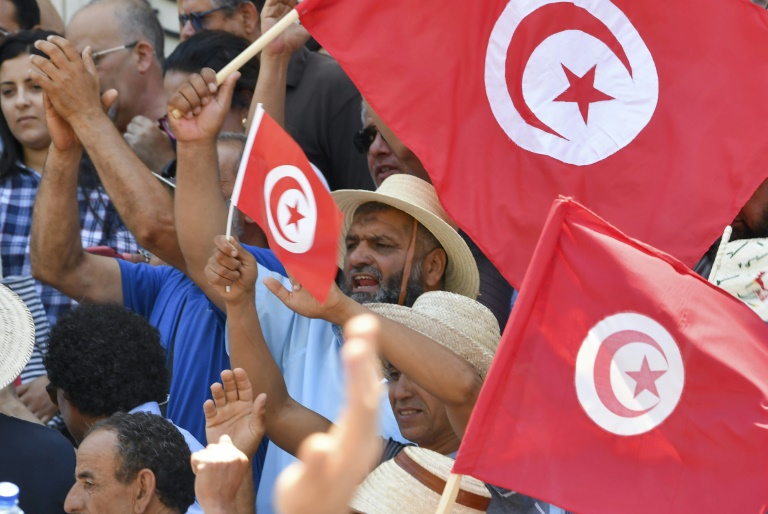
Tunisia’s Islamist-inspired Ennahdha party urged its supporters on Thursday to boycott a July 25 referendum on President Kais Saied’s new constitution, saying it would “lead to a repressive, authoritarian regime”.

“We call for a boycott of the referendum because what is being voted on is not in the interests of Tunisians,” the party’s spokesman Imed Khemeri said at a press conference in Tunis.

Saied in July last year sacked the government and froze the parliament dominated by Ennahda.

He later extended his powers in what critics see as a coup against democracy in the birthplace of the Arab Spring uprisings.

The constitution, the centrepiece of Saied’s drive to remake the Tunisian political system, sparked instant criticism for the nearly unlimited power it gives the president.

“The draft that has been presented has been made to measure” for Saied, Khemeri said.

“This document did not come from the people or from a national dialogue.”

The legal expert who headed a committee to draw up the new charter said the final text published by Saied had “nothing to do with the text we drafted and submitted to the president”.

The expert, Sadeq Belaid, added that it risked paving the way for a “dictatorial regime”, more than a decade after Tunisia’s pro-democracy revolt sparked copy-cat uprisings across the region.

On Tuesday, Saied defended the proposed constitution in an open letter.

He said “this draft was built on what the Tunisian people have expressed from the start of the revolution up until the correction of its path” last July, and that those who worried about it creating a new autocracy hadn’t read it properly.

Ennahdha, which has dominated Tunisia’s politics since the revolt that toppled dictator Zine El Abidine Ben Ali in 2011, has found itself under pressure since Saied’s power grab.

A Tunisian court on Tuesday froze the bank accounts of its chief and speaker of the now-dissolved parliament Rached Ghannouchi, as well as his son Mouadh and former prime minister and one-time senior party member Hamadi Jebali, who is accused of money-laundering. 

Later Thursday some 200 supporters of Ennahdha’s deep ideological rival, the secular Free Destourian Party, also protested against the referendum.

They gathered outside the electoral commission’s headquarters despite a heavy security deployment, some bearing signs reading “we don’t trust your results” and “stop this illegal process”.

Around 30 NGOs including the SNJT journalists’ union and rights group the LTDH also called Thursday for a boycott of the referendum, saying the text was “written by a single person without participation by civil society or experts”.

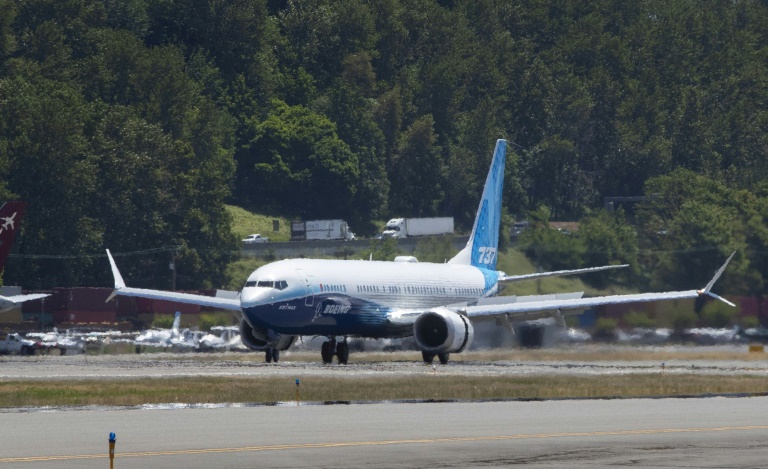
Boeing says risk 737 MAX 10 could be canceled

Boeing’s CEO said the company could cancel the 737 MAX 10 if regulators don’t certify the jet before new crew alerting system standards take effect in December, according to a report Thursday.

The airplane manufacturer confirmed comments by Boeing Chief Executive Dave Calhoun, who told Aviation Week that shelving the MAX 10 “is not that threatening” in light of some of the other challenges the company has faced in recent years.

“The (737-10) is a little bit of an all-or-nothing,” he told the publication.

Calhoun has previously spoken hopefully of solving the problem, which could be resolved by Congress if the plane is not certified in time.

But the Federal Aviation Administration has been taking longer to approve Boeing planes after criticism of the agency in the wake of two fatal crashes of earlier versions of the 737 MAX that left the plane grounded globally for more than a year.

A December 2020 law enacted by the US Congress required the FAA to only certify planes equipped with a flight crew alerting system designed to help pilots prioritize warnings and advisories activated during flight.

The alerting system in the 737 MAX 10 shares the traits in the earlier MAX planes and does not meet the new standards. Boeing has argued the benefit of the MAX 10’s “commonality” with earlier versions of the jets, which enables pilots experienced in earlier version of the MAX to easily transition to the MAX 10.

The system requirement under the 2020 law — which was passed amid criticism of both Boeing and the FAA after the MAX crashes — takes effect on December 27, 2022, effectively establishing a two-year exemption for jets already in the certification process.

The requirement can be extended only by new US legislation, setting the stage for what Aviation Week described as a “looming standoff” between Boeing and Congress.

“As we have said, we are working transparently with the FAA to provide the information they need, and are committed to meeting their expectations and those of our customers to certify and deliver the 737-10,” a Boeing spokesperson said. “Safety remains the driving factor in this effort.”

The FAA declined to give a timetable for the MAX 10.

“Safety dictates the timeline of certification projects,” an FAA spokesperson said. “We cannot discuss ongoing certification projects.”

Michel Merluzeau, an aviation expert at AIR Inc., said cancelation of the MAX 10 could result in a year of lost production on the jet. Even more important, such a move would position rival Airbus to make further gains in the narrow-body airplane market, he said.

Sudan activists to unite under 'revolutionary council'

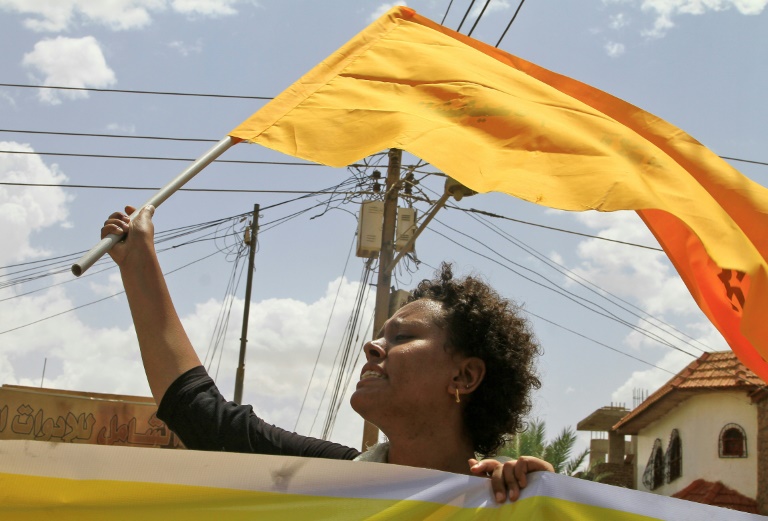
Pro-democracy groups in Sudan announced a “revolutionary council” Thursday to close ranks against coup leader General Abdel Fattah al-Burhan, rejecting his offer of a civilian government, as protesters keep pressing for his resignation.

Burhan led a coup in October last year that derailed a transition to civilian rule, unleashing near-weekly protests and prompting key donors to freeze much-needed funding. 

The transitional government he uprooted was forged between the military and civilian factions in 2019, following mass protests and a sit-in outside army headquarters that prompted the military to oust long-time strongman Omar al-Bashir.

But in a surprise move on Monday, Burhan vowed to make way for a civilian government — an offer quickly rejected by the country’s main civilian umbrella group as a “ruse”.

On Thursday, pro-democracy groups, including local resistance committees, announced their plans to establish a revolutionary council in opposition to Burhan.

The resistance committees are informal groups which emerged during the protests that ousted Bashir, and have led calls for recent anti-coup rallies.

This “revolutionary council will make it possible to regroup revolutionary forces under the orders of a unified leadership”, Manal Siam, a pro-democracy co-ordinator, told reporters.

The council will consist of “100 members, half of whom will be activists from resistance committees”, according to another coordinator, Mohammed al-Jili.

– Scepticism –

The rest of the new organisation will come from political parties, unions, rebel movements opposed to the military and relatives of those killed in the repression of protests, Jili added.

A total of 114 people have been killed in a security forces crackdown against protesters since the October coup, according to pro-democracy medics.

Activists are deeply sceptical of Burhan’s promise to make way for a civilian government, not least because he pledged at the same time to establish a new “Supreme Council of the Armed Forces”. 

Opponents and experts foresee this new body being used to sideline any new government and maintain the military’s wide-reaching economic interests, under the pretext of “defence and security” imperatives. 

Burhan has also said he will disband the country’s ruling Sovereign Council — established as the leading institution of the post-Bashir transition — and on Wednesday he fired civilian personnel serving on that body.

The protests against Burhan received were reinvigorated on June 30, when tens of thousands gathered and nine people were killed, according to pro-democracy medics.

Daily protests have occurred since then.

Young protesters on Thursday sat atop stone barricades and on felled pylons in the capital Khartoum, while also maintaining sit-ins in the suburbs and in Gezira, an agricultural state to the south of the capital. 

Doctors said that one young protester was arrested on Thursday inside a hospital where he was being treated for wounds. 

Sudan’s interim Foreign Minister Dafallah al-Haj Ali met with Volker Perthes, who heads the UN mission in Sudan, in order to “remind him of his duty to be neutral,” a statement by Ali’s ministry said. 

“Violence needs to end,” he had tweeted last week.

Close Bitnami banner
Bitnami