World

War-themed fashion is hit with patriotic Ukrainians

In a large fashion store in central Kyiv, a mother and her young daughter flick through T-shirts depicting a cartoon dog in a flak jacket and sunglasses.

“We have several like this,” says Tatiana, adding that they may pick up something new.

“We love clothes like this so we shop here often.”

The T-shirts by Kyiv-based label J.Cook depict Patron, a Jack Russell dog skilled at finding landmines, who was awarded a medal by President Volodymyr Zelensky in May. 

“I like little Patron,” Tatiana’s daughter Valeriya says, as her mother nods. 

A trend for patriotic clothing in Ukraine sees T-shirt designs and slogans swiftly pick up on the latest weaponry and war developments.

J.Cook’s founder, Serhii Fiut, says the Patron T-shirt is “currently the most popular” for the brand, named after British explorer James Cook, which sews garments in western Ukraine.

“In 90 percent of cases, people choose military-themed T-shirts,” the 34-year-old businessman says, sitting in a Georgian cafe in Kyiv.

“It’s like a means of expression. People want to show that ‘this is close to me'”.

Sales of T-shirts are growing, Fiut said.

“I have a niche where people are ready to buy.”

Many who buy online are women getting T-shirts for partners and relatives fighting in the war, he adds.

At the large store Vsi Svoi (All Ours) on Kyiv’s main shopping street — which showcases Ukraine designers — there is a wide choice of war-themed clothing.

A mannequin near the entrance wears a T-shirt showing a US Javelin anti-tank missile on a background of stylised flowers, designed by another Kyiv-based label, SIL’ wear.

Mariya Iakniunas, 31, the brand’s co-owner says the design, known as “Talisman”, is one of the brand’s most popular.

It is inspired by the Ukrainian peasant tradition of hanging up towels embroidered with bright flowers to ward off bad luck, she said.

“Today, the Javelin in the hands of our warriors is the talisman of every Ukrainian,” she says, hence the idea to surround it with flowers.

She insists that the popularity of such designs “is not a trend, it’s our voice… This is our unity. To be Ukrainians and to win this war.”

While SIL’ wear saw its sales drop in the first month of the war, they are now “recovering powerfully,” she says.

Both J. Cook and SIL’wear donate part of their proceeds to the armed forces.

– ‘People get it’ –

Several T-shirt designs mock Russia’s wilder propaganda claims — such as reports of genetically modified geese and pigeons being used as biological weapons.

One by J.Cook shows aggressive-looking pigeons wearing tank helmets and a cartridge belt, while a gaggle of geese tout rifles and peer through binoculars in another design from the label.

“They (Russians) themselves give us ideas for drawings,” says Fiut.

“Where are these pigeons and biological laboratories? What are they talking about? We are trying to show this irony, to mock it. People get it.”

Customers are eager to wear their support for the war on their chests.

“There’s a lot of beautiful T-shirts,” says 14-year-old Mykola, shopping at Vsi Svoi, saying he and his friends wear them.

They send “a certain message and that’s why it’s important to wear them”, he says. 

– ‘So patriotic’ –

At a pop-up event at a trendy Kyiv showroom called Kapsula, or capsule, T-shirts, sweaters, hoodies and jewellery by Ukrainian designers feature the national flag colours, blue and yellow.

“Everything is so patriotic now,” says administrator Anna Perebynos, 22.

“We hold such events so people know more about our Ukrainian designers who are working now, who are putting out new collections despite what is happening now in our country.”

On display is a soft hoodie by MY x MY featuring an embroidered map of Ukraine with the slogan: “Places for happy people”.

A T-shirt by Balcony Garment shows a Russian rocket with nuclear symbols juxtaposed on doves and flowers with the slogan: “Here and now.”

Perebynos shows clothes to be shipped online including folk-embroidered blouses and linen items in blue and yellow.

“We get a lot of international orders: it’s people who may have been born here in Ukraine and it’s their home but for some reason, they’ve gone abroad.”

Patriotism in Kyiv even extends to makeup, with some women wearing yellow and blue flicks of eyeliner, she says, laughing.

“Now it’s a very large global trend. It shows that people are really supporting us.”
Inspired by Ukraine, civilians study urban warfare in Taiwan

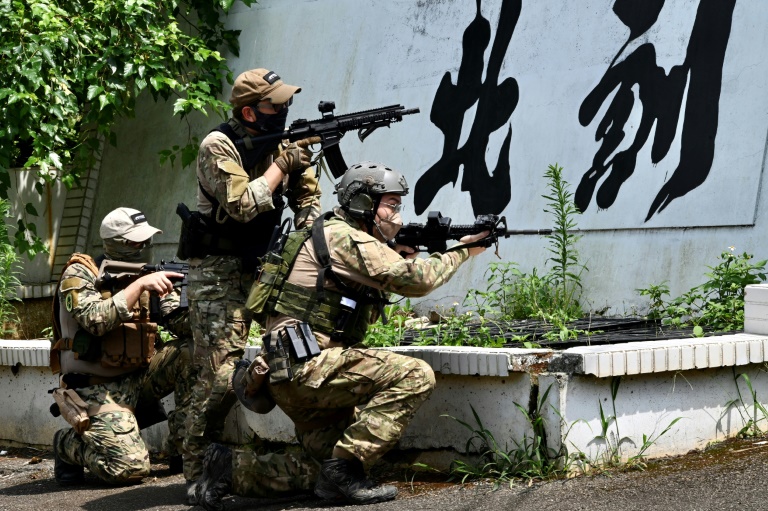
Dressed in military camouflage with an assault rifle at the ready, “Prof” Yeh peers from behind a vehicle in a parking lot outside Taipei, scanning his surroundings and waiting for a signal to advance.

Yeh actually works in marketing, and his weapon is a replica — but he is spending the weekend attending an urban warfare workshop to prepare for what he sees as the very real threat of a Chinese invasion.

“The Russia-Ukraine war is a big reason why I came to this workshop,” 47-year-old Yeh, whose call sign during training is “Prof”, tells AFP during a break between sessions.

When Russian President Vladimir Putin ordered his troops to invade Ukraine at the end of February, he gave shape to the darkest fears of many Taiwanese.

The self-governed democracy lives under constant threat from authoritarian China, which views the island as part of its territory and has pledged to take it one day.

But the war in Ukraine has also inspired Yeh.

The resilience of Ukrainian forces has given him hope that with the right tactics, Taiwan too might have a chance defending itself against its much mightier neighbour.

He is not alone — the organisers of the urban combat course say their students have nearly quadrupled since February. Firearms and first aid courses have also seen increased enrolment.  

– ‘Sense of crisis’ – 

Disquiet over China was brewing in Taiwan long before the Russian invasion.

Max Chiang, CEO of the company that organises the workshops, says there has been “a heightened sense of crisis” among Taiwanese people since 2020, when Chinese warplanes began making regular incursions into the island’s air identification zone.

Roughly 380 sorties were recorded that year — a number that more than doubled in 2021, and is on track to do so again this year, according to an AFP database. 

China comprehensively outnumbers Taiwan militarily, with over one million ground force personnel to Taiwan’s 88,000, 6,300 tanks compared with 800, and 1,600 fighter jets to 400, according to the US Department of Defence.

But Ukraine has provided a practical blueprint for how to make that disparity matter less. 

It has vividly demonstrated how fighting for control of cities can be difficult and costly for attacking forces — and most of Taiwan’s 23 million people live in urban areas. 

As Yeh and his 15 teammates run in staggered column formation across the parking lot, stooping behind dilapidated buildings and vehicles to simulate attacks on enemy positions, they are trying to put some of the lessons learned in Ukraine’s devastated cities into practice.

“The best defence is offence,” Yeh emphasises, as instructors in bright reflective vests stand nearby taking notes.

“To put it bluntly, annihilate the enemy and stop any enemy advances.”

– ‘Resolve of the people’ – 

In a warehouse beside the parking lot, 34-year-old Ruth Lam is learning to fire a handgun for the first time.

Lam, who works at an emergency vehicle lights manufacturer, said that most of her European clients had told her there would not be a war in Ukraine.

“But it happened,” she says.

She is hoping that knowing how to handle a gun might protect her and her family if there is war, and is planning to continue target practice with friends.

“Prepare your umbrella before it rains,” she says. “We don’t know when things are going to happen.”

In a survey conducted in May, 61.4 percent of respondents said they were willing to take up arms in the event of an invasion.

“The will of the Ukrainian people to fight against aggressors has increased the resolve of Taiwanese to safeguard their homeland,” Chen Kuan-ting, CEO of Taiwan think-tank NextGen Foundation, tells AFP.

Lin Ping-yu, a former paratrooper who came to the urban warfare class “to brush up on his combat skills”, concurs.

“Only when a country’s citizens have the strong will and determination to protect their land can they convince the international community to come help them,” the 38-year-old says.

Yeh believes it is a question of when, not if, they will be called to put their new skills into action.

Citing the example of Hong Kong, where Beijing has moved to consolidate its grip in the last few years, he says simply: “Taiwan is next.”

Italy bridge trial to start four years after tragedy

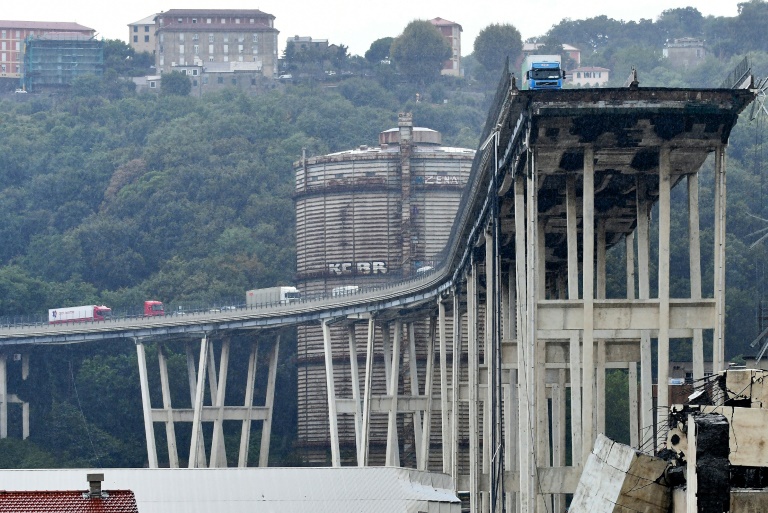
The trial in the case of the Genoa bridge that collapsed in 2018, killing 43 people, opens Thursday in Italy, involving 59 defendants prosecuted for manslaughter and undermining transport safety.

The Morandi bridge, part of a key highway between Italy and France, gave way in torrential rain on August 14 four years ago, sending dozens of vehicles and their passengers tumbling into the abyss. 

The tragedy shone a spotlight on the state of Italy’s transport infrastructure. Autostrade per l’Italia (ASPI), which runs almost half of the country’s motorway network, is accused of failing to maintain the bridge that was inaugurated in 1967.

For one of the prosecutors, Walter Cotugno, “the Morandi bridge was a time bomb”.

“You could hear the ticking, but you didn’t know when it was going to explode,” he said in February. 

Cotugno is convinced that the directors of Autostrade and the engineering company Spea, in charge of maintenance, “were aware of the risk of collapse”, but remained reluctant to finance work in order to “preserve the dividends” of shareholders. 

Most of the defendants summoned by the Genoa court are executives and technicians of the two companies. 

Among them are the general manager of Autostrade at the time, Giovanni Castellucci, the former head of Spea, Antonino Galata, and officials of the Ministry of Infrastructure. 

– ‘Recognition of responsibility’ –

While Castellucci’s lawyers believe that the indictment “will fall like an autumn leaf”, the prosecution counts on its key witness, Roberto Tomasi, Castellucci’s successor and a high-ranking Autostrade executive since 2015. 

At the time of the tragedy, Autostrade belonged to the Atlantia group, controlled by the wealthy Benetton family. Put under pressure by the political class and popular indignation, the family gave up its stake to the state last May.

Even though their former directors are in the dock, Autostrade and Spea will escape the trial, thanks to an out-of-court settlement with the public prosecutor’s office, which provides for a payment of 29 million euros ($30 million) to the state. 

For Raffaele Caruso, lawyer for the committee of relatives of the Morandi bridge’s victims, this agreement “constitutes a first recognition of responsibility” on the part of the two companies. 

“This is one of the most important trials in the recent history of Italy, in terms of the number of defendants, the scale of the tragedy and in terms of the wound inflicted on a whole city,” he told AFP. 

New Zealand's Ardern decries UN 'failure' over Ukraine war

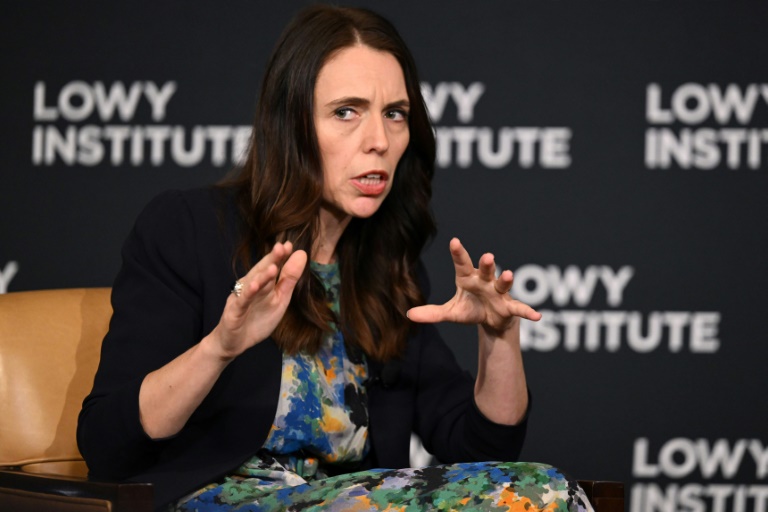
The UN Security Council has failed in its response to Russia’s invasion of Ukraine, New Zealand’s Prime Minister Jacinda Ardern said Thursday, describing Moscow’s role as “morally bankrupt.”

Ardern, who has long argued against the Security Council veto powers held by the five permanent members Britain, China, France, Russia and the United States, reiterated her call for reform of the body.

The UN’s “failure” over Ukraine was caused by Russia’s position with a veto in the Security Council, she said in an address to the Sydney-based Lowy Institute think-tank during a trade visit to Australia.

Russia had used its place on the council to take a “morally bankrupt position in the wake of a morally bankrupt and illegal war”, Ardern said.

New Zealand would seek reforms to the UN Security Council to ensure that its value and relevance does not diminish, she said.

“We must reform the United Nations so that we don’t have to rely on individual countries imposing their own autonomous sanctions,” Ardern said.

Russia must be held to account for its invasion, she said.

Ardern called for the International Criminal Court in The Hague to get the resources it needs to probe and prosecute war crimes.

New Zealand would intervene as a third party in Ukraine’s case against Russia at the court, she added.

– China’s role on Ukraine –

But the prime minister warned against taking a “black and white” view of the world, casting the Ukraine invasion as a war between the West and Russia or democracy against autocracy, and pushing away important players such as China.

“Let’s not assume that China as a member of the Security Council does not have a role to play in placing pressure in response to what is the loss of territorial integrity at the hands of Russia,” the New Zealand leader said.

“Let’s not just isolate and assume that it’s only democracies that take this view.”

China’s growing diplomatic and security sway in the Pacific region — notably its signature of a secretive security pact with Solomon Islands in April — has fed concern among some Western nations about its intentions.

But Ardern said China had long been a player in the region and it would be wrong to expect sovereign Pacific island states to “pick sides”. 

As tensions rise in the Pacific, diplomacy should be the “strongest tool”, she said, warning against isolating big players instead of engaging with them.

Even as China becomes “more assertive”, there are still areas for cooperation with Beijing such as trade, Ardern said.

New Zealand had nevertheless put on record its concerns about China’s actions in the South China Sea, Hong Kong and its treatment of Uyghurs in Xinjiang, including through multilateral institutions, she said.

Inspired by Ukraine, civilians study urban warfare in Taiwan

Dressed in military camouflage with an assault rifle at the ready, “Prof” Yeh peers from behind a vehicle in a parking lot outside Taipei, scanning his surroundings and waiting for a signal to advance.

Yeh actually works in marketing, and his weapon is a replica — but he is spending the weekend attending an urban warfare workshop to prepare for what he sees as the very real threat of a Chinese invasion.

“The Russia-Ukraine war is a big reason why I came to this workshop,” 47-year-old Yeh, whose call sign during training is “Prof”, tells AFP during a break between sessions.

When Russian President Vladimir Putin ordered his troops to invade Ukraine at the end of February, he gave shape to the darkest fears of many Taiwanese.

The self-governed democracy lives under constant threat from authoritarian China, which views the island as part of its territory and has pledged to take it one day.

But the war in Ukraine has also inspired Yeh.

The resilience of Ukrainian forces has given him hope that with the right tactics, Taiwan too might have a chance defending itself against its much mightier neighbour.

He is not alone — the organisers of the urban combat course say their students have nearly quadrupled since February. Firearms and first aid courses have also seen increased enrolment.  

– ‘Sense of crisis’ – 

Disquiet over China was brewing in Taiwan long before the Russian invasion.

Max Chiang, CEO of the company that organises the workshops, says there has been “a heightened sense of crisis” among Taiwanese people since 2020, when Chinese warplanes began making regular incursions into the island’s air identification zone.

Roughly 380 sorties were recorded that year — a number that more than doubled in 2021, and is on track to do so again this year, according to an AFP database. 

China comprehensively outnumbers Taiwan militarily, with over one million ground force personnel to Taiwan’s 88,000, 6,300 tanks compared with 800, and 1,600 fighter jets to 400, according to the US Department of Defence.

But Ukraine has provided a practical blueprint for how to make that disparity matter less. 

It has vividly demonstrated how fighting for control of cities can be difficult and costly for attacking forces — and most of Taiwan’s 23 million people live in urban areas. 

As Yeh and his 15 teammates run in staggered column formation across the parking lot, stooping behind dilapidated buildings and vehicles to simulate attacks on enemy positions, they are trying to put some of the lessons learned in Ukraine’s devastated cities into practice.

“The best defence is offence,” Yeh emphasises, as instructors in bright reflective vests stand nearby taking notes.

“To put it bluntly, annihilate the enemy and stop any enemy advances.”

– ‘Resolve of the people’ – 

In a warehouse beside the parking lot, 34-year-old Ruth Lam is learning to fire a handgun for the first time.

Lam, who works at an emergency vehicle lights manufacturer, said that most of her European clients had told her there would not be a war in Ukraine.

“But it happened,” she says.

She is hoping that knowing how to handle a gun might protect her and her family if there is war, and is planning to continue target practice with friends.

“Prepare your umbrella before it rains,” she says. “We don’t know when things are going to happen.”

In a survey conducted in May, 61.4 percent of respondents said they were willing to take up arms in the event of an invasion.

“The will of the Ukrainian people to fight against aggressors has increased the resolve of Taiwanese to safeguard their homeland,” Chen Kuan-ting, CEO of Taiwan think-tank NextGen Foundation, tells AFP.

Lin Ping-yu, a former paratrooper who came to the urban warfare class “to brush up on his combat skills”, concurs.

“Only when a country’s citizens have the strong will and determination to protect their land can they convince the international community to come help them,” the 38-year-old says.

Yeh believes it is a question of when, not if, they will be called to put their new skills into action.

Citing the example of Hong Kong, where Beijing has moved to consolidate its grip in the last few years, he says simply: “Taiwan is next.”

UK PM clinging to power as resignations pile up

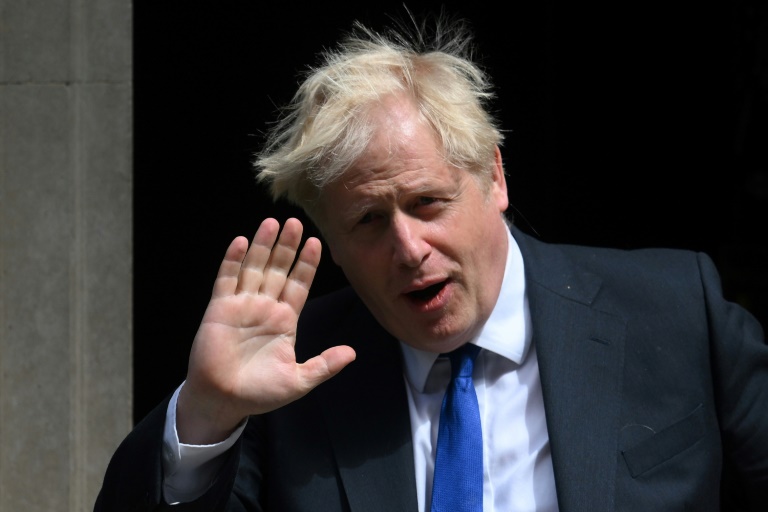
British Prime Minister Boris Johnson was clinging to power Thursday, having defiantly responded to calls from his loyalists to step down by sacking a minister and former top ally. 

More than 40 ministers and aides, including three cabinet members, have quit the government since late Tuesday, with resignations continuing to trickle in overnight.

The Conservative leader was confronted at various points on Wednesday by members of his cabinet telling him it was time to go, local media said. 

His reaction was to fire Communities Secretary Michael Gove, reportedly the first to tell him that he must resign for the good of the Tory party and country, with a source close to Johnson telling the BBC that Gove was “a snake”. 

Gove was Johnson’s right-hand man in Britain’s 2016 Brexit referendum campaign, but dramatically chose to run against him for the Conservative leadership that same year, and again in 2019. 

The Sun newspaper said Johnson had told colleagues they would have to “dip (their) hands in blood” to push him out of office. 

Allies of the prime minister said he was going to “fight on”, with his parliamentary private secretary (PPS) James Duddridge telling Sky News Johnson was in a “buoyant mood”. 

But on Thursday morning, the front pages of British newspapers highlighted the precarious position the scandal-hit leader was in. 

The normally staunchly pro-Conservative Daily Express spoke of Johnson’s “last stand”, with the Daily Telegraph calling Johnson “mortally wounded”, and The Times saying Johnson was “fight(ing) for his life”. 

On the other end of the political spectrum, The Guardian condemned Johnson as “desperate and deluded”. 

– ‘No functioning government’ –

The shock resignations of finance chief Rishi Sunak and Health Secretary Sajid Javid late Tuesday set off a chain of others. 

They quit after Johnson apologised for appointing as deputy chief whip senior Conservative MP Chris Pincher, who was forced to step down following accusations he drunkenly groped two men.

Days of shifting explanations had followed Pincher’s resignation, with Downing Street at first denying Johnson knew of the prior allegations — a defence that collapsed after a former top civil servant said he was told in 2019 about another incident.

Tory critics said the Pincher affair had tipped many over the edge, sickened at having to defend what they saw as more lies by Johnson.

Johnson was confronted by members of his cabinet on Wednesday when he returned to Downing Street from a lengthy grilling by a parliamentary committee.

The delegation was said to include hardline interior minister Priti Patel and Nadhim Zahawi, who has barely been 24 hours in his new job as Sunak’s successor — though Johnson’s PPS Duddridge later denied Zahawi was there. 

A third member of Johnson’s cabinet — Welsh Secretary Simon Hart — quit on Wednesday evening. 

Later that night, a health minister and another PPS resigned, meaning at least 44 ministers and aides, mostly from more junior positions outside the cabinet, have stepped down in just over 24 hours. 

Former head of Downing Street’s Policy Unit Camilla Cavendish told the BBC that Britain no longer had “a functioning government”.

The calls for Johnson to go persisted late into the evening.  

Attorney General Suella Braverman told broadcaster ITV that while she wouldn’t resign, “the balance has tipped now in favour of saying… it’s time to go”.

She also said she would stand in a leadership contest. 

– ‘Bye, Boris’ –

A culture of scandal has dogged Johnson for months, including lockdown-breaking parties in Downing Street.

The prime minister, who received a police fine for the Covid lockdown-breaking “Partygate” affair, faces a parliamentary probe into whether he lied to MPs about the revelations.

Johnson only narrowly survived a no-confidence vote among Conservative MPs a month ago, which ordinarily would mean he could not be challenged again for another year.

But the influential “1922 Committee” of non-ministerial Tory MPs is reportedly seeking to change the rules, with its executive committee announcing Wednesday it will elect a fresh lineup of members next week.

Johnson’s refusal to resign means he will likely face a second confidence vote. 

In parliament on Wednesday, Johnson insisted the country needed “stable government, loving each other as Conservatives, getting on with our priorities”.

But addressing MPs, Javid urged other ministers to resign.

“The problem starts at the top, and I believe that is not going to change,” he told a hushed House of Commons. 

“And that means that it is for those of us in that position — who have responsibility — to make that change.”

Cries of “bye, Boris” echoed around the chamber at the end of his speech. 

Singapore conducts two more executions: activists

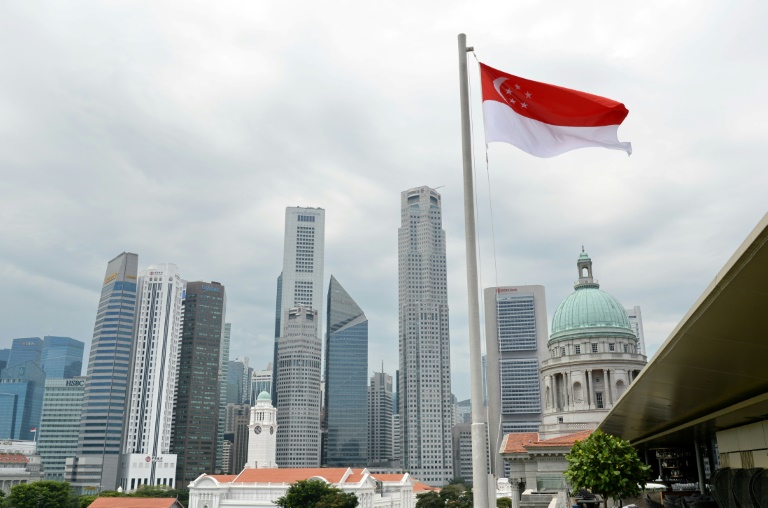
Singapore hanged two drug traffickers Thursday in what campaigners condemned as a “shameful and inhuman punishment”, taking to four the number of executions in the city-state since March.

The latest executions come after the hanging of a mentally disabled man in April sparked widespread international outrage, with the European Union and United Nations among those speaking out against it. 

Singapore has some of the world’s toughest anti-drugs laws, and insists that capital punishment remains an effective deterrent against trafficking despite growing pressure to abolish it. 

Those executed Thursday were Kalwant Singh, a 32-year-old from neighbouring Malaysia, and Singaporean Norasharee Gous, said prominent rights campaigner Kirsten Han.

Han told AFP that Kalwant’s sister had been given his death certificate, and that Norasharee’s family had brought his remains to a mosque.

Prisons officials did not immediately respond to requests for comment. 

Amnesty International said Singapore’s use of the death penalty was “a blatant violation of human rights”. 

“We urge the Singaporean authorities to immediately stop this latest wave of hangings and impose a moratorium on executions as a step towards ending this shameful and inhuman punishment,” said the group’s Emerlynne Gil.

Kalwant and Norasharee were convicted in 2016 of trafficking heroin in the same case.

The Malaysian lodged a last-ditch appeal Wednesday, with his lawyers arguing he provided information that helped authorities arrest a key suspected drug trafficker.

But a three-judge panel dismissed the appeal, saying drug enforcement officials did not use any information he provided to arrest the suspect.

After a hiatus of over two years, Singapore resumed executions in March with the hanging of a Singaporean drug trafficker, and activists fear more will be conducted in the coming months.

In a recent BBC interview, Home Affairs and Law Minister K Shanmugam defended Singapore’s position on the death penalty, saying there is “clear evidence that it is a serious deterrent for would-be drug traffickers”. 

Sri Lanka hikes interest rates, warns trouble ahead

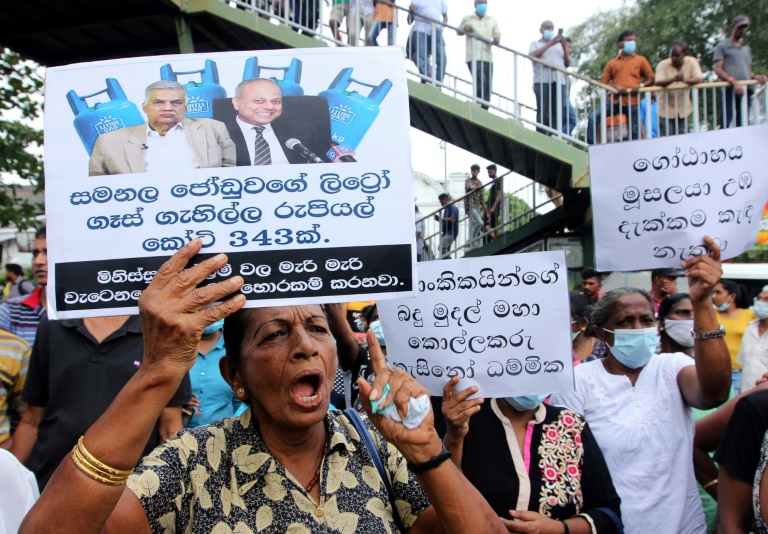
Cash-strapped Sri Lanka raised interest rates one percentage point Friday, the second sharp hike in three months, as the central bank warned of 80 percent inflation and a painful recession.

The Central Bank of Sri Lanka ramped up its benchmark deposit and lending rates to 14.5 percent and 15.5 percent respectively, after data showed inflation soared to a record 54.6 percent last month.

Officials said the hike was aimed at containing runaway prices, which were forecast to rise 80 percent by year’s end, and reduce any build-up of demand pressures in the shattered economy.

Acute shortages of food and fuel, alongside lengthy electricity blackouts, have led to months of widespread anti-government demonstrations calling for President Gotabaya Rajapaksa’s resignation.

The central bank said the economy could go into a recession this year, having grown 3.7 percent last year and contracted 3.6 percent in 2020.

Prime Minister Ranil Wickremesinghe told parliament the economy could shrink as much as 7.0 percent.

The bank said economic activity in the second quarter of this year had been severely affected by electricity and fuel shortages, while all non-essential offices and schools have been told to shut in a bid to reduce commuting and save scarce energy.

The country is officially out of petrol and diesel, while fresh supplies are at least two weeks away.

The government defaulted on its $51 billion foreign debt in April and is negotiating a possible bailout with the International Monetary Fund.

“Significant progress has been made with respect to negotiations with the IMF towards reaching a staff-level agreement on the Extended Fund Facility (EFF) arrangement in the near term,” the central bank said.

It added that negotiations were also underway with several bilateral and multilateral partners to secure bridging financing.

'In the mouth of dragons': Melting glaciers threaten Pakistan's north

As dawn broke over Javed Rahi’s Pakistani mountain village, a loud boom shattered the silence and a torrent of water came cascading down from the melting glacier nearby, followed by a thick cloud of smoke.

Rahi, a retired maths teacher, had been due to attend his nephew’s wedding the day the flood rushed through the village of Hassanabad.

“I expected women and children to sing and dance… Instead I heard them screaming in terror,” the 67-year-old said.

“It was like doomsday.”

The flood –- which occurred as a heatwave was gripping South Asia in May –- swept away nine homes in the village and damaged half a dozen more.

The water also washed away two small hydro plants and a bridge that connected the remote community to the outside world.

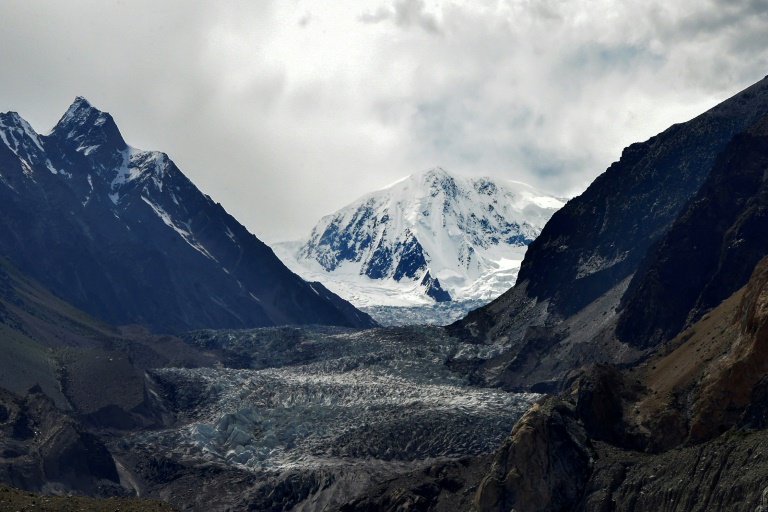
Pakistan is home to more than 7,000 glaciers, more than anywhere else on Earth outside the poles.

Rising global temperatures linked to climate change are causing the glaciers to rapidly melt, creating thousands of glacial lakes.

The government has warned that 33 of these lakes -– all located in the spectacular Himalaya, Hindu Kush and Karakoram mountain ranges that intersect in Pakistan –- are at risk of bursting and releasing millions of cubic metres of water and debris in just a few hours, like in Hassanabad.

At least 16 such glacial lake outburst floods linked to heatwaves have occurred this year already, compared with an average of five or six per year, the Pakistani government said earlier this week.

The devastation caused by such floods makes recovery for impacted communities an arduous task.

After disaster struck Hassanabad, Rahi and fellow villagers who lost their homes had to move to a nearby camp for displaced people. 

Inside their makeshift tents are the few belongings they managed to salvage and mattresses to sleep on.

“We never thought we would fall from riches to rags,” Rahi said.

– No resources to move –

Pakistan is the world’s eighth most vulnerable country to extreme weather caused by climate change, according to the Global Climate Risk Index compiled by the environmental NGO Germanwatch.

The country is experiencing earlier, hotter and more frequent heatwaves, with temperatures already hitting 50 degrees Celsius (122 Fahrenheit) this year.

Floods and droughts in recent years have killed and displaced thousands of people, destroyed livelihoods, and damaged infrastructure.

According to the UN Development Programme, a lack of information on glacial changes in Pakistan makes it difficult to predict hazards originating from them.

Although Hassanabad had an early warning system in place –- including cameras that monitor water flow in glacial lakes –- the villagers believed they were living high enough above the water to avoid any impact, according to local officials.

Zahida Sher, who lost her home in the Hassanabad flood, said the power of the water took out buildings that had previously been considered safe.

The mountain communities depend on their livestock, orchards, farms and tourism for survival, but climate change threatens all of it.

“Our economy is agrarian and people don’t have enough resources to move from here,” said Sher, a researcher for a local development NGO.

Siddique Ullah Baig, a disaster risk reduction analyst in the northern region, said around seven million people are vulnerable to such events, but many are not aware of the gravity of the threat.

“People are still constructing homes in areas declared as a red zone for flooding. Our people are not aware and prepared to deal with any possible disaster,” he told AFP.

– ‘Horror night’ –

Further north of Hassanabad lies Passu, another precarious hamlet that has already lost around 70 percent of its population and area after being hit by floods and natural river erosion.

The village is sandwiched between White glacier in the south, Batura glacier in the north and the Hunza River in the east — three forces given the respectful title of “dragons” because of their destructive power.

“Passu village lies in the mouths of these three dragons,” said local scholar Ali Qurban Mughani, pointing to the centuries-old bodies of dense ice towering over the village.

As he spoke, labourers worked on a protective concrete wall on a riverbank — a bid to shield the village from further erosion.

Kamran Iqbal invested 500,000 rupees (around $2,400) that he borrowed from a local NGO to open a picnic spot for visitors with a breathtaking view.

The beauty of the glaciers has made the region one of the country’s top tourist destinations.

Business was flourishing until a “horror night” last year when a flash flood washed away Iqbal’s investment. 

Even the most ambitious international climate targets of limiting global warming to 1.5 degrees by the end of the century could lead to the melting of one third of Pakistan’s glaciers, the Nepal-based scientific organisation the International Centre for Integrated Mountain Development said in a 2019 study.

“In 2040 we could start facing problems of (water) scarcity that could lead to drought and desertification — and before that we may have to cope with frequent and intense riverine flooding, and of course flash floods,” said Aisha Khan, head of the Mountain and Glacier Protection Organization, which researches glaciers in Pakistan.

– ‘We are at the forefront’ –

Home to more than 220 million people, Pakistan says it is responsible for less than one percent of global greenhouse gas emissions.

Yet it remains highly vulnerable to climate change impacts, dependent on climate-sensitive sectors such as agriculture and natural resources.  

“There are no factories or industries here that can cause pollution… We have a clean environment,” said Amanullah Khan, a 60-year village elder in Passu.

“But when it comes to the threats posed by climate change, we are at the forefront.”

Asif Sakhi, a political activist from Passu, said mountain communities were increasingly fearful about the perils posed by glaciers.

“This area belongs to glaciers; we have occupied it,” the 32-year-old said.

'In the mouth of dragons': Melting glaciers threaten Pakistan's north

As dawn broke over Javed Rahi’s Pakistani mountain village, a loud boom shattered the silence and a torrent of water came cascading down from the melting glacier nearby, followed by a thick cloud of smoke.

Rahi, a retired maths teacher, had been due to attend his nephew’s wedding the day the flood rushed through the village of Hassanabad.

“I expected women and children to sing and dance… Instead I heard them screaming in terror,” the 67-year-old said.

“It was like doomsday.”

The flood –- which occurred as a heatwave was gripping South Asia in May –- swept away nine homes in the village and damaged half a dozen more.

The water also washed away two small hydro plants and a bridge that connected the remote community to the outside world.

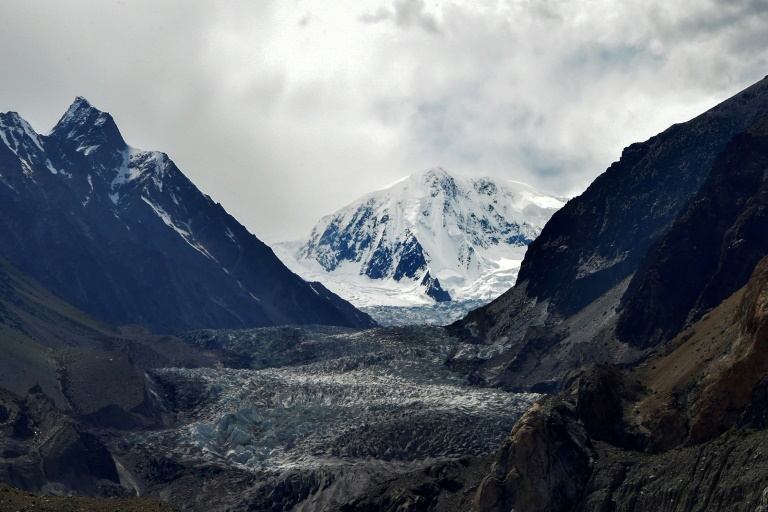
Pakistan is home to more than 7,000 glaciers, more than anywhere else on Earth outside the poles.

Rising global temperatures linked to climate change are causing the glaciers to rapidly melt, creating thousands of glacial lakes.

The government has warned that 33 of these lakes -– all located in the spectacular Himalaya, Hindu Kush and Karakoram mountain ranges that intersect in Pakistan –- are at risk of bursting and releasing millions of cubic metres of water and debris in just a few hours, like in Hassanabad.

At least 16 such glacial lake outburst floods linked to heatwaves have occurred this year already, compared with an average of five or six per year, the Pakistani government said earlier this week.

The devastation caused by such floods makes recovery for impacted communities an arduous task.

After disaster struck Hassanabad, Rahi and fellow villagers who lost their homes had to move to a nearby camp for displaced people. 

Inside their makeshift tents are the few belongings they managed to salvage and mattresses to sleep on.

“We never thought we would fall from riches to rags,” Rahi said.

– No resources to move –

Pakistan is the world’s eighth most vulnerable country to extreme weather caused by climate change, according to the Global Climate Risk Index compiled by the environmental NGO Germanwatch.

The country is experiencing earlier, hotter and more frequent heatwaves, with temperatures already hitting 50 degrees Celsius (122 Fahrenheit) this year.

Floods and droughts in recent years have killed and displaced thousands of people, destroyed livelihoods, and damaged infrastructure.

According to the UN Development Programme, a lack of information on glacial changes in Pakistan makes it difficult to predict hazards originating from them.

Although Hassanabad had an early warning system in place –- including cameras that monitor water flow in glacial lakes –- the villagers believed they were living high enough above the water to avoid any impact, according to local officials.

Zahida Sher, who lost her home in the Hassanabad flood, said the power of the water took out buildings that had previously been considered safe.

The mountain communities depend on their livestock, orchards, farms and tourism for survival, but climate change threatens all of it.

“Our economy is agrarian and people don’t have enough resources to move from here,” said Sher, a researcher for a local development NGO.

Siddique Ullah Baig, a disaster risk reduction analyst in the northern region, said around seven million people are vulnerable to such events, but many are not aware of the gravity of the threat.

“People are still constructing homes in areas declared as a red zone for flooding. Our people are not aware and prepared to deal with any possible disaster,” he told AFP.

– ‘Horror night’ –

Further north of Hassanabad lies Passu, another precarious hamlet that has already lost around 70 percent of its population and area after being hit by floods and natural river erosion.

The village is sandwiched between White glacier in the south, Batura glacier in the north and the Hunza River in the east — three forces given the respectful title of “dragons” because of their destructive power.

“Passu village lies in the mouths of these three dragons,” said local scholar Ali Qurban Mughani, pointing to the centuries-old bodies of dense ice towering over the village.

As he spoke, labourers worked on a protective concrete wall on a riverbank — a bid to shield the village from further erosion.

Kamran Iqbal invested 500,000 rupees (around $2,400) that he borrowed from a local NGO to open a picnic spot for visitors with a breathtaking view.

The beauty of the glaciers has made the region one of the country’s top tourist destinations.

Business was flourishing until a “horror night” last year when a flash flood washed away Iqbal’s investment. 

Even the most ambitious international climate targets of limiting global warming to 1.5 degrees by the end of the century could lead to the melting of one third of Pakistan’s glaciers, the Nepal-based scientific organisation the International Centre for Integrated Mountain Development said in a 2019 study.

“In 2040 we could start facing problems of (water) scarcity that could lead to drought and desertification — and before that we may have to cope with frequent and intense riverine flooding, and of course flash floods,” said Aisha Khan, head of the Mountain and Glacier Protection Organization, which researches glaciers in Pakistan.

– ‘We are at the forefront’ –

Home to more than 220 million people, Pakistan says it is responsible for less than one percent of global greenhouse gas emissions.

Yet it remains highly vulnerable to climate change impacts, dependent on climate-sensitive sectors such as agriculture and natural resources.  

“There are no factories or industries here that can cause pollution… We have a clean environment,” said Amanullah Khan, a 60-year village elder in Passu.

“But when it comes to the threats posed by climate change, we are at the forefront.”

Asif Sakhi, a political activist from Passu, said mountain communities were increasingly fearful about the perils posed by glaciers.

“This area belongs to glaciers; we have occupied it,” the 32-year-old said.

Close Bitnami banner
Bitnami