World

Recession fears drag on euro and crude, Asian markets mixed

Crude extended the week’s losses Thursday, while the euro struggled to recover from 20-year lows and equities were mixed as recession fears continued to cast a pall across trading floors.

Expectations for a contraction in some of the world’s leading economies, including China, where a new Covid-19 flare-up has generated angst, have increased in recent weeks owing to central bank interest rate hikes aimed at taming decades-high inflation.

The surge in inflation has been caused by soaring energy costs and rising post-lockdown demand, but observers said concerns about a contraction — along with signs that consumers were being put off by high prices — were weighing on the oil market.

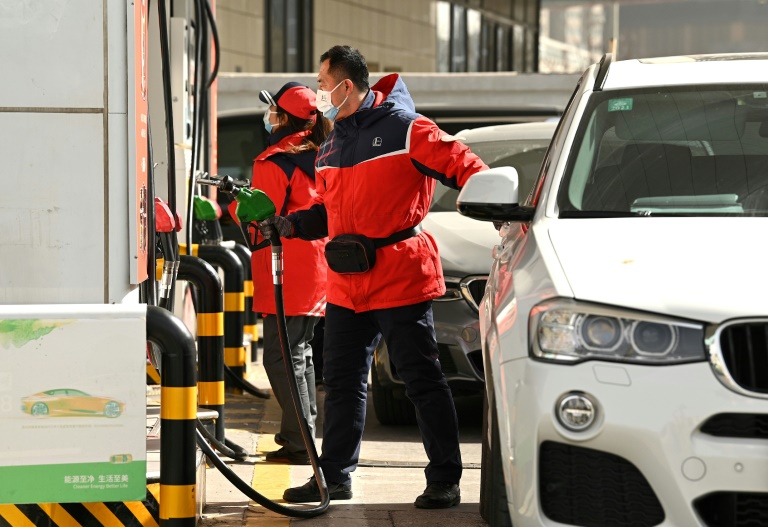
Both main contracts were down more than one percent Thursday and have fallen about 10 percent this month. They are now below $100 for the first time since April.

Data on Wednesday showed US demand appeared to be waning as stockpiles rose, confounding expectations for a drop, while there are also some concerns that the China outbreaks — including another spike in Shanghai — could see major cities put into lockdown again.

Still, Vandana Hari, of Vanda Insights, said prices would likely rebound.

“There isn’t much rational assessment going on — it’s panic selling,” she said. “The fears may not end but could get brushed aside when supply constraints are back to the fore. The market balance is tight.”

While the drop in prices could temper inflation and give central banks some room to ease up on their rate hike cycle, the Federal Reserve remains on course for several more increases.

On Wednesday, minutes from its June policy meeting indicated officials were set for another three-quarter-point rate hike this month — after the first such lift in 28 years in June — saying they were worried “inflation pressures had yet to show signs of abating”.

They also noted a need to maintain credibility among Americans, saying there was “a significant risk… that elevated inflation could become entrenched if the public began to question the resolve of the Committee”.

The increases were likely to continue through to the end of the year, the minutes showed.

Despite the prospect of higher borrowing costs, Wall Street’s three main indexes ended on a positive note.

But Asia struggled to pick up the baton, with the region’s markets mixed.

Tokyo, Shanghai, Sydney, Seoul, Taipei and Jakarta all rose but Hong Kong, Singapore, Wellington and Manila fell.

The Fed’s determination to ramp up rates has sent the dollar soaring against most other currencies, with the euro particularly under pressure due to the European Central Bank’s much slower response to the spike in prices.

The single currency hit a 20-year low against the greenback this week, with fears for the eurozone economy growing as it faces a severe energy crunch owing to sanctions on Russia, while there is a possibility Moscow will cut off its gas supplies.

And while the ECB has said it will start hiking rates this month, analysts said there was a lot of uncertainty, as officials had to balance supporting the currency with avoiding a fragmentation, in which members’ borrowing costs diverge too much.

Now there is a growing belief the euro will fall to parity with the dollar within weeks.

“I’m getting really worried about the recent speeches that have come out the past couple of days that show that there are a lot of concerns and a lot of disagreement” within the ECB governing council, said Vasileios Gkionakis of Citigroup.

“If the ECB wants to tame inflation and support exchange rates … then it needs to do two things: hike rates and come up with an effective anti-fragmentation mechanism,” he told Bloomberg.

And Kit Juckes at Societe Generale added that the currency “remains effectively unbuyable this summer”. 

“Europe’s energy dependency on Russia is falling, but not fast enough to avoid recession if the (gas) pipeline is closed. If that happens, the (euro) will likely lose another 10 percent or so.”

– Key figures at around 0300 GMT –

Tokyo – Nikkei 225: UP 0.7 percent at 26,298.66 (break)

Hong Kong – Hang Seng Index: DOWN 0.6 percent at 21,459.42

Shanghai – Composite: UP 0.3 percent at 3,356.82

Euro/dollar: UP at $1.0193 from $1.0186 on Wednesday

Pound/dollar: UP at $1.1937 from $1.1921 

Euro/pound: DOWN at 85.40 pence from 85.43 pence

Dollar/yen: DOWN at 135.64 yen from 135.93 yen

West Texas Intermediate: DOWN 1.0 percent at $97.54 per barrel

Brent North Sea crude: DOWN 1.1 percent at $99.54 per barrel

New York – Dow: UP 0.2 percent at 31,037.68 (close)

London – FTSE 100: UP 1.2 percent at 7,107.77 (close)
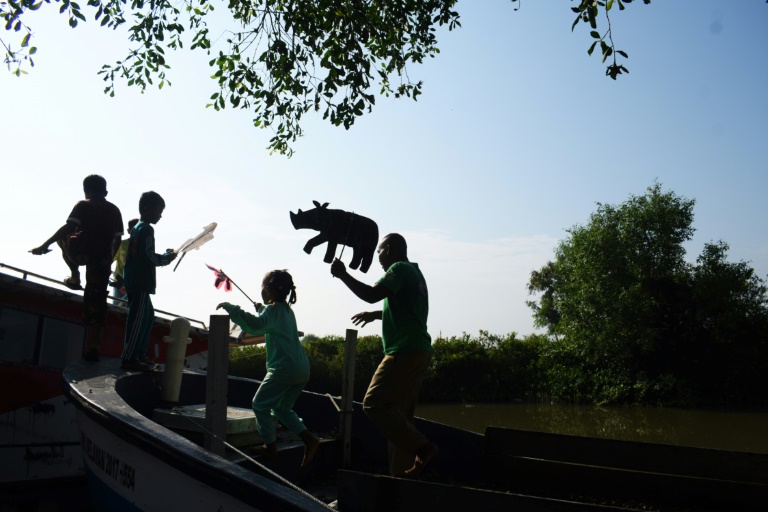
Indonesian uses puppets to teach threat to world's rarest rhinos

In a small Indonesian fishing village, a man with a fake rhino head perched atop his own puts on a puppet show for a group of eager children.

Former teacher Samsudin is educating the kids about the plight of the critically endangered Javan rhino –- the world’s rarest –- using cardboard figures, comical expressions and exaggerated voices to spread his message of conservation one story at a time.

The 50-year-old asks the children in the West Javan village of Indramayu to mimic the animals, and teaches them the importance of guarding the forest and the wildlife unique to it.

“I want them to know rhinos need pristine forest and that human beings are not the only creatures on earth,” he told AFP.

“I want children to love nature and grow up into people who are aware and care about our natural resources.”

Javan rhinos –- one-horned mammals that can weigh up to two tonnes and have folds of loose skin that resemble armour plating –- once numbered in the thousands across Southeast Asia.

But they are now barely clinging to existence, having been hit hard by rampant poaching and human encroachment on their habitats.

After years of population decline, there are believed to be just 75 of the mammals left at the Ujung Kulon sanctuary –- their last remaining wild habitat –- on the westernmost tip of Java island. 

– ‘Before it’s too late’ –

Samsudin, who like many Indonesians uses only one name, decided to dedicate his time to the conservation of Javan rhinos and other endangered species in 2014 after learning about their precarious situation.

Since then, he has travelled across the archipelago on an old bicycle, performing free puppet shows at stops along the way to teach children about the animals. 

“I want them to know about rhinos before it’s too late. I don’t want them to only see rhinos from textbooks or cartoon movies,” Samsudin said. 

Samsudin makes his puppets out of cardboard because it’s readily available, and because he opposes the use of leather — which is used in traditional Javanese puppet theatre shows — for conservation reasons.

The use of visual storytelling makes the message easier for children to digest and creates a stronger bond between him and his young audience, he said.

“Children have a short attention span; I have to be creative to distract them from their gadgets,” he said. 

Rhino conservation is especially difficult because of the animals’ long gestation period and their tendency to roam, which often leaves males and females separated during the mating period. 

Samsudin is also determined to challenge cartoon depictions of rhinos as being lazy and dumb. 

“Rhinos are very shy and they have an unusual appearance, but there are only a few of them left in the world, so I want to lift their image and make them special and wise creatures,” he said.

– ‘Follow in my footsteps’ –

After coronavirus temporarily brought the curtain down on his act, Samsudin is now back on the road performing for children.

His show casts the Javan rhino as the main character, with a macaque and a Sumatran tiger for sidekicks, and a hunter as the villain.

One happy audience member was Gelar Dwi Titar Syahputro, a primary school student who watched the puppet show with his friends. 

“It was fun and hilarious. I learned something new. The story told me not to litter and to promise to guard nature,” Syahputro said.

Samsudin wants his young audience members to emulate him one day, joining his mission to spread awareness about the environment through folklore.

“I hope among hundreds of children I’ve met, one or two will follow in my footsteps and join me to spread messages about conservation,” he said.

'Scary to be queer': Lebanon cracks down on LGBTQ rights

Lebanon’s LGBTQ community, long among the most vocal and visible in the Middle East, has been targeted by a crackdown that has seen queer activists harassed and Pride gatherings cancelled.

It has heaped pressure on a community that already lost many of its safe spaces in the devastating 2020 Beirut port explosion and been depleted by an exodus driven by Lebanon’s severe economic crisis. 

An icy chill went through the crisis-tested community when the interior ministry in a June 24 letter instructed security forces to clamp down on events “promoting sexual perversion”.

“It feels very intimidating and quite scary to be a queer person in Lebanon right now,” said Tarek Zeidan, head of the Beirut-based Helem association, considered the preeminent Arab group defending LGBTQ rights.

“We are afraid these signals are only the beginning of further attempts to restrict the individual, civil and political rights of LGBTQ people.” 

Lebanon has never been a safe haven for lesbian, gay, bisexual, transgender and queer people. But the community has long been visible and outspoken, defying arbitrary crackdowns on its bars, nightclubs and community centres. 

Annual efforts to host LGBTQ gatherings have regularly been banned, or cancelled over threats. 

But the state’s latest directive — condemned by human rights groups as unlawful — deepens the multilayered crisis that members say now threatens the very survival of the community. 

The ministry argued that LGBTQ events violate customs, traditions and “principles of religion” in Lebanon, where political power is split along faith lines between Shiite and Sunni Muslim, Christian, Druze and other groups.

– Death threats –

Lebanon’s LGBTQ community in 2018 scored a success when a court ruled that same-sex conduct is not unlawful, but since then it has seen more setbacks than victories.

The Beirut port blast heavily impacted an inner-city district with many gay-friendly spaces, also destroying the Helem offices which have only recently reopened. 

LGBTQ people have also featured disproportionately in Lebanon’s snowballing population exodus that is generating an epidemic of queer isolation.

The minority “has suffered greatly over the past three years and is already made hyper-vulnerable by the socioeconomic discrimination it has been facing,” said Zeidan, 38.

But the latest decision, he said, “is really exacerbating that feeling of anxiety and that feeling of fear living in Lebanon”.

The state move triggered an avalanche of homophobic slurs and threats from politicians, religious authorities and radical activists, as security forces banned even private workshops and movie screenings.  

Anti-queer protesters demanded the criminalisation of the LGBTQ status, and conferences discussed “risks and treatments” for homosexuality.

Rasha Younes of Human Rights Watch called it “definitely the most general ban we have seen in recent years”, adding that it lacked any a legal framework and set “a dangerous precedent”. 

Activists now report receiving phone calls from state security officers “inviting them for a chat over coffee and making it clear that they are monitoring their social media accounts”, Younes said.

Last week, LGBTQ activists planned a sit-in protest outside the interior ministry, but they called it off after receiving death threats. 

– ‘Abuse of power’ –

The ministry’s decision came after a Christian group calling itself the “Soldiers of God” live-streamed a video of its members tearing apart a Beirut billboard featuring blooming flowers in the colours of a rainbow flag.

Marked #LoveAlwaysBlooms, the billboard had been created by Beirut Pride, a collaborative platform that was founded in 2017 to advocate for the decriminalisation of the LGBTQ status.

Hadi Damien, its 33-year-old initiator, said the billboard had been their first major offline project since October 2019.

The angry backlash is not new, he said, sitting in a Beirut cafe, but he argued that it is all the more intense at a time Lebanon is gripped by a broader crisis and has seen the near-total collapse of the state. 

“When institutions are weakened, we go to a very primitive way of governing people,” he said. “It means abuse of power is rampant, it means that any person can pretend to be law enforcement and crack down on a venue.”

Damien argued that the state’s latest move amounts to a “pure diversion” from Lebanon’s grinding malaise and “is nothing but performative politics”.

“When so much is going on, you need to show that you are doing something. So you always hit the people who seem like the easiest target.”

MI5, FBI chiefs warn over China in rare joint address

The heads of MI5 and the Federal Bureau of Investigation warned Wednesday about China’s commercial espionage thrust in the West, in a rare joint address at the British intelligence service’s London headquarters.

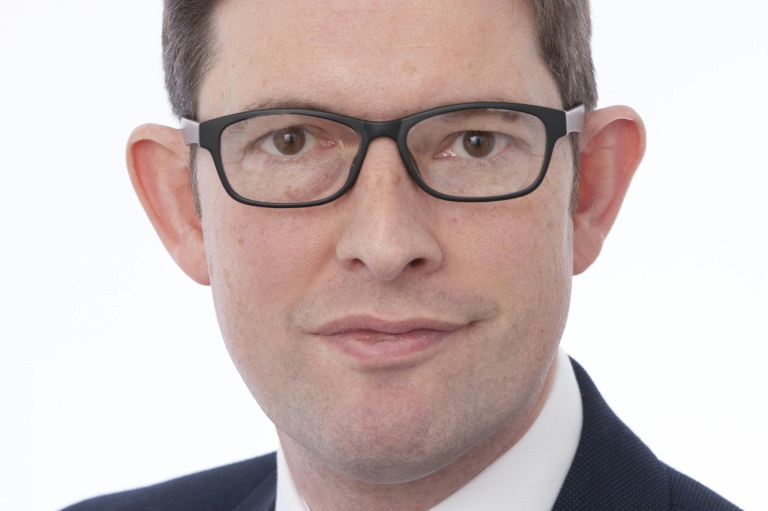
Speaking to an audience of officials and business executives in Thames House, MI5 Director General Ken McCallum and FBI Director Chris Wray said the threat from Chinese spies is paramount in both countries and only continues to grow.

McCallum said MI5, the British domestic intelligence service, had sharply expanded its China-focused operations.

“Today we’re running seven times as many investigations as we were in 2018,” he said.

“We plan to grow as much again, while also maintaining significant effort against Russian and Iranian covert threats.”

He said Chinese intelligence takes a slow and patient approach to developing sources and gaining access to information, and few of those targeted recognised themselves as such.

“Hostile activity is happening on UK soil right now,” he said.

“By volume, most of what is at risk from Chinese Communist Party aggression is not, so to speak, my stuff. It’s yours — the world-leading expertise, technology, research and commercial advantage developed and held by people in this room, and others like you.”

Wray said China’s threat was a “complex, enduring and pervasive danger” to both the United States and Britain, as well as other allies.

China is “set on stealing your technology, whatever it is that makes your industry tick, and using it to undercut your business and dominate your market,” he added.

The two also warned that a Chinese invasion of Taiwan, which Beijing views as its territory, would cause a massive disruption to global commerce and industry.

They urged businesses to stay alert and report possible threats.

“The Chinese Communist Party is interested in our democratic, media and legal systems. Not to emulate them, sadly, but to use them for its gain,” said McCallum.

Beijing rejected the accusations, describing them as “completely groundless”.

“The so-called cases they listed are pure shadow chasing,” the spokesperson of the Chinese embassy in Britain said in a statement posted on the mission’s website.

“They spread all kinds of lies about China in order to smear China’s political system, stoke anti-China and exclusion sentiment, and divert public attention in order to cover up their own infamous deeds.”

Samsung Electronics forecasts 11.4% rise in 2Q profits

Samsung Electronics expects operating profits in the second quarter to rise 11.4 percent, the South Korean tech giant said in a statement Thursday, despite ongoing global supply chain woes.  

The world’s biggest smartphone maker forecast 2022 second-quarter operating profits of about 14 trillion won ($10.7 billion), up from 12.6 trillion won in the same quarter last year.

Samsung expected sales in the April-June period to have increased by 21 percent on-year to 77 trillion won. The figure would represent a downgrade from its first-quarter sales of 77.8 trillion won.  

Analysts said Samsung was helped by its continued strong performances in the memory chip business, making up for declines in smartphone sales over the period.  

“Samsung’s smartphone shipments for the second quarter are expected to be just over 60 million units, which is worse than expected,” Park Sung-soon, an analyst at Cape Investment & Securities, told AFP.  

Samsung shipped 74.5 million smartphones in the first quarter, according to global research firm Counterpoint, topping the global shipments market with 23 percent, trailed by Apple’s 18 percent. 

With memory chips now used in a wide-ranging array of devices and cloud servers — essential for remote working in the pandemic era — the sector has become less dependent on seasonally driven demand for gadgets such as smartphones and laptops. 

But concerns are growing over uncertainty in the global economic outlook due to Russia’s ongoing war in Ukraine and mounting fears of recession driven by inflationary pressure. 

Under such circumstances, it will be “hard for consumer demand for IT gadgets to improve in the coming months”, analyst Park said. 

Samsung Electronics is the flagship subsidiary of the giant Samsung group, by far the largest of the family-controlled empires known as chaebols that dominate business in South Korea.

The conglomerate’s overall turnover is equivalent to about one-fifth of South Korea’s gross domestic product.

-First maker-

The world’s biggest memory chip maker, Samsung Electronics has aggressively stepped up investment in its semiconductor business as the world battles chip shortages that have hit everything from cars and home appliances to smartphones and gaming consoles.

Last week, the company became the first chipmaker in the world to mass-produce advanced 3-nanometre microchips as it sought to match and eventually outpace Taiwan’s TSMC in the race to manufacture the most advanced microchips.  

The new chips will be smaller, more powerful and efficient, and will be used in high-performance computing applications before being put into gadgets such as mobile phones.

The news came after its May announcement of a 450 trillion won investment over the next five years to “bring forward the mass production of chips based on the 3-nanometer process”.  

The vast majority of the world’s most advanced microchips are made by just two companies — Samsung and TSMC — both of which are running at full capacity to alleviate a global shortage.

Samsung is the market leader in memory chips, but it has been scrambling to catch up with TSMC in the advanced foundry business.

The supply of memory chips has garnered global geopolitical significance, with leading governments scrambling to secure advanced chip supplies. 

That was demonstrated in May when US President Joe Biden kicked off a South Korea tour by visiting Samsung’s sprawling Pyeongtaek chip plant.  

Russia’s invasion of Ukraine has “further spotlighted the need to secure our critical supply chains”, Biden said at the plant, underscoring the importance of bolstering technology partnerships among “value-sharing” countries.  

US sanctions network selling Iranian oil

The US Treasury said Wednesday it was freezing the assets of members of an international network for violating oil sanctions on Tehran by selling millions of dollars’ worth of Iranian petrochemical products to East Asia.

The sanctions target Iranian petrochemical firms and alleged front companies in China and the United Arab Emirates for Iran’s state-owned company and Triliance, a Hong Kong-based company already under US sanctions for its dealings with Iran.

Washington had earlier imposed sanctions on Iranian petrochemical producers in mid-June, as well as on Chinese and Indian brokers, expanding pressure amid a deadlock in negotiations on restoring a 2015 deal to curb Iran’s nuclear program.

“While the United States is committed to achieving an agreement with Iran that seeks a mutual return to compliance with the Joint Comprehensive Plan of Action, we will continue to use all our authorities to enforce sanctions,” the Treasury said, referring to the nuclear deal.

Wednesday’s announcement came ahead of a highly anticipated visit next week by President Joe Biden to Israel and Saudi Arabia when efforts to contain the nuclear threat from Iran will be top of the agenda.

Sanctions were also imposed on China-based broker Jeff Gao and Indian national Mohammad Shaheed Ruknooddin Bhore for allegedly managing business for Triliance.

All of the targets’ property and interests in the United States will be frozen, and US-based people and companies are blocked from conducting business dealings with them.

– Stalled nuclear talks –

The US State Department announced it was imposing parallel sanctions on 15 individuals and firms based in Iran, the UAE, and east and southeast Asia for distributing Iranian oil and petrochemical products.

“The United States has been sincere and steadfast in pursuing a path of meaningful diplomacy to achieve a mutual return to full implementation of the Joint Comprehensive Plan of Action,” Secretary of State Antony Blinken said in a statement.

“It is Iran that has, to-date, failed to demonstrate a similar commitment to that path.”

In April 2021, Biden’s administration kickstarted a new round of negotiations with Iran in Vienna with the aim of returning the United States to the nuclear deal, including through lifting sanctions on Iran.

But the ever-delicate dialogue has been stalled since March.

The 2015 agreement with world powers, formally known as the Joint Comprehensive Plan of Action or JCPOA, gave Iran sanctions relief in exchange for curbs on its nuclear program to guarantee that Tehran could not develop a nuclear weapon — something it has always denied wanting to do.

But in 2018, then-president Donald Trump withdrew the United States from the accord and reimposed heavy economic sanctions that prompted Iran to begin rolling back on its own commitments.

Iran’s foreign minister said in June the “train has still not derailed” in negotiations aiming to restore the JCPOA, despite the US sanctions imposed that month on the Islamic republic.

Apple devices getting beefed-up defense against spyware

Apple on Wednesday unveiled a new way for activists, journalists and other targets of state-sponsored espionage to protect themselves from spyware.

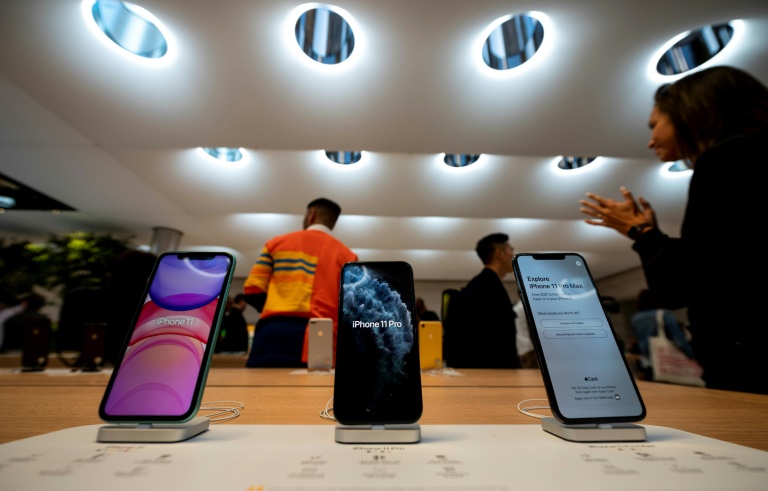
A Lockdown Mode being added to iPhones, iPads, and Mac computers is intended to counter threats from a thriving industry that provides sophisticated espionage tools to governments.

“While the vast majority of users will never be the victims of highly targeted cyberattacks, we will work tirelessly to protect the small number of users who are,” Apple head of security engineering Ivan Krstic said in a blog post.

The tech giant is upping the bounty it pays researchers for uncovering vulnerabilities in its software when it comes to Lockdown Mode, raising the maximum reward to $2 million.

Concerns over digital snooping have been fueled by media outlets reporting that Pegasus spyware made by NSO Group in Israel was being used by governments to surveil opponents, activists and journalists.

Apple is suing NSO Group in US federal court, saying the Israeli firm’s spyware was used to attack a small number of iPhone users worldwide.

“State-sponsored actors like the NSO Group spend millions of dollars on sophisticated surveillance technologies without effective accountability,” Apple senior vice president of software engineering Craig Federighi said when the suit was filed late last year.

“That needs to change.”

Pegasus infiltrates mobile phones to extract data or activate a camera or microphone to spy on their owners.

NSO Group says the software is only sold to government agencies to target criminals and terrorists with the green light of Israeli authorities.

A Spanish court last month said a judge wants to visit Israel to quiz the NSO Group’s top executive over a top-level hacking scandal involving the Spanish premier’s phone.

Meanwhile, Google last month said that an Italy-based firm’s hacking tools were used to spy on Apple and Android smartphones in Italy and Kazakhstan, casting a light on a “flourishing” spyware industry.

Google’s threat analysis team said spyware made by RCS Lab targeted the phones using a combination of tactics including unusual “drive-by downloads” that happen without victims being aware.

Google said it warned Android users targeted by the spyware and ramped up software defenses.

The Google threat team is tracking more than 30 companies that sell surveillance capabilities to governments, according to the Alphabet-owned tech titan.

“The commercial spyware industry is thriving and growing at a significant rate,” Google said.

Apple’s Lockdown Mode is designed to block or disable some features and capabilities to prevent them being taken advantage of by spyware.

The extreme, optional mode “hardens device defenses and strictly limits certain functionalities, sharply reducing the attack surface that potentially could be exploited by highly targeted mercenary spyware,” Apple said.

Evacuations as Russia advances in Ukraine's Donbas

The evacuation of desperate civilians from Sloviansk pressed on Wednesday as Russian troops pushed towards the eastern Ukrainian city in their campaign to control the Donbas region.

Sloviansk has been hit by heavy bombardment as Russian forces advance westwards on day 133 of the invasion.

“Twenty years of work; everything is lost. No more income, no more wealth,” Yevgen Oleksandrovych, 66, told AFP as he surveyed the site of his car parts shop, destroyed in strikes on Tuesday.

AFP journalists saw rockets slam into Sloviansk’s marketplace and surrounding streets, with firefighters scrambling to put out blazes.

Around a third of the market appeared to have been destroyed, with locals inspecting what was left among the charred ruins.

The remaining part of the market was functioning, with a trickle of shoppers buying fruit and vegetables.

– Sloviansk mayor defiant –

“I will sell it out and that’s it, and we will stay home. We have basements, we will hide there,” said 72-year-old greengrocer Galyna Vasyliivna.

“What we can do? We have nowhere to go, nobody needs us.”

Mayor Vadym Lyakh said around 23,000 people out of a population of 110,000 were still in Sloviansk but claimed Russia had been unable to surround the city.

“Since the beginning of hostilities, 17 residents of the community have died, 67 have been injured,” he said.

“Evacuation is ongoing. We take people out every day.” Many of the evacuees were taken by bus to the city of Dnipro, further west.

“The city is well fortified. Russia does not manage to advance to the city,” the mayor said.

Vitaliy, a plumber, said his wife and their daughter, who is six months pregnant, were evacuated from Sloviansk on Wednesday.

“I am afraid for my wife,” he told AFP. “Here, after what happened yesterday, they hit the city centre.

“I sent my wife (away), and I have no more choice: tomorrow I will join the army.”

The eastern Donbas is mainly comprised of the Lugansk region, which Russian forces have almost entirely captured, and the Donetsk region to its southwest — the focus of Moscow’s attack and the location of Sloviansk.

The fall of Lysychansk in Lugansk on Sunday, a week after the Ukrainian army also retreated from the neighbouring city of Severodonetsk, has freed up Russian troops.

Donetsk governor Pavlo Kyrylenko said Russian forces killed five civilians and injured 21 in the region on Tuesday.

The governor of Lugansk, Sergiy Gayday, insisted Russia did not control the entire Lugansk region, saying: “Fighting still keeps going in two villages.”

– Irish PM sees ‘evil’ –

Irish Prime Minister Micheal Martin was in Ukraine Wednesday to voice Dublin’s solidarity. He visited Borodyanka and Bucha outside Kyiv, two towns that have become symbols of the alleged war crimes committed by Russian soldiers.

“In the 21st century, to see such evil — very, very difficult to comprehend,” he said before talks with Ukrainian President Volodymyr Zelensky.

In his evening address Zelensky hailed new heavy Western artillery for boosting Ukraine’s firepower.

“The weapons we have received from our partners have started working very powerfully. Their accuracy is exactly as it should be,” he said.

“Our defenders inflict notable blows on warehouses and other points which are important for the logistics of the occupiers. And this significantly reduces the offensive potential of the Russian army.”

– Russia toughens laws –

The EU on Wednesday set out a harder focus on energy given Russia’s war in Ukraine.

“We need to prepare for further disruptions of gas supply, even a complete cut-off from Russia,” European Commission chief Ursula von der Leyen told the European Parliament.

The EU has launched a 300-billion-euro ($310-billion) plan to wean itself off Russian fossil fuel supplies.

Russia’s parliament on Wednesday introduced harsh prison terms for acting against national security, and for “confidential” cooperation with foreigners and helping them to act against Russia’s interests.

Rights activists fear the new legislation will be used to snuff out any last vestiges of dissent.

Lawmakers also approved legislation to create a patriotic youth movement, in a move reminiscent of Soviet-era youth organisations.

Meanwhile former Russian president Dmitry Medvedev invoked the possibility of nuclear war if the International Criminal Court moves to punish Moscow for alleged crimes in Ukraine.

“The idea to punish a country that has the largest nuclear arsenal is absurd,” said Medvedev, a close ally of President Vladimir Putin.

“And potentially creates a threat to the existence of mankind.”

burs-rjm/bgs/mlm

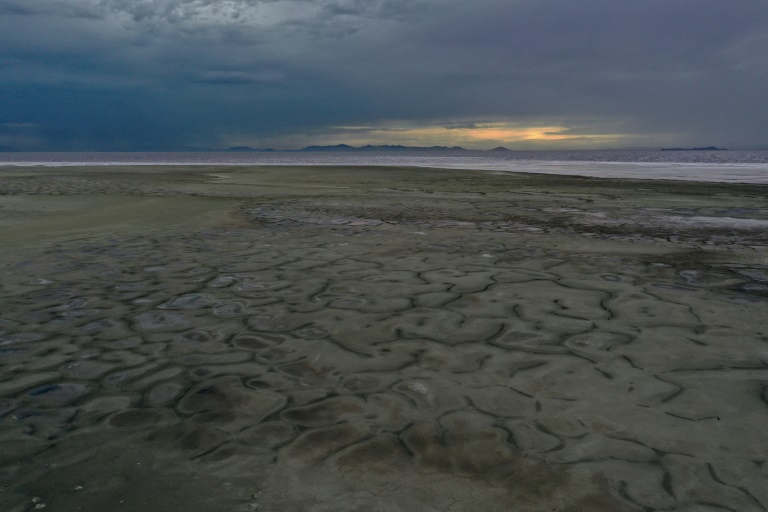
Western US drought brings Great Salt Lake to lowest level on record

Water in Utah’s Great Salt Lake has fallen to its lowest level ever recorded, authorities announced this week, a result of the ongoing drought impacting the western United States which scientists warn has been exacerbated by climate change.

The average depth of the massive saltwater lake, the largest in the Western Hemisphere, fluctuates naturally with the seasons and local precipitation.

But the economically and environmentally important basin has never been this low since records began in 1847, when Mormons first arrived to establish Salt Lake City.

The previous record-low was set in October 2021, the US Geological Survey (USGS) said in a press release Tuesday.

“This is not the type of record we like to break,” Joel Ferry, executive director of Utah’s Department of Natural Resources, said in the joint statement.

“Urgent action is needed to help protect and preserve this critical resource. It’s clear the lake is in trouble,” he added.

Based on trends from prior years, “lake levels will likely continue to decrease until fall or early winter when the amount of incoming water to the lake equals or exceeds evaporative losses,” the USGS said.

According to estimates published by Utah state government, the Great Salt Lake contributes up to $1.3 billion annually to the local economy, through a wide range of industries including mining, fish farming and tourism.

The lake’s depletion could also threaten the large number of migratory birds which stop there every year, and could have serious health repercussions for the local population.

Scientists warned recently that dangerous arsenic-rich sediment lies along the lake bottom and could be spread by the wind if exposed to the air.

Almost the entire American west is in the grip of a major drought, which has resulted in reduced water flow to rivers and dramatically lowered the levels of key reservoirs including Lake Mead and Lake Powell.

Climatologists note that there is historical precedent for droughts lasting longer than 20 years in the region, but that their severity has increased because of rising global temperatures due to human activity.

One dead in stabbing during Swedish political event: police

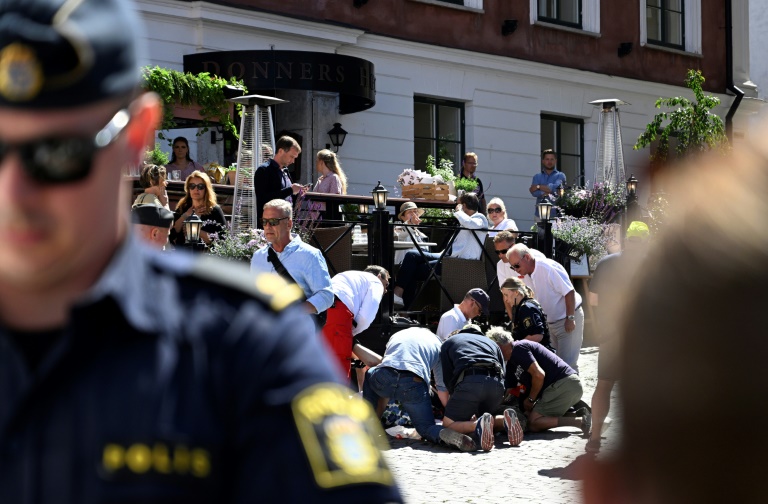
Swedish police said Wednesday that a woman in her 60s had been killed in a daylight stabbing on the island of Gotland, where the country’s top politicians are gathered for an annual event.

Just before 2 pm (1200 GMT) in central Visby, which is currently hosting a gathering of the country’s political parties, a man attacked a woman with a sharp weapon, according to police.

Newspaper Expressen reported that the suspect was believed to have links to the neo-Nazi group NMR, but police would not confirm this.

The victim was given emergency care at the scene before being taken to a nearby hospital.

“Unfortunately I can report that the woman has succumbed to her wounds,” Fredrik Persson, chief of Gotland police, told a press conference.

Persson said that a 33-year-old man had been arrested shortly after the incident close to where the attack took place, and was currently suspected of murder. 

“Currently there is an intense investigation under way. Part of that is to establish a motive and background of the arrested,” the police chief said.

He added that there were a series of questions they were looking into “since it happened in a very public place, where there was a lot of people in central Visby in the middle of the day”.

Police did not want to comment on a motive, though Persson conceded that a political motive could not be ruled out at such an early stage of the investigation.

However, police also said they did not believe the incident was linked to the Almedalen Week, an annual event gathering most of Sweden’s elite where political parties often present new policy and launch campaigns.

The Swedish Association of Local Authorities and Regions (SALAR) later confirmed that the victim was Ing-Marie Wieselgren, a 64-year-old psychiatrist working as a project manager and coordinator with the organisation.

“We have lost an appreciated and cherished co-worker, colleagues have lost a good friend and all of Sweden has lost one of its strongest voices for mental health,” Carola Gunnarsson, president of SALAR, told AFP in a written comment.

Close Bitnami banner
Bitnami