World

Oil slides below $100 as euro sags further

Recession worries pushed the price of Brent oil briefly back under $100 on Wednesday, and the euro moved closer to parity with the dollar.

European stocks rebounded thanks to lower bond yields and bargain hunting, while US stocks also advanced, climbing after Federal Reserve minutes maintained a tough line on inflation.

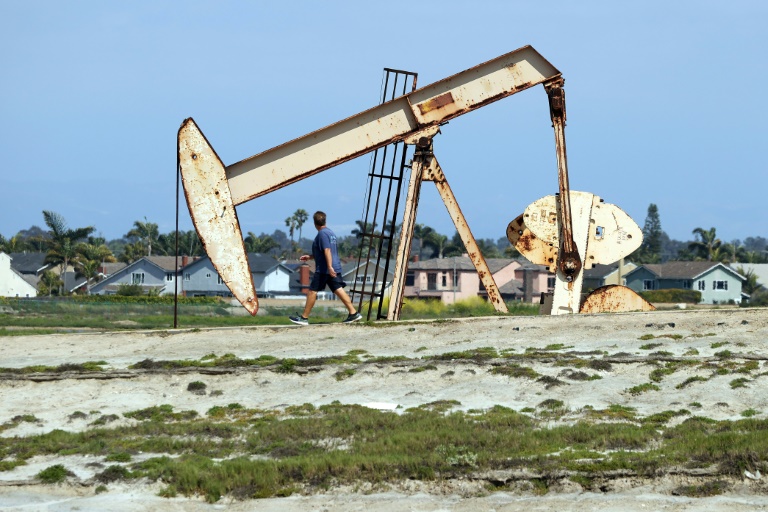
Europe’s benchmark crude oil contract, Brent North Sea, fell briefly under $100 per barrel in afternoon deals, following its US counterpart WTI, which slumped below the symbolic level on Tuesday.

Citi analysts have forecast that Brent could strike $65 later this year in the event of a prolonged worldwide economic downturn.

Meanwhile, the euro hit a fresh 20-year low point under $1.02 — the European single currency fast closing in on parity with the dollar as traders eye recession for the eurozone and the ECB’s slower moves to raise interest rates than the US Fed.

“A dip in government bond yields has paved the way for bargain hunters to swoop in and snap up European equities,” said market analyst David Madden at Equiti Capital.

Paris stocks rose 2.0 percent, while Frankfurt climbed 1.6 percent.

Nevertheless, “the mood remains febrile,” said Chris Beauchamp, chief market analyst at online trading platform IG.

“The drop in the euro and weakness in yields shows that investors remain very nervous about the economic prospects of the global economy, and the opportunistic bargain hunting in stocks may not have much staying power,” he warned.

London’s benchmark FTSE 100 index managed to gain 1.2 percent despite the political turmoil after UK Prime Minister Boris Johnson was rocked by dozens of resignations from his scandal-hit government.

But two staunchly pro-government outlets, the Daily Mail and The Sun, as well as other media said Johnson had refused to bow to their calls for him to go.

“Political risks do not seem to be having a major impact on UK assets,” noted Markets.com analyst Neil Wilson.

“There are far too many bigger things on our minds right now — inflation, the economy slowing down, strikes.”

Britain is in the midst of nationwide strikes — affecting in particular the transport sector — as wages are eroded by rocketing inflation.

Later, Wall Street stocks also pushed higher as Fed policy makers reiterated their willingness to continue raising interest rates to tamp down price pressures in minutes recounting the central bank’s big interest rate hike in June.

Market watchers said investors were pleased to see the tough line on inflation, although Briefing.com analyst Patrick O’Hare noted the Fed’s stance was a restatement of its posture in recent statements.

“It’s more because it had been such a terrible first half of the year,” O’Hare said of Wednesday’s gains. “We got so oversold in the month of June. The market is just looking for a ray of hope.”

Elsewhere Wednesday, Asian equity markets closed mostly lower amid a fresh flare-up of coronavirus cases in parts of China, which has seen some cities locked down as part of officials’ zero-Covid policy.

– Key figures at around 2050 GMT –

New York – Dow: UP 0.2 percent at 31,037.68 (close)

New York – S&P 500: UP 0.4 percent at 3,845.08 (close)

New York – Nasdaq: UP 0.4 percent at 11,361.85 (close)

London – FTSE 100: UP 1.2 percent at 7,107.77 (close) 

Frankfurt – DAX: UP 1.6 percent at 12,594.52 (close)

Paris – CAC 40: UP 2.0 percent at 5,912.38 (close)

EURO STOXX 50: UP 1.9 percent at 3,421.84 (close)

Tokyo – Nikkei 225: DOWN 1.2 percent at 26,107.65 (close)

Hong Kong – Hang Seng Index: DOWN 1.2 percent at 21,586.66 (close)

Shanghai – Composite: DOWN 1.4 percent at 3,355.35 (close)

Euro/dollar: DOWN at $1.0186 from $1.0266 on Tuesday

Euro/pound: DOWN at 85.43 pence from 85.94 pence

Dollar/yen: UP at 135.93 yen from 135.85 yen

Pound/dollar: DOWN at $1.1921 from $1.1947

Brent North Sea crude: DOWN 2.0 percent at $100.69 per barrel

West Texas Intermediate: DOWN 1.0 percent at $98.53 per barrel

burs-jmb/to

Fed flags risk US inflation could become entrenched: minutes

US central bankers last month flagged the concern that sky-high inflation could become a permanent fixture, and stressed their readiness to continue raising interest rates to tamp down price pressures, according to the minutes of the latest policy meeting released Wednesday.

The Federal Reserve last month implemented the most aggressive interest rate increase in nearly 30 years, as policymakers cited worries that price pressures had shown no signs of easing, according to the record of the June 14-15 meeting.

The members of the Fed’s policy-setting Federal Open Market Committee raised the benchmark borrowing rate three-quarters of a point and at the time said another similar increase was possible later this month, after data showing consumer prices surged 8.6 percent in the 12 months to May — the highest in more than four decades.

Officials were concerned “that inflation pressures had yet to show signs of abating,” further evidence “inflation would be more persistent than they had previously anticipated,” the minutes said.

Many policymakers said there was “a significant risk… that elevated inflation could become entrenched if the public began to question the resolve of the Committee.”

But the minutes made clear the officials don’t plan to let up in their efforts to cool the economy, at least through the end of the year.

With the high prices for food, energy, housing and other goods squeezing American families, Fed officials stressed the moves were “essential in restoring price stability.”

Still, there remains a risk inflation will continue to accelerate amid the uncertainty surrounding how long the Russian invasion of Ukraine and Covid-19 lockdowns in China will continue to exacerbate price pressures, the report said.

– Looking backwards –

Officials acknowledged they might have to be even more aggressive in tightening monetary policy “if elevated inflation pressures were to persist.”

However, economists note that more recent data and surveys show price pressures easing and housing demand slowing, while even job openings in the red-hot US labor market dipped.

“Not sure people realize how dramatically the runaway inflation narrative has now collapsed,” Nobel-prize winning economist and columnist Paul Krugman said on Twitter.

He said retail gasoline prices have not reflected the cooling at the wholesale level. 

Oil prices have retreated for the past two days, with the US benchmark WTI below $100 for the first time in about two months.

But, he tweeted, “a lot of economic commentators have been waiting years for the chance to posture sternly against runaway inflation, and really, really won’t want to back down.”

Ian Shepherdson of Pantheon Macroeconomics also noted that while the minutes point to an economy still expanding, that “growth picture is way out of date” as recent figures show second-quarter GDP likely fell again.

– ‘Upside’ risks –

The Fed’s super-sized rate hike last month came with the central bank under intense pressure to curb soaring prices that have left millions of Americans struggling to make ends meet and sent President Joe Biden’s approval ratings plunging.

Following the meeting, Fed Chair Jerome Powell said it was “essential” to lower inflation, but stressed that the goal is to achieve that without derailing the US economy.

The minutes confirmed the feeling another hike of 50 or 75 basis points is likely this month, but Shepherdson noted that officials said they would be “nimble” in the face of new data.

“In other words, 75bp is not a done deal. We very much hope that the sobering data since the June meeting will push members towards the smaller hike,” he said.

US central bankers began raising interest rates off zero in March as buoyant demand from American consumers for homes, cars and other goods clashed with transportation and supply chain snarls.

Inflation got dramatically worse after Russia invaded Ukraine in late February, and US gasoline prices topped $5.00 a gallon for the first time, though they have since retreated slightly.

The Fed minutes said inflation risks remain “skewed to the upside.”

Niger activists call for wood-free Eid barbecues to save trees

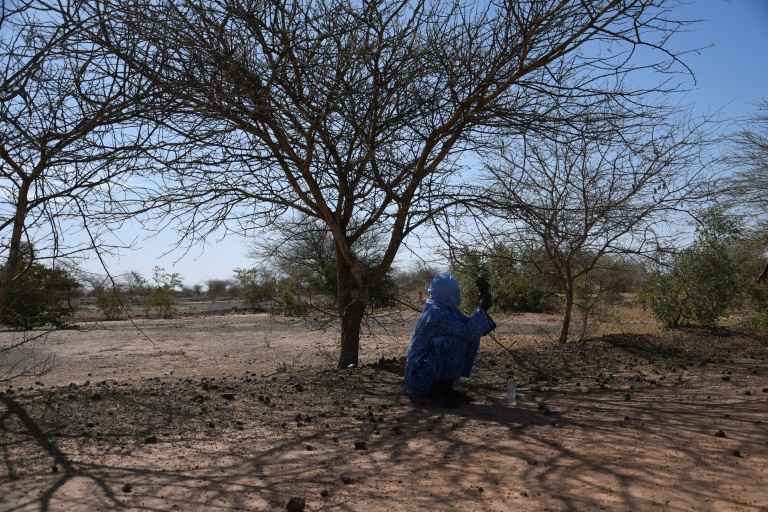
Non-governmental groups in Niger Wednesday urged Nigeriens to use less wood to grill their mutton during the Muslim festival of Eid al-Adha this year to save precious trees.

They pleaded with them to replace wood with locally mined coal at barbecues to mark the festival due to start at the weekend, called Tabaski in West Africa.

The capital Niamey alone consumes “around 50,000 tonnes” of wood — or the equivalent of 25,000 trees — each year for the feast, the environment ministry has said.

“Mutton barbecues during Tabaski cause abusive wood consumption, which simply cannot continue with the climate crisis,” Sani Ayouba, the coordinator of one of the groups taking part in the campaign, told AFP.

Two-thirds of Niger is covered by desert, and each year the land-locked country loses more than 100,000 hectares (1,000 square kilometres) of arable land to desertification, the government says.

UK ministers in crisis talks with embattled Johnson

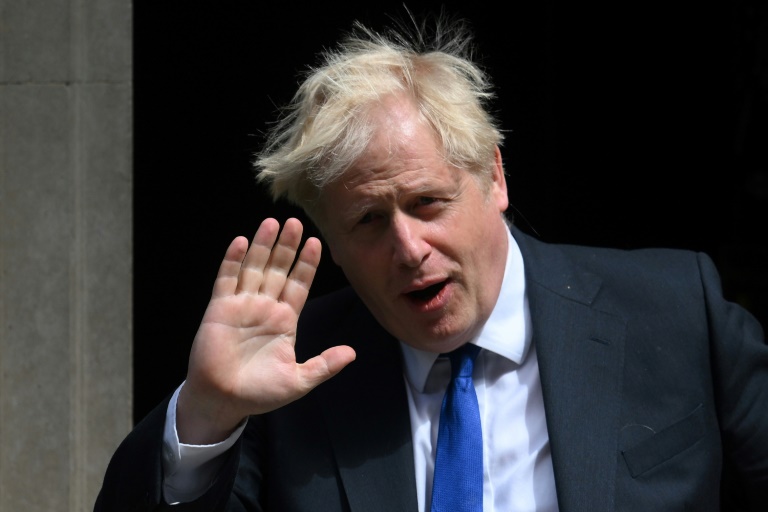
Senior British cabinet members on Wednesday huddled at Downing Street with some reportedly urging Prime Minister Boris Johnson to quit after dozens of ministers abandoned his scandal-hit government.

A cabinet delegation had awaited his return from a lengthy grilling by a parliamentary committee to tell him his time was up, according to multiple reports.

It was said to include hardline interior minister Priti Patel and Nadhim Zahawi, who has barely been 24 hours in his new job of finance minister.

But two Johnson loyalists — Nadine Dorries and Jacob Rees-Mogg — in the cabinet declared their unstinting support as they also entered 10 Downing Street, and the crisis meeting was still continuing more than two hours later.

“Grim mood in Downing Street. No 10 insider says ‘lots of tears’ in building,” the Daily Mirror’s respected political editor Pippa Crerar tweeted.

The 58-year-old leader’s grip on power has been slipping since Tuesday night, when Rishi Sunak resigned as finance minister and Sajid Javid quit as health secretary.

Both said they could no longer tolerate the culture of scandal that has dogged Johnson for months, including lockdown lawbreaking in Downing Street.

By Wednesday evening, 38 ministers had quit in total, mostly from more junior positions outside the cabinet.

But at the parliamentary committee, and an earlier question and answer session with lawmakers in parliament, Johnson defiantly vowed to get on with the job.

“I’m not going to give a running commentary on political events,” he told the committee when asked about the cabinet delegation. 

“We’re going to get on with the government of the country.”

He added: “What we need is stable government, loving each other as Conservatives, getting on with our priorities, that is what we need to do.”

– ‘Problem starts at the top’ –

Earlier, Javid urged other ministers to resign.

“The problem starts at the top, and I believe that is not going to change,” he said. 

“And that means that it is for those of us in that position — who have responsibility — to make that change.”

Cries of “bye, Boris” echoed around the chamber at the end of his speech. Most Tories were conspicuously silent when Johnson attacked the Labour opposition at prime minister’s questions. Some shook their heads.

Sunak and Javid quit just minutes after Johnson apologised for appointing a senior Conservative who quit his post last week after he was accused of drunkenly groping two men.

Former education secretary Zahawi was immediately handed the finance brief and acknowledged the uphill task ahead.

“You don’t go into this job to have an easy life,” Zahawi told Sky News.

Days of shifting explanations had followed the resignation of deputy chief whip Chris Pincher.

Downing Street at first denied Johnson knew of prior allegations against Pincher when appointing him in February.

But by Tuesday, that defence had collapsed after a former top civil servant said Johnson, as foreign minister, was told in 2019 about another incident involving his ally.

Minister for children and families Will Quince quit early Wednesday, saying he was given inaccurate information before having to defend the government in a round of media interviews on Monday.

Tory critics said the Pincher affair had tipped many over the edge, accusing the prime minister of turning a blind eye to sexual assault.

Johnson only narrowly survived a no-confidence vote among Conservative MPs a month ago, which ordinarily would mean he could not be challenged again for another year.

But the influential “1922 Committee” of non-ministerial Tory MPs is reportedly seeking to change the rules, with its executive committee Wednesday announcing it will elect a fresh lineup of members next week.

A snap Savanta ComRes poll Wednesday indicated that three in five Conservative voters say Johnson cannot regain the public’s trust, while 72 percent of all voters think he should resign.

– ‘Local difficulties’ –

Rees-Mogg, a cabinet loyalist and Johnson’s “minister for Brexit opportunities”, dismissed the resignations as “little local difficulties”.

But Sunak’s departure in particular, in the middle of policy differences over a cost-of-living crisis sweeping Britain, was dismal news for Johnson.

The prime minister, who received a police fine for the so-called “Partygate” affair, faces a parliamentary probe into whether he lied to MPs about the revelations.

Pincher’s departure from the whips’ office — charged with enforcing party discipline and standards — marked yet another allegation of sexual misconduct by Tories in recent months, recalling the “sleaze” that dogged John Major’s government in the 1990s.

Two Conservative MPs were forced to resign in recent weeks, forcing by-elections that were won by opposition parties, concentrating the minds of party critics who fear a wider reckoning with the electorate if Johnson stays.

In eastern Ukraine, frontline cobbler fixes soldier boots for free

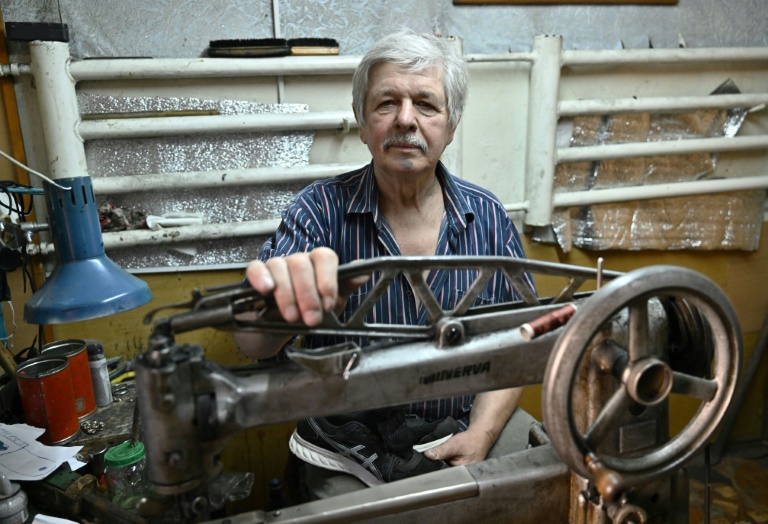
Sitting at his old sewing machine, Ukrainian cobbler Sergiy Kurchigin waits for customers in one of just a few businesses still open this close to the frontline.

After Russia invaded Ukraine on February 24, many shops shut down as thousands of residents fled the eastern city of Kramatorsk, including his wife and daughter who now live in Germany.

But even as the sound of shelling grows nearer and Russian forces creep deeper into the Donbas region, the shoemaker in his sixties says he will not leave.

Kurchigin says he cannot imagine life without his trade, which he learnt back in the 1970s from Armenians in his home city.

“No work, no play, no satisfaction,” says the repairman who refuses to give his exact age, as he operates his 19th-century foot-powered sewing machine. 

“A man has to earn money to support his family,” he adds. 

By staying behind to work in his neon-lit workshop, he can also do his bit to help the war effort.

“When soldiers or volunteers drop by to get their shoes repaired, I don’t charge them anything,” he says, as a few members of the defence forces chat on the opposite pavement.

– ‘Until I die’ –

A war between two countries as culturally close as Ukraine and Russia is “absurd”, says the cobbler, standing in front of his “shoe repair” sign in blue and yellow, the colours of the Ukrainian flag.

Kurchigin opened his first shoe-making business back in 1976, when Ukraine was part of the Soviet Union.

It was so successful that he decided to open a second shop in the same city.

But because of the war, “there’s no one left there now,” he says of the second venture.

Business is by no means as good as it used to be in his first workshop either.

But “as everyone knows me here, I always have one or two people a day”, he says.

Even without new orders, there’s always something to do, he says, picking up an old pair of trainers from a shelf. For the time being, he only repairs shoes as war has made new leather unaffordable.

Between customers, he works out.

He picks up a small weight from the floor and lifts it a few times, then grabs his wooden-handled chest expander for some more exercises.

When asked when he plans to retires, Kurchigin says he has no idea.

“I’ll continue to work until I die because without work it’s very hard to live,” he says. 

Fed flags risk US inflation could become entrenched: minutes

US central bankers last month flagged the concern that sky-high inflation could become persistent and reiterated their willingness to continue raising interest rates to tamp down price pressures, according to the minutes of the latest policy meeting released Wednesday.

The Federal Reserve last month implemented the most aggressive interest rate increase in nearly 30 years, as policymakers cited worries that price pressures had shown no signs of easing, according to the record of the June 14-15 meeting.

The members of the Fed’s policy-setting Federal Open Market Committee raised the benchmark borrowing rate three-quarters of a point and at the time said another similar increase was possible later this month, after data showing consumer prices surged 8.5 percent in the 12 months to May — the highest in more than four decades.

Officials were concerned “that inflation pressures had yet to show signs of abating,” which a number saw as further evidence “inflation would be more persistent than they had previously anticipated,” the minutes said.

And many policymakers said there was “a significant risk… that elevated inflation could become entrenched if the public began to question the resolve of the Committee.”

But the minutes made clear the officials are resolved to continue efforts to cool the economy at least through the end of the year.

With the high prices for food, energy, housing and other goods squeezing American families, Fed officials “stressed that appropriate firming of monetary policy, together with clear and effective communications, would be essential in restoring price stability.”

Still, there remains a risk inflation will continue to accelerate amid the uncertainty surrounding how long the effect of the Russian invasion of Ukraine and Covid-19 lockdowns in China will continue, as those factors have exacerbated price pressures, the report said.

Officials acknowledged they might have to be even more aggressive in tightening monetary policy “if elevated inflation pressures were to persist.”

– Upside risks –

The super-sized 0.75-percentage-point hike last month came with the Fed under intense pressure to curb soaring prices that have left millions of Americans struggling to make ends meet and sent President Joe Biden’s approval ratings plunging.

Following the meeting, Fed Chair Jerome Powell said it was “essential” to lower inflation, but stressed that the goal is to achieve that without derailing the US economy.

However, he acknowledged there is always a risk of going too far, and concerns about a US and global recession have sent global stock markets on a downward slide in recent weeks.

Biden has endorsed the Fed’s effort and is hoping for success as his Democrats face the possibility of losing control of Congress in key midterm elections in November.

US central bankers began raising interest rates off zero in March as buoyant demand from American consumers for homes, cars and other goods clashed with transportation and supply chain snarls in parts of the world where Covid-19 remains a challenge.

That fueled inflation, which got dramatically worse after Russia invaded Ukraine in late February and Western nations imposed steep sanctions on Moscow, sending food and fuel prices up at a blistering rate.

That caused US gasoline prices to top $5.00 a gallon, but they have since retreated slightly.

But the Fed minutes said inflation risks remain “skewed to the upside.”

Officials said that later this year they will be “well positioned” to gauge the extent to which further rate hikes will be needed.

Suspected jihadists storm Nigeria prison, free hundreds

Suspected Boko Haram jihadists using guns and explosives blasted their way into a prison near Nigeria’s capital, freeing dozens of their jailed comrades and hundreds of other inmates, the government said on Wednesday.

Tuesday night’s brazen attack on the outskirts of Abuja came just hours after an ambush on a presidential security convoy in the northwest, in a startling illustration of Nigeria’s security challenges.

Residents reported a series of loud explosions and gunfire late Tuesday around the Kuje medium-security prison just 40 kilometres (25 miles) away from the capital and the Aso Rock presidential villa.

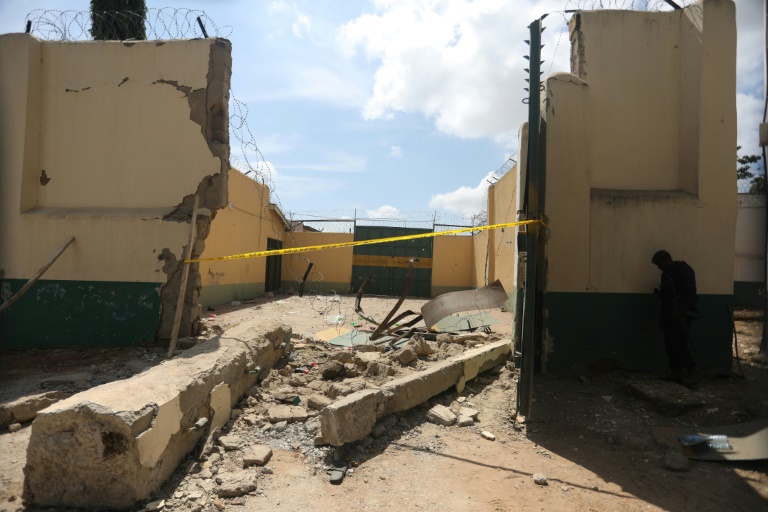
President Muhammadu Buhari on Wednesday briefly visited the prison, where the burnt-out wreckage of a bus and cars marked the scene of the attack, and yellow police tape was stretched across a destroyed section of the prison perimeter.

“I am disappointed with the intelligence system. How can terrorists organize, have weapons, attack a security installation and get away with it?” Buhari said in a statement after the visit.

The Nigerian leader, who has been under pressure over the country’s security challenges, was due to leave on an official trip to Senegal soon after the prison visit.

One security official was killed when the gunmen breached the jail using high-grade explosives.

“We understand they are Boko Haram, they came specifically for their co-conspirators,” senior interior ministry official Shuaibu Belgore told reporters on a visit to the prison.

Close to 600 inmates had been recaptured by Wednesday evening while less than 100 were still on the run, Nigeria’s correctional services spokesman Abubakar Umar said.

Boko Haram is one of the jihadist groups involved in Nigeria’s grinding 13-year conflict in the country’s northeast.

Nigerian officials sometimes also use “Boko Haram” as a general phrase to refer to jihadists or other armed groups.

– ‘All escaped’ –

Defence Minister Bashir Magashi told reporters that Boko Haram militants had “mostly likely” carried out the attack and that all 64 jailed jihadists in the prison had escaped.

“None of them are inside the prison, they have all escaped,” he said.

Commanders of another jihadist group Ansaru, including the group’s chief Khalid Barnawi, had also been kept in Kuje prison since their conviction in 2017.

“We heard shooting on my street. We thought it was armed robbers,” one local Kuje resident said. “The first explosion came after the shooting. Then a second one sounded and then a third.”

Some prisoners surrendered while others were recaptured with military roadblocks set up around the penitentiary, officials said.

Security forces sent back around 19 recaptured inmates in a black van on Wednesday morning, an AFP correspondent at the site said.

Former top police commander Abba Kyari, who was being held in Kuje awaiting trial in a high-profile drug smuggling case, was still in custody, Umar said. 

– ‘Ambush positions’ –

Nigeria’s security forces are battling Boko Haram and Islamic State West Africa Province (ISWAP) jihadists in the country’s northeast, where the conflict has killed 40,000 people and displaced 2.2 million more.

The overstretched military is also fighting heavily armed criminal gangs known locally as bandits who terrorise communities in northwest and central states with raids and mass kidnappings for ransom.

In the country’s southeast, troops are dealing with separatist militias who demand an independent territory for the local ethnic Igbo people.

The Kuje prison raid took place soon after gunmen also ambushed an advance presidential security detail preparing for Buhari’s visit to his home state of northwestern Katsina.

Buhari was not in the convoy, but two officials were slightly wounded in the attack. It was not clear who was responsible.

“The attackers opened fire on the convoy from ambush positions but were repelled,” the presidency said in a statement.

Attacks on prisons in Nigeria have happened in the past, with gunmen seeking to free inmates.

More than 1,800 prisoners escaped last year after heavily armed men attacked a prison in southeast Nigeria using explosives.

The attackers blasted their way into the Owerri prison in Imo state, engaging guards in a gun battle before storming the prison. Imo state lies in a region that is a hotbed for separatist groups.

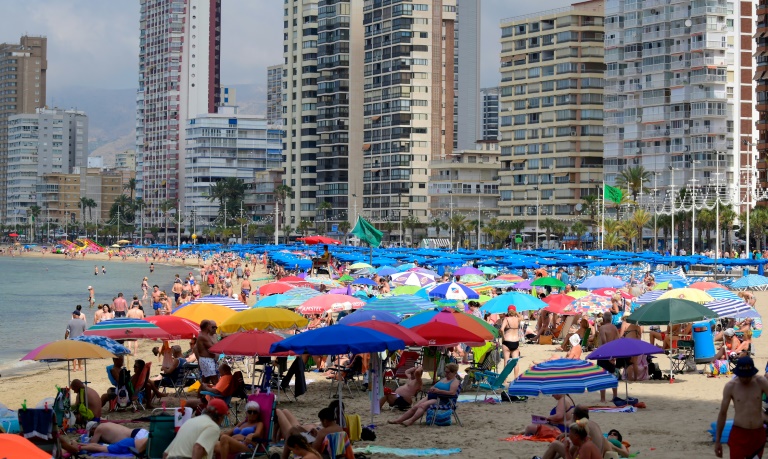
Spain eyes vibrant summer after 'dazzling' visitor surge

Spain said Wednesday it was hoping to reach its record visitor numbers of 2019 after two years of pandemic restrictions, although soaring inflation figures suggest tough times will return after the season ends. 

Before the pandemic hit in 2020, Spain was the world’s second-favourite holiday destination and this year it looks set to reclaim its place, the Exceltur tourism association said. 

Thanks to the “travel frenzy sweeping across Europe” Spain had seen a “dazzling surge in tourist numbers”, it said.

According to Spain’s tourism ministry, 22.7 million tourists visited the country in the first five months of 2022, seven times the number in the same period a year earlier, with the trend set to continue into the summer. 

“The number of bookings confirms Spain as a favourite international destination and indicates a good outlook for the high season,” Tourism Minister Reyes Maroto said on Monday. 

“After two long years.. we are finally going to see a summer like in previous years,” said Fernando Valdes, a top official at the tourism ministry.

This year, Spain’s tourism activity is expected to “reach a level similar to that of 2017, when the sector performed very well,” said Caixabank analyst Javier Ibanez. 

“The sectoral indicators paint a very positive picture.”

Exceltur said July and August could even be “similar” to levels reached in 2019, which was a record year for Spain in terms of visitors. 

“European and national demand is very high”, with the surge in activity expected to impact “the entire (tourism) sector”, said the association’s vice president Jose Luis Zoreda. 

And this view is shared across the sector, particularly by those along the coast. 

– Best-ever summer? –

“Everything suggests this is going to be one of our best-ever summers thanks to the post-pandemic syndrome,” said Diego Salinas, head of Abreca, an association representing bars, restaurants and cafes in Benidorm, a mass tourism hub on Spain’s southeastern coast.  

For the tourism sector which accounted for 13 percent of jobs and 12.5 percent of Spain’s GDP before the pandemic, this long-awaited revival is a huge relief, even if many players have struggled to recruit staff, notably on the coast and in big cities. 

Exceltur believes tourism will generate some 151.8 billion euros ($155 billion) this year — fully 10 billion more than initially expected. 

Such a figure would be slightly lower than the 155 billion euros reached in 2019 but far outstripping the 52 billion of 2020 or the 88 billion generated a year later. 

The destinations which are likely to benefit most from this visitor surge are the Andalusian coastline, which is expecting 7.4 percent more visitors than in 2019, with a 3.5 percent increase in the Canary Islands and 3.6 percent rise in the Balearic Islands. 

And the sub-sectors with the most optimistic outlook include leisure parks and car hire firms.

– Overcrowding risks –

But this strong recovery is not without its concerns, notably linked to the overcrowding at several airports in recent weeks which has revived the controversy over Spain’s mass-tourism model. 

This “intense and unexpected explosion in demand” could lead to moments of “saturation” that might create tension between residents and tourists, admitted Exceltur’s Zoreda, warning it could impact on “the sector’s reputation”. 

There is also the uncertainty created by spiralling global inflation which has seen food and energy prices soar and is severely limiting company margins, Exceltur said. 

And will this surge in prices also impact on the sector’s recovery by undermining consumer purchasing power?

While the sector has so far shown resilience, the economic slowdown caused by the war in Ukraine “will affect” tourism, says Caixabank’s Ibanez. 

It is an outlook also shared by Exceltur. 

“There are many geopolitical and economic uncertainties in the medium term for tourism,” it acknowledged.

“The extraordinary takeoff this summer will have to coexist with the turbulence that could be felt in the autumn.”

Evacuations as Russia advances in Ukraine's Donbas

The evacuation of civilians from Sloviansk continued Wednesday as Russian troops pressed towards the eastern Ukrainian city in their campaign to control the Donbas region, as Ireland’s prime minister visited Kyiv to voice solidarity.

Sloviansk has been subjected to heavy bombardment in recent days as Russian forces push westwards on day 133 of the invasion.

“Twenty years of work; everything is lost. No more income, no more wealth,” Yevgen Oleksandrovych, 66, told AFP as he surveyed the site of his car parts shop, destroyed in Tuesday’s strikes.

AFP journalists saw rockets slam into Sloviansk’s marketplace and surrounding streets, with firefighters scrambling to put out the resulting blazes.

Around a third of the market in Sloviansk appeared to have been destroyed, with locals coming to see what was left among the charred wreckage.

The remaining part of the market was functioning, with a trickle of shoppers coming out to buy fruit and vegetables.

– Sloviansk ‘well fortified’: mayor –

“I will sell it out and that’s it, and we will stay home. We have basements, we will hide there. What we can do? We have nowhere to go, nobody needs us,” said 72-year-old greengrocer Galyna Vasyliivna.

Mayor Vadym Lyakh said that around 23,000 people out of 110,000 were still in Sloviansk but claimed Russia had been unable to surround the city.

“Since the beginning of hostilities, 17 residents of the community have died, 67 have been injured,” he said.

“Evacuation is ongoing. We take people out every day.” Many of the evacuees were taken by bus to the city of Dnipro, further west.

“The city is well fortified. Russia does not manage to advance to the city,” the mayor said.

Vitaliy, a plumber, said his wife and their daughter, who is six months pregnant, were evacuated from Sloviansk on Wednesday.

“I am afraid for my wife,” he told AFP.

“Here, after what happened yesterday, they hit the city centre; need to leave.

“I sent my wife, and I have no more choice: tomorrow I will join the army.”

– Russians push west –

The eastern Donbas is mainly comprised of the Lugansk region, which Russian forces have almost entirely captured, and the Donetsk region to its southwest — the current focus of Moscow’s attack and the location of Sloviansk.

The fall of Lysychansk in Lugansk on Sunday, a week after the Ukrainian army also retreated from the neighbouring city of Severodonetsk, has freed up Russian troops to advance west on Kramatorsk and Sloviansk — Donetsk’s two largest cities still under Ukrainian control.

On Tuesday, they were first closing in on the smaller city of Siversk — which lies between Lysychansk and Sloviansk — after days of shelling there.

Donetsk governor Pavlo Kyrylenko said Russian forces killed five civilians and injured 21 in the region on Tuesday.

Lugansk governor Sergiy Gayday insisted that Russia did not control the entire Lugansk region, saying: “Fighting still keeps going in two villages.”

– Irish PM sees ‘evil’ –

Irish Prime Minister Micheal Martin was in Ukraine on Wednesday to voice Dublin’s solidarity and discuss how Ireland can support the country’s needs.

He visited Borodyanka and Butcha outside Kyiv, two towns that have become symbols of the alleged war crimes committed by Russian soldiers in this conflict.

“In the 21st century, to see such evil — very very difficult to comprehend. This war must stop,” he told Irish broadcaster RTE.

After talks later with Ukrainian President Volodymyr Zelensky, Martin said Moscow’s actions could not be allowed to stand.

“Russia’s brutal war against this beautiful democratic country is a gross violation of international law. It is an affront to everything that Ireland stands for,” he said.

Zelensky said Russia was not yet thinking about peace because “they don’t feel pressure of sanctions for the moment since some allies hesitate to activate sanctions”.

He is pressing Western allies for upgraded anti-missile systems.

“Our priority is sky security. We count on the arrival of powerful air defence systems. It will allow women and kids to get back home,” Zelensky said.

– Russia toughens laws –

Ireland supports Ukraine’s push for membership of the European Union.

Two hit and captured Russian armoured vehicles went on display in Warsaw’s historic Castle Square, under the message that Ukrainians are not just defending freedom and democracy in their own country but for Europe as a whole. 

The EU on Wednesday set out a harder focus on energy given Russia’s war in Ukraine.

“We need to prepare for further disruptions of gas supply, even a complete cut-off from Russia,” European Commission chief Ursula von der Leyen told the European Parliament.

The EU has launched a 300-billion-euro ($310-billion) plan to wean itself off Russian fossil fuel supplies.

Russia’s parliament on Wednesday introduced harsh prison terms for calls to act against national security, and for maintaining “confidential” cooperation with foreigners and helping them to act against Russia’s interests.

Rights activists fear the new legislation will be used to snuff out any last vestiges of dissent.

Lawmakers also approved legislation to create a patriotic youth movement, in a move reminiscent of Soviet-era youth organisations.

Meanwhile former Russian president Dmitry Medvedev invoked the possibility of nuclear war if the International Criminal Court moves to punish Moscow for alleged crimes in Ukraine since the February 24 invasion.

“The idea to punish a country that has the largest nuclear arsenal is absurd,” said Medvedev, a close ally of President Vladimir Putin.

“And potentially creates a threat to the existence of mankind.”

burs-rjm/gw

Biden speaks with wife of basketball star detained in Russia

President Joe Biden spoke with the wife of women’s basketball star Brittney Griner on Wednesday, telling her that he is working to secure her spouse’s release from Russian detention, the White House said.

Two-time Olympic champion Griner — who has been held in Russia since February — faces up to 10 years in prison on charges of smuggling cannabis vape cartridges into the country.

“President Biden, joined by Vice President Harris, spoke today with Cherelle Griner, the wife of Brittney Griner who is wrongfully detained in Russia under intolerable circumstances,” the White House said in a statement.

“The president called Cherelle to reassure her that he is working to secure Brittney’s release as soon as possible,” and read her a draft of a letter he is sending to the WNBA star, it added.

Griner, 31, was detained in the days before Russia began its full-on assault on Ukraine, after which the United States and its allies imposed unprecedented economic sanctions on Moscow.

Her case has become one of many sticking points in relations between the United States and Russia, with Washington putting its special envoy in charge of hostages on the case.

Griner had asked Biden to help free her from Russian prison in a hand-written letter presented to the White House on US Independence Day.

“I realize you are dealing with so much, but please don’t forget about me and the other American Detainees,” Griner wrote. “Please do all you can to bring us home.”

Close Bitnami banner
Bitnami