World

French PM calls for compromise in first speech to stormy parliament

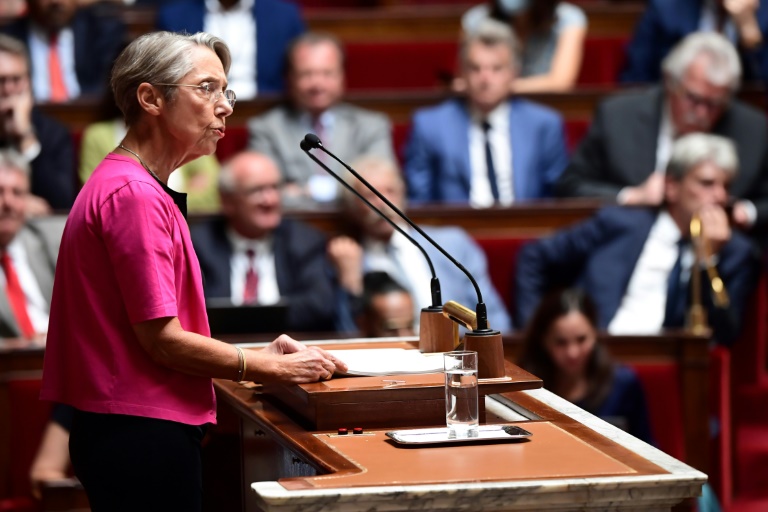
Prime Minister Elisabeth Borne called for compromise on Wednesday in her first speech to France’s stormy new parliament where her minority government will need support from opposition parties to pass legislation.

“We will approach every draft law in a spirit of dialogue, compromise and openness,” Borne told MPs as she laid out the government’s policy priorities. 

The 61-year-old often had to push on through shouts and chanting from the floor, especially from the benches of the left-wing NUPES alliance, which called an immediate no-confidence vote on her leadership. 

After recalling her family history, including her father’s past in Nazi concentration camps, and her pride at being only the second French woman PM, she ended by saying: “We will manage to build together.”

French politics has been cast into an unusual period of instability following parliamentary elections last month that saw the ruling party of recently re-elected President Emmanuel Macron fall short of a majority by 39 seats.

Borne, a low-key civil servant named to her post in May, is expected to face constant negotiations to find majorities for each piece of legislation after failing to agree a formal coalition deal with any opposition group.

Though she was condemned by the hard-left France Unbowed party and Marine Le Pen’s far-right National Rally on Wednesday, the crucial right-wing Republicans party signalled it would be prepared to work with her on security, immigration and tax cuts.

“We do not intend to paralyse everything at a time when our country is already so far behind,” the parliamentary head of the party, Olivier Marleix, said. “We are ready to vote for all the bills that contribute to a national renewal.”

Support from the 62 Republicans MPs would be enough for the government to pass laws.

Borne outlined immediate priorities that are expected to garner wide support, such as helping low-income families cope with a cost-of-living crisis and releasing extra funding for the struggling health service.

But she also set her sights on other policy goals announced by Macron during his successful bid for a second term in April, including plans to push back the legal retirement age to 65 and the full nationalisation of state-controlled power group EDF.

The company, currently 84-percent state-owned, is expected to build a fleet of new nuclear plants as a key pillar of France’s push for carbon neutrality.

Jean-Luc Melenchon, the leader of the far-left France Unbowed, criticised Borne as leading a government without a majority and said she “offered nothing that would allow us to find compromises”.

Borne has already ruled out working with his party, as well as Le Pen’s anti-immigration National Rally.

– No-confidence vote –

Without formal allies in the 577-seat national assembly, Borne decided not to call a confidence vote on her policy speech — something almost all past prime ministers have done after their first appearances in the lower house.

Holding a vote would be “too risky” because a loss would have been forced her to step down, explained Bruno Cautres, a researcher at Sciences Po university in Paris.

France Unbowed, one of the big gainers in June’s parliamentary polls, filed a no-confidence motion alongside its Socialist, Communist and Green allies before Borne even began speaking.

“Without a confidence vote, we have no choice but to file this motion of defiance,” the groups’ joint text read, according to sources in parliament.

“It probably won’t pass but it’s important to make ourselves heard,” top LFI MP Mathilde Panot told BFM television.

Borne will be constantly vulnerable to a no-confidence motion which would need the support of the hard-left, the far-right and the right-wing Republicans to be successful. 

– Exhausted? –

Only two months after he was re-elected to a historic second term, Macron finds his hands partly tied and his capacity to push through reforms diminished.

The French media has speculated in recent days about his state of mind, with some reports suggesting he is yet to mentally rebound from the parliamentary setback. 

A cabinet reshuffle announced on Tuesday did little to inject new momentum into his government as he failed to attract any new heavy-hitters.

burs-adp-tgb/har

British Airways cuts 10,300 more flights through October

British Airways on Wednesday axed another 10,300 short-haul flights up to the end of October, with the aviation sector battling staff shortages and booming demand as the pandemic recedes.

The carrier, which is owned by conglomerate International Airlines Group (IAG), added in a statement that it had now cancelled 13 percent of its total summer schedule.

BA has been among the worst affected by sector-wide turmoil, as carriers race to meet soaring demand after the lifting of Covid travel restrictions. 

“The whole aviation industry continues to face into significant challenges and we’re completely focussed on building resilience into our operation to give customers the certainty they deserve,” the airline said in a statement, having already announced hundreds of flight cancellations this summer.

The latest move meanwhile comes less than two weeks after BA staff at London Heathrow airport voted to strike over pay this summer as surging inflation erodes wages and sparks growing UK industrial unrest.

The carrier’s Heathrow ground staff voted by more than 90 percent in favour of walkouts.

Wednesday’s news also comes after the British government recently offered “slot alleviation measures” which allow carriers to temporarily reduce schedules while retaining valuable take-off and landing slots.

“While taking further action is not where we wanted to be, it’s the right thing to do for our customers and our colleagues,” BA added on Wednesday.

“This new flexibility means that we can further reduce our schedule and consolidate some of our quieter services so that we can protect as many of our holiday flights as possible.”

The group sought to reassure customers but conceded it would have a considerable impact on travel plans.

“While most of our flights are unaffected and the majority of customers will get away as planned, we don’t underestimate the impact this will have and we’re doing everything we can to get their travel plans back on track,” BA added.

“We’re in touch to apologise and offer rebooking options for new flights with us or another airline as soon as possible or issue a full refund.”

In a vote of confidence in the aviation sector’s long-term recovery, IAG last week ordered 11 Airbus A320neo aircraft and three A321neos worth $1.7 billion.

The London-listed conglomerate recently forecast a return to annual profit after narrowing Covid-induced losses as travel curbs were eased.

The group collapsed into annual losses in 2020 and 2021 as Covid ravaged global demand for international air travel, forcing BA and its peers to slash thousands of jobs.

IAG owns various airlines that also include Ireland’s Aer Lingus and Spain’s Iberia.

Indigenous Australian activists fight for ancient rock art

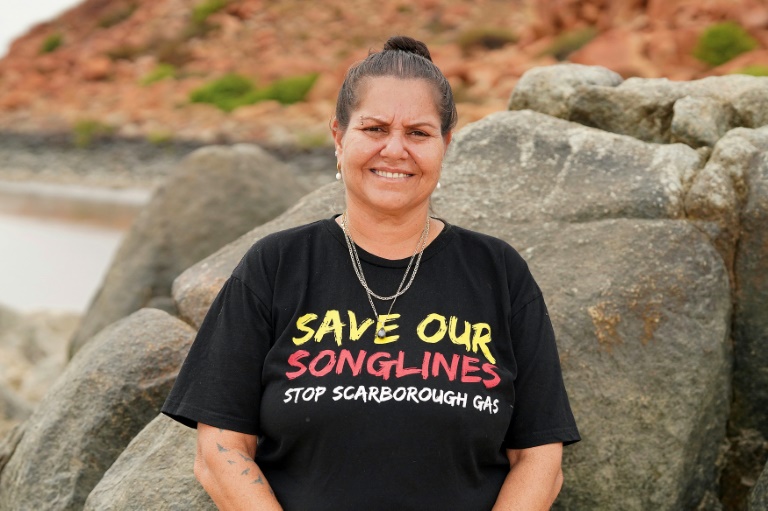
Two Indigenous Australian activists are fighting to save 40,000-year-old sacred rock art in Western Australia from pollution and plans for a major gas project.

Destruction in 2020 of Aboriginal rock shelters at Juukan Gorge by mining company Rio Tinto shocked the world, sparking condemnation, resignations, inquiries and promised reforms.

Now, First Nations women Raelene Cooper and Josie Alec warn the same could happen “in slow motion” at Murujuga, which lies about 1,300 kilometres north of Perth.

Alec and Cooper hope to garner global support by travelling this week from Australia’s remote Pilbara region to Geneva to address the United Nations about their concerns — particularly if gas giant Woodside’s Scarborough project goes ahead.

Cooper told AFP that decay was already visible in the Murujuga rock art, which is sacred to the Indigenous custodians of the land and contains their traditional lore.

Alec said that due to industrial pollution “the rock art will disappear. We will have no rock art to show the world.”

Woodside’s Aus$16 billion (US$11 billion) Scarborough gas project would see 13 wells drilled off the coast of Western Australia to tap into a huge underwater reserve.

The company predicts that at full capacity, Scarborough will produce eight million tonnes of liquefied natural gas annually — prompting a backlash from green groups over its carbon emissions potential.

Last month the Australian Conservation Fund launched a legal challenge against the Scarborough project, claiming it would create emissions extensive enough to harm the World Heritage-listed Great Barrier Reef.

Cooper and Alec point out that Murujuga has also been nominated for a World Heritage listing, in part because of the cultural value of its estimated one million petroglyphs, or rock carvings.

Destruction of the rock art, Alec said, “will kill our stories. And it kills a very part of who we are.”

“We already visibly see the decay… the patina on the rock art itself flaking away, and the images are starting to wear,” Cooper said.

Save Our Songlines, a campaign launched by both women, links the degradation of the art to pollution from industrial production on the resource-rich Burrup Peninsula.

– ‘Run out of time’ –

Chemicals such as nitrous oxide settle on the art, the campaign says, rendering it vulnerable to degradation when rain falls.

Woodside said in a statement that “peer-reviewed research has not demonstrated any impacts on Burrup rock art from emissions associated with Woodside’s operations”.

But Save Our Songlines points to a 2021 study from the University of Western Australia, which concluded that “with the currently recorded acidity levels, the rock patina and associated art will degrade and disappear over time”. 

Woodside dismissed that study as not including “any original research and consequently (it) does not enhance or expand the existing science”.

But Alec and Cooper say they can see Murujuga, the land they have sworn to protect and care for, changing before their eyes — from the rock art to the disappearance of plants and animals.

“There’s something critically wrong,” Alec said.

“And there’s only one explanation for that, and that is the chemicals, the mining, the gas, the oil… they are creating destruction.”

The pair hope that speaking to the UN’s Expert Mechanism on the Rights of Indigenous Peoples, which provides expertise to the Human Rights Council, will see industry and government in Australia held to account.

They want First Nations custodians to be better consulted about new industry on their land — noting that women have been sidelined in the approvals process.

They have also called for Murujuga to receive World Heritage listing next year, an acknowledgement that would grant more leverage to argue for the region’s protection.

“The time is now, we’ve already run out of time,” Alec said.

EU Parliament backs green label for gas, nuclear

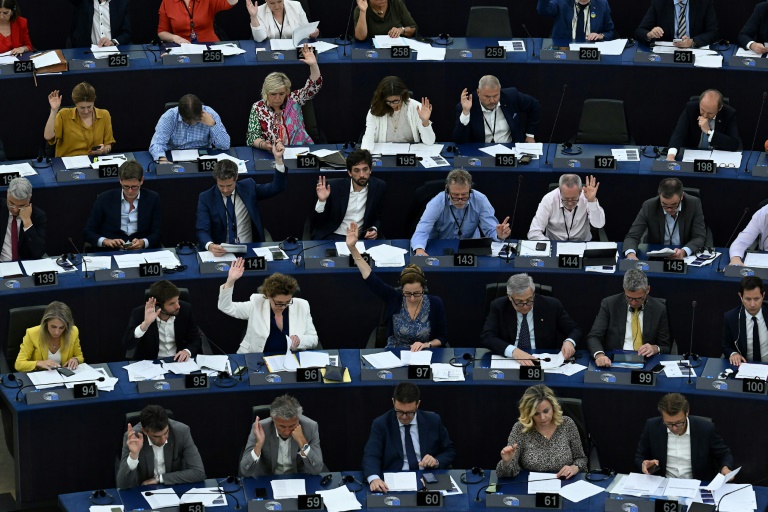
The European Parliament approved on Wednesday a contentious EU proposal giving a sustainable finance label to investments in gas and nuclear power, sparking claims of “greenwashing” by environmental lobbyists.

MEPs in the eastern French city of Strasbourg declined to reject the measure, which was backed by France and Germany. 

There were 278 votes to stop it while 328 voted for a green light. There were 33 abstentions.

Czech Prime Minister Petr Fiala, whose country has just taken over the rotating EU presidency from France, tweeted that the result was “excellent news” for Europe.

“It paves the way towards energy self-sufficiency which is absolutely crucial for our future,” he said.

The green label, known in EU parlance as the “taxonomy”, for gas and nuclear is the only way that certain EU countries will “be able to meet their climate targets,” he had warned before the vote.

A small but influential group of member states and activists had lobbied hard for MEPs to reject the label, in a coalition of opponents to nuclear and gas energy.

Critics of gas point to the war in Ukraine as the most urgent reason to reject the green label, saying that encouraging investment would only increase dependence on Russian supply.

“It’s dirty politics and it’s an outrageous outcome to label gas and nuclear as green and keep more money flowing to Putin’s war chest,” Greenpeace EU sustainable finance campaigner Ariadna Rodrigo said.

“We will fight this in the courts,” she added.

Eco-campaigner Greta Thunberg tweeted that “the hypocrisy is striking” and argued that the parliament’s adoption “will delay a desperately needed real sustainable transition and deepen our dependency on Russian fuels”.

Critics of nuclear energy, meanwhile, point to the threat posed by accidents and nuclear waste and believe solar and wind energy is the best way forward.

But the EU executive, under pressure from nuclear-powered France and gas-reliant Germany, argues that both have a role to play as cleaner power sources during the transition to a net-zero carbon future.

The EU hopes that its label will steer huge sums of private capital into activities that support climate goals.

Backers of the taxonomy insist that investment in gas and nuclear is a necessary step on “the route to sustainable energy sources,” said German MEP Christian Ehler.

For this reason, the vote is a “wise decision” that will lead to more renewables down the road, he added.  

Russian tanks damaged in Ukraine on display in Warsaw

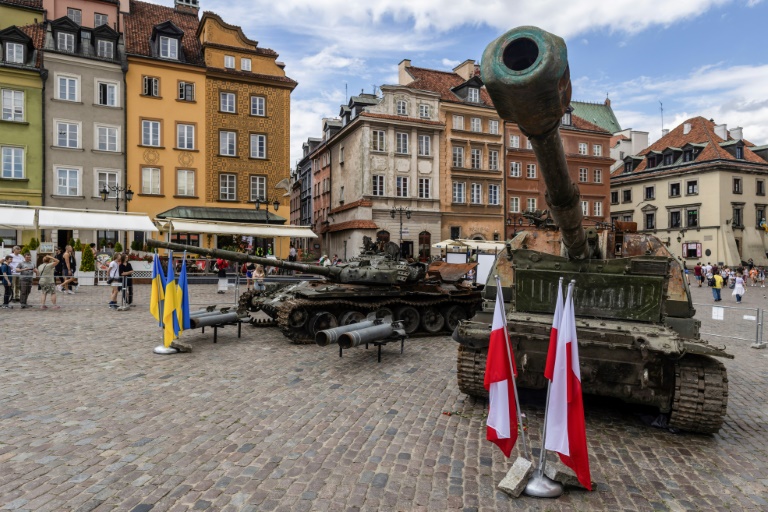
Two Russian armoured vehicles, battered, charred and dented, provide a dramatic sight for visitors arriving at Warsaw’s historic Castle Square.

The T-72 tank and 2S19 self-propelled howitzer could almost be mistaken for museum pieces were it not for the mud and grass still stuck to their tracks.

The two vehicles were hit and then captured by the Ukrainian army near Kyiv and the northern city of Kharkiv after Russia invaded in late February. 

Now they have been put on show in the Polish capital as spoils of war, under a joint initiative of the Polish and Ukrainian governments entitled “For Your Freedom and Ours”.

The display’s message is that Ukrainians are not just defending freedom and democracy in their own country but for Europe as a whole. 

On a busy summer day in the historic square, pedestrians posed for photos in front of the armoured vehicles but others seemed overwhelmed.

Ukrainian citizen Vikka, in town visiting relatives, dabbed her eyes. 

“It’s hard to see this here. But it bears witness to the support that Poland has shown (Ukraine),” she told AFP. 

Warsaw pensioner Krzysztof scrutinised the tanks, his arms crossed. 

“We had Russian tanks roll into Poland in 1939,” he said.

“They were definitely less modern than these. But otherwise, nothing has changed when it comes to the mentality of the Russian regime.”  

Eight-year-old Sasha fled Kyiv with his mother Katarina in early March and crossed the border into Poland, among nearly 4.5 million Ukrainians to have done so since the invasion. 

“These tanks here show the war is real,” Sasha told AFP. 

His mother let out a sigh and said, “He knows a lot about the war. He dreams of going back to Kviv, and of becoming a soldier one day.”

The tanks will remain on display in Warsaw over the next few months before travelling to the southern city of Krakow.

The Ukrainian defence ministry plans to then exhibit them elsewhere in Europe, including in Madrid and Lisbon. 

July 4 parade gunman considered second attack: US police

The 21-year-old man arrested for a mass shooting at a July 4 parade in a Chicago suburb has confessed and told police he considered a second attack while on the run.

After fleeing the shooting scene in Highland Park, Illinois, Robert Crimo drove to nearby Madison, Wisconsin, where he “seriously contemplated” carrying out another attack, police spokesman Christopher Covelli told reporters.

Assistant State Attorney Ben Dillon said during a bond hearing for Crimo that he had voluntarily confessed to police that he carried out the July 4 shooting in Highland Park, which left seven people dead and dozens injured.

Judge Theodore Potkonjak ordered Crimo to be held without bail.

UK ministers to tell Johnson to quit as PM: reports

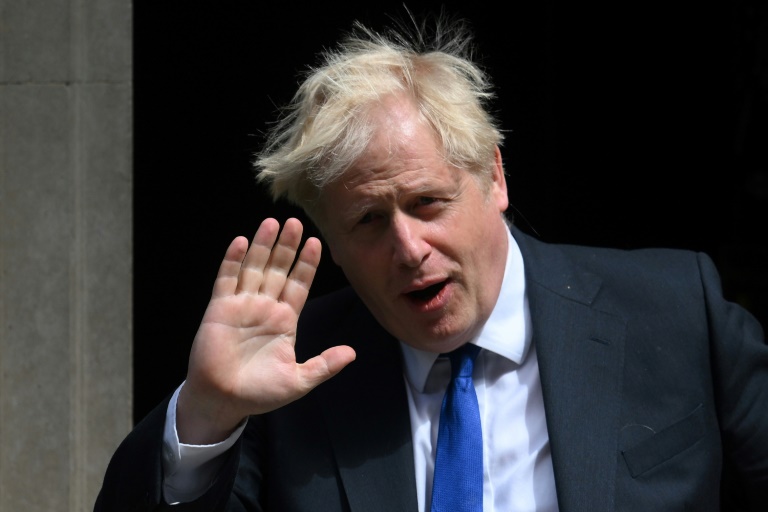
Senior ministers on Wednesday were set to tell Boris Johnson he must quit as prime minister, British media said, after a spate of resignations from his scandal-hit government.

A delegation was awaiting his return from a two-hour grilling by a parliamentary committee to tell him his time was up, BBC, Sky News and other outlets reported, without quoting sources.

The 58-year-old leader’s grip on power has been slipping since Tuesday night, when Rishi Sunak resigned as finance minister and Sajid Javid quit as health secretary.

Both said they could no longer tolerate the culture of scandal that has dogged Johnson for months, including lockdown lawbreaking in Downing Street.

But at the parliamentary committee, and an earlier question and answer session with MPs in parliament, he defiantly vowed to get on with the job.

“I’m not going to give a running commentary on political events,” he told the committee when asked about the cabinet delegation. 

“We’re going to get on with the government of the country.”

He added: “What we need is stable government, loving each other as Conservatives, getting on with our priorities, that is what we need to do.”

Earlier, Javid urged other ministers to resign saying “the problem starts at the top, and I believe that is not going to change”. 

“And that means that it is for those of us in that position — who have responsibility — to make that change.”

Cries of “bye, Boris” echoed around the chamber at the end of his speech. Most Tories were conspicuously silent when Johnson attacked the Labour opposition at prime minister’s questions. Some shook their heads.

– ‘Gone’ –

Sunak and Javid quit just minutes after Johnson apologised for appointing a senior Conservative, who quit his post last week after he was accused of drunkenly groping two men.

Former education secretary Nadhim Zahawi was immediately handed the finance brief and acknowledged the uphill task ahead.

“You don’t go into this job to have an easy life,” Zahawi told Sky News.

Days of shifting explanations had followed the resignation of deputy chief whip Chris Pincher.

Downing Street at first denied Johnson knew of prior allegations against Pincher when appointing him in February.

But by Tuesday, that defence had collapsed after a former top civil servant said Johnson, as foreign minister, was told in 2019 about another incident involving his ally.

Minister for children and families Will Quince quit early Wednesday, saying he was given the inaccurate information before having to defend the government in a round of media interviews on Monday.

Tory MP Andrew Bridgen, one of Johnson’s most strident critics, said the Pincher affair had tipped many over the edge, and there were moves to get rid of Johnson by the end of this month.

Other senior cabinet ministers, including Foreign Secretary Liz Truss and Defence Secretary Ben Wallace, still publicly back Johnson.

But as the resignations piled up, many were wondering how long that may last.  

A snap Savanta ComRes poll Wednesday indicated that three in five Conservative voters say Johnson cannot re-gain the public’s trust, while 72 percent of all voters think he should resign.

– ‘Local difficulties’ –

Johnson only narrowly survived a no-confidence vote among Conservative MPs a month ago, which ordinarily would mean he could not be challenged again for another year.

But the influential “1922 Committee” of non-ministerial Tory MPs is reportedly seeking to change the rules, with its executive committee meeting later Wednesday.

Jacob Rees-Mogg, a doggedly loyal cabinet ally and Johnson’s “minister for Brexit opportunities”, dismissed the resignations as “little local difficulties”.

But Sunak’s departure in particular, in the middle of policy differences over a cost-of-living crisis sweeping Britain, is dismal news for Johnson.

The prime minister, who received a police fine for the so-called “Partygate” affair, faces a parliamentary probe into whether he lied to MPs about the revelations.

Pincher’s departure from the whips’ office — charged with enforcing party discipline and standards — marked yet another allegation of sexual misconduct by Tories in recent months, recalling the “sleaze” that dogged John Major’s government in the 1990s.

Conservative MP Neil Parish resigned in April after he was caught watching pornography on his mobile phone in the House of Commons.

That prompted a by-election in his previously safe seat, which the party went on to lose in a historic victory for the opposition Liberal Democrats.

Labour, the main opposition party, defeated the Conservatives in another by-election in northern England on the same day, prompted by the conviction of its Tory MP for sexual assault.

Oil slides below $100, euro sags

Recession worries pushed the price of Brent oil briefly back under $100 on Wednesday and the euro moved closer to parity with the dollar.

European stocks rebounded thanks to lower bond yields and bargain hunting, while US stocks dipped ahead of the release of the minutes of the latest US Federal Reserve meeting.

Europe’s benchmark crude oil contract, Brent North Sea, fell briefly under $100 per barrel in afternoon deals, following its US counterpart WTI which slumped below the symbolic level on Tuesday when prices plunged by nearly 10 percent on concerns that a slowing global economy will dent demand for petroleum products.

Citi analysts have forecast that Brent could strike $65 later this year in the event of a prolonged worldwide economic downturn.

Meanwhile, the euro hit a fresh 20-year low point under $1.02 — the European single currency fast closing in on parity as traders eye recession for the eurozone and the ECB’s slower moves to raise interest rates than the US Fed.

“A dip in government bond yields has paved the way for bargain hunters to swoop in and snap up European equities,” said market analyst David Madden at Equiti Capital.

Investors worried rising bond yields would crimp the ability of eurozone governments to support their economies. 

Paris stocks rose 2.0 percent while Frankfurt climbed 1.6 percent.

Nevertheless, “the mood remains febrile”, said Chris Beauchamp, chief market analyst at online trading platform IG.

“The drop in the euro and weakness in yields shows that investors remain very nervous about the economic prospects of the global economy, and the opportunistic bargain hunting in stocks may not have much staying power,” he warned.

London’s benchmark FTSE 100 index managed to gain 1.2 percent despite the political turmoil after UK Prime Minister Boris Johnson was rocked by the resignation of finance minister Rishi Sunak.

Johnson vowed to stay in office and quickly appointed new ministers.

“Political risks do not seem to be having a major impact on UK assets,” noted Markets.com analyst Neil Wilson.

“There are far too many bigger things on our minds right now — inflation, the economy slowing down, strikes.”

Britain is in the midst of nationwide strikes — affecting in particular the transport sector — as wages are eroded by the rocketing inflation.

The pound dipped below $1.18, however.

Elsewhere Wednesday, Asian equity markets closed mostly lower amid a fresh flare-up of coronavirus cases in parts of China that has seen some cities locked down as part of officials’ zero-Covid policy.

Wall Street stocks were lower in late morning trading as investors awaited key economic releases and the release of the minutes of the Federal Reserve’s last policy meeting.

Investors will be scrutinising the document for any signs that falling commodity prices might lead the Fed to be less aggressive with raising interest rates, which would lower the risk of pushing the US economy into recession.  

– Key figures at around 1530 GMT –

New York – Dow: DOWN 0.4 percent 30,850.00 points

EURO STOXX 50: UP 1.8 percent at 3,421.55

London – FTSE 100: UP 1.2 percent at 7,107.77 (close) 

Frankfurt – DAX: UP 1.6 percent at 12,594.52 (close)

Paris – CAC 40: UP 2.0 percent at 5,912.38 (close)

Tokyo – Nikkei 225: DOWN 1.2 percent at 26,107.65 (close)

Hong Kong – Hang Seng Index: DOWN 1.2 percent at 21,586.66 (close)

Shanghai – Composite: DOWN 1.4 percent at 3,355.35 (close)

Euro/dollar: DOWN at $1.0175 from $1.0266 on Tuesday

Euro/pound: DOWN at 85.49 pence from 85.85 pence

Dollar/yen: DOWN at 135.72 yen from 135.87 yen

Pound/dollar: DOWN at $1.1897 from $1.1956

Brent North Sea crude: DOWN 2.5 percent at $100.20 per barrel

West Texas Intermediate: DOWN 2.8 percent at $96.73 per barrel

burs-rl/har

Suspected jihadists raid Nigeria prison, free hundreds

Suspected Boko Haram jihadists using guns and explosives have blasted their way into a prison near Nigeria’s capital, freeing hundreds of inmates in an operation to release jailed comrades, the government said Wednesday.

Tuesday night’s brazen attack on the outskirts of Abuja came hours after an ambush on a presidential security convoy in the northwest, in a startling illustration of the struggle Nigeria faces to overcome a security crisis.

Residents reported loud explosions and gunfire late Tuesday near the Kuje medium-security prison just outside the capital.

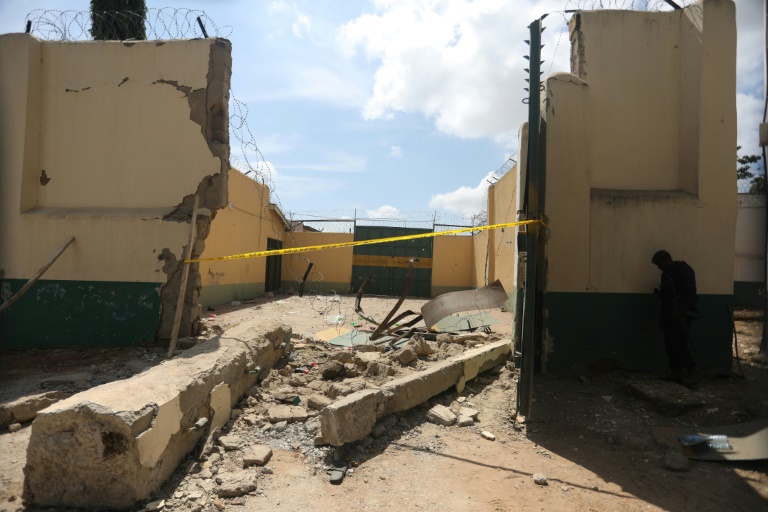
President Muhammadu Buhari on Wednesday briefly visited the prison, where the burnt-out wreckage of a bus and cars marked the scene of the attack, and yellow police tape was stretched across a destroyed part of the prison perimeter.

“We understand they are Boko Haram, they came specifically for their co-conspirators,” senior interior ministry official Shuaibu Belgore told reporters on a visit to the prison.

He said around 300 inmates had been recaptured or had surrendered out of about 600 who had escaped initially.

Boko Haram is one of the jihadist groups involved in Nigeria’s grinding 13-year conflict in the country’s northeast.

But Nigerian officials sometimes use “Boko Haram” as a general phrase to refer to jihadists or other armed groups.

– ‘All escaped’ –

Defence Minister Bashir Magashi told reporters that Boko Haram militants had “mostly likely” carried out the attack and that all 64 jailed jihadists in the prison had escaped.

“None of them are inside the prison, they have all escaped,” he said.

Commanders of another jihadist group Ansaru, including the group’s chief Khalid Barnawi, had also been kept in Kuje prison since their conviction in 2017.

One security official was killed when the gunmen breached the jail using high-grade explosives.

“We heard shooting on my street. We thought it was armed robbers,” a local resident said. “The first explosion came after the shooting. Then a second one sounded and then a third.”

Some prisoners surrendered while others were recaptured with military roadblocks set up around the penitentiary.

Security forces sent back around 19 recaptured inmates in a black van on Wednesday morning, an AFP correspondent at the site said.

Former top police commander Abba Kyari, who was being held in Kuje awaiting trial in a high-profile drug smuggling case, was still in custody, corrections service spokesman Abubakar Umar said. 

– ‘Ambush positions’ –

Nigeria’s security forces are battling Boko Haram and Islamic State West Africa Province (ISWAP) jihadists in the country’s northeast, where the conflict has killed 40,000 people and displaced 2.2 million more.

The overstretched military is also battling heavily armed criminal gangs known locally as bandits who terrorise communities in the northwest and central states with raids and mass kidnappings for ransom.

In the country’s southeast, troops are dealing with separatist militias who demand an independent territory for the local ethnic Igbo people.

The Kuje prison raid took place soon after gunmen also ambushed an advance presidential security detail preparing for Buhari’s visit to his home state of northwestern Katsina.

Buhari was not in the convoy, but two officials were slightly wounded in the attack. It was not clear who was responsible.

“The attackers opened fire on the convoy from ambush positions but were repelled,” the presidency said in a statement.

Attacks on prisons in Nigeria have happened in the past, with gunmen seeking to free inmates.

More than 1,800 prisoners escaped last year after heavily armed men attacked a prison in southeast Nigeria using explosives.

The attackers blasted their way into the Owerri prison in Imo state, engaging guards in a gun battle before storming the prison. Imo state lies in a region that is a hotbed for separatist groups.

French PM faces baptism of fire in divided parliament

French Prime Minister Elisabeth Borne promised dialogue and compromise on Wednesday in her first speech to a stormy new parliament where her minority government is expected to face a constant struggle to pass legislation.

“We will approach every draft law in a spirit of dialogue, compromise and openness,” Borne told MPs as she laid out the government’s policy priorities. 

The 61-year-old often had to push on through shouts and chanting from the floor, especially from the benches of the left-wing NUPES alliance, which called an immediate no-confidence vote on her leadership. 

After evoking her family history, including her father’s past in Nazi concentration camps, and her pride at being France’s second woman prime minister, she ended by saying: “We will manage to build together.”

Borne, named prime minister in May, is expected to face a difficult task of building majorities for each bill after President Emmanuel Macron’s centrist ruling party lost its majority in parliamentary elections last month.

Macron has since failed to tempt opposition parties into a formal coalition, leading Borne to pepper her speech with remarks to the leaders of different groups when speaking about issues close to their hearts.

Borne outlined immediate priorities that can garner wide support, such helping low-income families cope with the cost-of-living crisis and releasing extra funding for the struggling health service.

But she also set her sights on strategic aims, including plans to push back the legal retirement age and the state taking full control of electricity generator EDF.

The company is expected to build a fleet of new nuclear plants as a key pillar of France’s push for carbon neutrality.

Edith Cresson — France’s only woman prime minister before Borne in the early 1990s under president Francois Mitterrand — told broadcaster BFM that her successor had given a “remarkable” speech.

“She covered the whole range of concerns of the French public” as well as paying homage to earlier trailblazing women politicians, Cresson said.

But NUPES leader Jean-Luc Melenchon later said that Borne “offered nothing that would allow us to find compromises”.

– No-confidence vote –

Without formal allies in the 577-seat national assembly, Borne decided not to call a confidence vote on her policy speech — something almost all past prime ministers have done after their first appearances in the lower house.

Holding a vote would be “too risky” for Borne, who would have been forced to step down if she lost, explained Bruno Cautres, a researcher at the Cevipof political studies unit at Sciences Po university in Paris.

“She made the right decision, but she didn’t really have a choice.”  

The hard-left France Unbowed (LFI) party, one of the big gainers in June’s parliamentary polls, filed a no-confidence motion alongside its Socialist, Communist and Green allies before Borne even began speaking.

“Without a confidence vote, we have no choice but to file this motion of defiance,” the groups’ joint text read, according to sources in parliament.

“It probably won’t pass but it’s important to make ourselves heard,” top LFI MP Mathilde Panot told BFM television after criticising the premier for failing to call a vote on Wednesday. 

The far-right National Rally, which has 89 MPs in the new parliament, a 10-fold increase, said it would not support the motion. 

As the government’s work continues, Borne, a low-key former civil servant, will be constantly vulnerable to a new no-confidence motion, making French politics unpredictable and unstable for the foreseeable future.

– Exhausted? –

Only two months after he was re-elected to a historic second term, Macron finds his hands partly tied and his capacity to push through reforms diminished.

The French media has speculated in recent days about his state of mind, with some reports suggesting he is yet to mentally rebound from the parliamentary setback. 

A cabinet reshuffle announced on Tuesday did little to inject new momentum into his government as he failed to attract any new heavy-hitters.

It kept most senior figures in their jobs and brought in only junior new faces with little political experience. 

burs-adp-tgb/imm

Close Bitnami banner
Bitnami