World

Fuel prices soar in Ethiopia as subsidies cut

Fuel prices soared in Ethiopia on Wednesday after the government reduced subsidies, adding to economic hardship for people already struggling with high inflation.

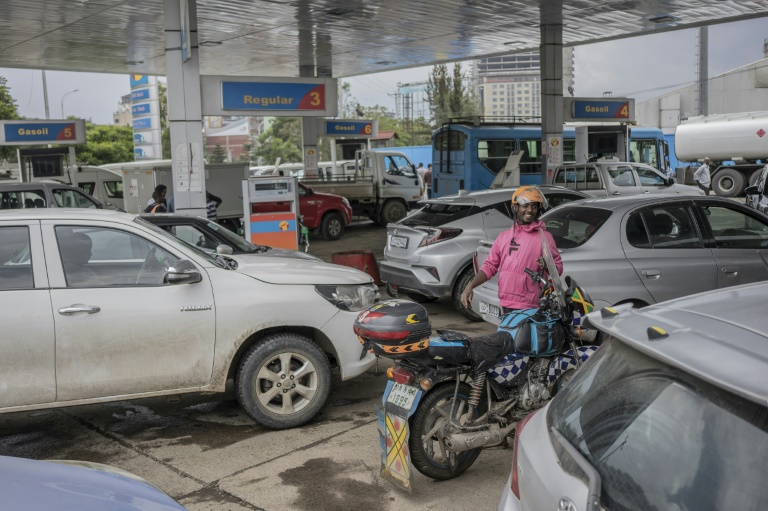
There were long queues at petrol stations in the capital Addis Ababa, with drivers reporting shortages as they tried to fill up their tanks.

The price of petrol at the pump jumped almost 30 percent to 48.83 biir (about 94 US cents) while diesel went up almost 40 percent to 49.02 birr under the new price regime that will run to August 6, the trade ministry said.

The federal government — which had already hiked prices in May — plans to lift fuel subsidies progressively, according to the Addis Fortune business newspaper.

Prices of fuel, food and other basic goods have rocketed globally because of the Ukraine war, hitting vulnerable countries in Africa and elsewhere.

The trade ministry said the cost of fuel for Ethiopian consumers should be almost double if it was calculated on current global prices.

“But considering the state the country is in, the government is covering 75 percent of the (price) difference while it was decided that the remaining 25 percent would be transferred to consumers,” it said.

Henok Girma, 26, said he had been waiting in line at a petrol station in Addis Ababa for an hour and a half.

“At most of the gas stations, there is a long queue. I don’t know what the problem but there is a shortage,” he said. 

“Whenever I want to fill up with gas, I will have to wake up early in the morning or wait like this for hours.” 

Businessman Mekibib Abebe added: “Sometimes you can wait for half a day and may not find fuel at the end.

“The obligation of the government is to provide fuel, or at least control how gas stations provide fuel properly.” 

The Horn of Africa country of more than 110 million people has seen inflation hovering at around 35 percent over the past six months, with food prices in particular registering a sharp rise.

The global surge in prices for basic goods has also eaten into the foreign exchange reserves of the largely importing nation.

In a report covering the first quarter of 2022, Ethiopian investment fund Cepheus Capital said that in December, foreign currency reserves at the central bank were at their lowest in a decade.

Imports of petroleum products in the first nine months of the 2021/2022 fiscal year had jumped by 75 percent to $2.2 billion, and those of cereals by 121 percent to $1.8 billion, it said.
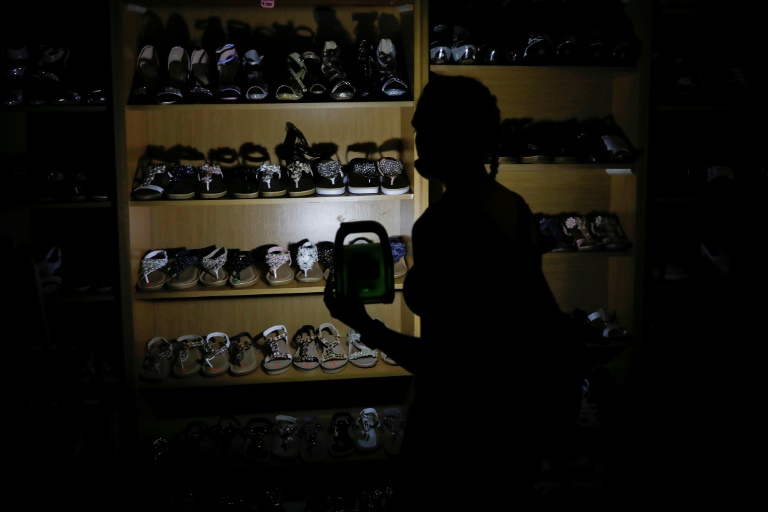
Long winter: South Africans struggle with rolling blackouts

Unable to switch on lights or heaters, cook dinner or charge their phones, South Africans are spending their mid-winter evenings plunged in darkness and low-tech living.

Power outages, known here as load shedding, intensified late last month after strikes erupted at the nation’s monopoly energy provider Eskom, leaving coal plants unable to operate or undergo maintenance. 

Electricity cuts in South Africa are a notorious, years-old problem.

But the frequency of power losses — two to three times per day and lasting up to four hours at a time — is the worst since a bleak episode in December 2019, and many people are livid.

“It’s like we’re back to apartheid life, whereby we’re back to candles, paraffin stoves,” said Rebecca Bheki-Mogotho, a Johannesburg city employee.

Her comparison was with life under South Africa’s former segrationist regime, which deprived the black majority of basic infrastructure and services.

The leading economy on the continent, South Africa relies on coal to generate more than 80 percent of its electricity. 

The country has plenty of coal, but most of its plants are ageing, need repair or are scheduled to be decommissioned in the coming decades.

“We didn’t do what we should have done in the past five to 10 years,” energy analyst Clyde Mallinson told AFP. 

“We’ve got ourselves caught in a situation where we are desperately trying to plug what’s broken rather than get ahead of it.”

– 101 days of blackouts –

The wage dispute that compounded the crisis concluded Tuesday with Eskom employees accepting a seven percent increase, which the electricity provider said in a statement “will be a struggle for Eskom to afford.”

But even with workers back on the job, Eskom warned it would “still take some time” for the system to recover due to the backlog of maintenance.

The public entity is already laden with debt and struggling to recover from years of alleged mismanagement and corruption, which made it a key entity investigated during a four-year public inquiry into state graft.

To bridge the severe gap in supply, Eskom is relying on back-up gas turbines that blast through 14 litres of diesel (3.7 gallons) per second. Seven of these turbines were in operation Friday. 

The cost of using diesel as a substitute fuel has been stratospheric. 

Eskom CEO Andre de Ruyter said the company spent 1.54 billion rand ($93.8 million) in June alone — more than double its original budget. 

It has also spent more than double its annual budget for diesel only halfway into the year.  

The big splurge is still not enough to avoid outages that can cause havoc, from delays at intersections with downed traffic lights to faults at substations prolonging blackouts. 

In April, the company warned the country could see as many as 101 days of load shedding this year due to breakdowns.

– Delayed renewables –

At least 10,000 MW of renewable wind and solar energy should have been brought online since 2015 to keep pace with demand, Mallinson said. 

An intensive building strategy to make that up in the next two years would relieve the issue. 

“We have to build rapidly, like our lives depend on it,” Mallinson said. 

The mining industry, the country’s economic backbone, has begun investing in self-generation with renewables, Henk Langenhoven, chief economist at the trade grouping Minerals Council South Africa, told AFP.

“As the problems… with the core energy supply from Eskom are rising and the shortfalls are increasing, the pressure and the inclination to actually move that way is actually getting stronger,” Langenhoven said.

Eskom’s senior officials have similarly made repeated calls for the swift development of new energy sources. 

But in February, Energy Minister Gwede Mantashe declared coal would remain “a mainstay” for South Africa’s electricity mix for the “foreseeable future”. 

This comes despite South Africa being promised at least $8.5 billion from rich nations at the UN climate summit last November to aid its low-carbon transition.

The country’s energy burden is only expected to grow in the coming years. 

Power demands could triple by 2040 as transportation and other industries move to electrification, Mallinson said. 

Without rapid investment, load shedding will remain a fixture. 

S.Africa's Ramaphosa blames alcohol 'scourge' for tavern tragedy

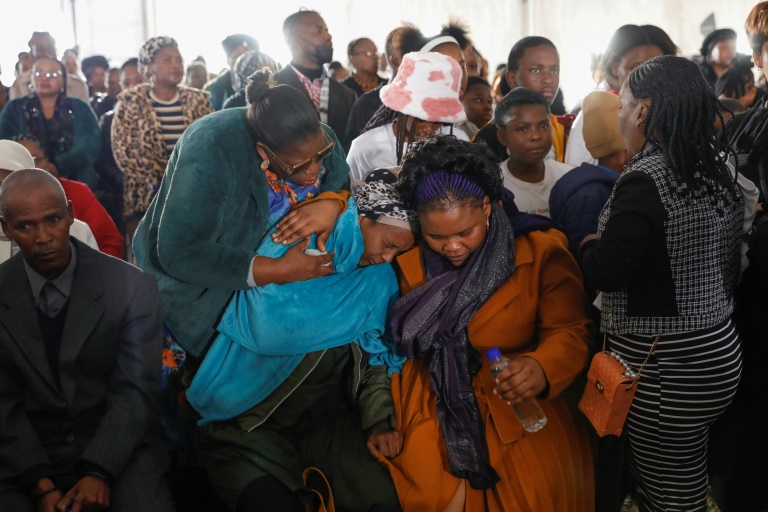
South Africa’s president Wednesday blamed the “scourge of underage drinking” for the deaths of 21 people, mostly teens, in unclear circumstances at a township tavern last month, in an incident that shook the nation.

Speaking at a memorial service for the victims, President Cyril Ramaphosa vowed to crack down on “unscrupulous” bar keepers who flout regulations, putting profits before children’s lives, and suggested the drinking age be raised across the country.

“Children should not have been allowed into that place, they should not have been served alcohol,” Ramaphosa told a crowd gathered at a stadium in Scenery Park, a township in the coastal city of East London, where empty coffins were laid out to symbolise the loss.

“South Africa has one of the highest rates of problem drinkers in the world,” he said.

“We are now going to draw the line… We are losing our future generation to the scourge of underage drinking.”

South Africa banned alcohol sales nationwide during the coronavirus lockdown to ease the number of trauma cases in hospitals.

Eleven days after the youths’ bodies were discovered strewn in the Enyobeni tavern, the cause of the deaths remains a riddle. 

The police are yet to wrap up their investigation, although officials have ruled out a stampede, and autopsy results are still to be made public. 

“Somebody somewhere must answer” for the tragedy, Police Minister Bheki Cele declared at the memorial service.

– Waiting for closure –

Scores of mourners filled a large marquee where the 19 coffins were laid out, and hundreds more gathered outside to follow the ceremony. 

Some broke down in tears, while others chanted prayers as a police band played the national anthem. 

Ramaphosa asked grieving families to allow time for police to finish their probe, while urging authorities to speed up the process. 

“The families do want closure. They want to know what happened to their children. Let’s not keep them waiting for far too long,” he said. 

The incident has drawn grief and anger in the country, which has long grappled with deep-rooted inequality and structural issues, and has one of the highest murder rates in the world. 

“Mr President… South Africa is tired,” a grieving relative said after reading an obituary from the podium. 

Undertakers said the caskets were empty. Most of the burials will occur this week.  

The youngsters died in what survivors have described as a battle to escape the jam-packed venue, with one reporting a suffocating smell. 

The grim discovery of their bodies was made on June 26.

The youngest was just 14 years and the oldest 20, according to birthdates listed on the memorial official programme distributed on Wednesday.

Cele had previously said the youngest was 13 and the oldest 17.

– ‘National crisis’ –

“As a nation we are hurt by what happened,” Oscar Mabuyane, the head of the Eastern Cape province where East London is located, said in an address. 

Drinking in South Africa is permitted for over-18s.

But in township taverns, which are often located close to family homes, safety regulations and drinking-age laws are not always enforced.

Nolitha Tsangani, a Scenery Park resident who lives near the Enyobeni tavern, said blame for the tragedy should be shared.

“We are all wrong… the parent is wrong, the child who is dead, I am sorry to say, is wrong,” she told AFP, though also pointing the finger of blame at the tavern owner and the police.

The tragedy has sparked calls for change.

“Alcohol… should never be a form of entertainment for our kids,” Lucky Ntimane, national convenor of the National Liquor Traders Association told the memorial service. 

Ramaphosa suggested a national debate on whether to increase the drinking age to 21, describing alcohol abuse as a “national crisis”. 

Rhinos killed, poachers arrested in S.Africa's Kruger Park

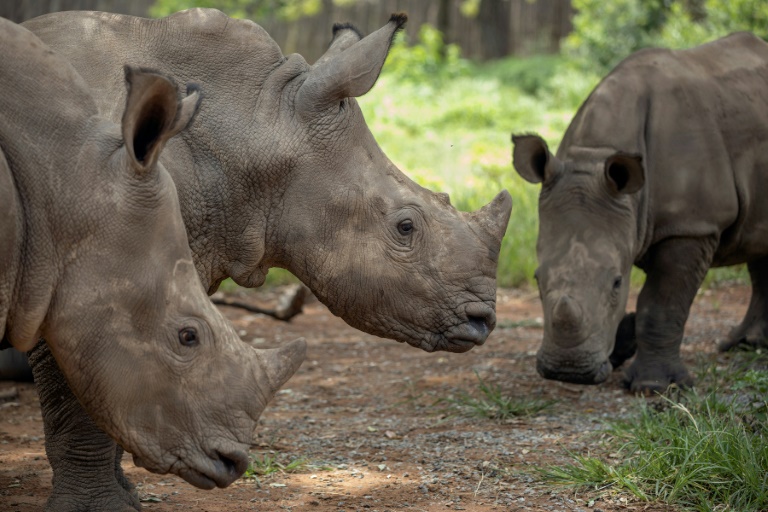
Three poachers suspected of killing several rhinos in South Africa’s Kruger National Park were arrested after they were tracked down by sniffer dogs, park officials said on Wednesday. 

Rangers flying over the park grounds spotted a carcass and an injured rhino on Friday morning after being alerted by a tourist who reported hearing gunshots, South African National Parks said in a statement. 

Two more dead rhinos were soon found in area, triggering the deployment of another helicopter, more rangers and dogs.

“The hounds indicated a specific area where three suspects were found and arrested,” the statement said.

The park, which borders Mozambique, is a tourist magnet.

The suspects, described as Mozambican nationals who were in the country illegally, carried a high-calibre hunting rifle, ammunition and horns from three rhinos.

The Kruger’s rhino population has fallen dramatically due to poaching. The park’s estimated tally in 2021 was 3,529 white and 268 black rhinos, down more than half compared to 2013, according to the nonprofit Save the Rhino International.

South Africa is home to nearly 80 percent of the world’s rhinos.

But it is also a hotspot for rhino poaching, driven by demand from Asia, where the horn is used in traditional medicine for its reputed therapeutic effect. 

OPEC head Barkindo dies at 63 in 'shock' to oil cartel

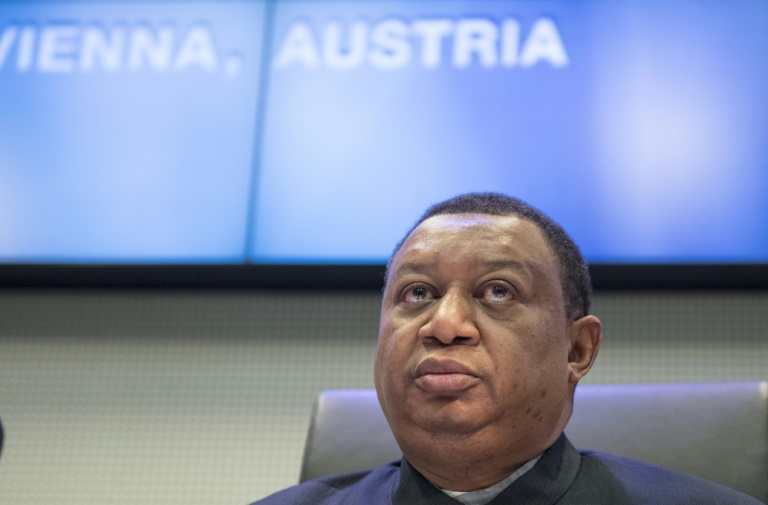
OPEC’s secretary general, Nigeria’s Mohammad Barkindo, has died at the age of 63, leaving the oil cartel in “shock” on Wednesday at a tumultuous time for the markets.

Barkindo had headed the Organization of the Petroleum Exporting Countries since 2016 and was scheduled to be replaced by Kuwait’s Haitham Al-Ghais next month. 

Under his stewardship, the cartel forged ties with Russia and nine other oil-producing countries to form a wider group known as OPEC+ in a bid to better stabilise oil markets.

After OPEC+ slashed output during the pandemic to boost prices, the 23-member group’s moves have not calmed markets — with record high prices — in recent months amid the war in Ukraine.

Barkindo died late Tuesday and will be buried on Wednesday in his home town of Yola, according to the Nigerian National Petroleum Corporation’s chief executive Mele Kyari.

“Certainly a great loss to his immediate family, the NNPC, our country Nigeria, the OPEC and the global energy community,” Kyari wrote, without providing any further details about the circumstances of Barkindo’s death.

– ‘Trailblazer’ –

“This tragedy is a shock to the OPEC Family,” Vienna-based OPEC tweeted.

“We express our sorrow and deep gratitude for the over 40 years of selfless service that… Barkindo gave to OPEC. His dedication and leadership will inspire OPEC for many years to come.”

In a statement, OPEC described Barkindo as “a trailblazer widely admired and respected throughout the globe. A dear friend to many.”

Only a few hours earlier, Barkindo — who had not shown any sign of being ill — had met Nigerian President Muhammadu Buhari in Abuja, where Buhari praised Barkindo’s “distinguished achievements at OPEC”. 

“You were able to successfully navigate the organisation through turbulent challenges,” Buhari had said.

Barkindo himself in a speech last year described serving as OPEC secretary general for two terms as an “honour of a lifetime”.

The OPEC secretary general does not wield any executive power, but is the cartel’s public face and frequently has to act as a diplomat to bring together the different, sometimes conflicting interests of the various member countries.  

For analysts, Barkindo’s death will not have an impact on OPEC’s strategy in the long-term.

“But in the short-to-medium run, it will increase uncertainty about OPEC’s next steps and add to the price volatility as he was a figure of unity for OPEC,” said Swissquote analyst Ipek Ozkardeskaya. 

Spi Asset Management analyst, Stephen Innes, described Barkindo as “a very important figurehead and a stabilising force behind OPEC.” 

“But his death is unlikely to change OPEC direction despite more outside politics entering the picture,” the expert said, predicting that his successor, Haitham Al-Ghais “augurs for the status quo given Kuwait close ties with Saudi Arabia, which wields the most influence” within the group.

– ‘True friend’ to Russia –

In a message to Nigeria’s Buhari, Russian leader Vladimir Putin hailed Barkindo’s “important” and “personal contribution” to the creation of OPEC+, saying Russia would remember him “as a true friend of our country”.

Russian Deputy Prime Minister in charge of Energy, Alexander Novak, said Barkindo “defended a constructive dialogue with our country”.

Iraqi Oil Minister Ihsan Ismail said in a statement that Barkindo “wanted to strengthen OPEC’s role in stabilising global markets and addressing challenges affecting the oil sector and the global economy.”

Born on April 20, 1959, Barkindo graduated from Ahmadu Bello University in Nigeria’s Kaduna State with a degree in political science.

He later obtained an MBA in finance and banking in the United States and studied petroleum economics at Oxford.

He became Nigeria’s representative at OPEC in 1986. Starting from 1992 he occupied a number of positions within NNPC, including as its head from 2009 to 2010. 

burs-jza/rl

War in Ukraine: Latest developments

Here are the latest developments in the war in Ukraine:

– Jail for Russians who cooperate with foreigners –

Russia’s parliament introduces harsh prison terms for cooperating with foreigners and calls to undermine national security.

In a bill harkening to the Soviet era, establishing and maintaining “confidential” cooperation with a foreigner or international organisation and helping them act against Russia’s interests will be punishable by up to eight years in prison.

Public calls to act against Russia’s security will be punished by up to seven years in prison.

They are part of an unprecedented crackdown on dissent under President Vladimir Putin which has intensified since he sent troops into Ukraine.

– Residents urged to flee Donbas city –

Ukrainian officials call on civilians to urgently evacuate Sloviansk as Russian troops step up their bombardment of the city in their push to conquer the Donbas region of Donetsk.

At least two people were killed and seven others wounded in Sloviansk on Tuesday as rockets slammed into a marketplace and surrounding streets, bringing to at least eight the numbers killed in Russian strikes since Sunday.

Donetsk governor Pavlo Kyrylenko repeats calls for residents to evacuate.

Britain’s defence ministry in an intelligence note predicts that “the battle for Sloviansk will be the next key contest in the struggle for the Donbas” after the fall of the cities of Severodonetsk and Lysychansk.

– Russia hits out over leaked Macron call –

Russian Foreign Minister Sergei Lavrov reacts angrily to the publication of a call between President Emmanuel Macron and Russian leader Putin on the eve of the war, calling it a breach of “diplomatic etiquette”. 

The details of the confidential February 20 call were revealed by the broadcaster France 2 in a documentary on the French president’s handling of the conflict.

In the exchange, Putin describes the 2014 Euromaidan revolution that brought pro-Western leaders to power in Ukraine as a coup.

At Macron’s insistence, however, he agrees in principle to the idea of a meeting with US President Joe Biden in Geneva. Four days later, he sent troops into Ukraine.

Lavrov said Russia had nothing to be ashamed of.

– Medvedev brandishes nuclear threat –

Former Russian president Dmitry Medvedev suggests the world could be headed for nuclear war if the International Criminal Court (ICC), which is investigating allegations of war crimes in Ukraine, punishes Moscow for its suspected crimes. 

“The idea to punish a country that has the largest nuclear arsenal is absurd in and of itself,” Medvedev, a close ally of Putin, says on messaging app Telegram. “And potentially creates a threat to the existence of mankind,” he added.

Medvedev, who was Putin’s stand-in president between 2008 and 2012, is deputy head of the Security Council. He has regularly assailed the West on social media since the war began.

– No NATO troops planned in Sweden, Finland –

NATO tells AFP it has no plans to send troops to Sweden and Finland once they complete the membership process launched this week.

“We don’t plan to have an additional presence in either country, they have formidable national forces. They’re capable of defending themselves,” Deputy Secretary General Mircea Geoana says in a telephone interview.

Putin has warned that Moscow will “respond symmetrically” if NATO installs troops and infrastructure in the Nordic states.

burs-cb/jmy/imm

Amazon, Just Eat deal to offer free Grubhub delivery in US

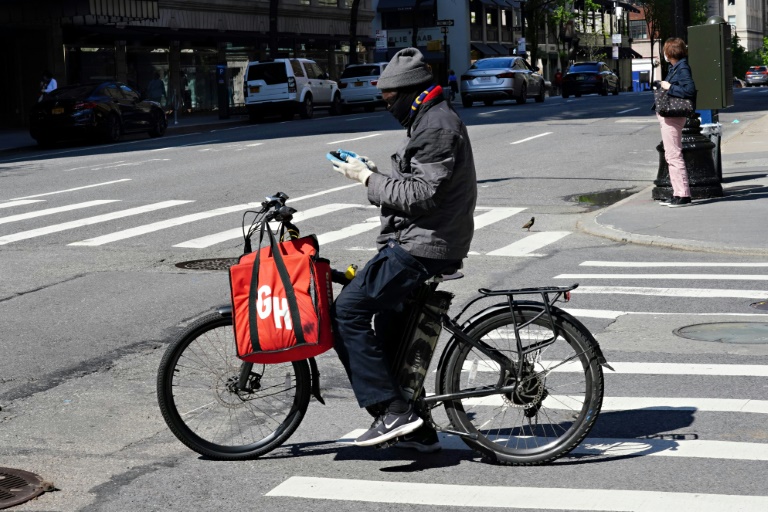
Amazon Prime customers in the United States will be able to receive a year of free restaurant delivery through Grubhub+ under a deal announced Wednesday by Just Eat Takeaway.com.

Prime members will have access to hundreds of thousands of restaurants on Grubhub, the American affiliate of Anglo-Dutch company Just Eat Takeaway. 

The deal should expand Grubhub+ membership while having a neutral effect on 2022 earnings, Just Eat Takeaway said in a news release. In exchange, Amazon will receive warrants for two percent of Grubhub’s common equity, with the potential for up to 13 percent more of Grubhub equity, depending on the number of new customers added through the venture.

The Amazon venture “will help Grubhub continue to deliver on our long-standing mission to connect more diners with local restaurants,” said Grubhub Chief Executive Adam DeWitt. “Amazon has redefined convenience with Prime and we’re confident this offering will expose many new diners to the value of Grubhub+ while driving more business to our restaurant partners and drivers.”

In April, Just Eat Takeaway said it was considering either selling Grubhub or a venture with a strategic partner following criticism from some shareholders that it should focus on Europe.

Just Eat Takeaway bought Grubhub in 2020 for $7.3 billion. The US wing of the company lost 403 million euros last year.

Just Eat Takeaway said Wednesday it continues to “actively explore the partial or full sale of Grubhub,” adding that there was no certainty a deal would happen.

Shares of Just Eat Takeaway surged around 20 percent to 16.46 euros. Shares have fallen more than 66 percent since the beginning of the year.

Is this goat the GOAT? Long-eared kid takes Pakistan by storm

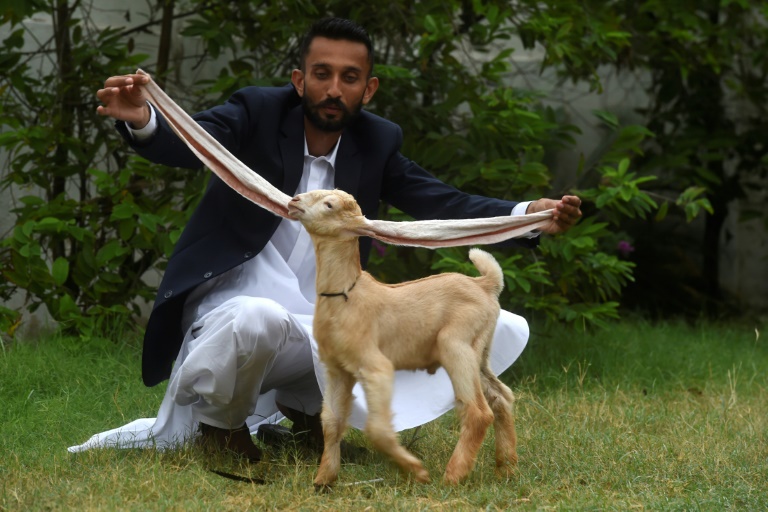
A kid goat with extraordinarily long ears has become something of a media star in Pakistan, with its owner claiming a world record that may or may not exist.

Simba is now living a pampered existence in Karachi, where he was born last month with ears that were strikingly long — and have grown further to reach 54 centimetres (21 inches).

Breeder Mohammad Hasan Narejo says he has approached Guinness World Records to see if his charge can be included as the Greatest Of All Time, although a category for “longest-eared goat” does not currently appear on the organisation’s website.

“Within 10 to 12 days of his birth he was already appearing in all the national and international media — and won a beauty contest,” a proud Narejo says.

“Within 30 days he became so popular that even a famous personality might take 25 to 30 years to achieve this level of fame.”

Simba’s ears are so long that Narejo has to fold them over his back to stop the little bleater from standing on them.

He has also designed a harness so that Simba can carry the lengthy lugholes around his neck.

Narejo is wary of the attention Simba has attracted — including from rival breeders — and has resorted to prayer and tradition to try to fend off any ill will.

“We recite Koranic verses and blow on him to cast away the evil eye,” Narejo said.

“Following a long tradition we inherited from our elders, we have fastened a black thread around him that is fortified with Koranic verses.”

Narejo plans to raise Simba as a stud to promote the image of Pakistan as a top goat breeding nation.

“Simba’s Pakistan name must roam the whole world,” he said.

Maskless pilgrims launch largest hajj of Covid era

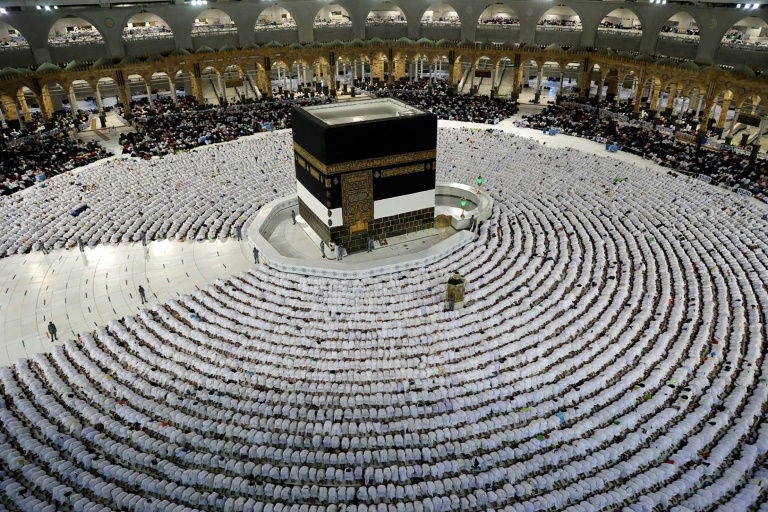
The biggest hajj pilgrimage since the Covid pandemic began kicked off Wednesday, with hundreds of thousands of mostly maskless worshippers expected to circle Islam’s holiest site in Saudi Arabia’s Mecca.

One million fully vaccinated Muslims, including 850,000 from abroad, are allowed at this year’s hajj, a major break from two years of drastically curtailed numbers due to the pandemic. 

At Mecca’s Grand Mosque, pilgrims performed the “tawaf”, the circumambulation of the Kaaba, the large cubic structure draped in golden-embroidered black cloth that Muslims around the world turn towards to pray.

Authorities said last month that masks would be required at the site, but that has been largely ignored so far this week.

Many pilgrims held umbrellas to block the hot sun as the temperature climbed to 42 degrees Celsius (108 Fahrenheit).

The Saudi health ministry has prepared 23 hospitals and 147 health centres in Mecca and Medina, the second-holiest city in Islam, to accommodate pilgrims, state media reported this week.

That includes allocating more than 1,000 beds for patients requiring intensive care and more than 200 specifically for heatstroke patients, while dispatching more than 25,000 health workers to respond to cases as they arise.

The hajj poses a considerable security challenge and has seen several disasters over the years, including a 2015 stampede that killed up to 2,300 people.

No incidents had been reported as of Wednesday afternoon.

“It’s all going well so far. I have moved around a lot and saw rules are being respected,” said Faten Abdel Moneim, a 65-year-old Egyptian mother of four.

“I hope it stays this way.” 

– Five days of rituals –

This year’s hajj is larger than the pared-down versions staged in 2020 and 2021 but still smaller than in normal times. 

In 2019, some 2.5 million Muslims from around the world participated in the annual event — a key pillar of Islam that able-bodied Muslims must undertake at least once in their lives. 

But after that, the coronavirus outbreak forced a dramatic downsizing. Just 60,000 fully vaccinated citizens and residents of the kingdom took part in 2021, up from a few thousand in 2020. 

The pilgrimage consists of a series of religious rites which are completed over five days in Islam’s holiest city and its surroundings in western Saudi Arabia. 

On Thursday, the pilgrims will move to Mina, around five kilometres (three miles) away from the Grand Mosque, ahead of the main rite at Mount Arafat, where it is believed the Prophet Mohammed delivered his final sermon. 

Four hospitals and 26 health centres are ready to treat pilgrims in Mina, state media said. 

This year’s hajj is restricted to vaccinated Muslims under the age of 65 chosen from millions of applicants through an online lottery system. 

Those coming from outside Saudi Arabia were required to submit a negative Covid-19 PCR result from a test taken within 72 hours of travel. 

Since the start of the pandemic, Saudi Arabia has registered more than 795,000 coronavirus cases, more than 9,000 of them fatal. 

– ‘Too hot’ –

Those attempting to perform the hajj without a permit face fines of 10,000 Saudi riyals (around $2,600).

Policemen in the mountainous city have set up checkpoints and conducted foot patrols.

Some pilgrims have donned clothing featuring the names and flags of their countries. “Hajj 2020 — Chad” was written on the back of the white robes of one group. 

Hosting the hajj is a matter of prestige and a powerful source of political legitimacy for Saudi Arabia’s rulers. 

Costing at least $5,000 per person, the hajj is also a money-spinner for the world’s biggest oil exporter, which is trying to diversify its economy. 

In normal years, the pilgrimage brings in billions of dollars. 

These days it represents a chance to showcase the kingdom’s ongoing social transformation, despite persistent complaints about human rights abuses and limits on personal freedoms. 

Saudi Arabia now allows women to attend the hajj unaccompanied by male relatives, a requirement that was dropped last year. 

“Being here is the best thing that has ever happened to me. I can’t wait for the rest,” said 42-year-old Egyptian pilgrim Naima Mohsen, who came to the Grand Mosque by herself this week. 

“My only problem is the weather. It’s just too hot.”

Evacuations as Russia advances in Ukraine's Donbas

The evacuation of civilians from Sloviansk continued Wednesday as Russian troops pressed towards the eastern Ukrainian city in their campaign to control the Donbas region, as Ireland’s prime minister visited Kyiv.

Sloviansk has been subjected to heavy bombardment in recent days as the invading Russian forces push westwards.

“Twenty years of work; everything is lost. No more income, no more wealth,” Yevgen Oleksandrovych, 66, told AFP as he surveyed the site of his auto parts shop, destroyed in Tuesday’s strikes.

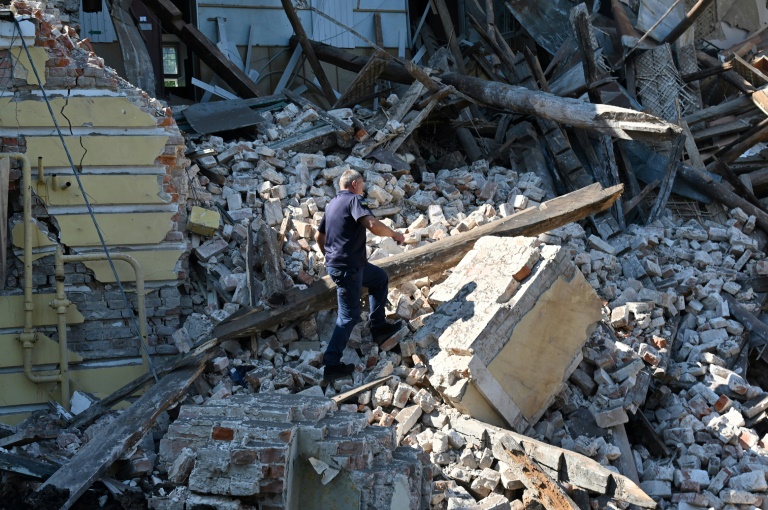
AFP journalists saw rockets slam into Sloviansk’s marketplace and surrounding streets, with firefighters scrambling to put out the resulting blazes.

Around a third of the market in Sloviansk appeared to have been destroyed, with locals coming to see what was left among the charred wreckage.

The remaining part of the market was functioning, with a trickle of shoppers coming out to buy fruit and vegetables.

“I will sell it out and that’s it, and we will stay home. We have basements, we will hide there. What we can do? We have nowhere to go, nobody needs us,” said 72-year-old greengrocer Galyna Vasyliivna.

Mayor Vadym Lyakh said that around 23,000 people were still in Sloviansk but claimed Russia had been unable to surround the city.

“Since the beginning of hostilities, 17 residents of the community have died, 67 have been injured,” he said.

“Evacuation is ongoing. We take people out every day. About 23,000 residents remain. Many of the evacuees were taken by bus to the city of Dnipro, further west.

“The city is well fortified. Russia does not manage to advance to the city,” he said.

Vitaliy, a plumber, said his wife and their daughter, who is six months pregnant, were evacuated from Sloviansk on Wednesday.

“I am afraid for my wife,” he told AFP.

“Here, after what happened yesterday, they hit the city centre; need to leave.

“I sent my wife, and I have no more choice: tomorrow I will join the army.”

– Russians push west –

The eastern Donbas is mainly comprised of Lugansk region, which Russian forces have almost entirely captured, and the Donetsk region to its southwest — the current focus of Moscow’s attack and the location of Sloviansk.

The fall of Lysychansk in Lugansk on Sunday, a week after the Ukrainian army also retreated from the neighbouring city of Severodonetsk, has freed up Russian troops to advance west on Kramatorsk and Sloviansk in Donetsk.

On Tuesday, they were first closing in on the smaller city of Siversk — which lies between Lysychansk and Sloviansk — after days of shelling there.

Donetsk governor Pavlo Kyrylenko said Russian forces killed five civilians and injured 21 in the region on Tuesday.

Lugansk governor Sergiy Gayday claimed that Ukrainian forces were holding back Russian troops on the borders of Lugansk and Donetsk.

“Yesterday Russians wanted to advance towards Donetsk Oblast and to cut the Bakhmut-Lysychansk highway going through Bilogorivka, but have nothing to report to their chiefs. The enemy had to retreat because of our army’s pressure,” he said.

He insisted that Russia did not control the entire Lugansk region, saying they had not reached the administrative border.

“Fighting still keeps going in two villages,” he said.

– Irish PM visits Kyiv –

Ukrainian President Volodymyr Zelensky, speaking in his evening address Tuesday, said he was continuing to press Western allies for upgraded anti-missile systems as air siren alerts sounded across much of the country, including the capital.

Irish Prime Minister Micheal Martin was in Kyiv on Wednesday to voice Dublin’s solidarity and discuss how Ireland can support the country’s needs.

“The people of Ireland stand with Ukraine and its people in the face of Russia’s immoral and unprovoked war of terror,” he said.

“The bombardment and attacks on civilians are nothing short of war crimes.”

Martin said Ireland supported Ukraine’s push for membership of the European Union.

The EU on Wednesday set out a harder focus on energy given Russia’s war in Ukraine.

“We need to prepare for further disruptions of gas supply, even a complete cut-off from Russia,” European Commission chief Ursula von der Leyen told the European Parliament.

The EU has launched a 300-billion-euro ($310-billion) plan to wean itself off Russian fossil fuel supplies, and is also investing heavily to transform the market towards renewable sources.

Meanwhile former Russian president Dmitry Medvedev invoked the possibility of nuclear war if the International Criminal Court moves to punish Moscow for alleged crimes in Ukraine since the February 24 invasion.

“The idea to punish a country that has the largest nuclear arsenal is absurd,” Medvedev, a close ally of President Vladimir Putin, said on messaging app Telegram.

“And potentially creates a threat to the existence of mankind.”

burs-rjm/pvh

Close Bitnami banner
Bitnami