World

Fresh Covid outbreaks put millions under lockdown in China

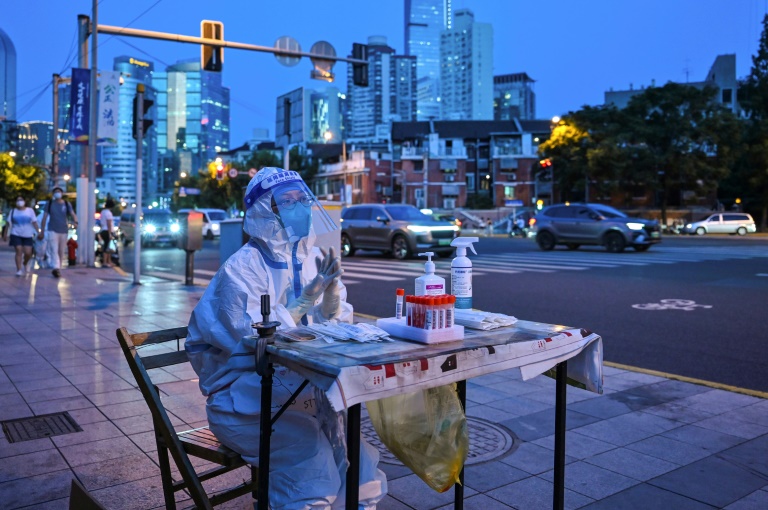
Tens of millions of people were under lockdown in China on Wednesday as businesses in a major tourist city were forced to shut their doors and fresh clusters sparked fears of a return to blanket restrictions.

Health authorities reported over 300 infections Wednesday, with clusters found in the historic northern city of Xi’an — home to the Terracotta Army — as well as the country’s biggest city Shanghai.

The fresh cases and the official response to them have deepened fears that China may be set to return to the kinds of strict restrictions seen earlier this year, when Beijing’s hardline zero-Covid policy saw tens of millions locked down for weeks on end. 

In Shanghai, some residents on social media Tuesday reported receiving government food rations — a throwback to the month’s long confinement in the spring.

“Let me tell you a scary story, Putuo district is sending out vegetables again,” read one resident’s viral WeChat post. 

“I’m so nervous, the epidemic has destroyed my youth. I’m about to go crazy,” posted another Shanghai-based Weibo user.

Officials launched a new round of mass testing in over half of the city’s districts after a rebound in cases since the weekend, closing all karaoke bars Wednesday after some infections were linked to six such venues.

And Xi’an — a historic city of 13 million that endured a month-long lockdown at the end of last year — was placed back under “temporary control measures” after 29 infections were found, mostly among waste recycling workers, since Saturday.

Public entertainment venues including pubs, internet cafes and karaoke bars would shut their doors from midnight on Wednesday, the city government said in a notice.

State media showed images of Xi’an residents queueing up for tests past midnight Tuesday, while stressing the city was not in lockdown.

Officials have blamed the city’s outbreak on the BA.5.2 sublineage of the Omicron variant, which is more transmissible and immune evasive.

“The positive infections are all the BA.5.2 branch of the Omicron variant, and epidemiological tracing work is still in full swing,” Xi’an health official Ma Chaofeng said at a briefing.

The fresh outbreaks pose a renewed challenge to President Xi Jinping, who last week reaffirmed his commitment to zero Covid despite the mounting economic cost.

Japanese bank Nomura has estimated that at least 114.8 million people are under full or partial lockdowns nationwide as of Monday, a sharp jump from last week’s 66.7 million.

More than 1,000 infections have been reported since last week in central Anhui province, with dozens spilling over to Jiangsu province neighbouring Shanghai, threatening the core Yangtze Delta manufacturing region.
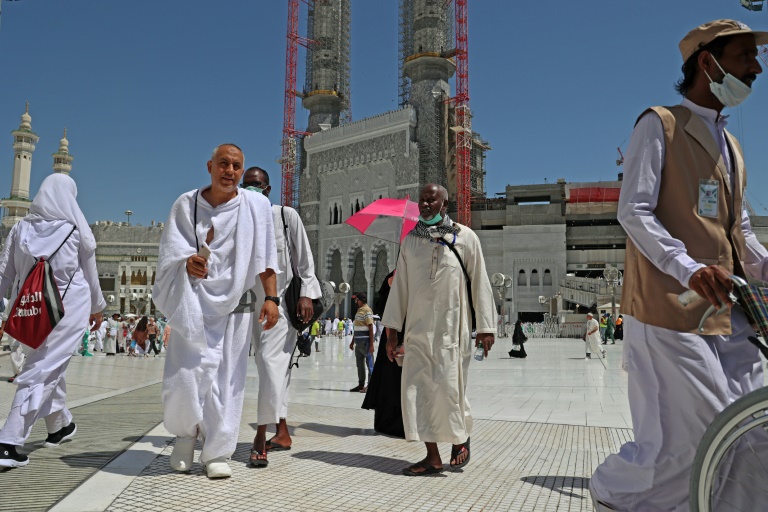
'Unbelievable feeling': Overseas hajj pilgrims rejoice after 2-year Covid absence

Of the hundreds of thousands of Muslims arriving in Mecca this week for the annual hajj pilgrimage, perhaps none had a more arduous journey than Adam Mohammed, a 53-year-old electrical engineer from the United Kingdom.

Mohammed, who is of Iraqi-Kurdish origin, decided last year to travel on foot to Saudi Arabia, a journey of more than 7,000 kilometres (4,350 miles) that took him through nine countries before he crossed over from Jordan into the northwestern Saudi town of Tabuk.

The trip was made all the more dramatic by the fact that when he started his trek 11 months ago, pushing a cart in front of him that contained his food and other supplies, he had no idea whether he would be able to access the holy mosques in Mecca and Medina.

It was only in April that Saudi Arabia, which barred overseas pilgrims in 2020 and 2021 as part of efforts to mitigate the coronavirus pandemic, announced that one million Muslims, including 850,000 from abroad, would be able to participate this year.

Now safely in Mecca, some 15 kilograms (33 pounds) lighter than when he started, Mohammed has no regrets.

“I cried when I first arrived. It’s an unbelievable feeling,” he told AFP. 

“My trip was exhausting. I stopped in many places for rest. But I was focused on one thing: I am 53 years old, so what if I spare 11 months on the road to reach the house of God? It’s doable.”

Mohammed said Saudi authorities granted him and his wife and two daughters, who have flown from the UK to the Gulf kingdom, a permit to participate in the hajj, which consists of a series of religious rites completed in Mecca and surrounding areas of western Saudi Arabia.

Most of the other foreigners performing the rite have been selected via a lottery system. 

– ‘It is my dream’ –

One of the five pillars of Islam, the hajj must be undertaken by all able-bodied Muslims who have the means at least once in their lives.

But pandemic restrictions forced countless would-be pilgrims based outside Saudi Arabia to put their plans on hold.

Usually one of the world’s largest religious gatherings, about 2.5 million people participated in 2019, before the pandemic began.

The following year, foreigners were blocked and the total number of worshippers was capped at 10,000 to stop the hajj from turning into a global super-spreader.

That figure rose to 60,000 fully vaccinated Saudi citizens and residents in 2021.

Hosting the hajj is a matter of prestige and a powerful source of legitimacy for Saudi rulers. 

The ban on overseas pilgrims caused deep disappointment among Muslims worldwide, who typically save for years to take part.

Though the number is much higher this year, there are still some restrictions: participants must be Muslims aged under 65 who are fully vaccinated and can submit a negative Covid-19 PCR result from a test taken within 72 hours of travel.

The hajj officially begins Wednesday, and Mecca is already overrun with worshippers who, like Mohammed, are relieved to have finally reached their destination after long, stressful waits.

A 30-year-old Russian pilgrim who gave her name as Halima said she had been imagining her stay in Mecca for more than a decade. 

The hajj costs at least $5,000 per person, and Halima said she shared her story with friends to drum up funds for both her and her father to come. 

“Yesterday was the first time I saw the Kaaba,” she said, referring to the large black cubic structure at the centre of the Grand Mosque. 

“It is my dream to be here, and now I am living it.”

French PM to face baptism of fire in divided parliament

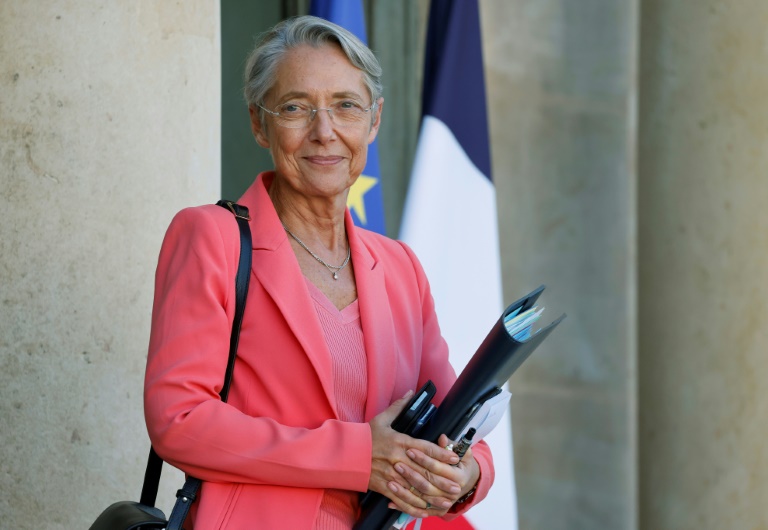
French Prime Minister Elizabeth Borne will on Wednesday lay out the government’s policy priorities in her first speech in front of what promises to be a stormy parliament.

The 61-year-old will make the customary “general political declaration” to kick off the legislative session, which is being scrutinised closely given Borne’s weak position at the head of a minority government.

Centrist President Emmanuel Macron suffered a setback in parliamentary elections last month that saw his allies fall short of a majority by 39 seats.

He and Borne have since failed to tempt opposition parties into a coalition.

“The prime minister is working round the clock,” a cabinet minister told AFP this week. “She’s meeting everyone, she’s calling everyone. She’s really committed to listening, so we’ll manage.”

Without formal allies in the 577-seat national assembly, Borne has decided not to call a confidence vote on her policy speech — something almost all past prime ministers have done after their first appearances in the lower house.

Holding a vote was “too risky” for Borne, who would have been forced to step down if she lost, explained Bruno Cautres, a researcher at the Cevipof political studies unit at Sciences Po university in Paris. 

“She made the right decision, but she didn’t really have a choice.”  

But the hard-left France Unbowed (LFI) party, one of the big gainers in June’s parliamentary polls, announced that it would immediately call for a censure motion on Tuesday which would also bring Borne down if she lost. 

Analysts see it as highly unlikely to pass, with other opposition parties from the far-right National Rally and the rightwing Republicans ruling out backing LFI.

– Exhausted? – 

Borne’s immediate priorities are expected to be pushing through laws with wide support such as one to help low-income families cope with the cost-of-living crisis and another to release extra funding for the struggling health service.

Interior Minister Gerald Darmanin was hopeful the government could count on support from the right-wing Republicans party for bills to tackle immigration and crime, saying the cabinet’s “hand was outstretched”.

“If we put forward bills filled with common sense and with the spirit of compromise we have today, will this outstretched hand be taken by our adversaries?” he told BFM television.

“Nobody would understand” if opposition parties systematically blocked the government, he said.

Without a formal coalition, intense negotiations with opposition parties will be required each time the government wants to pass legislation.

Borne will also be constantly vulnerable to a censure motion called by opponents, making French politics unpredictable and unstable for the foreseeable future.

Only two months since he was re-elected to a historic second term, Macron has diminished capacity to push through reforms, with plans to raise the retirement age to 65 and reform welfare on ice for the moment.

The French media has speculated in recent days about his state of mind, with some reports suggesting he is yet to mentally rebound from the parliamentary setback.

Le Point, a right-wing weekly, said he had lost his “energy, his nerve and his lucidity”, while the left-wing l’Obs reported he was suffering from “physical exhaustion.” 

Rumours that Macron is burned out have frequently surfaced during his five years in office, fed by reports that he survives on a few hours’ sleep a night and often texts ministers in the early hours of the morning. 

A cabinet reshuffle announced on Tuesday did little to inject new momentum into his government as he failed to attract any new heavy-hitters.

It kept most senior figures in their jobs and brought in only junior new faces with little political experience. 

“Emmanuel Macron is no longer attractive,” senior rightwing Republicans figure Bruno Retailleau told the CNews channel on Tuesday.

burs-adp/tgb/cdw

Evacuation calls as Russians advance in Ukraine's Donbas

Ukrainian officials have called on civilians to urgently evacuate the city of Sloviansk as Russian troops press towards it in their campaign to secure the Donbas region.

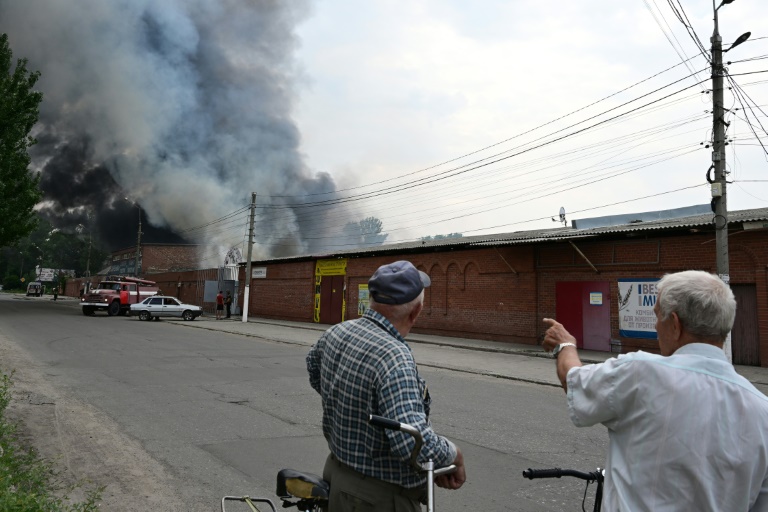
Sloviansk has been subjected to “massive” Russian bombardment in recent days, with at least two people killed and seven others wounded in an attack on a marketplace Tuesday.

Pavlo Kyrylenko, governor of the Donetsk region, which includes Sloviansk, told Ukrainian media his “main advice is evacuate!”

“This week there hasn’t been a day without shelling,” he said Tuesday evening, adding that the city was now within range of Russian multiple-rocket launchers.

“The enemy is shelling chaotically, the attacks are aimed at destroying the local population,” he said

“So, once again, the main advice is to evacuate.”

AFP journalists on the ground in Sloviansk saw rockets slam into the marketplace and surrounding streets, with firefighters scrambling to put out the resulting fires.

Kyrylenko also reported shelling across “the entire frontline” in the eastern Donbas region, where Russia has refocused its efforts since abandoning its initial aim of capturing Kyiv, following tough Ukrainian resistance.

Donbas is mainly comprised of Lugansk, which Russian forces have almost entirely captured, and Donetsk to its southwest — the current focus of Moscow’s attack

The fall of Lysychansk in the region on Sunday, a week after the Ukrainian army also retreated from the neighbouring city of Severodonetsk, has freed up Russian troops to advance on Kramatorsk and Sloviansk.

– ‘Our task is to hold on’ –

On Tuesday, they were first closing in on the smaller city of Siversk — which lies between Lysychansk and Sloviansk — after days of shelling there.

Two Ukrainian Red Cross minibuses were heading there to evacuate willing civilians, according to AFP reporters.

“Heavy fighting is taking place on the outskirts of Lugansk region near Lysychansk,” Lugansk governor Sergiy Gaiday said on Telegram. 

“The occupiers are withdrawing equipment to the Donetsk region.”

To the southwest, in the Moscow-occupied Kherson region, Russian troops have deployed helicopters and artillery to try to stem Ukrainian counter-attacks.

A spokesman for Ukraine’s defence ministry said Tuesday that Russian forces outside Donbas were “trying to bind our troops in order to prevent them from moving to the battle areas”. 

Kherson city, which lies close to Moscow-annexed Crimea, was the first major city to fall to Russian forces in February, and has seen a campaign of so-called Russification since.

Ukrainian President Volodymyr Zelensky, speaking in his evening address Tuesday, said he was continuing to press for upgraded anti-missile systems as air siren alerts sounded across much of the country, including the capital.

“The Russian army does not take any breaks,” he said.

“Our task is to hold on.”

– ‘Timely, correct’ –

Moscow’s invasion has encouraged both Sweden and Finland to drop decades of military non-alignment and become part of NATO, which kicked off their accession process on Tuesday.

In Brussels, NATO Secretary-General Jens Stoltenberg and the foreign ministers of Sweden and Finland hailed the move as “historic”.

“The membership of both Finland and Sweden will not only contribute to our own security but to the collective security of the alliance,” said Finland’s Pekka Haavisto, after protocols were signed launching the required ratification process.

Ukrainian Defence Minister Oleksii Reznikov welcomed Tuesday’s “timely (and) correct” step, adding on Twitter: “Who will be next…?”

And in a sign of regional tension over the invasion, Latvia announced Tuesday it would reinstate compulsory military service.

“The current military system of Latvia has reached its limit. Meanwhile, we have no reason to think that Russia will change its behaviour,” Latvian Defence Minister Artis Pabriks told reporters.

NATO offered Ukraine a path towards membership in 2008 but that stalled amid strong Russian opposition and has been further complicated by its invasion.

With the war well into its fifth month, Kyiv’s allies meeting in the Swiss city of Lugano committed Tuesday to supporting Ukraine through what is likely to be a lengthy and expensive eventual recovery. 

Two days of talks involving representatives from some 40 countries agreed on the need for reforms to boost transparency and tackle corruption, as they heard rebuilding the war-ravaged country could cost at least $750 billion.

More than 10,000 civilian deaths or injuries have been documented across Ukraine as of July 3, according to UN rights chief Michelle Bachelet, who said the real figure is likely to be much higher.

At least 335 children were among the 4,889 dead, she said, demanding an end to “unbearable” civilian suffering and slamming the “senseless war”.

Sri Lankans return to cooking with firewood as economy burns

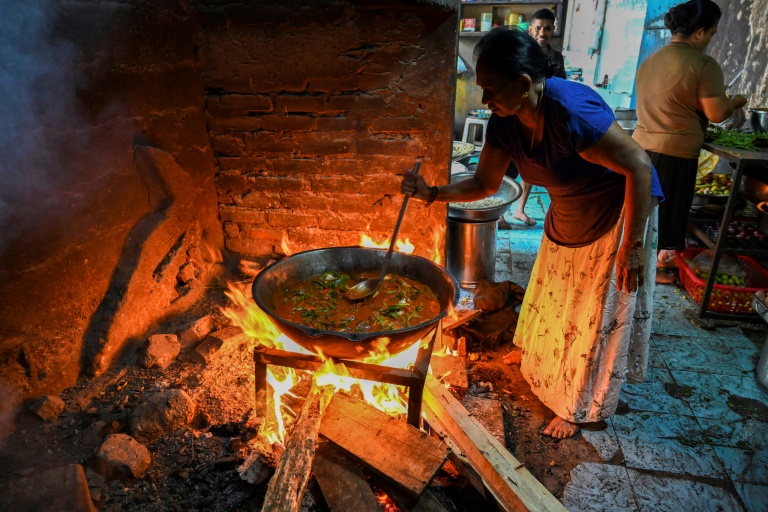
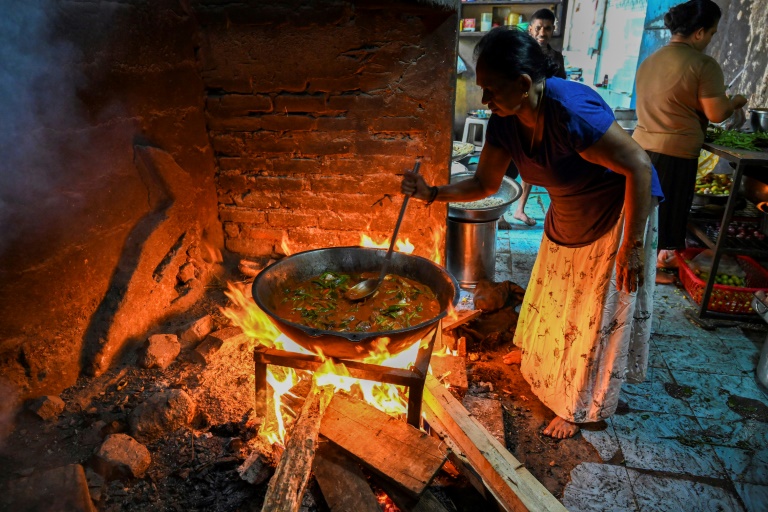
As once relatively wealthy Sri Lanka suffers a dire economic crisis with shortages of everything from medicines to gas, people are returning to cooking with firewood.

The switch began at the beginning of the year when more than 1,000 kitchens exploded across the country, killing at least seven people and injuring hundreds more.

The reason was suppliers looking to cut costs and increasing the proportion of propane, which raised the pressure to dangerous levels.

But now, along with much else in the country of 22 million people, gas is either unavailable or too expensive for most.

Some tried to shift to kerosene oil cookers, but the government did not have dollars to import it along with petrol and diesel, which are also in short supply.

And those who bought electric cookers were in for a rude shock when the government imposed lengthy power blackouts as it ran out of dollars to import fuel for generators.

Niluka Hapuarachchi, 41, was miraculously unharmed when her gas range exploded soon after cooking Sunday lunch in August.

“Fortunately, no one was there at the time. There were pieces of glass all over the floor. The glass-top stove had exploded. I will never use gas for cooking. It is not safe. We are now on firewood,” she said, despite moves to address the propane problem.

Roadside eatery owner M.G. Karunawathi, 67, also switched to wood and said it was a choice between closing her business or putting up with smoke and soot.

“We suffer (smoke inhalation) when cooking with firewood, but we have no choice,” Karunawathi told AFP. “It is also difficult to find firewood and it is also becoming very expensive.”

– Pain into 2023 –

Sri Lanka used to be a middle-income country, with GDP per head comparable to the Philippines and living standards the envy of neighbouring India.

But with economic mismanagement and the crucial tourism industry hammered by Covid-19, the nation has run out of dollars needed to pay for most imports.

And the pain will likely continue for some time, with Prime Minister Ranil Wickremesinghe in parliament on Tuesday saying: “We will have to face difficulties in 2023 as well.

“This is the truth. This is the reality.”

Unofficial inflation is now second only to Zimbabwe, and the United Nations estimates about 80 percent of people skip meals because they cannot afford food.

Before the crisis, almost all households in Colombo could afford to use gas, but now woodcutter Selliah Raja, 60, is doing a roaring trade.

“Earlier we had just one customer — a restaurant that had a wood-fired oven — but we now have so many, we can’t meet the demand,” Raja told AFP.

He says his timber suppliers in the provinces have doubled their prices because of the sharp rise in demand and skyrocketing transport costs.

“Earlier, land owners paid us to uproot rubber trees that are no longer productive,” lumberjack Sampath Thushara told AFP in the tea-and-rubber-growing southern village of Nehinna.

“Today, we have to pay to get these trees.”

Foraging for wood can also be dangerous in the snake- and insect-infested forests. Last week, a father of three died from wasp stings in central Sri Lanka and four others were hospitalised.

Demand is also surging for alternative energy, and entrepreneur Riyad Ismail, 51, has seen sales light up for the hi-tech firewood stove he invented in 2008.

He has attached a small battery-powered electric fan to blow air into the barrel-shaped stove to ensure better burning, thus reducing smoke and soot associated with traditional firewood burners.

His upmarket “Ezstove” and the mass-market “Janalipa”, which uses coconut charcoal, promises a minimum 60 percent savings compared with cooking with gas.

Both his stoves — which cost around $20 and $50, respectively — have become big sellers with buyers having to go on a waiting list.

It has been so successful, Ismail says, there are several copies on the market.

“You will see many renditions of my design… other people are piggybacking (on the design),” Ismail said while making chicken satay.

Sri Lankans return to cooking with firewood as economy burns

As once relatively wealthy Sri Lanka suffers a dire economic crisis with shortages of everything from medicines to gas, people are returning to cooking with firewood.

The switch began at the beginning of the year when more than 1,000 kitchens exploded across the country, killing at least seven people and injuring hundreds more.

The reason was suppliers looking to cut costs and increasing the proportion of propane, which raised the pressure to dangerous levels.

But now, along with much else in the country of 22 million people, gas is either unavailable or too expensive for most.

Some tried to shift to kerosene oil cookers, but the government did not have dollars to import it along with petrol and diesel, which are also in short supply.

And those who bought electric cookers were in for a rude shock when the government imposed lengthy power blackouts as it ran out of dollars to import fuel for generators.

Niluka Hapuarachchi, 41, was miraculously unharmed when her gas range exploded soon after cooking Sunday lunch in August.

“Fortunately, no one was there at the time. There were pieces of glass all over the floor. The glass-top stove had exploded. I will never use gas for cooking. It is not safe. We are now on firewood,” she said, despite moves to address the propane problem.

Roadside eatery owner M.G. Karunawathi, 67, also switched to wood and said it was a choice between closing her business or putting up with smoke and soot.

“We suffer (smoke inhalation) when cooking with firewood, but we have no choice,” Karunawathi told AFP. “It is also difficult to find firewood and it is also becoming very expensive.”

– Pain into 2023 –

Sri Lanka used to be a middle-income country, with GDP per head comparable to the Philippines and living standards the envy of neighbouring India.

But with economic mismanagement and the crucial tourism industry hammered by Covid-19, the nation has run out of dollars needed to pay for most imports.

And the pain will likely continue for some time, with Prime Minister Ranil Wickremesinghe in parliament on Tuesday saying: “We will have to face difficulties in 2023 as well.

“This is the truth. This is the reality.”

Unofficial inflation is now second only to Zimbabwe, and the United Nations estimates about 80 percent of people skip meals because they cannot afford food.

Before the crisis, almost all households in Colombo could afford to use gas, but now woodcutter Selliah Raja, 60, is doing a roaring trade.

“Earlier we had just one customer — a restaurant that had a wood-fired oven — but we now have so many, we can’t meet the demand,” Raja told AFP.

He says his timber suppliers in the provinces have doubled their prices because of the sharp rise in demand and skyrocketing transport costs.

“Earlier, land owners paid us to uproot rubber trees that are no longer productive,” lumberjack Sampath Thushara told AFP in the tea-and-rubber-growing southern village of Nehinna.

“Today, we have to pay to get these trees.”

Foraging for wood can also be dangerous in the snake- and insect-infested forests. Last week, a father of three died from wasp stings in central Sri Lanka and four others were hospitalised.

Demand is also surging for alternative energy, and entrepreneur Riyad Ismail, 51, has seen sales light up for the hi-tech firewood stove he invented in 2008.

He has attached a small battery-powered electric fan to blow air into the barrel-shaped stove to ensure better burning, thus reducing smoke and soot associated with traditional firewood burners.

His upmarket “Ezstove” and the mass-market “Janalipa”, which uses coconut charcoal, promises a minimum 60 percent savings compared with cooking with gas.

Both his stoves — which cost around $20 and $50, respectively — have become big sellers with buyers having to go on a waiting list.

It has been so successful, Ismail says, there are several copies on the market.

“You will see many renditions of my design… other people are piggybacking (on the design),” Ismail said while making chicken satay.

Thousands more flee as Sydney floods track north

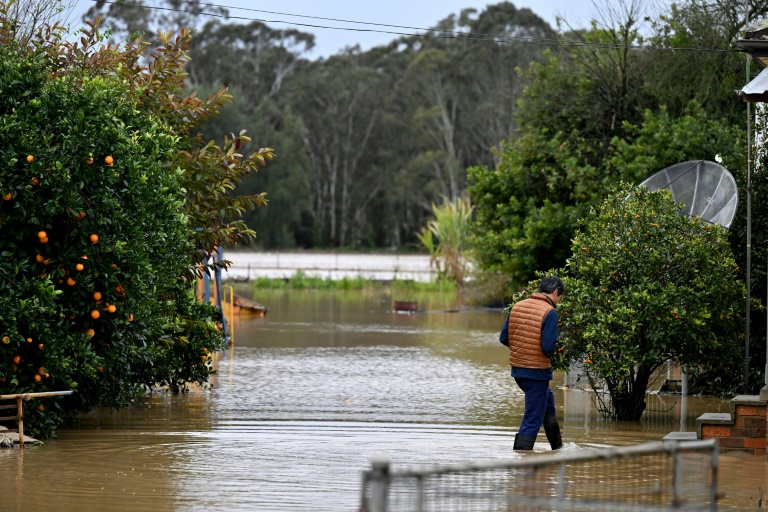
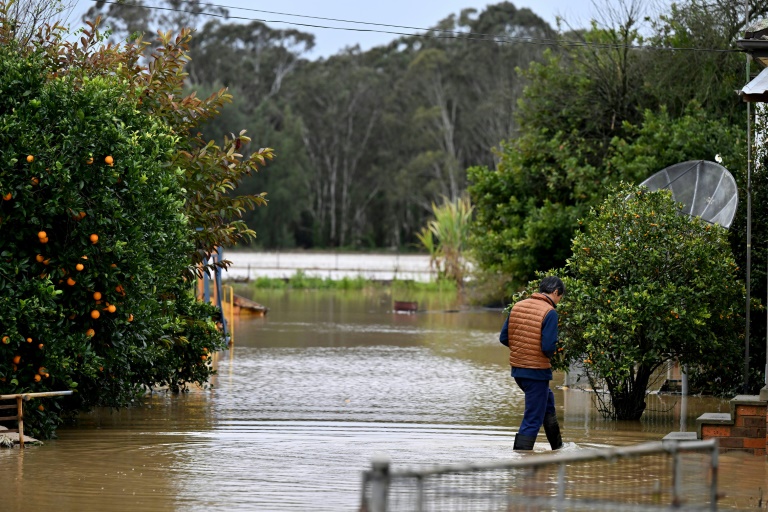
Thousands of people on Australia’s east coast fled their homes Wednesday as torrential rains tracked north after unleashing floods in Sydney that submerged communities, roads and bridges under mud-brown water.

New South Wales authorities issued fresh flood alerts north of Australia’s largest city and warned that rising, rain-swollen rivers still posed a danger in parts of Sydney despite easing rainfall in the city.

“This event is far from over,” the state’s Premier Dominic Perrottet said.

Since the floods began over the weekend, emergency services have issued more than 100 evacuation orders.

A total 85,000 people have been told to leave their homes immediately or be ready to depart imminently so they will not be stranded by rising floodwaters.

Across Sydney’s western fringe, rivers broke their banks and large areas have been transformed into inland lakes, with mud-brown waters invading homes while cutting off roads and bridges.

Prime Minister Anthony Albanese visited the affected area Wednesday, promising to look for “long-term solutions” after multiple flooding disasters across Australia’s east coast in the past 18 months.

– ‘Floods, bushfires’ –

Albanese said that while “Australia has always been subject of floods, of bushfires”, scientists have warned climate change would make such events more frequent and intense.

“What we are seeing, unfortunately, is that play out,” he said.

There were 21 flood rescues across New South Wales overnight, and on Wednesday more than 1,000 emergency service workers were in the field.

The federal government has declared a natural disaster in 23 flooded parts of the state, unlocking relief payments to stricken residents.

Many people affected have lived through successive east coast floods that struck in 2021 and then again in March this year when more than 20 people were killed.

Australia’s Bureau of Meteorology said the weather system was expected to move off coast later this week.

Andrew Hall, chief executive of the Insurance Council of Australia, said  he expected the Sydney floods would be declared a “catastrophe” by the insurance industry.

He said 2,700 insurance claims have been lodged by Tuesday from Sydney alone, and more were anticipated as people were able to return to their homes.

Hall said there had been Aus$5 billion ($3.4 billion) in catastrophe claims made in Australia this year.

It was “untenable” for homes that had flooded four times in the past 18 months to remain in the insurance pool, Hall said, adding: “We’ve got to stand back and ask the question, ‘Have we built homes in the wrong spot?'”

Thousands more flee as Sydney floods track north

Thousands of people on Australia’s east coast fled their homes Wednesday as torrential rains tracked north after unleashing floods in Sydney that submerged communities, roads and bridges under mud-brown water.

New South Wales authorities issued fresh flood alerts north of Australia’s largest city and warned that rising, rain-swollen rivers still posed a danger in parts of Sydney despite easing rainfall in the city.

“This event is far from over,” the state’s Premier Dominic Perrottet said.

Since the floods began over the weekend, emergency services have issued more than 100 evacuation orders.

A total 85,000 people have been told to leave their homes immediately or be ready to depart imminently so they will not be stranded by rising floodwaters.

Across Sydney’s western fringe, rivers broke their banks and large areas have been transformed into inland lakes, with mud-brown waters invading homes while cutting off roads and bridges.

Prime Minister Anthony Albanese visited the affected area Wednesday, promising to look for “long-term solutions” after multiple flooding disasters across Australia’s east coast in the past 18 months.

– ‘Floods, bushfires’ –

Albanese said that while “Australia has always been subject of floods, of bushfires”, scientists have warned climate change would make such events more frequent and intense.

“What we are seeing, unfortunately, is that play out,” he said.

There were 21 flood rescues across New South Wales overnight, and on Wednesday more than 1,000 emergency service workers were in the field.

The federal government has declared a natural disaster in 23 flooded parts of the state, unlocking relief payments to stricken residents.

Many people affected have lived through successive east coast floods that struck in 2021 and then again in March this year when more than 20 people were killed.

Australia’s Bureau of Meteorology said the weather system was expected to move off coast later this week.

Andrew Hall, chief executive of the Insurance Council of Australia, said  he expected the Sydney floods would be declared a “catastrophe” by the insurance industry.

He said 2,700 insurance claims have been lodged by Tuesday from Sydney alone, and more were anticipated as people were able to return to their homes.

Hall said there had been Aus$5 billion ($3.4 billion) in catastrophe claims made in Australia this year.

It was “untenable” for homes that had flooded four times in the past 18 months to remain in the insurance pool, Hall said, adding: “We’ve got to stand back and ask the question, ‘Have we built homes in the wrong spot?'”

Jordan chalks up business success from limestone riches

Long before whiteboards, beamers and laptops entered modern school classrooms, teachers relied on the humble, dusty, sometimes screechy blackboard chalk — a material that has created a Jordanian business success story.

Chemical engineer Salah Aloqbi remembers sitting on a bus in Amman in 1995 when he hit on the idea that would lead him to create his company. More than two decades later it boasts 150 staff, with exports to more than 100 countries.

Chalk, a white, soft limestone, was formed aeons ago when the shells of tiny marine creatures were compressed on the sea floor — and the landlocked Middle Eastern desert country of Jordan is blessed with vast deposits.

“It was a game-changing idea,” recalled Aloqbi, now 49, who founded the Jordan Chalk Manufacturing Company.

“I was returning from work at the Jordan Carbonate Company when I heard a radio interview saying that the calcium carbonate produced by the company is used in various industries in Jordan — except the chalk industry.”

Aloqbi pondered how to make blackboard chalk, which was until then wholly imported, to gain extra value from the calcium carbonate that is also used to produce white cement, make soils less acidic, and toothpaste more abrasive.

Seven years later, he launched a small factory in Karak governorate south of Amman, with two rooms and just five workers, and started experimenting — initially by pulverising the porous material with a meat mincer.

“But the chalk that we produced at that time was no longer used around the world, so we moved to produce dustless medical chalk,” he said, referring to a carbonate-based type with larger particles.

– The right stuff –

Some 2,149 attempts later, the businessman said proudly, he hit the right formula for dustless chalk, creating a “very strong export opportunity” that now sees his company produce 10 billion pieces a year.

Jordan has a near endless supply of the raw material, with the ministry of energy and mineral resources estimating the country’s “assets of limestone exceed 1.3 billion metric tons”.

Limestone is the common form of calcium carbonate CaCO3, the main ingredient for chalk.

“It comes to mind that this is an outdated product, but the truth is that we are struggling to meet the great demand,” Aloqbi said as he inspected hundreds of cartons heading to Britain and Germany, Mali and Morocco.

The chalk pieces come in a wide palette of colours and are used for art and play around the world. 

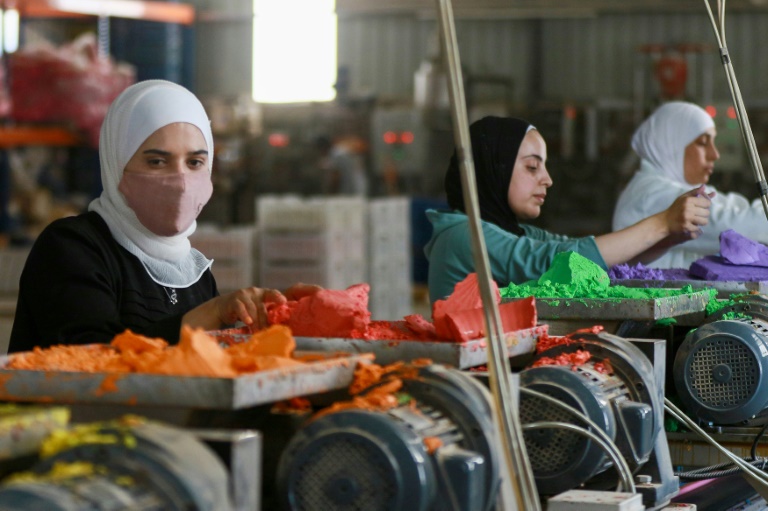
The firm has also branched out into coloured crayons and modelling clay, and is the country’s only producer of chalk sticks. 

Today, the company sits on a 7,500 square metre plot and offers sought-after jobs in a country where the unemployment rate soared to 25 percent last year, about the same as the poverty rate.

“Most of us are from villages in Karak governorate,” said one employee, 28-year-old Sundus Majali. “More than half of the workers are women.”

At first, she said, “it was difficult for parents to allow females to work … But today they have no problem with that, especially because the factory is safe, not like other workplaces.”

Another colleague, Alaa Aloqbi, 33, said “the factory has provided job opportunities at a time when life became difficult”.

Oil rises after sell-off but euro stuck at 20-year low, equities drop

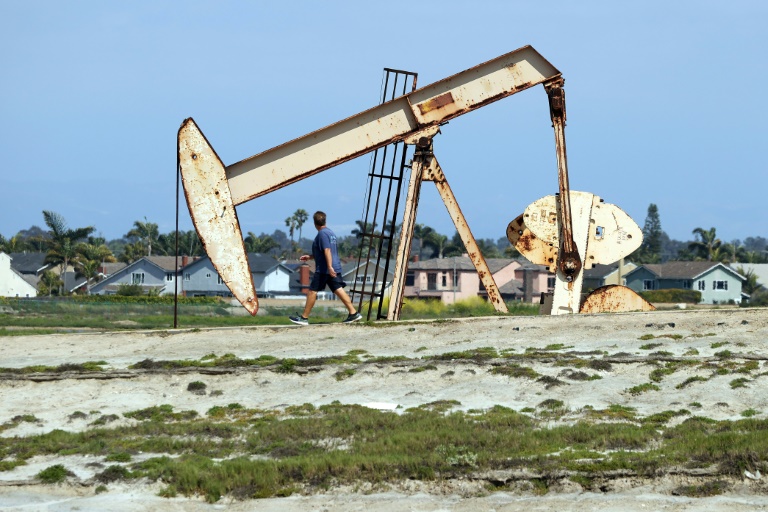
Oil prices rose Wednesday after suffering a painful drop the previous day, though the euro remained wedged at a 20-year low and equities mostly fell in Asia as recession fears continue to flow through trading floors.

Both main crude contracts were pummelled Tuesday as investors grow increasingly worried that leading economies will contract this year or next owing to sharp central bank interest rate hikes aimed at fighting decades-high inflation.

The main US contract WTI sank nearly nine percent below $100 a barrel for the first time since April, while Brent shed around 10 percent on expectations that any recession will slam demand, despite tight supplies caused by the Ukraine war.

And Citigroup said in a note that a recession could lead prices to as low as $65 this year if OPEC and other major producers do not step in to provide support and companies do not invest.

There are also signs that the high cost of fuel is hurting demand, in turn pushing prices down. Earlier this week, the head of Asia at crude trading giant Vitol said he saw signs consumers were beginning to feel the pressure of high prices — a phenomenon known as demand destruction.

Still, Goldman Sachs said it thought the commodity would remain elevated.

“While the odds of a recession are indeed rising, it is premature for the oil market to be succumbing to such concerns,” the bank’s analysts including Damien Courvalin said in a note. 

“The global economy is still growing, with the rise in oil demand this year set to significantly outperform GDP growth.”

– Euro-dollar parity eyed –

Commentators said falling oil prices and the prospect of a recession could give central banks room to ease up on their monetary tightening campaigns, which could provide some relief to equities.

Among those to benefit are rate-sensitive tech firms, which have risen as Treasury yields, a proxy for interest rates, fall.

“Markets are saying recession is coming, inflation will slow down, commodities will fall and the Fed will cut rates in 2023,” said Gang Hu, at Winshore Capital Partners.

He said it was hard to go against the view “because this storyline is consistent. It can be a self-fulfilling process”.

However, while there was help from speculation that Joe Biden was considering removing some Trump-era tariffs on Chinese goods, equities struggled in Asia.

Tokyo, Hong Kong, Shanghai, Sydney, Seoul, Jakarta and Taipei were all down, though Singapore, Wellington and Manila saw gains.

Investors have also been spooked by a fresh coronavirus outbreak in parts of China that has seen some cities locked down as part of officials’ zero-Covid policy.

The euro remained under pressure and appeared to be heading towards parity with the dollar after hitting a 20-year low owing to the European Central Bank’s decision not to lift interest rates until this month, lagging the Fed’s fast pace of hikes that have sent the dollar soaring.

The continent also faces an energy crisis caused by sanctions on Russian fuel, while a strike by workers in Norway threatened to hit supplies further.

“The euro has depreciated sharply due to a toxic cocktail of negative drivers,” said SPI Asset Management’s Stephen Innes.

“An oddly hesitant ECB contrasts with a more aggressive Fed, worries about natural gas supply disruption and economic recession are deepening.” 

And he warned further falls could be on the way for the single currency. 

“We have unlikely reached maximum uncertainty and total negativity, which opens the door to a test below sub-parity. So with the euro-dollar in the mid-1.02s, it might not be too late to punch your ticket for a ride on the parity party bandwagon.”

– Key figures at around 0230 GMT –

West Texas Intermediate: UP 0.8 percent at $100.27 per barrel

Brent North Sea crude: UP 1.3 percent at $104.07 per barrel

Euro/dollar: DOWN at $1.0262 from $1.0266 Tuesday

Euro/pound: DOWN at 85.78 pence from 85.85 pence

Dollar/yen: UP at 135.24 yen from 135.87 yen

Pound/dollar: UP at $1.1966 from $1.1956

Tokyo – Nikkei 225: DOWN 1.3 percent at 26,089.86 (break)

Hong Kong – Hang Seng Index: DOWN 1.1 percent at 21,609.59

Shanghai – Composite: DOWN 1.1 percent at 3,366.66

New York – Dow: DOWN 0.4 percent 30.967,82 (close)

London – FTSE 100: DOWN 2.9 percent at 7,025.47 (close)

Close Bitnami banner
Bitnami