World

UK PM Johnson faces parliamentary inquisition after top ministers quit

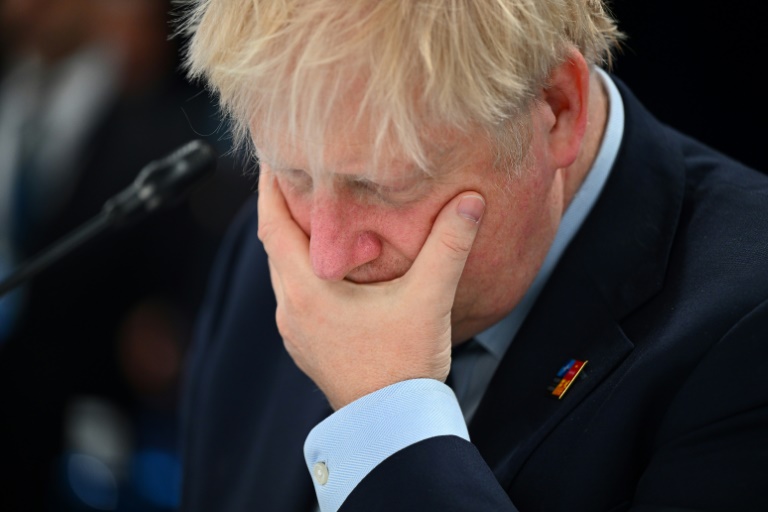
UK Prime Minister Boris Johnson faces two high-stakes encounters in parliament on Wednesday after his government was rocked by the shock departures of two senior ministers.

Rishi Sunak resigned as finance minister, and Sajid Javid as health secretary on Tuesday night. Both said they could no longer tolerate the culture of scandal that has stalked Johnson for months.

They will now sit on the Conservative back benches at the weekly session of Prime Minister’s Questions in the House of Commons at 1100 GMT — which promises to be even more combustible than usual.

Johnson then faces an hours-long grilling from the chairs of the Commons’ most powerful committees, who include some of his most virulent critics in the Tory ranks.

The exits of Sunak and Javid were announced minutes after the prime minister apologised for appointing a senior Conservative, who quit last week after he was accused of drunkenly groping two men.

Former education secretary Nadhim Zahawi has been elevated to the finance brief.

Days of shifting explanations had followed the resignation of deputy chief whip Chris Pincher. Downing Street at first denied Johnson knew of prior allegations against Pincher when appointing him in February.

But by Tuesday, that defence had collapsed after a former top civil servant said Johnson, as foreign minister, was told in 2019 about another incident involving his ally.

The Pincher affair was the “icing on the cake” for Sunak and Javid, Tory MP Andrew Bridgen, a Johnson critic, told Sky News.

“It’s time for Boris to go. He can drag this out for a few more hours if he wants to. 

“But I and a lot of the party now are determined that he will be gone by the summer recess (starting on July 22): the sooner the better.”

The resignations dominated British newspaper front pages. Under the headline “Johnson on the brink,” The Times said the “apparently coordinated” move “dealt a potentially fatal blow to the prime minister”.

“Johnson hanging by a thread as Sunak and Javid walk out,” was the assessment from the prime minister’s former employers at The Daily Telegraph.

The Guardian and Financial Times also said the PM was “on the brink” while the conservative Daily Mail tabloid was more colourful: “Can even Boris the Greased Piglet wriggle out of this?”

The resignations came after Johnson only narrowly survived a vote of no confidence among Conservative MPs a month ago.

Other cabinet members including Foreign Secretary Liz Truss and Defence Secretary Ben Wallace — two likely contenders for the leadership — continue to back Johnson, aides said.

– Humility? –

Jacob Rees-Mogg, a doggedly loyal cabinet ally, dismissed the resignations as “little local difficulties”.

“Losing chancellors is something that happens,” he said on Sky News, pointing to past Tory leaders — although Margaret Thatcher was ultimately felled by a cabinet revolt by top allies.

Sunak’s departure in particular, in the middle of policy differences over a cost-of-living crisis sweeping Britain, is dismal news for Johnson.

The chancellor of the exchequer said “the public rightly expect government to be conducted properly, competently and seriously”.

“I believe these standards are worth fighting for and that is why I am resigning,” Sunak wrote to Johnson.

Javid preceded Sunak at the Treasury before quitting over a prior bust-up with Johnson.

He wrote that the prime minister’s survival in last month’s no-confidence vote gave him the opportunity to show “humility, grip and new direction”.

“I regret to say, however, that it is clear to me that this situation will not change under your leadership — and you have therefore lost my confidence too.”

– ‘Collapsing’ –

Johnson has been embroiled in various scandals, above all the so-called “Partygate” affair, which saw him receive a police fine for breaking his own coronavirus lockdown restrictions in Downing Street.

The 58-year-old premier still faces a parliamentary probe into whether he lied to MPs over the lockdown-breaching parties in Downing Street.

Pincher’s departure from the whips’ office — charged with enforcing party discipline and standards — marked yet another allegation of sexual misconduct by Tories in recent months.

Conservative MP Neil Parish resigned in April after he was caught watching pornography on his mobile phone in the House of Commons.

That prompted a by-election in his previously safe seat, which the party went on to lose in a historic victory for the opposition Liberal Democrats.

Labour, the main opposition party, defeated the Conservatives in another by-election in northern England on the same day, prompted by the conviction of its Tory MP for sexual assault.

The controversies have come with Britain battling the worsening cost-of-living crisis and a summer of strikes by various unions over wages and working conditions.

Labour leader Keir Starmer said it was “clear that this government is now collapsing”.
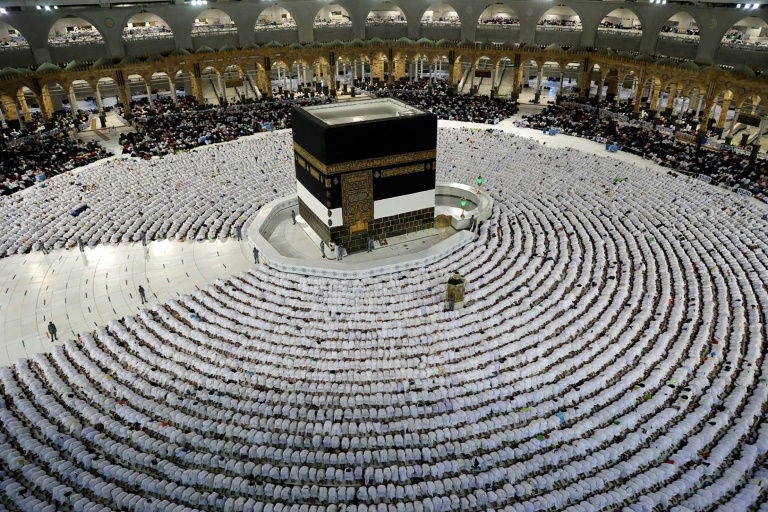
Maskless pilgrims launch largest hajj of Covid era

The biggest hajj pilgrimage since the coronavirus pandemic began kicks off Wednesday, with hundreds of thousands of mostly maskless worshippers expected to circle Islam’s holiest site in Saudi Arabia’s Mecca.

One million fully vaccinated Muslims, including 850,000 from abroad, are allowed at this year’s hajj, a major break from two years of drastically curtailed numbers due to the pandemic. 

At Mecca’s Grand Mosque, pilgrims will perform the “tawaf”, the circumambulation of the Kaaba, the large cubic structure draped in golden-embroidered black cloth that Muslims around the world turn towards to pray. 

Many have chosen to perform the ritual ahead of Wednesday’s official hajj start date. 

On Tuesday afternoon, white-robed male worshippers and women in colourful abayas walked side by side on the white floors near the Kaaba, the majority without a mask even though authorities said last month that masks would be mandatory at the site.

“I just prayed for you,” one pilgrim, wearing a green robe, said during a video call with relatives. 

“I love you mother, I love you all,” she added, waving into her mobile phone screen as she continued walking around the Kaaba.

– Five days of rituals –

This year’s hajj is larger than the pared-down versions staged in 2020 and 2021 but still smaller than in normal times. 

In 2019, some 2.5 million Muslims from around the world participated in the annual event — a key pillar of Islam that able-bodied Muslims must undertake at least once in their lives. 

But after that, the coronavirus outbreak forced a dramatic downsizing. Just 60,000 fully vaccinated citizens and residents of the kingdom took part in 2021, up from a few thousand in 2020. 

The pilgrimage consists of a series of religious rites which are completed over five days in Islam’s holiest city and its surroundings in western Saudi Arabia. 

On Thursday, the pilgrims will move to Mina, around five kilometres (three miles) away from the Grand Mosque, ahead of the main rite at Mount Arafat, where it is believed the Prophet Mohammed delivered his final sermon. 

This year’s hajj is restricted to vaccinated Muslims under the age of 65 chosen from millions of applicants through an online lottery system. 

Those coming from outside Saudi Arabia were required to submit a negative Covid-19 PCR result from a test taken within 72 hours of travel. 

Since the start of the pandemic, Saudi Arabia has registered more than 795,000 coronavirus cases, more than 9,000 of them fatal. 

– ‘Too hot’ –

Those attempting to perform the hajj without a permit face fines of 10,000 Saudi riyals (around $2,600).

Policemen in the mountainous city have set up checkpoints and conducted foot patrols while holding green umbrellas to shield themselves from the scorching sun. 

Temperatures in Mecca topped 40 degrees Celsius (104 degrees Fahrenheit) on Tuesday.

Inside the Grand Mosque, female medics were on standby in different locations, and volunteers with wheelchairs were waiting in a long queue to help those needing assistance.

Authorities have set up multiple health facilities, mobile clinics and ambulances to cater to pilgrims. 

Some pilgrims donned clothing featuring the names and flags of their countries. “Hajj 2020 — Chad” was written on the back of the white robes of one group. 

Hosting the hajj is a matter of prestige and a powerful source of political legitimacy for Saudi Arabia’s rulers. 

Costing at least $5,000 per person, it is also a money-spinner for the world’s biggest oil exporter, which is trying to diversify its economy. 

In normal years, the pilgrimage brings in billions of dollars. 

These days it represents a chance to showcase the kingdom’s ongoing social transformation, despite persistent complaints about human rights abuses and limits on personal freedoms. 

Saudi Arabia now allows women to attend the hajj unaccompanied by male relatives, a requirement that was dropped last year. 

“Being here is the best thing that has ever happened to me. I can’t wait for the rest,” said 42-year-old Egyptian pilgrim Naima Mohsen, who came to the Grand Mosque by herself Tuesday. 

“My only problem is the weather. It’s just too hot.”

July 4 gunman charged with seven counts of murder

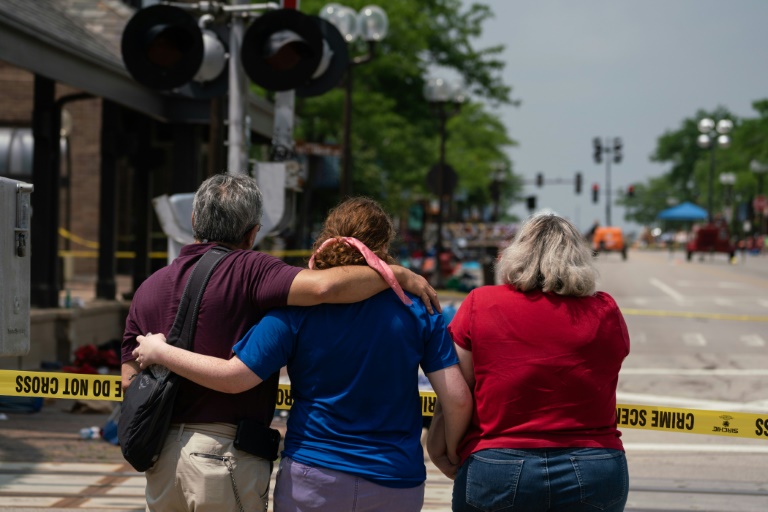
A 21-year-old man who allegedly opened fire on a July 4 parade in a wealthy Chicago suburb while disguised in women’s clothing was charged with seven counts of first-degree murder on Tuesday, prosecutors said.

Robert Crimo, 21, was arrested on Monday, several hours after the attack on a festive Independence Day crowd.

“There will be more charges,” Lake County State’s Attorney Eric Rinehart told reporters. “We anticipate dozens of more charges centered around each of the victims.”

Police spokesman Christopher Covelli said the death toll rose to seven on Tuesday after one of the wounded victims died in hospital. More than 35 people were injured.

Among the dead were Kevin McCarthy, 37 and his wife, Irina, 35 — the parents of a two-year-old boy who was found wandering alone after the shooting, according to CBS News.

Covelli said no motive had been established for the attack, which sent panicked parade-goers fleeing for their lives.

“We do believe Crimo pre-planned this attack for several weeks,” and that he acted alone, he said.

“We have no information to suggest at this point it was racially motivated, motivated by religion or any other protected status,” he added.

He said Crimo has a history of mental health issues and threatening behavior.

Police had been called twice to Crimo’s home in 2019, once to investigate a suicide attempt, and the second time because a relative said he had threatened to “kill everyone” in the family, he said.

Police removed 16 knives, a dagger and a sword from the home but did not make any arrests, he said.

Covelli said Crimo used a fire escape to access the roof of a building overlooking the parade route and fired more than 70 rounds from a rifle “similar to an AR-15,” one of several guns he had purchased legally.

“Crimo was dressed in women’s clothing and investigators believe he did this to conceal his facial tattoos and his identity and help him during the escape with the other people who were fleeing the chaos,” he said.

– ‘Still reeling’ –

Covelli said Crimo went to his mother’s nearby home after the shooting and borrowed her car. He was captured about eight hours later after a brief chase.

He also said the authorities were investigating disturbing online posts and videos made by Crimo.

The shooting has left the upscale suburb in shock.

“We’re all still reeling,” Mayor Nancy Rotering told NBC’s Today show. “Everybody knows somebody who was affected by this directly.”

The mayor said she personally knew the suspected gunman when he was a young boy in the Cub Scouts.

“How did somebody become this angry, this hateful to then take it out on innocent people who literally were just having a family day out?” Rotering asked.

Crimo, whose father unsuccessfully ran for mayor and owns a store in Highland Park called Bob’s Pantry and Deli, was an amateur musician billing himself as “Awake the Rapper.”

The younger Crimo’s online postings include violent content that alluded to guns and shootings.

One YouTube video posted eight months ago featured cartoons of a gunman and people being shot.

A voice-over says, “I need to just do it.”

It adds: “It is my destiny. Everything has led up to this. Nothing can stop me, not even myself.”

Crimo, who has the word “Awake” tattooed over an eyebrow, is seen sporting an “FBI” hat in numerous photos and a Trump flag as a cape in one picture.

The shooting is the latest in a wave of gun violence plaguing the United States, where approximately 40,000 deaths a year are caused by firearms, according to the Gun Violence Archive.

– ‘Epidemic of gun violence’ –

The deeply divisive debate over gun control was reignited by two massacres in May that saw 10 Black people gunned down at an upstate New York supermarket, and 19 children and two teachers slain at an elementary school in Texas.

Vice President Kamala Harris, who happened to be in Chicago Tuesday for a summit of the nation’s largest teachers’ union, said the Texas shooting was a reminder “of the risks that our children and our educators face every day,” and renewed a call for Congress to ban assault weapons.

Speaking later at the scene of the Highland Park shooting, Harris said: “The whole nation should understand… that this could happen anywhere, in any peace-loving community.”

The Highland Park shooting cast a pall over Independence Day, when towns and cities across the United States hold parades and people attend barbecues, sporting events and fireworks displays.

In another July 4 shooting, two police officers were wounded when they came under fire during a fireworks show in Philadelphia.

In Highland Park, Emily Prazak, who marched in the parade, described the mayhem.

“We heard the pop, pop, pop, pop, pop, and I thought it was fireworks,” Prazak said.

President Joe Biden vowed to keep fighting “the epidemic of gun violence.”

Last week, he signed the first significant federal bill on gun safety in decades, just days after the Supreme Court ruled that Americans have a fundamental right to carry a handgun in public.

US senators call for close look at TikTok

Leaders of the US Senate Intelligence Committee on Tuesday called for an investigation into whether Chinese officials are getting access to data about US users of video-snippet sharing sensation TikTok.

In a letter to Federal Trade Commission (FTC) chairwoman Lina Khan, the senators urged her to scrutinize how well TikTok safeguards private data.

“We write in response to public reports that individuals in the People’s Republic of China have been accessing data on US users, in contravention of several public representations,” the letter said.

TikTok has consistently defended itself against such accusations, saying it gives no data about US users to the Chinese government despite its parent company, ByteDance, being based in China.

“We’ve talked openly about our work to limit access to user data across regions, and in our letter to senators last week we were clear about our progress in limiting access even further through our work with Oracle,” a TikTok spokesperson said in response to an AFP inquiry.

“As we’ve said repeatedly, TikTok has never shared US user data with the Chinese government, nor would we if asked.”

In response to earlier inquiries from US authorities, TikTok had indicated in mid-June that all of its data on US-based users were now stored on US-based servers operated by US company Oracle.

TikTok last week responded by letter to questions from nine Republican senators about its data storage and access policies.

In that letter, TikTok confirmed claims made in a BuzzFeed article that employees based in China had access to US users’ data, but only within “robust cybersecurity controls and authorization approval protocols” overseen by the company’s “U.S.-based security team.”

TikTok officials also said that while ByteDance engineers could work on the platform’s algorithms, the new protocol ensures that they can only do so in Oracle’s computing environment, without extracting data from it.

The popular social media platform is currently being evaluated by the Committee on Foreign Investment in the United States, an inter-agency government review board that assesses risks of foreign investments on US national security.

During his White House tenure, former president Donald Trump was concerned about the security of the platform’s data and tried to force ByteDance to sell its subsidiary to Oracle.

He also issued executive orders to outright ban the service in the United States, but those never came into force and were later revoked by his successor, Joe Biden.

President Biden has nonetheless tasked his administration with measuring the possible risks associated with foreign ownership of social media websites and apps.

New US study helps de-mystify Covid brain fog

A small new study published Tuesday by scientists at the US National Institutes of Health suggests that the immune response triggered by coronavirus infections damages the brain’s blood vessels and could be responsible for long Covid symptoms.

The paper, published in the journal Brain, was based on brain autopsies from nine people who died suddenly after contracting the virus.

Rather than detecting evidence of Covid in the brain, the team found it was the people’s own antibodies that attacked the cells lining the brain’s blood vessels, causing inflammation and damage. 

This discovery could explain why some people have lingering effects from infection including headache, fatigue, loss of taste and smell, and inability to sleep as well as “brain fog” — and may also help devise new treatments for long Covid.  

NIH scientist Avindra Nath, the paper’s senior author, said in a statement: “Patients often develop neurological complications with COVID-19, but the underlying pathophysiological process is not well understood.”

“We had previously shown blood vessel damage and inflammation in patients’ brains at autopsy, but we didn’t understand the cause of the damage. I think in this paper we’ve gained important insight into the cascade of events.”

The nine individuals, aged 24 to 73, were selected from the team’s prior study because they showed evidence of blood vessel damage in their brains based on scans. 

Their brains were compared to those from 10 controls, with the team examining neuroinflammation and immune responses using a technique called immunohistochemistry.

The scientists discovered that antibodies produced against Covid-19 mistakenly targeted cells that form the “blood-brain barrier” — a structure designed to keep harmful invaders out of the brain while allowing necessary substances to pass. 

Damage to these cells can cause leakage of proteins, bleeding and clots, which elevates the risk of stroke.

The leaks also trigger immune cells called macrophages to rush to the site to repair damage, causing inflammation.

The team found that normal cellular processes in the areas targeted by the attack were severely disrupted, which had implications for things such as their ability to de-toxify and to regulate metabolism.

The findings offer clues about the biology at play in patients with long-term neurological symptoms, and can inform new treatments — for example, a drug that targets the build-up of antibodies on the blood-brain barrier.

“It is quite possible that this same immune response persists in Long COVID patients resulting in neuronal injury,” said Nath.

This would mean that a drug that dials down that immune response could help those patients, he added. “So these findings have very important therapeutic implications.”

Rescuers gather body parts after Italy glacier collapse

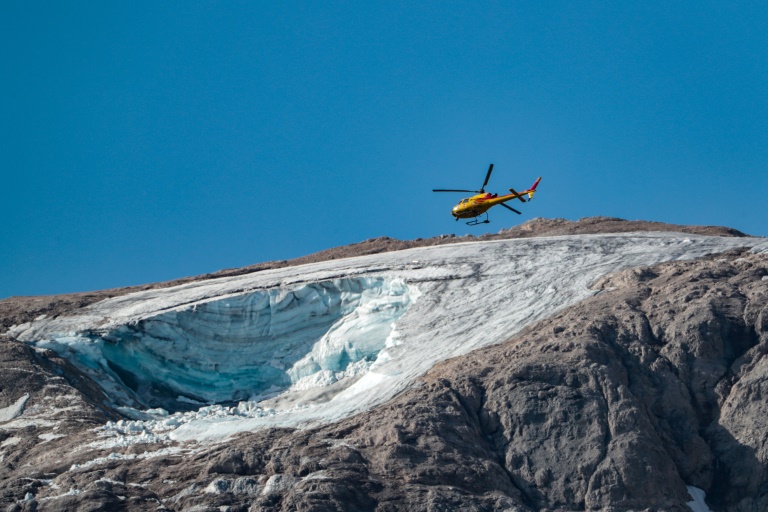
Emergency services at the scene of a deadly avalanche in the Italian Dolomites recovered what body parts they could on Tuesday, with the dangers of venturing under the partially collapsed glacier slowing the search.

Rescue teams sent helicopters and drones up for a second day after Sunday’s disaster, which saw at least seven hikers killed when a section of the country’s largest Alpine glacier gave way, sending ice and rock hurtling down the mountain.

The nationalities of the dead remain unclear — though the Czech foreign ministry told AFP two of its nationals were among those who lost their lives.

Eight people were also hurt, one of whom was able to leave hospital Tuesday evening.

Of those eight, two Germans, a man of 67 and a woman of 58, were said to be in a serious condition.

Italy has blamed the collapse on climate change and fears more of the glacier could come crashing down have prevented access to much of the area where hikers, some roped together, are believed to be buried.

Authorities had declared 14 people missing but revised that number down to five on Tuesday, all of them Italians, after managing to trace some of those initially unaccounted for.

They had stressed from the start that the exact number of climbers at the scene when the avalanche hit was unknown.

“Operations on the ground will only be carried out to recover any remains discovered by the drones, to ensure rescuers’ safety,” the Trentino Alpine Rescue Service said Tuesday.

Experts were surveying the area to determine how best to enable teams with sniffer dogs to get out onto the site safely on Wednesday or Thursday, the Service’s national chief Maurizio Dellantonio told AGI news agency.

Relatives of people reported missing gathered at the town of Canazei, where recovered remains were placed in a make-shift morgue at a gymnasium.

“The important finds, not just bones, are first photographed, then recovered and put onto a helicopter” and flown to Canazei to be “catalogued and placed in cold storage”, Dellantonio said.

Such finds were “bones that have not been flayed, a piece of hand with a ring, tattoos, anything that can enable a person to be identified”, including shoes, backpacks and ice-picks.

– Still hope for survivors –

Helicopter pilot Fausto Zambelli told journalists some belongings had been spotted from the air, but it was not yet clear “if that means there are victims there, or if they belong to old hiking expeditions”.

He said hope of finding survivors under the ice was slim, but not entirely gone.

“If there are ‘pockets’ (of air), there’s still hope. Time is obviously short, but we still hope to find someone alive”.

The disaster struck one day after a record-high temperature of 10 degrees Celsius (50 degrees Fahrenheit) was recorded at the summit of Marmolada, the highest mountain in the Italian Dolomites.

Italy’s President Sergio Mattarella said the collapse was “symbolic of the many tragedies that ungoverned climate change is causing in so many parts of the world”.

The Trento public prosecutor’s office has opened an investigation to determine the causes of the tragedy as relatives of those caught up in the drama demanded answers.

“Why did nobody warn on Saturday that water had filtered beneath the glacier? Why did they not stop the people from going climbing?” Italian news agency ANSA quoted the sister of one missing Italian as saying.

“If someone is responsible, we shall pursue it to the end,” she said.

Trento regional president Maurizio Fugatti, who said drones fitted out with thermal imaging cameras had been deployed in the search for survivors and added rescuers would pursue their search in situ on Wednesday, insisted: “this was an exceptional, if not unique, event. There were also Alpine guides on the glacier who know the situation well,” Fugatti, indicating there was no indication anything untoward was afoot.

The glacier, nicknamed “queen of the Dolomites”, feeds the Avisio river and overlooks Lake Fedaia in the autonomous Italian province of Trento.

According to a March report by the UN Intergovernmental Panel on Climate Change (IPCC), melting ice and snow is one of 10 major threats caused by global warming, disrupting ecosystems and infrastructure.

Ben & Jerry's sues Unilever to block distribution in Israeli settlements

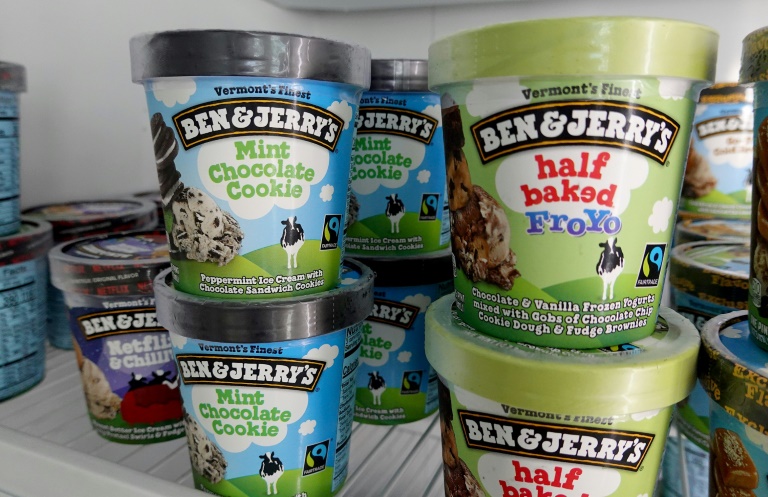
American ice cream brand Ben & Jerry’s said Tuesday it is suing its parent company Unilever to block a move that would see its product sold in West Bank settlements, which would run counter to its values.

The company, known for its political activism, took the unusual step seeking an injunction after London-based Unilever last week announced it had sold its interest in the ice cream to Israeli license-holder Avi Zinger.

The legal action was “essential to … protect the brand and social integrity Ben & Jerry’s has spent decades building,” according to the complaint filed in a US district court.

Unilever’s decision was “made without the consent of Ben & Jerry’s Independent Board,” and goes against the merger agreement that gave the board the ability to protect the founder’s values and reputation, the complaint said.

In July last year, Vermont-based Ben & Jerry’s announced it would no longer sell its ice cream in the Israeli-occupied Palestinian territories, which the Jewish state seized in 1967, saying it was “inconsistent with our values,” although it said it planned to keep selling its products in Israel.

However, Zinger had continued to produce the ice cream in his factory in the suburbs of Tel Aviv and distribute it to the Israeli settlements, going against Ben & Jerry’s decision.

Hundreds of thousands of Jewish settlers live in the occupied West Bank and east Jerusalem, in communities widely regarded as illegal under international law.

Palestinians cheered the company’s move last year, seen as a victory for the BDS movement, which calls for boycott, divestment and sanctions of the Jewish state over what it describes as the mistreatment of Palestinians.

Founded in the United States in 1978, Ben & Jerry’s is known for championing progressive causes, including protecting the environment and promoting human rights, and has frequently released special ice cream flavors to support causes or in protest.

Unilever, which last week said it had “never expressed any support” for the BDS movement, defended its right to execute the transaction.

“As we said in our statement of 29th June, Unilever had the right to enter this arrangement. The deal has already closed,” the company said Tuesday, adding “We do not comment on pending litigation.”

UK overselling Australia trade deal, British MPs warn

The UK is overselling its free trade deal struck with Australia in the wake of Brexit, British MPs have concluded in a report published Wednesday.

The cross-party International Trade Committee has warned the government of Prime Minister Boris Johnson “against overselling the benefits of trade deals” in general after analysing the Australia agreement finalised in December 2021.

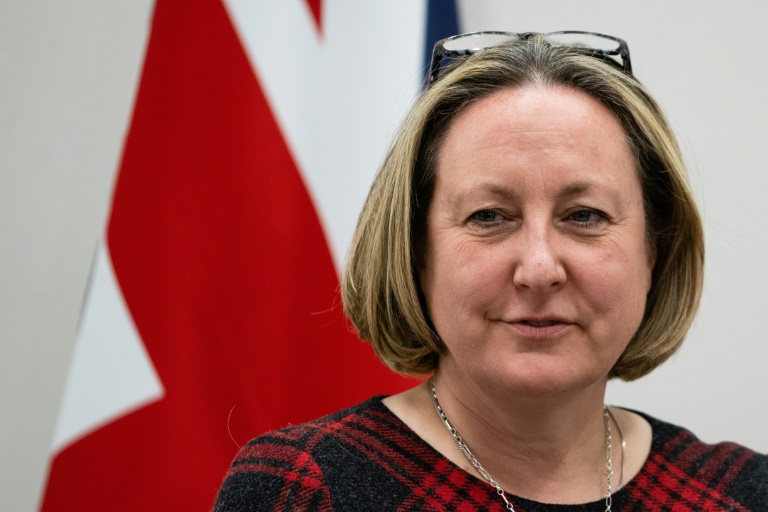
Its findings come as International Trade Secretary Anne-Marie Trevelyan was Wednesday to face questions from the committee regarding the deal struck with the former British colony.

“The government must level with the public — this trade deal will not have the transformative effects ministers would like to claim,” committee chair Angus Brendan MacNeil said in a statement.

The accord was the first free trade deal to be signed since Britain’s formal departure from the European Union at the start of 2021.

Britain has said the deal is expected to unlock annual bilateral trade worth £10.4 billion (US$12.4 billion).

“As the first wholly new trade deal since Brexit, this agreement sets a precedent for the future,” added MacNeil, an MP for the Scottish National Party seeking Scotland’s independence from the UK. 

“It is vital that the government learns from this experience and negotiates harder next time around to maximise gains and minimise losses for all economic sectors and parts of the UK.”

The deal with Australia is seen as low hanging fruit amid more difficult free trade talks with the United States. 

Regarding the Australia deal, the committee noted that “lifting almost all tariffs on agricultural imports is a significant change, and potentially sets an important precedent for deals with major food-exporting nations”.

But it added that tariff reductions on goods including Australian wines were “unlikely to make a noticeable difference at supermarket checkouts”. 

MPs also expressed “disappointment that tariff-free Australian food will not be required to meet core UK food production standards, for example regarding pesticide use”.

But they welcomed assessment, albeit limited, of the deal’s environmental impact and the “inclusion of provisions on forced labour, modern slavery and human trafficking”.

Euro tumbles to 20-year low against dollar amid recession fears

European stocks sank Tuesday along with oil prices, while the euro slumped towards parity with the dollar on deepening recession fears as central banks contend with soaring inflation.

European stock markets fell nearly three percent, weighing on Wall Street early in the day before US stocks staged a turnaround.

“Fears about the health of the world economy are circulating and that is why we are seeing major declines in stocks, energies, and industrial metals,” said market analyst David Madden at Equiti Capital.

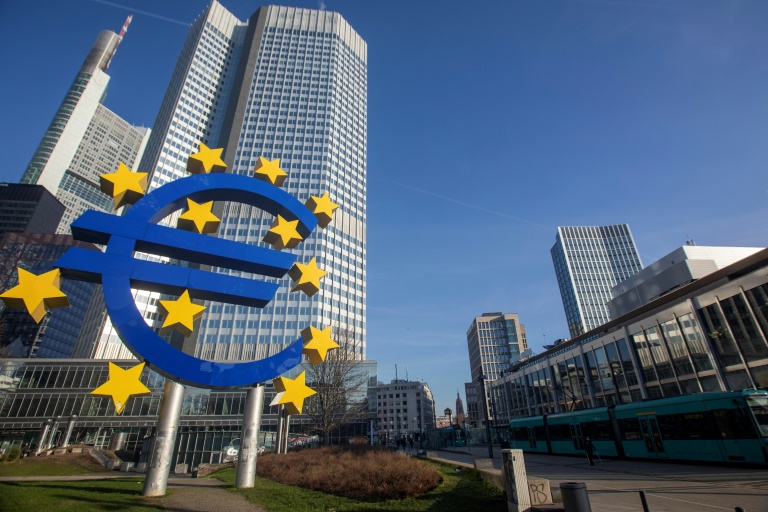
The euro sank to a 20-year dollar low of $1.0238 as investors eyed aggressive interest rate hikes by the US Federal Reserve in its fight against inflation, in contrast with the European Central Bank, seen as planning more modest increases.

The main international crude oil contract, Brent North Sea, fell nearly 10 percent, while the main US contract WTI, fell more than eight percent to finish under $100 per barrel for the first time in around two months.

“There are increasing worries the elevated energy prices will chip away at demand, hence the fall in the oil contracts,” said Madden.

Sentiment in Europe was shaken by the latest survey data showing economic growth in the eurozone floundered in June.

S&P Global’s closely-watched monthly purchasing managers’ index (PMI), which measures corporate confidence, fell to 52.0 in June from 54.8 in May.

Nevertheless, the reading, which was a 16-month low, remains above the 50-point level signalling expansion.

“Growing fears of a recession are hammering the euro lower, whilst the dollar is soaring on bets that the Fed will keep hiking rates aggressively to tame inflation,” City Index analyst Fiona Cincotta told AFP.

“Today’s PMI data from Europe have highlighted the risk of slowing growth at the end of the second quarter and raise the prospect of a contraction in activity in the coming months.”

Walid Koudmani, chief market analyst at XTB, said “the ECB is caught between a rock and a hard place as it needs to raise interest rates to tackle inflation and boost its currency while simultaneously supporting struggling economies which are just recovering after two years of pandemic related issues.”

While US stocks spent the morning deep in the red, equities rallied in the afternoon, enabling two of the three major indices to finish higher.

The shift came as the yield on the 10-year US Treasury note, a proxy for interest rates, fell further below three percent.

“The concern of a recession is deepening,” said Quincy Krosby of LPL Financial, who noted the correlation between tech shares and drops in Treasury bond yields. 

“You look for growth, where you can find it,” Krosby said. “Many of those large tech names that have been beaten up by the market become attractive again, particularly when the bond yields are lower.”

– Key figures at around 2030 GMT –

Euro/dollar: DOWN at $1.0266 from $1.0422 Monday

Pound/dollar: DOWN at $1.1956 from $1.2118

Euro/pound: DOWN at 85.85 pence from 86.00 pence

Dollar/yen: UP at 135.87 yen from 135.62 yen

Brent North Sea crude: DOWN 9.6 percent at $102.57 per barrel

West Texas Intermediate: DOWN 8.8 percent at $98.94 per barrel

New York – Dow: DOWN 0.4 percent 30.967,82 (close)

New York – S&P 500: UP 0.2 percent at 3,831.39 (close)

New York – Nasdaq: UP 1.8 percent at 11,322.24 (close)

London – FTSE 100: DOWN 2.9 percent at 7,025.47 (close)

Frankfurt – DAX: DOWN 2.9 percent at 12,401.20 (close)

Paris – CAC 40: DOWN 2.7 percent at 5,794.96 (close)

EURO STOXX 50: DOWN 2.7 percent at 3,359.83 (close)

Tokyo – Nikkei 225: UP 1.0 percent at 26,423.47 (close)

Hong Kong – Hang Seng Index: UP 0.1 percent at 21,853.07 (close)

Shanghai – Composite: FLAT at 3,404.03 (close)

burs-jmb/st

Norway government intervenes, ending oil and gas strike

Norway’s government said Tuesday it was referring a dispute between oil and gas workers and employers to an independent board, after an industry group warned strikes could cut Norway’s gas exports by more than half.

The move, which effectively ends the stoppage, comes after workers walked out of their jobs on Tuesday, leading to the closure of three fields and the union announced more workers would strike later in the week.

“The announced escalation is critical in today’s situation, both with regards to the energy crisis and the geopolitical situation we are in with a war in Europe,” Labour Minister Marte Mjos Persen said in a statement.

Under Norwegian legislation, the government can force parties in a labour dispute to a wage board which will decide on the matter.

Earlier on Tuesday, industry group the Norwegian Oil and Gas Association, warned that with the announced escalation of the strike announced for Saturday would slash output.

It said 56 percent of total gas exports from the Norwegian continental shelf (NCS) would be cut, together with a production loss of 341,000 barrels of oil a day.

– ‘A very tight market’ –

“It is unjustifiable to allow gas production to stop to such an extent that this strike in the next few days is estimated to lead to,” Persen said.

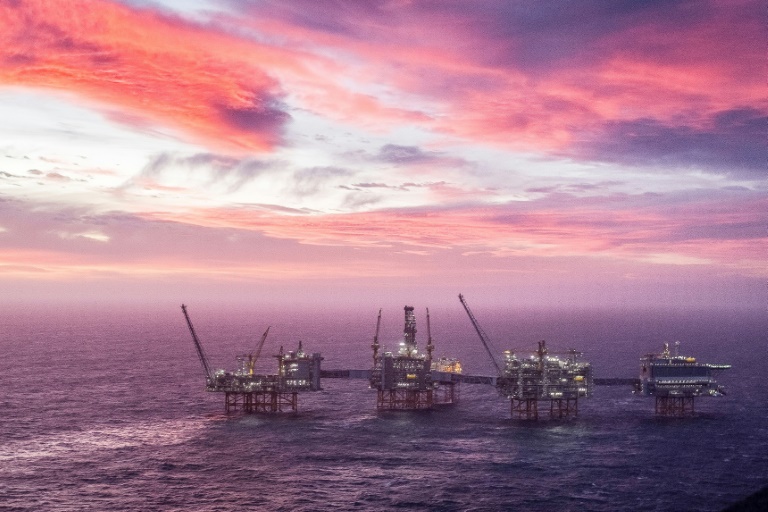
Earlier Tuesday Norwegian energy giant Equinor said it had shut down production at three oil and gas fields after oil workers walked out following failed wage negotiations, and warned that more closures were expected.

The strike came at a time when energy prices have fluctuated as a result of the impact of Russia’s invasion of Ukraine and associated sanctions. 

“Norwegian deliveries account for a quarter of European energy supplies, and Europe is entirely dependent on Norway delivering as a nation at a time when Russian supply cuts have created a very tight market for natural gas,” the Norwegian Oil and Gas Association.

“A strike on this scale poses huge problems for countries which are wholly dependent on filling up their gas stores ahead of the autumn and winter,” it added.

Workers walked out after members of the Lederne union voted no to a proposal brought by mediators during wage negotiations.

According to the government, the parties had said “that they will end the strike so that everyone can return to work as soon as possible”.

Close Bitnami banner
Bitnami