World

Rescuers resume search after Italian glacier collapse kills six

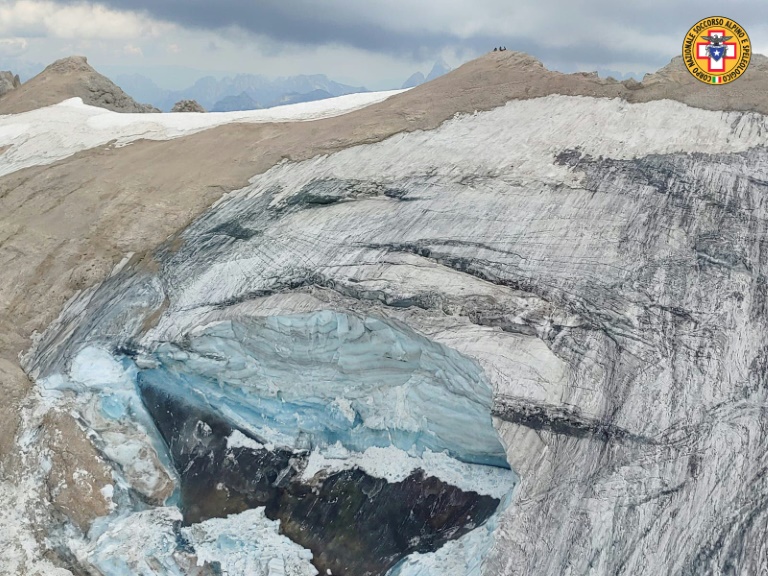
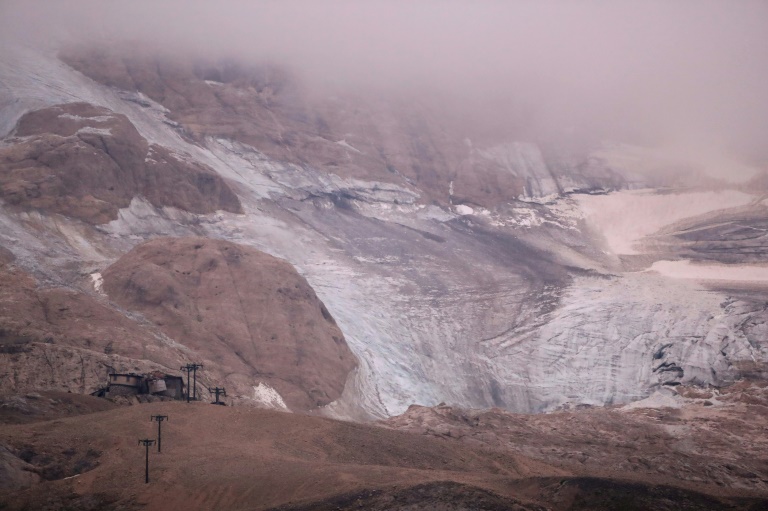
Rescuers were to resume the search for survivors on Monday after an avalanche set off by the collapse of the largest glacier in the Italian Alps killed at least six people and injured eight others.

Authorities said they did not know “the total number of climbers” hit when the glacier collapsed Sunday on Marmolada, the highest mountain in the Italian Dolomites.

The disaster struck one day after a record-high temperature of 10 degrees Celsius (50 degrees Fahrenheit) was recorded at the glacier’s summit. 

“An avalanche of snow, ice and rock hit an access path at a time when there were several roped parties, some of whom were swept away,” emergency services spokeswoman Michela Canova told AFP.

Six people had been confirmed dead and eight were injured, she added while “the total number of climbers involved is not yet known”.

Two of the injured were taken to hospital in Belluno, another in a more serious condition was taken to Treviso and five to Trento.

She did not specify the nationalities of the victims, but Italian media reported that foreign nationals were among them.

The Alpine rescue corps has activated a toll-free number for people to report friends or relatives who had not returned from an excursion to the glacier.

Several helicopters were scrambled to take part in the initial rescue operation but the search for survivors had to be suspended at nightfall and would resume early Monday.

Rescuers in the nearby Veneto region of northeast Italy said they had deployed all their Alpine teams, including sniffer dogs.

Italian Prime Minister Mario Draghi expressed his “sincerest condolences” to the victims and their families on Twitter.

Massimo Frezzotti, a science professor at Roma Tre University, told AFP the collapse was caused by unusually warm weather linked to global warming, with precipitation down 40-50 percent during a dry winter.

“The current conditions of the glacier correspond to mid-August, not early July,” he said.

– Further collapses feared –

Images filmed from a refuge close to the incident show snow and rock hurtling down the mountain’s slopes and causing a thunderous noise.

Other footage shot by tourists on their mobile phones showed the greyish avalanche sweep away everything in its path.

The mountain rescue team released images showing rescuers and helicopters at the scene to take victims from the valley to the village of Canazei.

Their task was made harder because the bodies were trapped under a layer of ice and rock.

A team of psychologists was on hand to support the relatives of the victims. The Trento public prosecutor’s office has opened an investigation to determine the causes of the tragedy.

Experts quoted by the Corriere della Sera daily said they feared further collapses of ice.

Glacier specialist Renato Colucci told the Italian agency AGI that the phenomenon was “bound to repeat itself”, because “for weeks the temperatures at altitude in the Alps have been well beyond normal values”.

The recent warm temperatures had produced a large quantity of water from the melting glacier that accumulated at the bottom of the block of ice and caused it to collapse, he added.

The Marmolada glacier is the largest in the Dolomites mountain range, which is part of the Italian Alps and situated on the northern face of Marmolada. 

The glacier, nicknamed “the queen of the Dolomites”, feeds the Avisio river and overlooks Lake Fedaia in the autonomous Italian province of Trento.

According to a March report by the UN Intergovernmental Panel on Climate Change (IPCC), melting ice and snow is one of 10 major threats caused by global warming, disrupting ecosystems and infrastructure.

The IPCC has said glaciers in Scandinavia, central Europe and the Caucasus could lose between 60 and 80 percent of their mass by the end of the century.

The traditional way of life of people such as the Sami in Finland’s Lapland, who raise reindeer, has already been affected.

Thawing permafrost is also hampering economic activity in Canada and Russia.
Rescuers resume search after Italian glacier collapse kills six

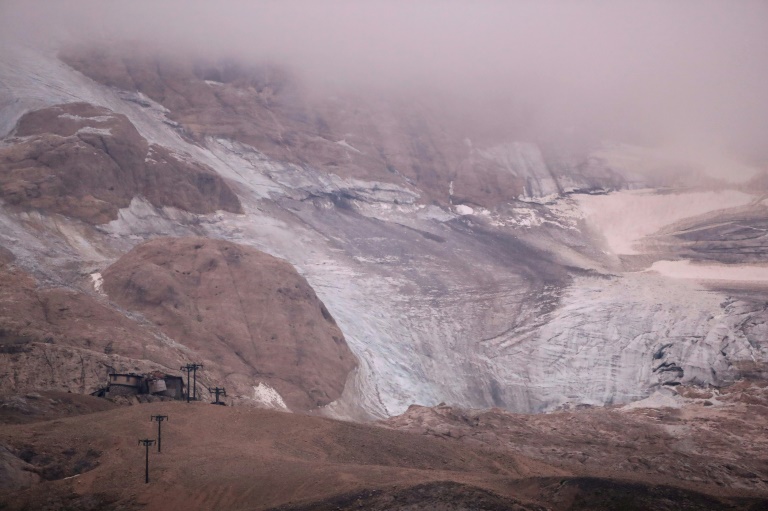
Rescuers were to resume the search for survivors on Monday after an avalanche set off by the collapse of the largest glacier in the Italian Alps killed at least six people and injured eight others.

Authorities said they did not know “the total number of climbers” hit when the glacier collapsed Sunday on Marmolada, the highest mountain in the Italian Dolomites.

The disaster struck one day after a record-high temperature of 10 degrees Celsius (50 degrees Fahrenheit) was recorded at the glacier’s summit. 

“An avalanche of snow, ice and rock hit an access path at a time when there were several roped parties, some of whom were swept away,” emergency services spokeswoman Michela Canova told AFP.

Six people had been confirmed dead and eight were injured, she added while “the total number of climbers involved is not yet known”.

Two of the injured were taken to hospital in Belluno, another in a more serious condition was taken to Treviso and five to Trento.

She did not specify the nationalities of the victims, but Italian media reported that foreign nationals were among them.

The Alpine rescue corps has activated a toll-free number for people to report friends or relatives who had not returned from an excursion to the glacier.

Several helicopters were scrambled to take part in the initial rescue operation but the search for survivors had to be suspended at nightfall and would resume early Monday.

Rescuers in the nearby Veneto region of northeast Italy said they had deployed all their Alpine teams, including sniffer dogs.

Italian Prime Minister Mario Draghi expressed his “sincerest condolences” to the victims and their families on Twitter.

Massimo Frezzotti, a science professor at Roma Tre University, told AFP the collapse was caused by unusually warm weather linked to global warming, with precipitation down 40-50 percent during a dry winter.

“The current conditions of the glacier correspond to mid-August, not early July,” he said.

– Further collapses feared –

Images filmed from a refuge close to the incident show snow and rock hurtling down the mountain’s slopes and causing a thunderous noise.

Other footage shot by tourists on their mobile phones showed the greyish avalanche sweep away everything in its path.

The mountain rescue team released images showing rescuers and helicopters at the scene to take victims from the valley to the village of Canazei.

Their task was made harder because the bodies were trapped under a layer of ice and rock.

A team of psychologists was on hand to support the relatives of the victims. The Trento public prosecutor’s office has opened an investigation to determine the causes of the tragedy.

Experts quoted by the Corriere della Sera daily said they feared further collapses of ice.

Glacier specialist Renato Colucci told the Italian agency AGI that the phenomenon was “bound to repeat itself”, because “for weeks the temperatures at altitude in the Alps have been well beyond normal values”.

The recent warm temperatures had produced a large quantity of water from the melting glacier that accumulated at the bottom of the block of ice and caused it to collapse, he added.

The Marmolada glacier is the largest in the Dolomites mountain range, which is part of the Italian Alps and situated on the northern face of Marmolada. 

The glacier, nicknamed “the queen of the Dolomites”, feeds the Avisio river and overlooks Lake Fedaia in the autonomous Italian province of Trento.

According to a March report by the UN Intergovernmental Panel on Climate Change (IPCC), melting ice and snow is one of 10 major threats caused by global warming, disrupting ecosystems and infrastructure.

The IPCC has said glaciers in Scandinavia, central Europe and the Caucasus could lose between 60 and 80 percent of their mass by the end of the century.

The traditional way of life of people such as the Sami in Finland’s Lapland, who raise reindeer, has already been affected.

Thawing permafrost is also hampering economic activity in Canada and Russia.
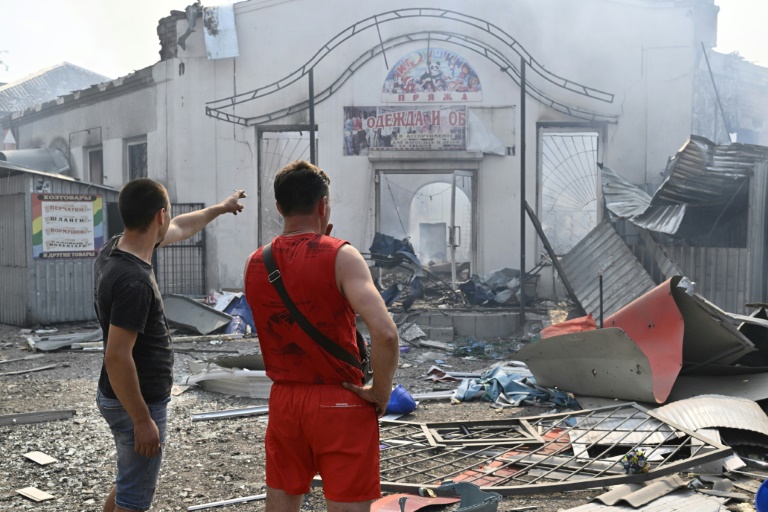
Ukraine retreats from key city in major Russian gain

The Ukrainian army retreated from the strategic city of Lysychansk over the weekend, as Russia claimed a major victory by seizing control of the entire eastern Lugansk region.

The Ukrainian withdrawal followed weeks of fierce fighting and marked a decisive breakthrough for Moscow’s forces more than four months after their invasion and after turning their focus away from the capital Kyiv.

Leaders from dozens of countries and international organisations will meet Monday in Switzerland to map out a “Marshall Plan” to rebuild Ukraine — aimed to begin even as Russia’s war efforts continue to rage.

A major flashpoint in the conflict, Lysychansk had been the final holdout in the Lugansk area of the eastern Donbas region and Moscow’s capture of it frees up Russian forces to advance on Kramatorsk and Sloviansk in neighbouring Donetsk. 

“The continuation of the defence of the city would lead to fatal consequences” in the face of Russia’s superiority in numbers and equipment, the Ukrainian army said in a statement announcing its retreat Sunday evening. 

“In order to preserve the lives of Ukrainian defenders, a decision was made to withdraw.

“Unfortunately, steel will and patriotism are not enough for success — material and technical resources are needed.”

The fall of Lysychansk comes after Russian forces seized its twin city of Severodonetsk last week after bouts of intense fighting. 

In an address late Sunday, Zelensky vowed Kyiv would fight on and ensure the military had “the most modern weapons”.

“It requires many negotiations, but we will ensure such a supply. Ukraine will reach the level when the fire superiority of the occupiers will be levelled.”

The latest country to provide aid was Australia, whose Prime Minister Anthony Albanese on Sunday pledged further military support — including armoured vehicles and drones during a meeting with Zelensky in Kyiv. 

– ‘Shooting from all sides’ –

On Sunday, Moscow accused Kyiv of firing three cluster missiles at the Russian city of Belgorod near the Ukrainian border, which came a day after neighbouring Belarus said it had intercepted Ukrainian missiles.

In what would represent an escalation of the conflict, Russia said its anti-aircraft defences shot down three Tochka-U cluster missiles launched by “Ukrainian nationalists” against Belgorod.

Eleven residential buildings and 39 houses had been damaged, Belgorod governor Vyacheslav Gladkov said. 

Russia has previously accused Kyiv of conducting strikes on Russian soil, particularly in the Belgorod region.

On Saturday, Belarusian leader Alexander Lukashenko accused Kyiv of provocation and said his army intercepted missiles fired at his country by Ukrainian forces “around three days ago”.

Belarus, a Russian ally, supported the February 24 invasion and has been accused by Kyiv of launching its own attacks on Ukrainian territory.

Lukashenko denied any involvement in a recent cross-border incident.

“We do not intend to fight in Ukraine,” he said, according to state news agency Belta on Saturday.

About 75 kilometres (45 miles) west of Lysychansk, the city Sloviansk saw heavy Russian shelling which left six people dead — among them a nine-year-old girl, Zelensky said Sunday evening. 

About 20 others were wounded as “the Russian army once again brutally shelled” the city, as well as Kramatorsk and Kharkiv.

A strike on the town of Dobropillia — just southwest of Sloviansk — killed two people and wounded three, including two children, Donetsk authorities said.

The city of Siversk, 30 kilometres west of Lysychansk, also saw overnight shelling, residents and an official told AFP.

“It was intense, and it was shooting from all sides,” said a woman sheltering in a cellar.

Russian forces “have now gathered their largest firepower in Donbas, and they can use tens of thousands of artillery shells every day on one section of the front,” Zelensky said. 

But Ukrainian troops had progressed in Kharkiv and Kherson regions, he added, vowing that “there will be a day when we will say the same about Donbas.”

“We will rebuild the walls, we will win back the land, and people must be protected above all else,” Zelensky said. “Ukraine does not give anything up.”

A Ukrainian official said Sunday that Kyiv’s forces had seen another success in Melitopol where they had “put out of action” a Russian military base, while the army said the air force had destroyed around 20 Russian units and two ammunition depots.

“The town of Melitopol is covered in smoke,” said the city’s exiled mayor Ivan Fedorov.

– ‘Democracy over autocracy’ –

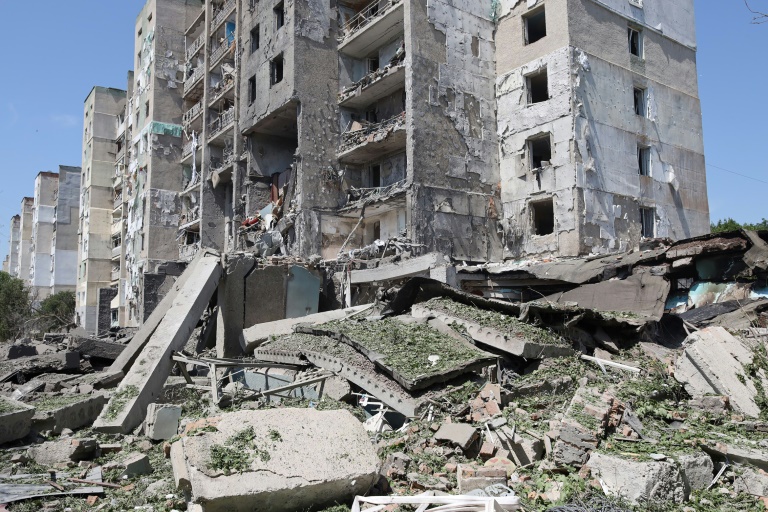
Four months into the war, Ukraine has seen devastating destruction across about 10 regions. 

On Monday, leaders from dozens of countries and international organisations will meet in the Swiss city of Lugano, where they aim to hash out a roadmap for Ukraine’s reconstruction — expected to cost hundreds of billions of dollars.

Ukraine will also face demands for broad reforms, especially in cracking down on corruption after Brussels recently granted Kyiv candidate status in its push to join the 27-member bloc.

British Foreign Secretary Liz Truss is due to pledge both immediate humanitarian assistance as well as access to British financial and economic expertise, the foreign office said.

She will tell delegates that Ukraine’s recovery “will be a symbol of the power of democracy over autocracy”, it added.

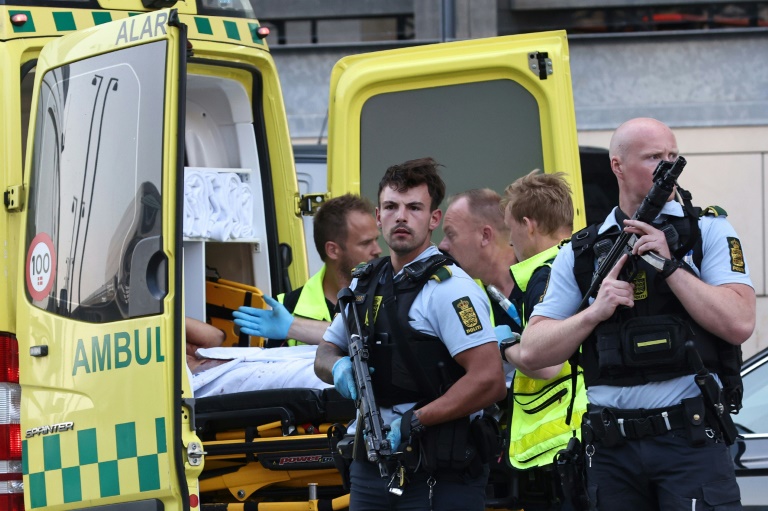
Three killed in Copenhagen mall shooting, 22-year-old suspect arrested

A gunman killed three people and wounded several others in a shooting at a busy Copenhagen mall on Sunday as panicked shoppers said they ran for their lives.

A 22-year-old Danish man was arrested after the shooting but his motives were unclear, police said. 

The shooter, who was believed to have acted alone, was known to the police “but only peripherally”.

“He’s not someone we particularly know,” Copenhagen police chief Soren Thomassen told a news conference after the rare mass shooting, the first since February 2015.

The young man, who according to witnesses was armed with a large rifle, was arrested peacefully shortly after police arrived at the large Fields shopping mall, located between the city centre and Copenhagen airport.

“There are three dead and several injured, three of them in critical condition,” Thomassen said.

The three dead were a man in his forties and two young people whose ages were not specified.

On social networks, people had been speculating about a racist motive, or some other motive, the head of the investigation said, “but I cannot say that we have anything which supports that at this moment.”

Police however confirmed they were investigating videos posted online which claimed to show the suspect with weapons and pointing a gun at his head.

Images from the scene showed parents carrying their children as they fled the building and ambulance personnel taking people away on stretchers.

– ‘We ran for our lives’ –

The shooting occurred around 5:30 pm, causing panic in the mall. Many visitors were there for a concert with British singer Harry Styles at the nearby Royal Arena, which was cancelled.

“My daughters were supposed to go see Harry Styles. They called me to say someone was shooting. They were in a restaurant when it happened,” Hans Christian Stolz, a 53-year-old Swede who came to pick up his children, told AFP.

“We thought at first people were running because they had seen Harry Styles, then we understood that it was people in panic … We ran for our lives,” his daughter Cassandra said.

Styles said he was devastated by news of the attack.

“I’m heartbroken along with the people of Copenhagen. I adore this city,” the singer posted on Twitter.

“I’m devastated for the victims, their families, and everyone hurting. I’m sorry we couldn’t be together. Please look after each other.”

The attack occurred two days after this year’s Tour de France cycling competition started from Copenhagen, and the Tour organisers released a statement expressing their sympathy.

“The entire caravan of the Tour de France sends its sincerest condolences to the victims and their families,” it said.

Witnesses quoted by the Danish media described how the suspect had tried to trick people by saying his weapon was a fake one, to get them to approach.

“He was sufficiently psychopathic to go and hunt people, but he wasn’t running,” one witness told DR state television.

Other eyewitnesses told Danish media they had seen more than 100 people rush towards the mall’s exit as the first shots were fired.

“We could see that many people suddenly ran towards the exit and then we heard a bang,” Thea Schmidt, who was in the mall at the time of the attack told broadcaster TV2. “Then we ran out of Field’s too.”

– ‘We heard gunshots’ –

Police had urged people in the building to wait inside for their arrival, calling on others to keep away from the area.

“All of a sudden we heard gunshots, I heard 10 shots, and we ran as far as we could to take refuge in the toilet,” Isabella told public broadcaster DR. She said she had hidden in the mall for two hours.

Other witnesses described the gunman as a man around 1.8 metres (five feet nine inches) tall carrying a hunting rifle.

Footage of the arrest shows the suspect, wearing a white jumpsuit to preserve DNA evidence, being picked up by officers.

“Denmark was hit by a cruel attack on Sunday night. Several were killed. Even more wounded. Innocent families shopping or eating out,” Prime Minister Mette Frederiksen said in a statement.

“Our beautiful and usually so safe capital was changed in a split second.”

The Danish royal family said their “thoughts and deepest sympathy are with the victims and their relatives and all those affected by the tragedy”.

Finnish Prime Minister Sanna Marin said she was “greatly saddened to hear about the shocking act of violence” while Norwegian Prime Minister Jonas Gahr Store said his “thoughts go to the victims and their relatives and to the relief crews who are currently working to save lives”.

The shooting comes just over a week after a gunman opened fire near a gay bar in Oslo in neighbouring Norway, killing two people and wounding 21 others.

In February of 2015, two people were killed and five injured in Copenhagen in a series of Islamist-motivated shootings.

'Colossal' work ahead, as Ukraine recovery meet to open in Lugano

Leaders from dozens of countries, international organisations and the private sector gathered in Switzerland Monday to hash out a “Marshall Plan” to rebuild war-ravaged Ukraine.

Ukrainian President Volodymyr Zelensky, who will take part virtually, warned Sunday that the work ahead in the areas that have been liberated alone was “really colossal”. 

“And we will have to free over 2,000 villages and towns in the east and south of Ukraine,” he said.

The two-day conference, held under tight security in the picturesque southern Swiss city of Lugano, had been planned well before Russia launched its full-scale invasion on February 24.

It had originally been slated to discuss reforms in Ukraine, but once the Russian bombs began to fall it was repurposed to focus on reconstruction.

As billions of dollars in aid flows into Ukraine, however, lingering concerns about widespread corruption in the country mean far-reaching reforms remain in focus and will be a condition for any recovery plan decided here. 

– ‘Roadmap’ –

Lugano is not a pledging conference, but will instead attempt to lay out the principles and priorities for a rebuilding process aimed to begin even as Russia’s war in Ukraine continues to rage.

Ukraine’s ambassador to Switzerland Artem Rybchenko said ahead of the conference that it would help create “the roadmap” to his country’s recovery.

Zelensky had initially been scheduled to come and co-host the event alongside his Swiss counterpart Ignazio Cassis, but now he is due to give his address Monday afternoon via video link.

Ukrainian Prime Minister Denys Shmyhal has however made a rare trip out of Ukraine since the war began to attend, and was met at the airport Sunday by Cassis and regional leaders.

Five other government ministers were also among the around 100 Ukrainians who made the long and perilous journey, although Foreign Minister Dmytro Kuleba reportedly had to cancel at the last moment due to illness.

In all, around 1,000 people were scheduled to participate in the conference, including European Commission President Ursula von der Leyen, several government chiefs and numerous ministers.

– ‘Marshall Plan’ –

Questions have been raised about the value in discussing reconstruction when there is no end in sight to the war.

But Robert Mardini, director-general of the International Committee of the Red Cross, told the RTS broadcaster that while the reconstruction itself could only happen fully after the bombs have stopped, it is vital to give “a positive perspective to civilians who have lost their homes, and who are struggling with anxiety and uncertainty for the future”.

Others stress the need to begin laying the groundwork well in advance, as was done with the wildly successful Marshall Plan, a US initiative that pumped vast sums in foreign aid into Western Europe to help the continent rebuild and recover after World War II.

The task is daunting.

Rebuilding Ukraine, which four months into the war has already seen devastating destruction, is expected to cost hundreds of billions of dollars.

The effort will require “colossal investments”, Zelensky acknowledged at the weekend.

Kyiv School of Economics (KSE) has estimated the damage done so far to buildings and infrastructure at nearly $104 billion.

It estimated that at least 45 million square metres of housing, 256 enterprises, 656 medical institutions, and 1,177 educational institutions had been damaged, destroyed or seized, while Ukraine’s economy had already suffered losses of up to $600 billion. 

– Could last decades –

Simon Pidoux, the Swiss ambassador in charge of the conference, said that it was too early to try to estimate all the needs, insisting Lugano instead should provide “a compass” for the work ahead.

“I think the effort will last for years if not decades,” he said.

While not a donor conference, a number of participants are expected to make new pledges and propose frameworks for providing more funds.

The European Investment Bank will for instance propose the creation of a new Ukraine trust fund, which with investments from EU and non-EU states could eventually swell to 100 billion euros, according to sources familiar with the draft plans.

The proposal, which is due to be announced Monday afternoon, aims to create a platform able to generate investment towards reconstruction, and also towards Ukraine’s EU accession goals, they said. 

British Foreign Secretary Liz Truss is meanwhile due to set out her country’s vision for the rebuilding, according to a statement.

In her comments to the conference Monday, she is expected to highlight the importance of Ukraine’s full recovery from “Russia’s war of aggression”. 

That, she will say, will be “a symbol of the power of democracy over autocracy.”

Covid-19 misinformation bolsters anti-vaccine movement

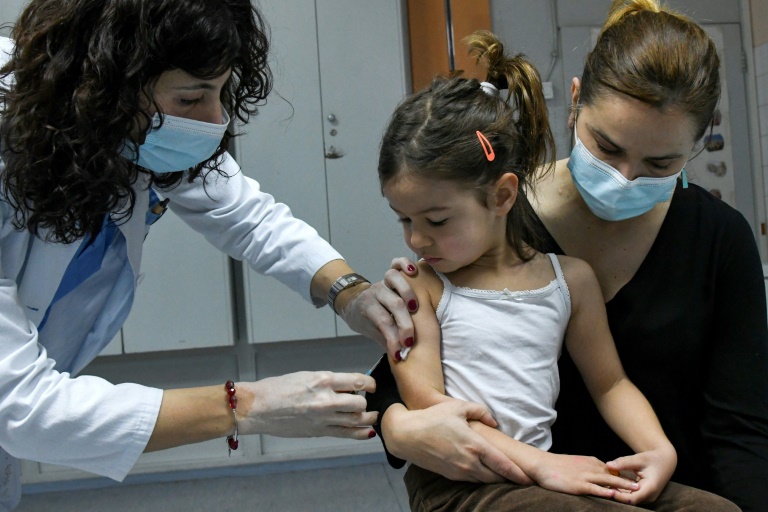
More parents are questioning the necessity of routine vaccinations for young children. Adults are skipping shots as well, even for vaccines with a long safety record.

The trend comes amid a wave of misinformation and disinformation about Covid-19 and the vaccines that helped to stem pandemic deaths. Politicization of the Covid-19 shots has bolstered the anti-vaccine movement, contributing to the decline in routine immunizations for measles, polio and other dangerous diseases.

“They ask if these are truly necessary, or if we can give them at later times,” said Jason Terk, a Texas pediatrician and spokesperson for the American Academy of Pediatrics. 

“This is not the majority of parents, but we are seeing a higher number.”

The anti-vaccine movement has mushroomed as its messages on social media are amplified by conservative political figures as well as foreign influence operations, whose vaccine disinformation efforts pre-date the pandemic.

With routine immunization rates falling, concerns are growing about a resurgence of diseases which had largely been eradicated in many parts of the world.

In the United States, the percentage of kindergarten children with recommended immunizations fell a percentage point to 94 percent in the 2020-21 school year, representing some 35,000 children unvaccinated. 

“I refer to it as the parallel contagion,” Terk said. “This seems to have at its origin hesitancy in Covid-19 vaccinations and increasing distrust of vaccines and the bodies we’ve relied on to keep us healthy and well.”

Dramatic changes were seen in some states, especially during the height of the pandemic: researchers found a 47 percent drop in immunization rates in Texas among five-month-olds and a 58 percent decline for 16-month-olds between 2019 and 2020.

The researchers, writing in the scientific journal Vaccine, said the declines resulted from shelter-in-place restrictions and vaccine exemptions, but also to “an aggressive anti-vaccine movement in Texas.”

Washington state reported a 13 percent decline in childhood immunization rates in 2021 compared with pre-pandemic levels and Michigan’s vaccination rate for toddlers fell last year to 69.9 percent, the lowest in a decade.

– Adults too –

Adult and adolescent inoculation rates have also dropped for vaccines protecting against diseases such as influenza, hepatitis, measles, tetanus and shingles, according to health consultancy Avalere, which analyzes insurer claims.

This has led to an estimated 37 million missed vaccination doses from January 2020 to July 2021 for adults and children ages seven and older, Avalere found.

Declines early in the pandemic can be attributed to shelter-in-place orders and social distancing, but “there is a risk of a bleed-over” of Covid vaccine misinformation, which affects other vaccines which have a longstanding safety record, noted Avalere managing director Jason Hall.

Social media have helped create a coalition that includes true anti-vaccine believers, libertarians and conservative political figures. These segments have been amplified by disinformation actors from Russia and elsewhere, said David Broniatowski, a George Washington University professor and associate director of the school’s Institute for Data, Democracy and Politics.

“People have been opposing vaccines for as long as there have been vaccines, but they’ve gotten more sophisticated over the past 10 years and a lot of that has been because of the ability to organize on social media across boundaries,” said Broniatowski, who researches vaccine disinformation.

He noted that while anti-vaccine activists, libertarians and foreign agents are not necessarily coordinating, “they have found common cause” in opposing vaccine mandates.

“One of the main changes we’ve seen is a pivot away from focusing on vaccines per se as a health issue to a civil rights and a political issue,” he added.

Conspiracy theories have surged during the pandemic, according to a 2021 YouGov poll, which found 28 percent of Americans and significant numbers in other countries say the truth about the harmful effects of vaccines is being “deliberately hidden.”

– Foreign actors –

Broniatowski said that foreign disinformation agents “use vaccines as a wedge issue that can mobilize a segment of the population.” 

A 2018 paper co-authored by Broniatowski in the American Journal of Public Health found anti-vaccine Twitter activity was amplified by Russian trolls from 2014 to 2017 as part of an effort to promote discord and undermine confidence in the health system.

Research from the Center for European Policy Analysis showed both China and Russia have promoted Covid-19 vaccine misinformation, in part to show that Western governments are incompetent and can’t be trusted.

“There’s been a concerted effort on the part of these actors to diminish the standing of science because it serves their political purposes,” Broniatowski said.

The problem is growing globally as well. A United Nations report last year found 23 million children worldwide missed out on routine immunizations in 2020. In the Americas region, the percentage of fully inoculated children fell to 82 percent from 91 percent in 2016 due to factors including funding shortfalls, vaccine misinformation and instability.

This is likely to create more health risks down the road from diseases which have been mostly contained.

“We had certain thresholds of protection to keep these diseases from being relevant from a public health point of view,” Terk said.

“The more people pushing back, the more likely we’ll have pockets of vulnerability.”

Thousands ordered to evacuate from Sydney floods

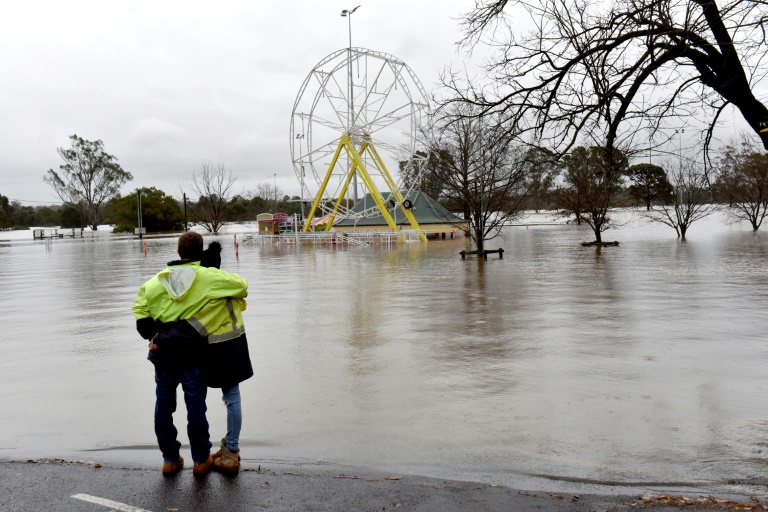
Australia’s emergency services ordered thousands of people in Sydney to evacuate Monday as overflowing rivers swamped swathes of land and the city’s largest dam spilled torrents of water.

On the third day of torrential rains on the east coast, rescuers said they had saved about 20 people in the past 12 hours, many trapped in cars on flood-swept roads in New South Wales.

Australia has been at the sharp end of climate change, with droughts, deadly bushfires, bleaching events on the Great Barrier Reef and floods becoming more common and intense as global weather patterns change.

Higher temperatures mean the atmosphere holds more moisture, unleashing more rain. 

About 32,000 people were under evacuation orders or warnings in New South Wales, said Ashley Sullivan, senior official for the State Emergency Services.

“We have seen rivers rise fast, a lot quicker than expected,” Sullivan told national broadcaster ABC.

Waters in some areas may exceed levels reached in deadly flood disasters experienced on Australia’s east coast in the past two years, he said.

More than 20 people died in March this year as floodwaters lapped at rooftops and torrents swept cars off roads.

On Monday morning, mud-brown river waters had transformed a large stretch of land into a lake in the southwestern Sydney suburb of Camden. 

Roads disappeared into the waters and mobile homes stood in knee-high water, at least one toppled on its side, television images showed. 

Large volumes of water gushed from the Warragamba Dam, which has been spilling excess water since Sunday. The huge concrete dam lies on the western outskirts of Sydney and provides most of the city’s drinking water.

Bezos slams Biden appeal for lower gasoline prices

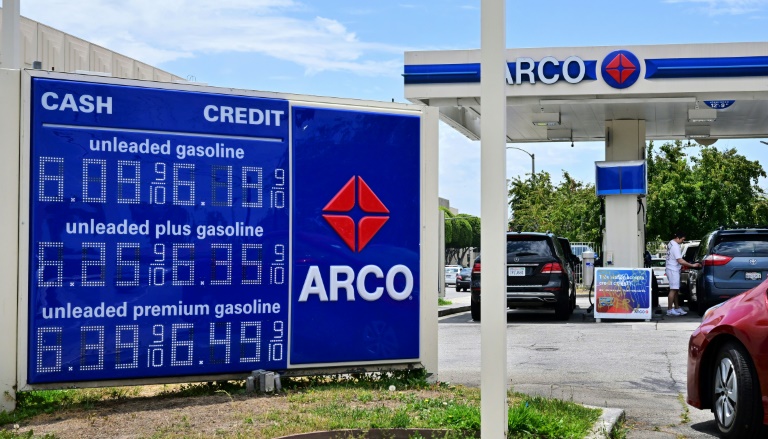
Amazon founder Jeff Bezos has criticized President Joe Biden for calling on oil companies to lower sky-high gasoline prices, prompting the White House to come to the US leader’s defense on Sunday.

“My message to the companies running gas stations and setting prices at the pump is simple: this is a time of war and global peril,” Biden tweeted Saturday.

“Bring down the price you are charging at the pump to reflect the cost you’re paying for the product. And do it now,” Biden added.

Bezos said Biden’s remarks amounted to “either straight ahead misdirection or a deep misunderstanding of basic market dynamics.”

“Ouch. Inflation is far too important a problem for the White House to keep making statements like this,” the US billionaire tweeted Saturday.

Gasoline prices at the pump have become a symbol of broader price rises in the United States, and they are sapping Biden’s approval rating ahead of legislative elections in November.

Biden has regularly attacked oil companies, saying they only care about profits and not the well-being of the average consumer.

The companies say in turn they have increased production to try to tame prices but that these are set on the world market and are subject to dynamics that are not under the control of US oil giants.

White House Press Secretary Karine Jean-Pierre said on Twitter Sunday that oil prices have dropped about $15 a barrel over the past month.

“But prices at the pump have barely come down. That’s not ‘basic market dynamics.’ It’s a market that is failing the American consumer,” she wrote.

Gasoline prices have been above $5 a gallon since early June, which is unprecedented in the car-crazy nation. Prices have fallen slightly since, but remain far from the $3 a gallon level of a year ago.

John Kirby, White House spokesman on national security issues, also defended the president Sunday in an appearance on Fox News.

“The president is working very, very hard across many fronts… to try to bring that price down,” Kirby said. 

He cited Biden’s proposal to suspend the federal gas tax this summer — this would need congressional approval — and his decision to tap the US strategic oil reserves to put more product on the market.

“He knows that it is not going to solve all the problems, but it will help if everybody cooperates on this. We could bring the price down at least by about one dollar a gallon,” Kirby said.

US officials urge calm after releasing video of police killing Black man

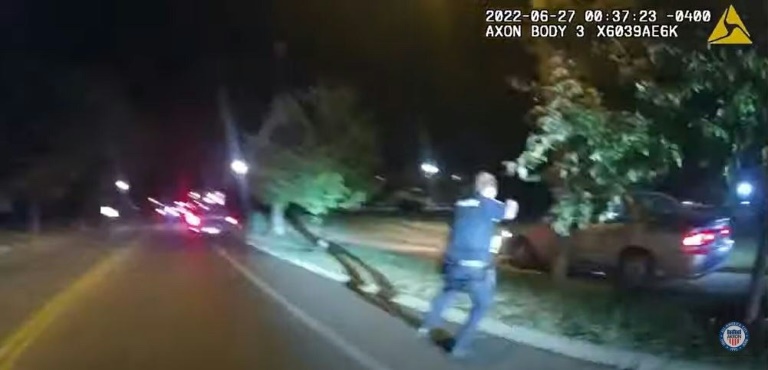
Authorities in the US state of Ohio appealed for calm Sunday after releasing body camera footage that showed police fatally shooting a Black man with several dozen rounds.

Jayland Walker, 25, was shot and killed Monday after officers tried to stop his car over a traffic violation, the police department in the city of Akron said.

After initially providing few details of the shooting, Akron authorities released two videos: one that was a compilation of body-camera footage, body-cam still frames and voiceover, and another of the complete body-cam footage of the entire chase and shooting.

The voiceover explained that Walker did not stop, and drove off. Police engaged in a car chase and said a shot had been fired from Walker’s car.

After being chased for several minutes, Walker got out of his car while it was still moving and fled on foot. Officers tried to subdue him with their tasers, but he kept running.

Several officers finally chased Walker to a parking lot. The body-cam footage is too blurry to see clearly what happens, but an initial police statement released after the shooting says he behaved in a way that caused officers to perceive he posed a “deadly threat.”

All of the officers at the scene opened fire on Walker, shooting multiple times in rapid succession.

He was pronounced dead at the scene.

The incident was the latest death of an African-American citizen at the hands of police, events that have sparked mass protests over racism and police brutality.

Angry activists rallied in Akron on Friday, with another protest planned for Sunday afternoon.

“Many will wish to air their grievances in public, and I fully support our residents’ right to peacefully assemble,” Akron mayor Dan Horrigan told a press conference, saying he was “heartbroken” over the events.

“But I hope the community can agree that violence and destruction are not the answer.”

He also said an independent investigation was being conducted.

Police chief Steve Mylett said he didn’t know the exact number of bullets fired at Walker, but the medical examiner’s report “indicates over 60 wounds to Mr. Walker’s body.”

He also said that the eight officers involved in Walker’s death have been placed on paid administrative leave until the investigation is complete.

Fearing potential unrest, authorities in the city of 190,000 people moved snowplows and other heavy equipment near the police department to serve as a barrier, according to local media.

Authorities also canceled a festival planned for the July 4th weekend.

Basketball star LeBron James, an Akron native, said in a tweet Sunday he was praying for his city.

Glacier collapses in Italian Alps, six dead: rescuers

An avalanche set off by the collapse of the largest glacier in the Italian Alps killed at least six people and injured eight others Sunday, an emergency services spokeswoman said.

The glacier collapsed on the mountain of Marmolada, the highest in the Italian Dolomites, near the hamlet of Punta Rocca, on the route normally taken to reach its summit.

The disaster struck one day after a record-high temperature of 10 degrees Celsius (50 degrees Fahrenheit) was recorded at the glacier’s summit.

“An avalanche of snow, ice and rock hit an access path at a time when there were several roped parties, some of whom were swept away,” emergency services spokeswoman Michela Canova told AFP.

Six people had been confirmed dead and eight were injured, she added.

Two of the injured were taken to hospital in Belluno, another in a more serious condition was taken to Treviso and five to Trento.

“The total number of climbers involved is not yet known,” said Canova.

She did not specify the nationalities of the victims.

Helicopters were scrambled to take part in the rescue and to monitor the situation from the air.

Rescuers in the nearby Veneto region of northeast Italy said they had deployed all their Alpine teams, including sniffer dogs.

– Further collapses feared –

Images filmed from a refuge close to the incident show snow and rock hurtling down the mountain’s slopes and causing a thunderous noise.

Other footage shot by tourists on their mobile phones showed the greyish avalanche sweep away everything in its path.

The mountain rescue team released images showing rescuers and helicopters at the scene to take victims from the valley to the village of Canazei.

Their task was made harder because the bodies were trapped under a layer of ice and rock.

A team of psychologists has been made available to support relatives of the victims.

Experts quoted by the Corriere della Sera daily said they feared further collapses of ice.

Glacier specialist Renato Colucci told the Italian agency AGI that the phenomenon was “bound to repeat itself”, because “for weeks the temperatures at altitude in the Alps have been well beyond normal values”.

The recent warm temperatures had produced a large quantity of water from the melting glacier that accumulated at the bottom of the block of ice and caused it to collapse, he added.

The Marmolada glacier is the largest in the Dolomites mountain range, which is part of the Italian Alps and situated on the northern face of Marmolada. 

The glacier, nicknamed “the queen of the Dolomites”, feeds the Avisio river and overlooks Lake Fedaia in the autonomous Italian province of Trento.

According to a March report by the UN Intergovernmental Panel on Climate Change (IPCC), melting ice and snow is one of 10 major threats caused by global warming, disrupting ecosystems and infrastructure.

The IPCC has said glaciers in Scandinavia, central Europe and the Caucasus could lose between 60 and 80 percent of their mass by the end of the century.

The traditional way of life of people such as the Sami in Finland’s Lapland, who raise reindeer, has already been affected.

Thawing permafrost is also hampering economic activity in Canada and Russia.
Close Bitnami banner
Bitnami