World

Glacier collapses in Italian Alps, six dead: rescuers

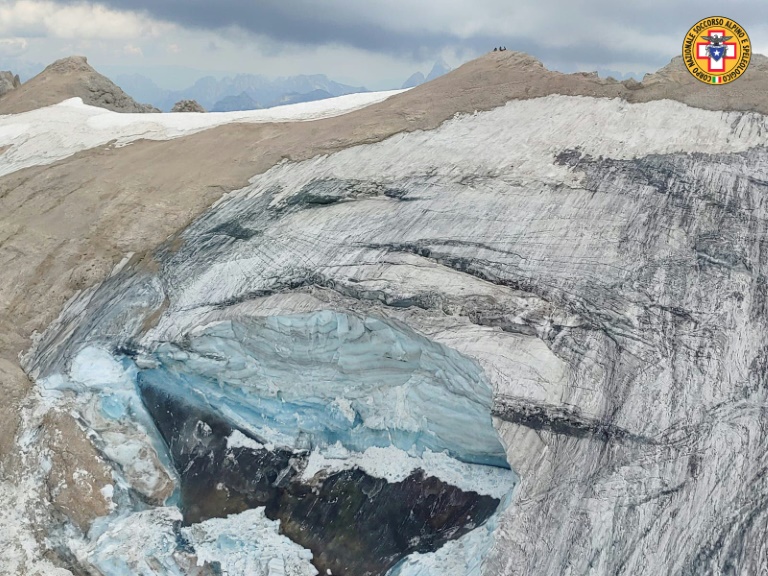
An avalanche set off by the collapse of the largest glacier in the Italian Alps killed at least six people and injured eight others Sunday, an emergency services spokeswoman said.

The glacier collapsed on the mountain of Marmolada, the highest in the Italian Dolomites, near the hamlet of Punta Rocca, on the route normally taken to reach its summit.

The disaster struck one day after a record-high temperature of 10 degrees Celsius (50 degrees Fahrenheit) was recorded at the glacier’s summit.

“An avalanche of snow, ice and rock hit an access path at a time when there were several roped parties, some of whom were swept away,” emergency services spokeswoman Michela Canova told AFP.

Six people had been confirmed dead and eight were injured, she added.

Two of the injured were taken to hospital in Belluno, another in a more serious condition was taken to Treviso and five to Trento.

“The total number of climbers involved is not yet known,” said Canova.

She did not specify the nationalities of the victims.

Helicopters were scrambled to take part in the rescue and to monitor the situation from the air.

Rescuers in the nearby Veneto region of northeast Italy said they had deployed all their Alpine teams, including sniffer dogs.

– Further collapses feared –

Images filmed from a refuge close to the incident show snow and rock hurtling down the mountain’s slopes and causing a thunderous noise.

Other footage shot by tourists on their mobile phones showed the greyish avalanche sweep away everything in its path.

The mountain rescue team released images showing rescuers and helicopters at the scene to take victims from the valley to the village of Canazei.

Their task was made harder because the bodies were trapped under a layer of ice and rock.

A team of psychologists has been made available to support relatives of the victims.

Experts quoted by the Corriere della Sera daily said they feared further collapses of ice.

Glacier specialist Renato Colucci told the Italian agency AGI that the phenomenon was “bound to repeat itself”, because “for weeks the temperatures at altitude in the Alps have been well beyond normal values”.

The recent warm temperatures had produced a large quantity of water from the melting glacier that accumulated at the bottom of the block of ice and caused it to collapse, he added.

The Marmolada glacier is the largest in the Dolomites mountain range, which is part of the Italian Alps and situated on the northern face of Marmolada. 

The glacier, nicknamed “the queen of the Dolomites”, feeds the Avisio river and overlooks Lake Fedaia in the autonomous Italian province of Trento.

According to a March report by the UN Intergovernmental Panel on Climate Change (IPCC), melting ice and snow is one of 10 major threats caused by global warming, disrupting ecosystems and infrastructure.

The IPCC has said glaciers in Scandinavia, central Europe and the Caucasus could lose between 60 and 80 percent of their mass by the end of the century.

The traditional way of life of people such as the Sami in Finland’s Lapland, who raise reindeer, has already been affected.

Thawing permafrost is also hampering economic activity in Canada and Russia.
W.African bloc lifts Mali sanctions, agrees on Burkina transition

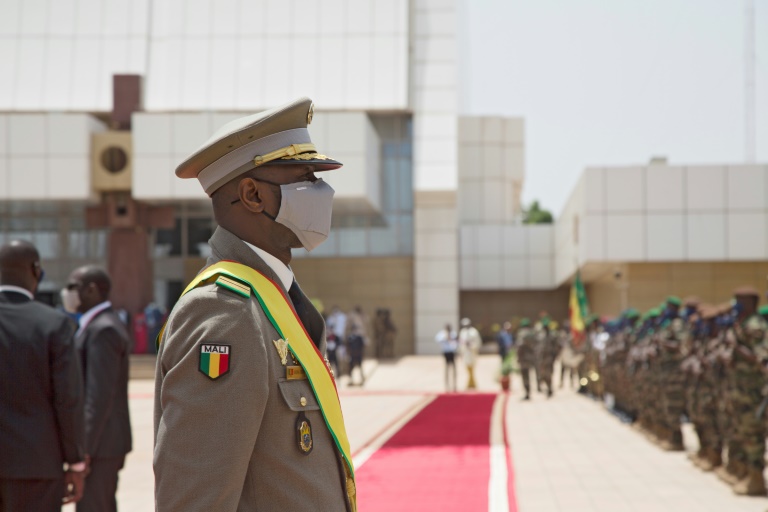
West African leaders on Sunday lifted sanctions on Mali’s military regime, accepting a March 2024 return to civilian rule, and agreed on two years for Burkina Faso’s transition back to democracy, delegates at a regional summit said.

Heads of the Economic Community of West African States (ECOWAS) had gathered to assess efforts to secure timetables and guarantees for restoring civilian rule in Mali, Guinea and Burkina Faso.

Mali underwent coups in August 2020 and May 2021, followed by Guinea in September 2021 and Burkina Faso this January.

Fearing contagion in a region known for military takeovers, ECOWAS imposed tough trade and economic sanctions against Mali, but lesser punishments against Guinea and Burkina.

“It’s done,” one delegate at the ECOWAS summit told AFP. “We have decided to lift economic and financial sanctions against Mali.”

ECOWAS in January imposed a trade and financial embargo on Mali after its military government unveiled a scheme to rule for five years.

The sanctions have badly hit the poor, landlocked Sahel state, whose economy is already under severe strain from a decade-long jihadist insurgency.

After months of talks, Malian authorities on Wednesday approved a plan to hold presidential elections in February 2024.

The vote will be preceded by a referendum on a revised constitution in March 2023 and legislative elections in late 2023.

The ECOWAS mediator in Mali, former Nigerian leader Goodluck Jonathan, visited the country last week. A member of his entourage had told AFP Mali had made “enormous progress”.

The country’s top diplomat Abdoulaye Diop on Friday said the recent political developments were moving the country towards a lifting of the sanctions.

– Guinea transition ‘unthinkable’ –

Burkina Faso — another Sahel country caught up in jihadist turmoil — and Guinea have so far only been suspended from the bodies of the 15-nation bloc.

Burkina’s junta proposed a constitutional referendum in December 2024 and legislative and presidential elections in February 2025.

“Everyone agrees that it is 24 months of transition from July 1, 2022,” an ECOWAS summit delegate told AFP.

The information was confirmed to AFP by an ECOWAS official who also participated in the summit.

Visiting Ouagadougou for the second time in a month on Saturday, ECOWAS mediator Mahamadou Issoufou had praised junta leader Lieutenant Colonel Paul-Henri Sandaogo Damiba and his government for their “openness to dialogue”. 

The timetable to enable a return to civilian rule and the situation of deposed leader Roch Marc Christian Kabore were also discussed, said the former president of Niger.

Political parties allied to Kabore denounced the junta’s plans on Friday, saying they were not consulted in advance.

The situation appears more complex in Guinea, whose junta has refused an ECOWAS mediator and announced a 36-month transition — a period that African Union chairman and Senegalese President Macky Sall has described as “unthinkable”.

Guinea this week has led a diplomatic offensive to assuage the concerns of regional leaders.

The country’s post-coup prime minister Mohamed Beavogui on Saturday met the United Nations’ special representative for West Africa and the Sahel, Mahamat Saleh Annadif.

The government said it wanted to reassure its ECOWAS “brothers” of its commitment to undertaking a peaceful and inclusive democratic transition.

Guinea’s military regime met the main political parties on Monday, but they have made their participation in the dialogue conditional on the nomination of an ECOWAS mediator.

Ukraine retreats from key city in major Russian gain

The Ukrainian army retreated from the strategic city of Lysychansk Sunday as Russia claimed a major victory by seizing control of the entire eastern Lugansk region.

The Ukrainian withdrawal followed weeks of fierce fighting and marked a decisive breakthrough for Moscow’s forces more than four months after their invasion and after turning their focus away from the capital Kyiv.

Lysychansk had been the last major city in the Lugansk area of the eastern Donbas region still in Ukrainian hands and frees up Moscow’s forces to advance on Kramatorsk and Sloviansk in neighbouring Donetsk.

President Volodymyr Zelensky had earlier denied Russian claims of Lysychansk’s fall before the Ukrainian army announced the retreat on Sunday evening.

“The continuation of the defence of the city would lead to fatal consequences” in the face of Russia’s superiority in numbers and equipment, the army said in a statement. 

“In order to preserve the lives of Ukrainian defenders, a decision was made to withdraw.

“Unfortunately, steel will and patriotism are not enough for success — material and technical resources are needed.”

Russian forces seized Lysychansk’s twin city of Severodonetsk last week following weeks of intense fighting.

The latest blow to Ukrainian resistance came after Australian Prime Minister Anthony Albanese on Sunday pledged further military support including armoured vehicles and drones during a meeting with Zelensky in Kyiv.

– ‘Shooting from all sides’ –

On Sunday, Russia accused Ukraine of firing three cluster missiles at the city of Belgorod near the Ukrainian border, which came after Belarus on Saturday said it had intercepted Ukrainian missiles.

In what would represent an escalation of the conflict, Moscow said its anti-aircraft defences shot down three Tochka-U cluster missiles launched by “Ukrainian nationalists” against Belgorod, close to the Ukrainian border.

Belgorod governor Vyacheslav Gladkov said 11 residential buildings and 39 houses had been damaged.

Russia has previously accused Kyiv of conducting strikes on Russian soil, particularly in the Belgorod region.

On Saturday, Belarusian leader Alexander Lukashenko accused Kyiv of provocation and said his army intercepted missiles fired at his country by Ukrainian forces “around three days ago”.

Belarus, a Russian ally, supported the February 24 invasion and has been accused by Kyiv of launching its own attacks on Ukrainian territory.

Lukashenko denied any involvement in a recent cross-border incident.

“We do not intend to fight in Ukraine,” he was quoted as saying by state news agency Belta on Saturday.

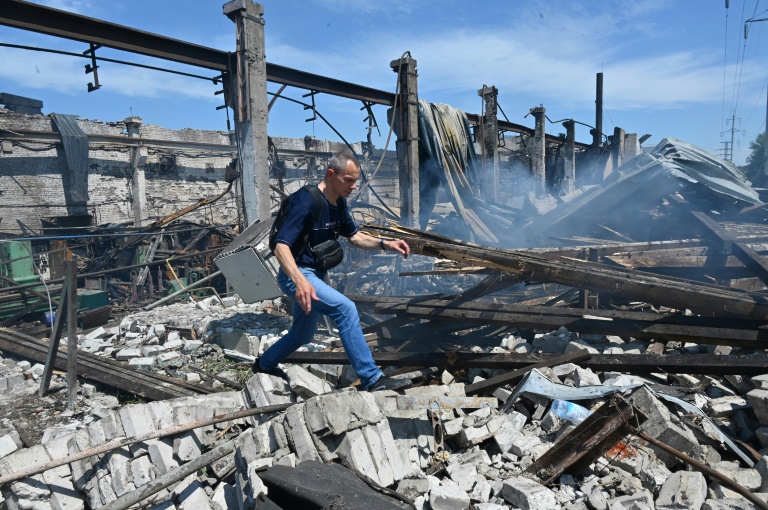
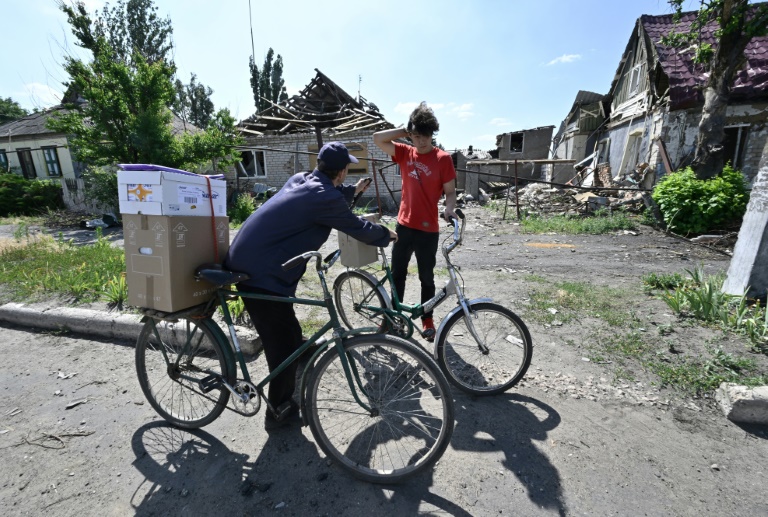
Elsewhere, the mayor of Sloviansk, 75 kilometres (45 miles) west of Lysychansk, reported the heaviest Russian shelling “for a long time”, saying a child had been among six people killed, with another 15 people wounded.

The city of Siversk, 30 kilometres west of Lysychansk, saw overnight shelling, residents and an official told AFP.

“It was intense, and it was shooting from all sides,” said a woman sheltering in a cellar.

– ‘Fierce fighting’ –

“Fierce fighting continues along the entire frontline, in Donbas,” Zelensky said in an address late Saturday, accusing “enemy activity” of “intensifying” in the wider region around Ukraine’s second city of Kharkiv.

Two people were killed and three wounded — including two children — in a strike on the town of Dobropillya, local authorities in Donetsk said.

On Monday, leaders from dozens of countries and international organisations gather in the Swiss city of Lugano for a conference on Ukraine’s reconstruction. The aim is to provide a roadmap for the war-ravaged country’s recovery.

Zelensky said “colossal investments” would be needed as 10 regions of Ukraine had been affected in the war, with many towns and villages needing to be “rebuilt from scratch”.

Ukraine will also face demands for broad reforms, especially in cracking down on corruption after Brussels recently granted Kyiv candidate status in its push to join the 27-member bloc.

– ‘Out of action’ –

A Ukrainian official said Sunday that his country’s forces had “put out of action” a Russian military base in Melitopol, while the Ukrainian army said the air force had destroyed around 20 Russian units and two ammunition depots.

“The town of Melitopol is covered in smoke,” said the city’s exiled mayor Ivan Fedorov.

In peacetime, Ukraine is a major agricultural exporter, but Russia’s invasion has damaged farmland and seen Ukraine’s ports seized, razed or blockaded — sparking concerns about food shortages, particularly in poor countries.

Farmer Sergiy Lyubarsky, whose fields are close to the frontline, warned time was running out to harvest this year’s crop. 

“We can wait until August 10 at the latest, but after that, the grains are going to dry out and fall to the ground,” he said.

Western powers have accused Putin of using the trapped harvest as a weapon to increase pressure on the international community, and Russia has been accused of stealing grain.

War in Ukraine: Latest developments

Here are the latest developments in the war in Ukraine:

– Russia claims Lugansk region –

Russia’s defence minister, Sergei Shoigu says Moscow’s forces have taken the strategic Ukrainian city of Lysychansk and now control the entire region of Lugansk, which has been the target of fierce battles in recent weeks.

“Sergei Shoigu has informed the commander-in-chief of the Russian armed forces, Vladimir Putin, of the liberation of the People’s Republic of Lugansk,” the defence ministry said in a statement quoted by Russian news agencies.

The regional governor of Lugansk, Sergiy Gaiday, says on Telegram that “the Russians are reinforcing their positions in the Lysychansk region. The city is on fire.”

Kyiv has yet to comment on the claim that Lysychansk has fallen following days of intense clashes.

– ‘Six killed in Russian shelling’ –

Shelling from multiple rocket launchers kills six people, including a child in Ukraine’s eastern city of Sloviansk, which has come under attack from advancing Russian troops, its mayor says.

“Provisional toll from today’s shelling: six dead, 15 injured. Among the dead, there is a child,” Vadim Lyakh says on Facebook, confirming a toll given by a spokeswoman for the Donetsk region to Ukrainian media.

Tetyana Ignachenko, a spokeswoman for the Donetsk region to which Sloviansk belongs, reiterates a call on residents to leave the region, as the frontline is just a few kilometres (miles) away.

– Russia says Ukraine fired missiles –

Russia accuses Kyiv of firing three missiles at the city of Belgorod near the Ukraine border in strikes that killed at least three people.

“Russian anti-aircraft defences shot down three Tochka-U cluster missiles launched by Ukrainian nationalists against Belgorod,” says Russia’s defence ministry spokesman, Igor Konashenkov. 

– Lukashenko too blames Ukraine for missiles –

Belarusian President Alexander Lukashenko says his army shot down missiles fired into their territory from Ukraine and vows to respond “instantly” to any enemy strike.

“We are being provoked,” Lukashenko is quoted as saying by state news agency Belta. “I must tell you that around three days ago, maybe more, they tried to strike military targets in Belarus from Ukraine.

Ukraine last week said missiles fired from Belarus had struck a border region inside its territory.

– ‘Phosphorus bombs on Snake Island’ –

Ukraine’s army accuses Russia of carrying out strikes using incendiary phosphorus munitions on Snake Island, just a day after Moscow withdrew its forces from the rocky outcrop in the Black Sea.

“Russian air force SU-30 planes twice conducted strikes with phosphorus bombs on Zmiinyi island,” it says in a statement Friday, using another name for Snake Island.

The Russian defence ministry has described the retreat as “a gesture of goodwill” meant to demonstrate that Moscow will not interfere with UN efforts to organise protected grain exports from Ukraine.

– Deadly strike on Odessa –

Missile strikes kill 21 people and wound dozens in Ukraine’s flashpoint Odessa region on the Black Sea, says Sergiy Bratchuk, Odessa deputy chief of district.

The strikes come a day after Russian troops abandoned positions on Snake Island which is off the coast of Odessa.

Early Friday, missiles hit a nine-storey apartment building and a recreation centre in Serhiivka about 80 kilometres (50 miles) south of Odessa.

Two children were among the dead and six others among the injured, officials say.

Germany condemns the attack as “inhuman and cynical”.

– Russia ‘engaging in terror’: Zelensky –

Ukraine’s president Volodymyr Zelensky accuses Russia of engaging in state “terror” as he blames Moscow for missile strikes on a southern resort town that left 21 dead and dozens wounded.

burs-jhe/har

Russia claims key Ukraine city, accuses Kyiv of missile strikes

Russia claimed on Sunday to have captured the strategic Ukrainian city of Lysychansk and the entire frontline Lugansk region which would mark a decisive breakthrough for Moscow’s forces seeking control of the country’s east.

The mayor of Sloviansk, 75 kilometres (45 miles) west of Lysychansk, reported on Sunday that “many” people were killed in fresh bombardment by the advancing Russian forces.

The development came as Belarus said it had intercepted missiles fired by Kyiv and Russia reported that Ukraine launched three cluster missiles at Belgorod, killing four people.

Lysychansk had been the last major city in the Lugansk area of the Donbas still in Ukrainian hands and its capture would signal a deeper push into the eastern region, Moscow’s focus since retreating from Kyiv.

On Saturday, there were conflicting reports about Lysychansk’s status with Ukraine denying Moscow’s claim to have encircled the entire city, located across the river from neighbouring Severodonetsk which Russian forces seized last week.

Ukraine has yet to comment on the claim that Lysychansk has fallen following days of intense clashes.

“Sergei Shoigu has informed the commander in chief of the Russian armed forces, Vladimir Putin, of the liberation of the People’s Republic of Lugansk,” the defence ministry said in a statement quoted by Russian news agencies.

A few minutes prior to the announcement, which AFP has not verified, a spokesman for the Russian defence ministry had said fighting was ongoing in Lysychansk and that Ukrainian forces were “completely” surrounded. 

In Siversk, 30 kilometres west of Lysychansk, there was overnight shelling, residents and an official told AFP. 

“It was intense and it was shooting from all sides,” said a woman sheltering in a cellar.

– Russian city struck –

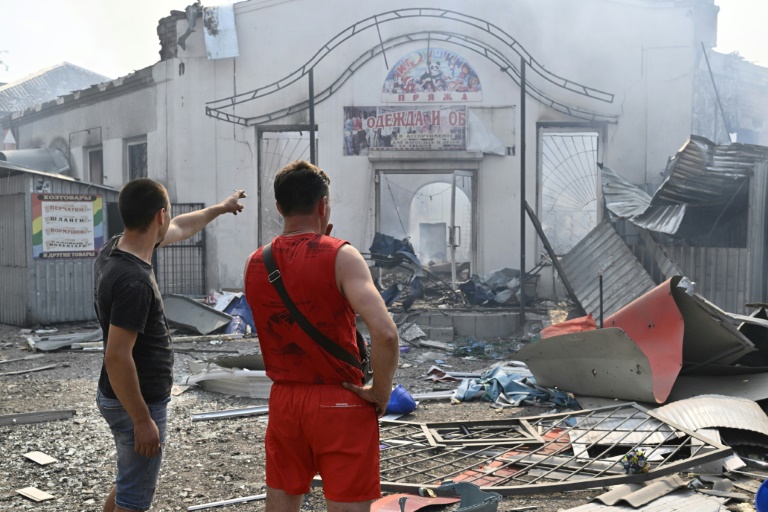
Russia’s claim of a breakthrough came as Moscow said Sunday its anti-aircraft defences shot down three Tochka-U cluster missiles launched by “Ukrainian nationalists” against Belgorod, close to the Ukrainian border.

Belgorod governor Vyacheslav Gladkov said 11 residential buildings and 39 houses were damaged.

Russia has previously accused Kyiv of conducting strikes on Russian soil, particularly in the Belgorod region.

Separately, Belarusian leader Alexander Lukashenko accused Kyiv of “provoking” his country and said his army intercepted missiles fired at his country by Ukrainian forces “around three days ago”.

Belarus is a long-term Russian ally that supported the February 24 invasion and has been accused by Kyiv of launching its own attacks on Ukrainian territory.

But Lukashenko denied any involvement in a recent cross-border incident, which would represent an escalation of the conflict. 

“As I said more than a year ago, we do not intend to fight in Ukraine,” he was quoted as saying by state news agency Belta on Saturday.

– ‘Fierce fighting’ –

Missiles continued to rain down across Ukraine, killing dozens, and fierce fighting continued according to Ukrainian President Volodymyr Zelensky.

“Fierce fighting continues along the entire frontline, in Donbas,” he said in an address late Saturday, adding that “enemy activity in the Kharkiv region is intensifying”.

Two people were killed and three wounded — including two children — in a strike on the town of Dobropillya, local authorities in Donetsk said.

A Ukrainian official said Sunday that his country’s forces had “put out of action” a Russian military base in Melitopol, while the Ukrainian army said the air force had taken out around 20 Russian units and two ammunition depots.

“The town of Melitopol is covered in smoke,” said the official, the city’s exiled mayor Ivan Fedorov. 

Zelensky warned against complacency in cities that have been spared the violence seen in others. 

“The war is not over,” he said.

– ‘Colossal investments’ needed –

In his address, Zelensky also spoke about a conference on Ukraine’s reconstruction set to start Monday in Switzerland.

Leaders from dozens of countries and international organisations will gather in the city of Lugano with the aim of providing a roadmap for the war-ravaged country’s recovery.

Zelensky said “colossal investments” would be needed and that 10 regions of Ukraine had been affected in the war, with many towns and villages needing to be “rebuilt from scratch”.

Ukraine will also face demands for broad reforms, especially in cracking down on corruption.

The need for reforms had been underscored by European Commission chief Ursula von der Leyen, who has said the coveted European Union membership was “within reach” for Ukraine, but urged Kyiv to work on anti-corruption measures.

In peacetime, Ukraine is a major agricultural exporter, but Russia’s invasion has damaged farmland and seen Ukraine’s ports seized, razed or blockaded — sparking concerns about food shortages, particularly in poor countries.

Farmer Sergiy Lyubarsky, whose fields are close to the frontline, warned time was running out to harvest this year’s crop. 

“We can wait until August 10 at the latest, but after that, the grains are going to dry out and fall to the ground,” he said.

Western powers have accused Putin of using the trapped harvest as a weapon to increase pressure on the international community, and Russia has been accused of stealing grain.

Uzbek president announces 'fatalities' during reforms unrest

Uzbekistan’s president on Sunday announced fatalities among civilians and law enforcement personnel during protests in the country’s autonomous Karakalpakstan region, which has seen massive unrest over a planned constitutional reform.

“Unfortunately, there are fatalities among civilians and law enforcement officers,” Shavkat Mirziyoyev said Sunday during a speech in Karakalpakstan that was relayed by his press service on Telegram. 

He did not give any specific number or detail the cause of death.

Uzbekistan on Saturday decreed a month-long state of emergency in the impoverished western region where a large protest erupted Friday over proposed changes to the constitution that would have weakened the region’s status.

Mirziyoyev has since pledged to withdraw the amendments affecting the region from the draft constitution, which is expected to go to a referendum in the coming months. 

The clashes pose the most significant challenge yet to the 64-year-old’s rule since he rose to power from the post of prime minister in 2016 when long-serving mentor Islam Karimov died. 

On Sunday, Mirziyoyev made his second visit to Karakalpakstan in two days and accused protest organisers of “hiding behind false slogans” and trying to “seize the buildings of local government bodies” in an address to local lawmakers.

“Several groups attempted to seize the buildings of the Nukus City Department of Internal Affairs and the Department of the National Guard in order to obtain weapons,” he claimed. 

– ‘Shameless provocations’ –

“Taking advantage of their numerical superiority, these men attacked law enforcement officers, severely beating them and inflicting severe injuries,” he added.

Videos that appear to show people dead and injured from the clashes have raised concerns that the security crackdown has caused a high death toll. 

Uzbek lawmaker Bobur Bekmurodov complained of “shameless provocations” as internet users shared footage of men in uniform moving through a street covered in red liquid on Twitter.

“Dear friends, please do not become part of this shameless provocation. Check the information. It is just red colour water. Please, share the truth!” he tweeted.

Police said Saturday they had detained “organisers of riots” but did not provide figures. 

Karakalpakstan has seen significant internet outages since the draft amendments were published last week, stripping the region of its nominal “sovereign” status and its right to secede from Uzbekistan via popular referendum.   

Mirziyoyev’s press service said Saturday night that he had pledged articles of the constitution concerning the region would remain unchanged “on the basis of… the opinions stated by residents of Karakalpakstan” during his meetings with local authorities. 

Residents of the region told AFP that they have received SMS notifications that the amendments were cancelled.  

The autonomous republic’s constitutional right to break away from Uzbekistan is a legacy of an agreement struck between Karakalpakstan and the central government in Tashkent after the collapse of the Soviet Union. The authoritarian government has never appeared willing to entertain the prospect.

One amendment set to remain in the draft document will allow presidents to run for seven-year terms, directly benefitting Mirziyoyev, who crushed token opponents to secure a second five-year term in October. 

Karakalpakstan takes its name from the Karakalpak people. The minority is well represented in cities such as Nukus, where the protest took place, but now constitute a minority in the western region of two million people.

The size of the protest on Friday was unprecedented for the region and possibly Uzbekistan, which saw over 170 people killed during unrest in 2005 in the city of Andijan according to an official toll considered on the low side at the time.  

Two Nukus eyewitnesses speaking on condition of anonymity confirmed to AFP that a smaller group of protesters had gathered close to a city market on Saturday night before police broke up the demonstration using what appeared to be tear gas and smoke grenades. 

Eyewitnesses said Nukus was quiet on Sunday morning, with police and military patrolling the streets.  

Karakalpakstan is closely associated with the drying of the Aral Sea — one of the world’s great man-made environmental catastrophes.  

Once the world’s fourth-largest lake, the Aral shrank massively due to Soviet agricultural policies that saw rivers that fed into it diverted, largely to expand cotton production. 

West African bloc studies sanctions for coup-hit states

West African leaders met on Sunday in Ghana’s capital Accra to review sanctions they have imposed on three military-ruled countries in their volatile region.

Heads of the Economic Community of West African States (ECOWAS) were gathering to assess efforts to secure timetables and other guarantees for restoring civilian rule in Mali, Guinea and Burkina Faso.

Mali underwent coups in August 2020 and May 2021, followed by Guinea in September 2021 and Burkina Faso this January.

Fearing contagion in a region notorious for military takeovers, ECOWAS has imposed tough trade and economic sanctions against Mali, but lesser punishments against Guinea and Burkina.

Dominating the summit will be the review of a month-long bid to push the juntas to set an early timetable for returning to barracks.

ECOWAS in January imposed a trade and financial embargo on Mali after its military government unveiled a scheme to rule for five years.

At a June 4 summit, no decision was made for the three countries. 

Opening Sunday’s summit, Ghanaian President Nana Akufo-Addo said the 15-member bloc was committed to supporting the three countries’ return to democratic order and would take appropriate decisions after hearing reports on their progress.

The sanctions have badly hit poor and landlocked Mali, whose economy is already under severe strain from a decade-long jihadist insurgency.

After months of bitter talks, the Malian authorities on Wednesday approved a plan to hold presidential elections in February 2024.

The vote will be preceded by a referendum on a revised constitution in March 2023 and legislative elections in late 2023.

The ECOWAS mediator in Mali, former Nigerian leader Goodluck Jonathan, visited the country last week. A member of his entourage told AFP Mali had made “enormous progress”.

Mali’s top diplomat Abdoulaye Diop on Friday said the recent political developments were moving the country towards a lifting of the sanctions.

But a new electoral law, adopted on June 17, could be a stumbling block in the talks as it allows a military figure to contest the presidential elections.

– Guinea transition ‘unthinkable’ –

Burkina Faso — another Sahel country caught up in jihadist turmoil — and Guinea have so far only been suspended from the bodies of the 15-nation bloc but could face harsher sanctions.

Burkina’s junta has proposed a constitutional referendum in December 2024 and legislative and presidential elections in February 2025.

Visiting Ouagadougou for the second time in a month on Saturday, ECOWAS mediator Mahamadou Issoufou praised junta leader Lieutenant Colonel Paul-Henri Sandaogo Damiba and his government for their “openness to dialogue”. 

The timetable to enable a return to civilian rule and the situation of deposed leader Roch Marc Christian Kabore were also discussed, said the former president of Niger.

Political parties allied to Kabore denounced the junta’s plans on Friday, saying they were not consulted in advance.

The situation appears more complex in Guinea, whose junta has refused an ECOWAS mediator and announced a 36-month transition — a period that African Union chairman and Senegalese President Macky Sall has described as “unthinkable”.

ECOWAS avoided ruling on sanctions at a June 4 meeting and instead gave itself another month to negotiate.

Guinea this week has led a diplomatic offensive to assuage the concerns of regional leaders.

The country’s post-coup prime minister Mohamed Beavogui on Saturday met the United Nations’ special representative for West Africa and the Sahel, Mahamat Saleh Annadif.

The government said it wanted to reassure its ECOWAS “brothers” of its commitment to undertaking a peaceful and inclusive democratic transition.

Guinea’s military regime met the main political parties on Monday, but they have made their participation in the dialogue conditional on the nomination of an ECOWAS mediator.

India landslide death toll rises to 37

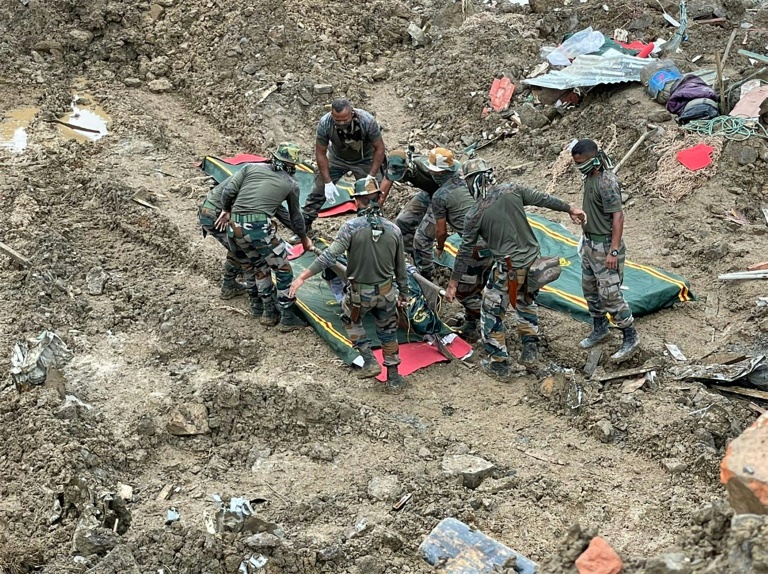
The death toll from a massive landslide in India hit 37 on Sunday, authorities said, as rescue teams battled teeming rain to search for 25 others still missing three days later.

A wall of mud and rock swamped a camp housing railway construction workers and members of the Territorial Army in remote Manipur state in the northeast after heavy rain early on Thursday.

Emergency teams rescued 18 survivors within the first few hours of the incident.

But army spokesperson Angom Bobin Singh said Sunday that 28 people were still missing before an announcement later that three more bodies had been retrieved. 

The fourth day of search operations was ongoing “despite adverse weather conditions” because of “heavy rains and fresh landslides”, Singh said.

The remote northeast has generally poor road and railway infrastructure but India in the last few years has pushed ambitious infrastructure projects to match a Chinese build-up across the border. 

The picturesque region — with mountains and dense forests — has been pummelled by heavy rainfall in recent weeks, triggering landslides and floods.

Dozens were killed in the area after flooding last month, with relentless rains causing landslides and inundating homes.

Experts say climate change is increasing the number of extreme weather events around the world, with damming, deforestation and development projects in India exacerbating the human toll.

Sri Lanka grinds to a halt as fuel reserves shrink

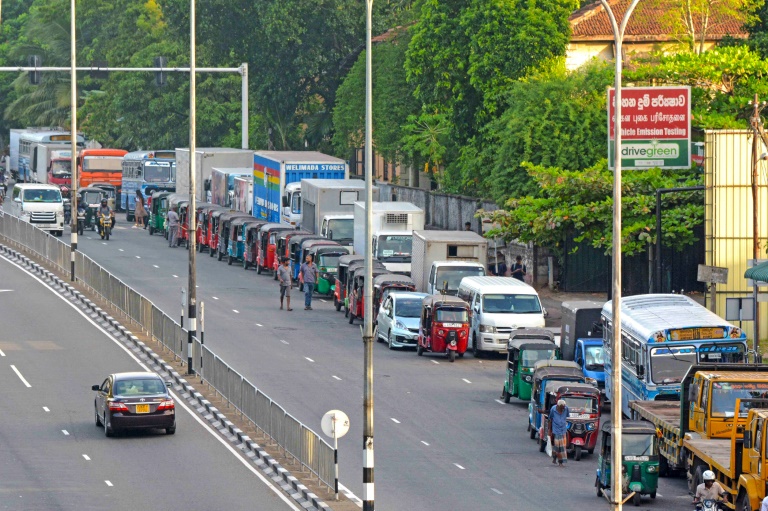
Sri Lanka has less than a day’s worth of fuel left, the energy minister said Sunday, with public transport grinding to a halt as the country’s economic crisis deepened.

Petrol and diesel queues snaked through the capital for kilometres, though most pumping stations have been without fuel for days.

Energy minister Kanchana Wijesekera said petrol reserves in the country were about 4,000 tonnes, just below one day’s worth of consumption.

“The next petrol shipment is expected between the 22nd and 23rd (of July),” Wijesekera told reporters in Colombo. 

“We have contacted other suppliers, but we can’t confirm any new supplies before the 22nd.”

Last week, cash-strapped Sri Lanka announced a two-week halt to all fuel sales except for essential services to save petrol and diesel for emergencies.

Most shops were closed Sunday, with the situation expected to worsen when banks and offices reopen on Monday. 

Desperate people were seen trying to flag down the few vehicles on the road hoping for a ride.

Privately owned buses, which account for two-thirds of the country’s fleet, said they operated a skeleton service on Sunday as they were badly affected by the fuel shortage.

“We operated about 1,000 busses across the country out of the 20,000 owned by our members,” Private Bus Operators Association chairman Gemunu Wijeratne said.

“The situation will certainly get worse tomorrow because we have no way of getting diesel.”   

He said services would be curtailed further on Monday and saw no immediate solution.

Three-wheel taxis — a popular last-mile transport — were also off the streets, with most seen in days-long queues to get a ration of six litres of petrol.

A shortage of foreign currency to finance even the most essential imports has led to the country’s worst economic crisis, with its 22 million people facing severe hardships daily.

The country has also faced record-high inflation and lengthy power blackouts since late last year.

All non-essential government institutions and schools have been ordered shut until July 10 to reduce commuting and save energy. 

Local media reported there had been sporadic clashes outside fuel stations. 

Last week, troops opened fire to disperse a mob protesting against the military jumping the queue.

Sri Lanka is currently in talks with the International Monetary Fund for a possible bailout after the country defaulted on its $51 billion external debt in April.

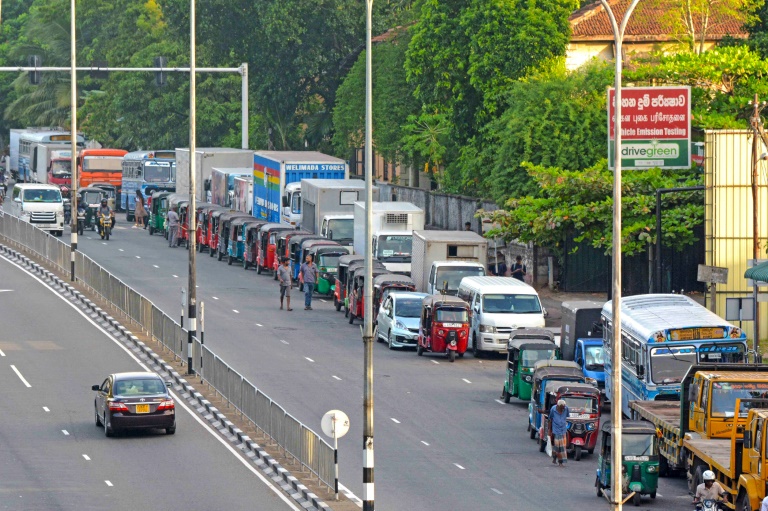
Sri Lanka grinds to a halt as fuel reserves shrink

Sri Lanka has less than a day’s worth of fuel left, the energy minister said Sunday, with public transport grinding to a halt as the country’s economic crisis deepened.

Petrol and diesel queues snaked through the capital for kilometres, though most pumping stations have been without fuel for days.

Energy minister Kanchana Wijesekera said petrol reserves in the country were about 4,000 tonnes, just below one day’s worth of consumption.

“The next petrol shipment is expected between the 22nd and 23rd (of July),” Wijesekera told reporters in Colombo. 

“We have contacted other suppliers, but we can’t confirm any new supplies before the 22nd.”

Last week, cash-strapped Sri Lanka announced a two-week halt to all fuel sales except for essential services to save petrol and diesel for emergencies.

Most shops were closed Sunday, with the situation expected to worsen when banks and offices reopen on Monday. 

Desperate people were seen trying to flag down the few vehicles on the road hoping for a ride.

Privately owned buses, which account for two-thirds of the country’s fleet, said they operated a skeleton service on Sunday as they were badly affected by the fuel shortage.

“We operated about 1,000 busses across the country out of the 20,000 owned by our members,” Private Bus Operators Association chairman Gemunu Wijeratne said.

“The situation will certainly get worse tomorrow because we have no way of getting diesel.”   

He said services would be curtailed further on Monday and saw no immediate solution.

Three-wheel taxis — a popular last-mile transport — were also off the streets, with most seen in days-long queues to get a ration of six litres of petrol.

A shortage of foreign currency to finance even the most essential imports has led to the country’s worst economic crisis, with its 22 million people facing severe hardships daily.

The country has also faced record-high inflation and lengthy power blackouts since late last year.

All non-essential government institutions and schools have been ordered shut until July 10 to reduce commuting and save energy. 

Local media reported there had been sporadic clashes outside fuel stations. 

Last week, troops opened fire to disperse a mob protesting against the military jumping the queue.

Sri Lanka is currently in talks with the International Monetary Fund for a possible bailout after the country defaulted on its $51 billion external debt in April.

Close Bitnami banner
Bitnami