World

Russia claims key Ukraine city, accuses Kyiv of missile strikes

Russia claimed on Sunday to have captured the strategic Ukrainian city of Lysychansk and the entire frontline Lugansk region which would mark a decisive breakthrough for Moscow’s forces seeking control of the country’s east.

The development came as Belarus said it had intercepted missiles fired by Kyiv and Russia reported that Ukraine launched three cluster missiles at Belgorod, killing four people.

Lysychansk had been the last major city in the Lugansk area of the eastern Donbas still in Ukrainian hands and its capture would signal a deeper push into the Donbas, Moscow’s focus since retreating from Kyiv.

On Saturday, there were conflicting reports about Lysychansk’s status with Ukraine denying Moscow’s claim to have encircled the entire city, located across the river from neighbouring Severodonetsk which Russian forces seized last week.

Ukraine has yet to comment on the claim that Lysychansk has fallen following days of intense clashes.

“Sergei Shoigu has informed the commander in chief of the Russian armed forces, Vladimir Putin, of the liberation of the People’s Republic of Lugansk,” the defence ministry said in a statement quoted by Russian news agencies.

A few minutes prior to the announcement, which AFP has not verified, a spokesman for the Russian defence ministry had said fighting was ongoing in Lysychansk and that Ukrainian forces were “completely” surrounded. 

– Russian city struck –

Russia’s claim of a breakthrough came as Moscow said Sunday its anti-aircraft defences shot down three Tochka-U cluster missiles launched by “Ukrainian nationalists” against Belgorod, close to the Ukrainian border.

Belgorod governor Vyacheslav Gladkov said 11 residential buildings and 39 houses were damaged.

Russia has previously accused Kyiv of conducting strikes on Russian soil, particularly in the Belgorod region.

Separately, Belarusian leader Alexander Lukashenko accused Kyiv of “provoking” his country and said his army intercepted missiles fired at his country by Ukrainian forces “around three days ago”.

Belarus is a long-term Russian ally that supported the February 24 invasion and has been accused by Kyiv of launching its own attacks on Ukrainian territory.

But Lukashenko denied any involvement in a recent cross-border incident, which would represent an escalation of the conflict. 

“As I said more than a year ago, we do not intend to fight in Ukraine,” he was quoted as saying by state news agency Belta on Saturday.

– ‘Fierce fighting’ –

Missiles continued to rain down across Ukraine, killing dozens, and fierce fighting continued according to Ukrainian President Volodymyr Zelensky.

“Fierce fighting continues along the entire front line, in Donbas,” he said in an address late Saturday, adding that “enemy activity in the Kharkiv region is intensifying”.

In the small Donetsk town of Siversk, one resident told AFP that “the bombing goes on day and night”.

Two people were killed and three wounded — including two children — in a strike on the town of Dobropillya, local authorities in Donetsk said.

Rockets also struck residential properties in Sloviansk in the heart of the Donbas, killing a woman in her garden and wounding her husband, a neighbour told AFP Saturday, describing debris showered across the neighbourhood.

The witness said the strike, which took place on Friday, was thought to use cluster munitions, which spread over a large area before exploding, striking buildings and people who were outdoors.

Zelensky warned against complacency in cities that have been spared the violence seen in others. 

“The war is not over,” he said.

“Unfortunately, its cruelty is only increasing in some places, and it cannot be forgotten.”

– ‘Colossal investments’ needed –

In his address, Zelensky also spoke about a conference on Ukraine’s reconstruction set to start Monday in Switzerland.

Leaders from dozens of countries and international organisations will gather in the city of Lugano with the aim of providing a roadmap for the war-ravaged country’s recovery.

Rebuilding Ukraine “requires colossal investments — billions, new technologies, best practices, new institutions and, of course, reforms,” Zelensky said.

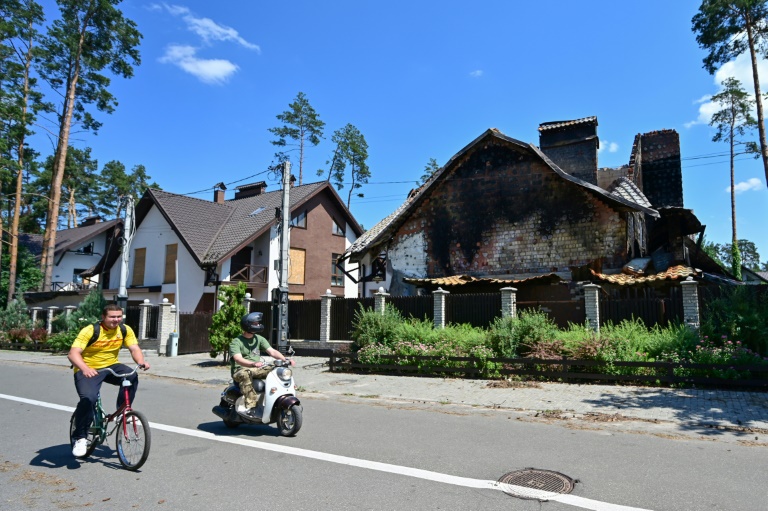
He said 10 regions of Ukraine had been affected in the war, with many towns and villages needing to be “rebuilt from scratch”.

The roadmap is expected to lay out reconstruction needs including damaged and destroyed infrastructure, Ukraine’s devastated economy, and also environmental and social needs.

The effort is expected to cost hundreds of billions of dollars.

Ukraine will also face demands for broad reforms, especially in cracking down on corruption.

The need for reforms had been underscored by European Commission, Ursula von der Leyen, who has said the coveted European Union membership was “within reach” for Ukraine, but urged Kyiv to work on anti-corruption measures.

In peacetime, Ukraine is a major agricultural exporter, but Russia’s invasion has damaged farmland and seen Ukraine’s ports seized, razed or blockaded — sparking concerns about food shortages, particularly in poor countries.

Farmer Sergiy Lyubarsky, whose fields are close to the frontline, warned time was running out to harvest this year’s crop. 

“We can wait until August 10 at the latest, but after that, the grains are going to dry out and fall to the ground,” he said.

Western powers have accused Putin of using the trapped harvest as a weapon to increase pressure on the international community, and Russia has been accused of stealing grain.
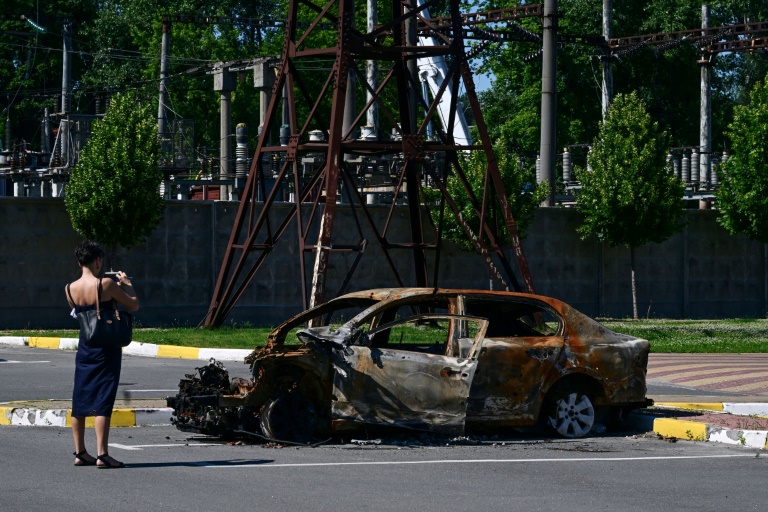
War in Ukraine: Latest developments

Here are the latest developments in the war in Ukraine:

– Three dead in Belgorod blasts –

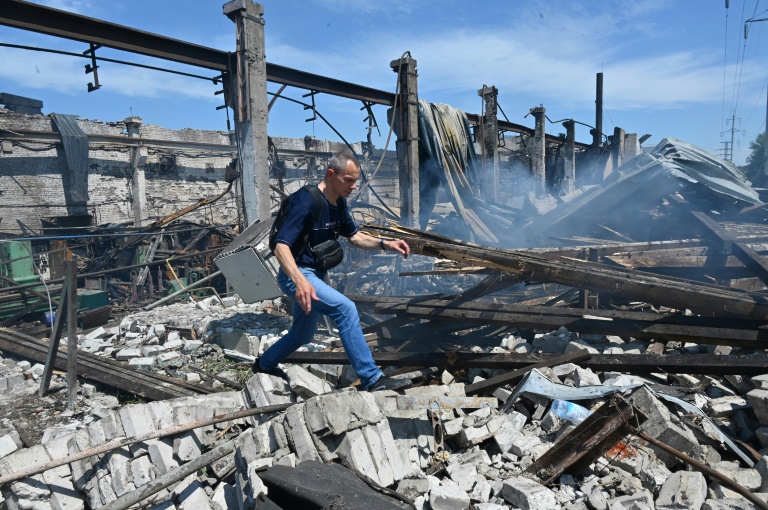
At least three people are killed and four injured in a series of “strong explosions” that rocked the Russian city of Belgorod, according to the governor of the region, which borders Ukraine. 

“We are currently trying to establish the circumstances of the incident. The anti-aircraft defences were in operation,” Belgorod governor Vyacheslav Gladkov says on Telegram.

Eleven residential buildings and 39 houses were damaged in the explosions which occurred in the early hours, he says, but stops short of accusing Ukrainian forces of being behind the strikes.

– Ukraine ‘fired missiles’: Lukashenko –

Belarusian President Alexander Lukashenko says his army had shot down missiles fired into their territory from Ukraine and vows to respond “instantly” to any enemy strike.

“We are being provoked,” Lukashenko is quoted as saying by state news agency Belta. “I must tell you that around three days ago, maybe more, they tried to strike military targets in Belarus from Ukraine.

Ukraine last week said missiles fired from Belarus had struck a border region inside its territory.

– Separatists say key city surrounded –

Ukrainian separatists backed by Russia say they had “completely” encircled the key city of Lysychansk in the eastern Lugansk region.

“Today the Lugansk popular militia and Russian forces occupied the last strategic heights, which allows us to confirm that Lysychansk is completely encircled,” Andrei Marotchko, a spokesman for the separatist forces, tells the TASS news agency.

Fighting rages as Russian troops intensify their offensive in parts of the hard-fought Ukrainian city.

Capturing the city will allow the Russians to push deeper into the wider eastern region of the Donbas, which has become the focus of their offensive since failing to capture Kyiv after launching their military operation in Ukraine in late February.

– …and Kyiv denies surrounded claim –

The Ukrainian army however rejects the claims that Lysychansk has been surrounded, but says heavy fighting was ongoing on its edges.

“Fighting rages around Lysychansk. (But) luckily the city has not been encircled and is under control of the Ukrainian army,” Ruslan Muzytchuk, a spokesman for the Ukrainian National Guard, says on Ukrainian television.

“The Russians are entrenching themselves in a district of Lysychansk, the city is on fire,” Sergei Gaidai, governor of the Lugansk region, adds on Telegram.

“They attacked the city with inexplicably brutal tactics,” he says.

– ‘Phosphorus bombs on Snake Island’ –

Ukraine’s army accuses Russia of carrying out strikes using incendiary phosphorus munitions on Snake Island, just a day after Moscow withdrew its forces from the rocky outcrop in the Black Sea.

“Russian air force SU-30 planes twice conducted strikes with phosphorus bombs on Zmiinyi island,” it says in a statement Friday, using another name for Snake Island.

The Russian defence ministry has described the retreat as “a gesture of goodwill” meant to demonstrate that Moscow will not interfere with UN efforts to organise protected grain exports from Ukraine.

– Snake Island decision ‘changes situation’: Zelensky –

Russia’s decision to abandon Snake Island “changes the situation in the Black Sea considerably”, Ukrainian President Volodymyr Zelensky says.

“It does not yet guarantee security. It does not yet guarantee that the enemy will not return. But it already considerably limits the actions of the occupiers,” he says Thursday in his daily address.

A strategic target, Snake Island sits aside shipping lanes near Odessa port. Russia had attempted to install missile and air defence batteries while under fire from drones.

Britain’s Ministry of Defence says in an intelligence update that Russia has highly likely withdrawn “owing to the isolation of the garrison and its increasing vulnerability to Ukrainian strikes, rather than as a ‘gesture of good will’, as it has claimed.”

 – Deadly strike on Odessa –

Missile strikes kill 21 people and wound dozens in Ukraine’s flashpoint Odessa region on the Black Sea, says Sergiy Bratchuk, Odessa deputy chief of district.

The strikes come a day after Russian troops abandoned positions on the strategic Snake Island off the coast of Odessa.

Early Friday, missiles hit a nine-storey apartment building and a recreation centre in Serhiivka about 80 kilometres (50 miles) south of Odessa.

Two children were among the dead and six others among the injured, officials say.

Germany condemns the attack as “inhuman and cynical.”

– Russia ‘engaging in terror’: Zelensky –

Zelensky accuses Russia of engaging in state “terror” as he blames Moscow for missile strikes on a southern resort town that left 21 dead and dozens wounded.

burs-jhe/gw

Battle rages for Ukraine city, Belarus says downed missiles

Fighting raged as Russian troops intensified their offensive in parts of the hard-fought Ukrainian city of Lysychansk on Sunday, after Belarus announced its military had intercepted missiles fired by Kyiv’s forces.

“The Russians are entrenching themselves in a district of Lysychansk, the city is on fire,” Sergei Gaidai, governor of the Lugansk region, said on Telegram.

“They attacked the city with inexplicably brutal tactics,” he added.

Lysychansk is the last major city in the Lugansk area of the eastern Donbas region still in Kyiv’s hands.

Located across the river from neighbouring Severodonetsk, which Russian forces seized last week, its capture would signal a deeper push into the Donbas which has become Moscow’s focus since failing to capture Ukraine’s capital.

Gaidai’s update came hours after Ukraine denied claims by Moscow-backed separatists that they had encircled Lysychansk.

“The city has not been encircled and is under control of the Ukrainian army,” Ruslan Muzytchuk, a spokesman for the Ukrainian National Guard, said on Ukrainian television on Saturday.

Earlier in the day, Andrei Marochko, a spokesman for the separatist forces, told the TASS news agency that Lysychansk was “completely encircled”.

– Belarus interception –

The intense fighting came as Belarusian leader Alexander Lukashenko accused Kyiv of “provoking” his country and said his army intercepted missiles fired at his country by Ukrainian forces “around three days ago”.

The claim came one week after Ukraine said missiles struck a border region from Belarus, a long-term Russian ally that supported the February 24 invasion.

But Lukashenko denied any involvement, which would represent an escalation of the conflict. 

“As I said more than a year ago, we do not intend to fight in Ukraine,” he was quoted as saying by state news agency Belta on Saturday.

The violence also spilt into Russia on Sunday, with at least three people killed and four injured in “strong explosions” in Belgorod, which borders Ukraine.

Belgorod governor Vyacheslav Gladkov said 11 residential buildings and 39 houses were damaged but stopped short of accusing Ukrainian forces of being behind the strikes.

But Russia has previously accused Kyiv of conducting strikes on Russian soil, particularly in the Belgorod region.

– ‘Heavy losses’ –

Missiles continued to rain down across Ukraine, killing dozens. 

Ukrainian President Volodymyr Zelensky cited six strikes as of the evening in his daily address to the nation late Saturday.

“Fierce fighting continues along the entire front line, in Donbas,” he added, noting as well that “enemy activity in the Kharkiv region is intensifying”.

In the small Donetsk town of Siversk, one resident told AFP that “the bombing goes on day and night.”

Two people were killed and three wounded — including two children — in a strike on the town of Dobropillya, local authorities in Donetsk said.

Rockets also struck residential properties in Sloviansk in the heart of the Donbas, killing a woman in her garden and wounding her husband, a neighbour told AFP Saturday, describing debris showered across the neighbourhood.

The witness said the strike, which took place on Friday, was thought to use cluster munitions, which spread over a large area before exploding, striking buildings and people who were outdoors.

Zelensky warned against “a feeling of relaxation” in many rear cities. 

“The war is not over,” he said. “Unfortunately, its cruelty is only increasing in some places, and it cannot be forgotten.”

Russian defence ministry spokesman Igor Konashenkov said Ukraine was “suffering heavy losses on all fronts”, listing what he said were military targets across the country hit with artillery and missiles.

– ‘Rebuilt from scratch’ –

In his address, Zelensky also looked forward to a conference on Ukraine’s reconstruction set to start Monday in Switzerland.

Leaders from dozens of countries and international organisations will gather in the city of Lugano with the aim of providing a roadmap for the war-ravaged country’s recovery.

Rebuilding Ukraine “requires colossal investments — billions, new technologies, best practices, new institutions and, of course, reforms,” Zelensky said.

He said 10 regions of Ukraine had been affected in the war, with many towns and villages needing to be “rebuilt from scratch”.

The roadmap is expected to lay out reconstruction needs in terms of damaged and destroyed infrastructure, Ukraine’s devastated economy, and also environmental and social recovery needs.

The effort is expected to cost hundreds of billions of dollars.

Ukraine will also face demands for broad reforms, especially in cracking down on corruption.

The need for reforms had been underscored by European Commission, Ursula von der Leyen, who has said the coveted European Union membership was “within reach” for Ukraine, but urged Kyiv to work on anti-corruption measures.

In peacetime, Ukraine is a major agricultural exporter, but Russia’s invasion has damaged farmland and seen Ukraine’s ports seized, razed or blockaded — sparking concerns about food shortages, particularly in poor countries.

Farmer Sergiy Lioubarsky, whose fields are close to the frontline, warned time was running out to harvest this year’s crop. 

“We can wait until August 10 at the latest, but after that, the grains are going to dry out and fall to the ground,” he said.

Western powers have accused Putin of using the trapped harvest as a weapon to increase pressure on the international community, and Russia has been accused of stealing grain.
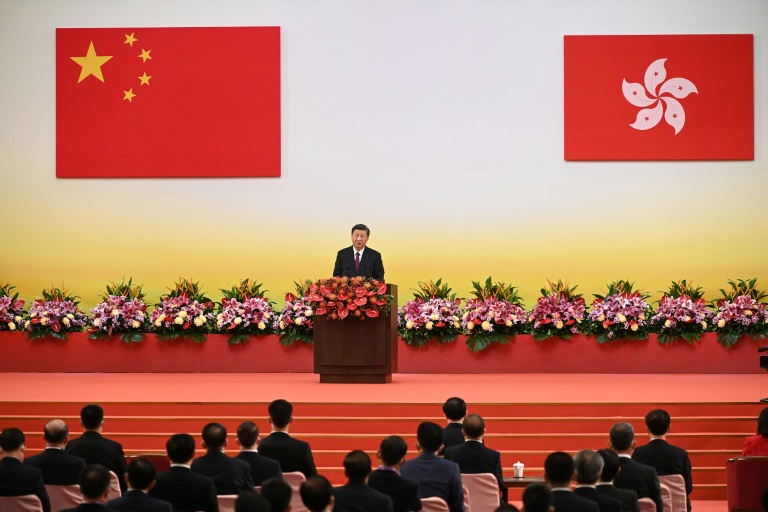
Hong Kong lawmaker tests Covid positive after photo with Xi

A Hong Kong lawmaker who posed for a group photo with Chinese President Xi Jinping during the leader’s visit to the financial hub this week confirmed Sunday he has since tested positive for coronavirus.

Xi visited Hong Kong under strict security measures to mark the 25th anniversary of the city’s handover from Britain in his first trip outside mainland China since the outbreak of the pandemic.

Steven Ho, a 42-year-old member of Hong Kong’s largest pro-Beijing party who sits in the city’s rubber stamp legislature, was one of about 100 officials granted close contact with Xi for a photo call on Thursday afternoon. 

Ho was standing two rows directly behind Xi, according to the photos released by the government.

The lawmaker tested negative on the first day of Xi’s visit on Thursday and returned an uncertain test on Friday, he said.

He did not take part in any events on Friday after the uncertain test result, he said in a statement on social media.

“The sample of July 1 was one with extremely low infectivity and it was categorised as ‘uncertain’, but for the sake of public security, I did not participate in the events on that day,” Ho wrote. 

Ho was the second member of the DAB party to have tested positive around Xi’s visit. 

Tam Yiu-chung, Hong Kong’s sole representative to Beijing’s top lawmaking body, tested positive on Thursday and was absent from all events.

China is the only major economy still pursuing a zero-Covid approach of eliminating outbreaks as they emerge, using snap lockdowns and mass testing.

Xi has not left China in nearly 900 days and the vast country’s borders have been largely sealed to most outsiders.

Hong Kong is pursuing a lighter version of zero-Covid but has kept heavy travel and gathering restrictions in place throughout the pandemic. 

Extraordinarily tight rules were imposed to ensure both the coronavirus and political opposition were not in Xi’s orbit during his trip to the city, where a democracy movement has been crushed since huge protests three years ago. 

Hundreds of government officials, legislators and other invited guests were forced into an anti-Covid “closed-loop” system, which included limiting their social contacts, taking daily PCR tests and checking into a quarantine hotel in the days leading up to the visit. 

During the visit, parts of the city were shut down, prominent dissidents were placed under heavy police surveillance, and multiple journalists were barred from covering the official events. 

Nine arrests were made by the city’s national security police in the week before Xi’s visit and at least two arrests were made on Friday.

Fossil discovery solves mystery of how pandas became vegetarian

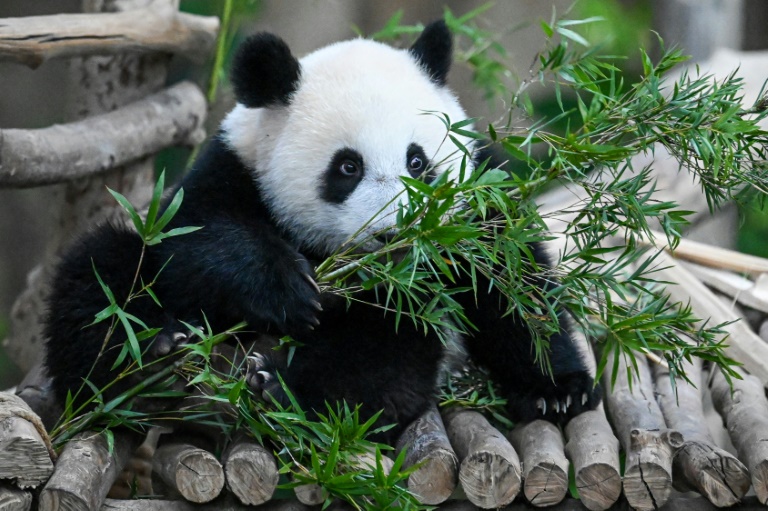
The discovery of panda fossils in China has helped researchers solve the mystery of how the giant species developed a “false thumb” and became the only dedicated vegetarian in the bear family.

Fossils dating back about six million years found in southwest China’s Yunnan province included a greatly enlarged wrist bone called a radial sesamoid.

It is the oldest known evidence of the modern giant panda’s false thumb that allows it to grip and break heavy bamboo stems, scientists wrote on a research paper published in the latest edition of the Scientific Reports.

The fossils belong to the now-extinct ancient relative of the panda called an Ailurarcto that lived in China six to eight million years ago.

“The giant panda is… a rare case of a large carnivore with a short, carnivorous digestive tract… that has become a dedicated herbivore,” Wang Xiaoming, curator of vertebrate palaeontology at the Natural History Museum of Los Angeles County, said.

“The false thumb in Ailurarctos shows… for the first time, the likely timing and steps in the evolution of bamboo feeding in pandas.”

Researchers had known about the panda’s false thumb, which works similar to a human thumb, for about a century. But the lack of fossil evidence had left unanswered questions about how and when the extra digit — not seen in any other bear — evolved.

“While the giant panda’s false thumb is not the most elegant or dexterous… even a small, protruding lump at the wrist can be a modest help in preventing bamboo from slipping off bent fingers,” Wang wrote.

The fossils found near Zhaotong city in the north of Yunnan included a false thumb that was longer than that found in modern pandas, but without an inward hook on the end.

The hook and a fleshy pad around the based of the thumb evolved over time since it had to “bear the burden of considerable body weight”, the paper said.

Pandas traded the high-protein, omnivorous diet of their ancestors for bamboo, that is low in nutrients available year-round in South China millions of years ago. 

They eat for up to 15 hours a day and an adult panda can consume 45kg of bamboo a day. While their diet is mostly vegetarian, wild panda are known to occasionally hunt small animals.

Fossil discovery solves mystery of how pandas became vegetarian

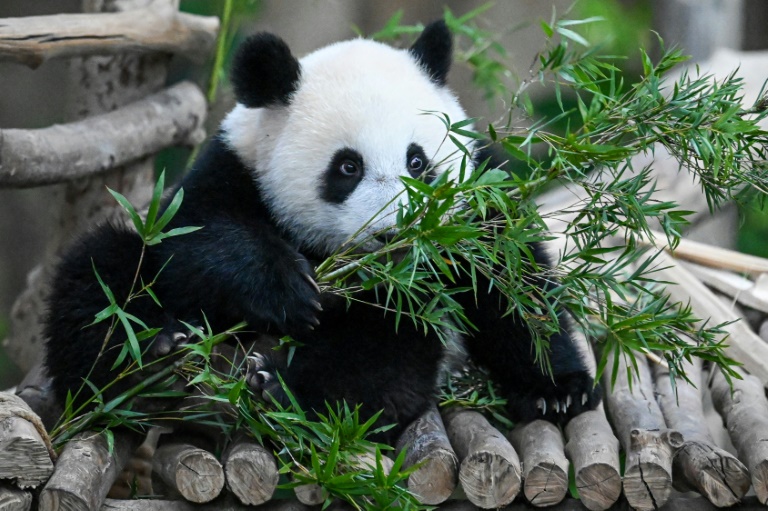
The discovery of panda fossils in China has helped researchers solve the mystery of how the giant species developed a “false thumb” and became the only dedicated vegetarian in the bear family.

Fossils dating back about six million years found in southwest China’s Yunnan province included a greatly enlarged wrist bone called a radial sesamoid.

It is the oldest known evidence of the modern giant panda’s false thumb that allows it to grip and break heavy bamboo stems, scientists wrote on a research paper published in the latest edition of the Scientific Reports.

The fossils belong to the now-extinct ancient relative of the panda called an Ailurarcto that lived in China six to eight million years ago.

“The giant panda is… a rare case of a large carnivore with a short, carnivorous digestive tract… that has become a dedicated herbivore,” Wang Xiaoming, curator of vertebrate palaeontology at the Natural History Museum of Los Angeles County, said.

“The false thumb in Ailurarctos shows… for the first time, the likely timing and steps in the evolution of bamboo feeding in pandas.”

Researchers had known about the panda’s false thumb, which works similar to a human thumb, for about a century. But the lack of fossil evidence had left unanswered questions about how and when the extra digit — not seen in any other bear — evolved.

“While the giant panda’s false thumb is not the most elegant or dexterous… even a small, protruding lump at the wrist can be a modest help in preventing bamboo from slipping off bent fingers,” Wang wrote.

The fossils found near Zhaotong city in the north of Yunnan included a false thumb that was longer than that found in modern pandas, but without an inward hook on the end.

The hook and a fleshy pad around the based of the thumb evolved over time since it had to “bear the burden of considerable body weight”, the paper said.

Pandas traded the high-protein, omnivorous diet of their ancestors for bamboo, that is low in nutrients available year-round in South China millions of years ago. 

They eat for up to 15 hours a day and an adult panda can consume 45kg of bamboo a day. While their diet is mostly vegetarian, wild panda are known to occasionally hunt small animals.

West African bloc assesses sanctions for coup-hit states

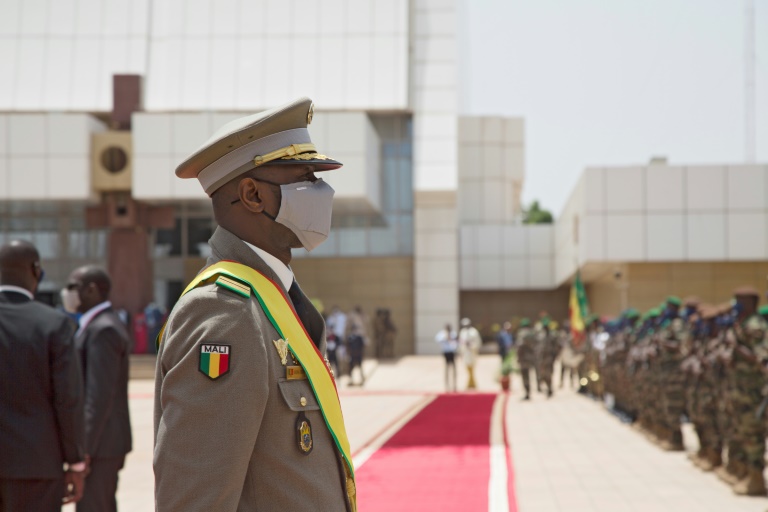
West African leaders meet on Sunday in Ghana’s capital Accra to review sanctions they have imposed on three military-ruled countries in their volatile region.

Heads of the Economic Community of West African States (ECOWAS) are gathering to assess efforts to nail down timetables and other guarantees for restoring civilian rule in Mali, Guinea and Burkina Faso.

Mali underwent coups in August 2020 and May 2021, followed by Guinea in September 2021 and Burkina Faso this January.

Fearing contagion in a region notorious for military takeovers, ECOWAS has imposed tough trade and economic sanctions against Mali, but lesser punishments against Guinea and Burkina.

Dominating the summit will be the review of a month-long bid to push the juntas to set an early timetable for returning to barracks.

ECOWAS in January imposed a trade and financial embargo on Mali after its military government unveiled a scheme to rule for five years.

The measures have badly hit the poor landlocked country, whose economy is already under severe strain from a decade-long jihadist insurgency.

After months of bitter talks, the Malian authorities on Wednesday approved a plan to hold presidential elections in February 2024.

The vote will be preceded by a referendum on a revised constitution in March 2023 and legislative elections in late 2023.

The ECOWAS mediator in Mali, former Nigerian leader Goodluck Jonathan, visited the country last week. A member of his entourage told AFP Mali had made “enormous progress”.

Mali’s top diplomat Abdoulaye Diop on Friday said the recent political developments were moving the country towards a lifting of the sanctions.

But a new electoral law, adopted on June 17, could be a stumbling block in the talks as it allows a military figure to contest the presidential elections.

– Guinea transition ‘unthinkable’ –

Burkina Faso — another Sahel country caught up in jihadist turmoil — and Guinea have so far only been suspended from the bodies of the 15-nation bloc but could face harsher sanctions.

Burkina’s junta has proposed a constitutional referendum in December 2024 and legislative and presidential elections in February 2025.

Visiting Ouagadougou for the second time in a month on Saturday, ECOWAS mediator Mahamadou Issoufou praised junta leader Lieutenant Colonel Paul-Henri Sandaogo Damiba and his government for their “openness to dialogue”. 

The timetable to enable a return to civilian rule and the situation of deposed leader Roch Marc Christian Kabore were also discussed, said the former president of Niger.

Political parties allied to Kabore denounced the junta’s plans on Friday, saying they were not consulted in advance.

The situation appears more complex in Guinea, whose junta has refused an ECOWAS mediator and announced a 36-month transition — a period that African Union chairman and Senegalese President Macky Sall has described as “unthinkable”.

ECOWAS avoided ruling on sanctions at a June 4 meeting and instead gave itself another month to negotiate.

Guinea this week has led a diplomatic offensive to assuage the concerns of regional leaders.

The country’s post-coup prime minister Mohamed Beavogui on Saturday met the United Nations’ special representative for West Africa and the Sahel, Mahamat Saleh Annadif.

The government said it wanted to reassure its ECOWAS “brothers” of its commitment to undertaking a peaceful and inclusive democratic transition.

Guinea’s military regime met the main political parties on Monday, but they have made their participation in the dialogue conditional on the nomination of an ECOWAS mediator.

DR Congo drug manufacturing plan sparks safety concerns

Sitting at his desk overlooking a pharmaceutical factory floor on the outskirts of the Congolese capital Kinshasa, Joss Ilunga Dijimba, 52, cracked a jovial smile.

“It’s not easy doing business in Congo,” he said.

His family was forced to relocate the factory in the 1990s to survive bouts of mass looting. And nowadays, there are onerous taxes, customs duties, and problems retaining talented staff. 

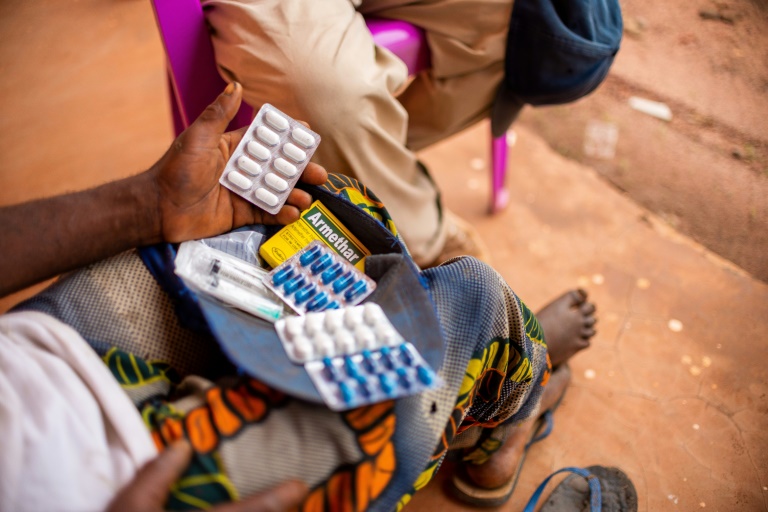
His company, which employs about 40 people and produces generics such as paracetamol, is one of a tiny number of drug manufacturers in the Democratic Republic of Congo, an impoverished nation roughly the size of Western Europe. 

But a government plan to require hospitals and NGOs to buy more locally produced drugs could soon boost the fledgling pharmaceutical industry — despite fears in some quarters that safety standards are far below international norms.

Several NGOs, some of which provide medical care in the DRC’s conflict-torn east, have requested opt-outs.

At the small Pharmagros plant, behind barbed-wire walls near the Congo river, men in hairnets and white coats formulate medicines with imported precursor using lab equipment in airconditioned rooms. 

“Promoting local industry’s a good thing,” said Dijimba, a University of Texas graduate, insisting that several Congolese firms, including his, maintained high standards. 

“It could grow the middle class.”

About 73 percent of the DRC’s population of 90 million lives on under $1.9 a day, according to the World Bank. Most products in the African country are imported.

– ‘At your own peril’ –

The Congolese government has designated 35 drug molecules, including paracetamol, that medical facilities will be required to purchase in locally made form.

The government wants to stimulate business without banning imports, said Donatien Kabamb Kabey, the pharmaceuticals director at the DRC’s health ministry.

He explained that all the molecules can be replaced with imported equivalents, suggesting that ibuprofen could replace paracetamol, for example.

Although not yet implemented, the policy already appears to be working.

Fifteen new pharma businesses are setting up in the DRC ahead of the new rules, Kabey said, which will add to the existing 24.

The policy was partly designed to encourage factories to return after fleeing the country in the 1990s, he added, when unpaid soldiers went on the rampage towards the end of ex-dictator Mobutu Sese Seko’s reign. 

But experts warn that Congolese-made medicines face a major challenge: reassuring doctors and patients that they meet regulatory standards.

“When you go to the private sector in Congo, you do it at your own peril,” said Ed Vreeke, who runs the Belgium-based independent pharmaceutical auditing firm Quamed.

“They know darn well that the quality they produce is not good.”

Vreeke said Congolese regulators had improved, but the country lacked the massive resources needed to properly perform audits, check labels, and inspect the chemical composition of drugs for safety.

Kabey, whose department at the health ministry oversees inspections, said standards had improved “enormously” in recent years, but did not provide further details.

He said the government was establishing a national quality-control lab.

– ‘A huge thing’ –

Shoddy or falsified medicines kill hundreds of thousands of people every year, according to the World Health Organization, mostly in poor countries. 

The DRC’s hot and humid climate also poses storage problems.

A 2021 study of both imported and locally produced eye drops sold in Kinshasa, for example, showed that three out of the seven products tested were substandard. The one sample manufactured in the DRC was contaminated.

Outside a pharmacy in Kinshasa’s upmarket Gombe district, clutching a bag of medicines, 29-year-old corporate lawyer Joelle Mamputu said she didn’t pay attention to where drugs were made but said she had “no prejudice”. 

However, a 52-year-old public servant named Olivier said there was “quite a difference” between Congolese and foreign drugs. 

He added he would buy Congolese drugs were the quality the same.

Despite official assurances, major international NGOs such as Doctors Without Borders (MSF) and Medecins du Monde (MDM) have requested opt-outs from the purchasing  requirements, several humanitarian workers said.

MSF declined to comment.

MDM confirmed it had asked for an exemption due to concerns over quality and capacity to meet demand.

“It’s a huge thing,” said one humanitarian who asked for anonymity, explaining that the new rules will affect all non-governmental organisations, hospitals and pharmacies. 

Many aid workers understand the need to promote enterprise, he said, but there are internal disagreements about whether to compromise on quality.

“We need to have high quality standards for everyone, but the reality of the country is that sometimes it’s impossible”.

Mixed fortunes of celebrities who leapt on NFT craze

Sports, film and music stars have all flocked to the NFT market to buy pictures of apes, endorse corporate partners or even launch their own art collections.

Even as the crypto sector suffers a rout with sales and values plunging and scams proliferating, celebrities continue to sign up to the craze for so-called Non-Fungible Tokens.

– Gone Ape –

The Bored Ape Yacht Club is the ground zero of NFT “collectables”. 

It features cartoon images replicated thousands of times with algorithm-generated variations.

The initial collection of 10,000 computer generated images has been followed by several other generations and many millions of fakes.

To fans, they are a status symbol, a key to an exclusive club where ordinary folk can mix with the famous and wealthy.

Brazilian footballer Neymar and tennis legend Serena Williams tweeted out their ape images on the same day in January.

US talk show host Jimmy Fallon and socialite Paris Hilton showed off their apes on TV.

Madonna declared on Instagram in March that she had “entered the MetaVerse” with a purchase of an ape, reportedly for more than $500,000.

She was following the likes of musicians Justin Bieber, Eminem and Snoop Dogg, basketball luminaries Shaquille O’Neal and Stephen Curry, and actors including Gwyneth Paltrow. 

To NFT critics, these apes symbolise all that is wrong in the crypto world — fundamentally worthless yet selling for vast sums with valuations based on hype.

And ultimately these celebrities don’t own the ape pictures in any traditional sense — anyone can download and use the images.

What they own is essentially a digital receipt linked to the picture.

But celebrity backing is vital.

The apes, along with cartoon collections like CryptoPunks, appear to be weathering the crash better than other parts of the crypto sector.

– Solo missions –

Celebrity NFT enthusiasts have gone a lot deeper into the industry than just buying ape images — plenty have created their own NFT collections, with mixed results.

US musician Grimes got in early, managing to bag almost $6 million for some fantasy-inspired art last year.

However, many of these NFTs are now all but worthless, selling for fractions of their original prices — when they sell at all.

Other collections have failed even to get off the ground. Wrestler John Cena sold just a handful of NFTs from a collection he put together last year with the WWE.

He admitted it was a “catastrophic failure”.

Skateboarder Tony Hawk has been more successful with sales, but at the cost of the admiration of some of his fans.

He announced on Twitter last year he would sell versions of his famous tricks as NFTs, prompting responses ranging from “Stop this Tony” to “Tony, no, not you too”.

Hawk has not mentioned the project on Twitter since, though he has continued to deal in NFTs.

– Just business –

One of the mainstays of the celebrity-NFT relationship is the old-fashioned brand endorsement. 

This week, French megastar footballer Kylian Mbappe became the latest star to sign on as an “ambassador” and invest in French start-up Sorare.

The firm runs a fantasy football game where players can buy sports-card style NFTs.

Serena Williams, along with footballers Gerard Pique and Rio Ferdinand, have already invested in the game.

And not to be outdone, the world’s most famous footballer, Cristiano Ronaldo, last week announced a partnership with Binance, the world’s biggest crypto firm.

The offerings will apparently include designs created in collaboration with Ronaldo, who said in a statement he looked forward to “bringing unprecedented experiences and access through this NFT platform”.

Mixed fortunes of celebrities who leapt on NFT craze

Sports, film and music stars have all flocked to the NFT market to buy pictures of apes, endorse corporate partners or even launch their own art collections.

Even as the crypto sector suffers a rout with sales and values plunging and scams proliferating, celebrities continue to sign up to the craze for so-called Non-Fungible Tokens.

– Gone Ape –

The Bored Ape Yacht Club is the ground zero of NFT “collectables”. 

It features cartoon images replicated thousands of times with algorithm-generated variations.

The initial collection of 10,000 computer generated images has been followed by several other generations and many millions of fakes.

To fans, they are a status symbol, a key to an exclusive club where ordinary folk can mix with the famous and wealthy.

Brazilian footballer Neymar and tennis legend Serena Williams tweeted out their ape images on the same day in January.

US talk show host Jimmy Fallon and socialite Paris Hilton showed off their apes on TV.

Madonna declared on Instagram in March that she had “entered the MetaVerse” with a purchase of an ape, reportedly for more than $500,000.

She was following the likes of musicians Justin Bieber, Eminem and Snoop Dogg, basketball luminaries Shaquille O’Neal and Stephen Curry, and actors including Gwyneth Paltrow. 

To NFT critics, these apes symbolise all that is wrong in the crypto world — fundamentally worthless yet selling for vast sums with valuations based on hype.

And ultimately these celebrities don’t own the ape pictures in any traditional sense — anyone can download and use the images.

What they own is essentially a digital receipt linked to the picture.

But celebrity backing is vital.

The apes, along with cartoon collections like CryptoPunks, appear to be weathering the crash better than other parts of the crypto sector.

– Solo missions –

Celebrity NFT enthusiasts have gone a lot deeper into the industry than just buying ape images — plenty have created their own NFT collections, with mixed results.

US musician Grimes got in early, managing to bag almost $6 million for some fantasy-inspired art last year.

However, many of these NFTs are now all but worthless, selling for fractions of their original prices — when they sell at all.

Other collections have failed even to get off the ground. Wrestler John Cena sold just a handful of NFTs from a collection he put together last year with the WWE.

He admitted it was a “catastrophic failure”.

Skateboarder Tony Hawk has been more successful with sales, but at the cost of the admiration of some of his fans.

He announced on Twitter last year he would sell versions of his famous tricks as NFTs, prompting responses ranging from “Stop this Tony” to “Tony, no, not you too”.

Hawk has not mentioned the project on Twitter since, though he has continued to deal in NFTs.

– Just business –

One of the mainstays of the celebrity-NFT relationship is the old-fashioned brand endorsement. 

This week, French megastar footballer Kylian Mbappe became the latest star to sign on as an “ambassador” and invest in French start-up Sorare.

The firm runs a fantasy football game where players can buy sports-card style NFTs.

Serena Williams, along with footballers Gerard Pique and Rio Ferdinand, have already invested in the game.

And not to be outdone, the world’s most famous footballer, Cristiano Ronaldo, last week announced a partnership with Binance, the world’s biggest crypto firm.

The offerings will apparently include designs created in collaboration with Ronaldo, who said in a statement he looked forward to “bringing unprecedented experiences and access through this NFT platform”.

Close Bitnami banner
Bitnami