World

In mine-infested sea, Romania aims to cut Russia gas reliance

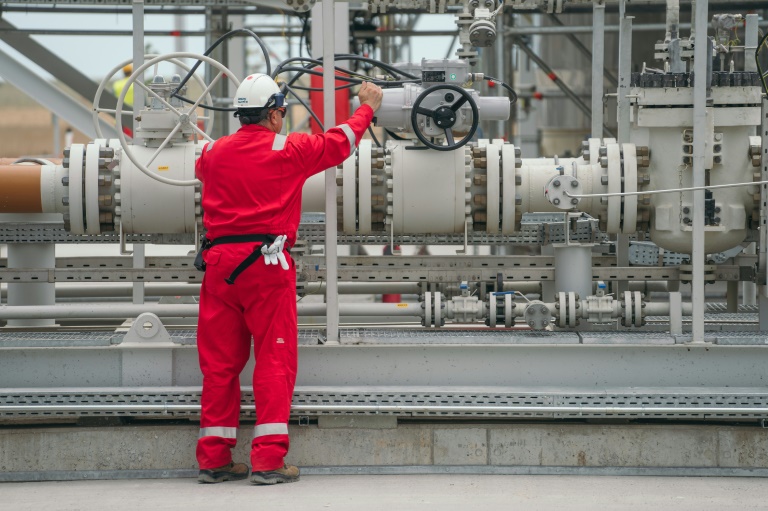
Gas now flows to Romania from a new Black Sea platform operating in waters where mines and warships have been spotted.

The dangerous reminders of the war raging nearby in Ukraine underscore Romania’s determination to cut its reliance on Russian natural gas imports.

With fears growing across the European Union that Moscow will cut gas shipments in retaliation for EU support to Ukraine, countries are scrambling to find alternative supplies.

“Romania is taking a decisive step to ensure its energy security… at a time when international gas supplies are threatened by the war in Ukraine,” Prime Minister Nicolae Ciuca said on Tuesday as he inaugurated a processing plant belonging to Black Sea Oil & Gas (BSOG) in the southeastern village of Vadu.

While Romania has significant reserves on land and at sea, it still has to turn to Russia in winter to cover around 20 percent of its consumption.

Backed by American private equity firm Carlyle Group LP and the European Bank for Reconstruction and Development, BSOG began two weeks ago to tap into underwater deposits, becoming the first new offshore Black Sea development in the past 30 years.

The $400-million platform extracts three million cubic metres of gas per day. It is due to recover one billion cubic metres per year for 10 years, or around 10 percent of Romania’s needs.

“Today we are facing an emergency in terms of energy supply. We must put our old devils in the closet… and start producing locally,” said Thierry Bros, an expert on energy and the climate at Sciences Po university.

“We must relaunch the projects in the Black Sea, relaunch the growth of production in Norway, in the United Kingdom we must think of launching the production of shale gas and in France the production of mine gas” he told AFP.

– Mines and warships –

In Vadu, BSOG CEO Mark Beacom said he hopes that the “state-of-the-art” infrastructure put in place by his company will be used for future gas or renewable energy projects in the Black Sea.

But the invasion of neighbouring Ukraine by Russia has complicated the situation. 

“We are not in a war zone, but we are close enough and it clearly has an impact,” he said.

“We’ve had mines detected close to the platform, we’ve had warships that go close to our platform and we’ve had airplanes circling our platform,” he added.

BSOG holds two concessions about 120 kilometres (65 nautical miles) from the Romanian coast, part of which, ironically, was recovered in 2009 by Bucharest from Ukraine, following a decision by the International Court of Justice in The Hague. 

While Romania is counting on offshore gas reserves estimated at 200 billion cubic metres of gas, investors nevertheless remain cautious. 

The Austrian group OMV and its Romanian partner Romgaz have yet to decide whether they will go ahead with the Neptun Deep project to tap between 42 billion and 84 billion cubic metres of gas. 

– End of guaranteed energy? –

Bucharest hopes the two groups will launch extraction as soon as 2026, which would allow Romania to “become completely independent in terms of gas” and export the excess to its neighbours, said Energy Minister Virgil Popescu.

According to a 2018 study by auditing firm Deloitte, offshore gas could bring in $26 billion in tax revenue to Romania’s government over a planned 23-year period of operation. 

After much delay, parliament finally amended in May a law unfavourable to offshore investments, which had notably prompted ExxonMobil to withdraw from the Neptun Deep project at the end of 2021, after having invested around $2 billion there jointly with OMV.

“If we want to win against the Russians, we need energy,” said Bros, warning that the time when “energy was guaranteed” within the EU may be over.

In mine-infested sea, Romania aims to cut Russia gas reliance

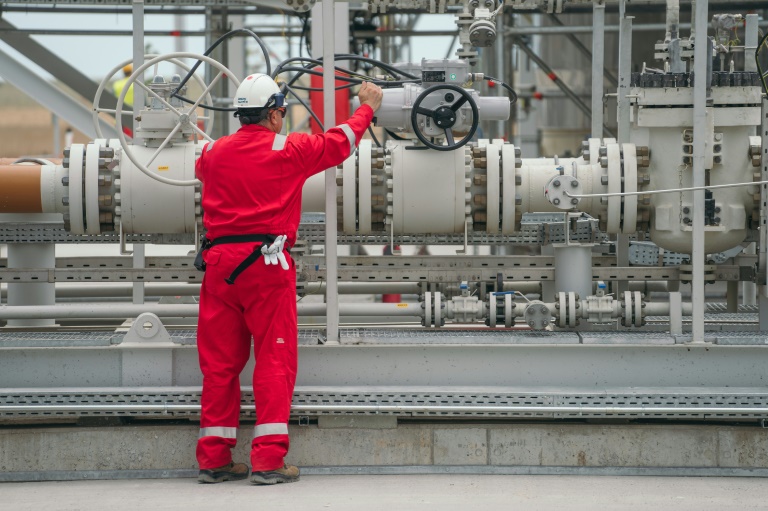
Gas now flows to Romania from a new Black Sea platform operating in waters where mines and warships have been spotted.

The dangerous reminders of the war raging nearby in Ukraine underscore Romania’s determination to cut its reliance on Russian natural gas imports.

With fears growing across the European Union that Moscow will cut gas shipments in retaliation for EU support to Ukraine, countries are scrambling to find alternative supplies.

“Romania is taking a decisive step to ensure its energy security… at a time when international gas supplies are threatened by the war in Ukraine,” Prime Minister Nicolae Ciuca said on Tuesday as he inaugurated a processing plant belonging to Black Sea Oil & Gas (BSOG) in the southeastern village of Vadu.

While Romania has significant reserves on land and at sea, it still has to turn to Russia in winter to cover around 20 percent of its consumption.

Backed by American private equity firm Carlyle Group LP and the European Bank for Reconstruction and Development, BSOG began two weeks ago to tap into underwater deposits, becoming the first new offshore Black Sea development in the past 30 years.

The $400-million platform extracts three million cubic metres of gas per day. It is due to recover one billion cubic metres per year for 10 years, or around 10 percent of Romania’s needs.

“Today we are facing an emergency in terms of energy supply. We must put our old devils in the closet… and start producing locally,” said Thierry Bros, an expert on energy and the climate at Sciences Po university.

“We must relaunch the projects in the Black Sea, relaunch the growth of production in Norway, in the United Kingdom we must think of launching the production of shale gas and in France the production of mine gas” he told AFP.

– Mines and warships –

In Vadu, BSOG CEO Mark Beacom said he hopes that the “state-of-the-art” infrastructure put in place by his company will be used for future gas or renewable energy projects in the Black Sea.

But the invasion of neighbouring Ukraine by Russia has complicated the situation. 

“We are not in a war zone, but we are close enough and it clearly has an impact,” he said.

“We’ve had mines detected close to the platform, we’ve had warships that go close to our platform and we’ve had airplanes circling our platform,” he added.

BSOG holds two concessions about 120 kilometres (65 nautical miles) from the Romanian coast, part of which, ironically, was recovered in 2009 by Bucharest from Ukraine, following a decision by the International Court of Justice in The Hague. 

While Romania is counting on offshore gas reserves estimated at 200 billion cubic metres of gas, investors nevertheless remain cautious. 

The Austrian group OMV and its Romanian partner Romgaz have yet to decide whether they will go ahead with the Neptun Deep project to tap between 42 billion and 84 billion cubic metres of gas. 

– End of guaranteed energy? –

Bucharest hopes the two groups will launch extraction as soon as 2026, which would allow Romania to “become completely independent in terms of gas” and export the excess to its neighbours, said Energy Minister Virgil Popescu.

According to a 2018 study by auditing firm Deloitte, offshore gas could bring in $26 billion in tax revenue to Romania’s government over a planned 23-year period of operation. 

After much delay, parliament finally amended in May a law unfavourable to offshore investments, which had notably prompted ExxonMobil to withdraw from the Neptun Deep project at the end of 2021, after having invested around $2 billion there jointly with OMV.

“If we want to win against the Russians, we need energy,” said Bros, warning that the time when “energy was guaranteed” within the EU may be over.
German town united by 400-year-old theatre tradition

Walk around the German Alpine village of Oberammergau, and the chances are you’ll run into Jesus or one of his 12 disciples.

Of the 5,500 people living there, 1,400 — aged from three months to 85 — are participating this year in the once-a-decade staging of an elaborate “Passion Play” depicting the death and resurrection of Jesus Christ.

Dating back to 1634, the tradition has persisted through four centuries of wars, religious turmoil and pandemics — including the most recent Covid-19 crisis which caused the show to be postponed by two years.

“I think we’re a bit stubborn,” says Frederic Mayet, 42, when asked how the village has managed to hold on to the tradition.

Mayet, who is playing Jesus for the second time this year, says the Passion Play has become a big part of the town’s identity.

The only prerequisite for taking part in the five-hour show, whether as an actor, chorister or backstage assistant, is that you were born in Oberammergau or have lived here for at least 20 years. 

“I remember that we talked about it in kindergarten. I didn’t really know what it was about, but of course I wanted to take part,” says Cengiz Gorur, 22, who is playing Judas.

– ‘Hidden talent’ –

The tradition, which dates back to the Thirty Years’ War, was born from a belief that staging the play would help keep the town safe from disease.

Legend has it that, after the first performance, the plague disappeared from the town.

In the picturesque Alpine village, Jesus and his disciples are everywhere — from paintings on the the facades of old houses to carved wooden figures in shop windows.

You also can’t help feeling that there is a higher-than-average quota of men with long hair and beards wandering the streets. 

An intricate image of Jesus graces the stage of the open-air Passion Play theatre, where the latest edition of the show is being held from mid-May to October 2.

“What has always fascinated me is the quality of the relationship between all the participants, young and old. It’s a beautiful community, a sort of ‘Passion’ family,” says Walter Lang, 83.

He’s just sad that his wife, who died in February, will not be among the participants this year.

“My parents met at a Passion Play, and I also met my future wife at one,” says Andreas Roedl, village mayor and choir member.

Gorur, who has Turkish roots, was spotted in 2016 by Christian Stueckl, the head of the Munich People’s Theatre who will direct the play for the fourth time this year.

“I didn’t really know what to do with my life. I probably would have ended up selling cars, the typical story,” he laughs.

Now, he’s due to start studying drama in Munich this autumn.

“I’ve discovered my hidden talent,” he says.

– Violence, poverty and sickness –

Stueckl “has done a lot for the reputation of the show, which he has revolutionised” over the past 40 years, according to Barbara Schuster, 35, a human resources manager who is playing Mary Magdalene.

“Going to the Passion Play used to be like going to mass. Now it’s a real theatrical show,” she says. 

In the 1980s, Stueckl cut all the parts of the text that accused the Jews of being responsible for the crucifixion of Jesus, freeing the play from anti-Semitic connotations. 

“Hitler had used the Passion Play for his propaganda,” Schuster points out. 

The play’s themes of violence, poverty and sickness are reflected in today’s world through the war in Ukraine and the Covid-19 pandemic, says Mayet, the actor playing Jesus.

“Apparently we have the same problems as 2,000 years ago,” he says.

For 83-year-old Lang, who is playing a peasant this year, the “Hallelujah” after Christ has risen for the final time in October will be a particularly moving moment. 

“Because we don’t know if we’ll be there again next time,” he says, his eyes filling with tears.

US funds software for Russians to slip past censors

A US-backed campaign is giving Russians access to anti-censor software to dodge Moscow’s crackdown on dissent against its invasion of Ukraine, involved groups told AFP.

Russia has intensified its restrictions on independent media since attacking its neighbor in February, with journalists under threat of prosecution for criticizing the invasion or for even referring to it as a war.

The US government-backed Open Technology Fund is paying out money to a handful of American firms providing virtual private networks (VPNs) free of charge to millions of Russians, who can then use them to visit websites blocked by censors. 

Traditional VPN software creates what is effectively a private tunnel on the internet for data, typically encrypted, to flow safeguarded from snooping — and their use has boomed in Russia since the invasion.

“Our tool is primarily used by people trying to access independent media, so that funding by the OTF has been absolutely critical,” said a spokesman for Lantern, one of the involved companies.

Tech firms Psiphon and nthLink have also been providing sophisticated anti-censorship applications to people in Russia, with OTF estimating that some four million users in Russia have received VPNs from the firms.

Psiphon saw a massive surge in Russian users, with the number soaring from about 48,000 a day prior to the February 24 invasion to more than a million a day by mid-March, said a company senior advisor Dirk Rodenburg.

The firm’s tools in Russian now average nearly 1.5 million users daily, he added.

While some, like Ukraine’s leadership, have called for Russia to be cut off from the internet, others have noted access is key for opposition groups. 

“It’s so very important for Russians to be connected to the whole world wide web, to keep resistance going,” said Natalia Krapiva, tech legal counsel at rights group Access Now, which is not involved in the OTF effort.

“All kinds of initiatives are happening and to keep them alive you need the internet because you can’t gather in person, or because activists are scattered around the world,” she added.

Keeping VPNs running and accessible was relatively straightforward in the early days of the war, said Lucas, the spokesman for Lantern, who spoke on condition that only his first name be used.

“They weren’t ready to block anything,” Lucas said. “Over time, Russia learned how to block the easy stuff but Lantern and Psiphon are still up and running.”

– Lesson from China, Myanmar –

Censors try to cut VPN software off from servers they rely on to function or stop people from getting to websites where the tools can be downloaded.

As a result, crackdowns on internet freedom typically result in people sharing VPNs through guerrilla tactics such as word-of-mouth.

However, groups like Lantern have adopted methods like hiding VPN installers in online platforms too vital for the government to block, and building a network so users can share the technology with others, Lucas said.

“Lantern and Psiphon are different in that we do all sorts of much more sophisticated stuff to hide our traffic and get around our servers being detected,” he said.

People in Russia are benefitting from the VPN makers honing their tools while battling censorship in countries such as China and Myanmar.

“There was a moment about two years ago when China really upped the level of their game, when it came to the lengths they were going to block stuff,” Lucas said. 

“We raised the level of our game a whole lot,” he added.

US government funding provided through OTF has been important to the operations since costs jumped and revenue vanished for VPN makers in Russia, as sanctions kicked in and companies pulled out of the country.

OTF said it typically spends $3-4 million annually funding VPNs, but that figure was ramped up due to censorship in Russia.

Psiphon has been receiving US government funding for more than 14 years, with the money generally going to improve tools to counter new tactics used by authoritarian regimes, the company told AFP.

Despite the efforts to get VPN technology to those who want it, many people still don’t have access.

“The use of virtual private networks and other methods have increased significantly in Russia, but it still only represents a small percentage of the population,” Krapiva, from Access Now, told AFP.

'They're everywhere': microplastics in oceans, air and human body

From ocean depths to mountain peaks, humans have littered the planet with tiny shards of plastic. We have even absorbed these microplastics into our bodies — with uncertain implications.

Images of plastic pollution have become familiar: a turtle suffocated by a shopping bag, water bottles washed up on beaches, or the monstrous “Great Pacific Garbage Patch” of floating detritus.

Millions of tonnes of plastic produced every year, largely from fossil fuels, make their way into the environment and degrade into smaller and smaller pieces.

“We did not imagine 10 years ago that there could be so many small microplastics, invisible to the naked eye, and that they were everywhere around us,” said Jean-Francois Ghiglione, a researcher at the Laboratory of Microbial Oceanography in France.

“And we could not yet envisage finding them in the human body”.

Now scientific studies are increasingly detecting microplastics in some human organs — including “the lungs, spleen, kidneys, and even the placenta,” Ghiglione told AFP.

It may not come as much of a shock that we breathe in these particles present in the air, in particular microfibres from synthetic clothing.

“We know that there’s microplastics in the air, we know it’s all around us,” said Laura Sadofsky, from the Hull York Medical School in the UK.

Her team found polypropylene and PET (polyethylene terephthalate) in lung tissue, identifying fibres from synthetic fabrics. 

“The surprise for us was how deep it got into the lungs and the size of those particles,” she told AFP.

In March, another study reported the first traces of PET found in the blood.

Given the small sample of volunteers, some scientists say it is too early to draw conclusions, but there are concerns that if plastics are in the bloodstream they could be transported to all organs.

– Breathing in plastics for years –

In 2021, researchers found microplastics in both maternal and foetal placental tissue, expressing “great concern” over the possible consequences on the development of the foetus. 

But concern is not the same as a proven risk.

“If you ask a scientist if there is a negative effect, he or she would say ‘I don’t know’,” said Bart Koelmans, professor in Aquatic Ecology and Water Quality at Wageningen University.

“It’s potentially a big problem, but we don’t have the scientific evidence to positively confirm what are the effects, if any.”

One hypothesis is that microplastics could be responsible for certain syndromes that weaken human health.

While scientists have recently identified their presence in the body, it is likely that humans have been eating, drinking and breathing in plastics for years.

In 2019, a shock report by the environmental charity WWF estimated that people are ingesting and inhaling up to five grams of plastic per week — enough to make a credit card.

Koelmans, who contests the methodology and results of that study, has calculated the amount is closer to a grain of salt.

“Over a lifetime, a grain of salt per week is still quite something,” he told AFP.

While health studies on humans have yet to be developed, toxicity in certain animals reinforces concerns.

“Small microplastics invisible to the naked eye have deleterious effects on all the animals that we have studied in the marine environment, or on land,” said Ghiglione.

He added that the array of chemicals found in these materials — including dyes, stabilisers, flame retardants — can affect growth, metabolism, blood sugar, blood pressure and even reproduction.  

The researcher said there should be a “precautionary” approach, urging consumers to reduce the number of plastic-packaged products they buy, particularly bottles.

Earlier this year, the United Nations began a process to develop an internationally binding treaty to tackle the global plastic scourge.

It has warned that the world is facing a pollution crisis to match the biodiversity and climate crises.

While the health implications from plastics are not known, scientists do know the impacts of indoor and outdoor air pollution, which experts from the Lancet Commission on pollution and health have estimated caused 6.7 million people to suffer an early death in 2019.

Some 460 million tonnes of plastics were used in 2019, twice as much as 20 years earlier. Less than 10 percent was recycled.

Annual production of fossil-fuel-based plastics is set to top 1.2 billion tonnes by 2060, with waste exceeding one billion tonnes, the Organisation for Economic Co-operation and Development said last month.

“People cannot stop breathing, so even if you change your eating habits you will still inhale them,” said Koelmans.

“They’re everywhere.”

'They're everywhere': microplastics in oceans, air and human body

From ocean depths to mountain peaks, humans have littered the planet with tiny shards of plastic. We have even absorbed these microplastics into our bodies — with uncertain implications.

Images of plastic pollution have become familiar: a turtle suffocated by a shopping bag, water bottles washed up on beaches, or the monstrous “Great Pacific Garbage Patch” of floating detritus.

Millions of tonnes of plastic produced every year, largely from fossil fuels, make their way into the environment and degrade into smaller and smaller pieces.

“We did not imagine 10 years ago that there could be so many small microplastics, invisible to the naked eye, and that they were everywhere around us,” said Jean-Francois Ghiglione, a researcher at the Laboratory of Microbial Oceanography in France.

“And we could not yet envisage finding them in the human body”.

Now scientific studies are increasingly detecting microplastics in some human organs — including “the lungs, spleen, kidneys, and even the placenta,” Ghiglione told AFP.

It may not come as much of a shock that we breathe in these particles present in the air, in particular microfibres from synthetic clothing.

“We know that there’s microplastics in the air, we know it’s all around us,” said Laura Sadofsky, from the Hull York Medical School in the UK.

Her team found polypropylene and PET (polyethylene terephthalate) in lung tissue, identifying fibres from synthetic fabrics. 

“The surprise for us was how deep it got into the lungs and the size of those particles,” she told AFP.

In March, another study reported the first traces of PET found in the blood.

Given the small sample of volunteers, some scientists say it is too early to draw conclusions, but there are concerns that if plastics are in the bloodstream they could be transported to all organs.

– Breathing in plastics for years –

In 2021, researchers found microplastics in both maternal and foetal placental tissue, expressing “great concern” over the possible consequences on the development of the foetus. 

But concern is not the same as a proven risk.

“If you ask a scientist if there is a negative effect, he or she would say ‘I don’t know’,” said Bart Koelmans, professor in Aquatic Ecology and Water Quality at Wageningen University.

“It’s potentially a big problem, but we don’t have the scientific evidence to positively confirm what are the effects, if any.”

One hypothesis is that microplastics could be responsible for certain syndromes that weaken human health.

While scientists have recently identified their presence in the body, it is likely that humans have been eating, drinking and breathing in plastics for years.

In 2019, a shock report by the environmental charity WWF estimated that people are ingesting and inhaling up to five grams of plastic per week — enough to make a credit card.

Koelmans, who contests the methodology and results of that study, has calculated the amount is closer to a grain of salt.

“Over a lifetime, a grain of salt per week is still quite something,” he told AFP.

While health studies on humans have yet to be developed, toxicity in certain animals reinforces concerns.

“Small microplastics invisible to the naked eye have deleterious effects on all the animals that we have studied in the marine environment, or on land,” said Ghiglione.

He added that the array of chemicals found in these materials — including dyes, stabilisers, flame retardants — can affect growth, metabolism, blood sugar, blood pressure and even reproduction.  

The researcher said there should be a “precautionary” approach, urging consumers to reduce the number of plastic-packaged products they buy, particularly bottles.

Earlier this year, the United Nations began a process to develop an internationally binding treaty to tackle the global plastic scourge.

It has warned that the world is facing a pollution crisis to match the biodiversity and climate crises.

While the health implications from plastics are not known, scientists do know the impacts of indoor and outdoor air pollution, which experts from the Lancet Commission on pollution and health have estimated caused 6.7 million people to suffer an early death in 2019.

Some 460 million tonnes of plastics were used in 2019, twice as much as 20 years earlier. Less than 10 percent was recycled.

Annual production of fossil-fuel-based plastics is set to top 1.2 billion tonnes by 2060, with waste exceeding one billion tonnes, the Organisation for Economic Co-operation and Development said last month.

“People cannot stop breathing, so even if you change your eating habits you will still inhale them,” said Koelmans.

“They’re everywhere.”

US multinationals grapple with soaring dollar

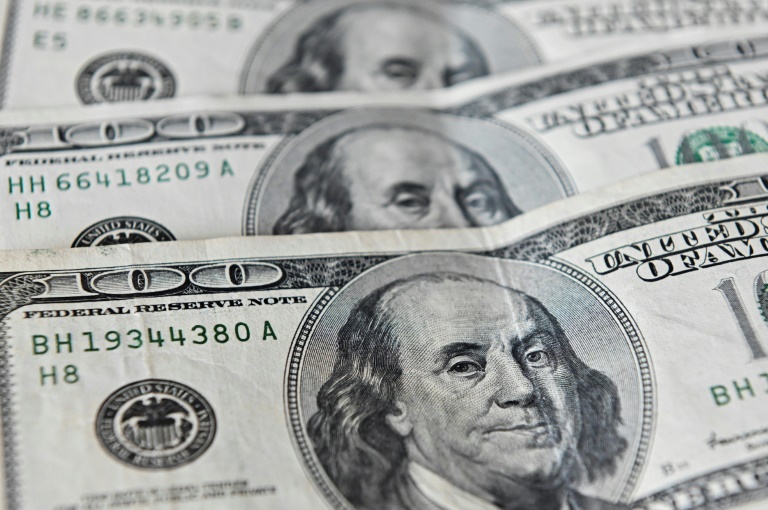
The rapid rise of the US dollar since the start of the year is a double-edged sword for American multinational companies, pushing some of them to decide whether to hedge or reposition their activities abroad to avoid fallout.

For an importer, the surge in the greenback against the euro, yen or British pound is a plus, because it makes the products they buy cheaper.

But for a US export company, products sold in dollars have become more expensive, which increases the risk of losing clients and seeing sales decline. 

And they also lose money when converting foreign revenue back into to dollars.

Many firms already revised their earnings forecasts for the year to account for the changing exchange rate, including computing giant Microsoft, which warned its quarterly sales will fall by $460 million and its net profit by $250 million due to the currency hit.

Adobe, Salesforce, Biogen and Pfizer have all warned that the dollar’s rapid rise will have a greater impact on their accounts than expected.

– $40 billion hit –

Companies that generate most of their revenue outside of the United States are the most exposed, starting with tech giants, medical equipment makers and service companies, according to Kyriba, a corporate cash management platform.

Kyriba estimates the currency effects could mean a $40 billion hit to earnings of S&P 500 firms in the first half of the year.

The Federal Reserve’s decision to aggressively hike interest rates to combat rampant inflation, combined with an influx of funds into the country from investors looking for a safe haven in uncertain times, have combined to boost the US dollar.

The greenback has risen 13 percent compared to the euro over the last 12 months, approaching parity, and gained 22 percent against the yen.

“Short term, that’s a good thing for the United States because it means all the imports are cheaper and it puts downward pressure on inflation,” said Desmond Lachman of the American Enterprise Institute think tank.

But further out, the effect on the US economy is more nuanced, because if exports fall, “the United States trade deficit widens and then we get more external debt.”

But multinationals “don’t have control over these big items,” he explained.

They can, however, mitigate the effect of fluctuations in foreign currencies in which they price and invoice goods by adopting hedging strategies — using financial instruments that provide a kind of insurance against losses caused by the changing exchange rate.

Most corporations already have hedging programs in place, and they change their plans on a quarterly or even monthly basis, sometimes trying to predict currency movements, Kyriba’s Bob Stark said.

But it’s not an exact science, he noted, especially in a time of great uncertainty about the direction of inflation, interest rates and the possibility of a recession.

– Changing countries to cut costs –

But “since the start of the pandemic, CFOs have gotten very good at looking at multiple scenarios and building on them,” Stark said.

Sporting goods giant Nike, for instance, warned Monday that currency effects would cut annual revenue by several percentage points. But the profit hit is much lower because of the hedging.

The current high volatility in foreign exchange markets also means it costs more to hedge, so some firms are choosing not to use those instruments.

Among the other tools at their disposal, multinationals can reduce their exposure with other techniques, such as by paying their Japanese suppliers in dollars, by renegotiating prices, or even by buying their supplies from different countries.

Or they can simply wait for the US currency to weaken before repatriating their profits.

However, once the exchange rate has strengthened, there is limited room to maneuver, according to Nikolai Roussanov, a finance professor at the University of Pennsylvania — especially when prices are also rising because of supply chain issues and energy costs.

“If you try to react to something already happening, it might come to bite you later because some of these movements are quite transitory,” he told AFP.

US mega drought makes boating rough on Lake Mead

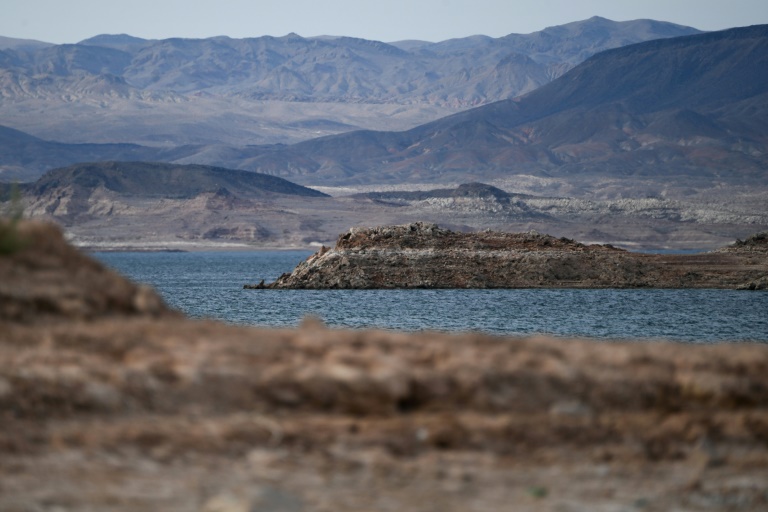
In the 15 years since Adam Dailey began boating on Lake Mead, the shoreline has receded hundreds of meters, the result of more than two decades of punishing drought that is drying out the western United States.

Launch spots that lined the edge of the lake, located outside Las Vegas, have been abandoned, and a single ramp is now the only way to get a boat in the water.

“We used to have more. So everyone’s fighting to use one ramp… and still trying to figure out how to get along,” said Dailey.

“It’s kind of sad, what’s going on. But we still come out and try to enjoy it when we can.”

Lake Mead is the largest reservoir in the United States, a huge man-made body of water formed by the construction of the Hoover Dam in the early 1930s.

Its 247-square-mile (640-square-kilometer) surface area stores water for tens of millions of people and countless acres of farmland in the southwest.

But it’s shrinking at a terrifying rate and now stands at just one-quarter full.

The National Park Service (NPS), which manages access to the lake, has spent more than $40 million since 2010 trying to keep the water open to boaters.

It costs them $2-3 million dollars to reconfigure the boat launch ramp every time the water levels fall another four feet (120 centimeters).

“Declining water levels due to climate change and 20 years of ongoing drought have reshaped the park’s shorelines,” the NPS says on its website. 

“As Lake Mead continues to recede, extending launch ramps becomes more difficult and more expensive due to the topography and projected decline in water levels.” 

– Bathtub ring –

A series of NPS signs show the shoreline at various points since 2001. The sign marking the level in 2021 is 300 paces from the water.

In the mud, the receding waters leave behind bottles, cans, fire extinguishers and other detritus that somehow made its way overboard in years gone by.

The rocks that form the hard edges of the reservoir offer a stark illustration of just how far water levels have fallen.

A white band of mineral deposits stains the mountainsides like the ring on a bathtub, showing where the water was at its high point after a flood in 1983.

“We used to water ski race here,” Jaxkxon Zacher told AFP.

“And the island — only the tip… was out 25 years ago. So now we can’t even race here anymore. It’s dropping drastically.”

The growing islands in the middle of the lake point to the uneven topography of the valley that was flooded — and the hazards that await.

“Every day someone’s ripping a drive off, because last week, where there was no rock, it’s now a foot down or two feet down so things are exposed,” boatseller Jason Davis said.

“You’ve got houseboats getting beached and stuck, and people are ripping their lower units off.”

And with vessels that can retail at hundreds of thousands of dollars, a weekend outing can turn into a costly mistake.

– A new job –

For some people, the risk of an accident and the sheer hassle of having to wait so long to get a boat into the water and then out again at the end of the day means Lake Mead is no longer a viable recreation option.

Below the Hoover Dam, stretches of river remain relatively unscathed by the dropping water levels.

At Willow Beach, across the state line in Arizona, kayakers frolic in the shallows, unloading water pistols on each other as 104 Fahrenheit (40 Celsius) sunshine beats down.

A small marina there offers Steve McMasters a place to stage his pontoon, just a short distance from his home in Boulder City.

“It can be a four-to-five-hour wait on weekends to get your boat out of the water (at Lake Mead), so this is big to have,” he said.

“I waited like four months on a waiting list to get it. I got lucky here.”

Climatologists say two decades of drought is not unheard of in the western United States, but combined with human-caused global warming, it is transforming the region.

Higher temperatures mean less moisture falls as snow on the Rocky Mountains, and what snowpack does form melts more quickly.

This leaves the Colorado River without the slow and steady feed that supplied it year-round in the centuries and millennia before the region was settled.

In climatic terms, Lake Mead is a baby; in existence for less than 90 years.

But in human terms, it is vanishing at a startling pace.

Jason Davis, the boatseller, says more people need to witness the stark changes for themselves. 

“If you haven’t come to see these rings, you know, you don’t quite comprehend,” he said. 

And if the water keeps dropping?

“I’ll need a new job.”

'Fragile situation' as Libya anger boils over living conditions

Libya’s rival leaders were under growing street pressure Saturday after protesters stormed parliament as anger exploded over deteriorating living conditions and political deadlock.

Libyans, many impoverished after a decade of turmoil and sweltering in the soaring summer heat, have been enduring fuel shortages and power cuts of up to 18 hours a day, even as their country sits atop Africa’s largest proven oil reserves.

The country has been mired in chaos and repeated rounds of conflict since a NATO-backed uprising toppled and killed dictator Moamer Kadhafi in 2011.

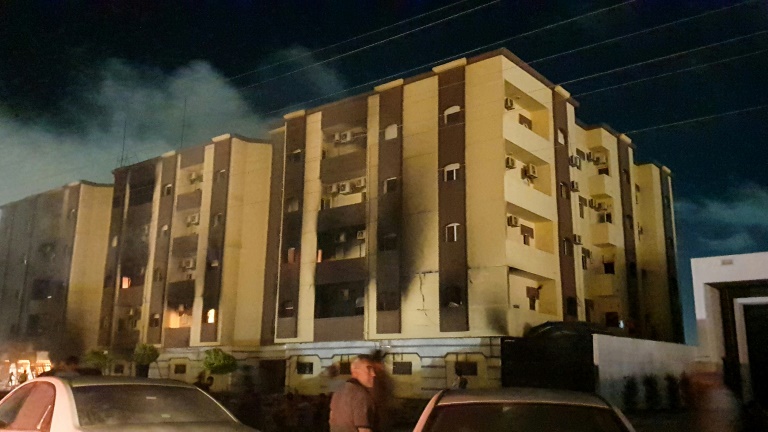
Protesters stormed the seat of the House of Representatives in the eastern city of Tobruk on Friday night, ransacking its offices and torching part of the building.

In both the main eastern city of Benghazi — the cradle of the 2011 uprising — and the capital Tripoli, thousands took to the streets to chants of “We want the lights to work”.

Some brandished the green flags of the former Kadhafi regime.

Calm appeared to have returned to Tobruk on Saturday, though there were calls on social media for more protests in the evening.

UN Secretary-General Antonio Guterres called on “all actors to refrain from any actions that could undermine stability” and urged them “to come together to overcome the continued political deadlock”, spokesman Stephane Dujarric said in a statement.

UN-mediated talks in Geneva this week aimed at breaking the stalemate between rival Libyan institutions failed to resolve key differences.

– ‘Extremely painful’ year –

Presidential and parliamentary elections, originally set for December last year, were meant to cap a UN-led peace process following the end of the last major round of violence in 2020. 

But voting never took place due to several contentious candidacies and deep disagreements over the polls’ legal basis between the rival power centres in east and west.

In Tripoli on Friday, hundreds came out to demand elections, fresh political leadership and an end to the chronic power cuts.

The sudden eruption of unrest appeared to be spreading to other areas of the country, with Libyan media showing images of protesters in the oasis city of Sebha, deep in the Sahara desert, torching an official building.

A local journalist said protesters in Libya’s third city Misrata were blocking roads after setting fire to a municipal building on Friday night.

After dark, protesters also gathered at several points in Tripoli, shutting down some roads and burning tyres, according to images broadcast by local media.

Interim prime minister Abdulhamid Dbeibah leads a Tripoli-based administration while former interior minister Fathi Bashagha draws support from the Tobruk-based House of Representatives and eastern military strongman Khalifa Haftar.

Haftar’s forces said Saturday that they “support the citizens’ demands” but called for protesters to “preserve public property”.

Libya expert Jalel Harchaoui told AFP that “for more than a year, the overwhelming majority of diplomatic and mediation efforts around Libya have been monopolised by the idea of elections, which won’t happen for at least two years, given the failure of the Geneva negotiations.”

This year “has been extremely painful for Libyans” because the country “imports almost all its food and the Ukraine war has hit consumer prices”, Harchaoui said.

– ‘Fragile situation’ –

Libya’s energy sector, which during the Kadhafi era financed a generous welfare state, has also fallen victim to political divisions, with a wave of forced closures of oil facilities since April.

Supporters of the eastern-based administration have shut off the oil taps as leverage in their efforts to secure a transfer of power to Bashagha, whose attempt to take up office in Tripoli in May ended in a swift withdrawal.

“There is kleptocracy and systematic corruption in the east as in the west, as the fancy cars and villas of the elite constantly remind the public,” Harchaoui said, accusing militias from both camps of carrying out “massive” fuel trafficking.

The European Union’s envoy to Libya, Jose Sabadell, said Friday’s events “confirm people want change through elections”.

But he urged peaceful protests, adding that “special restraint is necessary given the fragile situation”.

US ambassador to Libya Richard Norland said that “no single political entity enjoys legitimate control across the entire country and any effort to impose a unilateral solution will result in violence”.

He urged Libya’s “political leaders across the spectrum and their foreign backers to seize the moment to restore the confidence of their citizens in the country’s future”.

Argentine economy minister who renegotiated IMF debt resigns

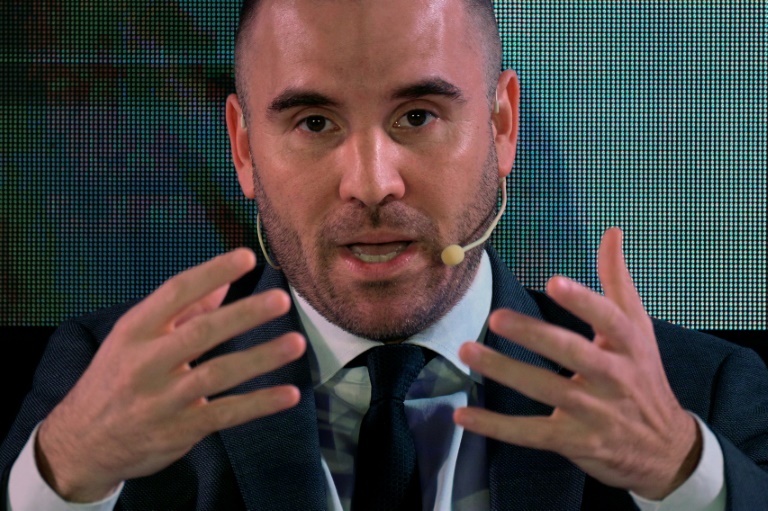
Argentine economy minister Martin Guzman, who led debt renegotiations with the International Monetary Fund, announced his resignation Saturday, sparking fresh uncertainty in Latin America’s third largest economy.

Guzman did not say why he resigned in his statement addressing President Alberto Fernandez, but called on the center-left leader to mend internal divisions so that “the next minister does not suffer” the same difficulties he did.

“It will be essential that you work on an agreement within the ruling coalition,” he added in the statement shared on Twitter.

His resignation comes two weeks after Vice President Cristina Kirchner, a former president who has been a constant critic of the government, gave a speech attacking Fernandez’s economic management.

Political analyst Carlos Fara told AFP that Guzman’s resignation was “a check mate for the president’s autonomy” and had given Kirchner the upper hand in their power struggle.

“The resignation will have a very bad effect in the markets. Even if the president and vice president reach a consensus on managing the economy, from now on everything will be conditioned by Cristina Kirchner’s pressure.”

As economy minister, the 39-year-old Guzman was tasked with renegotiating a $44 billion debt with the IMF that Argentina insisted it could not afford to repay.

The original debt of $57 billion — the last tranche of which Fernandez declined after succeeding his liberal predecessor Mauricio Macri, who had solicited the loan — was the largest ever issued by the IMF.

Despite resistance from Kirchner, Guzman managed to agree a deal and save Argentina from defaulting.

But Guzman was often faced with hostility from the Peronist Justicialist Party, the major force in the Frente de Todos (Everyone’s Front) ruling coalition that counts both Fernandez and Kirchner as high profile members.

Kirchner’s faction has gone after Guzman ever since Everyone’s Front lost control of the senate during last year’s midterm legislative elections.

The IMF deal was only ratified by parliament thanks to support from the center-right opposition, as a group of legislators in the ruling coalition led by the vice president’s son Maximo Kirchner boycotted the vote.

– ‘Growth crisis’ –

Guzman said whoever replaces him will need “centralized management of the necessary macroeconomic political instruments to consolidate the progress made and face the challenges ahead.”

While agricultural powerhouse Argentina has the third largest economy in Latin America, it has been in economic crisis for years, with inflation of more than 60 percent in the last 12 months.

The country was already struggling with rising poverty, unemployment and a depreciating currency before the coronavirus pandemic exacerbated matters.

Earlier this week, Fernandez admitted the country was facing “a growth crisis” due to a shortage of foreign exchange.

The IMF deal included provisions to contain inflation and reduce the budget deficit from three percent in 2021 to parity by 2025.

Guzman’s detractors within the ruling coalition hit out at him over perceived excessive zeal in tackling the budget deficit and his monetary policy.

He complained several times that these criticisms sent worrying signs to already jittery markets, making his job ever harder.

In a recent report, the Eurasia Group political risk consultancy said the internal divisions would not be resolved any time soon.

“Infighting within the administration will continue to worsen, further hurting the administration’s ability to develop a coherent policy plan,” said Eurasia.

Although he did not reveal what his next post would be, Guzman said he would “continue working and striving for a fairer, freer and sovereign homeland.”

Fernandez has yet to comment on the resignation of Guzman, who is one of his closest allies.

Close Bitnami banner
Bitnami