World

Argentine economy minister who renegotiated IMF debt resigns

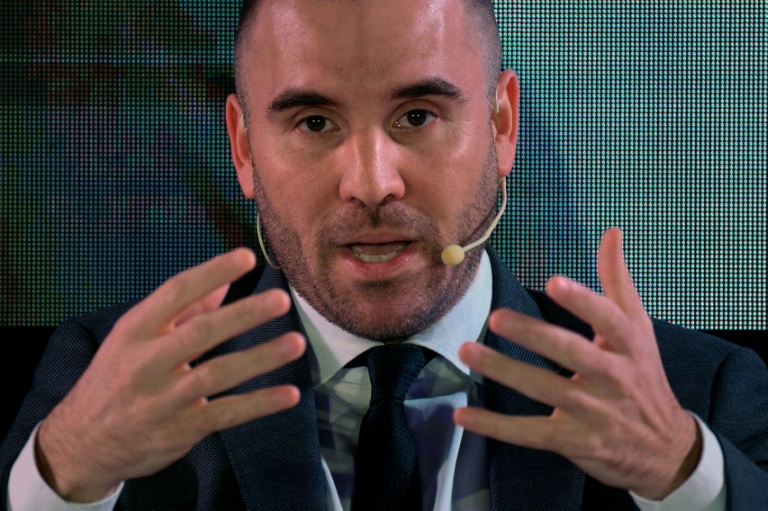
Argentine economy minister Martin Guzman, who led debt renegotiations with the International Monetary Fund, announced his resignation Saturday, sparking fresh uncertainty in Latin America’s third largest economy.

Guzman did not say why he resigned in his statement addressing President Alberto Fernandez, but called on the center-left leader to mend internal divisions so that “the next minister does not suffer” the same difficulties he did.

“It will be essential that you work on an agreement within the ruling coalition,” he added in the statement shared on Twitter.

His resignation comes two weeks after Vice President Cristina Kirchner, a former president who has been a constant critic of the government, gave a speech attacking Fernandez’s economic management.

Political analyst Carlos Fara told AFP that Guzman’s resignation was “a check mate for the president’s autonomy” and had given Kirchner the upper hand in their power struggle.

“The resignation will have a very bad effect in the markets. Even if the president and vice president reach a consensus on managing the economy, from now on everything will be conditioned by Cristina Kirchner’s pressure.”

As economy minister, the 39-year-old Guzman was tasked with renegotiating a $44 billion debt with the IMF that Argentina insisted it could not afford to repay.

The original debt of $57 billion — the last tranche of which Fernandez declined after succeeding his liberal predecessor Mauricio Macri, who had solicited the loan — was the largest ever issued by the IMF.

Despite resistance from Kirchner, Guzman managed to agree a deal and save Argentina from defaulting.

But Guzman was often faced with hostility from the Peronist Justicialist Party, the major force in the Frente de Todos (Everyone’s Front) ruling coalition that counts both Fernandez and Kirchner as high profile members.

Kirchner’s faction has gone after Guzman ever since Everyone’s Front lost control of the senate during last year’s midterm legislative elections.

The IMF deal was only ratified by parliament thanks to support from the center-right opposition, as a group of legislators in the ruling coalition led by the vice president’s son Maximo Kirchner boycotted the vote.

– ‘Growth crisis’ –

Guzman said whoever replaces him will need “centralized management of the necessary macroeconomic political instruments to consolidate the progress made and face the challenges ahead.”

While agricultural powerhouse Argentina has the third largest economy in Latin America, it has been in economic crisis for years, with inflation of more than 60 percent in the last 12 months.

The country was already struggling with rising poverty, unemployment and a depreciating currency before the coronavirus pandemic exacerbated matters.

Earlier this week, Fernandez admitted the country was facing “a growth crisis” due to a shortage of foreign exchange.

The IMF deal included provisions to contain inflation and reduce the budget deficit from three percent in 2021 to parity by 2025.

Guzman’s detractors within the ruling coalition hit out at him over perceived excessive zeal in tackling the budget deficit and his monetary policy.

He complained several times that these criticisms sent worrying signs to already jittery markets, making his job ever harder.

In a recent report, the Eurasia Group political risk consultancy said the internal divisions would not be resolved any time soon.

“Infighting within the administration will continue to worsen, further hurting the administration’s ability to develop a coherent policy plan,” said Eurasia.

Although he did not reveal what his next post would be, Guzman said he would “continue working and striving for a fairer, freer and sovereign homeland.”

Fernandez has yet to comment on the resignation of Guzman, who is one of his closest allies.
Battle rages for Ukraine city, Belarus says downed missiles

Fighting raged for the strategic Ukrainian city Lysychansk on Saturday, as Belarusian leader Alexander Lukashenko said his army had intercepted missiles fired on his territory by Kyiv’s forces.

Ukraine denied claims by Moscow-backed separatists who said they had encircled Lysychansk, the last major city in the Lugansk area of the eastern Donbas region still in Kyiv’s hands.

Lysychansk is located across the river from neighbouring Severodonetsk, which Russian forces seized last week.

The city’s capture would allow Russian forces to push deeper into the Donbas, which has become the focus of their offensive since failing to capture Kyiv.

“Fighting rages around Lysychansk… The city has not been encircled and is under control of the Ukrainian army,” Ruslan Muzytchuk, a spokesman for the Ukrainian National Guard, said on Ukrainian television.

Earlier in the day, Andrei Marochko, a spokesman for the separatist forces, told the TASS news agency: “Lysychansk is completely encircled.”

Lukashenko on Saturday accused Ukraine of “provoking” neighbouring Belarus, saying his army intercepted missiles fired at his country by Ukrainian forces “around three days ago”.

The claim came one week after Ukraine said missiles struck a border region from Belarus, a long-term Russian ally that supported the February 24 invasion.

But Lukashenko denied any involvement, which would represent an escalation of the conflict. 

“As I said more than a year ago, we do not intend to fight in Ukraine,” he was quoted as saying by state news agency Belta on Saturday.

– ‘Heavy losses’ –

Missiles continue to rain down across Ukraine, killing dozens. 

Ukrainian President Volodymyr Zelensky cited six strikes as of the evening in his daily address to the nation late Saturday.

“Fierce fighting continues along the entire front line, in Donbas,” he added, noting as well that “enemy activity in the Kharkiv region is intensifying”.

In the small Donetsk town of Siversk, one resident told AFP that “the bombing goes on day and night.”

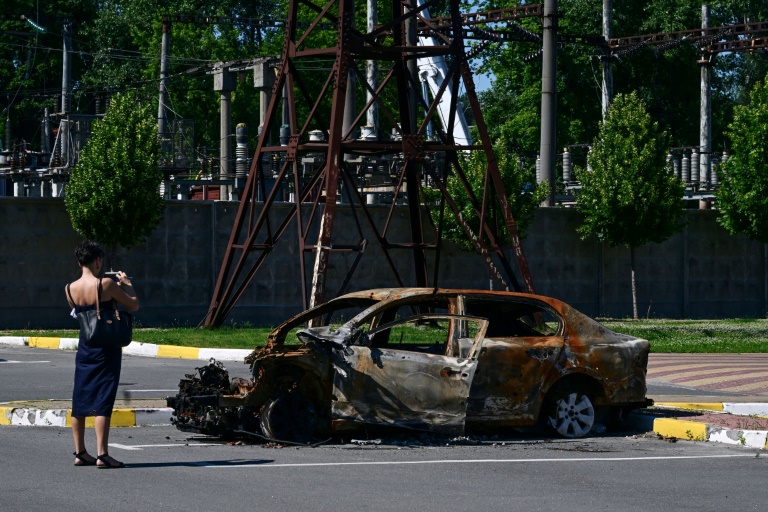
Rockets also struck residential properties in Sloviansk in the heart of the Donbas, killing a woman in her garden and wounding her husband, a neighbour told AFP Saturday, describing debris showered across the neighbourhood.

The witness said the strike, which took place on Friday, was thought to use cluster munitions, which spread over a large area before exploding, striking buildings and people who were outdoors.

Zelensky warned against “a feeling of relaxation” in many rear cities. 

“The war is not over,” he said. “Unfortunately, its cruelty is only increasing in some places, and it cannot be forgotten.”

Russian defence ministry spokesman Igor Konashenkov said Ukraine was “suffering heavy losses on all fronts”, listing what he said were military targets across the country hit with artillery and missiles.

– ‘Rebuilt from scratch’ –

In his address, Zelensky also looked forward to a conference on Ukraine’s reconstruction set to start Monday in Switzerland.

Leaders from dozens of countries and international organisations will gather in the city of Lugano with the aim of providing a roadmap for the war-ravaged country’s recovery.

Rebuilding Ukraine “requires colossal investments — billions, new technologies, best practices, new institutions and, of course, reforms,” Zelensky said.

He said 10 regions of Ukraine had been affected in the war, with many towns and villages needing to be “rebuilt from scratch”.

The roadmap is expected to lay out reconstruction needs in terms of damaged and destroyed infrastructure, Ukraine’s devastated economy, and also environmental and social recovery needs.

The effort is expected to cost hundreds of billions of dollars.

Ukraine will also face demands for broad reforms, especially in cracking down on corruption.

The need for reforms had been underscored by European Commission, Ursula von der Leyen, who has said the coveted European Union membership was “within reach” for Ukraine, but urged Kyiv to work on anti-corruption measures.

In peacetime, Ukraine is a major agricultural exporter, but Russia’s invasion has damaged farmland and seen Ukraine’s ports seized, razed or blockaded — sparking concerns about food shortages, particularly in poor countries.

Farmer Sergiy Lioubarsky, whose fields are close to the frontline, warned time was running out to harvest this year’s crop. 

“We can wait until August 10 at the latest, but after that, the grains are going to dry out and fall to the ground,” he said.

Western powers have accused Putin of using the trapped harvest as a weapon to increase pressure on the international community, and Russia has been accused of stealing grain.

Hundreds of flights axed as US kicks off long holiday weekend

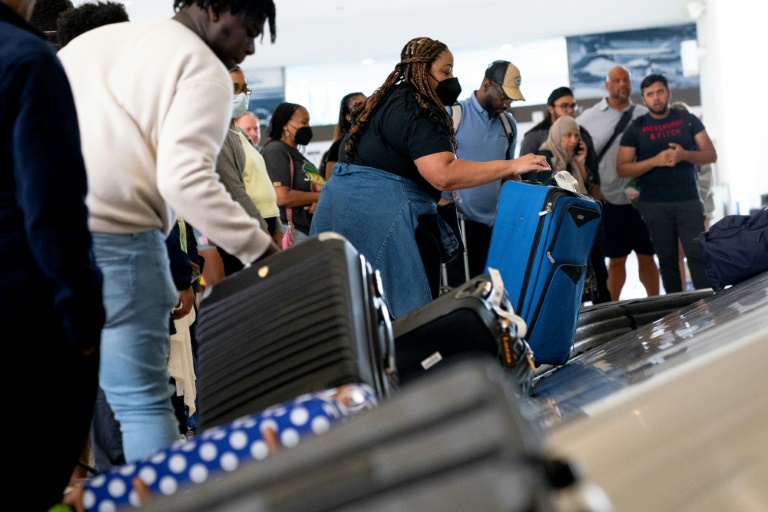
Airlines struggling to staff their planes cancelled hundreds of US flights Saturday at the start of a long and almost certainly messy holiday travel weekend.

As of mid-afternoon, with Americans gearing up for July 4 Independence Day celebrations, more than 600 flights within, into, or out of the United States had been cancelled, and more than 3,300 were delayed, according to flight tracking service flightaware.com.

The numbers on Friday were grim as well, with 587 US flights scrapped among a global total of 3,061 cancellations, the site said. Sunday was also looking problematic, with more than 100 flights already cancelled.

The airport chaos is prompting a record level of road travel by Americans seeking to dodge flight trouble, a travel industry group said. 

For days, amid a surge in travel as summer rolls in, horror stories have abounded as travelers were stranded at airports, enduring odysseys to reach their destinations.

The airline industry was devastated in the early stages of the Covid-19 pandemic as people stayed close to home, but air travel has rebounded as health measures were eased.

And although federal Covid-19 relief spared airlines from laying off staff, tens of thousands of workers left the industry after carriers urged early retirement.

Today’s industry has about 15 percent less staff compared with the pre-pandemic period to handle around 90 percent of pre-2020 passenger volume, analysts at Third Bridge consultancy estimated.

– ‘Pilots are getting fatigued’ –

The travel chaos has drawn scrutiny from Transportation Secretary Pete Buttigieg and others in Washington.

On Saturday, Buttigieg tweeted a series of tips on what to do if one’s flight is cancelled, such as whether to accept travel points or miles as compensation, or demand a cash refund.

“You can often negotiate on this. That’s between you and the airline,” Buttigieg wrote.

The travel season is at full speed, with 2,490,490 people screened at airport checkpoints nationwide on Friday, the most since February 2020 right before the Covid shutdown in the US, the Transportation Security Administration said.

“We are back to pre-pandemic checkpoint volume,” the TSA tweeted.

Delta pilots walked informational picket lines at several airports Thursday to demand a new contract and complain of overwork, among other issues.

“Quite frankly, it’s irresponsible scheduling, over scheduling. Coming out of the pandemic, we’re scheduling more flights than we have people to fly them,” Delta pilots association union leader Jason Ambrosi told CNN on Saturday.

“The pilots are getting fatigued, quite honestly,” Ambrosi said. 

They do not want to strand travelers or crew members, he added, “but it’s a safety issue.”

Lack of pilots is the most acute problem in a broad airline industry labor crunch, said Third Bridge analyst Peter McNally.

“There’s no short-term fix,” McNally told AFP. “The issue becomes most pronounced during these seasonal peaks.”

Airlines say they’re working to address the situation, recruiting pilots and other staff and trimming summer seat capacity by 15 percent.

While acknowledging the pilot shortage, airline industry officials point to other exacerbating factors, including turbulent weather, increased staff absences due to Covid and insufficient flight traffic control personnel at some sites.

For the long Independence Day weekend, a record 42 million Americans will also travel by road at least 50 miles (80 kilometers) from home, despite soaring gasoline prices, the American Automobile Association said.

The travel hassles affecting the airline industry may be fueling the heavy road traffic, it noted.

“Traveling by car does provide a level of comfort and flexibility that people may be looking for given the recent challenges with flying,” said AAA Travel senior vice president Paula Twidale. 

'Fragile situation' as Libya anger boils over living conditions

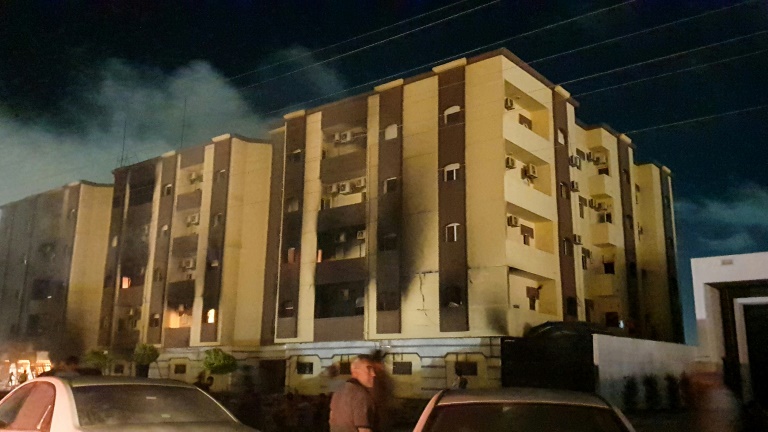
Libya’s rival leaders were under growing street pressure Saturday after protesters stormed parliament as anger exploded over deteriorating living conditions and political deadlock.

Libyans, many impoverished after a decade of turmoil and sweltering in the soaring summer heat, have been enduring fuel shortages and power cuts of up to 18 hours a day even as their country sits atop Africa’s largest proven oil reserves.

Libya has been mired in chaos and repeated rounds of conflict since a NATO-backed uprising toppled and killed dictator Moamer Kadhafi in 2011.

Protesters stormed the seat of the House of Representatives in the eastern city of Tobruk on Friday night, ransacking its offices and torching part of the building.

In both the main eastern city of Benghazi — the cradle of the 2011 uprising — and the capital Tripoli, thousands took to the streets to chants of “We want the lights to work”.

Some brandished the green flags of the former Kadhafi regime.

Calm appeared to have returned to Tobruk on Saturday, though there were calls on social media for more protests in the evening.

The UN’s top Libya envoy Stephanie Williams said that “riots and acts of vandalism” were “totally unacceptable”, urging calm and “restraint” by all.

UN-mediated talks in Geneva this week aimed at breaking the deadlock between rival Libyan institutions failed to resolve key differences.

– ‘Extremely painful’ year –

Presidential and parliamentary elections, originally set for December last year, were meant to cap a UN-led peace process following the end of the last major round of violence in 2020. 

But voting never took place due to several contentious candidacies and deep disagreements over the polls’ legal basis between the rival power centres in east and west.

In Tripoli on Friday, hundreds came out to demand elections, fresh political leadership and an end to the chronic power cuts.

The sudden eruption of unrest appeared to be spreading to other areas of the country, with Libyan media showing images of protesters in the oasis city of Sebha, deep in the Sahara desert, torching an official building.

A local journalist said protesters in Libya’s third city Misrata were blocking roads after setting fire to a municipal building on Friday night.

Interim prime minister Abdulhamid Dbeibah leads a Tripoli-based administration while former interior minister Fathi Bashagha draws support from the Tobruk-based House of Representatives and eastern military strongman Khalifa Haftar.

Haftar’s forces said Saturday that they “support the citizens’ demands” but called for protesters to “preserve public property”.

Libya expert Jalel Harchaoui told AFP that “for more than a year, the overwhelming majority of diplomatic and mediation efforts around Libya have been monopolised by the idea of elections, which won’t happen for at least two years, given the failure of the Geneva negotiations.”

This year “has been extremely painful for Libyans” because the country “imports almost all its food and the Ukraine war has hit consumer prices”, Harchaoui said.

– ‘Fragile situation’ –

Libya’s energy sector, which during the Kadhafi era financed a generous welfare state, has also fallen victim to political divisions, with a wave of forced closures of oil facilities since April.

Supporters of the eastern-based administration have shut off the oil taps as leverage in their efforts to secure a transfer of power to Bashagha, whose attempt to take up office in Tripoli in May ended in a swift withdrawal.

“There is kleptocracy and systematic corruption in the east as in the west, as the fancy cars and villas of the elite constantly remind the public,” Harchaoui said, accusing militias from both camps of carrying out “massive” fuel trafficking.

The European Union’s envoy to Libya, Jose Sabadell, said Friday’s events “confirm people want change through elections”.

But he urged peaceful protests, adding that “special restraint is necessary given the fragile situation”.

US ambassador to Libya Richard Norland said that “no single political entity enjoys legitimate control across the entire country and any effort to impose a unilateral solution will result in violence”.

He urged Libya’s “political leaders across the spectrum and their foreign backers to seize the moment to restore the confidence of their citizens in the country’s future”.

Battle rages for Ukraine city, Belarus says downed missiles

Fighting raged for the strategic Ukrainian city Lysychansk on Saturday, as Belarusian leader Alexander Lukashenko said his army had intercepted missiles fired on his territory by Kyiv’s forces.

Ukraine denied claims by Moscow-backed separatists who said they had encircled Lysychansk, the last major city in the Lugansk area of the eastern Donbas region still in Kyiv’s hands.

Lysychansk is located across the river from neighbouring Severodonetsk, which Russian forces seized last week.

The city’s capture would allow Russian forces to push deeper into the Donbas, which has become the focus of their offensive since failing to capture Kyiv.

“Fighting rages around Lysychansk… The city has not been encircled and is under control of the Ukrainian army,” Ruslan Muzytchuk, a spokesman for the Ukrainian National Guard, said on Ukrainian television.

Earlier in the day, Andrei Marochko, a spokesman for the separatist forces, told the TASS news agency: “Lysychansk is completely encircled.”

Lukashenko on Saturday accused Ukraine of “provoking” neighbouring Belarus, saying his army intercepted missiles fired at his country by Ukrainian forces “around three days ago”.

The claim came one week after Ukraine said missiles struck a border region from Belarus, a long-term Russian ally that supported the February 24 invasion.

But Lukashenko denied any involvement, which would represent an escalation of the conflict. 

“As I said more than a year ago, we do not intend to fight in Ukraine,” he was quoted as saying by state news agency Belta on Saturday.

Missiles continue to rain down across Ukraine, killing dozens.

Rockets struck residential properties in Sloviansk in the heart of the Donbas, killing a woman in her garden and wounding her husband, a neighbour told AFP Saturday, describing debris showered across the neighbourhood.

The witness said the strike on Friday was thought to use cluster munitions which spread over a large area before exploding, striking buildings and people who were outdoors. 

Strikes on a southern resort town earlier Friday left 21 dead and dozens wounded after missiles slammed into flats and a recreation centre in Sergiyvka, 80 kilometres (50 miles) south of Black Sea port Odessa.

– ‘Heavy losses’ –

Victims of the Sergiyvka attacks included a 12-year-old boy, Ukrainian President Volodymyr Zelensky said in his daily address to the nation late Friday.

“I emphasise: this is an act of deliberate, purposeful Russian terror,” Zelensky said. 

Ukraine’s chief diplomat Dmytro Kuleba said Saturday he had discussed a seventh round of European sanctions against Russia with his EU opposite number Josep Borrell.

Russian defence ministry spokesman Igor Konashenkov said Ukraine was “suffering heavy losses on all fronts”, listing what he said were military targets across the country hit with artillery and missiles. 

Earlier on Friday, Zelensky hailed a new chapter in its relationship with the European Union, after Brussels recently granted Ukraine candidate status in Kyiv’s push to join the 27-member bloc, even if membership is likely years away.

The president of the European Commission Ursula von der Leyen said membership was “within reach” but urged them to work on anti-corruption reforms.

Norway, which is not an EU member, on Friday announced $1 billion worth of aid for Kyiv including for reconstruction and weapons.

And the Pentagon said it was sending a new armament package worth $820 million, including two air defence systems and more ammunition for precision rocket launchers.

– Soup spat –

In a decision that further cooled relations between Kyiv and Moscow, the UN’s cultural agency inscribed Ukraine’s tradition of cooking borshch soup on its list of endangered cultural heritage.

Ukraine considers the nourishing soup, usually made with beetroot, as a national dish although it is also widely consumed in Russia, other ex-Soviet countries and Poland.

UNESCO said the decision was approved after a fast-track process prompted by Russia’s invasion of Ukraine.

We “will win both in the war of borshch and in this war,” said Ukraine’s Culture Minister Oleksandr Tkachenko on Telegram.

– ‘Grains going to dry out’ –

On Thursday, Russian troops abandoned their positions on Snake Island, which had become a symbol of Ukrainian resistance in the first days of the war, and sits beside shipping lanes near Odessa’s port.

The Russian defence ministry described the retreat as “a gesture of goodwill” meant to demonstrate that Moscow will not interfere with UN efforts to organise protected grain exports from Ukraine.

But on Friday evening, Kyiv accused Moscow of carrying out strikes using incendiary phosphorus munitions on the rocky outcrop.

During a daily update, Russia’s defence ministry made no comment on the alleged use of phosphorus.

In peacetime, Ukraine is a major agricultural exporter, but Russia’s invasion has damaged farmland and seen Ukraine’s ports seized, razed or blockaded — sparking concerns about food shortages, particularly in poor countries.

Farmer Sergiy Lioubarsky, whose fields are close to the frontline, warned time was running out to harvest this year’s crop. 

“We can wait until August 10 at the latest, but after that, the grains are going to dry out and fall to the ground,” he said.

Western powers have accused Putin of using the trapped harvest as a weapon to increase pressure on the international community, and Russia has been accused of stealing grain.

Tesla deliveries fall with temporary closure of China factory

Tesla’s deliveries of electric vehicles fell in the second quarter compared to the previous one due mainly to a weeks-long closure of its factory in China, the company said Saturday.

Elon Musk’s enterprise delivered 254,695 vehicles from April to June, it said in a statement.

That’s 27 percent more than the same period a year ago but down 18 percent from the January-to-March quarter of 2022 and the first such decline in more than two years.

This marks a disappointment for a company that says it is posting strong growth, touting the opening of two new factories this year, in Germany and Texas.

The drop in deliveries was bigger than that anticipated by analysts, who had expected 264,000 vehicles to be handed over to buyers, according to FactSet, a financial data and software company.

Tesla warned in April that supply chain snarls hitting the auto industry in general would keep disrupting the company’s production until the end of the year.

Still, it delivered a record number of cars in the first quarter of 2022.

But in the second quarter Tesla had to grapple with the closure of its Shanghai factory for several weeks because of strict lockdown measures in China due to a surge in Covid-19 cases.

In its statement Saturday the company said it produced 258,000 vehicles in the second quarter “despite ongoing supply chain challenges and factory shutdowns beyond our control.”

It also said June was the highest vehicle production month in Tesla’s history.

Elsewhere in the industry, General Motors and Toyota saw their second quarter sales in the United States drop by 15 percent and 23 percent respectively, compared to the same period in 2021.

Tesla deliveries fall with temporary closure of China factory

Tesla’s deliveries of electric vehicles fell in the second quarter compared to the previous one due mainly to a weeks-long closure of its factory in China, the company said Saturday.

Elon Musk’s enterprise delivered 254,695 vehicles from April to June, it said in a statement.

That’s 27 percent more than the same period a year ago but down 18 percent from the January-to-March quarter of 2022 and the first such decline in more than two years.

This marks a disappointment for a company that says it is posting strong growth, touting the opening of two new factories this year, in Germany and Texas.

The drop in deliveries was bigger than that anticipated by analysts, who had expected 264,000 vehicles to be handed over to buyers, according to FactSet, a financial data and software company.

Tesla warned in April that supply chain snarls hitting the auto industry in general would keep disrupting the company’s production until the end of the year.

Still, it delivered a record number of cars in the first quarter of 2022.

But in the second quarter Tesla had to grapple with the closure of its Shanghai factory for several weeks because of strict lockdown measures in China due to a surge in Covid-19 cases.

In its statement Saturday the company said it produced 258,000 vehicles in the second quarter “despite ongoing supply chain challenges and factory shutdowns beyond our control.”

It also said June was the highest vehicle production month in Tesla’s history.

Elsewhere in the industry, General Motors and Toyota saw their second quarter sales in the United States drop by 15 percent and 23 percent respectively, compared to the same period in 2021.

Hundreds of flights axed as US kicks off long holiday weekend

Airlines cancelled several hundred US flights Saturday at the start of a long and almost certainly messy holiday travel weekend as carriers struggled to staff their planes.

As of mid-day, with Americans gearing up for July 4 Independence Day celebrations, some 600 flights within, into or out of the United States had been cancelled and more than 2,500 were delayed, according to flight tracking service flightaware.com.

The numbers on Friday were awful as well, with 587 US flights scrapped among a global total of 3,060 cancellations, the site said.

For days, amid a surge in travel as summer rolls in and people sick of cooped up pandemic life look to go places again, horror stories have abounded as travelers got stranded at airports, enduring odysseys to get where they are going.

The airline industry was devastated in the early stages of the pandemic as people stayed close to home.

And although federal Covid-19 relief spared airlines from laying off staff, tens of thousands of workers left the industry after carriers urged early retirements.

Today’s industry has about 15 percent less staff compared with the pre-pandemic period to handle about 90 percent of pre-2020 passenger volume, analysts at Third Bridge consultancy estimated.

The travel chaos has drawn scrutiny from Transportation Secretary Pete Buttigieg and others in Washington.

On Saturday Buttigieg put out a series of tweets that were essentially consumer tips on what to do if one’s flight is cancelled, like whether to accept travel points or miles as compensation or demand a cash refund.

“You can often negotiate on this. That’s between you and the airline,” Buttigieg wrote.

Delta pilots walked informational picket lines at several airports Thursday to demand a new contract and complain of overwork, among other gripes.

“Quite frankly, it’s irresponsible scheduling, over scheduling. Coming out of the pandemic, we’re scheduling more flights than we have people to fly them,” Delta pilots association union leader Jason Ambrosi told CNN on Saturday.

“The pilots are getting fatigued, quite honestly,” Ambrosi said. They do not want to strand travelers or crew members, he said, “but it’s a safety issue.”

Pilots are the most acute issue in a broad airline industry labor crunch, said Third Bridge analyst Peter McNally.

“There’s no short-term fix,” McNally told AFP. “The issue becomes most pronounced during these seasonal peaks.”

Airlines say they’re working to address the situation, recruiting pilots and other staff and trimming summer seat capacity by 15 percent.

While acknowledging the pilot supply problem, airline industry officials point to other exacerbating factors, including turbulent weather, increased staff absences due to Covid and insufficient personnel at flight traffic control at some sites.

London marks 50 years of Pride

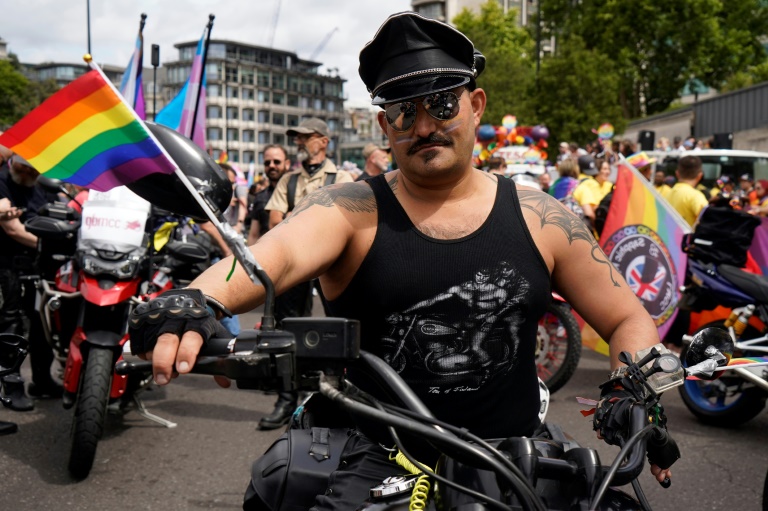
London on Saturday celebrated the 50th anniversary of its first Pride parade, marking half a century of progress in the fight for equality and tolerance but with warnings that more still needs to be done.

Several hundred people took part in the first march on July 1, 1972, just five years after homosexuality was decriminalised in the UK.

Fifty years on, more than 600 LGBTQ+ groups danced, sang and rode floats along a similar route to the original protest, in the first Pride since the coronavirus pandemic, watched by huge cheering crowds.

London Mayor Sadiq Khan told reporters the event, which organisers said was the “biggest and most inclusive” in its history, was a celebration of community, unity and progress.

But he said it was also a reminder of the need to “campaign and never be complacent” and the need for “an open, inclusive, accepting world”.

“We saw this time last week an attack in Oslo just hours before that parade, where two people lost their lives and more than 20 were injured,” he said.

“So, we’ve got to be conscious of the fact that there’s still a danger to this community of discrimination, bias and violence.”

Khan’s predecessor as mayor, Prime Minister Boris Johnson, said it gave him “the greatest pride to lead a country where you can love whomever you choose to love and where you can be free to be whoever you want to be”.

The 50th anniversary was a “milestone”, he said, paying tribute to the bravery of those who did it first.

Peter Tatchell, a veteran gay rights campaigner who took part in the 1972 march, said some from the original event have boycotted the modern-day sponsored version as “depoliticised and commercialised”.

– Campaigning –

In 1972, “Gay Pride”, as it was then known, was a demand for visibility and equality against a backdrop of lingering prejudice, discrimination and fear among many gay men and women about coming out.

In the 1980s, Pride became a focal point for campaigning against legislation by prime minister Margaret Thatcher’s Conservative government against the “promotion of homosexuality” in schools.

It also helped to raise awareness and support for people with HIV/Aids.

Now, with the rainbow flag of inclusion and tolerance spread ever more widely over the spectrum of human sexuality and gender, Pride in London is more celebration than protest.

Tatchell said that despite victories such as same-sex marriage, “we are still fighting to ban LGBT+ conversion practices which seek to change a person’s sexual orientation or gender identity”.

“We’re still fighting to secure trans people’s right to change their legal documents with ease by a simple statutory declaration. And of course, we are standing in solidarity with a global LGBT+ movement,” he told AFP.

Julian Hows, now 67, was at the first march. He said “progress is always incremental”, criticising curbs on LGBTQ+ rights around the world.

“We have to be vigilant. The price of liberation and to keeping people’s human rights intact is vigilance,” he added.

– Visibility –

Padraigin Ni Raghillig, president of Dykes on Bikes London, a motorcycle club for gay women, said the event retained part of its original campaigning spirit.

“It’s still important, I think, to at least once a year to be out and about, and to say ‘we’re here, we’re queer, and we’re not going shopping’,” said Ni Raghillig, astride a Harley Davidson.

Among those marching was a contingent from Ukraine, who criticised homophobia in Russia. 

This year’s Pride saw warnings for people with monkeypox symptoms to stay away, after public health officials said many cases in the UK were reported among gay and bisexual men.

LGBTQ+ campaign group Stonewall said everyone had a part to play to stop the spread of monkeypox, which is passed through close contact regardless of sexual orientation. 

High up in Turkish valleys, Afghan shepherds dream of home

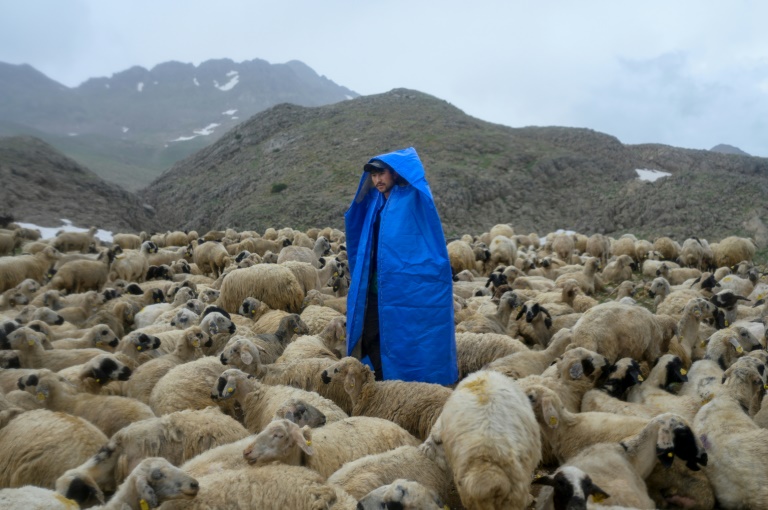
In Turkish mountains so high the silver clouds almost touch the top of his head, the homesick Afghan shepherd prepares his baaing flock for a good shear.

The pebbly valley around him was once full of Kurds, who staged a violently suppressed rebellion in Tunceli in the early years of the modern Turkish state.

But the Kurds in the eastern Mercan Valley have been gradually replaced by Afghans, who fled here by foot and truck across Iran from the poverty and bloodshed back home.

Now, with two decades of conflict behind them, some are thinking of going back, no matter the resurgent Taliban’s hardline rule.

“Nobody would leave their country unless they had to,” says Hafiz Hasimi Meymene, a 20-year-old with a fiancee impatiently waiting for him in Afghanistan.

“We come here, make money through shepherding, and send it to our families,” he says.

A handful of nylon tents are tied down to the hard ground around him, the Afghan families’ new homes.

A few men crouch in a shed, milking their sheep and goats. Their friend ushers the flock into in a pen with a whack of a slender stick.

– Mixed emotions –

“Next year, I will return to Afghanistan. The war is over,” Meymene says.

“When the (Afghan) state was fighting the Taliban, the economy was hit hard. But now we are planning to return.”

President Recep Tayyip Erdogan estimates that 300,000 Afghans now live in Turkey, which also hosts 3.7 million people from war-ravaged Syria.

Tunceli native Mustafa Acun says the locals have grown used to Afghans taking care of their herds.

The 67-year-old works alongside them, making cheese and yoghurt from sheep’s milk.

“I mean, our children either cannot or do not want to do this job,” he says looking up from his stool, tending to some steaming pots over an open flame.

It is surprisingly dangerous work.

– ‘Love the mountains’ –

An old rifle hangs off one of the men’s shoulders, the better to shoot the wolves and bears that come out hunting at night.

This is also a good time to graze the sheep, which suffer in the baking sun.

The rifle did not keep two of Abudullah Umari’s animals from being torn apart and eaten by a bear the other week.

“I take care of the flock like this,” the 55-year-old Afghan said, the rifle casually swinging behind his back.

“I have been here for seven years. I worked for three years and returned to Afghanistan. But then I decided to come here again,” he recalls, glossing over the pain and danger of each voyage.

“God willing, if my health allows, I will go back to Afghanistan in August,” when the summer heat begins to subside.

But although 29-year-old Suleyman Ezam had not seen his Afghan wife and two little children for four years, says he will miss working as a shepherd in the Turkish mountains with his dogs.

“I love the mountains,” Ezam says after showing a photograph of his four-year-old daughter on his phone. “The mountains of Turkey are so beautiful.”

Close Bitnami banner
Bitnami