World

'Fragile situation' as Libya anger boils over living conditions

Libya’s rival leaders were under growing street pressure Saturday after protesters stormed parliament as anger exploded over deteriorating living conditions and political deadlock.

Libyans, many impoverished after a decade of turmoil and sweltering in the soaring summer heat, have been enduring fuel shortages and power cuts of up to 18 hours a day even as their country sits atop Africa’s largest proven oil reserves.

Libya has been mired in chaos and repeated rounds of conflict since a NATO-backed uprising toppled and killed dictator Moamer Kadhafi in 2011.

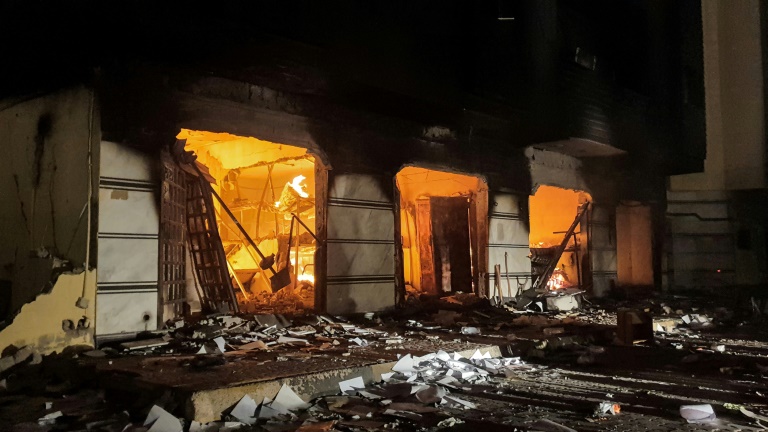
Protesters stormed the seat of the House of Representatives in the eastern city of Tobruk on Friday night, ransacking its offices and torching part of the building.

In both the main eastern city of Benghazi — the cradle of the 2011 uprising — and the capital Tripoli, thousands took to the streets to chants of “We want the lights to work”.

Some brandished the green flags of the former Kadhafi regime.

Calm appeared to have returned to Tobruk on Saturday, though there were calls on social media for more protests in the evening.

The UN’s top Libya envoy Stephanie Williams said that “riots and acts of vandalism” were “totally unacceptable”.

“It is absolutely vital that calm is maintained, responsible Libyan leadership demonstrated and restraint exercised by all,” she tweeted.

UN-mediated talks in Geneva this week aimed at breaking the deadlock between rival Libyan institutions failed to resolve key differences.

– ‘Extremely painful’ year –

Presidential and parliamentary elections, originally set for December last year, were meant to cap a UN-led peace process following the end of the last major round of violence in 2020. 

But voting never took place due to several contentious candidacies and deep disagreements over the polls’ legal basis between the rival power centres in east and west.

In Tripoli on Friday, hundreds came out to demand elections, fresh political leadership and an end to the chronic power cuts.

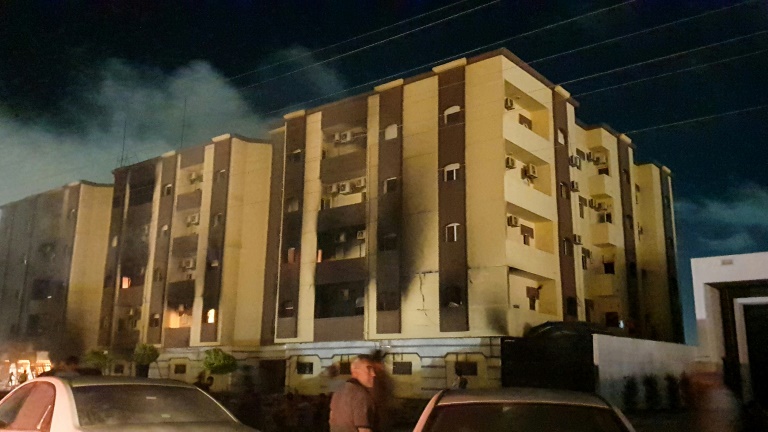
The sudden eruption of unrest appeared to be spreading to other areas of the country, with Libyan media showing images of protesters in the oasis city of Sebha, deep in the Sahara desert, torching an official building.

A local journalist said protesters in Libya’s third city Misrata were blocking roads after setting fire to a municipal building on Friday night.

Interim prime minister Abdulhamid Dbeibah leads a Tripoli-based administration while former interior minister Fathi Bashagha draws support from the Tobruk-based House of Representatives and eastern military strongman Khalifa Haftar.

“For more than a year, the overwhelming majority of diplomatic and mediation efforts around Libya have been monopolised by the idea of elections, which won’t happen for at least two years, given the failure of the Geneva negotiations,” Libya expert Jalel Harchaoui told AFP.

This year “has been extremely painful for Libyans” because the country “imports almost all its food and the Ukraine war has hit consumer prices”, Harchaoui said.

– ‘Fragile situation’ –

Libya’s energy sector, which during the Kadhafi era financed a generous welfare state, has also fallen victim to political divisions, with a wave of forced closures of oil facilities since April.

Supporters of the eastern-based administration have shut off the oil taps as leverage in their efforts to secure a transfer of power to Bashagha, whose attempt to take up office in Tripoli in May ended in a swift withdrawal.

Libya’s National Oil Corporation has announced losses of more than $3.5 billion from the closures and a drop in gas output, which has a knock-on effect on the power grid.

“There is kleptocracy and systematic corruption in the east as in the west, as the fancy cars and villas of the elite constantly remind the public,” Harchaoui said, accusing militias from both camps of carrying out “massive” fuel trafficking.

Recent weeks have seen repeated skirmishes between armed groups in Tripoli, prompting fears of a return to full-scale conflict.

The European Union’s envoy to Libya, Jose Sabadell, said Friday’s events “confirm people want change through elections”.

But he urged peaceful protests, adding that “special restraint is necessary given the fragile situation”.
Pro-Russia rebels claim to 'encircle' key city, Ukraine denies

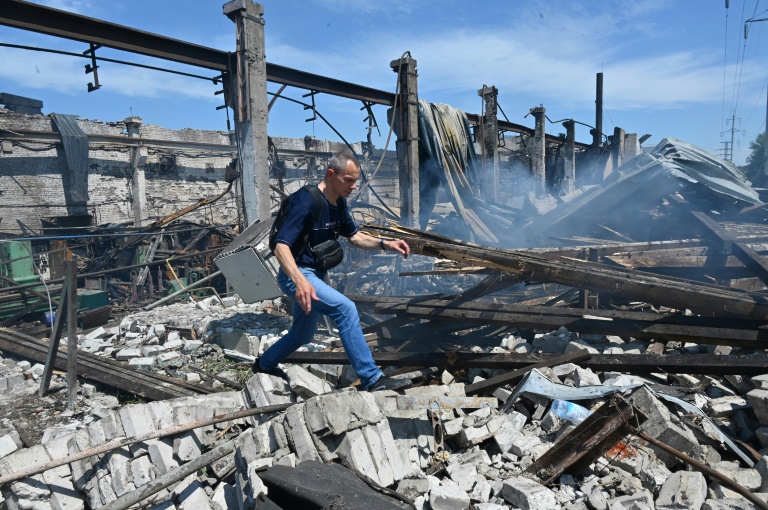
Fighting raged Saturday for Ukraine’s strategic Lysychansk, as Kyiv denied a claim by Moscow-backed separatists that they had encircled the eastern city.

Clashes have been intense in Lysychansk, the last major city in the Lugansk region of the Donbas still in Ukrainian hands, located across the river from neighbouring Severodonetsk seized by Russia last week.

The city’s capture would allow Russian forces to push deeper into the battleground Donbas region, which has become the focus of their offensive since failing to capture Kyiv after invading in late February.

“Fighting rages around Lysychansk… The city has not been encircled and is under control of the Ukrainian army,” Ruslan Muzytchuk, a spokesman for the Ukrainian National Guard, said on Ukrainian television.

Earlier in the day, Andrei Marotchko, a spokesman for the separatist forces, told the TASS news agency: “Lysychansk is completely encircled.”

The announcements come as missiles continue to rain down across Ukraine, killing dozens.

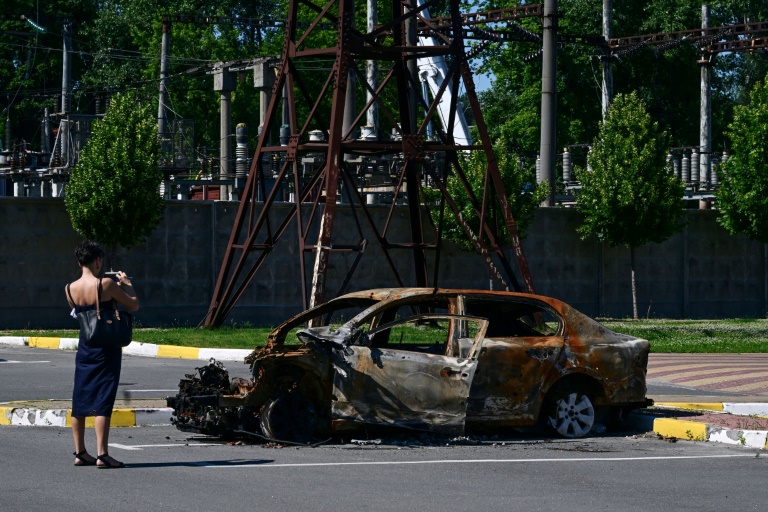
Rockets struck residential properties in Solviansk in the heart of the Donbas, killing a woman in her garden and wounding her husband, a neighbour told AFP Saturday, describing debris showered across the neighbourhood.

The witness said the strike on Friday was thought to use cluster munitions which spread over a large area before exploding, striking buildings and people who were outdoors. 

Strikes on a southern resort town earlier Friday left 21 dead and dozens wounded after missiles slammed into flats and a recreation centre in Sergiyvka, 80 kilometres (50 miles) south of Black Sea port Odessa.

The attacks came after Moscow abandoned positions on a strategic island in a major setback to the Kremlin’s invasion.

– ‘Heavy losses’ –

Victims of the Sergiyvka attacks included a 12-year-old boy, Ukrainian President Volodymyr Zelensky said in his daily address to the nation late Friday.

“I emphasise: this is an act of deliberate, purposeful Russian terror,” Zelensky said. 

Ukraine’s chief diplomat Dmytro Kuleba said Saturday he had discussed a seventh round of European sanctions against Russia with his EU opposite number Joseph Borrell.

Russian defence ministry spokesman Igor Konashenkov said Ukraine was “suffering heavy losses on all fronts”, listing what he said were military targets across the country hit with artillery and missiles. 

The strikes follow global outrage earlier this week when a Russian strike destroyed a shopping centre in Kremenchuk, central Ukraine, killing at least 21 civilians according to the mayor.

President Vladimir Putin has denied his forces were responsible for that attack and Moscow made no immediate comment on the Odessa strikes.

Earlier on Friday, Zelensky hailed a new chapter in its relationship with the European Union, after Brussels recently granted Ukraine candidate status in Kyiv’s push to join the 27-member bloc, even if membership is likely years away.

“Our journey to membership shouldn’t take decades. We should make it down this road quickly,” Zelensky told Ukraine’s parliament.

The president of the European Commission Ursula von der Leyen said membership was “within reach” but urged them to work on anti-corruption reforms.

Norway, which is not an EU member, on Friday announced $1 billion worth of aid for Kyiv including for reconstruction and weapons.

And the Pentagon said it was sending a new armament package worth $820 million, including two air defence systems and more ammunition for precision rocket launchers.

– Soup spat –

In a decision that further cooled relations between Kyiv and Moscow, the UN’s cultural agency inscribed Ukraine’s tradition of cooking borshch soup on its list of endangered cultural heritage.

Ukraine considers the nourishing soup, usually made with beetroot, as a national dish although it is also widely consumed in Russia, other ex-Soviet countries and Poland.

UNESCO said the decision was approved after a fast-track process prompted by Russia’s invasion of Ukraine.

We “will win both in the war of borshch and in this war,” said Ukraine’s Culture Minister Oleksandr Tkachenko on Telegram.

– ‘Grains going to dry out’ –

On Thursday, Russian troops abandoned their positions on Snake Island, which had become a symbol of Ukrainian resistance in the first days of the war, and sits beside shipping lanes near Odessa’s port.

The Russian defence ministry described the retreat as “a gesture of goodwill” meant to demonstrate that Moscow will not interfere with UN efforts to organise protected grain exports from Ukraine.

But on Friday evening, Kyiv accused Moscow of carrying out strikes using incendiary phosphorus munitions on the rocky outcrop.

During a daily update, Russia’s defence ministry made no comment on the alleged use of phosphorous.

In peacetime, Ukraine is a major agricultural exporter, but Russia’s invasion has damaged farmland and seen Ukraine’s ports seized, razed or blockaded — sparking concerns about food shortages, particularly in poor countries.

Farmer Sergiy Lioubarsky, whose fields are close to the frontline, 30 kilometres (18 miles) west of Lysychansk, warned time was running out to harvest this year’s crop. 

“We can wait until August 10 at the latest, but after that, the grains are going to dry out and fall to the ground,” he said.

Western powers have accused Putin of using the trapped harvest as a weapon to increase pressure on the international community, and Russia has been accused of stealing grain.

War in Ukraine: Latest developments

Here are the latest developments in the war in Ukraine:

– Separatists say key city surrounded…-

Ukrainian separatists backed by Russia say they had “completely” encircled the key city of Lysychansk in the eastern Lugansk region.

“Today the Lugansk popular militia and Russian forces occupied the last strategic heights, which allows us to confirm that Lysychansk is completely encircled,” Andrei Marotchko, a spokesman for the separatist forces, tells the TASS news agency.

Capturing the city will allow the Russians to push deeper into the wider eastern region of the Donbas, which has become the focus of their offensive since failing to capture Kyiv after launching their military operation in Ukraine in late February.

– …and Kyiv denies surrounded claim –

The Ukrainian army however rejects the claims that Lysychansk has been surrounded, but says heavy fighting was ongoing on its edges.

“Fighting rages around Lysychansk. (But) luckily the city has not been encircled and is under control of the Ukrainian army,” Ruslan Muzytchuk, a spokesman for the Ukrainian National Guard, says on Ukrainian television.

– ‘Phosphorus bombs on Snake Island’ –

Ukraine’s army accuses Russia of carrying out strikes using incendiary phosphorus munitions on Snake Island, just a day after Moscow withdrew its forces from the rocky outcrop in the Black Sea.

“Russian air force SU-30 planes twice conducted strikes with phosphorus bombs on Zmiinyi island,” it says in a statement Friday, using another name for Snake Island.

The Russian defence ministry has described the retreat as “a gesture of goodwill” meant to demonstrate that Moscow will not interfere with UN efforts to organise protected grain exports from Ukraine.

– Snake Island decision ‘changes situation’: Zelensky –

Russia’s decision to abandon Snake Island “changes the situation in the Black Sea considerably”, Ukrainian President Volodymyr Zelensky says.

“It does not yet guarantee security. It does not yet guarantee that the enemy will not return. But it already considerably limits the actions of the occupiers,” he says Thursday in his daily address.

A strategic target, Snake Island sits aside shipping lanes near Odessa port. Russia had attempted to install missile and air defence batteries while under fire from drones.

Britain’s Ministry of Defence says in an intelligence update that Russia has highly likely withdrawn “owing to the isolation of the garrison and its increasing vulnerability to Ukrainian strikes, rather than as a ‘gesture of good will’, as it has claimed.”

 – Deadly strike on Odessa –

Missile strikes kill 21 people and wound dozens in Ukraine’s flashpoint Odessa region on the Black Sea, Sergiy Bratchuk, Odessa deputy chief of district, says.

The strikes come a day after Russian troops abandoned positions on the strategic Snake Island off the coast of Odessa.

Early Friday, the missiles hit a nine-storey apartment building and a recreation centre in Serhiivka about 80 kilometres (50 miles) south of Odessa.

Two children were among the dead and six others among the injured, officials say.

Germany condemns the attack as “inhuman and cynical.”

– Russia ‘engaging in terror’: Zelensky –

Zelensky accuses Russia of engaging in state “terror” as he blames Moscow for missile strikes on a southern resort town that left 21 dead and dozens wounded.

– More missiles, ammo for Ukraine: US –

The Pentagon announces $820 million in additional weapons and ammunition for Ukraine as it battles Russian forces along the eastern and southern fronts.

The 14th package of armaments for Ukraine forces includes two air defence systems, more ammunition for the Himars precision rocket launchers the US began supplying in June, up to 150,000 rounds of 155mm artillery ammunition, and four additional counter-artillery radars.

– Norway says $1bn in aid –

Norway announces almost a billion euros of aid to Ukraine, over two years, as Norwegian Prime Minister Jonas Gahr Store visits the country.

The 10 billion Norwegian crowns (960 million euros, $1 billion), which is in addition to previous aid announced by Norway, is for “humanitarian aid, reconstruction of the country, weapons and support for the functioning of the Ukrainian authorities”, the Norwegian government says in a statement.

– Turkey asked to detain ship –

Ukraine has asked Turkey to detain a Russian-flagged cargo ship that Kyiv alleged had set off from a Kremlin-occupied port.

Ukraine’s ambassador to Ankara says the Zhibek Zholy had set sail from Ukraine’s Kremlin-occupied port of Berdyansk.

“Based on instruction from the Ukrainian general prosecutor, we asked the Turkish side to take corresponding measures,” Ambassador Vasyl Bodnar says on Twitter.

“I am convinced that (Turkish) measures will prevent attempts to violate Ukraine’s sovereignty,” he says.

The Marinetraffic.com website says the 140-metre (460-foot) general cargo vessel is sailing under the Russian flag.

burs-jhe/pvh

Afghan clerics vow loyalty to Taliban, but no word on girls' schooling

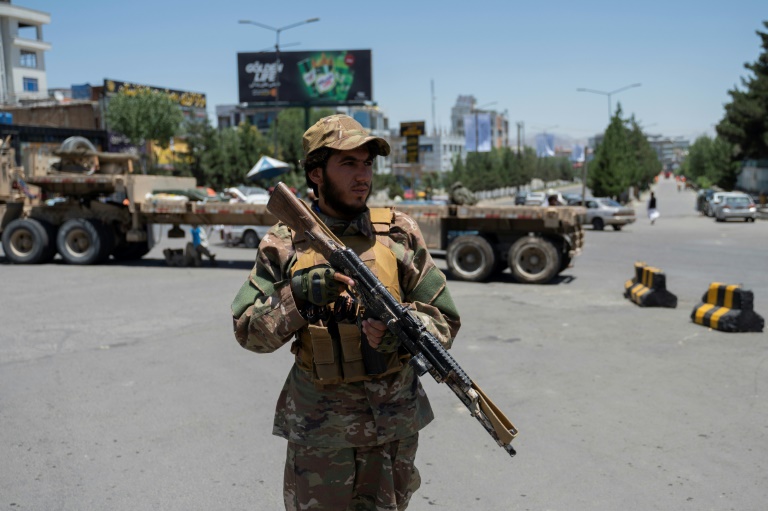
Thousands of Afghan clerics pledged loyalty to the Taliban Saturday, but ended a three-day meeting without recommendations on how the hardline Islamist group should govern the crisis-hit country.

The men-only gathering was called to rubber-stamp the Taliban’s rule, and ahead of the meeting officials said criticism would be tolerated and they could also discuss thorny issues such as secondary school education for girls.

Media were barred from the event, although speeches were broadcast on state radio — including a rare appearance by the Taliban’s reclusive supreme leader, Hibatullah Akhundzada.

Taliban officials presented the gathering as an opportunity for clerics to independently say how they wanted the country to be governed, but the meeting’s final declaration was mostly a regurgitation of their own doctrine.

It called for allegiance to Akhundzada, loyalty to the Taliban, and the complete acceptance of sharia law as the basic principle of rule.

“By the grace of God, the Islamic system has come to rule in Afghanistan,” the declaration read.

“We not only strongly support it, but will also defend it. We consider this to be the national and religious duty of the entire nation.”

Since returning to power in August, the Taliban’s harsh interpretation of sharia law has imposed severe restrictions on Afghans — particularly women.

– Harsh restrictions –

Secondary school girls have been barred from education and women dismissed from government jobs, forbidden from travelling alone, and ordered to dress in clothing that covers everything but their faces.

The Taliban have also outlawed playing non-religious music, banned human figures in advertising, ordered TV channels to stop showing movies and soaps featuring uncovered women, and told men they should dress in traditional garb and grow their beards.

The final declaration made no mention of girls’ schooling, but called on the government to pay “special attention” to modern education, as well as justice and the rights of minorities “in the light of Islamic law”.

It said the new government had brought security to the nation — despite an attack on the meeting Thursday by two gunmen that was claimed by the Islamic State group, which has regularly carried out bomb blasts and ambushes since the Taliban’s return.

“We call on the countries of the region and the world… to recognise the Islamic Emirate as a legitimate system,” the declaration read.

“Interact positively, lift all sanctions on Afghanistan, unfreeze the assets of the Afghan people and support our nation.”

Afghanistan, long dependent on international funding for survival, has been in the grip of an economic crisis since the United States froze nearly $7 billion in assets held abroad — earmarking half for the families of victims of the 9/11 attacks.

US officials, wary of releasing assets that could be used directly by the Taliban, are currently meeting with them in Qatar to see how they might be able to free up some funds to provide relief to tens of thousands affected by a deadly earthquake in the east of the country last week.

– Akhundzada highlight –

The highlight of the clerics’ meeting was Friday’s appearance by Akhundzada, who has not been filmed or photographed in public since the Taliban returned to power.

The “Commander of the Faithful”, as he is known, rarely leaves the Taliban’s birthplace and spiritual heartland of Kandahar and apart from one undated photograph and several audio recordings of speeches, has almost no digital footprint.

In Geneva on Friday, the United Nations human rights chief urged the Taliban to look to other Muslim countries for inspiration on improving the rights of women in a religious context.

Addressing an urgent council debate on the situation of women and girls in Afghanistan, Michelle Bachelet said they were “experiencing the most significant and rapid roll-back in enjoyment of their rights across the board in decades”.

“I strongly encourage the de facto authorities to engage with predominantly Muslim countries with experience in promoting women and girls’ rights, as guaranteed in international law, in that religious context,” she said.

'A bit like poker': Ukraine wheat harvest hangs in the balance

Standing in one of his huge wheat fields in war-wracked southeastern Ukraine, farmer Sergiy Lyubarsky wonders how on earth he’ll manage to harvest his crops.

Between the lack of fuel to run his combine harvester and the risk of being bombed, the chances seem remote.

“The harvest is due normally to begin around July 15 but diesel is expensive and anyway there isn’t any,” he says.

His old combine harvester sits idle in his farmyard in the village of Rai Oleksandrivka, not far from positions held by Russian forces on the other side of the hill, about 30 kilometres (18 miles) west of the city of Lugansk.

Lyubarsky farms 170 hectares (420 acres) of land, producing mostly wheat but also barley and sunflowers — grains whose prices have shot up on international markets especially since Russia’s invasion of Ukraine, a key global producer of wheat.

But he has been forced to leave 40 hectares fallow. 

“We couldn’t buy maize seed because the war started,” he says, with the imported seeds taking up to two months to arrive.

Now the land that is not under cultivation is “used in part by the army to store military equipment”, he adds.

Pointing to the nearby hill, he says grimly: “Look, Russian soldiers are already over there, eight kilometres” as the crow flies.

For his wheat, time is pressing.

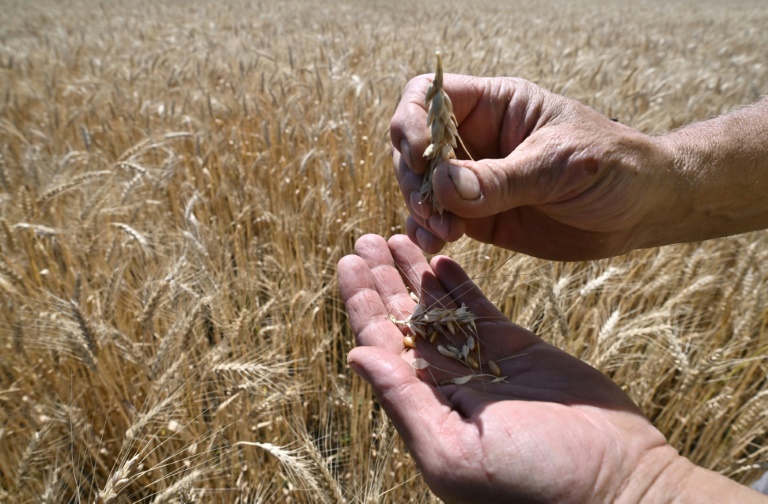
“We can wait until August 10 at the latest, but after that, the grains are going to dry out and fall to the ground,” he says.

He presses an ear of wheat in his hand so that the grains drop, by way of demonstrating what happens if it is not harvested in time.

– ‘A match will do’ –

For fellow farmer Anatoliy Moiseyenko from the same village, things are equally uncertain.

Although he has enough diesel to harvest his wheat, he’s worried about the encroaching combat.

“The problem is the war. Is it going to be possible or are rockets again going to fall?” he asks, watching as Ukrainian soldiers pick up a rocket warhead that recently fell in his field.

Harvesting “is a bit like playing poker”, he says, smiling.

In the neighbouring village of Riznikivka, Yaroslav Kokhan knows that his 40 hectares of wheat are already lost.

Normally, he says, his son does the harvest because the retired 61-year-old doesn’t use the tractor or combine harvester anymore.

His son went to live in Krasnodar in southern Russia in 2014, the year Moscow annexed Crimean peninsula from Ukraine following a popular uprising in Kyiv.

He used to come back by car several times a year, to sow the wheat, weed it and then harvest it, Kokhan says.

This year though, “he was due to come back to Ukraine on February 25, his birthday, but the war broke out the day before”, he adds.

Now he won’t come — if he did, he’d face not being able to return home to his family in Russia again since Ukrainian men aged between 18 and 60 are unable to leave the country due to military conscription.

So what will become of his wheat?

“I think a match will do,” Kokhan says sadly, looking at the field behind his home.

A little more optimistic, Lyubarsky still hopes he’ll be able to harvest his wheat and is already thinking about his sunflowers due for harvest in September.

“By then, I hope, we’ll be living in peace!”.

Living but only just as Lysychansk is bombed 'day and night'

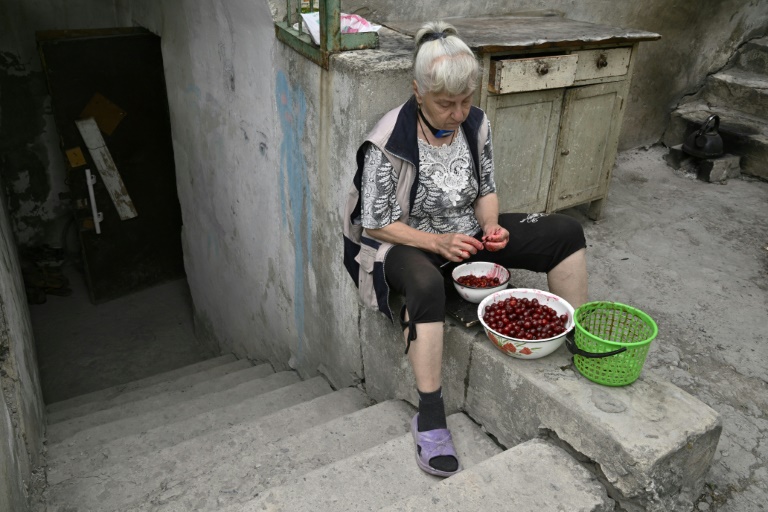
Lyudmila says she can no longer stand living like this as she pits cherries outside the basement in eastern Ukraine which has been her home for the last three months.

Her small town of Siversk was badly shelled in March. Now it is in the firing line again as the Russians advance on Lysychansk, the last major city in the Lugansk region of the Donbas still in Ukrainian hands. 

“Three months ago, they (the Russians) shelled here, now it’s more towards there,” said the 66-year-old between the thud of shells raining down on Lysychansk, with white smoke hanging over the city on the horizon.

“The bombing goes on day and night,” said another woman dragging a cart to fetch water from a fountain. 

“We haven’t had electricity or gas for three months,” said Lyudmila as a woman prepared potato pancakes over a fire in a corner of the cellar.

Pointing with a flashlight, the neighbours show AFP their “bedroom”.

“Look, the mattresses are over there in the corner, and we spread them out here on the floor.” 

– ‘Any toilet paper?’ –

In the dark of the nextdoor basement, a 90-year-old woman leans on a walking frame. She needs medicine, but it’s impossible to find any. The town’s last pharmacy has shut and shops have been closed for weeks. 

“Do you have any toilet paper?” a young man passing asked an AFP reporter. 

“You have to go far to buy something, and nobody can take us.” 

Despite the danger, Vyacheslav Kompaniets, 61, continues to live in his apartment on the first floor of the five-storey building, even though all the windows were blown out by a rocket attack in March.

But he too ended up in the basement for a while after he suffered a stroke at the end of May. 

“I was treated in the cellar” as Lysychansk, which is 20 kilometres away, began to come under incessant Russian shelling.

In March, when Russian forces were driven back from Siversk, a small fire station next to the apartment building was destroyed by a rocket, leaving a pile of debris that is still there. 

While living with no windows may be possible in the summer, “we’ll have to seal it all up” when autumn comes, Kompaniets said, not knowing how or with what he was going to do it. 

The neighbours hope by then the war will be over. Until then they will live from day to day not knowing what the next will bring.

Ukraine's Zelensky accuses Russia of 'terror' as missiles rain down

Missiles rained down on Ukraine killing many civilians and wounding dozens in built up areas as the weekend began, prompting President Volodymyr Zelensky to accuse Russia of state “terror”.

Strikes on a southern resort town left 21 dead and dozens wounded after missiles slammed into flats and a recreation centre in Sergiyvka, 80 kilometres (50 miles) south of Black Sea port Odessa.

Rockets struck residential properties in Solviansk in the heart of the embattled Donbas region, killing a woman in her garden and wounding her husband, a neighbour told AFP Saturday, describing debris showered across the neighbourhood.

The witness said the strike on Friday was thought to use cluster munitions which spread over a large area before exploding, striking buildings and people who were outdoors. 

The attacks came after Moscow abandoned positions on a strategic island in a major setback to the Kremlin’s invasion.

Victims of the Sergiyvka attacks included a 12-year-old boy, Zelensky said in his daily address to the nation, adding that some 40 people have been injured and that the death toll could rise.

“I emphasise: this is an act of deliberate, purposeful Russian terror — and not some kind of mistake or an accidental missile strike,” Zelensky said. 

“Three missiles hit a regular nine-storey apartment building, in which nobody was hiding any weapons, any military equipment,” he added. “Regular people, civilians, lived there.”

– ‘Cruel manner’ –

Germany swiftly condemned the violence.

“The cruel manner in which the Russian aggressor takes the deaths of civilians in its stride and is again speaking of collateral damages is inhuman and cynical,” said German government spokesman Steffen Hebestreit.

The attacks follow global outrage earlier this week when a Russian strike destroyed a shopping centre in Kremenchuk, central Ukraine, killing at least 18 civilians.

President Vladimir Putin has denied his forces were responsible for that attack and Moscow made no immediate comment on the Odessa strikes.

On Friday, Zelensky hailed a new chapter in its relationship with the European Union, after Brussels recently granted Ukraine candidate status in Kyiv’s push to join the 27-member bloc, even if membership is likely years away.

“Our journey to membership shouldn’t take decades. We should make it down this road quickly,” Zelensky told Ukraine’s parliament.

The president of the European Commission Ursula von der Leyen, addressing Ukrainian lawmakers by video link, said membership was “within reach” but urged them to work on anti-corruption reforms.

Norway, which is not an EU member, on Friday announced $1 billion worth of aid for Kyiv including for reconstruction and weapons.

And the Pentagon said it was sending a new armament package worth $820 million, including two air defence systems and more ammunition for the Himars precision rocket launchers the United States began supplying last month.

– Soup spat –

In a decision that further cooled relations between Kyiv and Moscow, the UN’s cultural agency inscribed Ukraine’s tradition of cooking borshch soup on its list of endangered cultural heritage.

Ukraine considers the nourishing soup, usually made with beetroot, as a national dish although it is also widely consumed in Russia, other ex-Soviet countries and Poland.

UNESCO said the decision was approved after a fast-track process prompted by Russia’s invasion of Ukraine.

We “will win both in the war of borshch and in this war,” said Ukraine’s Culture Minister Oleksandr Tkachenko on Telegram.

Russian foreign ministry spokeswoman Maria Zakharova said: “Hummus and pilaf are recognised as national dishes of several nations. Everything is subject to Ukrainisation.”

– Phosphorus bombs –

On Thursday, Russian troops abandoned their positions on Snake Island, which had become a symbol of Ukrainian resistance in the first days of the war, and sat aside shipping lanes near Odessa’s port.

The Russian defence ministry described the retreat as “a gesture of goodwill” meant to demonstrate that Moscow will not interfere with UN efforts to organise protected grain exports from Ukraine.

But on Friday evening, Kyiv accused Moscow of carrying out strikes using incendiary phosphorus munitions on the rocky outcrop, saying the Russians were unable to “respect even their own declarations”.

In peacetime, Ukraine is a major agricultural exporter, but Russia’s invasion has damaged farmland and seen Ukraine’s ports seized, razed or blockaded — sparking concerns about food shortages, particularly in poor countries.

Western powers have accused Putin of using the trapped harvest as a weapon to increase pressure on the international community, and Russia has been accused of stealing grain.

Ukraine on Friday asked Turkey to detain a Russian-flagged cargo ship that Kyiv alleged had set off from the Kremlin-occupied port of Berdyansk.

While heavy fighting continued in eastern Ukraine, officials said schools in the Ukrainian capital would re-open at the start of the school year on September 1 for the first in-person classes since lessons went online after the invasion began.

Olena Fidanyan, head of Kyiv’s education and science department, said land around schools will be checked for explosives and school bomb shelters will be restocked with essentials.

Georgian fighters in Ukraine wrestle with international humanitarian law

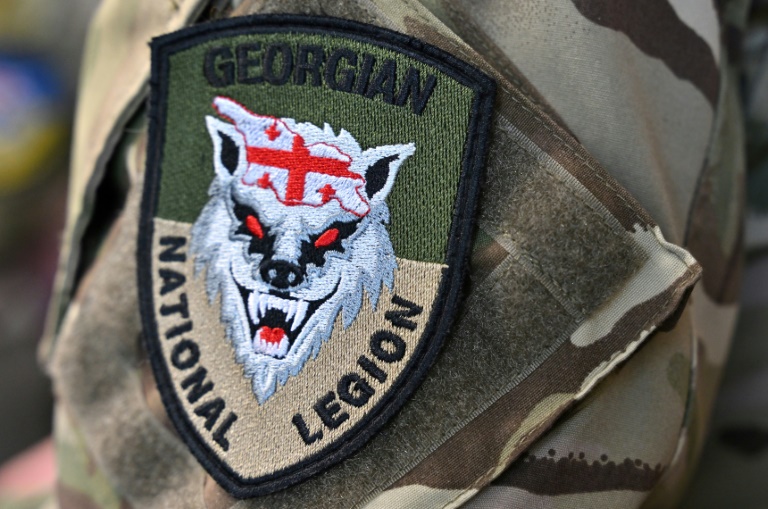
His forearm tattooed “Never forget, never forgive,” the head of the Georgian National Legion Mamuka Mamulashvili listens intently to a presentation on the need for fighters in Ukraine to respect international humanitarian law.

The event in the capital Kyiv is organised by a Swiss NGO called Geneva Call as part of its efforts to meet and provide guidance to a wide range of Ukrainian combatants.

As fighting rages, Geneva Call aims to impartially convey the rules of international combat to fighters who may have had little or no training, says Marie Lequin, head of its Eurasia region.

Held in an office centre with PowerPoint screens, the setting contrasts sharply with the battle-hardened appearance of the Georgian Legion fighters.

A fluent English speaker, Mamulashvili, who is Georgian, leads around 800 fighters from some 32 countries, fighting in southeastern Ukraine. 

The Legion boasts that it recruits only volunteers with combat experience and so far has suffered injuries but no deaths.

Squadron leaders, mostly bearded and tattooed, flank him at the session in Kyiv.

Issues such as prisoners of war and rules on proportionality are covered. Other topics include whether to give relatives details on how a soldier died — not necessarily — and whether the conflict is legally defined as “international” — it is.

Finally, the participants sign an undertaking to observe international norms, posing with their flag decorated with a red-eyed wolf.

“Today it’s one step in a process we call humanitarian engagement… setting up a kind of dialogue with armed organisations to leverage some kind of change in policy and behaviour,” Lequin tells AFP.

– ‘Blurred lines’ –

The treatment of civilians and human rights organisations prompts much discussion at the presentation.

Warning of potential “blurred lines” in the war, Lequin stresses that “it’s important that humanitarian work, assistance, is separated from military operations”.

But Mamulashvili counters that humanitarian organisations “should be more involved in the process and not stop at lectures”.

He insists that his fighters “are getting the basic information about the Geneva Convention and different international laws that they should be aware of”.

The Legion at the end of the session signed a commitment to protect the civilian population and allow access to humanitarian groups.

At the same time, he says the Legion carries out some humanitarian activities itself due to a lack of NGOs on the ground.

“We were transporting civilians from areas that have been shelled by Russians,” he tells the session.

“We are doing it with cars that we bought with our own money and they’re not armoured and it’s quite dangerous for civilians.”

Geneva Call says that if an armed group carries out a humanitarian aid distribution or evacuation, or accompanies humanitarian groups, it must ditch uniforms and not carry weapons while doing so.

“We don’t carry arms with us when we distribute to volunteers the humanitarian aid,” branch commander Taras Reshetylo tells AFP.

– ‘Let’s be models’ –

Lequin warns that such well-intentioned actions can put civilians in danger by making them a potential target.

“It’s confusing from a civilian perspective to understand if you are providing humanitarian assistance or if you are leading military operations to protect civilians,” she tells Mamulashvili.

For NGOs, too, “it’s very difficult to assess whether the military presence will turn us into a military objective or not,” she adds.

Actions can be interpreted differently, or manipulated, Lequin tells AFP, adding that the conduct of war “will end up in court at some stage and it’s important that we can document all this”.

She urges Mamulashvili: “Let’s be models and let’s have the best practice.”

 – ‘Grave violation’ – 

Some Ukrainian fighters in the war-torn east have used schools to accommodate soldiers and transported troops in yellow school buses, AFP journalists have seen — making these potential targets.

“We have never used schools and I’m sure that Ukrainians are also not violating international law,” Mamulashvili tells AFP.

But Russia, he claims, is “breaking all the rules” and he accuses it of using fake humanitarian aid organisations as covert means to bring in weapons.

Lequin says that this would be a “grave violation” and “perfidy”.

Mamulashvili says the Legion, which carries out special operations, has units “spread everywhere on the front line”.

“It is becoming heavier for us because Russia is not getting into contact fights anymore and they are only shooting artillery,” he says, stressing Ukraine’s need for more rocket systems to respond.

“Ukraine needs to protect its civilian population that is bombed daily and we have nothing to answer with,” he warns.

War in Ukraine: Latest developments

Here are the latest developments in the war in Ukraine:

– ‘Phosphorus bombs on Snake Island’ –

Ukraine’s army accuses Russia of carrying out strikes using incendiary phosphorus munitions on Snake Island, just a day after Moscow withdraws its forces from the rocky outcrop in the Black Sea.

“Russian air force SU-30 planes twice conducted strikes with phosphorus bombs on Zmiinyi island,” it says in a statement Friday, using another name for Snake Island.

A day before, the Russian defence ministry described the retreat as “a gesture of goodwill” meant to demonstrate that Moscow will not interfere with UN efforts to organise protected grain exports from Ukraine.

– Snake Island decision ‘changes situation’: Zelensky –

Russia’s decision to abandon Snake Island “changes the situation in the Black Sea considerably”, Ukrainian President Volodymyr Zelensky says.

“It does not yet guarantee security. It does not yet guarantee that the enemy will not return. But it already considerably limits the actions of the occupiers,” he says Thursday in his daily address.

A strategic target, Snake Island sits aside shipping lanes near Odessa port. Russia had attempted to install missile and air defence batteries while under fire from drones.

Britain’s Ministry of Defence says in an intelligence update that Russia has highly likely withdrawn “owing to the isolation of the garrison and its increasing vulnerability to Ukrainian strikes, rather than as a ‘gesture of good will’, as it has claimed.”

 – Deadly strike on Odessa –

Missile strikes kill 21 people and wound dozens in Ukraine’s flashpoint Odessa region on the Black Sea, Sergiy Bratchuk, Odessa deputy chief of district, says.

The strikes come a day after Russian troops abandoned positions on the strategic Snake Island off the coast of Odessa.

Early Friday, the missiles hit a nine-storey apartment building and a recreation centre in Serhiivka about 80 kilometres (50 miles) south of Odessa.

Two children were among the dead and six others among the injured, officials say.

Germany condemns the attack as “inhuman and cynical.”

– Russia ‘engaging in terror’: Zelensky –

Zelensky accuses Russia of engaging in state “terror” as he blames Moscow for missile strikes on a southern resort town that left 21 dead and dozens wounded.

– More missiles, ammo for Ukraine: US –

The Pentagon announces $820 million in additional weapons and ammunition for Ukraine as it battles Russian forces along the eastern and southern fronts.

The 14th package of armaments for Ukraine forces includes two air defence systems, more ammunition for the Himars precision rocket launchers the US began supplying in June, up to 150,000 rounds of 155mm artillery ammunition, and four additional counter-artillery radars.

– Norway says $1bn in aid –

Norway announces almost a billion euros of aid to Ukraine, over two years, as Norwegian Prime Minister Jonas Gahr Store visits the country.

The 10 billion Norwegian crowns (960 million euros, $1 billion), which is in addition to previous aid announced by Norway, is for “humanitarian aid, reconstruction of the country, weapons and support for the functioning of the Ukrainian authorities”, the Norwegian government says in a statement.

– Turkey asked to detain ship –

Ukraine has asked Turkey to detain a Russian-flagged cargo ship that Kyiv alleged had set off from a Kremlin-occupied port.

Ukraine’s ambassador to Ankara says the Zhibek Zholy had set sail from Ukraine’s Kremlin-occupied port of Berdyansk.

“Based on instruction from the Ukrainian general prosecutor, we asked the Turkish side to take corresponding measures,” Ambassador Vasyl Bodnar says on Twitter.

“I am convinced that (Turkish) measures will prevent attempts to violate Ukraine’s sovereignty,” he says.

The Marinetraffic.com website says the 140-metre (460-foot) general cargo vessel is sailing under the Russian flag.

– Lysychansk pounded –

The city of Lysychansk in Ukraine’s eastern Donbas region continues to come under sustained bombardment, Ukrainian officials say. 

Capturing the city would allow the Russians to push deeper in the industrial Donbas, which has become the focus of their offensive since failing to capture Kyiv after their February 24 invasion.

Four people also died and three were wounded in shelling in Izium and Chuguiv, two districts of the northeastern Kharkiv region in the last 24 hours, Oleg Synegubov, Kharkiv chief of district, says on Telegram.

burs-jhe/spm

Libyan protesters storm, set fire to parliament in Tobruk

Protesters stormed Libya’s parliament in the eastern city of Tobruk on Friday and set parts of it ablaze, venting their anger at deteriorating living conditions and months of political deadlock.

Black smoke billowed as men burned tyres and torched cars after one protester had smashed through the compound’s gate with a bulldozer and others attacked the walls with construction tools, local media reported.

The building was empty, as Friday falls on the weekend in Libya.

Libya’s House of Representatives has been based in Tobruk, more than 1,000 kilometres (600 miles) east of the capital Tripoli, since an east-west schism in 2014 that came three years after a mass popular revolution toppled dictator Moamer Kadhafi.

A separate legislature, formally known as the High Council of State, is based in Tripoli as the oil-rich North African country remains divided between rival administrations vying for control.

Libya, sweltering in summer heat, has endured days of power cuts — a situation worsened by the blockade of key oil facilities amid the entrenched political rivalries.

“We want the lights to work,” chanted protesters, some of whom were brandishing the green flags of the Kadhafi regime.

The parliament condemned the “acts of vandalism and the burning” of its headquarters.

The interim prime minister of the Tripoli-based government, Abdulhamid Dbeibah, meanwhile voiced support for the protesters’ concerns in a Twitter message.

– Political stalemate –

The two governments have been vying for power in Libya for months: the one based in Tripoli, led by Dbeibah, and another headed by former interior minister Fathi Bashagha, appointed by the parliament and supported by eastern-based strongman Khalifa Haftar.

Presidential and parliamentary elections, originally set for last December, were meant to cap a UN-led peace process following the end of the last major round of violence in 2020.

But the vote was never held due to several contentious candidacies and deep disagreements over the polls’ legal basis between the rival power centres.

The United Nations said Thursday that talks between the rival Libyan institutions aimed at breaking the deadlock had failed to resolve key differences.

Parliament speaker Aguila Saleh and High Council of State president Khaled al-Mishri met at the UN in Geneva for three days of talks to discuss a draft constitutional framework for elections.

While some progress was made, it was not enough to move forward towards elections, with the two sides still at odds over who could stand in a presidential vote, said the UN’s top Libya envoy Stephanie Williams.

– ‘Escalating quickly’ –

The prospect of elections appears as distant as ever since the parliament appointed Bashagha, arguing that Dbeibah’s mandate had expired.

After Bashagha failed to enter Tripoli in May, the rival administration has taken up office further east in Sirte, Kadhafi’s coastal hometown.

Recent weeks have seen repeated skirmishes between armed groups in Tripoli, prompting fears of a return to full-scale conflict.

Demonstrators rallied in other cities on Friday including Tripoli, where protesters held up crossed-out images of both Dbeibah and Bashagha.

“Popular protests have erupted across Libya in exasperation at a collapsing quality of life, the entire political class who manufactured it, and the UN who indulged them over delivering promised change,” tweeted Tarek Megerisi of the European Council on Foreign Relations.

“Things are escalating quickly and the response will define Libya’s summer.”

Libya’s National Oil Corporation announced on Thursday losses of more than $3.5 billion from closures and declared force majeure on some sites, a measure freeing it of contractual obligations due to circumstances beyond its control.

The NOC said output “dropped sharply” and exports had fallen to 365,000-409,000 barrels per day, a loss of 865,000 bpd compared with the average before April.

Eastern-based strongman Haftar’s forces control major oil facilities.

A drop in gas production has contributed to Libya’s chronic power cuts which can last around 12 hours a day.

rb/ezz/fz/dv

Close Bitnami banner
Bitnami