World

Post-coup Mali sets timetable for vote ahead of key summit

Mali’s government has adopted a timetable for staging elections, in a move just days ahead of a regional summit to mull the future of sanctions against the junta-dominated country.

Official documents seen by AFP Thursday said presidential elections would be held in February 2024, preceded by a referendum on a revised constitution in March 2023.

Local elections will be held in June 2023 followed by a legislative ballot between October and November the same year, the documents said.

The decision was made at a government meeting on Wednesday night after the draft was given to political parties and civil society groups.

“Our authorities are setting down further signals for a return to constitutional order,” government spokesman Colonel Abdoulaye Maiga, who is also minister of territorial administration, said on state TV.

“The government believes that this timetable is realistic.”

The timetable is a key issue in the confrontation between Mali and the Economic Community of West African States (ECOWAS).

Colonels disgruntled at the government’s failure to roll back a bloody jihadist uprising ousted Mali’s elected president, Ibrahim Boubacar Keita, in August 2020.

Mali’s neighbours in West Africa, a region deeply prone to coups, have clamoured for an early restoration of civilian rule.

On January 9, ECOWAS imposed tough trade and financial sanctions for perceived foot-dragging on meeting this demand. 

Its leaders will meet Sunday in Ghana’s capital Accra to decide on the future of these measures.

In early June, the junta issued a decree saying that it would rule until March 2024.

The move was announced unilaterally, even as negotiations with the 15-nation bloc were continuing.

An ECOWAS mediator, former Nigerian president Goodluck Jonathan, has made a string of trips to Bamako to try to secure a compromise. 

His last stay was on June 23 and June 24.

US Supreme Court limits government powers to curb greenhouse gases

The US Supreme Court ruled Thursday that the government’s key environmental agency cannot issue broad limits on greenhouse gases, sharply curtailing the power of President Joe Biden’s administration to battle climate change.

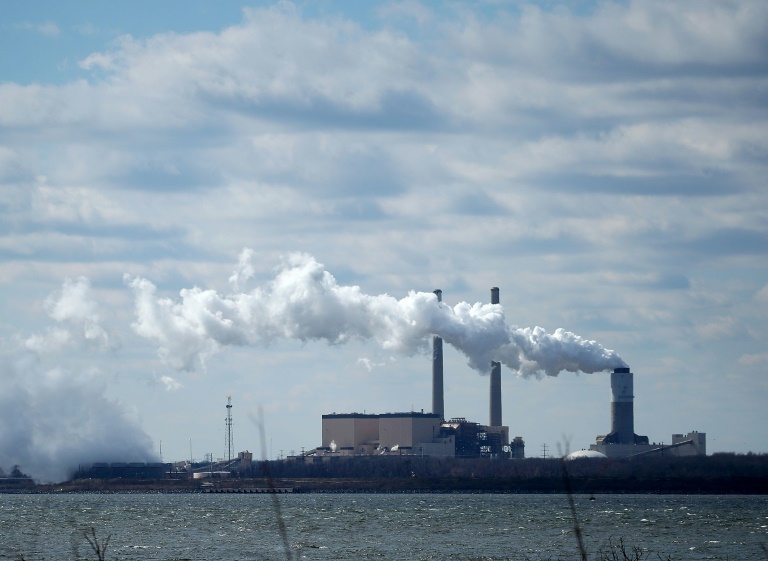
By a majority of 6-3, the high court found that the Environmental Protection Agency did not have the power to set sweeping caps on emissions from coal-fired power plants, which produce nearly 20 percent of the electricity consumed in the United States.

The decision sets back Biden’s hopes of using the EPA to bring down emissions to meet global climate goals, set in 2015 under the Paris Agreement on climate change.

It was a significant victory for the coal mining and coal power industry, which was targeted that same year for tough limits by the administration of then-president Barack Obama in an effort to slash carbon pollution.

It also marked a victory for conservatives fighting government regulation of industry, with the court’s majority including three right-wing justices named by former president Donald Trump, who had sought to weaken the EPA.

Conservatives cheered the decision, while the Biden administration blasted it for undermining the fight against global warming.

“This is another devastating decision from the Court that aims to take our country backwards,” the White House said in a statement.

– Caps ‘may be sensible but …’ –

In the case pitting West Virginia and other coal-mining states against the government, the court said that while EPA had the power to regulate individual plants, Congress had not given it such expansive powers to set limits for all electricity generating units.

The majority justices said they recognized that putting caps on carbon dioxide emissions to transition away from coal-generated electricity “may be a sensible solution” to global warming.

But they said the case involved a “major question” of US governance and jurisprudence and that the EPA would have to be specifically delegated such powers by the legislature.

“A decision of such magnitude and consequence rests with Congress itself, or an agency acting pursuant to a clear delegation from that representative body,” they said.

The three-member liberal minority of the court castigated the majority for overruling powers they said EPA did in fact have.

“Today, the court strips the Environmental Protection Agency of the power Congress gave it to respond to ‘the most pressing environmental challenge of our time,'” they said in a dissent written by Justice Elena Kagan.

“The stakes here are high,” Kagan wrote. “Whatever else this court may know about, it does not have a clue about how to address climate change.”

– Excessive regulation –

Conservatives and Republicans applauded the decision.

“The Court has undone illegal regulations issued by the EPA without any clear congressional authorization and confirmed that only the people’s representatives in Congress —  not unelected, unaccountable bureaucrats — may write our nation’s laws,” wrote Senate Republican leader Mitch McConnell, who represents Kentucky, a state with a significant coal mining industry.

Republican Representative Yvette Herrell called it a “huge win” for the American people.

“The EPA was created to control toxic pollutants, not CO2. The insane mission creep of regulating normal atmospheric gasses threatened the livelihood and prosperity of countless Americans,” she said in a tweet.

But Senate Democratic leader Chuck Schumer said the decision “will cause more needless deaths” from pollution and “exacerbate the climate crisis.”

Dan Lashof, director of the US arm of the World Resources Institute, said the ruling backed an effort by coal companies and Republican-led states “to cripple the EPA’s ability to address climate change.”

The ruling “makes it much harder for the agency to achieve its core mission to protect human health and the environment,” he said in a statement.

– Court conservatives show muscle – 

Thursday’s decision capped a term for the court in which the new conservative majority flexed its muscles in ways that will have profound effects on American society.

Two similar 6-3 decisions last week shook the country. One expanded the rights of gun owners to wear their guns wherever they go, with few limitations.

The second ended a half-century-old constitutional right to abortion, setting off a chain reaction in which more than half of the 50 states are moving to ban or severely restrict the practice.

The EPA ruling, too, could have profound impacts. 

Conservative Justice Neil Gorsuch wrote separately that the decision was a statement that no government agency can make policies with far-reaching effect without express empowerment by Congress.

“When an agency claims the power to regulate vast swaths of American life, it not only risks intruding on Congress’s power, it also risks intruding on powers reserved to the States,” Gorsuch wrote.

“The Court has taken a real step to check not only the EPA but all administrative agencies,” said conservative law expert Ilya Shapiro.

US Supreme Court limits government powers to curb greenhouse gases

The US Supreme Court ruled Thursday that the government’s key environmental agency cannot issue broad limits on greenhouse gases, sharply curtailing the power of President Joe Biden’s administration to battle climate change.

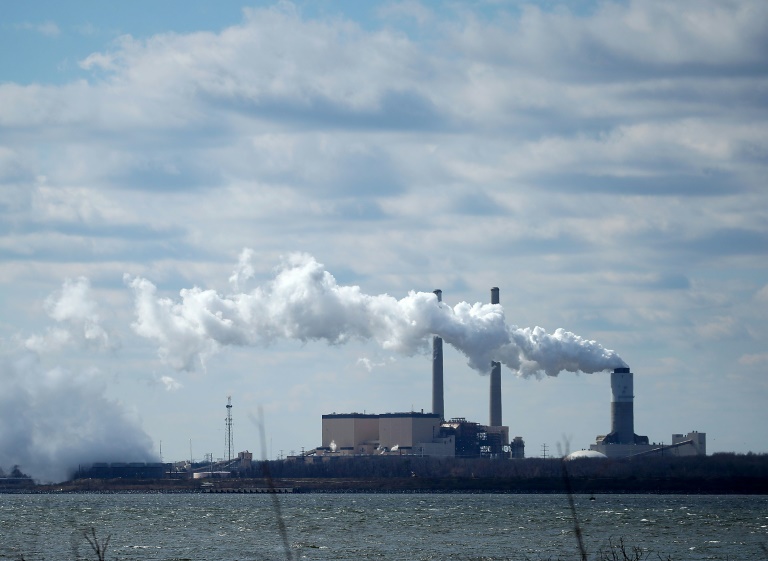
By a majority of 6-3, the high court found that the Environmental Protection Agency did not have the power to set sweeping caps on emissions from coal-fired power plants, which produce nearly 20 percent of the electricity consumed in the United States.

The decision sets back Biden’s hopes of using the EPA to bring down emissions to meet global climate goals, set in 2015 under the Paris Agreement on climate change.

It was a significant victory for the coal mining and coal power industry, which was targeted that same year for tough limits by the administration of then-president Barack Obama in an effort to slash carbon pollution.

It also marked a victory for conservatives fighting government regulation of industry, with the court’s majority including three right-wing justices named by former president Donald Trump, who had sought to weaken the EPA.

Conservatives cheered the decision, while the Biden administration blasted it for undermining the fight against global warming.

“This is another devastating decision from the Court that aims to take our country backwards,” the White House said in a statement.

– Caps ‘may be sensible but …’ –

In the case pitting West Virginia and other coal-mining states against the government, the court said that while EPA had the power to regulate individual plants, Congress had not given it such expansive powers to set limits for all electricity generating units.

The majority justices said they recognized that putting caps on carbon dioxide emissions to transition away from coal-generated electricity “may be a sensible solution” to global warming.

But they said the case involved a “major question” of US governance and jurisprudence and that the EPA would have to be specifically delegated such powers by the legislature.

“A decision of such magnitude and consequence rests with Congress itself, or an agency acting pursuant to a clear delegation from that representative body,” they said.

The three-member liberal minority of the court castigated the majority for overruling powers they said EPA did in fact have.

“Today, the court strips the Environmental Protection Agency of the power Congress gave it to respond to ‘the most pressing environmental challenge of our time,'” they said in a dissent written by Justice Elena Kagan.

“The stakes here are high,” Kagan wrote. “Whatever else this court may know about, it does not have a clue about how to address climate change.”

– Excessive regulation –

Conservatives and Republicans applauded the decision.

“The Court has undone illegal regulations issued by the EPA without any clear congressional authorization and confirmed that only the people’s representatives in Congress —  not unelected, unaccountable bureaucrats — may write our nation’s laws,” wrote Senate Republican leader Mitch McConnell, who represents Kentucky, a state with a significant coal mining industry.

Republican Representative Yvette Herrell called it a “huge win” for the American people.

“The EPA was created to control toxic pollutants, not CO2. The insane mission creep of regulating normal atmospheric gasses threatened the livelihood and prosperity of countless Americans,” she said in a tweet.

But Senate Democratic leader Chuck Schumer said the decision “will cause more needless deaths” from pollution and “exacerbate the climate crisis.”

Dan Lashof, director of the US arm of the World Resources Institute, said the ruling backed an effort by coal companies and Republican-led states “to cripple the EPA’s ability to address climate change.”

The ruling “makes it much harder for the agency to achieve its core mission to protect human health and the environment,” he said in a statement.

– Court conservatives show muscle – 

Thursday’s decision capped a term for the court in which the new conservative majority flexed its muscles in ways that will have profound effects on American society.

Two similar 6-3 decisions last week shook the country. One expanded the rights of gun owners to wear their guns wherever they go, with few limitations.

The second ended a half-century-old constitutional right to abortion, setting off a chain reaction in which more than half of the 50 states are moving to ban or severely restrict the practice.

The EPA ruling, too, could have profound impacts. 

Conservative Justice Neil Gorsuch wrote separately that the decision was a statement that no government agency can make policies with far-reaching effect without express empowerment by Congress.

“When an agency claims the power to regulate vast swaths of American life, it not only risks intruding on Congress’s power, it also risks intruding on powers reserved to the States,” Gorsuch wrote.

“The Court has taken a real step to check not only the EPA but all administrative agencies,” said conservative law expert Ilya Shapiro.

US Supreme Court limits government powers to curb greenhouse gases

The US Supreme Court ruled Thursday that the government’s key environmental agency cannot issue broad limits on greenhouse gases, sharply curtailing the power of President Joe Biden’s administration to battle climate change.

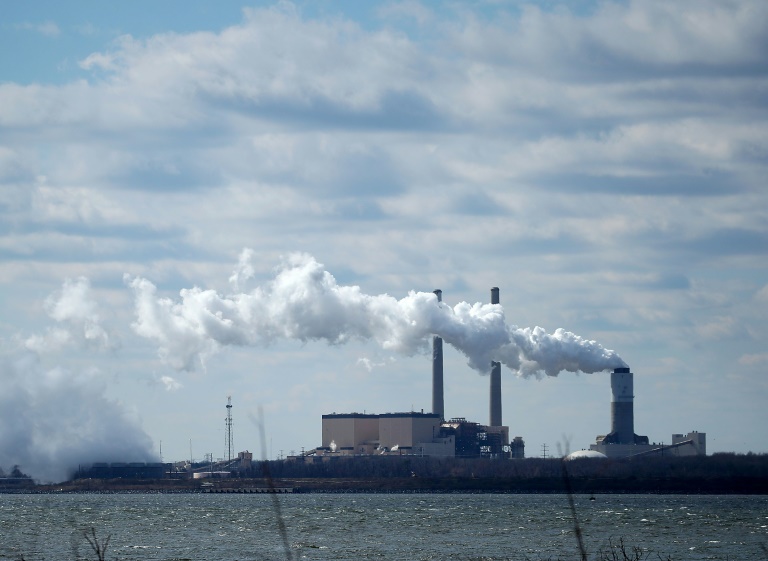
By a majority of 6-3, the high court found that the Environmental Protection Agency did not have the power to set sweeping caps on emissions from coal-fired power plants, which produce nearly 20 percent of the electricity consumed in the United States.

The decision sets back Biden’s hopes of using the EPA to bring down emissions to meet global climate goals, set in 2015 under the Paris Agreement on climate change.

It was a significant victory for the coal mining and coal power industry, which was targeted that same year for tough limits by the administration of then-president Barack Obama in an effort to slash carbon pollution.

It also marked a victory for conservatives fighting government regulation of industry, with the court’s majority including three right-wing justices named by former president Donald Trump, who had sought to weaken the EPA.

Conservatives cheered the decision, while the Biden administration blasted it for undermining the fight against global warming.

“This is another devastating decision from the Court that aims to take our country backwards,” the White House said in a statement.

– Caps ‘may be sensible but …’ –

In the case pitting West Virginia and other coal-mining states against the government, the court said that while EPA had the power to regulate individual plants, Congress had not given it such expansive powers to set limits for all electricity generating units.

The majority justices said they recognized that putting caps on carbon dioxide emissions to transition away from coal-generated electricity “may be a sensible solution” to global warming.

But they said the case involved a “major question” of US governance and jurisprudence and that the EPA would have to be specifically delegated such powers by the legislature.

“A decision of such magnitude and consequence rests with Congress itself, or an agency acting pursuant to a clear delegation from that representative body,” they said.

The three-member liberal minority of the court castigated the majority for overruling powers they said EPA did in fact have.

“Today, the court strips the Environmental Protection Agency of the power Congress gave it to respond to ‘the most pressing environmental challenge of our time,'” they said in a dissent written by Justice Elena Kagan.

“The stakes here are high,” Kagan wrote. “Whatever else this court may know about, it does not have a clue about how to address climate change.”

– Excessive regulation –

Conservatives and Republicans applauded the decision.

“The Court has undone illegal regulations issued by the EPA without any clear congressional authorization and confirmed that only the people’s representatives in Congress —  not unelected, unaccountable bureaucrats — may write our nation’s laws,” wrote Senate Republican leader Mitch McConnell, who represents Kentucky, a state with a significant coal mining industry.

Republican Representative Yvette Herrell called it a “huge win” for the American people.

“The EPA was created to control toxic pollutants, not CO2. The insane mission creep of regulating normal atmospheric gasses threatened the livelihood and prosperity of countless Americans,” she said in a tweet.

But Senate Democratic leader Chuck Schumer said the decision “will cause more needless deaths” from pollution and “exacerbate the climate crisis.”

Dan Lashof, director of the US arm of the World Resources Institute, said the ruling backed an effort by coal companies and Republican-led states “to cripple the EPA’s ability to address climate change.”

The ruling “makes it much harder for the agency to achieve its core mission to protect human health and the environment,” he said in a statement.

– Court conservatives show muscle – 

Thursday’s decision capped a term for the court in which the new conservative majority flexed its muscles in ways that will have profound effects on American society.

Two similar 6-3 decisions last week shook the country. One expanded the rights of gun owners to wear their guns wherever they go, with few limitations.

The second ended a half-century-old constitutional right to abortion, setting off a chain reaction in which more than half of the 50 states are moving to ban or severely restrict the practice.

The EPA ruling, too, could have profound impacts. 

Conservative Justice Neil Gorsuch wrote separately that the decision was a statement that no government agency can make policies with far-reaching effect without express empowerment by Congress.

“When an agency claims the power to regulate vast swaths of American life, it not only risks intruding on Congress’s power, it also risks intruding on powers reserved to the States,” Gorsuch wrote.

“The Court has taken a real step to check not only the EPA but all administrative agencies,” said conservative law expert Ilya Shapiro.

Salmonella found in world's biggest chocolate plant

Production has been halted in the world’s biggest chocolate plant, run by Swiss giant Barry Callebaut in the Belgian town of Wieze, after salmonella contaminations were found, the firm said Thursday. 

A company spokesman told AFP that production had been protectively halted at the factory, which produces liquid chocolate in wholesale batches for 73 clients making confectionaries.

The company said that 72 of the 73 companies have confirmed that they halted deliveries of potentially contaminated chocolate in time to prevent any hitting the shops and were waiting for a response from the last client.

There have been no reports so far of any chocolate consumers being exposed to salmonella, which causes salmonellosis, a disease that causes diarrhoea and fever but is only dangerous in the most extreme cases.

“All products manufactured since the test have been blocked,” spokesman Korneel Warlop said. 

“Barry Callebaut is currently contacting all customers who may have received contaminated products. Chocolate production in Wieze remains suspended until further notice.”

Most of the products discovered to be contaminated are still on the site, he said.

But the firm has contacted all its clients and asked them not to ship any products they have made with chocolate made since June 25 at these Wieze plant, which is in Flanders, northwest of Brussels.

“Food safety is of the utmost importance for Barry Callebaut and this contamination is quite exceptional. We have a well-defined food safety charter and procedures,” the firm said.

– Green light –

Belgium’s food safety agency AFSCA has been informed and a spokesman told AFP it had opened an investigation. 

An AFSCA spokesman said investigators would “gather all the information in order to trace the contamination”.

The Wieze plant does not make chocolates to be sold directly to consumers, and the firm has no reason to believe that any contaminated goods made by clients have yet made it onto shop shelves.

The scare comes a few weeks after a case of chocolates contaminated with salmonella in the Ferrero factory in Arlon in southern Belgium manufacturing Kinder chocolates. 

Belgian health authorities said on June 17 that they had given the green light to restart the Italian giant’s factory for a three-month test period.

Swiss group Barry Callebaut supplies cocoa and chocolate products to many companies in the food industry, including industry giants such as Hershey, Mondelez, Nestle or Unilever. 

World number one in the sector, its annual sales amounted to 2.2 million tonnes during the 2020-2021 financial year. 

Over the past financial year, the group, which has a head office is in Zurich, generated a net profit of 384.5 million Swiss francs ($402 million) for 7.2 billion francs in turnover. 

The group employs more than 13,000 people, has more than 60 production sites worldwide.

Salmonella found in world's biggest chocolate plant

Production has been halted in the world’s biggest chocolate plant, run by Swiss giant Barry Callebaut in the Belgian town of Wieze, after salmonella contaminations were found, the firm said Thursday. 

A company spokesman told AFP that production had been protectively halted at the factory, which produces liquid chocolate in wholesale batches for 73 clients making confectionaries.

The company said that 72 of the 73 companies have confirmed that they halted deliveries of potentially contaminated chocolate in time to prevent any hitting the shops and were waiting for a response from the last client.

There have been no reports so far of any chocolate consumers being exposed to salmonella, which causes salmonellosis, a disease that causes diarrhoea and fever but is only dangerous in the most extreme cases.

“All products manufactured since the test have been blocked,” spokesman Korneel Warlop said. 

“Barry Callebaut is currently contacting all customers who may have received contaminated products. Chocolate production in Wieze remains suspended until further notice.”

Most of the products discovered to be contaminated are still on the site, he said.

But the firm has contacted all its clients and asked them not to ship any products they have made with chocolate made since June 25 at these Wieze plant, which is in Flanders, northwest of Brussels.

“Food safety is of the utmost importance for Barry Callebaut and this contamination is quite exceptional. We have a well-defined food safety charter and procedures,” the firm said.

– Green light –

Belgium’s food safety agency AFSCA has been informed and a spokesman told AFP it had opened an investigation. 

An AFSCA spokesman said investigators would “gather all the information in order to trace the contamination”.

The Wieze plant does not make chocolates to be sold directly to consumers, and the firm has no reason to believe that any contaminated goods made by clients have yet made it onto shop shelves.

The scare comes a few weeks after a case of chocolates contaminated with salmonella in the Ferrero factory in Arlon in southern Belgium manufacturing Kinder chocolates. 

Belgian health authorities said on June 17 that they had given the green light to restart the Italian giant’s factory for a three-month test period.

Swiss group Barry Callebaut supplies cocoa and chocolate products to many companies in the food industry, including industry giants such as Hershey, Mondelez, Nestle or Unilever. 

World number one in the sector, its annual sales amounted to 2.2 million tonnes during the 2020-2021 financial year. 

Over the past financial year, the group, which has a head office is in Zurich, generated a net profit of 384.5 million Swiss francs ($402 million) for 7.2 billion francs in turnover. 

The group employs more than 13,000 people, has more than 60 production sites worldwide.

Stocks and oil sink on recession fears

World stock markets mostly sank Thursday on intensifying recession fears, while oil prices receded after an OPEC decision to proceed with a limited boost to output.

London ended the day down two percent, with both Frankfurt and Paris close behind.

That followed a largely downbeat performance in Asia, although Shanghai rose after data showed a forecast-beating improvement in China’s services sector on easing Covid restrictions.

Wall Street’s main indices also fell, with the Dow down 0.9 percent in late morning trading.

Crude futures slumped as major oil producers led by Saudi Arabia and Russia kept to a decision on a limited boost to output despite the risk that high oil prices may help push the global economy into recession.

– ‘Terrible mood’ –

“Stock markets have fallen heavily in June so it seems only fitting that they’re ending the month with big losses as reality continues to bite,” said Craig Erlam, senior market analyst at trading platform OANDA.

Stock markets are “in a terrible mood across Europe”, said AJ Bell investment director Russ Mould.

“There really is a lack of good news for investors to cling onto, and the near-term outlook looks bleak.”

The threat of an extended period of elevated inflation and painful interest rate hikes has left traders fretting over the threat of a prolonged economic downturn, while the Ukraine war continues to sow uncertainty.

“Recession continues to be the primary concern at the moment… as countries continue to grapple with spiralling inflation and cost-of-living crises,” said Mihir Kapadia, head of Sun Global Investments.

The surge in inflation to multi-decade highs has forced central banks to swiftly raise interest rates, dealing a hefty blow to equities as companies faces higher borrowing costs.

The Federal Reserve is next month expected to announce a successive 75-basis-point hike in US interest rates.

Sweden’s central bank on Thursday announced its biggest hike in 22 years, raising its main rate by 50 basis points to 0.75 percent.

There had been hope that policymakers would ease off their hikes as economies show signs of slowing, but analysts say some officials are less concerned about a recession than letting prices run out of control.

– Risk of ‘going too far’ –

Fed boss Jerome Powell, speaking at a European Central Bank conference Wednesday, hinted again that such hikes could lead to economic contraction.

“Is there a risk that we would go too far? Certainly there’s a risk,” Powell said.

“The bigger mistake to make… would be to fail to restore price stability,” he insisted.

ECB President Christine Lagarde stated this week that the guardian of the euro would go “as far as necessary” to fight inflation that was set to remain “undesirably high” for “some time to come”.

US data released Thursday showed that a key annual inflation measure held steady at 6.3 percent in May, but real spending by consumers declined by 0.4 percent month-over-month.

Briefing.com analyst Patrick O’Hare said the decline “will fuel concerns about the Fed continuing to tighten into a slowing economic environment.”

– Key figures at around 1530 GMT –

New York – Dow: DOWN 0.9 percent at 30,754.90 points

EURO STOXX 50: DOWN 1.6 percent at 3,449.46

London – FTSE 100: DOWN 2.0 percent at 7,169.28 (close) 

Frankfurt – DAX: DOWN 1.7 percent at 12,783.77 (close)

Paris – CAC 40: DOWN 1.8 percent at 5,922.86 (close)

Tokyo – Nikkei 225: DOWN 1.5 percent at 26,393.04 (close)

Hong Kong – Hang Seng Index: DOWN 0.6 percent at 21,859.79 (close)

Shanghai – Composite: UP 1.1 percent at 3,398.62 (close)

Brent North Sea crude: DOWN 1.2 percent at $114.87 per barrel

West Texas Intermediate: DOWN 2.7 percent at $106.85 per barrel

Euro/dollar: DOWN at $1.0457 from $1.0442 Wednesday

Pound/dollar: UP at $1.2152 from $1.2124

Euro/pound: DOWN at 86.06 pence from 86.12 pence

Dollar/yen: DOWN at 135.89 yen from 136.59 yen

burs/rl/lth

Russia quits Snake Island, weakening blockade of Ukraine ports

Russian troops have abandoned their positions on a captured Ukrainian island, a major setback to their invasion effort that weakens their blockade of Ukraine’s ports, defence officials said on Thursday.

The news from the Black Sea came as NATO leaders wrapped up their summit in Madrid, with US President Joe Biden announcing $800 million in new weapons to help Ukraine fight off Russia’s invasion.

“We are going to stick with Ukraine, and all of the alliance are going to stick with Ukraine, as long as it takes to make sure they are not defeated by Russia,” he said.

Russian President Vladimir Putin’s foreign minister, Sergei Lavrov, compared the new diplomatic low to the return of the Cold War, telling reporters: “As far as an Iron Curtain is concerned, essentially it is already descending… The process has begun.”

But there may be a possible opening: Indonesia’s President Joko Widodo said, after meeting Putin in Moscow, that he had given the Russian leader a message from their Ukrainian counterpart, Volodymyr Zelensky.

Snake Island became a symbol of Ukrainian resistance in the first days of the war, when the rocky outcrop’s defenders told a Russian warship that called on them to surrender to “go f*ck yourself,” an incident that spurred a defiant meme.

It was also a strategic target, sitting aside shipping lanes near Ukraine’s port of Odessa. Russia had attempted to install missile and air defence batteries while under fire from drones.

Now, however, Ukraine has begun to receive longer range missiles and artillery, and the Russian position on Snake Island seems to have become untenable.

– ‘Strategically important’ –

“In the end, it will prove impossible for Putin to hold down a country that will not accept his rule,” British Prime Minister Boris Johnson said, warning the Russian president that any eventual peace deal would be on Ukraine’s terms.

“We’ve seen what Ukraine can do to drive the Russians back. We’ve seen what they did around Kyiv and Kharkiv, now on Snake Island.”

The Russian defence ministry statement described the retreat as “a gesture of goodwill” meant to demonstrate that Moscow will not interfere with UN efforts to organise protected grain exports from Ukraine.

But Kyiv claimed it as a win. “They always downplay their defeats this way,” Ukraine’s Foreign Minister Dmytro Kuleba said on Twitter.

“I thank the defenders of Odessa region who took maximum measures to liberate a strategically important part of our territory,” Valeriy Zaluzhny, the Ukraine military’s commander-in-chief, said on Telegram.

In peacetime, Ukraine is a major agricultural exporter, but Russia’s invasion has damaged farmland and seen Ukraine’s ports seized, razed or blockaded — threatening grain importers in Africa with famine.

Western powers have accused Putin of using the trapped harvest as a weapon to increase pressure on the international community, and Russia has been accused of stealing grain. 

– ‘Direct threat’ –

On Thursday, a ship carrying 7,000 tonnes of grain sailed from Ukraine’s occupied port of Berdyansk, said the regional leader appointed by the Russian occupation forces.

Evgeny Balitsky, the head of the pro-Moscow administration, said Russia’s Black Sea ships “are ensuring the security” of the journey, adding that the port had been de-mined.

Separately, the Russian defence ministry said its forces are holding more than 6,000 Ukrainian prisoners of war who have been captured since the February 24 invasion.

The conflict in Ukraine has dominated the NATO summit in Madrid, where the leaders said Russia “is the most significant and direct threat to allies’ security and to peace and stability in the Euro-Atlantic area”.

This came as NATO officially invited Sweden and Finland to join the alliance, and Biden announced new deployments of US troops, ships and planes to Europe.

Biden said the US move was exactly what Putin “didn’t want” — and Moscow, facing fierce resistance from Ukrainian forces equipped with Western arms, reacted with predictable fury.

Putin accused the alliance of seeking to assert its “supremacy”, telling journalists in the Turkmenistan capital of Ashgabat that Ukraine and its people are “a means” for NATO to “defend their own interests.”

“The NATO countries’ leaders wish to… assert their supremacy, their imperial ambitions,” Putin added.

– ‘As long as it takes’ –

German Chancellor Olaf Scholz dismissed Putin’s comments as “ridiculous” and said the Russian leader “has made imperialism the goal of his politics”.

NATO leaders have funnelled billions of dollars of arms to Ukraine and faced a renewed appeal from Zelensky for more long-range artillery.

“Ukraine can count on us for as long as it takes,” NATO chief Jens Stoltenberg told the summit, which ends Thursday, as he announced a new strategic overview that focuses on the Moscow threat.

The document, updated for the first time since 2010, warned the alliance “cannot discount the possibility” of an attack on its members.

Russian missiles continued to rain down on cities across Ukraine. 

In the southern city of Mykolaiv rescuers found the bodies of seven slain civilians in the rubble of a destroyed building, emergency services said. 

The city of Lysychansk in the eastern Donbas region — the current focus of Russia’s offensive — is also facing sustained bombardment.

The United Nations humanitarian coordinator in Ukraine said on Thursday 16 million Ukrainians were in need of humanitarian aid.

burs-dc/jm

Kazakhstan mulls endangered antelope cull after population boom

Kazakhstan is considering culls of its endangered saiga antelope, the ecology ministry told AFP Thursday, after citing scientific advice about the threat posed to agriculture since the population rebounded. 

Conservation efforts that included a crackdown on poaching have seen the saiga’s numbers in Kazakhstan soar from under 200,000 following a die-off in 2015 to 1.3 million ahead of this year’s spring calving season, officials said. 

“We have a scientific recommendation to regulate the population of saigas,” a spokeswoman said. 

“We are studying it, but no final decision has been taken,” she added, without offering any deadline for the decision, set to affect some 80,000 animals.  

The former Soviet country’s vast steppe is home to a majority of the world’s Saiga, known for its distinctive bulbous nose and the horns whose status in Chinese medicine fuelled the poaching.

Russia’s Kalmykia region and Mongolia host smaller numbers of the animal.

A ban on hunting introduced in the late 1990s is set to run out in 2023 and Kazakhstan’s ecology minister Serikkali Brekeshev suggested Wednesday that the ministry had “made a decision” about regularly culling up to 10 percent of the Ural saiga population in western Kazakhstan — the largest of three saiga population groups in the Central Asian nation. 

“Today…saigas cross over not only into pasture land, but also farm land. It’s a definite problem,” Brekeshev was quoted as saying by local media.

But the ministry spokeswoman told AFP that any decision would need to be approved by President Kassym-Jomart Tokayev, and that the “position of society” would be taken into account.

Kazakhstan’s leaders intensified their crackdown on illegal hunting in 2019, after two state rangers were killed by poachers, causing popular anger.  

Kazakhstan’s 2015 saiga antelope die-off saw more than half the global population at the time wiped out by what scientists later determined was a nasal bacterium that spread in unusually warm and humid conditions.

Hells Angels founder Sonny Barger dead at 83

Sonny Barger, a founding member of the Hells Angels Motorcycle Club who spent decades as the public face of the notorious biker gang, has died at the age of 83, according to his Facebook page.

With their leather vests and the roar of their engines as they cruised in packs on the open road, for many years the Hells Angels were a symbol — a frightening one for some Americans — of counterculture living.

Barger founded the now-international motorcycle club’s original group, based out of Oakland, California in 1957.

As sanctioned offshoots of the club were established around the United States, and controversies around the group’s activities compounded, Barger acted as a de-facto spokesperson, defending their outlaw lifestyle.

Barger was present at a notorious 1969 Rolling Stones concert in California, for which the Hells Angels had been hired as security, using their bikes as a makeshift barrier in front of the stage.

The unruly gathering at the Altamont Speedway is remembered for the death of Meredith Hunter, who was beaten and stabbed to death by members of the Hells Angels, after he brandished a handgun near the stage.

By that point, the biker gang had already entered popular culture as a rough-and-tumble fraternity, through films, such as the 1967 “Hells Angels on Wheels” starring Jack Nicholson, and an in-depth 1966 profile written by journalist Hunter S. Thompson, who spent a year living with the group.

In 2019, the Netherlands became the first country to ban the Hells Angels nationwide, saying the group had a “culture of lawlessness,” and was “a danger to the public order.” 

– ‘Ride free with the angels’ –

For various gun and weapons charges, as well as a 1988 conviction for conspiring to kill rival gang members, Barger spent over a decade of his life in prison, according to The Washington Post.

In addition to several on-screen performances, including in the 1967 “Hells Angels” film, Barger worked as a consultant on multiple other biker-related projects.

More recently, he played a character named Lenny “The Pimp” Janowitz in the hit TV series “Sons of Anarchy” about a fictional biker gang.

Barger also wrote multiple novels and memoirs about the biker gang lifestyle, including a bestselling autobiography.

“He’s smart and he’s crafty, and he has a kind of wild animal cunning,” Thompson told The Washington Post in 2000.

Due to a bout with throat cancer, Barger had his vocal cords removed later in life and used an electronic device to speak.

“If you are reading this message, you’ll know that I’m gone,” his Facebook account said Thursday morning, adding he died after a battle with cancer.

The post had garnered more than 20,000 comments by noon Thursday.

“You will forever now have the sun in your face, the wind at your back. Ride free with the angels,” wrote one poster, named Dia Edinger Nickelsen.

Close Bitnami banner
Bitnami