World

Four Sudan protesters killed in mass rallies against army rule

At least four Sudanese demonstrators were killed Thursday as the security forces sought to quash mass rallies of protesters demanding an end to military rule, pro-democracy medics reported.

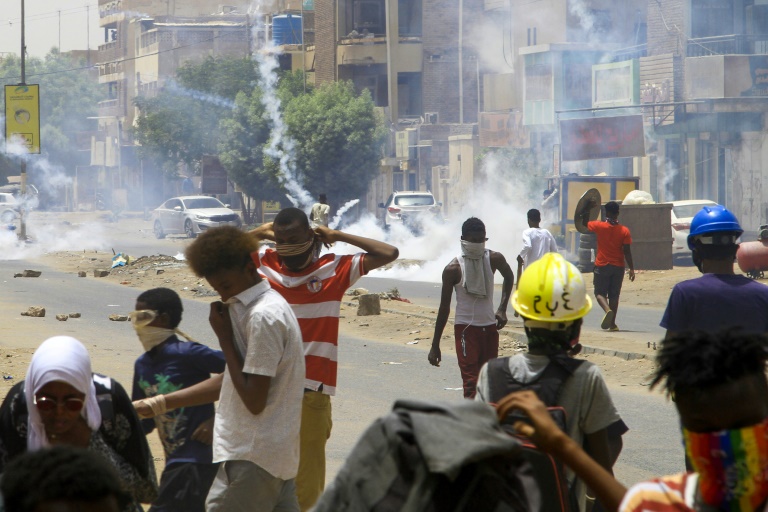
AFP correspondents reported security forces firing tear gas and stun grenades to disperse tens of thousands of protesters, the latest crackdown on the anti-coup movement in the past eight months.

At least two of the four were shot dead by “bullets to the chest”, the medics said, reporting a total death toll of 105 from months of protest-related violence.

“Even if we die, the military will not rule us,” protesters chanted, urging the reversal of an October military coup by army chief Abdel Fattah al-Burhan, that prompted foreign governments to slash aid, deepening a chronic economic crisis.

“Down with Burhan’s rule,” others chanted, with protests and violence flaring in both the capital Khartoum and its suburbs, including the twin city of Omdurman.

The medics had previously reported one demonstrator was shot dead on Wednesday during small-scale protests in the run-up to the main rallies.

An AFP correspondent said internet and phone lines had been disrupted since the early hours of Thursday, a measure the Sudanese authorities often impose to prevent mass gatherings.

Security was tight in Khartoum despite the recent lifting of a state of emergency imposed after the coup.

Troops and police blocked off roads leading to both army headquarters and the presidential palace, witnesses said. Shops around the capital were largely shuttered.

Activists have been calling for “million-strong” rallies.

– ‘Violence needs to end’ –

UN special representative Volker Perthes said Thursday that “violence needs to end”, while the US embassy in Khartoum urged restraint and “the protection of civilians so that no more lives are lost”.

Sudan’s foreign ministry has repeatedly criticised the UN envoy’s comments, saying they were built on “assumptions” and “contradict his role as facilitator” in troubled talks on ending Sudan’s political crisis.

The latest protests come on the anniversary of a previous coup in 1989, that toppled the country’s last elected civilian government and ushered in three decades of iron-fisted rule by Islamist-backed general Omar al-Bashir.

They also come on the anniversary of 2019 protests demanding that the generals, who had ousted Bashir in a palace coup earlier that year, cede power to civilians.

Those protests led to the formation of the mixed civilian-military transitional government which was toppled in last year’s coup.

Sudan has been roiled by near-weekly protests as the country’s economic woes have deepened since Burhan seized power last year.

“June 30 is our way to bring down the coup and block the path of any fake alternatives,” said the Forces for Freedom and Change, an alliance of civilian groups whose leaders were ousted in the coup.

Alongside the African Union and east African bloc IGAD, the United Nations has been attempting to broker talks between the generals and civilians, but they have been boycotted by all the main civilian factions.

The UN has warned that the deepening economic and political crisis has pushed one third of the country’s population of more than 40 million towards life-threatening food shortages.
US prices high but stable in May, spending slows

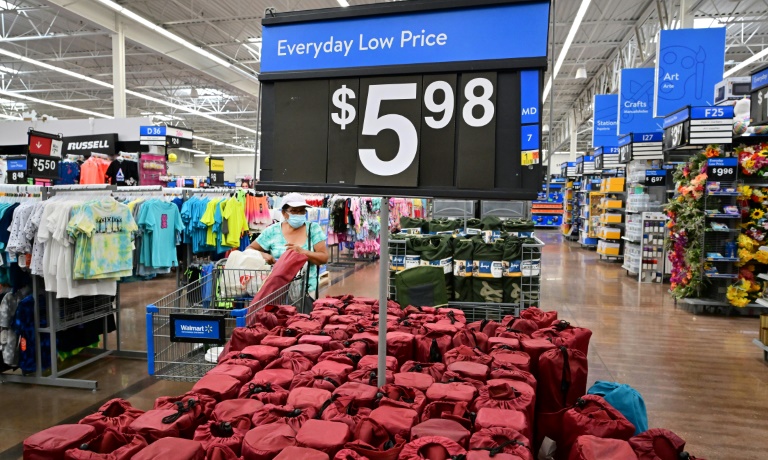
A key US inflation measure showed price increases held steady in the 12 months ended in May, while consumer spending growth slowed sharply, a good sign in the battle against soaring prices.

The trend could offer comfort to consumers and central bankers alike, as a sign the Fed’s aggressive interest rate strategy is starting to have an impact to quell the fastest surge in inflation in more than 40 years.

The personal consumption expenditures (PCE) price index rose 6.3 percent compared to May 2021, still high but the same pace as in the prior month, even as it jumped 0.6 percent compared to April, the Commerce Department reported Thursday.

The index jumped 0.6 percent compared to April, much faster than in the prior month, but slightly below what economists had projected.

But spending edged up just 0.2 percent, less than half the increase in April and part of a steady downward drift as consumers pull back amid surging prices.

Buoyed by a stockpile of savings, helped by massive government aid, consumers have been the lynchpin in the rapid US recovery from the pandemic downturn.

But strong demand clashed with global supply chain snarls and the world’s largest economy has been battered for months by a cresting inflation wave, made more painful by the surge in energy prices sparked by the Russian invasion of Ukraine in late February.

Excluding volatile food and energy prices, PCE rose 0.3 percent in the month, the same as in April, and slowed slightly to 4.7 percent over the past year, the report said.

– Fed inflation battle –

The PCE price index is the Federal Reserve’s preferred inflation gauge, as it reflects consumers’ actual spending, including shifts to lower cost items, unlike the more well-known consumer price index, which jumped 8.6 percent in May.

PCE also gives less weight to things like rent, vehicles and airline fares, which have contributed to the blistering pace of the CPI rise.

The Fed early this month announced the biggest hike in the benchmark lending rate in nearly 30 years, a three-quarter point increase that was the third step in its counteroffensive against rising inflation, which aims to cool demand.

Policymakers are watching the spending and inflation data closely and have signaled there is a good chance of another similar increase in late July, followed by more big steps in coming months.

Ian Shepherdson, chief economist of Pantheon Macroeconomics, noted that the three-month average annual increase fell to the slowest pace since November, and “a sharp easing from the 5.7 percent peak in February.”

“A combination of slower wage gains, lower margin inflation, and the stronger dollar is beginning to drive a clear slowdown in core inflation,” he said. But “It has much further to go.

– Slower spending –

The signs of consumers pulling back will weigh on second quarter GDP growth, after the Commerce Department revised first-quarter consumer spending sharply lower, cutting it to 1.8 percent from 3.1 percent, as the economy contracted 1.6 percent.

The key driver of the slower consumption growth in May was the sharp drop in spending on big-ticket manufactured items, known as durable goods, which fell 3.2 percent in the month, the report said.

Economists note that reflects a pull back on vehicle sales.

Spending on services rose 0.7 percent in the month, the same as in April.

Rubeela Farooqi of High Frequency Economics said the Fed will stick to its efforts to tame prices.

“With the threat from durable inflation in focus, these data are not likely to change the rate trajectory, which remains firmly upward,” she said in an analysis.

Russia quits Snake Island, in blow to blockade of Ukraine ports

Russian troops have abandoned their positions on a captured Ukrainian island, a major setback to their invasion effort that weakens their blockade of Ukraine’s ports, defence officials said on Thursday.

The news from the Black Sea came as NATO leaders wrapped up their summit in Madrid, intent on demonstrating their unity and determination to back up Kyiv with advanced weapons in the face of Moscow’s assault.

Snake Island became a symbol of Ukrainian resistance in the first days of the war, when the rocky outcrop’s defenders told a Russian warship that called on them to surrender to “go f*ck yourself,” an incident that spurred a defiant meme.

It was also a strategic target, sitting aside shipping lanes near Ukraine’s port of Odessa. Russia had attempted to install missile and air defence batteries while under fire from drones.

Now, however, Ukraine has begun to receive longer range missiles and military gear from its Western backers, and the Russian position on Snake Island seems to have become untenable.

“In the end, it will prove impossible for (President Vladimir) Putin to hold down a country that will not accept his rule,” British Prime Minister Boris Johnson said, stressing that any eventual peace deal would be on Ukraine’s terms.

“We’ve seen what Ukraine can do to drive the Russians back. We’ve seen what they did around Kyiv and Kharkiv, now on Snake Island.”

– ‘Strategically important’ –

The Russian defence ministry statement described the retreat as “a gesture of goodwill” meant to demonstrate that Moscow will not interfere with UN efforts to organise protected grain exports from Ukraine.

But Kyiv claimed it as a win.

“They always downplay their defeats this way,” Ukraine’s Foreign Minister Dmytro Kuleba said on Twitter.

“I thank the defenders of Odessa region who took maximum measures to liberate a strategically important part of our territory,” Valeriy Zaluzhny, the Ukraine military’s commander-in-chief, said on Telegram.

In peacetime, Ukraine is a major agricultural exporter, but Russia’s invasion has damaged farmland and seen Ukraine’s ports seized, razed or blockaded — threatening grain importers in Africa with famine.

Western powers have accused Putin of using the trapped harvest as a weapon to increase pressure on the international community, and Russia has been accused of stealing grain. 

On Thursday, a ship carrying 7,000 tonnes of grain sailed from Ukraine’s occupied port of Berdyansk, said the regional leader appointed by the Russian occupation forces.

Evgeny Balitsky, the head of the pro-Moscow administration, said Russia’s Black Sea ships “are ensuring the security” of the journey he said, adding that the port had been de-mined.

– ‘Direct threat’ –

Separately, the Russian defence ministry said its forces are holding more than 6,000 Ukrainian prisoners of war who have been captured since the February 24 invasion.

The conflict in Ukraine has dominated the NATO summit in Madrid, where the leaders said Russia “is the most significant and direct threat to allies’ security and to peace and stability in the Euro-Atlantic area”.

This came as NATO officially invited Sweden and Finland to join the alliance, and US President Joe Biden announced new deployments of US troops, ships and planes to Europe.

Biden said the US move was exactly what Russian President Putin “didn’t want” — and Moscow, facing fierce resistance from Ukrainian forces equipped with Western arms, reacted with predictable fury.

Putin accused the alliance of seeking to assert its “supremacy”, telling journalists in the Turkmenistan capital of Ashgabat that Ukraine and its people are “a means” for NATO to “defend their own interests.”

“The NATO countries’ leaders wish to… assert their supremacy, their imperial ambitions,” Putin added.

German Chancellor Olaf Scholz dismissed Putin’s comments as “ridiculous” and said the Russian leader “has made imperialism the goal of his politics”.

NATO leaders have funnelled billions of dollars of arms to Ukraine and faced a renewed appeal from President Volodymyr Zelensky for more long-range artillery.

“Ukraine can count on us for as long as it takes,” NATO chief Jens Stoltenberg said at the summit, which ends Thursday, as he announced a new strategic overview that focuses on the Moscow threat.

– ‘Clear-eyed’ –

The document, updated for the first time since 2010, warned the alliance “cannot discount the possibility” of an attack on its members.

Kuleba welcomed NATO’s “clear-eyed stance on Russia”.

Russian missiles continued to rain down across Ukraine. 

In the southern city of Mykolaiv rescuers found the bodies of six slain civilians in the rubble of a destroyed building, emergency services said. 

The city of Lysychansk in the eastern Donbas region — the current focus of Russia’s offensive — is also facing sustained bombardment.

“The Russians are throwing almost all of their resources at capturing Lysychansk,” Sergiy Gaiday, regional governor of Lugansk, which includes the city, said on Telegram. 

“It’s hard to find a safe spot in the city.”

The United Nations humanitarian coordinator in Ukraine said on Thursday 16 million Ukrainians were in need of humanitarian aid.

– Theatre strike ‘war crime’ –

Moscow’s invasion triggered massive economic sanctions and a wave of support for Zelensky’s government, including deliveries of advanced weapons, as well as the reinforcement of Europe’s defences.

Washington has announced it will shift the headquarters of its 5th Army Corps to Poland.

An army brigade will head to Romania and two squadrons of F-35 fighters to Britain, air defence systems will be sent to Germany and Italy, and the fleet of US Navy destroyers in Spain will grow from four to six.

Britain also pledged another $1.2 billion in military aid for Ukraine on Wednesday, including air defence systems and drones.

burs-dc/raz

OPEC+ stays the course on oil output boost

Major oil producers led by Saudi Arabia and Russia stuck to a previously decided output boost on Thursday, despite calls for bigger increases to tame crude prices.

Russia’s invasion of Ukraine has exacerbated concerns about oil supplies, sending prices to record highs this year.

But a respite is not in sight.

In their monthly video conference, which lasted about an hour, the 23 members of OPEC+ agreed to add another 648,000 barrels per day in August, the same as for July.

Analysts had widely expected the move, calling the gathering of the Vienna-based Organization of the Petroleum Exporting Countries and their partners a “rubber stamp” meeting.

Jeffrey Halley, analyst at OANDA trading platform, said before the meeting that he did not expect surprises as “OPEC+ can’t even meet its present targets, and hasn’t for a long time.” 

The 13 members of OPEC, chaired by Saudi Arabia, and their 10 partners, led by Russia, drastically slashed output in 2020 as the coronavirus pandemic and the resulting lockdowns sent demand plummeting.

Since last year, they have been gradually increasing output again. In recent months, the United States and other top oil consumers urged OPEC+ to open the tabs more widely.

The group finally decided at its last meeting in early June to add 648,000 barrels per day to the market in July, up from 432,000 in previous months.

But the larger-than-expected boost failed to cool prices.

– Biden heading to Saudi Arabia –

Since Russia invaded Ukraine on February 24, the international benchmark, Brent North Sea Crude, has added around 17 percent, while the US benchmark WTI has jumped more than 18 percent.

Analysts have warned that only a recession may be able to bring down prices.

“The prices will likely push higher unless the recession fears take the upper hand,” said Ipek Ozkardeskaya, an analyst at Swissquote Bank.

Several OPEC+ members have been failing to meet the output quotas, while Iran and Venezuela — and now also Russia — are blocked by sanctions. 

The United Arab Emirates said this week it was close to its oil output ceiling, ahead of a regional visit by US President Joe Biden, who is expected to lobby for increased production.

Biden will visit neighbouring Saudi Arabia, the world’s biggest oil exporter, as part of his tour next month, but analysts doubt it will convince OPEC+ to boost output.

On Monday, at the meeting of the G7 club of industrialised nations in Germany, French President Emmanuel Macron was caught on camera telling Biden details of a conversation with UAE leader Sheikh Mohamed bin Zayed Al-Nahyan.

According to Macron, Sheikh Mohamed said the UAE was at its “maximum” capacity and Saudi Arabia also faced a limit for raising production.

Israel parliament dissolves, sets fifth election in less than four years

Israeli lawmakers dissolved parliament on Thursday, forcing the country’s fifth election in less than four years, with Foreign Minister Yair Lapid set to take over as caretaker prime minister at midnight.

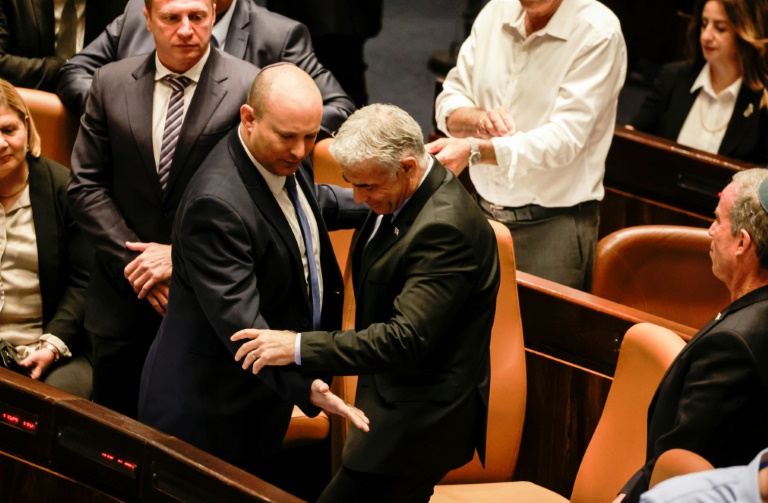
After the unanimous 92-0 vote, the centrist Lapid embraced outgoing Prime Minister Naftali Bennett, whose year in charge of an unwieldy, eight-party coalition was ultimately undone by its ideological divisions.

Lapid, whose Hungarian-born father survived the Holocaust, went immediately to Jerusalem’s Yad Vashem Holocaust memorial centre after the parliament vote.

“There, I promised my late father that I will always keep Israel strong and capable of defending itself and protecting its children,” the 58-year-old said in a statement.

The newly called election set for November 1 marks another sign that Israel remains mired in an unprecedented era of political gridlock, with early opinion polls indicating the results may again be inconclusive.

The religious nationalist Bennett has said he will not contest the vote and is stepping back from politics, tweeting the Hebrew word “Toda” (thank you), after lawmakers sealed his departure from office. He later hosted Lapid for a short handover ceremony.

Hawkish former prime minister Benjamin Netanyahu has assured that he and his allies — extreme-right nationalists and ultra-Orthodox Jewish parties — will finally rally a majority, following what he described on Thursday as a “failed (coalition) experiment”.

“We are the only alternative. A strong, nationalist, responsible government,” said Netanyahu, who is on trial over corruption charges he denies.

– ‘Deeply polarised’ –

Regarded by both allies and critics as a tireless political brawler, Netanyahu was already campaigning Thursday, telling shoppers at a Jerusalem mall that combatting rising living costs — which he blamed on Bennett’s “bad government” — will be his “first mission” after returning to office.

Israelis being forced to the polls for a fifth time since April 2019 highlighted their “deeply polarised reality”, said Yohanan Plesner, president of the Israel Democracy Institute think-tank.

The only solution to such “dysfunction,” he said, were “long-over-due electoral and constitutional reforms”.

The November vote will in part be a contest between Netanyahu and Lapid, a former TV news anchor and celebrity who has surprised many since being dismissed as a lightweight when he entered politics a decade ago.

Lapid was the architect of the Bennett-led motley alliance that took office in June 2021, ending Netanyahu’s record 12 consecutive years in power and passing Israel’s first state budget since 2018.

Bennett led a coalition of right-wingers, centrists, doves and Islamists from the Raam faction, which made history by becoming the first Arab party to support an Israeli government since the Jewish state’s creation in 1948.

Raam party chief Mansour Abbas faced backlash from some Arabs but on Thursday defended his decision to take part in Israeli governance.

“We succeeded in pushing ourselves as a political force,” Abbas said, adding that Raam would continue advocating for Arab society, making sure that issues like poor living conditions for his Bedouin constituents, were “on the table rather than underneath it”.

– Farewell address –

The coalition came apart last week after some Arab lawmakers refused to renew a measure that ensures the roughly 475,000 Jewish settlers in the occupied West Bank live under Israeli law.

They said it marked a de facto endorsement of a 55-year occupation that has forced West Bank Palestinians to live under Israeli military rule.

For Bennett, a staunch supporter of settlements, allowing the so-called West Bank law to expire was intolerable. Dissolving parliament before its June 30 expiration temporarily renews the measure.

Bennett has argued that his coalition was successful in its brief tenure and showed ideological rivals can govern together.

“No one should give up their positions, but it is certainly possible and necessary to put aside, for a while, ideological debates and take care of the economy, security and future of the citizens of Israel,” he said in his farewell address Wednesday.

Bennett will stay on as alternate prime minister responsible for Iran policy, as world powers take steps to revive stalled talks on the Islamic republic’s nuclear programme.

Israel opposes a restoration of the 2015 agreement that gave its arch foe sanctions relief in exchange for limits on its nuclear programme.

Lapid will retain his foreign minister title while serving as Israel’s 14th premier. He will find himself under an early microscope, with US President Joe Biden due in Jerusalem in two weeks.

France holding 10 suspects over Channel migrant disaster

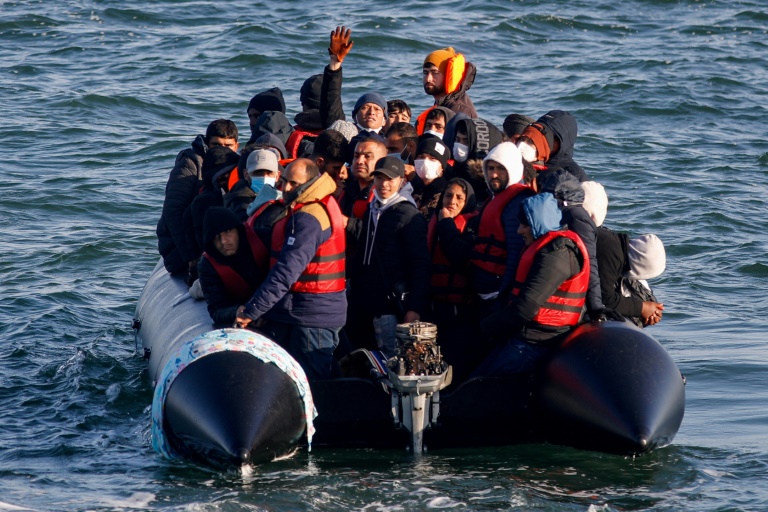
French police are holding 10 people suspected of involvement in the November 2021 Channel drowning of migrants in which 27 people died, a judicial source said Thursday.

One has been charged with manslaughter and people-trafficking, and the nine others were to be taken before a judge who will decide whether to charge them as well, the source said, asking not to be named.

Police had arrested 15 suspects in an overnight operation Sunday to Monday as part of their months-long investigation into the disaster, releasing five of them without charges.

The death of the 27 in late November was the worst accident in the Channel since 2018, when the narrow strait became a key route for migrants from Africa, the Middle East and Asia who have been increasingly using small boats to reach England from France.

Among the 27 — aged seven to 47 — were 16 Iraqi Kurds, four Afghans, three Ethiopians, one Somali, one Egyptian and one Vietnamese migrant.

Only two people survived the disaster, which sparked tension between the British and French governments.

President Emmanuel Macron vowed France would not allow the Channel to become a “cemetery”.

France urged Britain to help more with cracking down on people-smuggling gangs, with Interior Minister Gerald Darmanin saying: “We need intelligence. Responses to requests from the French police are not always given.”

The rebuke followed British Prime Minister Boris Johnson’s proposal to send back all migrants and asylum seekers who land in England to France, a move rejected by Paris.

– Brexit context –

Following Britain’s departure from the European Union, it does not have a returns treaty with France or the wider EU.

The spat added to a litany of post-Brexit rows between the two sides, which also include a dispute on fishing rights in the Channel which at times threatened to spill over into a full-blown trade war. 

Despite a more conciliatory tone since, and promises of more cooperation, the number of migrants seeking to cross the Channel from France to England surged in the first half of this year, according to the French interior ministry.

From January 1 to June 13, there were 777 attempted crossings involving 20,132 people, up 68 percent on the same period last year, it said.

The ministry said French security forces had prevented most of the crossings, with 61.39 percent of the attempts thwarted in the first half, up 4.2 percent on last year.

The figures for all of 2021 had already been a record but the latest statistics show this could be beaten if current trends continue, as summer weather settles in that encourages more crossings.

Some 52,000 people tried to cross in 2021, with 28,000 of the migrants succeeding, according to the French authorities.

The numbers come as the UK seeks to toughen its policy against arrivals.

Britain has repeatedly accused the French authorities of not doing enough to stop the crossings.

In a controversial policy, the UK is planning to deport illegal migrants, including those who arrive across the Channel, to Rwanda under an agreement with the African nation.

However, the first flight earlier this month was cancelled after a last-minute intervention by the Strasbourg-based European Court of Human Rights (ECHR) which enraged London.

burs-jh/tgb/jv

Stocks sink on recession fear, oil slips before OPEC

World stock markets mostly sank Thursday on intensifying recession fears, while oil prices receded before an OPEC output decision.

Frankfurt and Paris each tumbled 2.7 percent in early afternoon eurozone deals, and London shed 1.9 percent.

That followed a largely downbeat performance in Asia, although Shanghai rose after data showed a forecast-beating improvement in China’s services sector on easing Covid restrictions.

Crude futures drifted lower as major oil producers led by Saudi Arabia and Russia were Thursday expected to keep to a decision on a limited boost to output despite the risk of high oil prices may help push the global economy into recession.

– ‘Terrible mood’ –

Stock markets are “in a terrible mood across Europe”, said AJ Bell investment director Russ Mould.

“There really is a lack of good news for investors to cling onto, and the near-term outlook looks bleak.”

The threat of an extended period of elevated inflation and painful interest rate hikes has left traders fretting over the threat of a prolonged economic downturn, while the Ukraine war continues to sow uncertainty.

“Recession continues to be the primary concern at the moment… as countries continue to grapple with spiralling inflation and cost-of-living crises,” said Mihir Kapadia, head of Sun Global Investments.

The surge in inflation to multi-decade highs has forced central banks to swiftly raise interest rates, dealing a hefty blow to equities as companies faces higher borrowing costs.

The Federal Reserve is next month expected to announce a successive 75-basis-point hike in US interest rates.

There had been hope that policymakers would ease off their hikes as economies show signs of slowing, but analysts say some officials are less concerned about a recession than letting prices run out of control.

– Risk of ‘going too far’ –

Fed boss Jerome Powell, speaking at a European Central Bank conference Wednesday, hinted again that such hikes could lead to economic contraction.

“Is there a risk that we would go too far? Certainly there’s a risk,” Powell said.

“The bigger mistake to make… would be to fail to restore price stability,” he insisted.

ECB President Christine Lagarde stated this week that the guardian of the euro would go “as far as necessary” to fight inflation that was set to remain “undesirably high” for “some time to come”.

Wall Street’s Dow index closed up slightly Wednesday after plunging the previous session.

– Key figures at around 1100 GMT –

London – FTSE 100: DOWN 1.9 percent at 7,171.11 points

Frankfurt – DAX: DOWN 2.7 percent at 12,654.35

Paris – CAC 40: DOWN 2.7 percent at 5,867.61

EURO STOXX 50: DOWN 2.6 percent at 3,423.46

Tokyo – Nikkei 225: DOWN 1.5 percent at 26,393.04 (close)

Hong Kong – Hang Seng Index: DOWN 0.6 percent at 21,859.79 (close)

Shanghai – Composite: UP 1.1 percent at 3,398.62 (close)

New York – Dow: UP 0.3 percent at 31,029.31 (close)

Brent North Sea crude: DOWN 0.5 percent at $115.63 per barrel

West Texas Intermediate: DOWN 0.5 percent at $109.25 per barrel

Euro/dollar: DOWN at $1.0416 from $1.0442 Wednesday

Pound/dollar: UP at $1.2125 from $1.2124

Euro/pound: DOWN at 85.92 pence from 86.12 pence

Dollar/yen: DOWN at 136.38 yen from 136.59 yen

Salmonella found in world's biggest chocolate plant

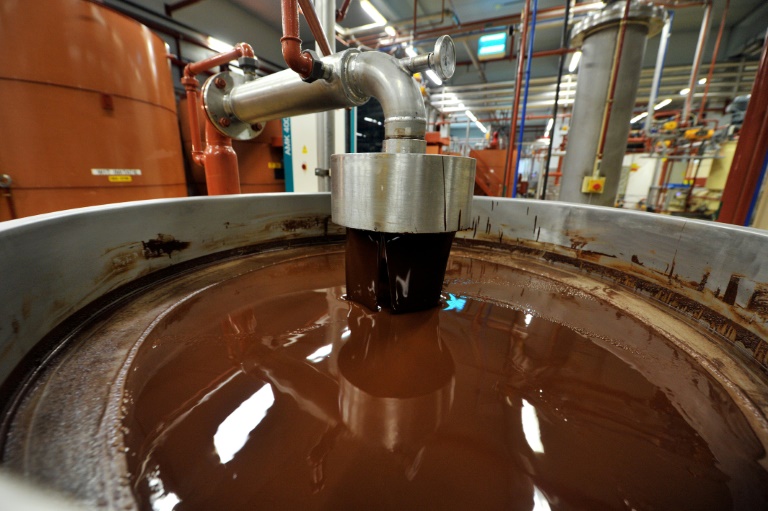
Production has been halted in the world’s biggest chocolate plant, run by Swiss giant Barry Callebaut in the Belgian town of Wieze, after salmonella contaminations was found, the firm said Thursday. 

A company spokesman told AFP that production had been protectively halted at the factory, which produces liquid chocolate in wholesale batches for 73 clients making confectionaries.

There have been no reports so far of any chocolate consumers infected by the salmonella, which causes salmonellosis, a disease that cause diarrhoea and fever but is only dangerous in the most extreme cases.    

“All products manufactured since the test have been blocked,” spokesman Korneel Warlop said. 

“Barry Callebaut is currently contacting all customers who may have received contaminated products. Chocolate production in Wieze remains suspended until further notice.”

Most of the products discovered to be contaminated are still on the site, he said.

But the firm has contacted all its clients and asked them not to ship any products they have made with chocolate made since June 25 at these Wieze plant, which is in Flanders, northwest of Brussels.

“Food safety is of the utmost importance for Barry Callebaut and this contamination is quite exceptional. We have a well-defined food safety charter and procedures,” the firm said.

Belgium’s food safety agency AFSCA has been informed and a spokesman told AFP it had opened an investigation. 

An AFSCA spokesman said investigators would “gather all the information in order to trace the contamination”.

The Wieze plant does not make chocolates to be sold directly to consumers, and the firm has no reason yet to believe that any contaminated goods made by clients have yet made it onto shop shelves.

– Green light –

The scare comes a few weeks after a case of chocolates contaminated with salmonella in the Ferrero factory in Arlon in southern Belgium manufacturing Kinder chocolates. 

Belgian health authorities said on June 17 that they had given the green light to restart the Italian giant’s factory for a three-month test period.

Swiss group Barry Callebaut supplies cocoa and chocolate products to many companies in the food industry, including industry giants such as Hershey, Mondelez, Nestle or Unilever. 

World number one in the sector, its annual sales amounted to 2.2 million tonnes during the 2020-2021 financial year. 

Over the past financial year, the group, which has a head office is in Zurich, generated a net profit of 384.5 million Swiss francs ($402 million) for 7.2 billion francs in turnover. 

The group employs more than 13,000 people, has more than 60 production sites worldwide.

Salmonella found in world's biggest chocolate plant

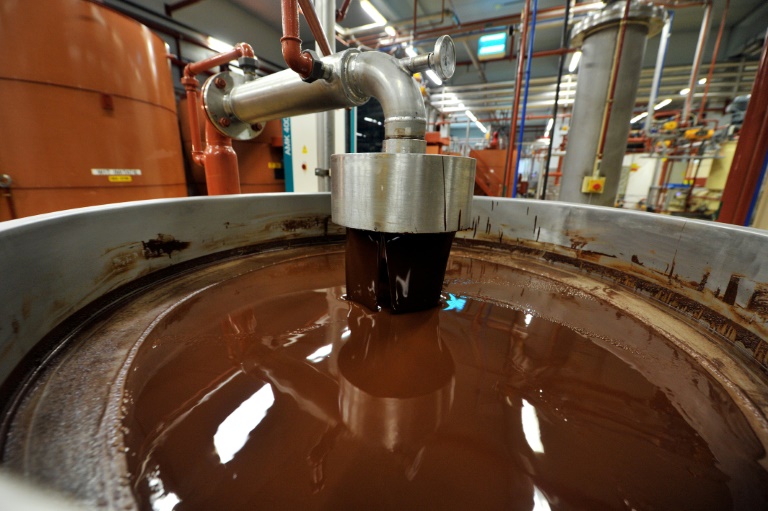
Production has been halted in the world’s biggest chocolate plant, run by Swiss giant Barry Callebaut in the Belgian town of Wieze, after salmonella contaminations was found, the firm said Thursday. 

A company spokesman told AFP that production had been protectively halted at the factory, which produces liquid chocolate in wholesale batches for 73 clients making confectionaries.

There have been no reports so far of any chocolate consumers infected by the salmonella, which causes salmonellosis, a disease that cause diarrhoea and fever but is only dangerous in the most extreme cases.    

“All products manufactured since the test have been blocked,” spokesman Korneel Warlop said. 

“Barry Callebaut is currently contacting all customers who may have received contaminated products. Chocolate production in Wieze remains suspended until further notice.”

Most of the products discovered to be contaminated are still on the site, he said.

But the firm has contacted all its clients and asked them not to ship any products they have made with chocolate made since June 25 at these Wieze plant, which is in Flanders, northwest of Brussels.

“Food safety is of the utmost importance for Barry Callebaut and this contamination is quite exceptional. We have a well-defined food safety charter and procedures,” the firm said.

Belgium’s food safety agency AFSCA has been informed and a spokesman told AFP it had opened an investigation. 

An AFSCA spokesman said investigators would “gather all the information in order to trace the contamination”.

The Wieze plant does not make chocolates to be sold directly to consumers, and the firm has no reason yet to believe that any contaminated goods made by clients have yet made it onto shop shelves.

– Green light –

The scare comes a few weeks after a case of chocolates contaminated with salmonella in the Ferrero factory in Arlon in southern Belgium manufacturing Kinder chocolates. 

Belgian health authorities said on June 17 that they had given the green light to restart the Italian giant’s factory for a three-month test period.

Swiss group Barry Callebaut supplies cocoa and chocolate products to many companies in the food industry, including industry giants such as Hershey, Mondelez, Nestle or Unilever. 

World number one in the sector, its annual sales amounted to 2.2 million tonnes during the 2020-2021 financial year. 

Over the past financial year, the group, which has a head office is in Zurich, generated a net profit of 384.5 million Swiss francs ($402 million) for 7.2 billion francs in turnover. 

The group employs more than 13,000 people, has more than 60 production sites worldwide.

Chinese leader Xi says Hong Kong 'reborn of fire' as visit to city begins

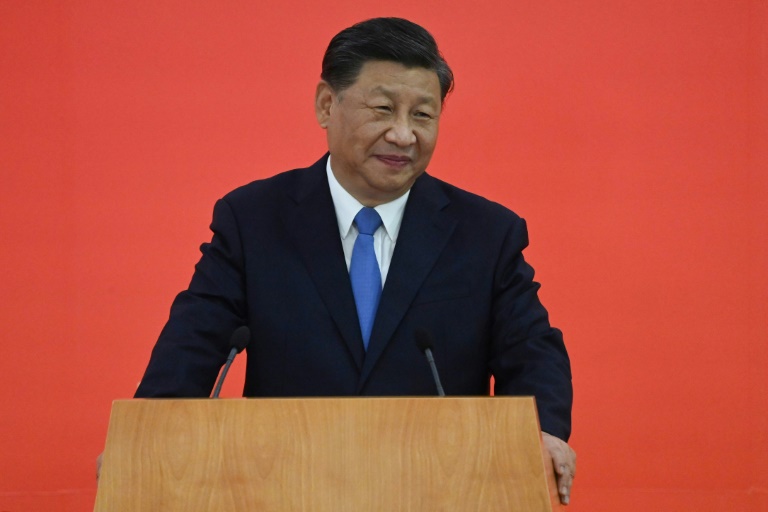
Chinese President Xi Jinping said Hong Kong had been “reborn of fire” as he arrived Thursday to mark the 25th anniversary of the city’s handover, in his first visit since the business hub’s democracy movement was crushed.

Xi’s trip is a chance for the Chinese Communist Party to showcase its control after huge protests engulfed the city in 2019, prompting Beijing to impose a harsh crackdown.

“In the past period, Hong Kong has experienced more than one serious test, and overcome more than one risk and challenge,” Xi said after arriving at a high-speed train station in the heart of the city. 

“After the storms, Hong Kong has been reborn of fire and emerged with robust vitality.”

Friday’s anniversary also marks the halfway point of the 50-year governance model agreed by Britain and China under which the city would keep some autonomy and freedoms.

Critics say a national security law imposed by Beijing after the 2019 protests has eviscerated those promised freedoms. 

But Xi said Thursday “the facts have proved that One Country, Two Systems has great vitality”.

“It can guarantee long-term stability and prosperity in Hong Kong, and defend the well-being of Hong Kong people,” he added.

– ‘Closed loop’ –

Xi’s visit is the first time he has left mainland China since the Covid-19 pandemic began. 

Accompanied by his wife Peng Liyuan and Foreign Minister Wang Yi, he was greeted at the station by schoolchildren waving flags and bouquets of flowers and chanting “Welcome, welcome!” in Mandarin. 

Officials including outgoing city leader Carrie Lam and her successor John Lee were present, as well as lion dancers and select accredited media.

Details around the trip have been kept tightly under wraps, and the visit has sparked a massive security effort.

There are large-scale road closures on Hong Kong Island, and the flying of drones has been temporarily banned throughout the entire city, with police citing security concerns.

Those coming into Xi’s orbit during the trip have been made to limit their social contacts, take daily PCR tests and check into a quarantine hotel in the days leading up to the visit.

After arriving, Xi met with business and political elites, while Peng, a former celebrity singer, visited a Chinese opera theatre. 

Peng and Xi are expected to leave Hong Kong to spend the night in neighbouring Shenzhen on the mainland before returning in the morning for the handover celebration and Lee’s inauguration. 

Media coverage has been tightly restricted. 

AFP has confirmed that 13 local and international journalists were denied accreditation to cover the official events, many for “security reasons”. 

– Police warnings – 

Authorities have moved to eliminate any potential source of embarrassment during Xi’s time in the city, with national security police making at least nine arrests over the past week.

The July 1 handover anniversary in Hong Kong has traditionally been marked by tens of thousands taking to the streets in peaceful rallies every year.

But mass gatherings have essentially disappeared in Hong Kong over the past few years under a mixture of coronavirus restrictions and a security crackdown aimed at eliminating any public opposition to China’s uncompromising rule over the city. 

The League of Social Democrats (LSD), one of Hong Kong’s few remaining opposition groups, said it will not demonstrate on July 1 after national security officers spoke with volunteers associated with the group.

LSD leaders told AFP their homes had been searched, and that they had also had conversations with the police. 

Chan Po-ying, the group’s president, said that over the last few days she had begun to feel that she was being followed and watched.

“In the past there was something like this too, but not as bad as this year,” the veteran activist said.

Hong Kong’s top polling group announced that it would delay publishing the results of a survey that gauged government popularity “in response to suggestions from relevant government departments after their risk assessment”.

– ‘We must accept it’ –

The closed loop has kept Xi well out of the public’s way. 

At a high-end shopping mall next to the rail terminus where Xi arrived, a handful of spectators gathered near the edge of a glass facade but their view was completely blocked. 

In the ice-skating rink behind them, dozens of people were doing laps, oblivious to the Chinese leader’s arrival.

A housewife in her 40s surnamed Luk told AFP she was taking a look out of curiosity as her child was busy ice-skating.

“These couple of years, because of the pandemic, there’s not much of a festive atmosphere. Hopefully this (visit) can cheer everyone up, as it is something happy.”

But she said she had no plans to mark the 25th anniversary herself as her child had to prepare for exams. 

“Hong Kong’s handover is a historical fact, we can’t deny it so we must accept it. As a Chinese person, we may as well accept it gladly,” she said. 

“There’s nothing that can be changed anyway.” 

Close Bitnami banner
Bitnami