World

Russia quits Snake Island, in blow to blockade of Ukraine ports

Russian troops have abandoned their positions on a captured Ukrainian island, a major set-back to their invasion effort that weakens their blockade of Ukraine’s ports, defence officials said Thursday.

The news from the Black Sea came as NATO leaders met for a second day in Madrid, intent on demonstrating their unity and determination to back up Kyiv with advances weapons in the face of Moscow’s assault.

Snake Island became a symbol of Ukrainian resistance in the first days of the war, when the rocky outcrop’s defenders told a Russian warship that called on them to surrender to “go f*ck yourself,” an incident that spurred a defiant meme.

It was also a strategic target, sitting aside shipping lanes near Ukraine’s port of Odessa. Russia had attempted to install missile and air defence batteries while under fire from drones.

Now, however, Ukraine has begun to receive longer range missiles and military gear from its Western backers, and the Russian position on Snake Island seems to have become untenable.

– ‘Strategically important’ –

The Russian defence ministry statement described the retreat as “a gesture of goodwill” meant to demonstrate that Moscow will not interfere with UN efforts to organise protected grain exports from Ukraine.

But Kyiv claimed it as a win. 

“I thank the defenders of Odessa region who took maximum measures to liberate a strategically important part of our territory,” Valeriy Zaluzhny, the Ukraine military’s commander-in-chief, said on Telegram.

In peacetime, Ukraine is a major agricultural exporter, but Russia’s invasion has damaged farmland and seen Ukraine’s ports seized, razed or blockaded — threatening grain importers in Africa with famine.

Western powers have accused President Vladimir Putin of using the trapped harvest as a weapon to increase pressure on the international community, and Russia has been accused of stealing grain. 

On Thursday, a ship carrying 7,000 tonnes of grain sailed from Ukraine’s occupied port of Berdyansk, said the regional leader appointed by the Russian occupation forces.

Evgeny Balitsky, the head of the pro-Moscow administration, said Russia’s Black Sea ships “are ensuring the security” of the journey he said, adding that the port had been de-mined.

– ‘Direct threat’ –

Separately, the Russian defence ministry said its forces are holding more that 6,000 Ukrainian prisoners of war who have been captured since the February 24 invasion.

The conflict in Ukraine has dominated the NATO summit in Madrid, where the leaders said Russia “is the most significant and direct threat to allies’ security and to peace and stability in the Euro-Atlantic area”.

This came as NATO officially invited Sweden and Finland to join the alliance, and US President Joe Biden announced new deployments of US troops, ships and planes to Europe.

Biden said that the US move was exactly what Russian President Putin “didn’t want” — and Moscow, facing fierce resistance from Ukrainian forces equipped with Western arms, reacted with predictable fury.

Putin accused the alliance of seeking to assert its “supremacy”, telling journalists in the Turkmenistan capital of Ashgabat that Ukraine and its people are “a means” for NATO to “defend their own interests.”

“The NATO countries’ leaders wish to… assert their supremacy, their imperial ambitions,” Putin added.

NATO leaders have funnelled billions of dollars of arms to Ukraine and faced a renewed appeal from President Volodymyr Zelensky for more long-range artillery.

“Ukraine can count on us for as long as it takes,” NATO chief Jens Stoltenberg said at the summit, which ends Thursday, as he announced a new strategic overview that focuses on the Moscow threat.

– ‘Clear-eyed’ –

The document, updated for the first time since 2010, warned that the alliance “cannot discount the possibility” of an attack on its members.

Ukraine’s Foreign Minister Dmytro Kuleba welcomed NATO’s “clear-eyed stance on Russia”.

Russian missiles continued to rain down across Ukraine. 

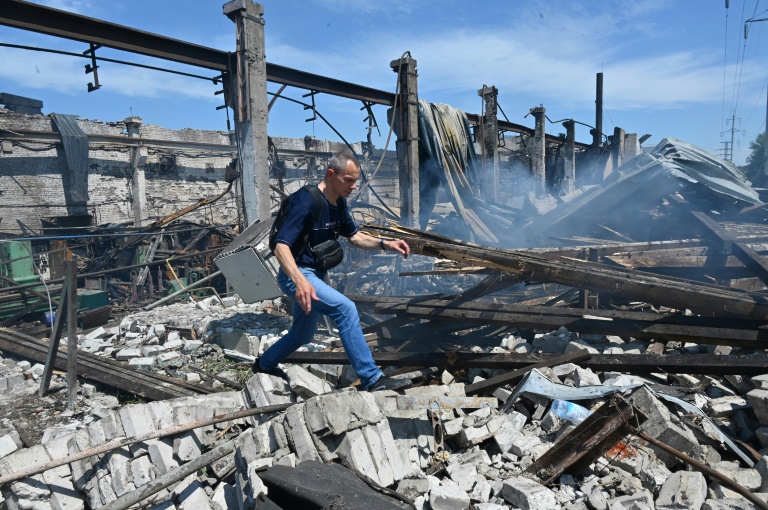
In the southern city of Mykolaiv rescuers found the bodies of six slain civilians in the rubble of a destroyed building, emergency services said. 

The city of Lysychansk in the eastern Donbas region — the current focus of Russia’s offensive — is also facing sustained bombardment.

“The Russians are throwing almost all of their resources at capturing Lysychansk,” Sergiy Gaiday, regional governor of Lugansk, which includes the city, said on Telegram. 

“It’s hard to find a safe spot in the city.”

– Theatre strike ‘war crime’ –

Moscow’s invasion triggered massive economic sanctions and a wave of support for Zelensky’s government, including deliveries of advanced weapons, as well as the reinforcement of Europe’s defences.

Washington has announced that it will shift the headquarters of its 5th Army Corps to Poland.

An army brigade will head to Romania and two squadrons of F-35 fighters to Britain, air defence systems will be sent to Germany and Italy, and the fleet of US Navy destroyers in Spain will grow from four to six.

Britain also pledged another $1.2 billion in military aid for Ukraine on Wednesday, including air defence systems and drones.

In a report released Thursday, Amnesty International said a theatre sheltering civilians destroyed in March in the besieged city of Mariupol was likely hit by a Russian airstrike in a war crime.

“Until now, we were speaking about an alleged war crime. Now we can clearly say it was one, committed by the Russian armed forces,” Oksana Pokalchuk, head of Amnesty’s Ukraine branch, told AFP.

Nevertheless, the group also found the death toll may have been smaller than initially believed. Amnesty believes at least a dozen people died in the attack although it is likely many more remain unreported. 

Mariupol city authorities had provided an initial estimate of around 300 deaths.

burs-dc/yad
War in Ukraine: Latest developments

Here are the latest developments in the war in Ukraine:

– Russia leaves Snake Island –

Russia says it is withdrawing its forces from Ukraine’s Snake Island in what it said was a move to facilitate the resumption of Ukraine’s farm exports.

“On June 30, as a gesture of goodwill, the Russian armed forces completed their tasks on Snake Island and withdrew a garrison stationed there,” the Russian defence ministry says, adding that the move showed Moscow was “not impeding” efforts to resume exports from nearby Ukrainian ports.

Ukraine hails the liberation of the “strategically important” island, saying Russian forces were driven out by Ukrainian shelling and missile strikes.

Snake Island became a symbol of Ukrainian resistance after a radio exchange went viral at the start of the war, in which Ukrainian soldiers issued an expletive to a Russian ship that called on them to surrender.

– Grain shipment leaves Ukraine port –

A ship carrying 7,000 tonnes of grain sets sail from Ukraine’s occupied port city of Berdyansk, in what pro-Russian officials claim is the first such shipment from a Ukrainian port since the war began.

Berdyansk was one of the first cities to fall to Russian forces at the start of the war. 

Evgeny Balitsky, the region’s Moscow-appointed administrator says that Russia’s navy was safeguarding the shipment of grain, which was headed for unnamed “friendly countries”.

A Russian blockade of Ukraine’s Black Sea ports has prevented millions of tonnes of grain from being exported, worsening global food shortages.

Ukraine has accused Russia and its allies of stealing its grain, claims also made by the New York Times and BBC among other media outlets.

– Moscow cracks down on foreign media – 

Russian lawmakers approve legislation that will make it easier to shut down foreign media, continuing a crackdown on the media and dissent that intensified sharply after the invasion of Ukraine.

The legislation gives the authorities the right “to ban or restrict the activities of media outlets” from foreign countries “in the event of unfriendly actions of a foreign state against Russian media abroad”.

Many foreign journalists left Russia after authorities in March introduced prison terms of up to 15 years for spreading “fake news” about the Russian army.

But most major news outlets have maintained a presence in the country.

– ‘Over 6,000’ Ukrainian POWs –

Russia says it is still holding more than 6,000 Ukrainian prisoners of war.

The announcement comes a day after the two sides announced a prisoner swap, with each side recovering 144 fighters — the largest exchange since the war began.

The Ukrainian prisoners returned included 95 former defenders of the Azovstal steelworks in the southern port city of Mariupol, where Ukrainian forces held out for weeks.

– Over $1bn in new British aid  –

Britain pledges another £1 billion ($1.2 billion) in military aid to Ukraine to help it fight the invasion, bringing its total support since the start of the war to £2.3 billion.

The aid will include “sophisticated air-defence systems, uncrewed aerial vehicles, innovative new electronic warfare equipment and thousands of pieces of vital kit for Ukrainian soldiers,” London says.

Britain is one of Ukraine’s biggest backers in terms of military aid.

It was one of the first nations to provide Ukraine with lethal military aid such as anti-tank missiles.

burs-cb/yad

DR Congo set for final ceremony for Lumumba remains

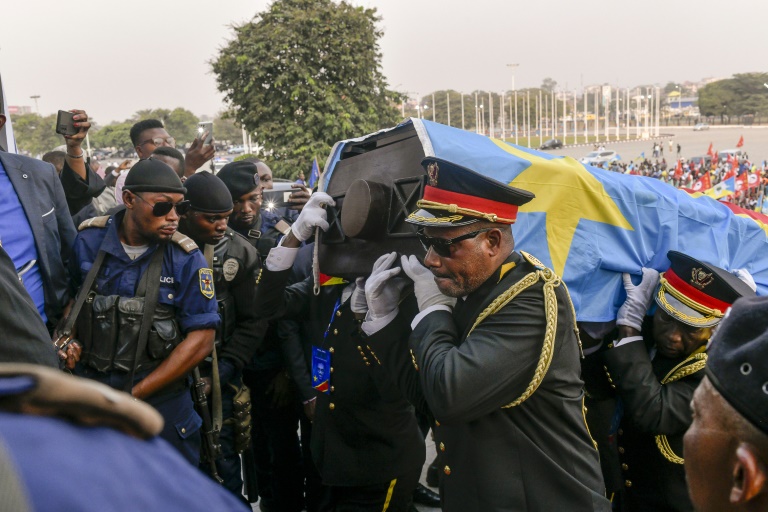
The scant remains of DR Congo’s fiery independence hero Patrice Lumumba were to be interred on Thursday after a pilgrimage that revived traumatic memories but also stirred national unity.

A single tooth is all that remains of the young nationalist who was murdered in January 1961 at the age of 35, just months after becoming Congo’s first post-colonial prime minister.

A coffin containing the remains was to be enshrined in a mausoleum in Kinshasa, in a ceremony hosted by President Felix Tshisekedi coinciding with the country’s 62nd anniversary.

Topped by a large statue of Lumumba, the mausoleum is located on a main avenue of the capital which also bears his name.

Lumumba was among the vanguard of pan-African leaders who led the charge to end colonialism in the late 1950s.

He rose to prominence in 1958 when he launched a political party, the Congolese National Movement (MNC), which called for independence and a secular Congolese state.

His party won national elections in May 1960, a month before independence from Belgium, leading him to be named first prime minister of the country when it became independent.

He stunned Belgium with a speech on independence day — attended by King Baudouin — that accused the exiting colonial masters of racism and “humiliating slavery” of the Congolese people.

Within three months, Lumumba was forced out by a coup fomented with the help of Belgium and the CIA, which also opposed the support he had requested from the Soviet Union.

In January 1961, Lumumba was handed over to the authorities in mineral-rich southeast Katanga province, which had seceded from the fledgling nation months earlier with Belgium’s support.

He was shot dead and his body was dissolved in acid, but a Belgian police officer involved in the killing kept one of his teeth as a trophy.

After years of campaigning by his family, Belgium returned the tooth on June 20, a move that followed a visit of reconciliation by Baudouin’s nephew and successor, King Philippe.

The remains were taken to Lumumba’s home area of Sankuru in the centre of the country, to his political stronghold of Kisangani in the northeast and finally to the place where he was murdered before being flown to Kinshasa.

Five former prime ministers joined a funeral vigil on Thursday alongside current government chief Jean-Michel Sama Lukonde.

“The figure of Patrice Lumumba is a prime symbol of national unity, transcending political differences,” said Evariste Mabi, a premier in the 1980s under Lumumba’s nemesis, dictator Mobutu Sese Seko.

“(He) embodies the people’s successful struggle for freedom.”

Israel parliament dissolves itself, sets November 1 election

Israeli lawmakers dissolved parliament on Thursday, forcing the country’s fifth election in less than four years, with Foreign Minister Yair Lapid set to take over as caretaker prime minister at midnight.

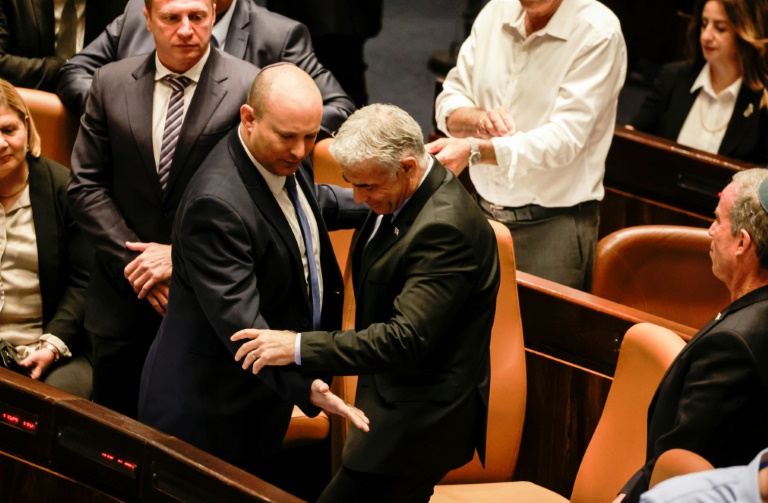
After the unanimous 92-0 vote, the centrist Lapid embraced outgoing Prime Minister Naftali Bennett, whose year in charge of an unwieldy, eight-party coalition was ultimately undone by its ideological divisions.

Lapid, whose father survived the Holocaust, switched seats with Bennett in parliament after the vote, before making a first stop at Jerusalem’s Yad Vashem Holocaust memorial centre.

“There, I promised my late father that I will always keep Israel strong and capable of defending itself and protecting its children,” the 58-year-old said in a statement. 

The newly called election set for November 1 marks another sign that Israel remains mired in an unprecedented era of political gridlock, with early opinion polls indicating the results may again be inconclusive.

The religious nationalist Bennett has said he will not contest the vote and is stepping back from politics, tweeting the Hebrew word “Toda” (thank you), after lawmakers sealed his departure from office. 

Hawkish former prime minister Benjamin Netanyahu has assured that he and his allies — extreme-right nationalists and ultra-Orthodox Jewish parties — will finally rally a majority, following what he described on Thursday as a “failed (coalition) experiment”.

“We are the only alternative. A strong, nationalist, responsible government,” said Netanyahu, who is on trial over corruption charges he denies.

Thursday’s dissolution further highlighted Israel’s “deeply polarised reality”, said Yohanan Plesner, president of the Israel Democracy Institute think-tank.

The only solution to such “dysfunction,” he said, were “long-over-due electoral and constitutional reforms.” 

– ‘We must go forward’ –

The upcoming vote will in part be a contest between Netanyahu and Lapid, a former TV news anchor and celebrity who has surprised many since being dismissed as a lightweight when he entered politics a decade ago.

Lapid was the architect of the Bennett-led motley alliance that took office in June 2021, ending Netanyahu’s record 12 consecutive years in power and passing Israel’s first state budget since 2018.

Bennett led a coalition of right-wingers, centrists, doves and Islamists from the Raam faction, which made history by becoming the first Arab party to support an Israeli government since the Jewish state’s creation.

Raam party chief Mansour Abbas faced backlash from some in the Arab community but on Thursday defended his decision to take part in Israeli governance. 

“We succeeded in pushing ourselves as a political force,” Abbas said, adding that Raam would continue advocating for Arab society, making sure that issues like poor living conditions for his Bedouin constituents, were “on the table rather than underneath it”. 

“As long as our experiment is advancing and rising, we must go forward,” he said. 

– Farewell address –

The coalition came apart last week after some Arab lawmakers refused to renew a measure that ensures the roughly 475,000 Jewish settlers in the occupied West Bank live under Israeli law.

They said it marked a de facto endorsement of a 55-year occupation that has forced West Bank Palestinians to live under Israeli military rule.

For Bennett, a staunch supporter of settlements, allowing the so-called West Bank law to expire was intolerable. Dissolving parliament before its June 30 expiration temporarily renews the measure.

In the weeks before his coalition unravelled, Bennett sought to highlight its successes, including what he characterised as proof that ideological rivals can govern together.

“No one should give up their positions, but it is certainly possible and necessary to put aside, for a while, ideological debates and take care of the economy, security and future of the citizens of Israel,” he said in his farewell address Wednesday, which did not rule out a eventual return to politics.

Bennett will stay on as alternate prime minister responsible for Iran policy, as world powers take steps to revive stalled talks on the Islamic republic’s nuclear programme.

Israel opposes a restoration of the 2015 agreement that gave its arch foe sanctions relief in exchange for limits on its nuclear programme.

Lapid will retain his foreign minister title while serving as Israel’s 14th premier. He will find himself under an early microscope, with US President Joe Biden due in Jerusalem in two weeks.

Salmonella found in world's biggest chocolate plant

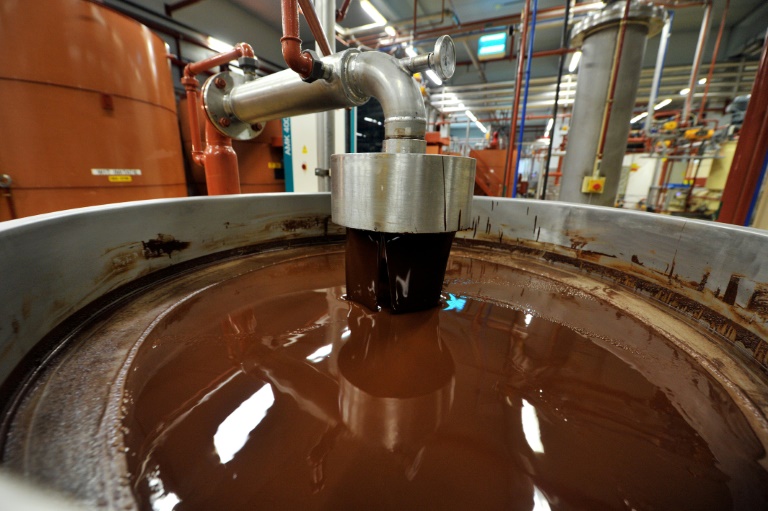
Salmonella bacteria have been discovered in the world’s biggest chocolate plant, run by Swiss giant Barry Callebaut in the Belgian town of Wieze, the firm said Thursday.

A company spokesman told AFP that production had been halted at the factory, which produces liquid chocolate in wholesale batches for 73 clients making confectionaries.

“All products manufactured since the test have been blocked,” spokesman Korneel Warlop said. 

“Barry Callebaut is currently contacting all customers who may have received contaminated products. Chocolate production in Wieze remains suspended until further notice.”

Most of the products discovered to be contaminated are still on the site, he said.

But the firm has contacted all its clients and asked them not to ship any products they have made with chocolate made since June 25 at these Wieze plant, which is in Flanders, northwest of Brussels.

Belgium’s food safety agency AFSCA has been informed and a spokesman told AFP it had opened an investigation.

The Wieze plant does not make chocolates to be sold directly to consumers, and the firm has no reason yet to believe that any contaminated goods made by clients have yet made it onto shop shelves.

The scare comes a few weeks after a case of chocolates contaminated with salmonella in the Ferrero factory in Arlon in southern Belgium manufacturing Kinder chocolates. 

Belgian health authorities announced on June 17 that they had given the green light to restart the Italian giant’s factory for a three-month test period.

Swiss group Barry Callebaut supplies cocoa and chocolate products to many companies in the food industry, including industry giants such as Hershey, Mondelez, Nestle or Unilever. 

World number one in the sector, its annual sales amounted to 2.2 million tonnes during the 2020-2021 financial year. 

Over the past financial year, the group, which has a head office is in Zurich, generated a net profit of 384.5 million Swiss francs ($402 million) for 7.2 billion francs in turnover. 

The group employs more than 13,000 people, has more than 60 production sites worldwide.

UK urged to cleanse 'stain' of dirty Russian money

For all its tough talk against Russia, the UK’s government is failing to enforce its promises to clean up dirty foreign money, a hard-hitting report by MPs said Thursday.

It was “shameful” that after years of warnings, the government only began to clamp down on the illicit flows when Russia invaded Ukraine in February, the report by the House of Commons Foreign Affairs Committee said.

The government has brought in new legislation to prevent corrupt funds being laundered through Britain’s property market.

But it has failed to back this up with enough resources or powers for anti-corruption bodies such as the National Crime Agency and Serious Fraud Office, the report said.

“Without the necessary means and resources, enforcement agencies are toothless,” it said.

“The threat illicit finance poses to our national security demands a response that is seen to be serious.”

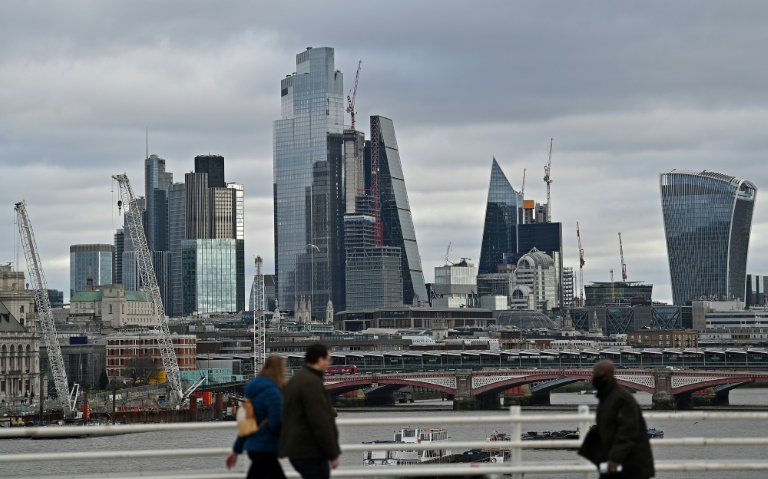
Rich Russians have long found it easy to acquire expensive properties in London, or a world-class education for their children in Britain’s private schools, or control of Premier League football clubs.

According to multiple studies into the “Londongrad” phenomenon, they were enabled by a service industry encompassing blue-chip bankers, accountants, lawyers, property agents and public relations advisors.

And since Prime Minister Boris Johnson entered Downing Street in 2019, his Conservative party has stepped up a drive to entice cash-rich donors, including from wealthy backers originally from Russia.

Following the invasion of Ukraine, Johnson’s government has sanctioned dozens of wealthy, Kremlin-connected Russians and says their money is no longer welcome in Britain.

– Truss pushes back –

However, according to the MPs, “corrupt money has continued to flow into the UK”.

The committee called for the government to publish a review into a “golden visa” programme that enabled thousands of Russians to establish residency, or even citizenship, in Britain from the 1990s.

The scheme only ended in the week before Russia invaded Ukraine, and the report demanded to know what the government intends to do about Russians who obtained visas “without due diligence”.

One beneficiary of the scheme was the sanctioned oligarch Roman Abramovich, who has been forced to sell Chelsea football club.

Johnson meanwhile is refusing to release intelligence advice he received about his controversial appointment of Evgeny Lebedev, a Russian-born newspaper baron and son of Russian tycoon Alexander Lebedev, to the House of Lords.

“The UK’s status as a safe haven for dirty money is a stain on our reputation,” the Foreign Affairs Committee’s Conservative chairman, Tom Tugendhat, said.

“The government must bring legislation in line with the morals of the British people and close the loopholes that allow for such rife exploitation,” he said.

Foreign Secretary Liz Truss rejected the committee’s criticisms, without addressing its point that the government had failed to act in the years prior to Russia’s war.

“We passed emergency legislation as soon as this appalling war was perpetrated, as soon as Russia invaded Ukraine, and we’ve been able to hit Russia hard with sanctions,” she told Sky News.

“We have sanctioned, as a country, more individuals and entities in Russia than any other government in the world.”

Philippine President Marcos Jr praises rule of dictator father

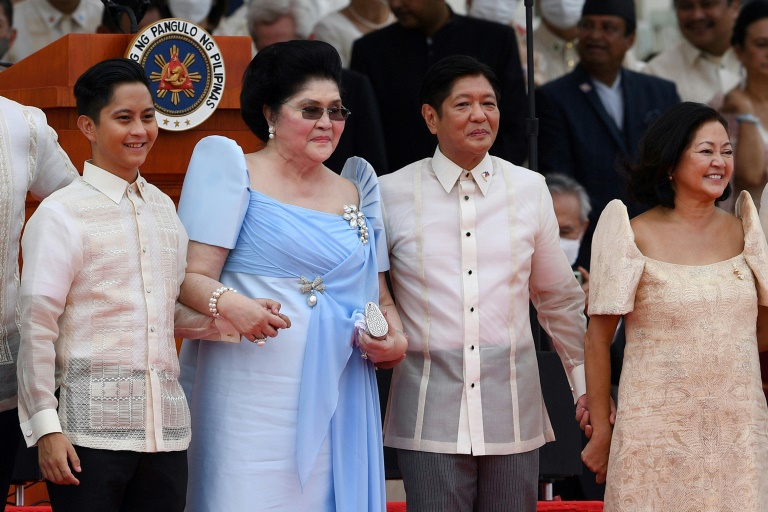
Philippine President Ferdinand Marcos Jr on Thursday praised his dictator father’s rule after being sworn in as the country’s new leader, completing a decades-long effort to restore the clan to the country’s highest office.

Ferdinand “Bongbong” Marcos Jr, 64, won last month’s elections by a landslide, securing the biggest victory since his father and namesake was ousted by a popular revolt in 1986.

He succeeds the hugely popular Rodrigo Duterte, who gained international infamy for his deadly drug war and has threatened to kill suspected dealers after he leaves office. 

In the last act of reviving the family brand, Marcos Jr took the oath in a public ceremony at the National Museum in Manila in front of hundreds of diplomats, dignitaries and supporters.

With his 92-year-old mother Imelda sitting metres away, Marcos Jr praised the late patriarch’s regime, which critics describe as a dark period of human rights abuses and corruption that left the country impoverished.  

“I once knew a man who saw what little had been achieved since independence… but he got it done,” Marcos Jr said after being sworn into office, claiming his father built more roads and produced more rice than his predecessors.

“So will it be with his son. You will get no excuses from me.”

Ahead of the swearing-in, Duterte received Marcos Jr at the riverside Malacanang presidential palace — which the Marcos family fled from into exile 36 years ago. 

Duterte, 77, wore a mask and a traditional formal shirt, characteristically unbuttoned at the top and with sleeves rolled up, for the meeting with Marcos Jr, who he once described as “weak”.

The ceremony comes days after the Supreme Court dismissed final attempts to have Marcos Jr disqualified from the election and prevent him taking office.

As rising prices squeeze an economy already ravaged by Covid-19, Marcos Jr has made tackling inflation, boosting growth and ramping up food production his priorities.

He has taken the rare step of appointing himself agriculture secretary to lead the overhaul of the problem-plagued sector.

Marcos Jr has also pledged to defend the Philippines’ rights to the disputed South China Sea, which Beijing claims almost entirely.

He promised Thursday that “we will go very far under my watch” — but has offered scant detail on how he will achieve his goals and few hints about his leadership style after largely shunning media interviews.

– ‘Friends to all, enemy to none’ –

Marcos Jr, who appears to be more polite and businesslike than Duterte, was swept to power with the help of a massive social media misinformation campaign.

Pro-Marcos groups bombarded Filipinos with fake or misleading posts portraying the family in a positive light while ignoring the brutality and theft of billions of dollars from state coffers during the patriarch’s 20-year rule.

Crucial to Marcos Jr’s success was an alliance with Duterte’s daughter Sara, who secured the vice-presidential post with more votes than him, and the backing of rival dynasties.

Many expect Marcos Jr will be less violent and more predictable than the elder Duterte, but activists and clergy fear he could use his victory to entrench himself in power.

“Marcos Jr’s refusal to recognise the abuses and wrongdoings of the past, in fact lauding the dictatorship as ‘golden years’, makes him very likely to continue its dark legacy during his term,” leftist alliance Bayan warned.

Marcos Jr, who previously distanced himself from his father’s rule but not criticised it, urged the gathering on Thursday to not look “back in anger or nostalgia”. 

He has filled most cabinet positions, with a mass swearing-in at the palace Thursday. But the most influential adviser during his six-year term will likely be his wife, Louise, who is widely believed to have run his campaign.

Sergio Ortiz-Luis, president of the Employers Confederation of the Philippines, said the country had a “big chance that we can be moving forward and ahead of the pack” under Marcos Jr.

“We are very optimistic on the quality of the leadership that we have now,” Ortiz-Luis told AFP.

Unlike Duterte, who pivoted away from the United States towards China, Marcos Jr has indicated he will pursue a more balanced relationship with the two superpowers.

Marcos Jr said last month he would adopt a “friends to all, enemy to none” foreign policy. 

But unlike Duterte, he insisted he would uphold an international ruling dismissing Beijing’s claims over the resource-rich South China Sea.

While he has backed Duterte’s drug war, which has killed thousands of mostly poor men, he is not likely to enforce it as aggressively.

“I think the Philippine political elite are ready to move on from a violence-led drug war,” said Greg Wyatt of PSA Philippines Consultancy.

“The drug war attracted enough negative attention.”

Chinese leader Xi says Hong Kong 'reborn of fire' as visit to city begins

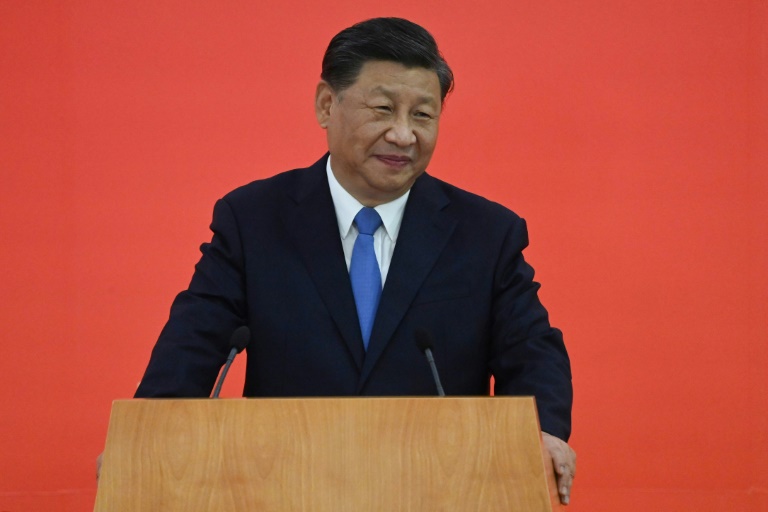
Chinese President Xi Jinping said Hong Kong had been “reborn of fire” as he arrived Thursday to mark the 25th anniversary of the city’s handover, in his first visit since the business hub’s democracy movement was crushed.

Xi’s trip is a chance for the Chinese Communist Party to showcase its control after huge protests engulfed the city in 2019, prompting Beijing to impose a harsh crackdown.

“In the past period, Hong Kong has experienced more than one serious test, and overcome more than one risk and challenge,” Xi said after arriving at a high-speed train station in the heart of the city. 

“After the storms, Hong Kong has been reborn of fire and emerged with robust vitality.”

Friday’s anniversary also marks the halfway point of the 50-year governance model agreed by Britain and China under which the city would keep some autonomy and freedoms.

Critics say a national security law imposed by Beijing after the 2019 protests has eviscerated those promised freedoms. 

But Xi said Thursday “the facts have proved that One Country, Two Systems has great vitality”.

“It can guarantee long-term stability and prosperity in Hong Kong, and defend the well-being of Hong Kong people,” he added.

– ‘Closed loop’ –

Xi’s visit is the first time he has left mainland China since the Covid-19 pandemic began. 

Accompanied by his wife Peng Liyuan and Foreign Minister Wang Yi, he was greeted at the station by schoolchildren waving flags and bouquets of flowers, as well as lion dancers and select accredited media.

Details around the trip have been kept tightly under wraps, and the visit has sparked a massive security effort.

Government leaders have been forced into an anti-Covid “closed-loop” system, parts of the city shut down, and multiple journalists barred from Friday’s events.

The Chinese leader will likely spend the night in neighbouring Shenzhen on the mainland.

Those coming into Xi’s orbit during the trip, including the highest-ranking government officials, have been made to limit their social contacts, take daily PCR tests and check into a quarantine hotel in the days leading up to the visit. 

“To play safe, if we are going to meet the paramount leader and other leaders in close quarters, I think it is worthwhile to go into the closed-loop arrangements,” veteran pro-Beijing politician Regina Ip told AFP.

– Several arrests – 

Authorities have moved to eliminate any potential source of embarrassment during Xi’s time in the city, with national security police making at least nine arrests over the past week.

The League of Social Democrats (LSD), one of Hong Kong’s few remaining opposition groups, said it will not demonstrate on July 1 after national security officers spoke with volunteers associated with the group.

LSD leaders told AFP their homes had been searched, and that they had also had conversations with the police. 

Chan Po-ying, the group’s president, said that over the last few days she had begun to feel that she was being followed and watched.

“In the past there was something like this too, but not as bad as this year,” the veteran activist said.

Hong Kong’s top polling group announced that it would delay publishing the results of a survey that gauged government popularity “in response to suggestions from relevant government departments after their risk assessment”.

The July 1 handover anniversary in Hong Kong has traditionally been marked by tens of thousands taking to the streets in peaceful rallies every year.

But mass gatherings have essentially disappeared in Hong Kong over the past few years under a mixture of coronavirus restrictions and a security crackdown aimed at eliminating any public opposition to China’s uncompromising rule over the city. 

– Tight security –

There are large-scale road closures on Hong Kong Island, and the flying of drones has been temporarily banned throughout the entire city, with police citing security concerns.

Select sites across the financial hub have also been closed off, including the high-speed rail terminus, a performance venue for Chinese opera and Hong Kong’s Science Park.

A number of Science Park workers told AFP they had not received any notification about a visit by Xi but said they were told to work from home on Thursday.

At a high-end shopping mall next to the rail terminus where Xi arrived, a handful of spectators gathered near the edge of a glass facade but their view was completely blocked. 

In the ice-skating rink behind them, dozens of people were doing laps, oblivious to the Chinese leader’s arrival.

A housewife in her 40s surnamed Luk told AFP she was taking a look out of curiosity as her child was busy ice-skating.

“These couple of years, because of the pandemic, there’s not much of a festive atmosphere. Hopefully this (visit) can cheer everyone up, as it is something happy.”

Markets mostly down on recession fear, China data lends some light

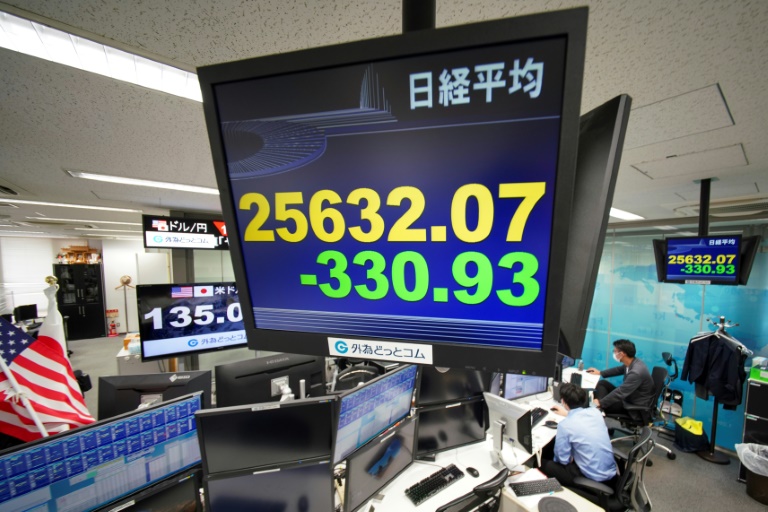
Most markets fell again Thursday as traders fear that hefty rate hikes to rein in soaring inflation will spark a recession, though a slight improvement in Chinese data provided a little cheer.

The rally enjoyed across the world last week appears to have given way to nervousness about the economic outlook, while the Ukraine war continues to sow uncertainty.

The surge in inflation to multi-decade highs has forced central banks to swiftly tighten pandemic-era monetary policies, dealing a hefty blow to equities, particularly tech firms who are susceptible to higher borrowing costs.

The Federal Reserve has already sharply lifted rates and is expected to announce a second successive 75-basis-point lift next month.

There had been hope that policymakers would ease off their hikes as economies show signs of slowing, but analysts say some officials are less concerned about a recession than letting prices run out of control.

Fed boss Jerome Powell this month admitted the moves could lead to a contraction.

On Wednesday, Cleveland Fed chief Loretta Mester said she was keen to see the benchmark rate hit 3-3.5 percent this year and “a little bit above four percent next year”.

“There are risks of recession,” she told CNBC. “We’re tightening monetary policy. My baseline forecast is for growth to be slower this year.”

The threat of an extended period of elevated inflation and rate hikes has left traders weary, and markets in the red.

“With rapidly slowing US growth momentum and a Fed committed to restoring price stability, a mild recession, starting in the fourth quarter of 2022, is now most likely,” Nomura’s Andrew Ticehurst said.

“High US inflation appears to be a political as well as economic problem, and we don’t expect the Fed to be quick to blink as risk assets wobble.”

– China support hope –

Wall Street ended on a tepid note Wednesday, unable to bounce back from the previous day’s plunge.

And Asia also struggled, with Hong Kong, Tokyo, Sydney, Seoul, Singapore, Taipei, Manila and Wellington all down. London, Paris and Frankfurt tumbled.

However, Shanghai ended more than one percent higher. That came after official figures showed a forecast-beating improvement in China’s services sector thanks to the easing of painful Covid-19 restrictions in major cities including Shanghai and Beijing.

The non-manufacturing Purchasing Managers’ Index surged to 54.7 points in June, the first time it has been above the 50-point growth mark since February.

The manufacturing gauge hit 50.2, which was also its first time in growth since February and provided some hope that the world’s number two economy could be picking up after the pain caused by lockdowns.

SPI Asset Management strategist Stephen Innes added that the government and People’s Bank of China could now have some room to provide growth support.

“With (consumer price) inflation low in China relative to its peers, there is plenty of scope for monetary and fiscal conditions to loosen in the second half of the year, supporting activity,” he said in a note.

Crude extended Wednesday’s loss as data showed demand in the United States appeared to be softening even as the driving season gets under way, and as recession fears begin to kick in.

“The higher price environment appears to be doing its job when it comes to demand,” Warren Patterson, of ING Group NV, said.

The drop comes as OPEC and other major producers including Russia prepare to meet on their output agreement, with most predicting they are unlikely to open the taps further.

“I am not expecting any surprises from the group. I would imagine it will be a fairly quick meeting,” Patterson said.

– Key figures at around 0810 GMT –

Tokyo – Nikkei 225: DOWN 1.5 percent at 26,393.04 (close)

Hong Kong – Hang Seng Index: DOWN 0.6 percent at 21,859.79 (close)

Shanghai – Composite: UP 1.1 percent at 3,398.62 (close)

London – FTSE 100: DOWN 1.7 percent at 7,190.99

West Texas Intermediate: DOWN 0.2 percent at $109.57 per barrel

Brent North Sea crude: DOWN 0.8 percent at $115.35 per barrel

Dollar/yen: DOWN at 136.23 yen from 136.66 yen Wednesday

Euro/dollar: UP at $1.0445 from $1.0444 

Pound/dollar: UP at $1.2154 from $1.2119

Euro/pound: DOWN at 85.95 pence from 86.15 pence

New York – Dow: UP 0.3 percent at 31,029.31 (close)

Prophet row murder sparks fury on Indian social media

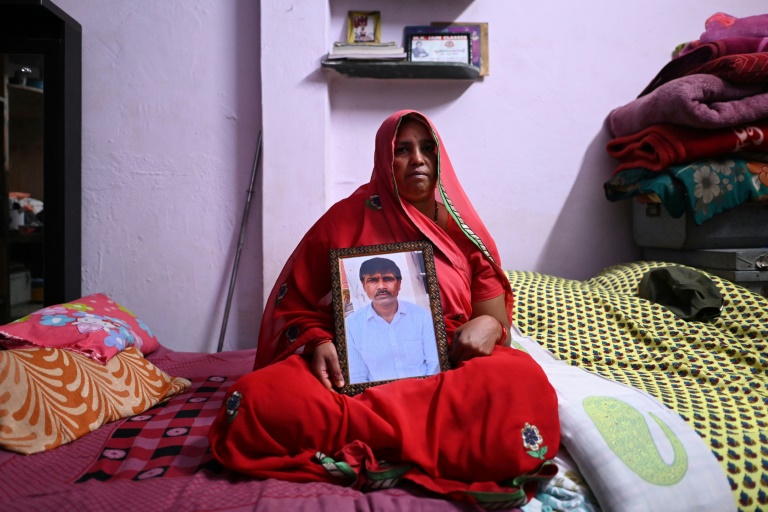
The gruesome killing of a Hindu tailor has inflamed religious tensions in India and sparked a furious response on social media, including calls for reprisal attacks against the country’s Muslim minority.

Two Muslim men have been arrested over Tuesday’s attack, committed in apparent retaliation for inflammatory comments about the Prophet Mohammed made by a spokeswoman for India’s governing party weeks earlier. 

Footage of the murder and attempted beheading of Kanhaiya Lal, which went viral online, also showed his attackers brandishing large knives and threatening to kill Prime Minister Narendra Modi. 

India has a long history of communal violence and authorities have shut down internet connections and imposed a curfew in the city where the attack took place to prevent unrest.

But social media platforms have been consumed by angry reactions to the killing, with some users demanding violent retribution against both the accused murderers and other Muslims.

Members of public Telegram groups dedicated to promoting and defending Hinduism called on each other to pick up weapons and attack Muslims, or discussed the virtues of storming a police station to attack the two accused men. 

The far-right Hindu group Vishwa Hindu Parishad (VHP) used social media to issue a nationwide protest call against Islamist terrorism and complain that Muslims had routinely upset the religious sentiments of India’s majority religion.

“You should be afraid of the day when Hindus too start giving reply to the insult,” senior VHP figure Surendra Kumar Jain said in a video posted online, and watched nearly 75,000 times across Twitter and Facebook.

Though many prominent voices said the killing was an indictment of Islam, many of the loudest voices condemning the attack came from Muslim religious groups.

“There is no room for justification of violence in Islam,” wrote the Jamaat-e-Islami Hind, one of at least half a dozen prominent India-based Muslim groups to condemn the attack while also calling for calm. 

“Peace should not be disturbed. Nobody should try to take advantage of this ugly crime.”

– ‘Hindu lives matter’ goes viral –

A day after his murder, Lal’s name had been mentioned more than 200,000 times on Twitter, along with a grab bag of hashtags condemning the attack. 

The hashtag “Hindu lives matter” was being posted more than 2,000 times an hour on Thursday.

Lal had been targeted after a Facebook post expressing support for Nupur Sharma, a BJP spokeswoman who last month made inflammatory remarks about the Prophet Mohammed during a TV debate. 

Her comments led to violent protests in India and embroiled the country in a diplomatic row, with nearly 20 countries calling in their Indian ambassadors for an explanation.

The BJP went into damage control after Sharma’s comments, suspending her from the party and issuing a statement to insist that it respected all religions.

But since coming to power nationally in 2014, Modi’s party has been accused by rights groups and foreign governments of championing discriminatory policies towards India’s 200-million strong Muslim minority.

Amnesty this month said authorities had waged a “vicious” crackdown on Muslims who took to the streets to protest Sharma’s remarks, including by demolishing homes with bulldozers.

Since the attack on Lal, party members have taken to social media to criticise Muslim nations that had complained about Sharma’s comments for remaining silent on the killing. 

Several also took aim at Indian journalist Mohammed Zubair, who had helped draw attention to the remarks by Sharma that eventually saw her suspended from the BJP.

In one tweet, Kapil Mishra, a BJP politician, accused Zubair and his supporters of being “responsible” for the tailor’s death.

Zubair, who has drawn frequent attention to hate speech by Hindu fringe groups, was arrested on Monday.

He remains in custody, with police citing a four-year-old tweet about a Hindu god they said had been the subject of complaints by Hindu groups.

Police opened an investigation into Sharma this month after a complaint by a member of the public about her remarks, but she has not been arrested and her current whereabouts are unknown.

Close Bitnami banner
Bitnami