World

Chinese leader Xi arrives in Hong Kong for handover anniversary

Chinese President Xi Jinping arrived in Hong Kong Thursday to attend celebrations marking the 25th anniversary of the city’s handover from Britain to China.

Xi travelled into the city by high-speed train, the first time he has left mainland China since the Covid-19 pandemic began. 

Accompanied by his wife Peng Liyuan and Foreign Minister Wang Yi, he was greeted at the station by schoolchildren waving flags and bouquets of flowers, as well as lion dancers and select accredited media.

Details around the trip have been kept tightly under wraps, and the visit has sparked a massive security effort.

Government leaders have been forced into an anti-Covid “closed-loop” system, parts of the city shut down, and multiple journalists barred from Friday events that will showcase the Communist Party’s control over the city after a political crackdown that dismantled a democracy movement and crushed dissent.

The Chinese leader will likely spend the night in neighbouring Shenzhen on the mainland.

Those coming into Xi’s orbit during the trip, including the highest-ranking government officials, have been made to limit their social contacts, take daily PCR tests and check into a quarantine hotel in the days leading up to the visit. 

“To play safe, if we are going to meet the paramount leader and other leaders in close quarters, I think it is worthwhile to go into the closed-loop arrangements,” veteran pro-Beijing politician Regina Ip told AFP.

– Tight security –

Authorities have moved to eliminate any potential source of embarrassment during Xi’s time in the city, with national security police making at least nine arrests over the past week.

The League of Social Democrats (LSD), one of Hong Kong’s few remaining opposition groups, said it will not demonstrate on July 1 after national security officers spoke with volunteers associated with the group.

LSD leaders told AFP their homes had been searched, and that they had also had conversations with the police. 

Chan Po-ying, the group’s president, said that over the last few days she had begun to feel that she was being followed and watched.

“In the past there was something like this too, but not as bad as this year,” the veteran activist said.

Hong Kong’s top polling group announced that it would delay publishing the results of a survey that gauged government popularity “in response to suggestions from relevant government departments after their risk assessment”.

The July 1 handover anniversary in Hong Kong has traditionally been marked by tens of thousands taking to the streets in peaceful rallies every year.

But mass gatherings have essentially disappeared in Hong Kong over the past few years under a mixture of coronavirus restrictions and a security crackdown aimed at eliminating any public opposition to China’s uncompromising rule over the city. 

– Patriotism on display –

Authorities have tightly restricted media coverage of Xi’s visit, with the government barring multiple journalists from covering events around it.  

As of Wednesday, AFP has confirmed that 13 local and international journalists were denied accreditation to cover the handover celebrations.

Two AFP reporters were among those rejected, with a government official citing unspecified “security reasons”. A third AFP reporter was later granted accreditation.

There are large-scale road closures on Hong Kong Island, and the flying of drones has been temporarily banned throughout the entire city, with police citing security concerns.

Select sites across the financial hub have also been closed off, including the high-speed rail terminus, a performance venue for Chinese opera and Hong Kong’s Science Park.

A number of Science Park workers told AFP they had not received any notification about a visit by Xi but said they were told to work from home on Thursday.

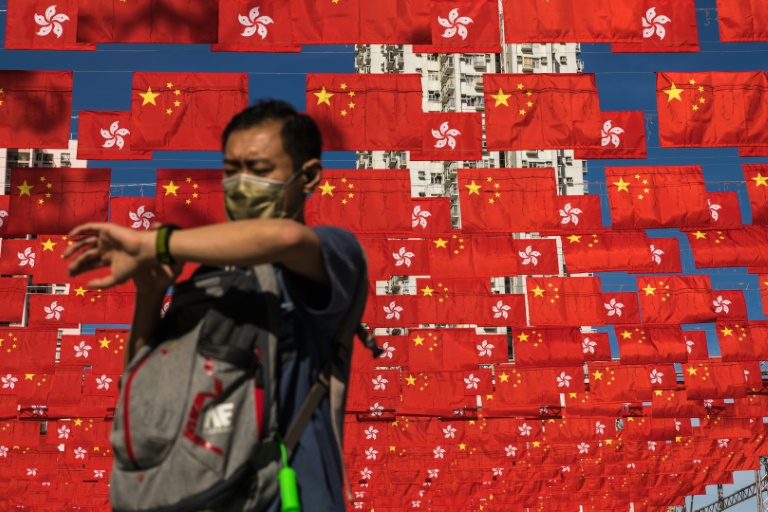
Authorities have also sought to portray an image of public support for the celebrations, including with mass displays of Hong Kong and China flags draped across dozens of public housing estates.

At one estate, a 26-year-old resident surnamed Chan complained at small flags that had been placed outside every floor at a stairwell. “It is unnecessary and too much,” he told AFP.

Tony, a worker at the estate, said the display would be better if it was done by residents voluntarily.

“Are we really embracing this ideology so much?” he told AFP.

“People may be repelled… if it is overdone.”
Japan's Kirin offloads Myanmar beer business over coup

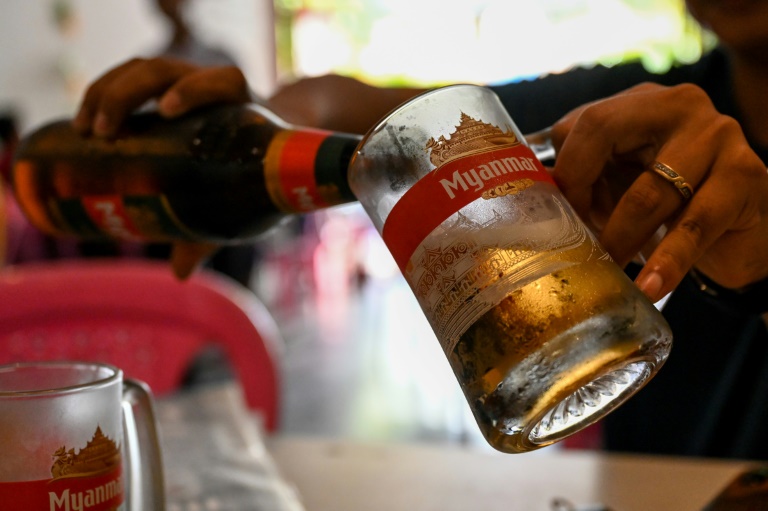
Japanese drinks giant Kirin said Thursday it has agreed to a buyout of its shares in a Myanmar joint venture with a junta-linked conglomerate as it seeks to exit the market after the 2021 coup.

Days after the putsch in February last year, Kirin announced it would end its joint venture Myanmar Brewery with the junta-linked MEHPCL, saying it was “deeply concerned by the recent actions of the military in Myanmar”.

But it struggled to disentangle itself from the secretive conglomerate and contested a bid by MEHPCL to dissolve the joint venture as it feared liquidation proceedings would not be fair.

Kirin said Thursday it has agreed a share buyback worth about 22.4 billion yen ($164 million) to transfer its 51 percent stake back into the subsidiary, ending the joint venture.

The deal remains to be approved and a date for the share transfer has not yet been set.

“We are relieved to settle this matter within the announced deadline by the most appropriate means among several options,” Yoshinori Isozaki, Kirin’s president and CEO, said in a statement.

But activists said the decision to sell the shares in Myanmar Brewery and the smaller Mandalay Brewery back to the company effectively hands control and revenue to the junta.

Justice for Myanmar spokeswoman Yadanar Maung called the deal “a windfall for the Myanmar military”, warning it would “ensure a continued stream of revenue to finance atrocity crimes”.

“Kirin must reverse this deplorable decision or be held accountable for aiding and abetting the military’s ongoing international crimes,” she added.

According to figures published by Kirin in 2018, Myanmar Brewery — whose beverages include the ubiquitous Myanmar Beer brand — boasted a market share of nearly 80 percent.

Investors piled into Myanmar after the military relaxed its iron grip in 2011, paving the way for democratic reforms and economic liberalisation.

But a raft of foreign companies have exited the market since the military seized power from Aung San Suu Kyi’s government, including oil giants TotalEnergies and Chevron and Norwegian telecoms operator Telenor.

Kirin’s Myanmar business generated 32.6 billion yen ($240 million at today’s rates) in revenue in 2019-20, less than two percent of the firm’s annual sales.

The Japanese giant had been under pressure even before the coup over its ties to the military, and launched an investigation after rights groups called for transparency into whether money from its joint venture had funded rights abuses.

Israel parliament holds vote to dissolve, Lapid set to be PM

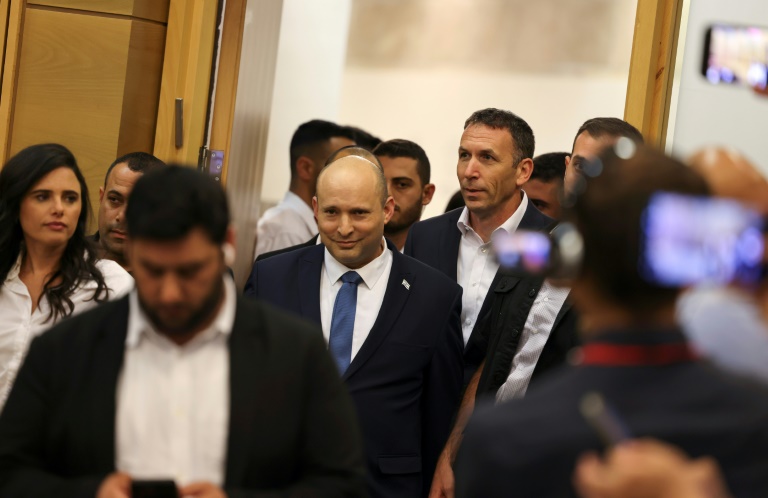
Israeli lawmakers were voting Thursday on a bill to dissolve parliament in a move that will trigger the country’s fifth election in less than four years and make Foreign Minister Yair Lapid the new prime minister.

Final voting on the dissolution bill had been expected before midnight Wednesday, but was delayed amid sparring between the outgoing eight-party coalition and the opposition led by former premier Benjamin Netanyahu.

The prime minister who led that coalition, Naftali Bennett, said late Wednesday that he will not stand in the upcoming elections, and will turn leadership of his religious nationalist Yamina party to his long-term political ally, Interior Minister Ayelet Shaked.

“I do not intend to run in the upcoming elections, but I will remain a loyal soldier of this country,” Bennett said.

A definitive vote on the dissolution bill was expected within hours, with Lapid taking over as prime minister and sending Israelis back to the polls, as the nation remains mired in the worst political crisis in its 74-year history.

Lawmakers had settled on an election date of November 1.

– ‘Dark forces’ –

Netanyahu has promised that his own alliance of right-wingers, ultra-nationalists and ultra-Orthodox Jewish parties will win the upcoming vote, but polls show he may also struggle to rally a parliamentary majority.

Netanyahu’s main challenger will likely be long-time foe Lapid, a former celebrity news anchor who has surprised many since being dismissed as a lightweight when he entered politics a decade ago.

Bennett’s motley alliance formed with Lapid in June 2021 offered a reprieve from an unprecedented era of political gridlock, ending Netanyahu’s record 12 consecutive years in power and passing Israel’s first state budget since 2018.

As pair announced plans to end their coalition last week, Lapid sought to cast Netanyahu’s potential return to office as a national threat.

“What we need to do today is go back to the concept of Israeli unity. Not to let dark forces tear us apart from within,” Lapid said.

Bennett led a coalition of right-wingers, centrists, doves and Islamists from the Raam faction, which made history by becoming the first Arab party to support an Israeli government since the Jewish state’s creation.

But the alliance, united by its desire to oust Netanyahu and break a damaging cycle of inconclusive elections, was imperilled from the outset by its ideological divides.

– Farewell address –

Bennett said the final straw was a failure to renew a measure that ensures the roughly 475,000 Jewish settlers in the occupied West Bank live under Israeli law.

Some Arab lawmakers in the coalition refused to back a bill they said marked a de facto endorsement of a 55-year occupation that has forced West Bank Palestinians to live under Israeli rule.

For Bennett, a staunch supporter of settlements, allowing the so-called West Bank law to expire was intolerable. Dissolving parliament before its June 30 expiration temporarily renews the measure.

In the weeks before his coalition unravelled, Bennett sought to highlight its successes, including what he characterised as proof that ideological rivals can govern together.

“No one should give up their positions, but it is certainly possible and necessary to put aside, for a while, ideological debates and take care of the economy, security and future of the citizens of Israel,” he said in his farewell address Wednesday, which did not rule out a eventual return to politics.

Bennett will stay on as alternate prime minister responsible for Iran policy, as world powers take steps to revive stalled talks on Tehran’s nuclear programme.

Israel opposes a restoration of the 2015 agreement that gave Iran sanctions relief in exchange for limits on its nuclear programme.

Lapid will retain his foreign minister title while serving as Israel’s 14th premier. He will find himself under an early microscope, with US President Joe Biden due in Jerusalem in two weeks.

Sudan gears up for mass protest against generals

Activists in Sudan have called for mass rallies Thursday to demand the reversal of an October military coup that prompted foreign governments to slash aid, deepening a chronic economic crisis.

The protests come on the anniversary of a previous coup in 1989, which toppled the country’s last elected civilian government and ushered in three decades of iron-fisted rule by Islamist-backed general Omar al-Bashir.

They also come on the anniversary of 2019 protests demanding that the generals, who had ousted Bashir in a palace coup earlier that year, cede power to civilians.

Those protests led to the formation of the mixed civilian-military transitional government which was toppled in last year’s coup.

Security was tight in the capital Khartoum on Thursday despite the recent lifting of a state of emergency imposed after the coup.

An AFP correspondent said internet and phone lines had been disrupted since the early hours, a measure the Sudanese authorities often impose to prevent mass gatherings.

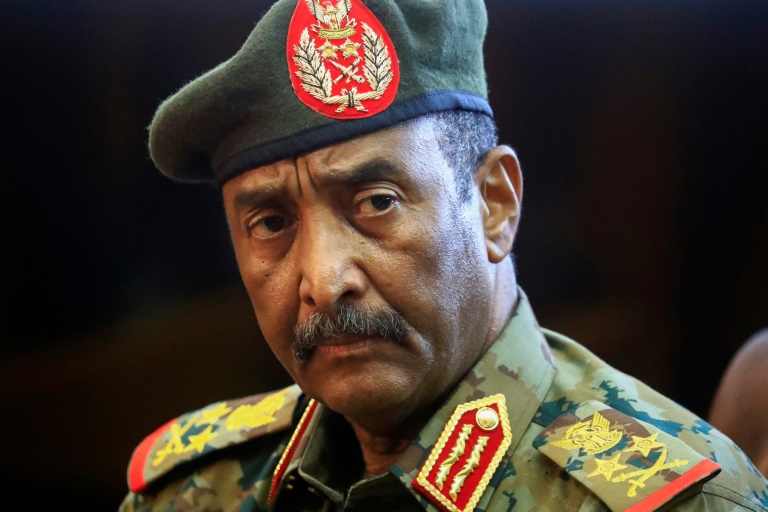
Sudan has been roiled by near-weekly protests as the country’s economic woes have deepened since army chief Abdel Fattah al-Burhan seized power last year.

More than 100 people have been killed in protest-related violence, according to UN figures, as the military ahs cracked down on the anti-coup movement.

“June 30 is our way to bring down the coup and block the path of any fake alternatives,” said the Forces for Freedom and Change, an alliance of civilian groups whose leaders were ousted in the coup.

Activists have called for “million-strong” rallies to mark the “earthquake of June 30”.

Small-scale demonstrations took place in the run-up to call for a huge turnout on Thursday.

UN special representative Volker Perthes called on the security forces to exercise restraint.

“Violence against protesters will not tolerated,” he said in a statement, adding that nobody should “give any opportunity to spoilers who want to escalate tensions in Sudan”.

The foreign ministry criticised the UN envoy’s comments, saying they were built on “assumptions” and “contradict his role as facilitator” in troubled talks on ending the political crisis.

Alongside the African Union and east African bloc IGAD, the United Nations has been attempting to broker talks between the generals and civilians, but they have been boycotted by all the main civilian factions.

The UN has warned that the deepening economic and political crisis threatens to push one third of the country’s population of more than 40 million towards life-threatening food shortages.

Philippine President Marcos Jr praises rule of dictator father

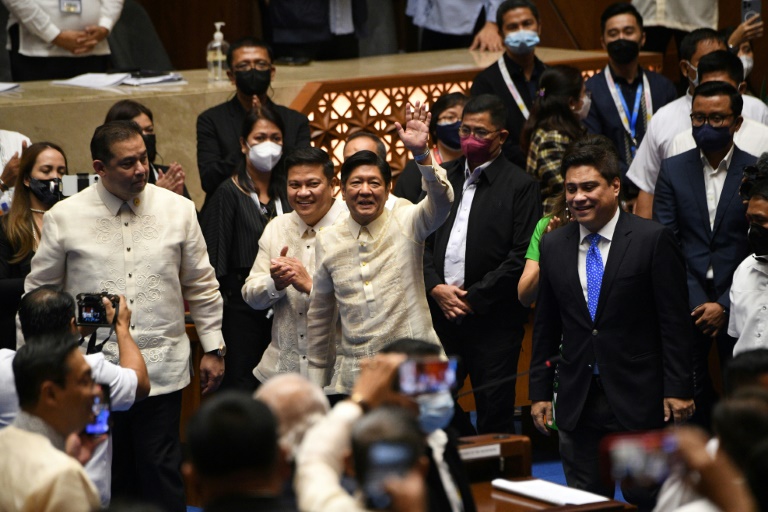
Philippine President Ferdinand Marcos Jr on Thursday praised his dictator father’s rule after being sworn in as the country’s new leader, completing a decades-long effort to restore the clan to the country’s highest office.

Ferdinand “Bongbong” Marcos Jr, 64, won last month’s elections by a landslide, securing the biggest victory since his father and namesake was ousted by a popular revolt in 1986.

He succeeds the hugely popular Rodrigo Duterte, who gained international infamy for his deadly drug war and has threatened to kill suspected dealers after he leaves office. 

In the last act of reviving the family brand, Marcos Jr took the oath in a public ceremony at the National Museum in Manila in front of hundreds of diplomats, dignitaries and supporters.

With his 92-year-old mother Imelda sitting metres away, Marcos Jr praised the late patriarch’s regime, which critics describe as a dark period of human rights abuses and corruption that left the country impoverished.  

“I once knew a man who saw what little had been achieved since independence… but he got it done,” Marcos Jr said after being sworn into office, claiming his father built more roads and produced more rice than his predecessors.

“So will it be with his son. You will get no excuses from me.”

Ahead of the swearing-in, Duterte received Marcos Jr at the riverside Malacanang presidential palace — which the Marcos family fled into exile 36 years ago. 

Duterte, 77, wore a mask and a traditional formal shirt, characteristically unbuttoned at the top and with sleeves rolled up, for the meeting with Marcos Jr, who he once described as “weak”.

The ceremony comes days after the Supreme Court dismissed final attempts to have Marcos Jr disqualified from the election and prevent him taking office.

As rising prices squeeze an economy already ravaged by Covid-19, Marcos Jr has made tackling inflation, boosting growth and ramping up food production his priorities.

He has taken the rare step of appointing himself agriculture secretary to lead the overhaul of the problem-plagued sector.

Marcos Jr has also pledged to defend the Philippines’ rights to the disputed South China Sea, which Beijing claims almost entirely.

He promised Thursday that “we will go very far under my watch” — but has offered scant detail on how he will achieve his goals and few hints about his leadership style after largely shunning media interviews.

– ‘Friends to all, enemy to none’ –

Marcos Jr, who appears to be more polite and businesslike than Duterte, was swept to power with the help of a massive social media misinformation campaign.

Pro-Marcos groups bombarded Filipinos with fake or misleading posts portraying the family in a positive light while ignoring the brutality and theft of billions of dollars from state coffers during the patriarch’s 20-year rule.

Crucial to Marcos Jr’s success was an alliance with Duterte’s daughter Sara, who secured the vice-presidential post with more votes than him, and the backing of rival dynasties.

Many expect Marcos Jr will be less violent and more predictable than the elder Duterte, but activists and clergy fear he could use his victory to entrench himself in power.

“Marcos Jr’s refusal to recognise the abuses and wrongdoings of the past, in fact lauding the dictatorship as ‘golden years’, makes him very likely to continue its dark legacy during his term,” leftist alliance Bayan warned.

Marcos Jr, who previously distanced himself from his father’s rule but not criticised it, last month pledged to “always strive to perfection”.

He has filled most cabinet positions. But the most influential adviser during his six-year term will likely be his wife, Louise, who is widely believed to have run his campaign.

Sergio Ortiz-Luis, president of the Employers Confederation of the Philippines, said the country had a “big chance that we can be moving forward and ahead of the pack” under Marcos Jr.

“We are very optimistic on the quality of the leadership that we have now,” Ortiz-Luis told AFP.

Unlike Duterte, who pivoted away from the United States towards China, Marcos Jr has indicated he will pursue a more balanced relationship with the two superpowers.

Marcos Jr said last month he would adopt a “friends to all, enemy to none” foreign policy. 

But unlike Duterte, he insisted he would uphold an international ruling dismissing Beijing’s claims over the resource-rich South China Sea.

While he has backed Duterte’s drug war, which has killed thousands of mostly poor men, he is not likely to enforce it as aggressively.

“I think the Philippine political elite are ready to move on from a violence-led drug war,” said Greg Wyatt of PSA Philippines Consultancy.

“The drug war attracted enough negative attention.”

Thousands gather at all-male meeting to rubber-stamp Taliban rule

Thousands of Afghan religious scholars and tribal elders gathered in the capital Thursday for a men-only meeting the Taliban hope will rubber-stamp their hardline Islamic rule.

Officials have provided scant details of the “jirga” — a traditional gathering of influential people that settles differences by consensus — and the media is also barred from attending.

It comes a week after a powerful earthquake struck the east of the country killing over 1,000 people and leaving tens of thousands homeless.

Even before the quake, the Taliban were struggling to administer a country that had long been in the grip of economic malaise, utterly dependent on foreign aid that dried up with the overthrow of the Western-backed government in August.

Officials from the United States were due to meet senior Taliban leaders in Qatar later Thursday for talks on unlocking some of Afghanistan’s reserves, with Washington seeking ways to ensure the money goes to help the population rather than the Islamist group.

A Taliban source told AFP this week that criticism of the regime would be allowed at the three-day jirga, and thorny issues such as the education of girls — which has divided opinion in the movement — would be discussed.

But women would not be allowed to attend, with deputy Prime Minister Abdul Salam Hanafi telling state broadcaster RTA on Wednesday there was no need because they would be represented by male relatives.

“The women are our mothers and sisters… we respect them a lot,” he said.

“When their sons are in the gathering it means they are also involved.”

– Girls barred from school –

Since the Taliban’s return, secondary school girls have been barred from education while women were dismissed from government jobs, forbidden from travelling alone and ordered to dress in clothing that covers everything but their faces.

They have also outlawed playing non-religious music, banned the portrayal of human figures in advertising, ordered TV channels to stop showing movies and soap operas featuring uncovered women, and told men they should dress in traditional outfits and grow their beards. 

A letter from the prime minister’s office seen by AFP said each of Afghanistan’s more than 400 districts should provide three delegates to the meeting.

Cities, religious groups and other organisations would also be sending representatives, bringing the gathering to over 3,000 — the biggest leadership collective since the Taliban returned to power.

Afghan media is abuzz with speculation that Taliban supreme leader Hibatullah Akhundzada — who has not been filmed or photographed in public since the group returned to power — may attend the gathering.

Only a handful of unverified audio recordings of his speeches have been released since August from Kandahar, the Taliban’s birthplace and spiritual heart.

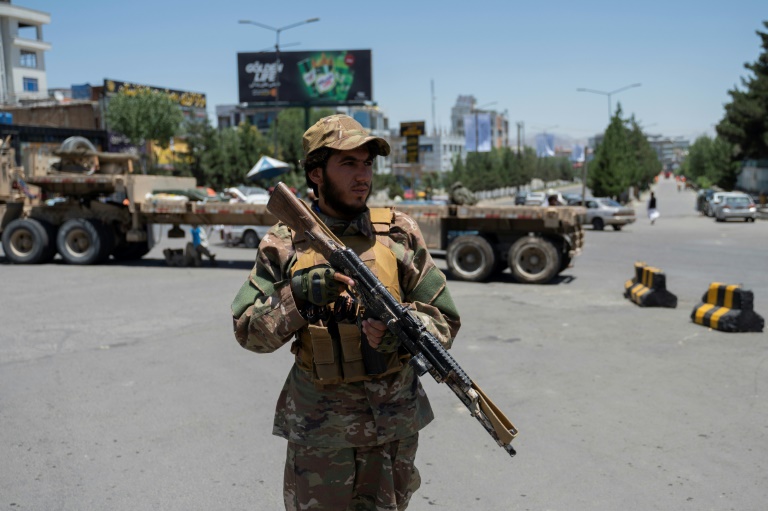
The Taliban have thrown a dense security blanket over the capital, with roads leading to the jirga venue blocked, or bristling with checkpoints.

Philippine President Marcos Jr praises rule of dictator father

Philippine President Ferdinand Marcos Jr on Thursday praised his dictator father’s rule after being sworn in as the country’s new leader, completing a decades-long effort to restore the clan to the country’s highest office.

Ferdinand “Bongbong” Marcos Jr, 64, won last month’s elections by a landslide, securing the biggest victory since his father and namesake was ousted by a popular revolt in 1986.

He succeeds the hugely popular Rodrigo Duterte, who gained international infamy for his deadly drug war and has threatened to kill suspected dealers after he leaves office. 

Marcos Jr took the oath at midday (0400 GMT) in a public ceremony at the National Museum in Manila in front of hundreds of local and foreign dignitaries, and journalists and supporters.

With his 92-year-old mother Imelda sitting metres away, Marcos Jr praised the late patriarch’s regime, which critics describe as a dark period of human rights abuses and corruption.  

“I once knew a man who saw what little had been achieved since independence… He got it done,” Marcos Jr said after being sworn into office, claiming his father built more roads and produced more rice than all of his predecessors combined.

“So will it be with his son. You will get no excuses from me.”

Ahead of the swearing-in, Duterte received Marcos Jr at the Malacanang presidential palace — which the Marcos family fled into exile 36 years ago. 

Duterte, 77, wore a mask and his traditional formal shirt, characteristically unbuttoned at the top and with sleeves rolled up, for the meeting with Marcos Jr, who he once described as “weak”.

The ceremony comes days after the Supreme Court dismissed final attempts to have Marcos Jr disqualified from the election and prevent him taking office.

As rising prices squeeze an economy already ravaged by Covid-19, Marcos Jr has made tackling inflation, boosting growth and ramping up food production his priorities.

He has taken the rare step of appointing himself agriculture secretary to lead the overhaul of the problem-plagued sector.

Marcos Jr has also pledged to defend the Philippines’ rights to the disputed South China Sea, which Beijing claims almost entirely.

But he has offered scant detail on how he will achieve his goals and few hints about his leadership style after largely shunning media interviews.

Pro-Duterte commentator Rigoberto Tiglao wrote recently that he was optimistic for an “economic boom” under Marcos Jr.

Tiglao pointed to the “accomplished academicians” on Marcos Jr’s economic team and the support of “powerful magnates” who will be able to provide him with advice and financial support.

– ‘Friends to all, enemy to none’ –

Marcos Jr, who appears to be more polite and businesslike than Duterte, was swept to power with the help of a massive social media misinformation campaign.

Pro-Marcos groups bombarded Filipinos with fake or misleading posts portraying the family in a positive light while ignoring the brutality and graft of the patriarch’s 20-year rule.

Crucial to Marcos Jr’s success was an alliance with Duterte’s daughter Sara, who secured the vice-presidential post with more votes than him, and the backing of rival dynasties.

Many expect Marcos Jr will be less violent and more predictable than the elder Duterte, but activists and clergy fear he could use his victory to entrench himself in power.

“Marcos Jr’s refusal to recognise the abuses and wrongdoings of the past, in fact lauding the dictatorship as ‘golden years’, makes him very likely to continue its dark legacy during his term,” leftist alliance Bayan warned.

Marcos Jr, who has distanced himself from his father’s rule but not criticised it, last month pledged to “always strive to perfection”.

He has filled most cabinet positions. But the most influential adviser during his six-year term will likely be his wife, Louise, who claims to have no interest in joining his government but is widely believed to have run his campaign.

Sergio Ortiz-Luis, president of the Employers Confederation of the Philippines, said the country had a “big chance that we can be moving forward and ahead of the pack” under Marcos Jr.

“We are very optimistic on the quality of the leadership that we have now,” Ortiz-Luis told AFP.

Unlike Duterte, who pivoted away from the United States towards China, Marcos Jr has indicated he will pursue a more balanced relationship with the two superpowers.

Marcos Jr said last month he would adopt a “friends to all, enemy to none” foreign policy. 

But unlike Duterte, he insisted he would uphold an international ruling against Beijing over the resource-rich South China Sea.

While he has backed Duterte’s drug war, which has killed thousands of mostly poor men, he is not likely to enforce it as aggressively.

“I think the Philippine political elite are ready to move on from a violence-led drug war,” said Greg Wyatt of PSA Philippines Consultancy.

“The drug war attracted enough negative attention.”

Samsung begins production of advanced 3nm chips

Samsung Electronics became the first chipmaker in the world to mass produce advanced 3-nanometre microchips, the company said Thursday, as it seeks to catch up with Taiwan’s TSMC.

The new chips will be smaller, more powerful and efficient, and will be used in high-performance computing applications before being put into gadgets such as mobile phones.

“Compared to 5nm process, the first-generation 3nm process can reduce power consumption by up to 45%, improve performance by 23% and reduce area by 16%,” Samsung said in a statement.

The South Korean conglomerate last month announced a five-year plan to invest 450 trillion won (US$356 billion), saying it would “bring forward the mass production of chips based on the 3-nanometer process”.

The vast majority of the world’s most advanced microchips are made by just two companies — Samsung and Taiwan’s TSMC — both of which are running at full capacity to alleviate a global shortage.

Samsung is the market leader in memory chips but it has been scrambling to catch up with TSMC in the advanced foundry business.

TSMC dominates more than half of the global foundry market, with clients including Apple and Qualcomm, while Samsung trails with around 16 percent market share, according to TrendForce.

TSMC plans to begin volume production of 3-nanometre technology in the second half of this year, and entered the development stage of 2-nanometre technology last year, according to the company’s 2021 annual report.

Japan's Kirin offloads Myanmar beer business over coup

Japanese drinks giant Kirin said Thursday it has agreed to a buyout of its shares in a Myanmar joint venture with a junta-linked conglomerate, completing its exit from the market over the 2021 coup.

Days after the putsch in February 2021, Kirin announced it would end its joint venture Myanmar Brewery with the junta-linked MEHPCL, saying it was “deeply concerned by the recent actions of the military in Myanmar”.

But it struggled to disentangle itself from the secretive conglomerate and contested a bid by MEHPCL to dissolve the joint venture as it feared liquidation proceedings would not be fair.

Kirin said Thursday that a share buyback agreement worth about 22.4 billion yen ($164 million) had been reached to transfer its 51 percent stake back into the subsidiary, ending the joint venture.

“We are relieved to settle this matter within the announced deadline by the most appropriate means among several options,” Yoshinori Isozaki, Kirin’s president and CEO, said in a statement.

According to figures published by Kirin in 2018, Myanmar Brewery — whose beverages include the ubiquitous Myanmar Beer brand — boasted a market share of nearly 80 percent.

But Kirin had been under pressure even before the coup over its ties to the military, and launched an investigation after rights groups called for transparency into whether money from its joint venture had funded rights abuses.

Investors piled into Myanmar after the military relaxed its iron grip in 2011, paving the way for democratic reforms and economic liberalisation.

They poured money into telecoms, infrastructure, manufacturing and construction projects — before the coup upended the democratic interlude and damaged the economy.

But a raft of foreign companies have exited the market since the military seized power from Aung San Suu Kyi’s government, including oil giants TotalEnergies and Chevron and Norwegian telecoms operator Telenor.

Kirin’s Myanmar business generated 32.6 billion yen ($240 million at today’s rates) in revenue in 2019-20, less than two percent of the firm’s annual sales.

India's women water warriors transform parched lands

As the monsoon storms bear down on India, a dedicated group of women hope that after years of backbreaking labour, water shortages will no longer leave their village high and dry.

The world’s second-most populous country is struggling to meet the water needs of its 1.4 billion people — a problem worsening as climate change makes weather patterns more unpredictable. 

Few places have it tougher than Bundelkhand, a region south of the Taj Mahal, where scarce water supplies have pushed despairing farmers on the plains to give up their lands and take up precarious work in the cities. 

“Our elders say that this stream used to run full throughout the year, but now there is not a single drop,” said Babita Rajput while guiding AFP past a bone-dry fissure in the earth near her village.

“There is a water crisis in our area,” she added. “All our wells have dried up.”

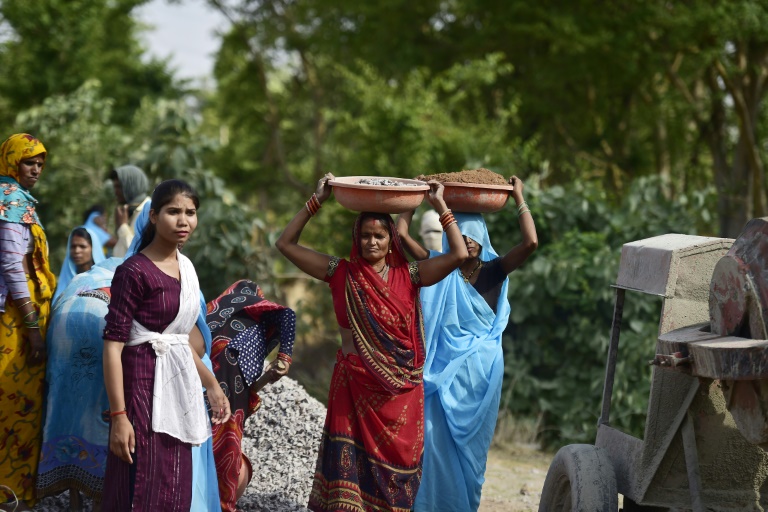
Three years ago, Rajput joined Jal Saheli (“Friends of Water”), a volunteer network of around 1,000 women working across Bundelkhand to rehabilitate and revive disappeared water sources. 

Together they carry rocks and mix concrete to build dams, ponds and embankments to catch the fruits of the June monsoon, a season which accounts for about 75 percent of India’s annual rainfall. 

Agrotha, where Rajput lives, is one of more than 300 villages where women are chalking out plans for new catchment sites, reservoirs and waterway revitalisations. 

Rajput said their work had helped them retain monsoon rainwater for longer and revive half a dozen water bodies around their village.

Though not yet self-sufficient, Agrotha’s residents are no longer among the roughly 600 million Indians that a government think-tank says face acute water shortages daily. 

The women’s efforts provide a rare glimmer of hope as national shortages worsen.

Water utilities in the capital New Delhi fail to meet demand in summer, with trucks regularly travelling into slums to supply residents unable to draw water from their taps.

India’s NITI Aayog public policy centre forecasts that around 40 percent of the country’s population could be without access to drinking water by the end of the decade.

– ‘Government has failed’ –

Erratic rainfall patterns and extreme heat have been linked to climate change in Bundelkhand, which has suffered several long dry spells since a drought was declared at the turn of the century.

Civil society activist Sanjay Singh helped train women in Agrotha to harvest and store rainwater after the surrounding land was desiccated by drought.

By doing so he helped the village rediscover knowledge that was lost decades earlier, when water went from being a community-managed resource to one administered by India’s government.  

“But government has failed to ensure water to every citizen, particularly in rural areas, pushing villagers to go back to the old practice,” he told AFP.

Before Agrotha’s irrigation project began, women had to walk miles every day in a desperate and often fruitless search for a well that was not dry.

In India’s villages, fetching water is traditionally the responsibility of women, several of whom have faced violence from their husbands after being unable to find enough for their households, Singh said.  

He added that drought had brought big social changes to the region, pushing men to move to cities and leave their families behind. 

But since it was founded in 2005, the Jal Saheli initiative has helped more than 110 villages become self-reliant for their water needs and aided in reversing the outward flow of people. 

– Dust bowl to oasis –

In the nearby Lalitpur district, the elderly Srikumar has seen the initiative transform her community from a dust bowl into an oasis.

She heard about the volunteer group a decade ago after suffering through years of water shortages, by the end of which every well and hand pump in her village of 500 people had run dry. 

Most of the farms in the area had turned barren because of a lack of irrigation, and dehydrated cattle herds were dying in summer temperatures close to 50 degrees Celsius (122 degrees Fahrenheit). 

“Villagers suffered a lot during those days,” Srikumar said. “Farming was impossible and men were fleeing their homes to cities to earn a living.”

With the help of Singh’s charity, Srikumar and a dozen other volunteers dug a football field-sized reservoir near the village that holds up to 10 feet (three metres) of water after the monsoon rains arrive.

The village now has enough water reserves to meet its needs year-round and replenish the earth that had dried out before their intervention.

“Things have changed for good. We have enough water now, not just for our homes but also for our cattle,” she told AFP. 

“Our lives would have been miserable without this pond,” she added. “It would have been very difficult to survive.”

Close Bitnami banner
Bitnami