World

Spain to 'fully' cooperate with migrant death probes

Madrid will offer “total collaboration” with the Spanish and Moroccan investigations into the deaths of 23 migrants during a mass attempt to enter Spain’s Melilla enclave, Pedro Sanchez said Wednesday. 

The Spanish premier’s remarks came a day after the United Nations denounced authorities on the border between Morocco and Spain for using “excessive force”, describing it as “unacceptable”. 

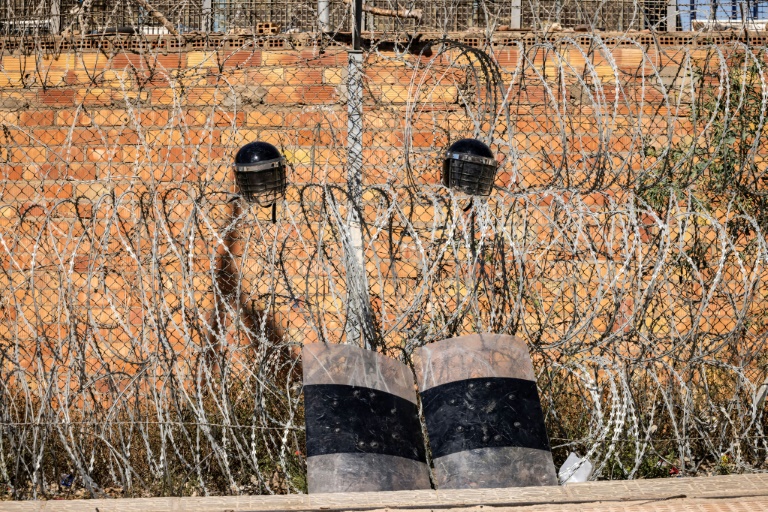
The tragedy happened at dawn on Friday, when around 2,000 migrants, mostly from sub-Saharan Africa, tried to break through the fence from Morocco into Melilla, one of Spain’s two tiny North African enclaves. 

“I regret the loss of human life and express my solidarity with the families of the migrants who died,” Sanchez told Cadena Ser radio, pledging his government would work with investigators to understand what happened. 

Sanchez stressed that three investigations had been opened, one by Moroccan prosecutors, one by Spain’s public prosecutor and a third by the Spanish rights ombudsman.

“We have to trust these institutions and I pledge the government’s total collaboration with their efforts to clarify what happened,” he said. 

Moroccan authorities said some of the victims had fallen while trying to scramble over the fence, giving an initial toll of 18 dead, but later raising it to 23 after another five migrants died of their injuries.

Few details about the incident were available, but Spanish media showed footage of people on the ground, some with bloodied hands and torn clothes.

The death toll was by far the worst recorded in years of attempts by migrants to cross into Spain’s Ceuta and Melilla enclaves, which have the EU’s only land borders with Africa, making them a magnet for those desperate to escape grinding poverty and hunger.

In Morocco, prosecutors are pressing charges against 65 migrants, mostly Sudanese, for trying to storm the border, a defence lawyer in Rabat said. 

Spain’s public prosecutor on Tuesday opened its own investigation “to clarify what happened”, citing the “seriousness and gravity” of the incident.

– ‘Excessive force’ –

Images of the violence provoked an unusually strong response from the United Nations, which hit out at the border authorities. 

“We saw the use of excessive force by the authorities, which needs to be investigated because it is unacceptable,” said UN Secretary-General Antonio Guterres’s spokesman Stephane Dujarric on Tuesday. 

“People who are on the move have human rights and those need to be respected and we’re seeing them all too often disrespected. We’ve seen it on both sides of the border,” he added. 

Sanchez had on Friday blamed “human trafficking mafias” for what he said was “a well-organised violent assault” and defended the actions of the border police, saying the incident was “well-handled by the security forces of both Spain and Morocco”. 

Asked about his initial defence of the security forces’ actions, Sanchez said that when he spoke, he was “not aware of the reports and images” of the victims. 

And on Wednesday he reiterated concern for the border security agents, giving a figure of 40 injured Spanish police and 100 on the Moroccan side. 

“I also ask that we put ourselves into the shoes of the injured police and security forces, in both Morocco and in Ceuta and Melilla, who have the right to an orderly flow of migrants and not be at the mercy of violent attacks,” he said.
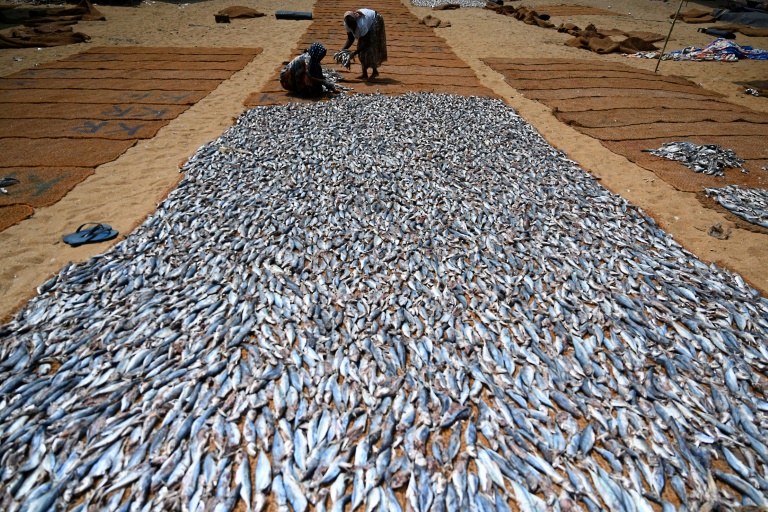
Aquaculture drives aquatic food yields to new high

The production of wild and farm-raised fish, shellfish and algae reached record levels in 2020, and future increases could be vital to fighting world hunger, the Food and Agriculture Organization said Wednesday.

Driven by sustained growth in aquaculture, global fisheries and aquatic farming together hauled in 214 million tonnes, the UN agency said in a report.

The total first-sale value of 2020 production topped $400 million, with $265 million coming from aquaculture, a sector poised for further expansion.

These trend lines are good news for a world facing price hikes and food shortages due to the war in Ukraine, disrupted supply chains, and inflation. 

“The growth of fisheries and aquaculture is vital in our efforts to end global hunger and malnutrition,” said FAO director Qu Dongyu. 

But overfished oceans, climate change and pollution — if left unaddressed — could threaten that potential, the UN agency warned.

“Aquaculture growth has often occurred at the expense of the environment,” Qu noted. 

Many shrimp farms in Vietnam, China and Cambodia, for example, have displaced mangrove forests that are nurseries for marine life and critical barriers against storm surges. 

Climate change poses additional challenges, experts say. 

“Warming waters will create environments where there’s more likelihood of bacterial disease,” said Josh Madeira, director of fisheries and aquaculture policy at the Monterey Bay Aquarium.

That means a sector already highly reliant on antibiotics will likely become even more so, he told AFP.

Production of aquatic animals in 2020 — totalling 178 million tonnes — was evenly divided between fisheries and aquaculture, according to the FAO report.

The remaining 36 million tonnes was algae production.

– Overfished stocks –

Yields of fish, shrimp and other shellfish destined for human consumption are more than 60 percent higher than during the 1990s, far outpacing population growth, according to the report, released during the UN Ocean Conference in Lisbon.

On average, people worldwide consume over 20 kilos (44 pounds) of aquatic foods per year today, more than double the amount 50 years ago.

Globally, 17 percent of the protein consumed by humans comes from aquatic sources. In many Asian and African countries, that figure rises to more than 50 percent.

Wild and farmed food from the seas and inland waters are also a critical source of essential omega-3 fatty acids and micronutrients, recent research has shown.

“Aquatic foods are increasingly recognised for their key role in food security and nutrition,” Qu said. 

Nearly 90 percent of aquatic animal production is for human consumption, with the rest destined for non-food uses such as fishmeal and fish oil.

Asian countries were the source of 70 percent of the world’s fisheries and aquaculture of aquatic animals in 2020.

China remaines by far the top fisheries producer, followed by Indonesia, Peru, Russia, the United States and Vietnam.

So-called capture fisheries of commercial species in the wild — including tuna, cod, salmon and especially anchoveta — dropped by four percent in 2020 compared to the average of the previous three years.

Part of the drop can be attributed to covid-related disruptions, but long-term decline is due to the pressures of overfishing, experts say. 

Catch levels peaked in the mid-1990s, and have — with fluctuations — stagnated since then.

“The FAO estimates that 34 percent of caught fish come from overfished stocks,” University of British Columbia economist and fisheries expert Rashid Sumaila told AFP.

“But they are very conservative,” he added. “Independent studies put that figure at 50 percent.”

Aggravating the problem is some $34 billion dollars annually in government subsidies. 

Earlier this month, the World Trade Organization (WTO) took preliminary steps to reduce these handouts to industry, but experts say the measures will have limited effect and take years to implement.

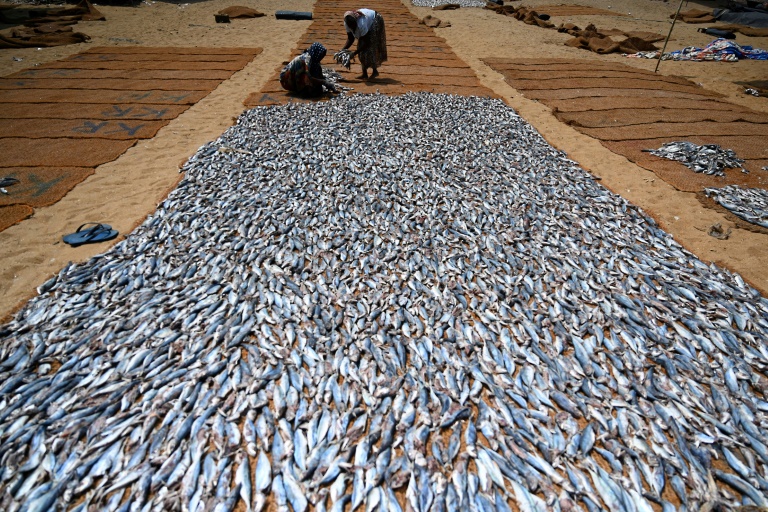
Aquaculture drives aquatic food yields to new high

The production of wild and farm-raised fish, shellfish and algae reached record levels in 2020, and future increases could be vital to fighting world hunger, the Food and Agriculture Organization said Wednesday.

Driven by sustained growth in aquaculture, global fisheries and aquatic farming together hauled in 214 million tonnes, the UN agency said in a report.

The total first-sale value of 2020 production topped $400 million, with $265 million coming from aquaculture, a sector poised for further expansion.

These trend lines are good news for a world facing price hikes and food shortages due to the war in Ukraine, disrupted supply chains, and inflation. 

“The growth of fisheries and aquaculture is vital in our efforts to end global hunger and malnutrition,” said FAO director Qu Dongyu. 

But overfished oceans, climate change and pollution — if left unaddressed — could threaten that potential, the UN agency warned.

“Aquaculture growth has often occurred at the expense of the environment,” Qu noted. 

Many shrimp farms in Vietnam, China and Cambodia, for example, have displaced mangrove forests that are nurseries for marine life and critical barriers against storm surges. 

Climate change poses additional challenges, experts say. 

“Warming waters will create environments where there’s more likelihood of bacterial disease,” said Josh Madeira, director of fisheries and aquaculture policy at the Monterey Bay Aquarium.

That means a sector already highly reliant on antibiotics will likely become even more so, he told AFP.

Production of aquatic animals in 2020 — totalling 178 million tonnes — was evenly divided between fisheries and aquaculture, according to the FAO report.

The remaining 36 million tonnes was algae production.

– Overfished stocks –

Yields of fish, shrimp and other shellfish destined for human consumption are more than 60 percent higher than during the 1990s, far outpacing population growth, according to the report, released during the UN Ocean Conference in Lisbon.

On average, people worldwide consume over 20 kilos (44 pounds) of aquatic foods per year today, more than double the amount 50 years ago.

Globally, 17 percent of the protein consumed by humans comes from aquatic sources. In many Asian and African countries, that figure rises to more than 50 percent.

Wild and farmed food from the seas and inland waters are also a critical source of essential omega-3 fatty acids and micronutrients, recent research has shown.

“Aquatic foods are increasingly recognised for their key role in food security and nutrition,” Qu said. 

Nearly 90 percent of aquatic animal production is for human consumption, with the rest destined for non-food uses such as fishmeal and fish oil.

Asian countries were the source of 70 percent of the world’s fisheries and aquaculture of aquatic animals in 2020.

China remaines by far the top fisheries producer, followed by Indonesia, Peru, Russia, the United States and Vietnam.

So-called capture fisheries of commercial species in the wild — including tuna, cod, salmon and especially anchoveta — dropped by four percent in 2020 compared to the average of the previous three years.

Part of the drop can be attributed to covid-related disruptions, but long-term decline is due to the pressures of overfishing, experts say. 

Catch levels peaked in the mid-1990s, and have — with fluctuations — stagnated since then.

“The FAO estimates that 34 percent of caught fish come from overfished stocks,” University of British Columbia economist and fisheries expert Rashid Sumaila told AFP.

“But they are very conservative,” he added. “Independent studies put that figure at 50 percent.”

Aggravating the problem is some $34 billion dollars annually in government subsidies. 

Earlier this month, the World Trade Organization (WTO) took preliminary steps to reduce these handouts to industry, but experts say the measures will have limited effect and take years to implement.

Israel heads towards snap election, Lapid poised to be PM

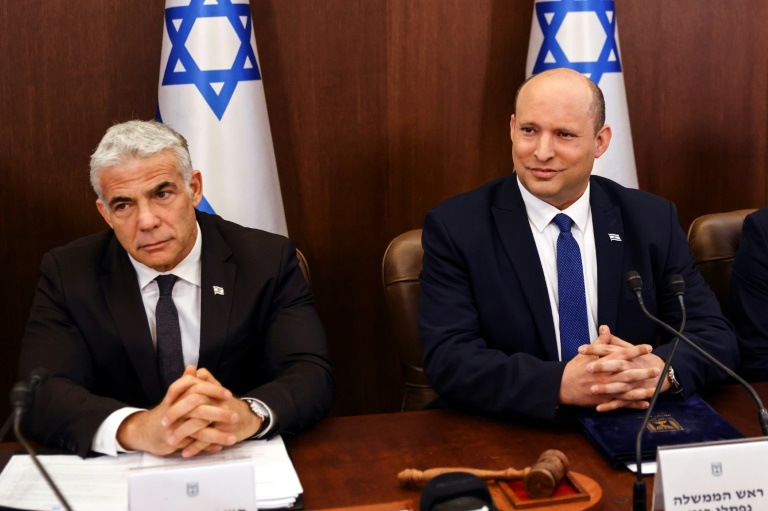
Israel’s parliament is expected to dissolve Wednesday, ending Prime Minister Naftali Bennett’s year-long tenure and triggering a fifth election in less than four years that could see ex-premier Benjamin Netanyahu reclaim power.

Barring an 11th-hour shock agreement to save the coalition or form a new government within the existing parliament, Bennett’s eight-party alliance is due to end by midnight, installing Foreign Minister Yair Lapid as prime minister.

The former television anchor is set to head a caretaker government, ahead of polls due in late October or early November.

Bennett’s motley alliance formed in 2021 offered a reprieve from an unprecedented era of political gridlock, ending Netanyahu’s record 12 consecutive years in power and passing Israel’s first state budget since 2018.

Netanyahu — a divisive hawk aligned with far-right nationalists and Israel’s ultra-Orthodox Jewish parties — has promised victory in new elections but may again struggle to rally a parliamentary majority, opinion polls show.

He is currently on trial over corruption charges, which he denies.

The anti-Netanyahu camp will likely be led by Lapid, a centrist who has surprised many since being dismissed as a lightweight when he entered politics a decade ago.

As he and Bennett announced last week that their coalition was no longer tenable, Lapid sought to cast Netanyahu’s potential return to office as a national threat.

“What we need to do today is go back to the concept of Israeli unity. Not to let dark forces tear us apart from within,” Lapid said.

While parliament’s collapse appeared a near certainty, last-minute surprises remained possible given Israel’s volatile political climate.

Factions across the political spectrum fear fresh polls will see them lose seats or end up out of parliament entirely by falling below the minimum support threshold, which is 3.25 percent of votes cast.

But options to avoid another election were vanishing, according to Israeli reports.

That means Lapid is expected to take office at midnight after parliament gives final approval to a dissolution bill, in accordance with the power-sharing deal he agreed with Bennett last June.

A parliamentary committee was meeting Wednesday to finalise the bill that must clear two more plenum votes before becoming law.

One reported holdup was a dispute over the election date.

Netanyahu and his allies are fighting for an October election when their supporters will be on a break from religious study centres, hoping that might boost turnout in what could be another extremely close contest, media said.

– ‘Fought like lions’ –

Bennett, a religious nationalist, has led a coalition of right-wingers, centrists, doves and Islamists from the Raam faction, which made history by becoming the first Arab party to support an Israeli government in the Jewish state’s 74-year history.

The alliance, united by its desire to oust Netanyahu and break a damaging cycle of inconclusive elections, was imperilled from the outset by its ideological divides.

But Bennett said the final straw was a failure to renew a measure that ensures the roughly 475,000 Jewish settlers in the occupied West Bank live under Israeli law.

Some Arab lawmakers in the coalition refused to back a bill they said marked a de facto endorsement of a 55-year occupation that has forced West Bank Palestinians to live under Israeli rule.

For Bennett, a staunch supporter of settlements, allowing the so-called West Bank law to expire was intolerable. Dissolving parliament before its June 30 expiration temporarily renews the measure.

“We fought like lions, down to the very last moment, until it simply became impossible,” Bennett said days after announcing his coalition’s demise.

Bennett is expected to stay on as alternate prime minister and be responsible for Iran policy, as world powers take steps to revive stalled talks on Tehran’s nuclear programme.

Israel opposes a restoration of the 2015 agreement that gave Iran sanctions relief in exchange for limits on its nuclear programme.

Lapid will retain his foreign minister title while serving as Israel’s 14th premier. He will find himself under an early microscope, with US President Joe Biden due in Jerusalem in two weeks.

Lockdown in Indian city after gruesome sectarian killing

Hundreds of police were deployed in an Indian city on Wednesday after the murder of a Hindu tailor allegedly by two Muslims in revenge for inflammatory comments about Islam by a ruling party member.

The attack — in which the men seemingly tried to behead their victim — in the western city of Udaipur was captured on video that went viral and has gripped a country with a long history of communal violence. 

The video showed Kanhaiya Lal being attacked in his shop, with further footage showing the two accused purportedly brandishing large knives and threatening to kill Prime Minister Narendra Modi. 

They then justified their murder as a response to  Lal’s alleged support of comments about the Prophet Mohammed by a spokeswoman for Modi’s Hindu nationalist BJP party — remarks that have triggered protests across parts of the Islamic world in recent weeks.

Hundreds gathered outside Lal’s house ahead of his funeral on Wednesday, a day after several hundred protested and chanted Hindu slogans in response to the killing.

People on motorcycles and cars waved saffron flags — the colour of the Hindu faith — and shouted slogans demanding the death penalty for the accused.

“Hang them, hang them. My husband has gone,” the man’s distraught widow told reporters.

“If the law doesn’t want to do anything, give them to us so that we can kill them,” said another relative.

The two young men were arrested on Tuesday as they attempted to flee Udaipur by motorbike, news reports said.

The central National Investigation Agency (NIA) said that the men circulated the video “in order to trigger panic and strike terror among the masses across the country.”

To prevent potential sectarian violence, authorities deployed 600 extra police and put the city of around 450,000 people under curfew, cutting mobile internet access there and in other parts of Rajasthan state.

Rajasthan chief minister Ashok Gehlot appealed to people not to share the video as it would “serve the attackers’ motive of creating discord in society”.

“The involvement of any organisation and international links will be thoroughly investigated,” Indian Home Minister Amit Shah tweeted.

On social media, members of the ruling BJP party and supporters depicted the killing as an attack on all Hindus, with thousands of tweets carrying hashtags like #IslamicTerrorismInIndia.

Indian Muslim organisations condemned the killing, but Surendra Kumar Jain from the far-right Hindu group Vishwa Hindu Parishad said that many Muslim leaders have “insulted Hindu beliefs.”

“You should be afraid of the day when Hindus too start giving reply to the insult in the same coin,” Jain said in a video message.

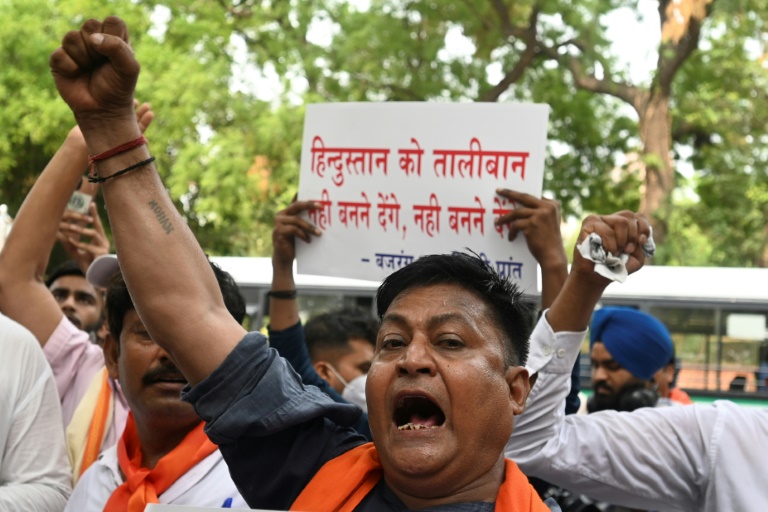
A demonstration in New Delhi called by a far-right Hindu group drew around 100 people shouting slogans.

– Diplomatic storm –

The remarks about the Prophet Mohammed by BJP spokeswoman Nupur Sharma at a TV debate in late May sparked protests that turned violent in some parts of India and demonstrations across the Islamic world.

She was sacked by the party after her comments, which prompted the governments of nearly 20 countries to summon their Indian envoys to express their displeasure.

Lal’s wife told broadcaster NDTV that on June 10 her husband was arrested over a social media post supporting Sharma and released on bail a day later. 

Five days later the father of two said he had received death threats but on Tuesday returned to work in his shop, she said.

The purported video of the killing — which police have not yet confirmed is genuine — showed Lal measuring one of the men for new clothes before he and his accomplice attacked him. 

– Sporadic violence –

India has seen sporadic sectarian violence between majority Hindus and Muslims, who make up around 14 percent of the 1.4-billion-strong population.

Religious riots in the capital New Delhi left 53 people dead in 2020, while in 2013 another 62 were killed in the nearby city of Muzaffarnagar.

In 2002 at least 1,000 were killed in violence in Gujarat — at the time led by then state premier Modi. Most of the victims were Muslims. 

Rajasthan also saw riots earlier this year, when almost 100 people were arrested after police fired tear gas to stop fighting and stone-pelting.

Modi’s party has been accused of marginalising the Muslim community and sowing divisions with Hindus since coming to power in 2014.

The row over Sharma’s comments followed anger across the Muslim world in 2020 after France’s president defended the right of a satirical magazine to publish caricatures of the prophet.

World equities slide on recession fear

Global stock markets nursed steep losses Wednesday on resurgent fear that sharp interest rate hikes, aimed at tackling runaway inflation, could spark recession, dealers said.

Asia and Europe slumped after a gloomy US consumer confidence report had sent Wall Street tumbling on Tuesday.

European sentiment was rocked also by data showing Spanish inflation rocketed to a 37-year peak of 10.2 percent in June on rising energy and food prices. 

The news sent the Madrid stock market down 1.8 percent, mirroring losses in Frankfurt and Hong Kong.

“So much for the big stock market comeback. Another day, another sea of red on the market,” said AJ Bell investment director Russ Mould.

The selloff followed more than a week of global gains caused by hopes that any signs of contraction could give central banks room to ease up on their pace of monetary tightening.

But New York stocks tanked Tuesday on data showing confidence among US consumers — a key driver of the world’s top economy — had fallen to its lowest level in more than a year.

The data re-ignited stubborn worries over the strength of the world economy, and eclipsed news of a surprise move by China to slash the quarantine period for incoming travellers.

That had raised hopes for further relaxations that can allow the country’s giant economy to recover more quickly.

– ‘Down the drain’ –

“With signs that consumer confidence is seeping away, worries that global growth will go down the drain have returned to rattle financial markets,” said Susannah Streeter, senior investment and markets analyst at Hargreaves Lansdown.

“Covid restrictions may have eased for international travellers to China as infections rates slow, but one global problem is being replaced by another — fear that recessions are looming around the world.”

Fed officials on Tuesday tried to play down the chances of a recession, expressing hope of a soft landing.

Oil prices advanced on expectations of demand growth as China lifts Covid restrictions and owing to tight supplies following bans on Russian imports.

Observers warned that G7 plans for a price cap on Russian crude was unlikely to have a massive impact on benchmark values.

– Key figures at around 1100 GMT –

London – FTSE 100: DOWN 0.5 percent at 7,288.04 points

Frankfurt – DAX: DOWN 1.9 percent at 12,985.01

Paris – CAC 40: DOWN 1.2 percent at 6,012.53

EURO STOXX 50: DOWN 1.3 percent at 3,504.94

Tokyo – Nikkei 225: DOWN 0.9 percent at 26,804.60 (close)

Hong Kong – Hang Seng Index: DOWN 1.9 percent at 21,996.89 (close)

Shanghai – Composite: DOWN 1.4 percent at 3,361.52 (close)

New York – Dow: DOWN 1.6 percent at 30,946.99 (close)

Brent North Sea crude: UP 0.6 percent at $118.65 per barrel

West Texas Intermediate: UP 0.7 percent at $112.55 per barrel

Euro/dollar: UP at $1.0525 from $1.0519 Tuesday

Pound/dollar: DOWN at $1.2159 from $1.2184

Euro/pound: UP at 86.57 pence from 86.33 pence

Dollar/yen: UP at 136.48 yen from 136.14 yen

US boosts Europe forces as expanding NATO squares up to Russia

The United States will reinforce Europe’s defences with a wave of new military deployments, President Joe Biden announced Wednesday, as more Russian missiles smashed into Ukrainian cities.

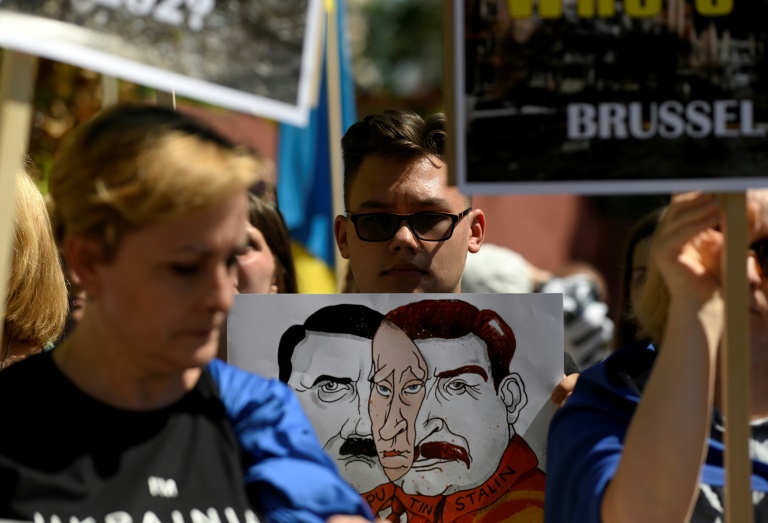
News of the US plan came as NATO leaders met to welcome Sweden and Finland as candidates to join the alliance, a double blow to Russia’s President Vladimir Putin and his bid to redraw Europe’s security map.

Biden boasted that the US announcement was exactly what Putin “didn’t want” and Moscow reacted with predictable fury, denouncing Sweden and Finland’s entry plan as “destabilising” and accusing an “aggressive” NATO of seeking to contain Russia.

As Western leaders met in Madrid, in Ukraine officials complained that Russian missiles had hit civilian housing and businesses in and around the cities of Dnipro, Mykolaiv and Kharkiv, leaving at least seven dead and 14 wounded.

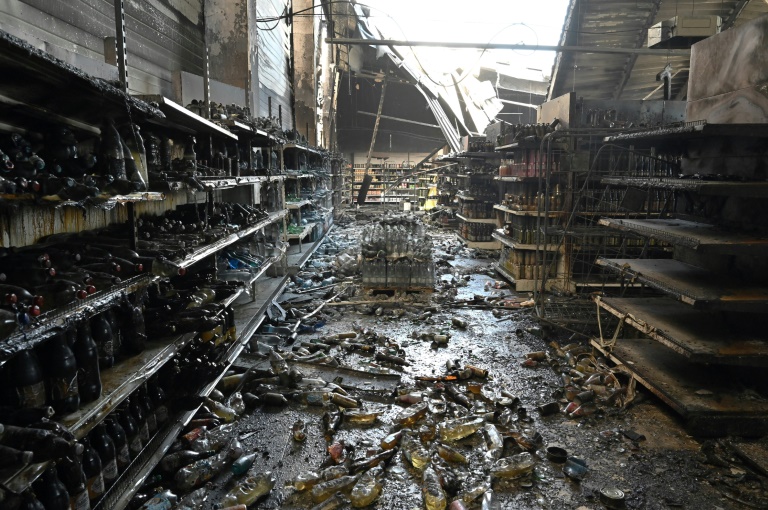
In Kremenchuk, the town where a Russian missile on Monday destroyed a shopping centre and — according to local officials — killed at least 18 civilians, clearing operations continued.

A giant crane was working near the near the site of the impact and in the rubble-strewn parking area shopping trolleys piled with clothes and household goods lay abandoned.

Western leaders have dubbed the Kremenchuk strike a war crime, and Ukraine’s President Volodymyr Zelensky has demanded that UN investigators visit. Russia said it targeted a Ukrainian depot storing Western arms. 

– ‘What needs to be done’ –

The Russian defence ministry said it had inflicted severe casualties on Ukrainian troops defending the town of Lysychansk, in the eastern Donbas region, and said the Kharkiv attack had hit Ukrainian command centres and a training base for foreign “mercenaries”.

Moscow’s February 24 invasion of pro-Western Ukraine triggered massive economic sanctions and a wave of support for Zelensky’s government, including deliveries of advanced weapons. 

At this week’s summit, two formerly neutral European countries — Sweden and Russia’s north-western neighbour Finland — will be accepted as candidates to join NATO and Washington has announced that it will shift the headquarters of its 5th Army Corps to Poland.

An army brigade will rotate in and out of Romania, two squadrons of F-35 fighters will deploy to Britain, US air defence systems will be sent to Germany and Italy and the fleet of US Navy destroyers in Spain will grow from four to six.

“That’s exactly what he didn’t want but exactly what needs to be done to guarantee security for Europe,” Biden said, of Putin’s efforts to roll back Western influence and re-establish influence or control over territories of the former Russian empire.

NATO Secretary General Jens Stoltenberg said NATO’s expansion was “the opposite” of what Putin hoped for, and said that the leaders meeting at the summit would “state clearly that Russia poses a direct threat to our security”.

Moscow rose to the bait.

– Weapons shipments –

“The summit in Madrid confirms and consolidates this bloc’s policy of aggressive containment of Russia,” Deputy Foreign Minister Sergei Ryabkov said, Russian news agencies reported. 

“We consider the expansion of the North Atlantic alliance to be a purely destabilising factor in international affairs.”

The Swedish and Finnish leaders are to be welcomed as candidates for full membership in the alliance, after Turkey’s President Recep Tayyip Erdogan agreed to lift his threat of a veto — the NATO ally accuses Stockholm and Helsinki of harbouring wanted Kurdish militants.

Turkey announced Wednesday that it would request the extradition of 33 alleged “terrorists” under the terms of the agreement signed Tuesday with Sweden and Finland to allow them to make membership bids.

On Tuesday, Zelensky addressed the NATO summit via video link, asking for modern artillery and financial support.

“We need much more modern systems, modern artillery,” he said, calling financial support “no less important than aid with weapons”.

NATO countries, which have already committed billions of dollars in military assistance to Kyiv, will agree a large military and economic support package to help them fend off the Russian invasion.

A sanctions task force of leading Ukraine allies has frozen more than $330 billion in financial resources owned by Russia’s elite and its central bank since Moscow’s invasion, it announced Wednesday. 

– Missile artillery –

The Russian Elites, Proxies, and Oligarchs Task Force (REPO) said the allies had blocked $30 billion in assets belonging to Russian oligarchs and officials, and immobilised $300 billion owned by the Russian central bank.

Norway said it would donate three multiple-launch rocket systems to Ukraine, following similar decisions made by Britain, Germany and the United States.

Kyiv wants the long-range missile artillery to counter Russia’s superiority in shorter range canons on Ukraine’s eastern battlefield.

Earlier this week, at their summit in Germany, the G7 leaders of the world’s richest democracies agreed to impose new sanctions targeting Moscow’s defence industry, raising tariffs and banning gold imports from the country.

But the Kremlin was unfazed, insisting that Ukrainian forces had to surrender to end the fighting.

“The Ukrainian side can stop everything before the end of today,” Kremlin spokesman Dmitry Peskov said.

“An order for the nationalist units to lay down their arms is necessary,” he said, adding Kyiv had to fulfil a list of Moscow’s demands.

burs-dc/jm

War in Ukraine: Latest developments

Here are the latest developments in the war in Ukraine:

– Russia a ‘direct threat’ to NATO – 

NATO leader Jens Stoltenberg says a NATO summit in Madrid will spell out the threat posed by Russia as the alliance launches the biggest overhaul of its defences since the Cold War.

“We’ll state clearly that Russia poses a direct threat to our security,” Stoltenberg says ahead of what he calls an “historic and transformative” meeting.

The alliance is boosting its deterrence capabilities and massively ramping up the number of troops it has ready to deploy at short notice in the wake of Russia’s invasion of Ukraine.

On Wednesday, it will also formally offer membership to Sweden and Finland, who have jettisoned decades of non-alignment to seek NATO’s protection in light of the Ukraine war.

– NATO ‘destabilising’ the world: Russia –

Moscow says NATO is seeking to contain Russia and that Finland and Sweden’s NATO bids will have a “destabilising” effect on the world.

“The summit in Madrid confirms and consolidates this bloc’s policy of aggressive containment of Russia,” Deputy Foreign Minister Sergei Ryabkov is quoted by Russian news agencies as saying.

“We consider the expansion of the North Atlantic alliance to be a purely destabilising factor in international affairs,” he adds.

– $330 bn Russian assets frozen –

More than $330 billion in financial resources owned by Russia’s elite and its central bank have been frozen by the West since Moscow’s invasion, according to an international sanctions task force.

The Russian Elites, Proxies, and Oligarchs Task Force (REPO) says that members, who include the US, Canada, UK, leading EU members, Japan and other allies, have blocked $30 billion in assets belonging to Russian oligarchs and officials and immobilised $300 billion owned by the Russian central bank.

– Turkey backs Finland, Sweden NATO bid – 

NATO member Turkey drops its opposition to Finland and Sweden joining the club, after talks in Madrid between Turkish President Recep Tayyip Erdogan and the leaders of the two Nordic states.

Turkey had threatened to veto their entry to the club, accusing them of harbouring Kurdish militants engaged in a decades-long insurgency against the Turkish state.

Turkey says that in exchange for its support it will seek the extradition of 33 “terror” suspects from Sweden and Finland.

– Buses, trains to connect Crimea, south Ukraine –

Authorities in Crimea announce the launch of bus and train services between the Moscow-annexed peninsula and Russian-occupied parts of southern Ukraine.

“Starting from July 1, regular bus and train services between Crimea and the regions of Kherson and Zaporizhzhia will be launched for the first time in eight years,” Sergei Aksyonov, the pro-Moscow head of Crimea, says.

Russia’s invasion aimed in part at ending Crimea’s isolation by seizing control of large parts of southeast Ukraine to create a land bridge between Russia and the peninsula, which was seized by Moscow in 2014.

burs-cb/yad

Germany plans return to debt-limit rules in 2023

Germany will reinstate its so-called debt brake in 2023 after suspending it for three years to cope with the impact of the coronavirus pandemic, sources in the finance ministry said Wednesday.

The government will borrow 17.2 billion euros ($18.1 million) next year, adhering to the rule enshrined in the constitution that normally limits Germany’s public deficit to 0.35 percent of overall annual economic output, despite new spending as a result of Russia’s war in Ukraine, the sources said.

The new borrowing set out in a draft budget to be presented to the cabinet on Friday is almost 10 billion euros higher than a previous figure for 2023 announced in April.

However, “despite a considerable increase in costs, the debt brake will be respected,” one of the sources said.

After taking on almost 140 billion euros of new debt in 2022, Germany will next year benefit from the end of many expenses related to the coronavirus pandemic, as well as higher tax revenues, the sources added.

Although Germany is traditionally a frugal nation, the government broke its own debt rules at the start of the coronavirus pandemic and unleashed vast financial aid to steer the economy through the crisis.

The government has this year unveiled a multi-billion-euro support package to help companies in Europe’s biggest economy weather the fallout from the Ukraine war and sanctions against Russia.

Berlin has also spent billions to diversify its energy supply to reduce its dependence on Russia, as well as investing heavily in plans to tackle climate change and push digital technology.

– ‘Wrong instrument’ –

The pledge to return to the debt brake from 2023 was a key point in the coalition agreement signed by the Social Democrats (SPD), the Greens and the liberal FDP as they formed a government in late 2021.

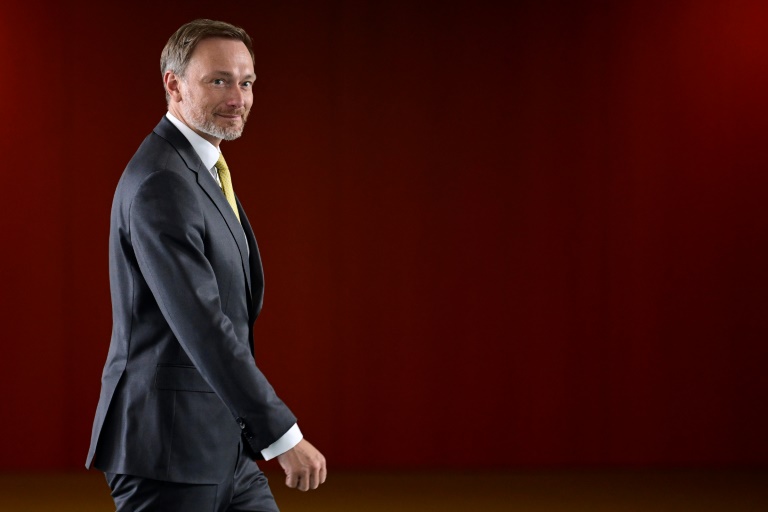
The policy was a key demand of the FDP’s Christian Lindner, now finance minister.

But pressure has mounted in recent weeks for the rule to be suspended for longer — even from within the coalition government. 

“We need to discuss the debt brake,” SPD co-president Saskia Esken said last week, calling for the rule to be waived into 2023.

“In times of crisis, austerity is the wrong instrument,” said the Green party’s Sven-Christian Kindler, who sits on the Bundestag’s budget committee. 

However, Lindner insisted this week in an interview with the ZDF broadcaster that “the return to the debt brake is not negotiable”. 

The minister pointed to rising interest rates in Europe, which is expected to cost Germany an extra 12 billion euros in 2023. 

Discussions on the draft budget in parliament, which are due to begin in September, are set to be heated.

AU urges restraint over 'escalating' Ethiopia-Sudan tensions

The head of the African Union Commission voiced concern on Wednesday over “escalating military tension” between Ethiopia and Sudan, calling for restraint and dialogue.

The comments by Moussa Faki Mahamat follow claims by Khartoum that the Ethiopian army had executed seven Sudanese soldiers and a civilian in an incident in a volatile border region last week — allegations denied by Addis Ababa.

Faki “is following with deep concern the escalating military tension between the Federal Democratic Republic of Ethiopia and the Republic of Sudan and deeply regrets the loss of life at their common border,” the AU said in a statement.

“The chairperson appeals for complete refrain from any military action whatever its origin and calls for dialogue between the two brotherly countries to solve any dispute.”

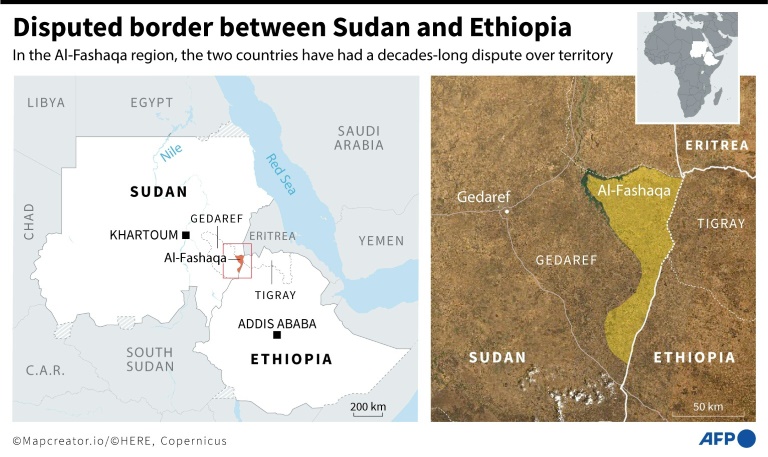
Sudan accused Ethiopia of capturing the soldiers on June 22 in Al-Fashaqa, a fertile strip at the centre of a bitter border dispute between the two neighbours.

Khartoum recalled its ambassador to Addis Ababa on Monday and vowed to lodge a complaint with the UN Security Council and regional organisations.

Addis Ababa said Tuesday that Sudanese forces had crossed into Ethiopian territory and the casualties resulted from a skirmish with a local militia, denying its soldiers were in the area at the time.

The Sudan Tribune newspaper reported that the Sudanese army had launched an attack Tuesday on Ethiopian troops in the Al-Fashaqa area but this was denied by army spokesman Nabil Abdalla.

“We have not attacked anyone and we will not and we are not planning that. But we will not allow any armed force from another country that wants to cross our international border. It’s our right legally to deal with it,” he told AFP in Khartoum.

Relations between Khartoum and Addis Ababa have soured over Al-Fashaqa, which is close to Ethiopia’s restive Tigray region.

Al-Fashaqa has long been cultivated by Ethiopian farmers but claimed by Sudan, and the dispute has sparked sporadic clashes between the Sudanese and Ethiopian sides, some fatal.

The rift over Al-Fashaqa feeds into wider tensions over land and water between the neighbours, particularly stoked by Ethiopia’s mega dam on the Blue Nile.

Sudan and Egypt, both downstream countries, have been opposed to the Great Ethiopian Renaissance Dam and pushed for an agreement on the filling of its reservoir and the dam’s operations.

Close Bitnami banner
Bitnami