World

How long will it take to get over the inflation hump?

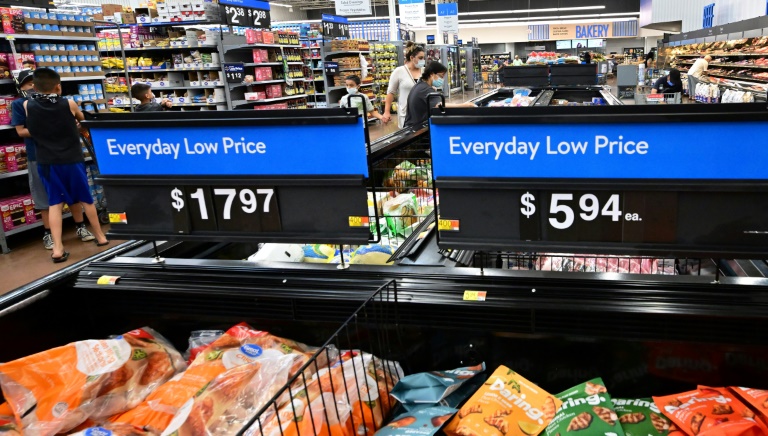
Inflation has surged back to levels not seen in many developed economies since the 1970s and 1980s. Economists and central bankers at the European Cental Bank’s conference in Portugal warn it will take time before price rises cool.

– How did we get here? –

For the ECB, established in 1998 to oversee the European single currency, the burst of inflation is without precedent.

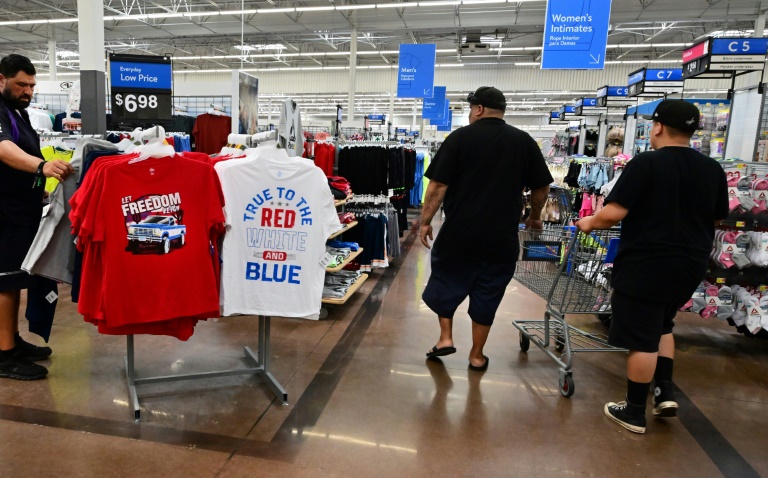
“The current levels of food and industrial goods inflation have not been seen since the mid-1980s,” ECB President Christine Lagarde said in her remarks at the conference on Tuesday.

Likewise, the “increase in the relative price of energy in recent months is much higher than the individual spikes that occurred in the 1970s” during the oil shock, Lagarde said.

The take-off in inflation, over eight percent in the eurozone in May, was at the end of a “a sequence that happens in a chaotic world”, Richard Baldwin, an economics professor at the Graduate Institute of Geneva, told AFP.

The supply shock caused by the the outbreak of the coronavirus pandemic in 2020 had been followed by a “demand twist” where people used their money more on goods, Baldwin said.

Instead of seeing this fading, the Russian invasion in Ukraine is causing “a huge spike in fuel and food prices” and heaping pressure on inflation, he said.

But it is not just energy. As health restrictions fall away, consumers are turning back to services, while the pent-up demand for tourism is being released, Lagarde noted.

“There is no playbook for this inflation,” said economist Baldwin.

– How long will it stay like this? –

With no end in sight for the war in Ukraine, the disruptions caused to the supply of energy could keep prices high for some time to come.

Domestic factors could also prop up high inflation rates, with workers demanding higher and higher compensation to make up for the rising cost of living.

Adding to the pressure are low unemployment rates, handing more leverage to workers looking for pay rises.

– What can central banks do? – 

The message put out by central banks is one of their most powerful tools to calm markets and control prices.

But the task at hand “has become quite difficult in view of high inflation numbers” and as “people feel high inflation every day when they’re buying food or going to the gas station”, Isabel Schnabel, a member of the ECB’s executive board, told AFP.

“We can do little about current inflation, but we will take decisive measures so that inflation returns to our (two-percent) target over the medium term,” Schnabel said.

“Once inflation is there and it starts to increase the expectations and wages, monetary policy should act,” Sebnem Kalemli-Ozcan, an economic professor at the University of Maryland, told AFP.

That is what the ECB has planned to do, announcing an interest rate hike for July, its first in over a decade. But the Frankfurt-based institution has to be careful not to completely choke off sputtering growth.

“The question is not if the prices will go down after some time, but what will happen to growth,” Kalemli-Ozcan said.

That is why comparisons are being made with the 1970s and the “stagflation type of situation” where inflation persisted while growth rates faltered, she said. “In Europe there is a risk of stagflation.”
Allies freeze $330 bn of Russian assets since Ukraine invasion: task force

A sanctions task force of leading Ukraine allies has frozen more than $330 billion in financial resources owned by Russia’s elite and the central bank since Moscow’s troops invaded, the group announced Wednesday. 

The Russian Elites, Proxies, and Oligarchs Task Force (REPO) said in a joint statement that they had blocked $30 billion in assets of Russian oligarchs and officials, and immobilized $300 billion owned by the Russian central bank.

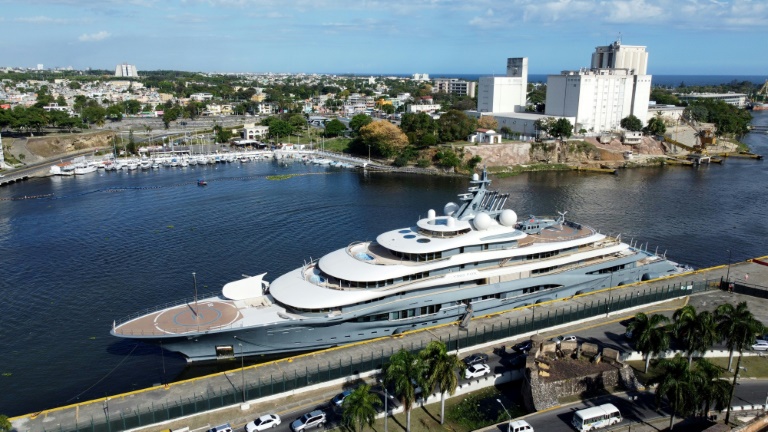
They have also detained at least five luxury yachts and frozen opulent real estate owned by the country’s billionaires. 

“Together, we will ensure that our sanctions continue to impose costs on Russia for its unprovoked and continuing aggression in Ukraine,” the group said in a statement released by the US Treasury.

REPO was formed on March 17, three weeks after the invasion of Ukraine, to increase pressure on Moscow economically in hopes of getting Russian President Vladimir Putin to end the war.

Its members include top finance and justice officials of the United States, Australia, France, Canada, Germany, Japan, Italy, Britain and the European Commission.

They have moved steadily to take hold of luxury estates and mega-yachts of Russian billionaires known to have ties to Putin.

But they have also worked to isolate Moscow in the global financial system, making it harder for the Kremlin to use its money on the global markets.

They have constrained Moscow’s ability to acquire advanced technologies. 

On Sunday Britain, Canada, Japan and the United States jointly announced they would ban the purchase of gold from Russia in order to prevent the country and its tycoons from using the metal to avoid sanctions.

REPO warned it would continue to pursue the assets of wealthy and powerful Russians.

“REPO’s work is not yet complete,” they said. “We continue to increase Russia’s cost of its war.”

France awaits verdicts in marathon 2015 terror attacks trial

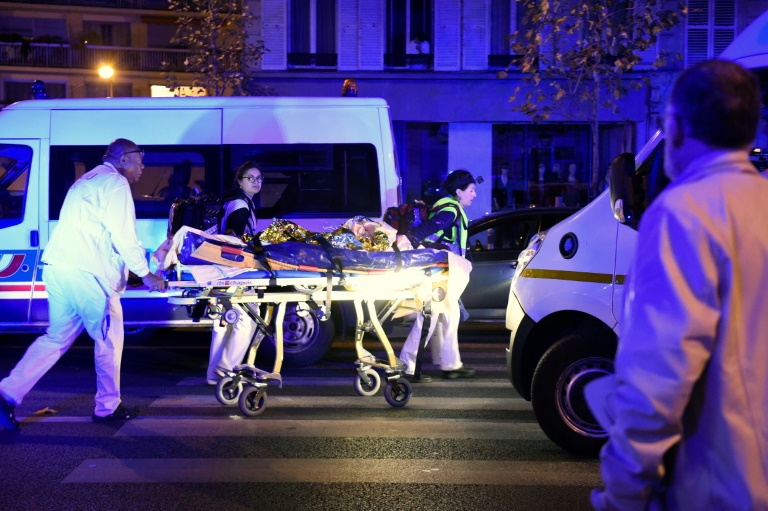
A French court is to hand down verdicts Wednesday against 20 men accused over the November 2015 terror attacks in Paris, after a marathon 10-month trial that reopened the scars of modern France’s worst peacetime atrocity.

One hundred and thirty people were killed on the night of November 13, 2015, when a team of Islamic State group jihadists laid siege to the French capital, attacking the national sports stadium, bars and the Bataclan concert hall.

The trial that began on September 8, 2021, has been the biggest in modern French history, the culmination of a six-year, multi-country investigation whose findings run to more than a million pages.

All the attackers were killed in the aftermath of the assault except Salah Abdeslam, who was captured alive by police four months later.

Abdeslam is the key suspect among the 20 accused on trial, six of whom have been tried in absentia. If convicted, he faces the toughest life sentence available under French law.

The verdicts, drawn up by a panel of five judges who have been deliberating at a secret location since Monday, are expected from 5:00 pm (1500 GMT).

Survivors and relatives of victims have applauded the trial as an important stage in overcoming the trauma. 

“When you take part, you hear about everyone else’s stories, what they suffered, what they lost,” David Fritz Goeppinger, one of the Bataclan hostages, told AFP recently.

Arthur Denouveaux, head of the Life for Paris survivors’ group, said that after nine gruelling months, people were ready for the end.

– Focus on key accused –

“I’m not that interested in the verdicts in themselves. It’s really about saying ‘That’s it. It’s behind us. The justice system has done its work, we can move on’,” he told AFP. 

The main focus will be on Abdeslam, now 32, who discarded his suicide belt on the night of the attack and fled back to his hometown, Brussels, where many of the extremists lived.

He told the court that he had a change of heart and decided not to kill people. But prosecutors have argued that he shared the murderous intent of the rest of the attack team and that his equipment simply malfunctioned.

Abdeslam’s demeanour has also changed throughout the trial. At the beginning he upset proceedings with angry and defiant rants but then in April apologised to the victims and asked them to “hate me with moderation.”

Prosecutors have requested a full-life term, the severest penalty for criminals that can be imposed under French law.

It offers only a small chance of parole after 30 years. Such sentences have been pronounced only four times since being created in 1994. 

“Those who committed these heinous crimes are nothing more than lowlife terrorists and criminals,” prosecutor Nicolas Le Bris said in his closing statement earlier this month.

But Abdeslam’s defence team has urged the judges to make a verdict based strictly on the law and not emotions.

– Trauma for France – 

“I hope that the judges will be able to understand what happened and apply the law as well as possible in order to have the fairest decisions,” Olivia Ronen, one of his lawyers, told France Info radio.

The November 2015 attacks deeply traumatised France, with the choice of targets — music and sports venues, the capital’s famed bars and cafes — and the manner of the violence seemingly designed to inflict maximum shock.

The huge loss of life marked the start of a gruesome and violent period in Europe, as IS claimed responsibility for numerous attacks across the continent, leading Paris to ramp up its military campaign to defeat the extremists in Syria and Iraq.

In the absence of the rest of the attackers, the men on trial besides Abdeslam are suspected of offering logistical support or plotting other attacks.

One of them, Mohamed Abrini, has admitted to driving some of the Paris attackers to the capital and explained how he was meant to take part but backed out.

The 37-year-old also started out justifying IS violence as part of a fight against Western countries but ended by apologising to victims in the trial’s final stages. 

Also facing a life term is Swedish citizen Osama Krayem, who has been identified in a notorious IS video showing a Jordanian pilot being burned alive in a cage.

Six of the 20 people on trial in Paris are missing, including the overall commander, senior Syria-based IS figure and veteran jihadist Oussama Atar, who is presumed dead.

Aquaculture drives aquatic food yields to new high

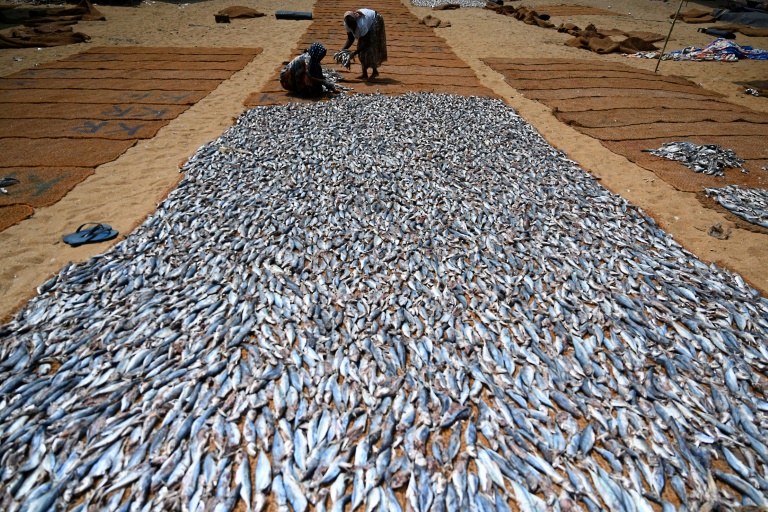
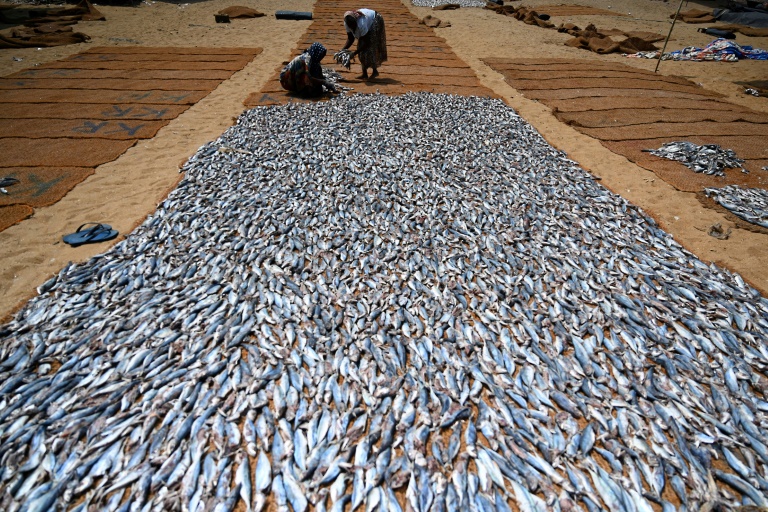
The amount of fish, shellfish and algae caught in the wild and farmed in aquaculture hit a record 214 million tonnes in 2020, the Food and Agriculture Organization said Wednesday.

Driven by a sustained surge in aquaculture, the new record is good news for a world facing price hikes and food shortages due to the war in Ukraine, disrupted supply chains, and inflation. 

“The growth of fisheries and aquaculture is vital in our efforts to end global hunger and malnutrition,” said FAO director Qu Dongyu.

But overfished oceans, climate change and pollution — if left unaddressed — could threaten that potential, the UN agency warned in its 2022 state of the world fisheries report.

“Aquaculture growth has often occurred at the expense of the environment,” it said. 

“Sustainable aquaculture development remains critical to supply the growing demand for aquatic food.”  

Production of aquatic animals in 2020 — totalling 178 million tonnes — was evenly divided between fisheries and aquaculture.

The remaining 36 million tonnes was algae production.

Yields of fish, shrimp and other shellfish destined for human consumption is more than 60 percent higher than during the 1990s, far outpacing population growth, according to the report, released during the UN Ocean Conference in Lisbon.

On average, people worldwide consume over 20 kilos (44 pounds) of aquatic foods per year today, more than double the amount 50 years ago.

Globally, 17 percent of the protein consumed by humans comes from aquatic sources. In many Asian and African countries, that figure rises to more than 50 percent, according to the report.

Wild and farmed food from the seas and inland waters are also a critical source of essential omega-3 fatty acids and micronutrients, recent research has shown.

“Aquatic foods are increasingly recognised for their key role in food security and nutrition,” Qu said. 

Nearly 90 percent of aquatic animal production is for human consumption, with the rest destined for non-food uses such as fishmeal and fish oil.

Asian countries were the source of 70 percent of the world’s fisheries and aquaculture of aquatic animals in 2020. 

China remaining by far the top fisheries producer, followed by Indonesia, Peru, Russia, the United States and Vietnam.

So-called capture fisheries in the wild — which have stagnated since the mid-1990s — dropped by four percent in 2020 compared to the average of the previous three years.

Part of the drop can be attributed to disruptions caused by the Covid pandemic, but long-term decline is due to overfishing.

“The FAO estimates that 34 percent of caught fish come from overfished stocks,” University of British Columbia economist and fisheries expert Rashid Sumaila told AFP.

“But they are very conservative,” he added. “Independent studies put that figure at 50 percent.”

Aquaculture drives aquatic food yields to new high

The amount of fish, shellfish and algae caught in the wild and farmed in aquaculture hit a record 214 million tonnes in 2020, the Food and Agriculture Organization said Wednesday.

Driven by a sustained surge in aquaculture, the new record is good news for a world facing price hikes and food shortages due to the war in Ukraine, disrupted supply chains, and inflation. 

“The growth of fisheries and aquaculture is vital in our efforts to end global hunger and malnutrition,” said FAO director Qu Dongyu.

But overfished oceans, climate change and pollution — if left unaddressed — could threaten that potential, the UN agency warned in its 2022 state of the world fisheries report.

“Aquaculture growth has often occurred at the expense of the environment,” it said. 

“Sustainable aquaculture development remains critical to supply the growing demand for aquatic food.”  

Production of aquatic animals in 2020 — totalling 178 million tonnes — was evenly divided between fisheries and aquaculture.

The remaining 36 million tonnes was algae production.

Yields of fish, shrimp and other shellfish destined for human consumption is more than 60 percent higher than during the 1990s, far outpacing population growth, according to the report, released during the UN Ocean Conference in Lisbon.

On average, people worldwide consume over 20 kilos (44 pounds) of aquatic foods per year today, more than double the amount 50 years ago.

Globally, 17 percent of the protein consumed by humans comes from aquatic sources. In many Asian and African countries, that figure rises to more than 50 percent, according to the report.

Wild and farmed food from the seas and inland waters are also a critical source of essential omega-3 fatty acids and micronutrients, recent research has shown.

“Aquatic foods are increasingly recognised for their key role in food security and nutrition,” Qu said. 

Nearly 90 percent of aquatic animal production is for human consumption, with the rest destined for non-food uses such as fishmeal and fish oil.

Asian countries were the source of 70 percent of the world’s fisheries and aquaculture of aquatic animals in 2020. 

China remaining by far the top fisheries producer, followed by Indonesia, Peru, Russia, the United States and Vietnam.

So-called capture fisheries in the wild — which have stagnated since the mid-1990s — dropped by four percent in 2020 compared to the average of the previous three years.

Part of the drop can be attributed to disruptions caused by the Covid pandemic, but long-term decline is due to overfishing.

“The FAO estimates that 34 percent of caught fish come from overfished stocks,” University of British Columbia economist and fisheries expert Rashid Sumaila told AFP.

“But they are very conservative,” he added. “Independent studies put that figure at 50 percent.”

Ecuador's president survives impeachment vote as talks to end protests falter

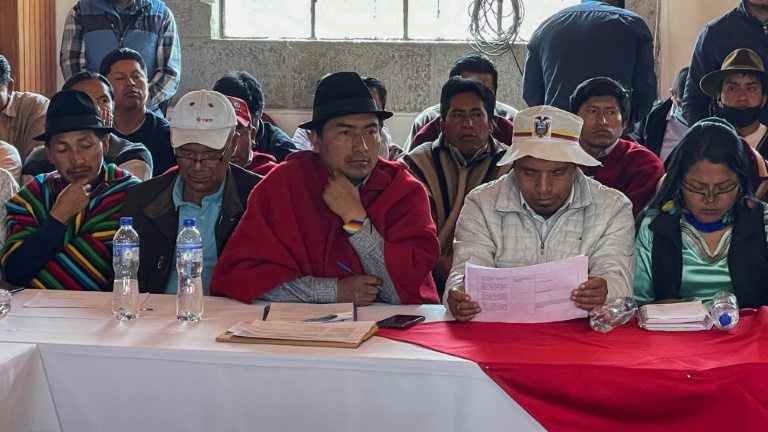
Ecuador’s president survived an impeachment vote on Tuesday, as negotiations to end more than two weeks of cost-of-living protests by Indigenous groups were suspended following the death of a soldier.

The opposition-led congress had sought to remove right-wing President Guillermo Lasso over “the serious political crisis and internal commotion” caused by the protests.

But the motion garnered only 80 of the 92 votes needed, according to results read aloud by the parliament’s secretary, Alvaro Salazar, in a virtual session broadcast on social media.

“In spite of the coup attempts, today the country’s institutions prevailed,” Lasso said after the vote. “It is evident who works for the political mafias. Meanwhile, we continue to work for Ecuador.”

Earlier in the day, Lasso had accused Indigenous protest leader Leonidas Iza of self-serving politics, saying: “We will not negotiate with those who hold Ecuador hostage.”

Iza’s powerful Confederation of Indigenous Nationalities of Ecuador (Conaie), in turn, accused the government of “authoritarianism,” and said Lasso would bear the consequences for “his hawkish policy.”

On Tuesday morning, the military said a soldier died and five police and seven soldiers were injured in an attack on a tanker truck escort in the country’s east.

It said a group armed with “spears and guns” attacked uniformed personnel protecting an early-morning convoy of tankers headed for the so-called ITT block of oil fields in Orellana province, where more than a billion barrels are stored.

Interior Minister Patricio Carillo expressed condolences to the family of fallen soldier Jose Chimarro in a tweet, and described the attackers as “violent demonstrators.”

The secretary of the Organization of American States, Luis Almagro, also denounced the attack, saying on Twitter that “protests should be peaceful and democratic.”

– ‘Brutal attack’ –

A second day of talks with Indigenous representatives scheduled for Tuesday morning failed to get under way as negotiators from the government did not show up.

Mediator Virgilio Saquicela, president of the National Assembly, announced that the government was “not present” as it was “conducting an analysis” of the early-morning events.

Iza referred to a “brutal attack” but said there was no proof protesters were responsible.

Lasso, meanwhile, touted “the efforts we have made to establish a fruitful and sincere dialogue.”

“But we will not sit down again to dialogue with Leonidas Iza, who only defends his political interests and not those of his base,” he added.

Tuesday’s fatality came on top of five demonstrators dead and hundreds of civilians and security personnel wounded in clashes between the security forces and protesters blockading key roads and disrupting supply lines.

Some 150 people have been arrested, according to observers.

At night, protesters clashed with public forces again in the north of the capital, setting two police stations on fire.

“One cannot understand the irrationality and lack of reason in the protests. Ecuador needs peace,” Interior Minister Carrillo said on Twitter.

Crude is the South American country’s main export, but production has been halved from about 520,000 barrels per day prior to the protests, the government said.

Operations at more than 1,100 wells have been affected.

An estimated 14,000 protesters are taking part in a nationwide show of discontent against rising hardship in an economy dealt a serious blow by the coronavirus pandemic.

Conaie, which called the protest, is credited with unseating three presidents between 1997 and 2005.

Indigenous people make up more than a million of the South American nation’s 17.7 million people. 

Most of the demonstrators’ ire is concentrated in the capital Quito, where some 10,000 people are gathered, most of them from other parts of the country.

Other than fuel price cuts, the protesters want jobs, food price controls, and more public spending on healthcare and education.

– Economic cost –

The action has been costly, with losses of some $50 million per day to the economy, according to the government, which has warned oil production could come to a complete halt soon.

Ecuador’s economy is highly dependent on oil revenues, with 65 percent of output exported in the first four months of 2022.

Protesters have set up roadblocks in most of the country’s 24 provinces, hampering the delivery of food and flowers — another key export — and dealing a blow to tourism.

On Sunday, Lasso announced a 10-cents-per-gallon reduction in diesel and gasoline prices, but this was deemed insufficient by Conaie.

The president has also lifted a state of emergency that had been in place in six provinces and a night-time curfew in Quito.

After the concessions, the two sides met for the first time Monday for talks on ending the protest.

Lockdown in Indian city after gruesome sectarian killing

Hundreds of police were deployed in an Indian city on Wednesday following the murder of a Hindu tailor allegedly by two Muslim men after comments by a ruling party official about the Prophet Mohammed that have inflamed sectarian tensions.

The cold-blooded attack in the western city of Udaipur was captured on video, quickly going viral online and gripping a country with a long and explosive history of deadly communal violence. 

The video showed the tailor Kanhaiya Lal being attacked in his shop. Further footage showed the two accused purportedly brandishing large knives and threatening to kill Prime Minister Narendra Modi. 

They then justified their murder for Lal’s alleged support of comments about the Prophet Mohammed by a spokeswoman for Modi’s Hindu nationalist ruling BJP party, remarks that have triggered protests across parts of the Muslim world in recent weeks.

Hundreds had gathered outside Lal’s house ahead of his funeral on Wednesday, a day after several hundred gathered to protest and chant Hindu slogans in response to the killing. 

People on motorcycles and cars waved saffron flags — the colour of the Hindu faith — and shouted slogans demanding the death penalty for the accused.

The two young men were arrested on Tuesday as they attempted to flee Udaipur by motorbike, news reports said.

To prevent potential sectarian violence, authorities deployed 600 extra police and put the city of around 450,000 people under curfew, snapping mobile internet access there and in other parts of Rajasthan state.

Local authorities issued a month-long order banning four or more people from gathering anywhere in the state.

“Both the accused in the killing have been arrested and we will ensure strict punishment and speedy justice,” said Rajasthan chief minister Ashok Gehlot. 

Gehlot appealed to people to not share the video as it would “serve the attackers’ motive of creating discord in society”.

On social media members of the ruling BJP party and supporters depicted the killing as an attack on all Hindus, with thousands of tweets carrying hashtags like #IslamicTerrorismInIndia.

– Diplomatic storm –

The remarks about Mohammed by Bharatiya Janata Party (BJP) spokesman Nupur Sharma at a TV debate in late May sparked protests that turned violent in some parts of India and demonstrations across the Islamic world.

She was sacked by the party after her comments, which saw the governments of nearly 20 countries summoning their Indian envoys to express their displeasure.

Lal’s wife told broadcaster NDTV that on June 10 her husband was arrested over a social media post supporting Sharma and released on bail a day later. 

Five days later the father of two said he had received death threats but on Tuesday returned to work in his shop, she said.

The purported video of the killing — which police have not yet confirmed is genuine — showed Lal measuring one of the men for new clothes before he and his accomplice attack him. 

Indian Home Minister Amit Shah said the National Investigation Agency (NIA) would take over the investigation of the “brutal murder”.

“The involvement of any organisation and international links will be thoroughly investigated,” Shah tweeted.

– Sporadic violence –

India has a seen sporadic sectarian violence between majority Hindus and Muslims, who make up around 14 percent of the 1.4-billion-strong population.

Inter-religious riots in the capital New Delhi left 53 people dead in 2020, while in 2013 62 people were killed in the nearby city of Muzaffarnagar.

In 2002 at least 1,000 perished in Gujarat when Modi was state premier. Most of the victims were Muslims. 

Rajasthan also saw riots earlier this year, when almost 100 people were arrested after police fired tear gas to stop fighting and stone-pelting.

Modi’s party has been accused of marginalising the Muslim community and sewing divisions with Hindus since coming to power in 2014.

The row over Sharma’s comments followed anger across the Muslim world in 2020 after French President Emmanuel Macron defended the right of a satirical magazine to publish caricatures of the prophet.

Images of the prophet are strictly forbidden in Sunni Islam. French teacher Samuel Paty was beheaded in October 2020 by a Chechen refugee after showing the cartoons to his class in a lesson on free speech.

Equity market losses driven by recession, inflation fears

Fears of a recession caused by sharp interest rate hikes aimed at fighting soaring inflation sent Asian and European markets tumbling Wednesday, tracking a sharp drop on Wall Street.

The hefty selling came after more than a week of gains across the world caused by hopes that any signs of contraction could give central banks room to ease up on their pace of monetary tightening.

The fluctuations on trading floors show how tough it has become for investors to find their feet, just as financial policymakers struggle to find a balance between containing prices and maintaining economic growth.

Wednesday’s selling came after New York’s three main indexes tanked in reaction to data showing confidence among US consumers — who are a crucial driver of the world’s top economy — had fallen to its lowest level in more than a year.

The mood-sapping reading was partly driven by a feeling inflation would persist, suggesting consumers are not sure the Federal Reserve’s aggressive efforts to tame inflation will work.

The news overshadowed a surprise move by China to slash the quarantine period for incoming travellers, raising hopes for further relaxations that can allow the country’s giant economy to recover more quickly.

Hong Kong led losses as tech firms took a beating, while Tokyo, Shanghai, Sydney, Seoul, Mumbai, Manila, Taipei, Jakarta, Bangkok and Wellington were also well down.

London, Paris and Frankfurt all fell in the morning.

Top Fed officials on Tuesday tried to play down the chances of a recession, with the heads of the Fed in San Francisco and New York saying they were upbeat a soft landing could be achieved.

“I see us tapping on the brakes to slow to a more sustainable pace, rather than slamming on the brakes, going over the handlebars and having the proverbial recession,” San Francisco’s Mary Daly told an online event hosted by LinkedIn.

“I wouldn’t be surprised, and it’s actually in my forecast, that growth will slip below two percent, but it won’t actually pivot down into negative territory for a long period of time.”

– ‘Not looking pretty’ –

But analysts were more sceptical, with Sim Moh Siong at Bank of Singapore saying “low US consumer expectations suggest weaker growth in (the second half of 2022) as well as growing risk of recession by year end”.

The Conference Board’s chief economist Dana Peterson warned the United States will likely see a recession in late 2022.

And Emily Weis, at State Street Corp, said: “The Fed still believes it can thread that very fine line between tightening financial conditions while not hurting the economy too much.

“We’re still not sure they’re going to be able to pull that off. That’s what we’ve seen reflected in the markets over the last month or so.”

Meanwhile there was a word of warning for the outlook as companies begin to feel the pinch.

“With investors laser-focused on US growth and inflation data, both of which tanked stocks (Tuesday), do not forget earnings cuts are now coming through — the red ink is flowing through stocks, sectors, and aggregated strategy models,” said Stephen Innes at SPI Asset Management.

“All regions, countries, industries, and stocks are getting printed red with broad strokes. It is not looking pretty.” 

Oil prices dipped though remain elevated following a run-up in recent days on expectations that demand will continue to rise — despite recessionary talk — and supplies remain tight owing to the ban on imports from Russia.

And while G7 leaders agreed to work on a price cap for Russian oil as part of efforts to cut the Kremlin’s revenues, observers warned that will not likely have a massive impact on prices.

“The easing of China’s zero-Covid policy helped oil to the third day of gains following a decent correction in recent weeks,” said Craig Erlam at OANDA. 

“As did reports that the UAE and Saudi Arabia are producing near capacity, in stark contrast to claims that both are holding back and could do more.”

He added that OPEC and other major producers were 2.7 million barrels per day below target in May, “taking the total shortfall under the agreement to more than half a billion”.

“Even sanctions being lifted on Iran and Venezuela can’t do much against that backdrop. It may well take a recession to return oil prices to sustainable levels any time soon,” he warned.

– Key figures at around 0810 GMT –

Tokyo – Nikkei 225: DOWN 0.9 percent at 26,804.60 (close)

Hong Kong – Hang Seng Index: DOWN 1.9 percent at 21,996.89 (close)

Shanghai – Composite: DOWN 1.4 percent at 3,361.52 (close)

London – FTSE 100: DOWN 0.4 percent at 7,296.70

Dollar/yen: DOWN at 136.10 yen from 136.20 yen Friday

Pound/dollar: DOWN at $1.2191 from $1.2187

Euro/dollar: DOWN at $1.0513 from $1.0525

Euro/pound: DOWN at 86.23 pence from 86.32 pence

West Texas Intermediate: DOWN 0.3 percent at $111.47 per barrel

Brent North Sea crude: DOWN 0.4 percent at $117.55 per barrel

New York – Dow: DOWN 1.6 percent at 30,946.99 (close)

Kenyan pilot project to put price on nature's treasure

The bird count gets underway — two members of the superb starling family, a Nubian woodpecker, and so on.

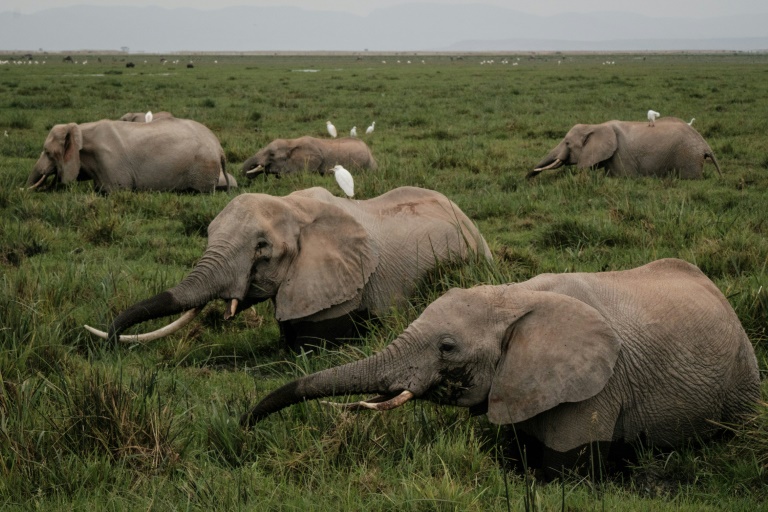
The census unfolding in the shadow of Mount Kilimanjaro is part of a project with a dual aim — using biodiversity to make money, which will then help to preserve natural resources and support local communities.

The 5,000-hectare (12,400-acre) terrain on the edge of Amboseli National Park in southern Kenya boasts elephants, giraffes, antelopes and lions.

The reserve’s owners are the Maasai people, and no fence separates the land from territory used by herders for their cows, sheep, goats and donkeys.

These days, well-heeled visitors are returning to the reserve after the Covid-19 pandemic, which had wrenching financial consequences.

“Tourism completely collapsed, and we realised that we need to find other ways of rising revenue and income to be able to continue paying the leases,” said Mohanjeet Brar, managing director of tour operator Gamewatchers Safaris, which rents Selenkay from the Maasai.

The reserve has an eye on the potential from carbon credits and planned biodiversity credits — mechanisms designed to channel funds to landowners who preserve natural hotspots for rare species and carbon storage.

– Data first –

For Selenkay, the first step towards realising these gains is to collect data — to make an inventory of the reserve’s treasure house.

Cameras and acoustic recorders are being used to give an idea of which animals are present on the reserve and in what numbers, and these are supplemented by human observations.

Over one month, morning and evening, team members are stationed at specific points to make a tally of all the animals seen and heard for 10 minutes.

“Is biodiversity higher in the conservancy than outside the conservancy and what’s driving that increase?” said Andrew Davies, an assistant professor at Harvard University in the United States, who is helping the research.

“Once we know that from a scientific perspective, we can begin thinking about making a credit to sell.”

Helped by a drone, the researchers are also getting a picture of the amount of carbon stored in trees and in the soil.

Tourism income from Brar’s company supports the local community in many ways, helping to provide water for people and livestock and generating jobs. All of the rangers and almost all of Selenkay’s staff are Maasai.

Even so, living conditions are still difficult, said Noolasho Keteko, one of the women from the Maasai village bordering the conservancy. 

The crop-haired mother of eight, adorned with colourful bead jewellery, also makes money from tourist visits to the mud-hut village and from selling jewellery.

But when Selenkay closes in April and May for the rainy season, the village needs assistance, she explained.

People in the district want to prevent the land from being sold, turned into fields and fenced off, preventing wildlife from moving freely. 

But a short distance from the reserve, a high fence already crosses the landscape to make way for fields.

Income from credits could ease the pressure on the environment, said one of the guides, Nicholas Koyieyo.

It would encourage herders to cut back on numbers of cattle, enabling grass and trees to regenerate, he said.

– Market question –

The big question is whether Selenkay’s resources can be adequately monetised.

“Kenya has a very fast-growing population — the land price is also high (and) there are many options for land use,” Brar said.

The market for carbon credits is well-established, although far from perfect.

Under it, carbon polluters can offset their greenhouse-gas emissions by “purchasing” emissions that are reduced or saved by other members in the scheme.

But the much-touted market for biodiversity credits has yet to be created. 

On Sunday, preparatory talks for a UN biodiversity summit due in December wound up in Nairobi after making scant progress.

“There’s no biodiversity trading market and we have to develop that,” said Davies.

“We need carbon as a first step to get the things going, to get trust from the landowners,” he said.

“A lot of money needs to go back to the community, so if we start to get money and giving it to the community then they will have faith in us.”

Ukraine war dominates crucial NATO summit

NATO leaders were set Wednesday to invite Finland and Sweden to join after Turkey dropped objections, as the alliance looked to revamp its defences at a summit dominated by the war in Ukraine.  

More than four months after Russia invaded Ukraine, upending the European security landscape, leaders gather in Madrid for what NATO chief Jens Stoltenberg called a “historic and transformative summit” for the alliance’s future. 

Ukrainian President Volodymyr Zelensky is set to address the meeting via videolink to renew Kyiv’s pleas for accelerated weapons deliveries from its allies. 

NATO countries, which have already committed billions of dollars in military assistance to Kyiv, will agree a “comprehensive assistance package to Ukraine, to help them uphold the right for self-defence”.

“We meet in the midst of the most serious security crisis we have faced since the Second World War,” Stoltenberg said.” 

“We’ll state clearly that Russia poses a direct threat to our security.”

NATO is due to launch the largest revamp of its defence and deterrence capabilities since the end of the Cold War by strengthening the forces on its eastern flank and massively ramping up the number of troops it has at high readiness.

“Russia now is an aggressor in Ukraine, Russia attacked Ukraine and Russia is a threat for Europe but not only for Europe, for all NATO,” Poland President Andrzej Duda said. 

“This is very clear situation now.”

– Turkey drops opposition –

Beyond Ukraine, the summit will see a revamp of NATO’s strategic concept — which outlines its main security tasks, but has not been revised since 2010 — to mention challenges posed by China for the first time.

Finland and Sweden will be invited to join the alliance at the summit after Turkish President Recep Tayyip Erdogan on Tuesday lifted his opposition following crunch talks with the leaders of the two Nordic countries in Madrid.

The move is a blow to Russia’s President Vladimir Putin, who launched his war in Ukraine saying he wanted to stop NATO expansion but is now set to see his border with the alliance more than double. 

Erdogan had stubbornly refused to back the applications from the Nordic pair — lodged in response to Russia’s war on Ukraine — despite pressure for a change of course from his NATO allies.

But Erdogan’s office said it had agreed to support them as Ankara had “got what it wanted”.

Ankara had accused Finland, and especially Sweden, of offering a safe haven to Kurdish militants who have been waging decades-long insurgency against the Turkish state.

US President Joe Biden congratulated Turkey, Finland and Sweden on reaching an agreement. 

“As we begin this historic NATO summit in Madrid, our alliance is stronger, more united and more resolute than ever,” he said in a statement. 

But it will still take months for Finland and Sweden to officially join NATO, as their entry needs to be ratified by the parliaments of the 30 member states. 

– ‘Stop Russian terror’ –

The summit comes as war rages across Ukraine, particularly in the eastern Donbas region where Moscow has been focusing its offensive after failing to capture Kyiv in the conflict’s early days. 

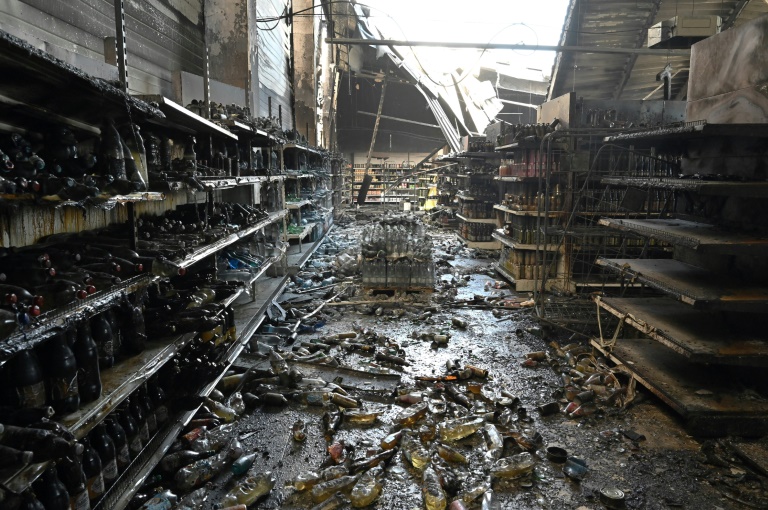
There was global outrage Monday after a missile strike on a shopping mall in the central city of Kremenchuk killed at least 18 people and injured dozens. 

Russia claims its missile salvo was aimed at an arms depot. But AFP talked to civilians in Kremenchuk, and none of them knew of any weapons store in the neighbourhood.

“Everything burned, really everything, like a spark to a touchpaper. I heard people screaming. It was horror,” witness Polina Puchintseva said.

All that was left of the mall was charred debris, chunks of blackened walls and lettering from a smashed storefront.

“Only total insane terrorists, who should have no place on Earth, can strike missiles at civilian objects,” said Zelensky on his social media channels. 

“Russia must be recognised as a state sponsor of terrorism. The world can and therefore must stop Russian terror,” he added.

Addressing the UN Security Council Tuesday, Zelensky called for the United Nations to visit the site so they can independently assess whether the destruction was caused by a Russian missile strike.

At their summit in Germany, G7 leaders agreed to impose new sanctions targeting Moscow’s defence industry, raising tariffs and banning gold imports from the country.

But the Kremlin was unfazed, insisting that Ukrainian forces had to surrender to end the fighting.

“The Ukrainian side can stop everything before the end of today,” Kremlin spokesman Dmitry Peskov said.

“An order for the nationalist units to lay down their arms is necessary,” he said, adding Kyiv had to fulfil a list of Moscow’s demands.

burs-del/yad

Close Bitnami banner
Bitnami