World

South Africa escalates power cuts to acute levels

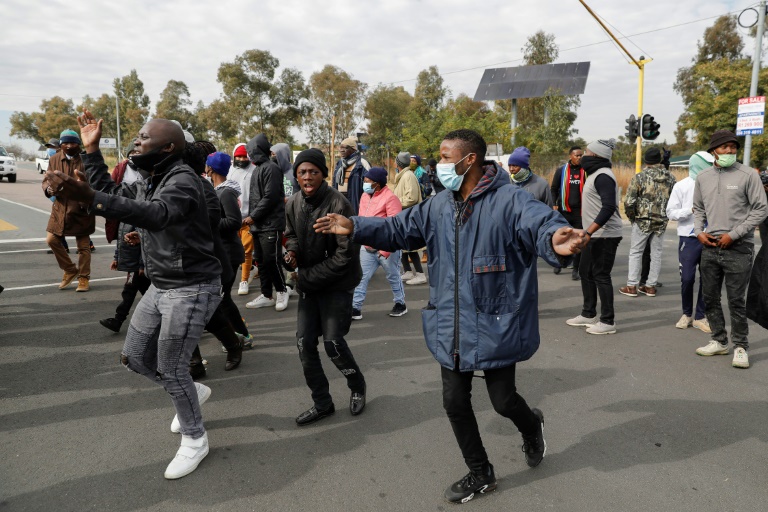
South Africa, a country plagued by power shortages, on Tuesday imposed the  toughest electricity rationing in two and a half years after labour disputes disrupted production at several plants.

Highly unpopular power rationing to consumers was ramped up to so-called Stage 6 load-shedding to prevent countrywide blackouts.

Stage 6 means that South Africans will now experience multiple cuts per day, each lasting between two and four hours, on a rotational basis.

The power utility Eskom, which generates more than 90 percent of the country’s energy, has been hit by strike action over wages since last week.

“Eskom is in this position because of the industrial action which has meant that in many power stations up to 90 percent of the staff could not attend to the duties… because of intimidation,” State Enterprises Minister Pravin Gordhan told a media briefing shortly after the ramped-up rationing kicked in.

The blackouts are “causing huge amount of damage to South Africa’s reputation”, he said. 

Workers downed tools demanding a 15-percent pay hike.

Unions on Tuesday announced they have made “considerable progress” in wage negotiations, and urged Eskom workers in a statement “to normalise the situation”.

Africa’s leading industrialised country last experienced such drastic outages in December 2019. 

Power cuts are a major source of frustration and discontent in South Africa, where protests broke out near Eskom’s offices last year.

Party's over: Airbnb bans events permanently

Airbnb has made permanent its pandemic-era prohibition of parties at the properties rented out globally through its app, saying Tuesday the rules have been effective against problematic events.

The rental platform has gradually tightened its policies on parties after complaints and some high-profile trouble, including a 2019 shooting that killed five in California.

Airbnb provisionally barred events in 2020 as a measure against the spread of Covid, but it turned out to also be effective against large or disruptive gatherings.

“Over time, the party ban became much more than a public health measure. It developed into a bedrock community policy,” the company said.

In the past, property owners were given the room to use their best judgment on whether to allow parties, but rules tightened to bar “party houses” as well as large events advertised on social media.

After the pandemic hit, bringing the closure of many nightlife venues, people in some cases turned to hosting events at places rented through Airbnb, which in turn became a problem.

But Airbnb argued the tighter rules have been effective in reducing the rate of rowdiness complaints it has received.

Under the new policy Airbnb will also lift its 16-person cap at rental properties, a rule enacted against Covid but which will now take into account that certain larger or outdoor sites are OK for bigger groups. 

The company said people breaking the rules face consequences from account suspension to full removal from the platform, adding that in 2021, over 6,600 guests were suspended over the party ban.

Scotland sets October 2023 for new independence vote

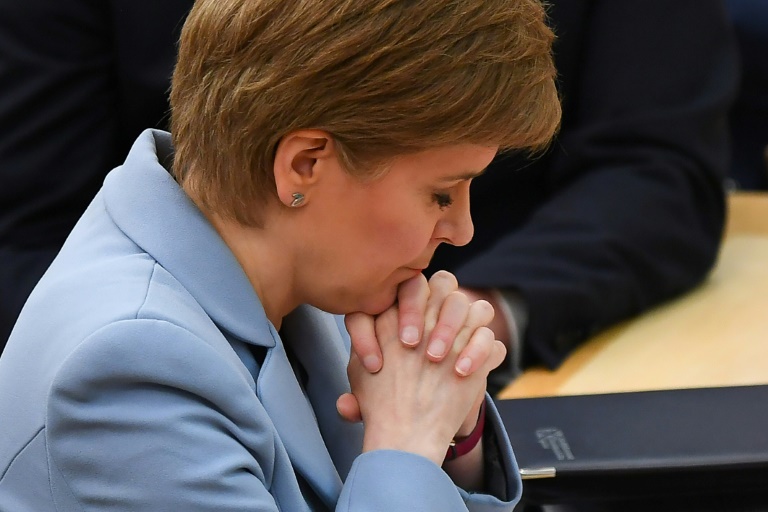
Scotland’s government on Tuesday drew the battle lines for a legal and political tussle with London as it announced plans to hold a second independence referendum on October 19, 2023.

Addressing the Edinburgh parliament, First Minister Nicola Sturgeon conceded that her devolved administration may lack the power to call the vote without London’s approval.

To ensure legal clarity, it will seek an opinion from the UK Supreme Court before it asks voters: “Should Scotland be an independent country?” 

The phrasing of the question was the same as Scottish voters were asked in 2014, and Sturgeon said her government would press the case anew with “commitment, confidence and passion”.

Six years ago, Scotland voted to stay in the United Kingdom, and current polls suggest Scots remain evenly divided on the question of independence.

Prime Minister Boris Johnson’s UK government says the 2014 plebiscite settled the matter for a generation.

Speaking en route from Germany to a NATO summit in Spain, Johnson vowed to study Sturgeon’s plan “very carefully, and we will respond properly”.

But he stressed that “I certainly think that we’ll be able to have a stronger economy, and a stronger country, together”.

– Legal backing –

Sturgeon’s Scottish National Party (SNP) says the UK’s divorce from the European Union, following a 2016 referendum, has transformed the debate.

Most Scottish voters were opposed to Brexit, and the SNP-led government said that with a majority of lawmakers in the Edinburgh parliament now in favour of independence, Scots should be consulted again.

“What I am not willing to do, what I will never do, is allow Scottish democracy to be a prisoner of Boris Johnson or any prime minister,” Sturgeon said.

The SNP wants to take an independent Scotland back into the EU but, mindful of Catalonia’s abortive bid to break away from Spain, is aware that international backing hinges on the process remaining lawful.

Sturgeon stressed the “consultative referendum” would only proceed with the approval of the UK Supreme Court.

A vote in favour of independence would still need approval from both parliaments in Edinburgh and London before Scotland could formally break away.

If the UK Supreme Court rules that the Scottish government lacks the power to hold the vote without London’s agreement, “it will be the fault of Westminster legislation, not the court”, she said.

In that scenario, the SNP would use the UK’s next general election due by 2024 as a “de facto referendum” on independence, she added. 

“Either way, the people of Scotland will have their say.”

The SNP’s opponents, including the Conservatives and Labour, say Sturgeon is fixated on holding a second referendum instead of on more pressing policy matters.

“We won’t play Nicola Sturgeon’s games, we won’t take part in a pretend poll when there is real work to be done,” Scottish Conservative leader Douglas Ross said in the Holyrood parliament.

– Queen raises eyebrows –

Sturgeon’s statement came as Queen Elizabeth II made an unexpected appearance at “Holyrood week”, an annual series of ceremonial events in the Scottish capital. 

The 96-year-old monarch has been suffering from difficulties walking and standing since an unscheduled night in hospital last October that forced her to cancel public engagements. 

As head of state, the monarch is politically neutral, but the Daily Telegraph said her visit to Edinburgh “packs an ever-so-polite political punch”. 

“Without speaking — and indeed almost without moving in public — she embarked on just the sort of show of soft diplomacy she has spent 70 years perfecting,” the newspaper said. 

In 2014, ahead of the previous independence referendum, Queen Elizabeth told well-wishers near her Balmoral estate in northeast Scotland: “I hope people think very carefully about the future.” 

Scotland voted by 55 percent to 45 percent to remain in the UK, after then UK prime minister David Cameron agreed a “Section 30” order that made the result of the vote legally binding. 

The legality of the SNP-led government ploughing ahead without London granting another such order will be central to the legal case, if the Supreme Court agrees to take it up.

Should the court block a referendum, then “any notion of the UK as a voluntary union of nations is a fiction”, Sturgeon said.

Ukraine war drones lose pivotal role as artillery rules

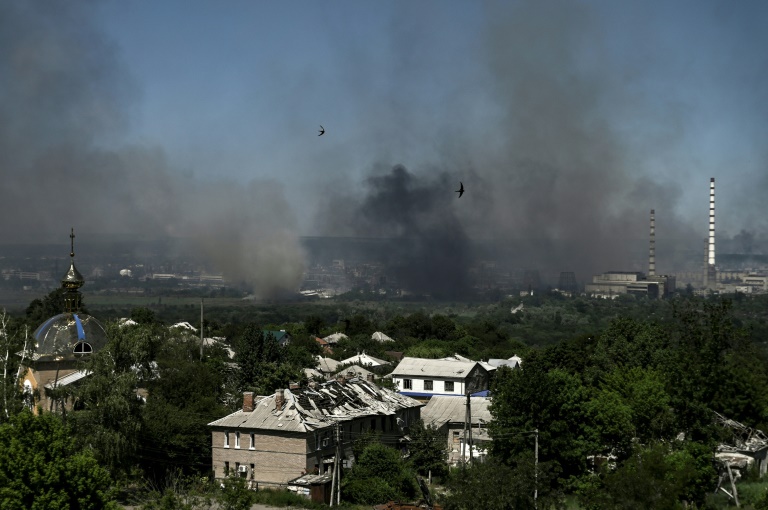
The Ukrainian army’s astute use of drones has been a cornerstone of its defence against the powerful Russian invader, but experts say their role is beginning to fade as heavy artillery takes over.

In the early phase of the war, Ukraine’s sky seemed filled with the remote-controlled aircraft deployed by President Volodymyr Zelensky’s army to spy on the enemy, or go on the attack.

During Moscow’s early advance on Kyiv “it would have been extremely challenging for Ukraine to block (Russian President Vladimir) Putin’s army without drones”, said Paul Lushenko, a US Army Lieutenant Colonel and PhD student at Cornell University.

“They could compound or exacerbate Putin’s strategic and logistical challenges,” he told AFP.

The Turkish-made Bayraktar drone, known as TB-2, already famous worldwide, added to its stellar reputation during the defence of Ukraine’s capital.

On top of providing intelligence on Russian movements, drones also helped Ukraine offset much of its air force’s weakness compared to that of Russia.

“The reconnaissance and armed systems, predominantly military, proved that they could build a light substitution air force against a conventional adversary,” said Aude Thomas at the FRS Foundation for Strategic Research.

Although the Ukrainians didn’t invent drone warfare — the US used drones in Afghanistan and Iraq, and they featured in conflicts in Syria, Libya and Nagorny Karabakh — they came up with some fresh approaches.

This, said Thomas, included the use of commercial drones for intelligence, damage assessment and target guidance for artillery, as well as direct hits on enemy positions.

Kyiv has been working on optimising drones since Russia’s annexation of Crimea in 2014, creating the “Aerorozvidka” unit made up of computer scientists customising off-the-shelf drones for military use.

Today, according to Thomas, the unit produces its own weaponised drones carrying anti-tank ammunition and operated by 50 experienced pilot teams.

– ‘Lack tactical intelligence’ –

But as the war has entered its fifth month and the fighting moved east to the Donbas, artillery is taking centre stage, making Ukraine’s continued deployment of drones more difficult and costly, analysts said.

Russian S-300 and S-400 anti-aircraft guns are dangerous foes for drones, with Foreign Policy analyst Jack Detsch saying that some US and Ukrainian officials have become wary of sending armed Gray Eagle drones into their sights.

Gray Eagles, made for frontline action with a range of eight kilometres (five miles), risk being shot down after only one or two missions, a costly risk as each drone has a price tag of $10 million.

Detsch said there was some friction on the topic between Ukraine’s chiefs of Staff and the frontline troops who are limiting daily drone sorties to 30.

By comparison, single-use US drones of the “Switchblade” and “Phoenix Ghost” type can be had for several thousand dollars each.

Meanwhile, drone development continues, with one of the latest ideas being “drone-to-drone teaming”, Lushenko said, by which a small commercial drone identifies a target for another drone to strike.

Michael O’Hanlon, an analyst with the Brookings Institution, a Washington DC-based think tank, cautioned that “drones are important but lack tactical intelligence” and their role in the defence of Kyiv may have been overestimated compared to that of anti-tank missiles like the Javelin.

“They are like cheap, expendable airplanes that are almost just as akin to precision artillery as to traditional aircraft,” he said.

A game-changing development would be a drone that is big enough to carry heavy loads but small and versatile enough to do without a runway, O’Hanlon said.

Such a drone, he said, “we need but don’t yet have”.

Stocks split on China, US consumer confidence

European and Asian stocks climbed Tuesday and oil prices rallied further as China slashed the quarantine time for visitors, fuelling hopes of recovery for the world’s second largest economy.

But US equities were hit by another disappointing economic sentiment indicator, reviving investor concerns about the impact of a likely recession.

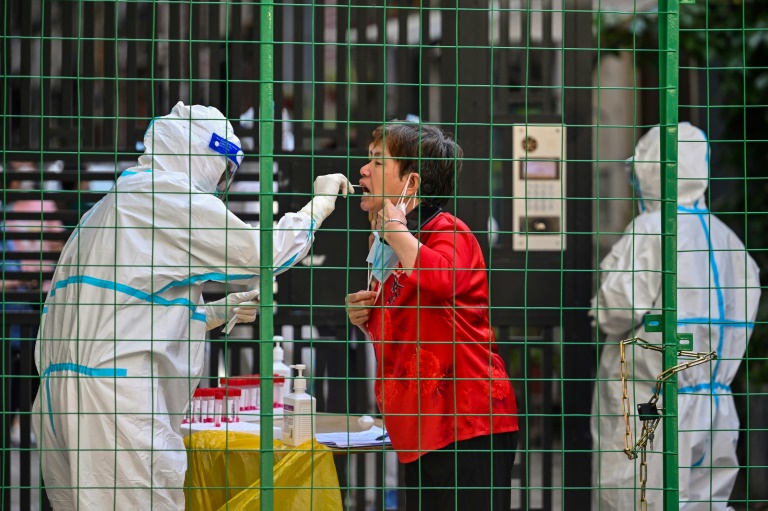
The news from China came as Beijing and Shanghai appeared to have contained a Covid outbreak that had forced officials to impose lockdowns that compounded global supply chain snarls, further pushing up inflation.

Authorities said inbound travellers would have to quarantine for only 10 days instead of three weeks.

The news boosted share prices, already striving to rebound from recent sharp losses triggered by fears of a global recession.

“The Covid crisis appears to be rapidly retreating in China,” noted Susannah Streeter, senior investment and markets analyst at Hargreaves Lansdown.

“The prospects of rapid recovery for the world’s second largest economy is helping lift miners, as metals prices rise in expectation of a surge in demand in the commodity-hungry economy.”

Asian markets closed higher, with both Hong Kong and Shanghai rising 0.9 percent.

At the same time, G7 leaders meeting in Germany condemned China’s “non-transparent and market-distorting” international trade practices in an end-of-summit statement that hit out directly at Beijing for the first time.

Traders also digested comments from European Central Bank President Christine Lagarde, who said the ECB would go “as far as necessary” to fight inflation that is set to remain “undesirably high”.

Paris rose 0.6 percent and Frankfurt added 0.4 percent. London climbed 0.9 percent.

Global equity markets have been recovering ground as investors believe central banks could decide to raise interest rates by more modest amounts than previously thought.

The US Federal Reserve and its peers are hiking borrowing costs in an attempt to cool inflation, which has soared around the world to the highest levels in decades.

Such action has increased the prospect of a global recession, causing economists to think that future rate hikes could be less steep than in recent months.

But early gains on Wall Street evaporated following a new report showing a drop in US consumer confidence.  

The Conference Board’s monthly consumer confidence index fell to 98.7 from 103.2, its lowest level since February 2021, as US consumer prices rise at their fastest pace in more than four decades.

“It looks like investors are potentially underestimating the big macro risks facing them by bidding up equity prices over the last few days,” City Index analyst Fawad Razaqzada told AFP.

“It is far too early to be optimistic that this latest recovery will hold.”

The Dow was down 0.4 percent in late morning trade, while the S&P 500 slid 0.7 percent and the tech-heavy Nasdaq Composite fell 1.4 percent.

– Oil jumps as G7 targets Russia –

Oil prices, a major driver of the soaring inflation, rose on fears of further supply tightening, in addition to prospects for higher Chinese demand.

This comes after G7 leaders agreed to work on a price cap for Russian oil, a US official said Tuesday, as part of efforts to cut the Kremlin’s revenues.

International sanctions placed on Russia following its invasion of Ukraine are taking their toll.

Moody’s ratings agency has confirmed that Russia defaulted on its foreign debt for the first time in a century, after bond holders did not receive $100 million in interest payments.

– Key figures at around 1530 GMT –

New York – Dow: DOWN 0.4 percent at 31,324.65 points

EURO STOXX 50: UP 0.2 percent at 3,506.13

London – FTSE 100: UP 0.9 percent at 7,323.41 (close) 

Frankfurt – DAX: UP 0.4 percent at 13,231.82 (close)

Paris – CAC 40: UP 0.6 percent at 6,086.02 (close)

Tokyo – Nikkei 225: UP 0.7 percent at 27,049.47 (close)

Hong Kong – Hang Seng Index: UP 0.9 percent at 22,418.97 (close)

Shanghai – Composite: UP 0.9 percent at 3,409.21 (close)

Brent North Sea crude: UP 2.0 percent at $113.22 per barrel

West Texas Intermediate: UP 1.4 percent at $111.11 per barrel

Euro/dollar: DOWN at $1.0527 from $1.0583 Monday

Pound/dollar: DOWN at $1.2188 from $1.2268

Euro/pound: UP at 86.35 pence from 86.24 pence

Dollar/yen: UP at 136.26 yen from 135.48 yen

burs-rl/kjm

Jewel thieves in brazen Dutch art fair heist

Flat-cap wearing armed robbers staged a brazen daylight raid on an international art fair in the Netherlands Tuesday, smashing a jewellery case with a sledgehammer in front of terrified visitors.

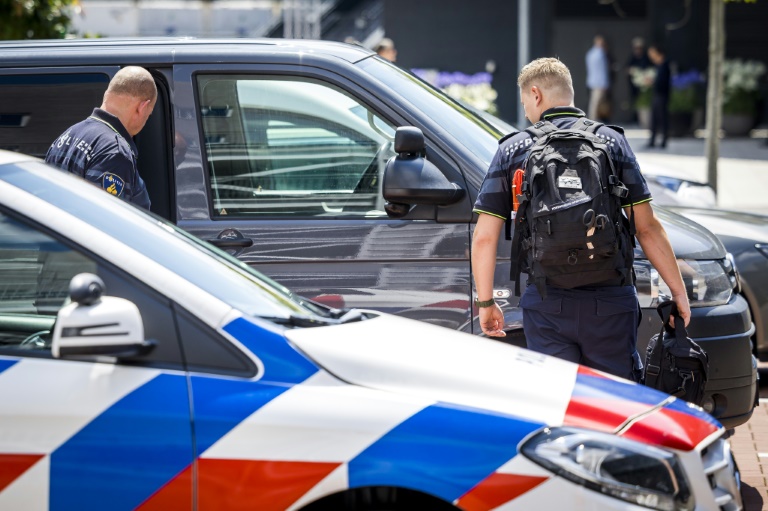
Police said they pulled over a car and arrested two Belgians in their twenties after the four smartly dressed thieves held up the TEFAF (The European Fine Art Fair) in the southern city of Maastricht.

Dramatic social media images showed the robbers threatening people with what appeared to be handguns before running off with an undisclosed amount of what police called “loot”.

The venue was evacuated but visitors were eventually let back into the fair, which draws tens of thousands of people over several days. No one was hurt, police said.

“A stall was raided, they fled and we started the search,” Wim Coenen, a spokesman for Limburg province police, told AFP. “There were four suspects, two were arrested.”

Dutch media said the display case contained diamond jewellery and other items from London jeweller Symbolic and Chase. There was no comment from the firm.

Police confirmed in a statement that “jewellery was stolen. Additional details about the loot are not being provided at this time.”

– ‘Car pulled over’ –

Dutch police launched a huge search involving a helicopter and sniffer dogs and arrested a 22-year-old and a 26-year-old man nearby, both from Belgium, shortly after.

“These two persons were driving a gray vehicle with a Belgian registration number. This car was pulled over… Their possible involvement is still under investigation,” it said.

The TEFAF fair is one of the biggest in Europe, and features hundreds of works, including a 17th-century drawing by a Dutch Old Master on sale for one million euros.

Videos on social media showed the four men — all wearing flat caps, glasses and smart blazers — amid scenes of chaos at the art fair.

One struck the jewellery case at least 12 times while burglar alarms wailed.

He finally smashed through the glass, reaching in to pick up something before putting it into a bag.

Two of the men brandished what appeared to be weapons at a bystander, who tried to intervene using a large glass vase full of flowers before backing off.

The men then ran off past a bemused elderly man, who had sat nearby on a bench throughout the drama.

– ‘Still shaking’ –

Visitor Jos Stassen told Dutch public broadcaster NOS said he had gone to the exhibition on Tuesday to look at the art in peace.

“I suddenly heard a lot of noise and I turn around and suddenly saw those men,” he said.

“One started beating and the others kept people away, scared everyone. I also saw a weapon.

“It went very fast and it lasted a very short time but I’m still shaking a little bit.”

The fair’s general manager Bart Drenth said the owners of the smashed booth are “very shocked”, the Dutch news agency ANP reported.

He said the fair’s security protocol worked well despite the fact that the armed robbers were able to walk in, adding: “The police were on the scene within minutes.”

A TEFAF spokesman added in a statement to AFP that its “security teams worked quickly to disarm an offender… Nobody was injured during the incident.”

The phrase “Peaky Blinders” trended on social media in the Netherlands after the raid because the caps worn by the suspects resemble those in the British crime drama of the same name.

It is not the first time the fair has been targeted by criminals.

A ring and a diamond necklace worth 860,000 euros ($1.2 million at the time) belonging to a London jeweller were stolen at the exhibition in 2011.

The Netherlands has also seen a string of art thefts, with paintings by Van Gogh and Frans Hals taken in burglaries in 2020.

South Africa's Eskom announces further power cuts

South Africa, a country plagued by power shortages, on Tuesday imposed the the toughest electricity rationing in two and a half years after labour disputes disrupted production at several plants.

Power rationing to consumers was ramped up to so-called Stage 6 load-shedding to prevent countrywide blackouts.

Stage 6 means that South Africans will now experience multiple cuts per day, each lasting several hours.

Africa’s leading industrialised country last experienced such drastic outages in December 2019. 

“There is a high risk that the stage of load-shedding may have to change at any time, depending on the state of the plant,” power utility Eskom said in a statement.  

Power cuts are a major source of frustration and discontent in South Africa, where protests broke out near Eskom’s offices last year.

Record Ernst & Young fine in US for cheating on ethics exams

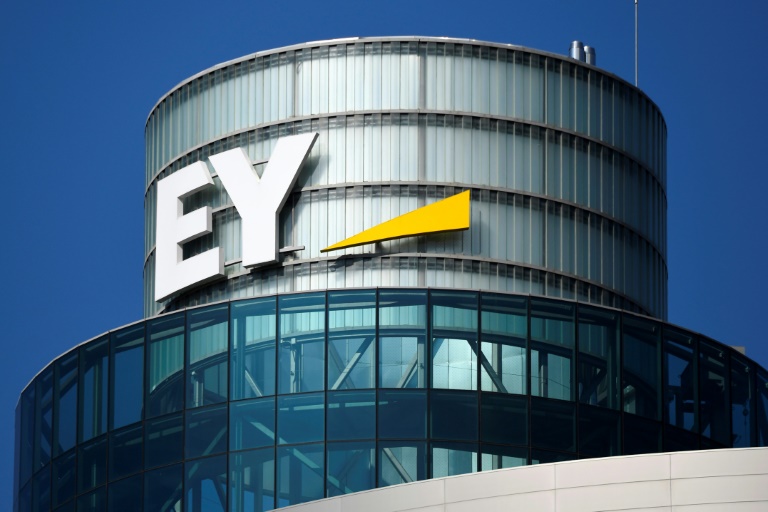
US authorities fined Ernst & Young a record $100 million over cheating on accounting ethics exams that the firm initially covered up from regulators, officials announced Tuesday.

From 2017 to 2021, 49 audit professionals with the “Big Four” firm sent or received answer keys to Certified Public Accountant (CPA) ethics exams, according to a Securities and Exchange Commission order.

Hundreds of other Ernst & Young professionals cheated on other exams, while a “significant” number of staff did not cheat themselves but failed to report the misconduct, said the SEC order, part of the agency’s settlement agreement with the firm.

“It’s simply outrageous that the very professionals responsible for catching cheating by clients cheated on ethics exams of all things,” said Gurbir Grewal, head of the SEC’s division of enforcement. 

The order also took Ernst & Young to task over its lack of candor with the agency.

On June 19, two days after the SEC fined KPMG $50 million over similar ethical misconduct, the agency sent Ernst & Young a formal request asking if the firm had received any ethics or whistleblowing complaints.

Ernst & Young’s response to the SEC implied that the firm did not have any current issues, even though it had received a report on June 19 from an employee describing how a colleague had emailed the answers to the CPA ethics exam.

The firm undertook an internal probe of the incident that was broadened in October 2019. Ernst & Young did not disclose the problem until March 2020, the order said.

“The SEC will not permit the submission of misleading information or any action that delays or frustrates our mandate to protect investors and our markets,” said Melissa Hodgman, associate director of the SEC’s enforcement division. 

Besides the fine, Ernst & Young must retain two independent consultants to review its ethics policies and its disclosure failures.

“We have repeatedly and consistently taken steps to reinforce our culture of compliance, ethics, and integrity in the past,” said an Ernst & Young media statement. 

“We will continue to take extensive actions, including disciplinary steps, training, monitoring, and communications that will further strengthen our commitment in the future.”

G7 disappoints with fossil fuel 'loophole'

Leaders of the Group of Seven rich nations on Tuesday watered down a key pledge on ending fossil fuel financing abroad, as the need to tackle global warming clashed with fears over energy shortages.

The G7 countries — Britain, Canada, France, Germany, Italy, Japan and the United States — ended a summit in the Bavarian Alps by reaffirming their goal to reduce reliance on dirty fossil fuels and speed up the green energy transition.

But after three days of haggling, they also agreed to allow public investment in new international fossil fuel projects under certain conditions, as countries scramble to break free from Russian oil, coal and gas following the invasion of Ukraine.

German Chancellor and summit host Olaf Scholz “promised a crucial boost for international climate action and he didn’t deliver,” said Friederike Roder, vice president at the non-profit group Global Citizen.

An alliance of civil society organisations including Oil Change International also issued a scathing verdict, condemning the “loopholes” on gas that made it into the final communique.

The text reiterates that G7 nations will still halt new public investments in overseas fossil fuel projects by the end of 2022.

But given the “exceptional circumstances” of the Ukraine war, “publicly supported investment in the gas sector can be appropriate as a temporary response”. 

Observers said Germany and Italy, heavily reliant on Russian energy, had pushed hard for the amended text. 

Like other European countries, they are racing to stockpile gas before winter and diversify suppliers as they brace for Russia to turn off the energy taps altogether after it recently slowed deliveries.

– ‘Emergency’ –

Germany has already decided to reactivate mothballed coal-fired plants to offset the Russian shortfall, and is eyeing a new gas project in Senegal.

Pressed by reporters about the fossil fuel relapse, Scholz stressed the latest moves were temporary and would not derail Germany’s climate targets or slow its shift towards renewables.

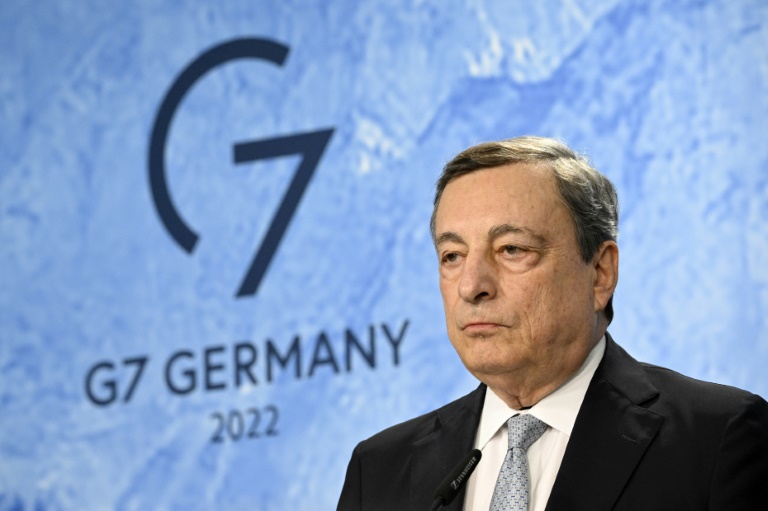
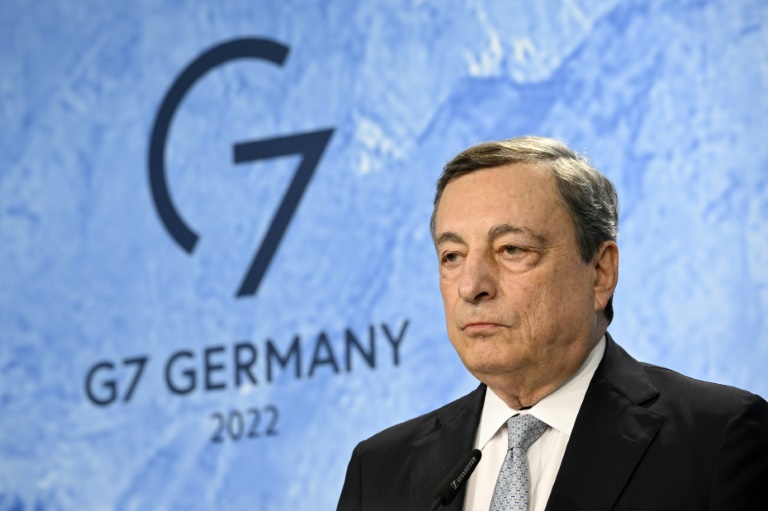
Italian Prime Minister Mario Draghi acknowledged the “worry” about a return to dirty fossil fuels.

“We don’t want to go back on our commitments,” he said at a press conference.

“Even though we access new sources of gas supply, these are replacing Russian sources. We are not increasing the long-term supply of gas,” he said, describing the current energy upheaval as “an emergency”.

All G7 leaders reaffirmed the commitment from the Paris pact to limit global temperature increases to 1.5 degrees Celsius and to achieve net-zero emissions by 2050.

They also repeated a pledge to largely decarbonise their electricity sectors by 2035.

Among the few new promises in the final statement is the commitment to “a highly decarbonised road sector by 2030”.

The announcement of climate partnerships with emerging countries such as India, Indonesia and Vietnam to help finance their clean energy transitions was welcomed by campaigners. 

The partnerships “can have transformational potential”, the NGO Germanwatch said.

US President Joe Biden and his counterparts also agreed to set up an international “climate club”, Scholz’s flagship proposal at the summit.

Focused heavily on the industrial sector, the club’s aim is to coordinate climate action while avoiding competitive disadvantages, for instance through sharing technology or agreeing common standards on carbon pricing or green hydrogen.

But some critics said the idea remained vague.

– ‘Huge gap’ –

G7 leaders pledged to “intensify” efforts to mobilise climate financing for poor countries, many of which are already feeling the catastrophic impacts of extreme heatwaves, droughts and floods.

A long-standing goal to spend $100 billion a year from 2020 on helping vulnerable nations adapt to climate change remains unmet, however.

Environmental campaigners said the G7 had done little to provide fresh momentum for the United Nations COP27 climate summit in Egypt in November.

“Chancellor Scholz has failed to mobilise new climate commitments from G7 leaders, leaving a huge gap for them to fill in the next four months to have credibility come COP27,” said Alex Scott from the climate think tank E3G.

G7 disappoints with fossil fuel 'loophole'

Leaders of the Group of Seven rich nations on Tuesday watered down a key pledge on ending fossil fuel financing abroad, as the need to tackle global warming clashed with fears over energy shortages.

The G7 countries — Britain, Canada, France, Germany, Italy, Japan and the United States — ended a summit in the Bavarian Alps by reaffirming their goal to reduce reliance on dirty fossil fuels and speed up the green energy transition.

But after three days of haggling, they also agreed to allow public investment in new international fossil fuel projects under certain conditions, as countries scramble to break free from Russian oil, coal and gas following the invasion of Ukraine.

German Chancellor and summit host Olaf Scholz “promised a crucial boost for international climate action and he didn’t deliver,” said Friederike Roder, vice president at the non-profit group Global Citizen.

An alliance of civil society organisations including Oil Change International also issued a scathing verdict, condemning the “loopholes” on gas that made it into the final communique.

The text reiterates that G7 nations will still halt new public investments in overseas fossil fuel projects by the end of 2022.

But given the “exceptional circumstances” of the Ukraine war, “publicly supported investment in the gas sector can be appropriate as a temporary response”. 

Observers said Germany and Italy, heavily reliant on Russian energy, had pushed hard for the amended text. 

Like other European countries, they are racing to stockpile gas before winter and diversify suppliers as they brace for Russia to turn off the energy taps altogether after it recently slowed deliveries.

– ‘Emergency’ –

Germany has already decided to reactivate mothballed coal-fired plants to offset the Russian shortfall, and is eyeing a new gas project in Senegal.

Pressed by reporters about the fossil fuel relapse, Scholz stressed the latest moves were temporary and would not derail Germany’s climate targets or slow its shift towards renewables.

Italian Prime Minister Mario Draghi acknowledged the “worry” about a return to dirty fossil fuels.

“We don’t want to go back on our commitments,” he said at a press conference.

“Even though we access new sources of gas supply, these are replacing Russian sources. We are not increasing the long-term supply of gas,” he said, describing the current energy upheaval as “an emergency”.

All G7 leaders reaffirmed the commitment from the Paris pact to limit global temperature increases to 1.5 degrees Celsius and to achieve net-zero emissions by 2050.

They also repeated a pledge to largely decarbonise their electricity sectors by 2035.

Among the few new promises in the final statement is the commitment to “a highly decarbonised road sector by 2030”.

The announcement of climate partnerships with emerging countries such as India, Indonesia and Vietnam to help finance their clean energy transitions was welcomed by campaigners. 

The partnerships “can have transformational potential”, the NGO Germanwatch said.

US President Joe Biden and his counterparts also agreed to set up an international “climate club”, Scholz’s flagship proposal at the summit.

Focused heavily on the industrial sector, the club’s aim is to coordinate climate action while avoiding competitive disadvantages, for instance through sharing technology or agreeing common standards on carbon pricing or green hydrogen.

But some critics said the idea remained vague.

– ‘Huge gap’ –

G7 leaders pledged to “intensify” efforts to mobilise climate financing for poor countries, many of which are already feeling the catastrophic impacts of extreme heatwaves, droughts and floods.

A long-standing goal to spend $100 billion a year from 2020 on helping vulnerable nations adapt to climate change remains unmet, however.

Environmental campaigners said the G7 had done little to provide fresh momentum for the United Nations COP27 climate summit in Egypt in November.

“Chancellor Scholz has failed to mobilise new climate commitments from G7 leaders, leaving a huge gap for them to fill in the next four months to have credibility come COP27,” said Alex Scott from the climate think tank E3G.

Close Bitnami banner
Bitnami